
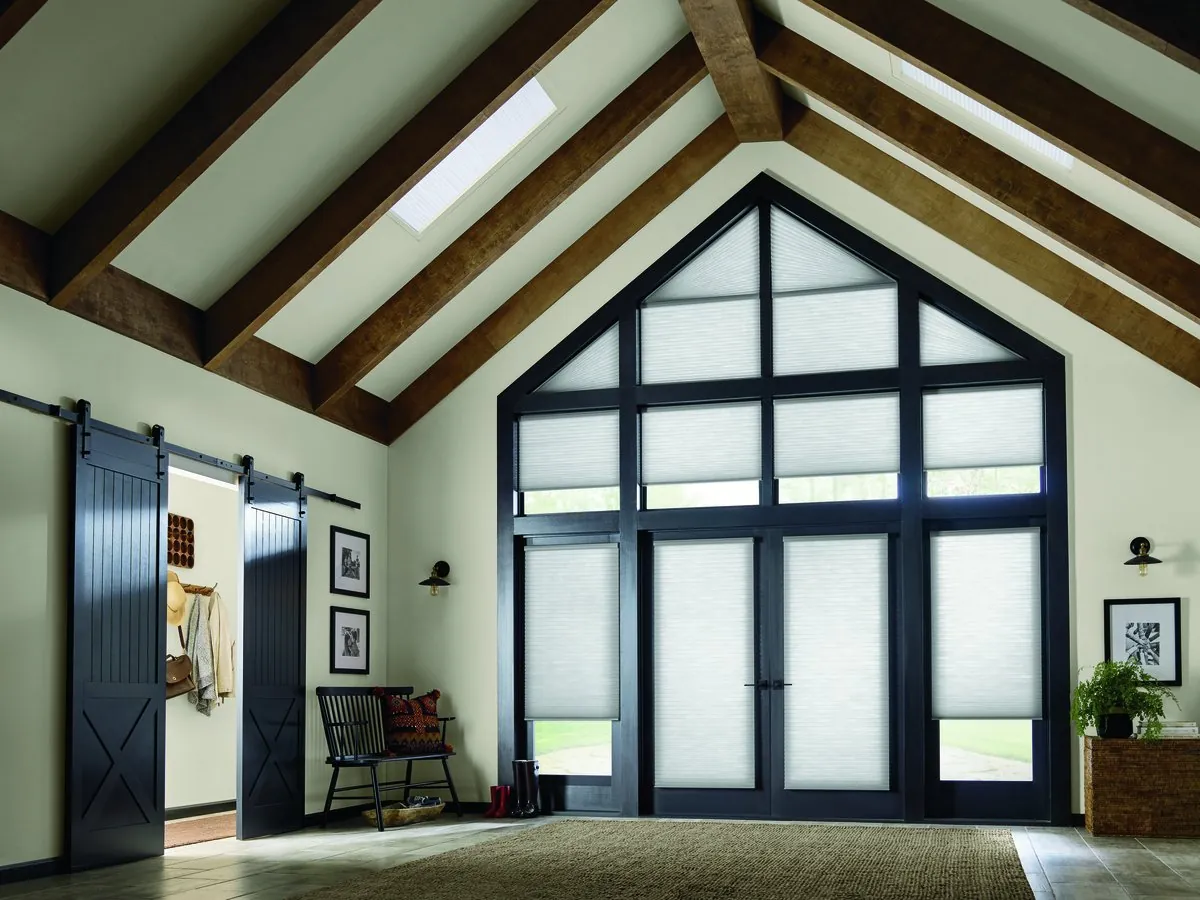
Old glass near the common, simple glass beyond it
Norwood’s housing comes in rings. Close to the center and around the common, the older stock is set tight together: Victorians and two-families with tall sash windows, many of them a few steps from the sidewalk and a short gap from the house next door. Move outward and the streets fill with post-war capes and ranches, where the windows are standard sizes and the lots a little roomier. The center’s tall old sash is where comfort is hardest to find on a winter night, and it is where most conversations about cellular shades in Norwood, MA, begin.
What a honeycomb shade adds is a layer of air. The fabric is formed into a line of closed cells, and once the shade is down each one holds its air still. That stillness slows the passage of heat through the window in both directions. The tall single panes of an old Victorian stop chilling the room quite so much in January, and a ranch’s west window passes less of the July sun’s heat.
Because the center’s houses stand so close together, a honeycomb shade also has a second job there: keeping rooms private from the sidewalk and from the windows across the side yard, without shutting out the daylight that tall sash was built to let in.
Six honeycomb options for Norwood windows
These cover nearly every window we see in town, from the Victorians around the common to the newest streets.
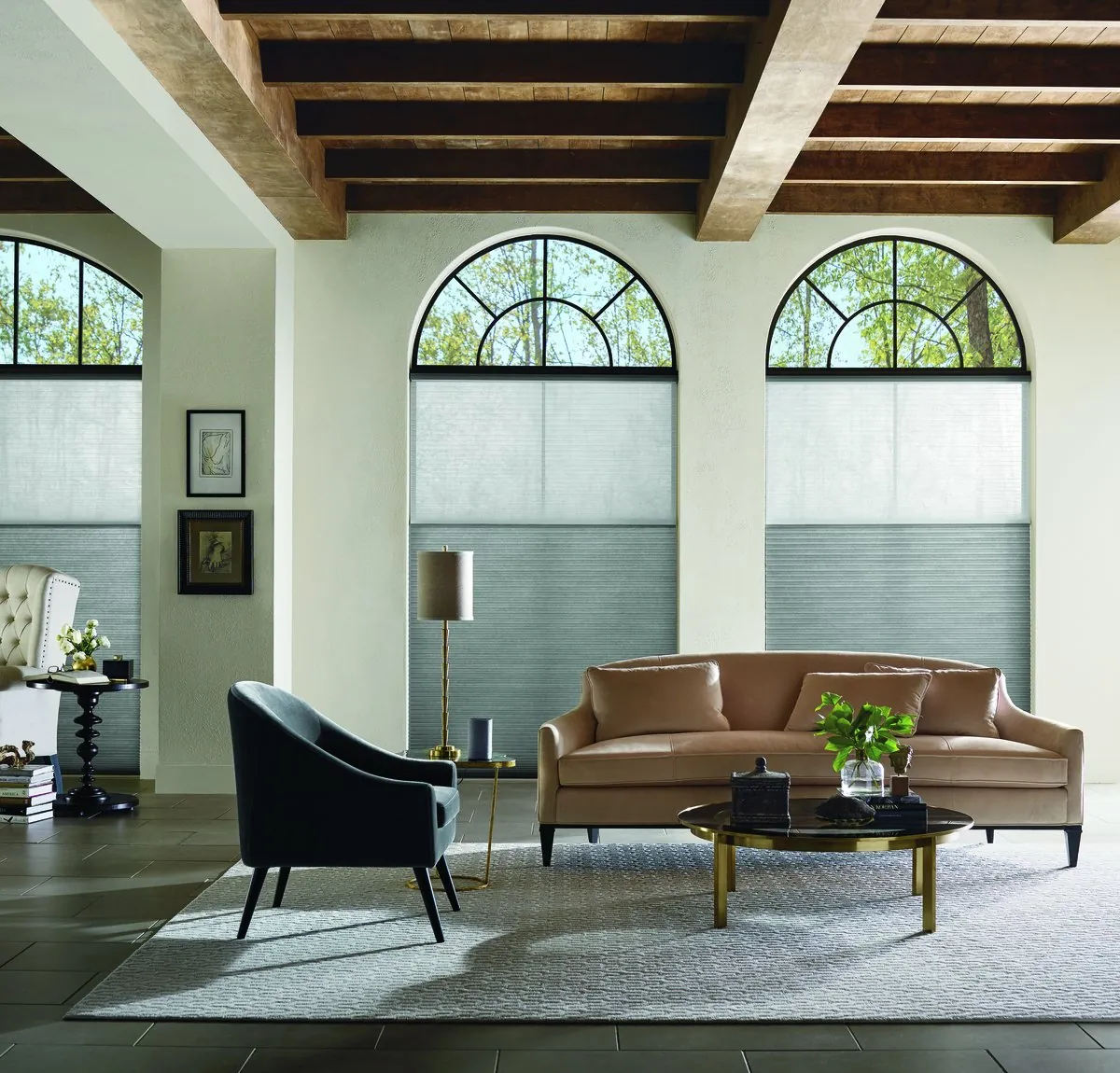
Tall Duette shades
Made in long, slim sizes for Victorian sash, mounted inside the frame so the old trim stays on show.
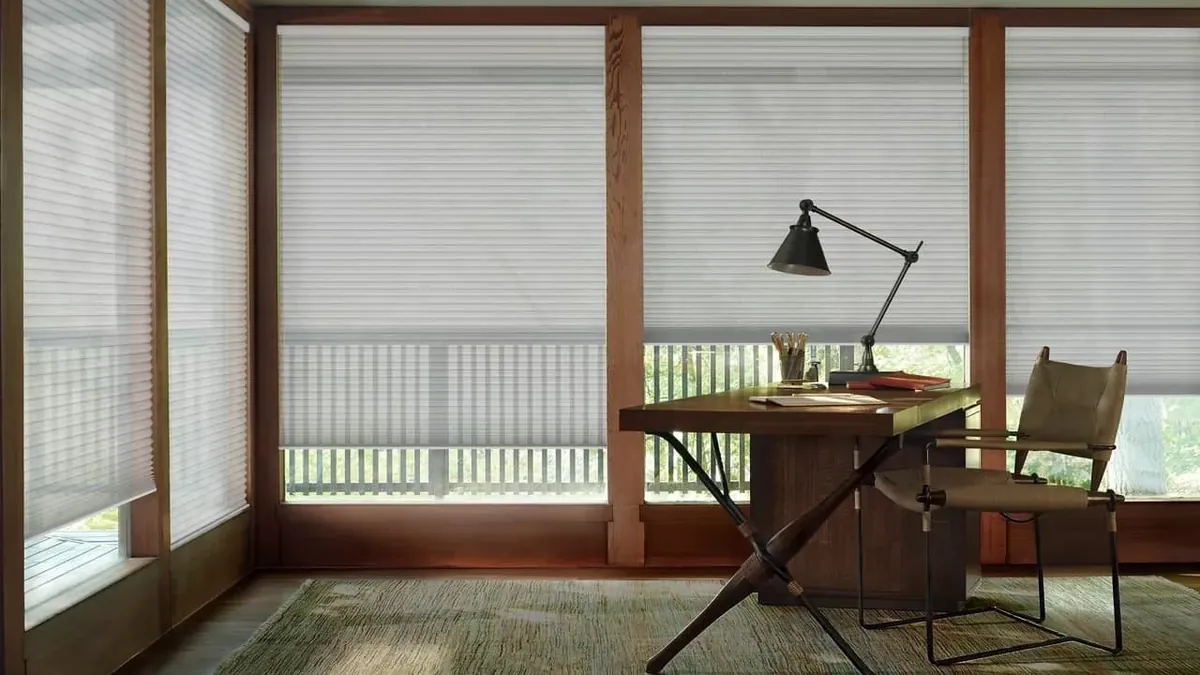
Top-down for sidewalk rooms
Open the top for daylight while the lower glass stays covered from people passing on the sidewalk.
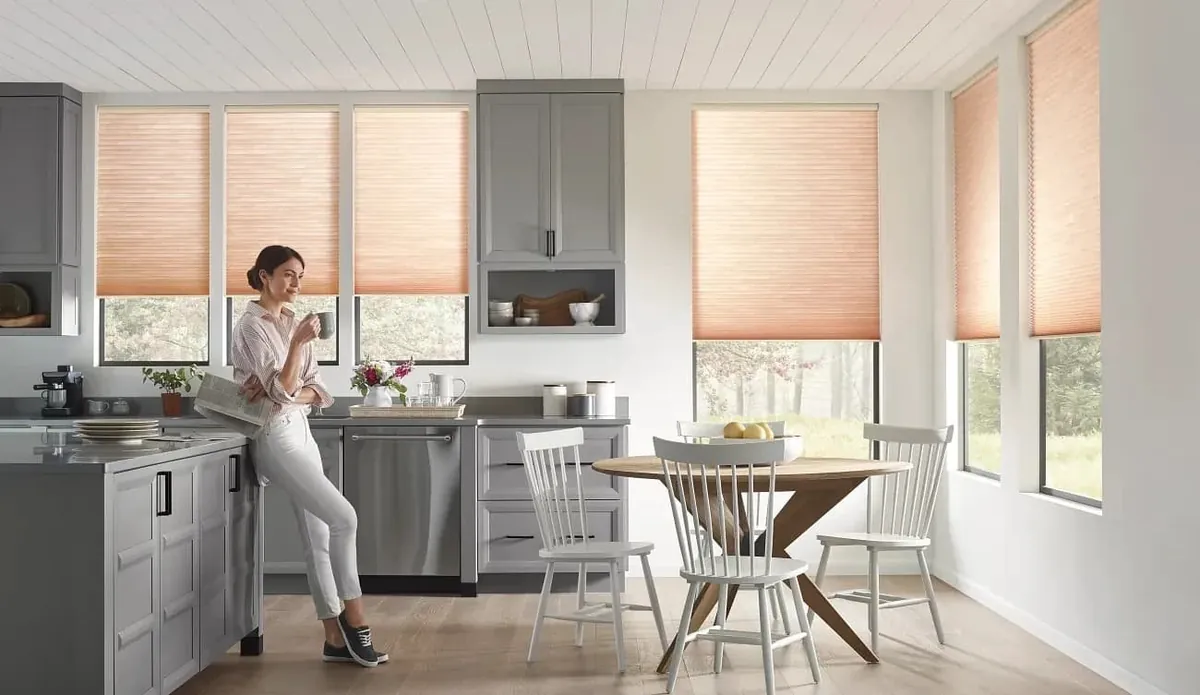
Applause for the outer streets
A tidy match for the standard openings of a cape or ranch, one fabric across the whole house.
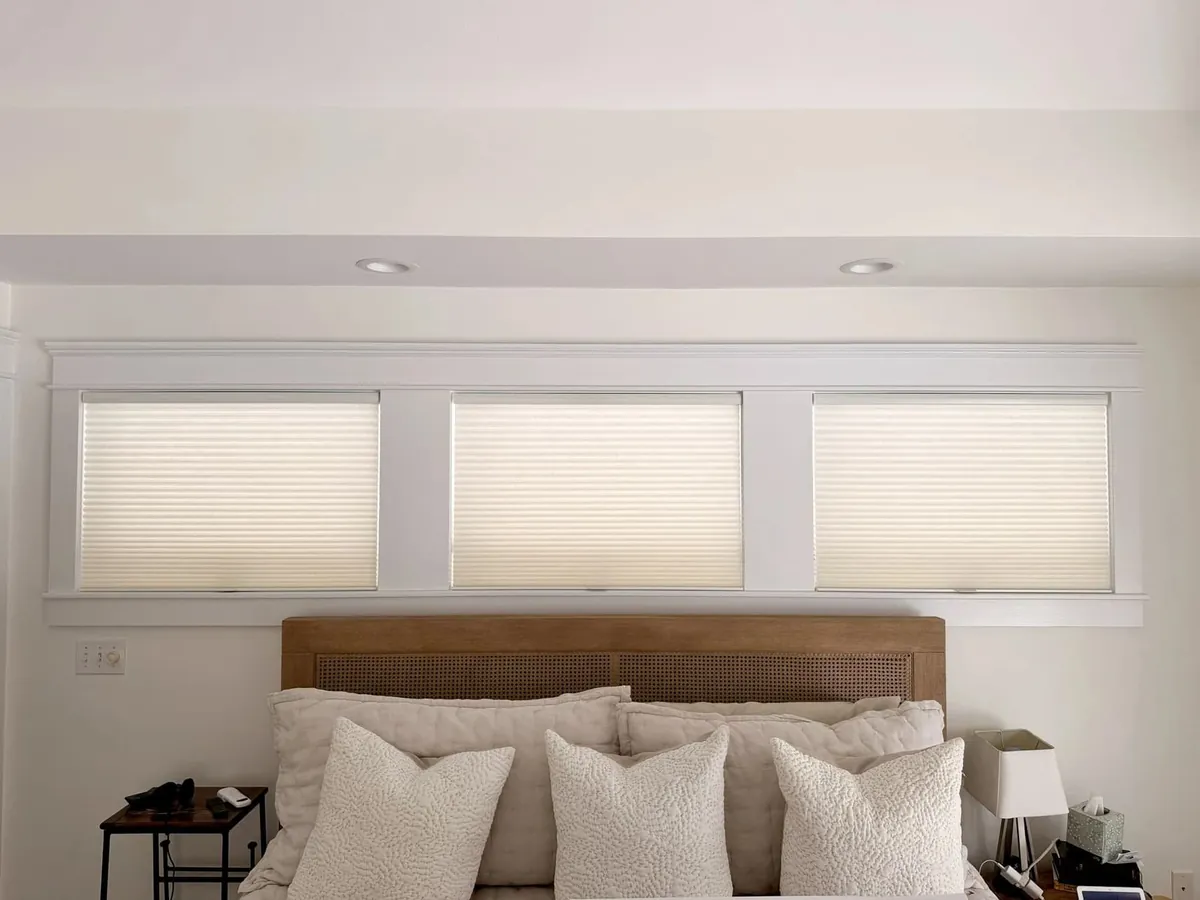
Room-darkening fabric
For bedrooms facing a streetlight or the morning sun, with the cells still holding warmth.
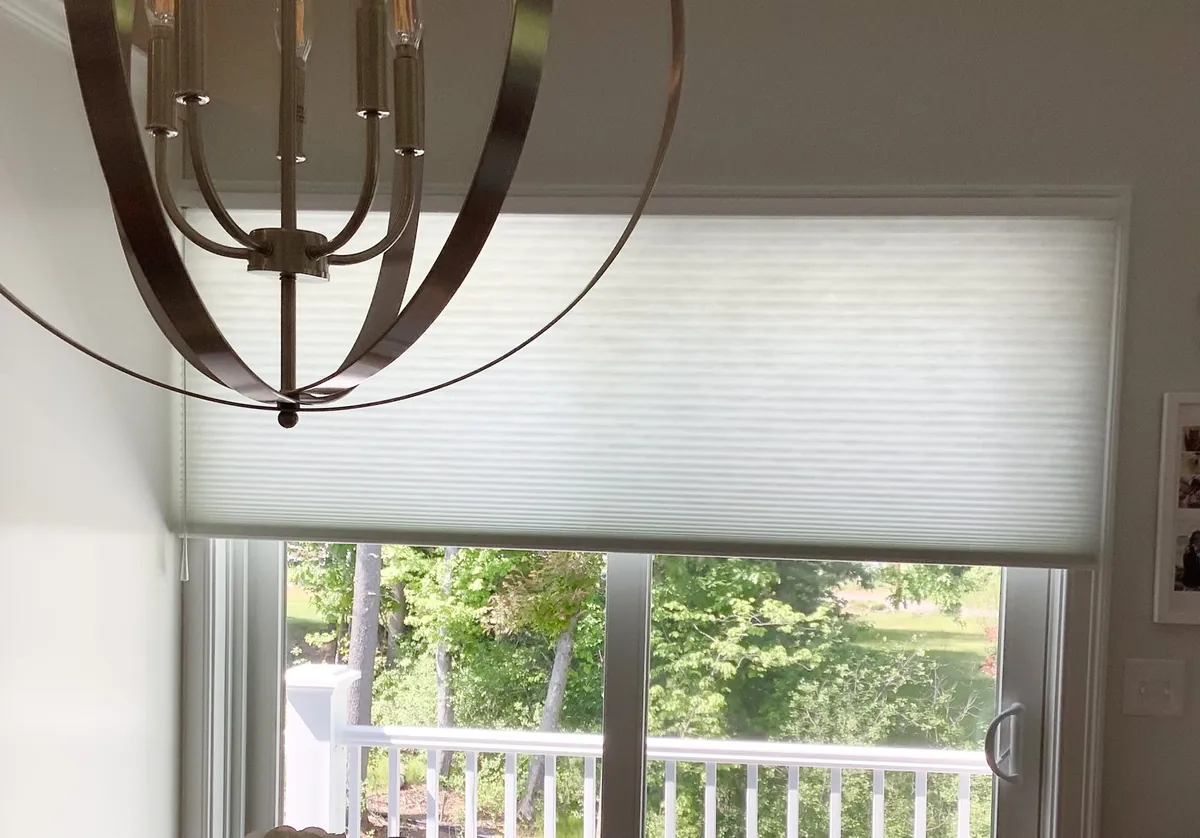
Honeycomb on a slider
For the back door to a deck on a ranch or an updated older house, covered in the same fabric as the windows.
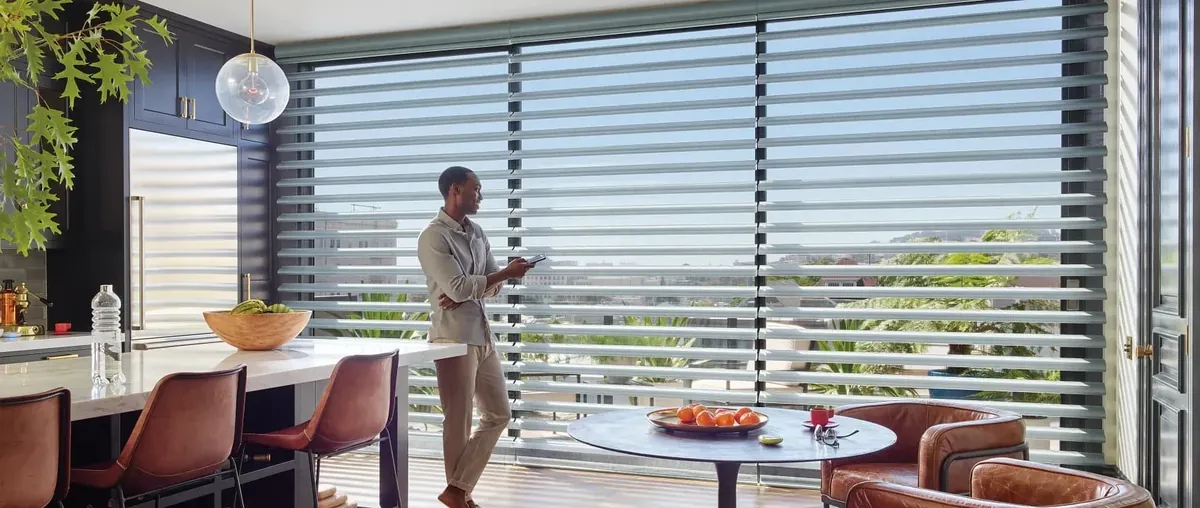
PowerView control
Motors move the tallest shades, or a whole room of them, from your phone, a remote or a schedule.
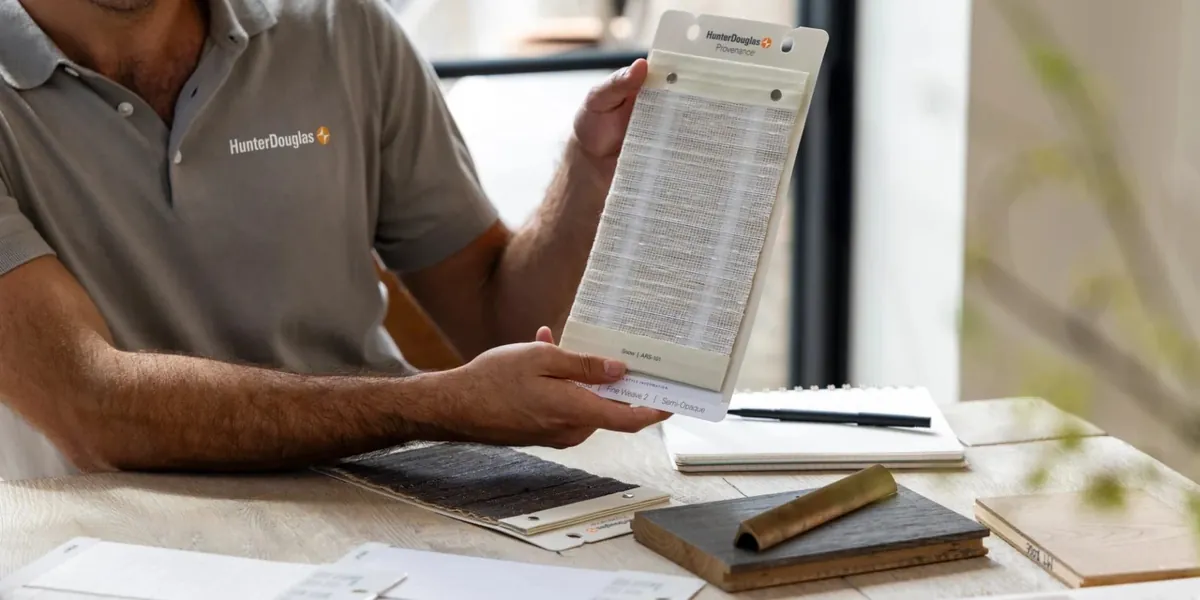
Choosing at home, with the samples in your hand
For Norwood we lead with an in-home consultation. Our vans carry samples, so we can bring the showroom to you, and you see each fabric against your own tall sash or picture window, in your own light.
That matters near the common especially, because privacy on a close-set street depends on how a fabric behaves when the sun is on it and when the lamps are on behind it. A sample book cannot show you that. Your window can.
We look at the rooms you care about most, measure every window you want to cover and leave you with a free estimate. Read more about our in-home consultations.
Victorians around the common
The Victorians close to Norwood’s center are the houses with the tallest windows in town. A typical front room has two or three long sash windows, with deep casings and high ceilings above. Those windows are beautiful, and they are also thin: a large expanse of single glass with a lot of cold coming off it on a winter night.
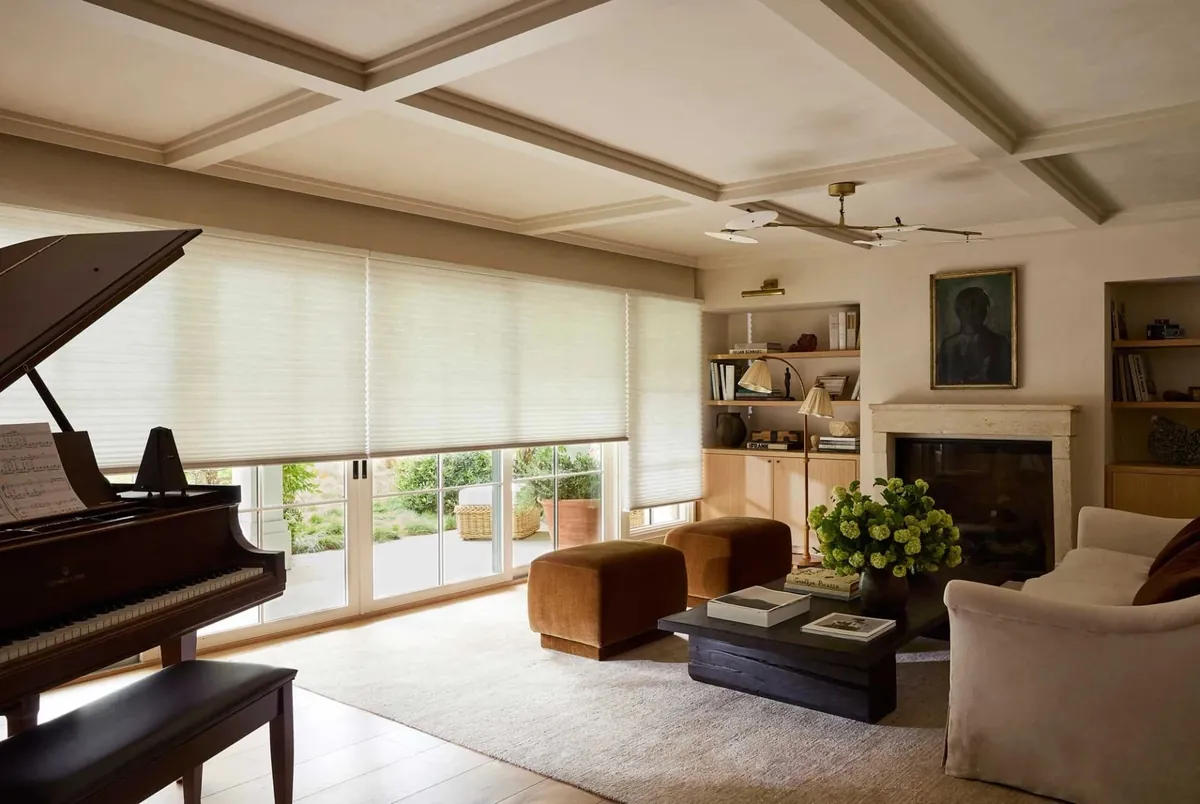
Fitted within the opening, a honeycomb shade respects all of that. Pulled up, it shrinks to a thin ribbon of fabric tucked beneath the head jamb, and the sash, the glass and the casing look much as they did before. Let down, it covers the pane from top to bottom, and over a window this tall that is a great deal of cold glass put behind a blanket of still air.
Old frames bring the usual cautions. Few Victorian openings are still perfectly rectangular, and the channels and pulleys of the original sash can crowd the space where a headrail would go. So the width is read high, middle and low, the jamb is checked for depth in more than one place, and only then do we suggest whether the shade belongs inside the opening or on the face of the trim.
Many of these rooms also have radiators under the windows, and that affects the choice. An inside-mounted shade that stops at the sill hangs clear of the radiator instead of draping over it, so the heat still rises into the room. We take note of where the radiators sit and size the shades to suit. It is a small detail, but in a Victorian parlor heated by a radiator beneath each tall window, it decides whether cellular shades in Norwood’s older houses help the heating or get in its way.
Two-families near the center
The two-families near Norwood’s center usually stack one flat on top of another, each with its own run of tall windows to the front, sides and back. From the street, the two floors read as one house. Inside, each floor has its own light and its own needs.
The lower flat sits closest to the sidewalk and to the neighboring houses, so privacy tends to matter most there. The upper flat has more sky and often more sun. A honeycomb shade can be chosen to suit each: top-down, bottom-up shades and a heavier light-filtering fabric for the lower floor, lighter fabrics and perhaps room-darkening bedrooms upstairs.
Many of these houses have a tall window on the stair landing between the floors, often hard to reach because it sits above the stairs. That is one window where PowerView motorization pays off, because the shade can be raised and lowered from a remote or on a schedule without anyone leaning over the banister. The back of a two-family matters too. Rear windows often look onto a shared yard or a neighbor’s back porch, and kitchens and bedrooms there want the same balance of light and privacy as the front. When both flats choose cellular shades in Norwood, MA, at the same time, we can plan the whole building in one visit and keep a record so either flat can add rooms later.
Close-set streets and privacy
Around the common, houses stand close to the sidewalk and close to each other. A front room may be a few steps from people walking by, and a side window may face another side window across a narrow strip of yard. Getting privacy without losing the daylight is the main job of a shade in those rooms.
Top-down, bottom-up shades do it best. Lower the top of the shade and light pours in through the upper glass, which on a tall Victorian sash is a lot of light. Keep the bottom raised to the sill and the part of the window at eye level stays covered. Light-filtering fabrics help further during the day, because the fabric glows and hides the room behind it.
At night the balance changes: with lamps on inside, a light fabric can show silhouettes. A heavier light-filtering fabric or a room-darkening fabric handles the evening, and many people use a top-down shade fully lowered after dark. We hold the samples up at your windows so you can judge both.
Capes and ranches on the outer streets
Head away from the common and the houses relax: post-war capes and ranches on slightly larger lots, with standard window sizes that often repeat from room to room. Repeating sizes are a gift when it comes to shades. The order is simple, the measurements are quick to confirm, and a single fabric used throughout makes the house look settled from the curb, while bedrooms can still go darker than the living room.
A cape’s trouble spot is upstairs. Those half-story bedrooms under the roof heat up fast on a sunny afternoon and lose it just as fast after dark, and their dormers are small. A honeycomb shade set into the dormer’s little alcove, when the alcove is deep enough, is barely noticeable by day and makes those rooms noticeably steadier through the night.
A ranch’s showpiece is the front window. When it is too wide for one shade, we divide it into panels on a common rail, so you can raise them all at once or open just the end beside your chair. Out back, the door to the deck is often a slider, and a vertical honeycomb, which travels sideways and parks against the frame, keeps it clear for coming and going.
The frames on these houses are often replacements, and some are shallow, with sash locks near the front edge. If a headrail will not fit inside, the shade goes on the wall just above the frame and runs a little wider than the opening, which hides the lines of light down each side. Fitting cellular shades in Norwood, MA, across a whole cape or ranch at once is common for exactly this reason: the repeating windows make it quick and the result looks consistent.
Light, warmth and the seasons on the outer streets
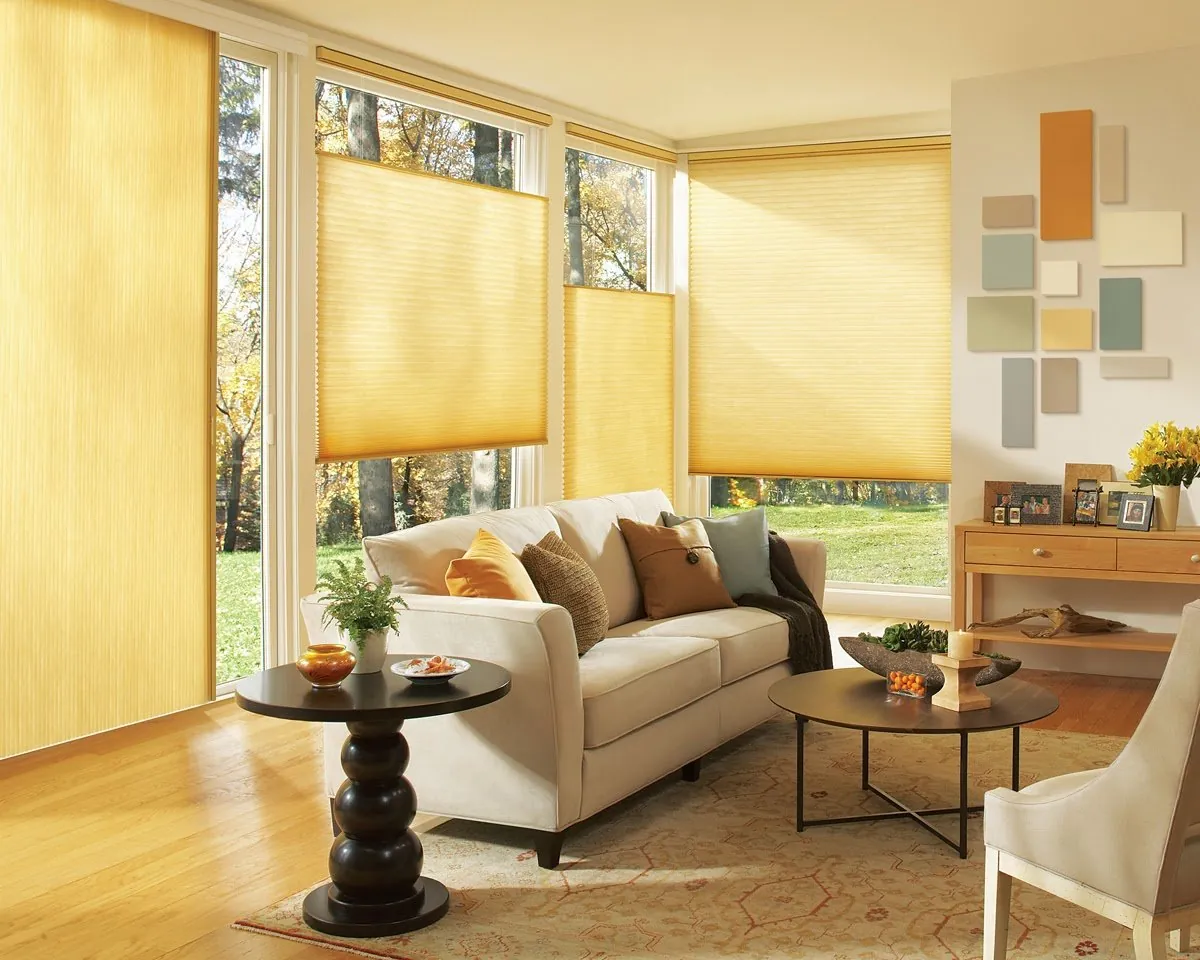
The capes and ranches beyond the center sit on lots with a bit more space, so many of their windows get open sky and full sun for part of the day. In winter that sun is a friend: leave the south-facing shades up through the bright hours and the rooms gain some free warmth, then lower them at dusk to hold onto it. In summer, the same windows are the ones to close during the hottest part of the day, and the west windows of a ranch living room are usually the first to need it.
That routine is easy to do by hand, and easier still with PowerView, where a schedule takes care of it. Even a few motorized shades on the sunniest side of a house can make the routine automatic.
Duette or Applause
Both are honeycomb shades from Hunter Douglas, and we fit both. Their comfort comes from the same trapped air, so the real decision is about how much choice a window needs.
For the tall front windows near the common, Duette is usually the answer, because it is made in the long sizes those windows call for and has the deepest catalog of fabrics, textures and specialty shapes, as well as the sideways version for sliders. For the repeating, standard windows of the outer streets, Applause, with its own color range, is often all a house needs.
A Victorian two-family might pair Duette at the front with Applause in its back bedrooms; a ranch might be Applause all through, apart from a Duette vertical on the slider. Read more on the Duette and Applause pages, or see the full cellular shades range. If winter comfort is the main concern, our guide to cellular shades and winter heat is worth reading.
Single cell, double cell and fabric weight
The cell structure is a choice of its own. A single-cell shade is lighter and stacks smaller, which suits a tall window where you want as much glass showing as possible when the shade is raised. A double-cell shade has two rows of cells, and is worth considering for the coldest rooms: a north-facing Victorian parlor, an upstairs bedroom in a cape, or the corner room of a two-family with windows on two sides.
Fabric weight is the other choice. Sheer and light-filtering fabrics let the window glow; room-darkening fabrics block most of the light. On a close-set street, the right weight for daytime privacy is often a little heavier than you would choose on a quieter lot, which is another reason to see the samples at your window.
Your consultation
A visit starts with a conversation about the rooms, not a sales pitch. Then:
- Pick a time with Request a Consultation, or phone through the call button.
- Show us the rooms that bother you, whether it is the sidewalk-facing parlor, the cold corner bedroom or the landing window nobody can reach.
- Compare fabrics at the glass itself, in daylight, and judge how much of the room each one hides.
- Settle on mounts and lifts window by window, with radiators and hard-to-reach glass taken into account.
- Each window is measured, older frames for squareness as well as size.
- A free estimate follows, and there is no deadline for making up your mind.
For help pulling together a whole room, our interior design consultations are there, and our page on what happens at an in-home consultation covers the details.
Installation
When every window’s fabric, mount and lift has your approval, the shades are built to the numbers taken in your rooms. On installation day our certified Hunter Douglas installers set each bracket into solid wood, level the headrails, make sure every shade clears its radiator and folds up evenly, and connect any PowerView controls. They finish by walking you through how each shade works.

A Hunter Douglas Gallery dealer in Norwood
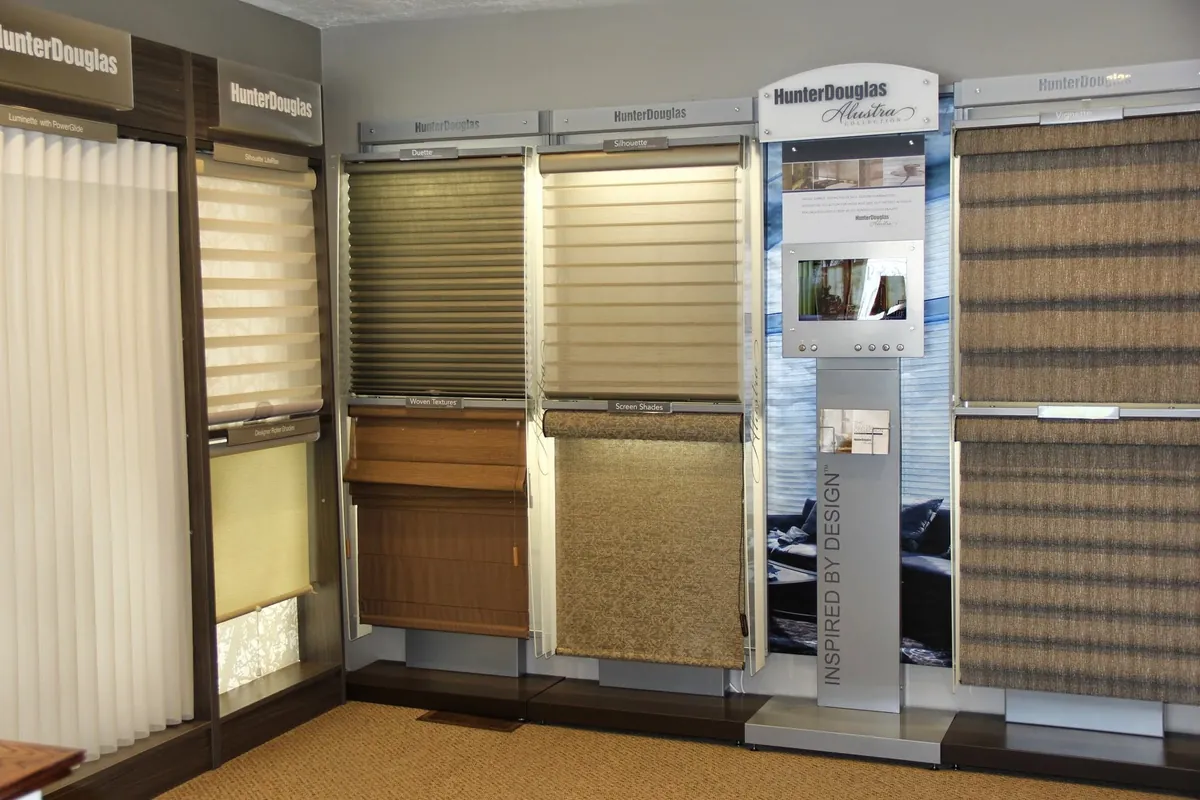
The Gallery title is one Hunter Douglas keeps for a limited circle of dealers, Blinds & Designs among them. What that means at a Norwood window is simple: if Hunter Douglas makes a honeycomb option, we can offer it, from the tallest Duette sizes for Victorian sash to the vertical shade for a slider and PowerView motors for a landing window.
The installers who hang your shades hold Hunter Douglas certification. For other rooms we have blinds, shutters, roller and roman shades and drapery, and for shades and blinds that already hang in your house, there is blind and shade repair in Norwood. Our Norwood page gathers everything we do in town, and roman shades in Norwood suit a softer Victorian front room.
Questions from Norwood
Will a honeycomb shade get in the way of the radiator under my window?
Not if it is mounted inside the frame. An inside-mounted shade stops at the sill and hangs clear of the radiator, so the heat still rises into the room. We note where the radiators are when we measure.
How do I keep privacy in a front room close to the sidewalk?
A top-down, bottom-up shade lowered from the top lets light in through the upper glass while the lower part stays covered. A slightly heavier light-filtering fabric adds privacy, especially at night.
Can you reach the tall window on our stair landing?
With PowerView motorization, the landing shade can be raised and lowered from a remote, your phone or a schedule, so nobody has to lean over the stairs.
Do the shades on both floors of a two-family have to match?
No, but keeping the outward-facing color similar makes the house look orderly from the street. Each floor can choose its own color and opacity inside.
Is there a showroom near Norwood?
Most Norwood customers choose at home, where the light is. For anyone who wants to see the shades in a showroom first, our Franklin showroom is the closest.
Next step
Fabric held against your own tall sash or picture window is what settles the choice of cellular shades in Norwood. Book a consultation and the honeycomb samples come to you, each window is measured and you get a free estimate. Rather talk first? The call button is the quickest way.