
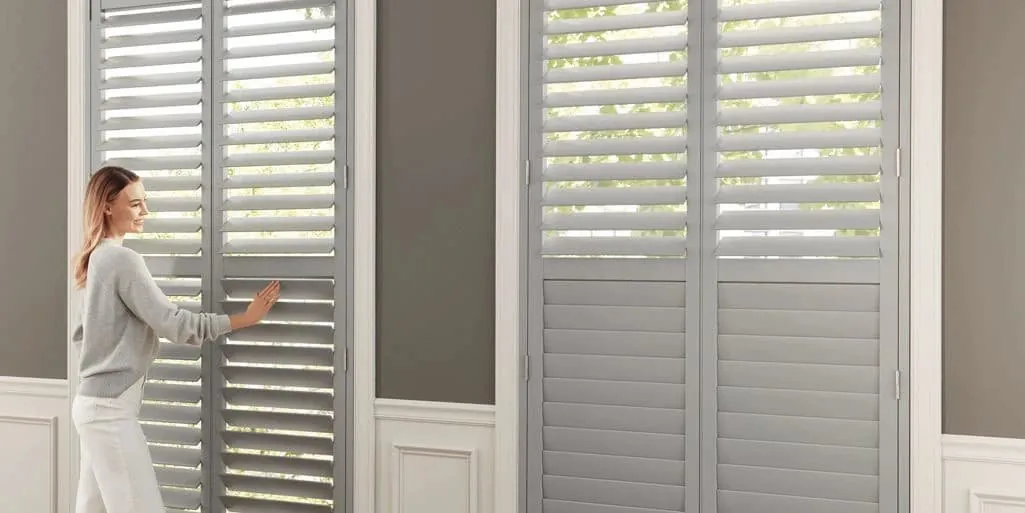
Tall sash by the common, standard sizes further out
Start at the common and walk outward, and Norwood’s houses tell a clear story. Close in, the older stock is set tight together: Victorians and two-families with tall sash, high ceilings and narrow side yards. A few streets out, post-war capes and ranches take over, and in the newer streets beyond them the windows come in standard sizes. Planning plantation shutters in Norwood, MA, follows the same path, from the tallest and oldest windows to the most regular.
The older houses near the center give shutters the most to do. Their windows are tall enough to need careful panel layouts, their frames have often moved over the years, and many of them have a radiator under the sill and a neighbor’s window only a few steps away.
Further out, the work is about consistency. Standard openings let one louver size and one finish run cleanly through a whole cape or ranch.
What goes into plantation shutters in Norwood, MA
Three details decide most of our Norwood orders. We bring samples of each so you can see them on your own windows.
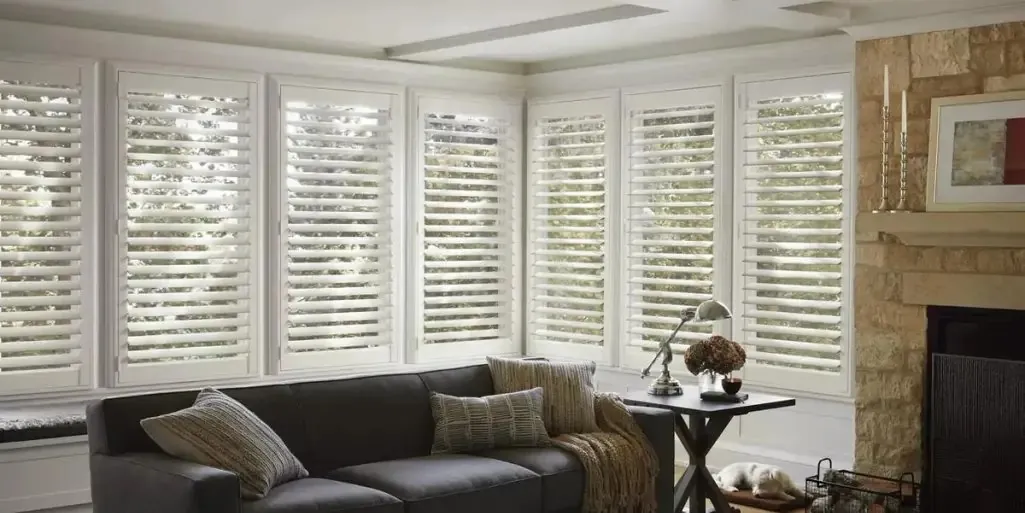
Panels that clear the radiator
In older houses, the frame and hinge side are planned so the panels swing open without catching on a radiator or a deep window stool.
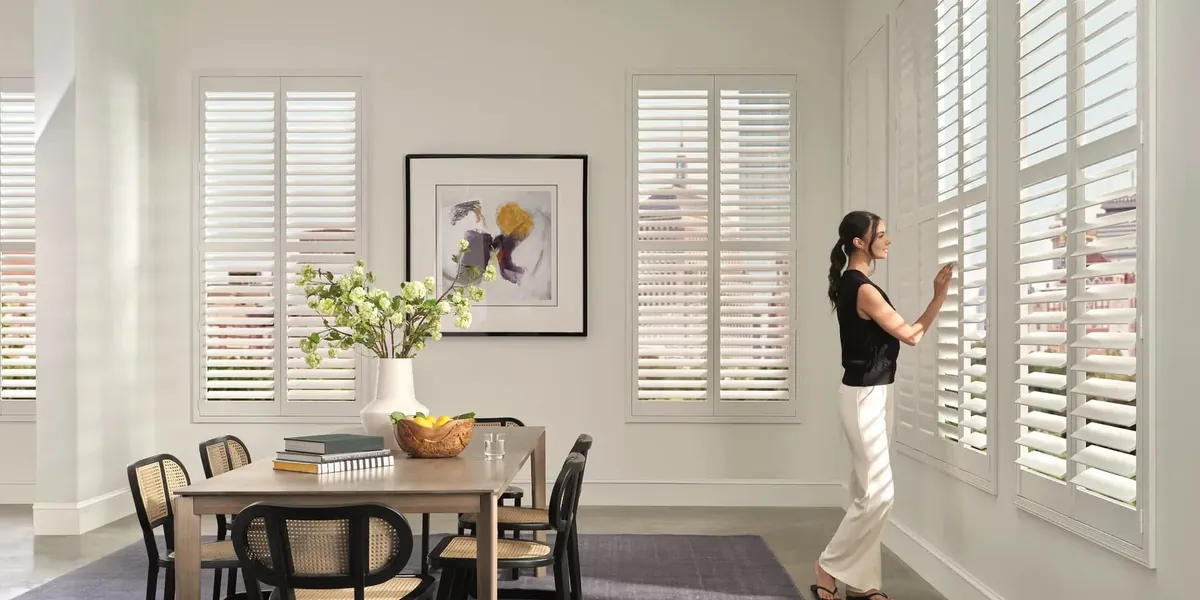
Louvers sized to the sash
A medium blade suits tall narrow Victorian sash; a wider one suits a ranch picture window. Divider rails keep long panels in proportion.
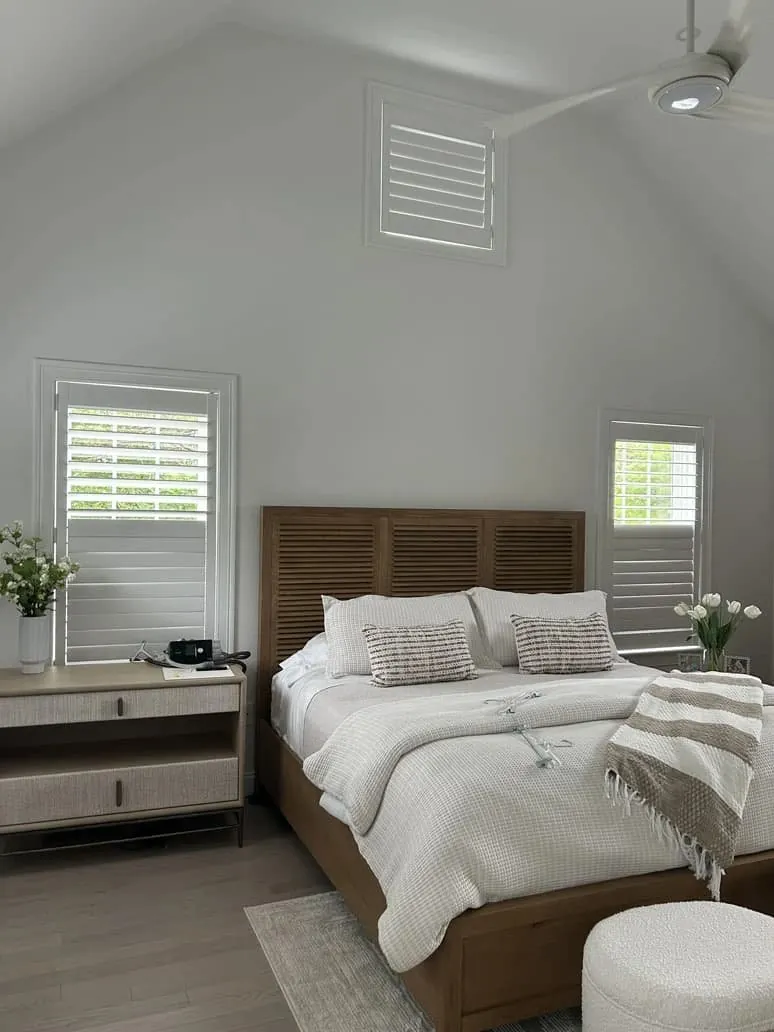
Frames for close-set houses
A frame inside the reveal keeps the old casing on show. On shallow or crowded windows, a slim frame on the casing does the same job.
Shutters chosen in your own rooms
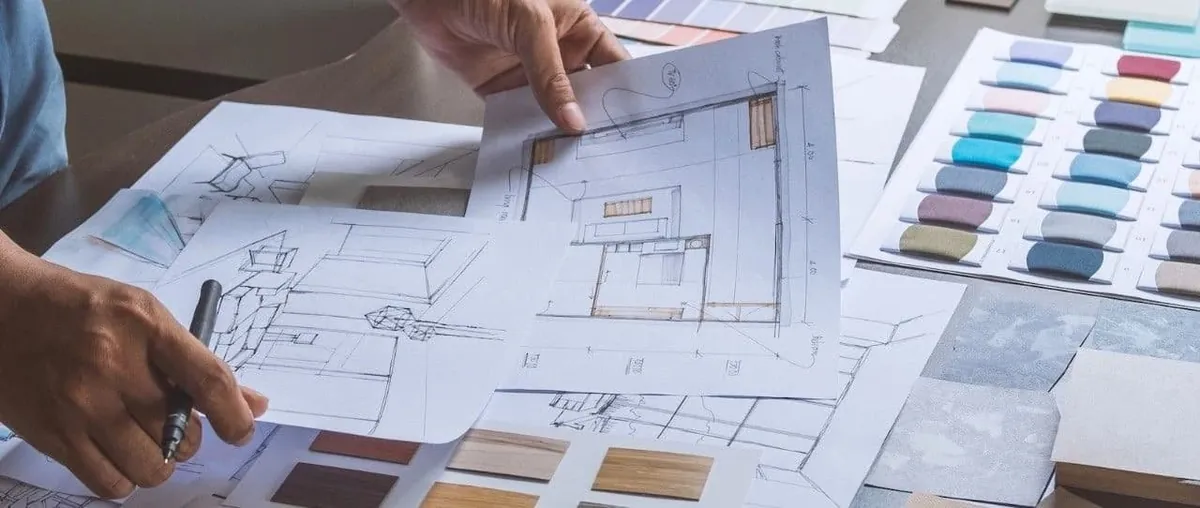
Norwood is in the area we serve from Canton, where everything is done as shop at home. Rather than asking you to come to us, our vans bring the samples to your door: all three Hunter Douglas shutter collections, the louver sizes, frame styles and finishes. Our shop at home page explains the service.
For an older house near the common, that is the only sensible way to choose. You need to see how a frame sits against your casing, whether a panel will clear the radiator below and how a white looks beside trim that has been painted many times. Further out, in a cape or ranch, it lets you plan the whole house in one walk-through.
At the end of the visit every window you are considering has been measured, and you have a free estimate to think over in your own time.
Victorians and two-families around the common
The houses closest to the center are the tallest in town. Victorians and two-families stand shoulder to shoulder, with tall double-hung sash on the main floors, sometimes a bay at the front, and windows on the side elevations that look across a narrow gap to the house next door.
Those tall windows need a shutter laid out with care. A single long panel looks stretched and is awkward to use, so we add a divider rail, splitting the louvers into an upper bank and a lower bank that tilt on their own. On the front of the house that is useful as well as handsome: keep the lower louvers closed against the sidewalk and open the upper ones for light.
In a two-family, the windows on each floor usually line up. Matching shutters on both floors, with rails at the same height, make the front of the house look orderly from the street. Each household still controls its own louvers.
Older openings here are often out of square, and their reveals may be shallow where stops and storm windows have been added over time. We measure every opening at several points, check the diagonals, and decide between a frame inside the reveal and one mounted on the casing. Our guide to shutters for older windows explains how.
Front bays on the older houses
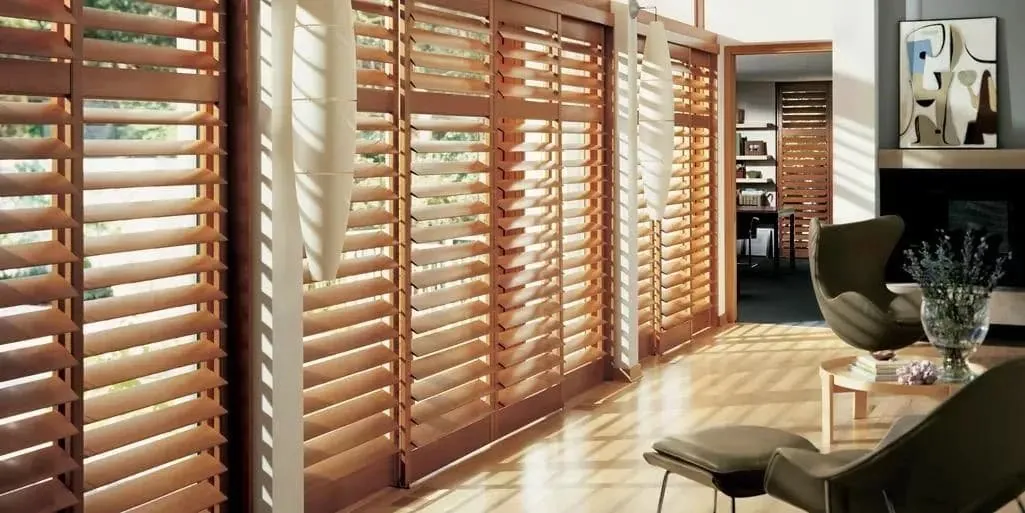
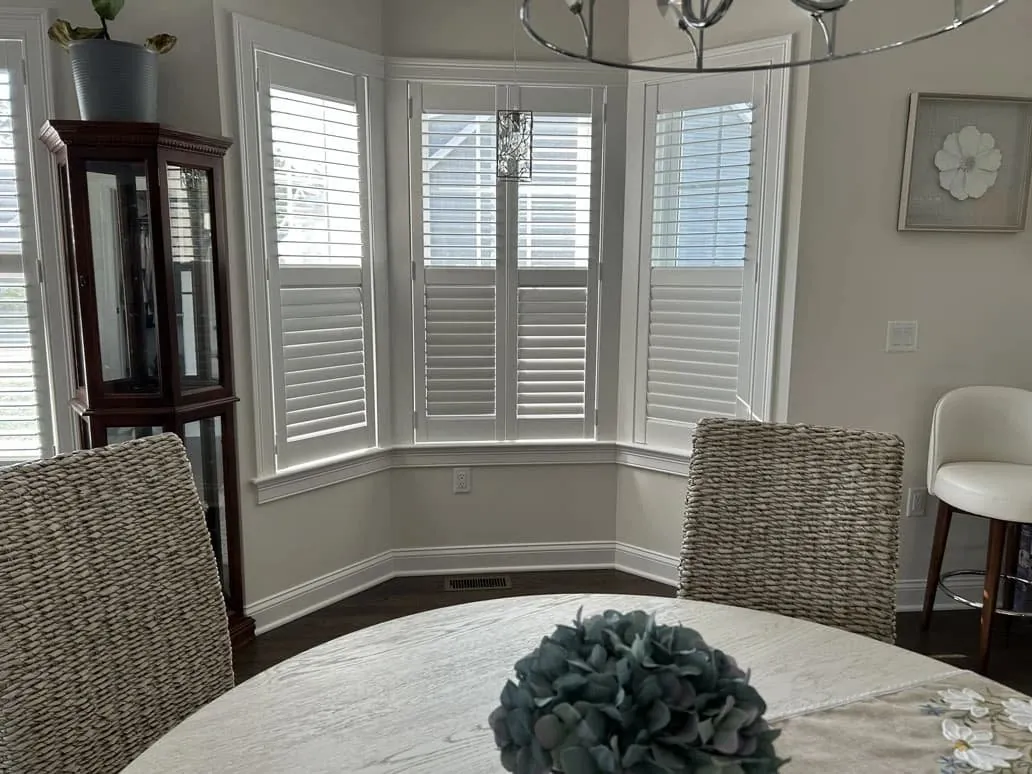
Plenty of the Victorians near the common have a bay at the front, usually in the main living room, sometimes stacked with a second bay in the bedroom above. A bay brings in light from three directions, which is lovely in the day and very exposed at night, when the room is on show to the street from three angles.
Each face of the bay takes its own shutter, and the corners are joined with posts angled to match the bay, so the frames meet tightly and the whole bay reads as one piece. We keep the louver size and the height of the divider rail the same on every face, so when the louvers are tilted the lines run straight around the curve.
A bay is also where the radiator question comes up most. The heating often runs along the base of the bay, so we plan each panel’s swing so it clears the radiator and folds back against the next face rather than into the room.
Radiators, deep stools and which way the panels swing
Many of the older houses near the common still heat with radiators, and the radiator usually sits right under the window. The window stool above it is often deep, and sometimes there is a radiator cover that rises close to the sill.
Shutter panels swing into the room on hinges, so they need clear space to open. We look at each window with that in mind. Sometimes the answer is a frame that sets the panels slightly forward so they clear the stool. Sometimes it is choosing which side each panel hinges from, so it folds back against the wall rather than into a cover. On a narrow window, a single panel swinging to the open side can work better than a pair.
It is a small part of the visit, but it is the difference between shutters you open every day and shutters you leave closed because they catch. Our certified installers adjust the hinges on the day so each panel swings and closes cleanly.
Close-set houses and the window across the gap
Around the common, the gap between houses can be no more than a driveway. Side windows in a dining room or bedroom look straight into a neighbor’s side windows, and any covering on them is a compromise between privacy and daylight.
Louvers take most of the compromise away. With the blades tilted so they angle up toward the sky, the view from next door is cut off while light still slips in over each blade and onto your ceiling. Angle them down and you can see out toward the street without anyone seeing in. In the evening, closing them makes a solid panel across the glass.
A divider rail helps on tall side windows too. The lower bank stays closed at eye level; the upper bank opens for light. For windows where only the lower glass faces the neighbor, a cafe layout, with panels on the lower sash only, is a simple and attractive alternative.
Capes and ranches as the streets spread out
Beyond the older center, the streets fill with post-war capes and ranches. The houses sit a little further apart, the ceilings are lower, and the windows are simpler: double-hungs either side of the front door, dormers in the cape bedrooms, a picture window and a run of bedroom windows in the ranch, a slider to the yard.
Here, shutters are about one look for the whole house. A single louver size and finish on every window makes a modest house feel finished, and it means the front of the house looks the same from the sidewalk whichever room is behind each window.
The cape’s dormer windows need a slimmer louver so the shutter fits neatly in the alcove under the sloping ceiling. A ranch’s picture window is divided into three or four panels that fold back in pairs, with wider blades for a clearer view. A slider takes panels on a track. Most of these houses have newer replacement windows, and we check each one’s depth before choosing an inside frame, because replacements can be shallower than the old wood windows they replaced.
Dormers, sliders and doors to the yard
Two kinds of window in the capes and ranches deserve their own mention.
Cape dormers are short windows set deep into a little roofed alcove, with the ceiling sloping down close to them. A shutter fits beautifully in that alcove when it is mounted inside the opening, and a slimmer louver keeps it from looking heavy in such a small space. Because the dormer is deep, there is usually plenty of room for the louvers to tilt freely.
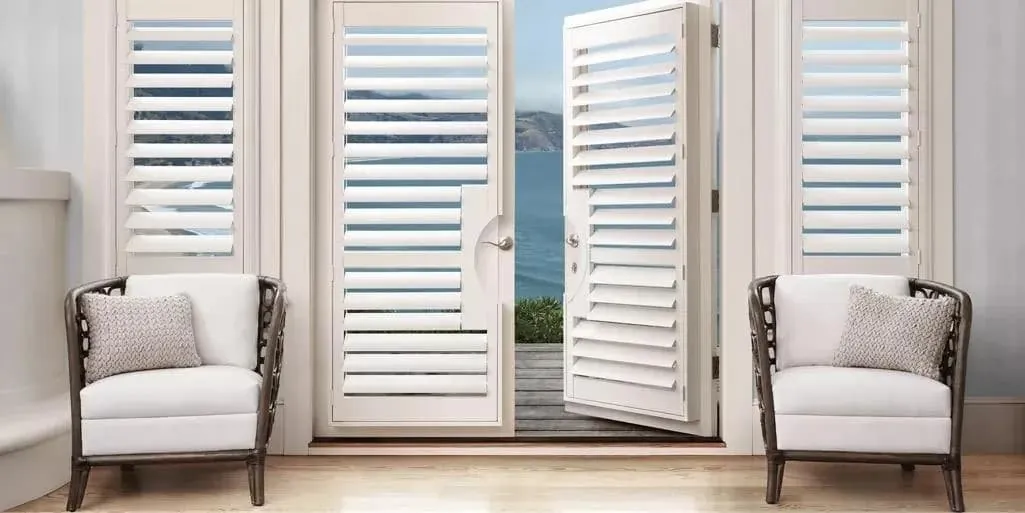
At the back of a ranch, a slider or a pair of French doors usually leads to the yard or a deck. French doors take shutters mounted on the doors themselves, so the panels swing with each door and can still be tilted when the doors are shut. A slider takes panels on a track above, which glide aside so you can step out without anything swinging into the room. Matching the doors to the windows keeps plantation shutters in Norwood, MA, in one style along the whole back of the house.
Standard sizes in the newer streets
The newer streets at the edge of town have windows in standard modern sizes, and that makes for straightforward, tidy shutters. Inside frames fit most openings, panel layouts repeat from room to room, and the whole house can share one louver and finish without any special pieces.
That does not mean we skip the measuring. Shutters are made to each opening, and two windows of the same nominal size are often a little different once you measure the top, middle and bottom. A small difference that would never show with a shade can stop a shutter’s panels meeting neatly. So every window is measured on its own, and the order reflects each one.
The result is the built-in look people want from plantation shutters in Norwood, MA, with the narrowest possible gap between frame and opening.
Which collection for which room
For a bathroom, laundry or the kitchen sink
Choose Palm Beach. It is made from polysatin with no wood inside, so steam and splashes do it no harm, and it wipes clean.
For bedrooms, living rooms and family rooms
NewStyle is the usual answer. It has the look of painted wood and handles the wide panels of a picture window well.
For a Victorian front room with original trim
Consider Heritance, solid hardwood that can be painted or stained. Beside natural wood casings near the common, a stained finish can look as if it came with the house.
Most houses use two of the three, matched in color and louver size. The main plantation shutters page compares them.
Baths and kitchens in old and new houses
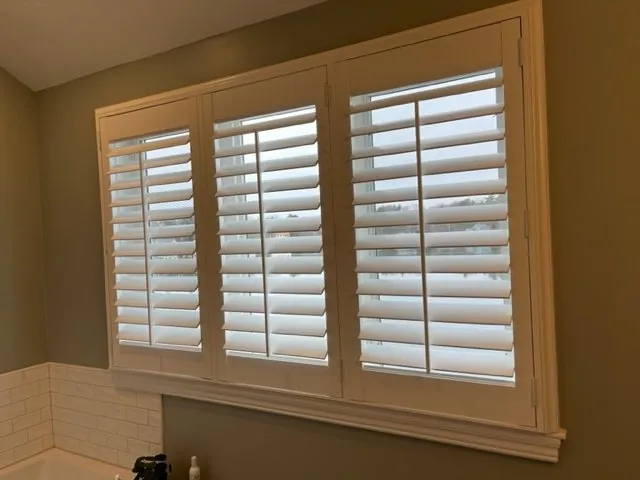
In a Victorian or two-family near the common, the bathroom window is often tall and original, now standing beside a shower it was never built for. In a two-family there are two baths and two kitchens, one on each floor. In a cape or ranch, the bath is small and the kitchen window sits over the sink.
Palm Beach is made for those windows. On a tall bathroom sash, a divider rail lets you keep the lower louvers closed for privacy and the upper ones open for light and air. Over a kitchen sink, a cafe layout keeps the counter private and the upper glass bright. Painted to match the shutters elsewhere, Palm Beach panels look like part of one set.
Looking after your shutters
Shutters are among the easiest window coverings to live with. A duster or a soft cloth run along the louvers every so often keeps them clean, and Palm Beach can be wiped with a damp cloth in a bath or kitchen. There are no cords to tangle, and the panels swing open fully when you want to clean the glass behind them.
If a hinge loosens or a louver gets knocked out of line over the years, we repair blinds and shades as well as installing them, so the same people who fitted your shutters can look at them later.
Color beside old paint and new trim
Trim near the common has often been painted many times and has a soft, warm tone. A crisp white shutter can make it look tired, so a warm white or off-white usually settles in better. Natural wood casings suit a stained Heritance finish.
In the capes, ranches and newer streets, trim is usually plain white, and a matching white shutter makes windows look larger and rooms brighter. We bring finish samples and hold them against your casings in different rooms, because the same white looks warmer in a south-facing room than in a north-facing one. Choosing the finish at home is the most reliable way to get plantation shutters in Norwood, MA, that look right in every room.
High ceilings and where the light goes
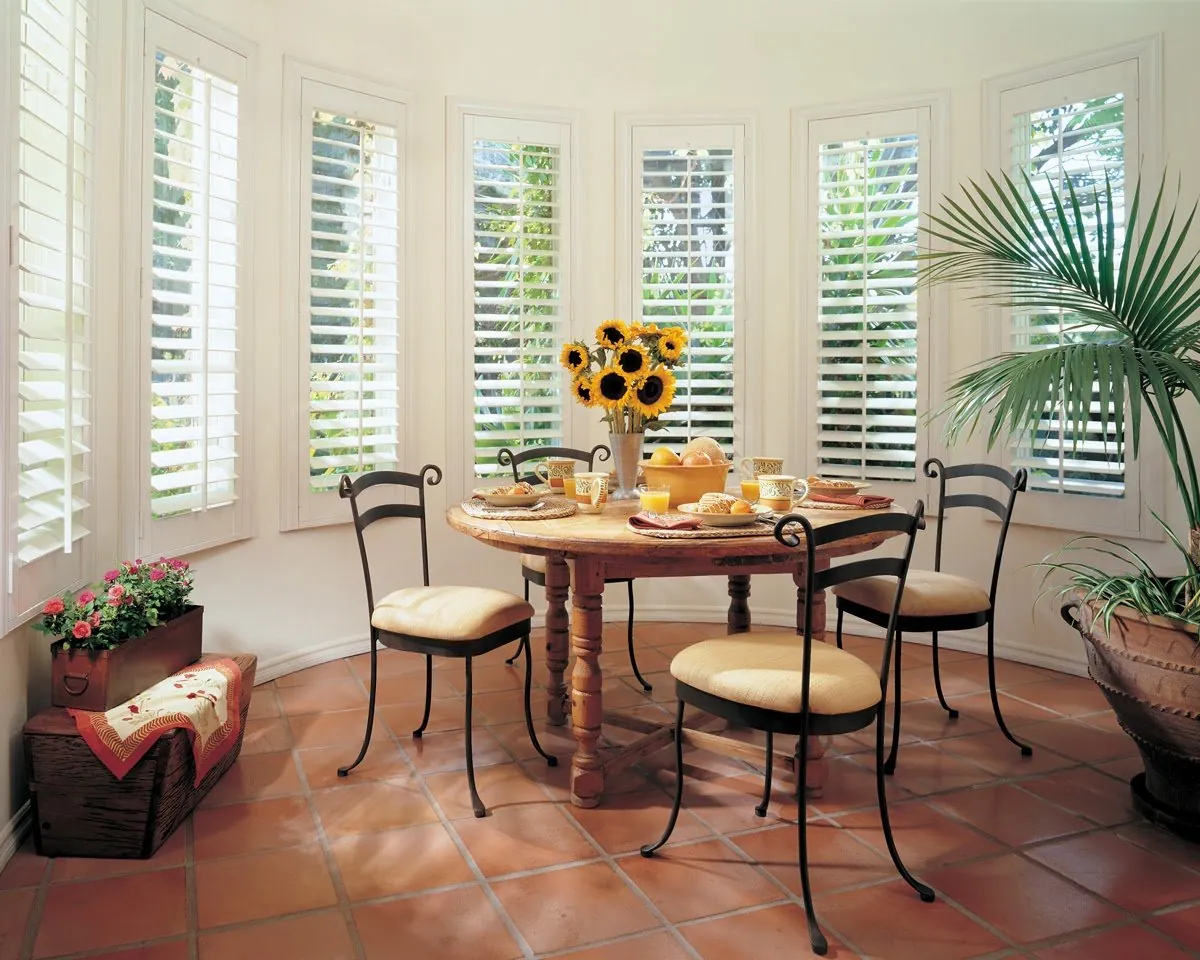
The tall sash in the older houses around the common usually lights rooms with high ceilings, and that height changes how a shutter behaves. When you tilt the louvers upward, daylight is thrown onto the ceiling and spreads back down across the room. In a room with a high, pale ceiling, that bounce can light the far corners in a way a lowered shade never could.
It also means you can have a bright room and a private one at the same time. With a divider rail, the lower bank of louvers can stay closed toward the sidewalk or the house next door, while the upper bank is tilted up to send light onto the ceiling. On a gray winter afternoon, swinging the panels fully open lets every bit of daylight in.
In the lower-ceilinged capes and ranches further out, the effect is gentler, so wider louvers and a lighter finish do more of the work there. That is one reason the louver size we suggest near the common is often not the one we suggest a few streets away.
Gallery dealer, certified installers
Blinds & Designs is a Hunter Douglas Gallery dealer, which is the brand’s own title for dealers who meet its standards. You can choose from every shutter collection, louver size and finish in a single visit. Our installers are certified by Hunter Douglas, and on installation day they set each frame square even in an opening that has moved, hang the panels, adjust the hinges and check that every louver closes flush.
We carry Hunter Douglas shades, blinds and drapery as well, offer interior design consultations, and handle PowerView motorization. For other rooms, see our roller shades in Norwood or roman shades in Norwood, or everything we offer on our Norwood page. You can also read what happens at an in-home consultation.
Questions from Norwood
Will shutter panels hit the radiator under my window?
Not if they are planned for it. We look at the radiator, any cover and the depth of the stool, then set the frame forward or choose the hinge side so each panel folds back cleanly.
How do you handle very tall Victorian windows?
With a divider rail across each panel, so the louvers split into an upper and lower bank that tilt independently. A medium louver usually suits a tall narrow sash.
Can I keep privacy from the house next door and still get light?
Yes. Angle the louvers up toward the sky and the view in is blocked while daylight still comes over each blade. A cafe layout on the lower sash is another option.
Do you have a showroom near Norwood?
Norwood is in our shop-at-home area, so we bring the samples to you. The nearest showroom is in Franklin if you would also like to stop by one.
Does the estimate cost anything?
No. Once we have measured, you receive a free estimate, with no obligation to go ahead.
Let us bring the samples
Request a consultation and we will come to your Norwood house with shutter samples, measure each window and leave you a free estimate. Or use the call button if you would like to talk first.