
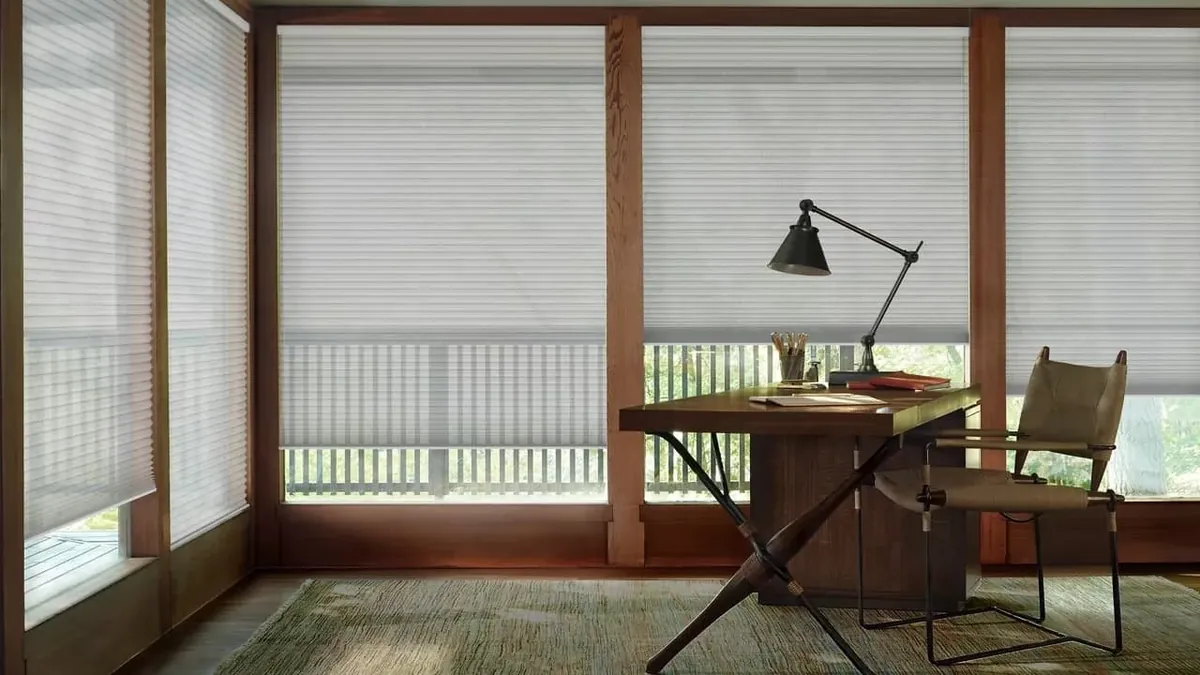
Tiny old sash and towering foyer glass
Medway’s windows run to two extremes. In the antique colonials near the village, the oldest sash is very small and set deep into thick walls, so each window is a little framed opening with a broad sill in front of it. Out in the subdivisions off Holliston Street, the large newer colonials go the other way, with foyer windows that rise the full two stories from the front door to the roofline. Between those two, you can see why we spend a lot of time talking about cellular shades in Medway, MA: no other soft shade copes as well with both.
The reason is the cell. A honeycomb shade is built from two fabric faces joined into a row of hollow chambers. When the shade is down, every chamber holds a slice of air that cannot circulate, and that unmoving air acts as a buffer between the room and the glass. Heat from your furnace lingers in the room a little longer on a winter night, and the summer sun hitting the window warms the room a little less.
For a small antique window that buffer is about comfort beside a cold pane. For a foyer that is mostly glass, it is about taking the heat and glare out of the busiest space in the house.
Honeycomb options for Medway windows
Here are the choices that suit Medway houses best, old and new. We bring every one of them to your home as samples.
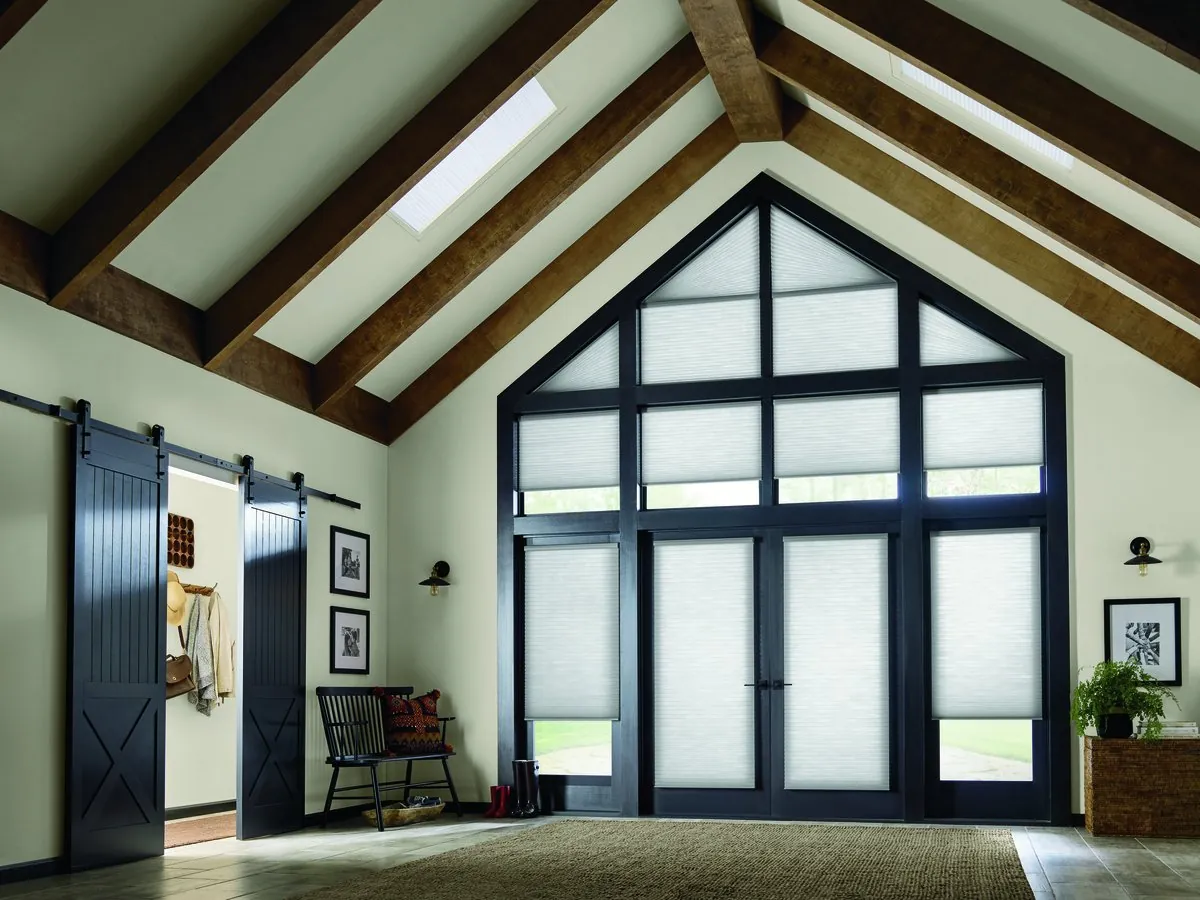
Inside mounts for deep jambs
The thick walls of an antique house leave room for the headrail inside the opening, so the shade sits back from the trim.
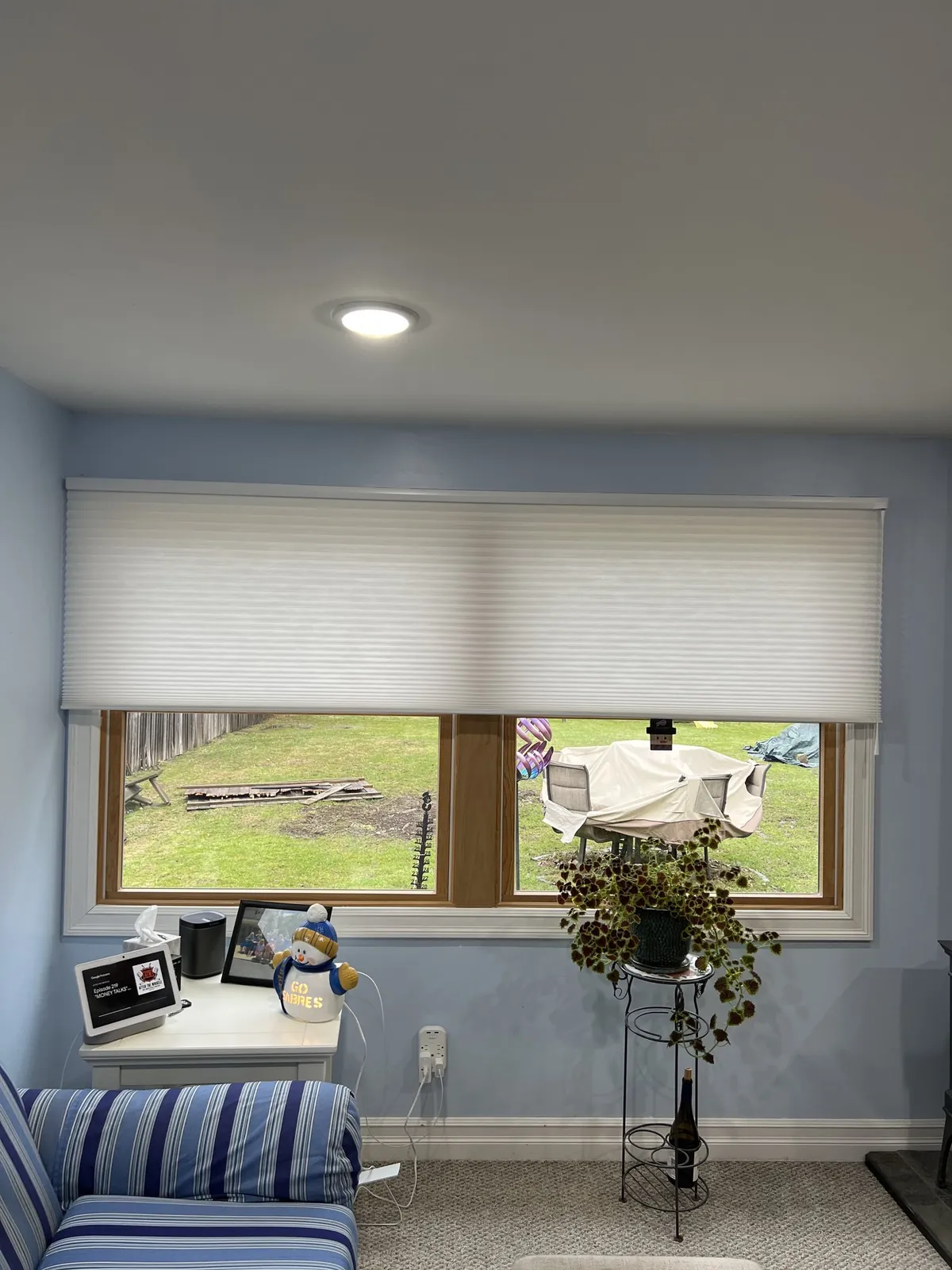
Single cell for small panes
A lighter, slimmer fabric that folds tight when raised, so a small old window keeps as much of its glass as possible.
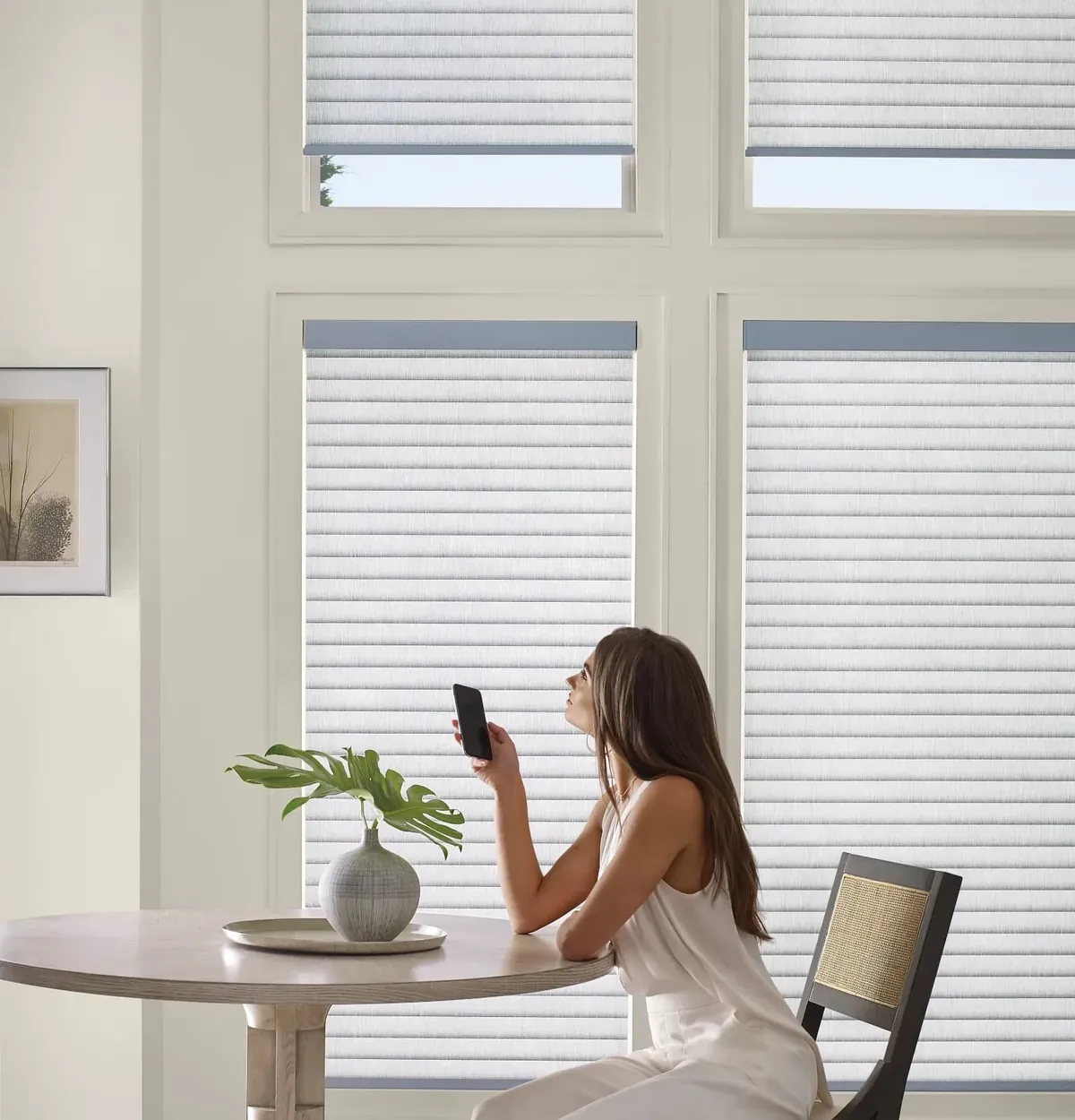
Motors for the foyer
PowerView moves the upper foyer shades from your phone or a remote, or on a timetable, so nobody has to reach them.
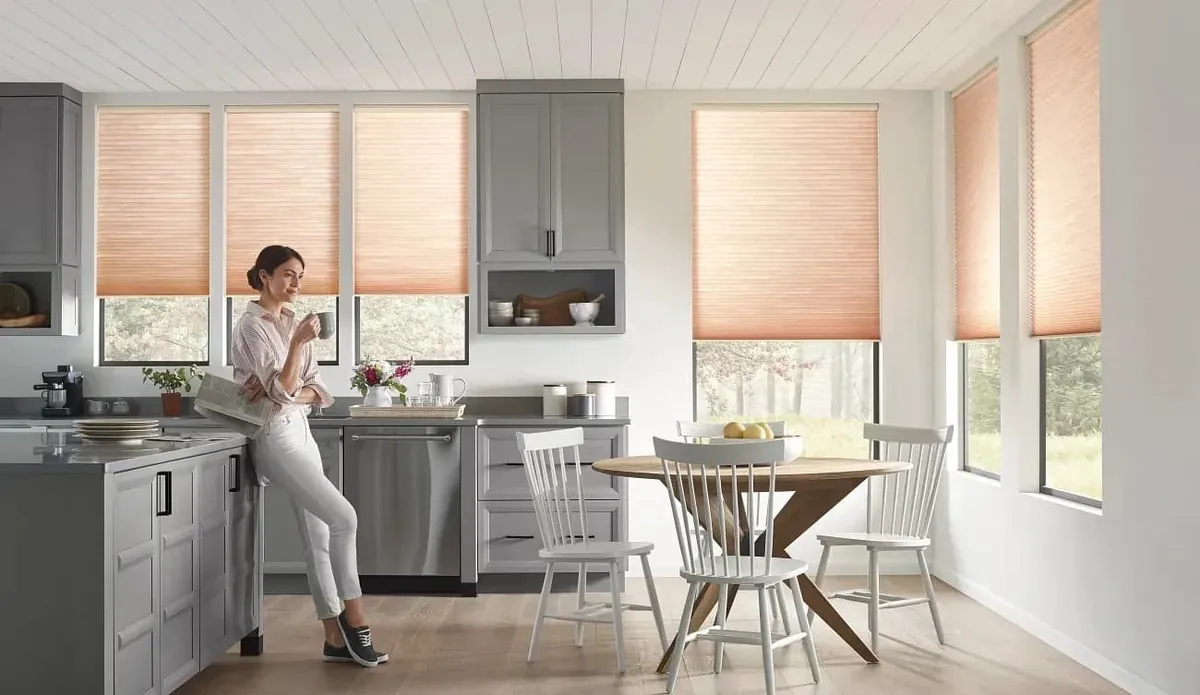
Light-filtering living rooms
A soft glow through the fabric, so a room facing the sun stays bright without the glare.
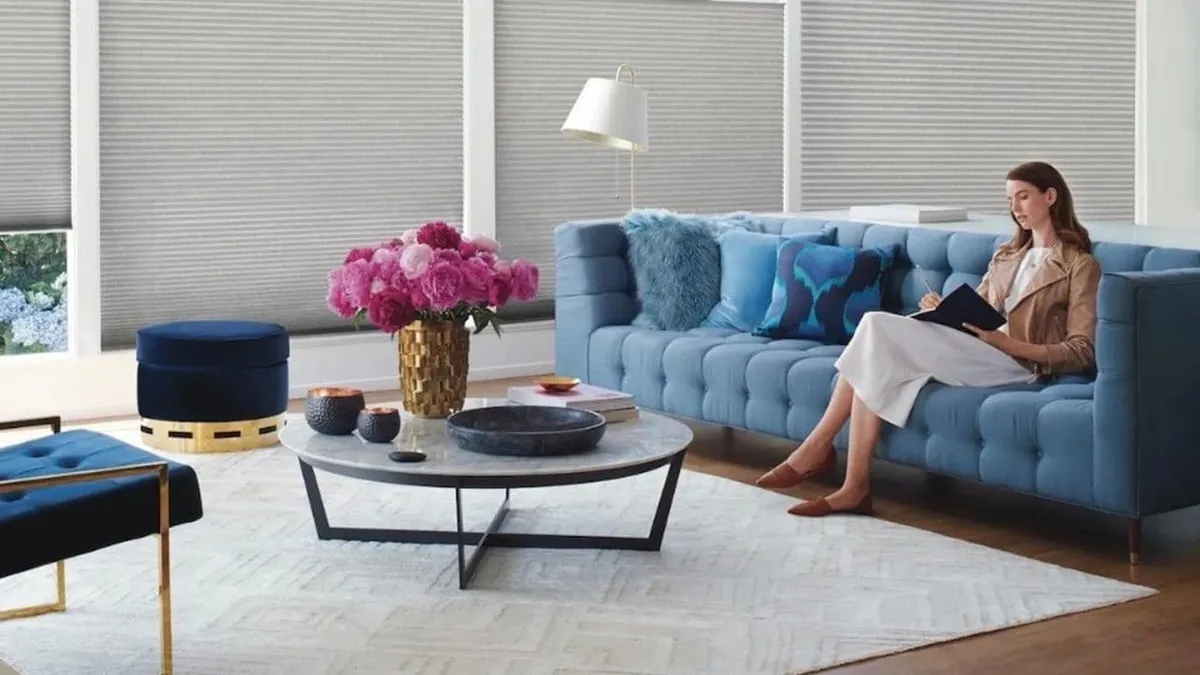
Double cell for cold corners
Two rows of chambers, for the north bedroom or the room over the garage that never quite warms up.
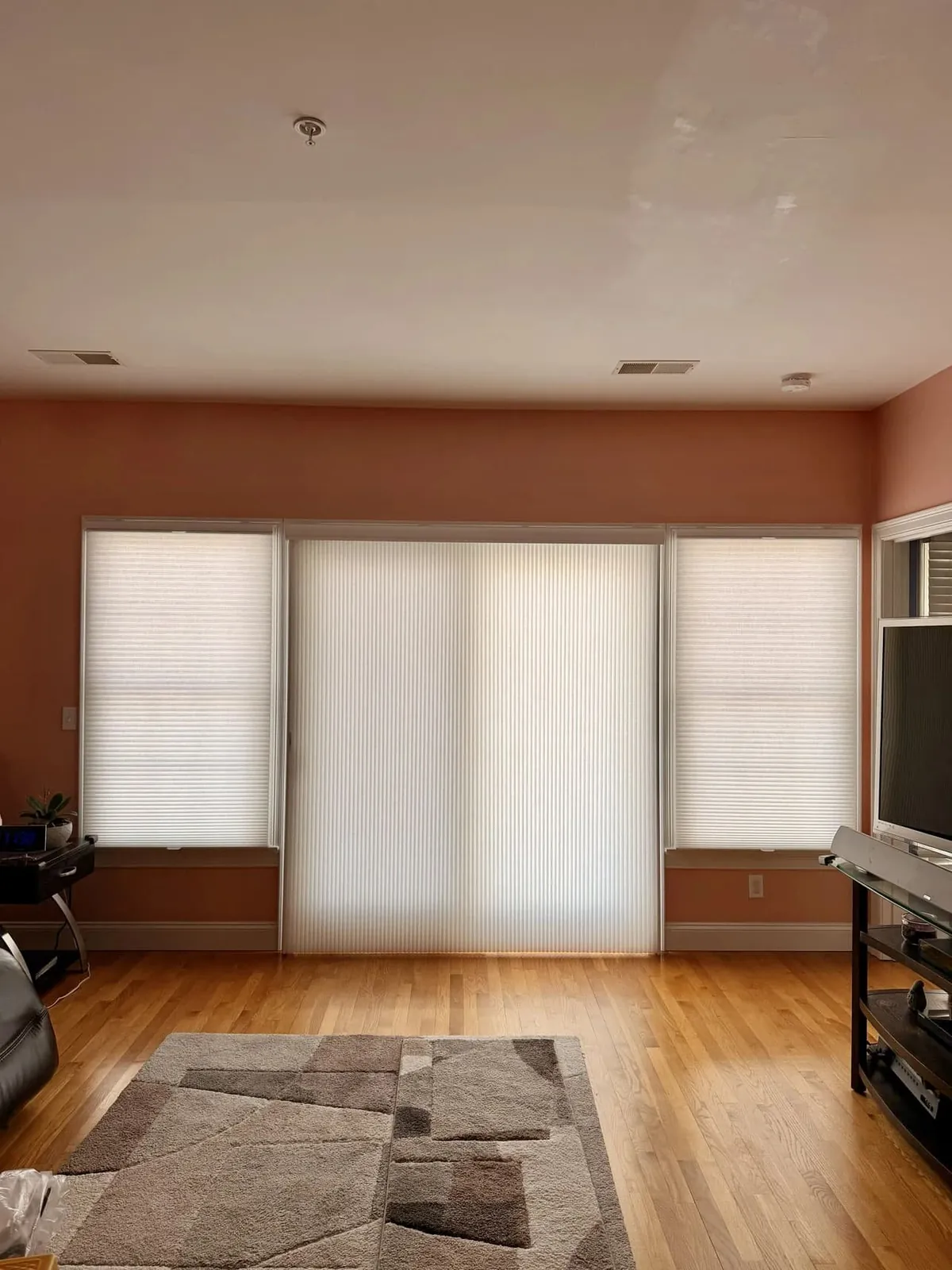
Sideways shades for sliders
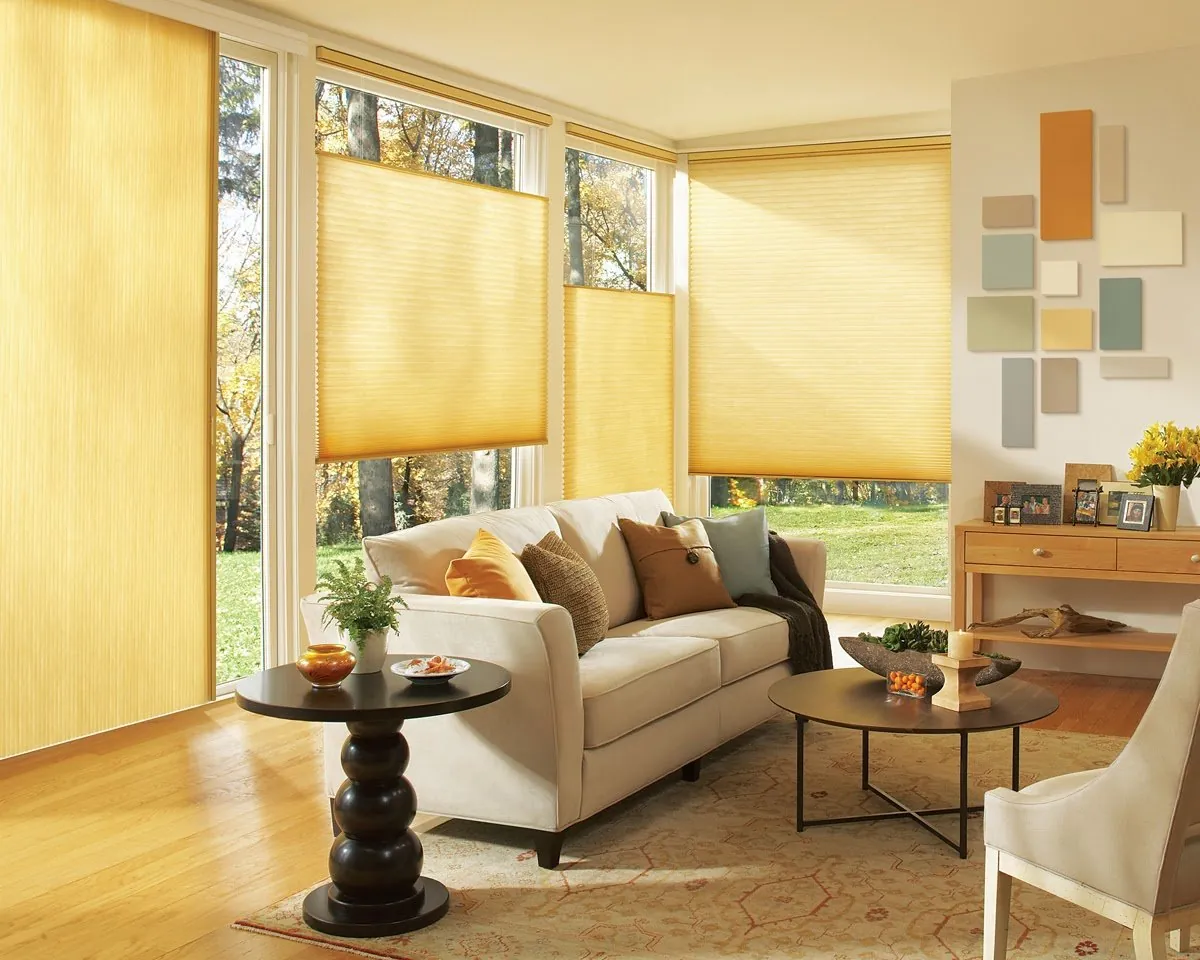
A vertical honeycomb on a track for the slider to the deck, matching the windows on either side.
The smallest, deepest sash in the oldest houses
Some of the oldest houses near Medway village have windows that seem almost tiny by modern standards, set into walls thick enough that the sill doubles as a shelf for plants or books. Those openings are a pleasure to fit, as long as the shade is built for them.
The depth is the good news. There is usually more than enough room for a honeycomb headrail to sit well inside the opening, back from the face of the casing. That keeps the trim completely clear and lets the shade drop straight down to the sill, close to the glass where it does its work. With a deep jamb, the shade can even sit far enough back that the sill stays usable when the shade is lowered.
The small size is the part that needs care. A bulky stack at the top of a small window can block a real share of the light, so we usually suggest a single-cell fabric, which folds up very compactly. We also check that the shade’s controls suit the window. On a tiny opening, a cordless shade is usually the simplest, because there is nothing hanging down and the bottom rail is easy to reach.
Old frames are rarely true, and a deep jamb makes any lean easier to see. We record the width high, low and in the middle, check the head of the frame for level, and build each shade to the opening it is going into rather than to an average.
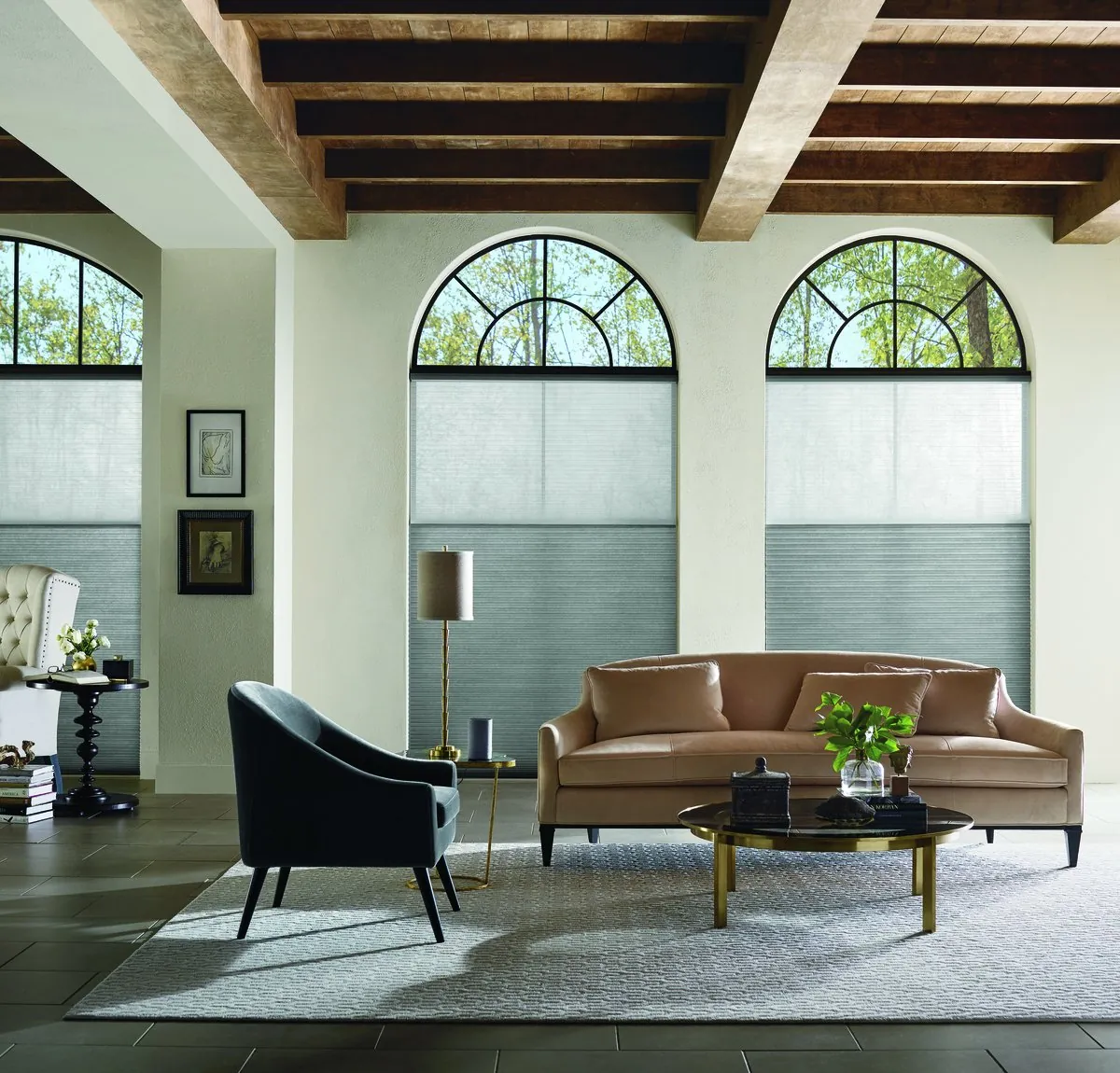
Antique colonials near the village
Beyond the very oldest sash, the antique colonials near the village tend to have the classic center-chimney or center-hall layout, with rooms that open onto the street at the front and onto the yard at the back. The front rooms are often the formal ones, with the best trim in the house, and they are usually the rooms you see from the road.
For those front rooms, how the shade looks from outside matters as much as how it looks inside. A row of shades all raised to the same height, in the same light neutral, gives a colonial a calm, even face. Inside, the fabric can be any color you like. We show you both sides of the samples so you can judge each one.
The back rooms, often kitchens and family rooms added or opened up over time, have a mix of window sizes. Honeycomb copes with that well, because every shade is made to its own measurements, and a mix of sizes still looks like one set when the fabric and lift match.
The subdivisions off Holliston Street
The newer colonials across the subdivisions off Holliston Street are large, with standard modern window openings and plenty of them. The usual wish list here is consistency, comfort in the big family room, and a solution for the foyer.
Consistency is easy with honeycomb. Choosing one Hunter Douglas line and one lift style for the whole house gives the front elevation an orderly look, while each room can take the opacity it needs. The family room often has a wall of windows facing the back yard, sometimes with a slider, and that is where a light-filtering fabric earns its keep, cutting the sun off the screen and the furniture while the room stays bright.
Many of these houses also have a bonus room over the garage, and it is often the coldest room in the house. That is where a double-cell shade, with two layers of trapped air, is worth considering.
Two stories of foyer glass
The foyer is the signature space of many newer Medway houses: a front door with tall glass above it, sometimes flanked by side lights, reaching up past the landing. It makes a striking first impression, but it also brings strong sun straight into the hall and up the stairs. On a summer afternoon a foyer facing south or west can be the warmest room in the house. On a winter night the same glass pulls warmth out of the hall.
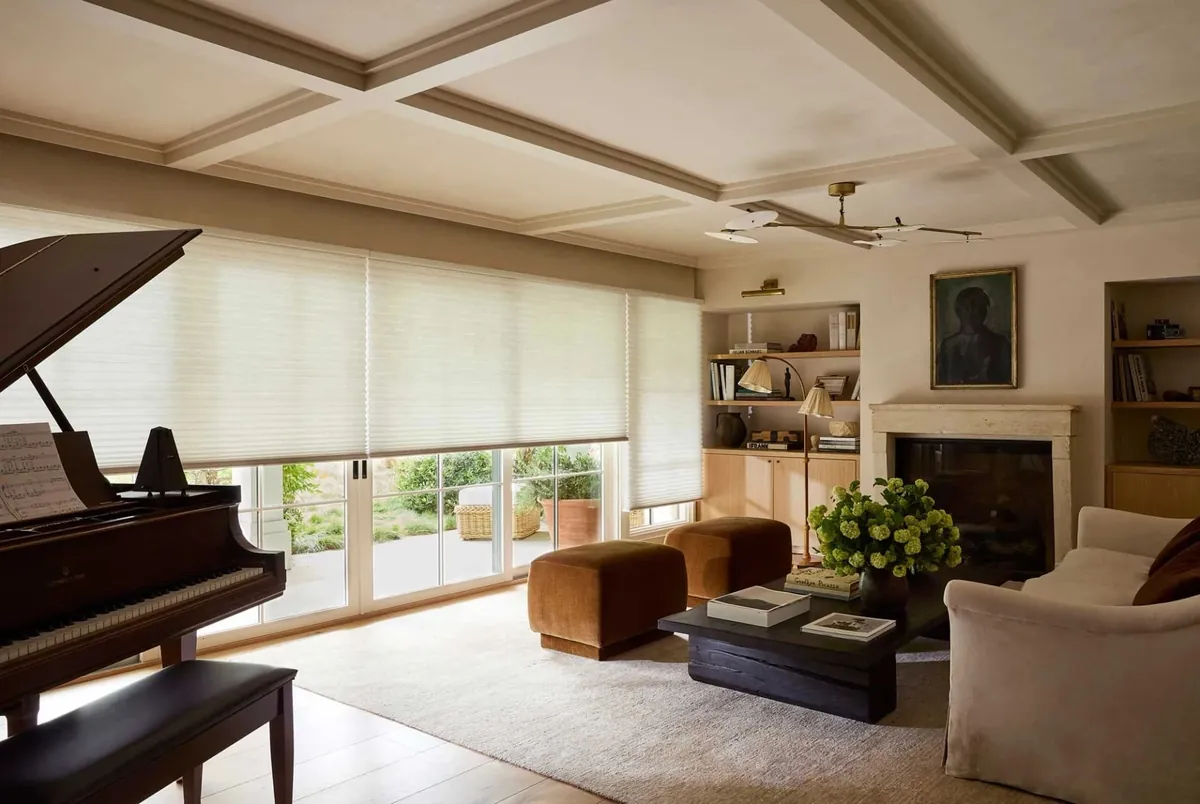
Honeycomb shades on each pane of that glass deal with both. The trick is making the shades read as one piece. We measure each pane separately, then build the shades so their bottom rails and stacks line up across the whole window wall, and so the side lights match the panes above.
The upper panes are out of reach from the floor, and often from the stairs too. PowerView motorization solves that. The shades can be moved from the app or a remote, or set to a schedule that lowers them during the brightest hours and raises them in the morning. Many households group the foyer shades so they move together with one touch. Planning cellular shades in Medway for a house like this usually starts with the foyer, because it shapes the choice of fabric for the rest of the house.
Using the shades through the year
Honeycomb shades work best when they are used with the seasons, and that is easy to build into the routine of a Medway house. In winter, lowering the shades at dusk keeps the warm air of the evening on your side of the glass, especially on the small, thin-glassed sash of the antique houses. On a bright winter day, raising the shades on the sunny side lets the low sun warm the rooms for free, and lowering them again when it sets holds onto that warmth.
Summer reverses the pattern. Shades on the south and west sides come down during the brightest part of the day, and the foyer glass is usually the first to close. In spring and autumn many people leave them open most of the day. With PowerView, that whole rhythm can run on a schedule, so the foyer and the big family room windows follow the season without anyone thinking about it. It is one reason we often suggest motorizing the foyer even when the rest of the cellular shades in Medway, MA, homes we fit are cordless.
Cordless, corded or motorized
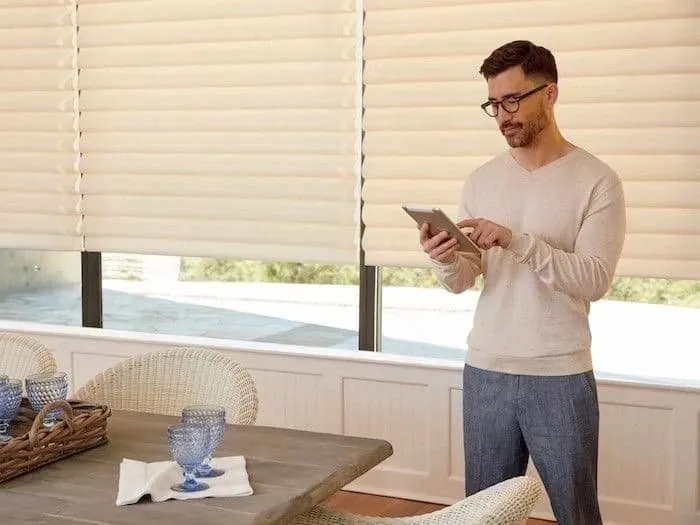
Most windows in town suit a cordless lift. You raise or lower the shade by its bottom rail and it stays where you stop it, with no cords to tangle and nothing hanging beside a deep sill full of plants. On the small antique sash that is almost always the right choice.
Wider windows, such as the family room bank in a newer colonial, are sometimes easier with a continuous cord loop, which moves a large shade with less effort. And for anything out of reach, including the upper foyer, a stair landing or a window behind a deep kitchen counter, motorization is the comfortable option. Many houses end up with a mix, and the shades still look like one set because the fabric and headrails match. When we plan cellular shades in Medway with you, we go through each window and suggest the lift that suits how you will actually use it.
Choosing between the two Hunter Douglas honeycomb lines
We fit both of the Hunter Douglas honeycomb collections, and the comfort comes from the same place in each: the air sealed inside the cells. The choice between them is about range and fit.
Duette is the larger collection. It has the most fabrics and textures, the biggest sizes and the specialty shapes, plus the vertical shade for sliders. In a Medway house, that range is often what the foyer needs, and it suits formal front rooms where the fabric is on show. Applause is a tighter collection with its own colors, and it sits very well on the standard openings that make up most of a newer colonial, and on the small panes of an antique.
Plenty of houses end up with both: Duette in the foyer and the front rooms, Applause in the bedrooms and the kitchen. The Duette honeycomb and Applause honeycomb pages say more about each, and our main cellular shades page shows the whole family.
Light, privacy and sleep
Every room has a slightly different job. A living room usually wants daylight without glare, so a light-filtering fabric that lets the window glow is the common choice. A bedroom usually wants darkness for sleeping, so a room-darkening fabric is the usual answer, and an outside mount that overlaps the frame cuts the thin lines of light at the edges.
Privacy is less about the fabric than about how the shade opens. A top-down, bottom-up shade can be lowered from the top to let in light and sky while the lower part stays closed. In a front room on a village street, or a bathroom on any street, that is often the single most useful option.

A home visit, step by step
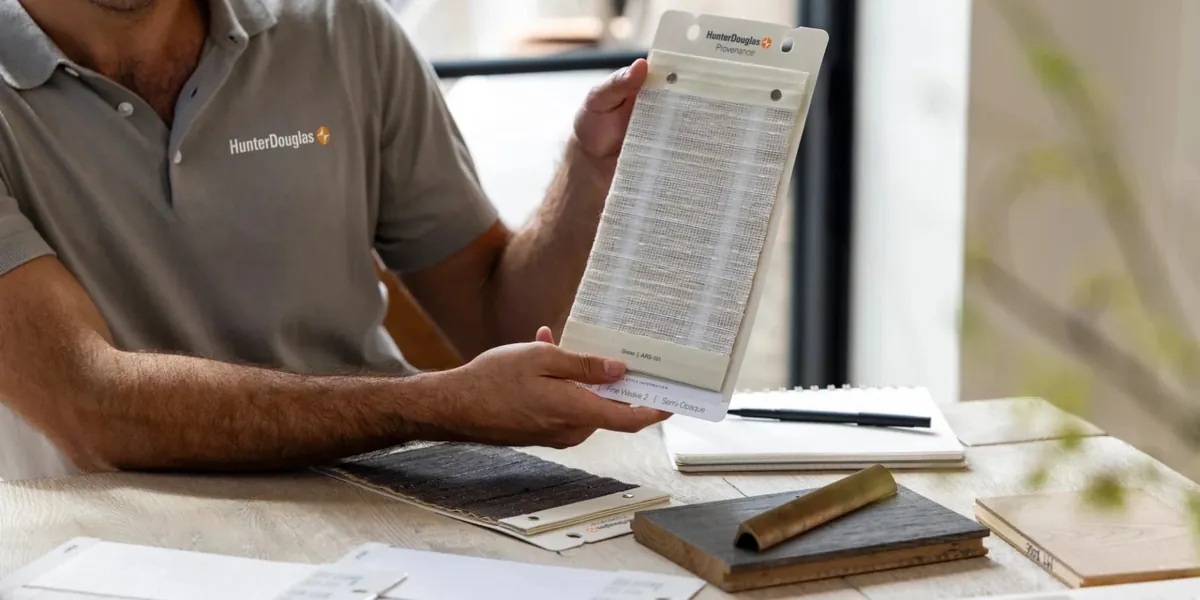
Most Medway customers start at home, because a fabric’s color changes with each window’s light and that is hard to judge anywhere else. Our vans carry samples, so we can bring the showroom to you.
- Ask for a visit through Request a Consultation or with the call button.
- We look at the rooms that matter most to you first, often the foyer and the coldest bedroom.
- You try fabrics at each window and compare light-filtering and room-darkening side by side.
- We agree how each shade will mount and operate, including motors for the upper foyer panes.
- Each window is measured, with extra care on deep old jambs.
- A free estimate arrives for your choices, and the decision stays yours to make in your own time.
Want help with the room as a whole? Ask about our interior design consultations. Our page on what happens at an in-home consultation has more detail.
From order to installation
- Your choices for each window, mount, fabric and lift, are confirmed with you before the order goes in.
- The shades are made to the measurements taken at your house.
- Our certified Hunter Douglas installers fit each shade, setting the brackets into solid wood and leveling the headrails.
- Foyer shades are lined up across the window wall and any motorized shades are paired with your remote or app.
- We run every shade up and down and show you how it all works before we go.
Our Franklin showroom is the closest
For Medway, the nearest place to see Hunter Douglas honeycomb in person is our Franklin showroom. It is a good place to start the conversation about your windows before we come to measure.
You can visit first and then book a home visit to measure, or start at home and come in later. Both work, and the estimate is free either way.
Why choose a Hunter Douglas Gallery dealer
Hunter Douglas names a small number of its dealers Gallery dealers, and Blinds & Designs is one. For your house it means the complete honeycomb collection to choose from: every Duette and Applause fabric, the sideways honeycomb for sliders and PowerView motors for the high glass.
Your shades are hung by installers certified by Hunter Douglas. The same company also takes care of blind and shade repair in Medway, and carries blinds, shutters, roller and roman shades and drapery for the rest of the house. See all of it on our Medway page, or look at roman shades in Medway for a softer look in a formal front room.
Questions from Medway
My old windows are very small. Will a honeycomb shade block the light?
A single-cell fabric folds into a very slim band when raised, so it takes up little of a small window. In a deep antique jamb, the shade can also sit back from the casing, keeping the trim clear.
How do you shade the upper foyer windows?
Each pane gets its own shade, built to line up with the others. The upper ones are usually motorized with PowerView, so you can move them from your phone, a remote or a schedule.
Which fabric should I choose for the room over the garage?
A double-cell honeycomb is the usual choice, because two layers of trapped air do more for a room that has cold air on several sides.
Will the shades look the same from the street?
They can. Many customers choose one neutral for the outward-facing side and still pick different colors inside room by room. We show you both sides of each sample.
How do I get an estimate?
Request a consultation. We measure the windows at your house and the estimate is free.
Your next move
Holding real fabric up to your own windows is the surest way to choose cellular shades for Medway homes. Request a consultation and we will come to you with the honeycomb range, measure each window and give you a free estimate. To see the shades in person first, visit the Franklin showroom, or use the call button to speak to it.