
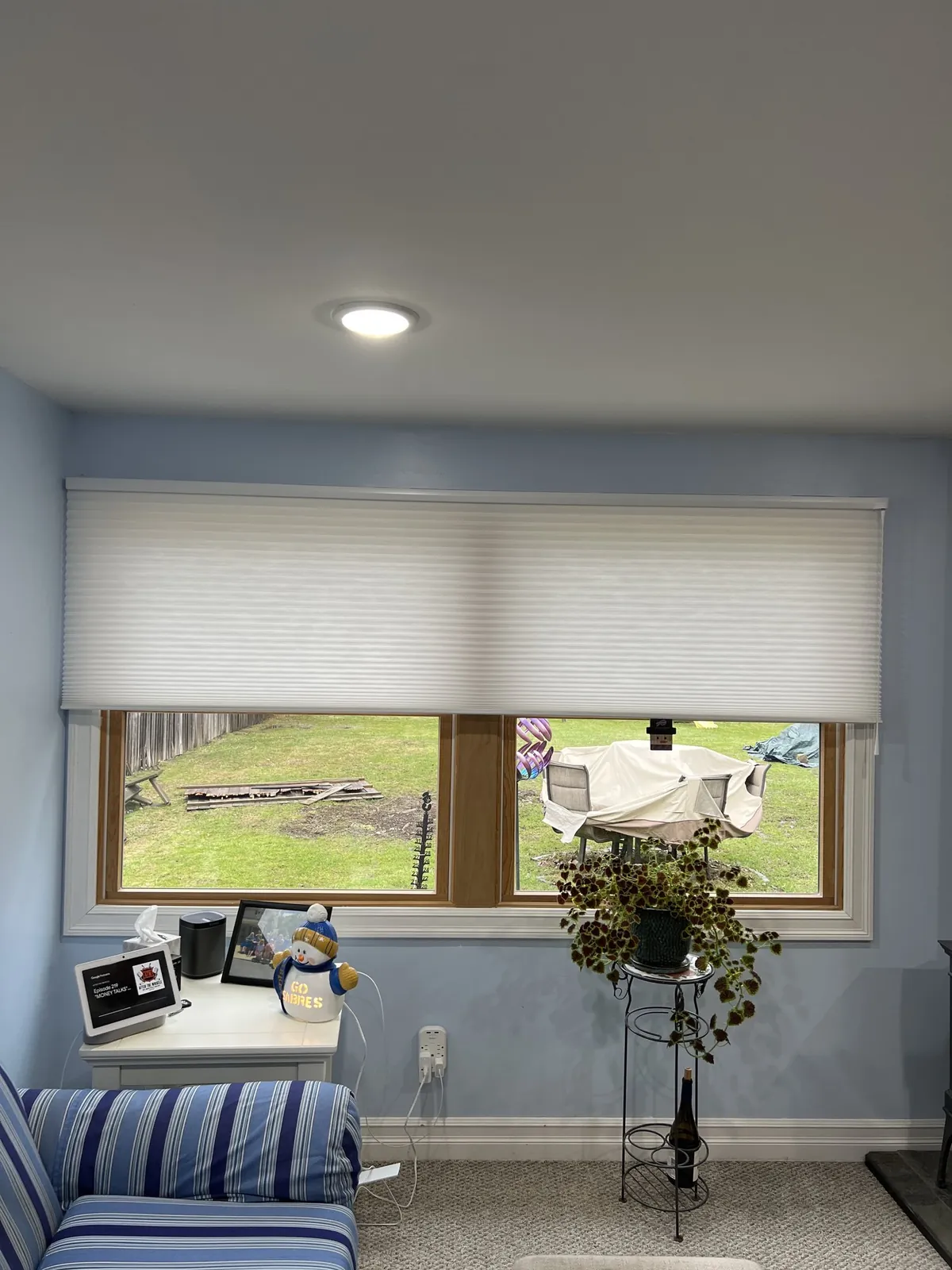
Small old windows, made-to-size shades
Drive along Main Street or follow the Acushnet River north and the houses tell you how the town grew. Old farmhouses sit back from the road with a barn or a shed behind them. Capes with a center chimney stand close by, and in between them, on lots carved out later, are the post-war ranches. Most of this housing is older and spread out, and a great deal of it still has small original window openings. That is the starting point whenever we fit cellular shades in Acushnet, MA.
Those small openings are the reason an off-the-shelf shade so rarely works here. A farmhouse window that was framed by hand is seldom a standard width, and the window beside it may be a quarter inch different again. A shade bought at a set size leaves light gaps down both sides, and every gap is a place where cold air slides past. A made-to-size honeycomb shade fills the opening edge to edge.
The cellular design is what keeps the room warm. Each pleat is a hollow cell that holds a layer of still air between the glass and the room. For a north-facing farmhouse bedroom or a cape’s back room that never quite heats up, it is the warmest window covering Hunter Douglas makes.
Three honeycomb choices that suit Acushnet houses
There are many fabrics and options in the range. When we talk through cellular shades in Acushnet, the conversation usually settles on these three, and we bring samples of all of them to your windows.
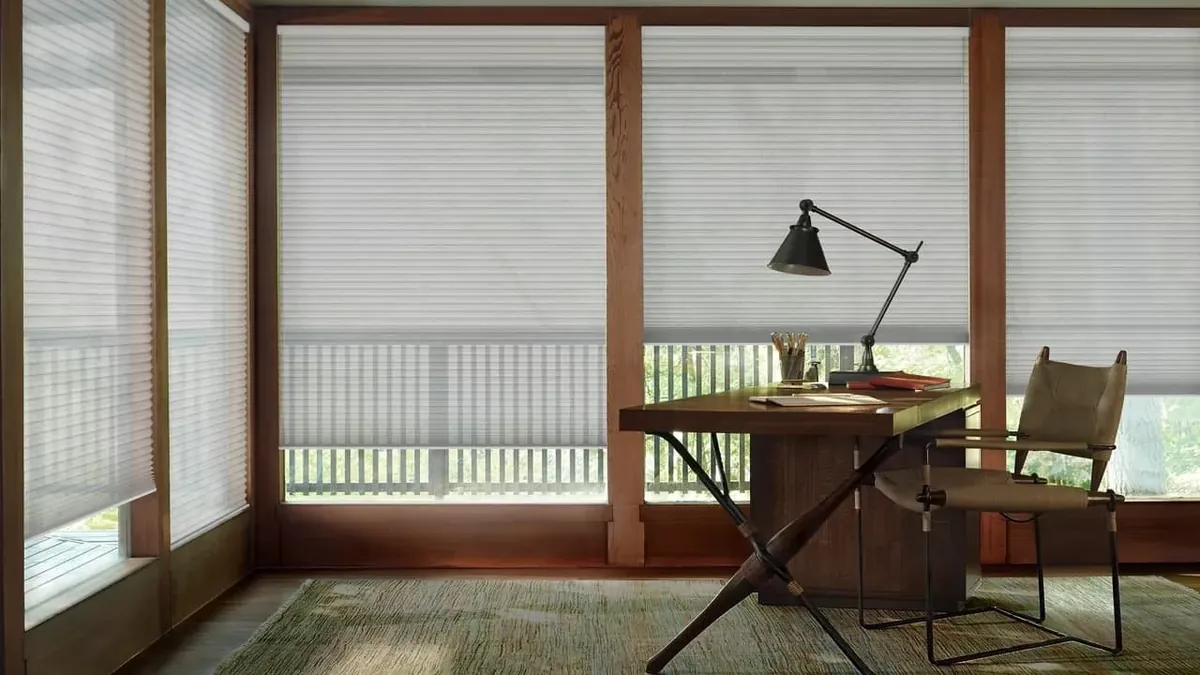
Duette for the front rooms
Hunter Douglas’s original honeycomb shade, with the widest set of fabrics, cell sizes and lift systems. It sits neatly inside the narrow casing of an old farmhouse window and almost vanishes when it is raised.
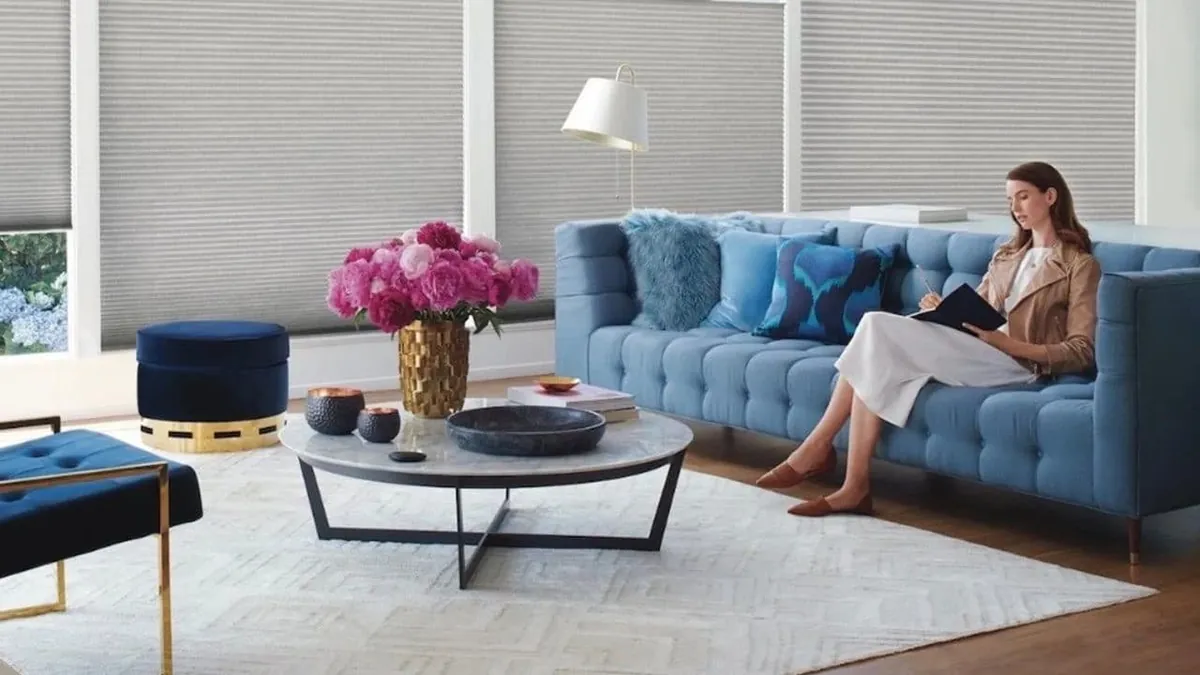
Applause for the rest of the house
A second Hunter Douglas honeycomb line with its own fabrics and colors. It is a sensible choice for a ranch’s bedrooms, a cape’s kitchen or the dormer rooms upstairs.
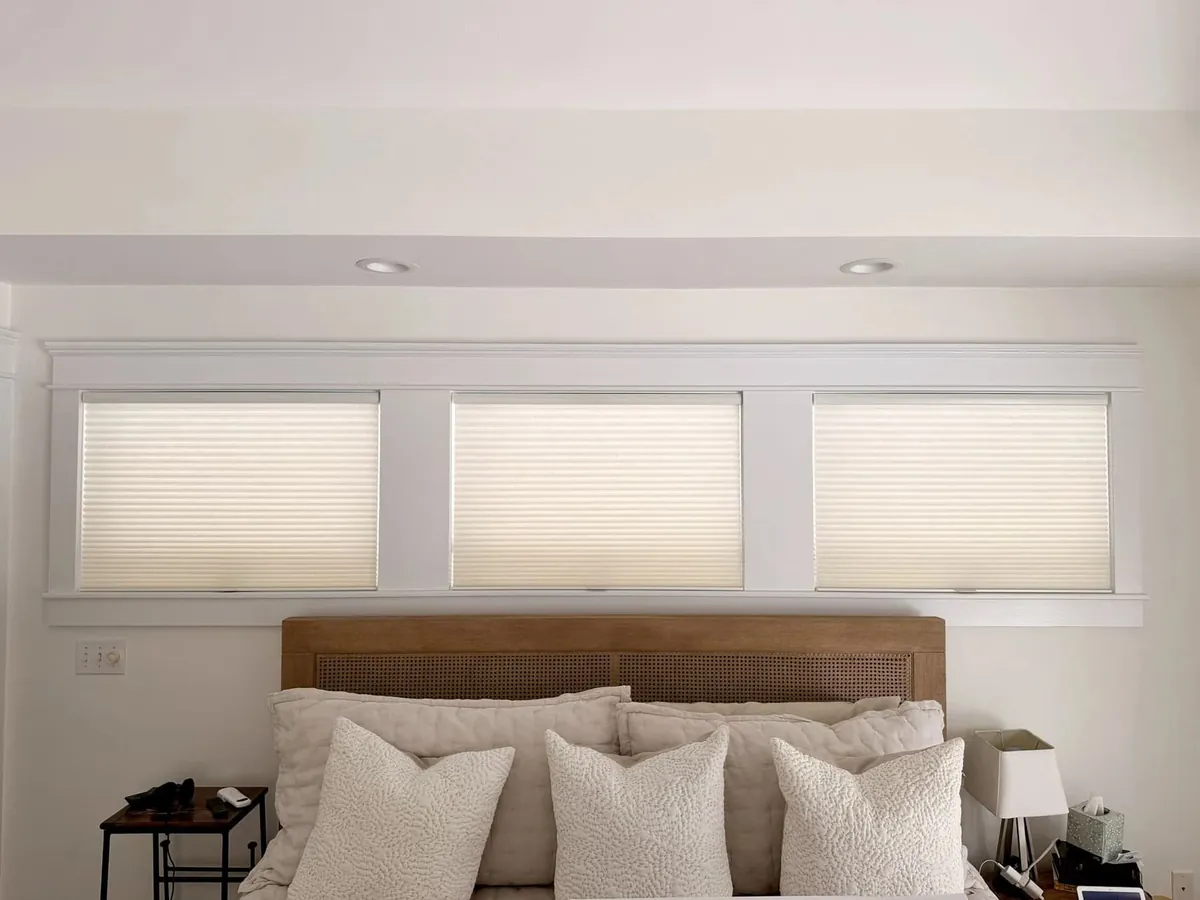
Darkening cells for bedrooms
Room-darkening fabrics keep a bedroom dim in the early morning while the cells still hold the warmth in. A good fit for the low windows under the eaves of a cape.
What a cape’s windows ask of a shade
A classic cape has a simple plan: a center door, a window or two on each side of it, and small windows tucked into the dormers or the gable ends upstairs. Those upper windows are often short and nearly square, and the rooms behind them are where heat goes to escape, under a sloping ceiling with the roof right above you.
A cellular shade is well suited to those rooms. It stacks very tightly when raised, so on a short window you lose almost none of the glass. Lowered, it seals the opening with a soft panel of cells that slows the cold coming off the pane. In a dormer bedroom that makes the difference between a room you use and a room you close off for the winter.
Downstairs, the windows of an older cape are usually double-hung with plain wood casings. Many owners have kept those casings painted and in good order. An inside mount keeps them in full view, with the headrail tucked up inside the frame. Where the frame is too shallow, we mount on the casing instead and choose a headrail that sits neatly against the trim.
Farmhouses along the river and the old roads
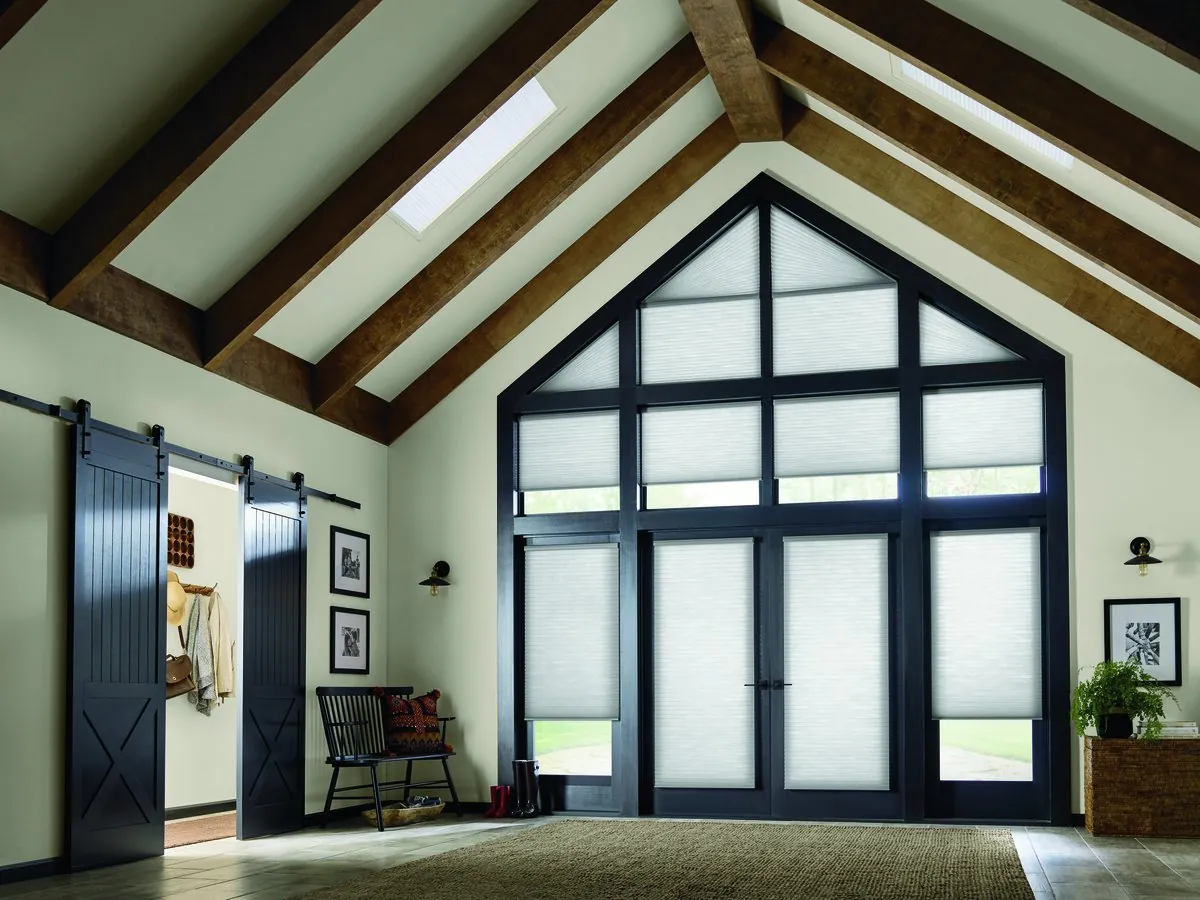
The farmhouses in Acushnet were built for the work of the land, and many have been added on to over the years: an ell here, a kitchen extension there, a back porch closed in to make a room. The result is a house with windows of many sizes and ages under one roof. Original sash with wavy glass sits in the oldest part, newer replacement units in the additions.
Cellular shades help pull a house like that together. Because every shade is made to its own opening, a run of mismatched windows can all wear the same fabric and the same color, and from the road the house looks calm and even. Inside, each room gets a shade sized for its own window, so nothing sags, gaps or hangs crooked.
The old sash brings its own questions. Frames that have moved over the years are rarely square, and pulley pockets or sash stops can get in the way of a headrail. We measure each window in several places and tell you plainly which mount will sit best. On a crooked frame an outside mount often looks better than forcing an inside mount that shows a tapered gap.
Post-war ranches between the older houses
The ranches that fill the lots between the farmhouses and capes were built with a different kind of window. You often find a broad picture window in the living room, a slider to the back yard, and horizontal windows in the bedrooms set higher on the wall. They are easier to fit than old sash, but they bring their own heat problem: a lot of glass on one wall.
On a picture window we can split the width into two or three shades on a single headrail, so they rise and fall together, or set them to work separately. A light-filtering fabric keeps the living room bright while it is down, so you can keep the warmth in on a winter afternoon without switching the lamps on. For the slider, a vertical honeycomb shade draws across the door and stacks to one side, giving the door the same insulating cells as the windows.
Why the honeycomb keeps a cold room warm
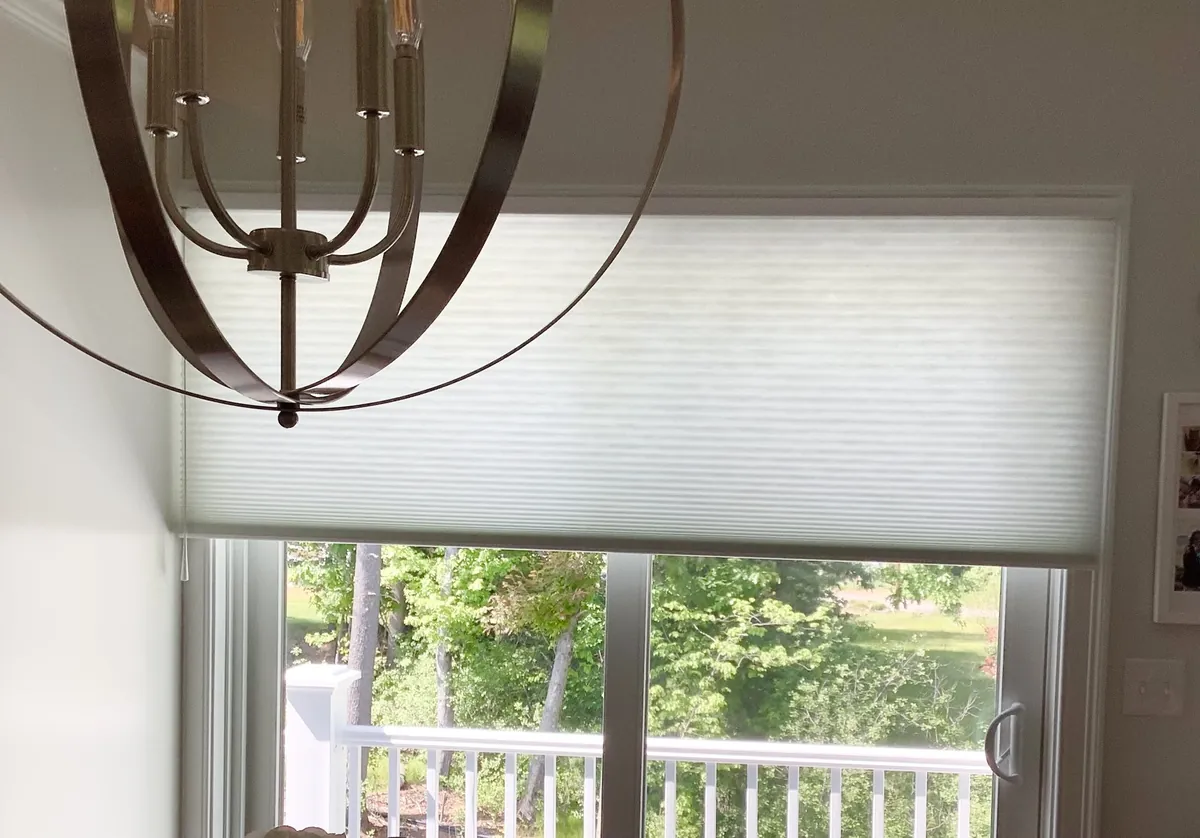
Look at the edge of a cellular shade and you see a row of hollow cells running across the window. When the shade is down those cells trap air, and still air is slow to pass heat along. Cold from the pane is slowed on its way into the room, and warmth from your stove or radiators is slowed on its way out to the glass.
That is why our first question in an older house is always the same: which room feels coldest? In Acushnet it is usually the room on the north side, the one over an unheated porch, or the bedroom in the oldest part of a farmhouse. We start there, because a honeycomb shade makes the most difference where the window is the weakest point.
Duette also offers fabrics with a cell within a cell, and double-cell constructions that stack two rows of cells together. More layers of trapped air means more resistance to the cold. At the consultation you can hold a single-cell and a double-cell sample against the same window and compare how they feel and how much light each lets through.
Keeping the house right from the road
An old cape or farmhouse has a face, and the windows are most of it. Muntins, painted sash and a plain white casing give those houses their look from Main Street, and a window covering should not fight it. Cellular shades are good at staying out of the way. Raised, a honeycomb shade folds into a slim stack at the top of the frame, so the divided panes show as they always have. Lowered, it presents a flat, even face to the street.
From outside, the back of every shade can show the same color, usually white or a soft neutral, even when the fabrics facing into each room differ. That keeps the front of the house tidy while the parlor can be warm cream and a bedroom a deeper tone. For a farmhouse with an ell or a closed-in porch, it ties the older and newer parts together.
When we plan cellular shades in Acushnet for a house with original sash, we also look at how the shade sits against the muntins. An inside mount set close to the glass keeps the bars visible, while a mount further forward can hide them. We show you both before you choose.
Fitting a window that is not quite standard
Small original openings are where a made-to-size shade earns its keep, and they are also where careful measuring matters most. When we fit cellular shades in Acushnet, this is how we approach each window.
- We measure the width at the top, the middle and the bottom of the opening and work from the narrowest of the three.
- We measure the height on the left, in the center and on the right, because older frames rarely match side to side.
- We check how much depth the frame offers for the headrail and note any sash stops, locks or pulleys in the way.
- We agree the mount, the fabric and the lift system with you window by window before anything is ordered.
- When the shades arrive, our certified Hunter Douglas installers fix the brackets into solid wood, level each headrail and test every shade with you.
Because the shade is built to those numbers, it sits close to the frame on both sides. A narrow edge gap looks tidier and leaves less room for cold air to move around the shade.
Lift systems for small and awkward windows
How a shade lifts matters more on small windows than you might think. A long cord hanging beside a short farmhouse window looks out of place and gets in the way of the sill. A cordless lift does away with it: you raise and lower the shade by its bottom rail with one hand, and nothing dangles. It is also the safer choice in a house with children or pets.
Top-down, bottom-up shades lower from the top as well as rising from the bottom. On a first-floor window close to Main Street, that lets you open the top for light and sky while the bottom stays covered. It also lets you fine-tune the light in a bedroom without raising the whole shade.
For windows you cannot reach easily, such as a high gable window or a window over a deep kitchen counter, PowerView motorization raises and lowers the shade from a remote, the app on your phone or a set schedule. Our motorized blinds in Acushnet page goes further into automation.
Picking a fabric and an opacity
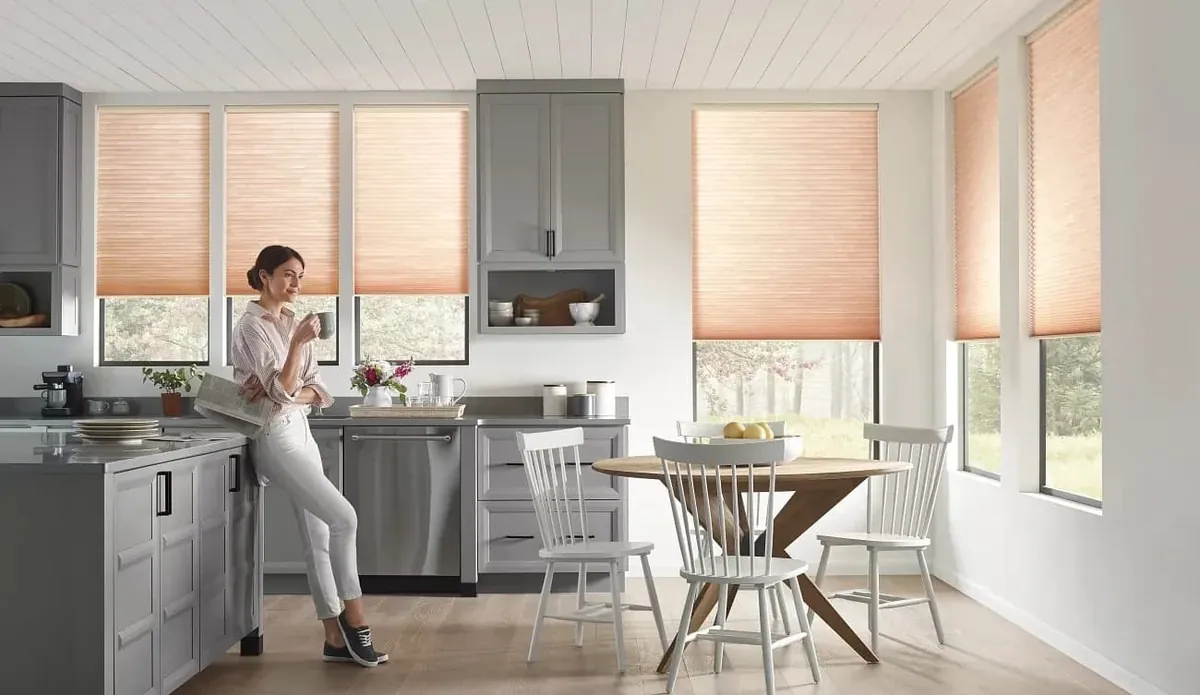
Honeycomb fabrics come in a few levels of light. Sheer fabrics let soft daylight through and show shapes outside. Light-filtering fabrics give daytime privacy while the room stays bright, because the cloth lights up softly and keeps the room behind it hidden. Room-darkening fabrics block most of the light for bedrooms and media rooms.
Color matters in older houses with painted trim. White and soft ivory fabrics blend into a white casing so the shade reads as part of the window. A warmer tone can suit a farmhouse kitchen with natural wood. From outside, many owners like every shade on the front of the house to show the same backing color, even when the room colors differ, and that can be arranged.
Bright south windows are worth a thought too. A paler fabric copes better with years of direct sun, and we will point out which ones suit a window that takes the full afternoon light across an open field.
Your consultation, at your own windows
A shade sample under store lights tells you little about how it will look on your window. That is why most of our Acushnet work begins with a visit to the house. Our vans carry the honeycomb samples, so we can bring the showroom to you.
On the day, we walk through the rooms with you and start where the problem is worst. You hold real fabric up against your own trim, at your own windows, in the light you live with. We talk through mounts and lifts, measure every opening, and give you a free estimate for the shades you are considering. There is no pressure to decide at the door.
If you want help with the rest of the room as well, our interior design consultations cover color, fabric and how the window treatments work with the furniture. You can read more about what happens at an in-home consultation before we arrive.
Duette and Applause, side by side
The two lines work on the same principle: a pleated fabric folded into cells that hold air. Where they part ways is choice. Duette offers the deepest list of fabrics, textures and cell sizes, along with specialty shapes and the vertical version for sliders. Applause has a separate palette of its own and suits most standard openings.
Plenty of Acushnet orders use both. A farmhouse might take Duette in the parlor and the front bedrooms, the rooms visitors see, and Applause in the kitchen, the back hall and the bedrooms in the newer addition. Our Duette honeycomb shades and Applause honeycomb shades pages explain each line, and the main cellular shades page covers the whole range.
A Gallery dealer for the whole house
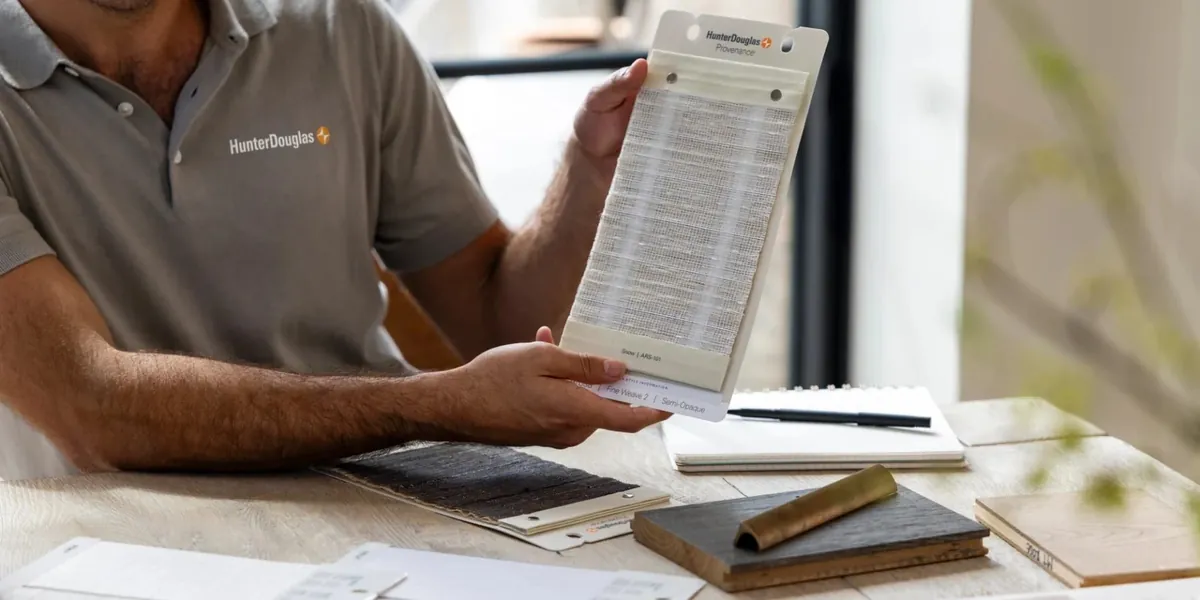
Blinds & Designs is a Hunter Douglas Gallery dealer. That is Hunter Douglas’s own name for dealers who meet its standards, and it means the honeycomb range is in our hands in full: every Duette and Applause fabric, every lift system, the vertical shade for sliders and PowerView.
The installers who fit your shades are certified by Hunter Douglas, so each one goes up the way the maker designed it. If something needs attention later, we handle blind and shade repairs as well, on shades we fitted and on ones you already own.
Many Acushnet houses need more than one kind of covering. A farmhouse kitchen might suit wood blinds, a ranch living room a roller shade. See our custom blinds in Acushnet and plantation shutters in Acushnet, or everything we offer in town on the Acushnet page.
Questions from Acushnet
My farmhouse windows are all slightly different sizes. Is that a problem?
Not at all. Every honeycomb shade is made to its own measurements, so each window gets a shade that fits it. We measure each opening in several places and allow for frames that are out of square.
Will a cellular shade fit inside a shallow old window frame?
Often it will, because the headrail is compact. Where sash stops, locks or pulleys leave too little depth, we mount the shade on the casing instead and tell you which looks better on that window.
Which rooms should I start with?
Start with the room that feels coldest in winter. In older houses that is usually a north-facing bedroom, a room over an unheated space, or the oldest part of a farmhouse. A honeycomb shade helps most where the window is the weak spot.
What is the best choice for the slider on my ranch?
A vertical honeycomb shade. It draws across the door and stacks to one side, so you can walk straight out, and it gives the door the same insulating cells as the windows around it.
How do I find out what the shades will cost?
Request a consultation. We measure every window you are thinking about and give you a free estimate, with samples in hand so you can choose fabrics at the same time.
Start with one cold room
The easiest way to judge cellular shades in Acushnet is to see them at your own windows. Request a consultation and we will bring the honeycomb samples to your house, measure every opening and give you a free estimate. If you would rather see Hunter Douglas shades in person first, the North Dartmouth showroom is our nearest location, or use the call button to talk it through.