
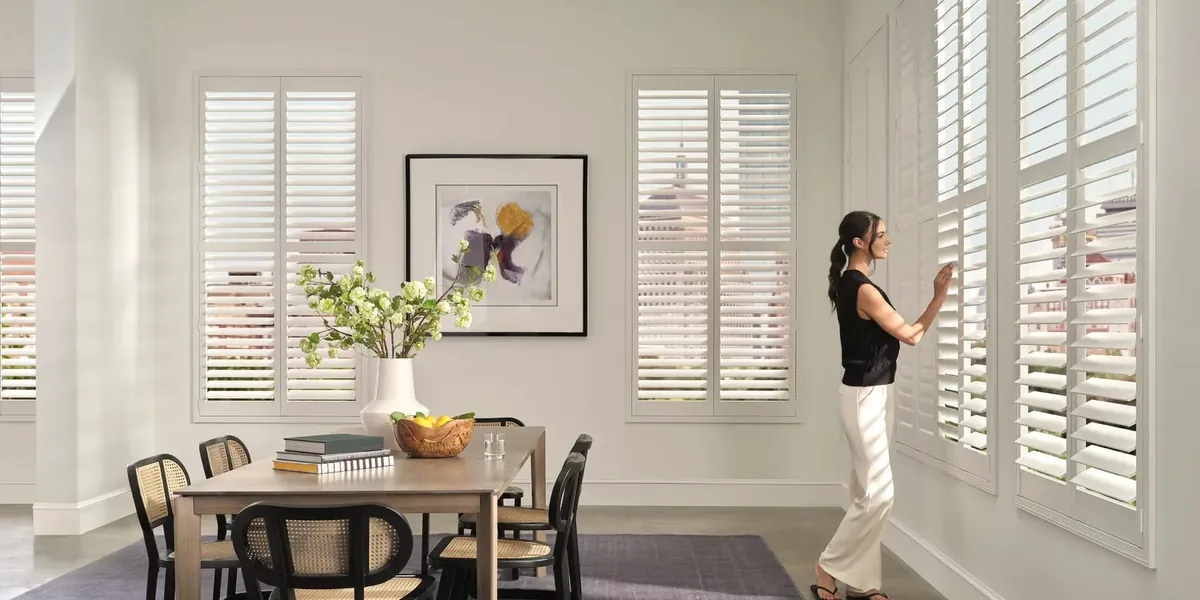
West to the river, sun and salt to match
Most of Tiverton looks west. The shore runs along the Sakonnet River, and the houses built on it, along with the ones ringing Nanaquaket Pond, turn their biggest windows toward the water and the sunset. Those rooms are glazed heavily and get little shelter: the afternoon sun comes straight across the river, and salt air rides in on every summer breeze. Inland, around Four Corners, the older farmhouses and shingled capes have smaller windows and a quieter set of needs. Planning plantation shutters in Tiverton, RI, means taking both halves of the town seriously.
On the water side, the challenge is the afternoon. A west-facing room is pleasant in the morning and then, from early afternoon until sunset, takes low, hot sun over open water. Glare bounces off the river, floors and furniture fade, and the room can be hard to sit in just when you most want to enjoy it.
Shutters are one of the best answers for that kind of room. Louvers tilt to throw the low sun up toward the ceiling while you keep the view, the right material ignores salt and damp, and nothing is left hanging across the glass when the panels fold open.
Plantation shutters in Tiverton, RI: what goes where
Each Hunter Douglas collection comes with us in every blade size. These are the ones that suit Tiverton houses best, and the features that make the most difference.
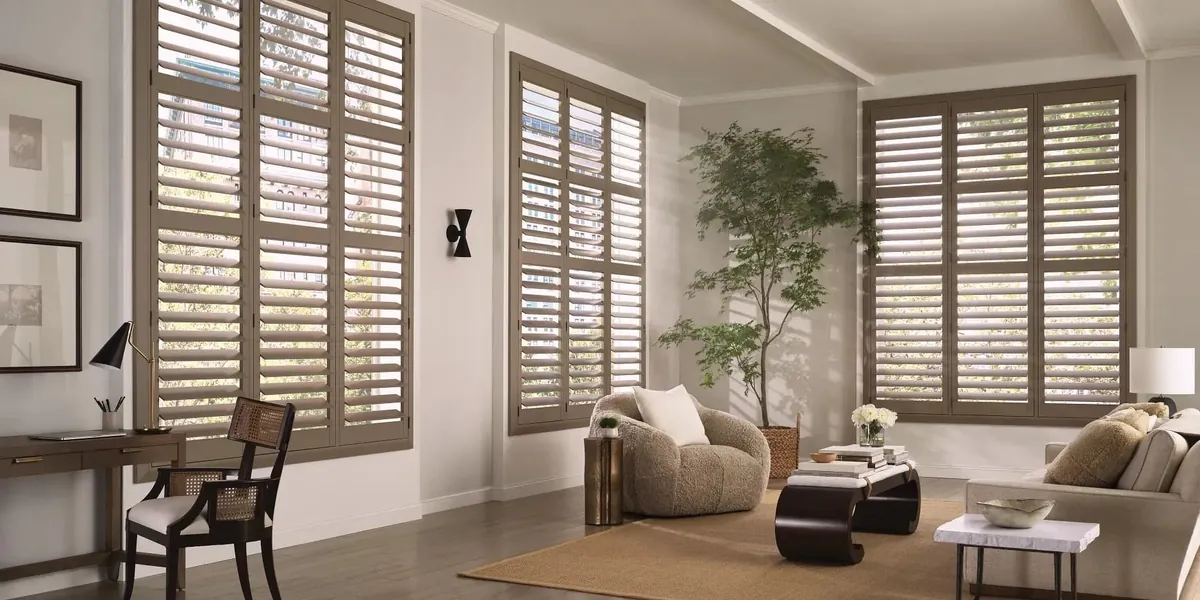
Palm Beach facing the water
Polysatin, solid all the way through. It will not swell or peel in salt air, which makes it the safe choice on the river side.
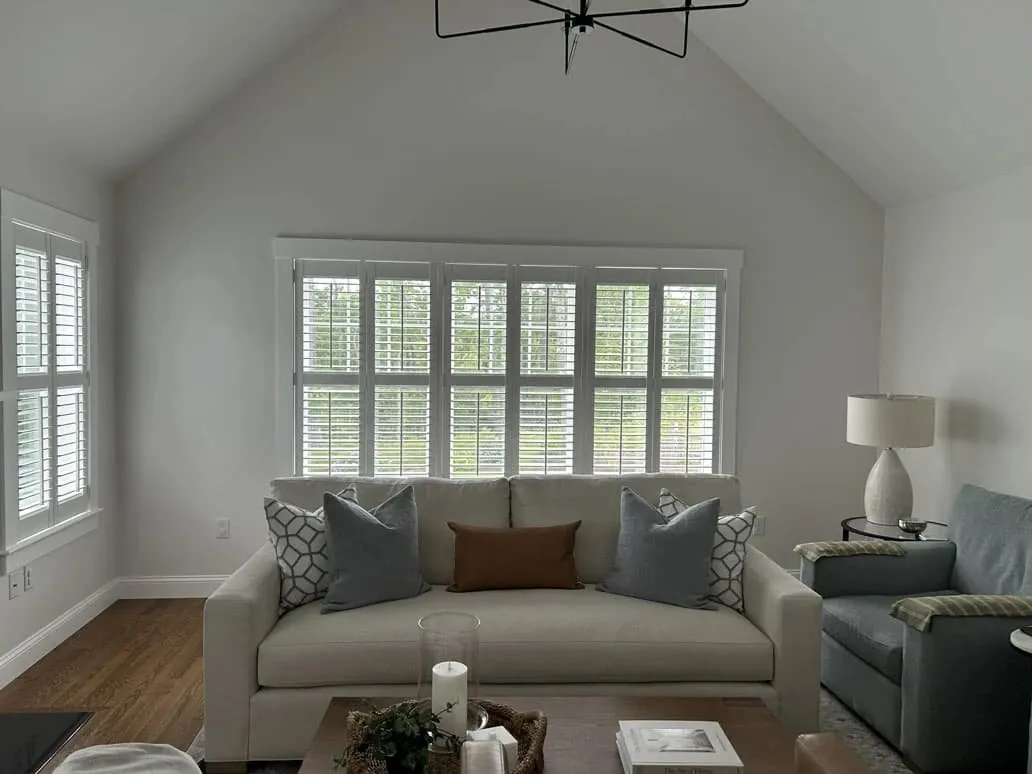
NewStyle for the main rooms
A composite hybrid that holds its shape, with a crisp painted look. A good fit for living rooms and bedrooms set back from the shore.
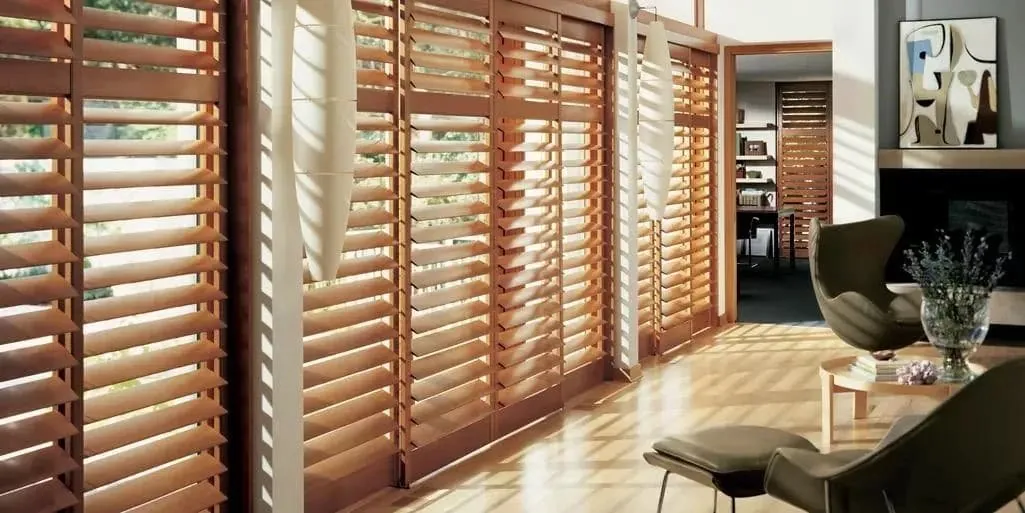
Heritance near Four Corners
Hardwood, painted or stained, for the front rooms of an old farmhouse or cape where the woodwork is worth showing off.
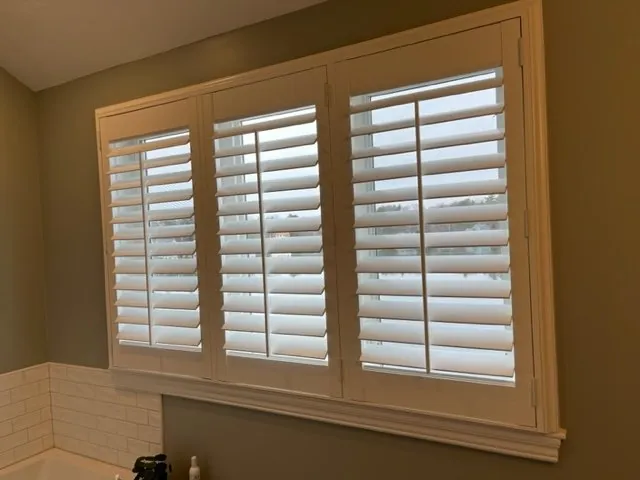
Bathrooms and kitchens
Steam and splashes do Palm Beach no harm. It goes in the wet rooms of any house, matched to the rest.
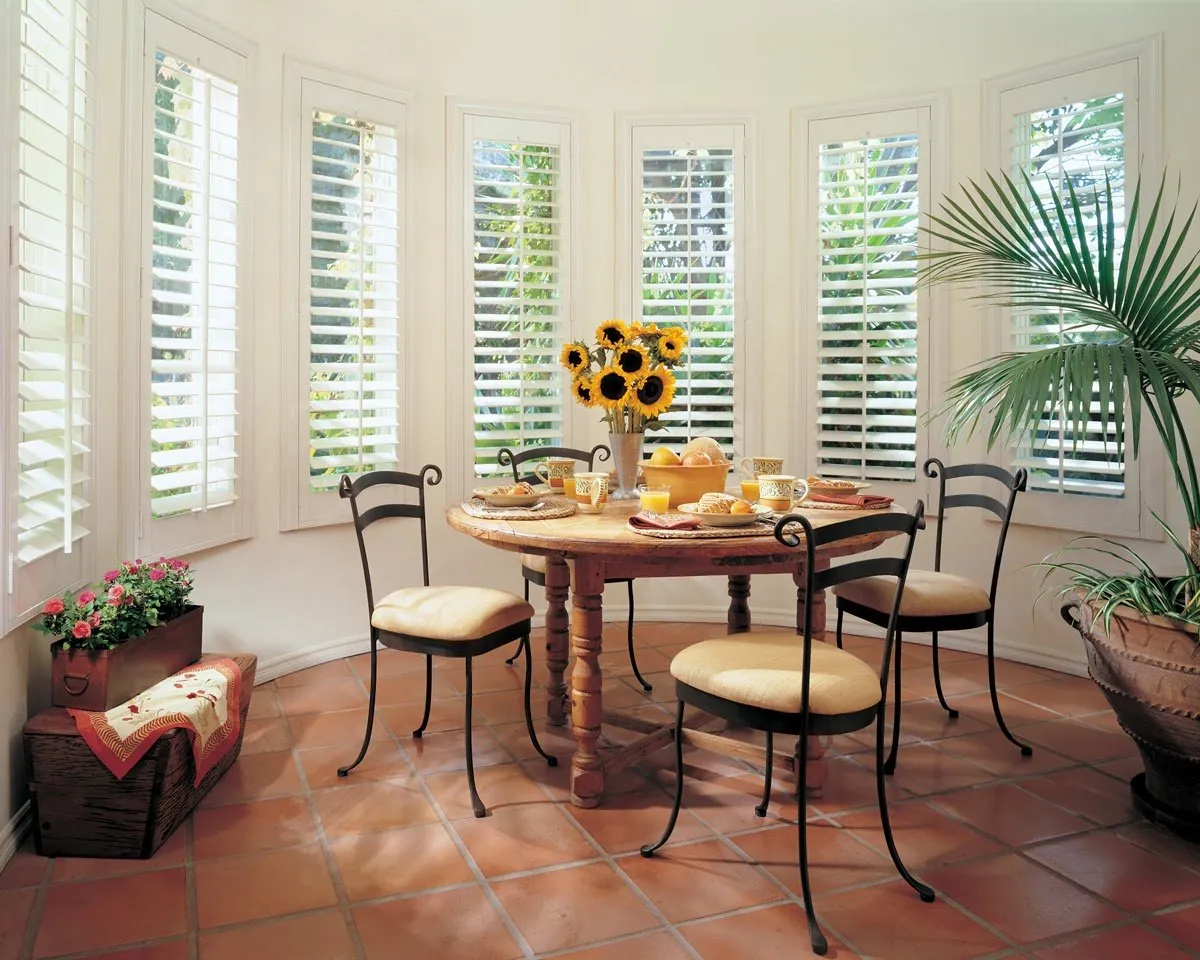
Bays toward the sunset
Every face of the bay has its own panels, so the sunny face can close while the rest stay open.
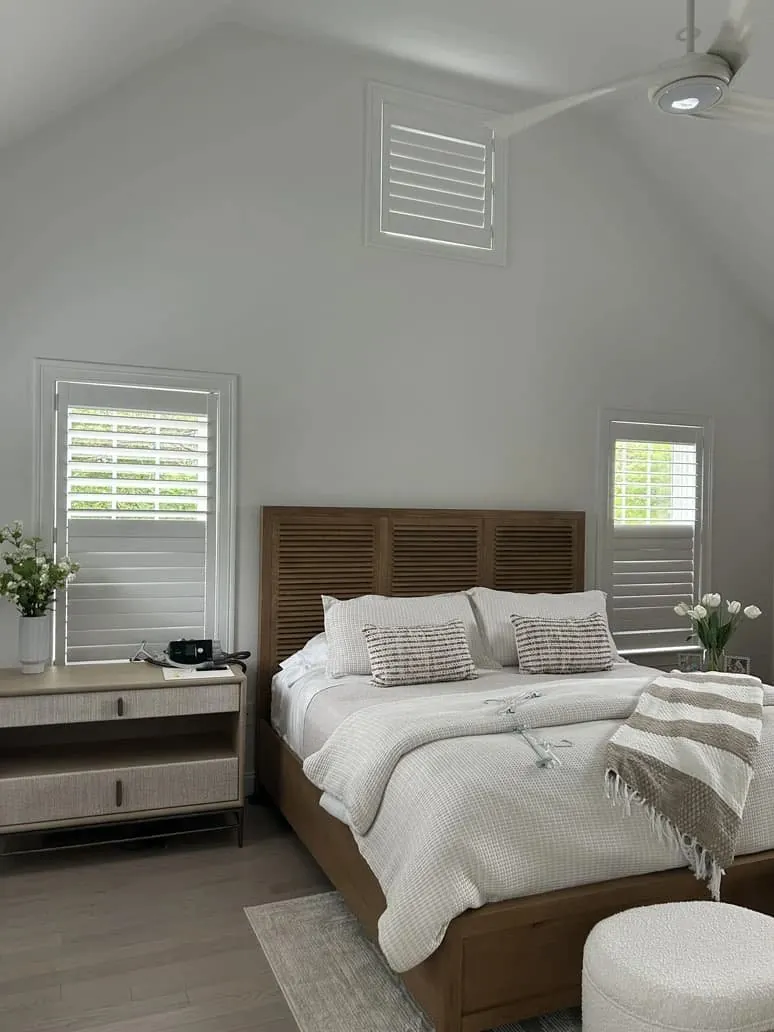
Gable and upstairs windows
Shaped and angled gable windows can have shutters made to fit, so an upstairs bedroom matches from floor to peak.
Afternoon sun across the Sakonnet
On the river side, the best part of the day can also be the hardest on the house. Through the late afternoon the sun sits low in the west, and its light reaches deep into a waterfront room, across the floor and the sofa and onto the far wall. Reflection off the water adds a second band of light from below. In summer that means heat; in any season it means glare.
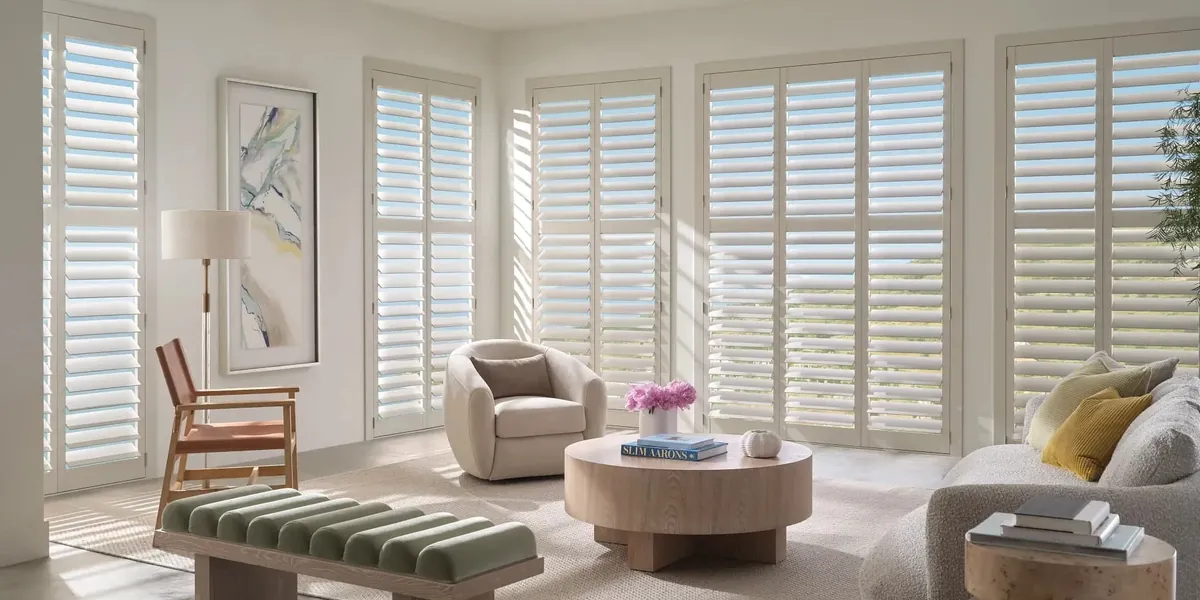
Louvers handle this better than most coverings because they work by angle rather than by covering the glass. Tilt the blades upward and the sun strikes the louvers and is bounced toward the ceiling, filling the room with soft, even light instead of a hard beam. The water is still visible through the lower gaps. As the sun drops lower toward the sunset, tilt the louvers a little further; when it is gone, open them again for the last of the evening sky.
When the heat peaks, shutting the louvers fully keeps the sun off floors, rugs and furniture, which slows fading in a room that takes direct western light every day. Pale finishes help as well, because a white or off-white panel throws daylight back into the room when the blades are half shut.
For the very biggest waterfront windows, a divider rail across each panel, or two tiers of panels, lets you shade the upper part of the window from the high sun of early afternoon and keep the lower part open to the river.
Salt, damp and material choice
The waterfront houses, on the river and around Nanaquaket, live with salt every day the windows are open. It leaves a film on glass and sills, stiffens latches and slowly works its way into anything that absorbs moisture. That is why, when we plan plantation shutters in Tiverton near the water, the material matters as much as the style.
Palm Beach polysatin is our first choice on the water side. It contains no wood, so it does not take up moisture, and it will not swell, twist, crack or peel through humid summers and damp winters. NewStyle, built with a composite, is also stable and suits rooms a little further from the open windows. Heritance hardwood is lovely, but we keep it for dry, heated rooms that are not opened to the sea breeze day after day.
Shutters also have very few working parts compared to blinds or shades. There are hinges and a tilt, but no cords, cord locks or lift systems to corrode. When salt builds up on the louvers, a damp cloth takes it off. For a house that sits right on the water, that simplicity is worth a great deal.
Waterfront houses on Nanaquaket
The houses around Nanaquaket Pond are a mix of older summer places, conversions and newer homes built to face the water. Many have walls of glass, sliders onto decks and large windows on more than one side, because the pond wraps around them.
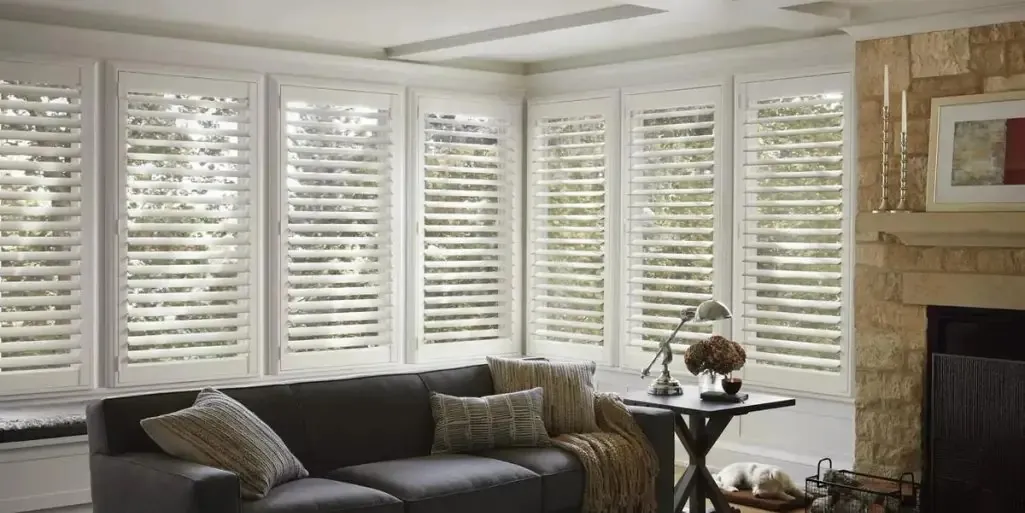
For this kind of glass, wider louvers give the clearest view when tilted level and suit the scale of a large window. Panels are hinged in groups so they fold right back to the sides on a calm day. A hidden tilt removes the rod from the face of each panel, which leaves one less line across the view. A slider takes panels that run on a track and park to one side; French doors get hinged panels fixed to the doors.
Rooms that face the pond on two sides need some planning so the panels and louvers line up from window to window. We measure each one separately and set the panel divisions so the rails sit at a consistent height across the room. The result reads as one finished wall of shutters rather than a collection of separate windows.
Sunsets, evenings and the glass at night
Many people buy on the river side for the sunset, and a west-facing room is at its finest during the hour before dark. That is exactly when the low sun is hardest to sit in. The louvers let you have both: tilted up while the sun is still a hand above the far shore, then opened level as it touches the horizon, so the color fills the window without the glare.
After dark the picture changes again. A wall of glass facing the water turns black at night, reflecting the room back at itself, and anyone on the water or across the pond can see into a lit room. Closing the louvers turns that black glass into a soft white wall, and the room feels settled and private. In the morning, open them and the river is back.
That daily rhythm, open in the morning, tilted in the afternoon, angled for the sunset and closed at night, is why so many waterfront rooms end up with plantation shutters in Tiverton, RI. Each change takes a moment, and with a hidden tilt or a front rod it is just one movement per panel.
Mixed houses: an old core and a waterfront addition
A good number of houses near the water started as a small cape or summer cottage and were later extended toward the river, with a big glazed room or a second story added on the water side. The result is a house with small, old sash at the front and generous modern glass at the back.
Shutters bridge that gap well. Every opening is measured and built to its own size, but color and frame style carry right through, so the old front room and the new river room feel like one house. The blade size can step up from a slim louver on the old sash to a broader one on the new glass without the change being obvious. Material can change too: Heritance in a dry front parlor, Palm Beach on the river side.
Farmhouses and capes around Four Corners
Inland, around the crossroads at Four Corners, the houses are older and more sheltered. Farmhouses stand near the road with barns behind them, and shingled capes sit low on their lots. The windows are smaller, mostly double-hung sash in wooden frames, and many keep their old casings and sills.
These houses call for a different approach from the waterfront. Here the windows are rarely square after a long life of settling, and their depth varies from one opening to the next. We measure each one at the top, middle and bottom, on both sides, and check the depth where the frame would sit. When the depth allows, the frame goes inside the opening and the old casing stays visible. Where an old sash lock or a shallow stop gets in the way, a slim outside frame is the better choice.
Heritance is often the right collection for the front rooms of a farmhouse or cape. Its hardwood takes paint like the old trim, or a stain to sit with a wood floor. Narrower louvers suit the smaller sash and give finer lines that look at home in an old house. In the kitchen and bath, Palm Beach takes over, matched in color so the house reads as one.
Upstairs in a cape, the bedrooms sit under the roof with short dormers and gable windows. Shutters suit these tight spaces because the panels fold flat and nothing stacks at the top of the glass. Closed louvers also make a bedroom much darker on a summer morning.
Louvers, frames and finishes
Three choices shape the finished look of a shutter after the collection is picked.
Louver width is the first. Narrow louvers give many fine blades and suit small farmhouse and cape windows. Medium louvers suit most rooms. Wide louvers give the most open view and suit big waterfront glass. A house that has both, like many here with an old core and a newer addition facing the water, can use different widths in different rooms and still look consistent if the color and frame are kept the same.
The frame is the second. Mounted inside, the frame disappears into the opening. Mounted outside, it covers a shallow or crooked one. Profiles vary too, some square and plain, others with a small bead that picks up old moulding.
Finish is the third. Whites and off-whites suit most rooms and keep a west-facing room bright. Soft grays and warm neutrals are available too, and Heritance can be stained. Because the afternoon light off the water changes how a color looks, we hold chips against your trim in the room itself.
Each collection has its own page, Palm Beach, NewStyle and Heritance, and the wider range sits on our plantation shutters page. For older houses near Four Corners, our guide to shutters for older windows explains how we handle settled frames.
Privacy on the river side
Waterfront rooms are built for looking out, but the water has its own traffic. Boats pass close to shore on summer evenings, and the houses along the river and around the pond can see across to one another once the lamps are on. In a bedroom or bathroom on the water side, privacy matters.
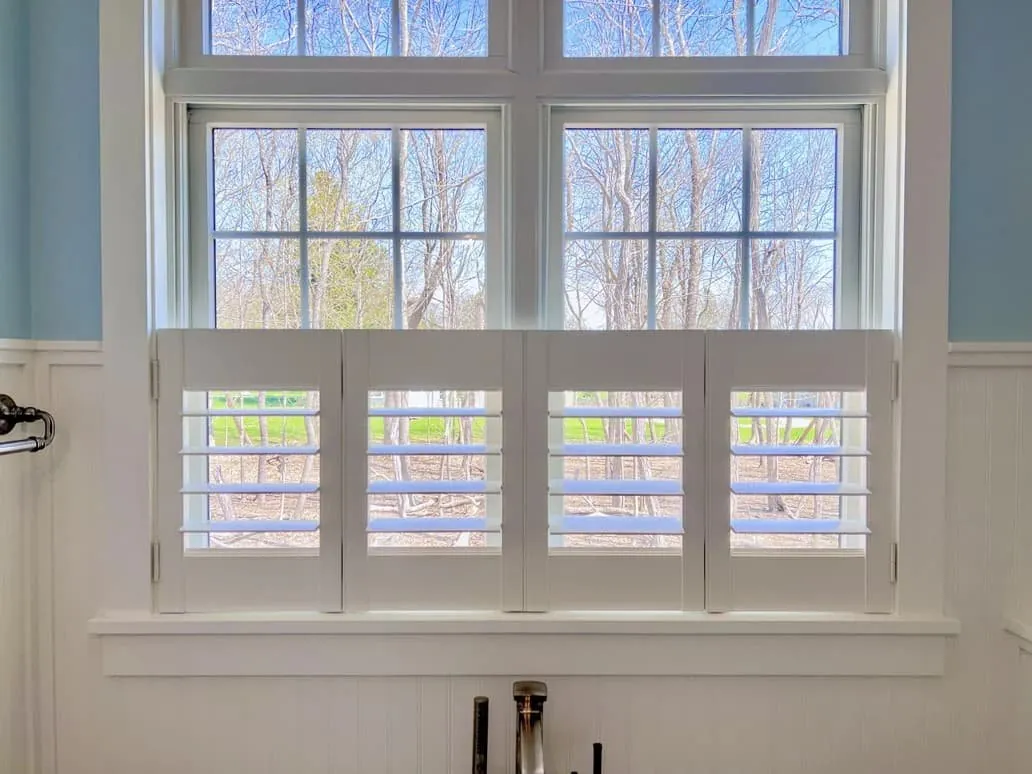
Shutters give it in stages. With the louvers tilted up, light comes in from the sky while the view in from the water or a neighboring dock is blocked. Closed, the room is fully private. On a tall window, a lower tier can close for privacy while the upper tier stays open. In a bathroom facing the river, a cafe-style panel on the lower sash is often all that is needed.
Your consultation and installation
Every order of plantation shutters in Tiverton begins at the house. The vans are loaded with panels, blades, frames and paint chips, so we can bring the showroom to you. A typical visit runs like this.
- Book through the Request a Consultation form or the call button; an afternoon slot is worth asking for if your best rooms face the river.
- Standing in the west rooms, we watch where the sun lands and talk through glare, view and who can see in after dark.
- Then the inland side of the house: the parlor, the kitchen, the bedrooms under the roof, each with its own suggestion.
- Every opening gets measured in several places, its depth checked and any crank, lock or radiator written down.
- Once you have picked material, blade, frame and finish, a free estimate is written up for you to consider at your own pace.
- On installation day, Hunter Douglas certified installers fix the frames, hang the panels and tension each louver so it stays where you set it.
For a fuller picture of the visit, see what happens at an in-home consultation.

A Gallery dealer for river and village houses
Blinds & Designs is a Hunter Douglas Gallery dealer, a title Hunter Douglas gives only to dealers who meet its standards. For you, that opens up the whole shutter line, and a single local company sees the job through. Our installers hold Hunter Douglas certification.
If other rooms need something softer, Hunter Douglas blinds, shades and drapery come from us as well. There are also interior design consultations for a whole room, and repairs for blinds and shades you already have. Many waterfront houses pair shutters with roller shades in Tiverton on a sunroom, or motorized shades on high windows. You will find everything we offer in town on our Tiverton page.
To see shutters before the visit, head for the North Dartmouth showroom, a short drive over the state line.
Questions from Tiverton
How do shutters handle the afternoon sun on the river side?
Very well. Tilt the louvers upward and the low western sun is bounced toward the ceiling as soft light, while you still see the water below. Close them fully on the hottest afternoons to keep the sun off floors and furniture.
Which collection is best for a house right on the water?
Palm Beach on the river side. Polysatin has nothing in it to soak up salty, damp air, so the panels stay straight and the finish stays put. Rooms further back can take NewStyle, and Heritance belongs in dry rooms.
Will shutters fit the old windows in a farmhouse near Four Corners?
Yes. Each frame is built to the measurements we take at several points across the opening, so it takes up the small differences in an old window. A narrow louver suits small sash.
Can shutters go on sliders and French doors facing the pond?
Yes. A slider usually gets sliding panels on a top track that park to one side, while French doors carry their own hinged panels that move with each door.
Do you charge for the estimate?
No. The written estimate after measuring costs nothing, and deciding is entirely up to you.
Start with the afternoon light
The best time to judge a shutter for a river room is when the sun is coming across the water. Ask for a consultation, ideally on a sunny afternoon, and we will hold the samples up in that light, take every measurement and leave you a free estimate. The call button works too, and the North Dartmouth showroom is the nearest place to see shutters.