
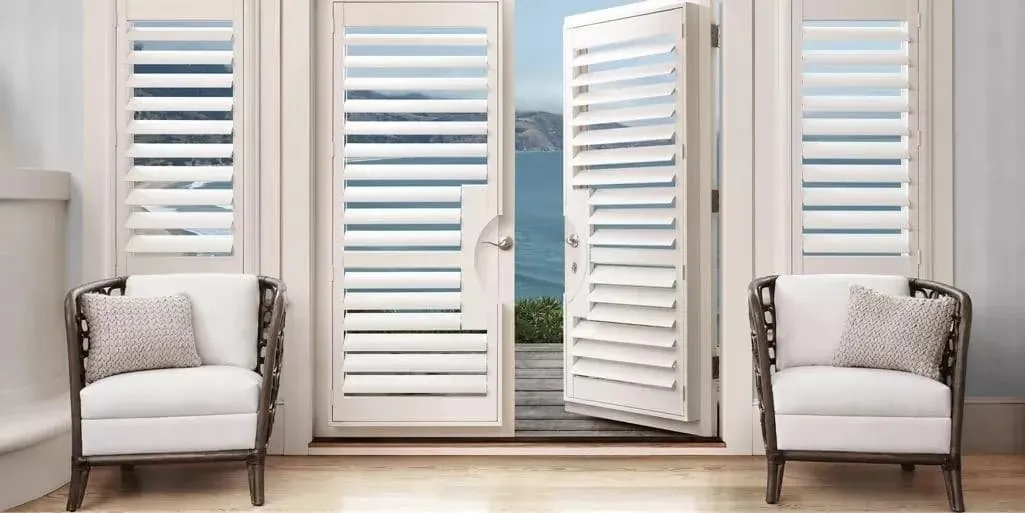
Glass on the water side, salt in the air
Stand at the end of the town wharf and look back at the shore, and you see houses that were built to face the harbor. Shingled summer cottages crowd the lanes near the water, some still opened only for the warm months, others long since winterised and lived in all year. Out toward Ned’s Point the windows get bigger and the view gets wider. Every one of those houses turns its best glass toward Buzzards Bay, and that glass takes the full weight of the sun and the weather. It is where any plan for plantation shutters in Mattapoisett, MA, has to begin.
Two things shape the choice on this shore. The first is salt. It rides in on every sea breeze, settles on sills and screens, and slowly tests any material that swells with damp or rusts at the hinges. The second is light. A water-facing room gets sun from above and sun bouncing back off the bay, so glare can arrive from a low angle that ordinary coverings struggle to block.
Shutters handle both. A polysatin panel has nothing in it that rots or warps, there are no cords to fray, and a louver can be tilted to send glare toward the ceiling while you keep looking at the boats.
Plantation shutters in Mattapoisett, MA, room by room
From a cottage bunk room to a big inland great room, these are the collections and features that come up most when we bring samples to a house near the harbor.
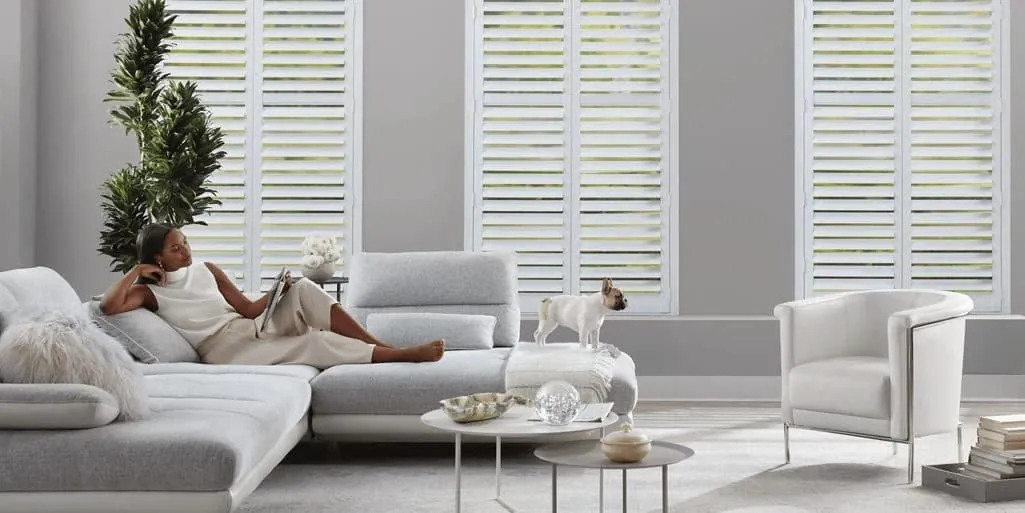
Palm Beach on the harbor side
Polysatin through and through. Salt and damp will not make it swell, crack or peel, which is why we suggest it first for rooms that face the water.
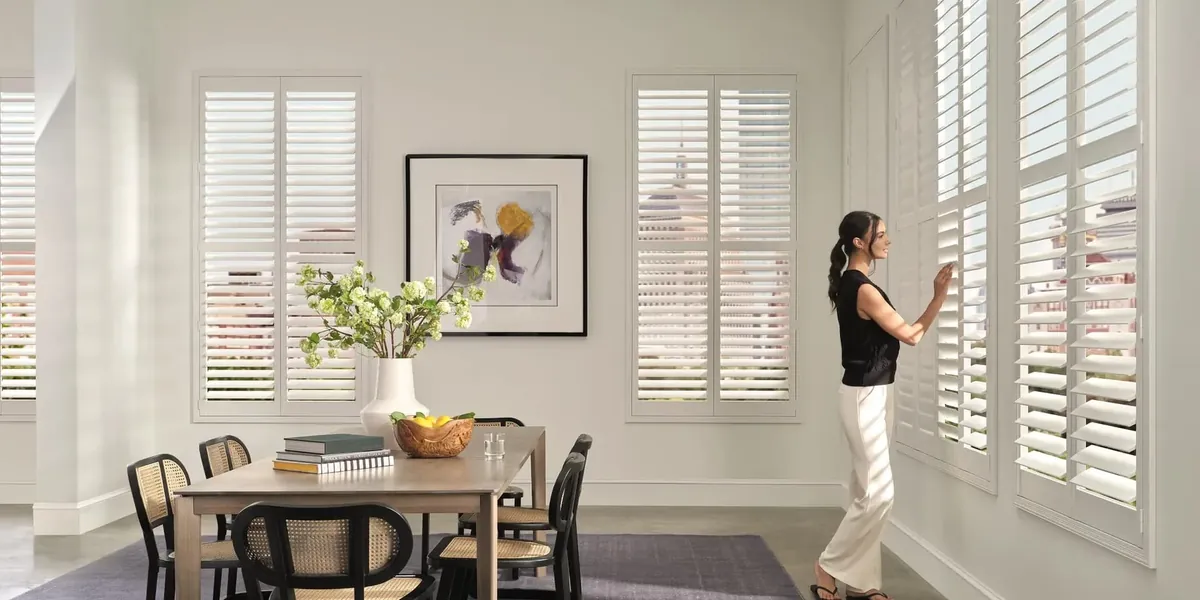
NewStyle for inland rooms
A composite hybrid with the look of painted wood. A good fit for the bedrooms and living rooms of the newer houses away from the shore.
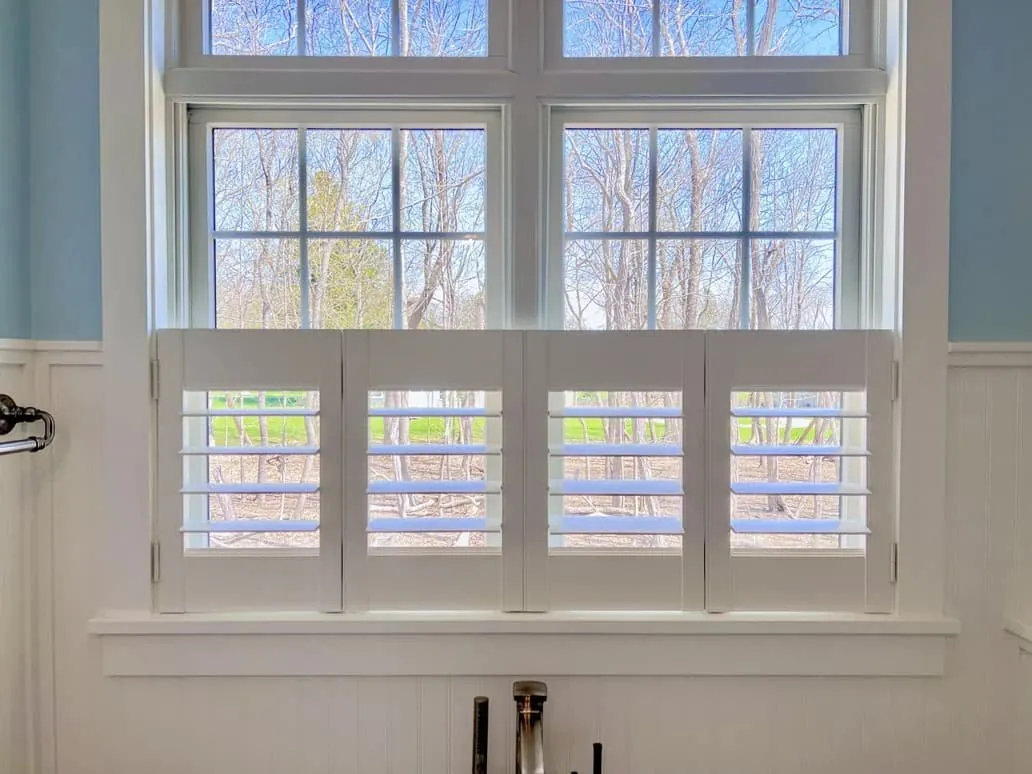
Cafe panels for kitchens
Panels on the lower sash only, so a kitchen sink window keeps its privacy while the sky stays open above.
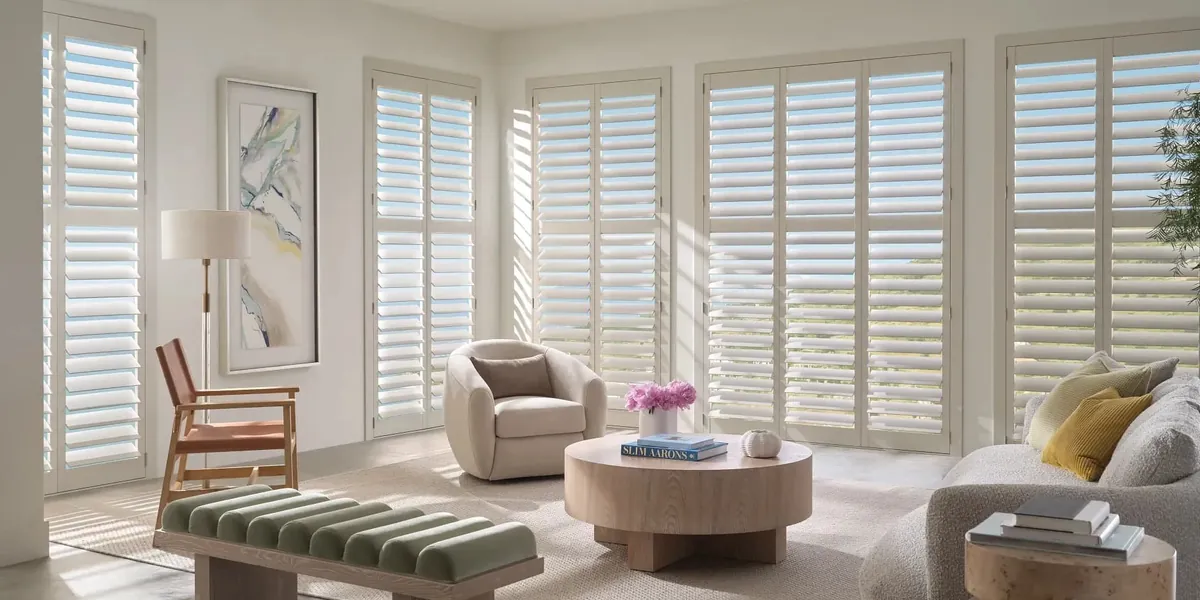
Wide louvers for a view
Fewer, broader blades leave more open glass when tilted, which suits a room built around the water.
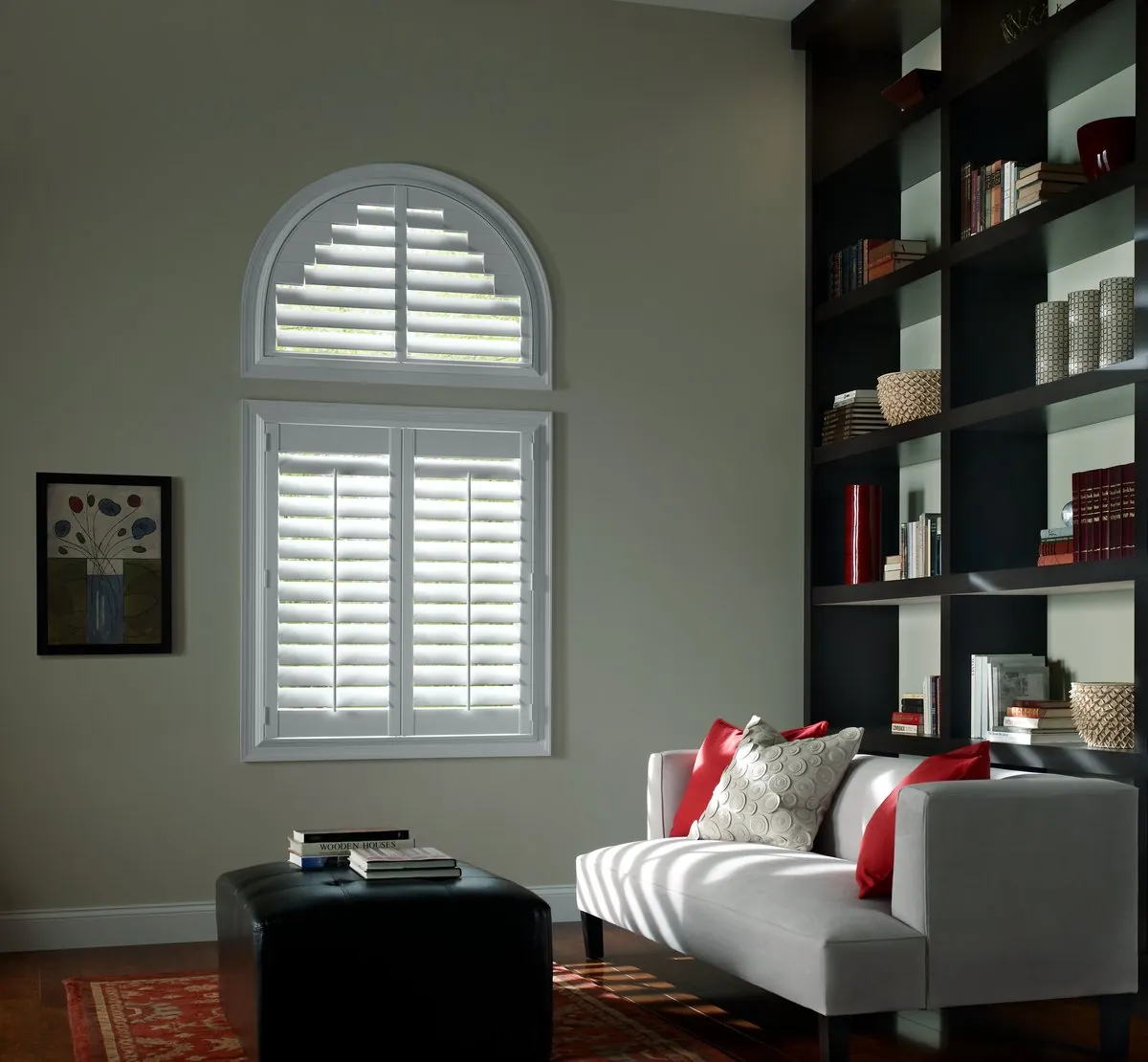
Shapes and arches
Arched tops, half rounds and angled gable windows can all have a shutter made to the shape, so the whole wall matches.
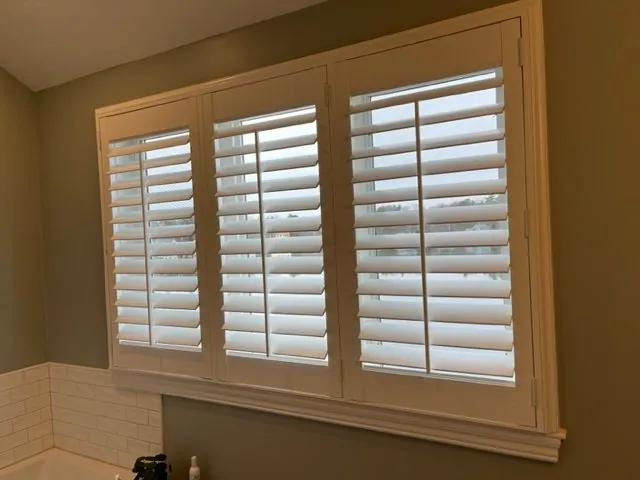
Wet rooms
Outdoor showers lead to bathrooms full of steam and sand. A polysatin shutter shrugs off both and wipes clean.
Living with salt air
Anyone who has owned a house on this part of the coast knows what salt does over time. Window screens go chalky, metal latches stiffen, and paint lifts first on the side that faces the bay. Inside, the effect is gentler but real: on a humid summer day with the windows open, damp salty air moves through every room.
That is the reason material choice comes first on any order near the harbor. Palm Beach polysatin has no wood core, so it does not drink in moisture, and it will not swell, twist or crack as the seasons change. NewStyle, a composite hybrid, also holds its shape well and suits rooms a little back from the water. Heritance is real hardwood, beautiful in a dry, closed-up room, but we only suggest it where the window is not opened to the sea breeze day after day.
The working parts matter too. Shutter hinges and tilt mechanisms are simple, with no cords, cord locks or lift systems to corrode. When we install, we choose hardware suited to the room and set the panels so they swing freely. A quick wipe of the louvers with a damp cloth now and then is all the care most panels need, even in a cottage that sits a stone’s throw from the tide line.
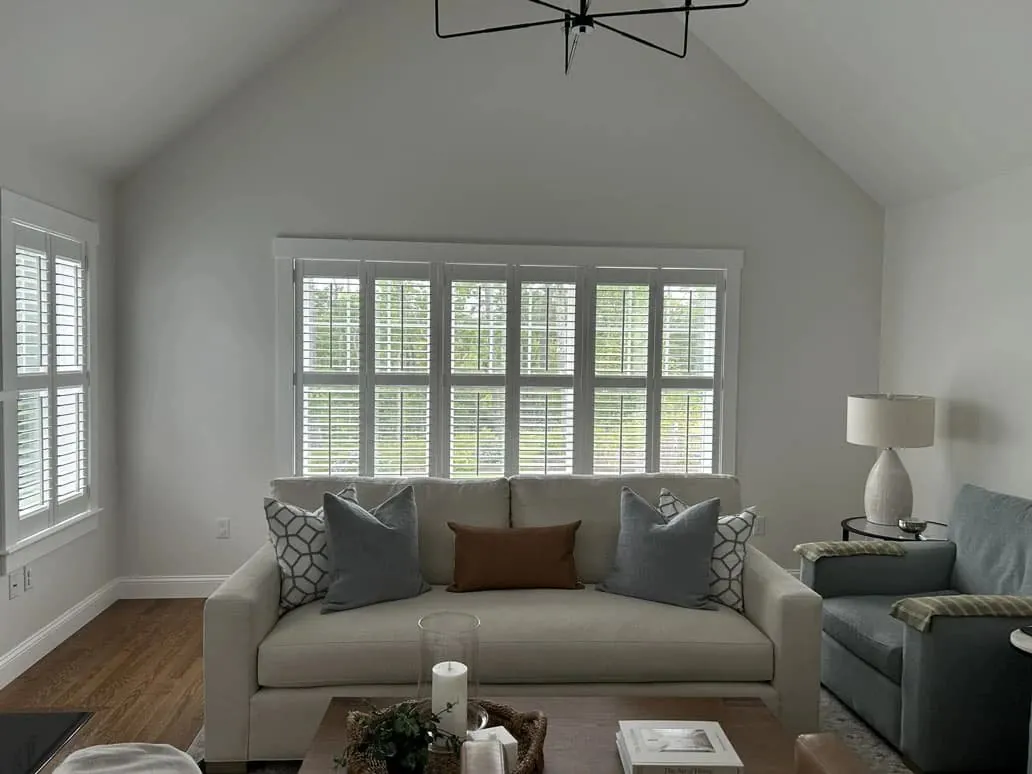
Glare and fading on the bay side
A room that looks south or east across the water gets two doses of sun: the light from the sky and the light reflected off the bay. On a bright morning that second dose arrives low and hard, straight across the floor and into your eyes at the breakfast table. Over a few summers it also bleaches rugs, upholstery and the finish on wood floors.
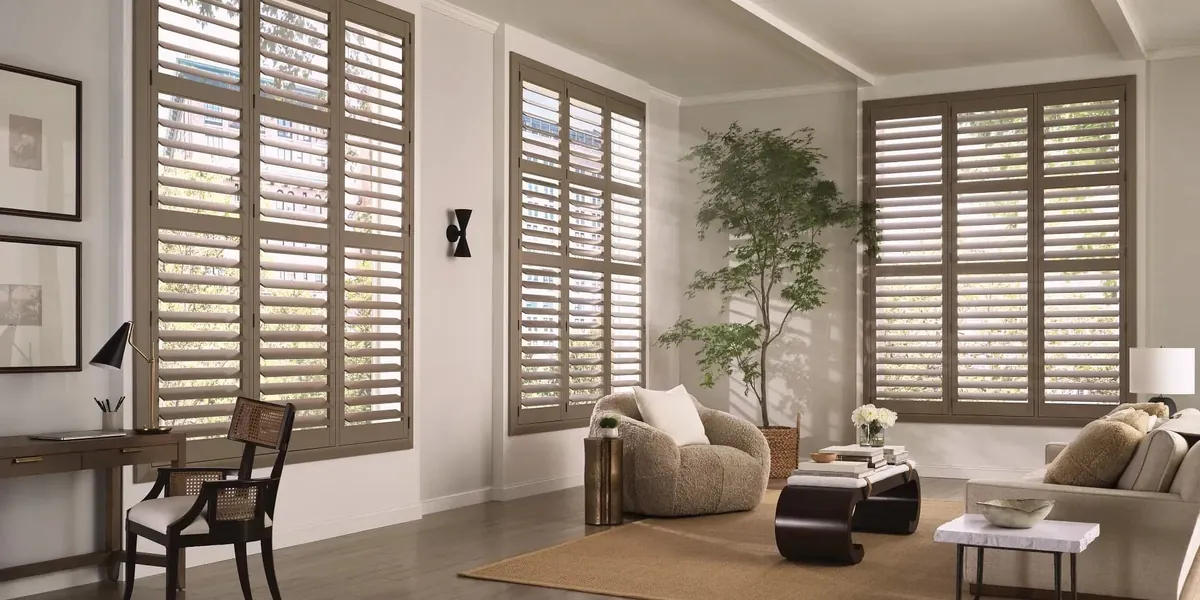
Louvers give you more control over that than almost any other covering. Tilt them upward and the reflected light hits the blades and is thrown toward the ceiling, where it brightens the room instead of glaring. Tilt them level and you keep the view with only the slimmest lines across it. Close them through the middle of a July afternoon and the furniture stays in shade while the room stays cooler. When the sun moves round to the other side of the house, you open them again. Most people find they adjust the louvers two or three times a day in summer without really thinking about it.
Color plays a part as well. A white or soft off-white panel reflects light back out and keeps a small cottage room feeling bright even with the louvers partly closed. We hold the color chips against your trim in the room itself, because a white that looks clean in a sample book can look stark next to old painted woodwork.
Summer cottages near the harbor
The older cottages are small, shingled and close together, built for summer living rather than for winter. Rooms are compact, ceilings are low, and windows are often old wooden sash in sizes nobody makes any more. Many have porches that were glassed in at some point to make another room.
Shutters suit these little houses because they take up almost no space. There is no stack at the top of the window when you want light, as there would be with a shade, and nothing hangs into a small room. The panels fold back flat against the wall, or the louvers simply open. In a bunk room or a narrow upstairs bedroom, that matters.
For a cottage that still closes up for the winter, Palm Beach is the sensible choice throughout. An empty house near the water can get damp over the cold months, and polysatin comes through that without any harm. When you open the house again in spring, the shutters look exactly as they did when you left.
The closed-in porch deserves its own thought. These rooms often have windows on three sides and take sun from morning to evening. Shutters on each opening, matched in louver width, let you shade one side and leave the others open as the sun moves round.
Year-round conversions toward Ned’s Point
Many cottages have been turned into year-round homes, and the conversions bring their own window mix: original sash on the old part of the house, larger modern windows on the additions, and sometimes a wall of glass where a porch used to be. It can be hard to make all of that look like one house from the inside.
Shutters help pull it together. With the same color, louver width and frame style on every window, old and new openings read as a set even when their sizes are very different. On the old sash we often suggest a narrower or medium louver to keep the panel in scale, and on the big new glass the same width keeps things consistent, or a wider one can be used if the view is the priority.
These converted houses also tend to have windows that were set in at slightly different depths, depending on when each part was built. We measure every opening and check the depth before recommending an inside or outside mount. Where an inside mount would be tight, a slim outside frame on the casing gives a neat result and covers any gap.
What we check on a water-facing window
A window that looks straight at the bay gets more measuring and more questions than one on the back of the house. Here is what we go through at each one before a shutter is ordered.
- Which way the window faces, and when in the day the sun and the reflection off the water hit it.
- How often it is opened in summer, which tells us how much salt air the panel will see.
- The width at the top, middle and bottom, and the height at both sides and the center.
- The depth of the opening and anything in the way, such as a crank, lock or radiator.
- Whether panels will need to fold right back from the glass to keep the view clear.
- The louver width that balances the view against privacy for that room.
Once those are settled, you choose the collection, color and frame, and we put together a free estimate for you.
French doors, sliders and porch openings
The water side of many houses here is as much door as window. French doors open onto a deck, sliders lead out to a lawn that runs down toward the shore, and enclosed porches have openings almost from floor to ceiling. These are the hardest openings to cover well, and some of the most rewarding.
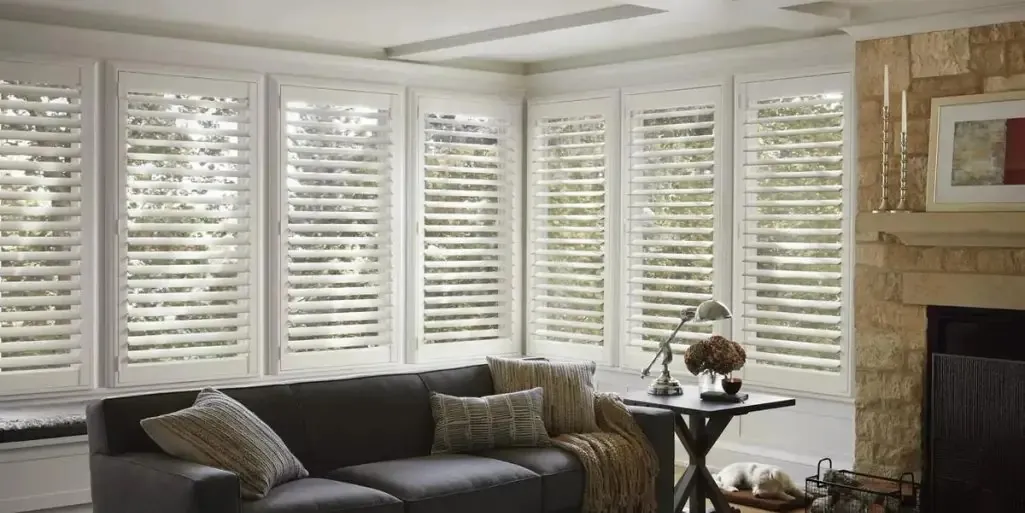
French doors take shutter panels mounted right on each door, so the panels swing with the door and never get in the way of the handle. A slider is usually covered with bypass panels that glide along a track, stacking to one side when you want to step out. On a porch, each opening gets its own panel set, matched to the rest of the room. Getting the clearances right on a door is careful work, and it is one reason plantation shutters in Mattapoisett, MA, are measured and fitted by certified Hunter Douglas installers rather than ordered by the box.
The newer houses inland
Away from the harbor, the houses get larger and newer. Here you find colonial-style homes and contemporary builds on bigger lots, with tall great rooms, two-story entries, transom windows over doors and wide sliders to back decks. The glass is modern, square and generous.
These houses are less exposed to salt day to day, so the full choice of collections is open. NewStyle is often the backbone of an inland order, covering the bedrooms, living room and dining room with a crisp painted look. Heritance, painted or stained, suits a study or formal room with fine trim. Palm Beach still goes into the baths, the laundry and the kitchen.
Big glass suits wider louvers, and a tall window can be split into upper and lower panels that open independently, so you can let light in at the top and keep privacy below. Transoms and arched windows above doors can have fixed shutters made to the shape, with louvers that tilt, so the whole wall carries one look from the floor to the ceiling.
Louvers and frames on a coastal house
When we plan plantation shutters in Mattapoisett, louver width is the single biggest choice after the material. A narrow louver gives more blades and finer lines, which suits the small sash of an old cottage. A medium louver works well in most rooms. A wide louver gives fewer blades, more open glass when tilted and a bolder look, which suits large modern windows and rooms built around a view.
On a water-facing room, many people choose a wider louver for exactly that reason. Tilted level, the blades all but disappear and the bay fills the window. Tilted upward, they bounce the low sun toward the ceiling and keep it out of your eyes. Closed, they cut the afternoon heat and protect floors and furniture from fading.
Frames finish the job. An inside mount sits within the opening, the cleanest look on a window with good trim. An outside mount covers a shallow or uneven opening. Some frames are plain and square, others carry a small bead that echoes traditional casing, which looks right in a shingled cottage. A hidden tilt removes the rod from the front of the panel, which many people like on a view window because it leaves one less line across the glass.
Our Palm Beach, NewStyle and Heritance pages explain each collection in more depth, and the main plantation shutters page covers the whole range.

Gallery dealer, certified installers
Blinds & Designs is a Hunter Douglas Gallery dealer, the designation Hunter Douglas gives to dealers who meet its standards. On a shutter order that means every collection, louver size and frame profile is available to you, and you deal with one local company from the first visit to the last panel.
Our installers are certified by Hunter Douglas. On a cottage where no two windows are quite alike, that experience shows in panels that hang straight and louvers that line up across a room.
We also carry Hunter Douglas blinds, shades and drapery, and we handle blind and shade repairs. Shutters often go in the main rooms with roller shades in Mattapoisett on a sunroom, or cellular shades in the bedrooms for extra warmth. You can see all we offer in town on our Mattapoisett page.

Samples at your own windows
The light in a room that faces the bay is unlike the light anywhere else in the house, and a sample in a store cannot show you how a louver will look against it. That is why most people start with an in-home consultation. Our vans carry louver samples, frame profiles and color chips, so we can bring the showroom to you.
We will look at the harbor rooms and the back rooms, talk about which windows you open and when, and help you choose a collection and louver size for each one. If you want help with color and the rest of the room, ask about our interior design consultations. Our page on what happens at an in-home consultation explains the visit in full.
Prefer to see the shutters in person first? The North Dartmouth showroom is our nearest location, a short drive west along the coast.
Questions from Mattapoisett
Which shutters hold up best right on the harbor?
Palm Beach. It is polysatin with no wood in it, so salt air and damp will not make it swell, warp or peel. For rooms that face the water and have their windows open all summer, it is the collection we suggest first.
Our cottage is closed all winter. Will shutters be damaged?
Not Palm Beach. A closed house near the water can get damp over the cold months, and polysatin comes through that unchanged. It is a good choice for any seasonal house.
Will shutters block the view of the bay?
Only if you close them. With a wide louver tilted level, the blades are slim and the water stays in view. Panels can also be hinged to fold right back from the glass when you want the window completely clear.
Can you match shutters on old sash and new additions?
Yes. We build each panel to its own opening, then keep the color, louver width and frame style the same, so old and new windows look like one set from inside the house.
Is the estimate free?
Yes. Once we have measured, you get a free estimate for the shutters you are considering, with no obligation to go ahead.
Ready when you are
A harbor room, a converted cottage and a big inland house each ask different things of a shutter. The quickest way to sort it out is to see samples at your own windows. Request a consultation and we will bring the full range of plantation shutters in Mattapoisett, MA, to your door, measure each opening and give you a free estimate. You can also use the call button, or visit our North Dartmouth showroom.