
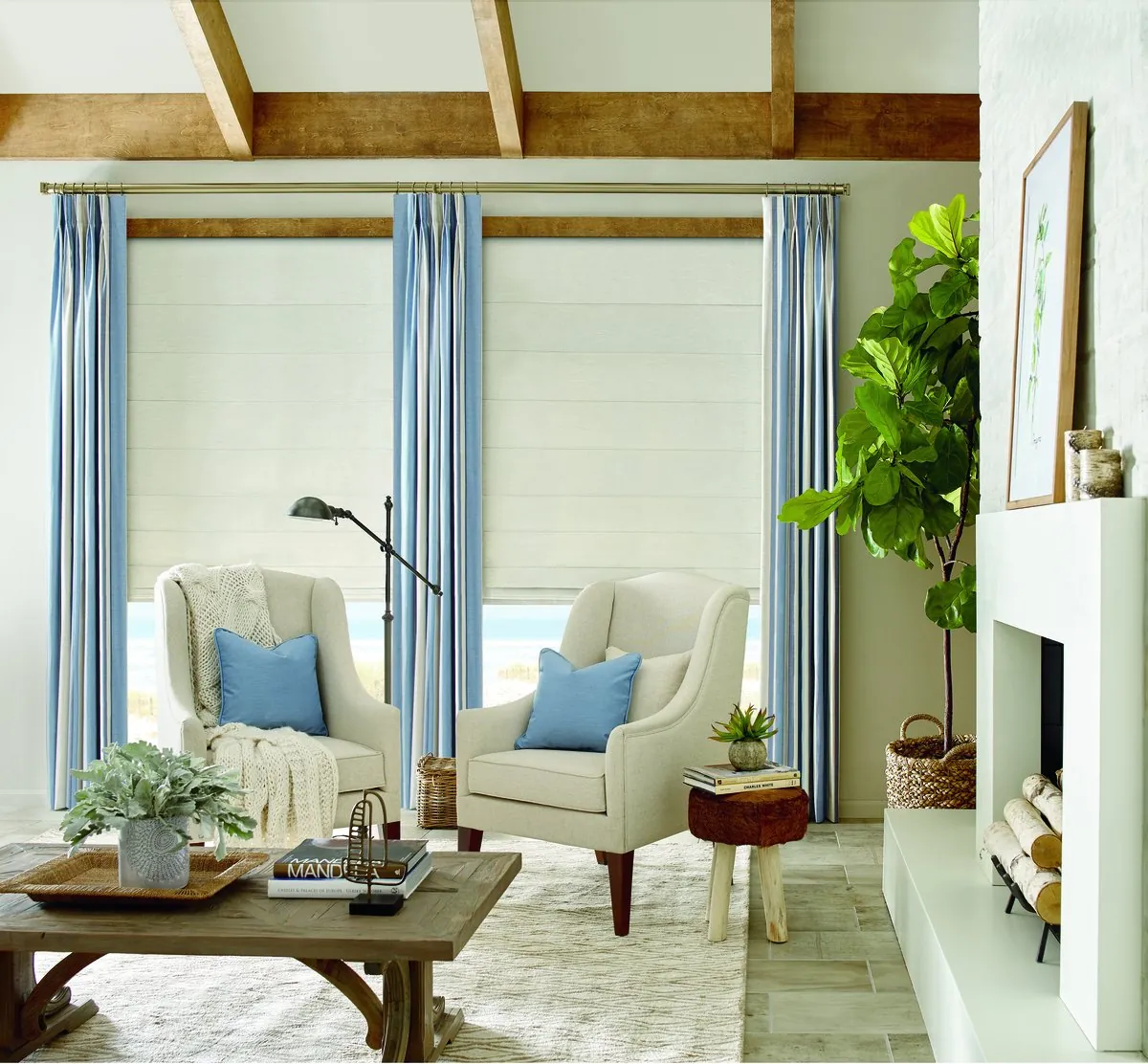
Deep old sash and wide open land
Out along New Bedford Road and around Snipatuit Pond, houses sit well back on big lots, some looking across cranberry bogs and fields with no neighbor in sight. The antique colonials and farmhouses have small sash windows set deep into thick walls. The newer builds on the same roads have big modern glass designed to take in the land. Both kinds of window need something different from a shade, and that difference shapes every set of roman shades in Rochester, MA we plan.
In the older houses, the challenge is depth and size. A deep window reveal can hold a shade neatly inside the frame, but the openings are small and seldom identical, so each shade has to be made to its own window. In the newer houses, the challenge is scale and light: wide panes facing open ground take full sun from sunrise to sunset.
A roman shade suits both. It is a soft panel of fabric that folds up into tidy pleats and lowers flat over the glass. In a farmhouse it adds warmth and color without hiding the old woodwork; on a big new window it softens the light without cutting off the view of the bog or the pond.
Where each style earns its place
Vignette and Carole Fabrics, the two Hunter Douglas names for roman shades, cover flat and folded styles in a large range of fabrics. Here is how they tend to fall in a Rochester house.
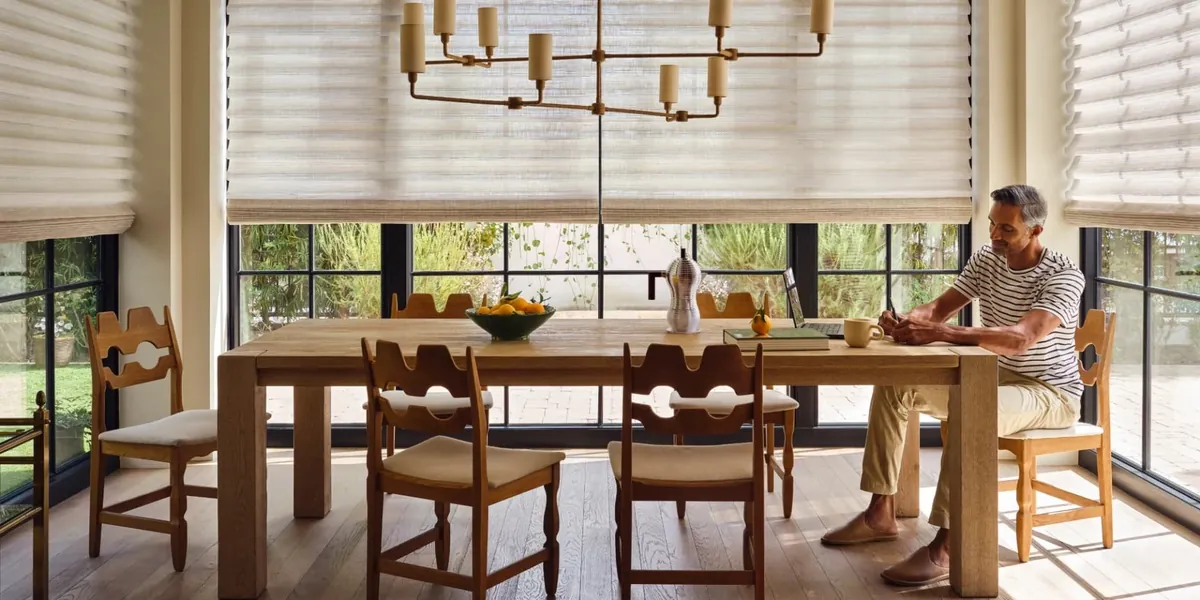
Soft folds for the big rooms
On wide new windows, looser folds take the hard edge off a large expanse of glass. Carole Fabrics soft folds and Vignette’s rolled folds both work here.
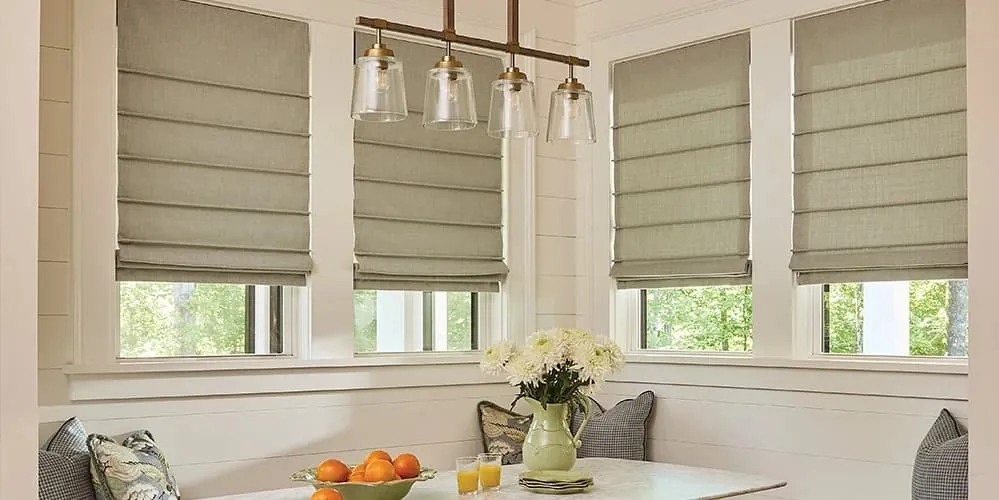
Flat folds for deep sash
A crisp flat fold sits neatly inside a deep old reveal and stacks small at the top, so the little window keeps as much daylight as possible.
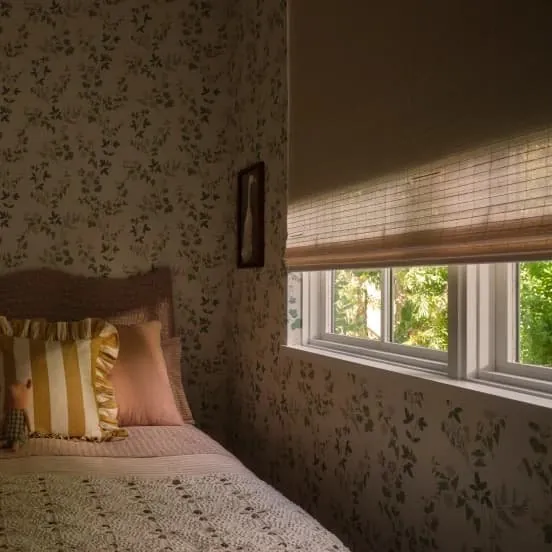
Woven romans for a farmhouse
The Alustra Woven Textures roman brings natural fiber to a country room. It filters light with a soft texture and suits wide pine floors and painted trim.
Antique colonials on New Bedford Road
The colonials along the older stretches of New Bedford Road were built with heavy timber frames and thick walls, and their windows are small, many-paned and set deep. Inside, the window often sits in a recess with a wide sill, sometimes a window seat, and painted panelling around it. That woodwork is usually the best feature of the room.
A roman shade mounted inside the recess keeps all of it on show. When raised, the folds tuck up against the head of the window; when lowered, the fabric sits just inside the frame, leaving the panelling and the sill clear. Few window coverings are as respectful of an antique window.
The catch is that old recesses are rarely regular. Walls have moved over the years, plaster has been patched, and two windows that look the same from the road can differ noticeably in width and depth. We measure each one at several points and the shade is made to the smallest width so it clears the frame without catching.
Why the depth of the frame decides the mount
With a roman shade, the headrail needs a certain depth to sit inside the frame, and the fabric needs room to hang clear of the sash locks and any interior storm windows. Deep antique reveals usually have room to spare. The question is whether anything gets in the way: a protruding latch, a rail that projects, or a storm panel fitted inside.
If it fits, an inside mount is almost always the choice in an older Rochester house. If something blocks it, we have two options. One is to mount the shade on the face of the frame, still within the recess but forward of the obstruction. The other is a mount on the wall or casing above the window. We show you both at the visit and explain which looks better on that window.
Facing the bogs and the fields
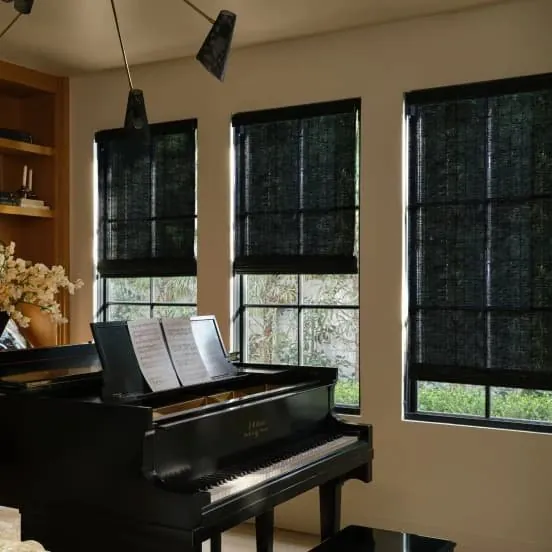
Many Rochester houses look out across open ground: cranberry bogs, hayfields, woodland edges. With no near neighbors, daytime privacy is seldom the reason anyone wants a shade. Light is. A window facing open land catches the sun from the moment it clears the horizon, and in a west-facing room the evening sun comes in long and low across the bog with nothing to stop it.
That changes how we choose fabric. Instead of starting with privacy, we start with how bright you want the room and when. A light-filtering fabric is often enough in a living room, cutting the glare while keeping the room full of light and the view softly visible. Bedrooms facing east usually need a lining, because the first light across a flat open field is strong.
At night the picture flips. With the lamps on and darkness outside, a house in open country is very visible from the road, even at a distance. A lined roman shade, lowered in the evening, gives the room a sense of being closed in for the night.
Around Snipatuit Pond
Houses near the pond are built to face the water, often with a larger window or a set of doors on the pond side. The light there is different from the light over a field: on a calm day the water throws reflected light up into the room and onto the ceiling, which can be beautiful in the morning and tiring by afternoon.
A sheer or light-filtering roman fabric takes the edge off that reflected glare and keeps the pond in sight. For rooms where the view is everything, a shade that raises fully into a short stack matters, and a flat fold or Vignette set to stack compactly leaves the glass almost clear.
The farmhouse kitchen and the attached ell
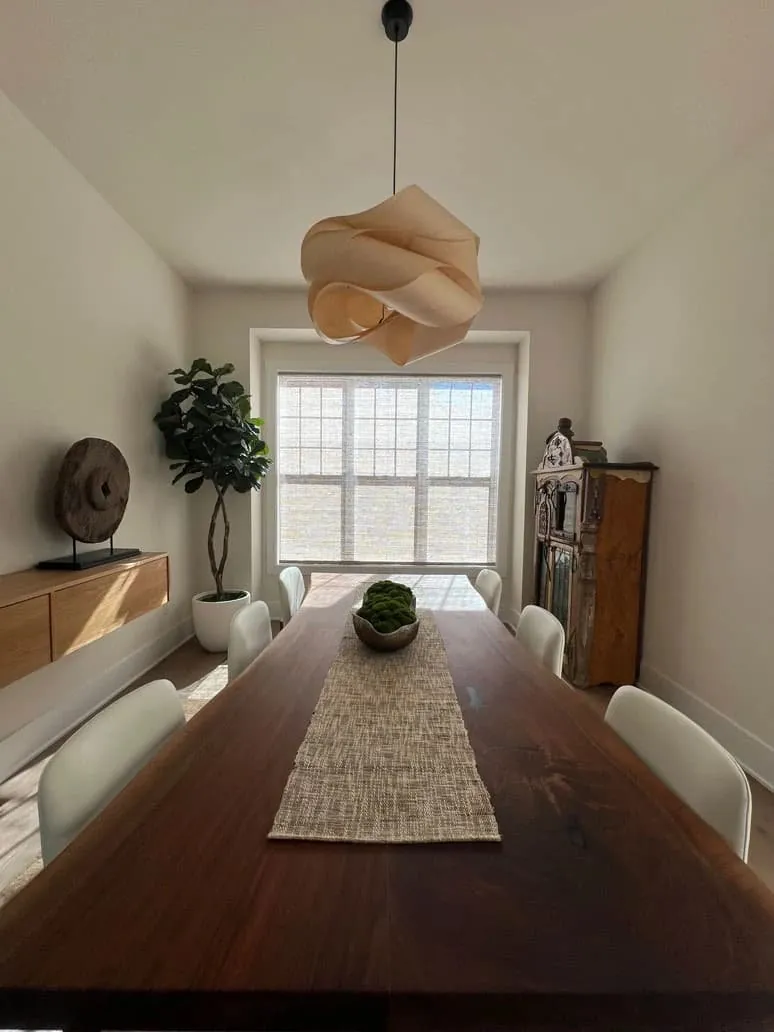
Most Rochester farmhouses grew in stages. The main block faces the road, and behind it an ell or two runs back toward the barn, holding the kitchen, a mudroom, a pantry and sometimes a bedroom added later. The windows in the ell rarely match the ones in the front of the house. Some are older sash moved from elsewhere, some are newer replacements, and they come in a handful of different sizes along a single wall.
That kind of variety is where made-to-measure pays off. Each window gets a shade cut to its own size, but we keep the fabric, the fold and the height of the headrails consistent so the wall looks orderly rather than patched together. In a kitchen that takes hard daily use, a flat fold in a fabric that tolerates handling is the practical choice, with a cordless lift so nothing dangles near the counter or the stove.
The mudroom and the pantry are worth covering too. These are often the rooms where the low winter sun comes in sideways across the yard, and a simple light-filtering shade takes the glare off without leaving the room dark. Working through every window in the ell is part of planning roman shades in Rochester, MA for a whole farmhouse rather than one room at a time, and it means a single installation visit covers the lot.
Modern glass in the newer builds
The newer houses on Rochester’s back roads are a different proposition. Large windows, transoms, sliders and sometimes a full wall of glass in a great room are common. These openings are square and true, which makes measuring easy, but their size brings its own questions about weight, lift and how the shades line up.
For a wall of windows, we make one shade per window and match the headrails so the folds sit level across the room. For a very wide single window, two or three shades side by side are often lighter to operate and look more balanced than one huge panel. High windows and transoms are good candidates for PowerView, so nobody needs a ladder to open them.
New glass also tends to come with deeper sills and plain, square trim, which gives a clean setting for a flat fold in a solid color. Where a great room opens onto the fields, a light-filtering fabric keeps the outlook while it takes the edge off the afternoon sun, and the same fabric carried into the kitchen and dining area ties the open plan together.
Your consultation, step by step
On a big lot with rooms facing every direction, the same fabric can look quite different on the bog side and the road side. The only way to be sure is to see it in place. Our vans carry samples, so we can bring the showroom to you.
- You request a consultation online or with the call button, and we fix a time.
- We arrive with roman fabrics, linings, woven samples and working examples of each fold and lift.
- We walk the house with you, starting with the rooms where the light bothers you most.
- You hold samples against the glass and the woodwork, in the room’s own light.
- We measure each window, checking depth and any hardware that would get in the way of an inside mount.
- You get a free estimate, with no pressure to decide that day.
If you are rethinking a whole room, our interior design consultations can cover color and fabric for the space during the same visit. You can find out more about what happens at an in-home consultation before we come.

Color and pattern in an antique room
An antique colonial or farmhouse usually has a strong character of its own: painted panelling, wide boards, old brick around a hearth. A roman shade can either quietly blend with that or add a deliberate note of color. Both work, and the choice usually depends on the room.
In a formal front room with good panelling, a solid fabric in a color drawn from the woodwork lets the room speak for itself. In a kitchen or a back sitting room, a small check, a stripe or a modest print adds warmth. Because a roman shade shows its fabric flat when lowered, it is one of the best ways to bring a pattern to a window without adding curtains. With roman shades in Rochester, MA, the sample books we bring cover both solids and patterns so you can try each against the room.
Lifts and PowerView on a country house
For the everyday windows, a cordless lift is the simple choice. You raise or lower the bottom rail by hand and it stays where you set it, with no cord hanging at the side. In a farmhouse kitchen or a bedroom where children sleep, that tidiness counts.
For tall windows in the newer builds, or for a house where the shades on the bog side need to come down every evening, PowerView motorization takes care of it. You can move the shades with a remote or your phone, or set a schedule so they lower before the evening sun reaches the room. We demonstrate the remote and the app on a working sample at the consultation.
Measuring and certified installation
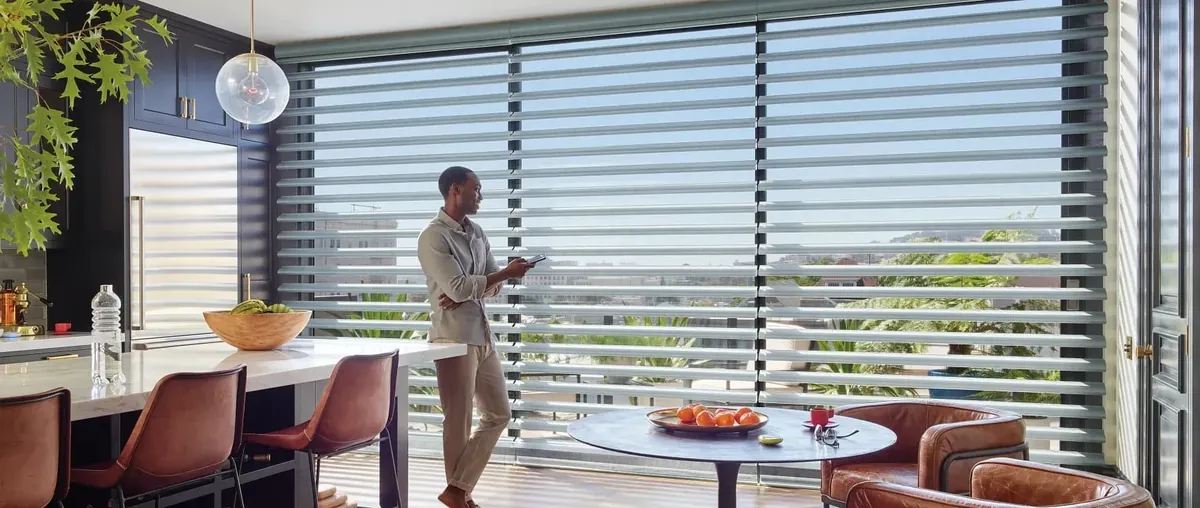
Rochester houses swing between very old and very new, and the measuring follows suit. For an antique window we take more measurements than you might expect; for a new window we focus on how the shades line up across a run.
- Widths at the top, middle and bottom of every opening, and heights on both sides and in the center.
- The depth of each frame, with any latches, storm panels or rails noted.
- The mount for each window, agreed with you before ordering.
- Fabric, fold, lining and lift confirmed room by room.
- Installation by our certified Hunter Douglas installers, who level every headrail, test each lift and show you how the shades work.
The aim is roman shades in Rochester that look as if they were made for the house, because they were.
Vignette or Carole Fabrics
Vignette rolls its fabric into soft folds and has no cords across the back, so the shade looks finished from both sides. That matters on a house where the windows are seen from a long driveway. Carole Fabrics offers flat and soft folds in a large library of fabrics, good for matching a particular color in an antique room.
A typical order might use Carole Fabrics flat folds in the deep old sash and Vignette on the big windows of a newer addition. Our main roman shades page covers the whole range, and our Carole roman shades and Vignette modern roman shades pages go into each line.
What a Gallery dealer brings to the job
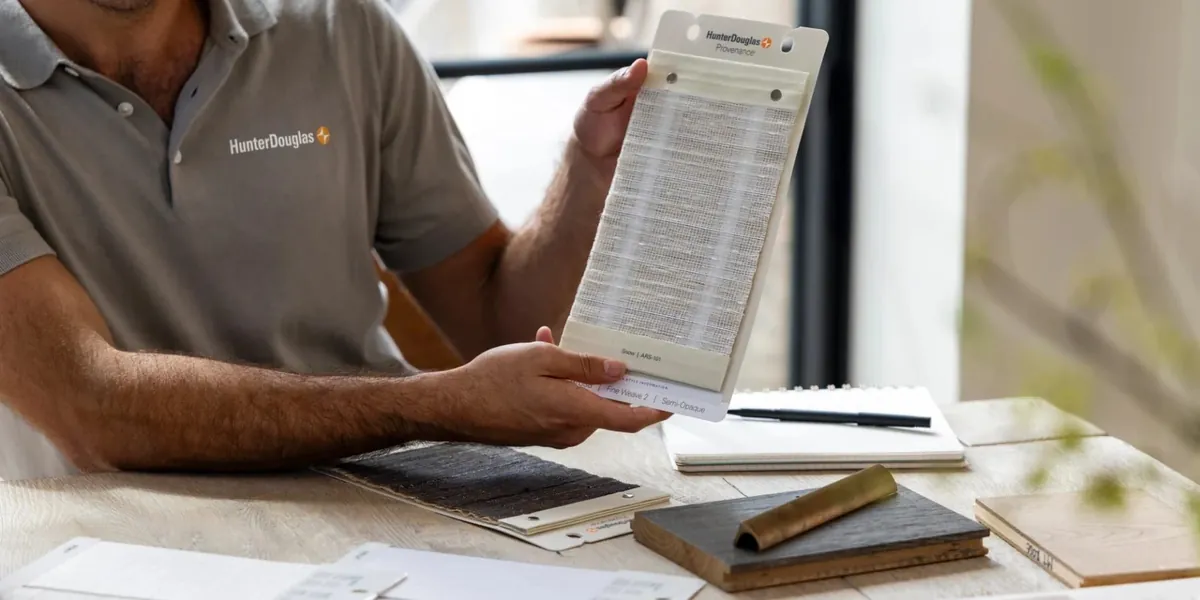
Blinds & Designs is a Hunter Douglas Gallery dealer, a designation Hunter Douglas gives to dealers who meet its standards. That gives you access to the whole roman range, with every Vignette and Carole Fabrics style, the woven textures, the lift options and PowerView, in one consultation.
Our installers are certified by Hunter Douglas, so every shade is mounted the way it was designed to be. If anything needs attention later, we take care of blind and shade repairs too.
While we are there we can look at other rooms as well, whether that is plantation shutters in Rochester for a farmhouse bathroom or motorized blinds in Rochester for a great room. Everything we offer in town is on our Rochester page.

A long drive is no problem
Rochester houses are spread out, and some sit at the end of a long lane. That is no obstacle: our vans bring the samples to your kitchen table, whether the job is a single pond-side window or every room of an antique colonial.
If you would rather see the range before we visit, our North Dartmouth showroom is the closest to Rochester, a short drive south toward the coast.
Questions from Rochester
My antique windows are set deep in thick walls. Is an inside mount possible?
Usually, and it often looks best. Deep reveals have plenty of room for the headrail. We check for latches, storm panels or rails that would get in the way, and if something does, we mount the shade on the face of the frame or above the window.
We have no neighbors. Do we still need lined shades?
Often not in the living areas, where a light-filtering fabric handles glare. Bedrooms facing east usually do benefit from a lining, and at night a lined shade keeps a lit room from being visible from the road.
What works on a great room with a wall of glass?
One shade per window on matching headrails, so the folds line up. For very high windows, PowerView lets you raise and lower them with a remote, your phone or a schedule.
Can roman shades take the glare off Snipatuit Pond without hiding it?
Yes. A sheer or light-filtering fabric cuts the reflected glare while you still see the water, and the shade raises into a short stack when you want the full view.
Does the estimate cost anything?
No. After we measure, you get a free estimate. Request a consultation and we will bring samples to your house.
Book the first visit
The easiest way to decide is to see the fabrics against your own windows, whether they are deep old sash or new glass facing the bog. Request a consultation and we will bring Vignette, Carole Fabrics and woven samples to your house, measure every window and give you a free estimate for roman shades in Rochester. If you want to talk first, use the call button, or come to the North Dartmouth showroom.