
Open land, deep sash and a lot of sky
Most window coverings are sold on privacy, and in a lot of towns that is the first thing people ask about. Out along New Bedford Road and around Snipatuit Pond the question is usually a different one. Houses stand on big lots, often with a cranberry bog, a hayfield or the pond in front of them and no neighbor close enough to see in. What these rooms need is control of the light that pours in across all that open ground. That is the reason so many requests for plantation shutters in Rochester, MA, start with a sunny room rather than an exposed one.
The houses themselves split into two groups. The antique colonials and farmhouses have small sash set deep into thick walls, with wide interior sills and casings that have been painted, stripped and painted again over a very long life. The newer builds, scattered on the larger lots, have modern glass: big double-hung units, picture windows facing the view and sliders out to a deck.
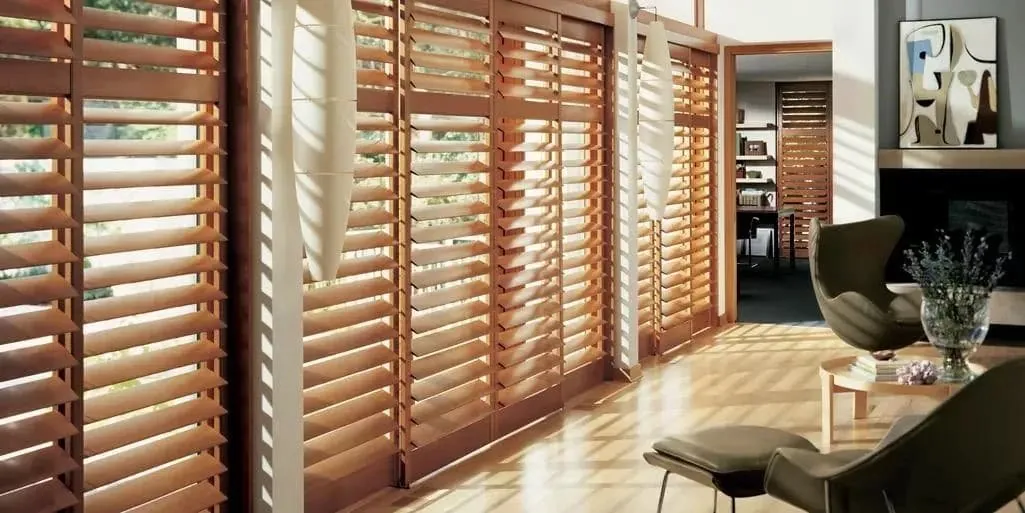
Shutters work in both. In the old houses they sit neatly in the deep openings and suit the plain, solid look of the rooms. In the new ones, a wide louver turns a wall of glass into something you can adjust through the day.
Plantation shutters in Rochester, MA: three collections, one look
Hunter Douglas makes its shutters in three materials. We bring samples of all three, and most houses end up using two of them, chosen room by room.

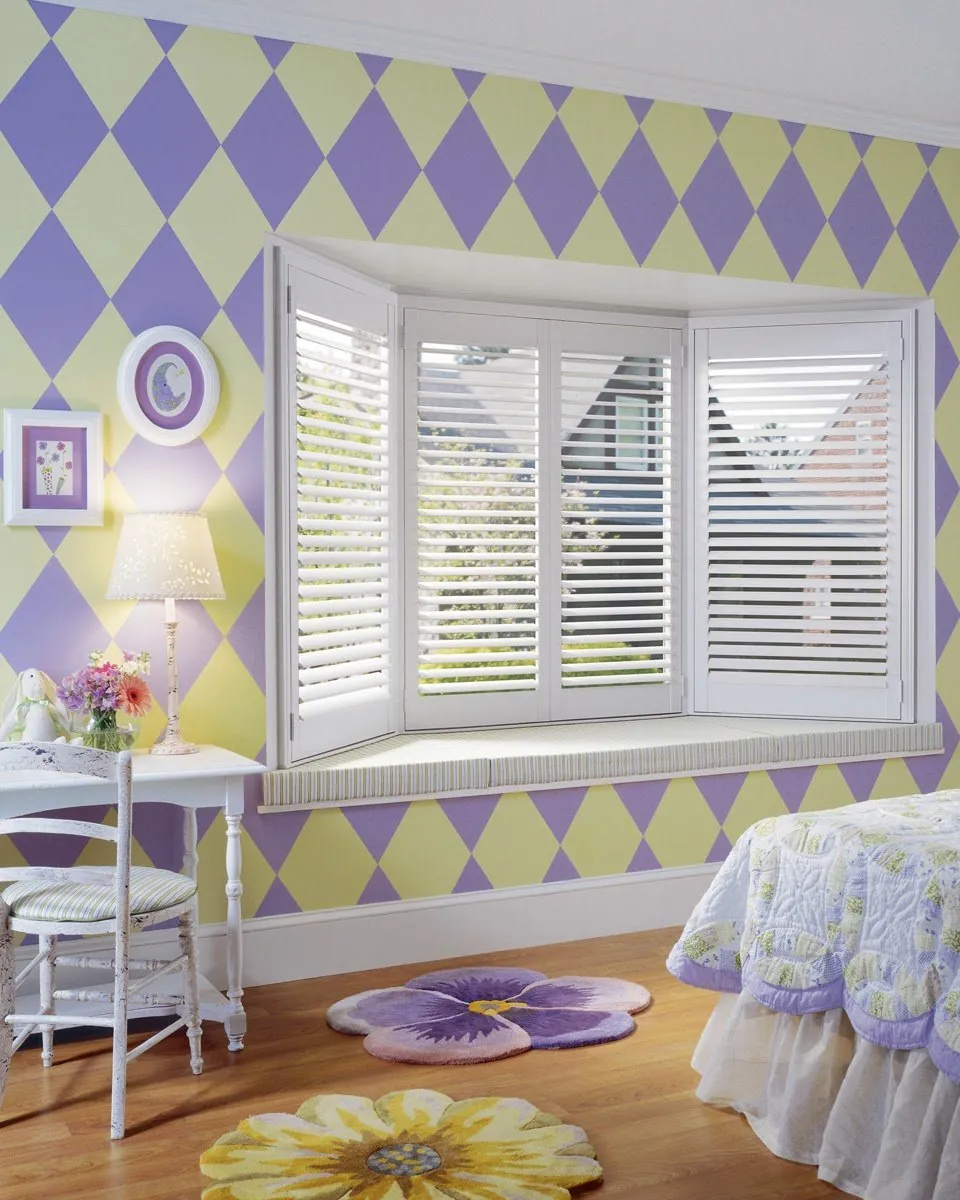
Palm Beach polysatin
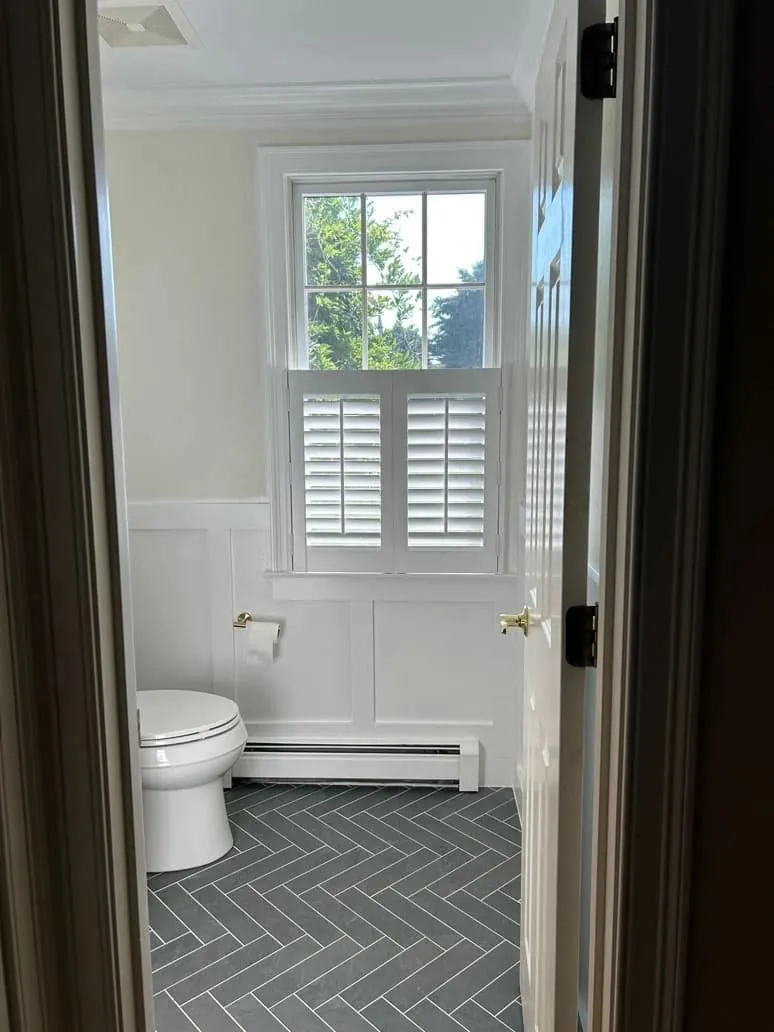
A solid material with no wood in it. Steam, splashes and the damp of a mudroom do it no harm, so it goes in baths, kitchens and laundry rooms.
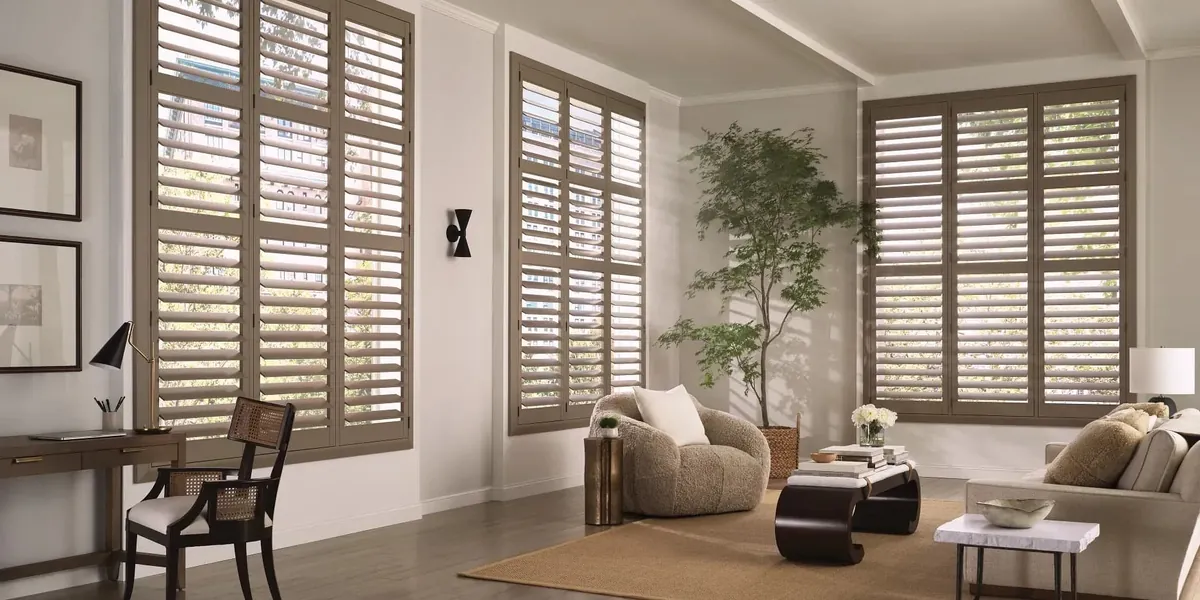
NewStyle hybrid
A composite that stays straight and true with the look of painted wood. A strong all-round choice for the main rooms of a newer build.
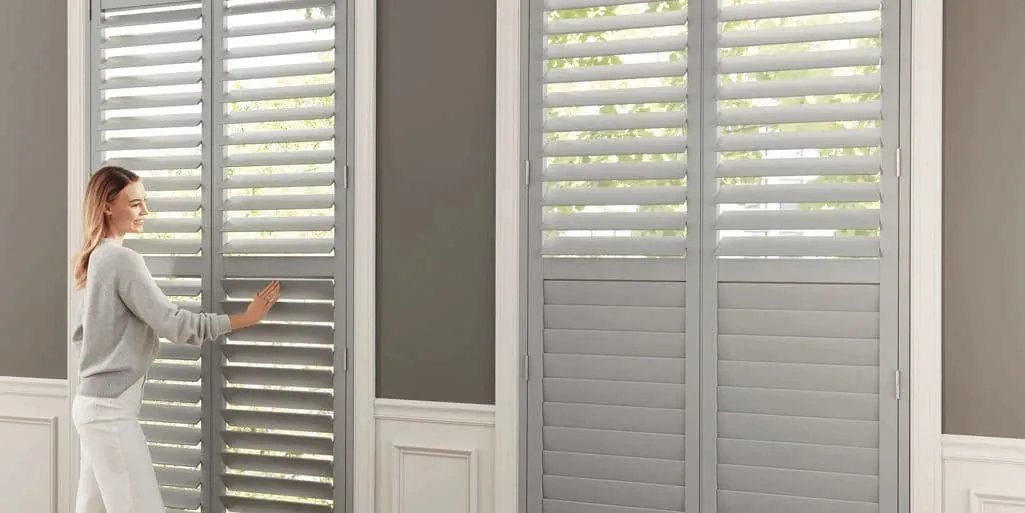
Heritance hardwood
Real wood, painted or stained. The natural match for the wide old casings and sills of an antique colonial or farmhouse.
Deep-set sash in the antique houses
The oldest houses in town were built with thick walls, and their windows sit well back from the room. It is common to find an interior sill wide enough for a row of plants, and a casing that frames the opening like a picture. That depth is a gift when it comes to shutters.
An inside mount needs room for the frame and for the louvers to tilt without hitting the glass or the sash locks. In many modern houses that space is tight. In a deep antique opening there is usually plenty, so the shutter can sit within the window, flush or nearly flush with the casing, and the old trim stays fully in view. Closed, it looks almost as if the house was built with interior shutters, which some houses of that age once were.
Depth is not the only thing to check. Antique windows are rarely square, and the opening often tapers by a fraction from top to bottom or leans a little to one side. Old sash weights, pulleys and the stops that hold the sash may also stick into the space where the frame would sit. So we measure each one carefully:
- Width at the top, middle and bottom of the opening.
- Height at the left, center and right.
- Depth at several points, noting any stop, pulley or lock in the way.
- Whether the sill is level, and how much the opening leans.
- Which way the panels should swing so they clear the sill and any furniture.
The frame is built to take up the differences we find, so the panels close evenly and the louvers meet in a straight line. Where an inside mount is not right, a slim outside frame on the casing is the honest answer, and we will say so.
Heritance in a colonial front room
The front rooms of an antique colonial are usually the most formal in the house: a parlor and a dining room either side of a center hall, each with a pair of windows to the front and sometimes one to the side. These rooms usually have the finest woodwork in the house.
Heritance is the collection we suggest most often here. It is hardwood, so it takes paint with the same depth as the old casings, or it can be stained to sit with a pine or oak floor. A stained shutter in a colonial with refinished floors and natural trim can look very handsome, especially in a study or library where the rest of the room is wood.
Hardwood is happiest in rooms that stay reasonably dry, and the formal rooms of an old house usually do. In the kitchen, the back hall and the bathroom we switch to Palm Beach, matched in color so the whole ground floor looks consistent.
Farmhouses and their working rooms
The farmhouses along the main roads were built for working families, and they often grew piece by piece. An ell might join the main house to a barn, a summer kitchen might have become a family room, and a mudroom almost always sits by the back door. Each of those additions came with its own windows, in its own size.
That mix suits made-to-measure shutters very well. Each opening gets its own frame and panels, but the louver width, color and frame style stay the same, so an old front window and a later mudroom window look like part of one plan. The working rooms, where boots come off and the dog comes in wet, are where Palm Beach earns its place: it wipes clean and does not care about damp.
Small upstairs windows under the eaves, common in farmhouses and capes alike, usually get a narrower louver. It keeps the panel in scale with a short window and gives finer lines that suit the age of the house.
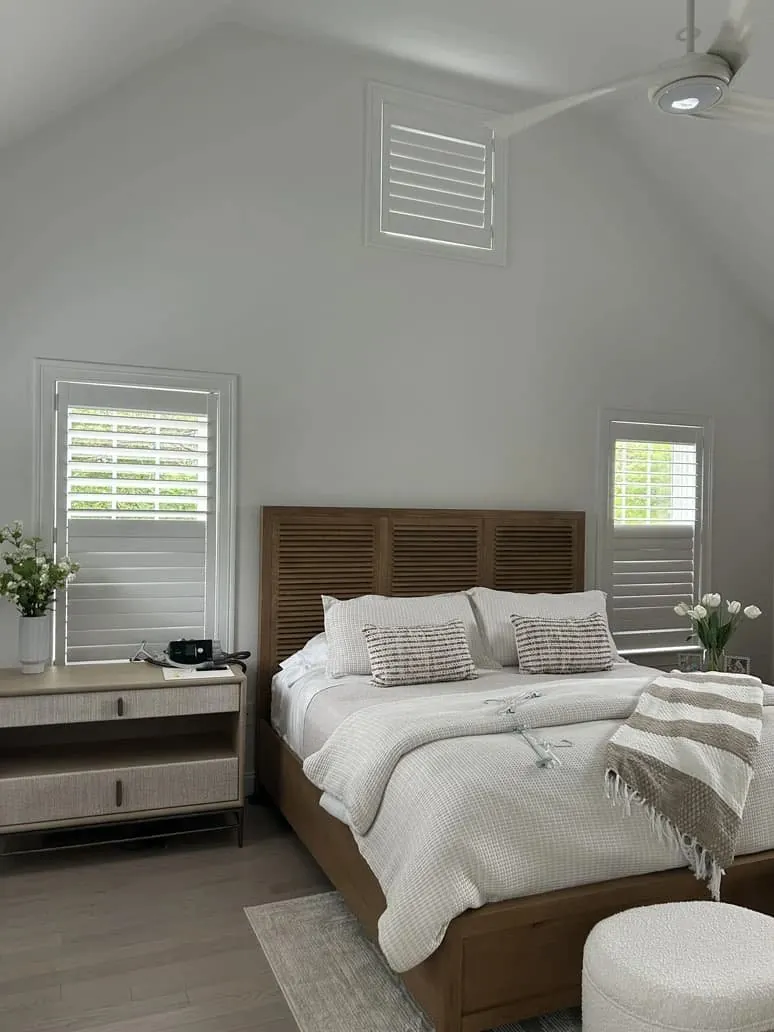
Sun across the bogs and fields
On a big open lot the sun has nothing to stop it. A room that faces across a bog or a field gets the full sweep of morning or afternoon light, low and strong in winter, high and hot in summer. In a farmhouse with small windows that is welcome. In a newer house with a wall of glass, it can make a room hard to sit in for part of the day and fade everything in its path.
Louvers are made for this. Tilted up, they turn direct sun into soft light bounced off the ceiling. Tilted level, they let you see out across the land with only thin lines in the way. Closed, they take the heat out of a summer afternoon. Because there is no neighbor to think about, many people simply leave the louvers open most of the day and tilt them as the sun comes round.
On the pond side, the water adds its own glare. Light comes up off the surface at a low angle, and a wide louver tilted upward handles it neatly. In a bedroom that catches the first light over the bog, closing the louvers gives a much darker room in the early morning without anything hanging over the glass.
Bedrooms that catch the first light
With nothing between the house and the horizon, east-facing bedrooms on an open lot wake up early. In summer the sun clears the tree line across a bog or field long before most people want to be up, and it comes straight in at bed height.
Closed shutters make a real difference there. With the louvers shut tight and the panels closed, the room stays far darker than it would behind a sheer or a light blind, and there is no stack of fabric at the top of a small window. When you are ready, a push on the tilt rod opens the louvers and the light comes back in. For a guest room in a farmhouse ell, or a nursery under the eaves, that simple control is often the main reason people choose plantation shutters in Rochester, MA.
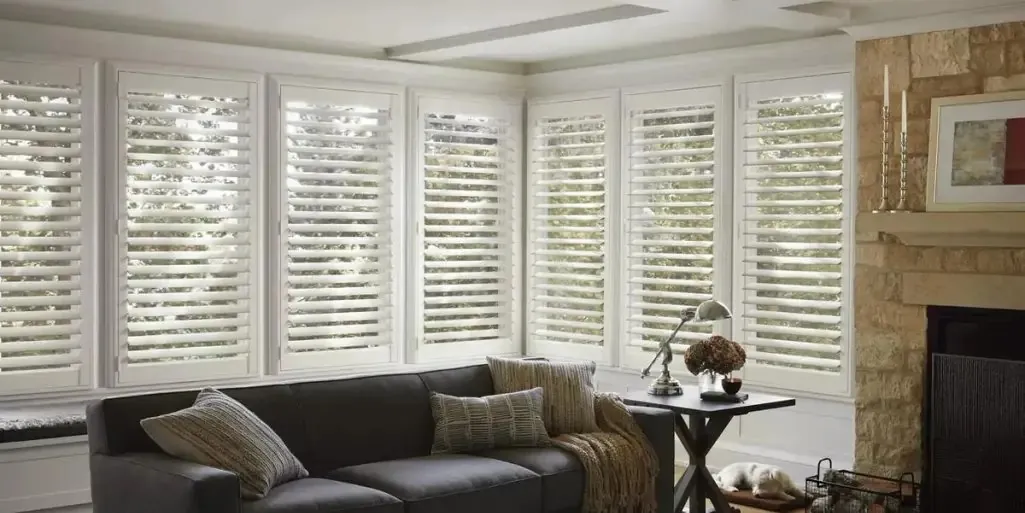
Winter on an exposed lot
Open land works the other way in January. Wind crosses a frozen bog or a bare field with nothing to slow it, and a small antique window with old glass can feel cold to sit beside. A closed shutter puts a solid panel between you and the glass in the evening, and it closes off the draughty feeling of a black window at night. In the morning, open the panels and let the low winter sun back in to warm the room.
We never promise a figure for any of this, and shutters are not a replacement for good storm windows. What we can say is that rooms with closed panels feel more comfortable on a winter night, and that the same shutters that tame the summer sun also make a cold room more pleasant once it is dark.
Modern glass in the newer builds
The houses built on the larger lots in more recent years make for a different kind of project when it comes to plantation shutters in Rochester. Windows are bigger, square and consistent from room to room. There are often tall great rooms with windows stacked above windows, picture windows facing the view, and sliders or French doors onto a deck.
For this kind of glass, wider louvers usually look best and give the clearest view. A tall window can be split into an upper and a lower panel that open on their own, so you can shade the top half from high sun while keeping the lower half open to the yard. NewStyle covers most of the house well, with Palm Beach in the baths and kitchen and Heritance in a study if you want the warmth of real wood.
French doors take panels mounted on the doors themselves, and sliders take bypass panels that glide along a track. Transoms and arched tops can have shutters made to their shape, so a great room wall reads as one finished design from the floor to the highest window.
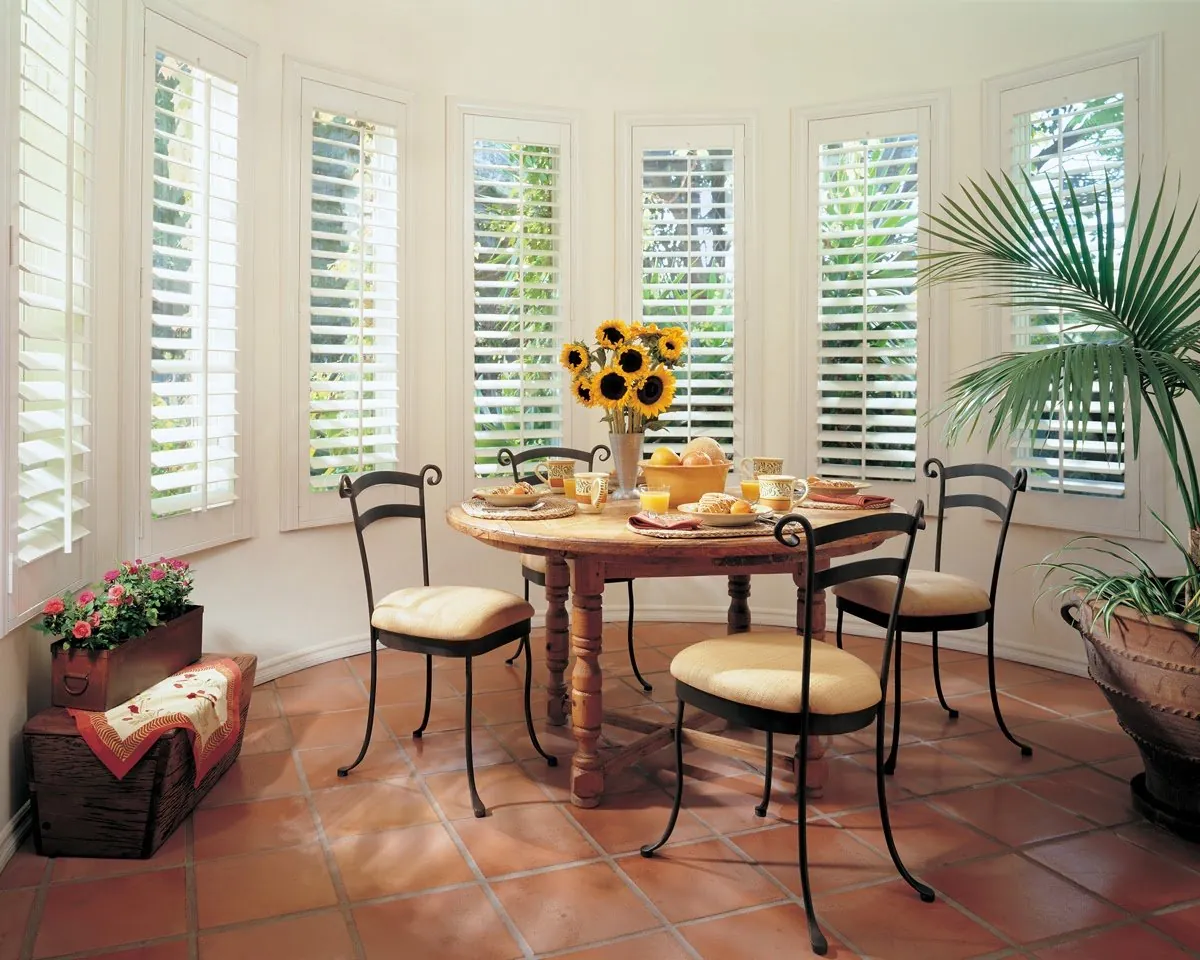
Picking the louver and the frame
Once the collection is settled, the look of the finished window comes down to the blade and the frame around it.
Think of louver width in terms of the glass behind it. Small antique sash, divided into little panes, looks best behind a slim blade: more slats, finer shadows, nothing that overwhelms a modest opening. The tall, plain units in a newer build can carry a broad blade, and when those broad blades are tilted level they leave long clear gaps to look through, which is what you want when the view is a bog in autumn color or the pond at dusk. Between the two sits the medium blade, which suits most bedrooms and kitchens in either kind of house. A house can keep one width everywhere, so the front reads evenly from the road, or step down to a slimmer blade in the eaves.
The frame decides how the shutter meets the house. In the deep openings of an old colonial we nearly always mount inside, so the frame tucks into the reveal and the casing stays bare. On a newer window with shallow returns, or one with a crank handle in the way, an outside frame fixed to the casing is neater. Profiles go from plain and square to a small bead or step; old houses tend to want the plain one.
The last two choices are the tilt and the finish. A rod down the front of the panel suits a traditional room, while a hidden tilt leaves the face clean. Finishes run from crisp whites to soft neutrals, plus stains on Heritance, and we always compare them against your own trim in daylight.
The main plantation shutters page explains the full range, and our Palm Beach, NewStyle and Heritance pages go further into each one. For more on deep and uneven openings, see our guide to shutters for older windows.
A consultation at the house
Choosing plantation shutters in Rochester is far easier in the house itself, with the samples held up to your own deep sills and your own light. Our vans carry louver samples, frame profiles and color chips, so we can bring the showroom to you, however far down a country road you are.
We walk through the rooms with you, talk about the sun and the way each room is used, and measure every window. You choose a collection, louver width, frame and color for each room, and you get a free estimate before anything is ordered. When the shutters arrive, our certified Hunter Douglas installers set the frames, hang the panels and adjust each one so it swings and closes smoothly. You can read more about what happens at an in-home consultation, or ask about our interior design consultations if you want help with the rest of the room.

Why it pays to buy from a Gallery dealer
Blinds & Designs is a Hunter Douglas Gallery dealer, which is how Hunter Douglas identifies dealers who meet its standards. On a shutter order you get every collection, louver size, frame profile and finish, and you work with one local company from the first sample to the final adjustment.
Our installers are certified by Hunter Douglas. An antique opening that leans or tapers needs an installer who knows how to set the frame so the panels still close true, and that is the work they do every week.
We also carry Hunter Douglas blinds, shades and drapery, handle window covering automation, and take on blind and shade repairs for coverings you already have. Many people pair shutters downstairs with roman shades in Rochester upstairs, or look at motorized shades for tall great room windows. Everything we offer in town is on our Rochester page. The nearest place to see shutters in person is the North Dartmouth showroom.
Questions from Rochester
Will shutters fit the deep windows in my antique colonial?
Usually very well. Deep openings leave plenty of room for an inside mount, so the frame sits within the window and the casing stays on view. We measure each opening at several points because old windows are rarely square, and the frame is built to take up the difference.
Should I choose stained or painted shutters?
It depends on the room. Painted panels suit most houses and match painted trim. Heritance hardwood can also be stained, which looks good in a study or a room with natural wood floors and casings. We bring stain and paint chips so you can compare them against your own woodwork.
How do shutters handle strong sun across an open field or bog?
Very well. Tilt the louvers up and the sun is bounced softly off the ceiling instead of glaring across the room. Close them on a hot afternoon to keep the heat and fading out. A wide louver gives the clearest view when tilted open.
Can old and new parts of a farmhouse have matching shutters?
Yes. Each window gets its own frame and panels, built to its size, while the color, louver width and frame style stay the same throughout the house.
Do you charge for the estimate?
No. After we measure, you receive a free estimate for the shutters you are considering, with no obligation.
See them against your own sills
Every antique sash and every big new window is a little different, and the best way to choose is with samples in your own rooms. Request a consultation and we will come out with louver and frame samples, measure every opening and give you a free estimate. You are also welcome to use the call button or visit our North Dartmouth showroom.