
Wide lots, open bogs and nobody next door
Rochester is a town of big lots. Antique colonials and old farmhouses stand well back along New Bedford Road, and around Snipatuit Pond the houses sit among fields, woods and the flat open stretches of cranberry bog. Many have no near neighbor at all. As a Hunter Douglas dealer in Rochester, MA, that changes the first question we ask about any window.
In a crowded neighborhood, people choose window coverings mainly to stop others seeing in. Here that is rarely the point. With open bog frontage and nobody to screen, the real questions are light, warmth and keeping the outlook you bought the house for.
Then there is the split in the housing itself. The older houses have small sash set deep into thick walls. The newer builds have modern glass, often lots of it, facing the same open ground. One street can need two quite different answers.
The Hunter Douglas range, matched to Rochester houses
As a Gallery-level Hunter Douglas dealer in Rochester, MA, we can open the whole catalog to you. These six families do most of the work in town; each card leads to its own Rochester page.
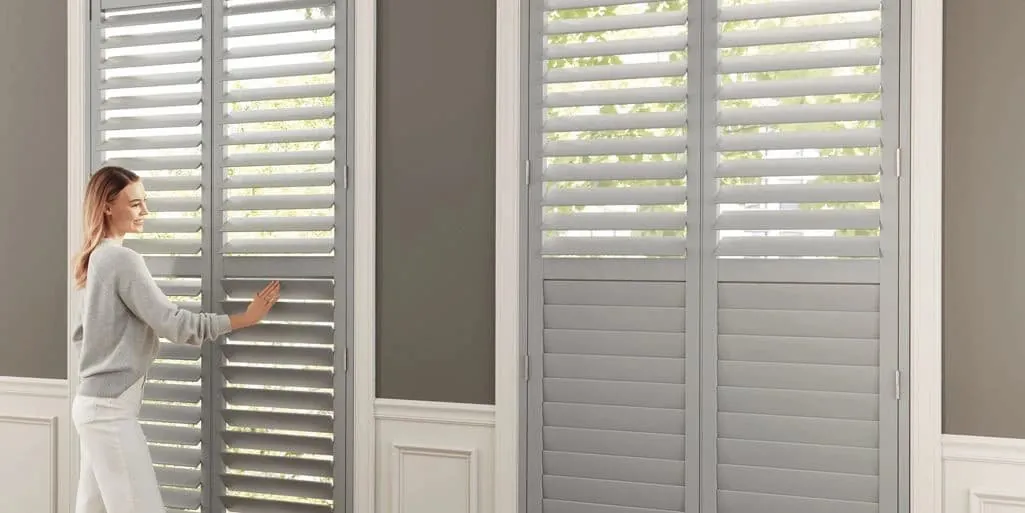
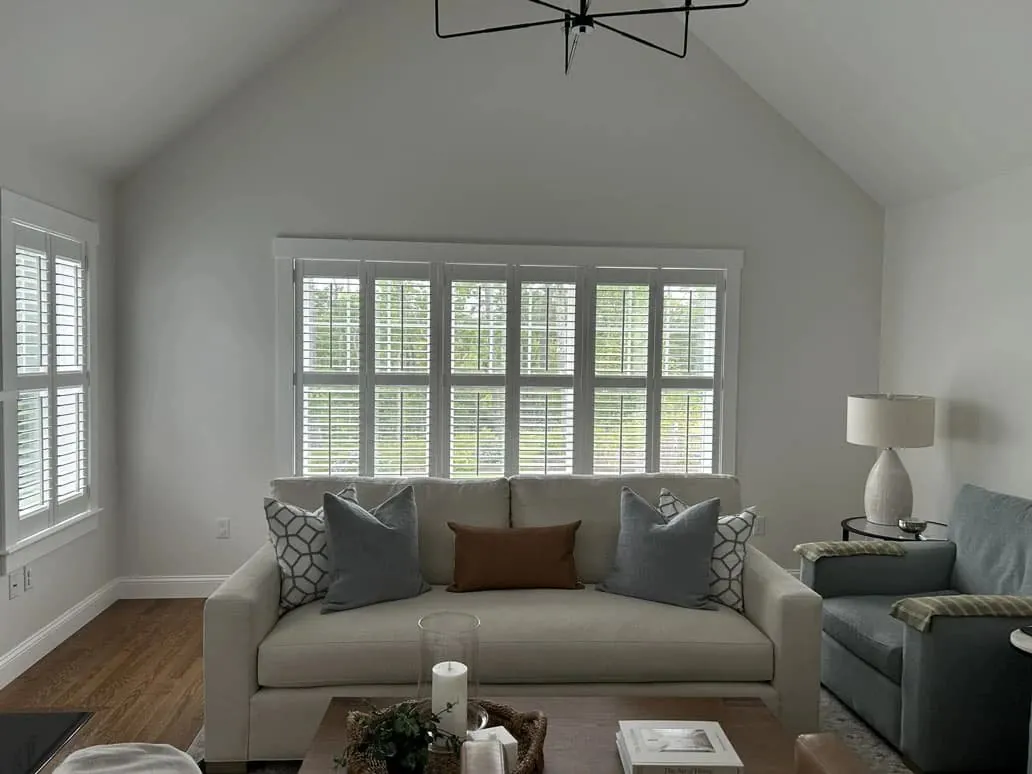
Shutters for deep sash
Palm Beach, NewStyle and Heritance frames sit inside a deep opening and make an antique window look as if it was built that way.
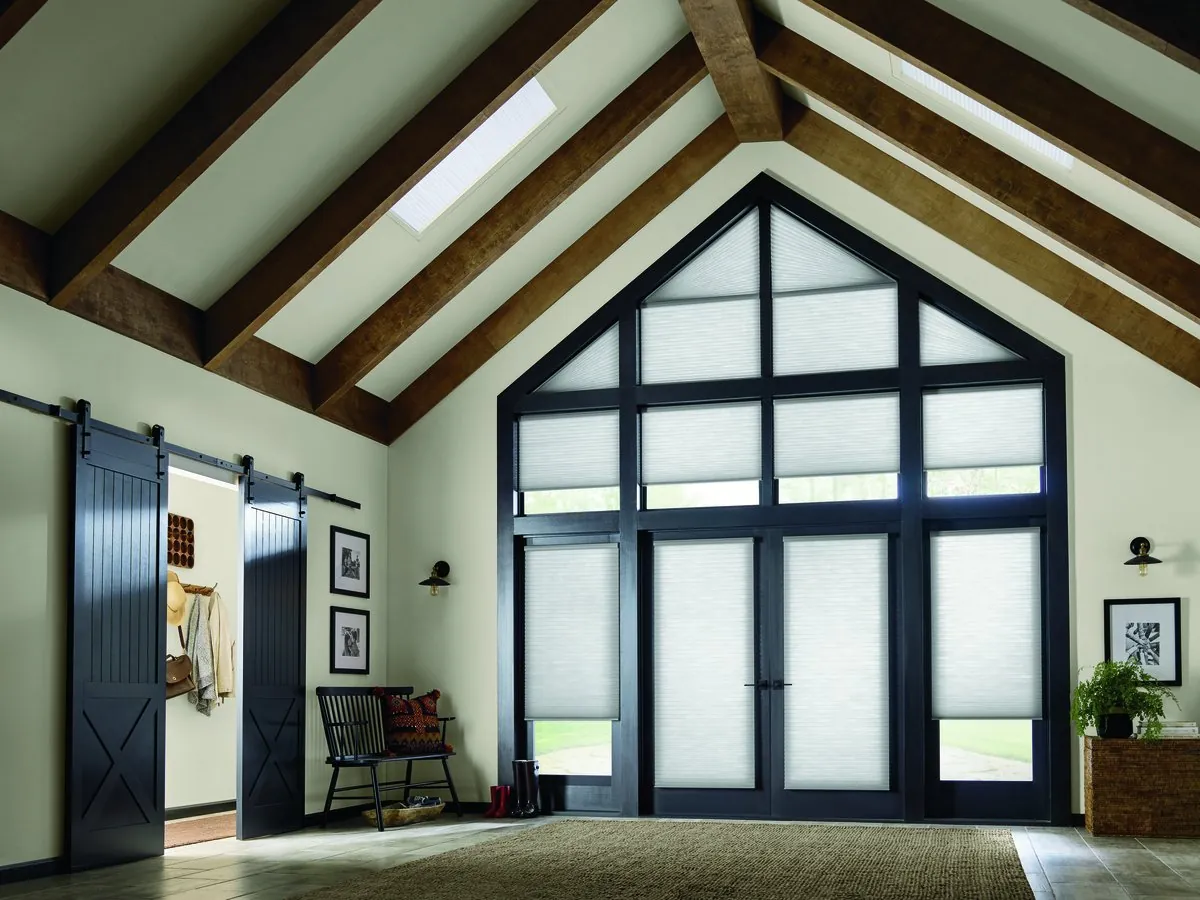
Honeycomb for cold rooms
Duette and Applause cells hold a layer of air against the pane, which a farmhouse parlor with original glass will thank you for in January.
Roller and banded shades
Designer roller, screen and banded shades suit the big glass in a new build, lifting fully clear of the view.
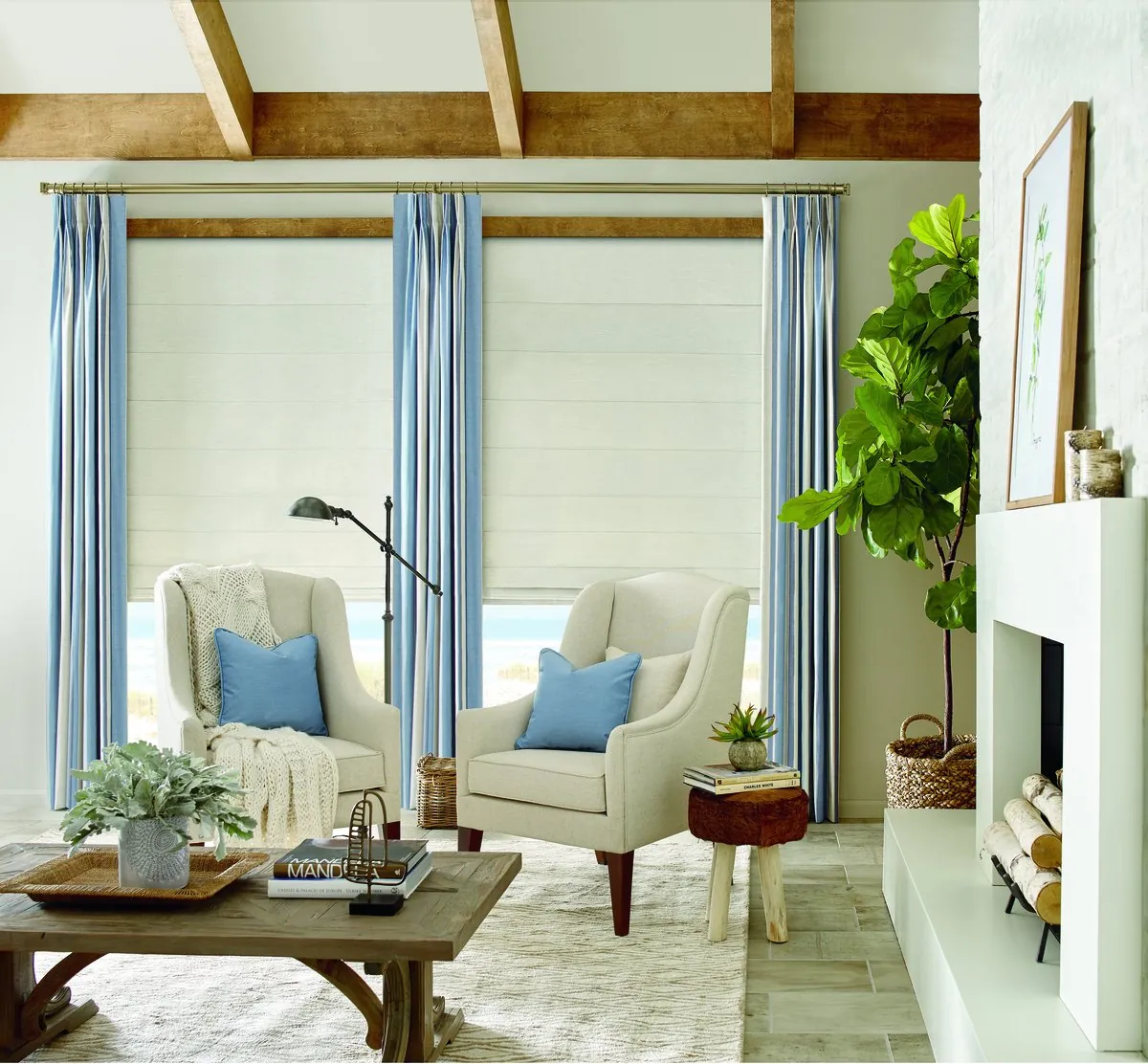
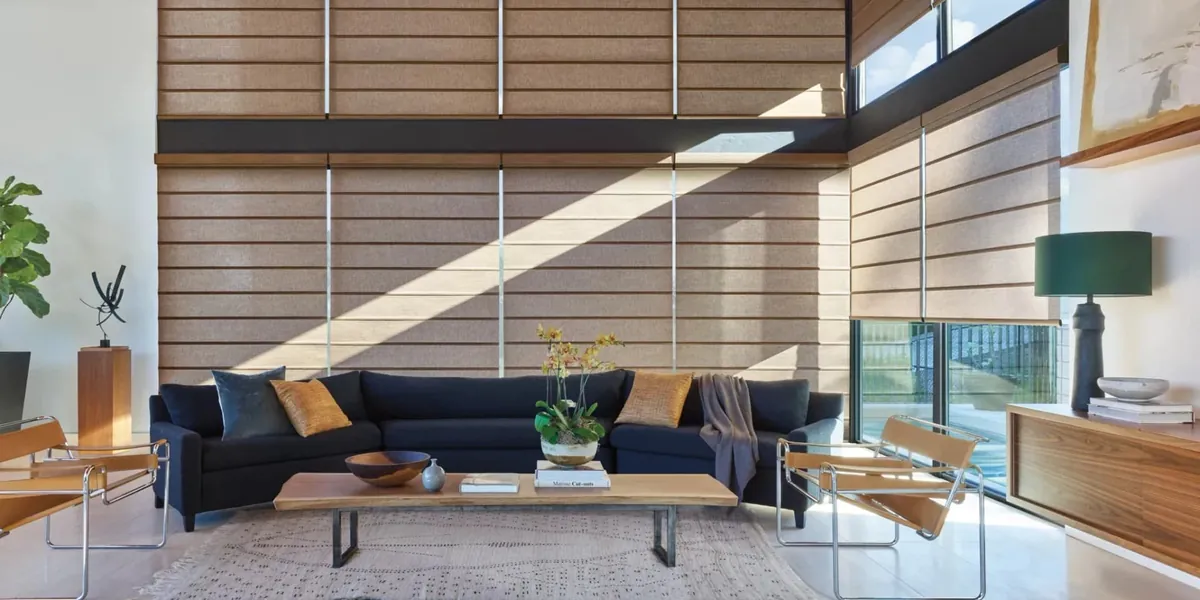
Roman shades
Vignette and Carole Roman shades soften a colonial dining room or a beamed family room with tailored folds.
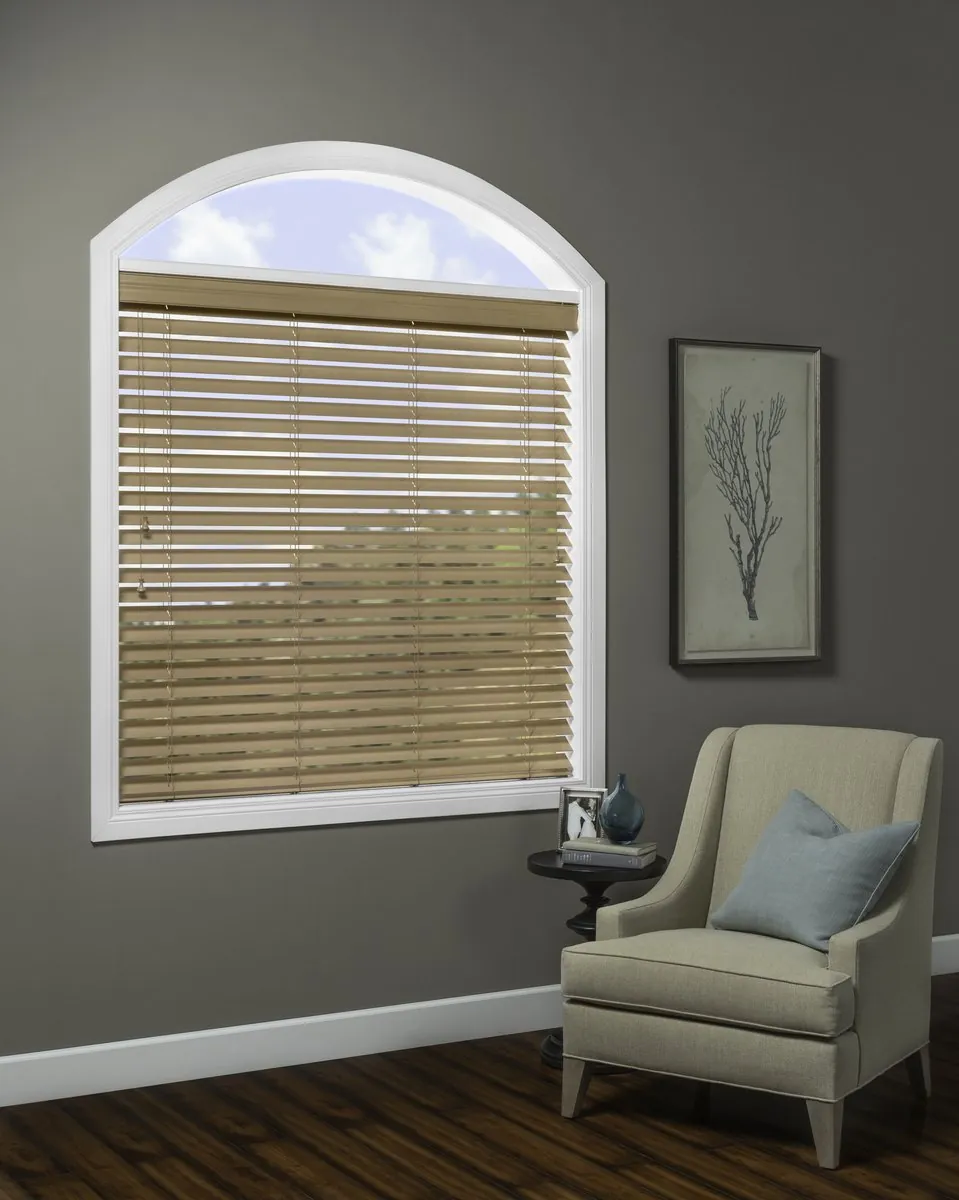
Wood blinds
Parkland wood and EverWood faux wood steer light by the tilt of a slat, and look at home against old painted trim.
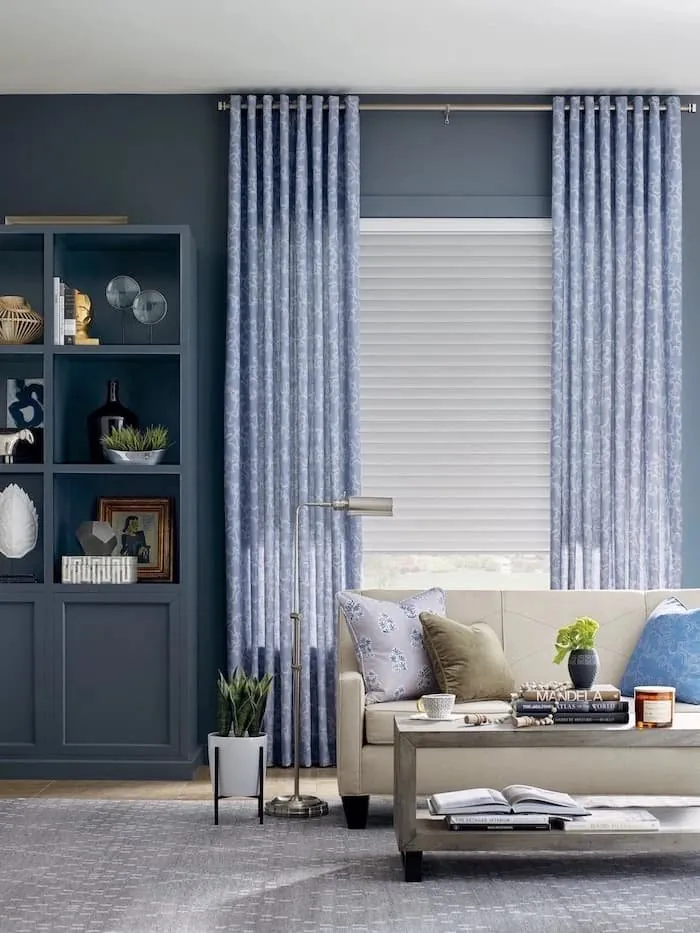
Drapery
Carole drapery frames a wide window or layers over a shade, adding color and a little extra warmth on winter nights.
When privacy is not the problem
It is worth pausing on this, because it reshapes the whole order. If no one can see into your living room, you do not need a covering that stays half down all day. You need one that disappears when you want the view and does its job when you need it to: cutting glare, holding heat, darkening a bedroom.
That pushes us toward products that raise fully and neatly. Honeycomb shades stack into a few inches at the top of the frame. Roller shades wind away to nothing. Shutters fold back against the wall, or simply sit with their louvers open, so the window reads as clear glass with a frame around it.
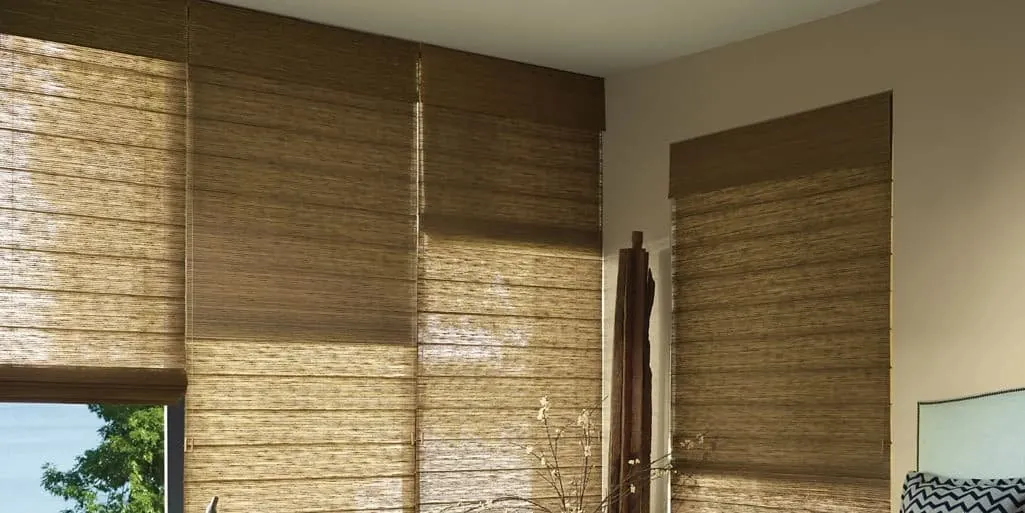
It also frees you to think about how a room looks rather than how it hides. A farmhouse kitchen that nobody overlooks can take a café shutter purely for the look, or a woven wood shade for its texture. A bedroom facing open bog needs darkness on a summer morning but no screening at night, so a room-darkening fabric does both jobs.
Antique colonials and their deep-set sash
The oldest houses in Rochester were built with heavy timber frames and thick walls, and their windows sit well back inside the wall. Small sash, often with divided lights, set into a deep reveal. It is one of the nicest things about an antique house, and the best window treatments take advantage of it.
Deep reveals are ideal for an inside mount. A shutter frame can sit fully within the opening, so the panels close flush with the wall and the trim stays on view. A honeycomb or Roman shade mounted inside disappears into the reveal when raised. Even a wood blind sits more neatly in a deep frame than a shallow one.
What antique frames rarely are is square. Timber settles over a very long time, and a window opening that looks even from across the room can be noticeably out at one corner. We take several measurements at each window and plan the product around the tightest point, so it clears the frame without leaving a wide gap on the other side.
Small panes and small windows
Divided-light sash breaks the view into small panes, and some coverings fight that pattern. Shutters with a louver size close to the pane size look tidy. A honeycomb shade in a light color lets the muntins show through softly when lowered. Bold patterned fabrics can look busy against small panes, so we tend to suggest plain or subtly textured ones in these rooms.
Palm Beach, NewStyle or Heritance in an antique room
All three Hunter Douglas shutter lines can sit in a deep reveal, but they suit different rooms. Heritance is real hardwood, and it can be stained so the grain shows, which suits a colonial parlor with original wood floors and a fireplace. NewStyle has a hybrid build and a smooth painted finish that works almost anywhere. Palm Beach is polysatin, made to cope with moisture and strong sun, so it belongs in the bathroom, the kitchen ell and any room where the window faces the bog all afternoon. Frame style matters too. In a deep opening a slim frame keeps the old trim fully on show, while a frame with more profile can tidy up a reveal whose plaster edge has worn over the years. We bring a corner sample of each frame so you can hold it against your own window, and you can mix lines from room to room without the house looking patched together.
Farmhouses on New Bedford Road
The farmhouses along New Bedford Road follow a familiar pattern: a front block facing the road, a kitchen ell behind, sometimes a connected barn or shed. Rooms are modest and windows are spread evenly along the walls. Heat was always precious in these houses, and the windows were kept small for that reason.
Honeycomb shades are the obvious fit for warmth, especially in the front rooms and bedrooms. The kitchen ell often gets the most sun and the most use, and it is where faux wood blinds or Palm Beach shutters make sense, because they cope with steam and are easy to wipe down. A back hall or mudroom, where boots come off, can take a simple roller shade.
Many of these houses have been extended at some point, so you may find a modern sunroom or family room off the back. That room is usually the brightest in the house and the hardest to keep comfortable, which brings us to the newer glass.
New builds with modern glass
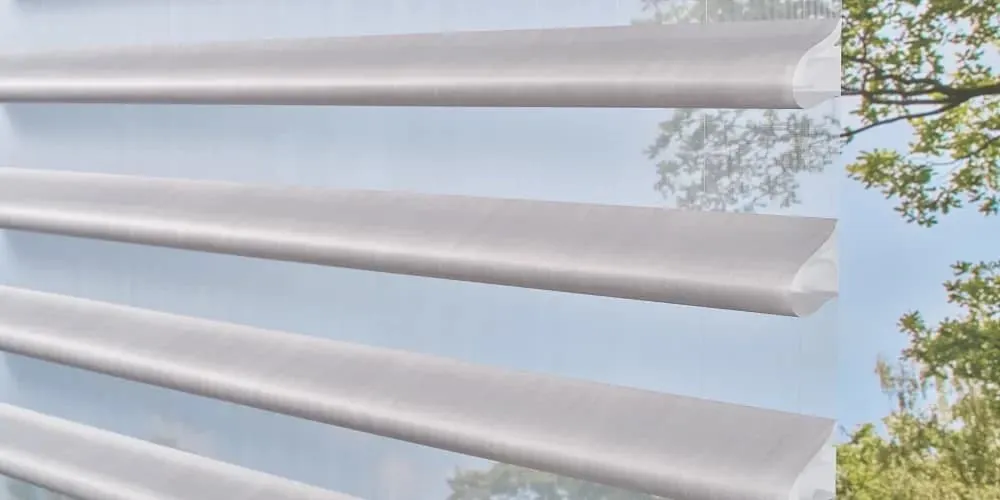
The newer houses in town, and the additions on older ones, are built for light. Large double-hung units, picture windows, sliders onto a deck and sometimes a gable wall of glass looking over the bog or the pond. With no neighbors to screen, the glass faces whatever view the lot has.
Big modern glass brings two problems with it. In summer, a west-facing great room fills with late sun and heat. In winter, those large panes lose warmth after dark. The answer is often a product that handles both: a light-filtering honeycomb that holds heat at night and softens the sun by day, or a solar screen for daytime with a heavier layer for the evening.
Tall glass also tends to be high glass. A window up in a gable or above a two-story entry cannot be reached without a ladder, so PowerView motorization is the practical choice. Those shades can run on a schedule, lowering for the hottest part of the afternoon and rising again in the evening.
Sun across open ground
With open bog frontage or a field around the house, the sun arrives with nothing in its way. There are no trees across the street, no house next door to cast a shadow. A room facing west takes the full late afternoon, and in summer it can be the hottest room in the house.
There are a few ways to manage it. A solar screen keeps the outlook while cutting brightness and heat. A sheer shade such as Silhouette softens the light into a glow and lets you tilt the vanes as the sun drops. Top-down, bottom-up honeycomb lets you lower the top of the shade just enough to block the low sun while the lower glass stays clear.
East-facing bedrooms get the same treatment in reverse, with the sun coming straight in at first light. A room-darkening honeycomb or a Roman shade with a blackout lining keeps the room dim until you are ready.
A good Hunter Douglas dealer in Rochester will also look at which rooms you actually sit in at that hour. A west room used mainly in the morning may need nothing more than a light sheer, while a family room used every evening deserves the full solution.
Fabric fading is worth mentioning too. A window that takes full sun every day will fade a dark fabric faster than a shaded one. Lighter colors hold up better on exposed glass, and we point out which fabrics suit a sunny window when you choose.
Snipatuit Pond and the view across the water
Houses near Snipatuit Pond have the water as their main outlook. Rooms facing the pond are usually laid out around it, with the biggest windows on that side. The goal there is a covering that is invisible when raised and kind to the view when lowered.
Roller shades in a screen fabric keep the pond visible. Sheer shades give a softer light and close for privacy at night, though with no road in front, privacy is often not an issue. In a pond-facing bedroom, a dual shade with a sheer and a darker fabric on one headrail gives you the view in the morning and full darkness when you want to sleep late.
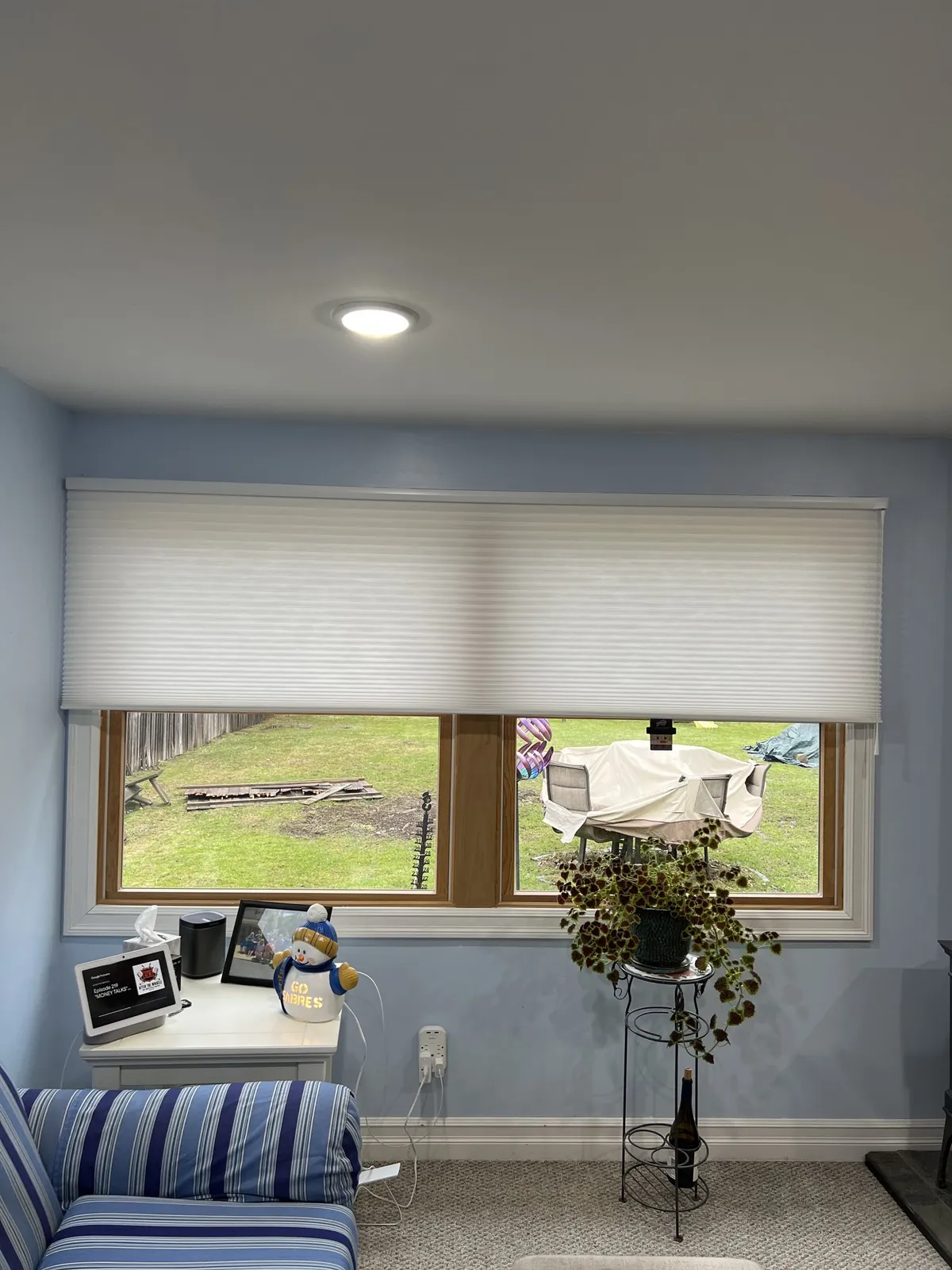
Water also bounces light. On a bright day the pond throws sun up onto the ceiling of a front room, so the glare comes from below as much as from the sky. A bottom-up shade, one that rises from the sill instead of dropping from the top, covers just the lower glass where the reflection comes in and leaves the treeline above it in view. Honeycomb shades can be made that way, and it is worth seeing at the window on a sunny afternoon before you decide.
How a visit works in a house this far out
Because the lots are big and the houses spread out, most Rochester customers start at home rather than in a store. Our vans carry Hunter Douglas samples, so we can bring the showroom to you, and you see every fabric in the light it will live in.
- Pick a time that suits you through Request a Consultation or the call button.
- We bring samples suited to your house: shutter louvers for the deep sash, honeycomb for the cold rooms, screen and sheer for the big glass.
- We walk the house with you, older rooms and newer ones, and talk through what each room needs.
- Samples go up in the window so you can judge color, light and fit against your own trim.
- We measure each opening at several points and check the depth of every reveal.
- You get a free estimate and take whatever time you need.
If a room needs more than a window covering, ask about our interior design consultations, which can be part of the same visit. The guide to what happens at an in-home consultation explains more.

What Gallery status means for an old house
Hunter Douglas calls dealers who meet its standards Gallery dealers, and Blinds & Designs is one. The practical upshot is choice. An antique colonial and a new build next to the bog need very different products, and a Gallery dealer can offer every one of them rather than a short list.
Installation is the other half. Our installers are certified by Hunter Douglas, and on a house with settled timber frames that training counts: brackets set into solid wood, shutter frames fitted to openings that are not quite square, every product levelled and tested before we leave.
It is why picking a Hunter Douglas dealer in Rochester matters as much as picking the product. The maker builds it; the dealer decides whether it suits the window, measures it right and hangs it well.
Repairs, upgrades and the next room
Hunter Douglas products last for many years, and over that time things change. A lift cord wears, a bedroom becomes a home office, or you decide the gable window would be easier with a motor. We handle blind and shade repairs on window coverings you already own, and we can add PowerView to many existing setups or replace one product with another.
A lot of our Rochester work happens in stages too. The front rooms first, then the bedrooms, then the new family room a year later. Working with one Hunter Douglas dealer in Rochester, MA keeps the fabrics and finishes consistent from one stage to the next.
Motorizing the high windows
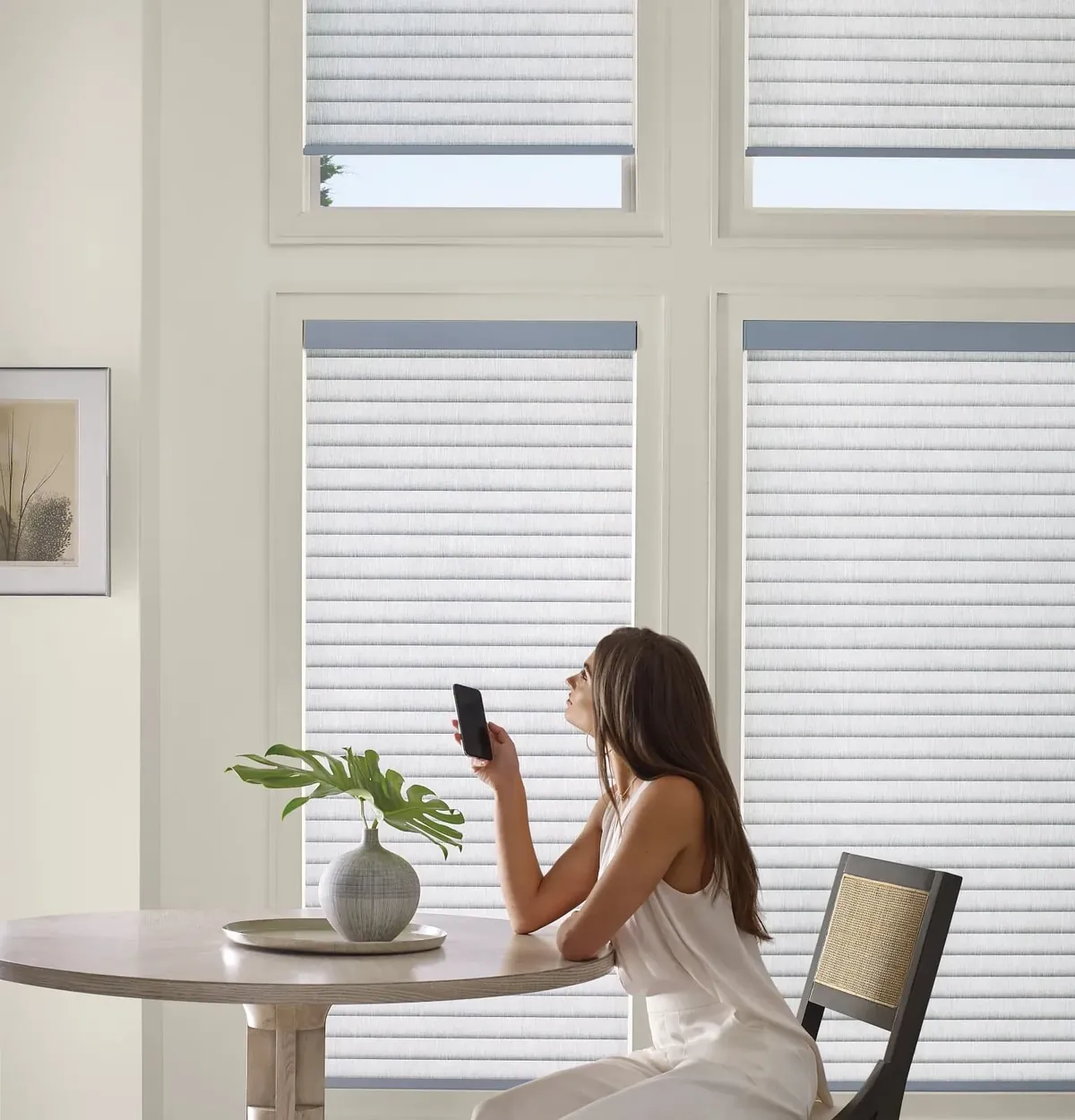
A gable wall of glass looking over the bog is one of the best features a new build can have, and one of the hardest to manage by hand. PowerView motorization lets you raise and lower every shade on that wall from a remote, a phone or a wall switch.
Schedules are the real benefit in a house with no neighbors. Set the west-facing shades to lower for the late afternoon and lift again after sunset, so the room stays comfortable even when you are out.
Our page on motorized blinds in Rochester goes further into how the system is controlled, and the main Hunter Douglas page covers every family we carry. Hunter Douglas also publishes its complete catalog online if you like to browse first. For everything we do in town, see our Rochester page.
Questions from Rochester
Do shutters fit the deep-set windows in my antique house?
Usually very well. A deep reveal gives a shutter frame room to sit fully inside the opening, so the panels close flush and the trim stays visible. We measure at several points because antique frames are rarely square.
Nobody can see into my house. What should I focus on?
Light, warmth and how the covering looks when raised. Products that lift fully out of the way, such as honeycomb, roller shades or shutters with open louvers, keep the outlook. Room-darkening fabric suits bedrooms that catch the early sun.
How do I handle the afternoon sun across the bog?
A solar screen keeps the view while cutting brightness and heat. A sheer shade softens it, and top-down, bottom-up honeycomb blocks the low sun while leaving the lower glass clear. PowerView can lower them automatically on a schedule.
Can old and new parts of my house match?
Yes. Using one family or one fabric color across the original rooms and the addition ties the house together, even when the windows are very different sizes.
What does an estimate cost?
Nothing. Estimates are free. Request a consultation and we will come to the house with samples and measure.
When you are ready
Request a consultation and we will drive out with the samples, measure every window and give you a free estimate. For a quick question, use the call button. If you would like to see products before we visit, the North Dartmouth showroom is our closest to Rochester.