
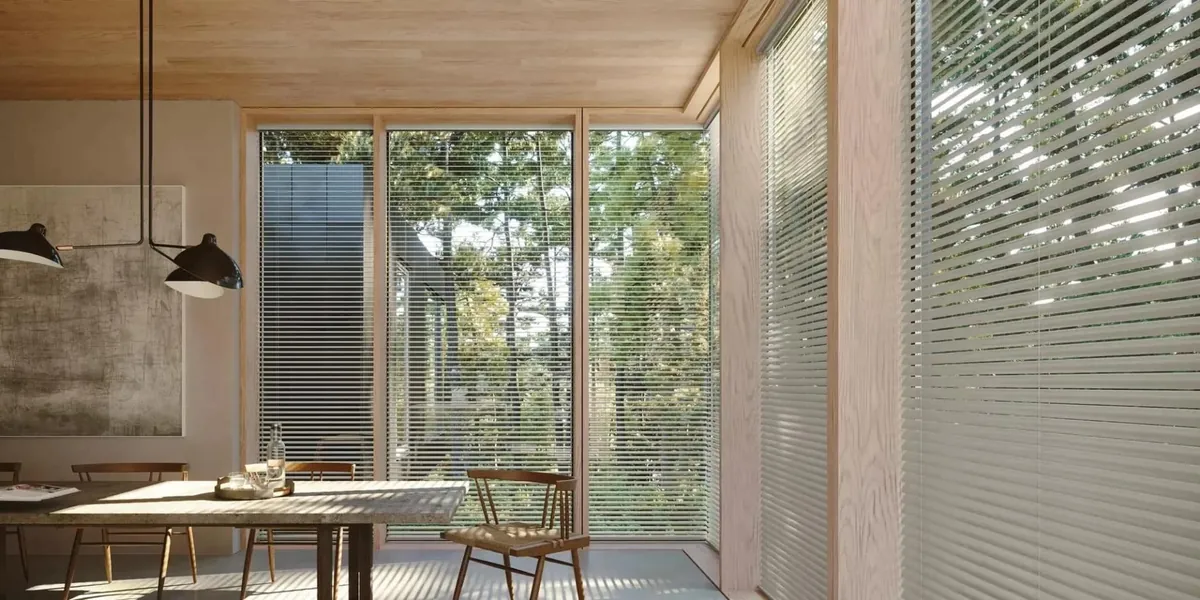
A pond view needs a light touch
Around Assawompset and Long Pond, the house is usually arranged around the water. Old summer camps that have been winterised and enlarged sit near the shoreline, and newer colonials on bigger lots stand further back, but both put their best rooms and their biggest windows on the pond side. When we plan custom blinds in Lakeville, MA, the first rule is simple: nothing heavy on that glass.
Heavy curtains, bulky valances and thick slats all fight the view. They frame the window instead of opening it, and they gather into a big bundle that hides the top of the glass even when pulled back. A good blind for a pond room does the reverse. When it is up, it almost disappears into the top of the frame. When it is down and open, you look straight through it. Only when the sun is low over the water does it need to do any work.
The rooms on the road side and the back of the house are a different matter, and that is where blinds earn their keep in other ways: privacy on a bedroom, a wipe-clean slat in a camp kitchen, and a covering for the slider out to the yard.
Blinds made for rooms that face the water
Three groups of blind cover most requests for custom blinds in Lakeville, and we carry samples of each to the door.
Wood blinds for the land side
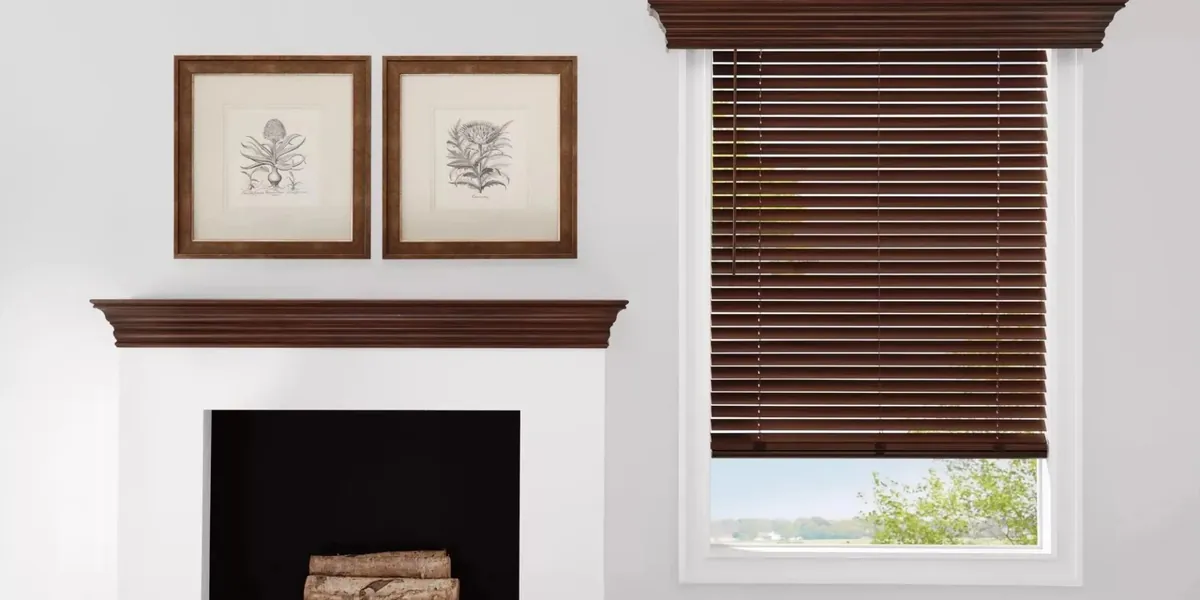
Parkland real wood brings warmth to a colonial’s dining room, study or front parlor, where the windows face the road or the woods.
Faux wood for camps and kitchens
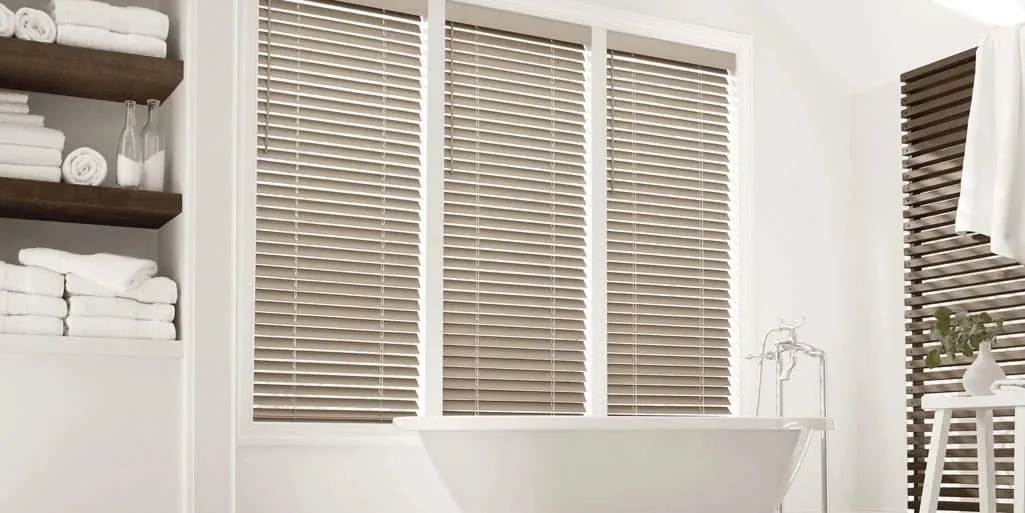
EverWood faux wood is the safe choice where the air near the water runs damp, in a camp bathroom and anywhere there is steam.
Vertical blinds and panels
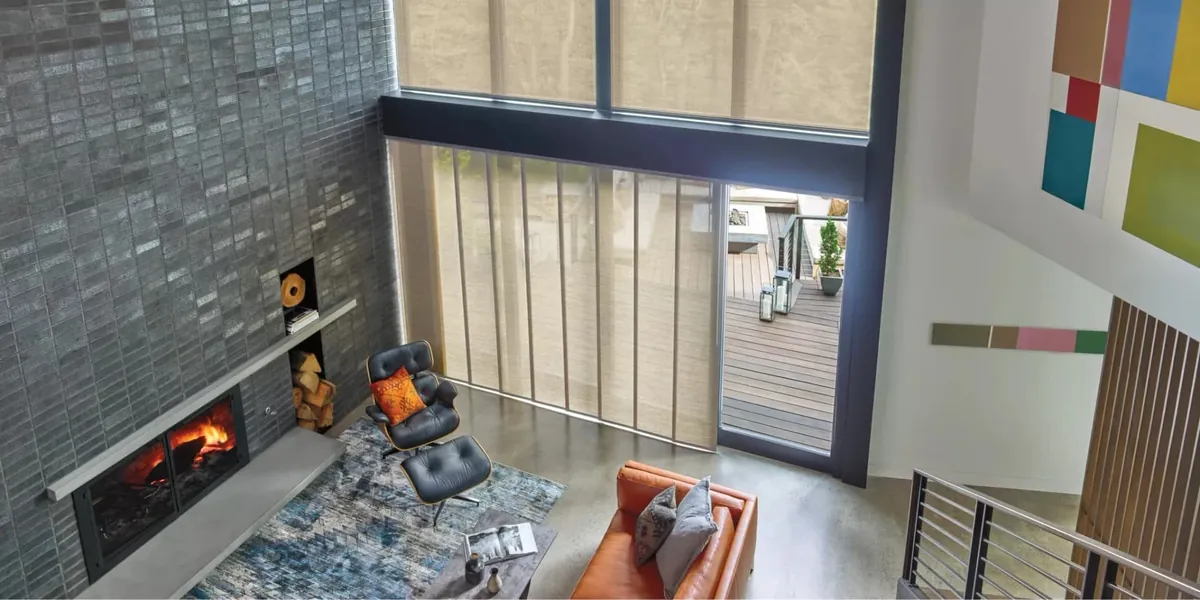
For the glass door onto a lakeside deck. The panels or vanes stack neatly to the side, so the opening is fully clear when you step out.
Slim slats and small stacks
The single biggest difference between blinds on a pond window is how much room they take up when raised. Every blind gathers its slats into a stack at the top of the window. On a thick slat, that stack is deep, and on a tall window it can hide a band of glass across the top. On a slim slat, it is a fraction of the size.
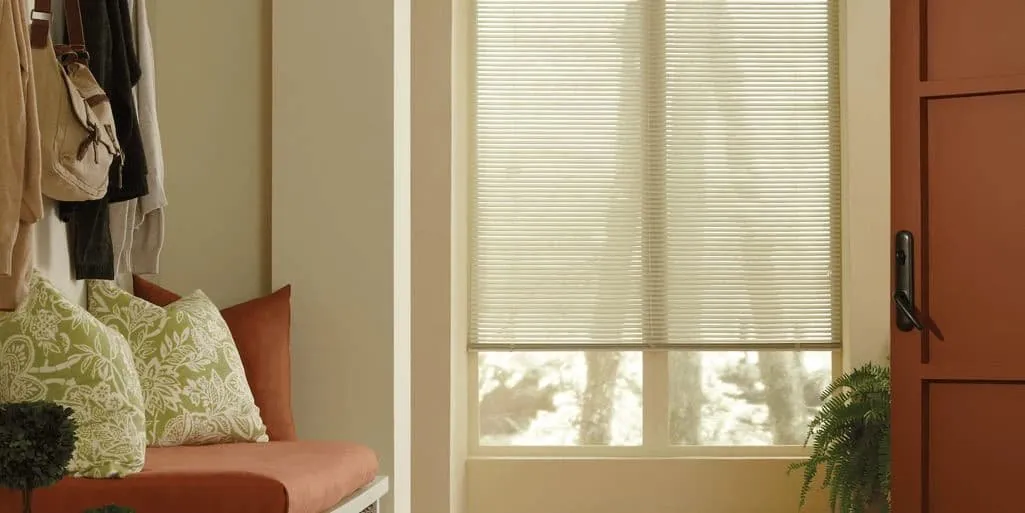
That is why we often suggest aluminum blinds for the main pond windows. Their slats are thin and light, the headrail is low, and the raised stack is tiny. With an inside mount, set within the window opening, the blind sits so close to the frame that from across the room you barely see it. When it is lowered and tilted open, the thin slats leave wide gaps of clear view between them.
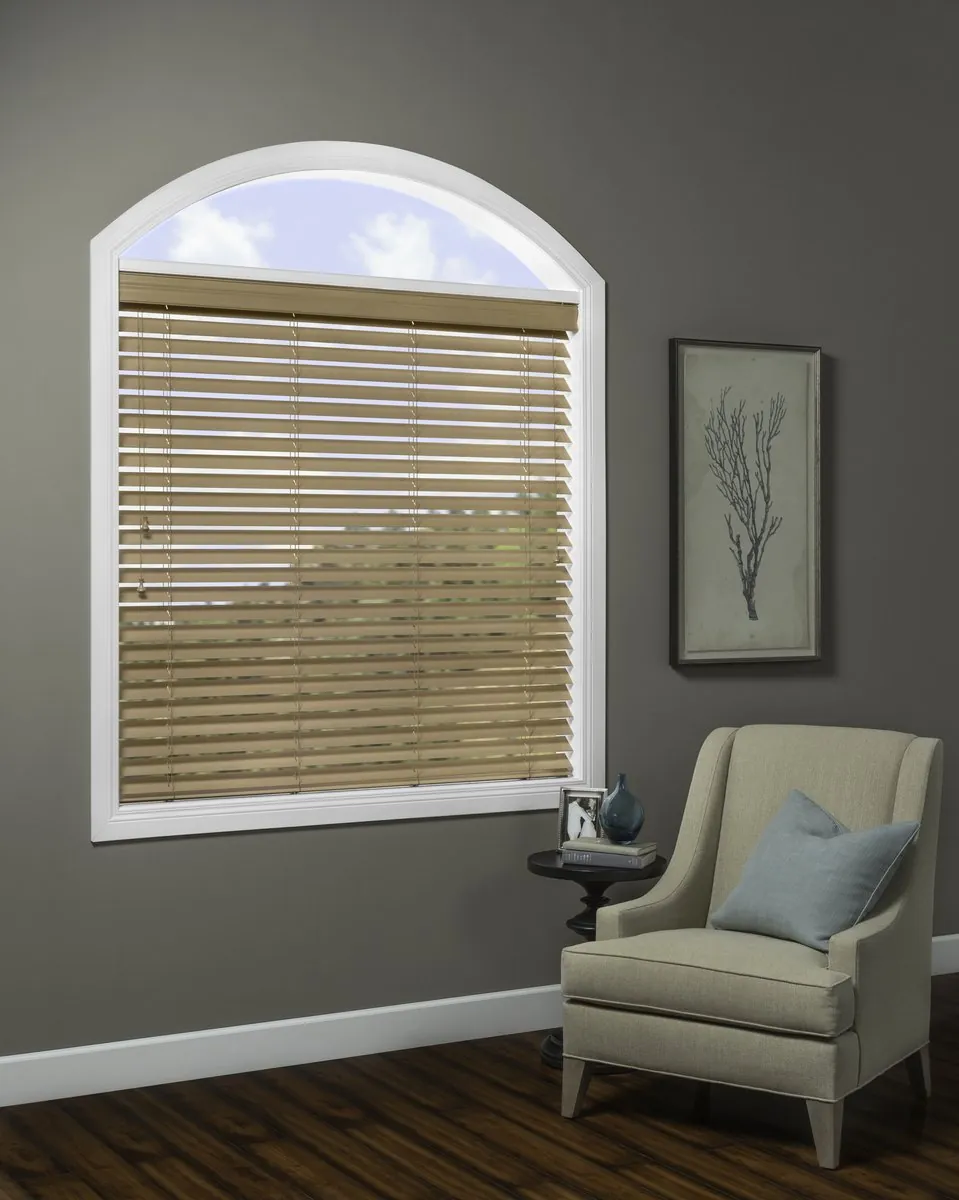
Where a house calls for the warmth of wood, a wide slat is the trick on a big window. A wider slat means fewer slats in total, so the raised stack is no deeper than a narrow one, and the view between the slats is clearer when the blind is down. Many pond houses take wide wood or faux wood slats in a pale color that sits quietly against white trim.
Camps that turned into year-round homes
Plenty of houses near the water began as seasonal camps. Some are still recognisable: a low roof, a screened porch, a row of small windows facing the pond and a few more around the back. Others have been raised, extended and rebuilt so thoroughly that only the footprint is left. Most fall somewhere between, with an original core and newer rooms added as the family took to living there all year.
That history shows in the windows. The original part of a camp often has small, simple sash in frames that were never built to precise standards, and a closed-in porch may have a long row of windows of slightly different widths. The newer rooms usually have modern units, larger and square. A house like that needs every blind made to its own opening, and it needs a plan that makes the old and new parts look as though they belong together.
We measure each camp window several times across and down, and check the frame for depth. Where an old frame is shallow or out of square, an outside mount fixed to the trim may be the neater answer. In a closed-in porch, matching blinds set at one height pull a row of uneven windows into a tidy line.
Damp is the other camp issue. Older camps near the water were not always built with insulation or a proper foundation, and even after a renovation, a room close to the shore can run humid in summer. Faux wood and aluminum both take that in their stride.
Glare off open water
A pond reflects the sky like a mirror. On a bright afternoon, the light coming into a pond-side room arrives twice: once from above and again bounced off the surface of the water, low and straight into the room. That reflected light is what makes a lakeside room hard to sit in at certain hours, and what fades a sofa or a floor on the side facing the water.
The tilt of a blind deals with it neatly. Angle the slats upward and the light from the water hits the slats and goes up to the ceiling instead of into your eyes. The room stays bright, the glare is gone, and if you sit close to the window you can still see the pond between the slats. Angle them downward when the sun is high and you block the sky while keeping the water in view.
Lighter slats reflect more light back out and keep the room brighter when tilted. Darker slats cut glare harder and make the view through them look sharper. We bring both and try them at your window at the time of day the glare is worst, so you can see which suits the room.
Winter light off ice and snow
Living by a pond all year brings a season the summer camps never saw. When Assawompset or Long Pond freezes and the snow settles on the ice, the view turns white from shore to shore, and on a clear January day the light off that surface is fierce. It comes in low, because the winter sun never climbs high, and it reaches far across a pond-side room, onto the floor, the furniture and the screen on the wall.
Winter is also when you most want that sun. A south or west room facing the ice warms up nicely on a bright afternoon, and closing it off completely would waste free heat. A blind lets you keep the warmth while losing the glare: tilt the slats up so the light reaches the ceiling and spreads across the room, and the sun still does its work on the glass and the air behind it.
When the sun goes down early, closing the slats flat gives the room a sense of shelter against the dark, open ice outside. In a converted camp with older glass, that small layer between the window and the room makes it feel cosier on a long winter evening, even though a blind is not built to insulate the way a honeycomb shade is. If keeping heat in is the main goal for a particular room, we can show you cellular shades in Lakeville as well, so you can compare the two at the same visit.
These seasonal changes are part of why the plan for custom blinds in Lakeville pond houses puts the tilt first. A blind that only goes up and down would deal with summer or winter, but not both.
Newer colonials on bigger lots
The newer colonials around Lakeville sit on larger lots, often set back from the water among trees. They have square, well-made windows throughout: tall double-hung units in the main rooms, a slider or French door onto a deck, and often a few special shapes over the entry or in a family room.
Planning custom blinds in Lakeville colonials is mostly about consistency and proportion. Square frames make inside mounts easy, which gives the crisp built-in look. A formal dining room or a study suits real wood, the kitchen and baths take faux wood, and the bedrooms take whatever material the homeowner prefers with a slat that closes well at night.
On the road side of a colonial, privacy matters more than it does on the pond side. A front room facing the street can have blinds tilted so the slats face down into the room, which lets in daylight while blocking a view in from the sidewalk. Upstairs, in the bedrooms, closing the slats flat at night gives full privacy.
The special shapes in a colonial need a word too. A half-round window over the front door or a family room window topped with an arch cannot take a blind on the curve itself. The usual answer is a blind on the square part of the window below, with the arch left open as a frame of sky. It keeps the shape of the window, which is usually why it was built that way, and the open arch lets daylight in even when the blind beneath is closed.
Choosing the material for each room
By the end of a walk through a Lakeville house, the plan for each room tends to be clear.
- Pond-side living rooms and sunrooms: slim aluminum slats, or a wide pale faux wood slat, for the smallest stack and the clearest view.
- Dining rooms, studies and front rooms on the land side: Parkland real wood, stained or painted to suit the trim.
- Kitchens, baths, mudrooms and camp porches: EverWood faux wood, because it shrugs off damp and wipes clean.
- Sliders and glass doors to the deck: vertical blinds, or soft vertical panels that stack to one side.
- Small windows and shallow frames: aluminum, for its slim headrail.
Using one slat color throughout, even where the material changes, gives the house a single look from room to room. We help you draw up that plan at the visit, and you change anything you like before you decide.
Lift and tilt without the clutter
Cords hanging beside the glass are one more thing between you and the view. Cordless lift removes them: you raise or lower the blind by its bottom rail, and the slats tilt with a slim wand. It is the tidiest choice for a pond window, and safer in a house where grandchildren come to stay in summer.
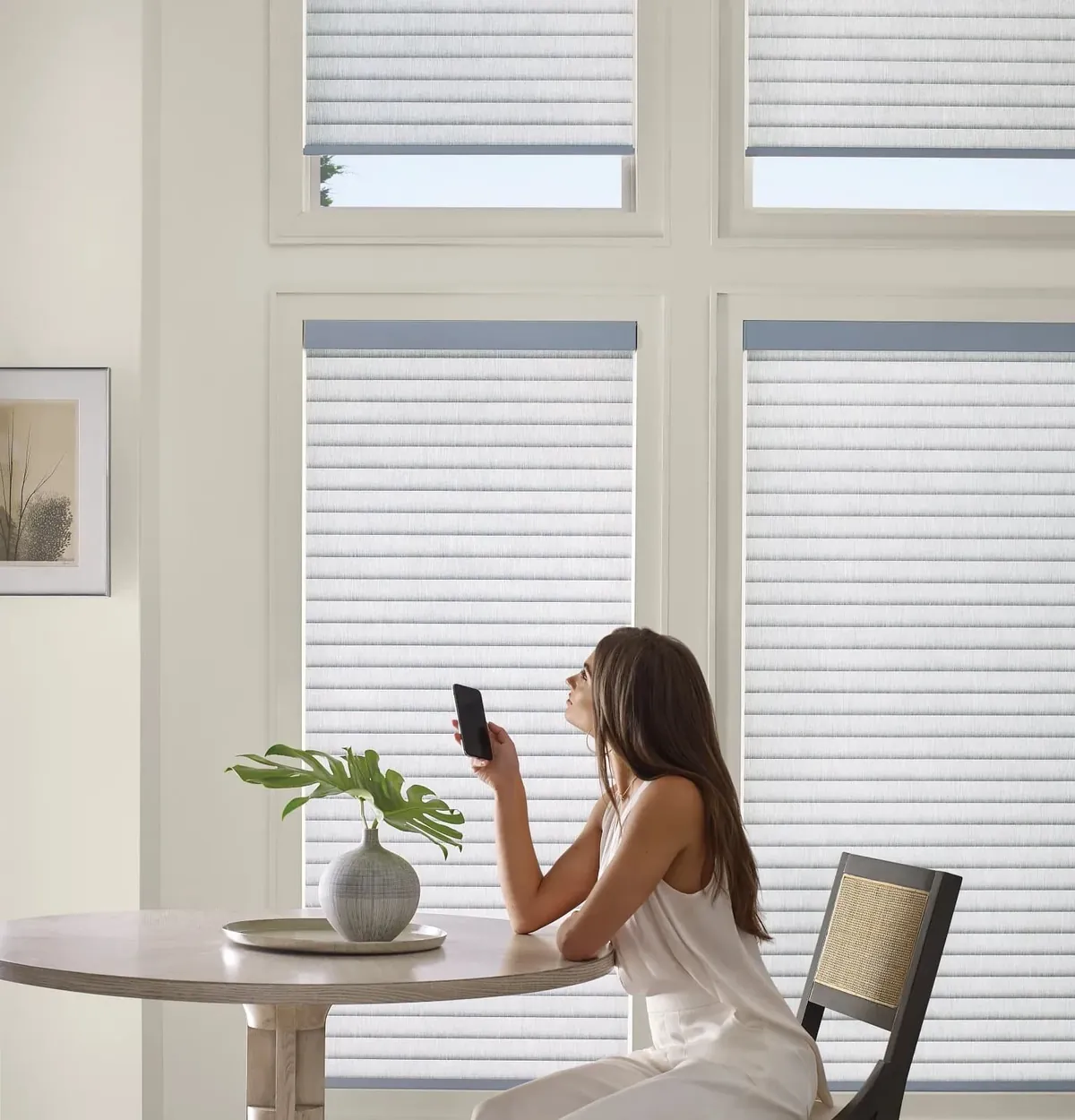
Some pond windows are hard to reach, set behind a long built-in seat, above a kitchen counter or high in a vaulted great room. For those, motorized blinds in Lakeville let you tilt and lift from a phone or remote, or set the pond-side blinds to tilt against the afternoon sun on a schedule while you are out on the water.
Seeing the samples at the pond
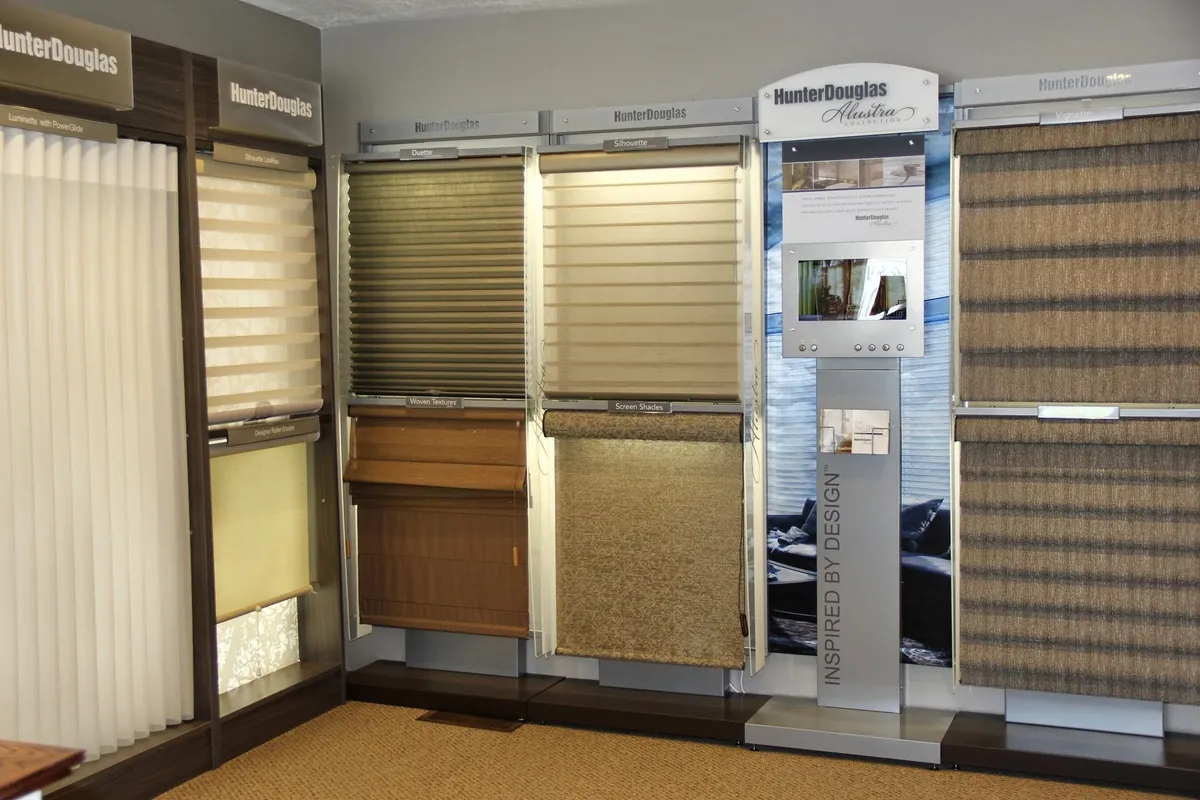
The light in a lakeside room is unlike the light anywhere else, so judging a slat by a picture is guesswork. That is why we come to you. The vans carry the full range of blind samples, so the showroom travels to your door.
On the visit we go through the house with you, starting with the pond-side rooms. You hold real slats up against the glass and watch how each one handles the light off the water. We talk about how each room is used, measure every window at several points and check the frame depths, then give you a free estimate for the blinds you have in mind. There is no rush to decide that day.
If you would like help with the rest of a room, colors, fabrics or other coverings, you can ask about our interior design consultations at the same appointment. There is more about how a visit works in the guide to what happens at an in-home consultation.
On the day the blinds go up
Our installers carry Hunter Douglas certification. In an old camp, that care shows in the small things: finding solid wood for every bracket in a frame that may be soft or thin, shimming a headrail level on a window that is not, and checking that each slat clears the window locks and cranks.
- Each bracket is fixed into solid framing and checked for level.
- The blind is hung, then raised and lowered through its full travel.
- The tilt is worked open and closed to make sure no slat catches.
- Neighboring blinds in a row are set to the same height.
- You are shown how each control works before the installers leave.
Why a Gallery dealer for a pond house
Blinds & Designs holds Hunter Douglas Gallery dealer status, which Hunter Douglas reserves for dealers who meet its standards. For a house on Assawompset or Long Pond it means every blind in the Hunter Douglas range is available through us: Parkland wood, EverWood faux wood, aluminum blinds, vertical blinds and the PowerView controls. We measure, order and fit, so there is one company from the first conversation to the last bracket, and we offer blind and shade repairs if one ever needs attention.
You can explore the range on our Hunter Douglas blinds page, with more on metal blinds. For other rooms, see roller shades in Lakeville for screen fabrics that keep the view, or browse everything we do in town on our Lakeville page.

Ideas for the whole room
A blind rarely stands on its own. In a pond-side great room it sits beside furniture, rugs and perhaps a side panel of fabric, and on the land side of a colonial it may share a room with a roman shade or drapery. Our interior design consultations help you pull it all together, from slat color to the fabrics around it.
If you would like to see the range in person before a home visit, the North Dartmouth showroom is the nearest of our locations to Lakeville.
Questions from Lakeville
Will blinds block the view of the pond?
Not if they are chosen for it. Slim aluminum slats or a wide pale slat leave a clear view when the blind is open, and a raised blind tucks into a small stack at the top of the frame.
What helps with the glare coming off the water?
Tilting the slats upward. The light off the pond hits the slats and goes to the ceiling, so the room stays bright without the glare in your eyes.
My camp has windows that are all slightly different. Can you make them match?
Yes. Each blind is made to its own window, and we set them at the same height in one color so a row of uneven windows looks tidy.
Is real wood a good idea near the water?
In a dry, heated room on the land side, yes. In a camp bathroom, a damp porch or a room close to the shore, faux wood is the safer choice.
Do you charge for an estimate?
No. We measure your windows and give you a free estimate for the blinds you are considering.
Book a visit
Choosing custom blinds in Lakeville, MA, is easiest with the pond outside and the samples in your hand. Request a consultation and we will bring the range, measure every window and leave you with a free estimate. To ask a question first, use the call button, or stop by the North Dartmouth showroom.