
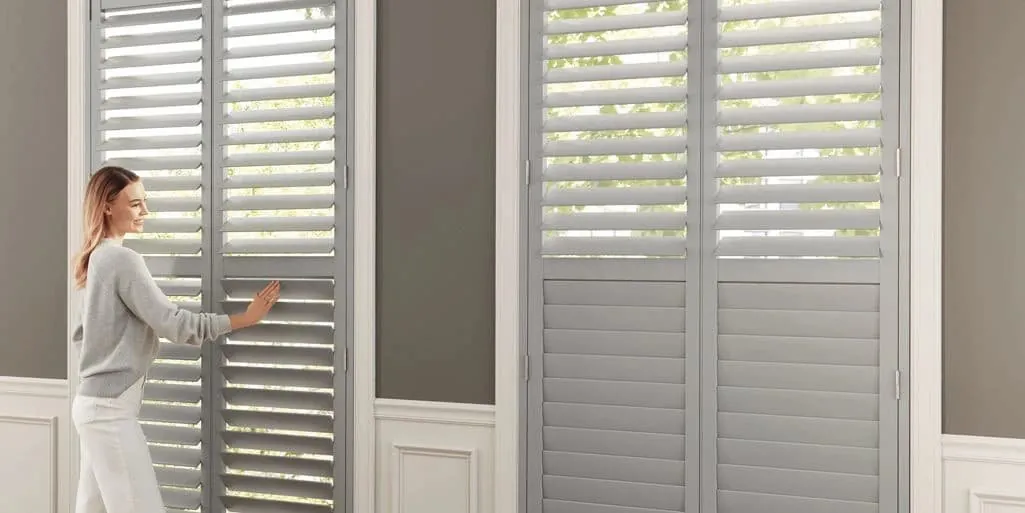
Keep the pond in the picture
Around Assawompset and Long Pond, houses were turned to face the water long before anyone thought about window coverings. The living room, the kitchen and often the main bedroom look out across the pond, and the windows on that side are as large as the house allows. Anything heavy on that glass, a thick drape or a shade that never quite goes all the way up, defeats the reason the house was built where it is. That is the first thing we keep in mind with plantation shutters in Lakeville, MA.
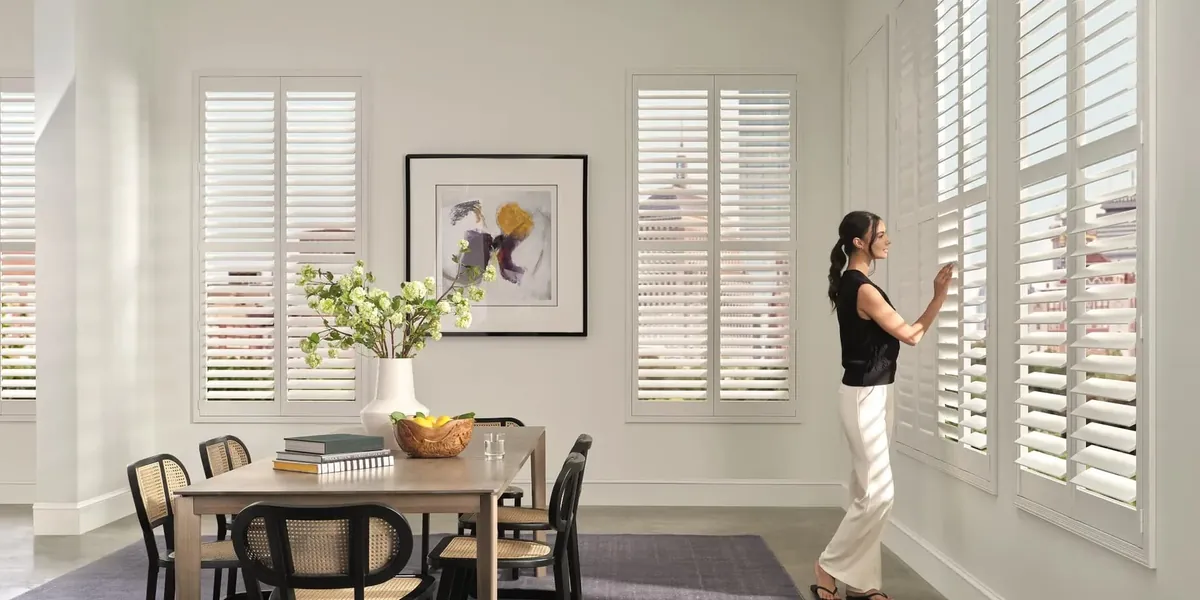
A shutter is a surprisingly light touch on a view window. Open the panels and they fold back against the wall, leaving the glass completely clear. Close the panels but tilt the louvers level, and the pond is still there between a row of slim blades. Only when you close the louvers, on a hot afternoon or late at night, does the window go private.
The houses around the ponds are a mixed group, and that matters too. Some started as small summer camps and have been added to and winterised. Others are newer colonials set on larger lots back from the shore. Each has its own windows, and each needs its own plan.
Plantation shutters in Lakeville, MA, chosen for the view
We bring samples of all three Hunter Douglas collections and every louver width. On a pond house, these three ideas shape most orders.
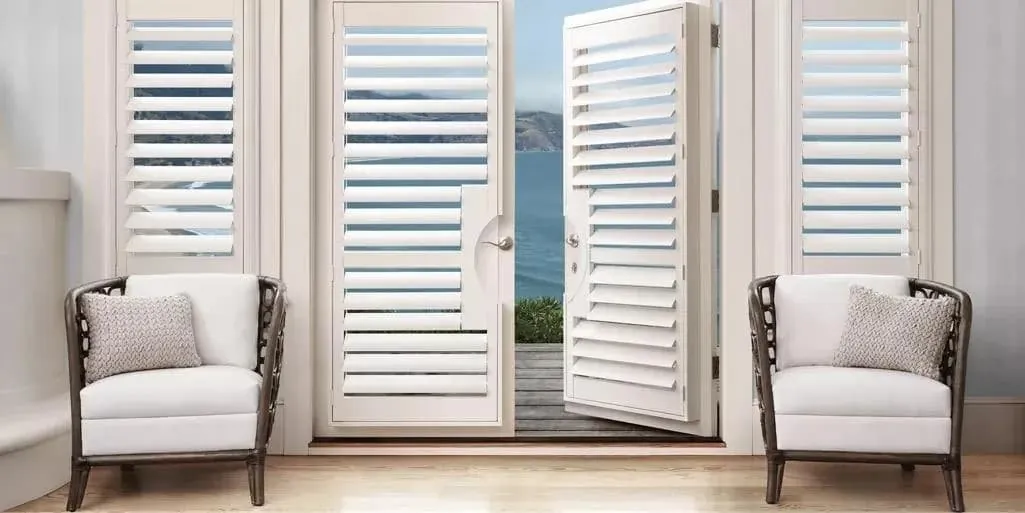
Panels that fold clear
Hinged panels fold right back from the glass, so on a calm day nothing stands between the room and the water.
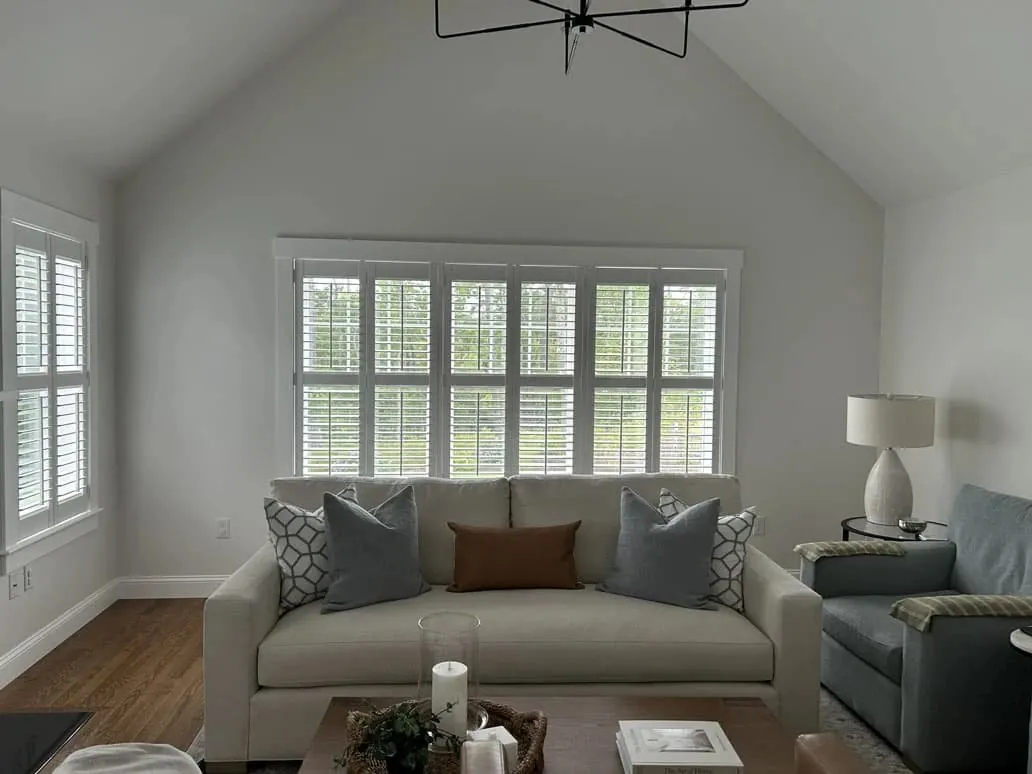
Wide louvers, light frames
Broad blades leave the most open glass when tilted, and a slim frame keeps the window from feeling boxed in.
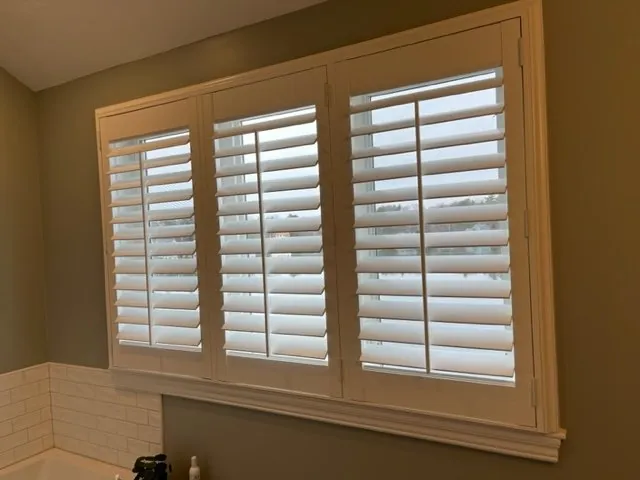
Polysatin near the water
Palm Beach has no wood in it, so damp air off the pond and steam from a bath leave it unchanged.
Why heavy coverings do not suit a pond room
A pond-facing room is built around one wall of glass. Drapery adds bulk at the sides that narrows the view even when it is open. A shade raised to the top still leaves its stack across the head of the window, which on a low-ceilinged camp can take a real bite out of the glass. A blind leaves its headrail and cords in the line of sight.
Shutters avoid most of that. When the panels are open they sit beside the window, not across it, and the frame is narrow. When they are closed, you still decide how much you see by tilting the louvers. That is why so many pond houses end up with shutters on the water side even when the rest of the house has shades.
There is one more detail that helps on a view window: the tilt. A traditional rod runs down the middle of each panel and moves all the louvers at once. A hidden tilt moves them by the edge of a blade, so there is no rod down the face of the panel. On a window where you spend the evening looking at the water, many people like having one less line across the glass.
Old camps made into year-round homes
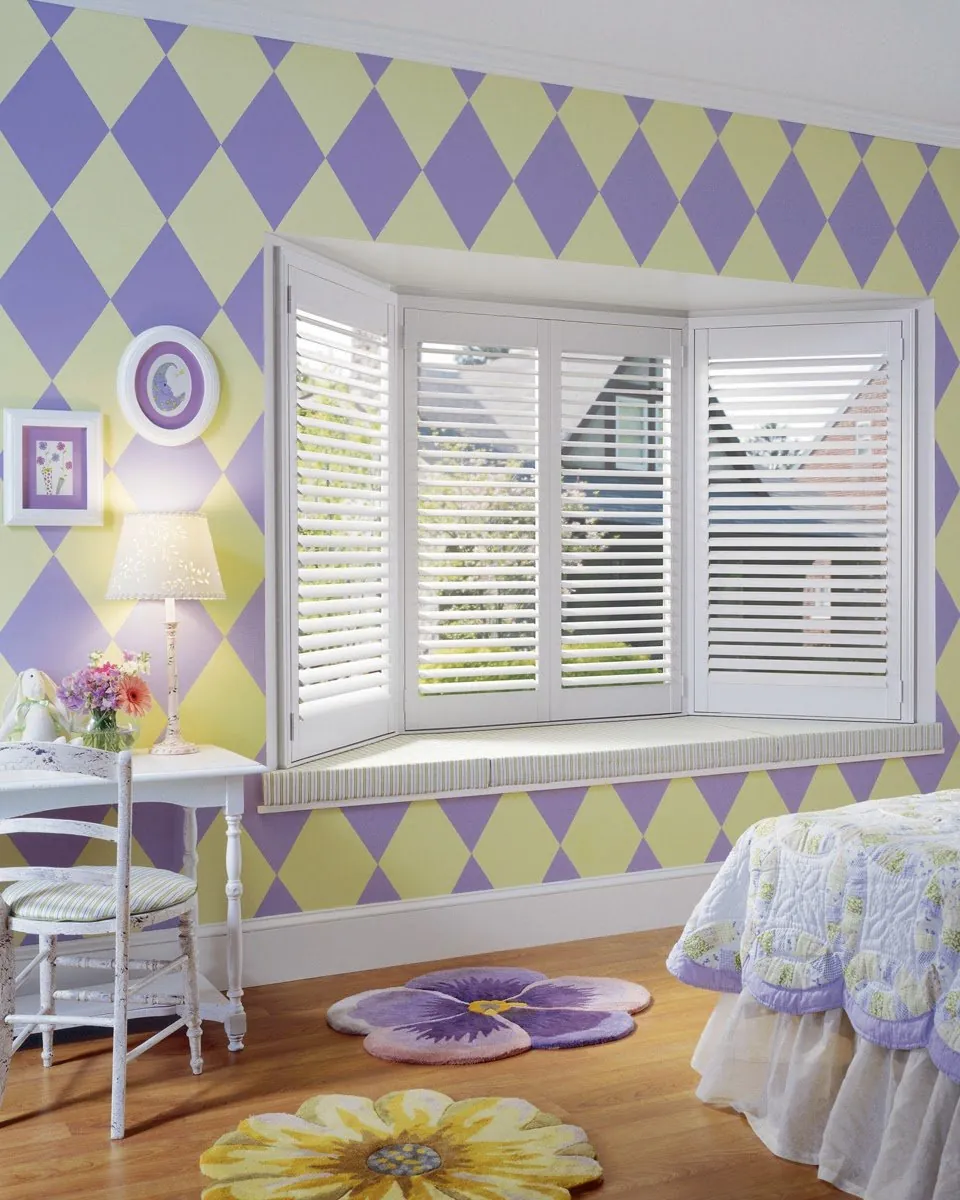
The oldest houses on the ponds began as summer camps: small, simple, often built by hand and added onto over the years. Many have been insulated and winterised and are now lived in all year. They tend to have low ceilings, knotty pine or painted board walls, and windows of every size, sometimes in the same room, because each addition brought its own.
Shutters are a good fit for that kind of house. Every frame and panel is made to its own opening, so a small original window and a big replacement unit can share one color and louver width and look like they belong together. Panels take almost no room when they fold back, which counts in a compact camp where every foot of wall is used.
Camp conversions also have windows set at different depths. An original window may sit in a thin wall with hardly any return, while the window in a newer addition sits in a thicker, insulated wall. We check the depth at every opening. Where there is room, an inside mount sits within the window. Where there is not, a slim outside frame mounted on the casing is the neater choice, and on board walls it can look very much at home.
The rooms closest to the water in a converted camp, often a glassed-in porch that used to be screened, take a lot of sun and some damp. Palm Beach is the sensible collection there. A porch with windows on three sides gets panels matched across every opening, so you can close the side the sun is on and leave the water side open.
Newer colonials on larger lots
Set back from the shore on bigger lots, the newer colonials are a different project. They have formal front rooms with a pair of double-hung windows each, a family room at the back that often faces the pond, and a kitchen with a slider to a deck. Upstairs the bedrooms have regular double-hung windows, sometimes with a larger window in the main bedroom aimed at the view.
These windows are square, consistent and deep enough for an inside mount almost everywhere, which gives a very clean result. NewStyle, a composite hybrid with the look of painted wood, covers most of a colonial well. Heritance hardwood suits a formal front room or a study, painted to match the trim or stained to sit with the floors. Palm Beach goes in the bathrooms, the laundry and the kitchen.
In the family room, where the view is, wider louvers and panels hinged to fold fully open keep the pond in sight. At the front of the house, where the windows face the road, a medium louver gives more privacy and suits the proportions of a colonial facade. Matched in color and frame style, the two widths sit together comfortably.
Glare off the water
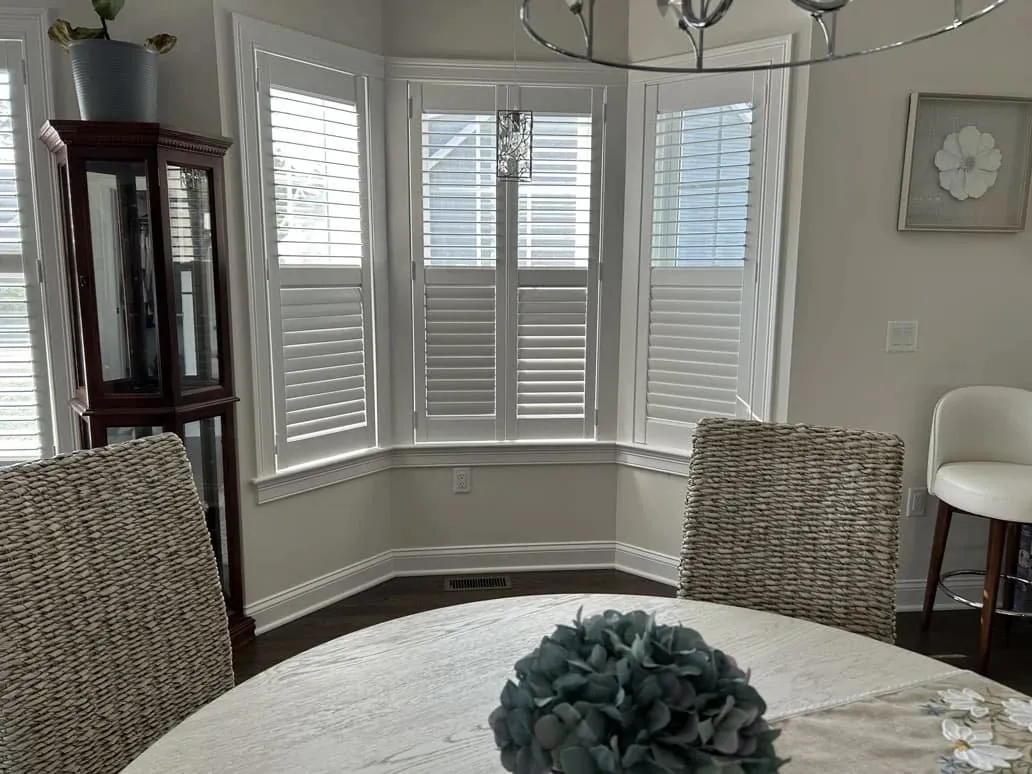
Pond glare is a particular kind of light. Early and late in the day the sun sits low over the water, and the reflection arrives almost level, straight into the room. It lights up dust, bleaches fabrics and makes a screen or a book hard to read.
Louvers are one of the few coverings that handle it without hiding the view. Tilt them slightly upward and the blades catch the reflection and throw it toward the ceiling, where it brightens the room instead of dazzling. You still see the water below the line of the blades. When the sun moves on, tilt them back to level and the view opens fully again.
On the sunniest side of a pond house, closing the louvers through the middle of a summer afternoon also keeps floors and furniture out of direct light. With a soft white or off-white finish, the room stays bright even with the louvers partly closed, because the panels reflect light back inside.
A consultation by the water
The light in a pond room changes with the time of day and the weather, and the only way to judge a louver is to see it there. Our vans carry samples of every collection, louver width, frame profile and color, so we can bring the showroom to you. A visit usually goes like this.
- You request a consultation online or with the call button, and we agree a time.
- We start in the rooms that face the water and ask how you use them through the day and the year.
- You hold louver samples up to the glass and see how each width frames the view.
- We look at the rest of the house, from the front rooms to the bedrooms and baths, and suggest a collection for each.
- We measure every opening at several points and check the depth for an inside mount.
- You choose louver width, frame and color, and we give you a free estimate.
When the shutters arrive, our certified Hunter Douglas installers fit every frame, hang the panels and adjust them so they swing and close smoothly. Our page on what happens at an in-home consultation covers the visit in more detail.
Louver size and frame style on a view window
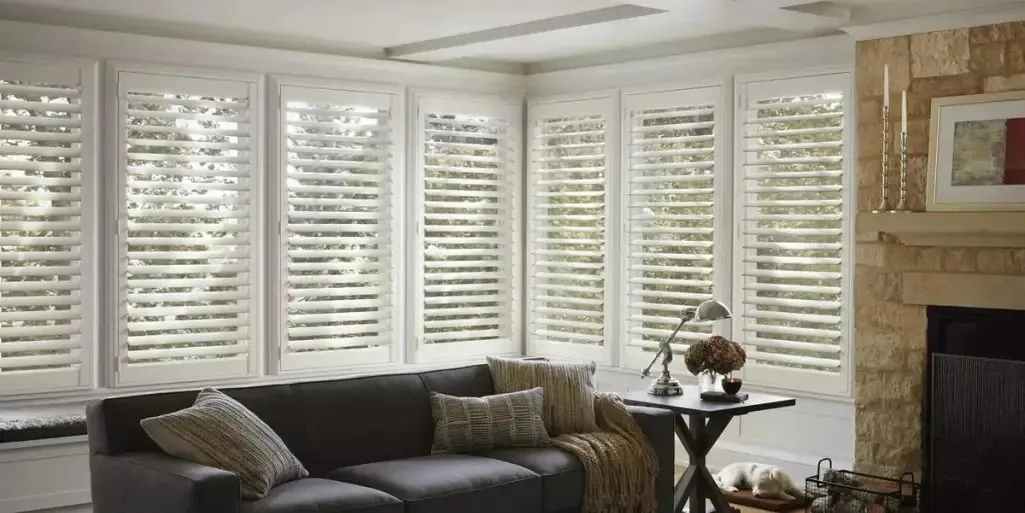
On plantation shutters in Lakeville, louver width changes how much of the pond you see. Narrow blades make many fine lines and suit small, traditional windows, such as the original sash in an old camp. Medium blades are the all-round choice, good for bedrooms and front rooms. Wide blades leave the biggest gaps when tilted, and on a large window facing the water they give the most open view. Many pond houses use wide blades on the water side and medium blades on the street side, kept in the same color and frame so the inside of the house reads as one set.
The frame decides how the shutter meets the window. An inside mount fits within the opening, which gives the slimmest look and keeps the casing in view. An outside mount fixes around the window, which suits shallow openings, uneven old frames and windows with a crank or lock in the way. Frame profiles go from plain and flat to a small bead. On a view window, a plain, narrow frame keeps attention on the glass.
You can read more about each collection on our Palm Beach, NewStyle and Heritance pages, and the main plantation shutters page shows the full range.
Sliders and doors to the deck
Most pond houses have a slider or French doors leading out to a deck or lawn on the water side. These openings are used all day in summer, so whatever covers them has to get out of the way quickly.
French doors take panels mounted directly on each door. The panels swing with the door, so you can step out without touching them, and a cut-out can be made around a lever handle. A slider usually gets bypass panels that glide on a track at the top and stack to one side when you open the door. Matched to the rest of the room in louver width and color, they finish the water side of the house without a single fabric panel.
Bedrooms that wake with the pond
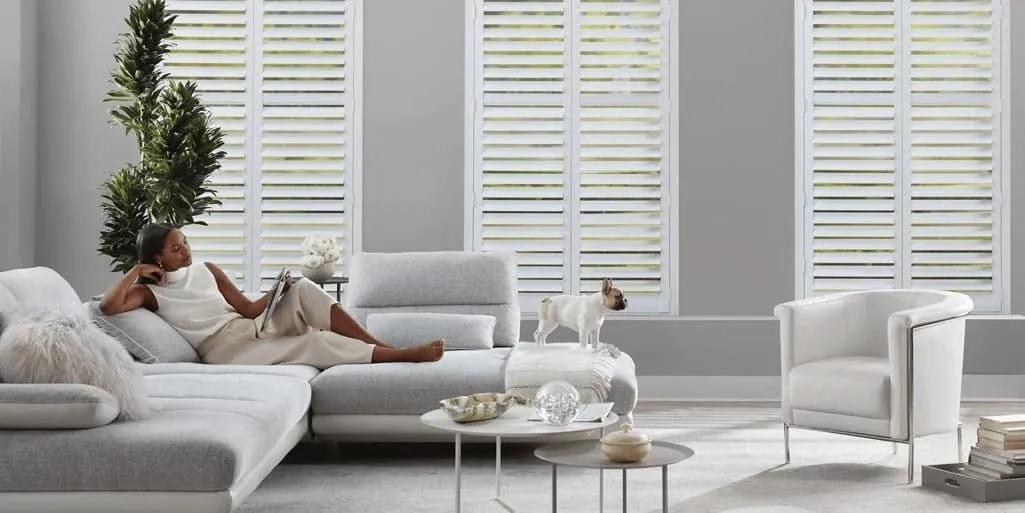
Upstairs, the main bedroom in many pond houses gets the same view as the living room below, and with it the early light. On a clear summer morning the sun climbs over the far shore and comes straight across the water at the bed. Beautiful, but not always at that hour.
Here the shutter does two jobs. At night and in the early morning, closed panels with the louvers shut make the room far darker than a sheer or a light shade could. Later in the day, with the panels folded back, the window is as open as it was before. In a camp conversion with a low, sloped ceiling over the bed, there is no shade stack to lose headroom to, which is one reason plantation shutters in Lakeville, MA, are so often chosen for these upper rooms.
Guest rooms and children’s rooms on the pond side get the same treatment, matched in louver width and color so every bedroom on that floor looks alike from the water. On the road side, a medium louver with the same frame carries the look around the house.
Pond houses through the seasons
A converted camp and a newer colonial both see the ponds change through the year. In summer the windows are open, the air is humid and the sun comes off the water strongly. In winter the pond freezes, the trees are bare and the low sun pours into rooms that were shaded in July.
Shutters adapt to both with a turn of the louvers. In summer, tilt them to cut glare and close them on the hottest afternoons. In winter, open them fully to let the low sun into the room, and close them at night when the glass turns black and cold. For houses that are still closed for part of the year, Palm Beach comes through a damp, empty winter unchanged. That flexibility is a big part of why plantation shutters in Lakeville suit houses on the water.
Privacy without losing the water
Pond houses often sit closer together along the shore than the lots inland, and some face a road on one side and the water on the other. Privacy matters on the road side and around the water too, where boats and neighbors on their own docks can see straight into a lit room in the evening.
Shutters give you graded privacy. Tilted up, the louvers let light in while blocking a direct view from below, which helps on a lower floor facing the shore. Closed, they give a fully private room. Cafe-style panels on the lower sash only, or two tiers of panels on a tall window, let you keep the bottom private while the top stays open to sky and treetops. For a bathroom facing the water, that is often exactly right.

A Gallery dealer close to the ponds
Blinds & Designs is a Hunter Douglas Gallery dealer, the designation Hunter Douglas uses for dealers who meet its standards. For a pond house that means every shutter collection, louver width and frame style in one place, and one local company from the first visit to the final adjustment. Our installers are certified by Hunter Douglas.
We carry the rest of the Hunter Douglas range too, from blinds to honeycomb, roller and roman shades and drapery, and we offer interior design consultations and blind and shade repairs. Shutters on the water side often sit with roller shades in Lakeville on a sunporch, or motorized shades on a tall window that is hard to reach. Our interior design consultations can help pull a whole room together, and everything we do in town is on our Lakeville page.
The nearest place to see shutters in person is our North Dartmouth showroom.
Questions from Lakeville
Will shutters block my view of the pond?
Not unless you close them. Open panels fold back against the wall and leave the glass clear, and with the louvers tilted level the view is still there between slim blades. Wide louvers and a hidden tilt keep the outlook as open as possible.
Our house began as a summer camp. Can shutters fit its odd windows?
Yes. Every frame and panel is made to the opening we measure, so windows of different sizes and depths can all share one color and louver width. Where an old window is too shallow for an inside mount, a slim outside frame works well.
Which collection should go in a porch or room right by the water?
Palm Beach. It is polysatin with no wood in it, so damp air off the pond does not make it swell or warp.
Can shutters go on a slider to the deck?
They can. A slider usually takes bypass panels that glide along a track and stack to one side. French doors take panels mounted on each door.
Is the estimate free?
Yes. After measuring, we give you a free estimate for the shutters you are considering, with no obligation.
Bring the samples to the water
The best way to choose shutters for a room built around a pond is to stand in it with the samples. Request a consultation and we will come to your house, hold louver widths up to your own view, measure every window and give you a free estimate. You can also use the call button or visit the North Dartmouth showroom.