
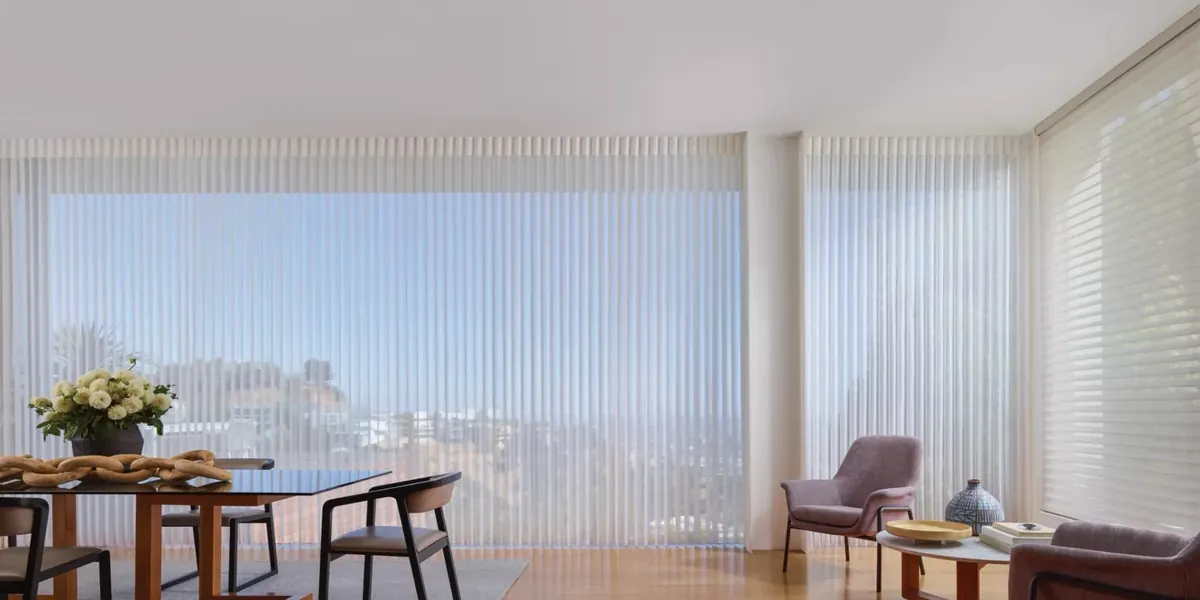
Rooms that were built to look at the pond
Around Assawompset and Long Pond, the houses turn toward the water. Some began as simple camps, a few rooms and a porch for the summer, and have since been converted to year-round homes. Others are newer colonials on larger lots set back among the trees. As a Hunter Douglas dealer in Lakeville, MA, we find that the pond decides almost everything about the windows on that side of the house.
A pond-facing room is built around its view. The biggest windows go on that wall, the furniture faces that way, and the whole point of the room is what you see through the glass. That rules out anything heavy. A thick valance, bulky drapery bunched at the sides, a shade that hangs half down all day: each of them takes away the one thing the room was designed for.
So the brief for those rooms is clear. Coverings should disappear when raised, stay light when lowered, and still deal with the sun, the heat and the evening.
Light-touch Hunter Douglas choices for Lakeville
A Hunter Douglas dealer in Lakeville should be able to offer the whole range, and as a Gallery dealer we can. These six families cover the pond rooms and the rest of the house, each with its own Lakeville page.
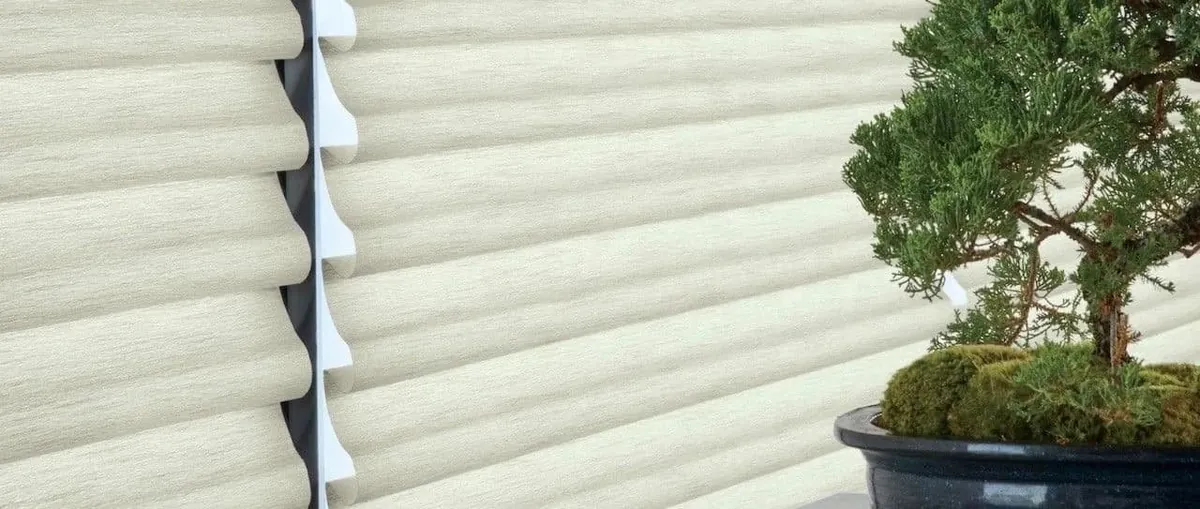
Sheer shades
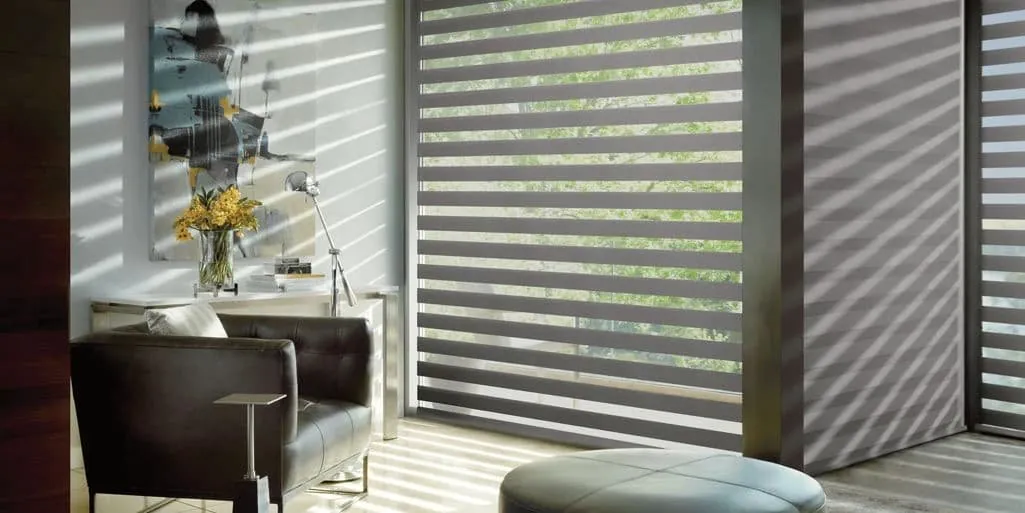
Silhouette and Pirouette soften the sun while the pond stays visible, then close their vanes for privacy at night.
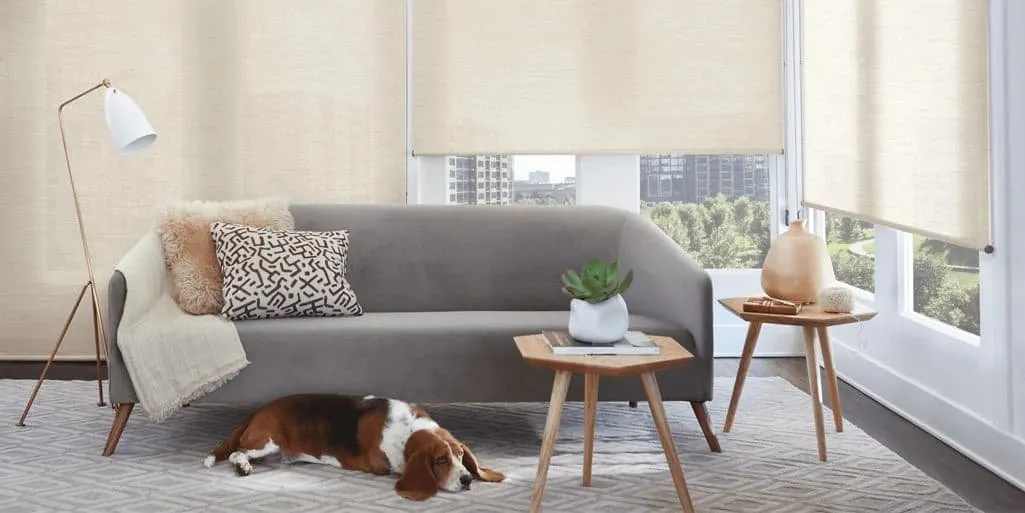
Roller and screen shades
Designer roller and solar screen fabrics wrap onto a slim tube and vanish above the glass when you want the full view.
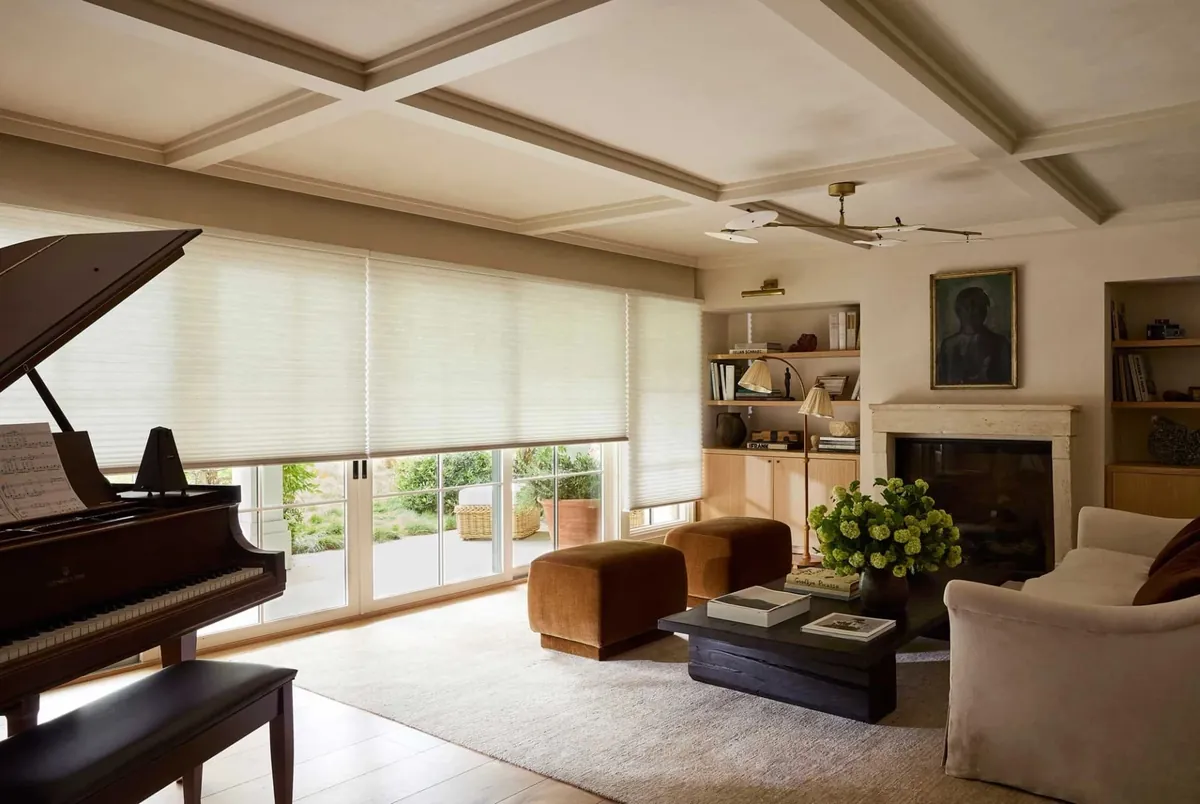
Honeycomb shades
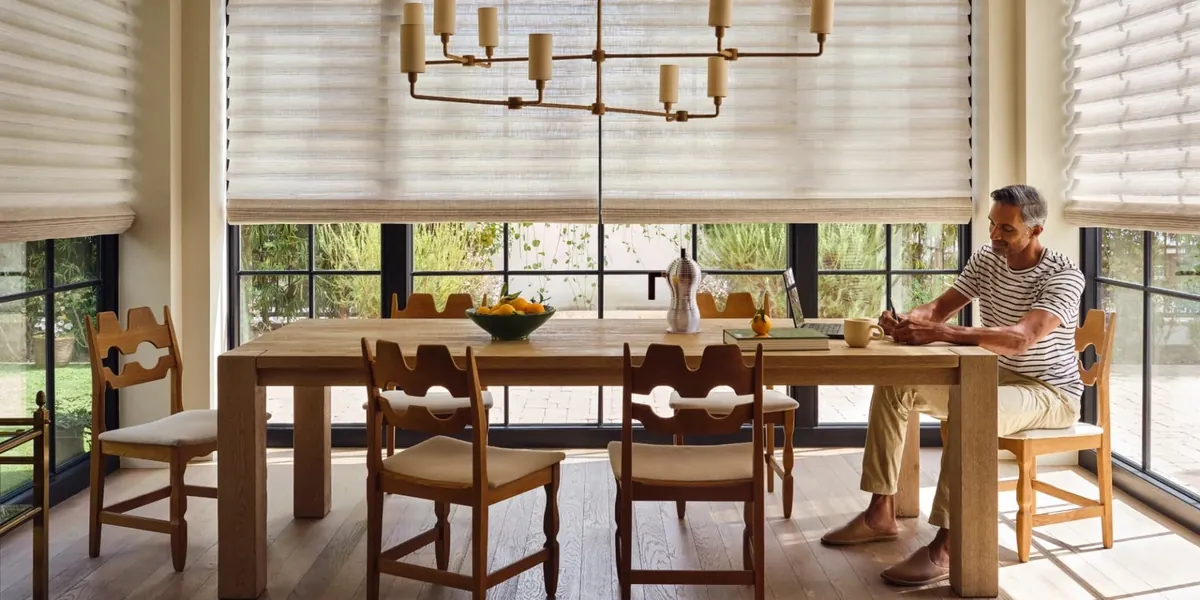
Duette and Applause stack very small at the head of the window, and their cells help a converted camp hold heat.
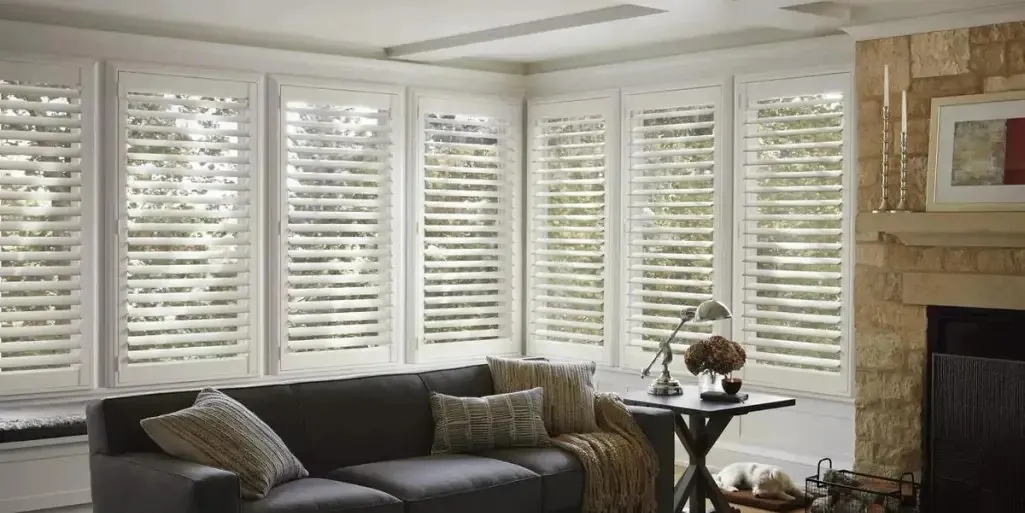
Plantation shutters
Palm Beach, NewStyle and Heritance for the colonial side of town, with louvers that tilt light rather than block it.
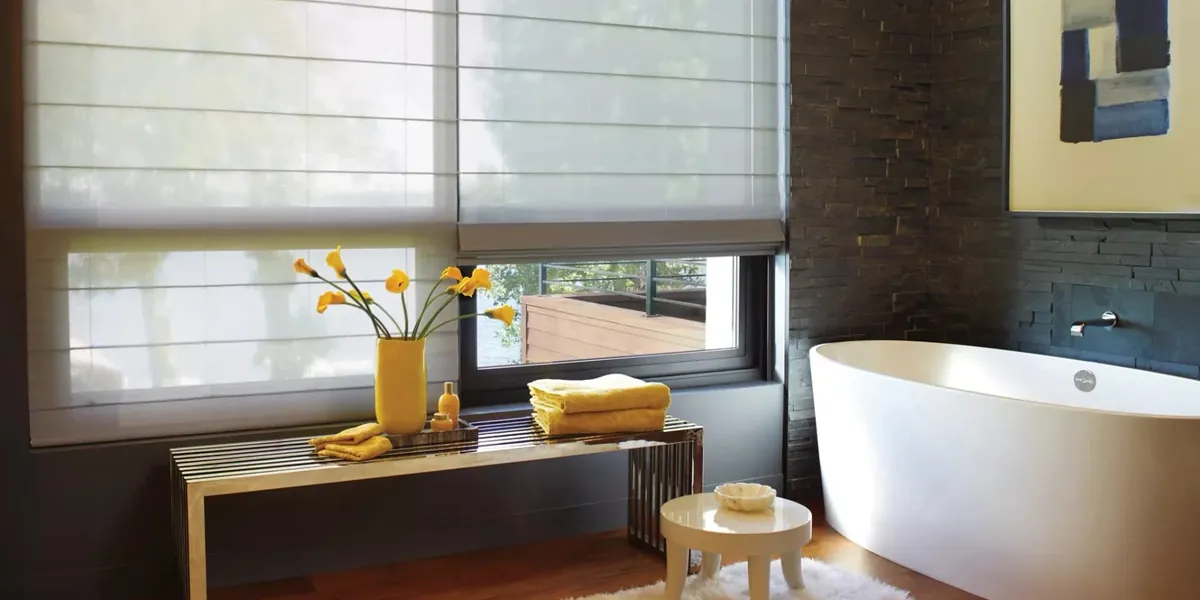
Roman shades
Vignette and Carole Roman shades in sheer or lined fabrics, soft folds that stay light on the glass.
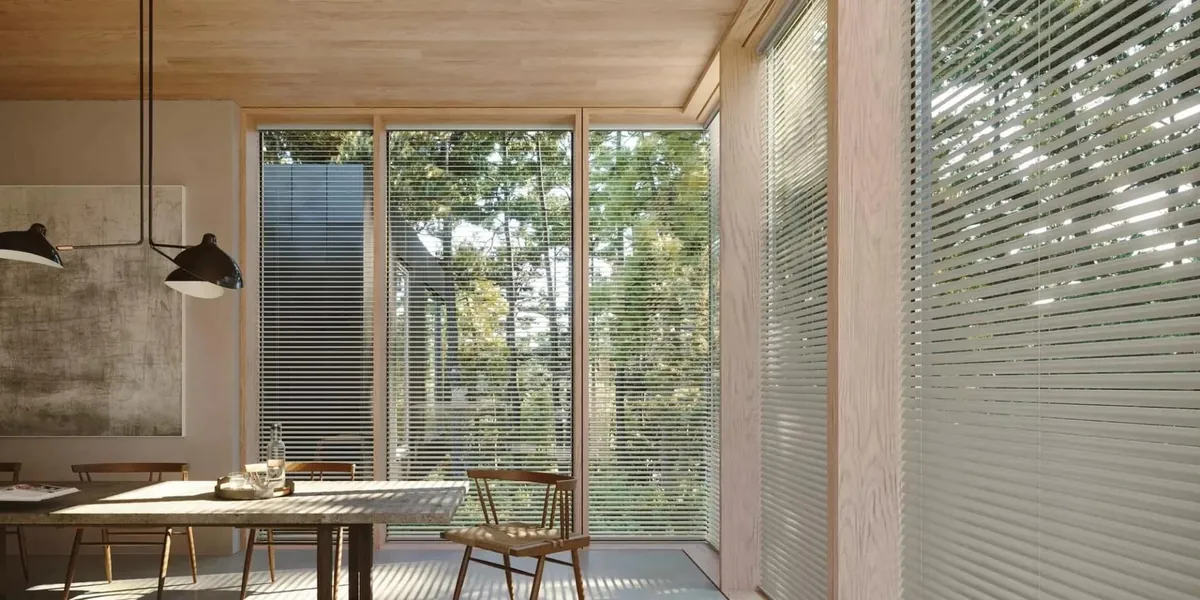
Blinds
Slim metal, Parkland wood and EverWood faux wood blinds, where a fine slat keeps the outlook with the blind lowered.
What “nothing heavy” means in practice
When someone says they want to keep the pond view, it helps to be specific about what gets in the way. There are really three things: what the covering looks like when it is raised, what you can see through it when it is lowered, and how much of the frame it covers at the sides and top.
Raised, the best products almost vanish. A roller shade winds onto a tube a few inches across, which can sit inside a fascia or a pocket above the glass. A honeycomb shade compresses into a small stack. A sheer shade raises into a slim headrail. Compare that with a heavy fabric shade that keeps a deep fold of material at the top even when it is fully up.
Lowered, the fabric matters. A screen weave lets you see the shape of the pond and the far shore through it. A sheer softens the scene without hiding it. A light-filtering honeycomb hides the view but keeps the room bright.
At the sides, an inside mount keeps the covering within the frame, so the trim and the wall around the window stay clear. That makes the window look larger and keeps the room open. Where a frame is too shallow, a slim outside mount set tight to the top of the casing is the next best thing, and we will show you both before you choose.
Converted camps on the shore
The older camps around the ponds were built for summer, and many still show it. Low ceilings, simple windows in thin walls, a screened porch on the water side and rooms that open onto one another. When those camps were converted for year-round living, owners often added larger windows or a glassed-in room facing the pond.
The original windows are usually small and shallow, with little depth for an inside mount. A light honeycomb or roller shade mounted on the face of the frame is often the tidiest answer, and it keeps the plain trim of a camp looking simple.
Warmth is the other issue. Walls that were never meant for winter make the windows the coldest part of the room. Honeycomb is the natural fit, because its cells hold a layer of air against the glass. In a room where the view matters, a top-down, bottom-up honeycomb lowers from the top in the evening for warmth on the upper glass while the lower glass still shows the water.
The glassed-in porch is its own challenge. It takes sun from three sides and loses heat fast at night. Shades on each panel let you shade one side at a time, and a motorized setup saves a lot of walking around a room that may have a dozen panes.
Sliders out to the deck and the dock
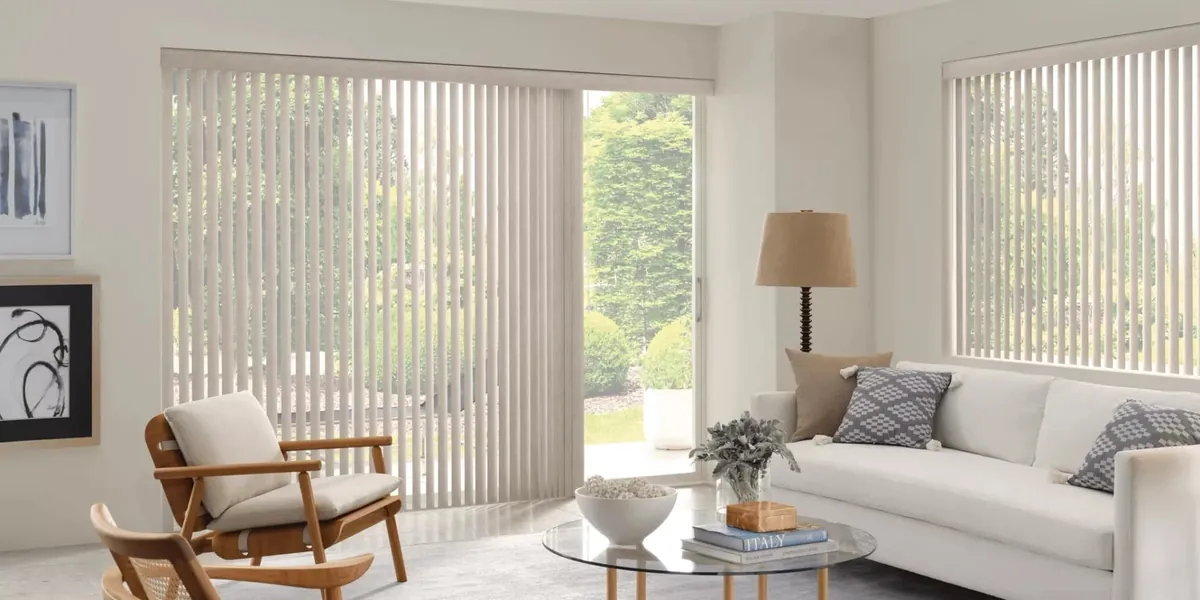
Almost every shoreline house in town has a slider facing the water, usually the door everyone uses in summer to get to the deck, the yard and the dock. It opens constantly, it frames the main view, and it is often the coldest surface in the room in January.
A covering on a slider has to move sideways, so the door is never blocked. A vertical honeycomb travels on a track and stacks tightly at one side, and its cells hold air like any honeycomb. Luminette panels give a softer, sheer look and slide the same way. Vertical blinds are the simpler, more practical choice for a busy door that sees wet feet and beach towels.
Whatever goes on the slider should suit the shades on the windows beside it, so the pond wall reads as one. A Hunter Douglas dealer in Lakeville can match the fabric or color across both, even when the products differ.
Newer colonials on larger lots
Away from the shoreline, the newer colonials have a more formal layout: a center hall, a living room and dining room either side, a family room and kitchen at the back, and bedrooms upstairs. Some have pond views from the back; many look onto their own lawns and trees.
These houses suit a more traditional mix. Plantation shutters look right in a colonial living room or dining room, and their louvers tilt to control light without the shutter having to be closed. Roman shades in a lined fabric bring color and softness to a dining room. Wood blinds suit a study or a den.
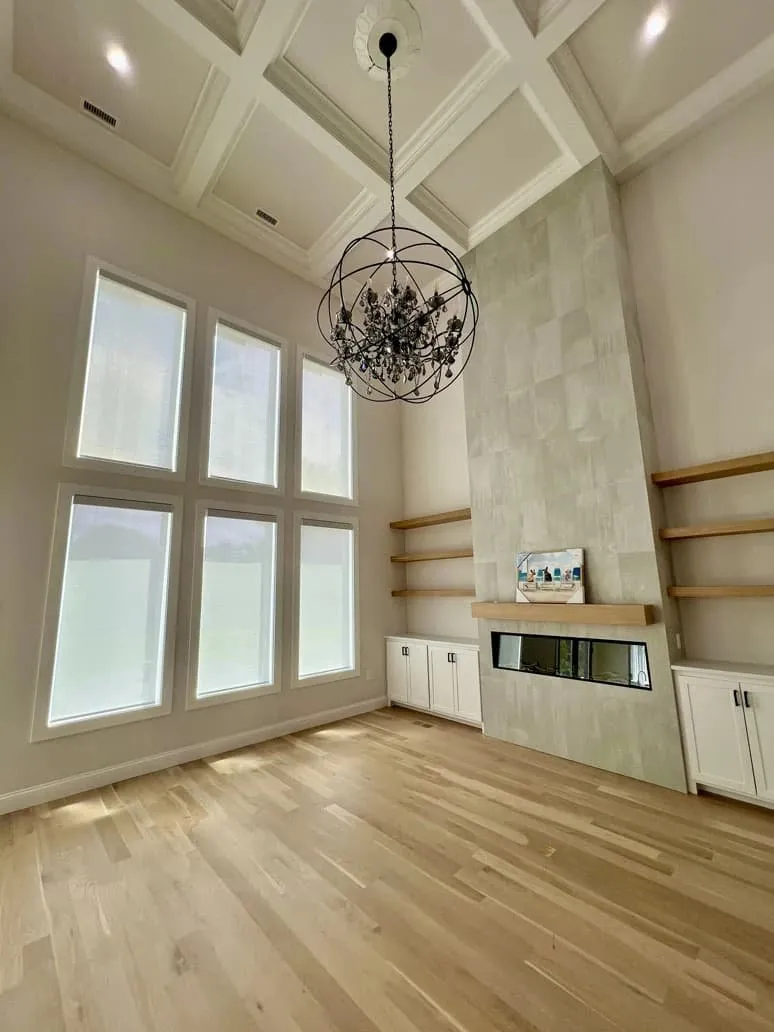
A two-story foyer or a family room with windows up into the gable often has glass nobody can reach. PowerView motorization lets those shades move from a remote, an app or a schedule, and they can be grouped with the windows below so the room moves together.
Upstairs, bedrooms want darkness and warmth. Room-darkening honeycomb is the common choice, and in a bedroom facing the pond a dual shade with a sheer and a darker fabric on one headrail keeps the morning view while still giving full darkness when needed.
Sun and reflection off open water
A pond reflects light the way a mirror does. On a bright afternoon the sun comes in from the sky and bounces up off the water at the same time, so a pond-facing room can be uncomfortably bright even when the sun itself is high and to the side. A west-facing shoreline room takes the worst of it in late afternoon.
A solar screen is usually the first answer. It cuts brightness and heat while keeping the water visible. The openness of the weave sets the balance, and the easiest way to judge it is to hold samples at the window when the reflection is at its worst.
A sheer shade is the softer option. It diffuses the light into an even glow and tilts its vanes as the sun moves. In a living room where you want warmth in the light rather than a crisp view, it is often the better pick.
Fabric color matters on a window like this. Strong daily sun fades darker fabrics faster, and a very dark screen can make the view look dim. Lighter neutrals hold up better and keep the room bright. We point out which fabrics suit a bright, reflective window when you choose.
Evenings on the pond side
Once the sun goes down and the lamps come on, a pond-facing room reverses. You can no longer see out, but anyone on the water or the far shore can see in. Screen fabrics, which looked private in daylight, become see-through.
There are good ways round this that keep the room light. A Silhouette or Pirouette shade closes its vanes for privacy at night and opens them again in the morning. A dual shade carries a screen and a light-filtering fabric on one headrail, so you switch from view to privacy. In a colonial with a more formal room facing the pond, slim drapery panels on a track can close across the glass at night and stand neatly at the edges by day.
PowerView can make the change automatically at sunset, which is useful in a house where the pond side has many windows.
Matching products to rooms around the house
Here is how a typical Lakeville house tends to come together.
- Pond-facing living room. Screen or sheer shades, inside-mounted where the frames allow, so the view is never crowded.
- Converted camp bedrooms. Light-filtering or room-darkening honeycomb, mounted on the frame where the walls are thin.
- Colonial living and dining rooms. Plantation shutters or lined Roman shades.
- Kitchen and baths. Palm Beach shutters or EverWood faux wood blinds, which cope with steam.
- High windows. PowerView, grouped with the glass below.
- Glassed-in porch. A shade on each panel, ideally motorized.
None of these have to be decided at once. Many people do the pond side first and the rest of the house later, and because we carry the whole range, the later rooms match.
A visit to the house
Pond light is impossible to judge anywhere but at the pond. Our vans carry samples, so we can bring the showroom to you and test each fabric at your own windows.
- Request a consultation or use the call button to set a time.
- We bring samples suited to pond rooms, including screen weaves, sheers and light honeycomb, plus shutters and Roman fabrics for the rest of the house.
- We start on the water side, where the view and the glare matter most.
- You compare openness and color at the glass, ideally in the afternoon light.
- We measure every window and check frame depth for an inside mount.
- You receive a free estimate and decide when you are ready.
For help with color and fabric across a whole room, ask about our interior design consultations. Our guide to what happens at an in-home consultation explains the visit in more detail.
Measuring a long run of pond-side glass
A wall of windows facing the water shows every small mistake, because you look at it all day. Getting it right takes a few extra steps.
- We measure each window in the run separately, since units that look identical often differ slightly.
- We set one headrail height for the whole wall wherever the frames allow, so the shades line up when they are raised and lowered.
- We check the depth of each frame for an inside mount, which keeps the trim and the view clear.
- We decide with you whether the shades on that wall should move together on one headrail, separately, or as a motorized group.
- On installation day our certified installers level every headrail against the others, not just against itself, and run the whole wall up and down with you.
That level of care is what you should expect from a Hunter Douglas dealer in Lakeville, MA when the view is the reason you bought the house.
Every Hunter Douglas family in one place
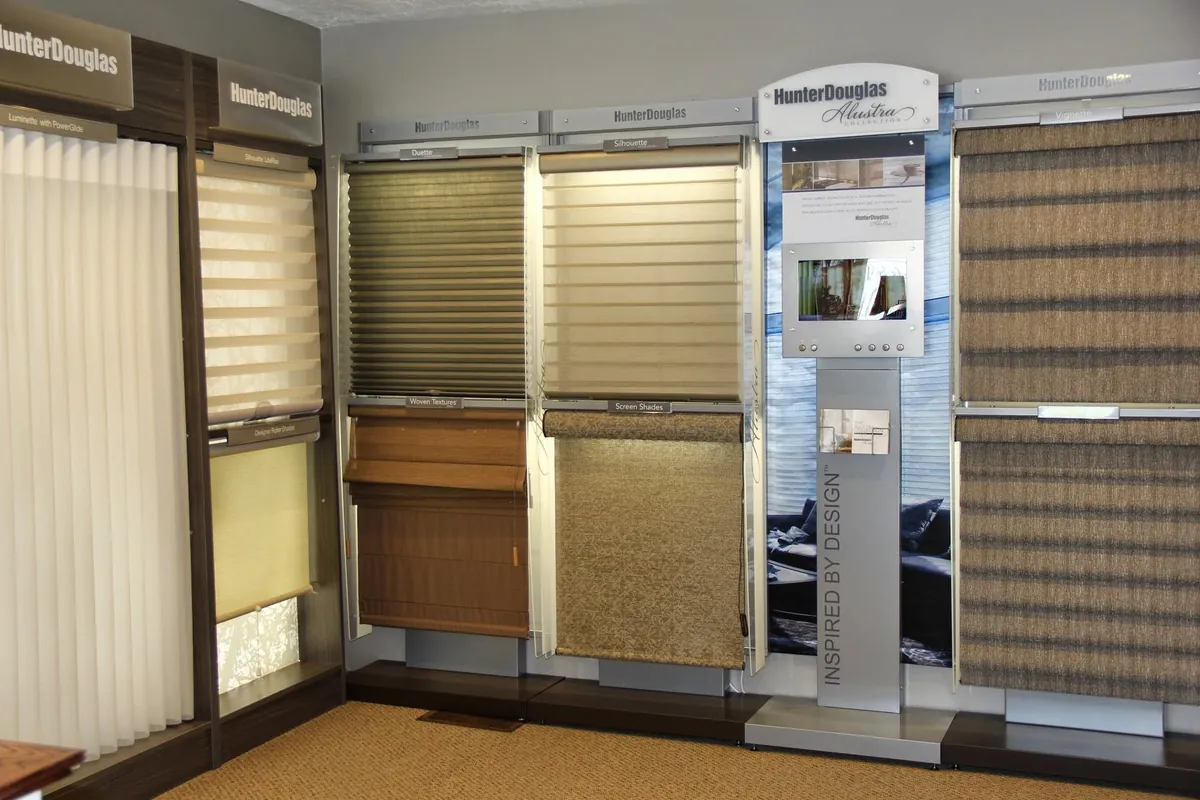
Blinds & Designs is a Hunter Douglas Gallery dealer, the maker’s own designation for dealers who meet its standards. That means the full range: Luminette and Silhouette for the pond rooms, Duette for the camp bedrooms, Designer Screen for the west glass, Vignette for the dining room, and the shutters, blinds and drapery for the rest.
Our installers are certified by Hunter Douglas, so every product goes up level, into solid wood, and is tested with you before we leave. That matters most on a wide run of pond-side glass, where a headrail even slightly out of level is obvious every time you look at the view.
Choosing a Hunter Douglas dealer in Lakeville, MA that carries everything and installs its own work means one team plans the house and one team stands behind it.
Repairs and later additions
Window coverings last a long time, but a cord can wear or a lift can stiffen, especially on a porch that sees damp. We handle blind and shade repairs on coverings you already own. Adding PowerView to existing rooms, or replacing a tired product with a lighter one that suits the pond better, is a common next step.
For everything we do in town, see our Lakeville page. Our main Hunter Douglas page sets out every family, and Hunter Douglas also publishes its full catalog online. For motor control see motorized blinds in Lakeville, and for full-length panels see custom drapery in Lakeville.
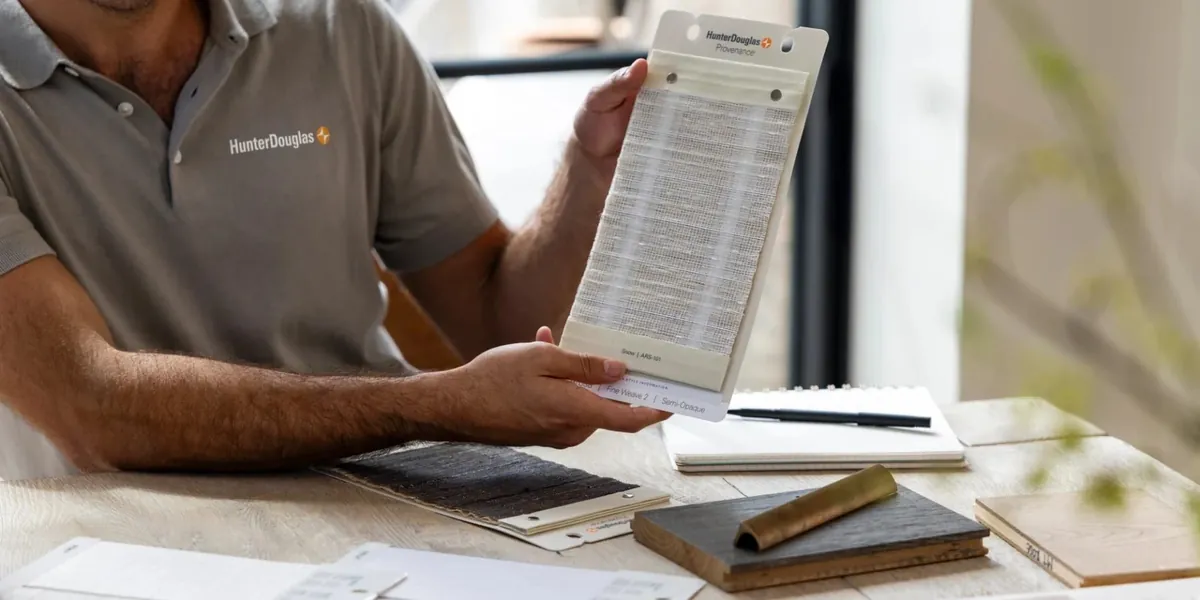
Sample fabrics at the water’s edge
A fabric swatch on a counter looks nothing like the same fabric with afternoon pond light coming through it. That is why we prefer to make the decision at your house.
We hold screen samples of different openness against the glass so you see exactly how much of the far shore stays visible. We compare a sheer and a screen on the same window. We check how a light honeycomb looks from the room and from outside on the water.
The visit works just as well for a single bedroom as for a whole shoreline house. If you would rather see products first, the North Dartmouth showroom is our closest to Lakeville.
Questions from Lakeville
How do I keep the pond view and still cut the glare?
A solar screen keeps the water visible while cutting brightness and heat. A sheer shade softens the light more. Both raise almost out of sight when you want the full view.
Our camp conversion has thin walls and small windows. What fits?
A light honeycomb or roller shade mounted on the face of the frame usually works best where there is little depth. Honeycomb also helps those rooms hold warmth in winter.
Can people see in at night through screen shades?
Yes, once the room is brighter than outside. A sheer shade with closing vanes, a dual shade or slim drapery panels give privacy after dark, and PowerView can switch them at sunset.
What works in a colonial dining room?
Plantation shutters or a lined Roman shade are both good choices, and they sit happily alongside lighter pond-side shades in the same house.
Is the estimate free?
Yes. Request a consultation and we will bring samples, measure and prepare a free estimate.
Getting started
Request a consultation and we will bring the samples to your windows, measure and give you a free estimate. Use the call button for a quick question, or visit the North Dartmouth showroom if you would like to see the products first.