
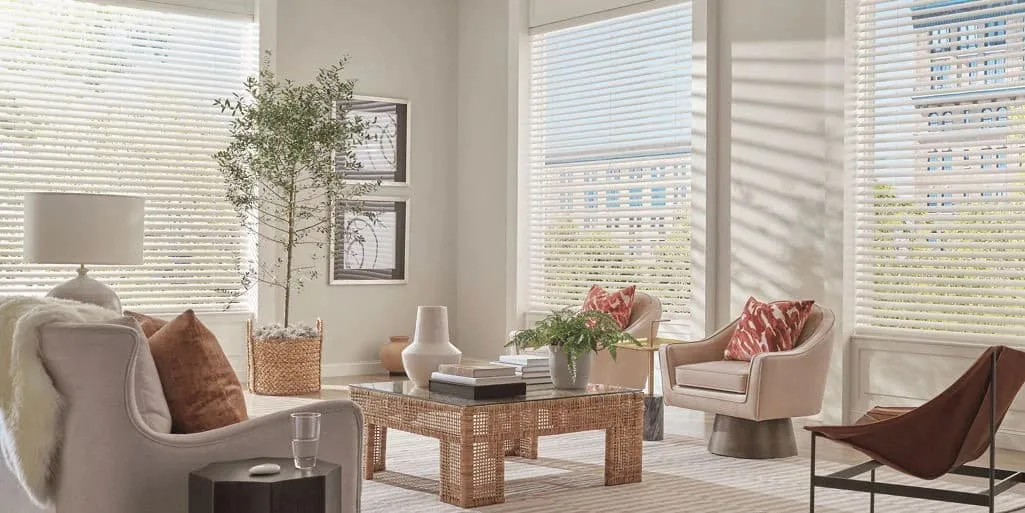
Tall sash, close neighbors, a hillside city
Fall River climbs a hill. The mill-era three-deckers and the Victorians of the Highlands and Corky Row stand close together on streets that step up from the river, and the windows in those houses are tall, narrow double-hung sash set into deep reveals. Down by Battleship Cove the housing changes again, to condominiums with large modern glass looking over the water. Fitting custom blinds in Fall River, MA, means working with both kinds of window, often for very different reasons.
On the hill, the reason is usually privacy. A three-decker can sit a few feet from the next one, and its side windows look straight across into a neighbor’s kitchen or bedroom. Victorians face the street with tall parlor windows only a short way back from the sidewalk. A blind lets daylight in through tilted slats while blocking the line of sight from next door or from the street.
The slope adds a twist. One side of a house may face downhill, open to the sky and the sun over the river, while the other side faces uphill into the shadow of the next building. Two rooms in the same flat can need opposite things from their blinds.
Every blind in the range, for every kind of Fall River window
The Hunter Douglas range of custom blinds in Fall River homes covers each material and control below, and we carry samples of them all to your door.
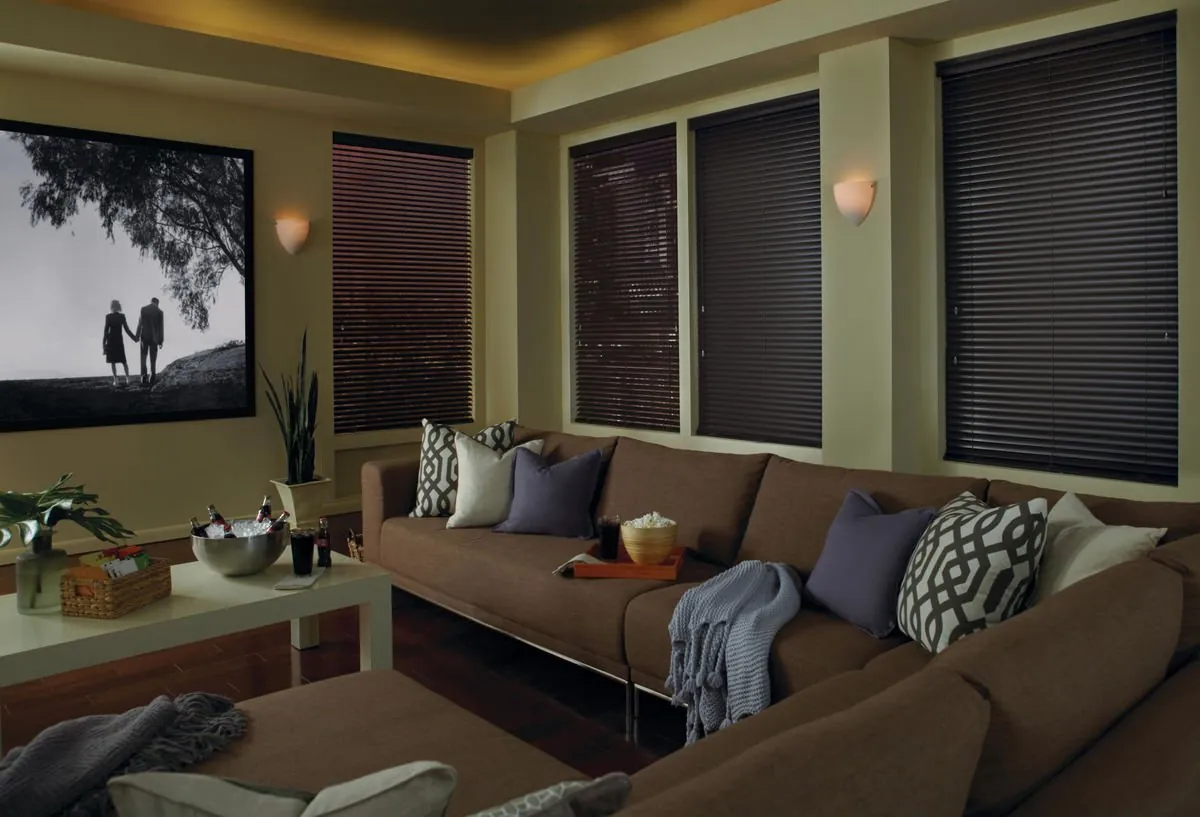
Wood blinds
Parkland real wood in rich stains or paints, suited to a Victorian parlor or dining room with original woodwork.
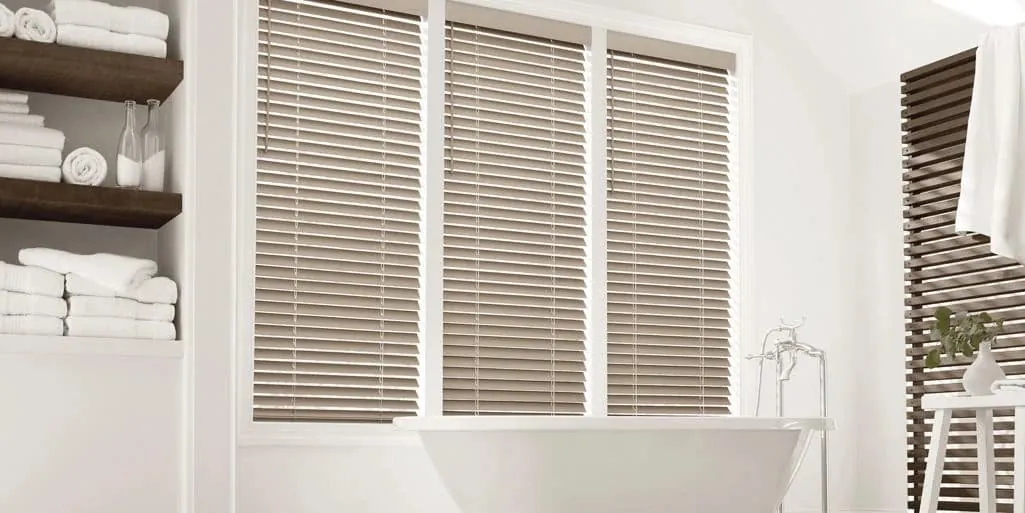
Faux wood blinds
EverWood faux wood has the painted-wood look in a slat that copes with steam. Right for the kitchen and bath in every flat.
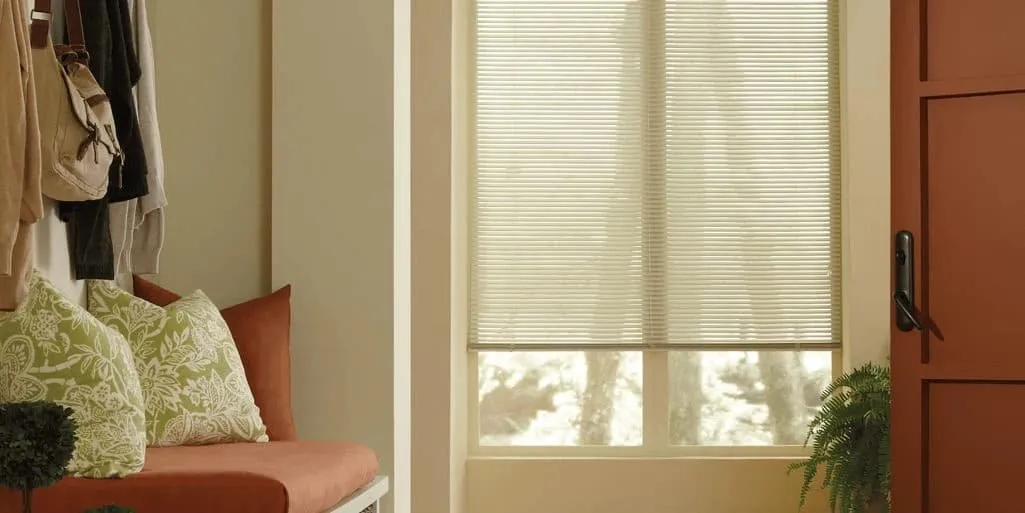
Metal blinds
Aluminum blinds with thin slats and a compact headrail, for narrow side windows, back stair landings and shallow frames.
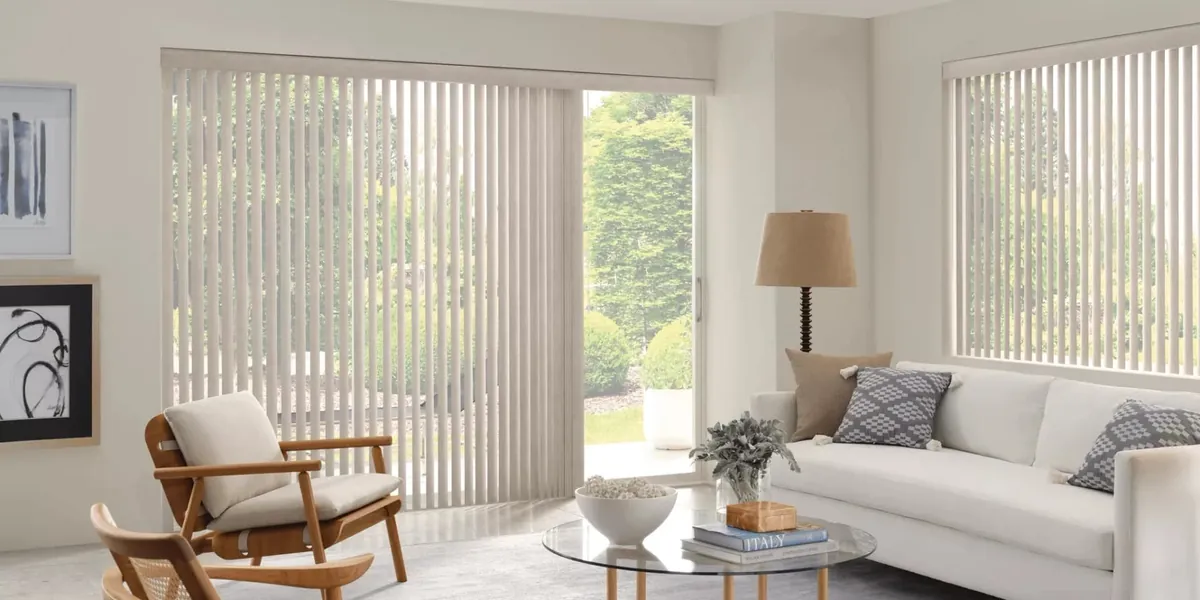
Vertical blinds
For the sliders onto a condominium balcony or a back porch. The vanes gather to one side and turn against low sun off the water.
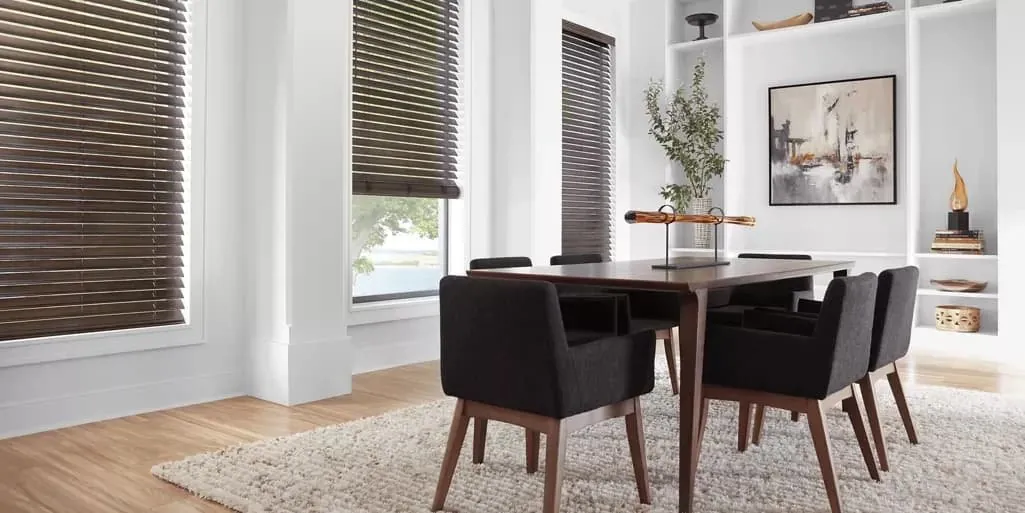
Privacy on a tight street
Tilt the slats so they face down into the room: daylight comes in from above, and a neighbor’s window across the way sees nothing.
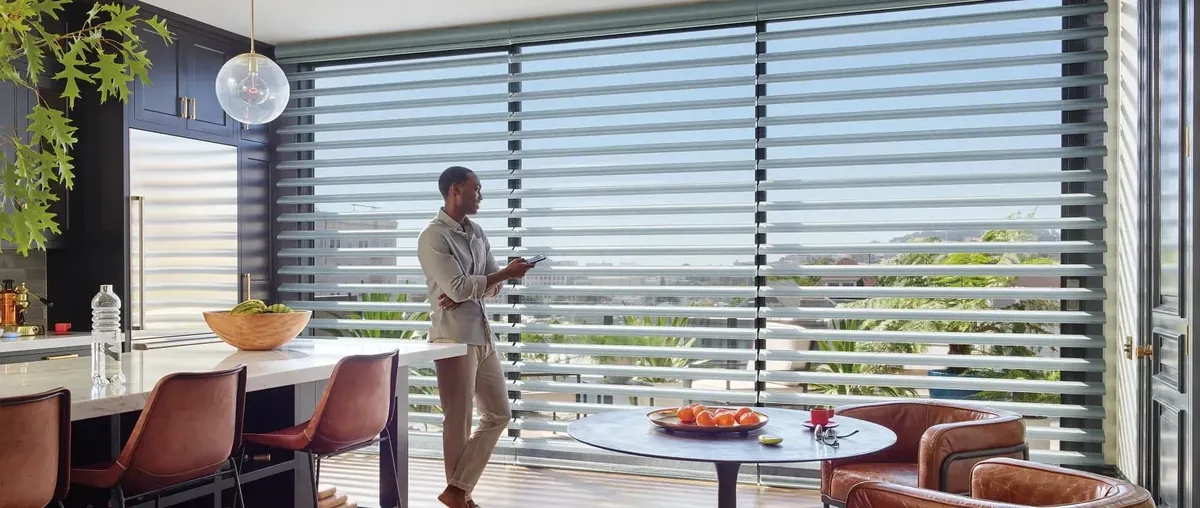
PowerView control
Tilt and lift blinds from a phone or remote, or on a schedule. Handy for a wall of condominium glass or a hard-to-reach stair window.
Tall narrow sash and deep reveals
The windows in a Fall River three-decker or Victorian were built for a city before electric light. They are tall, so daylight reaches deep into a long, narrow room, and they are set back into thick walls with wide wooden casings. Inside, the reveal, the depth from the face of the wall to the sash, is often generous.
That depth is a gift for an inside mount. The headrail sits inside the opening, the blind falls straight down within the frame, and the old casing stays fully on show. On a tall window it gives a clean, vertical line from top to bottom that suits the proportions of the house.
Tall windows do bring a couple of things to plan for. The raised stack of slats at the top grows with the height of the window, so on a very tall sash we look at slat width: a wider slat means fewer slats and a shallower stack. The lift needs thought too, because a long blind on a tall window has a lot of slats to raise. Cordless lift handles that smoothly, and motorized lift takes the effort away altogether.
Old frames are rarely perfectly square, especially in a house that has settled on a slope. We measure each window across the top, middle and bottom and down both sides, so the blind is made to the tightest point and does not bind.
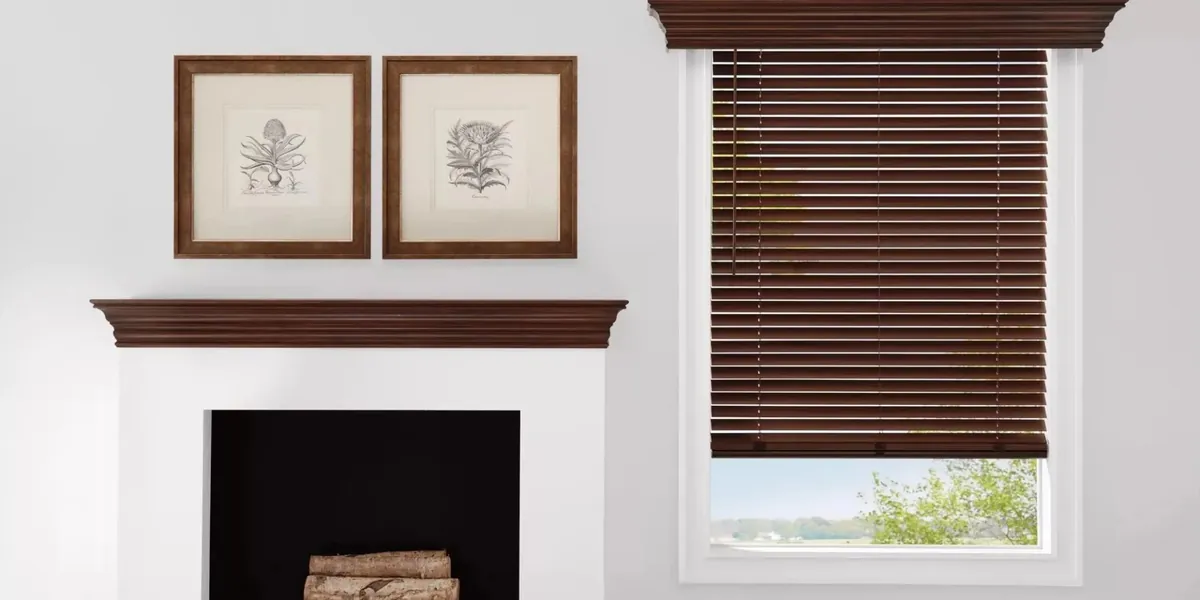
Three-deckers: one building, three homes
A three-decker is three flats stacked one on top of another, each with the same plan: front rooms facing the street, a long hall or run of rooms down the middle, and a kitchen at the back opening onto a porch. Because the buildings are close together, the side windows are where privacy is hardest.
Blinds work well there because you can set them part closed. With the slats angled so the inner edge sits higher than the outer edge, the view in from a window at the same height next door is blocked, while light still comes in from above. At night, closing the slats flat makes the room completely private. A routeless slat, with no holes for the lift cords, closes tighter still.
The back porch and kitchen windows face the yard and often the back of another building. Faux wood is the practical choice for the kitchen, where steam and cooking would mark a real wood slat over time. If you own the whole building, matching blinds across all three floors gives the front of the house a tidy, even look from the street, and each tenant or family can still set their own.
Victorians in the Highlands
The Victorians of the Highlands are larger and grander than the three-deckers on the streets below: bay windows, tall parlor windows, stained or painted woodwork and high ceilings. Many have been restored with care.
On a house like that, a blind should respect the woodwork. An inside mount within the deep reveal keeps the trim fully visible. Real wood blinds in a stain chosen to sit near the color of the original woodwork can look as though they came with the house. Where the trim is painted, a white or soft cream slat lets the window frame stay the feature.
Bay windows are common in the Highlands, and each panel of the bay takes its own blind. Set to the same height and tilt, they read as one curved run of window, and each can still be raised on its own. Very tall parlor windows benefit from a wider slat and, if the top of the window is out of easy reach, from motorized lift.
Corky Row and the narrow side windows
In Corky Row and the other tightly built streets below the Highlands, the buildings are close enough that the side windows are often the narrowest in the house. Some are single sash squeezed between a chimney breast and a corner, some light a hall or a back stair, and many look straight at clapboards a few feet away.
Those small, narrow windows suit aluminum blinds well. The slats are thin and the headrail is slim enough for a shallow frame, and the blind can be made very narrow without looking cramped. Tilted up toward the sky, the slats let in the light that falls between the buildings while hiding the wall next door. For a window beside a bath or in a hall that faces a neighbor directly, a routeless slat closes tighter and keeps the room private.
Stair windows are another feature of the older houses here: a tall window on a landing halfway up, or a window at the top of a back stair. They are hard to reach and often left bare for that reason. A cordless blind can be raised and lowered from a step, and a motorized one can be worked from a phone at the bottom of the stairs.
Light on the hillside: one house, two sides
Because so many Fall River streets run across the hill, one side of a house often faces downhill toward the river and the other faces uphill toward the next row of buildings. The downhill side gets open sky and long sun, especially in the afternoon as the light comes across the water. The uphill side may sit in shadow for much of the day.
That means the blinds on one house can have quite different jobs. On the bright downhill side, the task is glare and heat: slats tilted upward send the light to the ceiling and keep the room comfortable, and a lighter slat color reflects more of the sun. On the shaded uphill side, the task is to let in every bit of daylight while keeping the neighbors’ view out, so the slats are tilted to block the line of sight but stay as open as possible.
We look at both sides on the visit and suggest slat colors and tilt settings for each. Many customers choose a single slat color for the whole house so the look is consistent, and vary only the way they set them.
Top-floor flats see the biggest difference. Up on the third floor of a three-decker, the downhill windows can look out over rooftops to the river, with nothing to shade them, while the first-floor windows on the same side sit lower and catch less. We look at the floor you live on as well as the direction each window faces, because the light on the top deck can be far stronger than on the ground.

Condominiums near Battleship Cove
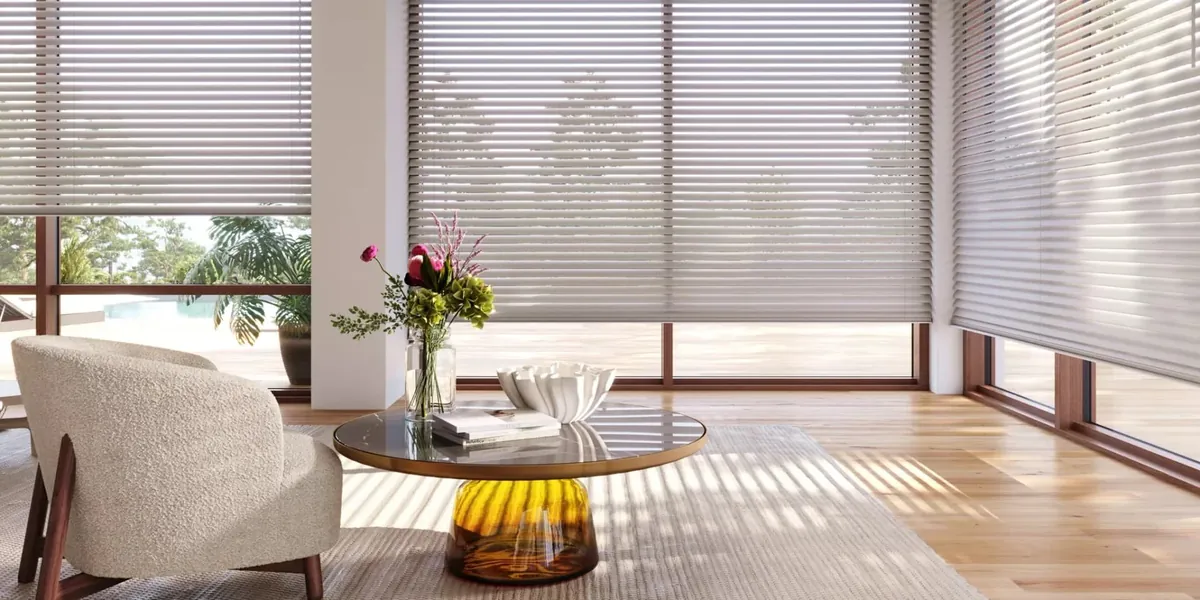
The waterfront condominiums near Battleship Cove are a world away from the three-deckers up the hill. They have large modern windows, often floor to ceiling, sliders onto balconies, and views over the river and the harbor. Privacy is less of a concern facing the water; glare, heat and the view are what matter.
For big modern glass, slim aluminum slats are a strong choice. They are light, the raised stack is small, and when the blind is lowered and tilted open, the thin slats leave a clear view between them. Wide faux wood slats suit a living room where you want warmth in the look. Sliders onto the balcony take vertical blinds that draw to one side to clear the door.
Very wide windows are best divided into two or three blinds on separate headrails, so one end can block the sun while the other stays open to the view. On a wall of glass with many blinds, PowerView automation lets you set them all from a phone, or have them tilt on a schedule against the afternoon sun. See our motorized blinds in Fall River page for how that is controlled.
Condominium associations sometimes have rules about what can be seen from outside. Ask your association before the visit, and we will help you choose a slat color that suits both the inside and the view from the street.
Choosing custom blinds in Fall River room by room
Once we have seen the house, most plans follow a pattern:
- Front parlors and dining rooms in a Victorian take real wood, stained or painted to suit the trim.
- Kitchens and baths in every flat take faux wood, which handles steam and cleans easily.
- Narrow side windows, stair landings and shallow frames take aluminum, for its slim headrail.
- Condominium living rooms take slim aluminum or wide faux wood, for the view.
- Sliders onto a balcony or porch take vertical blinds.
You choose the final mix after seeing the samples against your own windows.
Back porches and the kitchen end of the flat
At the back of a Fall River three-decker, every floor has a porch, and the kitchen opens onto it through a glass door or a window beside the door. That end of the flat is the busiest, with cooking, washing and people coming in from the yard. A blind there has to be tough.
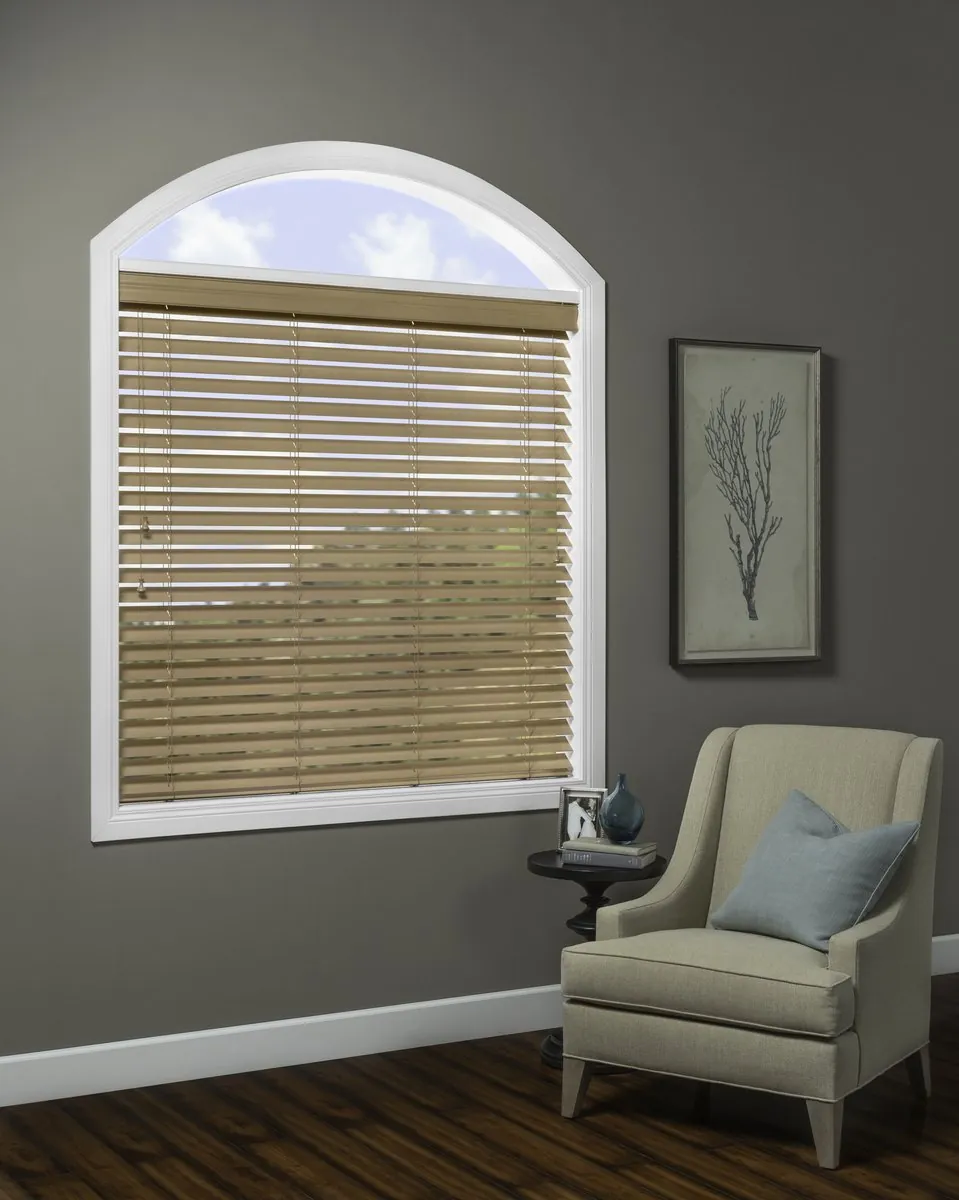
Faux wood is the natural choice. It does not swell with steam from the stove, it does not mind a wet hand, and it wipes clean of the film that gathers on anything in a kitchen. A glass door onto the porch can take a blind fixed to the door itself, with hold-down brackets at the bottom so it does not swing every time the door opens. Planning custom blinds in Fall River flats this way, from the front parlor to the back porch, means each room gets the blind that suits how it is used.
The consultation, at your home
Tall Victorian sash and three-decker side windows are hard to judge from a catalog. You need to see a slat against your own casing, with the neighbor’s wall or the river behind it. Our vans travel with the full sample range, so the showroom comes to your street.
- Use Request a Consultation or the call button to choose a time.
- A consultant brings real slats in wood, faux wood, aluminum and vertical styles, with working lift and tilt controls.
- You walk the rooms together, the uphill side and the downhill side, the front parlor and the back porch.
- Each sample goes up against the trim so you can compare colors and slat widths in place.
- Every opening is measured more than once, and the depth of each reveal is written down.
- A free estimate follows for the blinds you liked, and the choice waits until you are ready.
If the whole room needs thought, our interior design consultations can cover it at the same appointment. Read what happens at an in-home consultation for more detail.
On fitting day, installers certified by Hunter Douglas set each headrail level inside its reveal, work every blind through its full range and show you the controls.

A Hunter Douglas Gallery dealer, close to Fall River
Blinds & Designs is a Hunter Douglas Gallery dealer, a designation Hunter Douglas gives dealers who meet its standards. You can choose from the whole Hunter Douglas blind range through us: Parkland wood, EverWood faux wood, aluminum and vertical blinds, with the lift options and PowerView automation.
We measure, order and fit your blinds ourselves, with installers certified by Hunter Douglas, and we offer blind and shade repairs if one needs attention later.
See the range on our Hunter Douglas blinds page, or read about wood blinds. For other rooms, look at plantation shutters in Fall River or cellular shades in Fall River, or see all our services in the city on our Fall River page.
Questions from Fall River
Can blinds fit inside the deep window frames of an old three-decker?
Usually, yes. Deep reveals give plenty of room for an inside mount. We measure each window at several points because frames in older houses on a slope are often out of square.
How do I keep privacy from the house next door without losing daylight?
Tilt the slats so their inner edge sits higher. That blocks the view from a window at the same level while light still comes in from above. Close them flat at night for full privacy.
What works on a tall Victorian parlor window?
An inside mount in real wood or faux wood, with a wider slat to keep the raised stack shallow. If the top is hard to reach, motorized lift is worth considering.
What do you suggest for a condominium with floor-to-ceiling glass?
Slim aluminum slats or wide faux wood, split into several blinds across a wide window, with vertical blinds on the slider.
Is the estimate free?
Yes. Once we have measured, the estimate for your blinds is free.
Take the next step
The easiest way to see what custom blinds in Fall River, MA, will look like in your rooms is with the samples at your own windows. Request a consultation and we will come to you, measure each window and leave a free estimate. If you would rather see the range in person, the North Dartmouth showroom is our closest to Fall River, or use the call button to ask a question.