
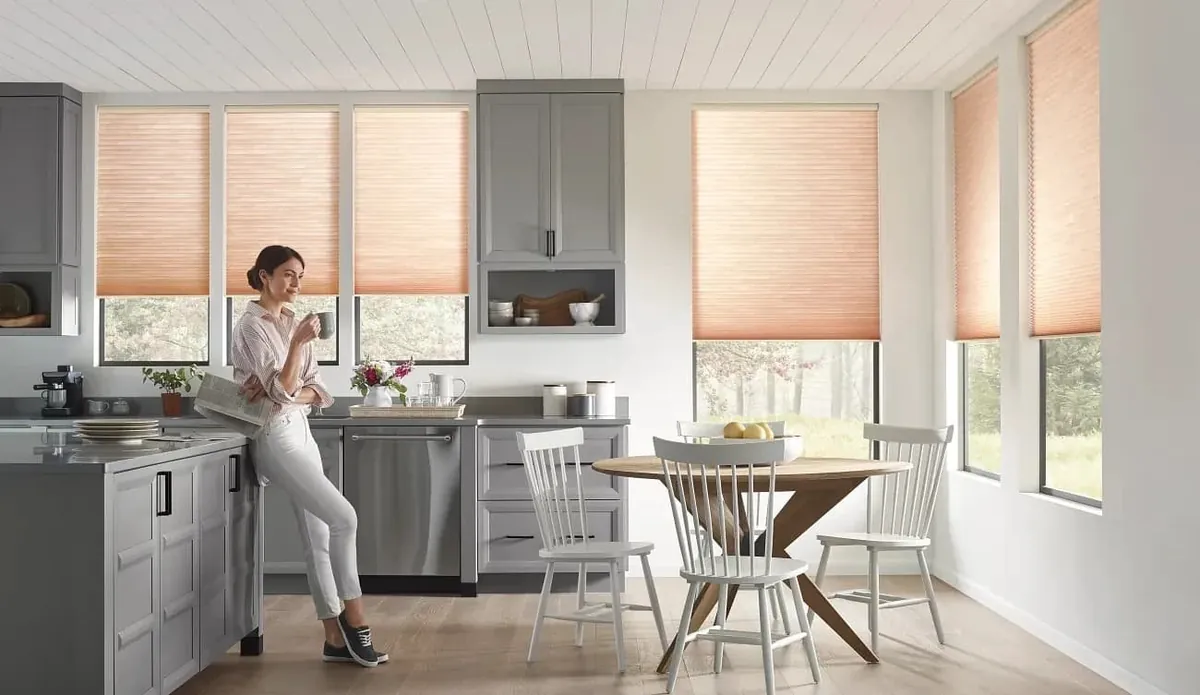
Tall windows on a steep hill
Fall River is built on a hillside, and its houses show it. Through the Highlands and Corky Row, mill-era three-deckers and Victorians stand shoulder to shoulder, with tall, narrow double-hung windows set into deep reveals. Down by Battleship Cove, waterfront condominiums have large modern windows looking over the water. And because the streets climb so steeply, the uphill side of a house and the downhill side often live with completely different light. Each of those details matters when we fit cellular shades in Fall River, MA.
Tall old sash leaks heat. A three-decker apartment or a Victorian parlor with a row of those windows can feel cold along one wall all winter, however high the heating is set. A honeycomb shade puts a cushion of air across each window. The fabric is folded into cells, every cell holds a pocket of air still against the glass, and that layer slows the cold coming into the room.
For a modern condominium window, the problem flips. There, the glass is better, but there is far more of it, and on a bright afternoon the sun off the water heats the room and glares across every screen. The same honeycomb shade handles both.
What we fit in Fall River homes
These six choices cover most Fall River windows, from a top-floor apartment in a three-decker to a corner unit near the cove. We bring samples of each to your door.
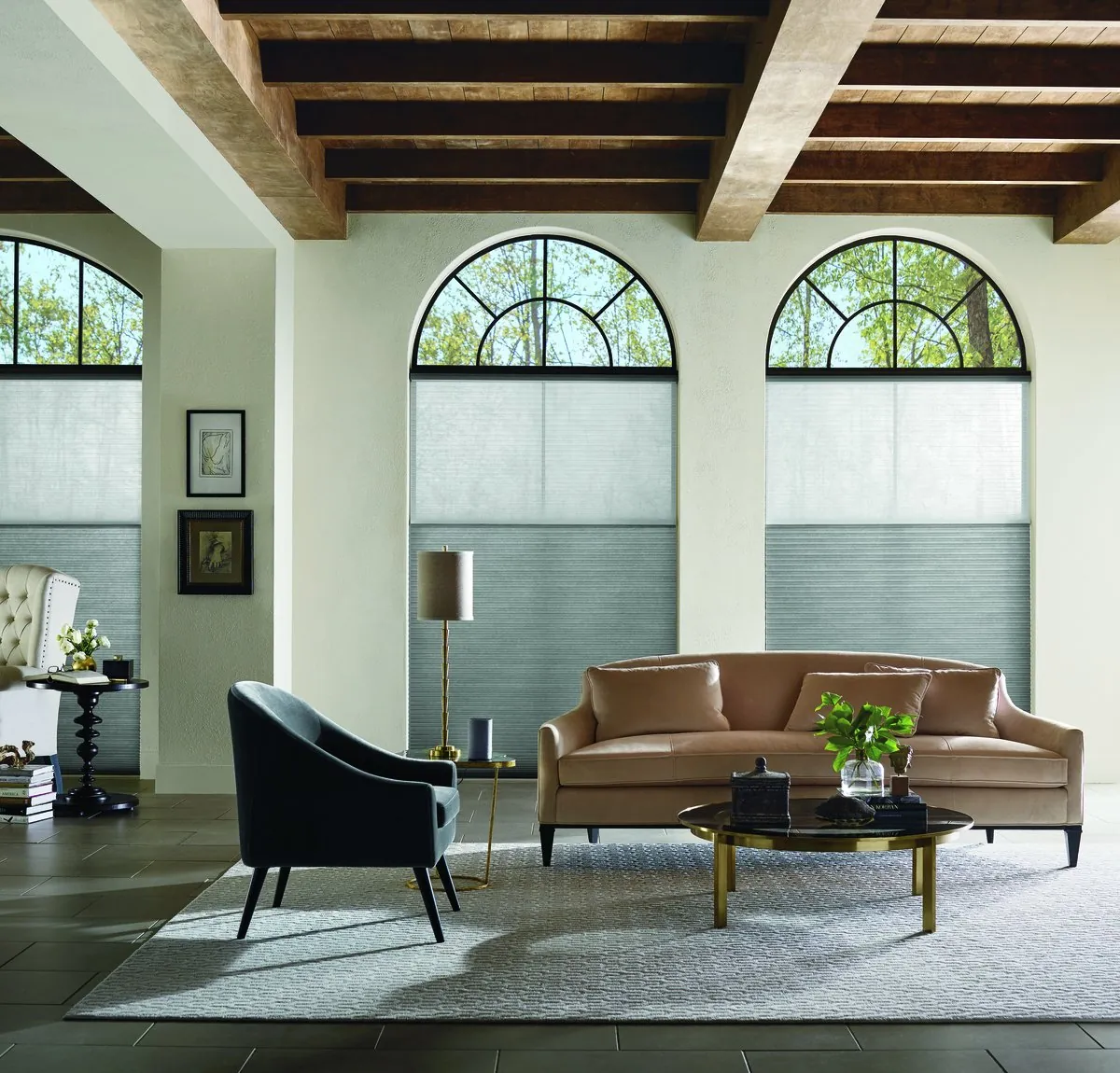
Tall sash, top-down
On a tall window facing a close neighbor, lower the top for light and sky and keep the lower sash covered from the street and the porch next door.
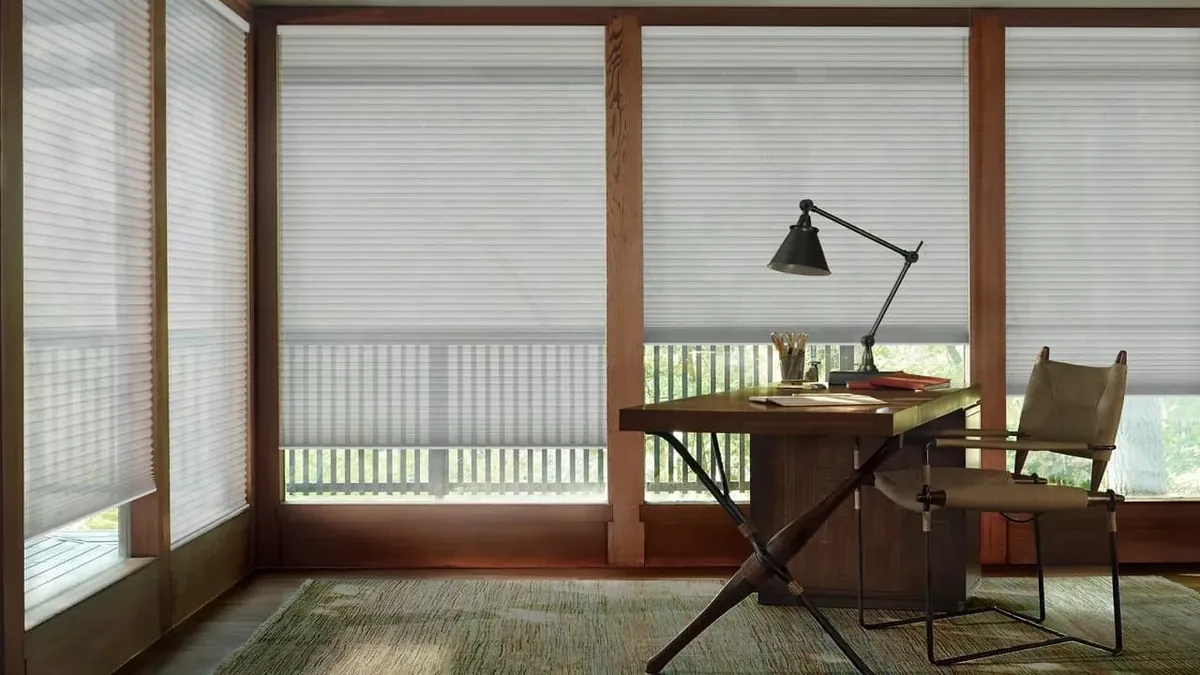
Inside the deep reveal
The deep reveals in Fall River’s older houses often take an inside mount, so the shade sits back in the wall and the trim stays clear.
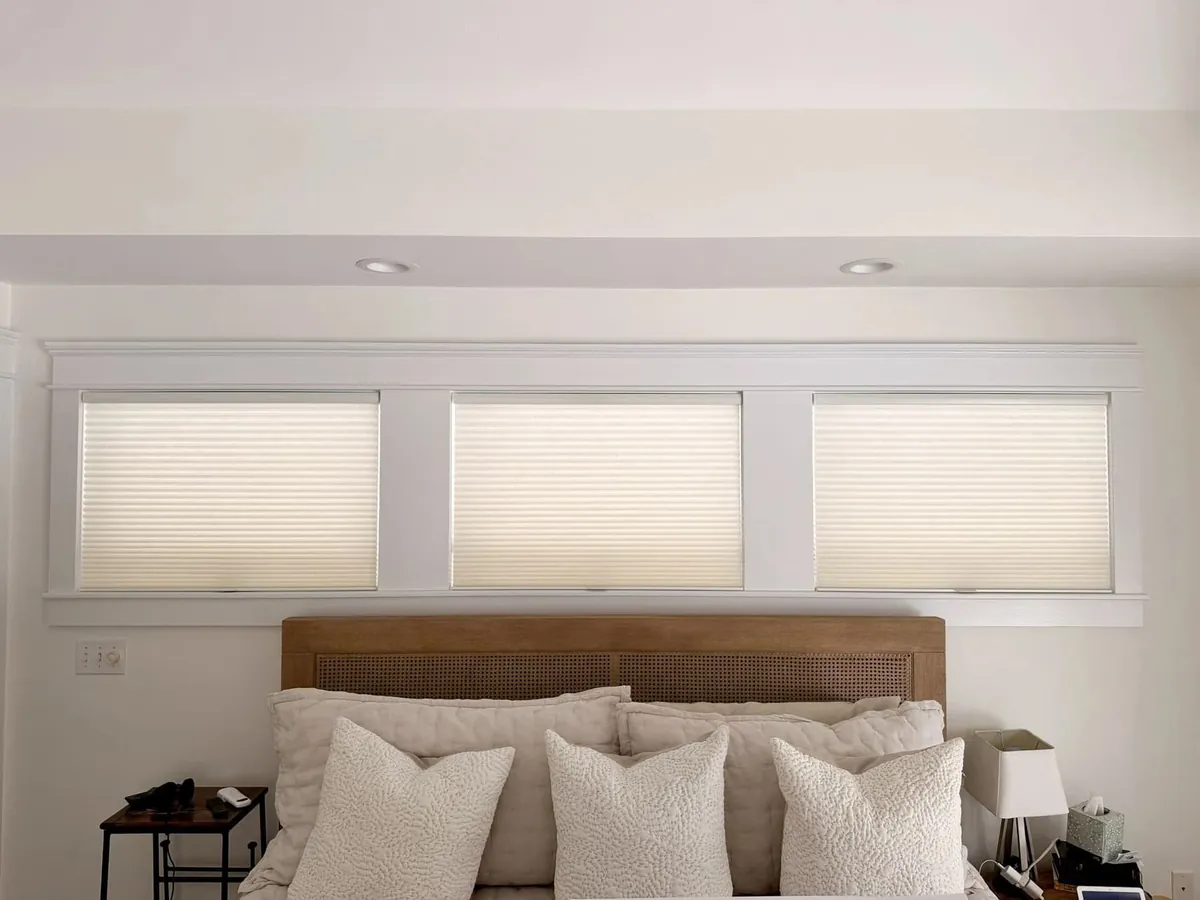
Room-darkening for bedrooms
For a bedroom facing a streetlight or the early sun, a darkening honeycomb fabric keeps the room dim and still holds air in its cells.
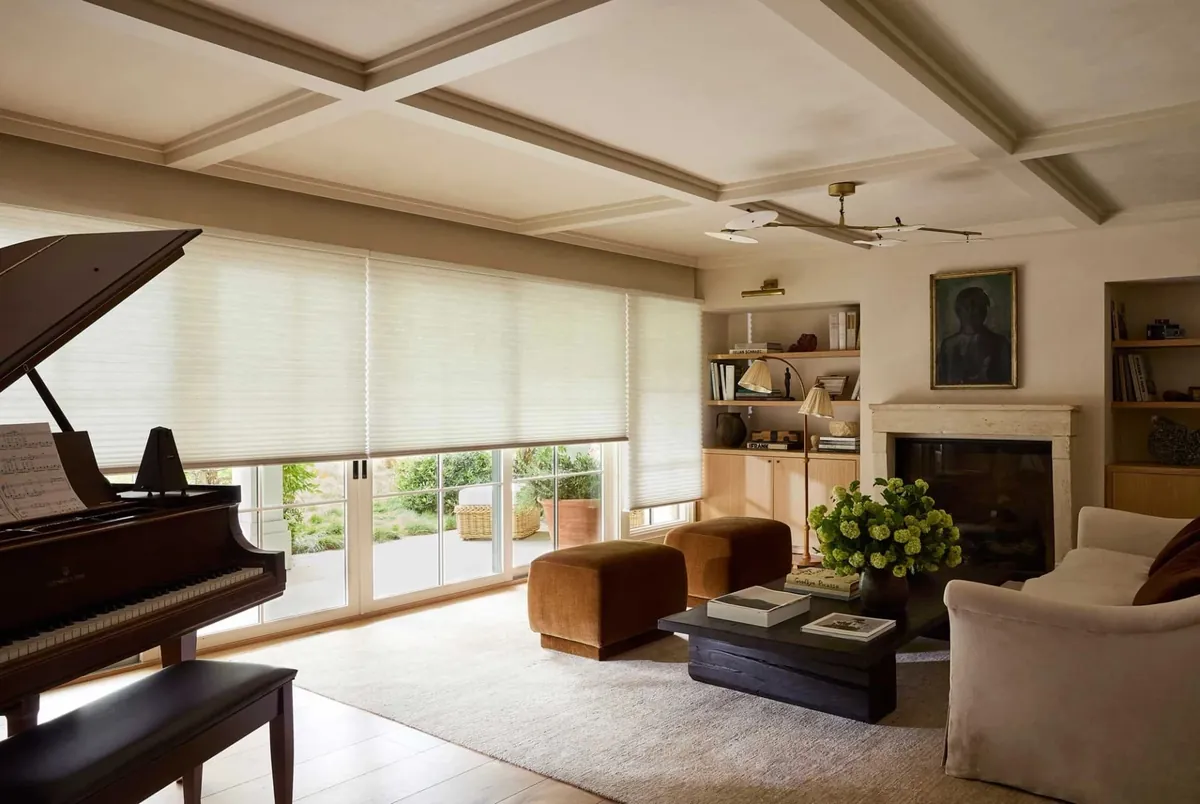
Duette for big condominium glass
Very wide honeycomb shades in a broad fabric range for floor-to-ceiling windows and doors that look over the water.
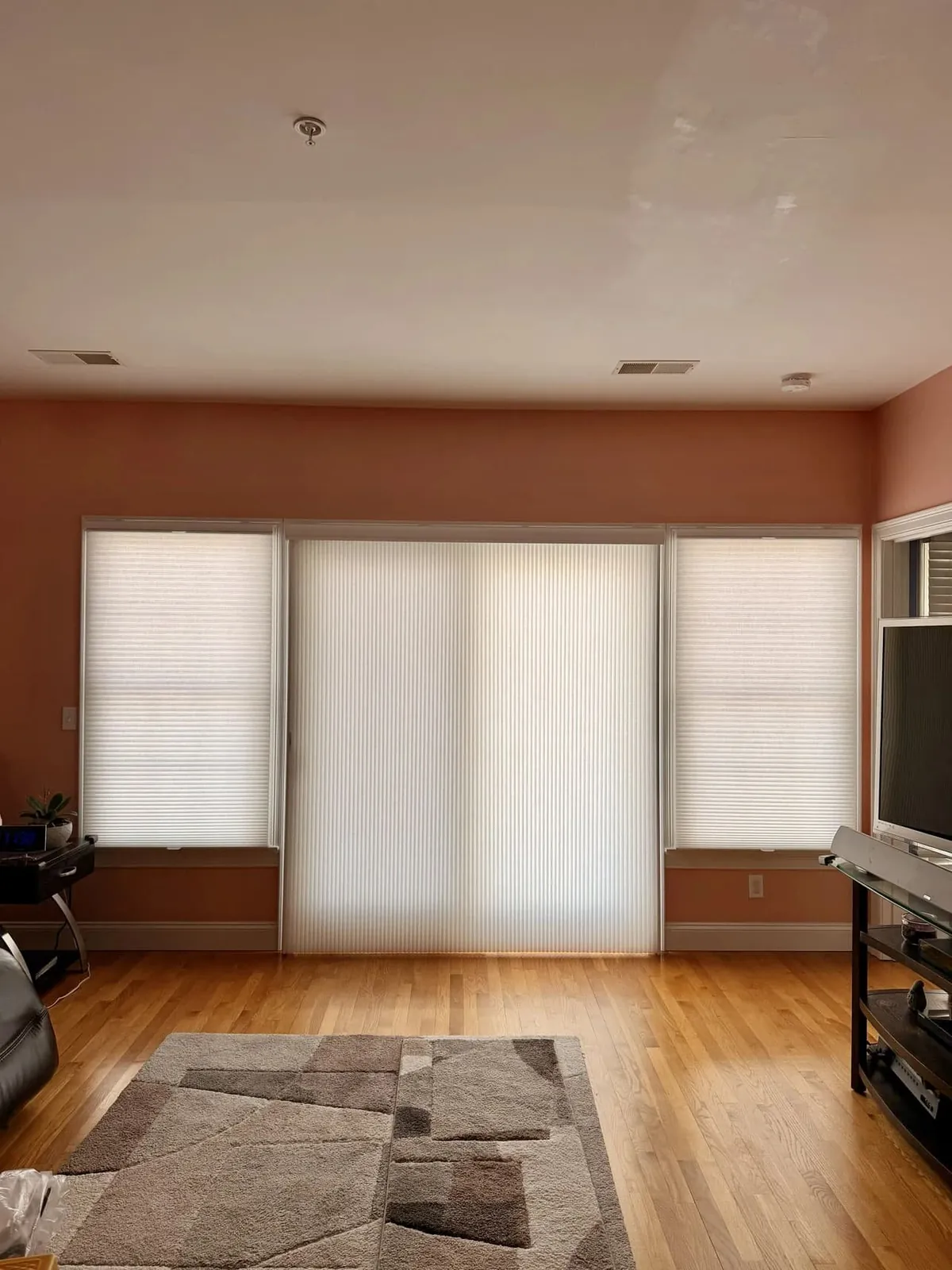
Vertical cells for balcony doors
A honeycomb shade that slides across a balcony or patio door and stacks at the side, leaving the doorway clear.
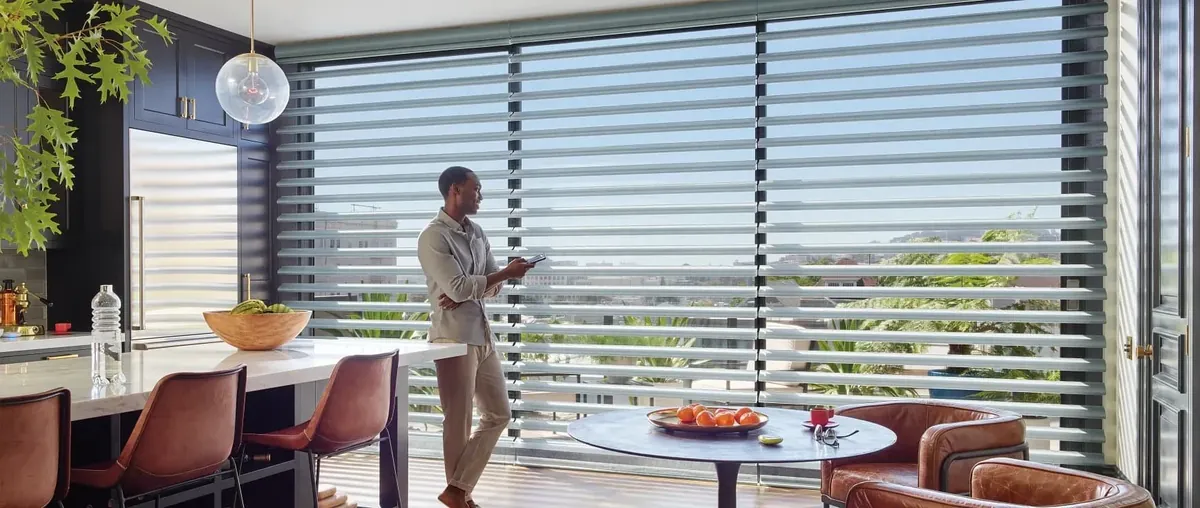
PowerView for the sunny side
Motorized shades on a schedule can close the bright side of the house before the afternoon sun hits and open it again in the evening.
Three-deckers through the Highlands and Corky Row
The three-decker is Fall River’s signature house: three stacked apartments, each one a full floor, with front and back porches and a row of tall windows along each side. Some have the person who owns the building living on one floor, with family or tenants above and below. Others are rented top to bottom. Either way, every floor has the same challenge: tall, narrow windows on long walls, often very close to the house next door.
Cellular shades work well in a three-decker. They can be made narrow and very tall to match the proportions of the old sash. A honeycomb shade adds insulation to every window without bulk, which suits rooms that are already full of furniture. And because each shade is made to measure, a building where the windows are almost but not quite identical floor to floor can still have matching shades on every level.
Privacy matters here more than in most places. With the next house a few steps away, a window on the side of a three-decker often looks straight into a neighbor’s kitchen. A light-filtering honeycomb fabric gives you privacy in daylight while the room stays bright, and a top-down shade lets you open the top of the window to the sky while the lower part stays closed.
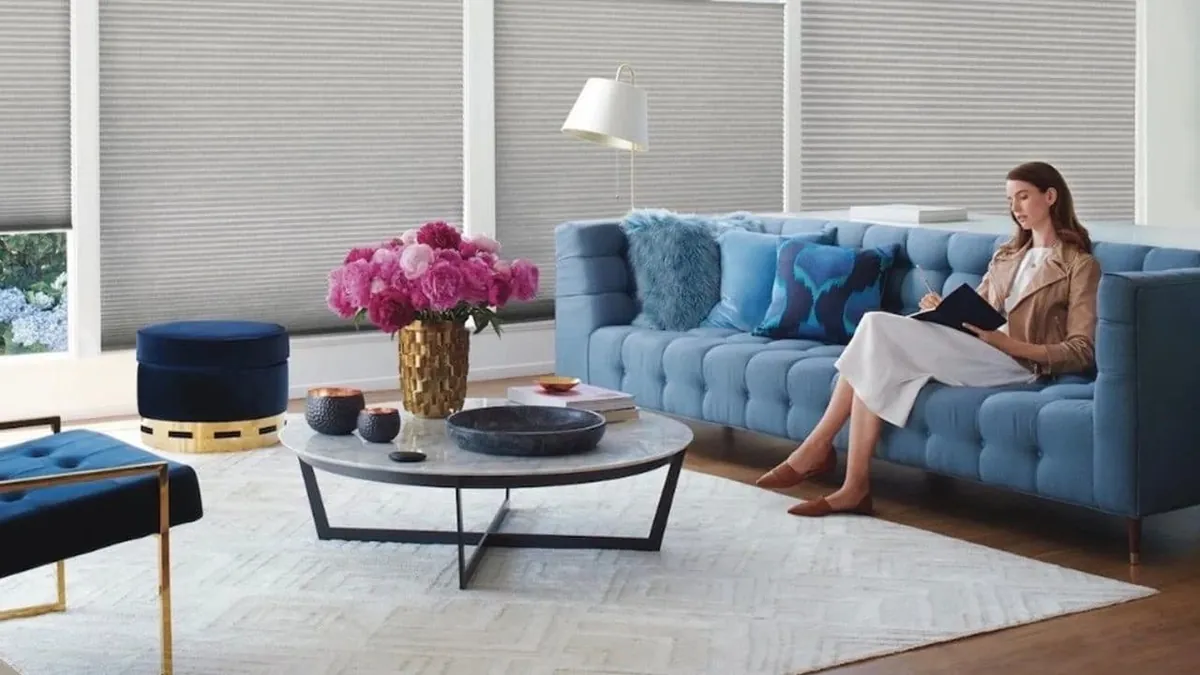
Victorians with deep reveals
Fall River’s Victorians have heavy wood trim, high ceilings and tall windows set deep in thick walls. Those deep reveals usually leave plenty of room for an inside mount. The headrail hides inside the opening, the shade sits close to the glass where it does the most good, and the carved or moulded casing stays in view.
Old windows bring old quirks. Frames that have settled over a century are rarely square, and sash weights, pulleys and old shutter hardware can sit inside the reveal. We measure each window at the top, middle and bottom and check the depth at several points. Where an inside mount would leave an uneven gap or hit hardware, we recommend an outside mount that sits neatly on the casing.
Bay windows are common in these houses, often with a tall center window and narrower side windows at an angle. Each panel gets its own honeycomb shade, made to match, so the bay lowers and raises as a set.
Uphill side, downhill side
On a hillside street, a house can be sheltered on its uphill side and wide open on its downhill side. The rooms facing up the hill may sit in the shadow of the house above, getting only indirect light. The rooms facing down the slope look out over rooftops, sometimes all the way to the water, and take the full sun and sky.
That is why we rarely suggest one fabric for a whole Fall River house. On the shaded, uphill side, a sheer or light-filtering honeycomb fabric keeps as much daylight as possible. On the bright downhill side, a slightly heavier light-filtering fabric or a room-darkening one in the bedrooms handles the sun. From the street, every shade can show the same backing color, so the house still looks consistent.
The view down the hill is worth protecting too. A top-down, bottom-up shade lets you drop the top edge just enough to block the low sun while the rooftops and the water beyond stay in sight.
Condominiums near Battleship Cove
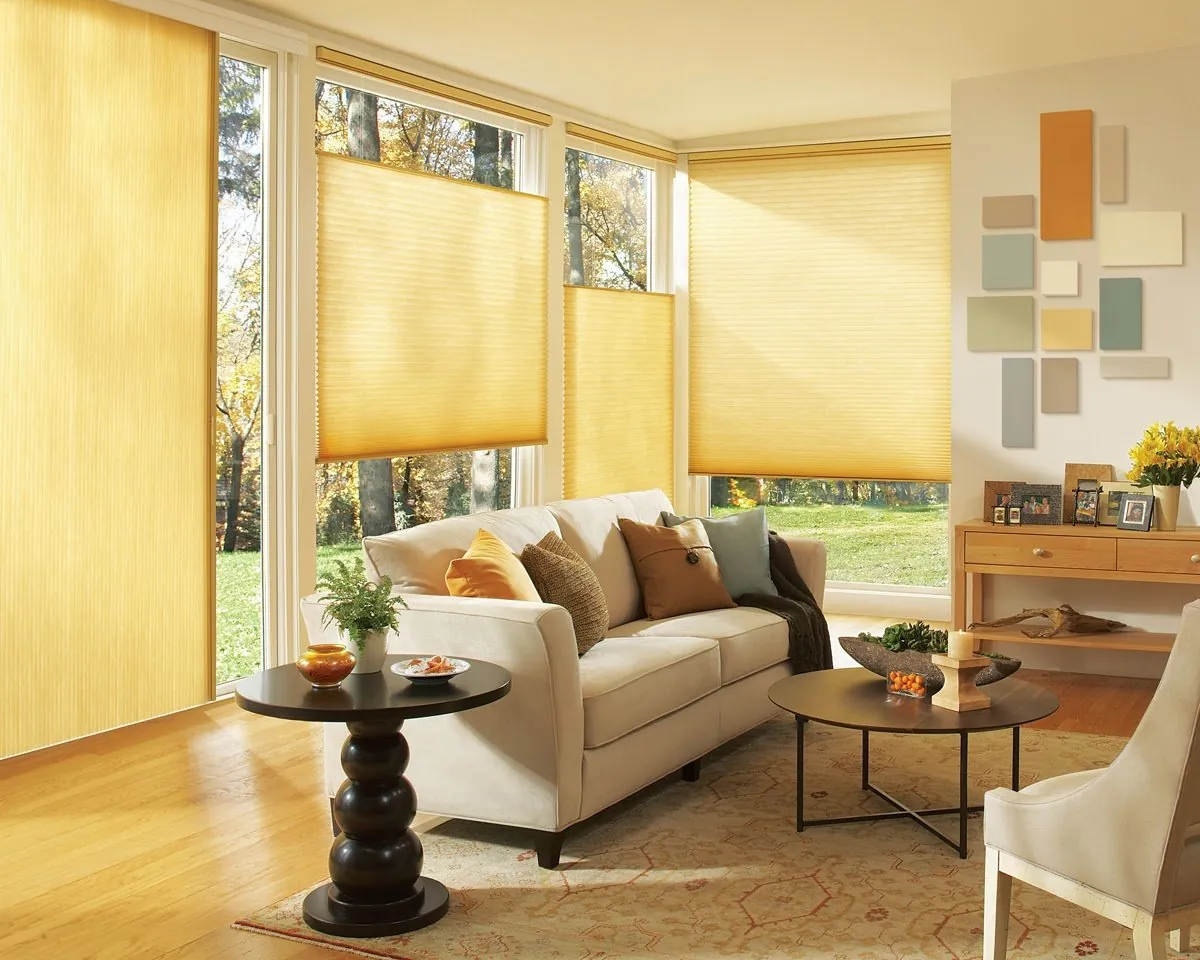
The newer waterfront condominiums near Battleship Cove are a different world from the hillside houses. Here the windows are large, modern units, often floor to ceiling, with sliding doors onto balconies. The view across the water is the reason to live there, and the afternoon sun reflected up off the water is what comes with it.
Cellular shades suit these rooms. Duette can be made very wide and tall, so a big window may need only one or two shades. A light-filtering fabric cuts glare off the water while keeping the view soft. For a balcony door, a vertical honeycomb shade crosses the glass and stacks neatly to one side. Raised, the shades nearly disappear into the top of the frame, leaving the glass clear.
Some condominium buildings ask for a uniform look from outside. Honeycomb shades can be ordered with a white or neutral backing so every window presents the same face to the street and the water, whatever fabric faces into your rooms. If your building has a set color, bring it to the consultation and we will match it.
Condominium windows also tend to be the newest in the city, often with slim frames and very little depth inside the opening. When we plan cellular shades in Fall River for a waterfront unit, we check that depth first. Where an inside mount will not fit, the headrail can go on the wall or ceiling above the glass, which also lets the raised shade clear the window entirely so nothing interrupts the view of the cove.
Air in the cells, warmth in the room
Pinch the bottom rail of a honeycomb shade and look along it: the fabric is folded into tubes, one stacked on the next, all the way up. Lowered over a window, each tube becomes a sealed pocket of air. Because that air is trapped rather than circulating, it acts as a buffer between a cold pane and a warm room, the same principle as a down jacket or a storm window.
A tall old window gives that buffer a lot of work to do. On the side wall of a three-decker, four or five tall sash in a row can make the whole wall feel cold in January. Covered with honeycomb shades at dusk, the wall stops pulling the warmth out of the room. For the coldest rooms, Duette also makes fabrics with an extra pocket inside each cell and shades with two rows of cells, and we carry both so you can feel the extra thickness at your own window. On an exposed corner unit in the Highlands, that extra layer is often where cellular shades in Fall River make the biggest difference to how the room feels.
Measuring tall, narrow sash
Fall River windows are tall, and small errors show on a tall window. A shade that is a little too narrow leaves a visible strip of light all the way down the side. We take the same careful steps on every opening when we measure cellular shades in Fall River.
- Width at the top, middle and bottom of the reveal, working from the narrowest.
- Height on the left, in the middle and on the right, since old sash often sits out of level.
- Depth of the reveal at several points, noting weights, pulleys, locks or old shutter hinges.
- On condominium windows and doors, a check for handles, cranks and how the slider opens.
- Mount, fabric and lift agreed with you window by window before anything is ordered.
Once the shades are made, our certified Hunter Douglas installers fit them into solid wood, level each headrail and test every shade with you.
Lifts for tall windows and tight rooms
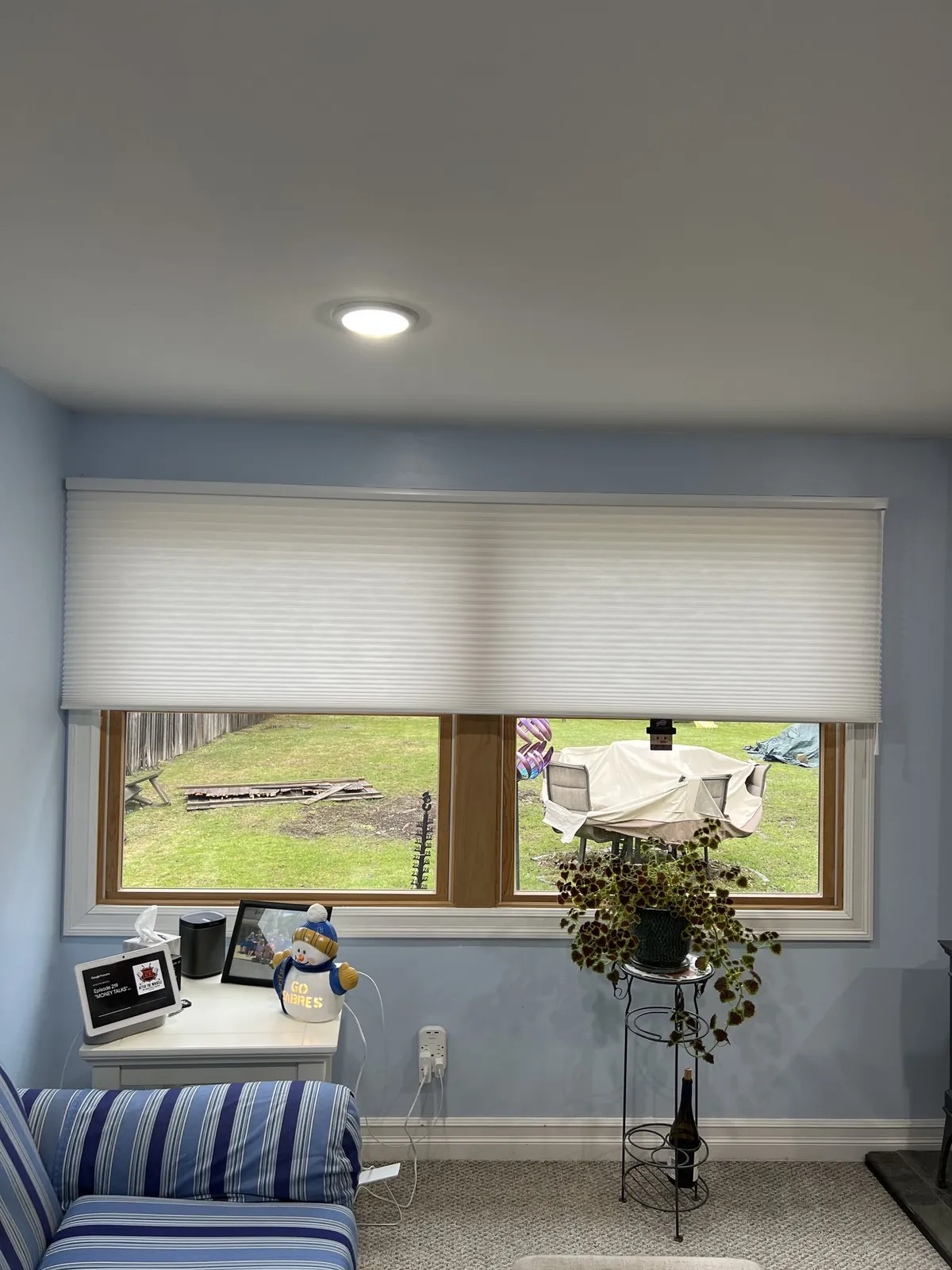
A tall window means a long cord with a traditional lift, and in a three-decker apartment with children or pets that is not ideal. A cordless lift does away with it. You raise and lower the shade by its bottom rail, and nothing hangs down the window or across a radiator.
Top-down, bottom-up shades are the most popular option on the side windows of a three-decker, for the privacy reasons above. For the highest windows in a Victorian stairwell, or a wall of condominium glass, PowerView motorization raises and lowers the shades from a remote, the app or a schedule. Our page on motorized blinds in Fall River explains how it works.
Streetlights, porches and close neighbors
City windows deal with things that country windows do not. A streetlight shines into the front bedroom all night. A porch next door sits level with your kitchen window. Car headlights sweep across the living room ceiling as they climb the hill.
A room-darkening honeycomb fabric handles the streetlight in a bedroom. For a kitchen or living room facing a neighbor’s porch, a light-filtering fabric on a top-down rail gives you privacy at the level where it matters while keeping the room bright. At night, with the lamps on, any honeycomb fabric keeps the room private, because the fabric glows softly instead of showing what is inside.
Choosing at home, floor by floor
A hillside house does not have one kind of light, so choosing a fabric from a sample book on a counter rarely works. We come to you instead, with a van full of honeycomb samples, and choose with you in the rooms themselves.
In a three-decker that often means walking one floor at a time. The front room looking down the street, the back bedroom over the yard and the kitchen beside the neighbor’s porch each get their own look. You see sheer, light-filtering and room-darkening fabrics against your own glass and trim, then we measure each opening. The free estimate covers the windows you want to do now, and if you own the whole building it can cover the other floors too, so you can plan them in stages. There is no expectation that you sign anything on the day. If you would also like help with color and fabric for a whole room, ask about our interior design consultations. You can read about what happens at an in-home consultation beforehand.
Duette, Applause and how to choose
Both are Hunter Douglas honeycomb shades, and both trap air in their cells in the same way. Duette has the broadest choice of fabrics, textures, sizes and shapes, plus the vertical shade for sliders and balcony doors. Applause has its own color range and works well on standard windows.
Someone living in a three-decker might put Duette in the front rooms of their own floor and Applause in the bedrooms. A condominium might take Duette on the big water-facing glass and Applause in the second bedroom. Our Duette honeycomb shades and Applause honeycomb shades pages explain each line, and the cellular shades page covers the full range.

Hunter Douglas Gallery dealer, certified installation
Blinds & Designs is a Hunter Douglas Gallery dealer, the name Hunter Douglas gives dealers who meet its standards. That gives you the whole honeycomb range from one place: every Duette and Applause fabric, every lift, the vertical shade and PowerView motorization.
Hunter Douglas certifies our installers, so your shades go up the way they are designed to. We also offer blind and shade repairs, including on coverings you already have, which is useful in an older building where some good shades are worth keeping.
For other rooms, see our plantation shutters in Fall River for a Victorian bay or our custom blinds in Fall River for a kitchen. Everything we offer in the city is on our Fall River page.

A short trip to North Dartmouth
If you would like to see Hunter Douglas shades before we come to the house, the North Dartmouth showroom is our nearest location to Fall River.
Most people still finish the decision at home. A fabric that looks right under shop lights can look very different on a downhill window in the late afternoon, or on a tall Victorian sash facing a brick wall. Seeing it in place is the only way to be sure.
Questions from Fall River
Will honeycomb shades fit the tall, narrow windows in my three-decker?
Yes. They can be made narrow and very tall, and each one is sized for its own window. Deep reveals in older buildings often allow an inside mount, which keeps the trim clear.
How do I get privacy from the house next door without losing light?
A top-down, bottom-up shade in a light-filtering fabric. Lower the top for daylight and keep the bottom covered at the level of the neighbor’s window or porch.
What works on the big windows in a condominium near the water?
Wide Duette shades in a light-filtering fabric cut the glare off the water and keep the view soft. A vertical honeycomb shade covers the balcony door.
My house gets very different light on each side. Should every room have the same fabric?
Usually not. A lighter fabric on the shaded, uphill side and a heavier one on the bright side work better. The backing color can match everywhere, so the house looks consistent from the street.
How much does the estimate cost?
The estimate is free. We give it after measuring your windows at the consultation.
Start with your coldest wall
Pick the room that feels the chill first, whether it is a side wall of tall sash or a bank of condominium glass, and let us bring the samples there. Request a consultation to see cellular shades in Fall River on your own windows, have every opening measured and receive a free estimate. The call button is there if you would rather talk first, and the North Dartmouth showroom is a short drive away.