
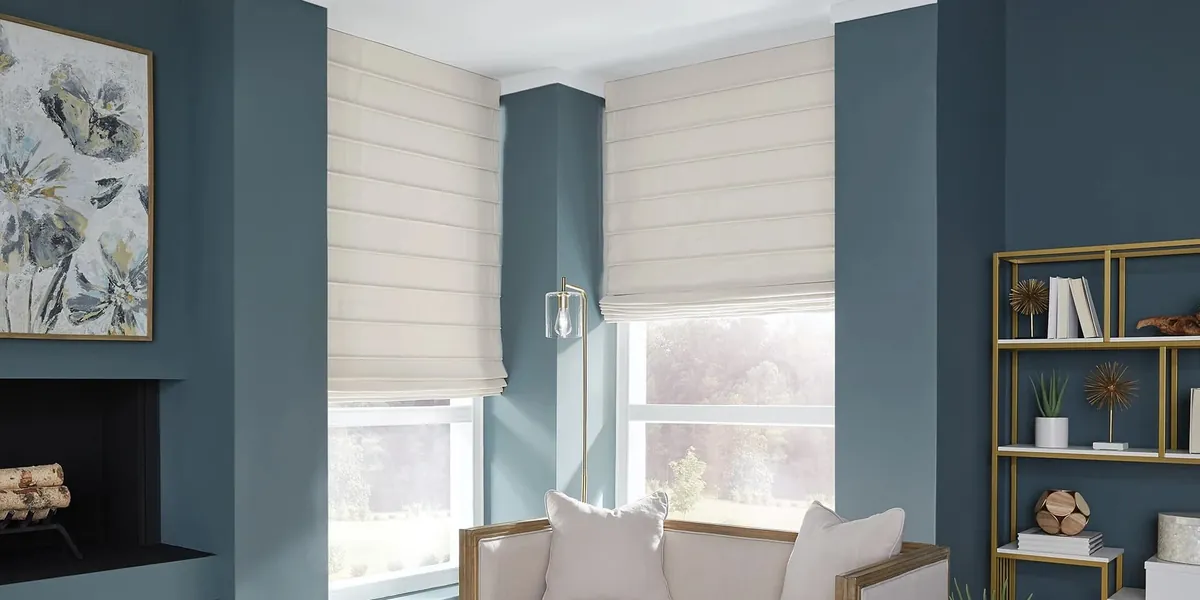
Two sides of one house, two kinds of light
Fall River is built on a hill, and that shapes its houses more than you might think. A three-decker in the Highlands can have its front rooms looking down toward the water with the morning sun pouring in, while the back rooms face the slope and stay shaded for most of the day. On the next street the arrangement flips. When we plan roman shades in Fall River, MA, we treat the two sides of a house almost as two different jobs.
The windows themselves are just as distinctive. The mill-era three-deckers and Victorians that fill the Highlands and Corky Row have tall, narrow double-hung windows set into deep reveals, often with original trim. Down by Battleship Cove, the waterfront condominiums have the opposite: big sheets of modern glass that frame the water. A roman shade can be made for both, and it suits each for different reasons.
On a tall old window, a roman shade adds softness and color without hiding the trim. On wide modern glass, it controls glare off the water and folds away cleanly when you want the view. In both cases it is made to the window, not adapted from a stock size.
Shades for close streets and tall windows
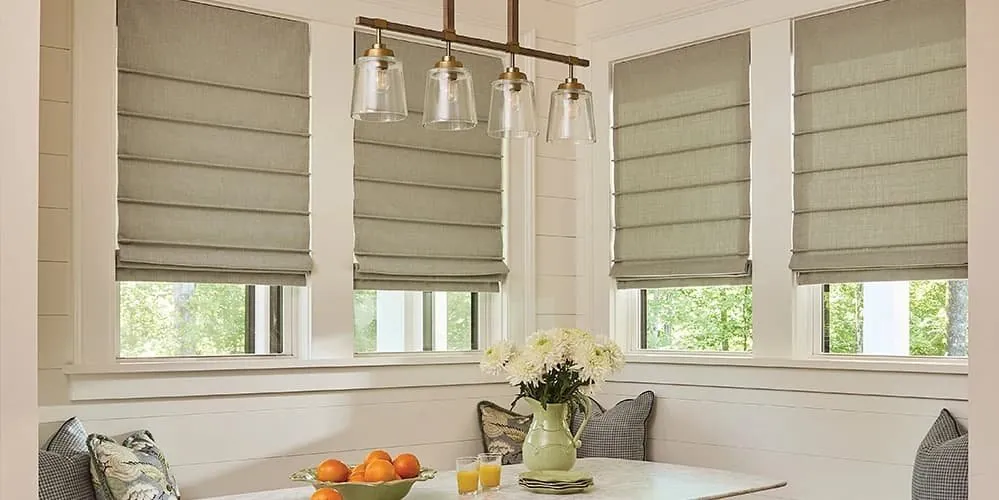
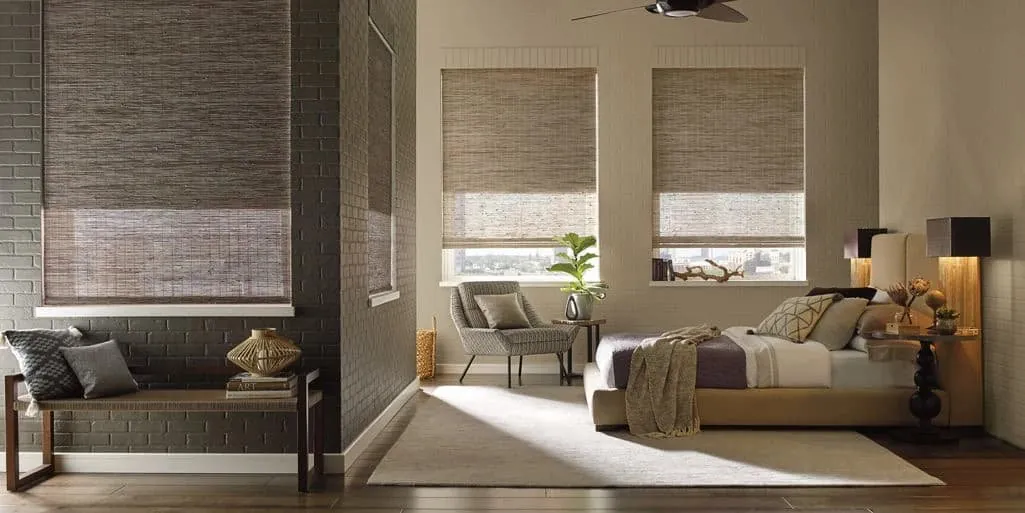
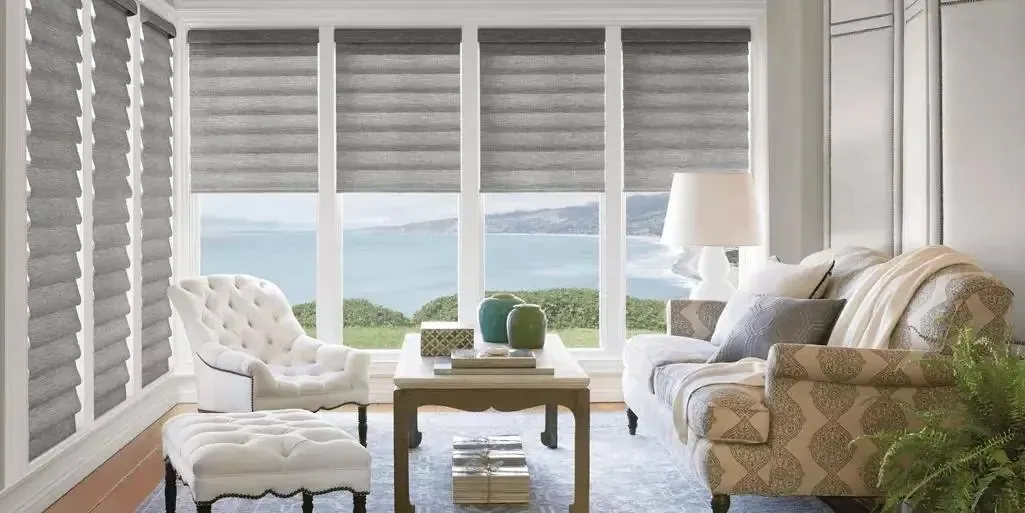
Hunter Douglas makes roman shades under the Vignette and Carole Fabrics names, in flat and folded styles. These are the three situations we meet most often in the city.
Privacy on a close street
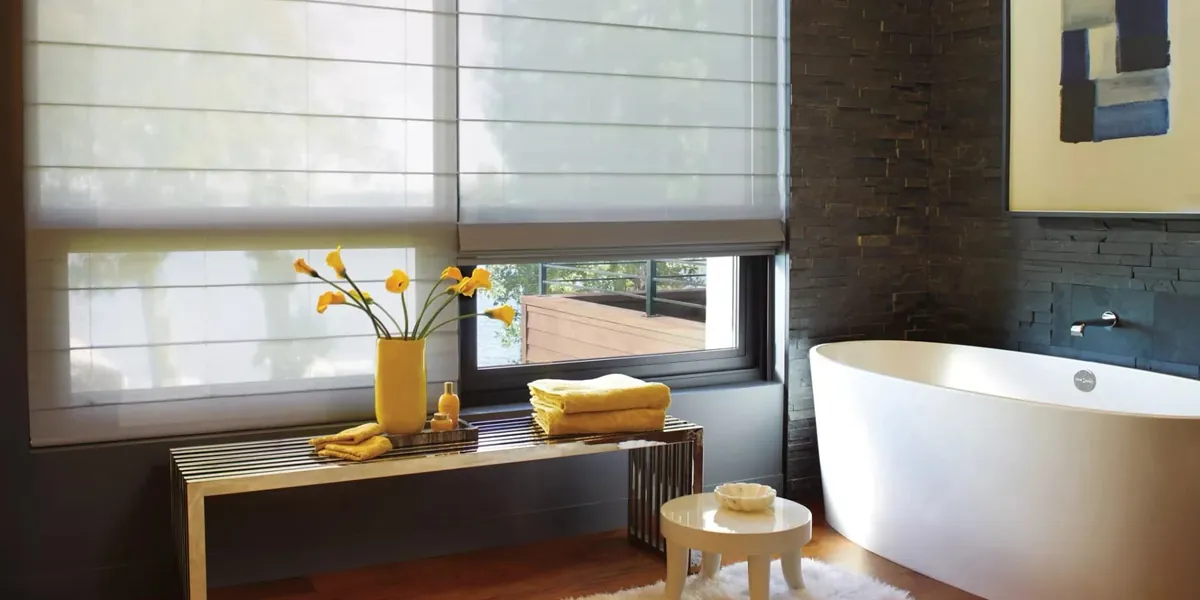
Three-deckers sit close together. A light-filtering fabric keeps a room private in daylight while it stays bright, so you are not choosing between light and being seen.
Tall, narrow sash
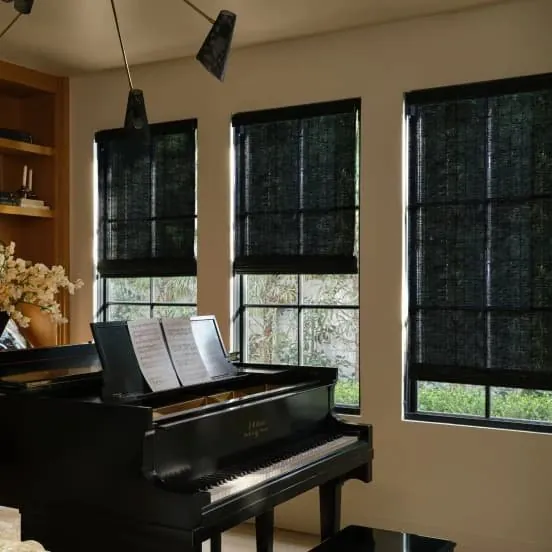
A shade made long and slim for each window, in a matching fabric, gives a row of tall Victorian windows a calm, even look from inside and from the street.
Brick, steel and big glass
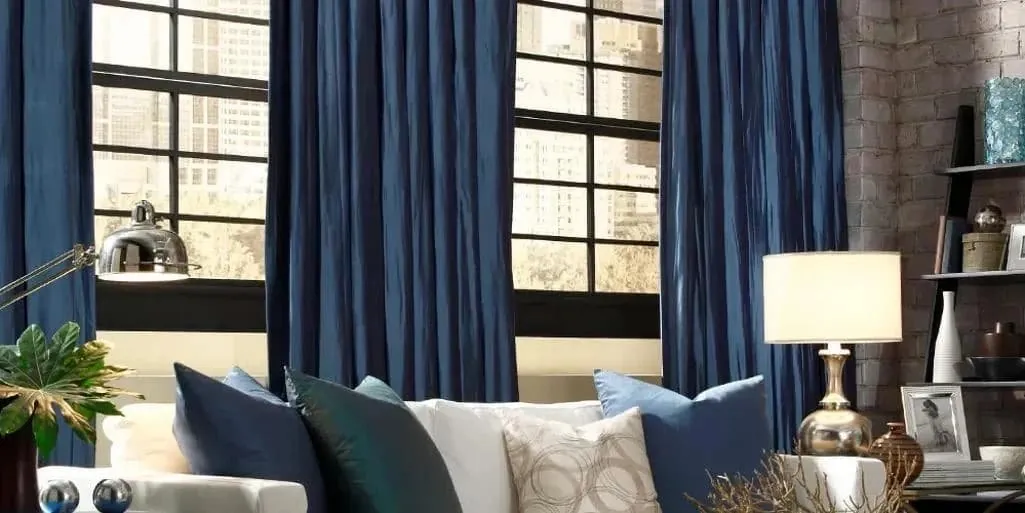
In a converted mill unit or a modern condo, a crisp flat fold suits the clean lines, and side panels can frame the glass where the room is large enough.
Three-deckers in the Highlands
The three-deckers on the Highlands streets were built to house mill workers’ families, one flat per floor, with porches stacked on the front or back. Each floor has the same plan: a run of rooms from front to back, windows on both long sides, and a bay or a pair of windows at the front. Today it is common to find whoever holds the deed living on one floor with the other flats rented, and many have been converted to condominiums.
That repetition is useful. Windows on the same side of a three-decker are often close in size from floor to floor, though never identical once a century of settling has passed. If you own the building, we can plan shades for more than one flat at once, so the front of the house looks consistent from the street.
Inside each flat, the side windows usually face the next house a short distance away. Those are the windows where privacy matters most, and where a light-filtering roman shade earns its place. In the front bay, facing down the hill, the concern is light and warmth, and a lined fabric works better there.
Victorians and tall double-hung sash
The Victorians scattered among the three-deckers, and the larger ones higher up the hill, have the tallest windows in the city: narrow double-hung sash reaching nearly from floor to ceiling, often in pairs, with heavy moulded trim. These windows are part of the house’s character, and the wrong covering can hide them.
A roman shade made long and narrow for each window keeps the trim visible and adds a vertical line that suits the proportions. When it is raised, the folds stack at the head of the window. On a very tall window that stack can be fairly deep, so we often suggest a flat fold, which keeps the stack tidy, or a mount on the casing just above the frame so the raised shade sits above the glass.
Tall shades are also heavier to lift than short ones. A cordless lift handles them well, and PowerView motorization takes the effort away altogether on the tallest windows.
Kitchens and back porches at the rear of the flat
In most three-decker flats the kitchen sits at the back, opening onto the rear porch, with a window over the sink and a door with a glass panel. These rooms take the heaviest daily use, and the windows are often the ones nobody has got round to covering. They also tend to face another back porch across a narrow yard, so privacy matters at the sink as much as in the bedroom.
A flat fold in a fabric that handles kitchen life is the practical answer here. It lowers to a neat panel over the sink window and lifts into a compact stack that stays clear of the taps. For the porch door, we mount a slim shade on the door itself, with hold-down brackets so it does not swing when the door opens. Matching the kitchen window and the door shade keeps the back of the flat looking tidy.
Back rooms on the uphill side can be dim, so a light-filtering fabric is often the right weight: it gives privacy from the porch opposite while letting what daylight there is into the room. Working out the kitchen alongside the front rooms is part of planning roman shades in Fall River for a whole flat, so every window shares one fabric family.
Deep reveals and the inside mount
Older houses in the Highlands and Corky Row tend to have thick walls and deep reveals around the windows. That is good news for a roman shade, because a deep reveal has room for the headrail and lets the shade sit fully inside the frame, flush with the wall. The trim stays visible all around and the shade looks built in.
There is a catch. Deep reveals in old houses are rarely square. Plaster has been patched, frames have shifted and the opening may be wider at the top than at the sill. We measure each window at the top, middle and bottom and check the depth at several points, so the shade is made to clear the narrowest point. Where an inside mount will not work, we will tell you and suggest a mount on the casing.
Corky Row and the house next door
In Corky Row and the denser streets nearby, houses can be only a few steps apart, and side windows often look straight into a neighbor’s. During the day a sheer or light-filtering roman fabric gives privacy because the fabric glows rather than showing the room behind it. At night, with lights on inside, that changes: a lit room can be visible through a thin fabric, so for living rooms and bedrooms a lined or heavier fabric is the safer choice.
One way around this is to use different weights for different times. A light shade for daytime, lowered over a lined shade for night, is one approach; another is simply to choose a light-filtering lined fabric that does both reasonably well. We bring both kinds and show you what each looks like from outside, as well as from inside.
East side, west side and the slope
Because so much of Fall River sits on a slope, the light a room gets depends on which side of the hill the house is on and which way the room faces. A front room looking east over the water can be flooded with sun at breakfast and dim by afternoon. A back room facing west up the hill might be in shade until late in the day, then catch the low evening sun.
That is why we rarely use the same fabric throughout a city house. The front rooms might take a lined fabric to manage the morning sun; the back rooms might need only a light-filtering weave for privacy. Choosing roman shades in Fall River this way, room by room, gives you shades that actually suit the light each window gets.
A visit, floor by floor
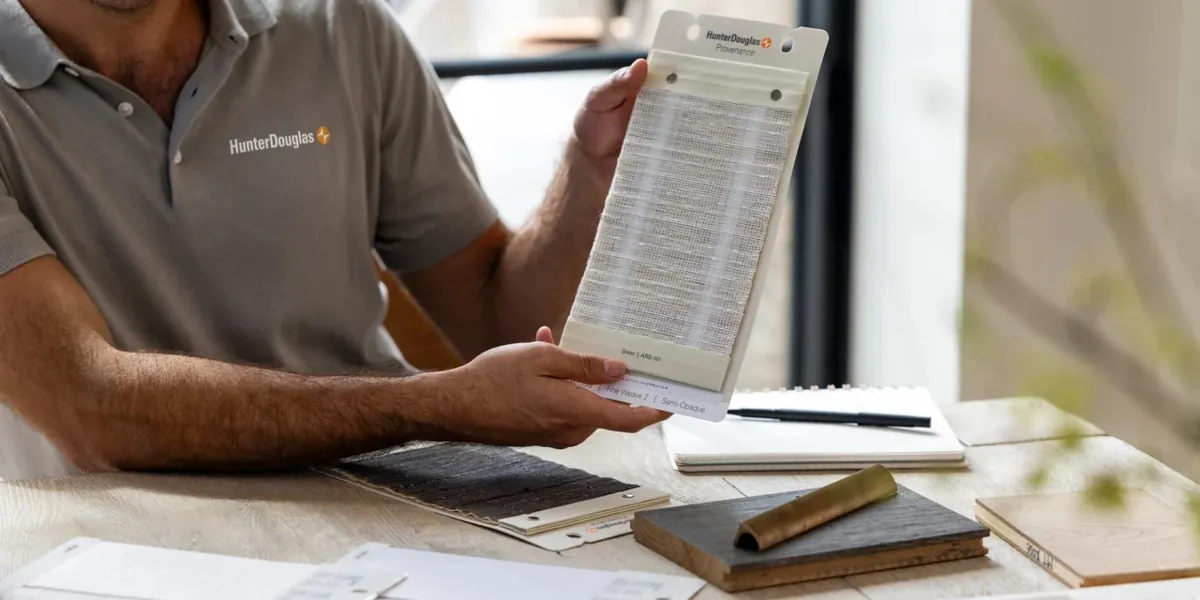
Whether you own one condo or a whole three-decker, it helps to see the fabrics in your own rooms, on both sides of the house. Our vans carry samples, so we can bring the showroom to you.
- You book a time online or by the call button.
- We arrive with roman fabrics from sheer to room-darkening, plus working samples of each fold and lift.
- We look at the front and back of the house separately, since the light can be so different.
- You see the fabrics against your own windows and from outside, if privacy is a concern.
- We measure every window, checking reveal depth and squareness.
- You get a free estimate, and you can take your time over it.
If you would like help with color and fabric for the whole room, our interior design consultations can be part of the visit. You can also read about what happens at an in-home consultation before we arrive.
Condominiums near Battleship Cove
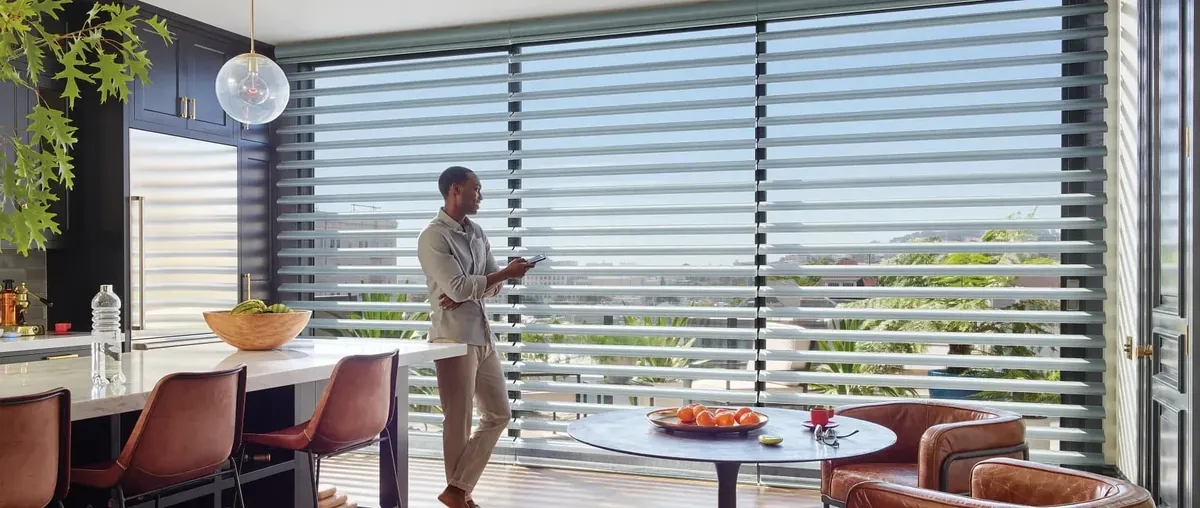
Down by the water, the newer condominiums near Battleship Cove are built around large modern windows facing the bay. These openings are square, wide and often floor to ceiling. The views are the selling point, and the glare off the water on a bright afternoon is the drawback.
For these rooms, a sheer or light-filtering roman fabric is usually right: it takes the edge off the glare while you still see the water. One shade per window, on matching headrails, keeps a long run of glass looking even, and you can lower only the shades the sun reaches. When raised, a roman shade stacks neatly at the top of the window and leaves the view almost clear.
Wide modern glass also leaves room for a shade mounted on the wall above the frame, so the raised folds sit entirely clear of the window and the full height of the glass is open to the bay.
Condo buildings sometimes have rules about how window coverings look from outside. If yours does, tell us at the visit. Vignette, which has no cords across the back, and a light neutral color usually look tidy from the street.
Motorized shades for big glass and tall sash
Large condo windows and tall Victorian sash have one thing in common: the shades can be hard to reach and heavy to lift. PowerView motorization raises and lowers them with a remote or your phone. You can also set schedules, so the shades facing the water drop when the afternoon glare starts and rise again in the evening.
In a three-decker flat, motorization is handy on the front bay, where three or four shades can move together at a touch. We demonstrate the remote and the app on a working sample during the consultation.
Radiators, sills and old hardware
Many older Fall River houses still heat with radiators, often set right under the windows. A roman shade mounted inside the frame hangs clear of a radiator below the sill, and the fabric does not drape over it. If the radiator sits higher, we make sure the shade’s length stops short of it.
Old sash locks, lifts and weight pulleys can also get in the way of a headrail in an inside mount. We look at each window’s hardware during the measurement and plan the mount around it.
Choosing between Vignette and Carole Fabrics
Vignette is the modern roman shade from Hunter Douglas: the fabric rolls into soft folds and there are no cords across the back, so it looks tidy from the street, which counts in a city where windows are close to the sidewalk. Carole Fabrics offers the traditional flat and soft folds and a very large fabric library, good for matching a color in a Victorian room.
Many city orders use both: Vignette on the front windows facing the street or the water, Carole Fabrics in the back rooms. Our main roman shades page covers the full range, with more on Carole roman shades and Vignette modern roman shades.
Measuring a city window
Getting the size right is what makes a roman shade look built in, especially in a deep old reveal.
- We measure each window’s width at three heights and its height at three points.
- We check the reveal depth and note any sash hardware or radiators.
- We agree an inside or outside mount for each window with you.
- We confirm fabric, fold, lining and lift room by room.
- Our certified Hunter Douglas installers fit each shade, level the headrail, test the lift and show you how it works.
That care is what lets roman shades in Fall River sit neatly in a tall old frame or across a wall of modern glass.
Why buy from a Gallery dealer
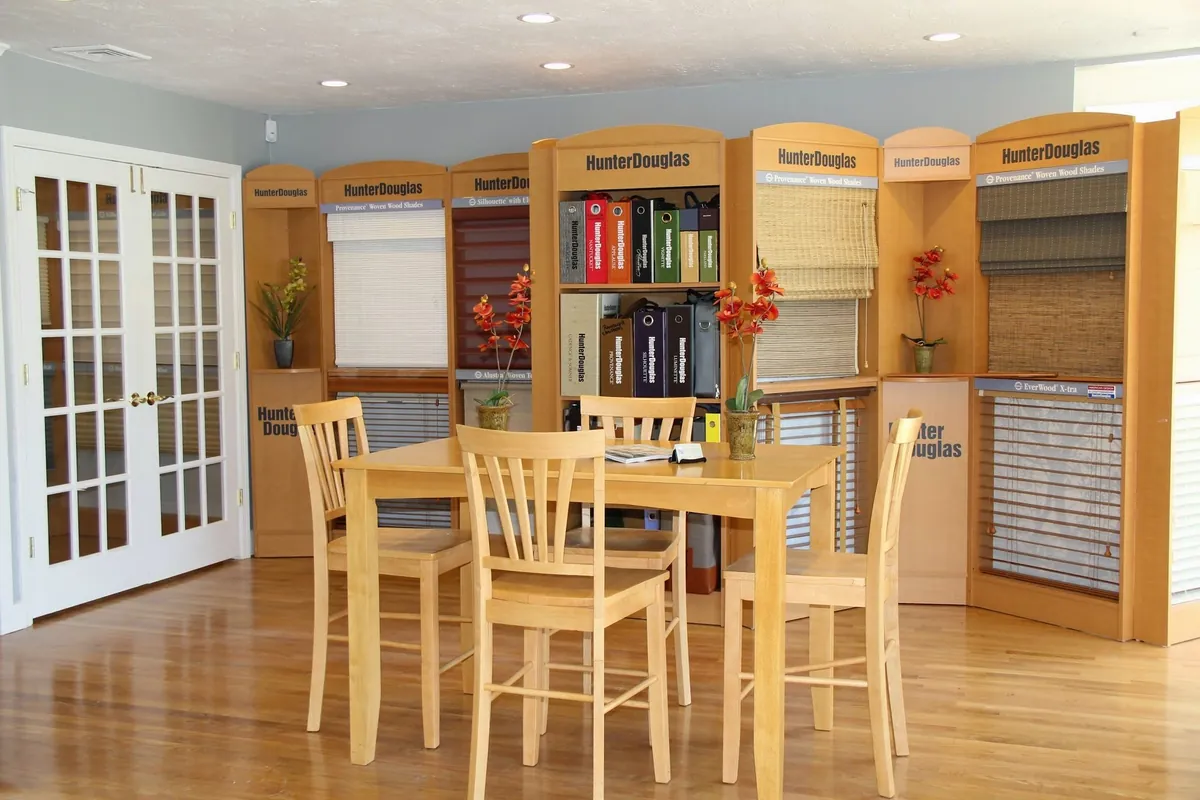
Hunter Douglas names dealers who meet its standards Gallery dealers, and Blinds & Designs is one. That gives you the whole roman range at one consultation, from every Vignette and Carole Fabrics style to the woven textures, the lift options and PowerView.
Our installers hold Hunter Douglas certification, so every shade goes up the way the maker intends. If a shade needs work later, our blind and shade repairs cover it.
We can help with the rest of the house during the same visit, from plantation shutters in Fall River for a Victorian bay to cellular shades in Fall River for a draughty back bedroom. Everything we do in the city is on our Fall River page.
Samples to your door, any floor
A third-floor flat is no harder for us than a ground-floor one. We carry the samples up, sit down with you and look at every window in its own light, front and back.
If you would like to see the range first, our North Dartmouth showroom is the nearest to Fall River, a short drive east.
Questions from Fall River
My three-decker windows are tall and the reveals are deep. Will an inside mount work?
Usually, yes. Deep reveals have room for the headrail. We measure each window at several points because old frames are rarely square, and if one is too far out, we suggest mounting on the casing instead.
How do I keep privacy from the house next door without losing light?
A light-filtering fabric gives daytime privacy while the room stays bright. For rooms used at night with the lights on, a lined fabric is safer, since a thin fabric can show a lit room from outside.
Do roman shades work on big condo windows facing the water?
Yes. A sheer or light-filtering fabric cuts the glare and keeps the view, one shade per window keeps a long run even, and PowerView can lower them on a schedule.
Can a roman shade hang over a radiator?
Mounted inside the frame, the shade hangs clear of a radiator below the sill. If the radiator sits higher, we make the shade short enough to stop above it.
Is there a fee for the estimate?
No, the estimate is free. Request a consultation and we will bring the samples, measure and give you the estimate.
Pick a side of the house to start
Front or back, sunny or shaded, the fabrics are easiest to judge against your own windows. Request a consultation and we will bring Vignette and Carole Fabrics samples to your flat or condo, measure every window and give you a free estimate for roman shades in Fall River, MA. If you would rather talk first, use the call button, or come by the North Dartmouth showroom.