
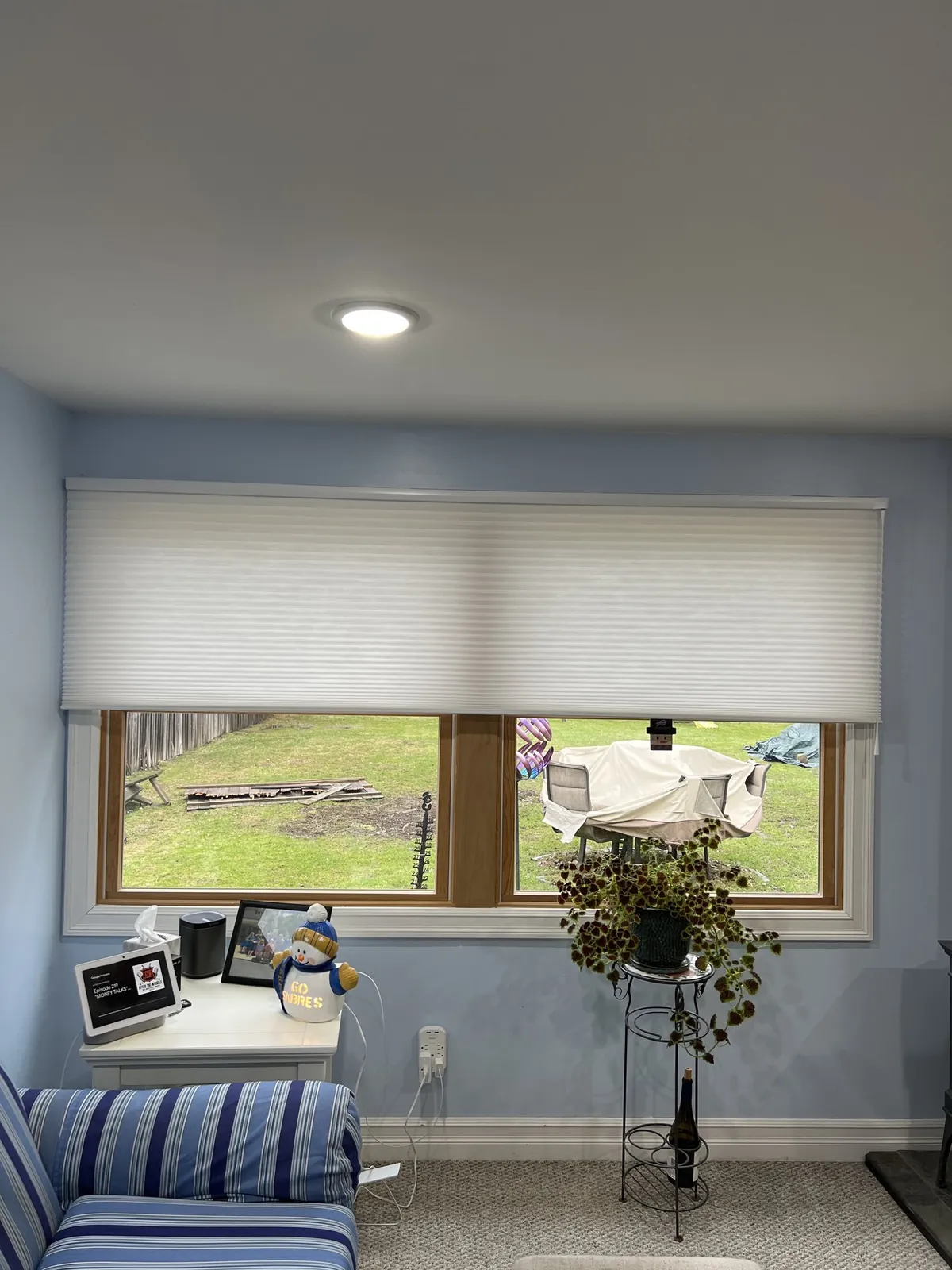
Old sash facing open fields and the sea
Around the Commons and down the long roads toward Sakonnet Point, Little Compton’s houses stand on very large lots, many of them antique capes and shingled farmhouses with stone walls and open fields running out toward the water. Nothing much stands between those houses and the weather. Wind comes straight off the sea, salt rides in on it, and the small original sash in the oldest houses was never made to keep a coastal winter out. Those are the conditions we plan for whenever we fit cellular shades in Little Compton, RI.
There is a second thing that sets the town apart: a good share of the houses are lived in only part of the year. A house that is closed up for the winter or used on weekends has different needs from one that is heated every day, and a window covering can help with both.
The honeycomb shade’s strength is simple. Its fabric is folded into a row of hollow cells, and when the shade is lowered each cell holds a still pocket of air against the glass. That trapped layer is what makes honeycomb shades the warmest window covering for a cold room, and in an antique house on open ground, most rooms are cold rooms in January.
Honeycomb shades for antique and seasonal houses
Of the many ways to order a honeycomb shade, these three suit Little Compton houses best. Our vans carry samples of each, and we bring them to your windows.
Inside mounts for small sash
A compact headrail tucks inside the frame of a small antique window and the shade stacks so tightly that very little of the old glass is lost when it is raised.
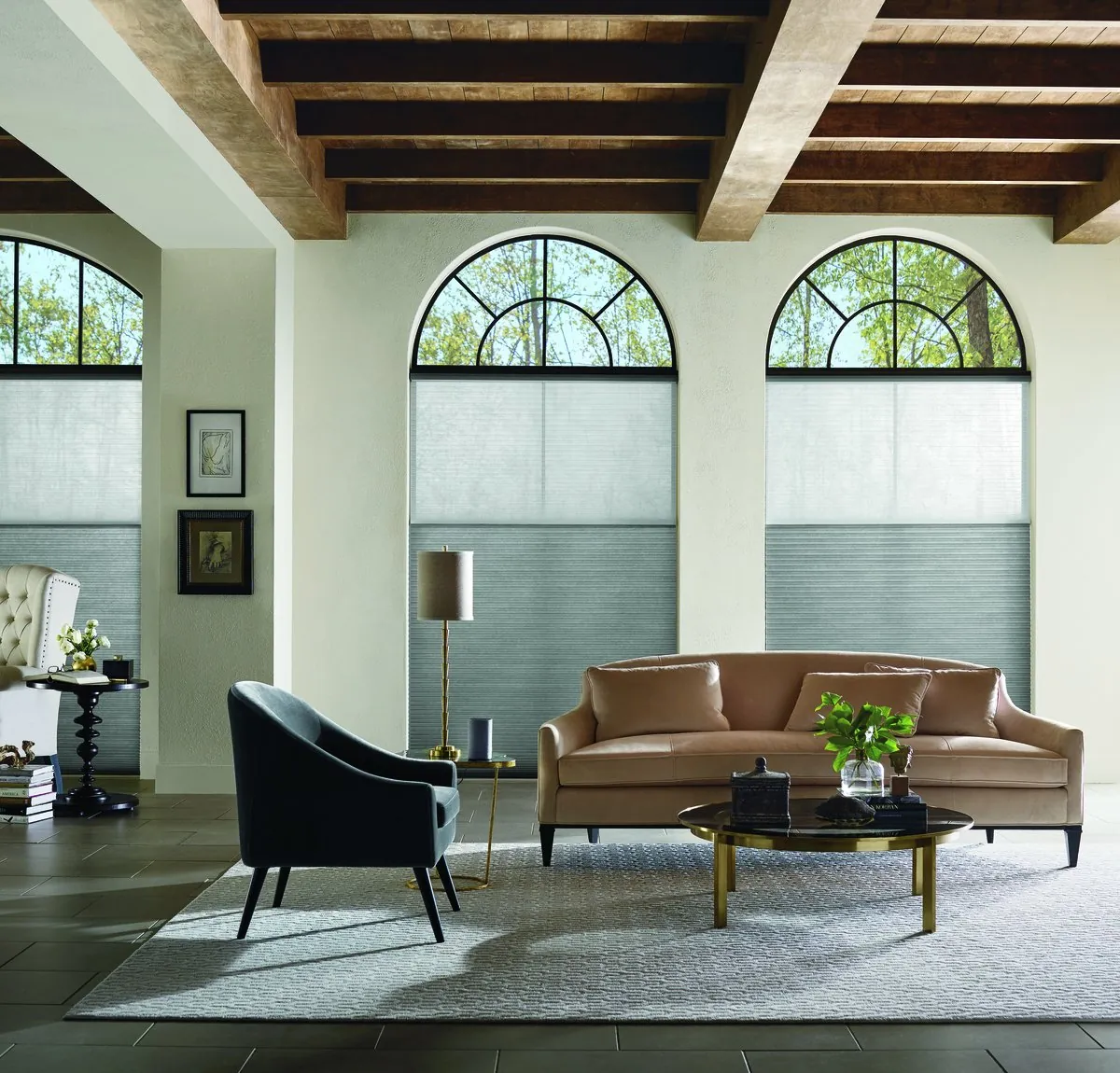
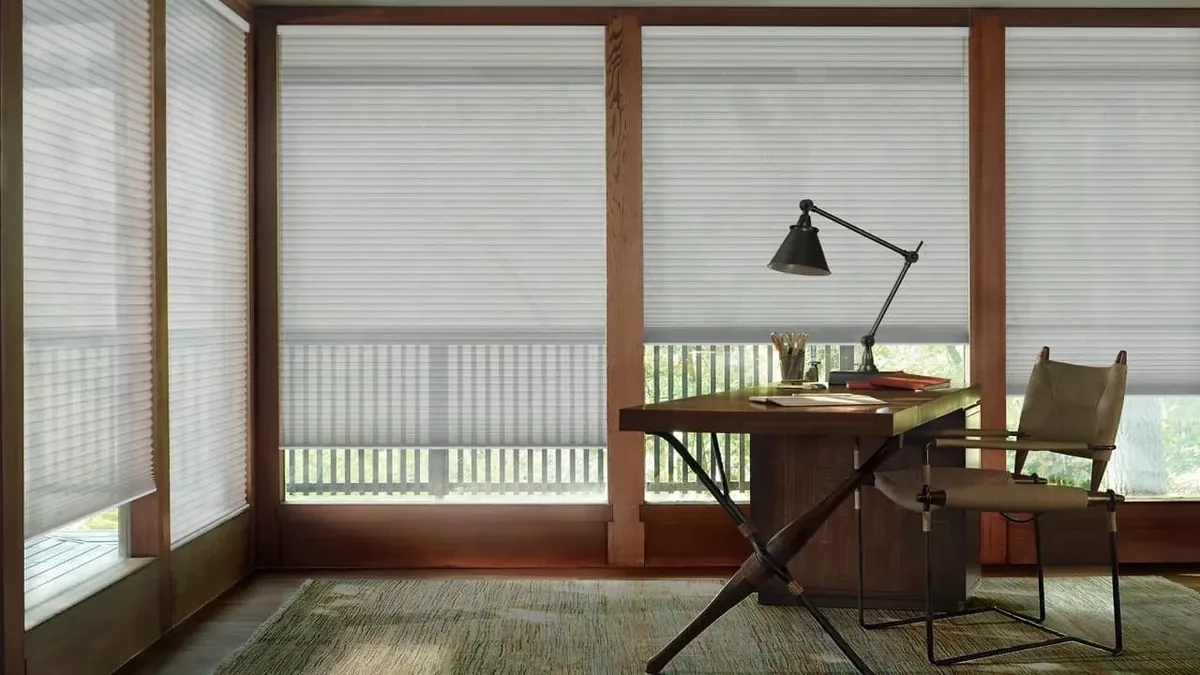
Top-down for sea and sky
Lower the shade from the top and keep the horizon in view while the lower glass stays covered against glare and the passing road.
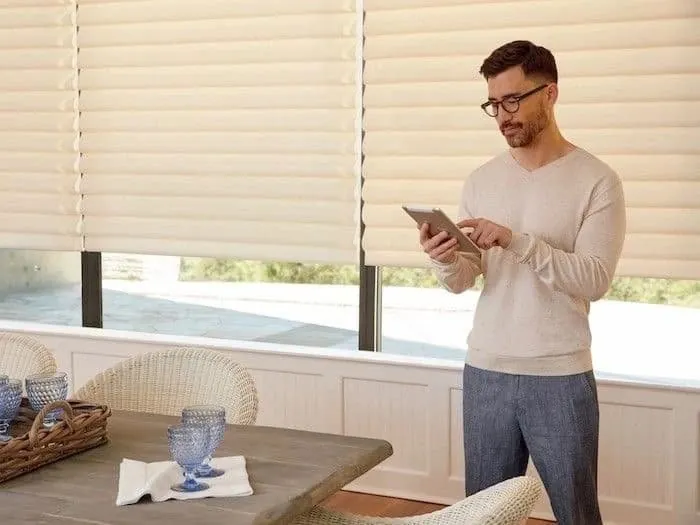
PowerView for a part-time house
Motorized shades follow a schedule from the app, so a house you visit on weekends still opens and closes at sensible hours while you are away.
Small original sash in the antique capes
The oldest capes in Little Compton have the proportions of their time: a low, broad house with a big central chimney, small rooms, and small windows with many panes in each sash. That glass may be original, slightly wavy and full of character, and most owners of these houses want to keep it.
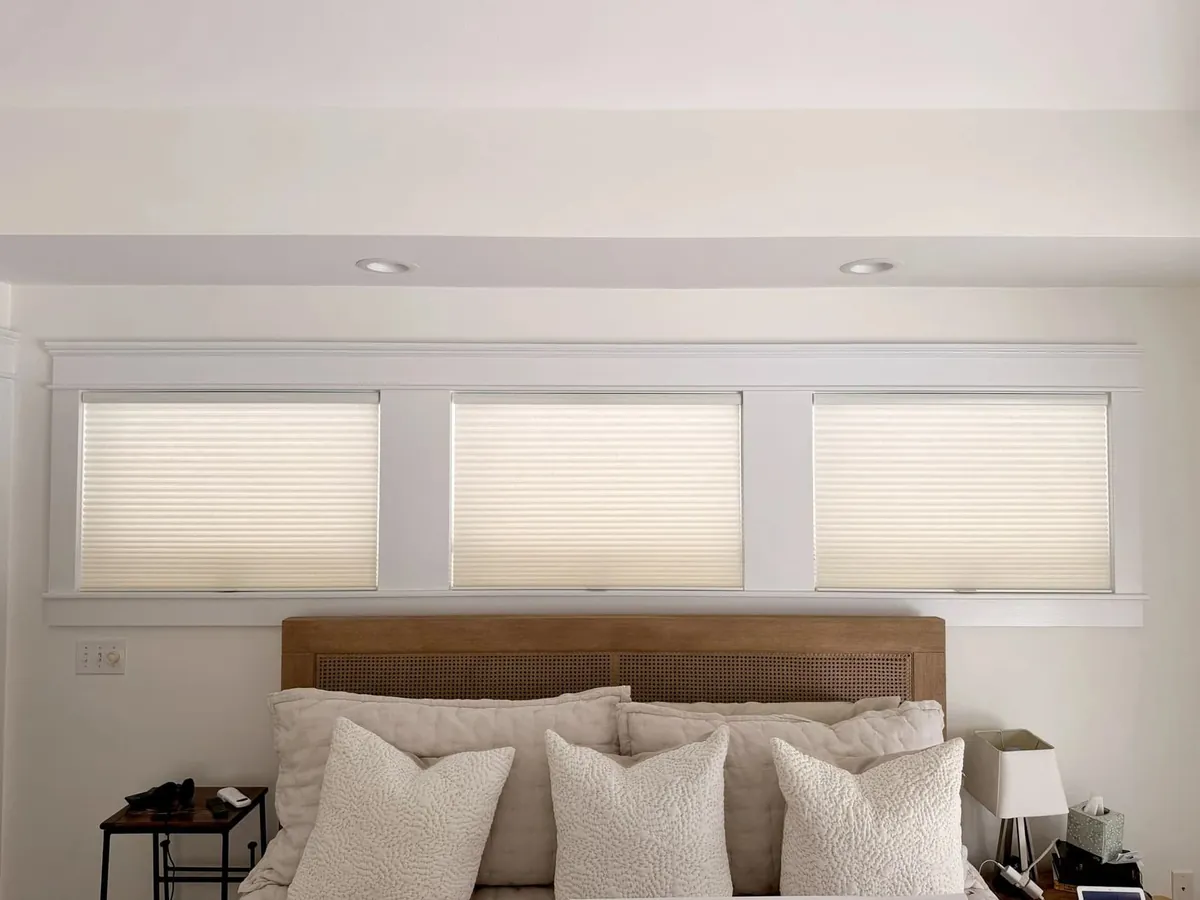
A honeycomb shade sits well with old glass. It is light, it is simple to look at, and when raised it folds into a slim stack at the top of the frame, so a short antique window loses almost none of its daylight. Lowered, it covers the whole opening with a single soft panel that holds a layer of air against those thin old panes.
Mounting needs thought. Antique windows are rarely square, and the frames have often been painted, repaired and adjusted over many years. Some have interior shutters or old hardware in the reveal. We measure each window at several points across the width and the height, check the depth, and suggest an inside mount where it will sit straight and an outside mount on the casing where it will look better.
Shingled farmhouses on large lots
Little Compton’s farmhouses are bigger than the capes, often with an ell or two added over time, and their windows reflect that history. A front room may have tall, many-paned sash; the kitchen in the ell, a newer double-hung window; a later sunroom, a run of casements facing the fields. On a lot that size, the house usually sits in the open with windows facing every direction.
Cellular shades help unify that mix. Each shade is made to its own opening, while the fabric and the backing color can match throughout, so the house looks considered from inside and from the road. On a farmhouse where every window looks out across open land, the outside face of the shades is part of how the house looks from a distance, and most owners keep it a quiet white or neutral.
Rooms with windows on two or three sides are common in these farmhouses, especially in the later additions. A light-filtering honeycomb fabric evens out the light as the sun moves round, so the room is comfortable to sit in at any hour.
Heavy coastal exposure
Out toward Sakonnet Point, the houses take the full force of the weather. Winter storms drive cold air against the glass, and on a clear summer day the light off the sea is bright enough to fade a sofa. Salt in the air settles on anything metal near an open window.
Honeycomb shades are a sensible choice in that setting. Almost all their working parts sit inside the headrail, away from the salt air, so there is far less to corrode than on a corded blind with exposed ladders and tilt gear. A cordless lift does away with the cord and cord lock completely. And the fabric itself, lowered at night, holds a calm layer of air against the window however hard the wind is blowing outside.
Fabric color matters in strong coastal light. Paler, neutral tones hold their color best on windows that face the sea. A light-filtering fabric cuts glare without darkening the room, and on a south or west window it slows the heat coming in on a summer afternoon.
A house that is used part of the year
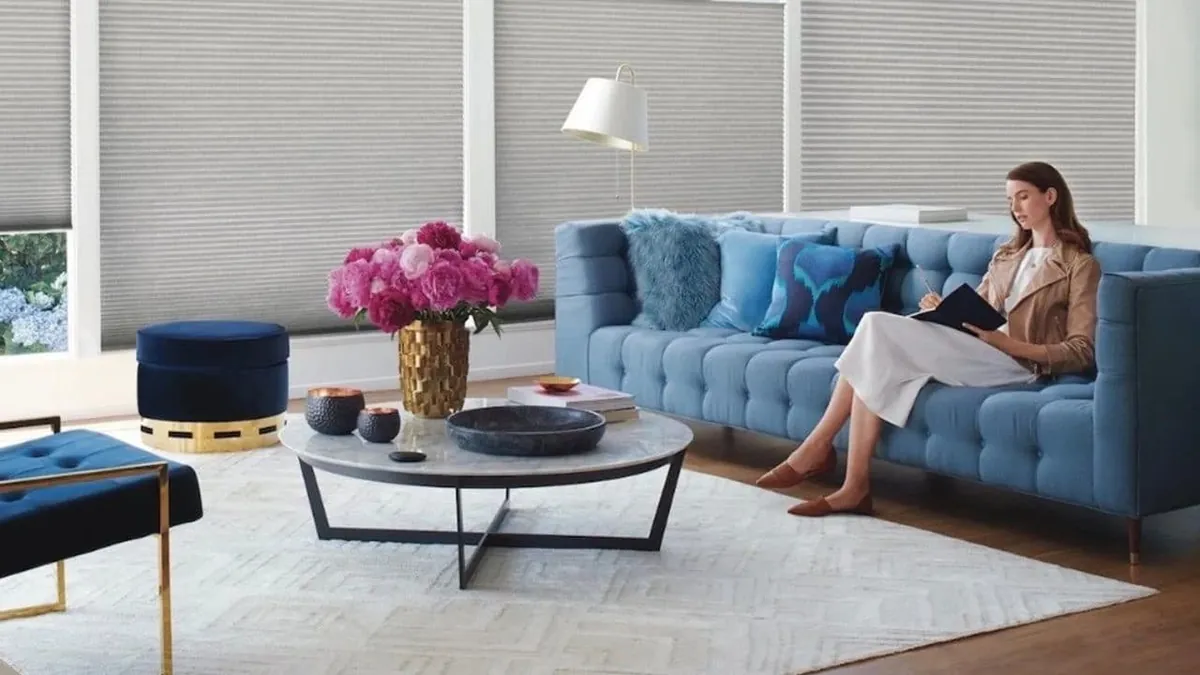
Many Little Compton houses are summer places, weekend houses, or homes that are closed for part of the winter. An unoccupied house still has windows working for or against it. In summer, sun pouring into empty rooms heats them up and fades floors and furniture. In winter, a house kept just above freezing loses heat through every bare pane.
Cellular shades help in both seasons. Lowered while the house is empty in summer, a light-filtering fabric keeps the strongest sun off the floors and furnishings. Lowered through the winter, the cells hold a layer of air at the glass, which helps a house that is only lightly heated. When you arrive, raising them takes a moment.
PowerView motorization makes this easier still. A schedule can lower the sea-facing shades during the brightest hours and raise them in the evening, so the house does not look shut up. From the app you can adjust the shades from wherever you are. Our page on motorized blinds in Little Compton explains how it works.
Bedrooms under the eaves
Upstairs in an antique cape, the bedrooms are tucked under the roof, with sloping ceilings, low knee walls and small windows in the gable ends or dormers. They are lovely rooms and hard ones to keep comfortable: the roof is right overhead, the windows are on outside walls, and in summer the early sun off the sea reaches them first.
A room-darkening honeycomb fabric is the usual choice up there. It keeps the room dim until you choose to wake, and its cells still hold air against the little window through a cold night. Because the shade stacks so small, a short dormer window keeps nearly all its glass when the shade is up. For a gable window too high to reach comfortably, a cordless top-down shade or a motorized one saves stretching across the bed. Getting the upstairs right is often where cellular shades in Little Compton make the most difference to how a house feels in both seasons.
How the honeycomb holds the warmth
Honeycomb shades take their name from the shape you see at the shade’s edge: rows of six-sided cells stacked one on another. Each cell is a closed tube of fabric running the full width of the window. Lowered, the tubes trap air, and trapped air is slow to carry heat. A thin antique pane radiates cold all evening; the tubes stand between it and your chair, and the heat from the stove or the radiator lingers in the room instead of drifting to the glass. In an old house with no storm windows on the back, that difference is easy to feel.
For the most exposed rooms, Duette offers fabrics with an extra cell inside each cell and shades with two rows of cells. Both give more air pockets between the glass and the room. We bring single and double cell samples so you can feel the difference in the fabric and see how much light each lets through on your own window.
Measuring an antique window
An antique frame can be off by a surprising amount from one corner to the next, and a small window shows every mistake. So measuring cellular shades in Little Compton follows a fixed routine at each opening.
- Three widths, taken across the head, the middle and the sill, with the shade sized to the tightest.
- Three heights, down the left jamb, the center and the right jamb, since an old frame seldom sits level.
- Reveal depth checked in more than one spot, with any shutter hinge, latch or leftover storm bracket noted.
- A test of how the sash moves, so a lowered shade never catches when you open the window on a warm day.
- Mount, fabric and lift settled with you for each opening, and only then is the order placed.
On fitting day, our certified Hunter Douglas installers look for solid framing under the old paint before a bracket goes in. Every headrail is set level, every shade is run up and down in front of you, and you are shown how each lift works.
Lifts for small windows and big views
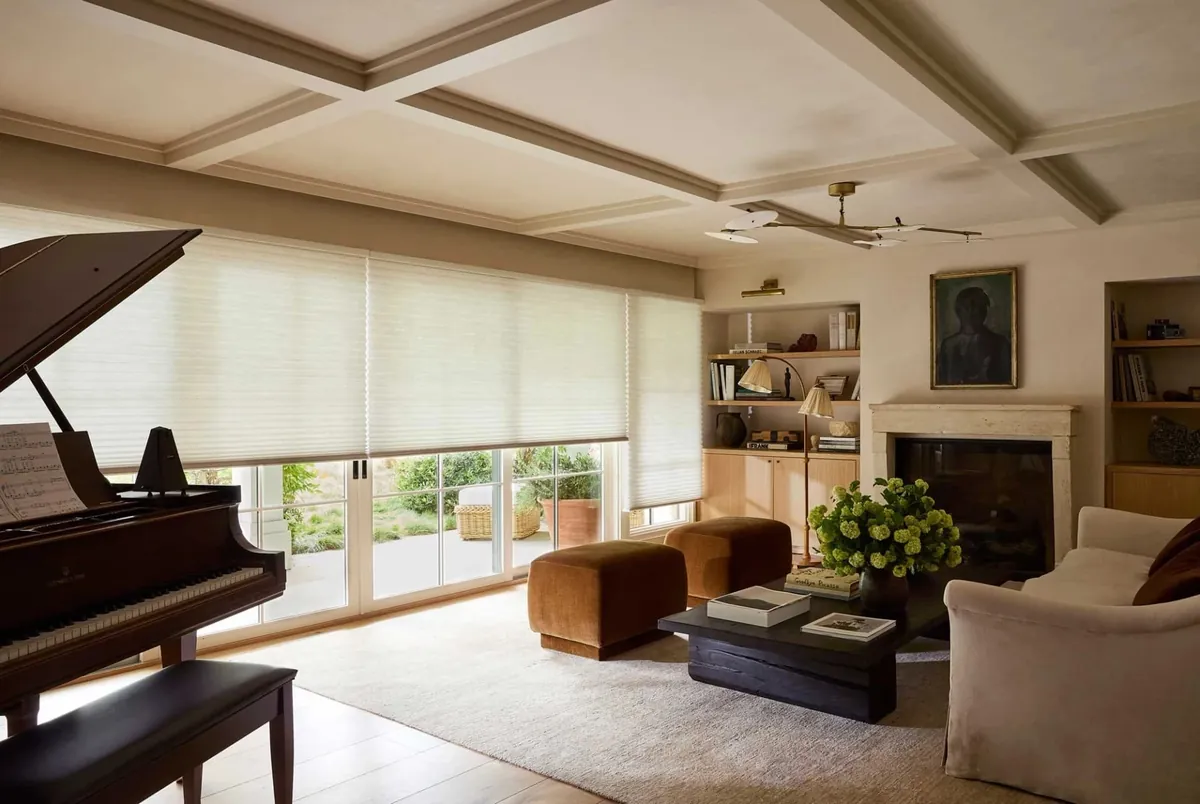
A dangling cord beside a little many-paned window spoils the look of it and ends up looped over the sill. Most antique windows here take a cordless lift instead. A gentle push on the bottom rail sends the shade up, a pull brings it down, and it stays put wherever you stop. With no loop of cord at all, it is also the safer choice when grandchildren or pets come to stay.
Top-down, bottom-up shades suit rooms facing the water or the road. Lower the top to let in sky and sea; keep the bottom closed for privacy or against glare. For high windows in a converted barn or a later addition with a vaulted ceiling, PowerView motorization raises and lowers the shades from a remote or the app.
Duette, Applause and how to choose
Both are Hunter Douglas honeycomb shades, and both trap air in their cells in the same way. Duette has the widest range of fabrics, textures, sizes and shapes, plus the vertical shade for sliders and French doors. Applause has its own color range and suits standard windows well.
An antique Little Compton house often takes Duette in the front rooms, where the small sash and old trim call for the most careful choice of fabric, and Applause in the bedrooms and the newer additions. Our Duette honeycomb shades and Applause honeycomb shades pages explain each line, and the full range is on our cellular shades page.
Sliders and doors to the garden
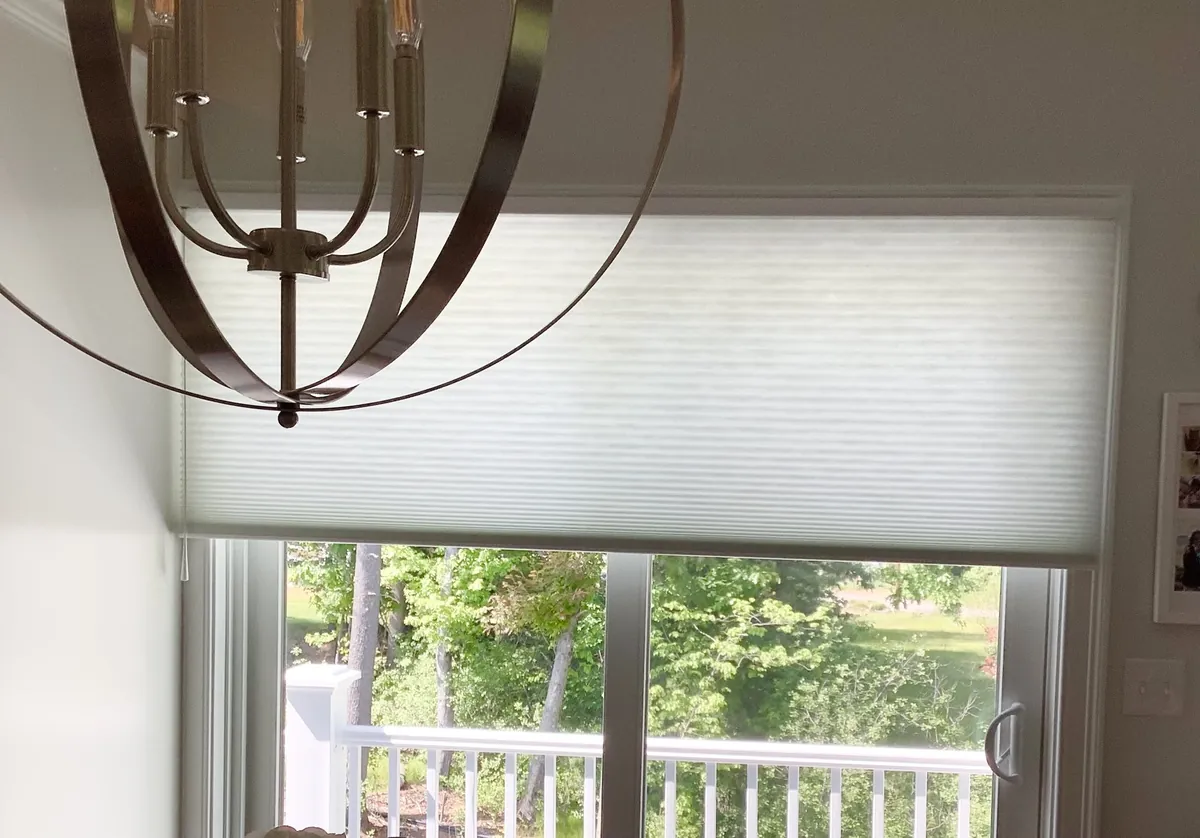
Many Little Compton houses have added a garden room, a kitchen extension or a deck at the back, usually with a slider or a pair of French doors facing the fields. Those doors bring in a lot of light and lose a lot of heat.
For a slider, the vertical version of the honeycomb shade is the natural fit. Its cells run up and down instead of across, and the whole panel glides sideways and gathers at the jamb, leaving the doorway open. Closed, it covers that big pane with the same air-filled cells as the rest of the house. French doors work differently: each leaf can carry its own shade, anchored at the foot so it stays flat against the glass as the door swings. Choosing cellular shades in Little Compton for those doors keeps a new garden room as warm as the rest of the house.

A Hunter Douglas Gallery dealer for the coast
Hunter Douglas reserves the Gallery title for dealers who meet its standards, and we are one of them. That opens the full honeycomb catalog to a Little Compton order: all the Duette and Applause fabrics, cell sizes and lifts, with PowerView on top.
The people who fit your shades hold Hunter Douglas certification. And if you buy an old house with a few good shades already hanging in it, our blind and shade repair service can often bring them back into use.
An antique house rarely needs just one kind of covering. See our plantation shutters in Little Compton for a farmhouse kitchen, or our roman shades in Little Compton for a sitting room. Everything we offer in town is on the Little Compton page.

Choosing at the house, in coastal light
Light near the sea is bright, cool and changeable, and fabric colors look different in it than they do anywhere else. That is why we bring the samples to you. Our vans carry the honeycomb range, so you can hold real fabric against your own old trim and see it in the light off the fields and the water.
We walk through the house with you, starting with the coldest and brightest rooms, measure every window and give you a free estimate for the shades you are considering. If you would like help with color and fabric across whole rooms, ask about our interior design consultations. You can also read what happens at an in-home consultation, or see Hunter Douglas shades first at our North Dartmouth showroom, the nearest to Little Compton.
Questions from Little Compton
Will honeycomb shades fit the small windows in my antique cape?
Yes. Each shade is made to its own measurements, and the compact headrail often fits inside the frame of a small old window. When raised, the shade stacks very small, so you lose very little of the glass.
How do the shades stand up to salt air near the point?
The working parts sit inside the headrail, away from the air, and a cordless lift removes the cord and cord lock altogether. That leaves very little exposed metal to suffer from salt.
My house is empty for part of the year. Is that a reason to fit shades?
It can be. Lowered in summer, they keep strong sun off floors and furniture. Lowered in winter, they hold air at the glass while the house is lightly heated. With PowerView you can change them from the app while you are away.
Can I keep the view of the water and still cut the glare?
A top-down, bottom-up shade lets you lower the top just enough to block the low sun while the horizon stays in view below.
Is there a cost for the estimate?
No. The estimate is free, worked out after we measure your windows at the consultation.
Before the next season
Whether the house is your home all year or your summer place, the clearest way to choose cellular shades in Little Compton is with the samples at your own windows. Request a consultation and we will bring the honeycomb range, measure each opening and give you a free estimate. You can also use the call button, or visit the North Dartmouth showroom.