
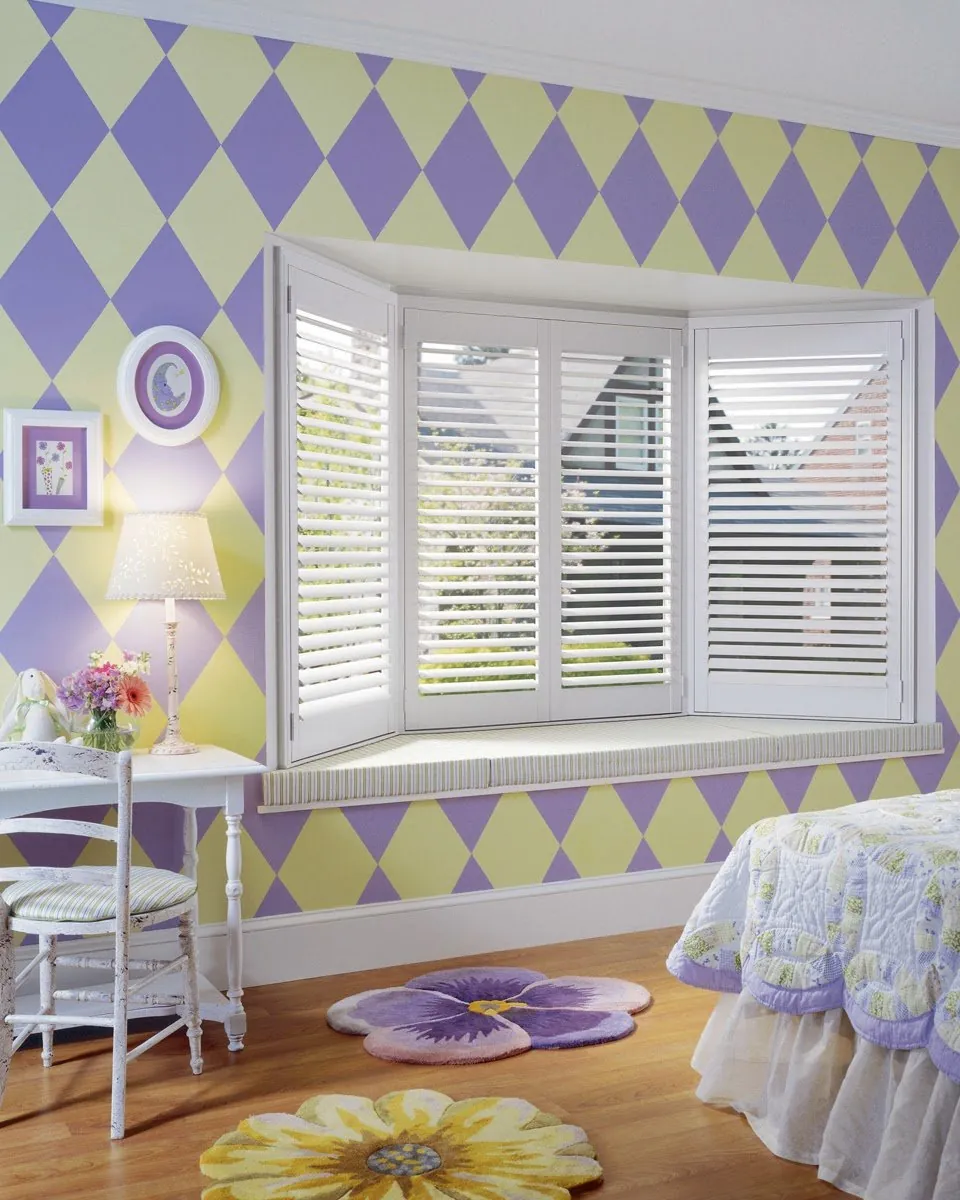
Antique sash in open coastal country
Little Compton is stone walls, open fields and old houses set far apart. Around the Commons, antique capes and shingled farmhouses sit close to the church and the burial ground, and from there the roads run south across farmland toward Sakonnet Point, where the land ends in rocks and the full weight of the ocean. On lots this large there is little to stop the wind and the weather. That exposure, together with the small windows of the oldest houses, is what we design around for plantation shutters in Little Compton, RI.
The antique houses were built with small sash on purpose. Glass was precious and heat was hard won, so windows were kept modest, often with many small panes. Those openings survive in a great many houses here, frequently with their original casings, and they are rarely square after a long life of settling.
A good share of the houses are also lived in for only part of the year. They are opened in late spring, filled with family through the summer and closed again in the autumn. Whatever goes on the windows has to look right in July and come through a damp, empty winter in a house near the sea without complaint.
Plantation shutters in Little Compton, RI: the three collections
Hunter Douglas builds shutters in three materials. In an old coastal house the choice between them comes down to where each window is and how the house is used.
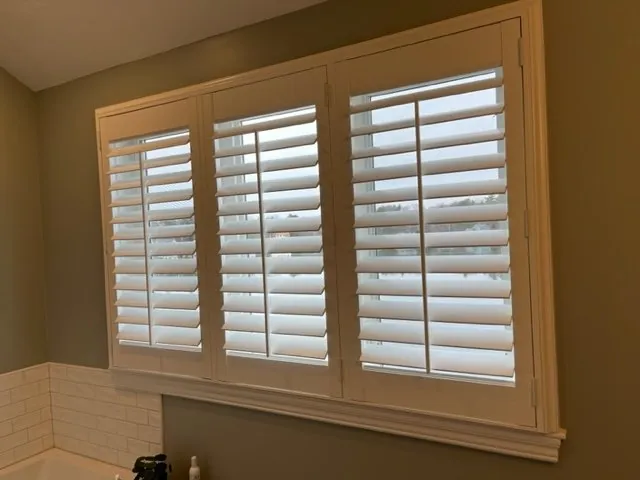
Palm Beach for a seasonal house
Polysatin with no wood core. A shuttered house that sits cold and damp all winter is no trouble for it, and neither is salt air in summer.
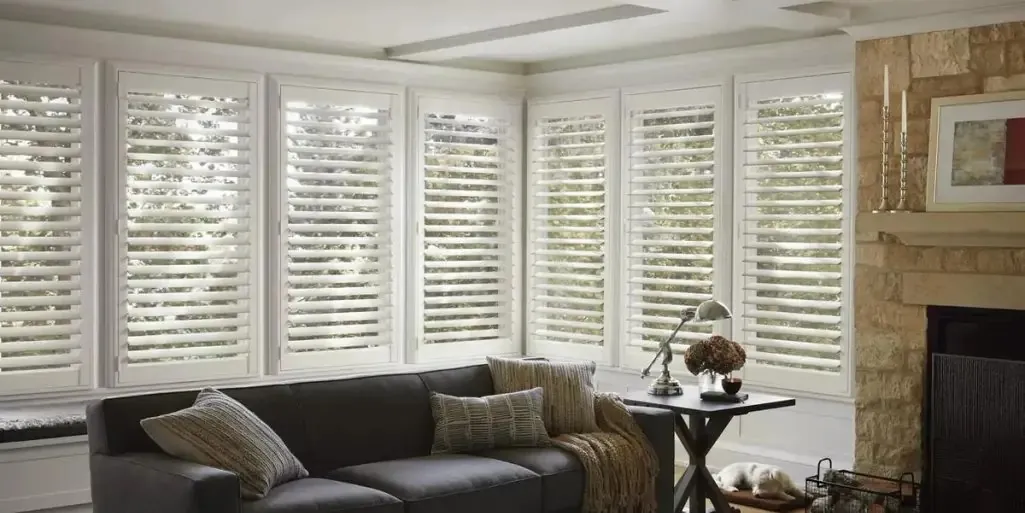
Heritance for the antique rooms
Real hardwood, painted to match old trim or stained to sit with wide pine floors. Happiest in a year-round house with dry, heated rooms.
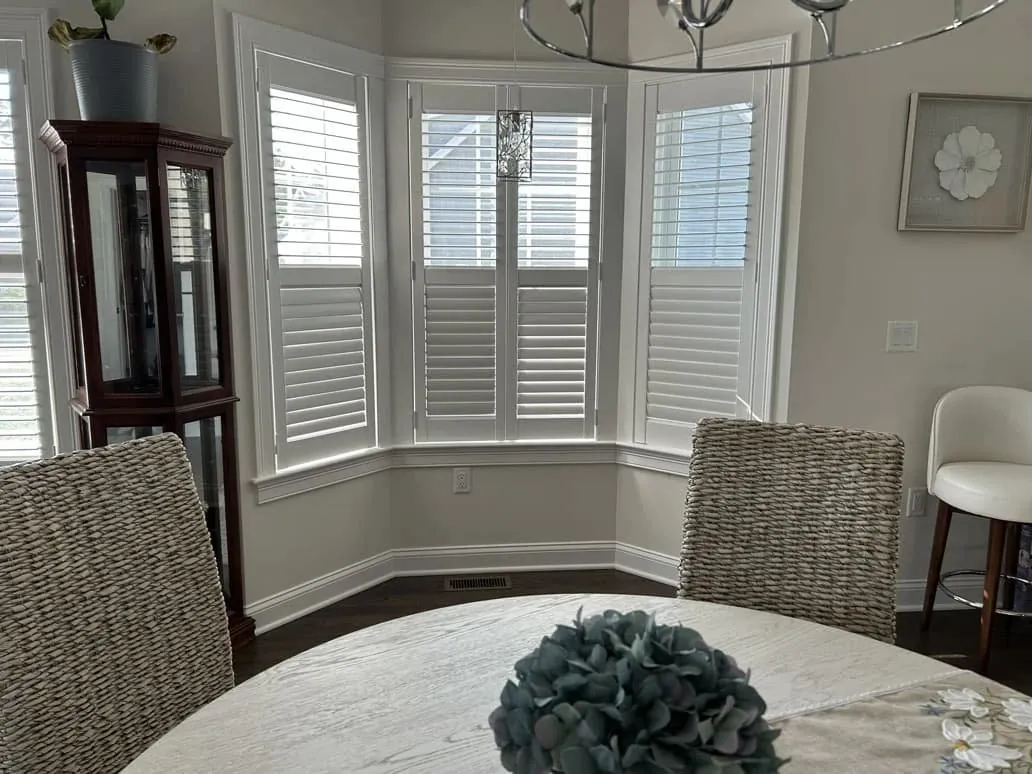
NewStyle in between
A composite hybrid that keeps its shape and has the look of painted wood. Suits additions and bedrooms that are lived in most of the year.
Capes and farmhouses around the Commons
The oldest houses near the Commons are among the oldest in the region, and their windows show it. A center-chimney cape has a small window either side of the door and a pair on each gable end. A farmhouse adds a second story and often an ell running back toward the barn. Most of the sash is small, set into heavy timber frames, and surrounded by plain, solid casings that have been painted many times.
These windows are where measuring matters most. A frame built for a perfectly square opening will show a light gap down one side of an antique window, because the opening tapers or leans. So we measure each one at the top, middle and bottom, on both sides, and check the depth at several points. The shutter frame is then built to fit what is actually there, and the panels hang so they close evenly and the louvers meet in a straight line.
Depth varies a great deal in these houses. Some antique walls are thick enough for the frame to sit inside the opening with room to spare, leaving the old casing in full view. Others, especially where the sash has been replaced or storm windows added, leave less space. Where an inside mount would be cramped, a slim outside frame fixed to the face of the casing is the better answer, and on plain old trim it can look entirely natural.
For the formal front rooms of a year-round antique, Heritance hardwood is the collection we suggest most. It takes paint with the same soft depth as old woodwork, and a stained finish can look handsome beside wide pine boards. Narrow louvers keep the panel in scale with small, many-paned sash.
Old glass, storm windows and interior shutters
Many antique houses here still have their old glass, faintly wavy and full of tiny bubbles, and few people who live with it would want it changed. Most have added storm windows on the outside to take the brunt of the coastal weather, which protects the old sash but changes what happens inside the opening.
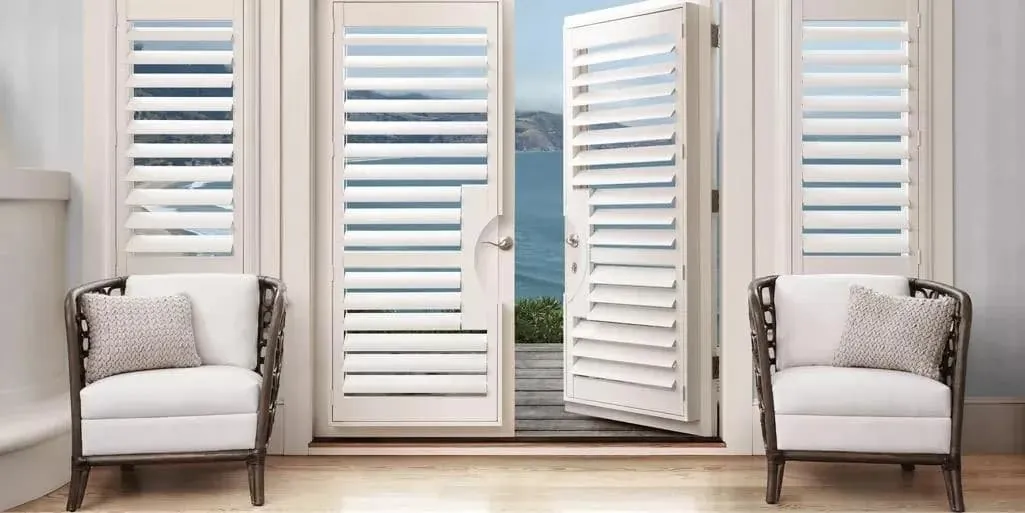
An interior shutter works alongside both. It sits on the room side of the original sash, so the old glass stays exactly as it is and the storm window carries on doing its job outside. Nothing is fixed to the sash itself, and the frame can be removed later without harm to the opening. For a house where the historic fabric matters, that light touch is one of the main reasons plantation shutters in Little Compton, RI, are chosen over other coverings.
Interior shutters also have a long history on houses of this age, and a closed panel in an old front room has a look that feels right for the period. With narrow louvers, a plain frame and a soft painted finish matched to the casings, the shutter can read as part of the house rather than something added to it.
Out toward Sakonnet Point
South of the village the land opens up and the houses face the water more directly. Shingled farmhouses and later cottages look across fields to the ocean or the river mouth, and the last houses before the point take wind and weather head on. Salt rides in on every breeze, fog rolls in off the water, and storms arrive with nothing in their way.
In a house like that, material comes first. Palm Beach polysatin does not absorb moisture, so it will not swell, twist or crack in damp salt air, and the finish does not peel. It is the collection we suggest for rooms that face the ocean, for any room whose windows are opened to the sea breeze, and for every window in a house that is closed through the winter.
The working parts are simple too. A shutter has hinges and a tilt, with no cords, cord locks or lift mechanisms to corrode. A wipe of the louvers with a damp cloth takes off the salt film that builds up on anything near an open window in summer.
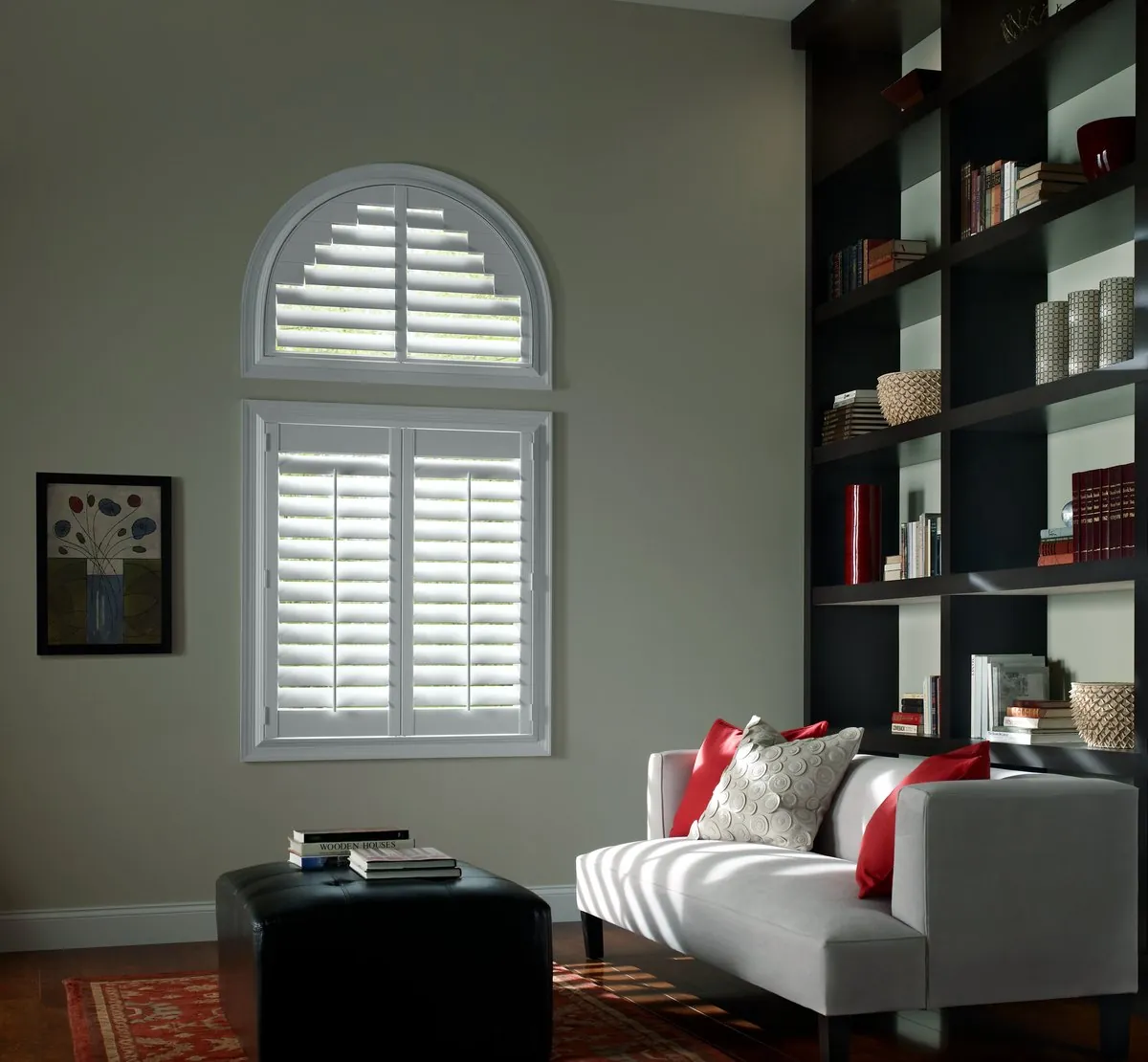
Light near the point is strong. Sun comes off the water as well as from the sky, and a south-facing room can be hard to sit in at midday. Louvers tilted up turn that glare into soft light on the ceiling, while tilted level they keep the view of the water with only slim blades in the way.
Opening and closing a seasonal house
For a house used only part of the year, shutters fit neatly into the routine. Here is how they work across a season.
- In spring, the panels open to air the rooms and let the light back in after the winter.
- Through the summer, the louvers do most of the work, tilted through the day to manage the sun and closed at night for privacy.
- In early autumn, as the house empties out, the louvers can be closed on south-facing rooms to keep sun off floors and furniture.
- When the house is shut for the winter, the panels close and stay closed, and polysatin comes through the damp months unchanged.
- The next spring, a quick wipe of the louvers and the house is ready again.
Because a seasonal house is often visited only now and then before the summer, we plan the consultation and the installation around when you are in residence. Tell us when you will be there and we will work out the visits with you, without promising any particular timing on the order itself.
Very large lots and an open view
With houses spread across big lots, a neighbor’s window is rarely a concern. Privacy here is usually about the road, or about evening, when a lit room can be seen from a long way across dark fields. For most of the day, the main job of a shutter is managing light and keeping the view.
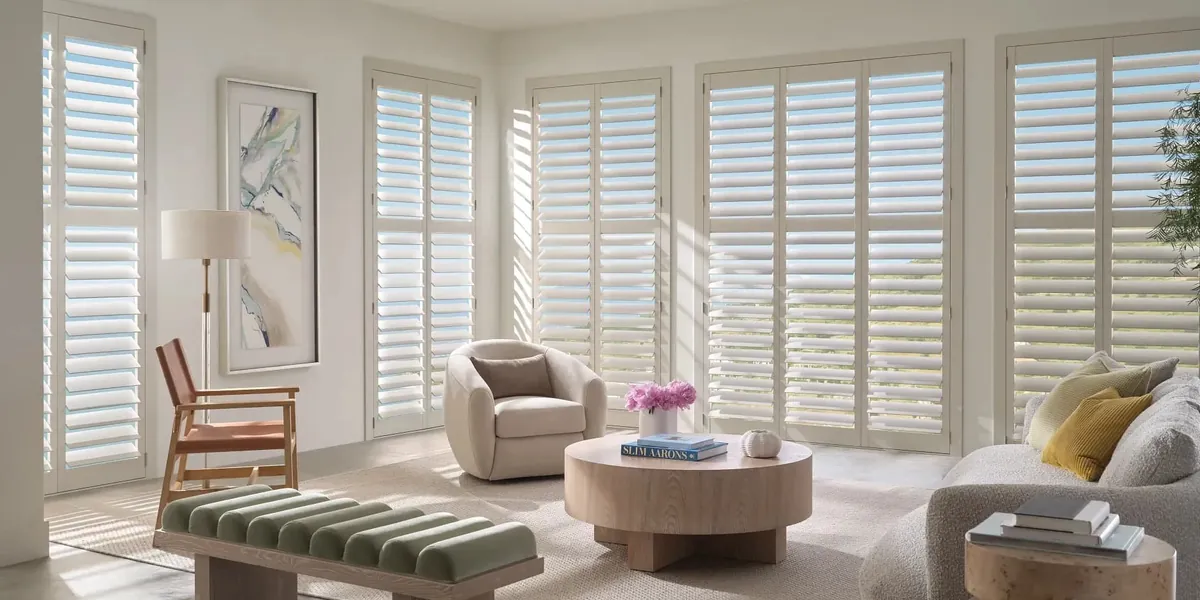
That makes louvers the most useful part of any set of plantation shutters in Little Compton. Open panels fold back flat beside the window, leaving the glass clear. With the panels closed and the louvers level, you still see the fields and the water between slim blades. Tilt them to cut the sun, close them at dusk. A room with windows on two or three sides, common in a farmhouse, can have each window set its own way as the sun crosses the sky.
Across such open ground, wind matters as well. A house on an exposed lot gets buffeted in a storm, and windows rattle. A shutter fitted snugly into a well-measured frame stays put, with no fabric moving in a draught, and closed panels give the room a settled, sheltered feeling on a wild night.
Small original sash and louver size
The louver is the part of a shutter you see most, and on small antique windows its size makes all the difference. A wide louver suits a big modern window, but on a small sash it leaves only a few heavy blades. A narrow louver gives more blades and finer lines, which keeps the panel in proportion with many-paned glass and the low ceilings of an old cape. A medium louver suits the larger windows of a later farmhouse or an addition.
Many antique houses here have been added onto, so one house may have small original sash in the front rooms and larger replacement windows in a kitchen wing. Keeping the same color and frame style across the house ties it together, and the louver width can step up a size on the bigger windows without the house looking mismatched.
Frame profile counts on an old house too. A plain, flat frame sits quietly against old casings. A frame with a small bead can echo moulded trim where there is some. And the choice between a front tilt rod and a hidden tilt is partly about looks: many people pick the traditional rod for an antique room because it suits the period.
Our Palm Beach, NewStyle and Heritance pages explain each collection, the main plantation shutters page shows the range, and our guide to shutters for older windows covers settled and out-of-square frames.
Kitchens, baths and the outdoor shower
Coastal houses have more wet rooms than most. There is the kitchen, the bathrooms, often a mudroom where sandy towels and boots come in, and a door near the outdoor shower. In an antique farmhouse these rooms are often in the ell or a later addition, with their own windows in their own sizes.
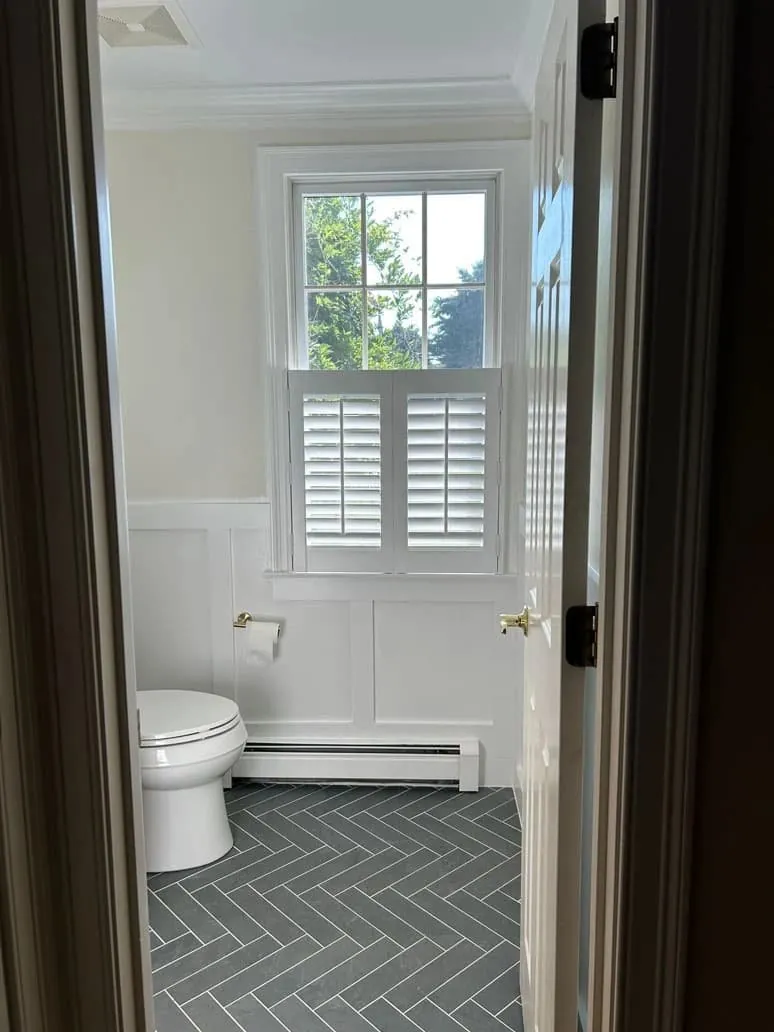
Palm Beach is the collection for all of them. Steam, splashes and damp towels have no effect on polysatin, and it cleans with a damp cloth. Matched in color and louver width to the Heritance or NewStyle in the front rooms, the wet rooms carry the same look through the house. A cafe-style panel on the lower sash of a bathroom window gives privacy while the top of the window stays open to sky and fresh air.
Bedrooms under the eaves
Upstairs in an antique cape, the bedrooms sit under a steep roof, lit by small gable windows or dormers. Ceilings slope, walls are short and the windows are often close to the floor. Space is tight, and there is nowhere for a shade to stack without blocking some of the window.
Shutters suit these rooms well. The panels fold flat against the wall or simply stay closed with the louvers open, so nothing hangs into the room. On a summer morning, with the sun rising over the fields, closed louvers keep a bedroom much darker than a sheer or a light blind. For guest rooms that are full every summer weekend, that is often the deciding point in choosing plantation shutters in Little Compton over anything else.

How the visit works
We come to you. The samples travel in our vans, louvers, frames and color chips together, so you can compare them against your own old casings in your own light. On a house this far from any showroom, that is simply the sensible way to choose.
We walk through the house with you, from the front rooms to the ell and up under the eaves, and talk about which rooms face the water, which are used all year and which close for the winter. Each window is measured at several points and checked for depth. You pick a collection, blade size, frame and finish for each room, and we write up a free estimate. When the order arrives, certified Hunter Douglas installers fit every frame and panel and adjust each one so it closes true. To read more first, see what happens at an in-home consultation, or ask about our interior design consultations if you would like help with a whole room.

A Gallery dealer across the state line
Blinds & Designs is a Hunter Douglas Gallery dealer. Hunter Douglas reserves that name for dealers who meet its standards, and for a shutter order it means every collection, blade size, frame and finish is open to you, handled by one local company.
Our installers carry Hunter Douglas certification. In an antique house where no window is quite the size of the next, that shows in panels that hang straight and louvers that line up from room to room.
Beyond shutters we offer the wider Hunter Douglas range of blinds, shades and drapery, along with blind and shade repairs. Shutters in the front rooms often sit with roman shades in Little Compton in a bedroom or roller shades on a sunporch facing the water. Everything we offer in town is on our Little Compton page. Our nearest location is the North Dartmouth showroom, across the line in Massachusetts.
Questions from Little Compton
Will shutters fit the small, uneven windows in an antique cape?
Yes. Every frame and panel is made to the measurements we take at several points across each opening, and the frame takes up the small tapers and leans of an old window. A narrow louver keeps the panel in scale with small sash.
Our house is closed every winter. Which shutters should we choose?
Palm Beach. It is polysatin with no wood in it, so a cold, damp, empty house near the ocean does not make it swell, crack or peel. When you open the house in spring it looks just as it did when you left.
Do shutters stand up to salt air near Sakonnet Point?
Palm Beach does very well. It does not absorb moisture, and with no cords or lift mechanisms there is little to corrode. A wipe with a damp cloth removes salt film from the louvers.
Can we keep the view of the fields and the water?
Yes. Open panels fold back from the glass, and with the louvers level the view stays clear between slim blades. Close them only when the sun or the evening calls for it.
Is there a charge for the estimate?
No. The estimate we write up after measuring is free, and there is no obligation.
When you are next at the house
Antique sash, an exposed coastal lot and a seasonal routine all shape the right shutter. Request a consultation, tell us when you will be in residence, and we will bring the samples, measure every window and write up a free estimate. You can also use the call button, or call in at our North Dartmouth showroom.