
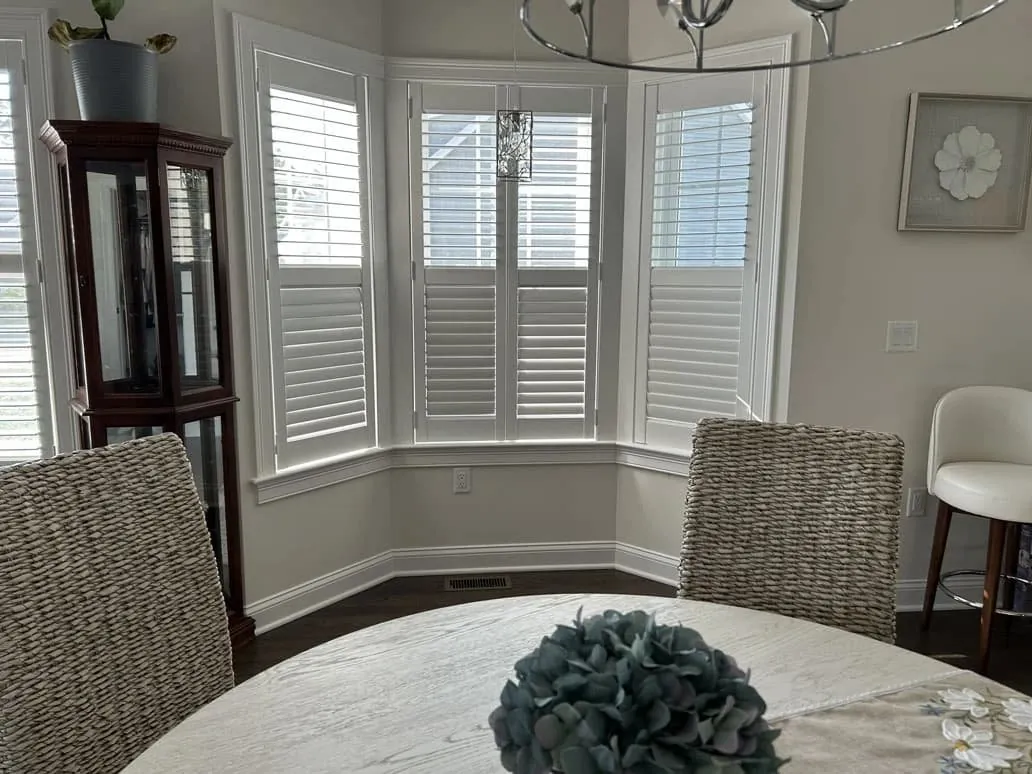
Antique houses, open fields and the weather off the Sakonnet
The houses around the Commons and out toward Sakonnet Point are among the oldest we work in. Antique capes with a central chimney, shingled farmhouses weathered silver, stone walls running off across very large lots. As a Hunter Douglas dealer in Little Compton, RI, we treat these houses with care, because the windows are often as old as the frames around them.
Three things shape every job here. The original sash is small, set into frames that have moved over a long life. The exposure is heavy: wind, salt and strong light come across open fields and water with very little in the way. And a good share of the houses are lived in for part of the year, which changes what a window covering needs to do when nobody is home.
None of that calls for anything elaborate. It calls for the right product in each opening, measured with patience and fitted to stay put.
Hunter Douglas families for antique and coastal houses
A Gallery dealer can offer the whole Hunter Douglas range, and that is how we work. Of everything a Hunter Douglas dealer in Little Compton could suggest, these six fit the town’s houses best, each with its own Little Compton page.
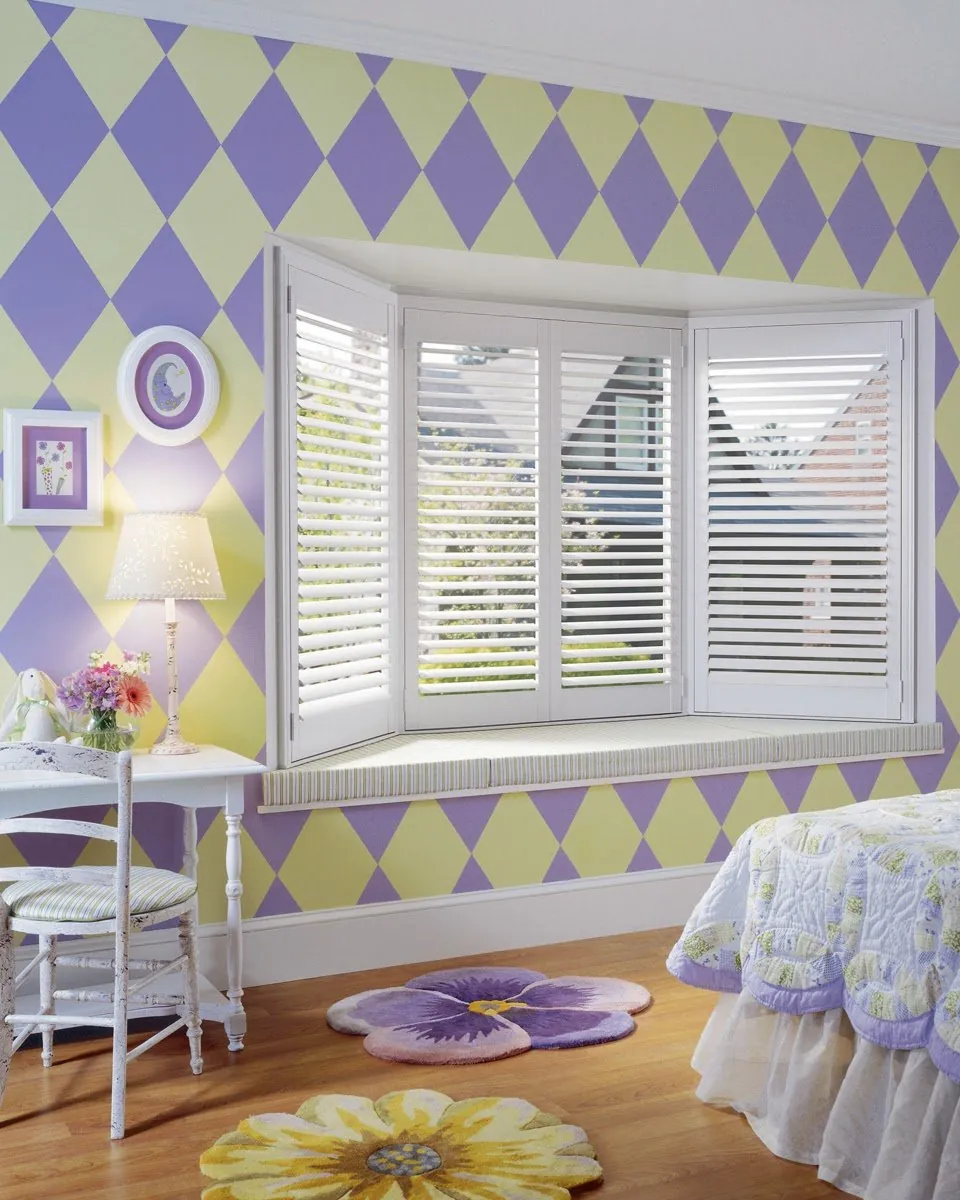
Shutters for small sash
Palm Beach, NewStyle and Heritance, built to each opening, so an old frame that is no longer square still gets panels that close neatly.
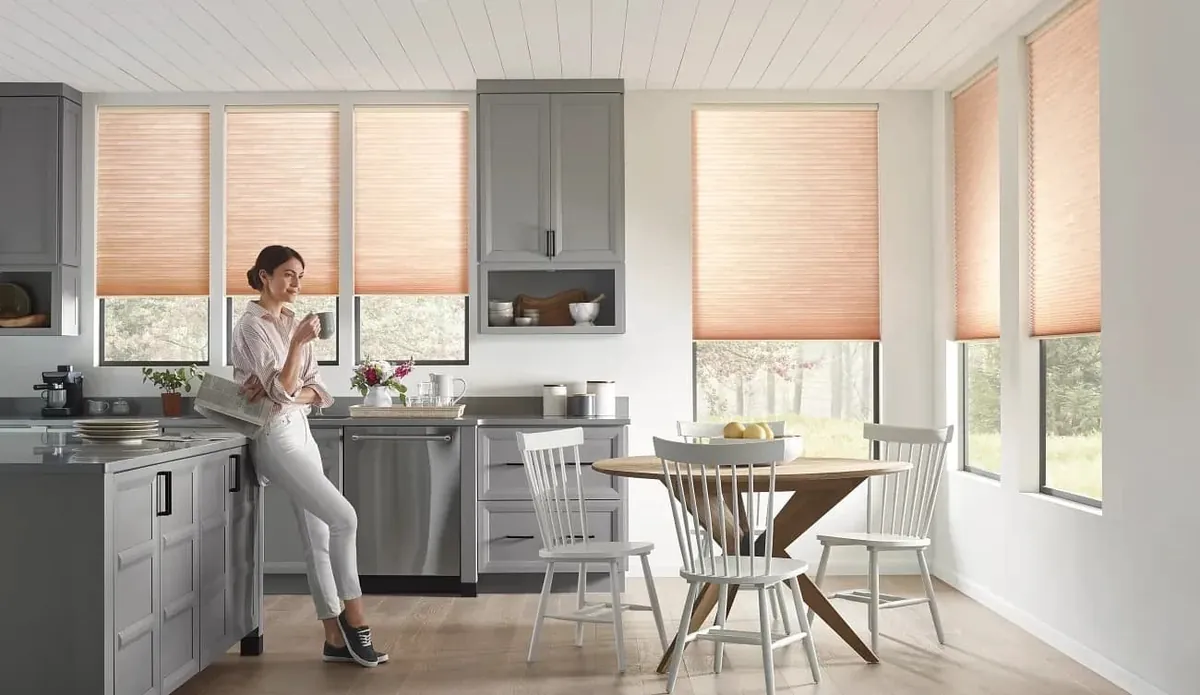
Honeycomb shades
Duette and Applause hold air in their cells against old glass, and lift into a slim stack inside a small frame.
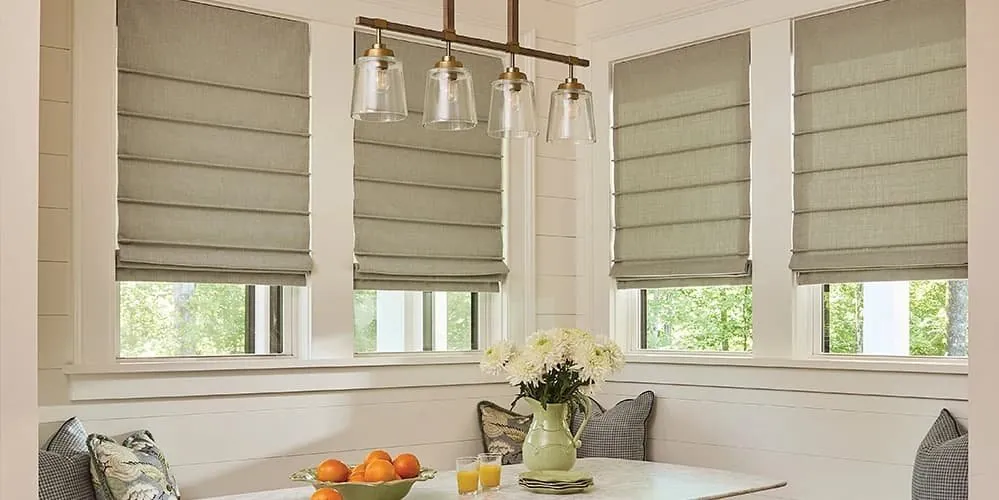
Roman shades
Vignette and Carole Roman shades in flat or soft folds, a quiet look that suits a farmhouse kitchen or sitting room.
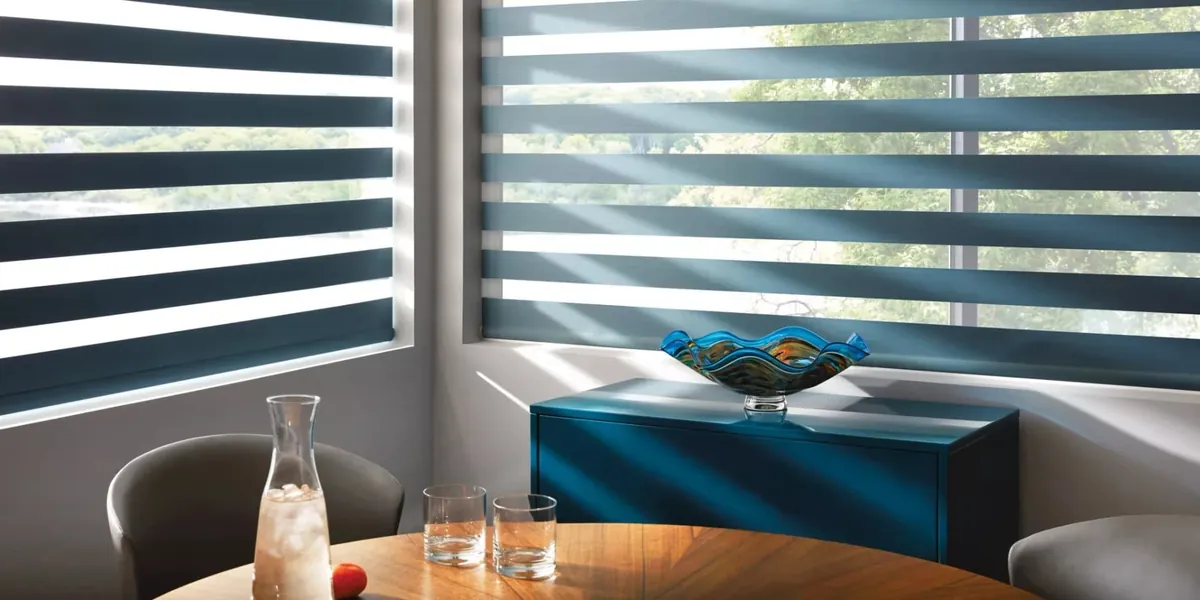
Roller and banded shades
Designer roller, screen and banded shades for the larger glass in an addition or a room facing the water.
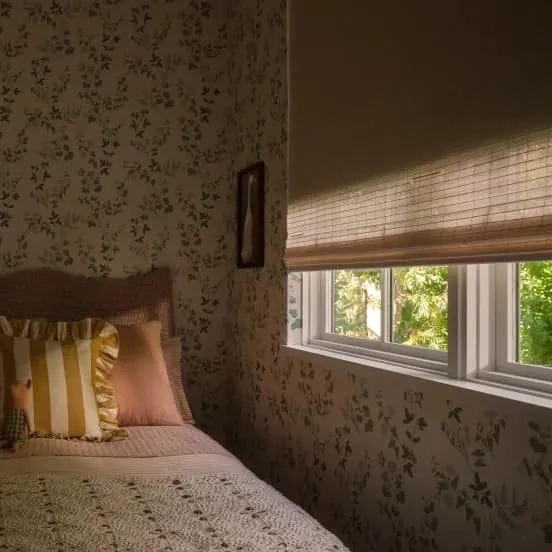
Woven shades
Provenance woven wood brings natural texture that sits well with wide-board floors and plain painted trim.
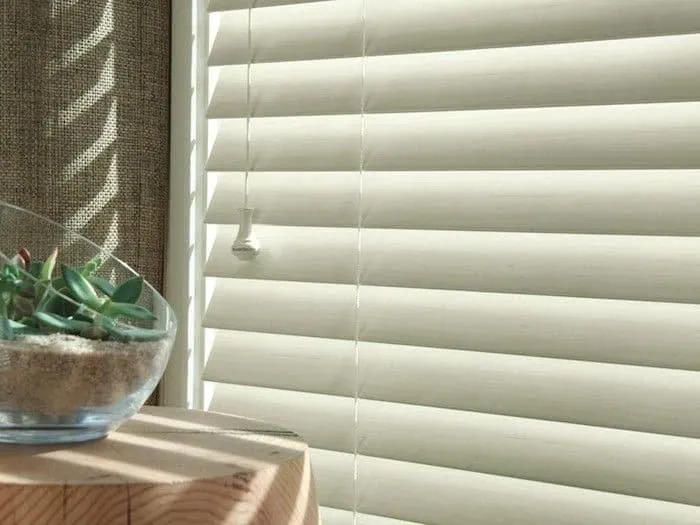
Wood blinds
Parkland wood and EverWood faux wood in narrow slats, sized for small panes and easy to tilt for light.
Small original sash in old frames
An antique cape or farmhouse was built with small windows on purpose. Glass was precious, heat was hard to come by, and a smaller opening lost less of it. Many of those windows survive, with their divided lights and their original casings, and they are a big part of what makes the houses so appealing.
They are also some of the hardest windows to fit. Timber frames settle over a long life, and an opening that looks even from across the room may be out of square at one corner. The width at the top can differ from the width at the sill. Old sash hardware and later storm panels take up depth inside the frame.
That is where made-to-measure products and careful measuring earn their keep. We measure each opening at several points, check how much depth there is for a headrail or a shutter frame, and build the product to the tightest point. Where an inside mount would be too tight, we show you how the product looks mounted on the casing, so you choose with both options in front of you.
Small panes also affect the look. Shutters with a louver size close to the pane size look tidy. Light honeycomb lets the muntins show through softly. Plain or gently textured fabrics usually suit small panes better than bold patterns.
Capes and farmhouses around the Commons
The houses near the Commons follow the old patterns closely. A cape with a front door in the middle and rooms either side, bedrooms tucked under the roof upstairs. A farmhouse with a main block and a kitchen ell, sometimes a connected barn. Rooms are modest, ceilings low, and the windows evenly spaced along the walls.
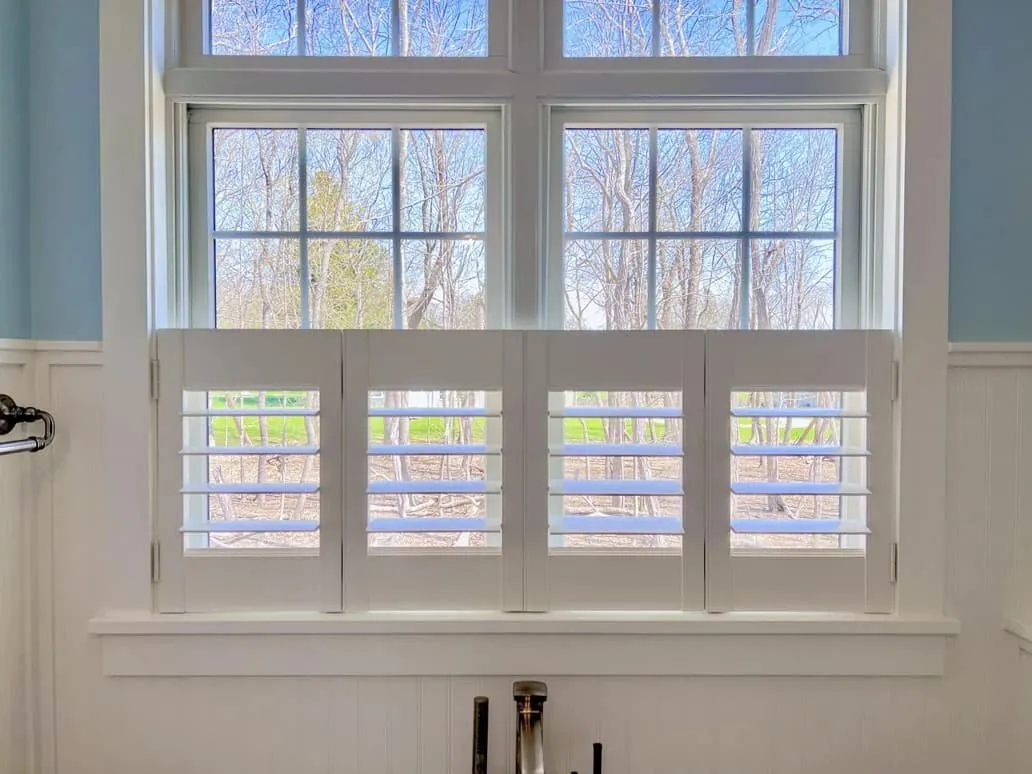
Downstairs, inside-mounted treatments keep the trim on show. A honeycomb shade lifts out of sight into the top of the frame. A café shutter over the lower sash of a kitchen window gives privacy from the road while the top stays open to the fields. A Roman shade in a linen-look fabric suits a farmhouse sitting room without fuss.
Upstairs under the roof, dormers set the windows into a small alcove that suits an inside-mounted shade perfectly. Gable windows, high and hard to reach, are good candidates for a motorized shade.
Because these houses are cherished for their character, we keep visible changes to a minimum. Nothing goes into old trim that does not need to, and brackets go into solid wood where they will hold.
Heavy coastal exposure
Out toward Sakonnet Point, the weather comes straight across open water and open fields. Wind finds every gap in an old frame, salt rides in on it, and on a clear day the light is bright and constant, with the sea reflecting it back.
That exposure affects window coverings in three ways. First, sun. A window that takes strong light every day will fade a dark fabric faster, so lighter neutral colors tend to last better, and we point out the fabrics suited to a bright window when you choose. Second, salt. Products that keep their working parts enclosed, such as honeycomb and roller shades with the mechanism in the headrail, hold up better than older blinds with exposed hardware. Cordless and motorized lifts leave nothing hanging at the side. Third, draughts. An old frame on a windy day leaks, and a honeycomb shade lowered at night puts a layer of trapped air between you and the glass.
Damp rooms need moisture-friendly materials. Palm Beach shutters and EverWood faux wood blinds do well in a bathroom or a mudroom near the shore, where real wood might warp.
Very large lots and very few neighbors
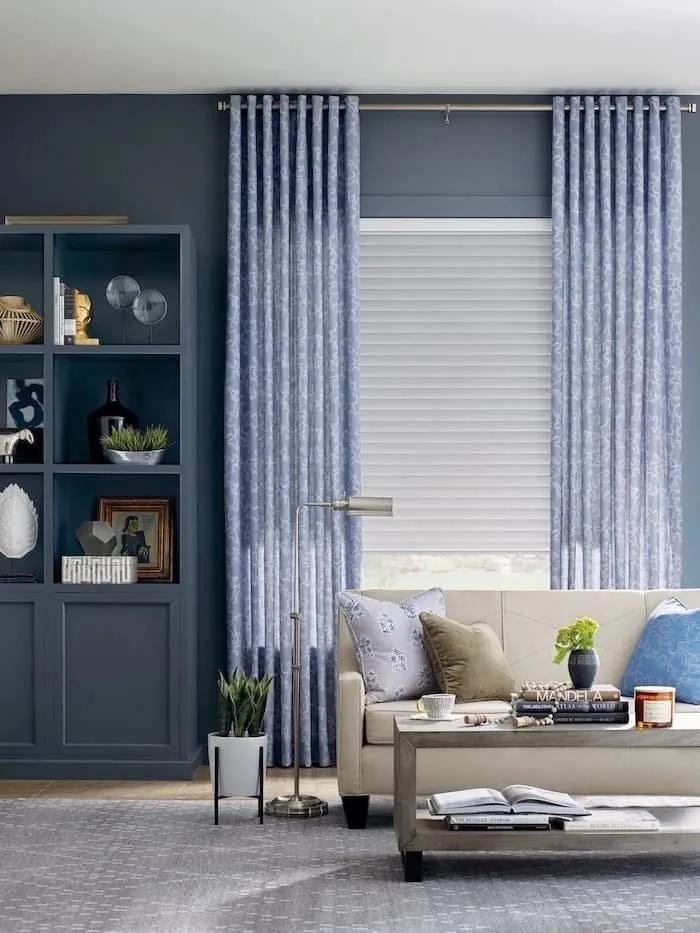
On lots this size, many houses have no one close by. That changes the main job of a window covering. Instead of screening the neighbors, it is about light, warmth, comfort and how the room looks. A sitting room that faces open fields can keep its shades raised all day. A bedroom that catches the sunrise over the water needs darkness in the early morning, not privacy at night.
It also frees you to choose for character. A woven wood shade in a farmhouse kitchen, a café shutter purely because it looks right, or full drapery in a dining room for color and warmth rather than screening.
The exceptions are rooms facing a road or a lane, and any window that is lit up after dark and visible from the water. For those, a light-filtering fabric gives daytime privacy and a room-darkening layer or closing vanes cover the evening.
Houses lived in for part of the year
A good share of Little Compton houses are not lived in year-round. Some are opened in late spring and closed in the autumn; others are used at weekends and holidays. That raises questions a year-round house never has to answer.
The first is sun on an empty house. Strong light coming through bare windows day after day fades floors, rugs and upholstery. Lowering shades before you leave protects the room, and a light-filtering fabric does it without making the house look shut up from the road.
The second is how the house looks while you are away. A house with every shade fully down for months can look obviously empty. PowerView motorization solves that neatly: shades can be set to a schedule, rising in the morning and lowering in the evening, so the house looks lived in. Shades can be adjusted from the app if you want them changed while you are away.
The third is durability. Products in a seasonal house sit unused for long stretches in a closed, sometimes damp house. Polysatin shutters, faux wood blinds and well-made honeycomb with enclosed mechanisms hold up best.
A Hunter Douglas dealer in Little Compton should plan around how often you are there, not just around the windows. We ask about it at the first visit.
Opening up and closing down
For a seasonal house, a little planning makes the opening and closing routine easier. A few points worth thinking about:
- One product family where possible. Fewer different mechanisms to check each spring.
- Cordless or motorized lifts. Nothing to tangle or knot while the house is closed.
- Light-filtering fabric in the rooms that get the most sun. Protection for the furnishings without blacking out the house.
- Room-darkening fabric in bedrooms. For the summer mornings when the sun is up very early.
- A PowerView schedule. So the shades keep moving while you are away.
If anything sticks or wears after a long closed season, we handle blind and shade repairs on window coverings you already own.
Additions and rooms facing the water
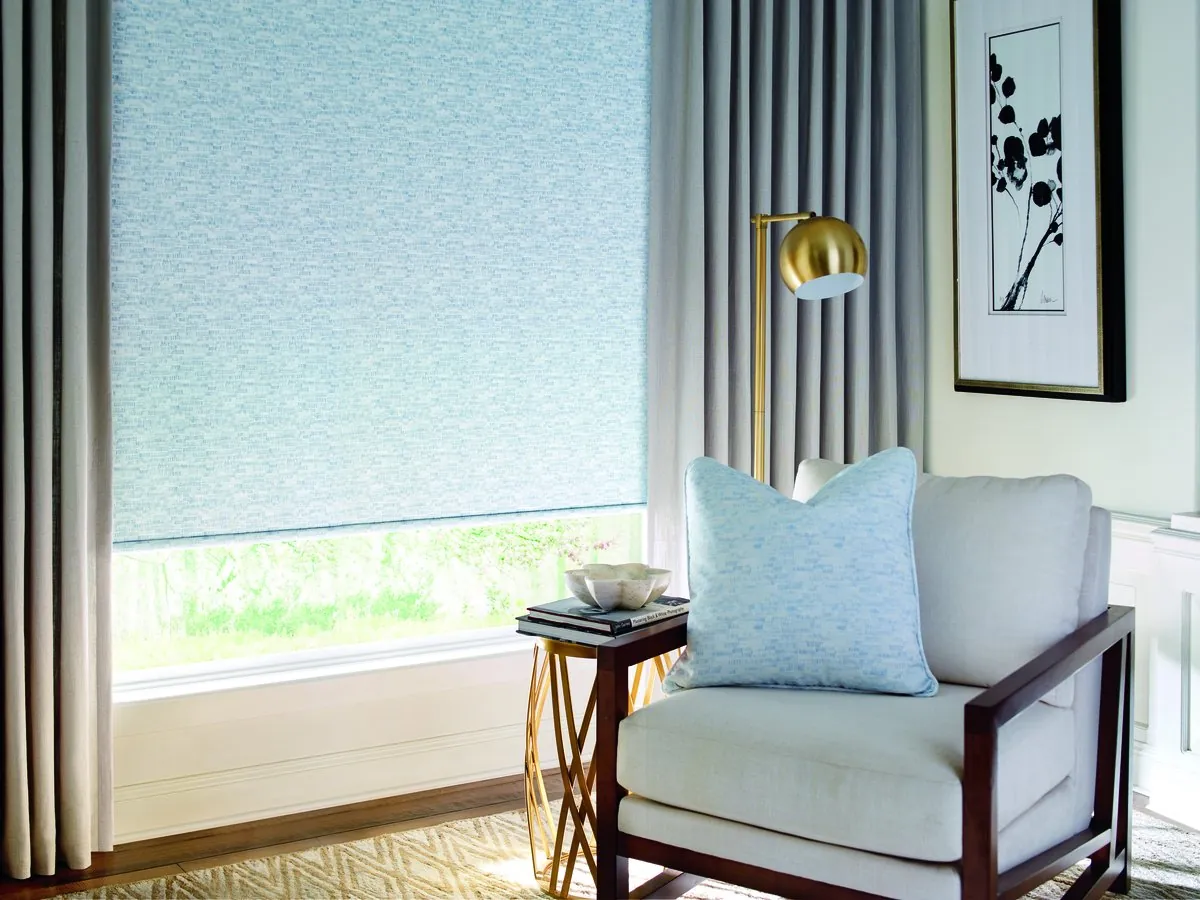
Many older houses in town have been extended at some point, often with a family room, a kitchen or a sunroom with larger, modern windows facing the best view. Those rooms bring the opposite challenge to the antique part of the house: lots of glass, lots of light and the full force of the weather.
A solar screen roller shade cuts the brightness and heat while keeping the water and fields in view. Honeycomb on each pane of a sunroom lets you shade one side at a time as the sun moves round. For a slider onto a deck, a vertical honeycomb or Luminette panel travels sideways out of the way of the door.
The trick is making the addition feel part of the house. Matching the fabric color of the new room to the shades or shutters in the old rooms ties the two together. Even the headrail finish can help: a white or soft neutral rail disappears against the painted trim common in both halves of the house.
Measuring an antique opening
The measuring visit is where an old house is won or lost. A product built a fraction too wide will not go into the frame; one built too narrow leaves a bright line of light down one edge every morning. With antique sash we take it slowly.
- We look at each window before measuring: the casing, the sash hardware, any interior or exterior storm panel, and whether the sill is level.
- Width is taken at the head, the middle and the sill, and height on the left, center and right, because a settled frame rarely gives the same figure twice.
- Depth is checked where a headrail or shutter frame would sit, since pulley housings and stops can steal room in an old opening.
- We talk through inside and outside mounts at each window and settle on one with you before anything is ordered.
- On installation day, our installers, certified by Hunter Douglas, fix each piece into sound timber, level it against the house rather than against a crooked sill, and run it through its full movement with you.
That patience is what you should expect from any Hunter Douglas dealer in Little Compton working on a house this old.
Seeing the samples where they will hang
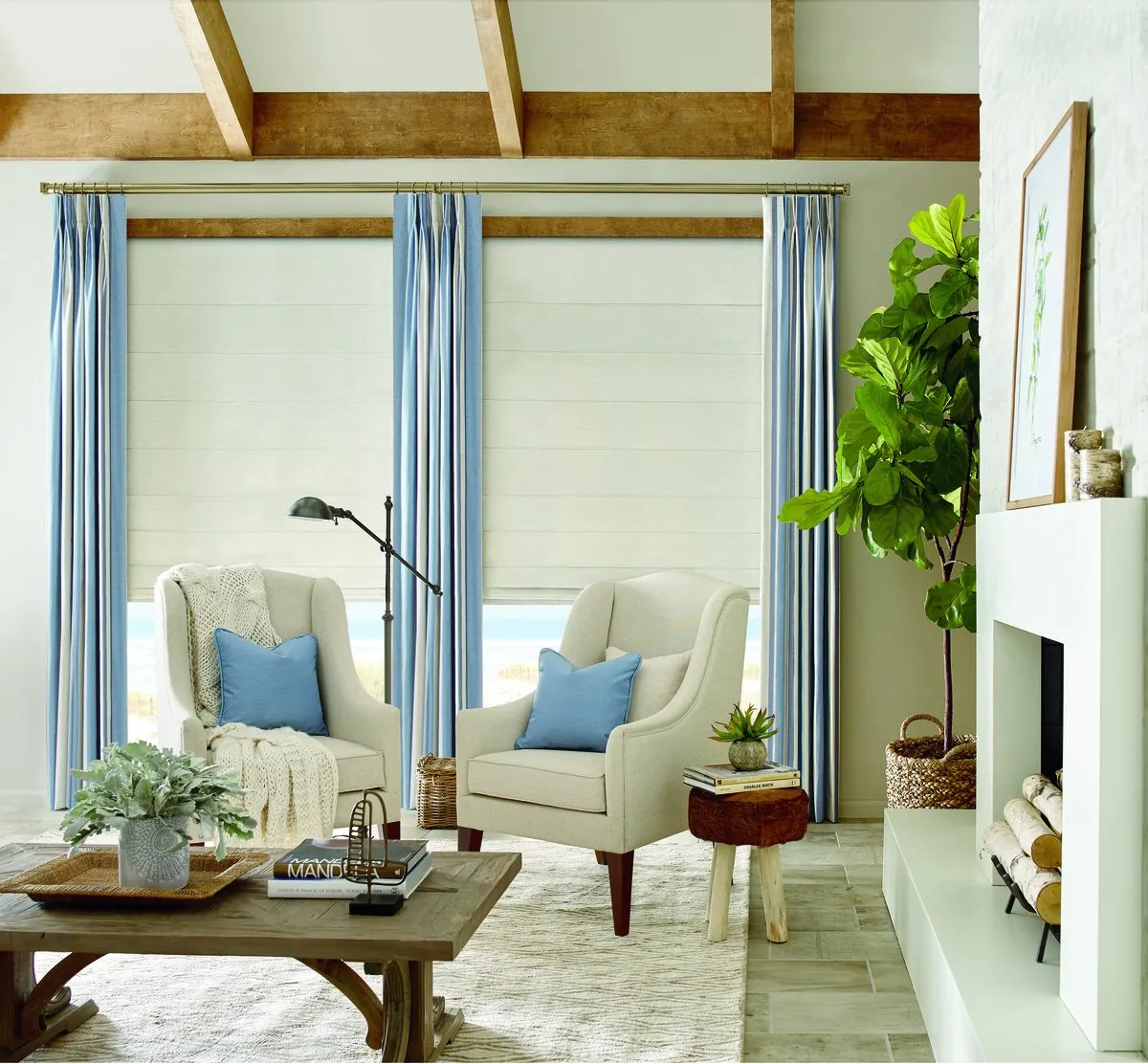
A house near Sakonnet Point gets a quality of light that no store can copy, and an antique room with low ceilings and painted trim changes how every color reads. That is why we would rather make the choice in your rooms. Our vans are stocked with Hunter Douglas samples, so the showroom comes down the lane to you.
A visit tends to begin in whichever room is giving you trouble, perhaps a draughty parlor, a bedroom where the sun arrives too early, or an addition that overheats in July. We look at how you use the room and when you are there, including which months the house is open. Then we try two or three suitable products at the glass, take the measurements, and follow up with a free estimate. There is no expectation that you decide that day.
Some people like a second opinion on fabric and color for a whole room, and our interior design consultations can be folded into the same appointment. To know what to expect beforehand, read what happens at an in-home consultation.

Gallery status for a house with history
Gallery is the title Hunter Douglas reserves for dealers who meet its standards, and Blinds & Designs carries it. On an antique property that matters, because the windows vary so much from room to room. Small sash wants shutters or a narrow honeycomb; the farmhouse kitchen might suit woven wood; the sunroom addition needs screen fabric. A Gallery dealer can offer every one of those instead of forcing one product into every opening.
The fitting is as important as the choice. Our installers hold Hunter Douglas certification, and in an old timber frame their care shows: fixings into sound wood, headrails set true in openings that are not, and every lift and motor tried out before the van leaves.
Working with one Hunter Douglas dealer in Little Compton, RI from the first visit to the last bracket means one set of people answers for the whole job, and for any repair years later.
More on the range and the town
Our main Hunter Douglas page sets out every product family we carry, and Hunter Douglas keeps its complete catalog on its own website for browsing before we come. Everything else we offer locally is on our Little Compton page. For automated shades and schedules in a seasonal house, see motorized blinds in Little Compton, and for full-length panels see custom drapery in Little Compton.
Questions from Little Compton
Will made-to-measure products fit the small sash in an antique house?
They are built for exactly that. Each piece is made to the opening we measure, and many Hunter Douglas lines go down to very narrow widths. Depth is usually the limit, so we check it at every window and tell you whether the product sits inside the frame or on the casing.
The house is closed from autumn to spring. What should we do with the windows?
Bring light-filtering shades down before you lock up, which keeps strong sun off floors and upholstery. With PowerView, shades can rise and fall on a timetable all winter, so the house never looks shut up.
How do shades cope with the weather out toward the Point?
Enclosed mechanisms are the key. Honeycomb and roller shades keep their workings in the headrail or tube, and cordless or motorized lifts leave nothing at the side for salt to reach. Pale fabrics hold their color longer in bright light, and polysatin or faux wood suits damp rooms.
What goes on the big glass in our newer addition?
Solar screen fabric keeps the water and fields visible and takes the edge off the heat. In a sunroom, a separate shade on each pane lets you close the sunny side only. A color matched to the older rooms keeps the house feeling like one place.
Does the estimate cost anything?
No, estimates are free. Ask for a visit and we will bring samples, measure and send you one.
Ready when you are
Book through Request a Consultation and we will come out with the samples, take careful measurements and send a free estimate. Questions can go through the call button, and if you would like to see the product families in person first, the North Dartmouth showroom is the closest to town.