
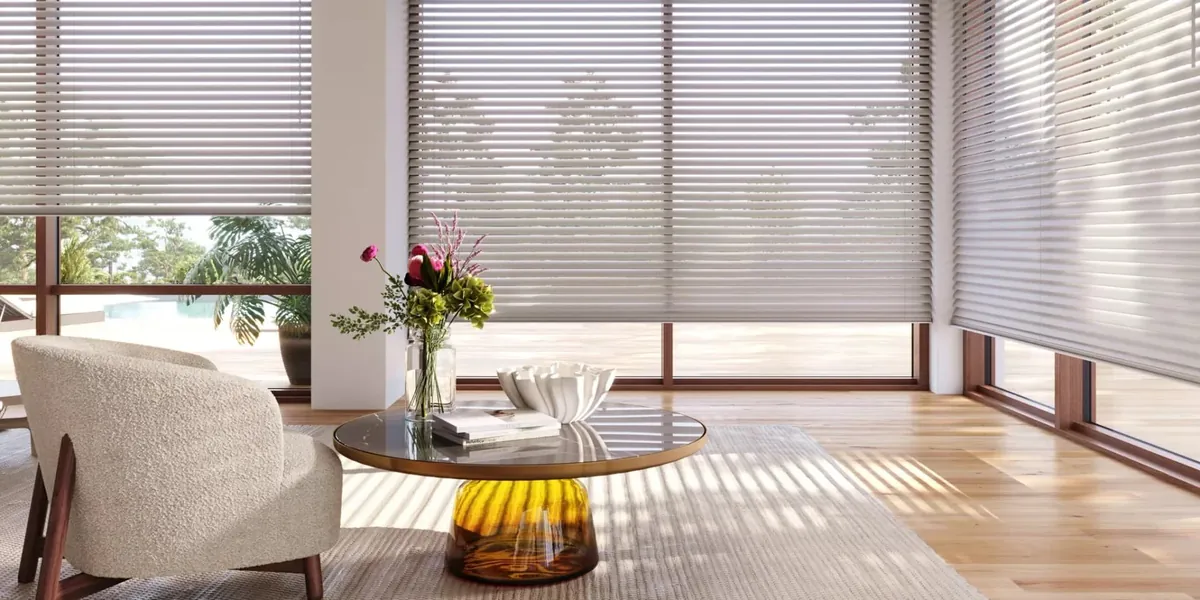
Sun and salt on the river side
Tiverton has two kinds of house that ask very different things of a blind. Inland, around Four Corners, farmhouses and shingled capes sit along the old roads with ordinary double-hung windows and a fair amount of wall between them. On the water, the houses around Nanaquaket and along the Sakonnet River open up: big windows, glass doors and whole walls glazed toward the view. Getting custom blinds in Tiverton, RI, right means knowing which kind of house you are in, and often which side of it.
The waterfront rooms are where the real work is. With that much glass facing open water, they take strong sun for hours, much of it reflected off the surface. The same rooms catch the wind and the salt that comes with it every time a window or door is left open. A blind that would last for years in a sheltered bedroom can tire quickly in a room like that, so the material, the finish and the color of each slat all have to be chosen with sun and salt in mind.
Inland, the questions are gentler: how to fit an older frame, how to match the trim, and how to give a front room some privacy from the road.
The blind range for river and village houses
Here is what we bring for custom blinds in Tiverton houses, and where each one tends to go.
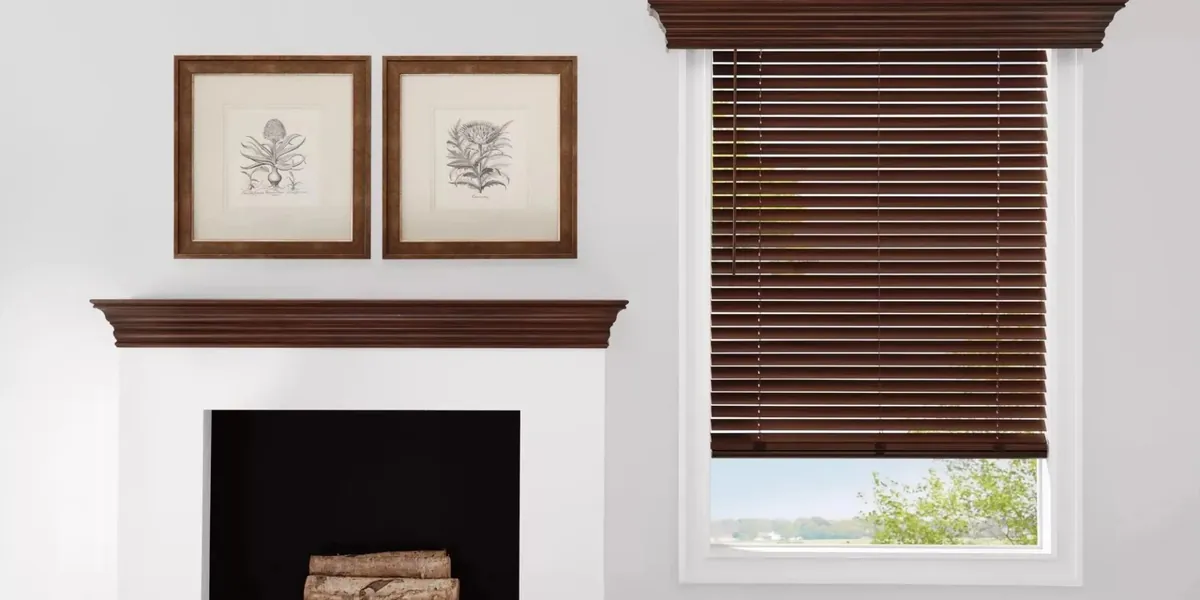
Wood blinds
Parkland real wood for a Four Corners farmhouse parlor or dining room, where the windows are sheltered and the room stays dry.
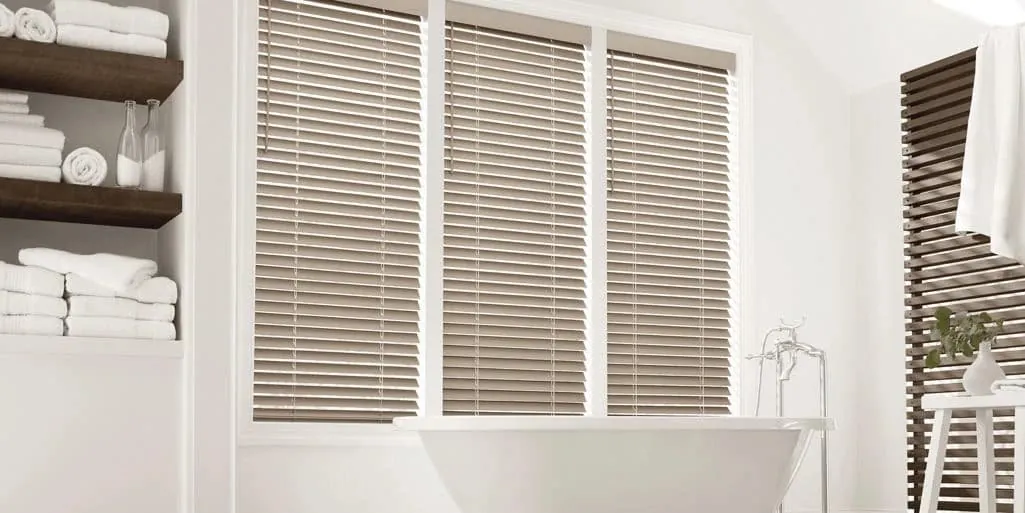
Faux wood blinds
EverWood faux wood keeps its shape and finish in salty, damp air. Our usual choice for rooms facing the river and for every bath and kitchen.
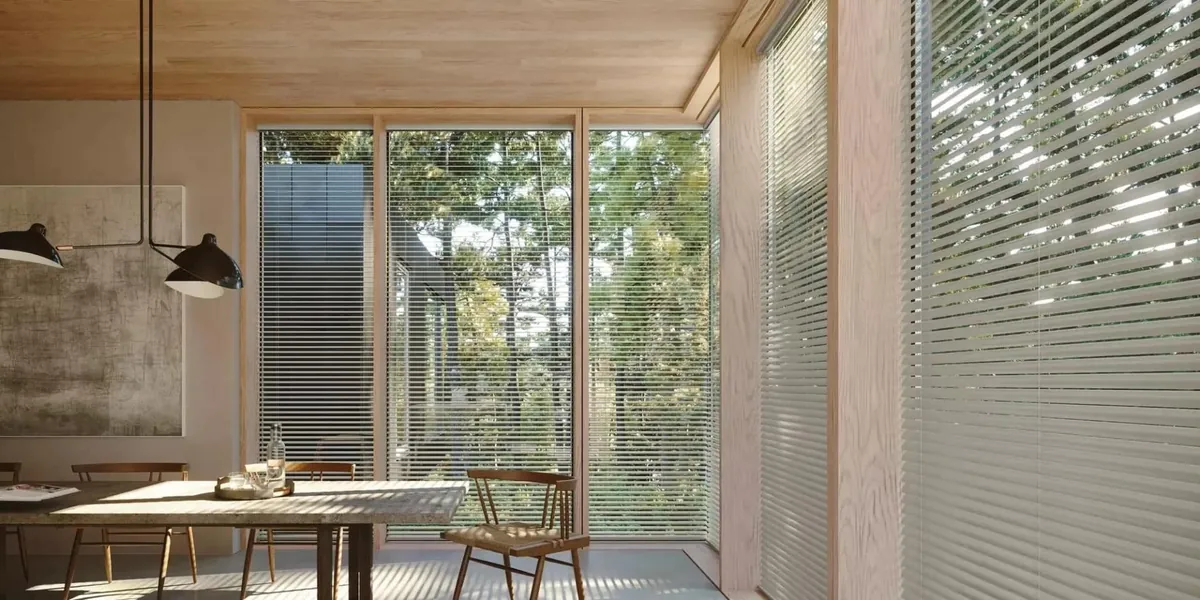
Metal blinds
Slim aluminum slats with a tiny raised stack, for tall waterfront glass where the view should stay as open as possible.
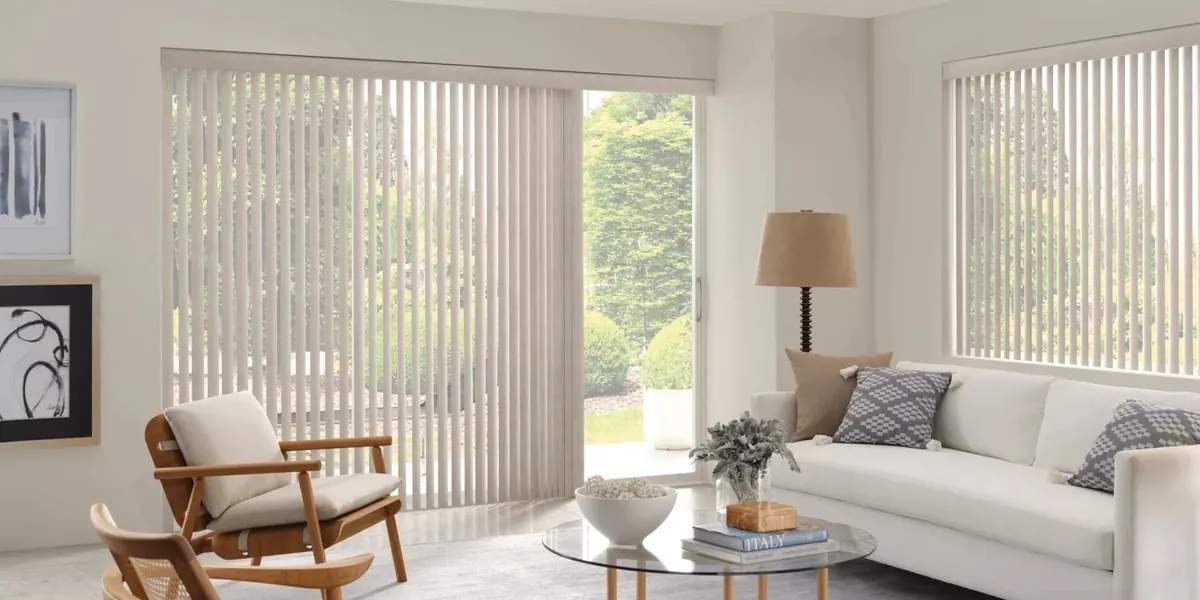
Vertical blinds
For sliders onto a deck over the water. The vanes stack to one side and turn to block the late sun.
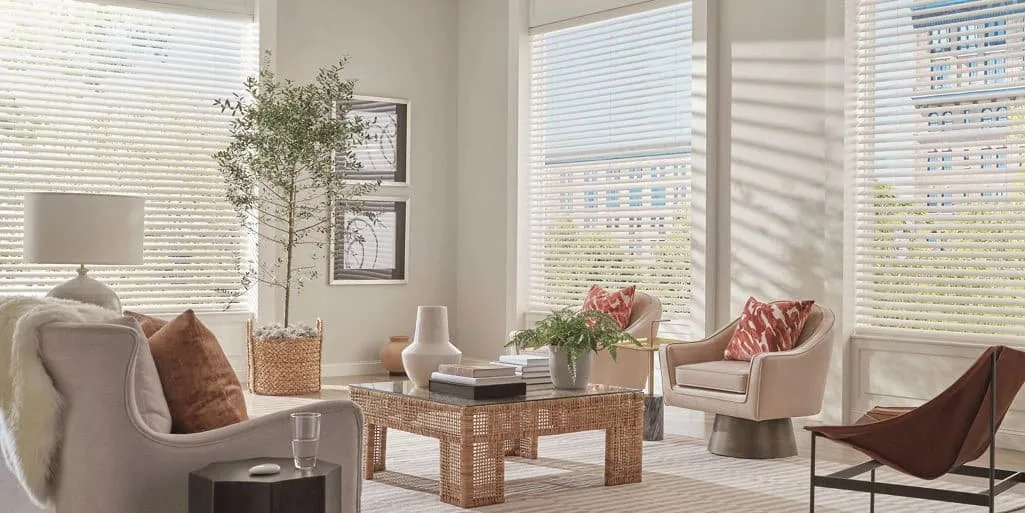
Slat colors for strong sun
Pale slats reflect heat back through the glass and hold their color in daily sun. We help you pick shades that suit a bright river room.
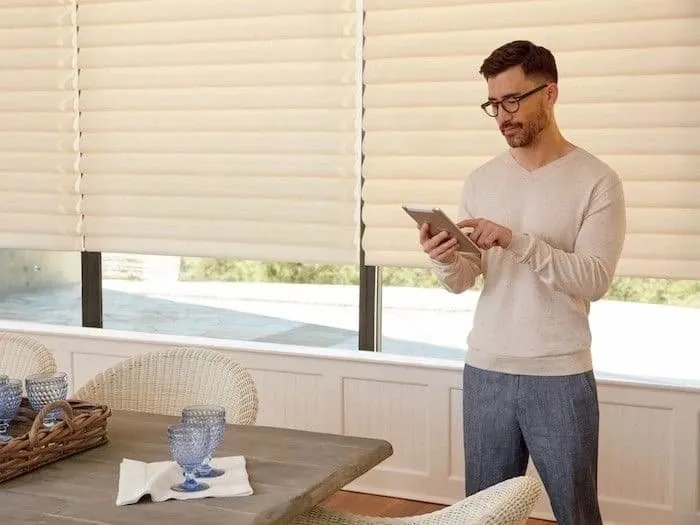
PowerView automation
Tilt every blind on a glass wall from a phone, a tablet or a schedule that follows the sun across the room.
Glass walls on Nanaquaket and the Sakonnet
The waterfront houses around Nanaquaket Pond and along the river shore are built to look out. Living rooms, kitchens and main bedrooms line up along the water side, and the builders put in as much glass as the walls would hold: picture windows, banks of casements, sliders and sometimes floor-to-ceiling panes.
All that glass brings in sun and reflected light for much of the day. On the river side, many houses look west across the water, and the late afternoon sun comes in low and straight, reflected off the river as well as from the sky. A room that is pleasant at noon can be too bright and too warm to sit in by five.
Blinds are a good fit for that kind of room because they do more than open and close. Tilted up, the slats send the light toward the ceiling, which keeps the room bright but takes the glare off faces, screens and furniture. Tilted down, they block the sky while leaving the water in view. Fully raised, they disappear into a small stack at the head of the window and leave the glass clear for the evening.
Very wide windows are best divided into two or three blinds on separate headrails. Lowered, they line up so the window reads as one; set separately, they let you shade the end of the room that takes the sun and leave the rest open.
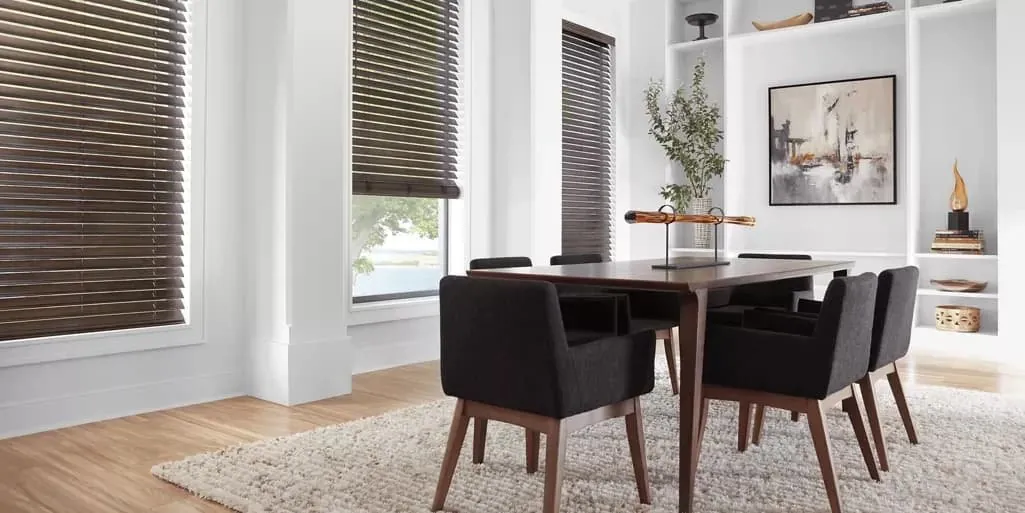
Pond side or river side
It helps to think of Tiverton’s waterfront as two settings. Houses around Nanaquaket look over a pond, a smaller and more sheltered stretch of water with houses on the far shore and the light reflecting back off a calmer surface. Houses on the open Sakonnet face a wide river with a long reach of water in front of them and the wind that comes with it.
On Nanaquaket, the glare is real but softer, and the far shore means some rooms need a little privacy even on the water side, especially in the evening with the lamps on. Blinds that tilt are ideal: angled up during the day for the glare, closed flat at night. A medium slat in faux wood or real wood suits these rooms, because the exposure is gentler.
On the river, everything is turned up. The light is stronger, the wind is harder and the salt travels further into the house. Slim aluminum or faux wood slats in pale colors make the most sense there, and cordless or motorized lift keeps the hardware to a minimum. Planning custom blinds in Tiverton waterfront houses always starts with this question, because the same room on the pond and on the river can need a different blind.
Many houses along the shore also have a deck or porch outside the glass, which shades the lower part of the window at midday but does nothing for the low sun in the late afternoon. We look at how the overhang falls before suggesting a slat color and a tilt setting.
Choosing materials for sun and salt
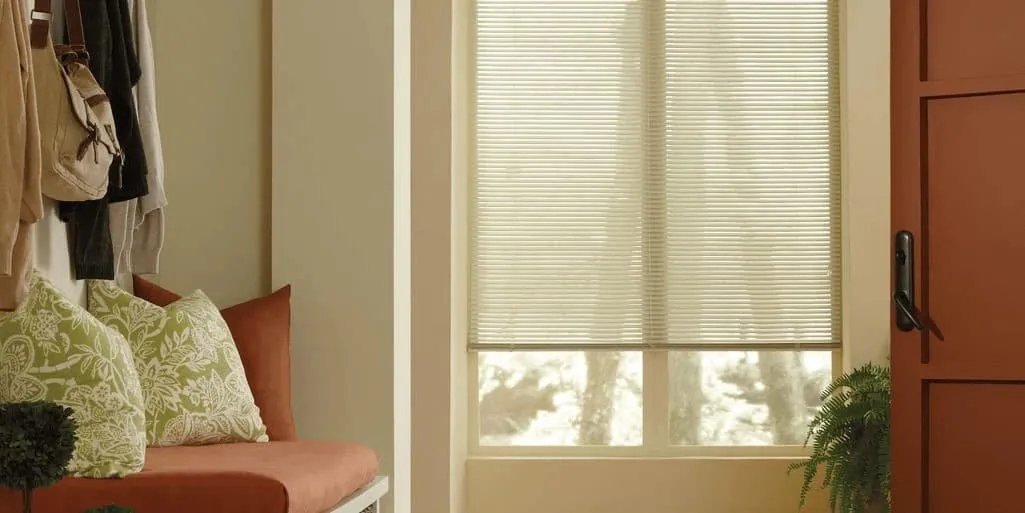
On an exposed waterfront, the material of the slat is the most important choice you make.
Faux wood is our first suggestion for any room facing the water. It looks like painted wood, but it does not take up moisture, so it keeps its shape through humid summers and the damp of the off-season. It also cleans easily. A fine film of salt builds up on anything near an open window by the water, and faux wood wipes clean with a damp cloth.
Aluminum blinds are the other strong choice for big waterfront glass, because the slats are so thin that the view between them stays wide. We talk through which finishes we would recommend for the rooms nearest the water and how close the blind will sit to a window you open often.
Real wood is beautiful and warm, and in Tiverton it belongs on the inland side of the house or in the farmhouses around Four Corners, in rooms that are heated and stay dry. Many customers use real wood in the front rooms of the house and faux wood on the water side, with slats in matching colors so the whole house looks consistent.
Color that stands up to daily sun
Strong sun day after day affects color as well as comfort. A slat that faces the river through a whole summer gets far more light than one on a shaded inland window, and over time a deep color can soften.
Lighter, neutral slat colors suit those rooms best. White, soft cream and pale natural tones reflect more heat back out through the glass, keep the room brighter when the slats are tilted, and show the least change over the years. They also sit quietly against white trim and let the view stay the main event.
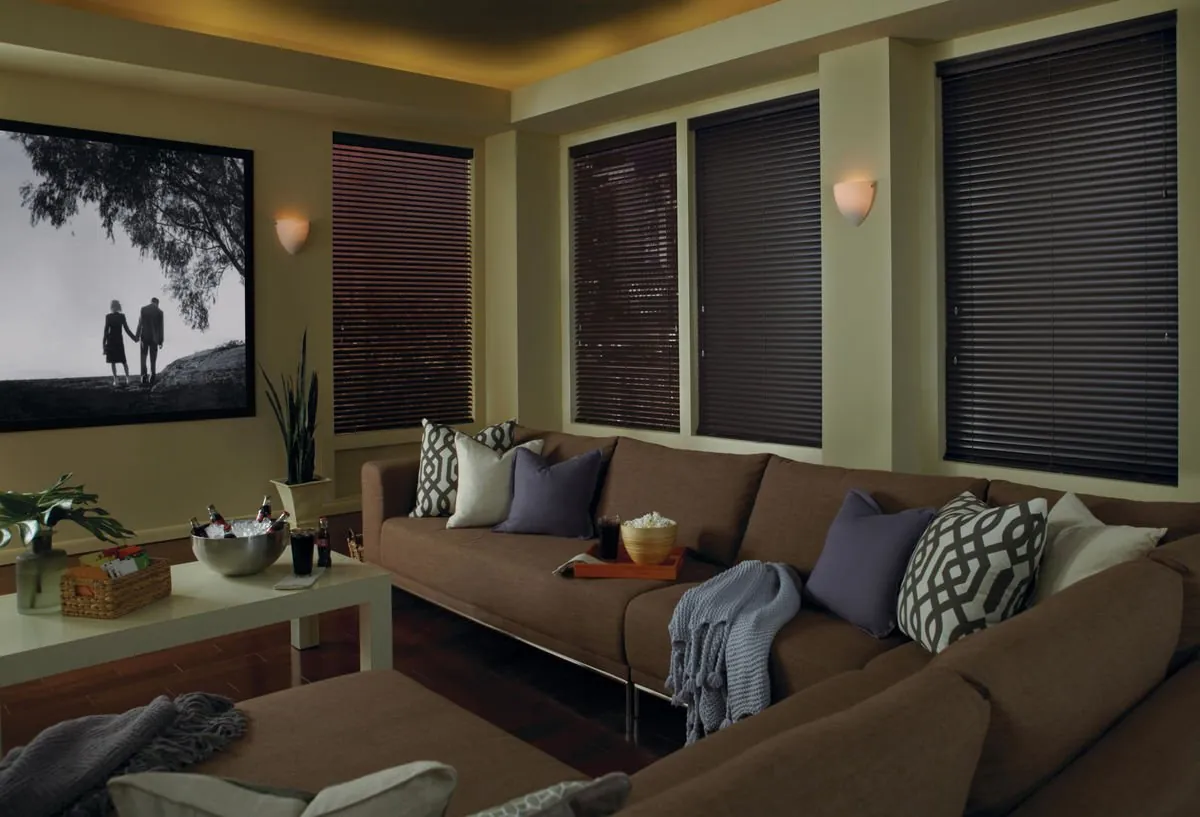
Deeper colors have their place. In a den or bedroom away from the water, a dark wood or espresso slat looks rich and closes out more light. On the water side, if you love a darker look, we can show you how it behaves against the sun at your own windows so you can decide with your eyes open.
Farmhouses and capes around Four Corners
Inland around Four Corners, the older farmhouses and shingled capes are built more for shelter than for views. The windows are double-hung, mostly modest in size, set into older frames with wide wooden casings. Some houses have been carefully restored, and the trim is part of their character.
The main thing on an older frame is fit. Houses that have stood a long time settle, so a window opening can be a little out of square. We measure each one across the top, middle and bottom and down both sides, and check the depth of the frame. Where the frame is deep and true enough, an inside mount sits neatly within the opening and leaves the casing on show. Where it is not, a slim outside mount on the trim covers the gaps a crooked frame would leave.
Capes have their bedrooms upstairs under the roof, lit by small dormers. A narrow slat and a compact headrail keep the raised blind small on that little window. Downstairs, the front rooms face the road, and a blind tilted with the slats facing down into the room keeps the view in from passing cars while letting daylight in from above.
Many of these farmhouses have a back entry or mudroom where boots, coats and dogs come in from the yard. A small window by that door takes a beating, and a tough aluminum or faux wood blind with a cordless lift is the sensible choice there. It stands up to knocks and wet hands and cleans with a quick wipe, and it keeps the entry private in the evening.
Privacy where it matters, light everywhere else
On the waterfront, privacy is rarely needed on the water side, but it often matters on the land side, where the houses along the river roads can sit fairly close to each other. A blind is useful on both sides for different reasons: on the water side for sun and glare, on the land side for privacy from the road and the house next door.
Using the same slat color on both sides keeps the house looking consistent, while the way you set them changes. In a farmhouse near Four Corners the pattern is reversed: the front rooms face the road and want privacy, while the back rooms look over fields or a yard and stay open most of the day. Either way, one set of blinds can do both jobs. A routeless slat, with no holes for the lift cords, closes tighter and suits a bedroom or bathroom on the land side. Cloth tapes down the front of the slats add a softer, more traditional look in a farmhouse parlor and cover the cord holes too.
Wind, open doors and the parts that move
A house on the water spends much of the summer with its doors and windows open. That means wind through the rooms, and with it, salt. The working parts of a blind are where wear shows first, so we look at them closely.
Cordless lift removes the cord lock at the side and the loop of cord that would otherwise hang beside the glass, tangle in the breeze and collect salt. For sliders and glass doors left open on summer afternoons, vertical blinds draw clear of the opening, and blinds mounted on a door can have hold-down brackets at the foot so they do not swing and knock.
For tall glass or a wall of windows with many blinds, motorized blinds in Tiverton let you tilt and lift from a phone or remote, or set them to angle against the afternoon sun on a schedule. With no cords at all, a motorized blind also has fewer exposed parts near an open window.

Choosing custom blinds in Tiverton for the whole house
Once we have walked through a house, the plan usually comes together like this:
- Water-facing living rooms, kitchens and bedrooms: faux wood or slim aluminum, in a pale color that handles sun.
- Inland rooms in a Four Corners farmhouse or cape: Parkland real wood, stained or painted to suit the trim.
- Baths, kitchens and mudrooms anywhere in the house: faux wood.
- Sliders and glass doors to a deck: vertical blinds.
- Small dormers and shallow frames: a narrow slat or aluminum, with a compact headrail.
You choose the final mix after seeing the samples in your own rooms.
How the home visit works
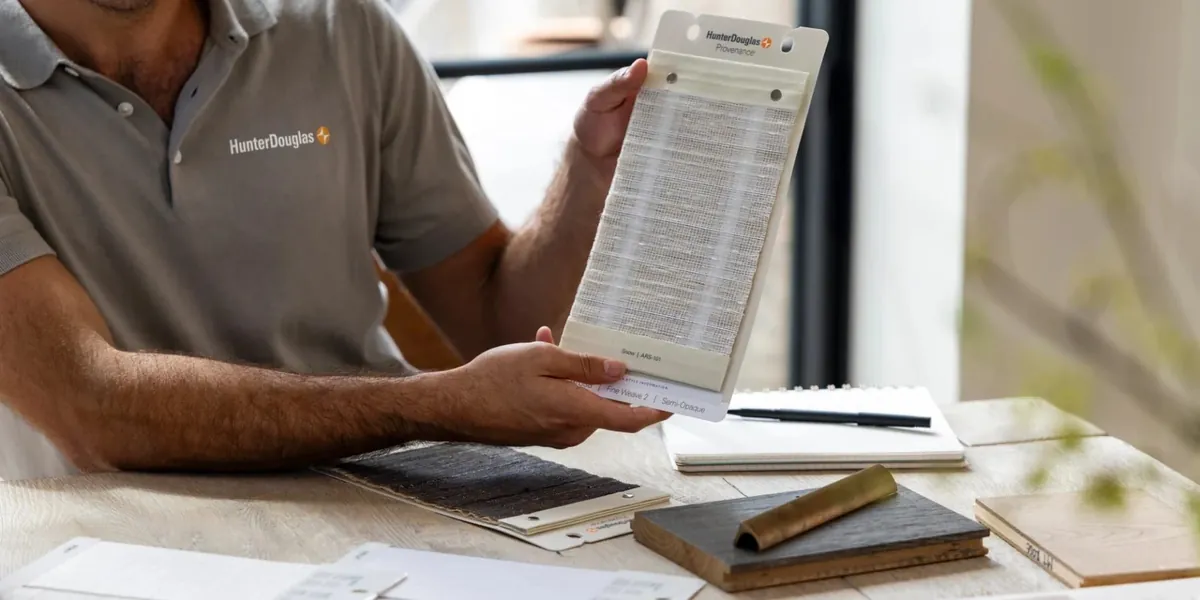
Waterfront light and old farmhouse trim are both hard to judge away from the house, so most Tiverton customers choose their blinds at home. Our vans carry the full sample range, so we bring the showroom to you.
- Book through Request a Consultation or the call button.
- A consultant brings wood, faux wood, aluminum and vertical samples, with the lift and tilt options.
- You go through the house together, water side first, and talk about how each room is used and when it takes the sun.
- You try the samples at the glass and against the trim, at the hour the light is strongest if you can.
- Every window is measured at several points and the frame depths are checked.
- A free estimate follows for the blinds you have chosen, and there is no pressure to decide that day.
If you want help with the wider room, ask about our interior design consultations at the same visit. The guide to what happens at an in-home consultation has more.
When the blinds arrive, our certified Hunter Douglas installers fit each one into solid framing, set it level, work it through its full lift and tilt and show you the controls before they go.
A Hunter Douglas Gallery dealer for Tiverton
Blinds & Designs is a Hunter Douglas Gallery dealer, the designation Hunter Douglas gives to dealers who meet its standards. Through us you can choose from the full blind range: Parkland wood, EverWood faux wood, aluminum and vertical blinds, with the lift systems and PowerView automation.
We measure, order and fit your blinds, with installers certified by Hunter Douglas, and we offer blind and shade repairs if one ever needs attention.
See the range on our Hunter Douglas blinds page, with more on metal blinds. For other rooms, look at roller shades in Tiverton or cellular shades in Tiverton, or see everything we do in town on our Tiverton page.
Questions from Tiverton
What blind holds up in a room facing the Sakonnet River?
Faux wood or aluminum. Faux wood keeps its shape in salty, damp air and wipes clean, and slim aluminum keeps the view open on big glass. Real wood is better kept for sheltered, dry rooms.
How do I deal with the low afternoon sun off the water?
Tilt the slats upward. The light hits the slats and goes to the ceiling, so the room stays bright without the glare. A pale slat color also reflects more heat back out.
Will the color fade in a sunny waterfront room?
Lighter, neutral slats show the least change in strong daily sun. We bring samples so you can choose colors that suit a bright window.
Can a blind fit the old windows in a Four Corners farmhouse?
Yes. Each blind is made to its window, and we measure at several points to choose an inside or outside mount that suits the frame.
Do you charge for the estimate?
No. We measure your windows and give you a free estimate for the blinds you are considering.
See the samples in your own light
The best way to choose custom blinds in Tiverton, RI, is with the river light in the room and the samples in your hand. Request a consultation and we will bring the range, measure every window and leave you a free estimate. To see the blinds in person first, the North Dartmouth showroom is the nearest of our locations, or use the call button with any question.