
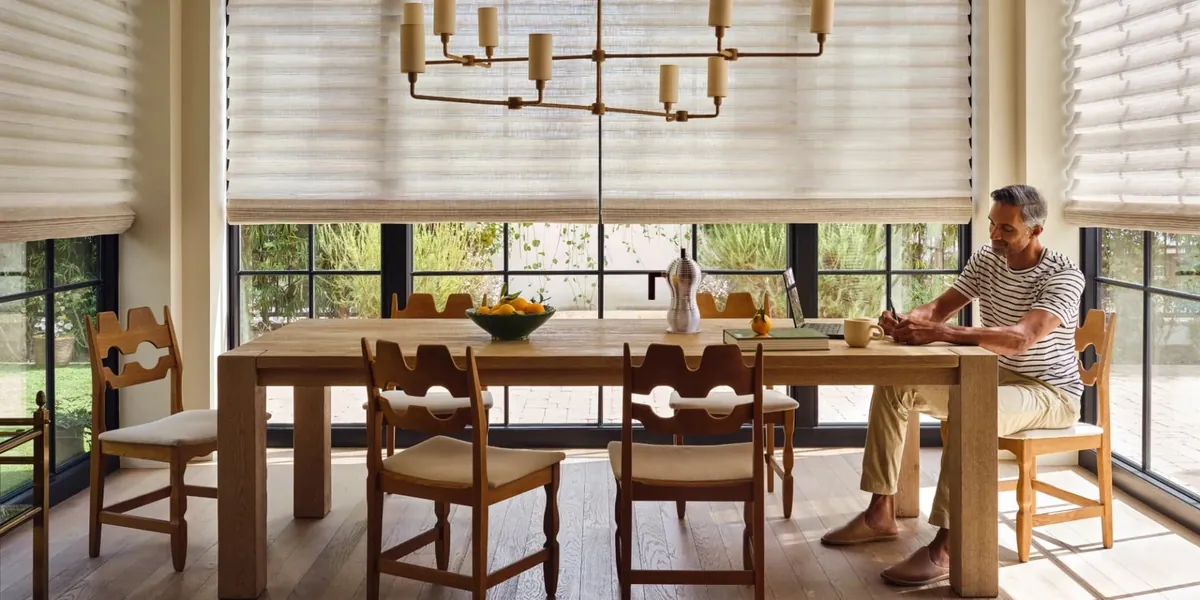
Afternoon sun across the Sakonnet
Tiverton has two kinds of house, and they ask very different things of a window covering. Inland, around Four Corners, there are farmhouses and shingled capes with modest windows and old trim. On the water, the houses on Nanaquaket and along the Sakonnet River open their main rooms to the view with large panes of glass, and those rooms sit exposed to sun, wind and salt. Getting roman shades in Tiverton, RI right means knowing which of the two you are standing in.
On the river side the shoreline looks west, so the water-facing rooms take the strongest light late in the day, when the sun drops low across the river and straight into the house. Add reflection off the water and the glare can make a living room hard to use for a couple of hours every afternoon. Salt in the air settles on anything near a window left open in summer.
Fabric choice carries most of the weight here. Each roman shade is a single length of fabric cut for one window: drawn up, it gathers into tidy pleats above the glass; let down, it hangs flat or in gentle loops across it. The weave, the color and the lining decide how it copes with that western sun, and how well it keeps its looks.
Picking a weave for a west-facing shore
Vignette and Carole Fabrics are the two Hunter Douglas names for roman shades, in flat and folded styles. For roman shades in Tiverton these three ideas cover most of the house.
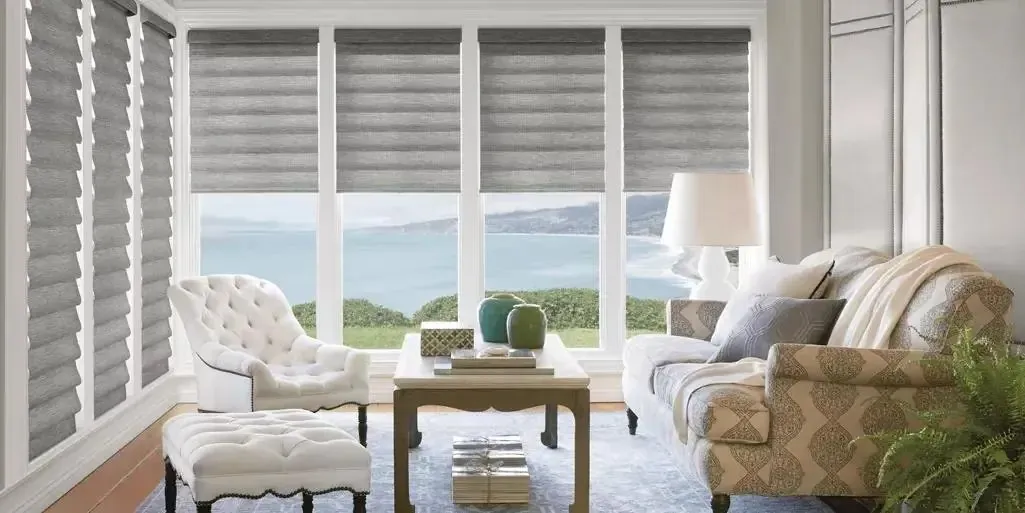
Soft gray for the river room
A light-filtering fabric in a soft gray or stone cuts late-day glare and makes the water easier to look at through it. Paler colors also keep their tone longer in hard sun.
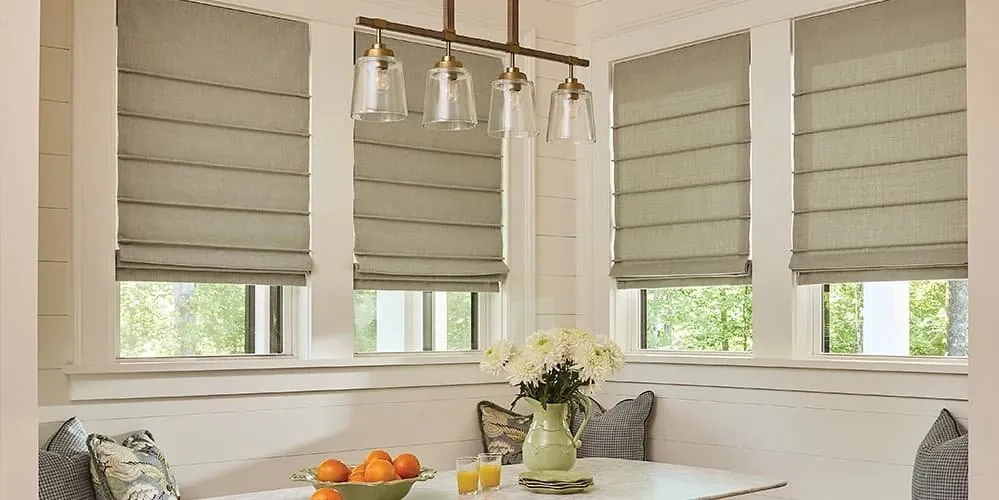
Flat folds for the farmhouse kitchen
Inland, a crisp flat fold suits the small windows of a Four Corners farmhouse and stacks neatly above the sink, clear of the taps and the counter.
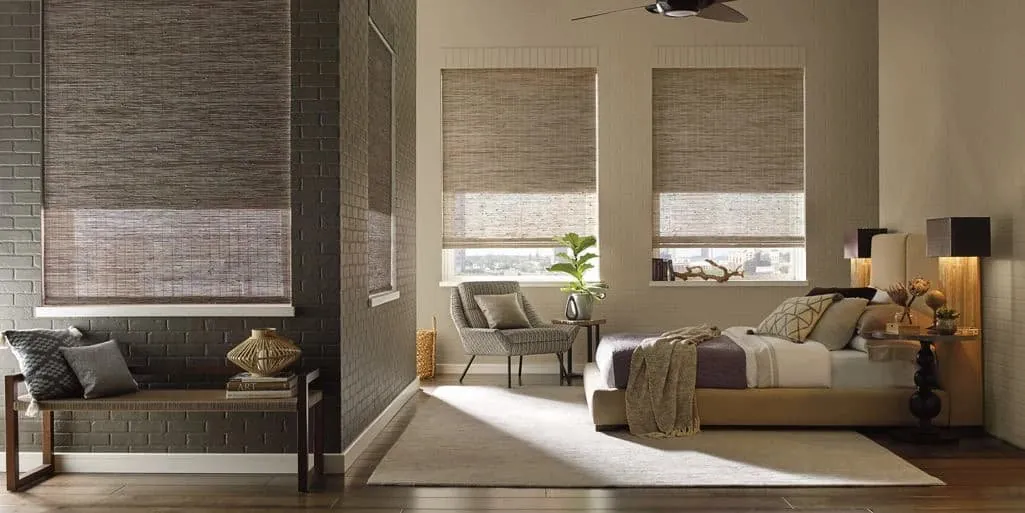
Heavier weaves for the bedroom
Bedrooms on the water side catch the evening light right up to sunset. A lined or room-darkening fabric, or a denser woven roman, keeps them calm.
Farmhouses and capes around Four Corners
The old houses around Four Corners grew up around a crossroads village, and many are farmhouses with additions built over the years and shingled capes set close to the road. Their windows are mostly modest double-hung sash with simple painted trim, and few of them are exactly the same size, even on the same wall.
In these houses, a roman shade does a quieter job. It brings color and softness to a room and gives privacy where the house sits near the road, without hiding the old woodwork. Mounted inside the frame, the shade leaves the trim on show and disappears into a small stack at the top when raised. A flat fold keeps that stack as small as possible on a short sash window.
The front rooms of a cape near the road need privacy during the day as well as at night. A light-filtering fabric does the daytime work, letting the room glow without showing what is inside. For evenings, when the lamps are on, a lined fabric is the safer choice, and many people choose one fabric that combines both.
Additions and sunrooms on the old capes
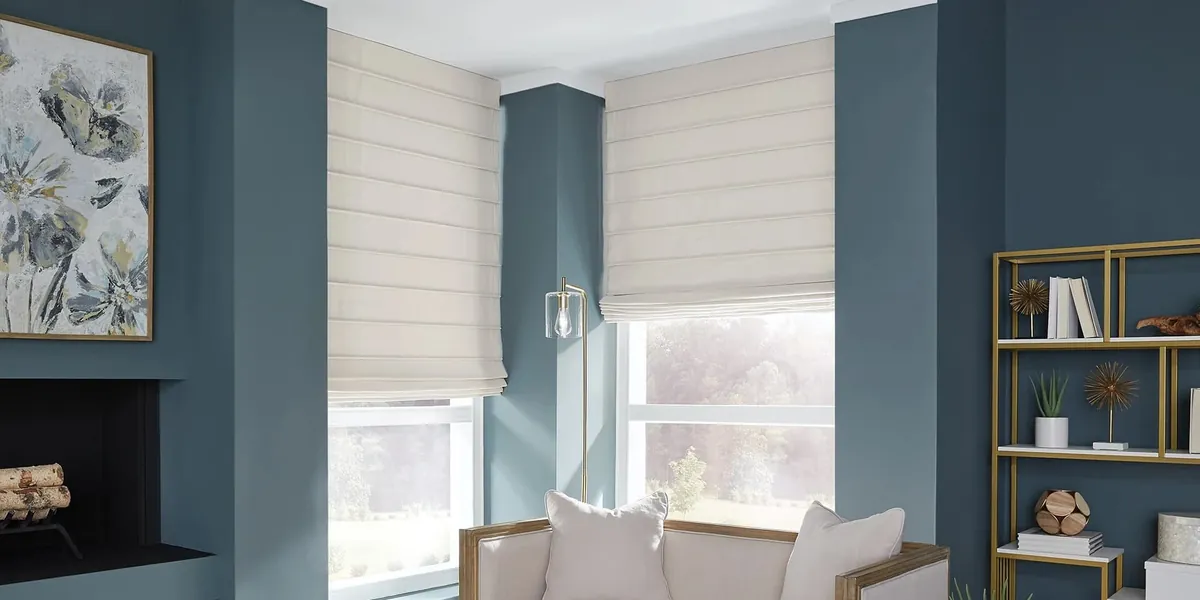
Plenty of the capes and farmhouses inland have grown over the years. A sunroom tacked onto the back, a family room over a new foundation, a kitchen pushed out toward the garden: each brings newer, larger windows into a house whose original rooms still have small sash. Standing in the hall, you can often see both kinds of window at once. The sizes, the trim and even the depth of the frames can change from one doorway to the next, which is why every opening is measured on its own.
Roman shades are a good way to make the old and new parts feel like one house. We keep a single fabric family running through, then adjust the weight from room to room. The original front rooms might take a lined linen-look Carole Fabrics flat fold; the sunroom addition might take the same color in a lighter, light-filtering weave so it stays bright. From the road, the windows look consistent, and inside, each room gets the light control it needs.
A sunroom built onto an inland cape usually faces the back garden, and it can heat up quickly on a summer afternoon even without the water nearby. Lowering the shades during the hottest hours keeps the room usable, and in winter the same shades, lowered at night, take a little of the chill off the glass. Thinking about the whole house this way is how we approach roman shades in Tiverton, rather than one window at a time.
Glass on the water side of Nanaquaket
Around Nanaquaket the houses are built to face the pond and the water beyond it, and the rooms on that side are glazed heavily: wide picture windows, sliders, French doors and sometimes a sunroom. These are the rooms where you spend your time, and they are fully exposed to the weather and the light.
A long row of big panes usually gets its own shade for each pane, every headrail set at the same height, so a raised row reads as one clean line. Because they move separately, you can drop the two or three that the sun is hitting and leave the others up for the outlook. A light-filtering weave is our usual starting point, because the room should feel connected to the water, not shut away from it.
Sliders and French doors need some thought. Over a slider, the shade goes high enough that its folds leave the whole doorway free. On a hinged door, the shade is fixed to the door leaf, with small brackets at the bottom that keep the fabric from flapping each time someone steps out to the deck.
Along the Sakonnet River, the hours before sunset
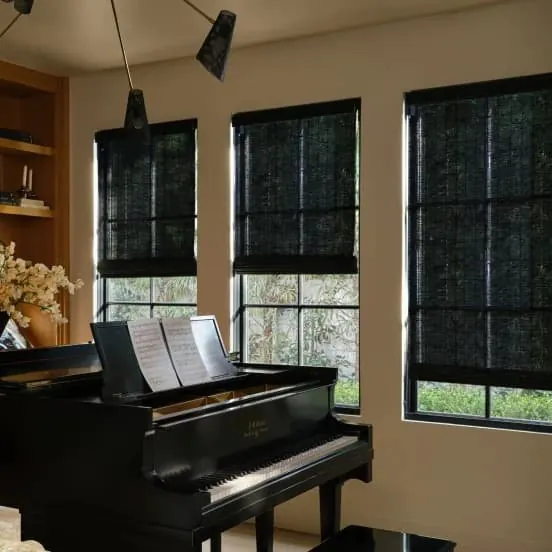
The houses on the river take the afternoon and evening sun head on. In summer, from mid-afternoon onward, the light comes in low under the eaves, across the floor and onto the furniture. It is lovely to watch but it brings heat and a glare that makes reading, working or watching a screen difficult.
That is where a roman shade on each window really proves itself. Lower the river-side shades as the sun drops and the room stays bright but comfortable; raise them again for the last of the sunset. A fabric with a little more density on the windows that take the most direct sun, and a lighter one elsewhere in the same color, keeps the room even.
Shades that are lowered for a few hours most summer days take a lot of sun over the years. A lining behind the face fabric protects it, and lighter, neutral fabrics hold their color better than strong ones. We pick out the fabrics in the sample books that suit a west window on the water.
Salt on the sill
Anyone who lives by the Sakonnet knows how salt finds its way indoors on a breezy day. It leaves a dull film on window locks, hinges and anything metal close to an open sash. That is one reason a roman shade suits these houses: its lifting mechanism is tucked away in the headrail at the top, and the fabric itself has nothing to rust.
Going cordless helps further. With no pull cord and no lock on the side of the frame, there is simply less hardware sitting in the breeze. Brackets are screwed into solid framing rather than plaster, so a shade on a sash that is pushed up every warm morning stays square and firm.
The fabric side of the shade facing the glass is the part that collects any salty film. We suggest weaves that tolerate a gentle wipe or a vacuum with a soft brush, and we explain how to look after them when we hand the shades over.
Our visit, in order
A fabric swatch that reads as warm white under a lamp can turn blue gray once river light is behind it at five in the afternoon. So we would rather you judged it against your own windows. Our vans travel with the sample range, which means we can bring the showroom to you.
- Pick a time that suits you, through the website or the call button.
- The consultant comes with the roman fabric books, woven romans, a few sheer shade samples and working models of each fold and lift.
- The water-facing rooms come first, then the bedrooms, then the rooms toward the road.
- You hang fabrics against the glass yourself, if possible close to the hour the glare is at its worst.
- Every opening is measured, sunroom panels and doors included.
- A free estimate follows, and there is no deadline for your answer.
Planning a bigger change to a room? Our interior design consultations can deal with color and fabric for the whole space in the same appointment. For more detail, see what happens at an in-home consultation.
Shades that lower themselves before sunset
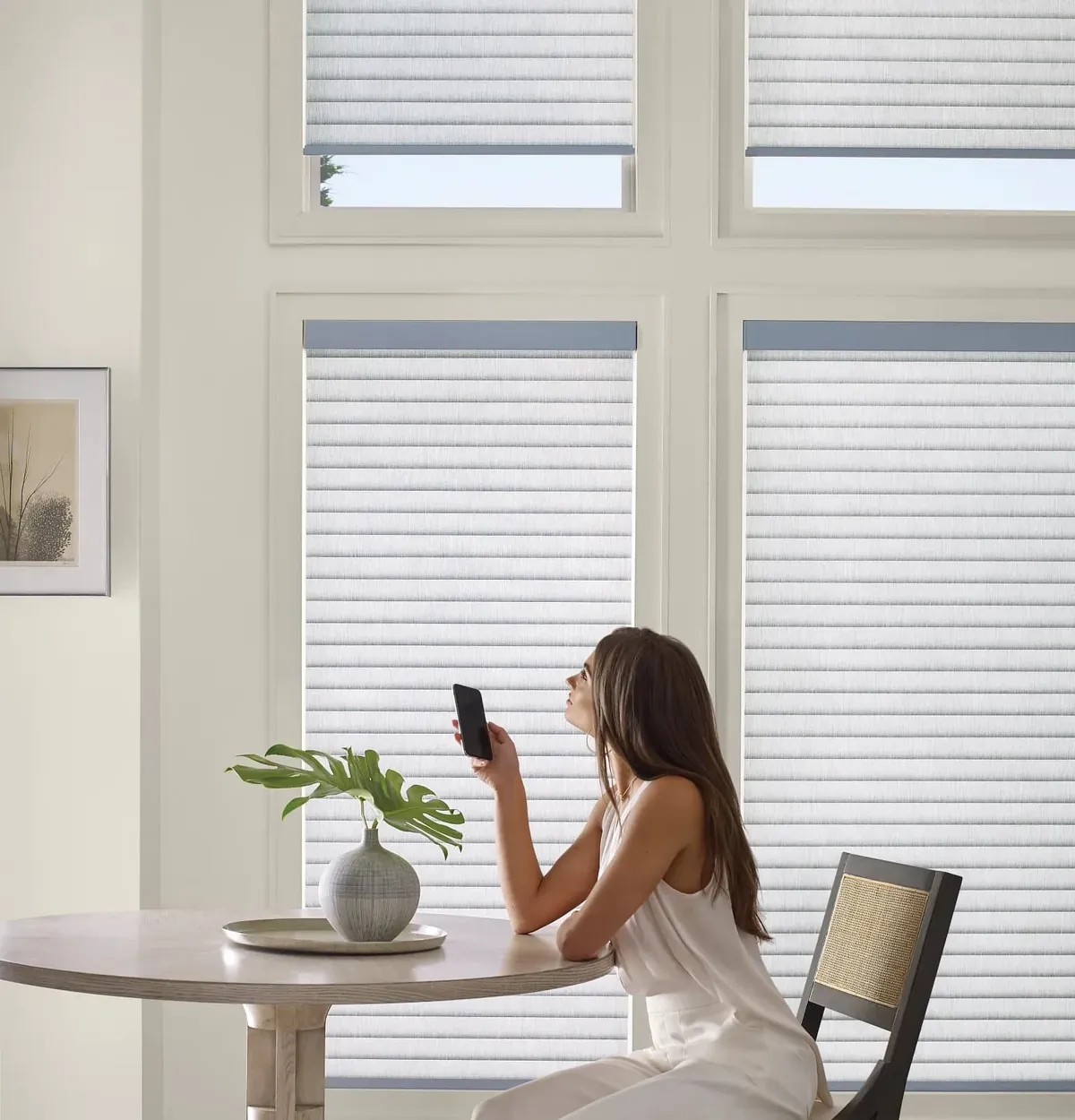
If the glare turns up at roughly the same hour every afternoon, there is no reason to keep getting up for it. With PowerView motorization the river-side shades can follow a timetable: down as the sun sinks toward the far bank, back up for the last of the color in the sky. A small remote or the app on your phone moves them in between.
Motorizing pays off most on tall glass, on sunroom panels you cannot easily reach, and in a house that stands empty for weeks, where a timetable shields the furniture and keeps the place looking lived in. A working motorized sample comes with us, so you can try the controls yourself before deciding.
A sheer shade for the biggest glass
For a wall of glass where the view is everything, some people want even less fabric than a sheer roman. Hunter Douglas’s sheer shades, such as Silhouette, have soft fabric vanes between two sheer layers. They tilt open to let the view through and close for privacy, while still taking the edge off glare.
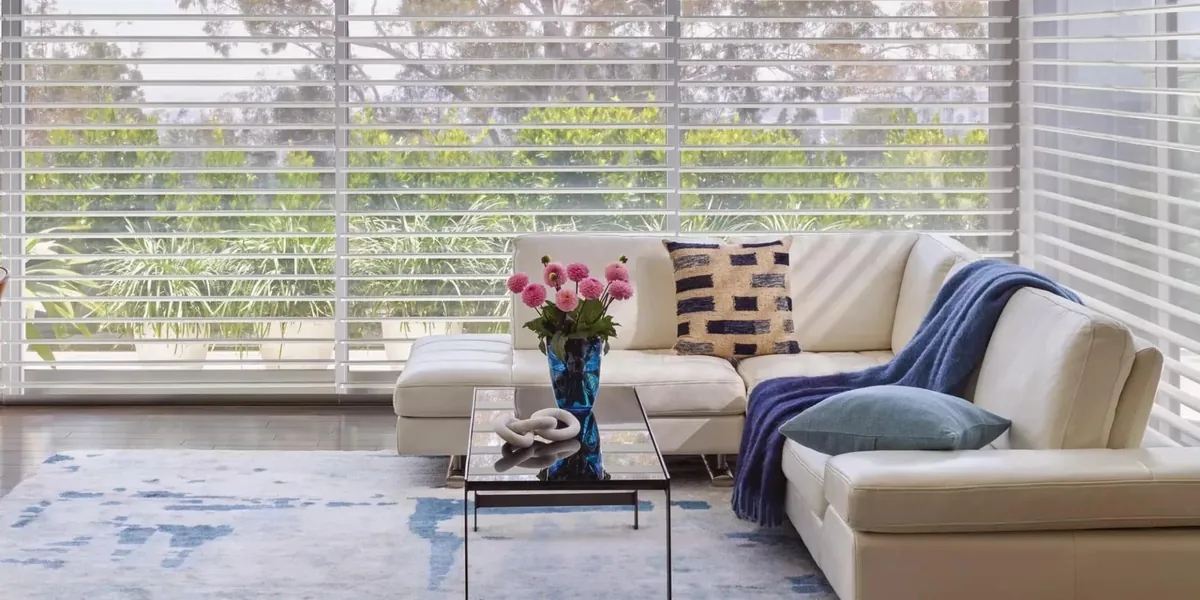
We bring sheer shade samples alongside the roman fabrics, so you can compare them on your own windows. It is common to choose sheer shades for the largest panes facing the water and roman shades for the bedrooms, kitchen and inland rooms. Our sheer shades page explains them in more detail.
Side panels with a roman shade
In a living room with tall windows and wide walls, side panels beside a roman shade give the window a finished frame. The shade does the work of controlling light, and the panels add color, soften the room and can be drawn for extra cover on a winter night.
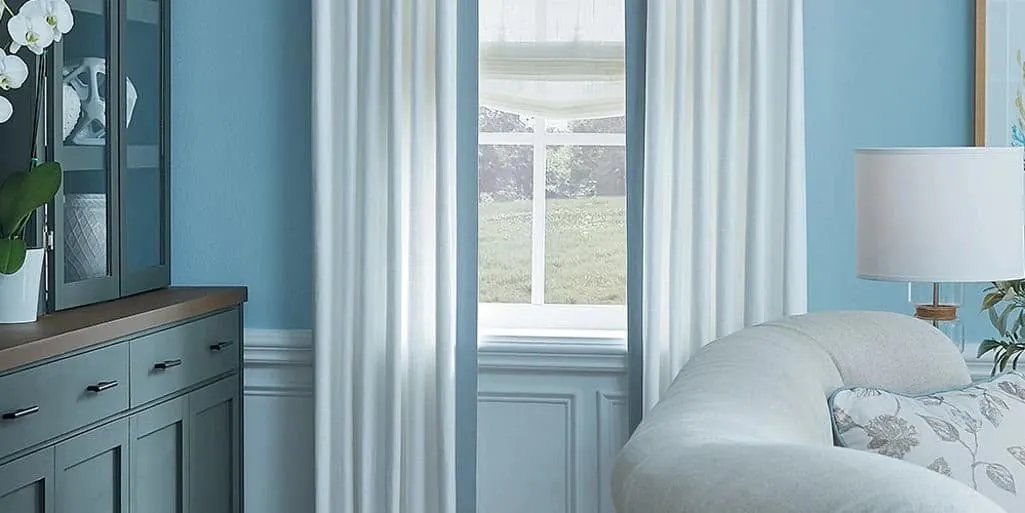
In a small farmhouse room near Four Corners, panels may crowd a modest window, and the shade on its own often looks better. We will say which rooms benefit and which do not.
Vignette and Carole Fabrics
Vignette is the Hunter Douglas take on a modern roman. The fabric rolls into soft, rounded folds, and the rear of the shade carries no cords, so from a boat or a neighbor’s dock it looks as tidy as it does from the sofa. Carole Fabrics is the place to go for traditional flat and soft folds, with an enormous choice of cloth, including checks, stripes and linens that sit naturally in a farmhouse room.
In a typical Tiverton house the two divide the work: Vignette along the water side, Carole Fabrics in the kitchen and upstairs. See the full range on our roman shades page, or read about Vignette modern roman shades and Carole roman shades on their own pages.
Fitting each window
Because each shade is made to its window, the measurements matter. On an old farmhouse sash they need extra care; on big waterfront glass the focus is on how the shades line up.
- Width at the top, middle and bottom of each opening, and height at both sides and the center.
- Frame depth for an inside mount, with any locks, cranks or storms noted.
- How door and slider shades will clear the handle and the opening.
- Mount, fabric, fold, lining and lift agreed with you window by window.
- Installation by our certified Hunter Douglas installers, who level each headrail, test every lift and walk you through how the shades work.
Measured and fitted that way, roman shades in Tiverton sit cleanly in old frames and line up neatly across the biggest river-side windows.
Why a Gallery dealer matters
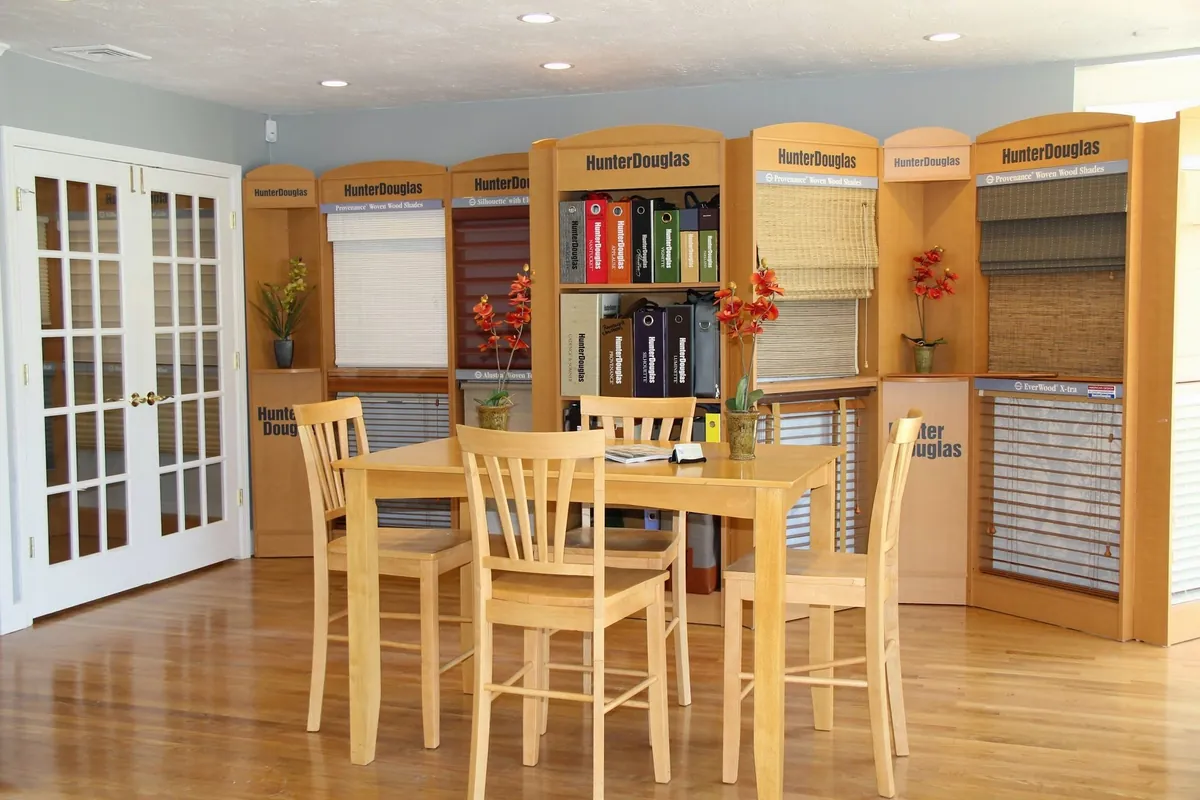
Hunter Douglas reserves its Gallery designation for dealers who meet its standards, and Blinds & Designs carries it. For you, that opens up the complete roman range in one consultation: all the Vignette and Carole Fabrics styles, the woven textures, the lift systems and PowerView, as well as sheer shades to compare.
Our installers are certified by Hunter Douglas, and they fit every shade the way the maker designed it. Should anything need fixing later, we handle blind and shade repairs.
We can plan other rooms at the same time, from cellular shades in Tiverton for a cold farmhouse bedroom to roller shades in Tiverton for a screened porch. Everything we do in town is on our Tiverton page.

Samples brought to Four Corners or the shore
Whether you live in a farmhouse near the crossroads or a house right on the river, the visit works the same way. We bring the samples, look at each window and help you choose what suits each room.
If you would like to see the range before we visit, the North Dartmouth showroom is our nearest to Tiverton, a short drive across the state line.
Questions from Tiverton
My living room faces the river and the late sun is blinding. What helps?
A light-filtering roman fabric on each window cuts the glare while you can still see the water. Lower only the shades the sun has reached, and with PowerView you can set them to drop automatically every afternoon.
Will salt air damage roman shades?
Very little of a roman shade is exposed: the lifting parts live in the headrail, and going cordless takes away the side lock. The brackets are screwed into solid framing, and we suggest weaves that tolerate a gentle clean.
Which colors fade least on a west window over the water?
Pale stone, oatmeal, soft white and light gray stay truest the longest. A lining added behind the face cloth shields it further from the afternoon sun.
Can I have a roman shade on a door to the deck?
Yes. It is fixed to the door leaf above the glass, kept narrow enough to miss the handle, and held at the bottom by small brackets so it does not swing.
Is the estimate free?
It is. Once every window has been measured, the estimate costs you nothing. Book a consultation and the samples come to you.
Try the fabrics at your own windows
River house or farmhouse, the right cloth is easiest to spot against your own glass. Book a consultation and we will arrive with Vignette, Carole Fabrics, woven and sheer samples, measure each opening and leave a free estimate for roman shades in Tiverton, RI. Prefer a conversation first? Use the call button, or call in at our North Dartmouth showroom.