
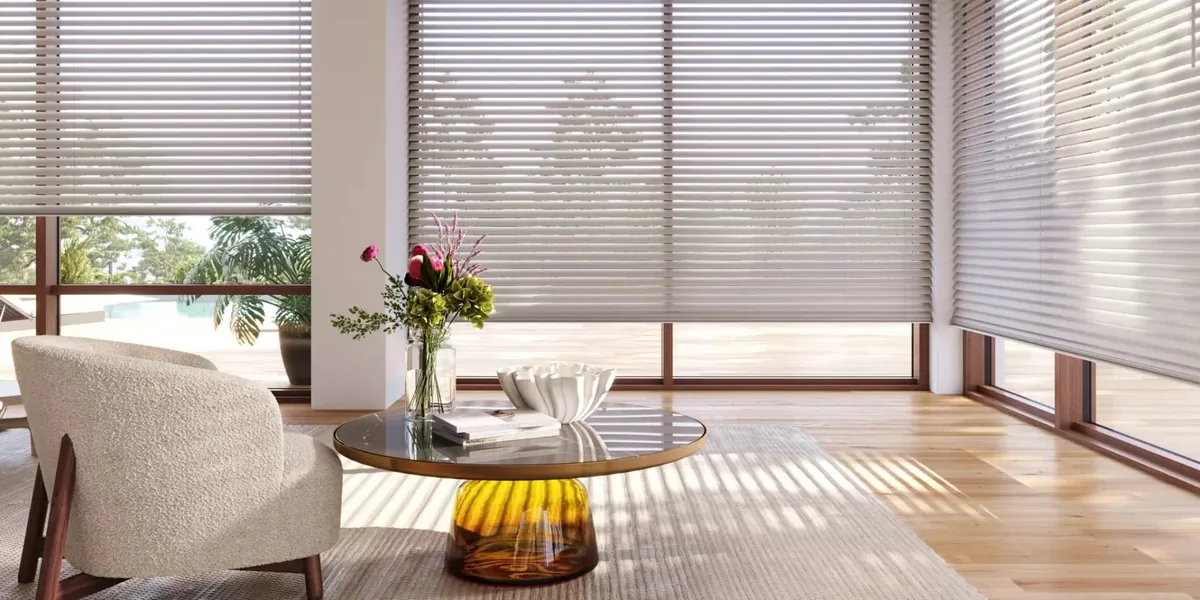
Two shores, two kinds of light
Portsmouth sits on the north end of Aquidneck Island with Narragansett Bay on one side and the Sakonnet River on the other. That geography decides a lot about how a house lives. Most homes here have a bright side that looks out over open water and a quieter side that faces the land, and the windows on each side want something different. When we plan custom blinds in Portsmouth, RI, we start by standing in each room and noting which way the glass faces.
On the bright side, light comes in twice: once from the sky and again off the water, low and hard in the morning or late afternoon depending on which shore you are on. On the shaded side the trouble is the opposite. Rooms can feel dim, and the aim is to let in every bit of daylight while still giving privacy at night.
A good blind handles both. Tilt the slats and you choose exactly how much light comes in and where it lands, without raising anything. That simple control is why horizontal blinds remain one of the most useful window coverings for a house with water on one side and neighbors on the other.
Custom blinds in Portsmouth, RI, by material
Every blind we sell is made to the measurements we take at your windows. These are the four families from the Hunter Douglas range, and our vans carry samples of each.
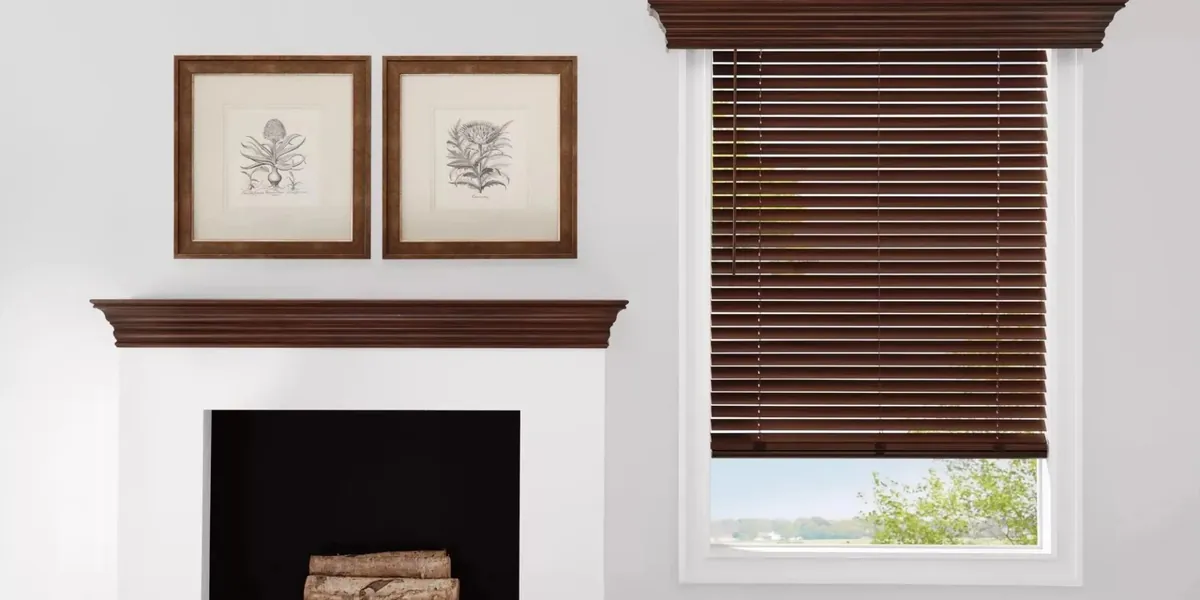
Wood blinds
Real hardwood slats in stains or paints. Warm and solid in a living room or den, and a natural partner for older trim and wood floors.
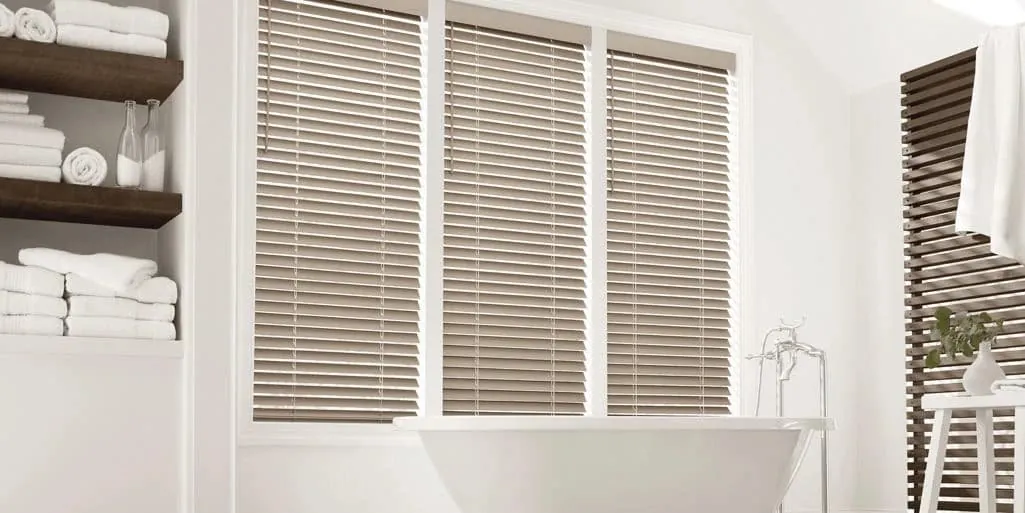
Faux wood blinds
The painted-wood look in a material that shrugs off steam and damp air. Our usual pick for baths, kitchens and rooms close to the water.
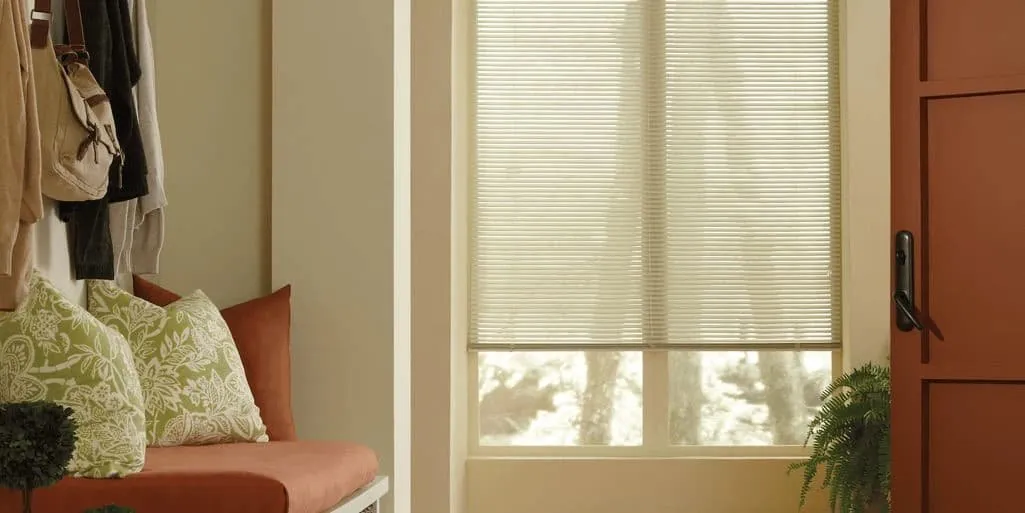
Metal blinds
Slim aluminum slats with a light headrail, so they suit shallow frames, small cottage windows and doors where a bulky blind would get in the way.
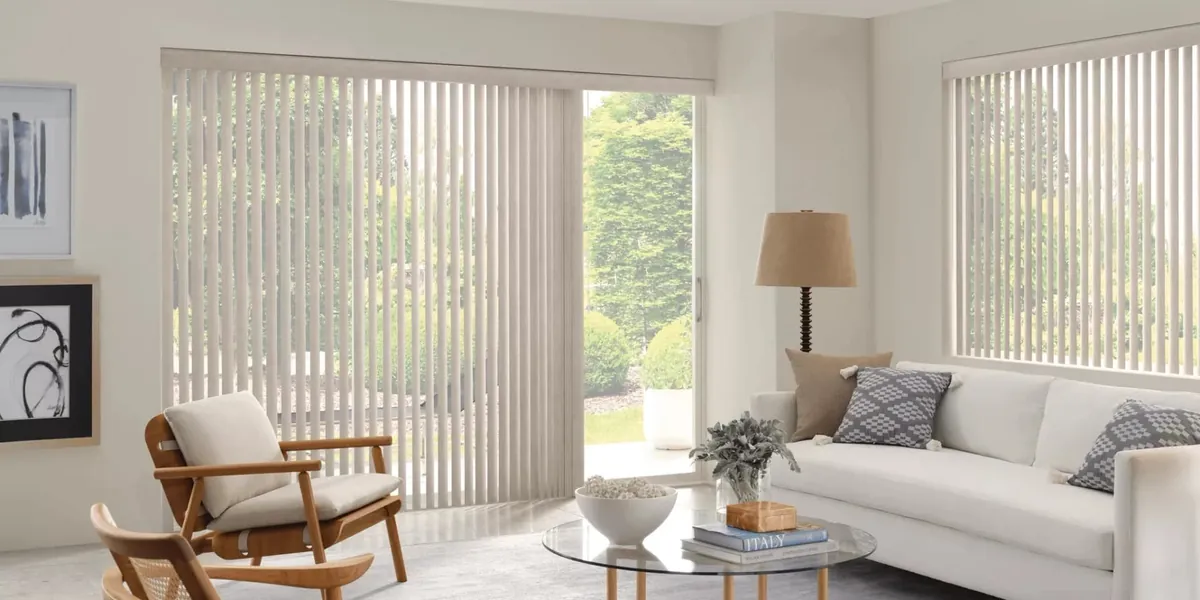
Vertical blinds
Vanes that hang from the top and draw to one side, made for the sliders and wide patio doors that open onto a deck or a bay view.
Sun off the water on the bright side
The rooms that face the bay or the river are usually the ones you built the house around: a living room with a wide window, a kitchen with a view over the sink, a primary bedroom that looks at the water. They are also the rooms that take the most punishment from the sun.
Water reflects light upward, so glare reaches parts of the room that ordinary sunlight would miss. A blind deals with that in a way few other coverings can. Tilt the slats with the rounded side facing up and the light is thrown toward the ceiling, where it spreads softly across the room instead of striking the sofa or the television. You keep the brightness and lose the glare.
Color matters on these windows too. Strong daily sun fades dark stains and saturated paints faster than soft whites and natural tones. If you love a dark wood, we can show you how it looks in that light and talk honestly about how it will age. For a window that takes direct sun most of the day, many people choose a lighter slat facing the glass and save the richer stains for the rooms behind.
The quieter side of the house
The land side of a Portsmouth house often has smaller windows, closer neighbors and less direct sun. Here the job is mostly privacy and comfort. A blind lets you tilt the slats just enough to block a view from the road or the house next door while daylight still filters in from above.
Rooms on this side can feel dark in winter, so we often suggest a lighter slat color that bounces what light there is back into the room. Wider slats leave more open space between them when tilted flat, which also lets more light through. When the slats are closed tight at night the room becomes completely private, which suits bedrooms and bathrooms on the side facing the street.
Island Park and Common Fence Point cottages
Down by the water at Island Park and out on Common Fence Point, many houses began as small summer cottages and have been winterised and added onto over the years. Their windows tend to be modest in size, sometimes a mix of original openings and newer replacement units side by side in the same wall, and they sit close to salt water.
Damp, salty air is the first thing we think about in these houses. Real wood is lovely, but it is happiest in a dry room. In a cottage a short walk from the shore, faux wood or metal blinds hold up better: they do not swell, warp or mind a little condensation on a cold morning, and they wipe clean. We still use real wood happily in an inland room or a heated living space that stays dry.
Space is the second thing. Small rooms and low ceilings mean every inch of glass counts. A slim metal blind with a low-profile headrail keeps more of the window clear when it is raised, and an outside mount above the frame can lift the stack off the glass completely. Where an addition has larger windows than the original cottage, we match the slat color across both parts so the house reads as one from the road.
Colonials off East Main Road
Away from the shoreline, the newer colonials off East Main Road and the streets that branch from it have regular double-hung windows, square frames and plenty of depth for a clean inside mount. These houses are the most straightforward to fit, which leaves you free to think about how each room is used.
- Front rooms facing the street: one slat color and size across every window, hung at the same height, so the front of the house looks tidy and even.
- Family room and kitchen: faux wood near the sink and stove, where steam and splashes are part of daily life.
- Bedrooms: a darker slat or a closer-fitting blind that dims the room early in the morning.
- Sliders to the deck: vertical blinds that stack neatly to one side so the door is easy to use.
Many of these orders cover the whole house in one visit, and planning it that way lets every room share the same look while each window gets the material that suits it.
How a blind is built, and why it matters
A blind looks simple, but small choices change how it works on your window. The headrail holds the tilt and lift mechanism. A low-profile headrail sits neatly inside a shallow frame; a deeper one gives a sturdier feel on a wide window. The slats themselves come in different widths. Narrow slats suit small windows and look neat up close. Wide slats look more tailored on large windows, stack more compactly when raised and give a clearer view when tilted open.
Then there is how you work it. A tilt wand turns the slats without any cord hanging down. Cordless lift lets you raise and lower the blind by hand from the bottom rail, which keeps the window clean-looking and is safer in a house with small children or pets. We bring examples of each so you can feel the difference before you choose.
Larger houses toward Carnegie Abbey
Toward the south end of town and around Carnegie Abbey, houses are larger, rooms are taller and windows are often grouped in runs of three or four, with transoms above and wide views over the water below. A blind in a room like that has to look substantial enough for the space.
Wide wood slats in a rich stain or a crisp painted finish give these rooms a tailored, furnished look. On a run of windows we usually make one blind per window so you can open them in sections, raising the ones that frame the view and keeping the sun off the end where you sit. Where windows are very wide we can split them into two or three blinds on a shared headrail so they line up perfectly.
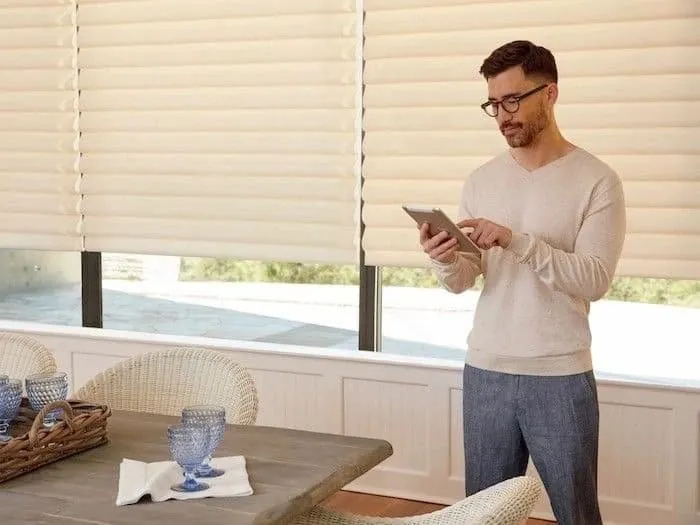
High windows bring their own question: how will you reach them? A transom over a door or a tall window above a stair is impractical to adjust by hand. Hunter Douglas PowerView motorization tilts and lifts blinds from a remote, a wall switch or the app on your phone, and you can set them on a schedule to tilt closed before the afternoon sun arrives and open again in the morning. We plan where each motor goes and how it is powered when we visit. See motorized blinds in Portsmouth for more on what that involves.
Picking slat color and size room by room
Choosing blinds for a whole house can feel like a lot of decisions, so we break it down. First, decide what the outside of the house should look like. Most people keep the street-facing windows consistent. Next, take each room in turn and ask what it needs most: glare control, privacy, darkness or durability. That points to a material. Finally, choose the color to suit the room, with the trim and floors as your guide.
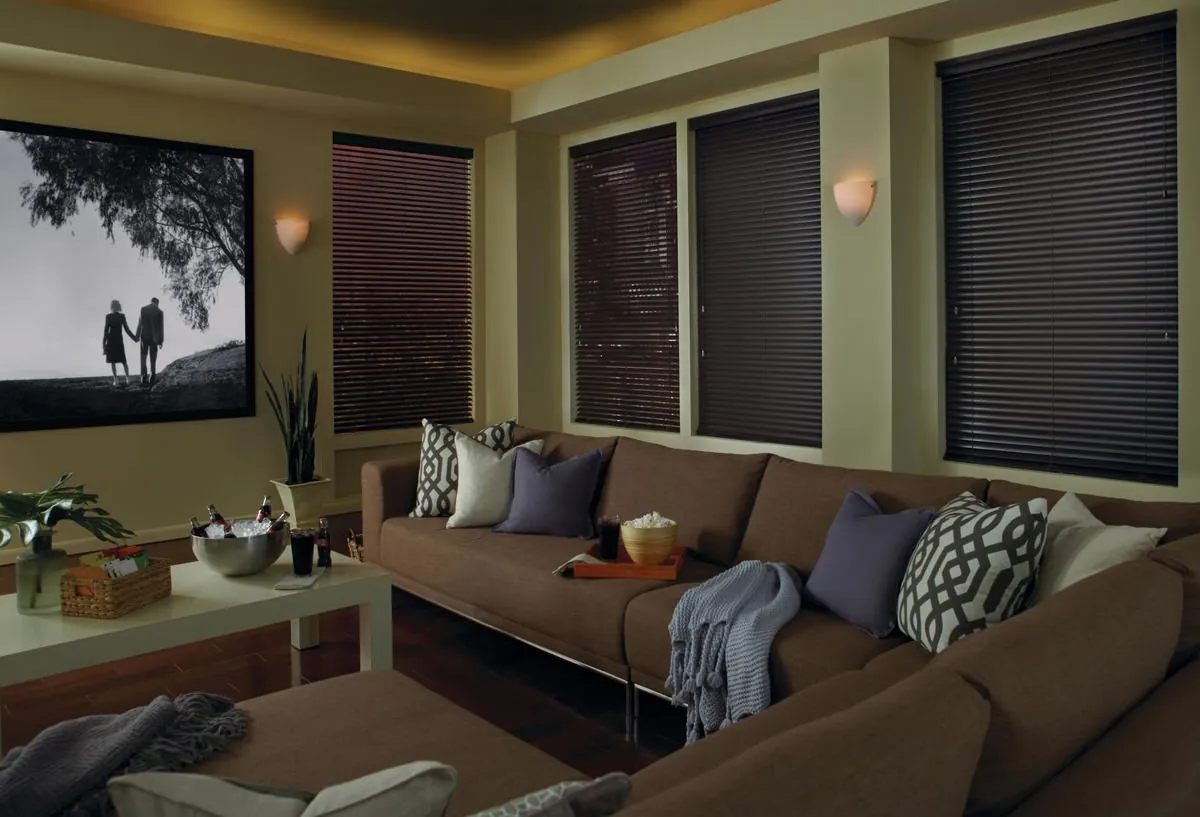
A few patterns come up again and again in Portsmouth houses. Rooms facing the water often get a lighter slat to stay cool and calm. Dens and studies on the land side take a warmer wood that makes the room feel snug. Bathrooms and laundry rooms near the shore take faux wood in white or cream. Media rooms take a dark slat that closes tightly. You do not have to follow any of these, but they are a useful place to start the conversation.
Blinds alongside other window coverings
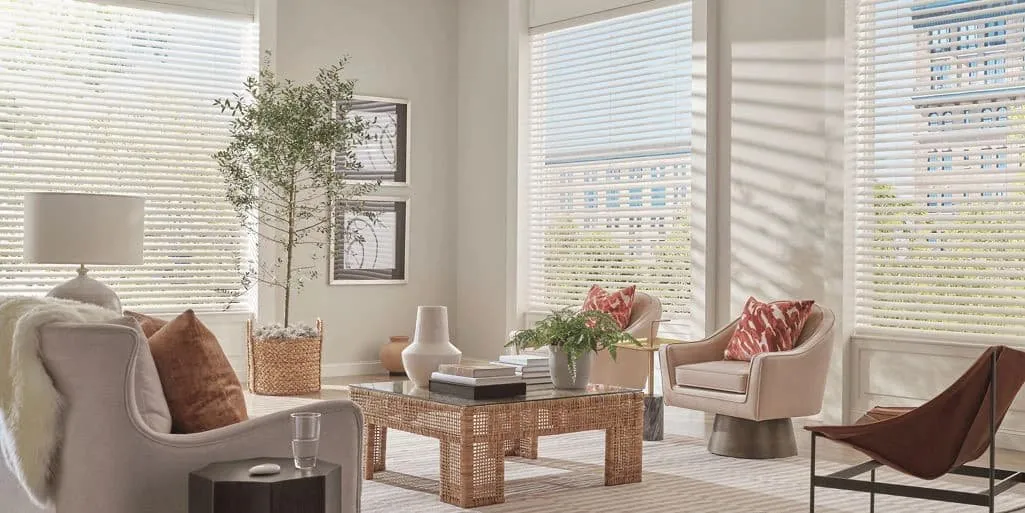
Not every window in a house needs the same treatment, and blinds work happily beside other coverings. A common plan in island houses puts blinds in the working rooms, such as the kitchen, the baths, the mudroom and the home office, where you want quick, precise light control and a surface that cleans easily, and uses softer shades or drapery in the living room and bedrooms. Plenty of people also layer the two: a wood blind for daytime light control, with side panels of drapery framing the window for color and warmth.
The trick is to keep a common thread. If the slat color picks up the trim, and the fabric picks up the walls or the furniture, the rooms flow together even though the coverings differ. When we visit we can look at the whole house with you, not just the windows on the order, so custom blinds in Portsmouth, RI, rooms sit comfortably next to whatever you already have or plan to add.
A blind also makes a good partner for a cellular shade on a cold north window. The shade adds warmth in winter, and the blind on the next window over handles the summer glare. Mixing them room by room is often how a house ends up comfortable all year, and our samples let you compare the two side by side at the same window before you commit to either. For many island houses, custom blinds in Portsmouth handle the sunny rooms while softer shades go in the quieter ones.
We bring the samples to you
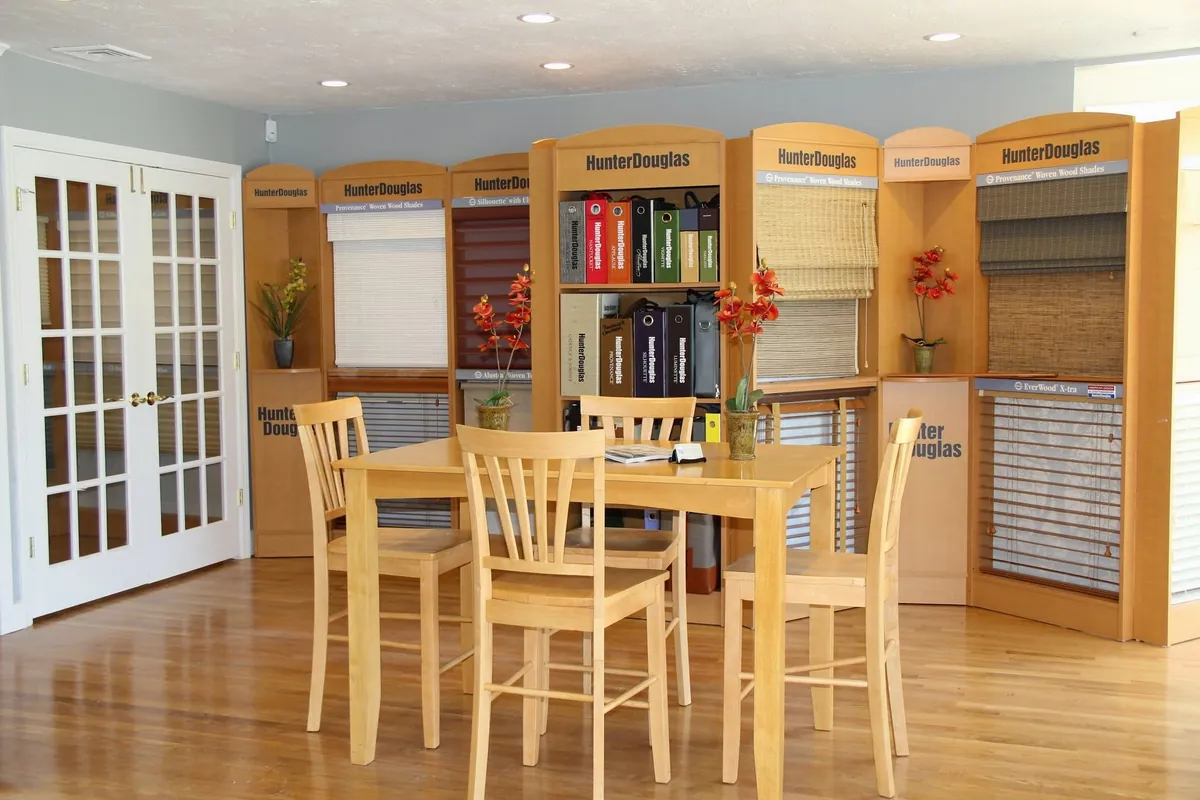
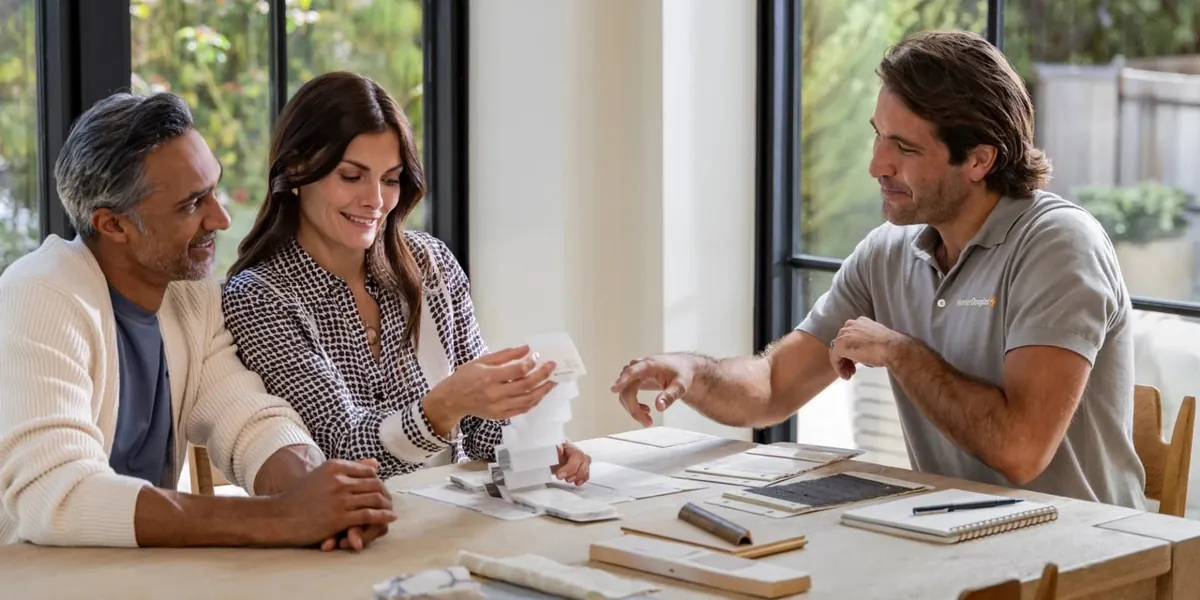
The best place to judge a blind is at your own window, in your own light. Our vans carry samples of wood, faux wood, metal and vertical blinds, so we can bring the showroom to you. Here is how a visit usually runs.
- You request a consultation online or with the call button, and we agree a time.
- We walk through the house with you, starting on the water side, and talk about how each room is used.
- You hold slats against your trim and tilt them in the actual light of each window.
- We measure every opening at several points and check the depth for an inside mount.
- You get a free estimate for the blinds you are considering, and you can take your time over it.
If you want help pulling a room together, ask about our interior design consultations at the same visit. Our page on what happens at an in-home consultation explains more.
Measured and fitted properly
A made-to-measure blind is only as good as the measurement behind it. We take the width at the top, middle and bottom of each frame and order an inside-mounted blind to the narrowest of the three, so it never binds. Height is checked on both sides and in the center. Depth is checked where the headrail will sit, and we note anything that could get in the way, such as a window crank, a lock or an interior storm panel.
When the blinds arrive, our certified Hunter Douglas installers fix the brackets into solid framing, level every headrail and test each tilt and lift before they leave. They show you how everything works, including any PowerView controls, and tidy up after themselves. That care is what makes custom blinds in Portsmouth look as though they came with the house.
For each type in more depth, see our wood blinds, metal blinds and vertical blinds pages, or the main custom blinds page for the whole range.
A Hunter Douglas Gallery dealer for the island
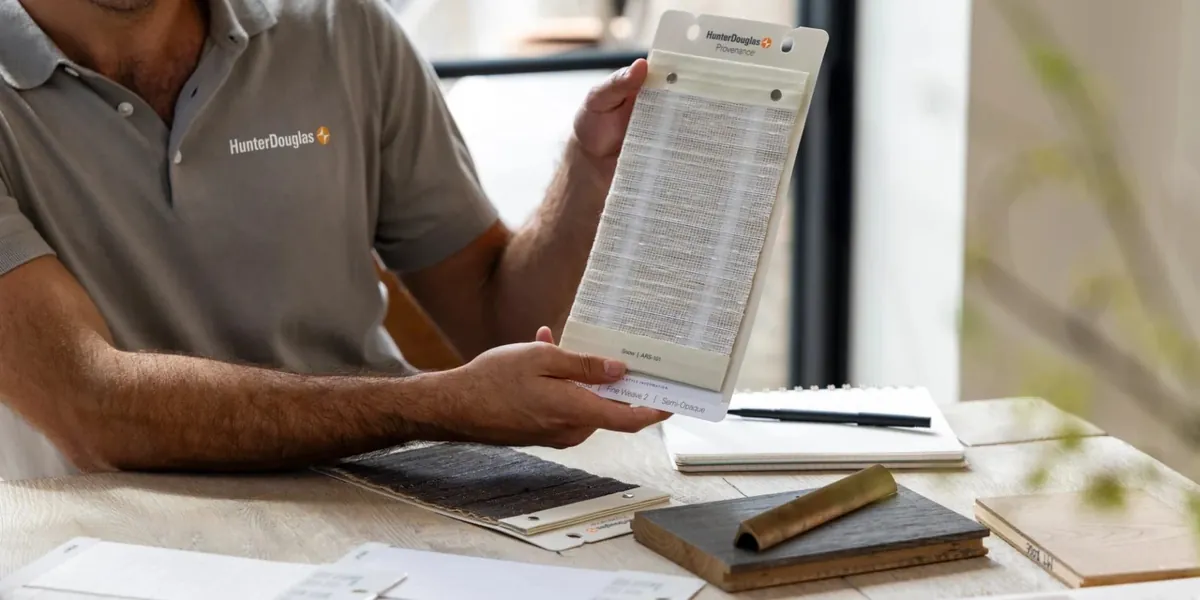
Blinds & Designs is a Hunter Douglas Gallery dealer, the designation Hunter Douglas gives dealers who meet its standards. For you that means the whole blind range in one place, from hardwood and faux wood to aluminum and verticals, plus every lift and tilt option and PowerView motorization.
Our installers are certified by Hunter Douglas, so each blind goes up the way it was designed to. If a blind you already own needs attention later, we handle blind and shade repairs as well.
We also carry Hunter Douglas shades, shutters and drapery, so one visit can cover every window in the house. For other rooms, look at cellular shades in Portsmouth or plantation shutters in Portsmouth, or see everything we offer on the island on our Portsmouth page. If you would like to see blinds in person first, our North Dartmouth showroom is the nearest to you.
Questions from Portsmouth
Which blind handles the glare off the bay?
Any horizontal blind can help, because tilting the slats upward throws the light to the ceiling. Wider slats give the most control. On windows that take sun most of the day, a lighter slat color holds its finish best.
Will real wood blinds hold up in a cottage near the water?
Real wood prefers a dry room. In a cottage close to salt water, especially in a bath or kitchen, faux wood or metal blinds are the safer choice. They keep a similar look and do not mind damp air.
What do you suggest for the slider out to my deck?
Vertical blinds, which hang from a track and draw to one side so the door opens freely. The vanes turn to control light and view, much as a horizontal blind does.
Can my blinds open and close on their own?
Yes, with Hunter Douglas PowerView. Blinds tilt and lift from a remote, the app or a schedule. It is especially handy for transoms and high windows in larger rooms.
Is the estimate free?
Yes. After we measure, you receive a free estimate for the blinds you are considering, with no pressure to decide at the visit.
Your next step
The quickest way to see what a blind will do for a Portsmouth window is to tilt one in your own light. Request a consultation and we will bring samples of every material to your house, measure each window and leave you with a free estimate. If you would rather talk first, use the call button, or visit our North Dartmouth showroom.