
An island house with a bright side and a shaded side
Portsmouth sits on the north end of Aquidneck Island with water on both flanks, Narragansett Bay to the west and the Sakonnet River to the east. Stand in almost any house here and one side of it is flooded with light off the water while the other side stays cool and dim for most of the day. That split is the first thing we look at when we plan cellular shades in Portsmouth, RI, because the two halves of the same house rarely want the same fabric.
The housing adds its own twist. Island Park and Common Fence Point are full of compact cottages, many of them first built for summer use and later closed in for the whole year. The newer colonials set back from East Main Road have tidy rows of double-hung windows and the occasional tall stair window. Out toward Carnegie Abbey the houses get larger and the glass gets bigger, with sliders, transoms and long runs of windows pointed at the bay.
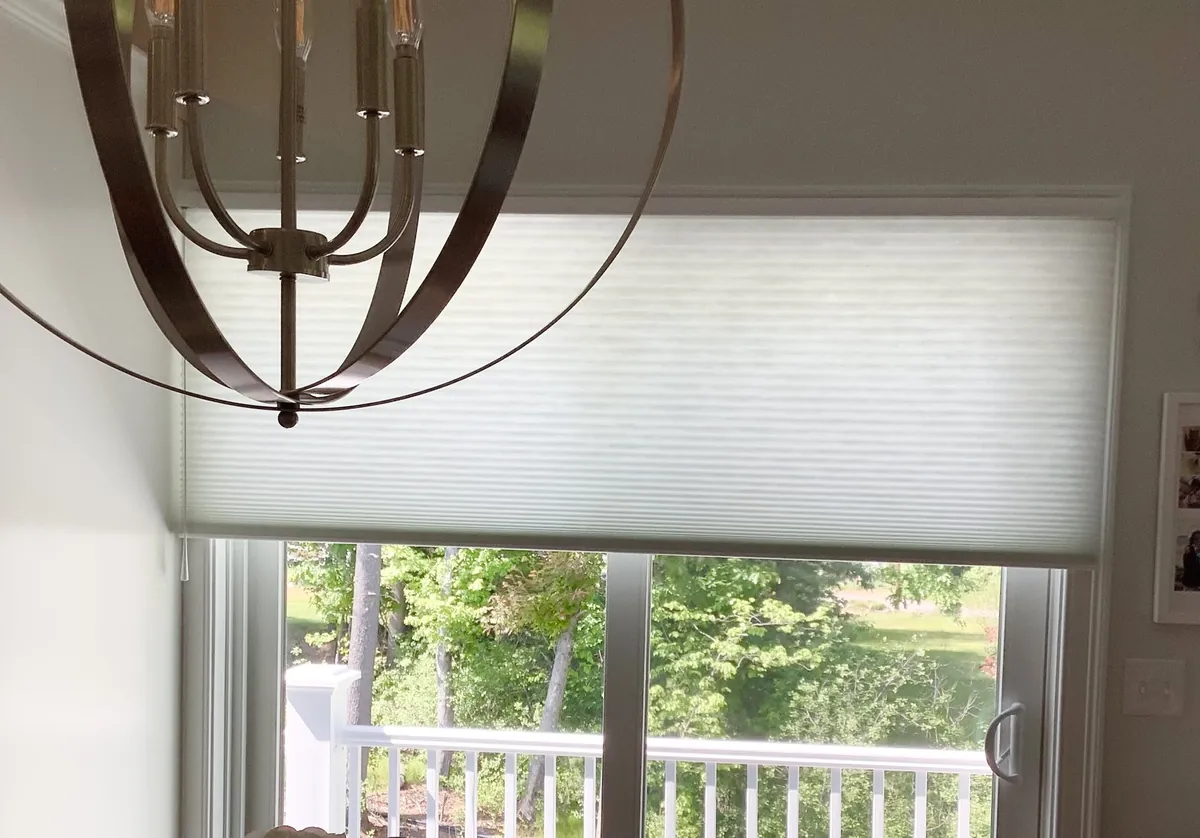
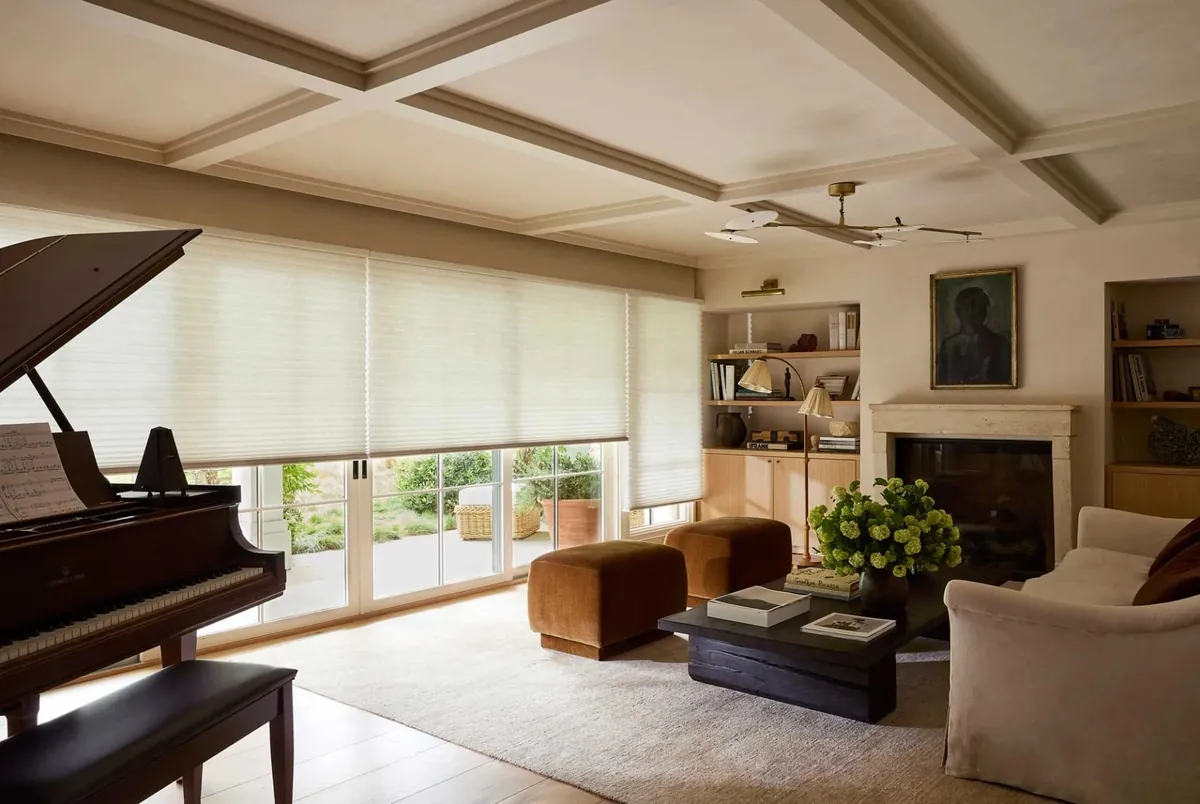
A honeycomb shade suits all three. Each pleat folds into a hollow cell, and the air caught inside those cells acts as a quiet buffer between the glass and the room. On the shaded side that buffer keeps a chilly bedroom from losing what heat it has. On the bright side it slows the warmth and glare coming through the pane.
What cellular shades in Portsmouth, RI, can include
Hunter Douglas makes two honeycomb lines, and both come to your door in our sample cases. These are the options we reach for most often on the island.
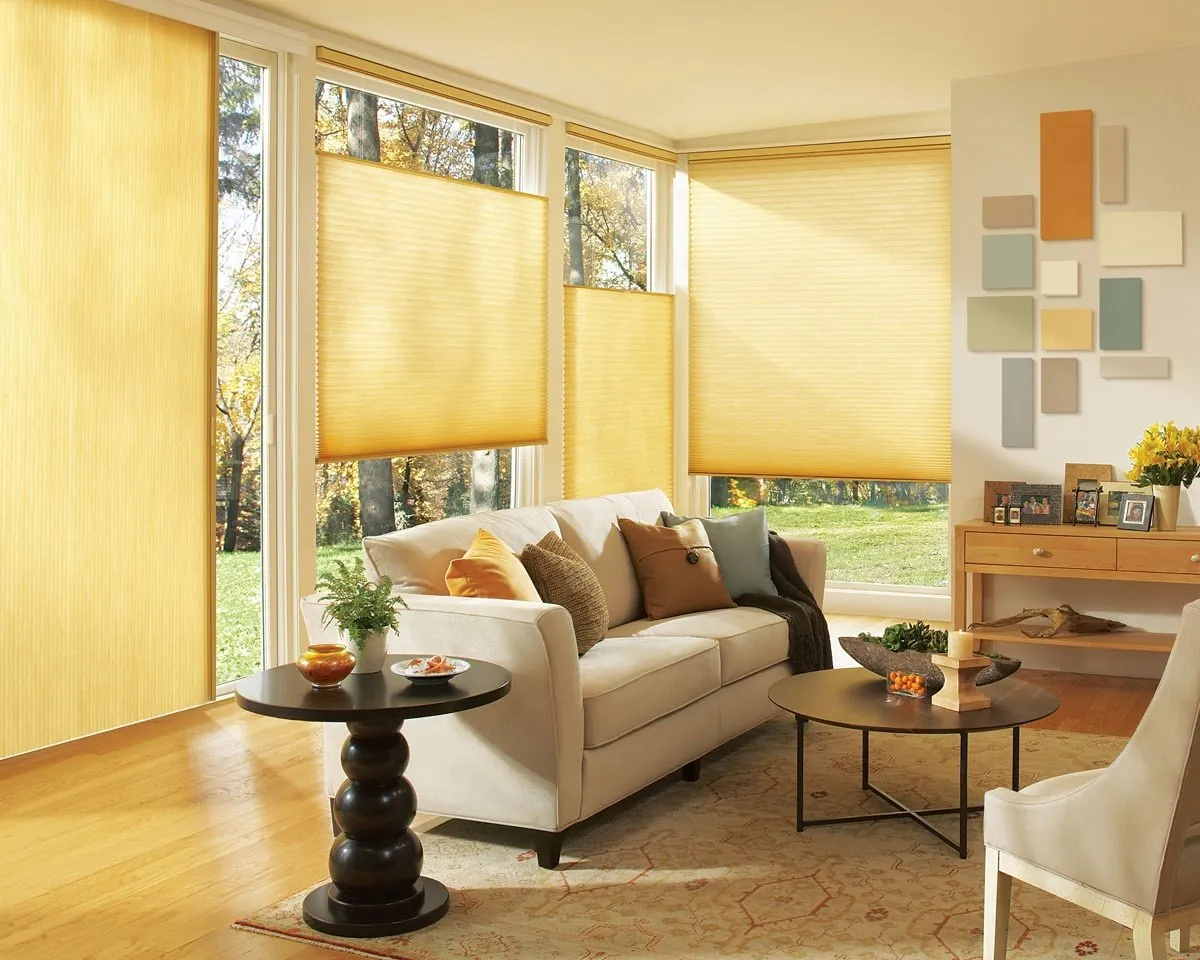
Duette for the big glass
The deepest range of fabrics, pleat sizes and specialty shapes, including the side-travelling version for sliders. It is the line we usually suggest for the larger houses near the abbey.
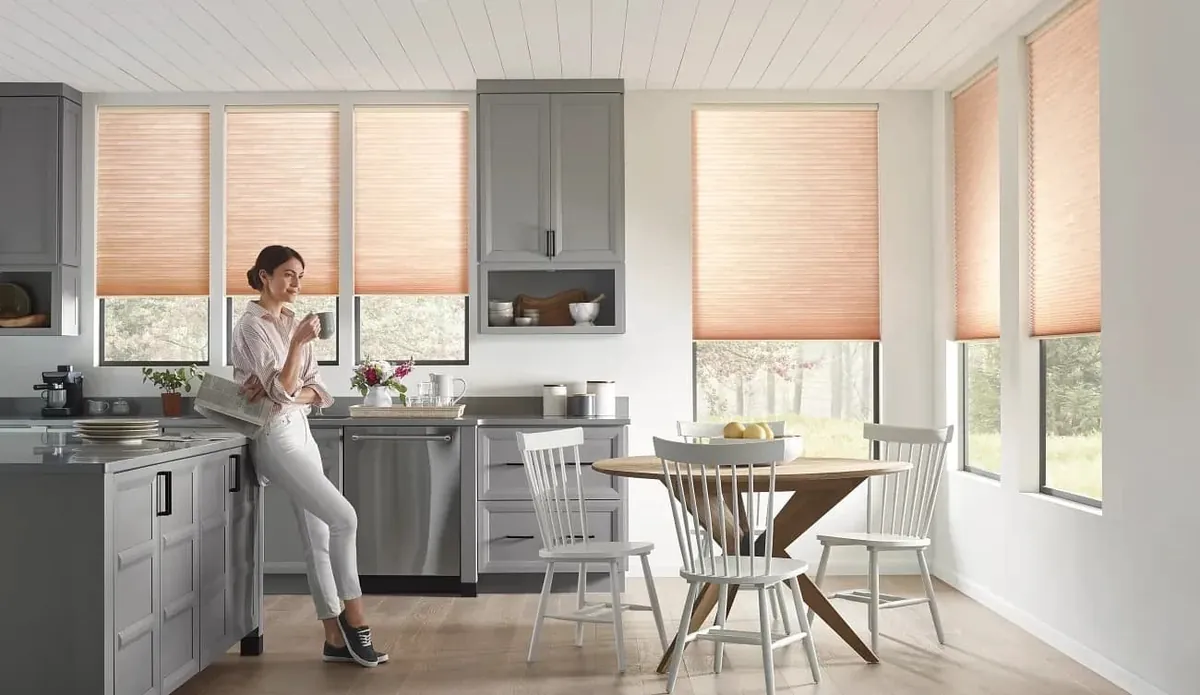
Applause for everyday rooms
A second Hunter Douglas honeycomb with its own palette. It covers kitchens, back bedrooms and the standard windows in a colonial without any fuss.
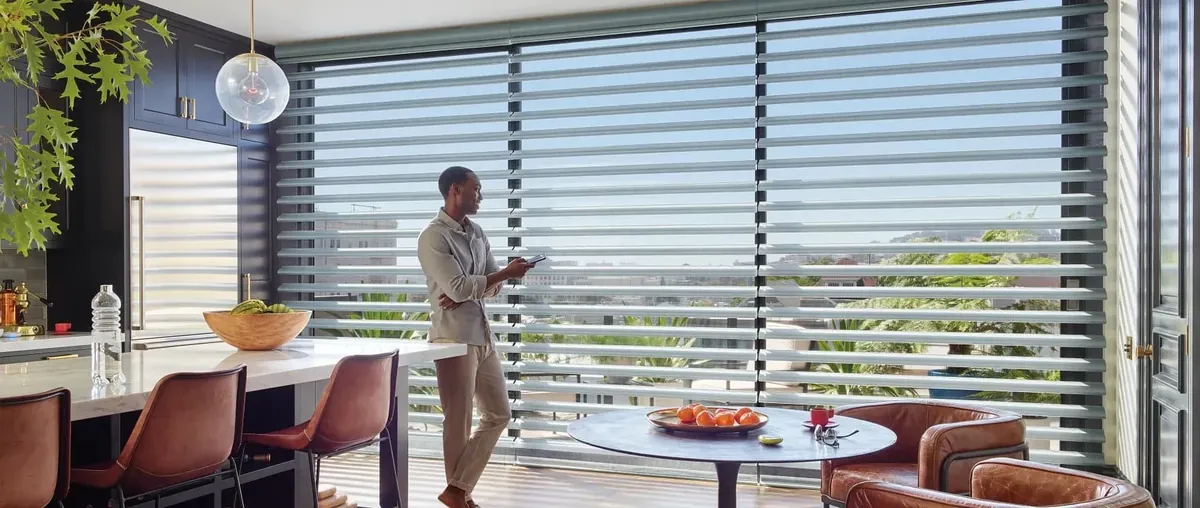
Shades that move on their own
PowerView motorization lets you raise or lower a whole side of the house from your phone, or set the bay-facing rooms to close on a schedule each afternoon.
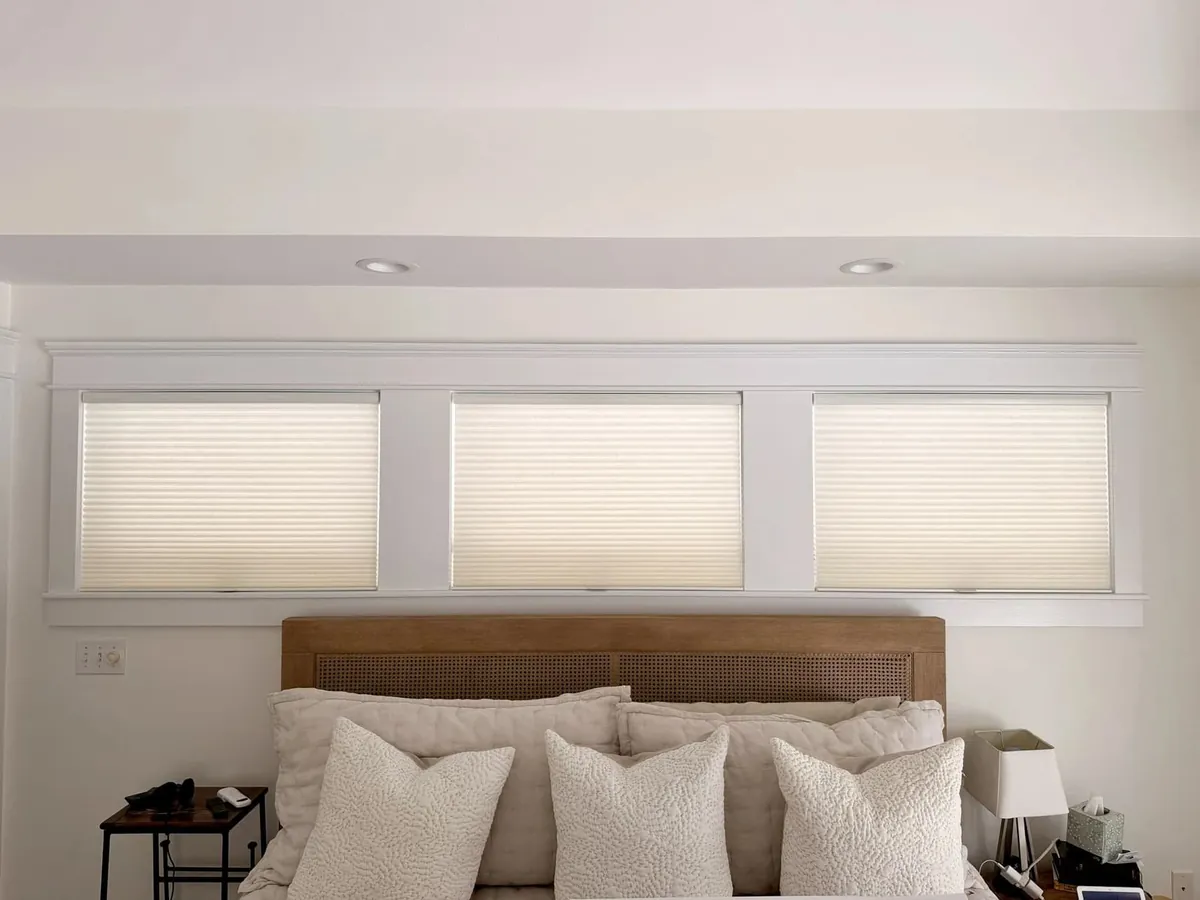
Darkening fabric for sleep
For an east bedroom that faces the Sakonnet and catches first light, a room-darkening cell keeps the room dim until you decide otherwise.
Two shorelines, two kinds of light
The west side of the island looks across the bay, so those rooms take the long, low sun of late afternoon and evening. It slides under porch roofs and lands flat across a sofa or a dining table, and it can make a room unusable for an hour or two on a summer day. The east side faces the river and gets its strongest light early, which is lovely in a kitchen and less lovely in a bedroom.
Because of that, we rarely specify one fabric for a whole Portsmouth house. A light-filtering honeycomb on the west windows takes the edge off the evening sun while still letting the room glow. A heavier or room-darkening fabric often makes more sense on the east bedrooms. The rooms in the middle of the house, a hallway or a north-facing study, can take a sheerer fabric because they never see direct sun at all.
Color matters too. A white or ivory backing is what neighbors and passing boats see, so many owners keep the street side uniform and pick a warmer or deeper color for the room side. Duette and Applause both allow a different color facing in than facing out, which lets each room have its own look without the outside of the house looking patchy.
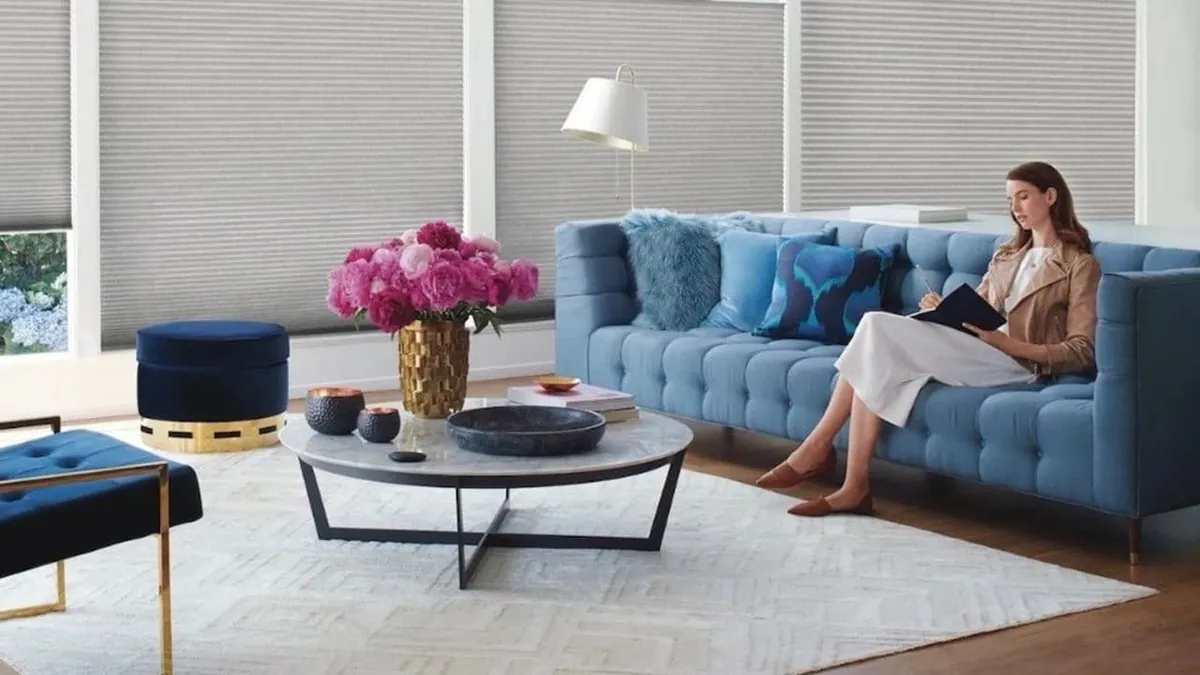
Island Park and Common Fence Point cottages
The cottages along the shore at the north end were often built small and simple, and many have been added to more than once. It is common to find three or four different window sizes in a single room, a modern replacement window next to an older one, or a small window tucked high in a gable where a loft was carved out of the attic.
Honeycomb shades handle that variety well. They can be made very narrow or very short, and because each one is made to its own opening, a row of mismatched windows can still look like a set when the shades are down. We line up the bottom rails at the same height where the windows allow it, so the room reads as one even when the glass does not.
These houses also sit close to the water and close to each other. Salt air reaches anything left exposed by an open window, and a neighbor’s deck may be only a few steps from your kitchen. A cordless lift keeps loose cords and cord locks out of the picture, with the mechanism tucked inside the headrail. For privacy, a top-down, bottom-up shade lets you lower the top for sky and light while the bottom of the window stays covered.
Many of the cottages that were once seasonal are now lived in all winter, and winter is where they show their age. Thin walls and older glass let the cold in quickly. A double-cell honeycomb gives you two layers of trapped air instead of one, and in a small room where the sofa sits right against the window, that makes a difference you can feel.
Colonials off East Main Road
The newer colonials along and behind East Main Road are a different job. The windows are mostly standard double-hung units, square and true, with enough depth for an inside mount. That means a clean look, with each shade tucked inside the frame and the white trim left on show.
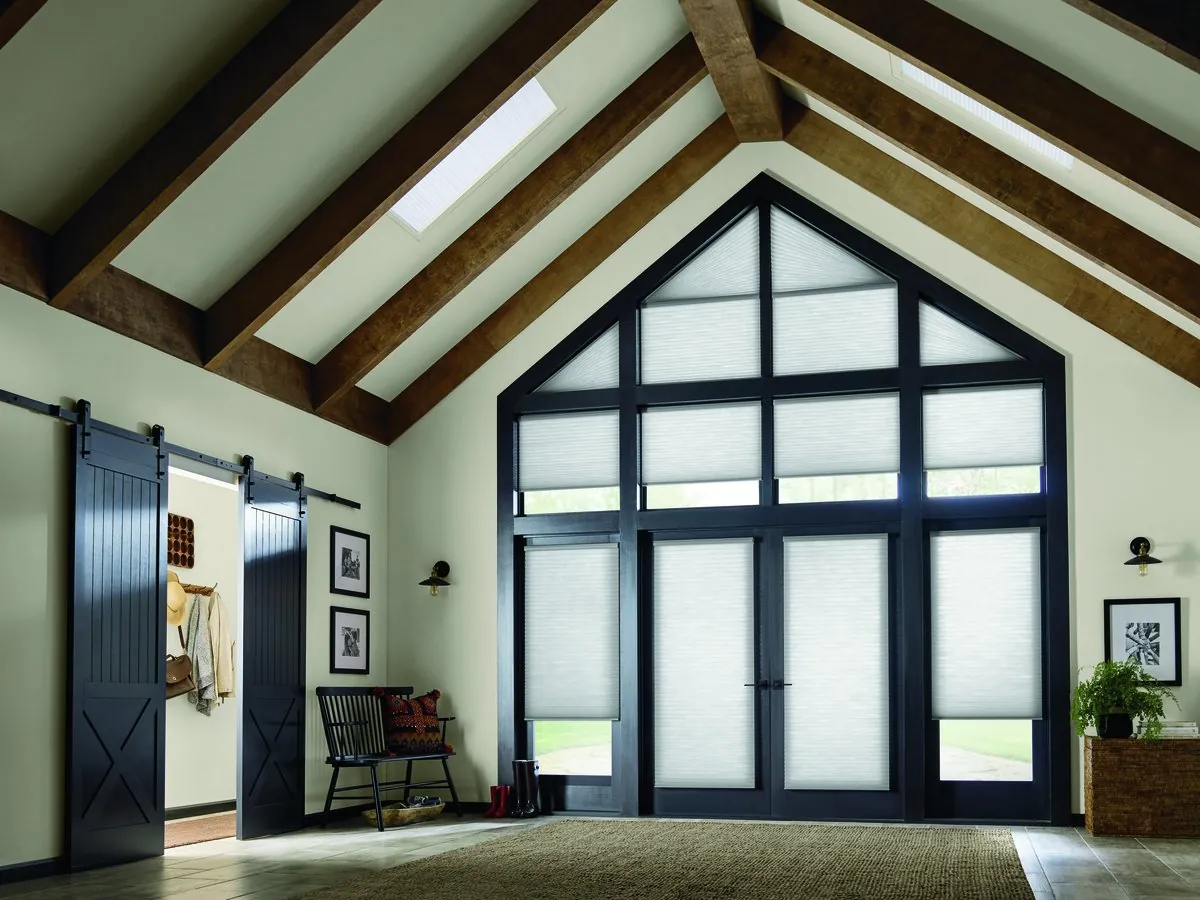
Where these houses get interesting is in the rooms that are not standard. A two-story foyer with a tall window over the front door, a family room with a cathedral ceiling and a row of transoms, a bonus room over the garage with angled walls. Those openings are hard to reach and often catch the hottest sun in the house.
Duette can be made in specialty shapes for angled tops, and PowerView makes the tall ones easy, because you never need a ladder or a long pole to raise them. For a family room where half the windows are within reach and half are not, we can motorize just the high ones and leave the rest cordless.
Larger houses toward Carnegie Abbey
Toward the southwest of town the lots open up and the houses are built around the view. Great rooms with walls of glass facing the bay, sliders onto stone terraces, and primary suites with windows on two or three sides. The challenge here is scale. A single window wall might need four or five shades side by side, and they need to move together and stop at the same line.
We plan those walls as one design. Several shades can share a single headrail so they rise and fall as a unit, or they can be split so you can open one end for the view and keep the other end shaded. A vertical honeycomb shade covers the slider without looking like an afterthought next to the windows.
On glass that size, motorization stops being a luxury and starts being practical. With PowerView you can close the whole west wall in the late afternoon with a single tap, or let a schedule do it for you. We talk through how each motor is powered and where any connection goes during the visit, so the installation looks finished when we leave.
How the cell keeps a room comfortable
Pick up a honeycomb shade and look at the edge, and you see why it works. The fabric is formed into a row of hollow tubes, stacked one on top of another. When the shade is lowered, each tube holds a band of still air. Moving air carries heat quickly, but still air does not, so the cold that comes off a winter pane is slowed on its way into the room.
The same thing happens in reverse in summer. Heat from the sun that has made it through the glass meets that layer of trapped air before it reaches the room. On the bright side of a house facing the bay, that is the difference between a living room that bakes by mid-afternoon and one that stays pleasant.
How well a shade does this depends on a few choices you make at the consultation:
- Single-cell or double-cell. Two rows of cells hold more air.
- Fabric weight. A heavier, more opaque fabric blocks more light and heat.
- Inside or outside mount. A snug inside mount leaves the smallest gap at the sides.
- Lift system. Top-down, bottom-up lets you cover only the part of the window taking the sun.
We bring samples of each so you can compare them at your own window rather than guessing from a picture. On a cottage at Common Fence Point the priority might be holding heat through a long winter. In a great room near the abbey it might be taming the evening sun on a wall of glass. The same shade can be set up very differently for each.
What a visit to your home looks like
We start every Portsmouth job at the house, because the light on the island changes so much from one side to the other. Our vans carry samples, which means we can bring the showroom to you.
- You request a consultation online or with the call button, and we set a day that works for you.
- We arrive with Duette and Applause samples in a spread of colors and opacities, along with the lift and control options.
- We go room by room, bay side and river side, and ask how each space is used and when it gets uncomfortable.
- You hold the fabrics against your own glass and see how each one handles the light at that time of day.
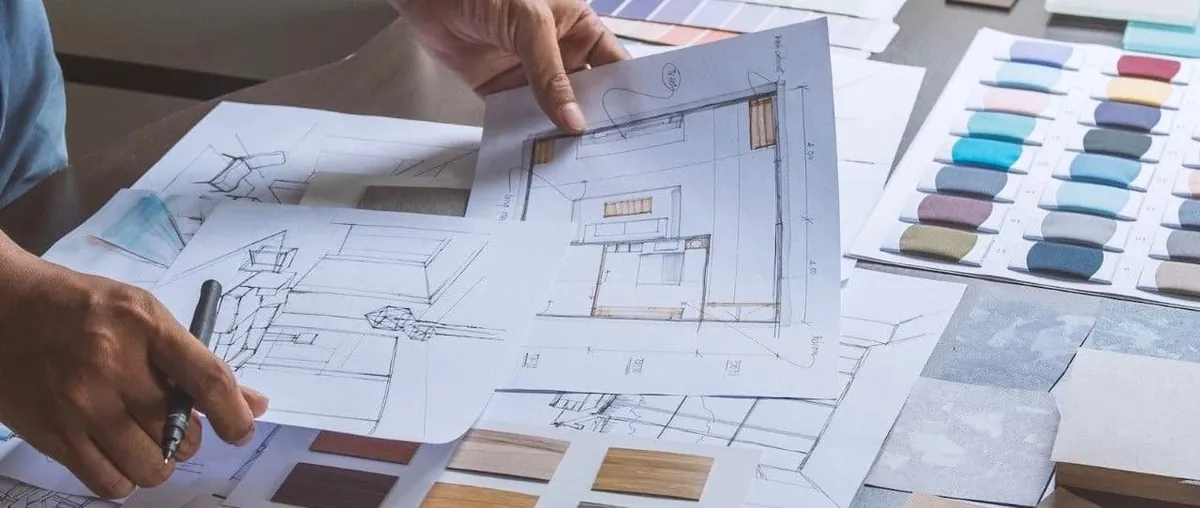
- We measure every opening carefully, noting depth for an inside mount and any trim or hardware in the way.
- You receive a free estimate, and you can take whatever time you need to decide.
If you would like a hand with colors, fabrics and the rest of the room, our interior design consultations can be part of the same visit. For more detail before we arrive, read what happens at an in-home consultation.
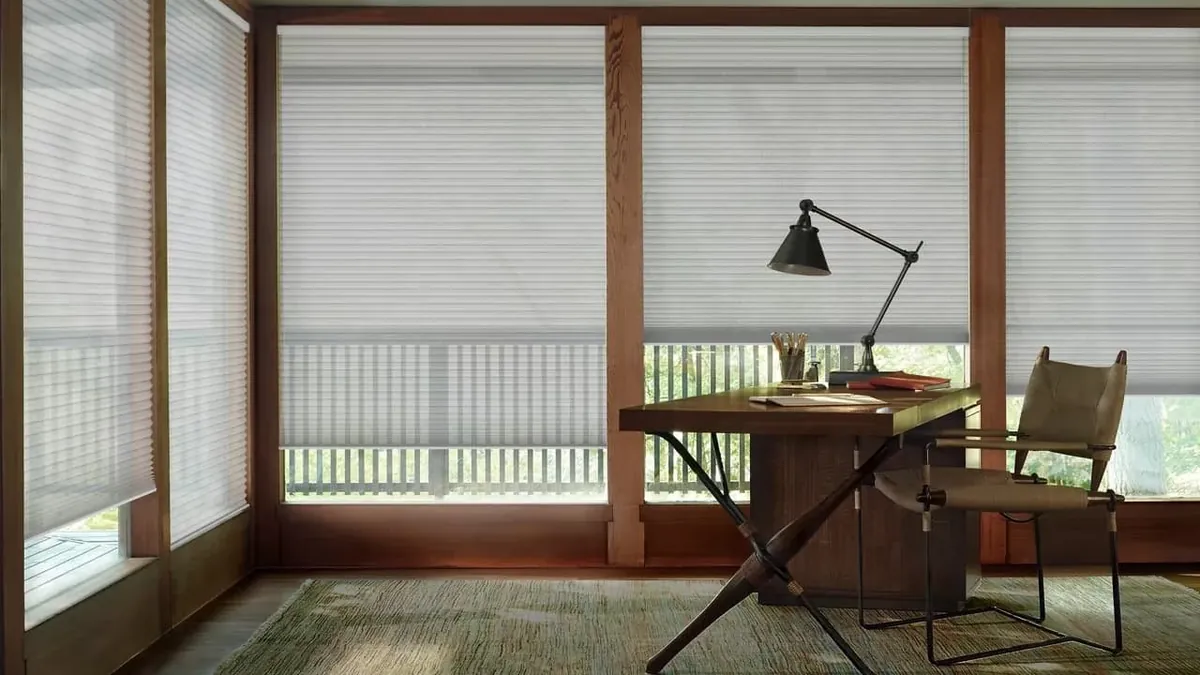
Duette or Applause, room by room
Both lines are genuine Hunter Douglas honeycomb shades, and both trap air in their cells the same way. Where they differ is in the fabric collections, the cell options and the lift systems on offer. Duette is the wider range, with the specialty shapes, the very wide sizes and the vertical shade for sliders. Applause has its own colors and textures and fits most ordinary windows well.
When we plan cellular shades in Portsmouth, RI, the answer is often both. Duette on the big bay-facing glass and the angled transoms, Applause in the bedrooms and kitchen where the windows are standard sizes. We lay the samples side by side so the choice is easy to make room by room. You can read more on our Duette honeycomb shades and Applause honeycomb shades pages, or see the whole range on the main cellular shades page.
Measured, ordered and fitted properly
A honeycomb shade only looks built in if it is measured right. That takes care on the island, where cottages have settled and additions have been tacked on over the years. A window that looks square from across the room can be out by enough to leave a gap at one corner, and on an inside mount that gap lets light and cold air slip around the edge. Good measuring is what lets cellular shades in Portsmouth, RI, do the job they are chosen for.
- Each opening is measured across at three heights and down at three points, and the tightest figure decides the size for an inside mount.
- We check the depth of the frame and note any cranks, locks or sash hardware in the way.
- Every mount, color and lift choice is confirmed with you before the order goes in.
- When the shades arrive, our certified Hunter Douglas installers put them up, level the headrails and test each one.
- Before we leave, we show you how the lifts and any PowerView controls work.
A Gallery dealer for the whole house
Blinds & Designs is a Hunter Douglas Gallery dealer, the name Hunter Douglas gives dealers who meet its standards. In practice it means the full honeycomb range is open to you: every Duette and Applause fabric, the specialty shapes, the vertical slider shade and PowerView motorization.
The people who fit your shades are certified by Hunter Douglas, and if a shade needs attention down the road we repair blinds and shades as well. Our Hunter Douglas dealer page for Portsmouth explains more about what that status means for you.
Honeycomb shades are rarely the only thing a house needs. We also fit plantation shutters in Portsmouth, motorized blinds in Portsmouth and the rest of the Hunter Douglas range, and our Portsmouth page lists everything we do on the island.

From the island to North Dartmouth
Most of our Portsmouth customers never need to leave the house, because the consultation comes to them. That is the best way to see a fabric anyway: against your own trim, at your own window, at the time of day when the sun is the problem.
If you would rather look at the shades in person first, the North Dartmouth showroom is our closest location to the island. Bring a photo or two of the rooms you are thinking about, and we can carry on from there.
Questions from Portsmouth
My cottage has windows of every size. Can the shades still match?
Yes. Each honeycomb shade is made to its own opening, including very narrow and very short ones, so a row of different windows can share one fabric and one bottom line. We measure every window separately and line them up where the frames allow.
Which fabric should go on the bay side of the house?
The west-facing rooms take strong evening sun, so a light-filtering honeycomb is a good start. It softens the glare and slows the heat while keeping the room bright. If a room gets too warm, a double-cell or heavier fabric is the next step.
Can I close the shades on the big windows without climbing up?
PowerView motorization lifts and lowers them from your phone or a remote, and it can follow a schedule. We can motorize only the high or hard-to-reach shades and leave the rest cordless.
Do the shades help a cottage that is now lived in all winter?
That is where they help most. The trapped air in each cell slows heat loss through older glass, and a double-cell fabric adds a second layer. In a small room close to the window, the change is easy to feel.
What does the estimate cost?
Nothing. Once we have measured, you get a free estimate for the shades you are considering, with no pressure to decide that day.
Start with a look at your own windows
The quickest way to judge cellular shades in Portsmouth, RI, is to hold real samples up to your glass on both sides of the house. Request a consultation and we will bring the full honeycomb range to you, measure every window and leave you with a free estimate. You can also reach us with the call button, or stop by the North Dartmouth showroom.