
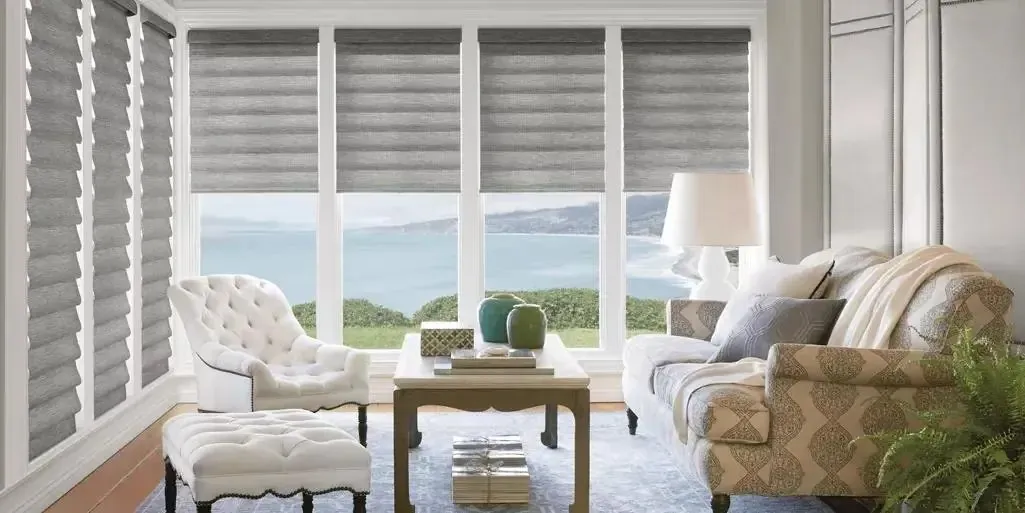
One island, a bright side and a shaded side
Portsmouth sits on an island, and that shapes every window in town. Water runs down both sides, so a house almost always has one face turned toward open, glittering bay and another tucked back toward trees, a neighbor or the road. Stand in the middle of most living rooms here and you can feel the difference: one wall of glass is flooded with light and reflection, the other stays cool and soft all day. Planning roman shades in Portsmouth, RI, starts with that split.
A folded fabric shade is a good match for it, because the same style can do two quite different jobs. On the water side it can be lined to tame glare and protect the room from the sun bouncing off the bay. On the sheltered side it can be a light, unlined fabric that simply dresses the window and gives a little privacy in the evening.
The housing on the island adds its own layer. The cottages at Island Park and Common Fence Point, the newer colonials set back off East Main Road and the larger houses out toward Carnegie Abbey each have their own kind of window, and each needs a slightly different answer.
What we fit across the island
Every one of our roman shades in Portsmouth, RI, comes from Hunter Douglas, through two lines: Vignette and Carole Fabrics. These are the choices that come up most often on Aquidneck’s north end, and the van brings samples of all of them to your door.
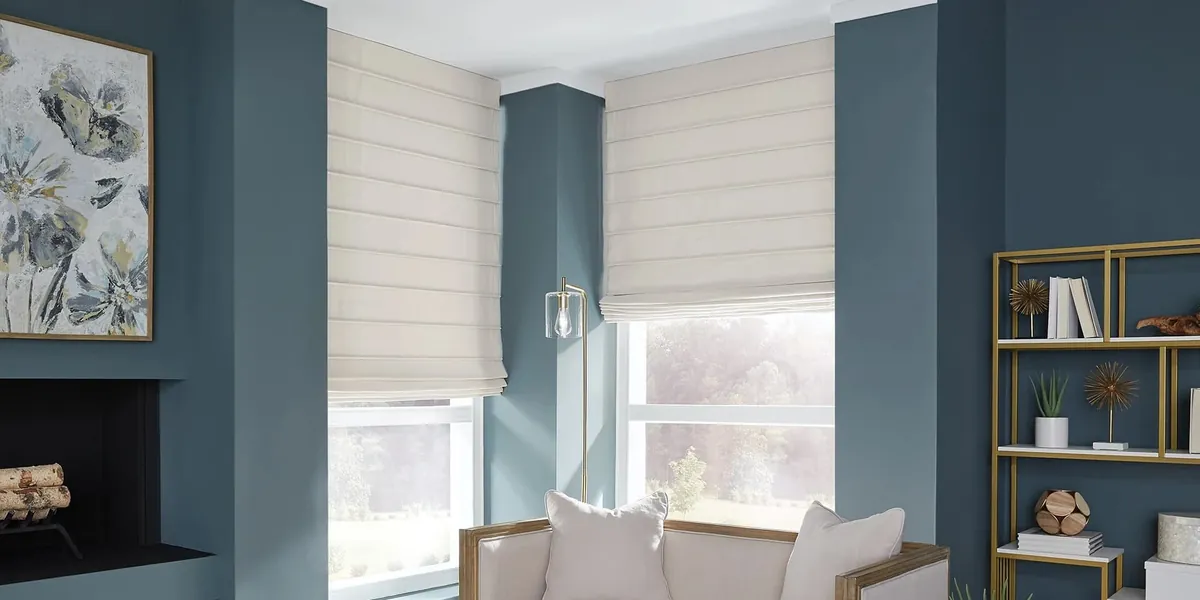
Vignette modern roman shades
The fabric winds up into a slim headrail instead of gathering in a stack, so more glass stays clear when the shade is raised. A natural pick for a cottage with low window heads.
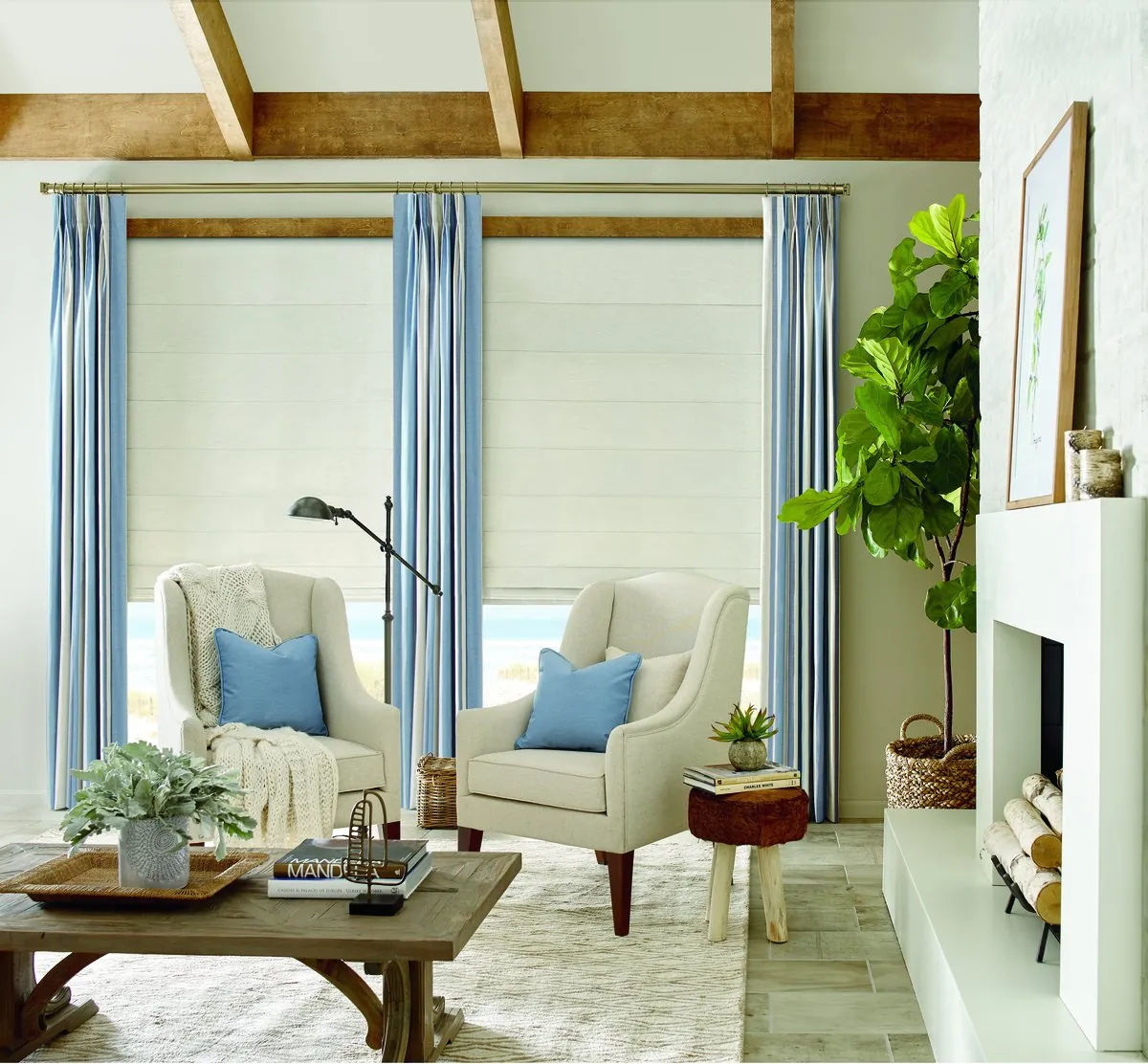
Carole Fabrics roman shades
Sewn to order from a very wide range of decorator fabrics, in flat or folded styles. The choice when the fabric itself is the point of the room.
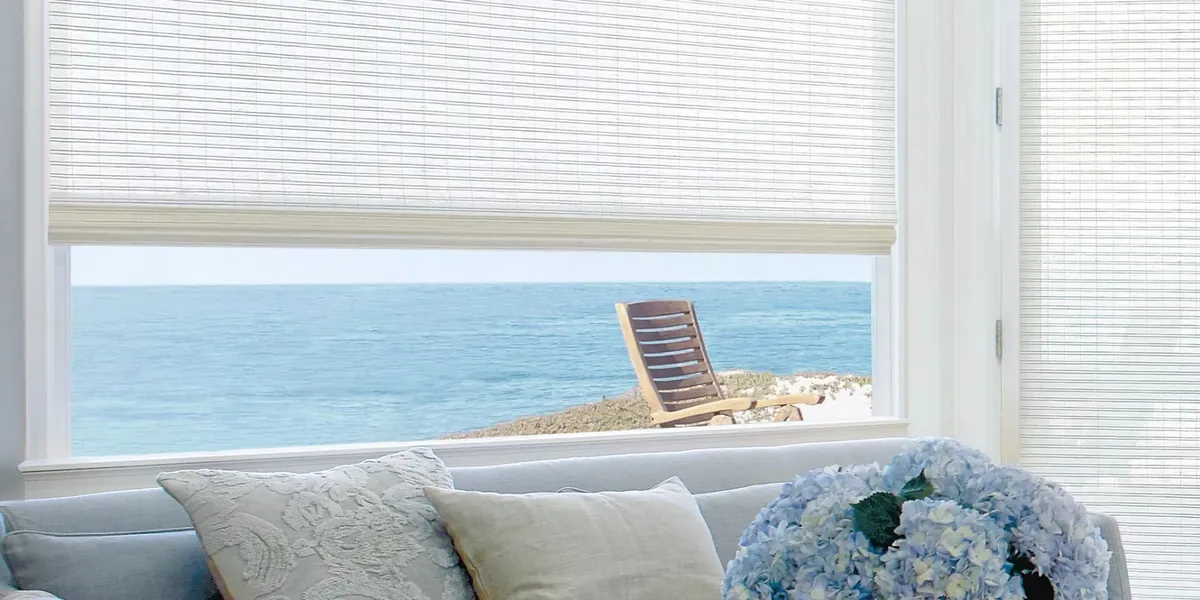
Lined for the water side
A light-filtering or room-darkening lining softens hard reflected light and shields the face fabric on the windows that look over the bay.
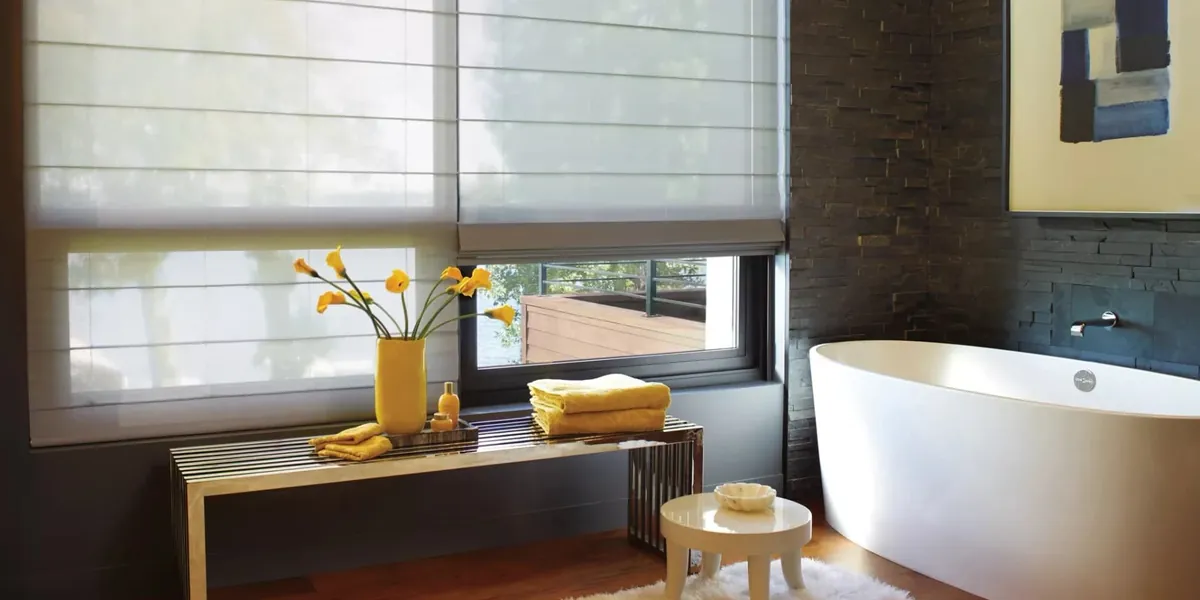
Sheer for the quiet side
On the sheltered side of the house a sheer or unlined fabric keeps the room bright and gives soft daytime privacy.
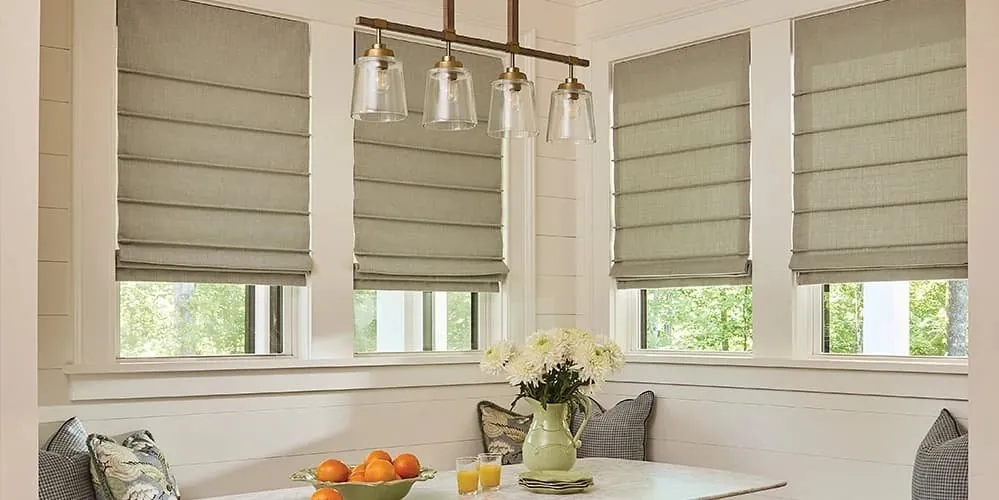
Flat folds for colonials
A smooth flat panel that folds into crisp pleats suits the regular double-hung windows of a newer colonial and keeps a row of them looking even.
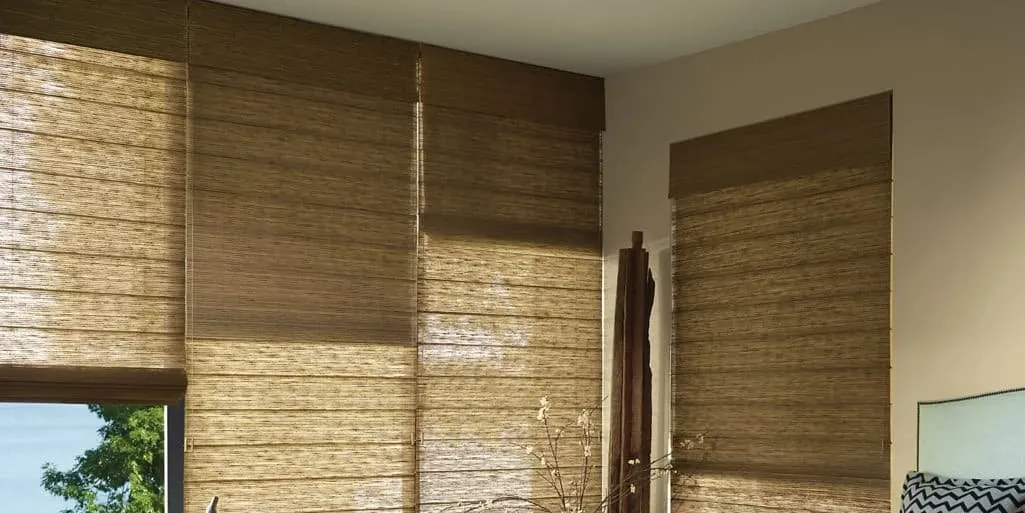
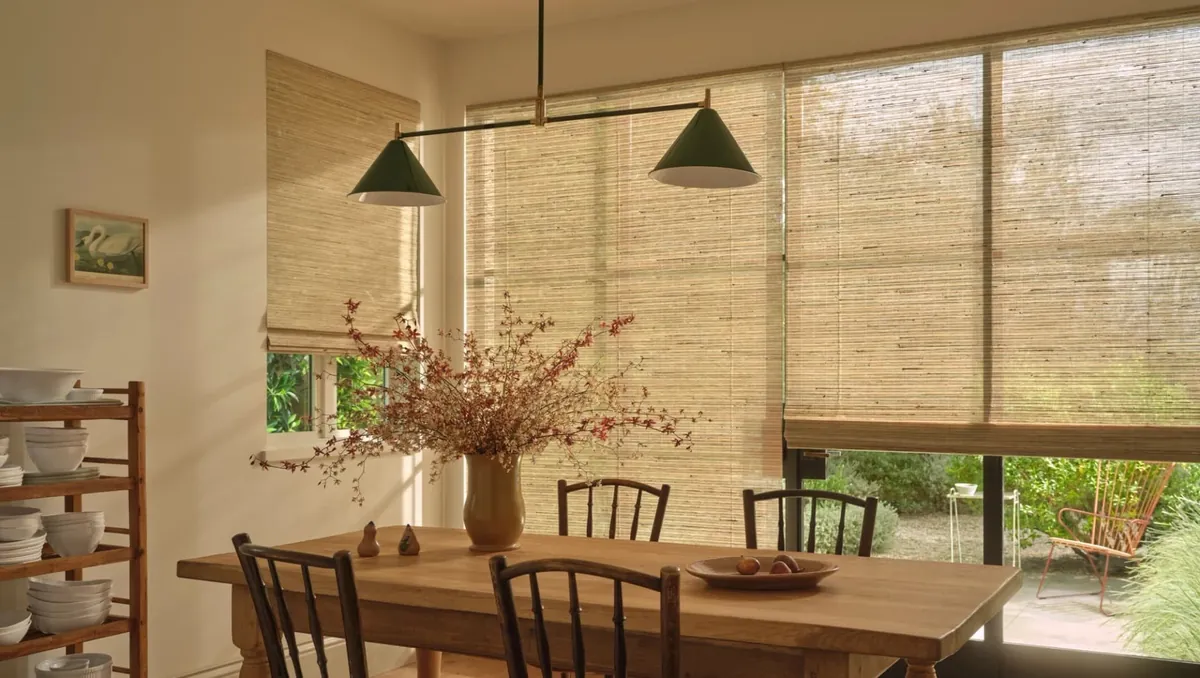
Woven textures for a relaxed room
For a sunroom or a summer cottage, a natural weave in the same folding style brings texture without heaviness.
The cottages at Island Park and Common Fence Point
The low cottages packed along the shore at Island Park and Common Fence Point were mostly built for summer and have been winterised and added to over the years. That history shows in the windows. One room may have a small original opening with a shallow frame, the next a bigger replacement window, and a later addition a slider or a picture window facing the water. It is common to find three different window sizes in one small living room.
A sewn roman shade raises by gathering its fabric into folds at the top. On a short cottage window that gathered fabric can block a good share of the view, which is exactly what you do not want when the view is the reason you live here. Vignette solves most of that: its fabric rolls into the headrail, so the folds disappear when the shade is up. Where a Carole fabric is the one you love, we can mount it a little above the frame so the stack sits on the wall rather than on the glass, provided the window head leaves room.
The shallow frames in these cottages also matter. We check the depth of every opening, because a headrail needs a minimum amount of room to sit inside the frame. Where there is not enough, a neat outside mount is the honest answer.
Many of these houses sit close together, with a neighbor’s window only a few steps away. A fabric that is opaque enough for privacy in the evening, without making the room dark during the day, is one of the first things we look at with you.
Newer colonials off East Main Road
Away from the shore, the colonials built off East Main Road and the side streets around it have a far more regular set of windows. Upstairs and down, you will usually find standard double-hung sash in matching sizes, with a larger window or a pair of French doors at the back of the house. That regularity is an advantage. A set of flat-fold shades with the same fold spacing and the same lining color looks tidy from inside and uniform from the street.
These houses also tend to have deeper frames than the old cottages, which makes an inside mount easy. Set within the opening, a flat roman shade sits flush with the trim and leaves the casing in view. In a dining room or a front room where you want a little more presence, a folded style with soft looping pleats adds depth and a more relaxed, traditional feel.
Family rooms and kitchens at the back of a colonial often open onto a deck or a yard. Those rooms get the afternoon light, and a lined Carole shade, or a Vignette in a light-filtering fabric, keeps the room usable when the sun drops low.
Larger houses toward Carnegie Abbey
Out toward Carnegie Abbey the houses get bigger and the glass gets bigger with them: tall windows in great rooms, runs of windows across a back wall, and rooms set up to look across the water. Roman shades still work here, but the planning shifts from fitting small openings to managing scale.
A very wide expanse is usually broken into several shades that line up across the wall, with the fold lines matched so they read as one design when they are all lowered. Very tall windows may suit a shade with deeper, more generous folds, so it does not look busy when it is raised. And windows that are hard to reach are where PowerView motorization comes in. With a Vignette shade on PowerView you can raise or lower a whole wall from your phone or a remote, or set the water-facing shades on a schedule to drop in the hottest part of the afternoon.
In rooms like these, the roman shade often works alongside other window treatments. A formal living room may combine a shade inside the frame with drapery panels at the sides. A family room may pair Vignette on the windows with a different Hunter Douglas product on a big slider. We look at the whole room before suggesting anything.
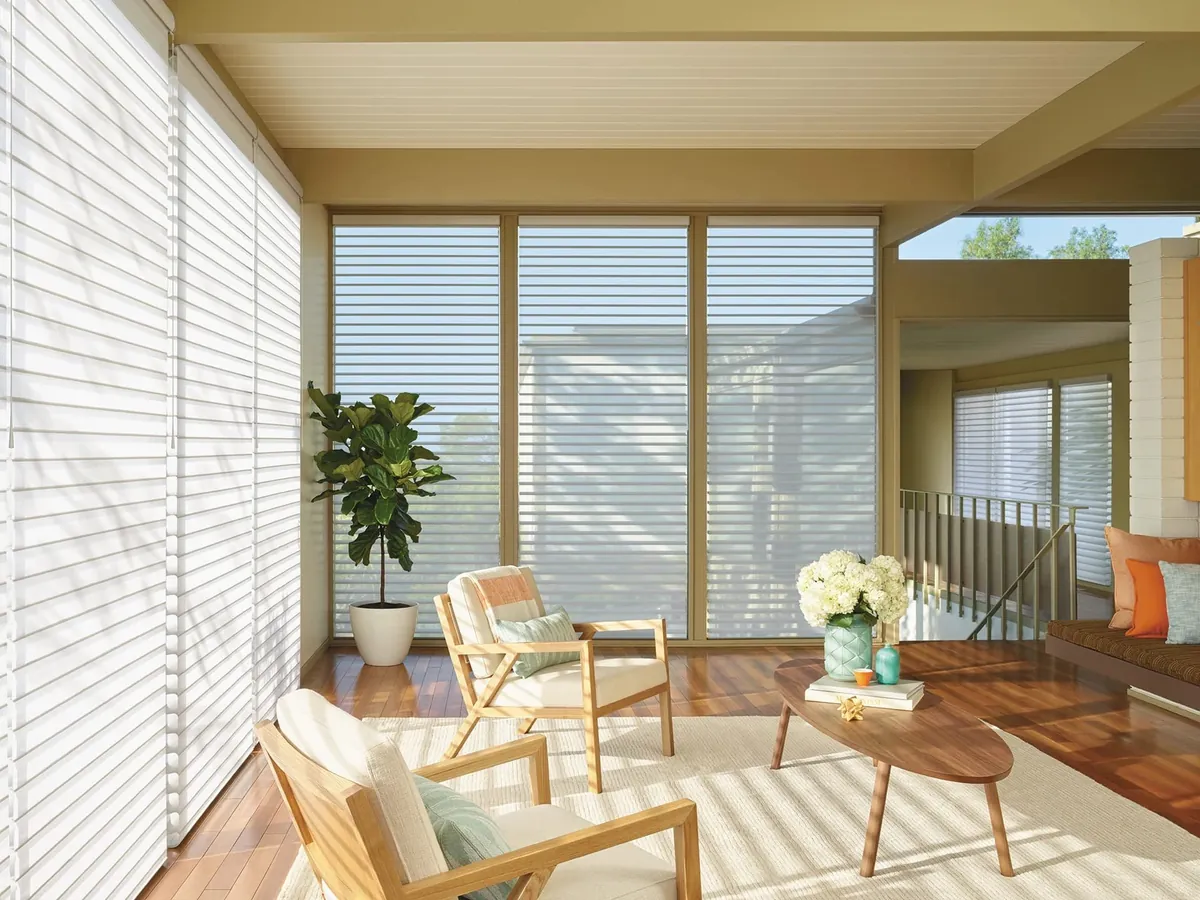
Planning both sides of one house
Because most houses on the island have a bright face and a sheltered face, the most useful thing to do when choosing roman shades in Portsmouth is plan the two sides differently at the consultation, rather than putting the same shade on every window.
On the water side, the light comes in twice: once from the sky and again off the surface of the bay. That reflected glare is hard on the eyes, and it fades fabric and furniture over time. A lined shade is the usual choice. A light-filtering lining keeps the room bright but takes the edge off the glare; a room-darkening lining suits a bedroom that faces east over the water and catches the first light.
On the sheltered side, the problem is often the opposite. The room may already feel a little dim, so a heavy lined shade would make it darker still. An unlined or sheer fabric lets every bit of light through while giving the window a finished look. In a front room near the road, a light-filtering fabric gives daytime privacy without shutting out the day.
Seen from outside, the backs of the shades show through the glass. If the bright side and the sheltered side use different fabrics, we keep the lining color consistent wherever a window faces the street, so the house still looks even from the road.
How the visit works
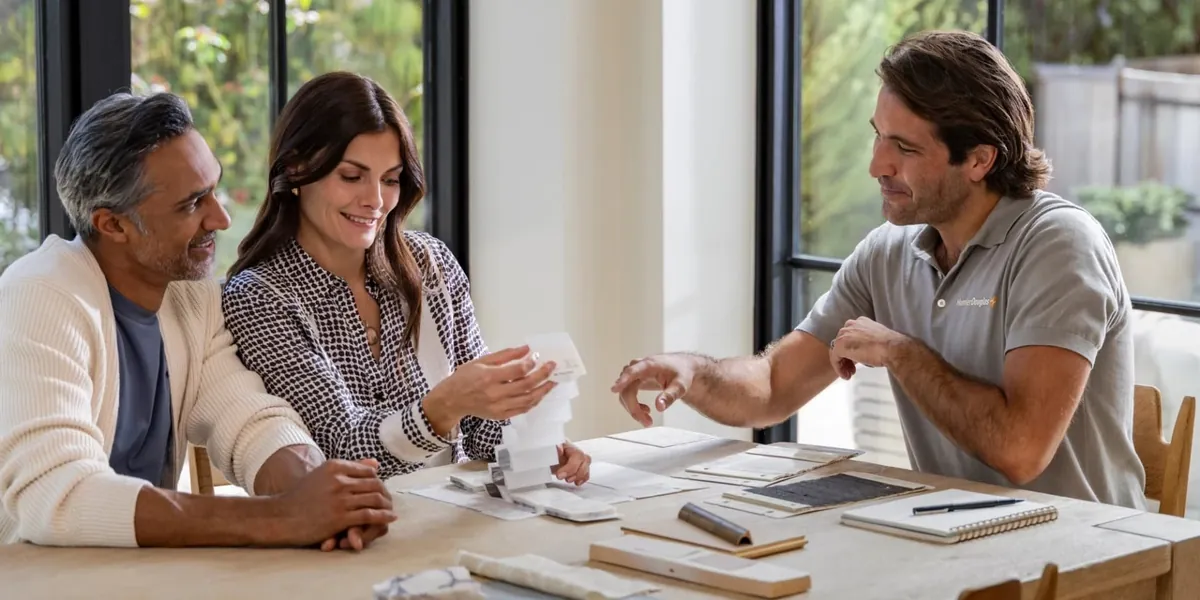
We come to you, because a roman shade has to be judged in the light of the room it will hang in. Our vans carry samples, so we can bring the showroom to you. A typical visit runs like this.
- You book a time through Request a Consultation or the call button.
- We start with a walk around the house, noting which rooms face the water and which face away.
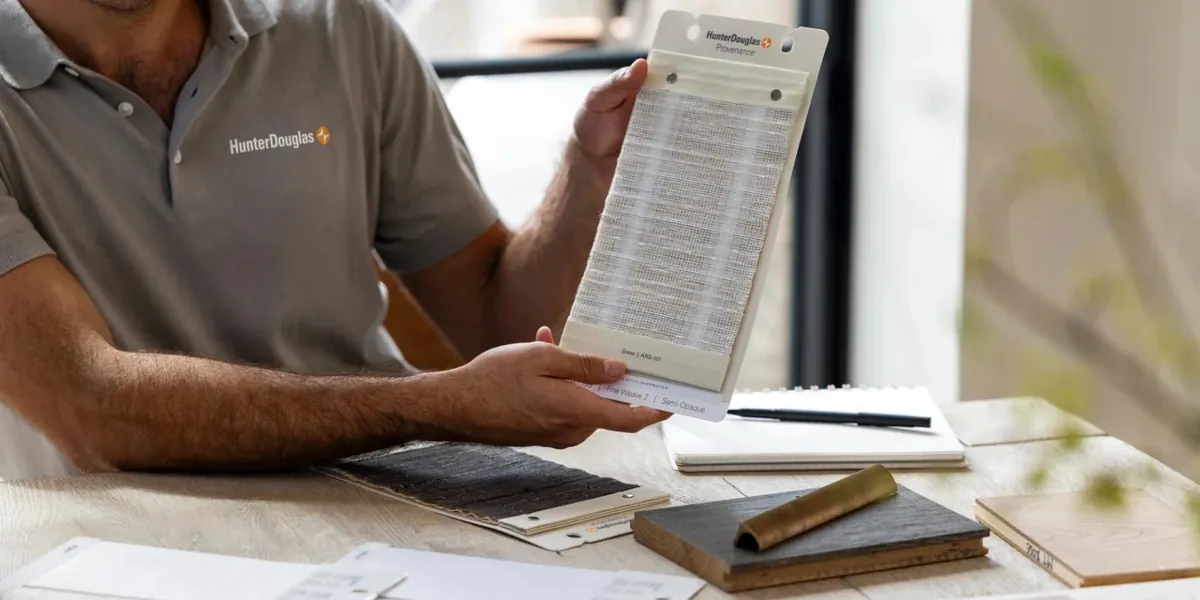
- You hold Vignette and Carole Fabrics samples against your own windows, on both sides of the house, and see how each fabric and lining behaves.
- We talk through flat and folded styles, lift options and whether any windows would suit motorization.
- We measure every window, checking width, height and frame depth at several points.
- You receive a free estimate for the shades you are considering, with time to think it over.
If you want help with fabric, color and how the window works with the rest of the room, ask about our interior design consultations. You can also read what happens at an in-home consultation before we arrive.
Flat folds, soft folds and Vignette
Roman shades in Portsmouth, RI, come down to a few clear choices of style. A flat fold hangs as a smooth panel when lowered and stacks into neat, crisp pleats when raised. It shows off a printed or patterned fabric well and suits a clean, tailored room. A folded style keeps soft loops of fabric across the face of the shade even when it is down, which gives a fuller, more relaxed look that many cottage rooms suit.
Vignette sits slightly apart. It has the look of a folded roman shade, with soft horizontal folds across the front, but the fabric rolls up into the headrail rather than stacking. That makes it the choice for low windows, for windows where you want the full view back when the shade is up, and for anyone who wants PowerView control.
Carole Fabrics offers the widest choice of fabric: plains, textures, stripes and prints, in weights from airy linen to heavier weaves. If you already have drapery or upholstery in mind, a Carole shade can be made in a fabric that suits it. Our Vignette modern roman shades and Carole roman shades pages explain each line in more depth, and the main roman shades page covers the full range.
Salt air, sun and fabric that lasts
A house close to the water lives with salt in the air and strong sun for much of the year. Both shape our advice. Fabric on a south or west window over the bay takes a lot of direct light, and a lining protects the face fabric from the worst of it. Lighter, natural colors generally hold their look longer on a window like that than deep, saturated ones.
Salt affects the metal parts of any window covering more than the fabric. Most of a roman shade’s working parts sit inside the headrail, out of the way. A cordless lift removes the cord and its lock from the side of the window, which leaves less to tangle and less exposed hardware near a window you leave open on a summer evening.
Damp is the other thing to think about. Bathrooms and the rooms of a seasonal cottage that sits closed for part of the year can see humidity. We will steer you toward fabrics that suit those rooms.
Measuring and certified installation
A roman shade only looks right when it fits the window it was made for, so the measuring is careful work, especially in a cottage where no two windows match.
- We measure the width at the top, middle and bottom of each opening and the height at the left, center and right.
- We check the frame depth where the headrail would sit and look for anything in the way, such as locks, cranks or storm window tracks.
- We decide with you on inside or outside mounting, and on how high above the frame an outside mount should sit to keep the stack off the glass.
- Every fabric, lining, lift and mounting choice is confirmed with you before the order goes in.
- Our certified Hunter Douglas installers fit each shade level and square, test the lift and show you how it works.
Once the shades are up, if one ever needs attention, we handle blind and shade repairs as well.
Buying from a Gallery dealer
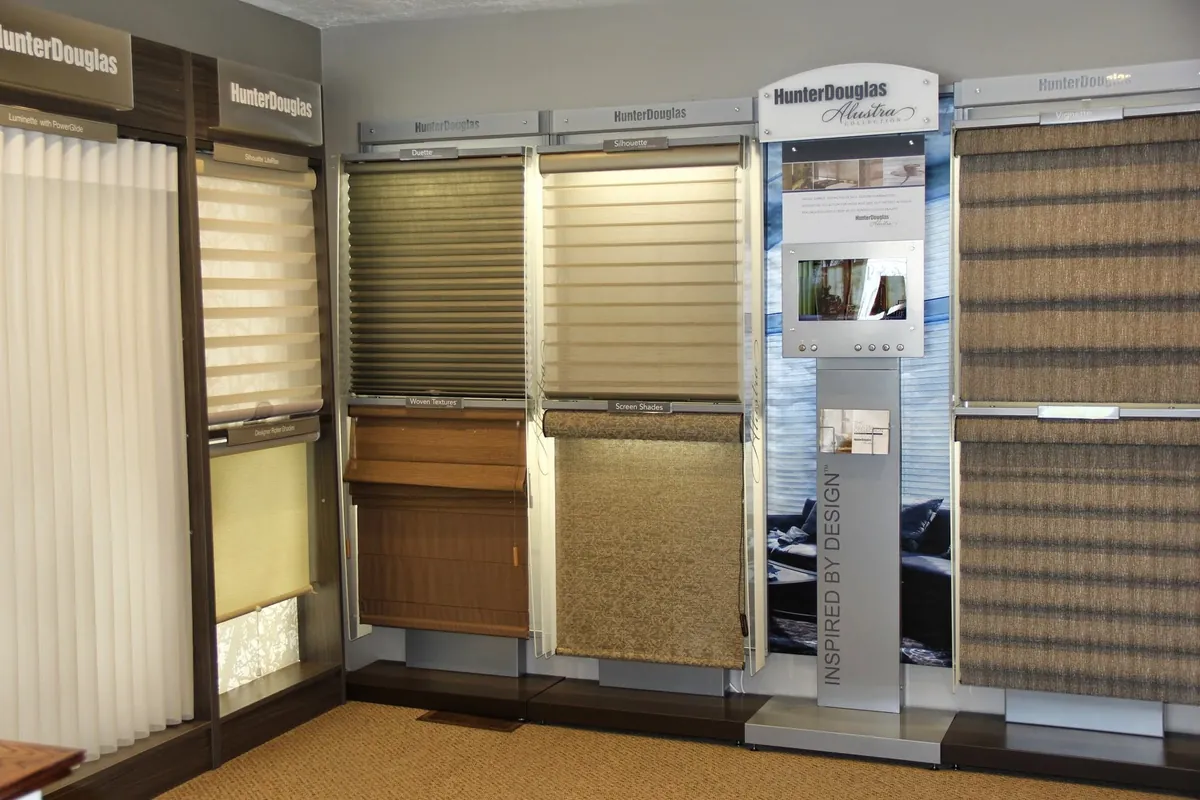
Blinds & Designs is a Hunter Douglas Gallery dealer. That is a designation Hunter Douglas gives dealers who meet its standards, and for you it means the full range in one place: every Vignette fabric and every Carole Fabrics option, with the lift systems and PowerView motorization that go with them.
The people who fit your shades are certified by Hunter Douglas to install them. We measure, order and install, so there is one company responsible from the first sample to the last bracket.
We also carry the rest of the Hunter Douglas range, so a whole house can be planned at one visit. Explore custom blinds in Portsmouth, cellular shades in Portsmouth or plantation shutters in Portsmouth, or see everything we offer on the island on our Portsmouth page.
Across the state line to North Dartmouth
Most of our work on the island starts with a home visit, because the light on your bay-facing windows is something no sample book can show you. We bring Vignette and Carole Fabrics samples, measure every window and leave you with a free estimate.
If you would like to see shades in person first, our nearest showroom is in North Dartmouth, across the line in Massachusetts. You are welcome to call ahead using the call button, or simply plan a visit around its opening hours.
For a shade that needs motor control, our motorized blinds in Portsmouth page explains how PowerView works with a roman shade.
Questions from Portsmouth
Which roman shade suits a small cottage window at Island Park?
Usually Vignette. Its fabric rolls into the headrail, so it does not leave a deep stack of folds across a short window when raised. If you prefer a sewn Carole fabric, we can often mount it slightly above the frame so the folds sit on the wall instead of the glass.
Should the bay side and the road side of my house have the same shade?
Not necessarily. The water side often needs a lining to calm glare, while the sheltered side may look better with a light, unlined fabric. We keep the lining color the same on every window that faces the street, so the house still looks even from outside.
Can roman shades handle the salt air on the island?
Most of the working parts sit inside the headrail, and a cordless lift removes the side cord and its lock altogether. Lined fabrics also help protect the face of the shade from strong daily sun off the water.
Can I raise a whole wall of roman shades at once?
Yes, with Vignette on PowerView motorization. You can control the shades from your phone or a remote, group them so a wall moves together, and set schedules so the bay-facing shades lower in the afternoon.
Is there a charge for the estimate?
No. After we measure, you receive a free estimate for the shades you are considering. Request a consultation and we will arrange a time to bring samples to your home.
Start with a visit to your windows
The quickest way to know which fabric suits your bright side and your shaded side is to hold the samples up at your own glass. Request a consultation and we will bring the Vignette and Carole Fabrics range to you, measure each window and leave you with a free estimate for roman shades in Portsmouth, RI. If you would rather talk first, use the call button, or drop in at our North Dartmouth showroom.