
Big modern openings and a house that is often closed up
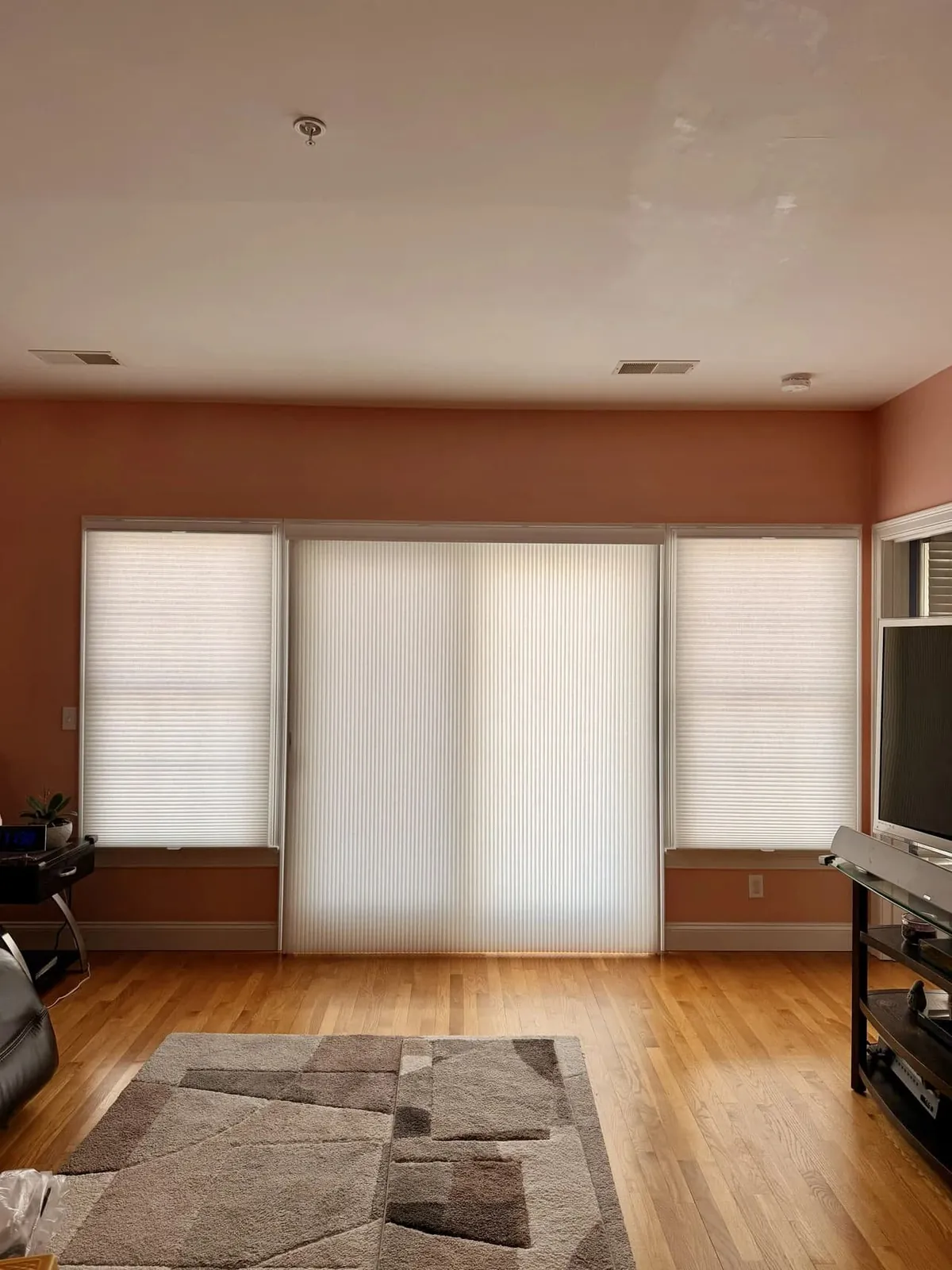
Most of the houses around Mashpee Commons and New Seabury are newer than the Cape’s village centers. The colonials and condominium villages here were largely built in the later years of the last century and since, and they were designed with generous glass: wide sliders, tall great-room windows, transoms over doors and corner windows that wrap a breakfast nook. That is a lot of glass to keep warm in January and a lot of glass letting the sun in during July, which is exactly the job cellular shades in Mashpee, MA, are made for.
The other thing that shapes our advice here is how the houses are used. A good share of them are second homes, open all summer and closed for long stretches the rest of the year. A window covering in a house like that has to do its work when nobody is there to raise or lower it.
A honeycomb shade handles both. The pleats fold into hollow cells, and the air trapped inside those cells sits between the room and the glass. In winter it helps the room hold whatever heat is left on. In summer it slows the sun’s heat and protects floors and furniture while the house waits for its owners.
Honeycomb choices for Mashpee houses
These are the shades we bring up most often for the condominium villages and colonials in town. Samples of every one of them come along to your consultation.
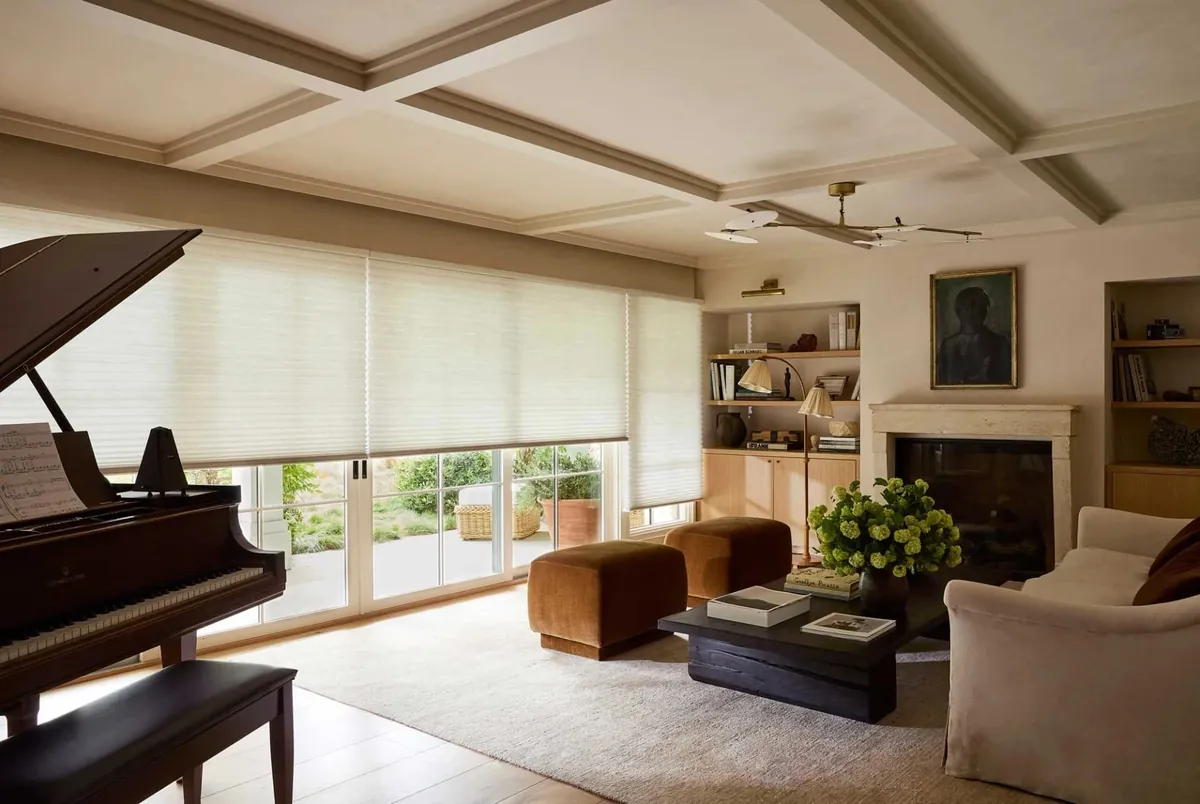
Duette on the wide openings
Hunter Douglas’s original honeycomb, with the broadest choice of fabrics and the extra-wide sizes that suit a big great-room window.
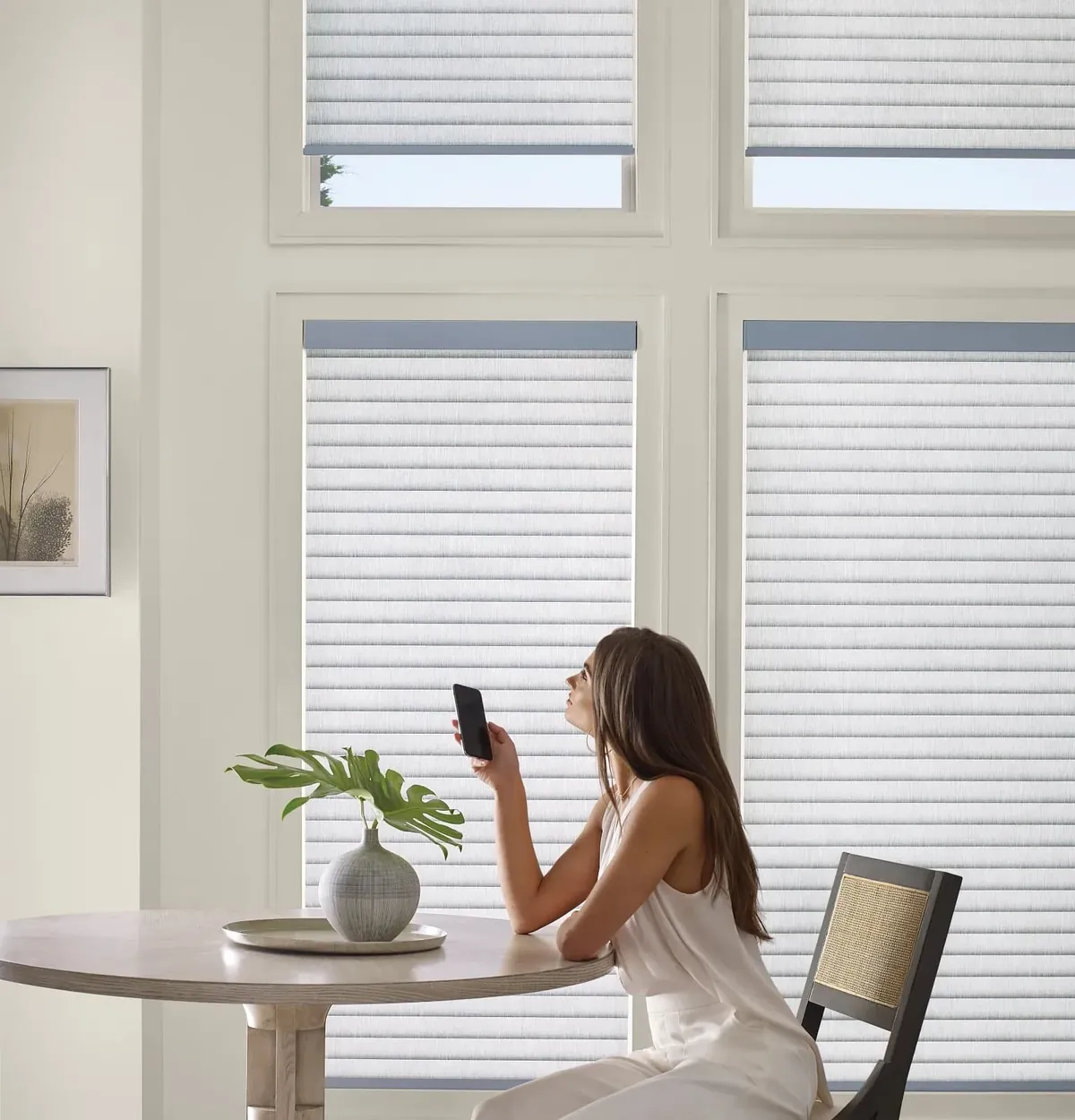
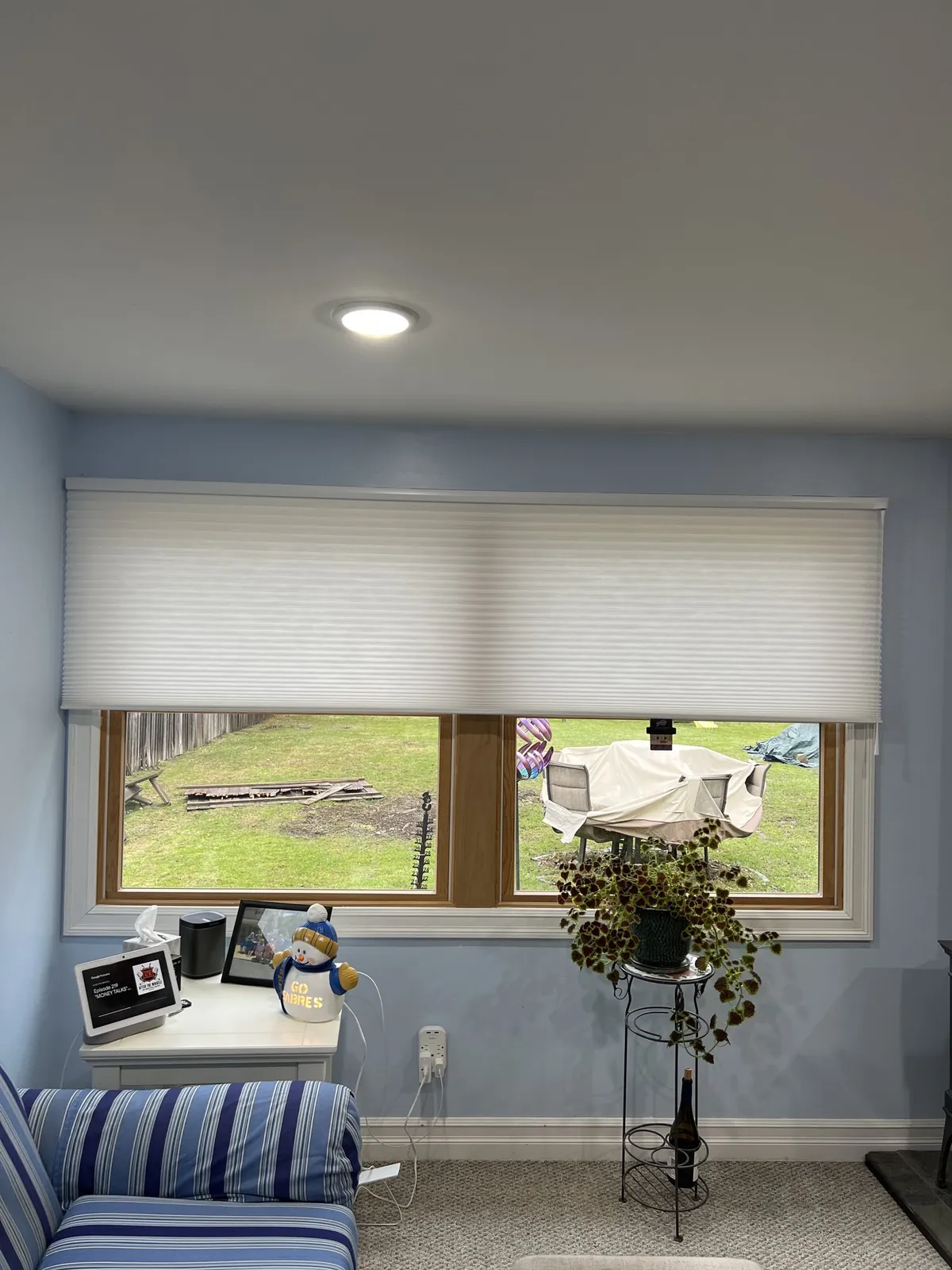
PowerView schedules
Set the shades to lower each midday and rise each evening, even from off the Cape, so the house looks lived in and the sun never sits on the floors.
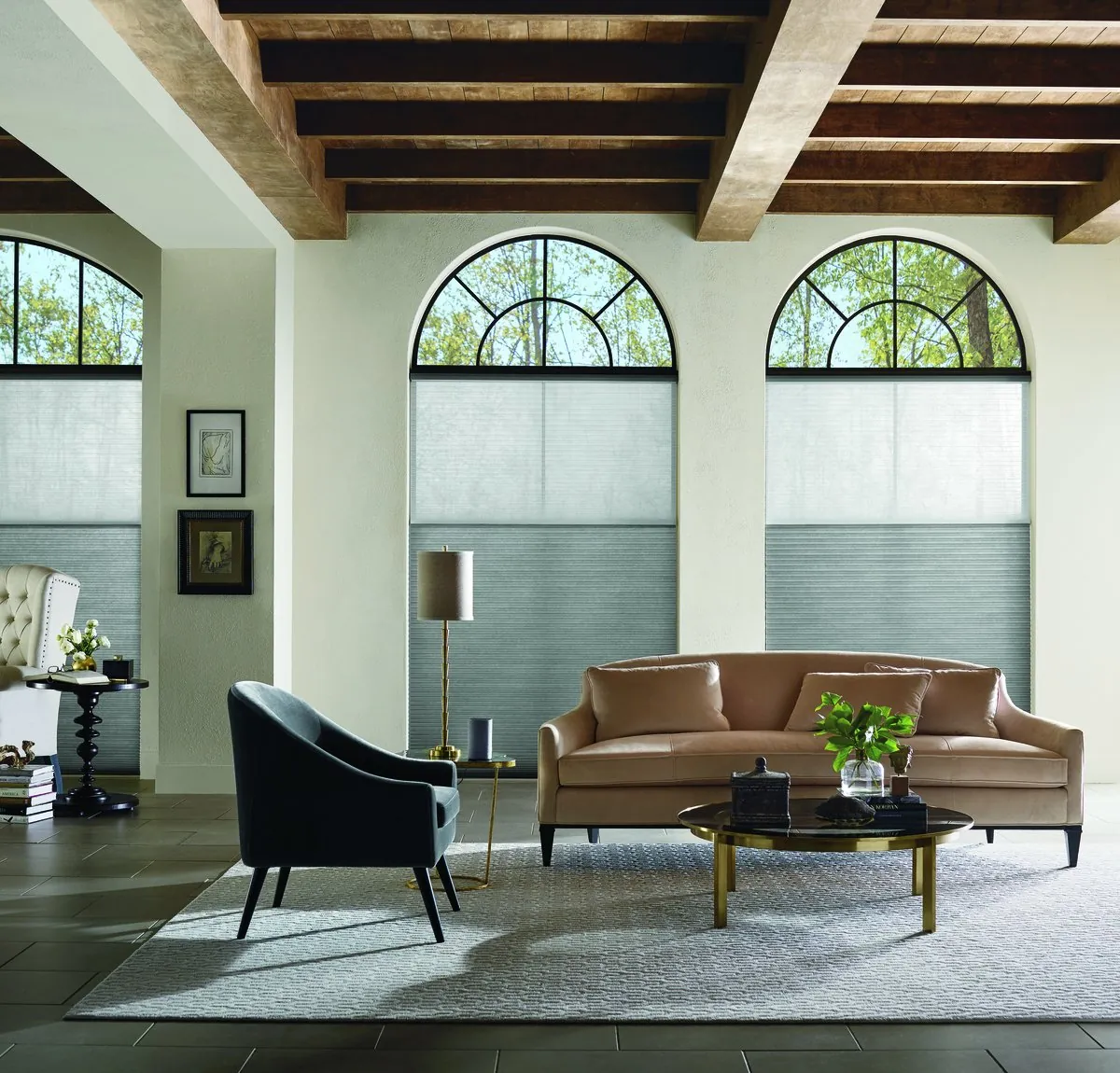
Top-down, bottom-up
Drop the top for light and sky while the lower sash stays covered. A good answer where condominium units face each other across a green.
Strong summer sun on newer glass
When the Cape is at its busiest, the sun is high and long, and newer houses with large south and west windows take the full force of it. Great rooms with two stories of glass can turn into greenhouses by mid-afternoon, and the corner of the living room nearest the slider can be too bright to sit in.
For those rooms we usually start with a light-filtering honeycomb. Daylight still comes in, but spread softly across the space instead of landing as a glaring block on the floor. The cells slow the sun’s warmth on its way through, which takes some of the strain off the air conditioning on the hottest days.
If the trouble is glare across a television or a laptop, step up to a denser fabric or a darkening cell. Many owners choose a light-filtering fabric for the main rooms and a darkening fabric for the bedrooms, so guests sleeping in on a summer weekend are not woken by the sun at first light.
Fading is the quieter cost of strong sun. Wood floors, rugs and upholstery near big windows lose color over time when the sun sits on them day after day. Lowering a honeycomb shade during the brightest hours is one of the simplest ways to slow that down, especially in a house that is empty for weeks at a time.
It is worth thinking about the rooms you use least, too. A guest room over the garage or a bonus room with a skylight-style window often gets the hottest sun in the house and the least attention. Including those rooms when you plan cellular shades in Mashpee, MA, keeps the heat from building up in a corner of the house nobody has opened for a week.
Second homes and the long empty stretches
A house that is closed from October to May has very different needs from one that is lived in every day. Nobody is there to lower a shade when the afternoon sun comes round, or to raise it in the morning so the house does not look shut up. Shades left down for months also need fabric that handles constant exposure on the side facing the glass.
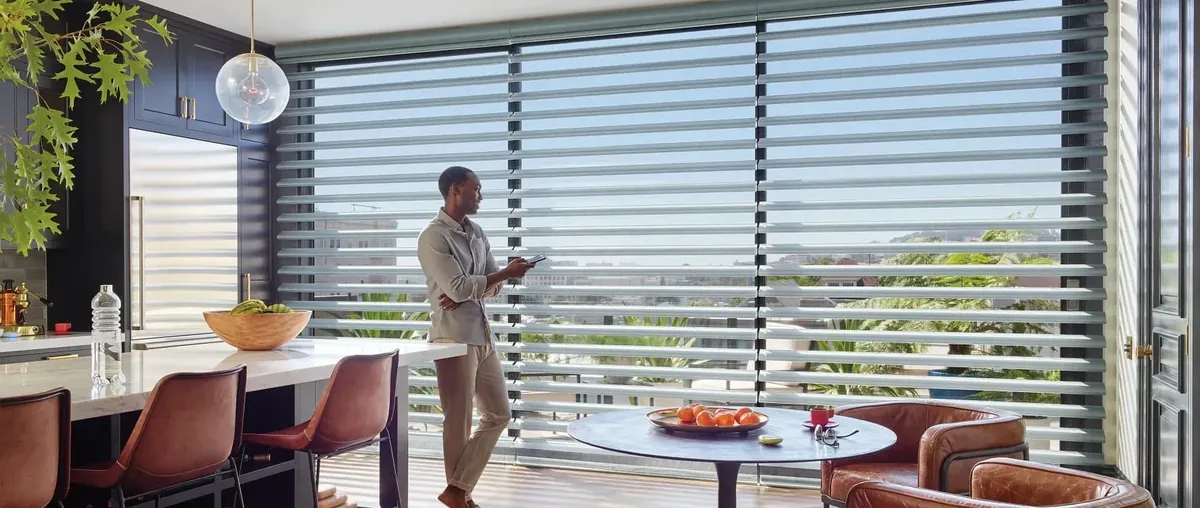
That is where PowerView motorization earns its place in Mashpee. You can set each room on a schedule, so the shades on the sunny side close in the middle of the day and open again later, whether you are at the house or not. The app lets you check and adjust them from wherever you are. If you let the house out for part of the season, motorized shades also mean no cords to tangle and no shades left at odd heights by guests.
We plan how each motor is powered during the visit, and we look at where any connection would go, so the finished installation looks tidy.
For owners who would rather keep things simple, a cordless honeycomb with a top-down, bottom-up option is a good middle ground. Before you close the house, you lower the shades on the sunny side and leave the rest open a little at the top for light. It takes a minute and protects the rooms all winter.
Whichever route you take, we set up cellular shades in Mashpee, MA, with the empty months in mind as much as the busy ones. That means fabrics that cope with long exposure on the glass side, lifts that cannot be left tangled, and a plan for which rooms stay covered while you are away and which can be left open for a little daylight.
Mashpee Commons and the condominium villages
The condominium villages around the Commons share a few traits. Units sit close together, often around a shared green or courtyard, and windows on one unit look straight across at windows on the next. Privacy matters in those rooms in a way it does not in a house on its own lot.
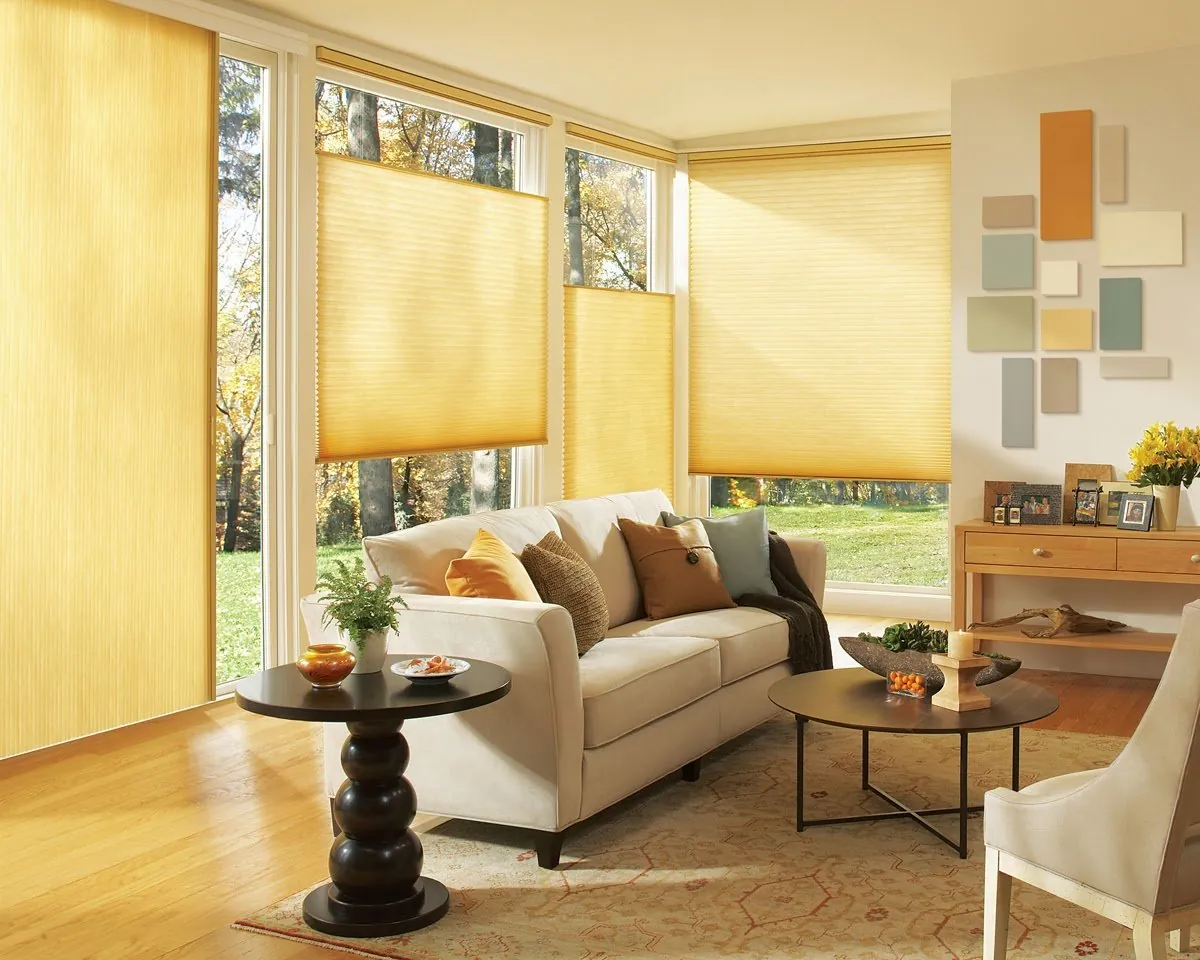
A top-down, bottom-up honeycomb is the usual fix. Lower the top of the shade and you get daylight and a view of the sky, while the bottom stays closed to the windows opposite. After dark, when the lamps go on, a light-filtering cell still screens the room: the fabric glows softly and nobody across the green sees in.
Condominium windows also tend to be uniform, which makes for a clean, consistent look. We often specify the same fabric throughout a unit and simply vary the opacity, light-filtering in the living areas and room-darkening in the bedrooms, so the outside of the building looks even. If your association has guidelines for what shows at the window, bring them along and we will choose a backing color that fits.
New Seabury and the colonials around it
Further south the houses are larger, with more of them standing on their own lots and more of them facing the water. New Seabury in particular has plenty of houses with big expanses of glass looking out toward the sound, and many of them are among the second homes that sit empty for part of the year.
These rooms usually combine several kinds of opening in one wall: a slider, a pair of tall windows, and a transom or arched window overhead. Duette is the line we lean on here because it covers all of them. A vertical honeycomb draws across the slider like a soft panel, the tall windows take standard honeycomb shades, and specialty shapes cover arches and angled tops.
Salt air near the water is worth a word too. With a honeycomb shade the moving parts live up in the headrail, out of the damp sea air, which is a real advantage over metal slats and exposed cord hardware. Go cordless or motorized and there is no cord lock at all, nothing dangling to corrode or tangle.
What the cells do in a house heated low all winter
Plenty of Mashpee second homes keep the heat turned down between October and May, just enough to protect the pipes. In a house like that, every big window is a cold panel quietly drawing warmth out of the room. A honeycomb shade puts a cushion of trapped air across that panel. The cells are hollow pockets formed into the fabric, and the air inside them barely moves when the shade is down. Moving air carries warmth off quickly; air that stays put slows it right down.
So the lowered shades help the house hold its low setting with less effort, and when you arrive for a winter weekend the rooms come up to temperature sooner. For anyone living in Mashpee year round, the same pocket of air makes a chair beside a slider pleasant on a February evening instead of draughty.
Four choices change how much a shade gives you:
- Double-cell construction puts a second layer of pockets behind the first.
- Opacity: a room-darkening fabric stops more of the sun’s heat than a sheer one.
- Mount: inside the frame, where depth allows, closes up the gaps at the edges.
- Lift: top-down, bottom-up covers just the band of glass that is in the sun.
Every one of these comes in the sample case, so the comparison happens at your glass.
Picking between the two honeycomb lines
Hunter Douglas makes honeycomb shades under two names. Duette is the bigger family: the most fabrics, the extra-wide panels a great room needs, arches and angled shapes, and the side-travelling version for a slider. Applause is a separate collection with fabrics and textures of its own, and it covers ordinary bedroom and kitchen windows very well. The air-holding cell is the same idea in both.
A common Mashpee plan puts Duette on the great-room glass and the slider, and Applause everywhere the windows are standard sizes. Coordinating backing colors keep the outside of the house even. There is more on each line on our pages for Duette and Applause, and the full range sits on the cellular shades page.
A visit that fits around your time on the Cape
Daylight on a Cape afternoon changes a fabric more than any showroom lighting can show, so the visit happens at your place, on a day you are down, whether that is mid-season or the week you close up. The sample vans mean the showroom comes with us.
- Book through Request a Consultation or the call button, naming the days you will be at the house.
- We come with Duette and Applause fabrics across the color and opacity range, plus cordless, top-down and PowerView examples.
- Before anything else, we ask how the house runs: when it is full, when it is shut, and which rooms suffer most in July.
- Samples go up against the actual glass so you see each one in that room’s light.
- Every opening is measured, with the frame depth noted for an inside mount.
- A free estimate follows, and the decision stays yours, on your timetable.
Color and fabric help for the wider room is available through our interior design consultations, and our guide to what happens at an in-home consultation covers the visit in more depth. Many owners use the same trip to plan cellular shades in Mashpee, MA, for every room at once, so the whole house is ready before the season starts.
From tape measure to finished window
Houses of this age are usually square, which helps, but scale brings its own risks. On a great-room window several feet across, a small error turns into a visible sliver of light down one side.
- Width is taken top, middle and bottom on every opening, and height left, center and right.
- Frame depth is checked along with any casement cranks or locks that would foul a headrail.
- On a wide wall of glass we decide together which shades travel as one and which work separately.
- Fabric, mount and lift are agreed with you, window by window, before the order goes in.
- Certified Hunter Douglas installers hang everything, set each headrail level, run every shade up and down, and program any PowerView schedules with you before they go.
A tight, made-to-measure fit is a big part of why cellular shades in Mashpee, MA, hold a room’s temperature as well as they do.
Sagamore, our nearest showroom
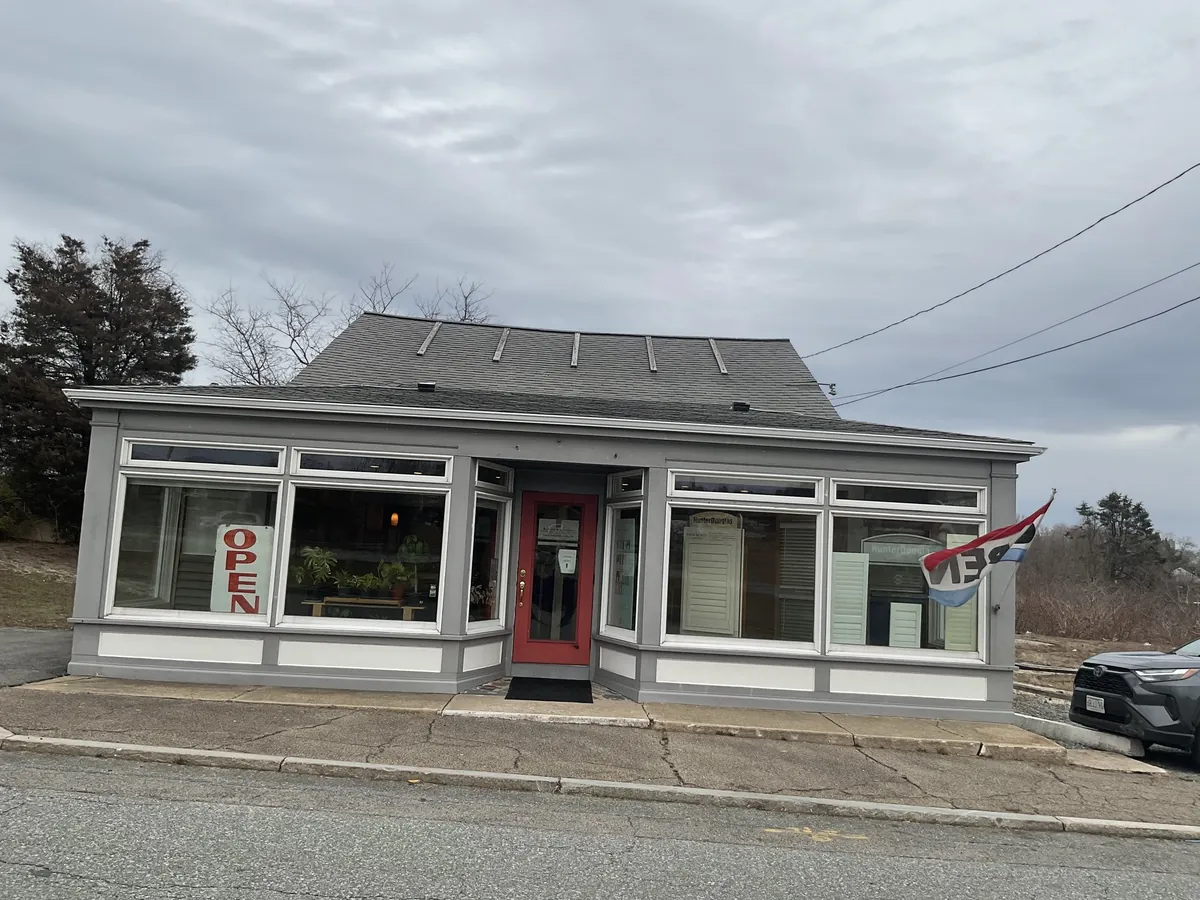
Most Mashpee customers start with a visit to their own house, because that is the only place to judge how a fabric looks in your own light. If you would like to see the shades before we come, the Sagamore showroom is our closest location, up by the canal.
It is also a good stop if you are only on the Cape for a few days and want to make the most of the time. Bring photos and rough sizes of the rooms you are thinking about and we can talk through the options there, then book the measuring visit.

What a Hunter Douglas Gallery dealer offers
Gallery status is something Hunter Douglas grants dealers who meet its standards, and Blinds & Designs holds it. What it means at your house is simple: nothing in the honeycomb range is off the table, whether that is a particular Applause color, an extra-wide Duette panel or a PowerView setup for a house you visit only some months of the year.
Installation is handled by people Hunter Douglas has certified, and if a shade is ever damaged or worn we repair it too. Our Hunter Douglas dealer page for Mashpee goes into the details.
We fit the rest of the Hunter Douglas range too. Many owners pair cellular shades with roller shades in Mashpee for a screened porch or motorized blinds in Mashpee across the house. Our Mashpee page lists everything we offer in town.
Questions from Mashpee
Can the shades open and close while I am away?
Yes, with PowerView motorization. You set a schedule for each room, so sunny windows close in the middle of the day and open again later, and you can check or change them from the app wherever you are.
Will honeycomb shades protect my floors from the summer sun?
Lowering them during the brightest hours keeps direct sun off floors, rugs and furniture, which slows fading. A light-filtering fabric does this while still letting the room stay bright.
My condominium windows face the unit next door. What helps?
A top-down, bottom-up honeycomb shade. Lower the top for daylight and sky, and keep the bottom covered toward the windows opposite. If your association has rules for what shows from outside, we choose a backing color to fit.
Do you cover sliders and arched windows too?
Yes. Duette makes a vertical honeycomb that draws sideways across a slider, and specialty shapes for arches and angled tops, so a whole wall of mixed openings can match.
Can you measure while I am only down for a weekend?
Tell us which days you will be at the house when you book, and we will try to fit the visit inside them. Measuring happens at that visit, and your free estimate follows, so you can decide after you head home.
Book a time before the season turns
Whether you are opening the house for summer or closing it for winter, it is a good moment to sort the windows. Request a consultation and we will come with the honeycomb samples, take every measurement and leave you a free estimate to think over. You can also ring through the call button, or drop in at the Sagamore showroom on your way onto the Cape.