
Close neighbors, busy streets and harbor light
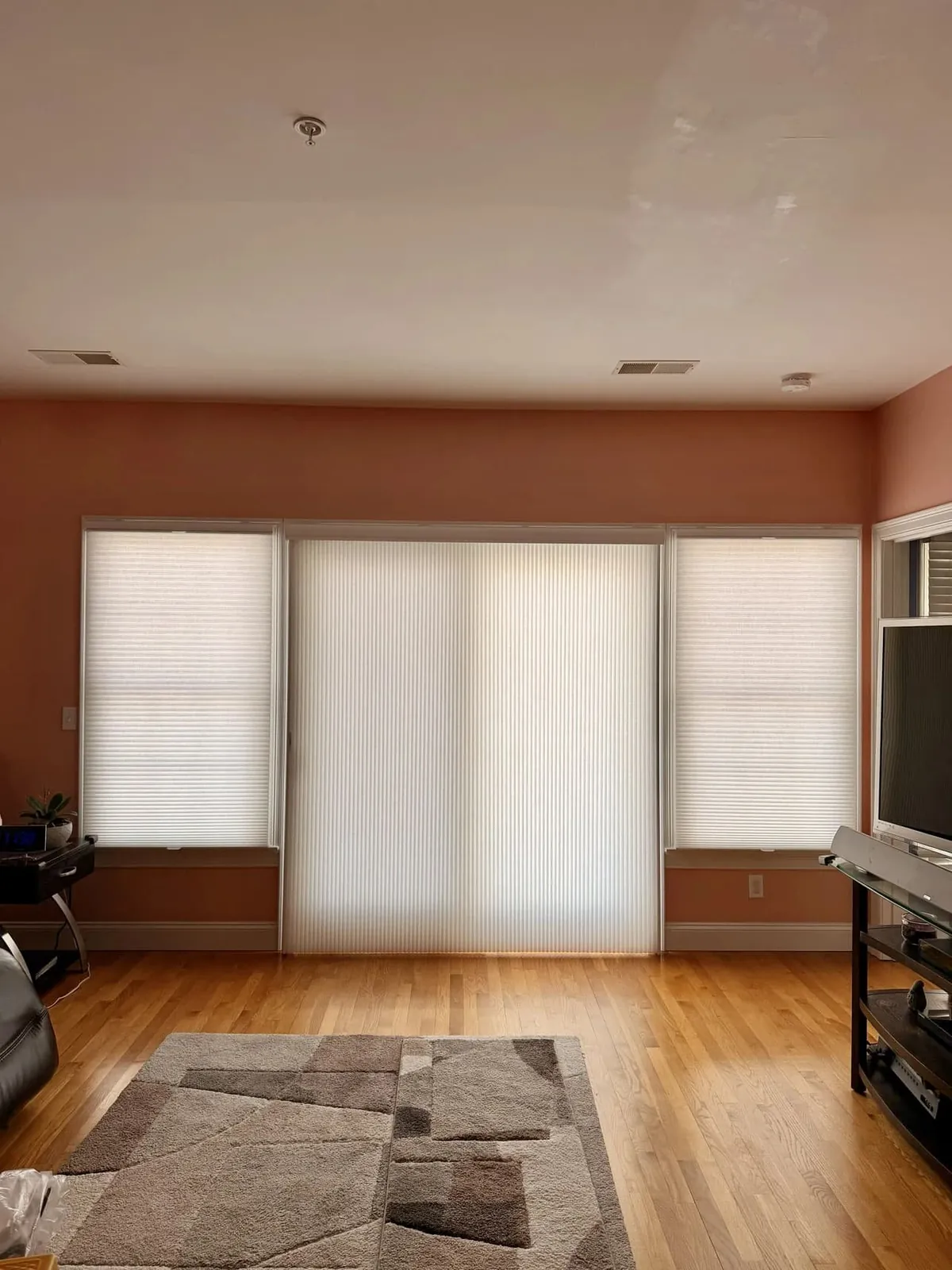
Hyannis is the busiest place on the Cape, and its houses show it. Through the village the older houses stand close together on a tight grid of streets, so a side window often looks straight into the neighbor’s. Near Main Street, older buildings have been turned into condominiums with windows that face shops, car parks and each other. Down in Hyannis Port the shingled summer houses spread out along the harbor and take the full brightness of the water. Each of those settings asks something different of cellular shades in Hyannis, MA.
What they share is a need for privacy that does not cost you your daylight, and for rooms that stay warm through a damp Cape winter. A honeycomb shade does both. Its fabric is folded into rows of hollow cells, and the air inside those cells stays still when the shade is lowered. That still air slows the cold coming off the glass, and the fabric itself screens the room from view while letting soft light through.
We fit them across the whole range of Hyannis housing, from a single bedroom in a village house to every window of a harbor-side summer place.
What we fit in Hyannis houses
The sample van carries all of these, and we set them up at your windows so you can judge them in your own light.
Light-filtering for privacy
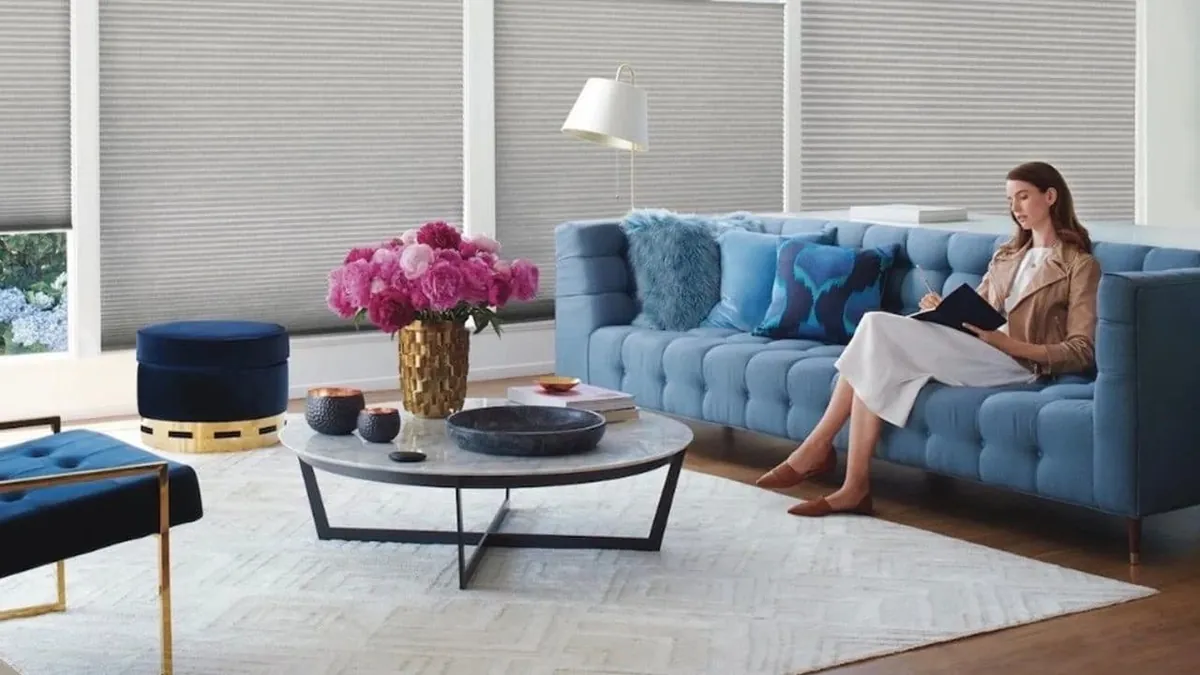
On a side window a few steps from the house next door, a light-filtering honeycomb lets the room glow without anyone seeing in.
Shades on a timer
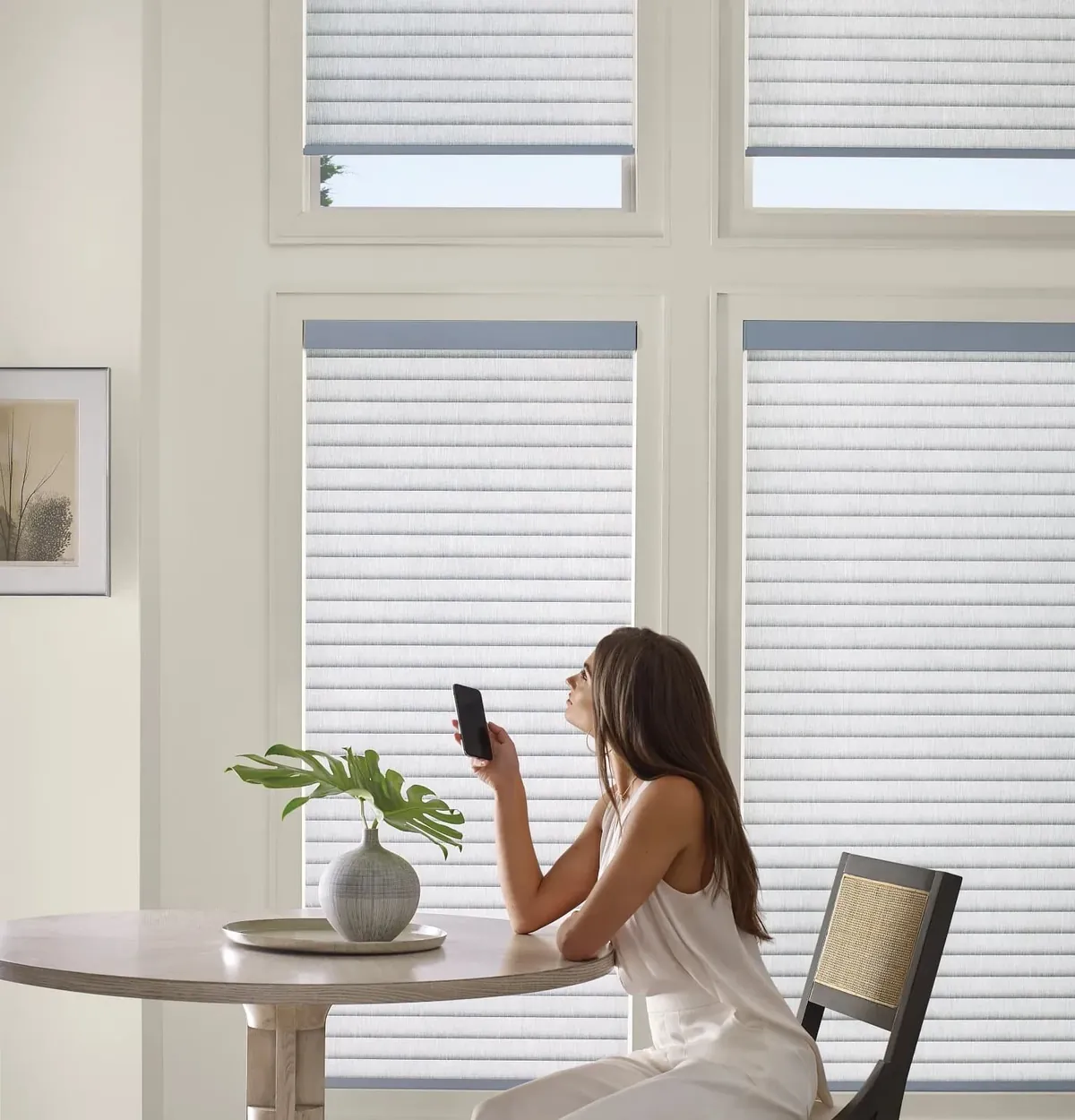
PowerView motorization opens and closes the shades from your phone or on a schedule, handy for a summer house that stands empty part of the year.
Everyday Applause
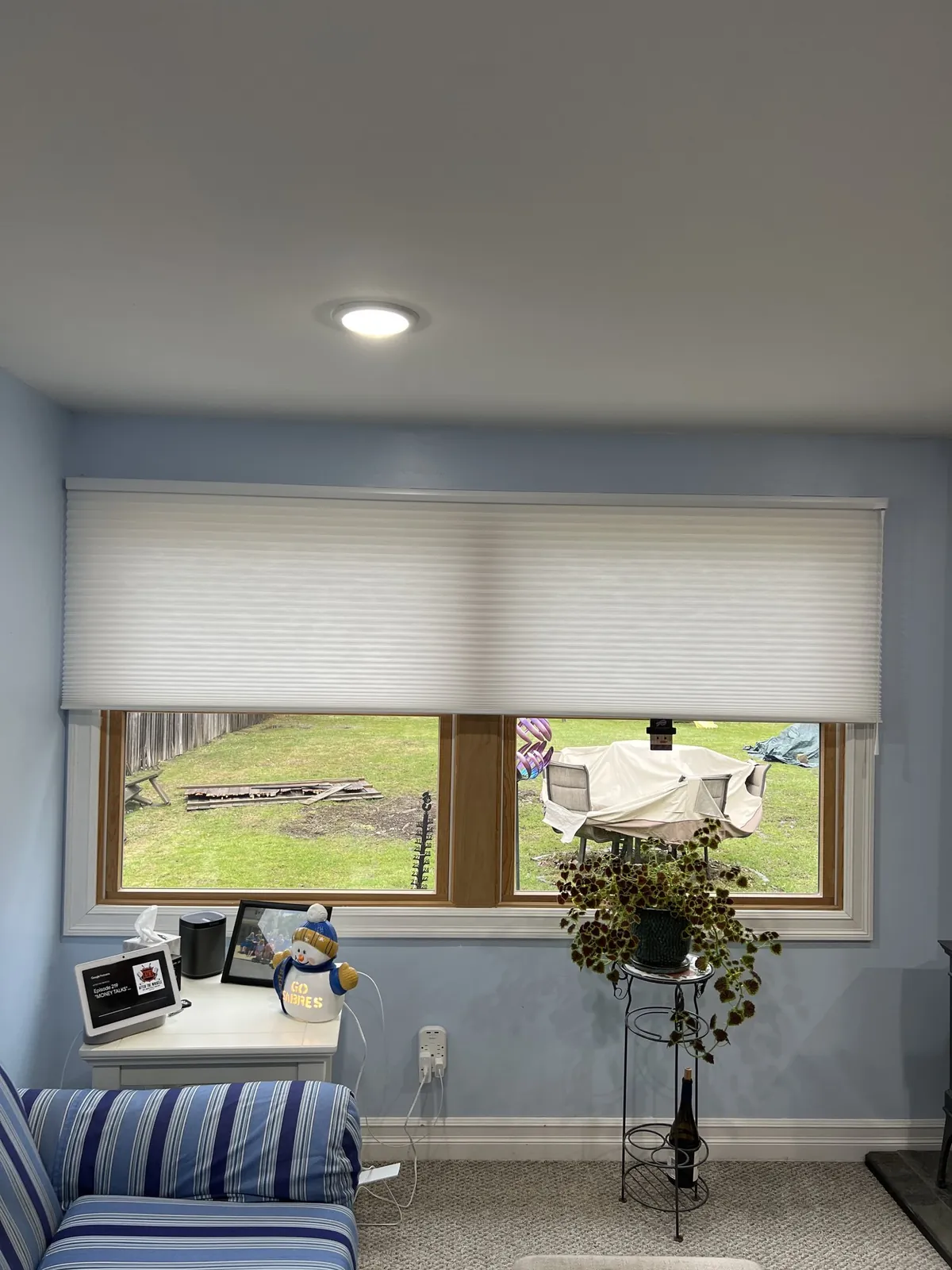
Hunter Douglas’s second honeycomb line, with its own fabrics, ideal for the bedrooms and kitchen of a village house.
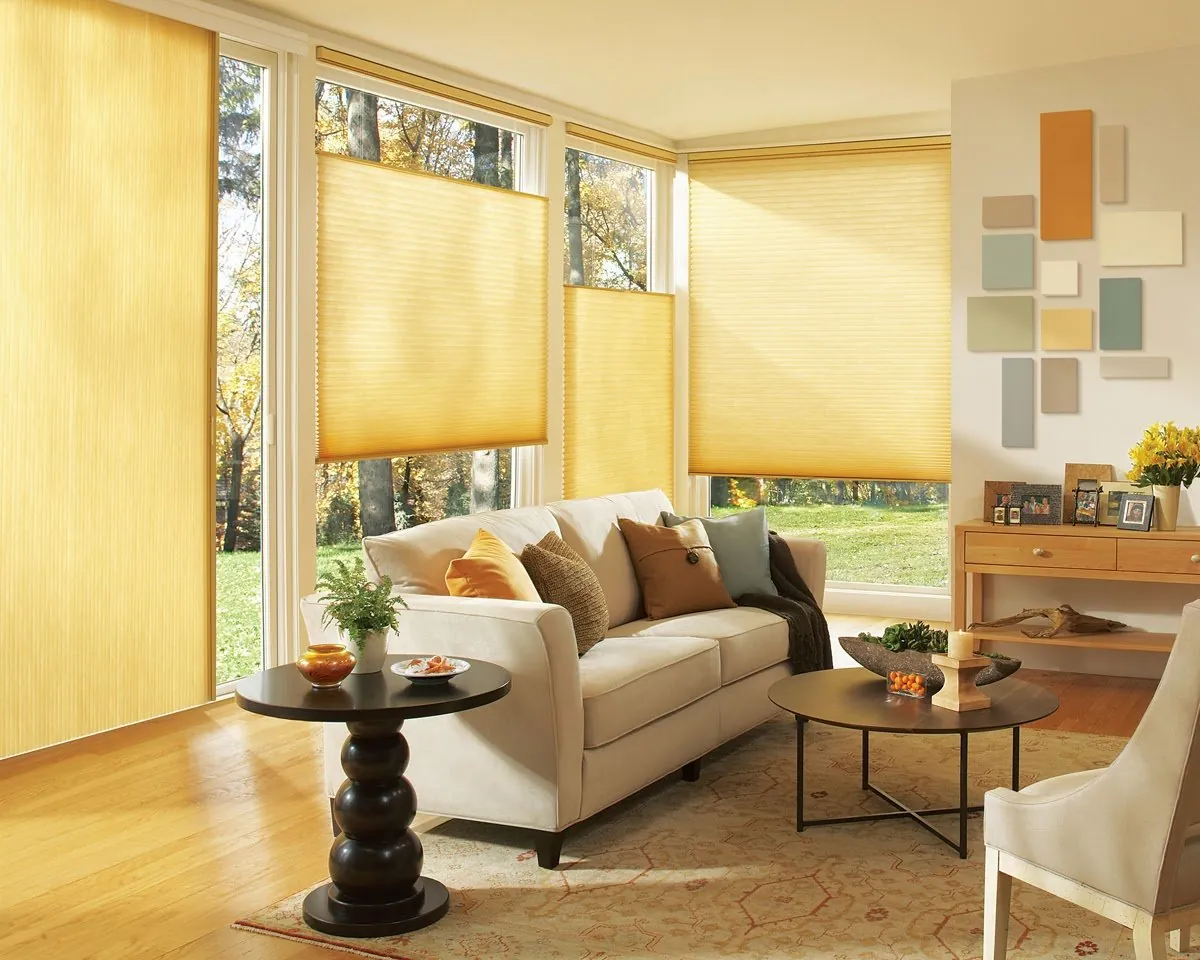
Open from the top
A top-down, bottom-up shade drops from the head of the window, so you see sky and harbor while the lower glass stays covered.
Village houses on a tight grid
The streets around the village center were laid out long before anyone imagined the traffic Hyannis sees now. Houses sit close to the road and close to one another, many of them older capes, colonials and two-family houses with plain double-hung windows. Walk along almost any block and you can see how near the side windows are to the next house.
In rooms like that, privacy is the first problem to solve. A bare window means living in view of the neighbors; a heavy blind means sitting in the dark at midday. A light-filtering honeycomb sits between the two. It diffuses the daylight so the room stays bright, but nobody outside can make out what is going on inside. After dark, with the lamps on, it still screens the room, because the fabric glows rather than turning see-through.
Top-down, bottom-up shades give you even more control on the side of the house facing the neighbors. Lower the top section and light comes in over the fence line while the lower window stays covered. It is the single most requested lift in close-set houses like these, and it suits bathrooms and ground-floor bedrooms especially well.
Many village houses have been added to over the years, so windows vary from room to room. Because each shade is made for its own opening, a mix of window sizes can still share one fabric, and we line the bottom rails up wherever the frames allow.
Condominium conversions near Main Street
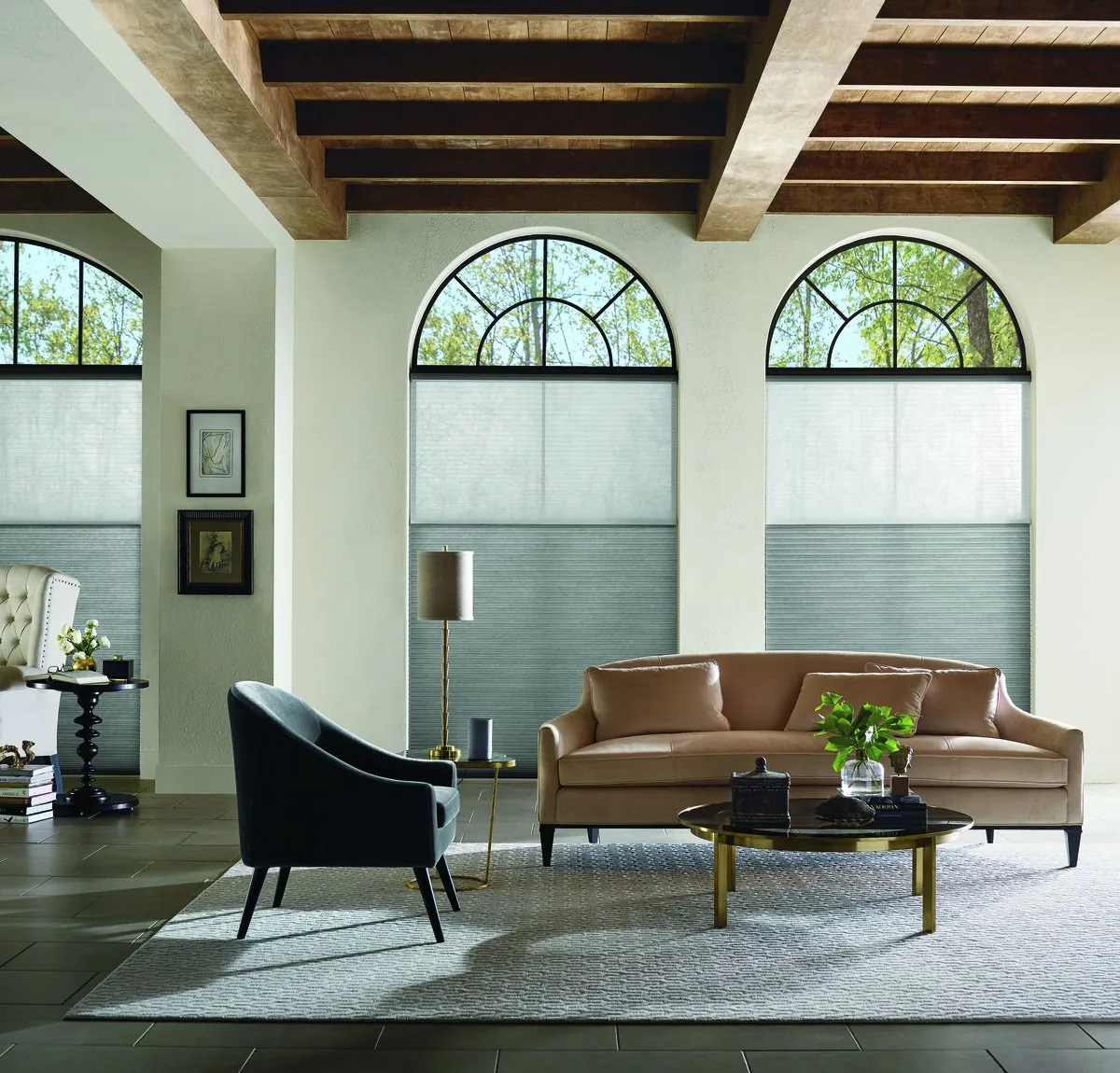
Some of the most interesting windows in town are in the older buildings near Main Street that have been converted into condominiums. A former commercial building or a large old house split into units can leave each unit with a set of windows that were never designed for a living room: very tall openings, oddly placed small windows, a bay that is now shared between two rooms.
Honeycomb shades are flexible enough to handle all of it. They can be made very tall, very narrow or in specialty shapes, and a run of different windows can still look like a set. On tall openings we often use a top-down, bottom-up lift so you can let light in high up while keeping the lower glass covered from the street.
Noise and light from the street are a fact of life near Main Street. Street lamps and passing headlights can keep a bedroom brighter than you want at night. A room-darkening honeycomb fabric blocks that glow and keeps the bedroom dim until you choose to raise the shade. In the living areas a light-filtering fabric is usually enough, so the unit stays bright during the day.
Condominium associations sometimes have guidance on what can be seen at the window from outside. If yours does, bring it along. Duette and Applause both allow a white or neutral backing facing out with a different color facing the room, so you can follow the building’s rules and still have the look you want inside.
Two-family houses and upstairs bedrooms
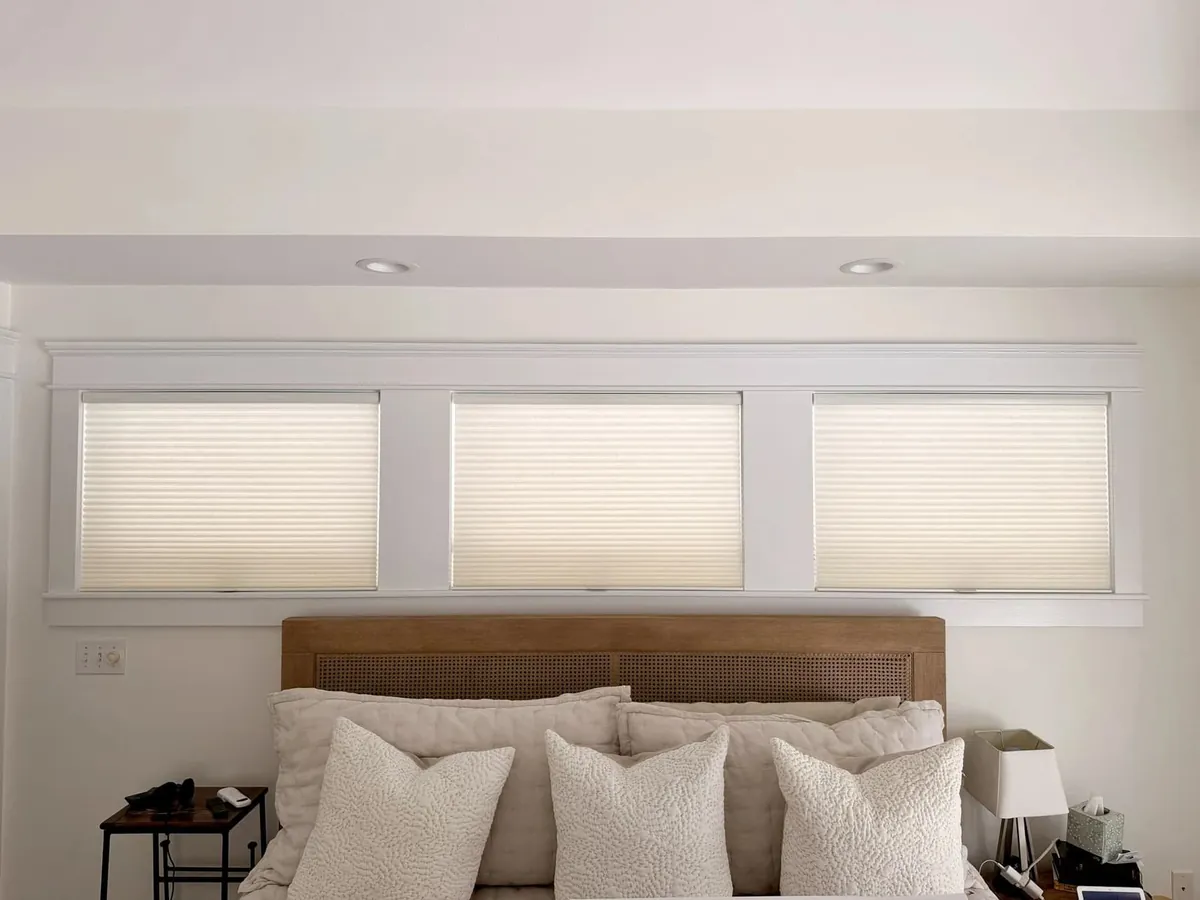
Plenty of the older houses on the village grid are two-family homes, with one unit stacked above the other. The upstairs rooms in these houses sit under the roof, often with a small window in each gable and a pair of windows facing the street. They catch the heat in summer and lose it fast in winter, and the bedrooms up there tend to be the hardest rooms in the house to keep comfortable.
That is a good place to start with cellular shades in Hyannis, MA. A double-cell fabric on the gable windows holds back the cold on a January night, and in August a lowered shade slows the sun beating through the glass in the late afternoon. In a bedroom that faces the street, a room-darkening fabric also deals with the light from passing cars.
The downstairs unit usually has a different set of problems: windows at eye level to the sidewalk, a front door with side lights, and a back room that looks onto a driveway or a yard shared with the house behind. Light-filtering honeycomb shades and top-down lifts cover most of those. If you own both units, we can plan cellular shades in Hyannis, MA, for the whole building at once, so the front of the house looks consistent from the street while each unit keeps the fabric and color that suit it.
Hyannis Port’s shingled summer houses
Down by the harbor the houses change completely. Hyannis Port’s shingled summer houses sit on bigger lots, with wide porches, rooms full of windows and long views over the water. The light here is bright and reflected, bouncing off the harbor and up under the porch roofs into the rooms behind.
On the harbor side, the job of a shade is to soften that glare without hiding the view. A light-filtering honeycomb in a pale fabric takes the hard edge off the light and keeps the room comfortable to sit in on a bright afternoon. Top-down, bottom-up lifts are useful here too, but in the other direction: lower the top of the shade to cut the sun, and leave the lower half open to the water.
Many of these houses are summer places that were never built for winter, and those that are now used in the colder months feel it. Single-pane glass and loose old frames lose heat fast. A double-cell honeycomb, with two layers of trapped air, gives a cold room the most warmth for its size. That is often what owners notice first when they add cellular shades in Hyannis, MA, to a house by the water.
Salt air reaches anything near an open window in the summer. With a honeycomb shade the moving parts are housed up in the headrail rather than hanging down the side of the window, and a cordless or motorized lift removes the cord and cord lock altogether.
Why a cell keeps a room warm
The insulating trick of a honeycomb shade is all in its shape. Seen end on, the fabric forms a stack of hollow tubes that run the full width of the window. When you lower the shade, every one of those tubes traps a band of air. Air only carries heat well when it moves, so a layer of still air slows the cold from the glass on its way into the room, and slows the heat from the room on its way out.
In summer it works the other way round, holding back some of the sun’s warmth that comes through the pane. Both matter in Hyannis: a village bedroom with an old sash window feels the cold in January, and a harbor-side living room feels the heat in August. A condominium unit with windows on one side only can swing between the two in a single day, cool in the morning shade and warm once the sun swings round onto that wall.
You can adjust how much a shade does:
- Single-cell or double-cell, depending on how cold the room gets.
- Light-filtering or room-darkening fabric, depending on how much light you want.
- An inside mount where the frame allows, for the closest fit at the edges.
- A top-down, bottom-up lift, so you cover only the part of the window that needs it.
We bring all of these to the consultation, so you can feel and see the difference at your own window.

Managing a summer house from away
A lot of houses in Hyannis Port and around the harbor sit empty for weeks or months at a time. Shades left down all winter protect floors and furniture from fading, but a house with every shade closed looks shut up, and one with every shade open lets the sun do its damage.
PowerView motorization solves that neatly. Each room can follow its own schedule, so the sunny side closes during the middle of the day and opens again in the evening. You can check or change the settings from the app whether you are in Hyannis or a long way from it. It also means guests or renters cannot leave shades tangled or stuck at odd heights.
We plan how each motor is powered during the visit, and where any connection goes, so the finished room looks tidy. For houses that do not need motorization, cordless honeycomb shades with a top-down option are a simple alternative: lower the sunny side before you close up, and leave the rest open a little at the top.
Duette or Applause
Hunter Douglas makes two honeycomb collections. Duette is the larger, with the widest choice of fabrics, cell sizes and specialty shapes, very wide and very narrow sizes, and a vertical honeycomb shade that slides across patio doors. Applause is a separate collection with its own fabrics and textures, and it covers standard windows very well. Both hold air in their cells the same way.
In practice the choice is usually room by room. Duette on the tall and unusual windows of a condominium conversion or across the porch-side glass of a summer house; Applause in the bedrooms and kitchen of a village house. Many orders for cellular shades in Hyannis, MA, include both. Our Duette honeycomb shades and Applause honeycomb shades pages explain each line, and our cellular shades page shows the full range.
How a visit goes
We start at your house, because the light in a village street and the light on the harbor are nothing alike, and fabric has to be judged where it will hang. Our vans carry the samples, so the showroom comes to you.
- Request a consultation online, or use the call button, and choose a time that works.
- We arrive with honeycomb samples across the colors and opacities, along with the lift and PowerView options.
- We walk the house with you and talk about privacy, sun, cold rooms and anything about the building we should know.
- You try samples in each window and see how they look by day and how they would screen the room at night.
- We measure every opening, checking depth for an inside mount and noting any trim or hardware.
- You get a free estimate and take your time to decide.
- Our certified Hunter Douglas installers fit the shades, level each headrail and show you how everything works.
You can also arrange one of our interior design consultations for help with color and fabric across a whole room, and read more about what happens at an in-home consultation before we come.
Gallery dealer, certified installation
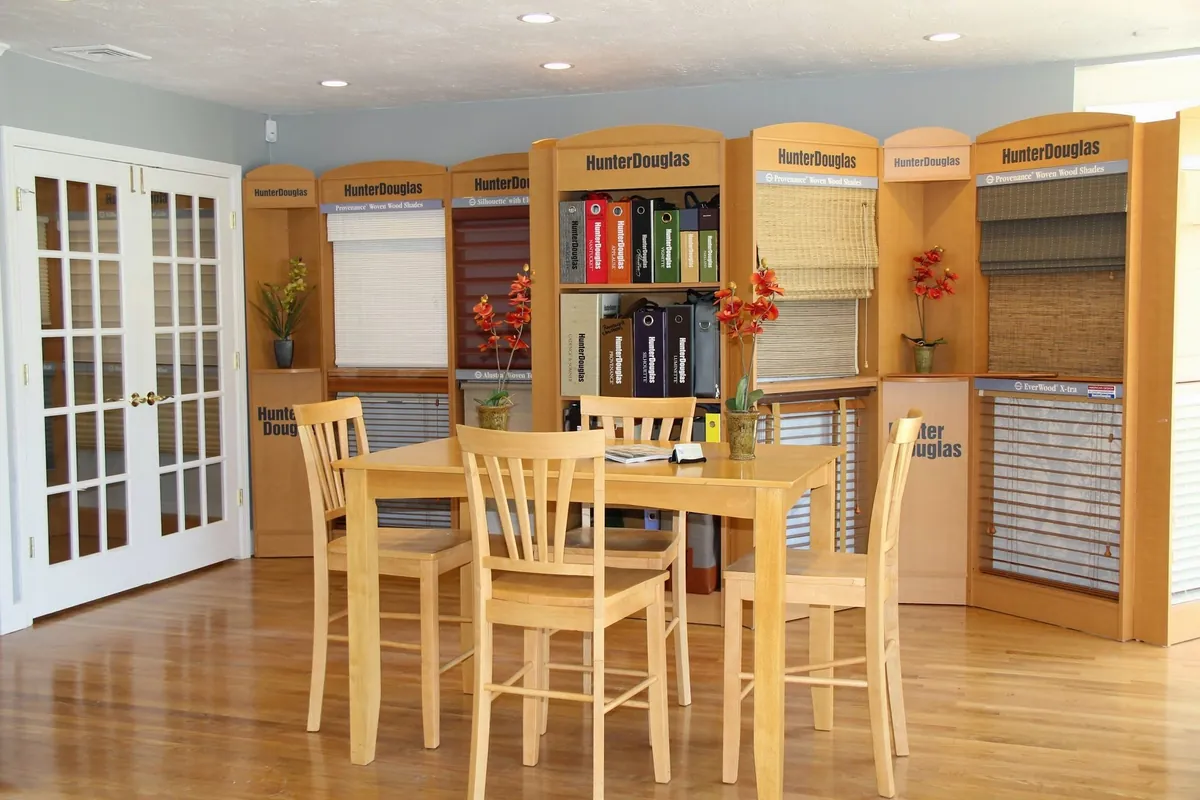
Blinds & Designs is a Hunter Douglas Gallery dealer, one of the dealers Hunter Douglas recognises as its leading partners. That means the whole honeycomb range is open to you, including the specialty shapes a condominium conversion might need and PowerView for a summer house.
Our installers are certified by Hunter Douglas, and we also repair blinds and shades if one needs attention later. See our Hunter Douglas dealer page for Hyannis for more.
Honeycomb shades are often one part of a bigger plan. You might pair them with roller shades in Hyannis for a porch or plantation shutters in Hyannis for a front room. Our Hyannis page lists all of it.

At home first, Sagamore if you prefer
Most of our Hyannis customers choose their shades at home, with the samples held up at the very windows they are worried about. It is the only way to see how a fabric screens a side window from the house next door.
If you would rather see the shades in person first, the Sagamore showroom is our nearest location to Hyannis. Bring a couple of photos of the rooms you are thinking about and we can start there.
Questions from Hyannis
My side windows face the house next door. What gives privacy without darkness?
A light-filtering honeycomb shade. It lets daylight through but screens the room, and it still keeps the room private at night with the lamps on. A top-down, bottom-up lift lets you open the top for extra light while the lower window stays covered.
Street lights keep my bedroom bright. Will a honeycomb shade help?
Choose a room-darkening honeycomb fabric for the bedroom. It blocks the glow from street lamps and passing cars and keeps the room dim until you raise the shade.
Can the shades work in a condominium with association rules?
Usually, yes. Both Duette and Applause can have a white or neutral backing facing out and a different color facing in. Bring your association’s guidance to the consultation and we will choose with it in mind.
My summer house sits empty for months. Can the shades look after it?
PowerView motorization can open and close each room on a schedule and be adjusted from the app wherever you are. That keeps the sun off floors and furniture without leaving the house looking shut up.
How much does the estimate cost?
It is free. We measure at the visit and give you an estimate for the shades you are considering, and there is no pressure to decide that day.
Book a visit to see them at your windows
Privacy, warmth and harbor glare are all easier to judge with samples in your hand. Request a consultation and we will come to your house with the honeycomb range, measure each window and leave a free estimate. You can also reach us through the call button, or see the shades at the Sagamore showroom.