
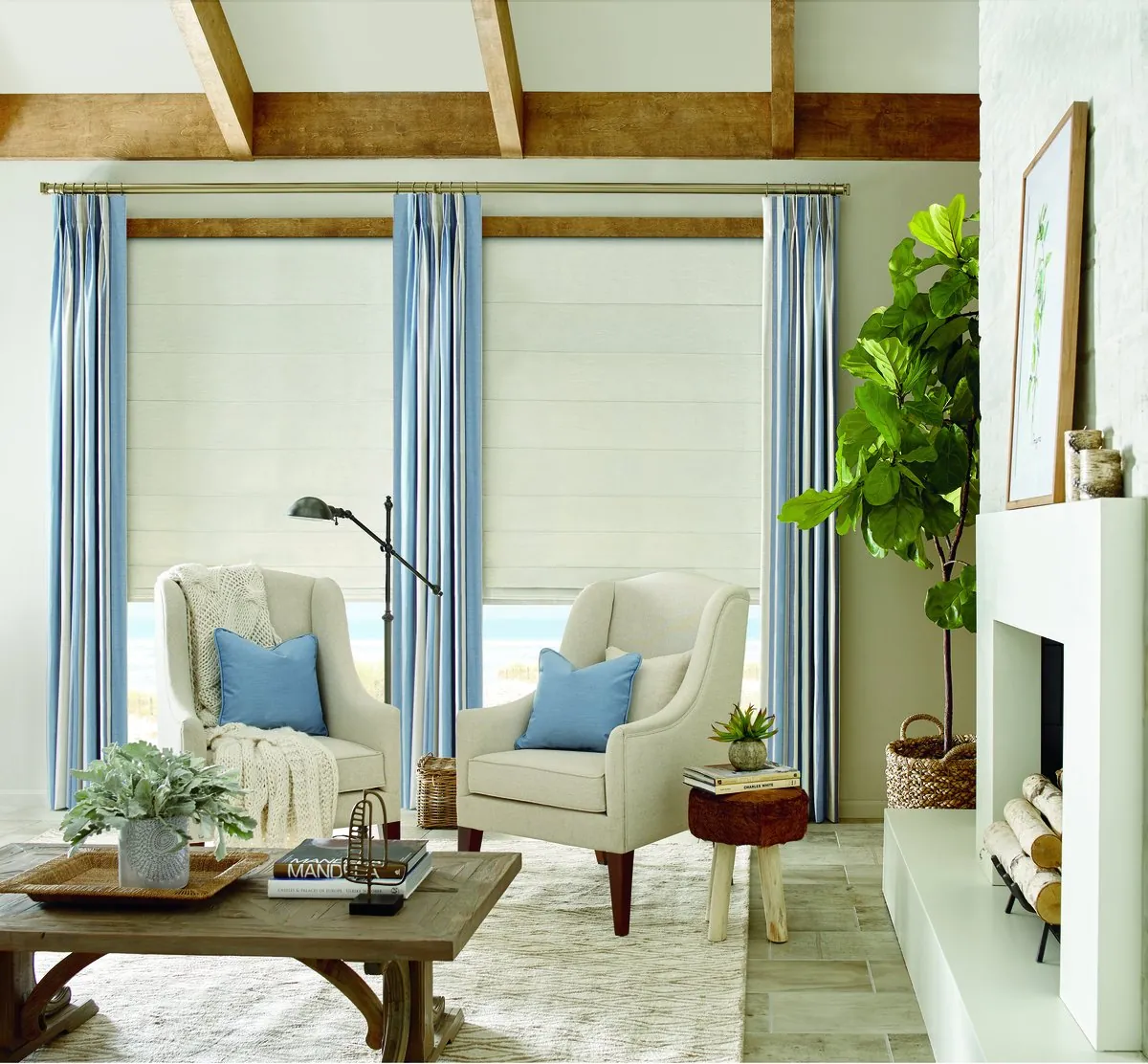
Formal rooms, generous glass and the water beyond
The houses around Osterville village and out toward Wianno and Oyster Harbors are some of the most carefully finished on the Cape. They are large, shingled and set on generous lots, many of them used for the season and opened up each summer. Inside you tend to find two kinds of room. There are formal rooms, a living room, a dining room, a library, where the windows are framed by drapery and everything is chosen with care. And there are rooms turned toward the water, where whole walls are given over to glass.
Roman shades in Osterville, MA, have to work in both. In a formal room the shade sits quietly inside the window, under or behind the drapery, and handles the daily business of light and privacy. Facing the water, it has to deal with strong sun, glare and salt air while disappearing completely when you want the view.
That is a lot to ask of a piece of fabric, which is why we plan these houses room by room, with the samples in your hands and the light of each room in front of you. We fit two Hunter Douglas lines, Vignette and Carole Fabrics, in flat and folded styles.
Where each shade belongs
Four kinds of window come up again and again in Osterville’s larger houses. Here is how we usually approach each one, and we bring samples of everything to the house.
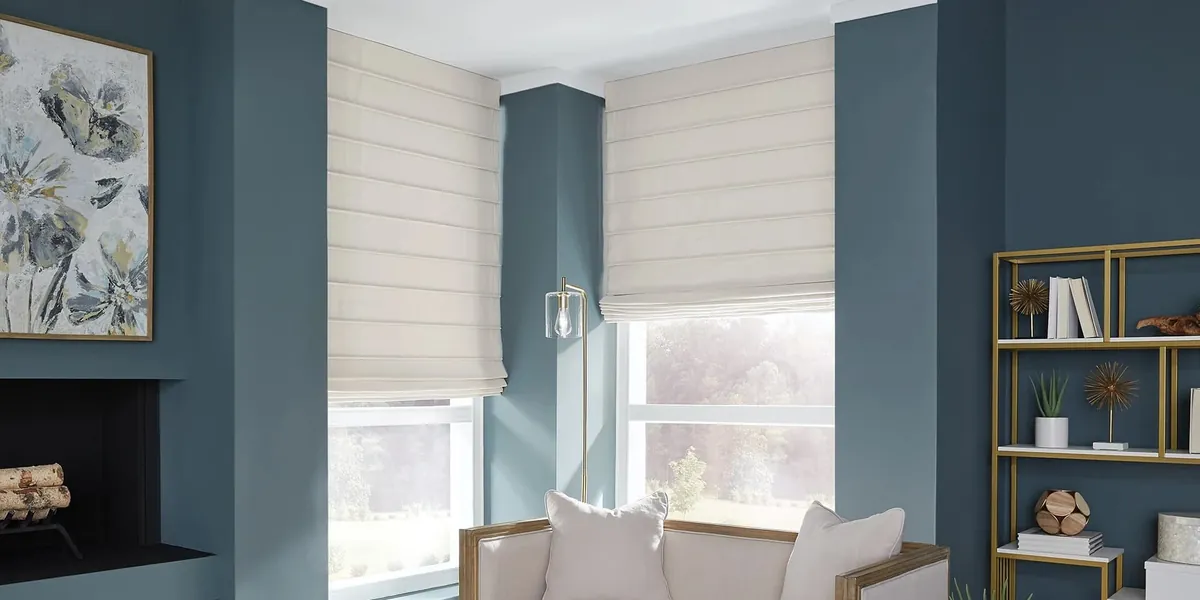
Under drapery in formal rooms
A Carole Fabrics shade inside the window, chosen to sit beside the drapery fabric, takes care of light and privacy while the panels frame the room.
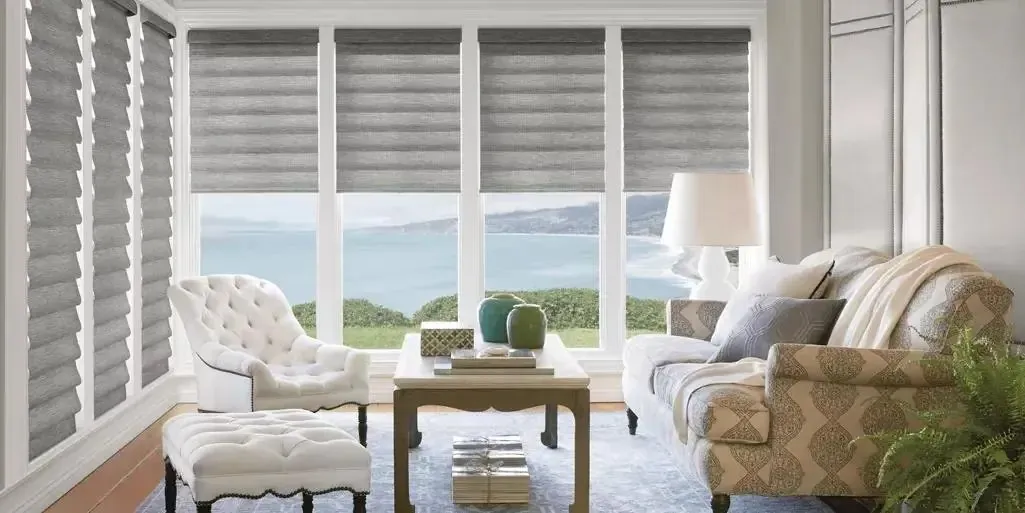
Water-facing rooms
Vignette rolls its fabric away into the headrail so the view comes back in full, then filters the glare off the water when lowered.
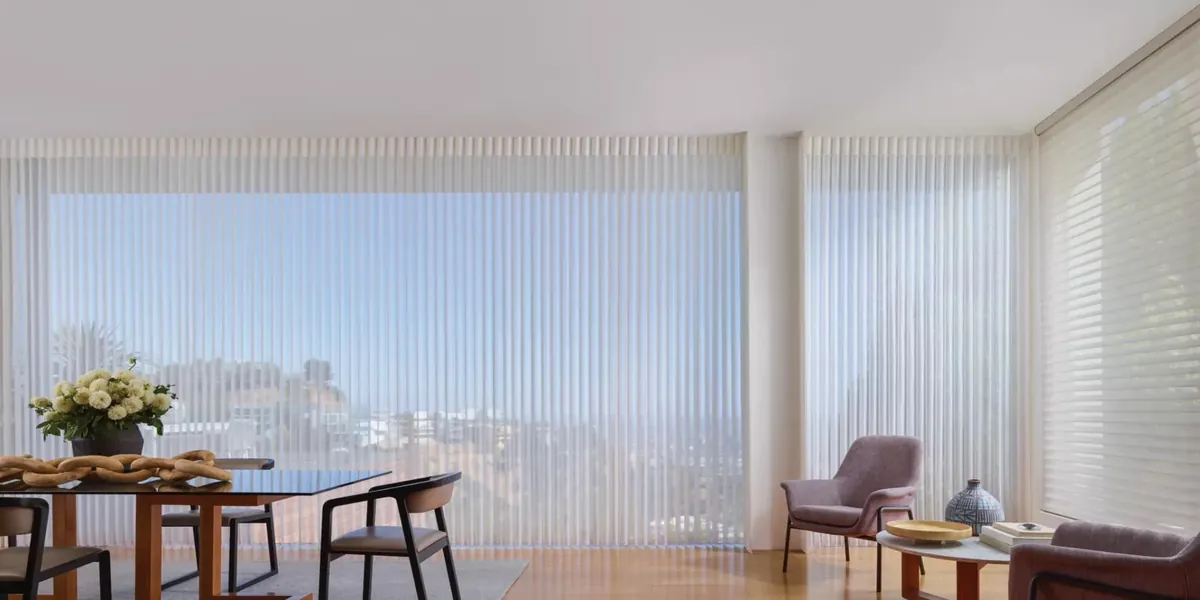
Walls of glass
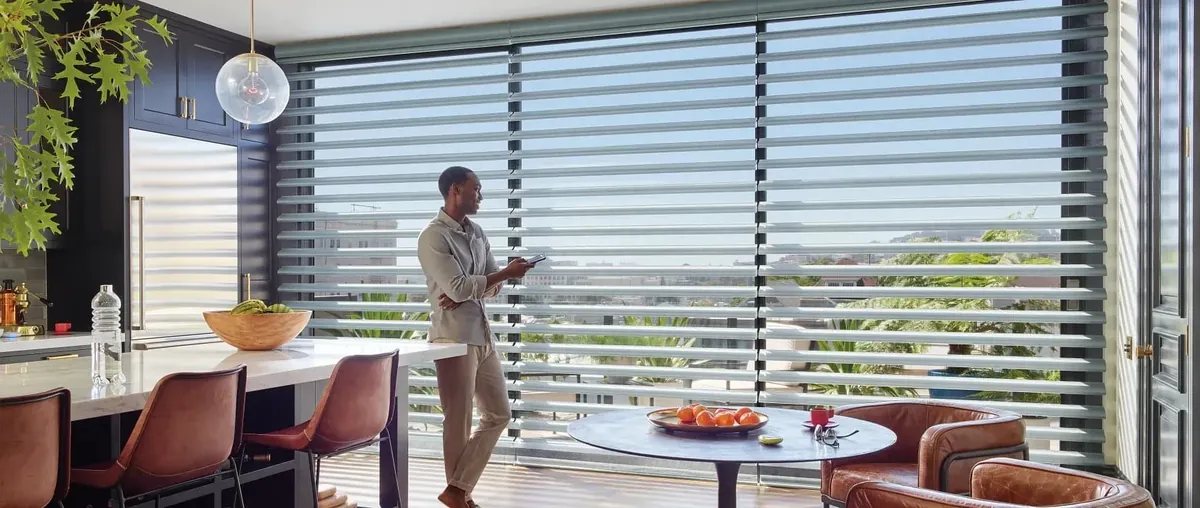
On the very largest glass we may pair roman shades on the windows with sheer shades on the widest spans, chosen as one design.
Whole-house control
Vignette on PowerView, grouped into scenes and schedules, so a large house can be opened up or closed down with a tap.
Roman shades and drapery in the formal rooms
In a formal living room or dining room, drapery is usually part of the plan from the start: full-length panels, often lined, framing tall windows and adding color, softness and height. Panels like these are rarely drawn closed every evening. They stay put as part of the décor, and the window needs something else to manage the light day to day.
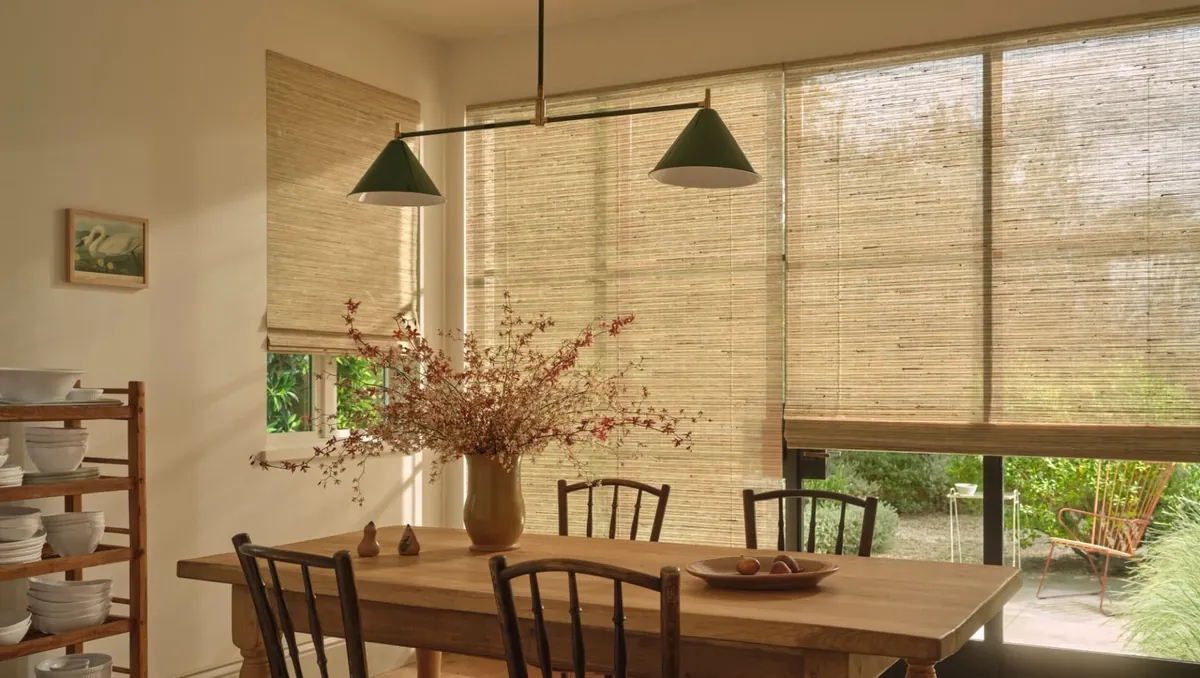
A roman shade inside the frame is the classic answer. It sits behind the drapery, lowers for privacy at night or to shade the room in the afternoon, and folds up neatly out of sight when you want the light. Because Carole Fabrics shades are sewn to order from a very wide range of decorator fabrics, the shade can be chosen to suit the drapery exactly: a quiet plain that lets a patterned panel lead, a complementary stripe, or a texture that picks up one color in the room.
The details matter in rooms like these. A flat fold gives a crisp, tailored look that suits a room with strong architecture. A folded style with soft loops across its face feels a little more relaxed and works well in a dining room or a library. We also think about how the shade and the drapery hardware sit together, so the headrail is hidden when the panels are in place and the folds clear the top of the glass when raised.
Water-facing walls of glass
Toward the harbors and the Sound, houses are designed around the view. Living rooms, kitchens and primary bedrooms open onto the water with large windows and, in many cases, walls that are almost entirely glass. These rooms are glorious on a gray day and a real challenge on a bright one. The sun comes in directly and again off the water, the room heats up, and anything in its path begins to fade.
For individual windows within that glass, Vignette is often our first suggestion. Its fabric rolls into the headrail rather than stacking, so when it is up the window is clear from top to bottom. Mounted above the frame, it can vanish completely. When the sun is strong, a light-filtering fabric brings the brightness down to a comfortable, even glow without cutting you off from the water.
The very widest spans are a different matter. There is a practical limit to how wide a single roman shade can be before it becomes heavy and the folds sag, and on a wall of sliding or fixed glass a roman shade may not be the best tool. In those places we may suggest sheer shades or another Hunter Douglas product on the widest spans, chosen in a fabric and color that sit happily beside the roman shades on the windows around them. We would rather tell you that at the consultation than fit a shade that will not perform.
Where roman shades in Osterville sit beside a wall of glass, we keep the fabric color and the lining consistent across both, so the room reads as one design from inside and from the water.
Seasonal houses and long absences
Many Osterville houses are lived in for the summer and closed for much of the rest of the year. A closed house still gets sun. Months of light through bare glass can lift the color out of a rug, bleach a wood floor and fade upholstery, particularly in the water-facing rooms.
Lined roman shades lowered when the house is closed protect against most of that. The lining takes the direct sun, which also preserves the face fabric of the shade itself. If you prefer the house not to look shut up from the road, light-filtering fabrics on the street side give protection while still looking natural from outside.
PowerView adds real value here. With motorized Vignette shades on a schedule, the house can lower its shades in the heat of the day and raise them in the morning, as if somebody were there. You can check and adjust them from your phone wherever you are, and change the schedule as the season turns. We plan how each motor is powered at the visit.
Salt exposure and choosing materials
Strong salt exposure is part of life on the water at Wianno and Oyster Harbors. Salt settles on everything near an open window and is especially hard on exposed metal. A roman shade keeps most of its working parts inside the headrail, which helps. A cordless lift goes further by removing the cord and cord lock from the side of the window altogether, and motorized shades have no cords at all.
Fabric choice matters as much as hardware. Natural, lighter colors generally hold their looks longer on windows that take a lot of sun. A lining behind the face fabric shields it from the light and gives the shade a fuller, more finished drape. For damp rooms, such as a bathroom off a pool or an outdoor shower, we will talk about whether a fabric shade is the right choice at all, and suggest something more suitable if it is not.
Choosing roman shades in Osterville for a house that takes salt and sun on most of its windows is mostly about matching each fabric to its exposure. A library facing north can take a deep, rich color; a sunroom facing the water usually wants something softer and lined.
Bedrooms, guest wings and the morning light
Large houses often have a guest wing or several bedrooms used by visitors who keep their own hours. Summer light arrives early, and a bedroom facing east over the water can be bright long before anyone wants to be awake.
A room-darkening lining on a roman shade keeps a bedroom dim until you raise it. A flat fold in a plain fabric looks calm and restful, while a folded style in a soft linen feels more relaxed. Cordless lifts are simple for guests to use without instructions, and on PowerView, the shades in a guest room can be included in a schedule that raises them mid-morning.
Primary bedrooms that face the water often want two things at once: darkness at night and the view first thing. A roman shade mounted above the frame, so the raised fabric clears the glass completely, gives you both. Add a room-darkening lining and the same shade that hides completely by day keeps the room properly dark at night, which matters in midsummer when the sun is up so early.
Vignette or Carole Fabrics: how the two lines differ
Both give you a fabric shade with horizontal folds, but they are made differently and suit different rooms.
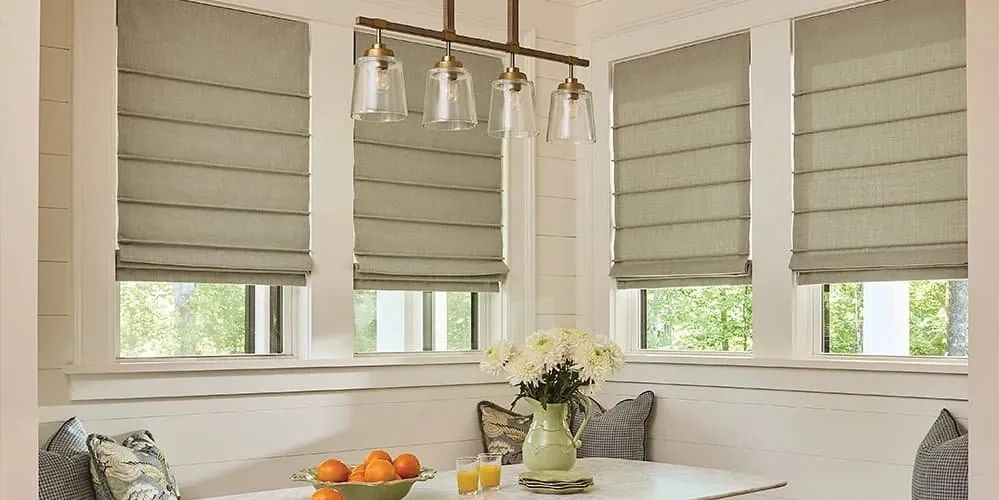
Carole Fabrics shades are sewn to order from an extensive library of decorator fabrics, in flat and folded styles. When the shade must be chosen alongside drapery, upholstery or wallcoverings, Carole offers the widest field. Raised, a Carole shade gathers its folds into a neat stack at the top of the window.
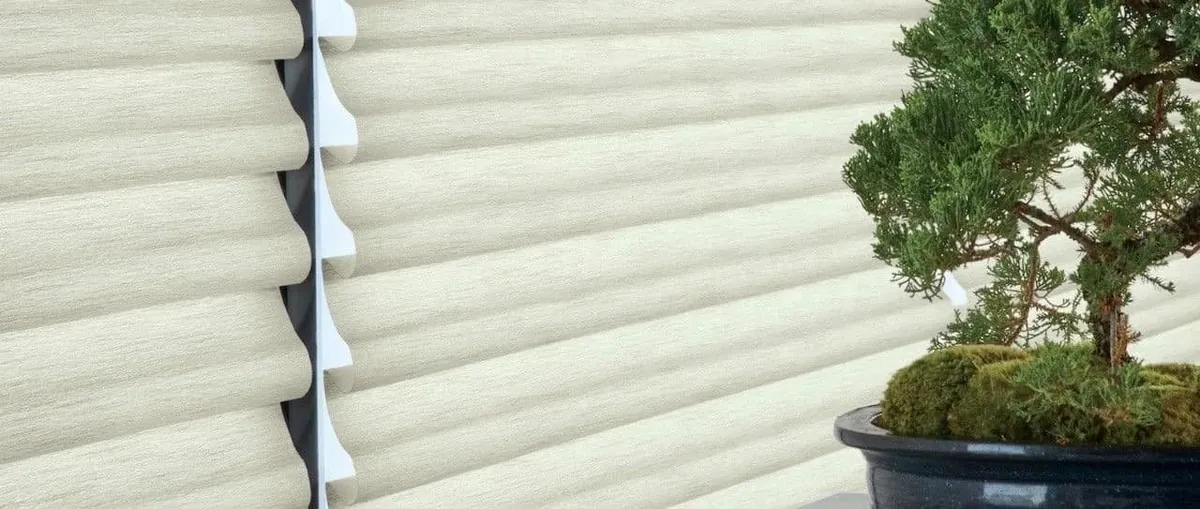
Vignette has its folds formed on the front of the shade, and the fabric rolls up into a slim headrail rather than stacking. It keeps more glass clear, suits rooms where the view matters most and works with PowerView motorization.
In a larger house the two often share the work: Carole in the formal rooms, beside the drapery, and Vignette in the water-facing rooms, kitchens and bedrooms. Our pages on Vignette modern roman shades and Carole roman shades describe each line in more depth, and the wider collection is on our roman shades page.
Building or renovating
High-specification houses are often being renovated, extended or built from scratch. If that is where you are, it pays to talk to us early. Decisions made at the framing stage, such as the depth left above a window head, can make the difference between a headrail that hides neatly and one that has to sit on the wall. Talking through motorization before the walls are closed also makes it easier to plan how each motor is powered.
We are happy to look at drawings, walk a site with you or your designer, and plan the window treatments for a whole house at once, so the shades, drapery and any other Hunter Douglas products are chosen as one scheme rather than room by room after you move in.
Renovations also tend to change the windows themselves. A new addition might bring a run of tall casements beside the original double-hung sash, or a kitchen extension might open a whole wall to the garden. When we plan roman shades in Osterville for a house that is part old and part new, we keep the fabric family and the fold spacing consistent across both, so the shades look like one decision rather than two projects that happened years apart.
The consultation, from first call to estimate
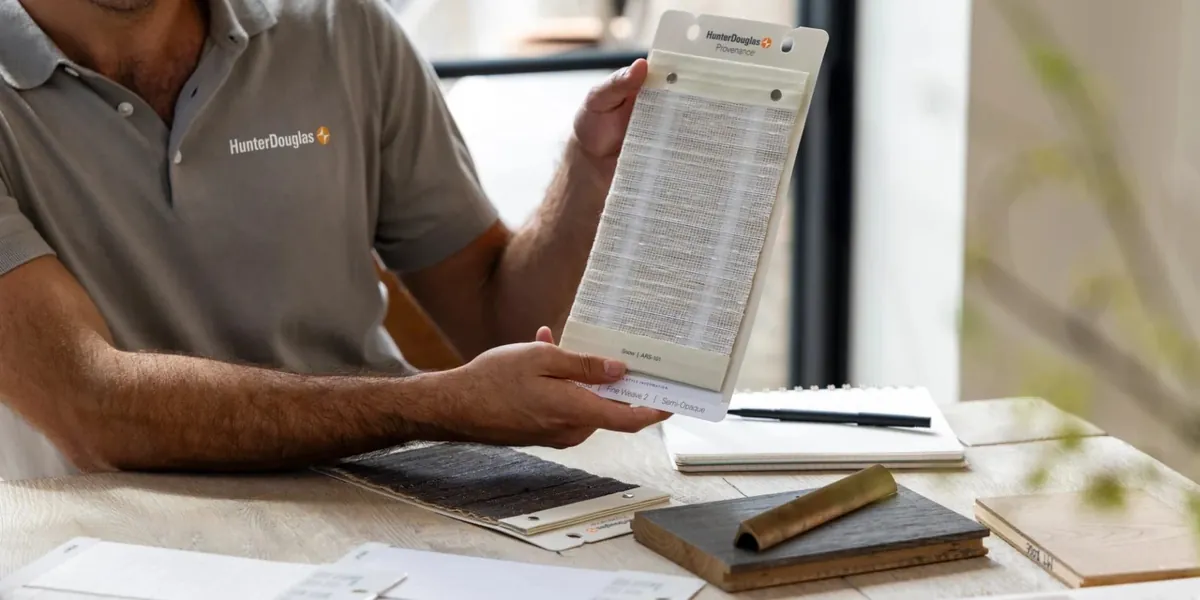
Most of our Osterville work starts in the house itself, because fabric looks completely different by a north window in a library than it does in a sunroom over the water. Our vans carry samples, so the showroom comes to you.
- Arrange a time through Request a Consultation, or with the call button. If a designer is involved, they are welcome to join us.
- We go through the house with you, formal rooms first or water-facing rooms first, whichever matters most to you.
- Carole Fabrics and Vignette samples go up against your windows, next to your drapery and furniture, in the light each room actually gets.
- We discuss mounting, linings, lifts and how motorized shades would be grouped and scheduled.
- Each window is measured carefully, including the depth above the window head and any drapery hardware nearby.
- You receive a free estimate for the shades you are considering.
For help across a whole house, including fabric and color, ask about our interior design consultations. The page on what happens at an in-home consultation gives more detail.
Fitting the shades
When the shades arrive, our certified Hunter Douglas installers fix each bracket into solid framing, set every headrail level and run each shade through its full travel. In formal rooms they take care around drapery hardware and finished woodwork. On motorized shades, they pair each shade with its controls, set up the groups and schedules you chose, and show you how everything works. If a shade ever needs attention later, we provide blind and shade repairs as well.
The difference a Gallery dealer makes
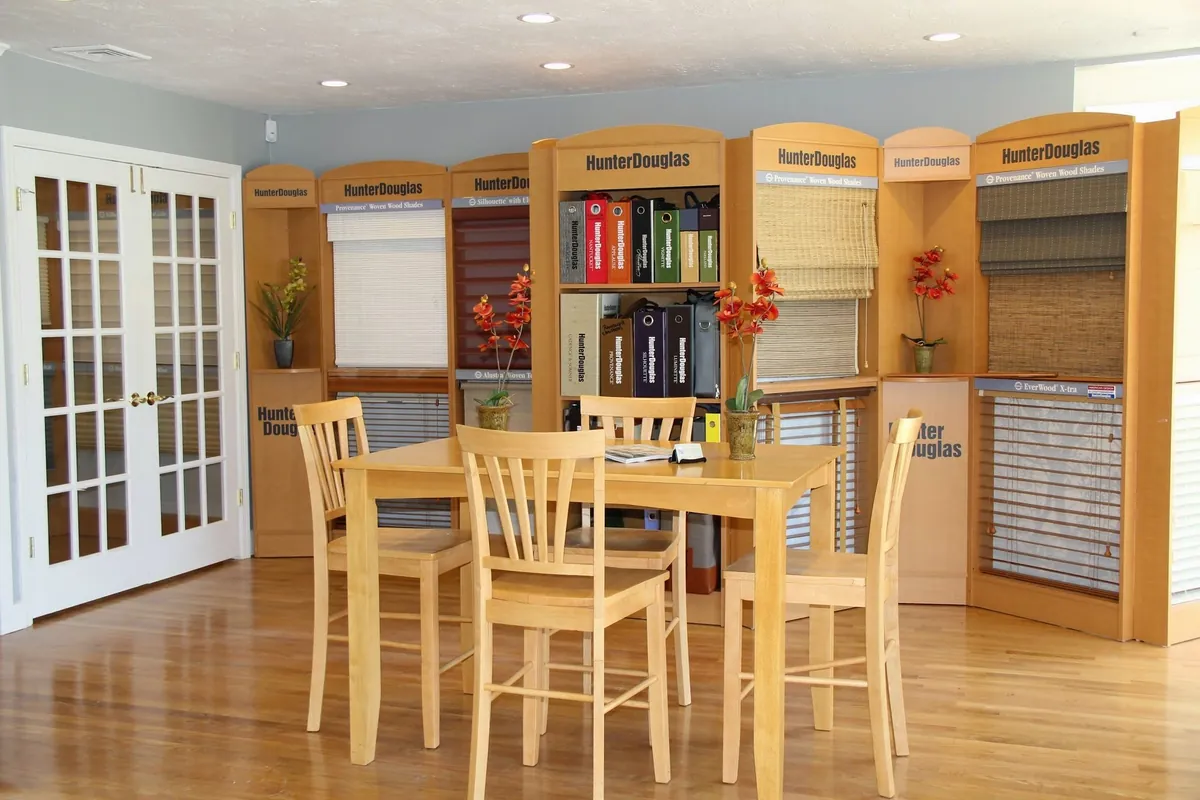
Hunter Douglas gives the Gallery dealer title to dealers who meet its standards, and Blinds & Designs is one of them. For an Osterville house that means access to the entire Carole Fabrics library, every Vignette fabric and PowerView motorization, chosen with people who work with these products every day.
Our installers hold Hunter Douglas certification. We measure, order and fit everything ourselves, so a single company answers for the whole job.
The rest of the Hunter Douglas range is available through us too. See plantation shutters in Osterville, motorized blinds in Osterville and our Hunter Douglas dealer in Osterville page, or every service we offer on our Osterville page.
Visit us in Sagamore
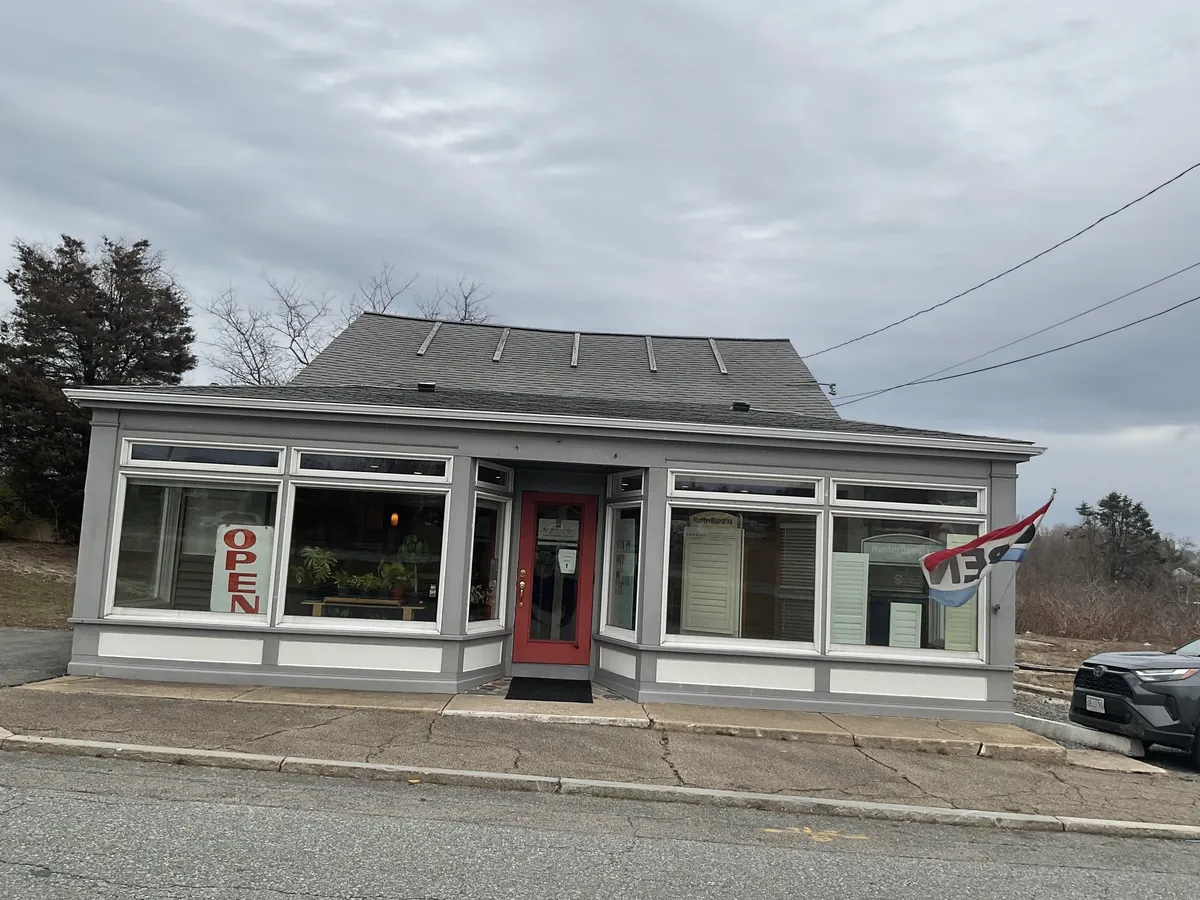
Sagamore is the showroom nearest to Osterville. You are welcome to come in during opening hours and handle Hunter Douglas fabrics before a home visit, or call ahead with the call button.
For most houses here, the real choices are made at home, beside the drapery and in front of the water, where you can see what each fabric does.
Questions from Osterville
Can a roman shade sit behind drapery in a formal room?
Yes, and it is one of the most common ways we use them here. The shade sits inside the window and handles light and privacy, while the drapery frames the room. We choose the shade fabric with the drapery in mind and plan the hardware so the two work together.
Are roman shades right for a wall of glass facing the water?
On individual windows, often yes, especially Vignette, which rolls away to leave the glass clear. On the very widest spans we may suggest sheer shades or another Hunter Douglas product, chosen to sit well beside the roman shades.
How do I protect a seasonal house while it is closed?
Lower lined roman shades when you leave, or set Vignette on PowerView to lower and raise on a schedule. The lining takes the direct sun and protects floors, rugs and upholstery.
Should I talk to you before a renovation is finished?
Yes, if you can. Planning early helps with the depth above each window head and with how motorized shades will be powered, so the finished result looks built in.
Is there any charge for the estimate?
None. Once we have measured, the estimate is free. Book through Request a Consultation and we will bring samples to the house.
Plan your windows with us
Roman shades in Osterville, MA, are best chosen in the rooms they will hang in, next to the drapery and in front of the water. Request a consultation and we will bring the Carole Fabrics and Vignette range to your home, measure each window and leave you with a free estimate. You can also reach us with the call button, or stop in at our Sagamore showroom.