
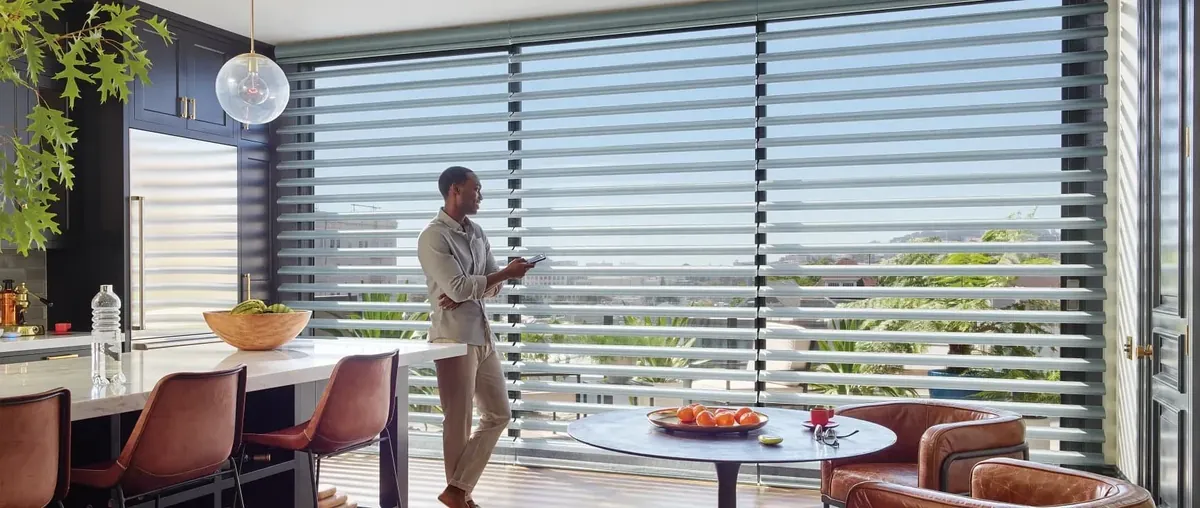
Glass that faces the sound in Harwich Port
Around the harbor in Harwich Port, the shingled houses are built to look at the water. Many have been opened up over the years, with a wall of windows in the living room, sliders to a deck, and a bank of glass upstairs where a bedroom catches the view across Nantucket Sound. Those rooms are lovely and very exposed: nothing between the glass and the open water to break the sun, the wind or the glare. That is where most of our work on motorized blinds in Harwich, MA, begins.
Move inland to the villages away from the shore and the housing changes. Post-war ranches and newer colonials line the side streets, with windows of ordinary size and a more sheltered outlook. Here the case for a motor is about convenience, safety and the high windows of a modern foyer more than about fighting the sun.
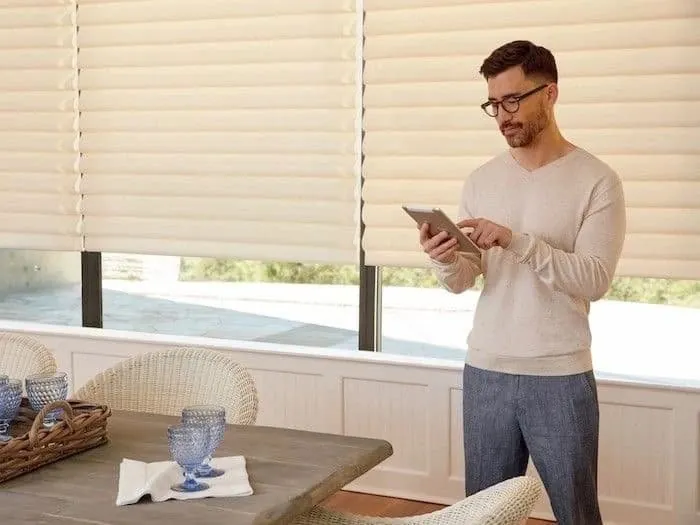
Both kinds of house can run on Hunter Douglas PowerView. You control the shades with a remote, through the app on your phone or tablet, or with schedules that move them on their own at set times.
Motorized shades, room by room
Every shade below can carry a PowerView motor. Here is how we usually match them to the rooms in a Harwich house.
The sound-facing living room
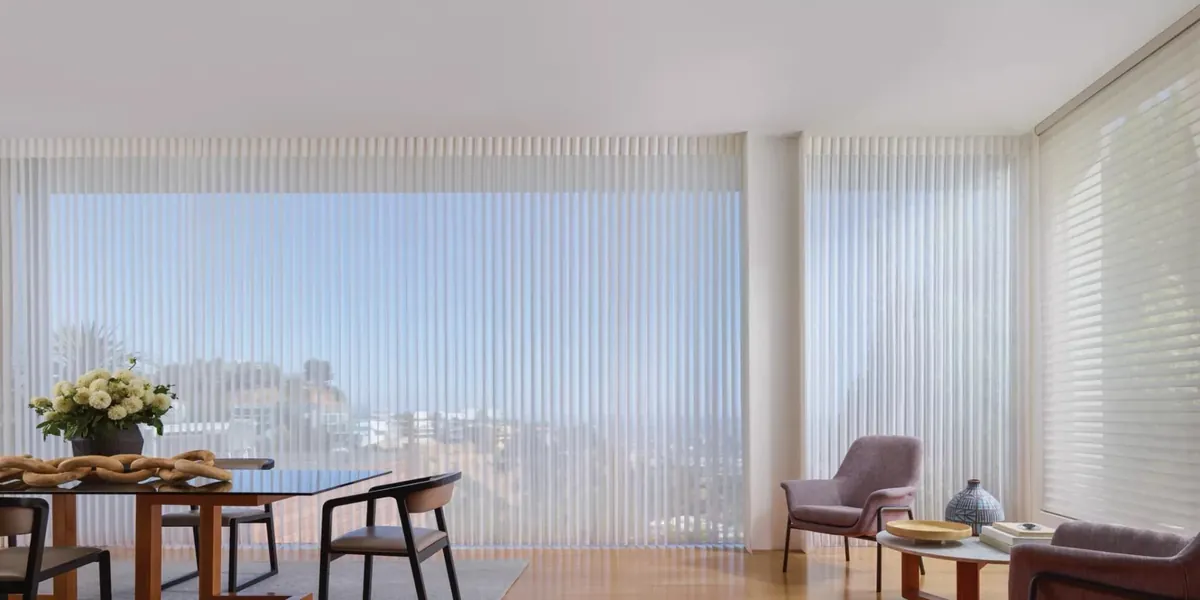
Luminette vertical sheers or Silhouette shades across a wall of glass. They soften the light off the water and keep the view.
The harbor kitchen
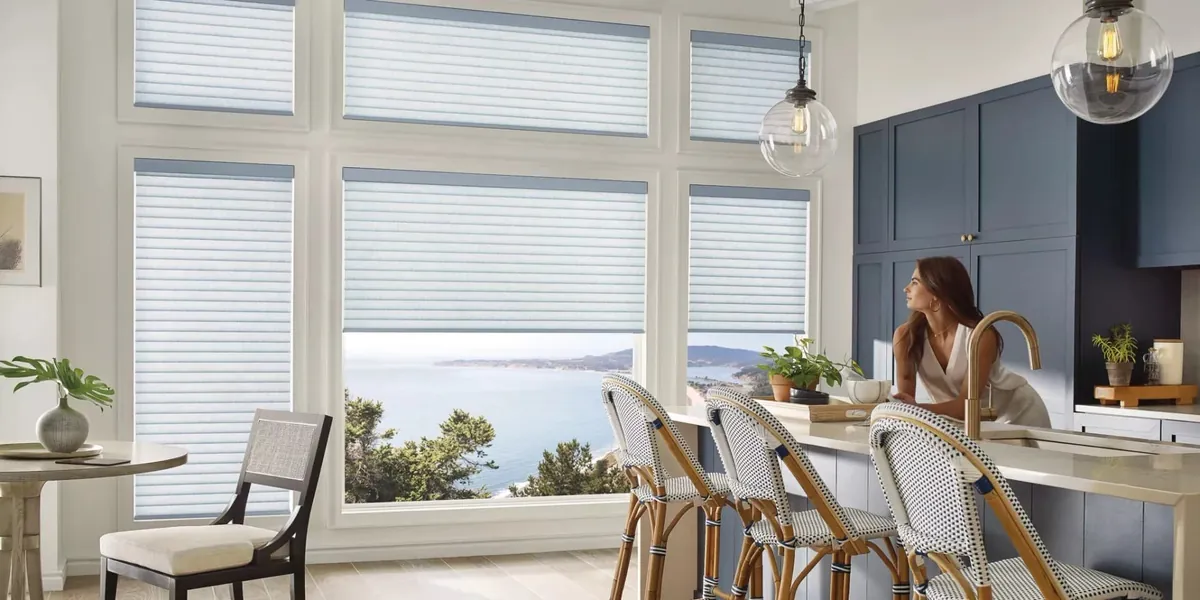
Designer Roller or Screen shades on a slim headrail, where a counter makes the window hard to reach.
The upstairs bedroom
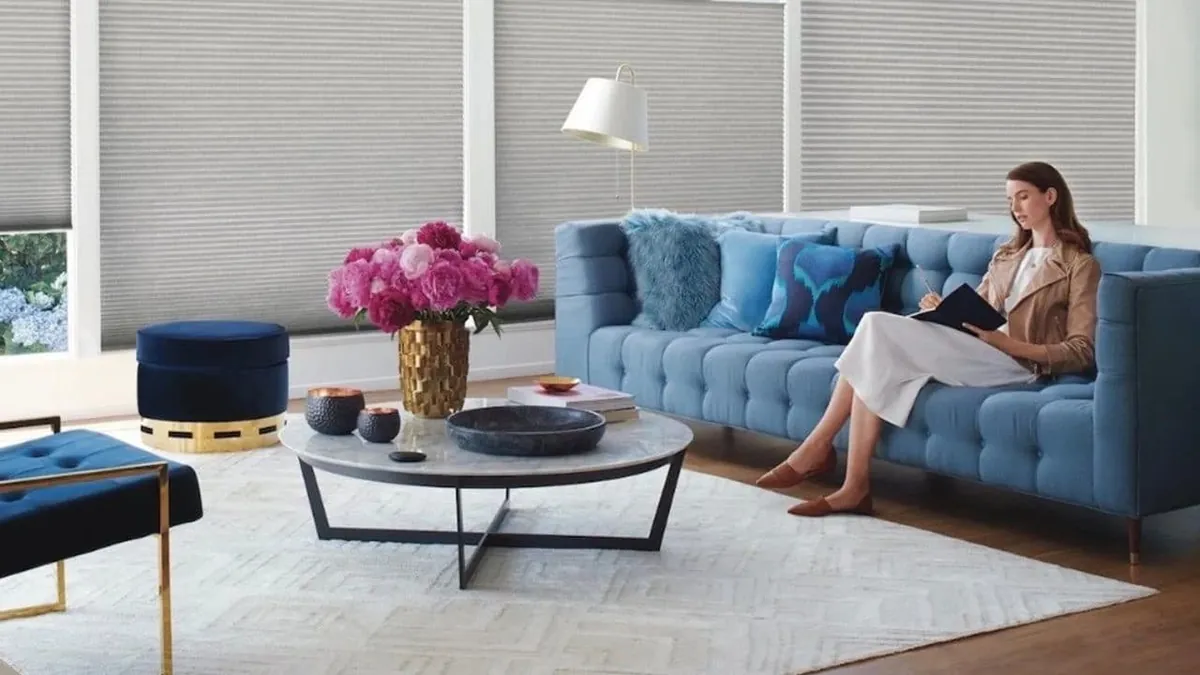
Room-darkening Duette honeycomb shades that close before first light over the water.
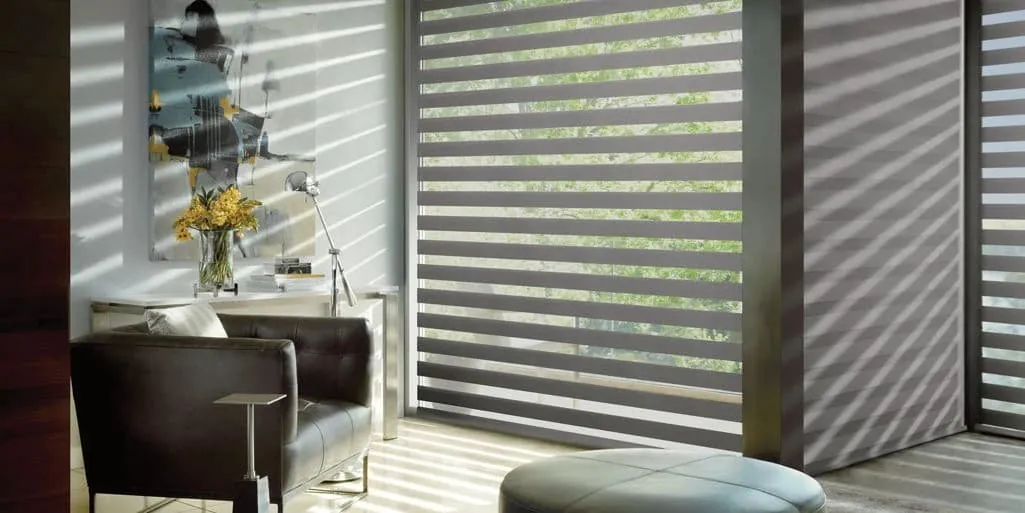
The ranch picture window
Designer Banded shades split across a wide window and moving as one group.
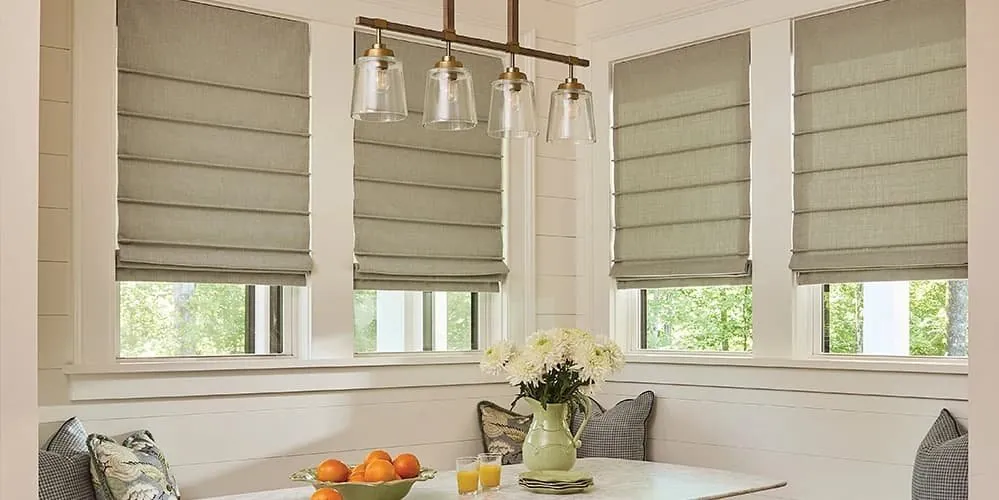
The breakfast nook
Vignette Roman shades behind a built-in bench, lifted without anyone climbing over the cushions.
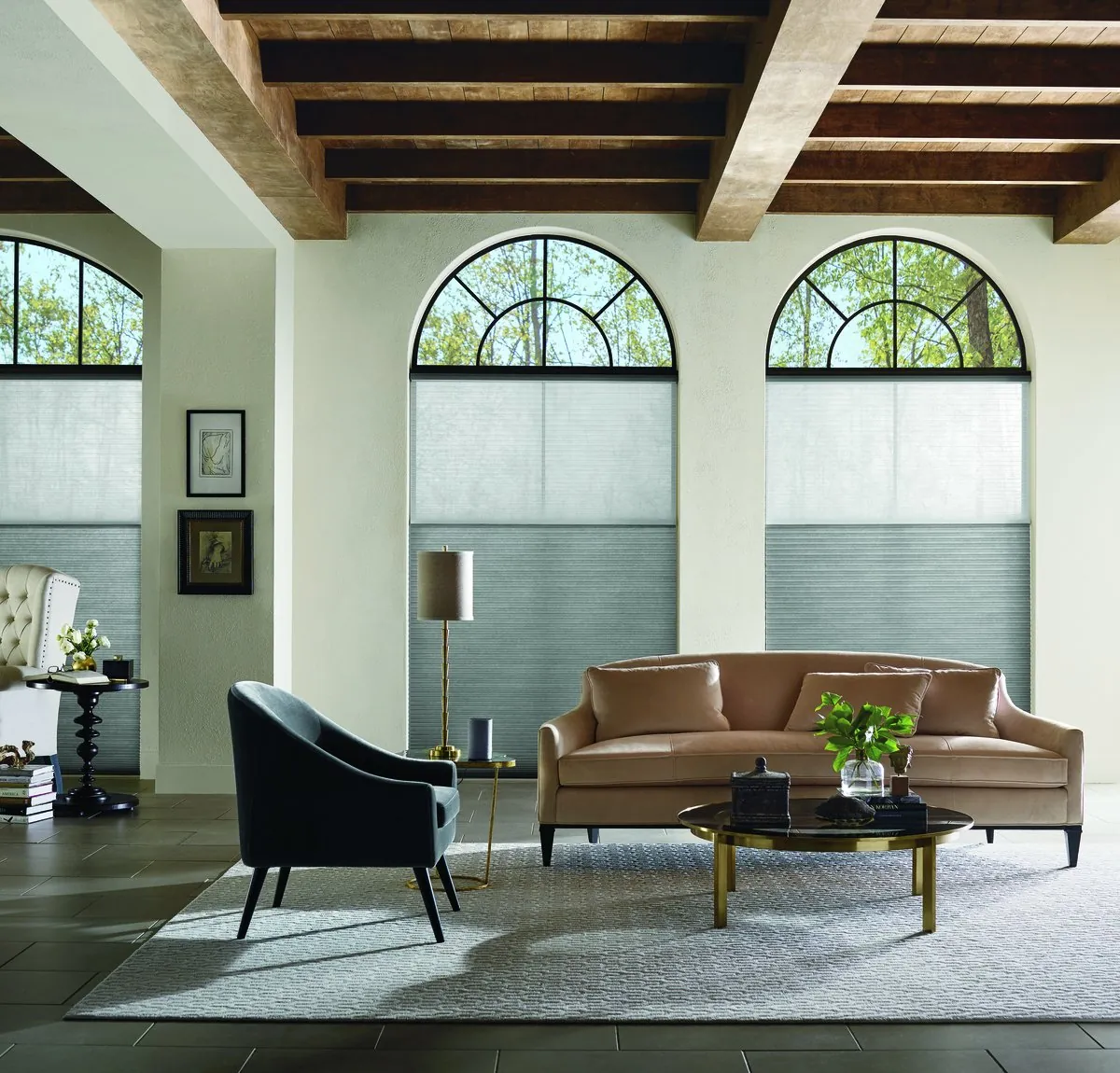
The colonial’s high windows
Top-down honeycomb shades on windows above a door or a fireplace, run from the same remote as the rest of the room.
Shingled houses near the harbor
The houses closest to the harbor tend to be older, shingled and added to in stages. A front room might keep its original double-hung windows while a newer addition behind it opens onto a deck with a run of sliders and a picture window. That mix means one house can need three or four different kinds of shade, and the trick is making them all behave as one.
PowerView does that well. A double-hung window with a Roman shade, a picture window with a sheer and a slider with a vertical shade can all join one room in the app, so a single press sets the whole room at once. The shades do not have to match in style for their positions to line up.
Older houses near the water also tend to have a few windows that are hard to reach for reasons that have nothing to do with height: a window behind a radiator, above a built-in bookcase, or tucked into a stair landing. Those are often the first ones people choose to motorize, because they are the windows that never get adjusted otherwise.
When the whole wall is glass
A room facing the sound with glass from the floor nearly to the ceiling is wonderful at seven in the morning and difficult by early afternoon. The sun comes straight in off the water, bounces off it as well, and turns the room into a greenhouse. Furniture fades on the side nearest the windows, screens and televisions wash out, and the floor gets too hot for bare feet.
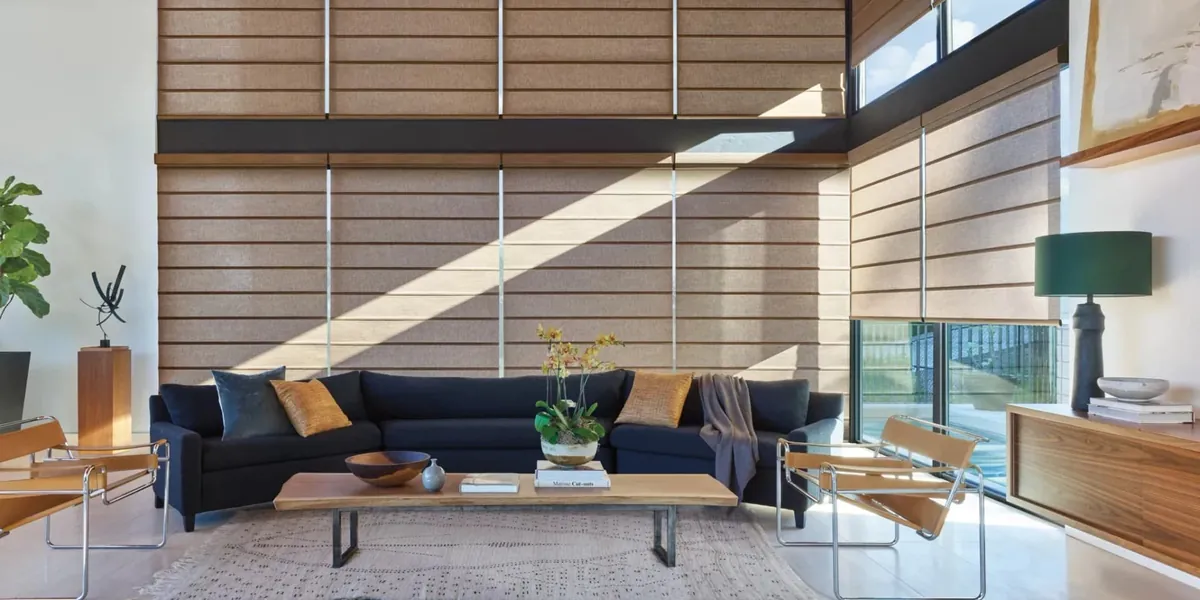
On a motor, a wall of shades becomes something you can actually manage. The whole run lowers together to exactly the same line, or stops halfway to take the high sun while leaving the view below. A schedule can do it every day without your thinking about it, lowering the shades as the sun comes round and lifting them again in the evening when the light softens.
The fabric does the rest. Sheer shades soften and spread the light while you still see the water through them. Screen fabrics cut glare and heat more firmly with the view still there. Where a room needs to go dark, for a media room or a bedroom, a room-darkening roller or honeycomb closes it off. We hold the samples up at your own glass so you can see each one against the sound.
Weather off the water
Houses on the shore streets take everything the sound throws at them: salt in the air, wind against the glass, and the occasional storm that has you wishing every window was covered. Shades sit inside, of course, but the way they are built still matters on a coastal house.
With a motorized shade the lifting parts live inside the headrail rather than hanging at the side, so there is far less exposed to salty air when a window is left open in summer. There is no cord lock to corrode and no cord to tangle when the wind catches it.
When a storm is coming, the app lets you lower every sound-facing shade in a few seconds, whether you are in the next room or off the Cape entirely. Shades are not storm protection, but closing them keeps the rooms private and the sun off the furniture through the days after the storm while the house is unattended.
A day of shades in a Harwich house
It helps to picture what a schedule actually does. Here is how a typical sound-facing house might run once the shades are set up.
Before sunrise, the bedrooms on the water side stay closed, so the early light off the sound does not wake anyone. At a set hour the living room shades lift to let the morning in. Toward midday, as the sun swings round and starts to pour through the big glass, the sheers lower partway on their own. By late afternoon, the west-facing kitchen shade comes down to cut the glare across the counter. At dusk, the street-side windows close for privacy as the lamps come on.
None of that needs anyone to touch a shade. If you want something different on a particular day, the remote or the app overrides the schedule in a moment.
Ranches in the inland villages
Away from the harbor, the post-war ranches have a layout most people know by heart: a picture window in the living room, a kitchen window over the sink, a slider to the back yard and a hall of bedrooms. The windows are a standard size, and the rooms are sheltered compared with the shore.
The picture window is the main reason to motorize a ranch. It is wide, often made of several sections, and hard to treat with one shade by hand. Split into two or three shades on one motor group, it lifts and lowers evenly and can go on a schedule that shades it through the sunniest part of the day. The kitchen window above the sink, which nobody enjoys leaning over, is the other favorite.
For the bedrooms, honeycomb shades help a ranch hold its heat on a winter night, because the air trapped in each cell sits between the glass and the room. On a dusk schedule, they close as the light goes without anyone walking down the hall.
Privacy on the shore streets
Near the harbor, houses often sit close to the road and close to each other, and a summer evening brings people walking down to the water past the front windows. The same glass that frames the view in daylight puts the room on show once the lamps are lit.
Top-down, bottom-up shades are a neat answer. Lowered from the top, they let in sky and light while the lower part of the window stays covered from the sidewalk. On a motor, that half-and-half position can be saved as a favorite and called up with one press, and a dusk schedule can close the street-facing windows fully as the light fades. You never have to remember to go round the house drawing everything shut.
Upstairs, where a bedroom looks across to a neighbor’s deck, a sheer shade with tilting vanes gives daytime privacy while still letting the room breathe.
Newer colonials and their tall rooms
The newer colonials inland often have a two-story foyer or a family room with windows high above a fireplace or a run of French doors. Those high windows are the classic case for a motor, because nothing else reaches them comfortably. A pole is clumsy, a ladder is worse, and the shade ends up left in one position for years.
With PowerView, the high windows behave like every other window. They lower with the rest of the room, follow the same schedules and answer to the same remote. A top-down honeycomb shade is a common choice: drop the top far enough to block the sun overhead while keeping the light coming in from below.
Elsewhere in a colonial, the windows are standard sizes and many families motorize a few at a time, often starting with the main living area and the main bedroom and adding more rooms later. Shades added later join the same app.
One room now, more later
Not everyone motorizes a whole house at once, and there is no need to. Many Harwich projects start with the room that causes the most trouble, usually the glass facing the sound or the foyer windows nobody can reach, and add bedrooms or a kitchen in a later season. Motorized blinds in Harwich, MA, can grow that way because every new shade simply joins the same app and the same schedules as the first ones.
It is worth planning for that at the first visit, even if you only order one room. We note which windows you might want to add, keep the fabrics consistent where the rooms are seen together, and make sure the groups and scenes will still make sense once the rest of the house is on board.
How you control it all
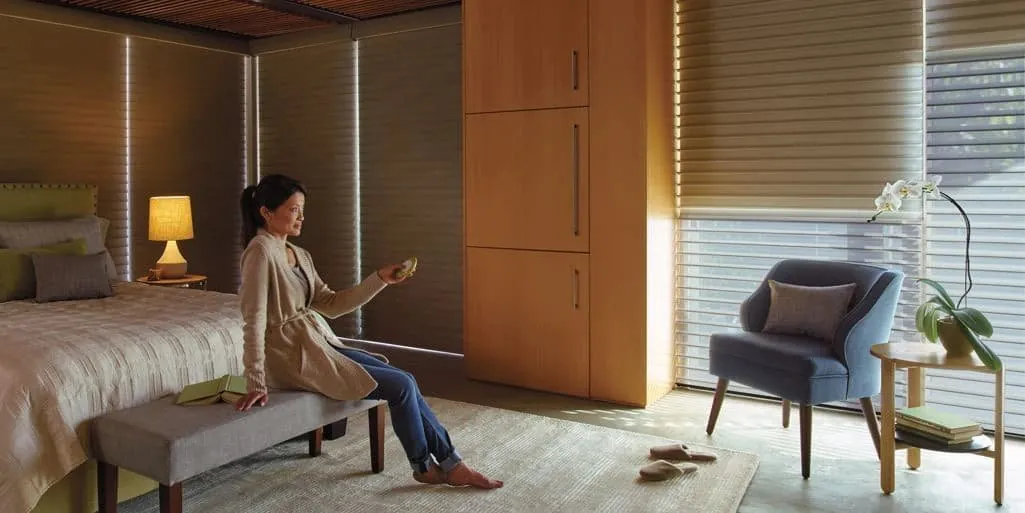
The remote is the simplest way. It works a single shade, a room, or several rooms together, and it can mount on the wall like a switch. Many people use nothing else day to day.
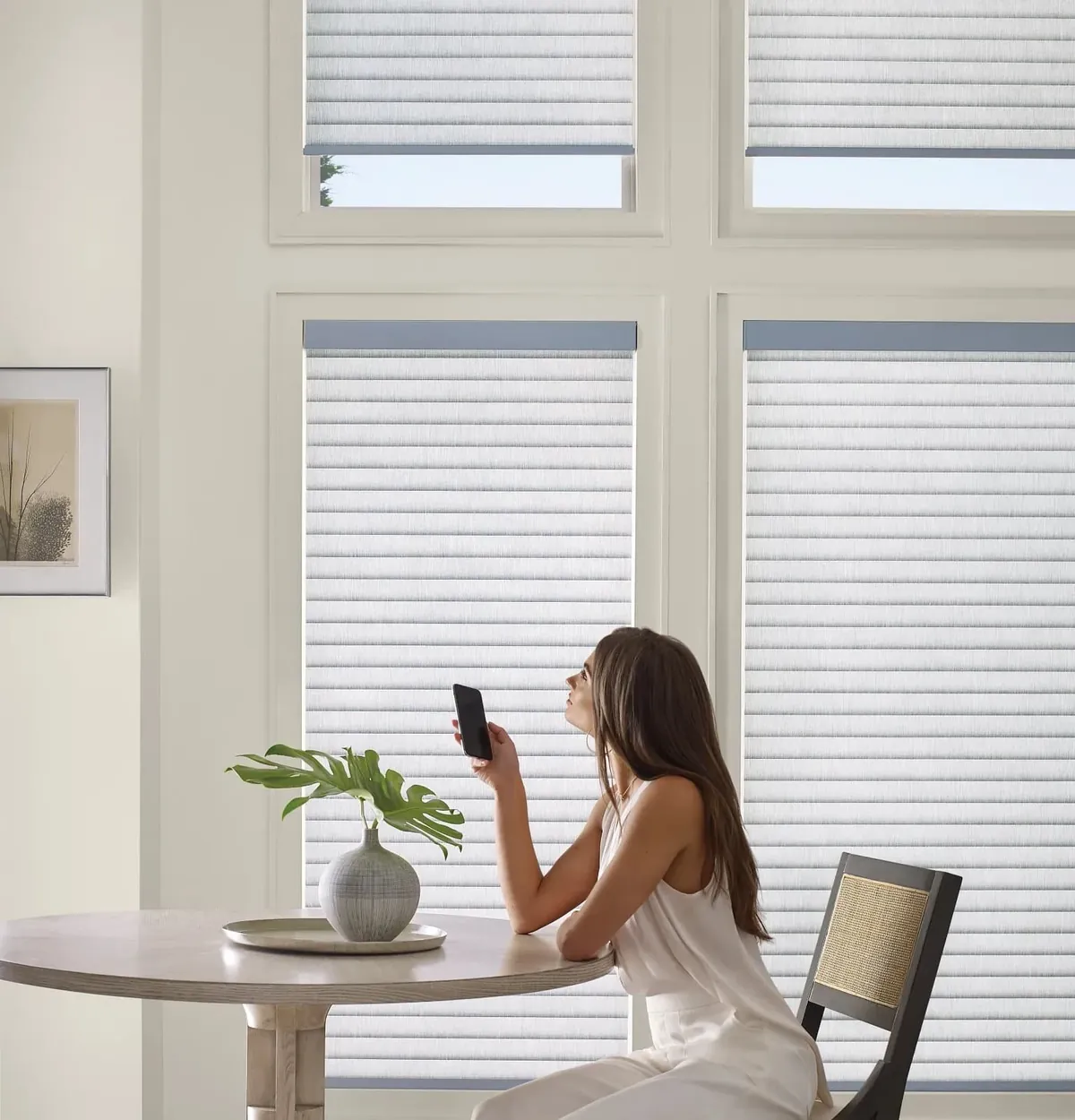
The PowerView app brings every shade in the house onto your phone or tablet. You can arrange shades into rooms, move one a little, and save scenes, which are positions you use often, such as “living room half down” or “all bedrooms closed”. It is also how you reach the house when you are not in it.
Schedules run those scenes at times you choose, or at sunrise and sunset. If you want the full plain-English explanation, our guide on how motorized shades are controlled walks through all three, and window covering automation goes further into scenes and timers.
Motorized blinds in Harwich, or a shade?
Some people come to us asking specifically for motorized blinds in Harwich and others ask for shades; often the answer is a bit of both. Blinds with slats tilt to steer light up and away while keeping some view, and wood or faux wood suits a den or study. Not every blind takes a motor at every size, so if a motorized blind matters to you for a given window, tell us early and we will check it on the spot.
Shades cover the rest. Sheers and screens for the glass facing the water, honeycomb for warmth and darkness in bedrooms, Romans for a softer look in a dining room. Everything with a motor answers to the same app.
Power for each motor
Each motor needs a source of power, and the right answer depends on the shade, the window and the wall around it. We plan how each motor is powered at the visit, window by window, and agree the plan with you before ordering.
What the visit looks like
- Request a consultation online or with the call button, and we will arrange a time.
- Our van arrives with samples, so you choose fabrics against your own windows and your own view.
- We go through the house together, starting with the rooms facing the sound.
- Every window is measured, with the depth checked for an inside mount.
- We agree which shades get a motor, how they group into rooms, and how each is powered.
- You get a free estimate to think over at your own pace.
- When the shades arrive, our certified Hunter Douglas installers fit them, set each one’s top and bottom, pair them with the remote and app, and program the first schedules with you.
Our guide to what happens at an in-home consultation covers the visit in more detail.
Why buy PowerView from a Gallery dealer
Blinds & Designs is a Hunter Douglas Gallery dealer, a designation Hunter Douglas reserves for dealers who meet its standards. For a motorized project, that means the whole PowerView family in one place, across honeycomb, sheer, Roman, roller, screen and banded shades and a number of blinds. A Harwich Port house with a glass wall and a ranch with a picture window need different products, and we can offer both.
Our installers are certified by Hunter Douglas and set up the motors and schedules as part of every fitting. Interior design consultations are available if you are rethinking a whole room.
For more in town, see roller shades in Harwich, cellular shades in Harwich and the Hunter Douglas dealer page for Harwich, or everything on our Harwich page. The full range is on our motorized blinds and shades page.
Closest showroom: Sagamore
The Sagamore showroom is our nearest location to Harwich, up the Cape near the canal. Come in if you would like to talk through your plans.
For motorized blinds in Harwich, MA, a home visit usually tells us more, because the light off the sound and the size of each window shape every choice. We bring the showroom to you.
Questions from Harwich
Can motorized shades handle a whole wall of glass facing the sound?
Yes. A long run of shades lowers as one group, each stopping at the same line, and a schedule can shade the room every afternoon. Sheer and screen fabrics keep the water in view while they cut the glare.
What can I do in a storm when I am away?
Open the PowerView app and lower the sound-facing shades from wherever you are. It keeps the rooms private and the sun off the furniture while the house is empty.
Are motorized shades worth it in an inland ranch?
For the picture window and the kitchen window over the sink, they usually are. Several shades on one window move together evenly, and a schedule can shade the room through the sunniest hours.
Can the high windows in my colonial foyer be motorized?
Yes, and they are one of the most common reasons people choose PowerView. They join the same remote, app and schedules as the windows below.
Do you charge for the estimate?
No. After we measure, the estimate is free and covers every shade and motor we discussed.
Book your visit
Request a consultation and we will bring the samples to your Harwich house, measure every window and leave a free estimate. If you would like to talk first, use the call button or stop in at the Sagamore showroom.