
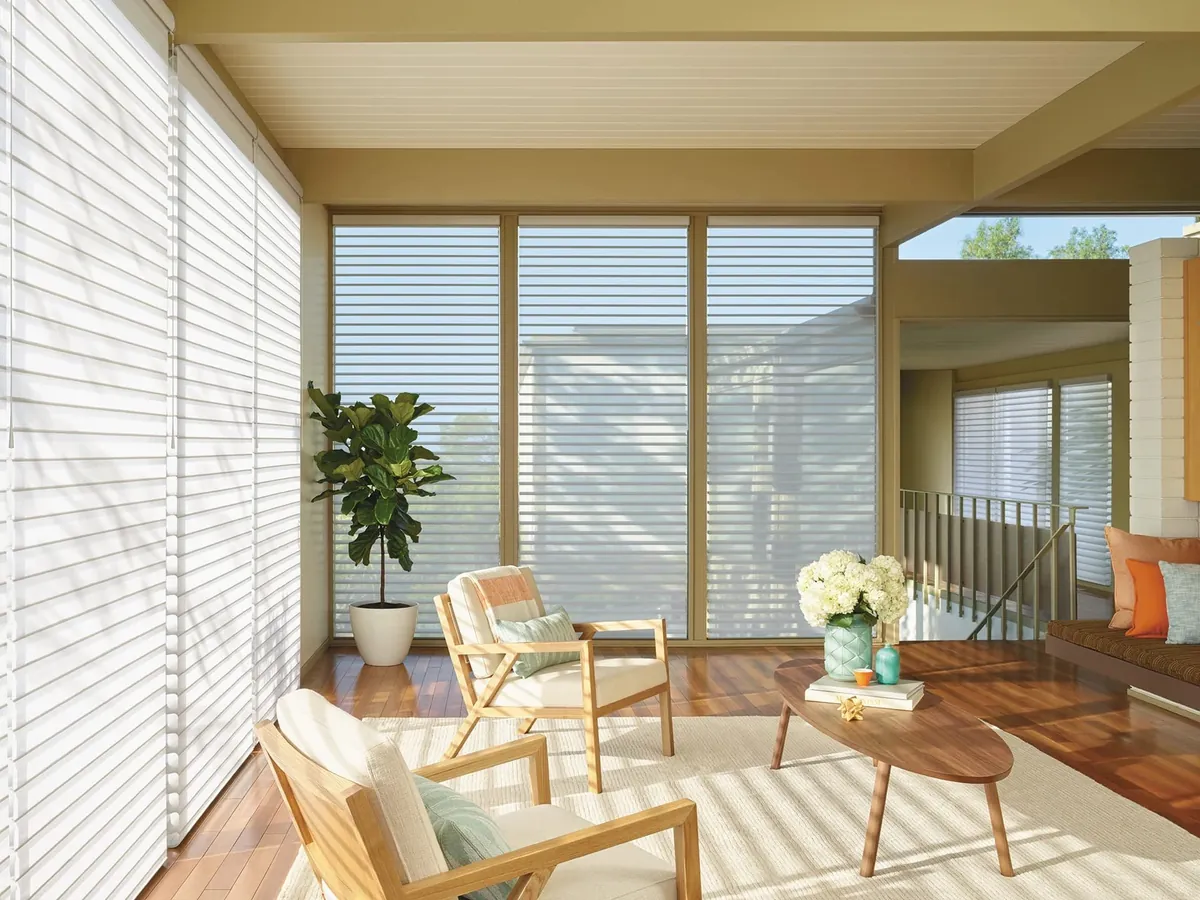
Morning glare off the bay in Kingston
Kingston faces east onto its bay, and on a clear morning the sun climbs straight out of the water and into the houses along the shore. The antique colonials near the village and the bay catch it first. Their front rooms and upstairs bedrooms light up early, and the glare off the water can make a breakfast table or a desk by the window hard to use until the sun is higher. Taming that is the most common reason we are asked about motorized blinds in Kingston, MA.
Inland, off Route 3, the picture is quite different. Post-war ranches and newer subdivisions have windows of standard sizes and newer hardware, and the light is more ordinary. There the appeal of a motor is the daily routine: shades that open when the house wakes up, close when it empties, and settle for the evening without anyone going from room to room.
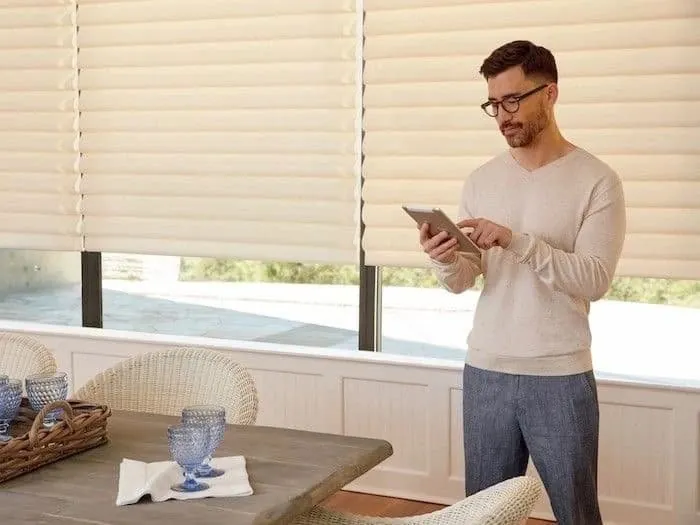
Hunter Douglas PowerView covers both. Shades run from a remote, from the app on your phone or tablet, or on schedules that you set once and leave.
Where Kingston houses use a motor
These are the three settings where we fit motorized blinds in Kingston, MA, most often. Each of the shades named can be ordered with a PowerView motor.
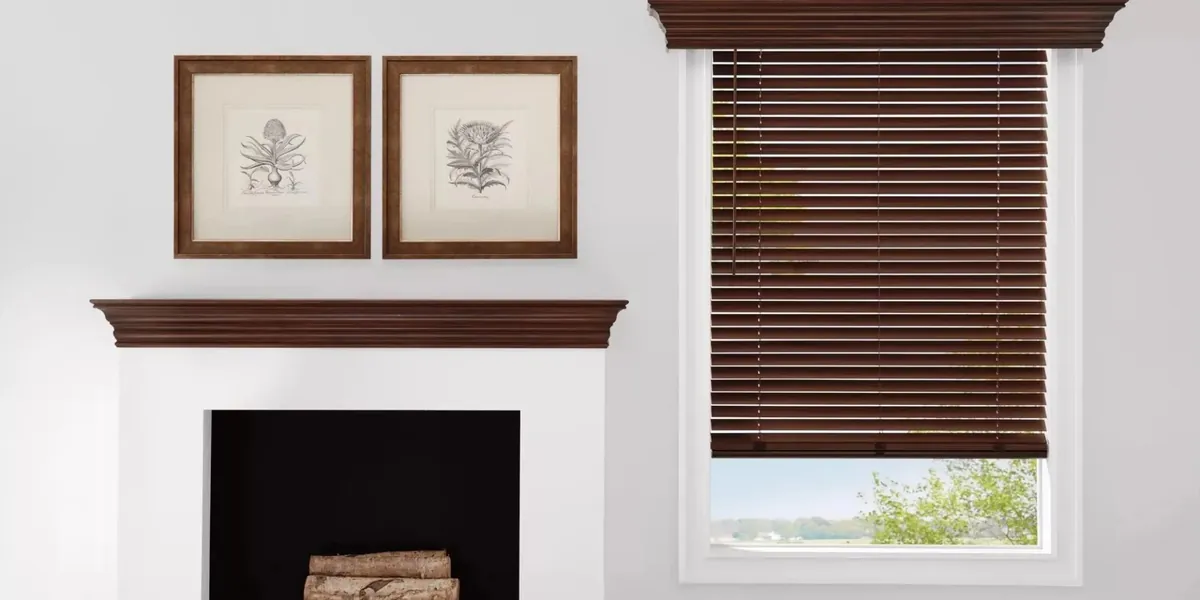
Antique colonial rooms
Wood blinds or Vignette Roman shades inside old casings, the whole front of the house moving as one.
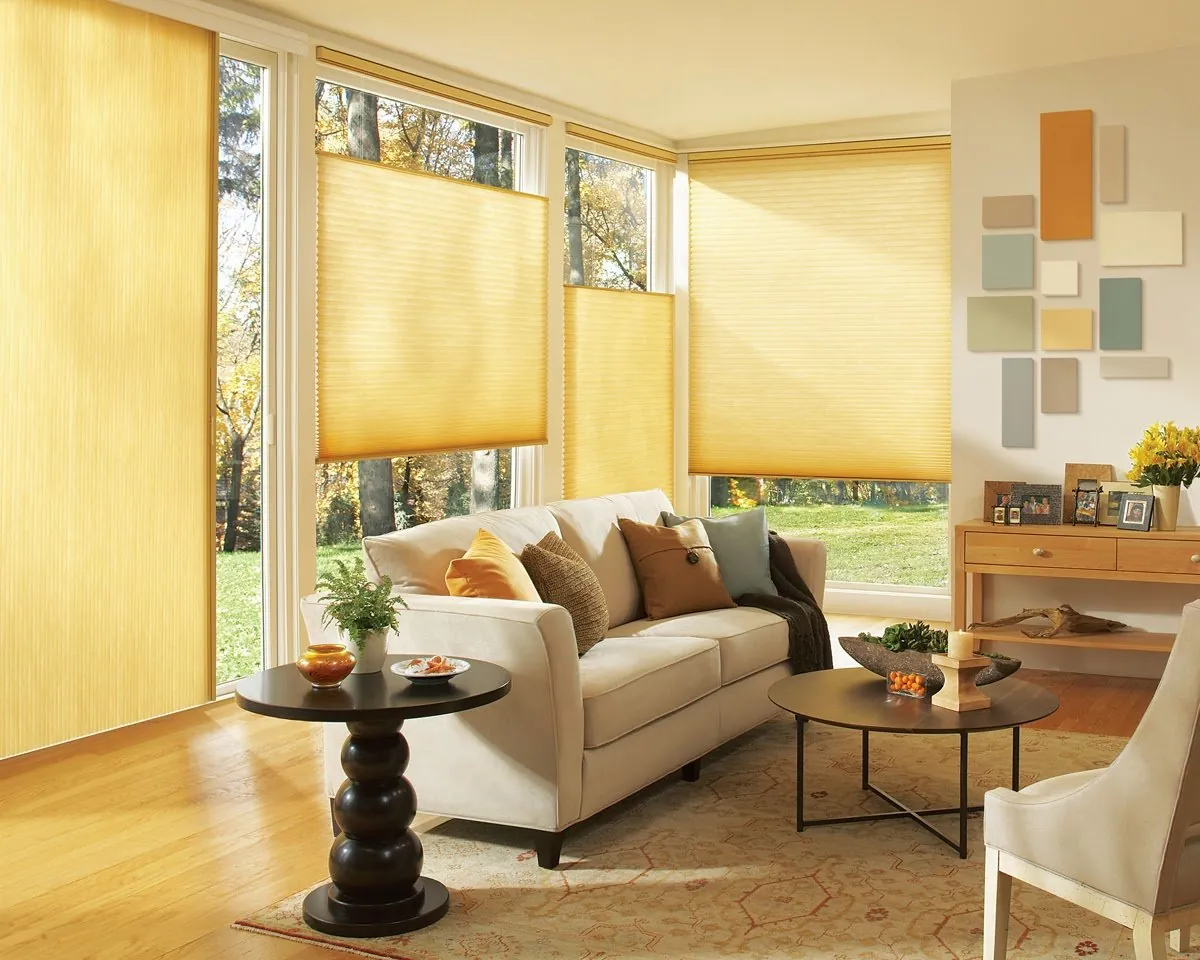
Bay-facing breakfast rooms
Top-down Duette honeycomb shades that drop from the top just far enough to block the low sun.
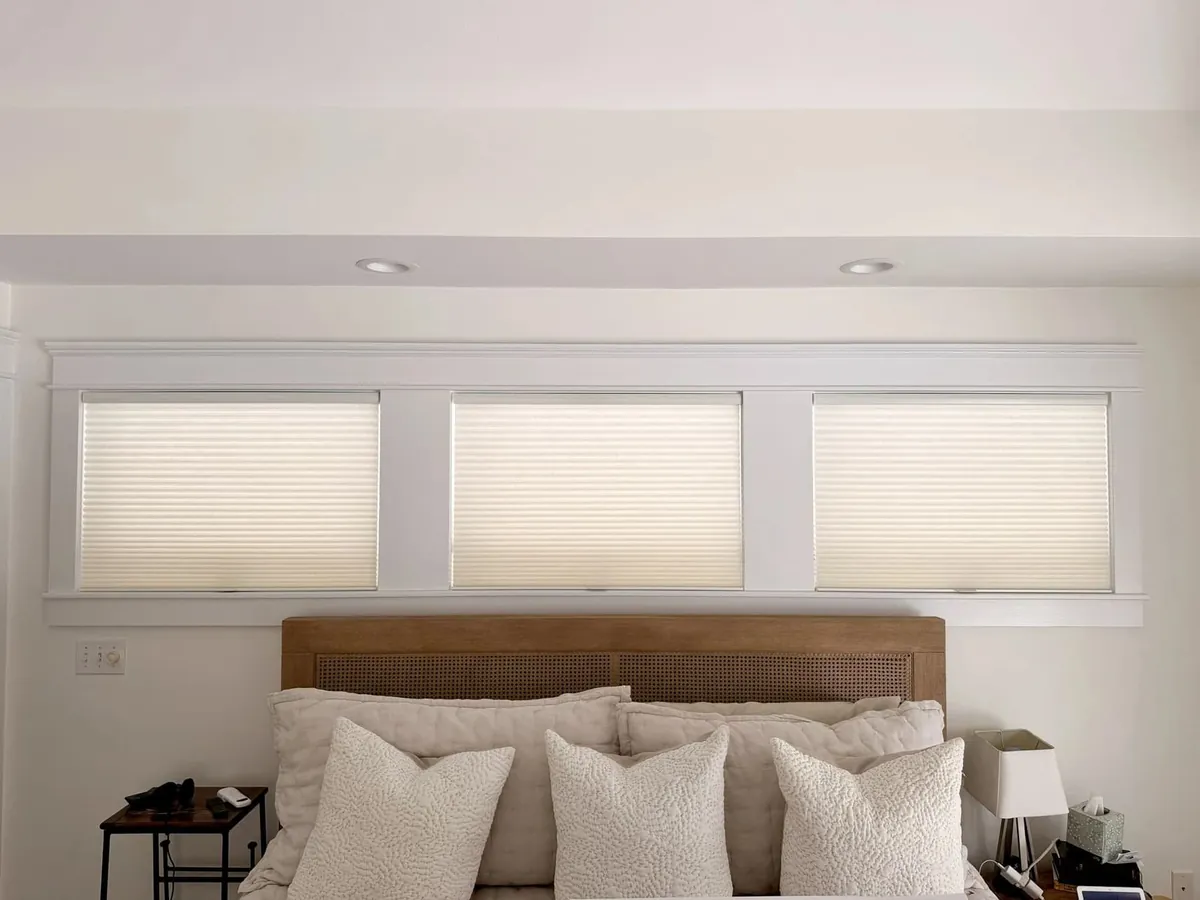
Inland family houses
One of our own installs. Room-darkening shades and weekday schedules for bedrooms in a ranch or a newer colonial.
What the bay does to an east-facing room
Sun from the east arrives low, and over water it arrives twice: once directly, and once bounced off the surface of the bay. For the first part of the day a room on that side gets a hard, bright light that reaches right across the floor and lands on whoever is sitting at the far wall. Computer screens become unreadable. Reading the paper at the table means squinting. And the upstairs bedrooms on that side wake their occupants at first light, whether the alarm has gone off or not.
The light also has a cost over time. Wood floors, rugs and upholstery on the bay side fade where the morning sun lies on them day after day, and a shade left down to prevent it makes the room gloomy for the rest of the day.
A motor solves the timing. With a schedule, the bay-side shades lower before the sun clears the water and rise again once it has climbed high enough to stop pouring in. The room is shaded for the hours that matter and bright and open the rest of the time. PowerView can tie that schedule to sunrise, so it moves earlier through the spring and later through the autumn by itself.
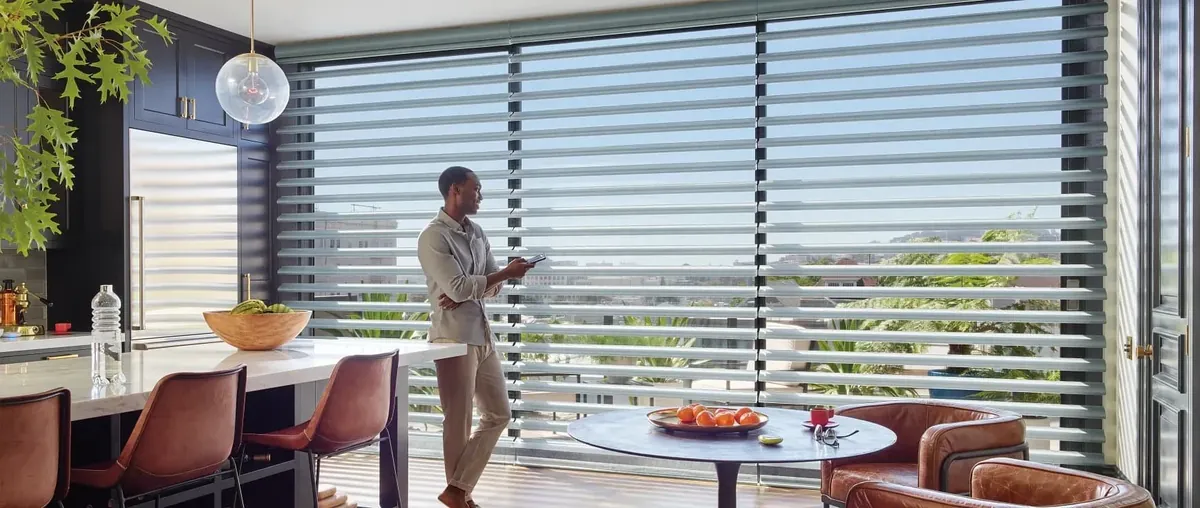
Antique colonials near the village
The older houses close to the village and along the bay are mostly colonials: two full stories, a center chimney or a pair at the ends, symmetrical fronts and rooms arranged formally around a central hall. Windows are tall double-hung sash set in painted wood casings, with the same pattern repeated on every floor.
In houses like these, the woodwork is a feature in itself, and nobody wants a window covering that hides it. We fit shades inside the casing wherever the frame is deep enough, so the motorized headrail tucks up at the head of the opening and the trim stays fully visible. When raised, the shade sits in a slim band at the top; when lowered, it fills the opening edge to edge, framed by the old wood.
Where an antique frame is too shallow, or has been painted so often that the stops crowd the opening, we suggest a slim mount on the face of the casing and show you how that will look before you decide. Each opening is measured at the top, middle and bottom, because sash that has lived through a couple of centuries is rarely square.
Grouping the front of the house
A colonial’s front windows are a row, often four or five on each floor, and how they look from the road matters. Shades left at different heights, some up, some halfway, some down, give the house an untidy face. Doing them all by hand every morning and evening is a chore that soon gets skipped.
On PowerView, the front windows of each floor become one group. Press once and they all move together and stop on the same line, so the house reads as calm and cared for from the street. Grouped shades can follow their own schedule too: up in the morning, down at dusk for privacy once the lamps are lit.
Inside, the same grouping applies room by room. A formal dining room with windows on two walls can close as one, and a parlor can keep its street windows half-lowered while the bay-side window stays open.
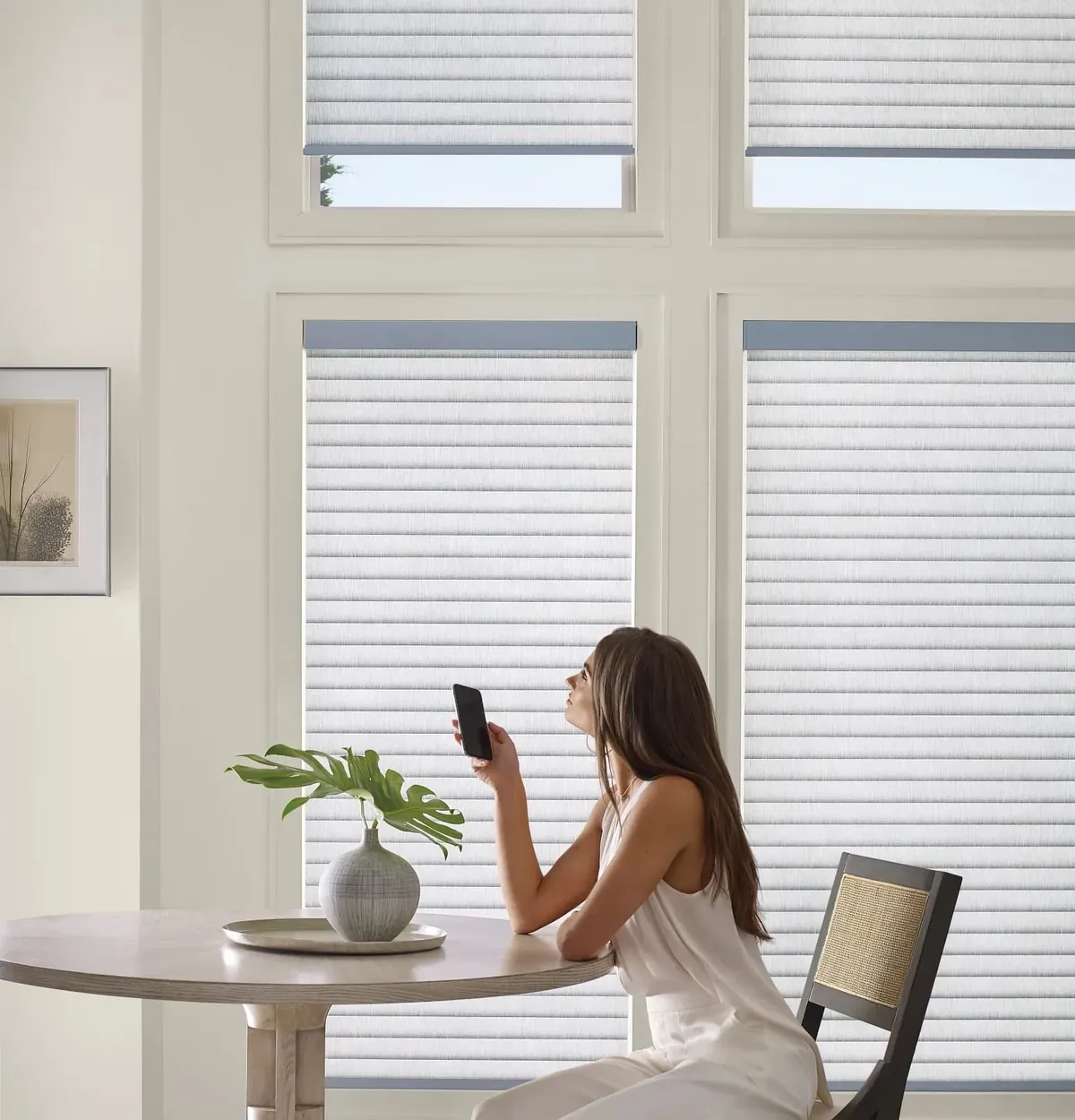
Upstairs bedrooms facing the water
The bedrooms on the bay side of an old colonial are among the loveliest rooms in town, and among the hardest to sleep in past dawn in summer. The windows are often tall, there may be three or four of them, and the morning sun comes in level across the bed.
A room-darkening fabric on a motor is the usual answer. The shades stay down until a set hour, then lift on their own, or wait until someone presses the remote on the nightstand. For a softer start, a schedule can raise them partway first and fully a little later. Honeycomb shades are a good choice here, because the cells that block the light also help the room hold its warmth through a winter night.
With no cords at the window, motorized shades also suit a child’s room or a guest room where grandchildren sleep.
Ranches inland off Route 3
Away from the bay, the post-war ranches have the familiar single-story layout: living room at the front with a picture window, kitchen at the back with a window over the sink, a slider to the yard and a row of bedrooms down a hall. Windows are standard sizes, and in many houses they have been replaced with newer units over the years.
That makes a ranch one of the simplest houses to motorize. Openings are square and true, frames usually leave room for an inside mount, and the window sizes repeat from room to room. The picture window is split into two or three shades on one motor group so it opens and closes in one movement. The kitchen window over the sink, awkward to reach across the counter, is the other favorite.
Many ranch owners begin with those two windows and the main bedroom, then add more rooms later. New shades join the same app, so the house can grow into the system at its own pace.
Newer subdivisions and modern windows
The newer subdivisions inland have the most up-to-date stock in town: standard sizes, modern frames, and often a tall foyer or a family room with windows set high above the fireplace. The hardware is newer, the openings are regular, and the projects tend to be straightforward.
High windows are the natural starting point. Above a front door or over a mantel, they are out of reach without a pole or a ladder, and so they usually stay wide open. On PowerView they become part of the room: they lower with the windows beneath them, follow the same schedules and answer to the same remote.
Because the windows in a newer house are so regular, it is often practical to motorize every room in one project, with groups for each floor and scenes for the times of day you use most. That is where the app really comes into its own.
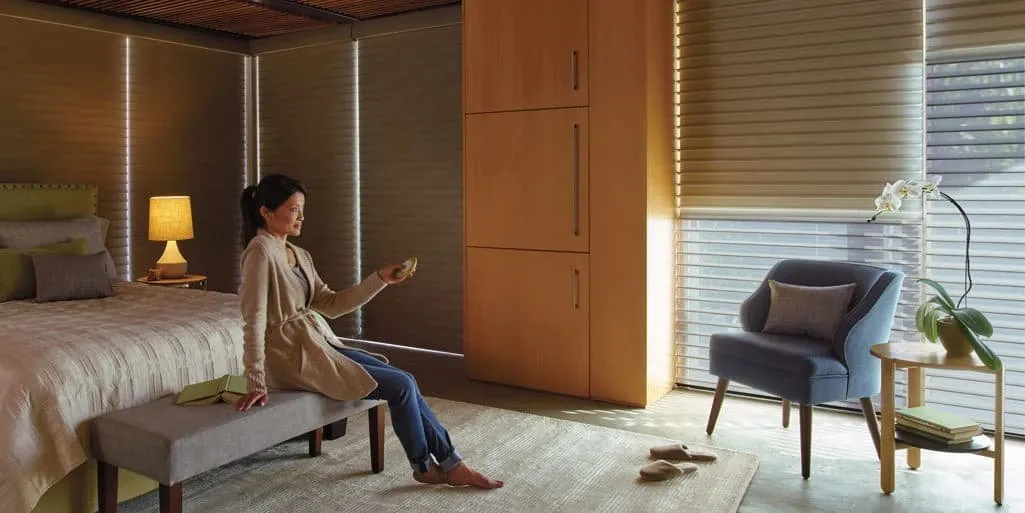
A weekday, scheduled
For a household that is out during the day, here is how a set of schedules might look in an inland Kingston house.
- Before anyone is up, the bedrooms stay dark.
- At the time the alarm goes, the bedroom shades lift partway, then fully a few minutes later.
- As the house empties, the front-facing shades lower to a privacy position, and the sunny side lowers to protect the floors.
- Late in the afternoon, the main rooms open again, ready for the evening.
- At dusk, the street-side windows close completely as the lamps come on.
Weekends can run a different pattern, or none at all. Any shade can be moved from the remote or app at any time, and a manual change leaves tomorrow’s schedule exactly as it was.
Kitchens, sliders and the back of the house
The back of a Kingston house is where the day actually happens, and it is often where the awkward windows are. The kitchen window sits over the sink or behind a counter. A slider leads out to the deck or the yard. In the older colonials, a later addition at the back may have a run of windows of a different size from the rest of the house.
Each of these suits a slightly different answer. Over the sink, a roller or faux wood option copes with steam and goes on a button by the door, so nobody leans across the taps again. On the slider, a vertical shade that travels sideways lets you walk straight out; whether that one gets a motor depends on how often the door is used, and we talk it through rather than assume. The addition’s windows become their own group, so they can follow the sun on the back of the house while the formal front keeps its own routine. Thinking about motorized blinds in Kingston room by room like this is what keeps a mixed house working as one system.
Three ways to give the orders
- The remote. A small handset or wall control that moves one shade, a room or a group of rooms. Most families keep one in each main room.
- The PowerView app. Every motorized window in the house on your phone or tablet. Sort shades into rooms, adjust one by a few inches, and save scenes such as “bay side shaded” or “front closed for the night”.
- Schedules. Scenes tied to a time of day or to sunrise and sunset, repeating until you change them.
Our guide to how motorized shades are controlled walks through each one in plain language, and the page on window covering automation explains scenes and timers in more depth.
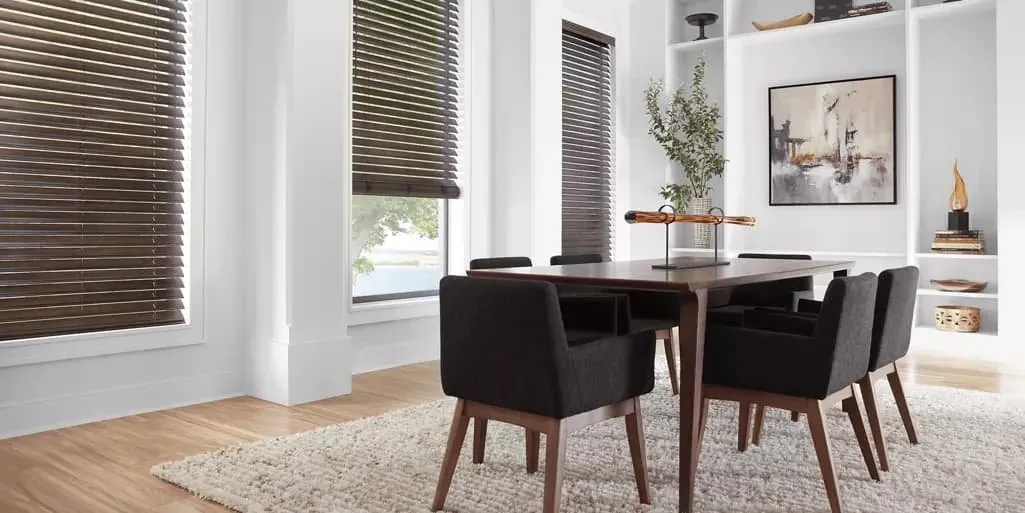
Wood blinds in an old colonial
A good number of requests for motorized blinds in Kingston come from the older houses near the bay, where wood blinds suit the formal rooms. Slats in a warm stain look right against painted trim and wide floorboards, and tilting them sends the morning light up onto the ceiling instead of across the table. That is a neat answer to the bay glare in a dining room that still needs daylight.
Not every blind range or every window size can take a motor, so if you have a motorized blind in mind for a particular room, tell us at the start and we will check each window during the visit. Where a blind is not the right fit, a Roman shade or a top-down honeycomb shade usually is, and every motorized piece, blind or shade, runs from the same app.
Power, window by window
A motor has to be powered, and in an antique colonial the right answer may differ from the one in a ranch or a new house. It depends on the shade, the frame and the wall. At the visit we decide how each motor is powered, opening by opening, and nothing is ordered until you have agreed the plan.
How a Kingston project runs
- Reach us through Request a Consultation or the call button and pick a time.
- Samples travel with us, so you judge each fabric at your own windows, ideally on the bay side in the morning light.
- We look round the house with you and note which rooms take the glare and when.
- Each window is measured at several points, with the frame depth checked for an inside fit.
- You choose which windows to motorize, how they group and which scenes you want, and we agree how each motor is powered.
- A free estimate follows for you to read at your leisure.
- Our certified Hunter Douglas installers hang the shades, set where each one stops, link them to the remote and app, and program your schedules before leaving.
See what happens at an in-home consultation for more about that first meeting.
Gallery dealer range, one consultation
The Gallery dealer title is one Hunter Douglas grants dealers who meet its standards, and Blinds & Designs carries it. In practice that means the full PowerView line is ours to suggest: honeycomb, sheer, Roman, roller, screen and banded shades, plus a number of blinds. An antique colonial by the bay and a new house in a subdivision rarely want the same thing, and we never have to make one product fit both.
Installation is by our Hunter Douglas certified installers, and programming the motors and schedules is part of their visit. Interior design consultations are available when a room needs more than new shades.
For more in town, see roman shades in Kingston, plantation shutters in Kingston and the Kingston page. The whole range is on our motorized blinds and shades page.
Down Route 3 to Sagamore
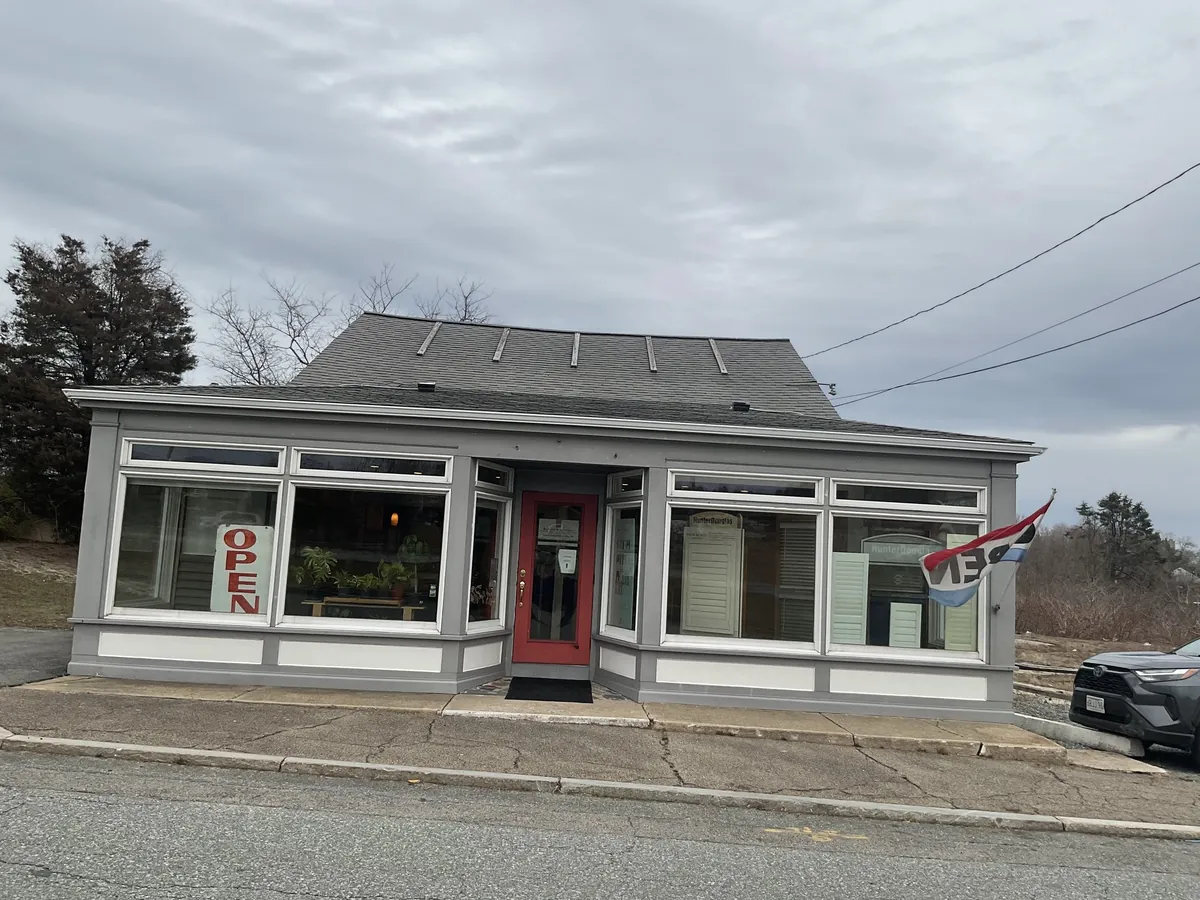
The Sagamore showroom is our nearest location to Kingston, down Route 3 toward the bridge. You are welcome to stop in and talk through a project.
Most motorized blinds in Kingston, MA, are still best planned in the house itself, where we can see which rooms face the bay and how the morning light falls. We bring the samples with us.
Questions from Kingston
How do I stop the morning glare off the bay?
Put the bay-side shades on a schedule tied to sunrise. They lower before the sun clears the water and rise again once it is high, so the room is shaded only while the glare lasts.
Will motorized shades hide the trim in my antique colonial?
Not where the frame allows an inside mount. The headrail tucks up inside the opening and the casing stays in view. Where an old frame is too shallow, we suggest a slim mount on the face of the trim and show you how it looks.
Is a newer house in a subdivision easy to motorize?
Usually very easy. Modern windows are standard sizes and square, so the shades fit cleanly and a whole house can often be done in one project.
Can I set the shades to follow a workday routine?
Yes. Schedules can open the bedrooms in the morning, shade the house while it is empty and close it at dusk, with a different pattern at weekends if you like.
What will the estimate cost me?
Nothing. We measure at your house and the estimate is free.
Book a visit
To see what PowerView can do against the bay light or for a busy weekday, request a consultation. We will bring samples, measure your windows and leave a free estimate. If a quick question comes first, use the call button, or call in at the Sagamore showroom.