
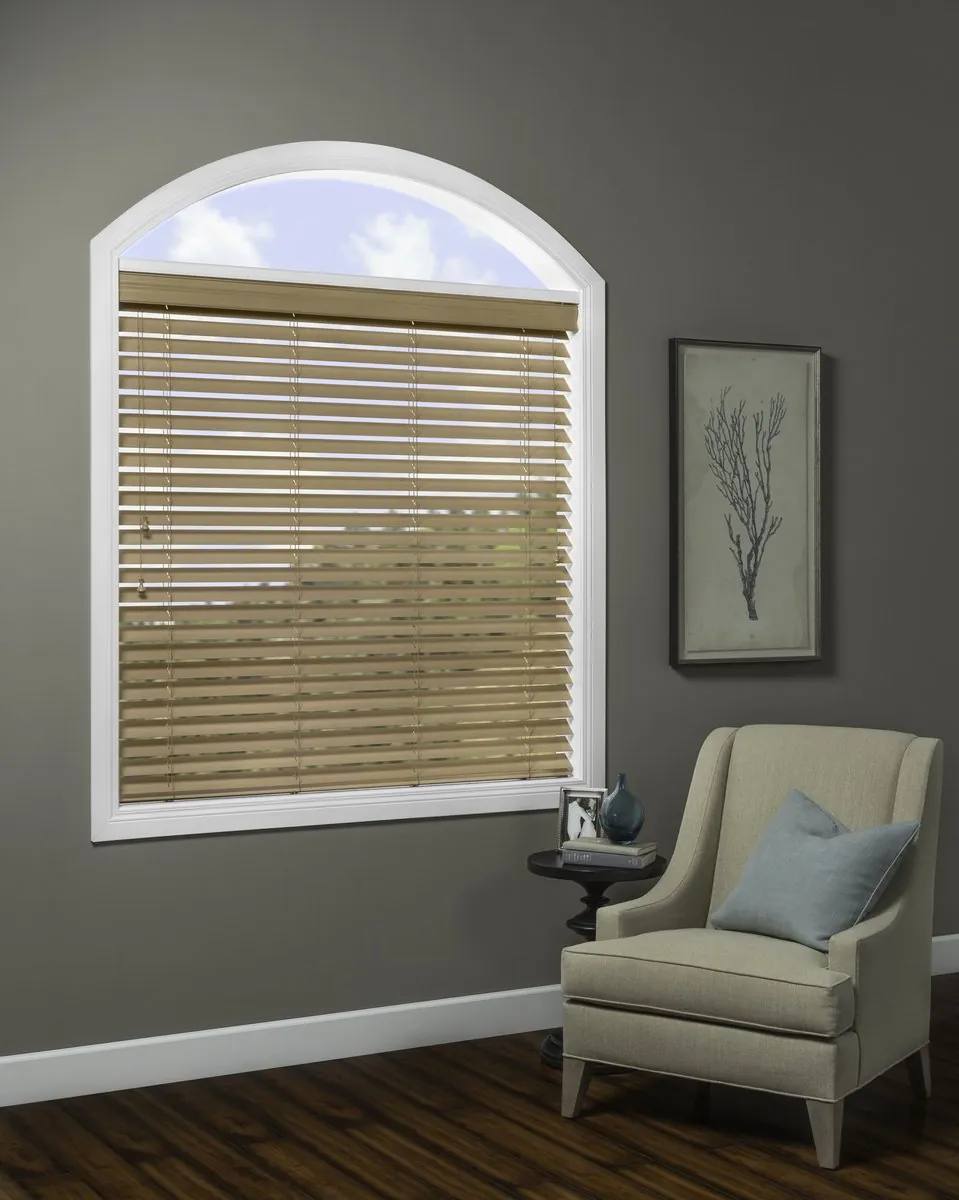
Small old sash and walls of new glass
Duxbury asks two very different things of a blind. Along Washington Street and down toward the Nook, antique capes and Federal houses still have the small original openings they were framed with, some barely wider than a pair of hands. Out on Powder Point, rooms that face the water are glazed so heavily that the window is most of the wall. Inland, larger newer houses sit back on wooded lots where the trees decide how much light reaches the glass. Planning custom blinds in Duxbury, MA, means answering all three without treating any of them like the others.
A blind is a good fit for this kind of spread because it is built to size, slat by slat, and because the slats tilt. On a tiny antique sash the slat width and the headrail height decide whether the window still looks like itself. On a glass wall the tilt is what lets you take the sun off a chair without losing the view. Under heavy tree cover a pale slat angled up can push what daylight there is deep into the room.
We bring the Hunter Douglas range to your door, look at each opening with you and suggest what suits that window, not a single answer for the whole house.
Blinds we fit in Duxbury houses
Hunter Douglas makes blinds in four families, and we carry all of them. These six are the ones that come up most often when we plan custom blinds in Duxbury, MA.
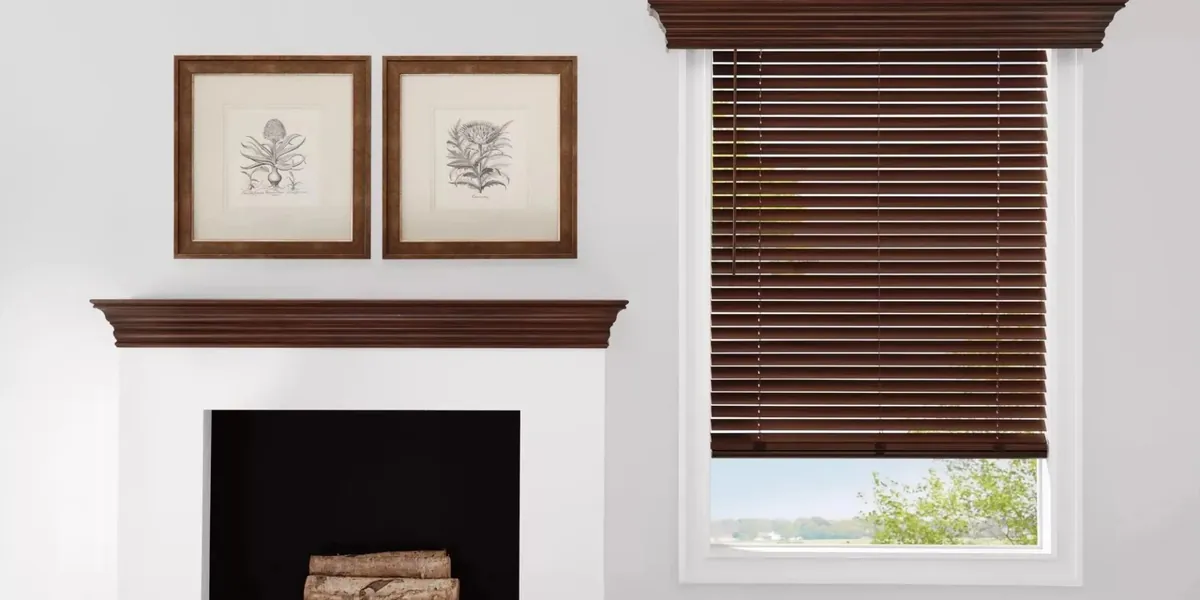
Real wood blinds
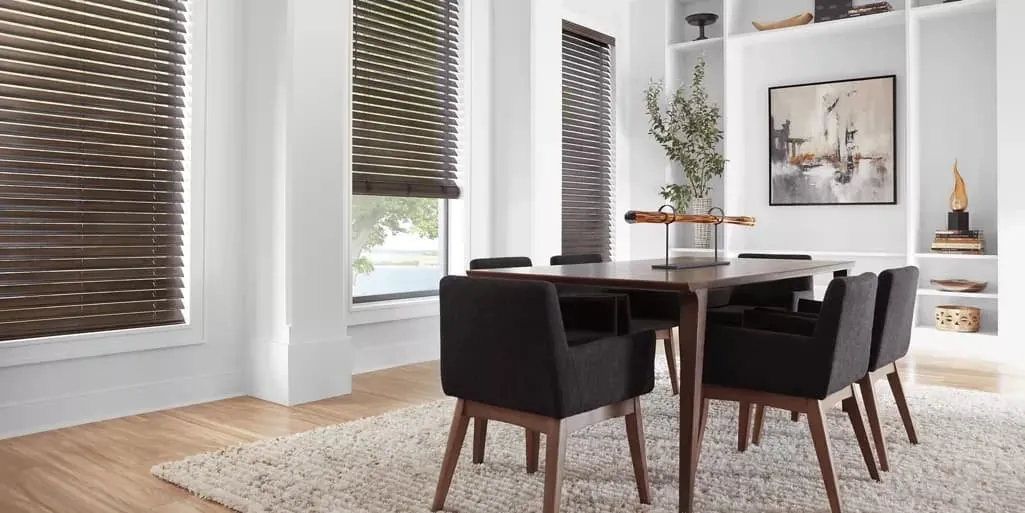
Solid wood slats with visible grain, stained or painted. They suit the front rooms of a Federal house, where the trim and the floors are wood too.
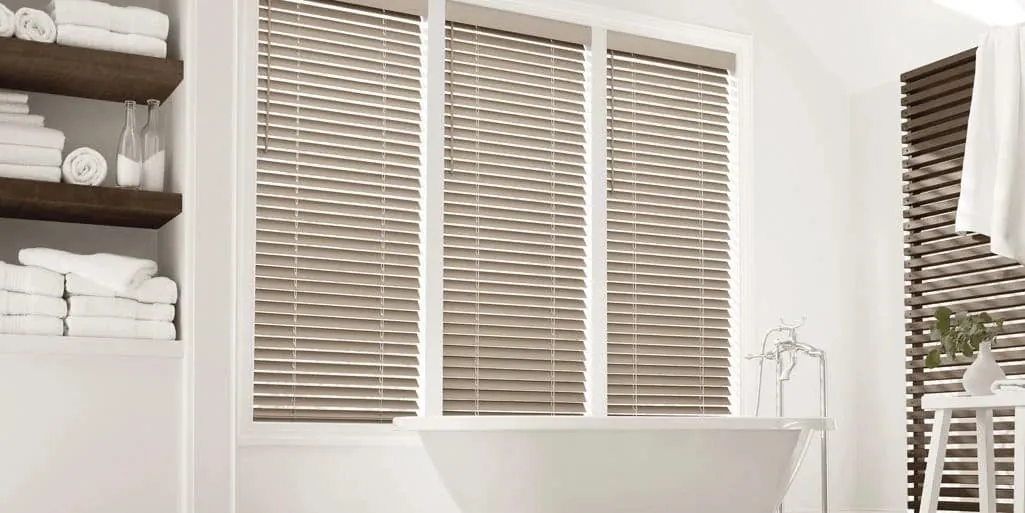
Faux wood blinds
The look of a painted wood slat in a material that shrugs off steam. Our usual choice for baths, kitchens and laundry rooms.
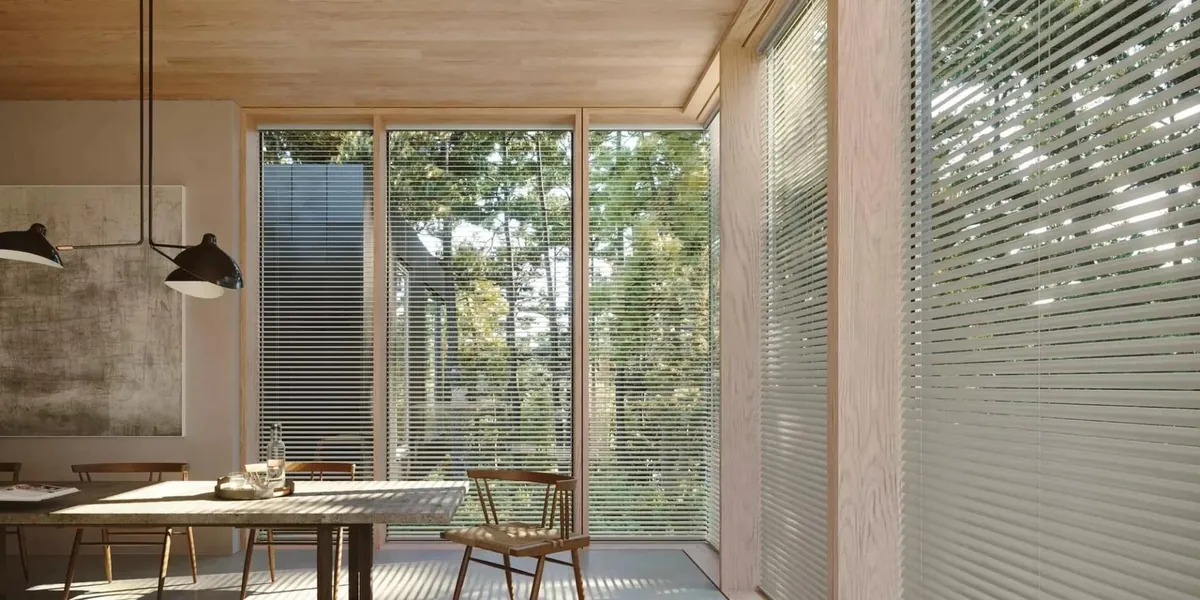
Metal blinds
Narrow aluminum slats with a fine profile. On tall glass they almost vanish when open, and on a small sash the slim headrail keeps the frame clear.
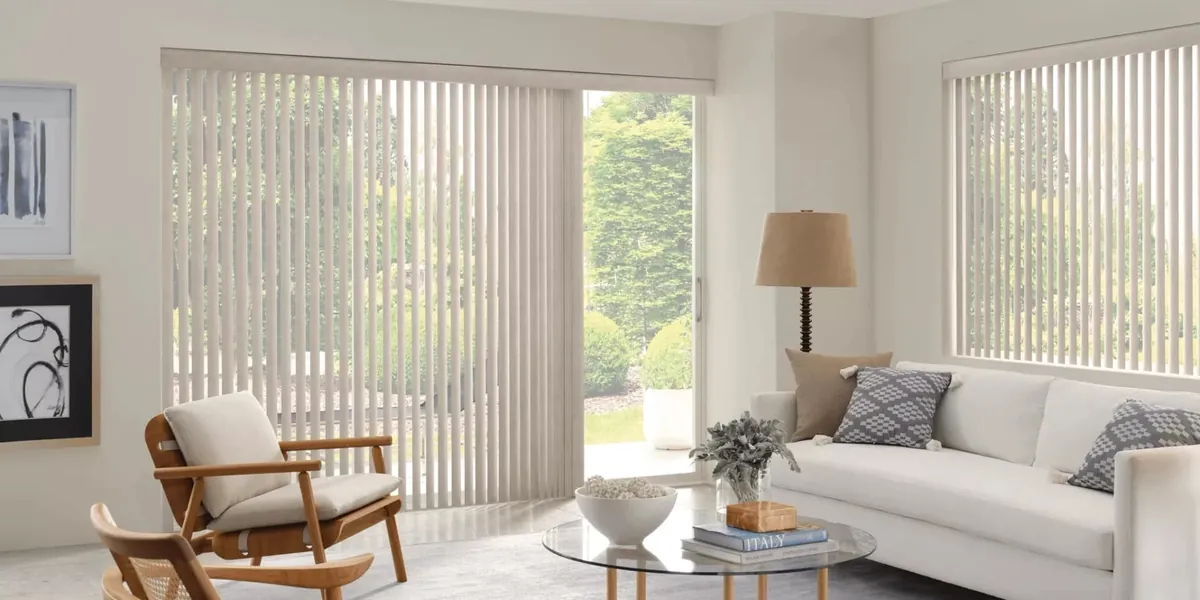
Vertical blinds
Vanes that hang from a track, rotate to steer the light and draw to one side. Made for sliders and wide doors out to a deck.
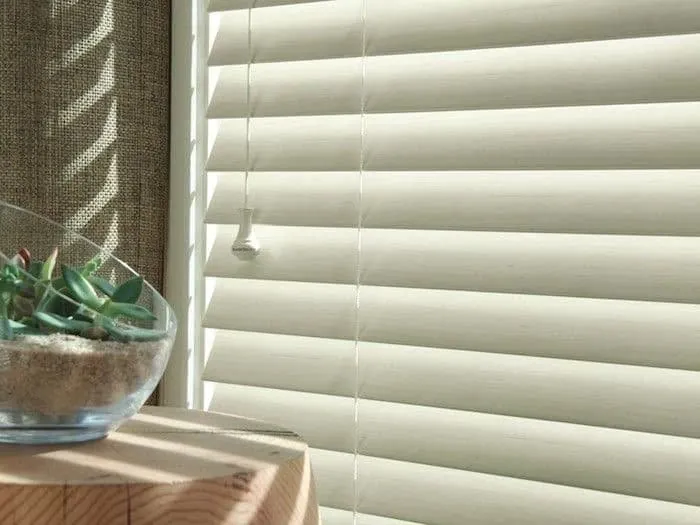
Slat detail and finish
Slat width, color, grain and the choice of tapes or plain cord holes all change how a blind sits in an old frame. We bring real samples of each.
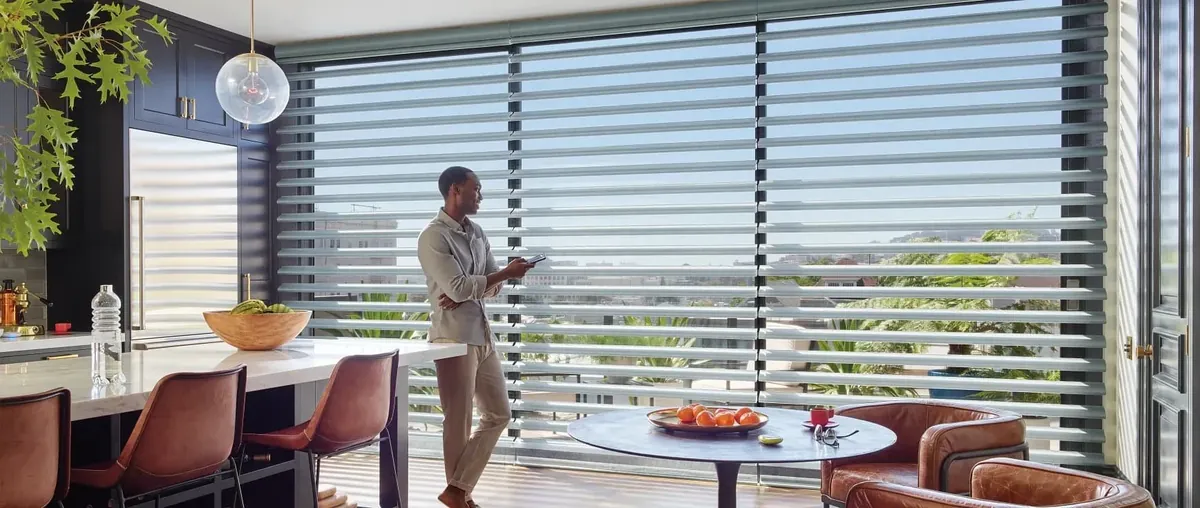
PowerView motorization
Lift and tilt by remote, wall switch or app, on a schedule if you like. The practical way to run a long row of blinds on water-facing glass.
Antique capes on Washington Street
The capes along Washington Street are low, broad houses with a central chimney and windows that are small by any modern standard. Many still have original sash with narrow muntins and the wavy glass that comes with age. Whoever owns one of these houses usually wants the windows to keep looking old from the street.
That shapes almost every choice. The first is the slat. A wide slat on a small sash looks clumsy and, when the blind is raised, stacks into a thick bundle that blocks a good share of the glass. A narrower slat stacks tighter and keeps the window in proportion. The second is the headrail. A low-profile rail sits neatly inside a shallow frame and leaves the top pane open when the blind is up.
The third is the mount. Old frames are rarely square. A window that has moved over its long life can be a little wider at the sill than at the head, or bow in the middle. An inside mount looks cleanest, so the blind sits within the opening and the casing stays on show, but only if the frame allows it. We read the width at the head, the middle and the sill, and the depth at both sides, before we recommend one.
Real wood is the natural material for the front rooms of a cape. A stain that picks up the floorboards, or a paint color matched to the trim, lets the blind read as part of the house rather than something added to it.
Federal houses near the Nook
The Federal houses toward the Nook are a little grander than the capes: two full stories, a symmetrical front, and windows arranged in neat rows on either side of the door. The openings are still modest, but there are more of them and they line up across the façade.
On a house like that, consistency matters more than it does almost anywhere else. Every front window should carry the same slat, the same color and the same headrail height, so the house reads as one composed face from the road. Inside, rooms can vary. A dining room might take a stained wood blind while the kitchen behind it takes faux wood in a matching tone, and nobody outside will know.
Federal houses often have interior shutters, deep window seats or heavy original casings worth keeping. A blind can sit inside the frame in front of the sash and leave all of that visible. Where an old interior shutter pocket takes up the depth, we look for a mounting point that clears it, and we tell you plainly when the window is better served by something else.
Powder Point and the glazed rooms facing the water
Powder Point is a different kind of house. Rooms that face the water there are built around the view, and the glazing is heavy: tall panes, runs of windows side by side, glass doors out to a deck. The light coming off the bay is strong for much of the day, and it changes as the sun moves around the house.
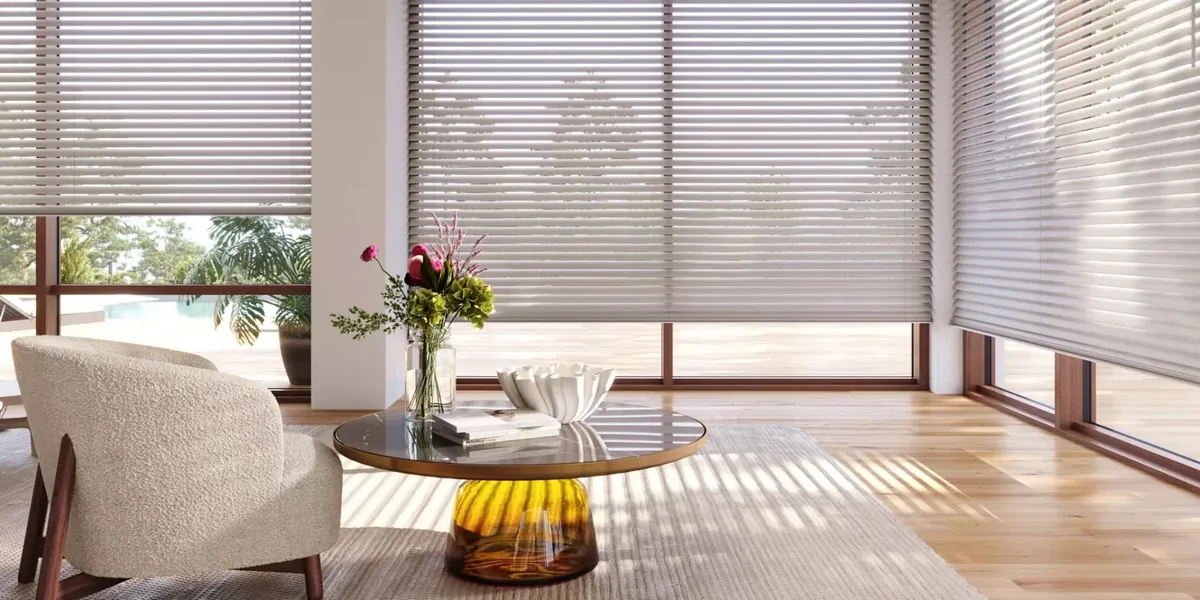
For a room like that, a blind is useful because it gives you control without closing the view off. With the slats level, you look straight through. Tilt them a few degrees up and the direct sun is thrown at the ceiling instead of across the floor, so the room stays bright without glare on the furniture or the screen. Close them in the evening and the room is private from the water and the road.
Across a long run of glass, a row of separate blinds lined up on the mullions usually works better than one very wide blind. Each one is lighter to raise, the slats stay straight over a shorter span, and you can leave one window open while the next is tilted shut. When the row is long or high, PowerView takes the work out of it: one button lifts or angles the whole row, and a schedule can close the bright side through the middle of the day.
Salt air is the other thing a water-facing room has to live with. Faux wood and aluminum stand up to damp air well, and a cordless lift leaves less hardware hanging at the side of the window. We talk through which materials suit the rooms nearest the water before anything is ordered.
Newer houses on wooded lots inland
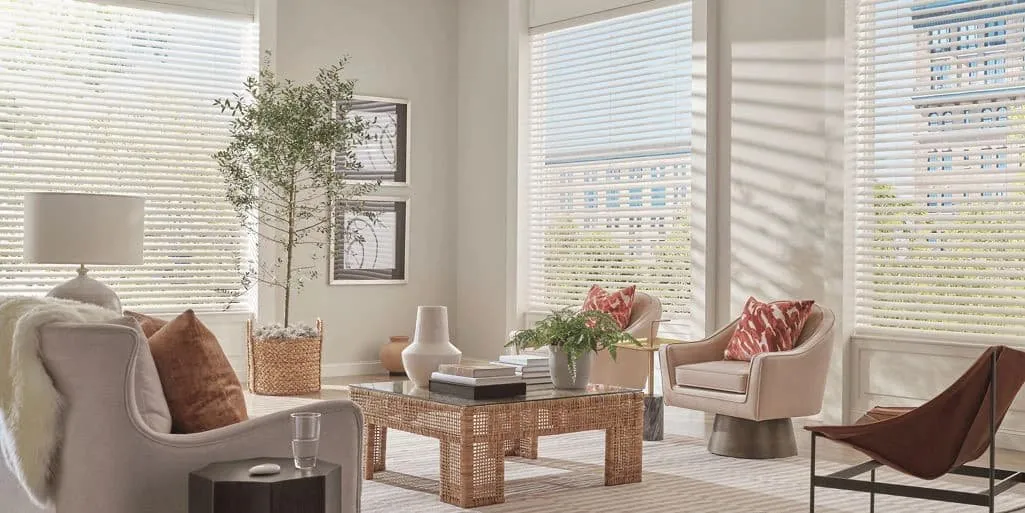
Away from the water, much of Duxbury’s newer housing sits on wooded lots. These are larger houses with modern windows, open kitchens and family rooms, and often a slider or French doors to the back. The windows are standard in shape and square in the frame, which makes the fitting simple. The light is the interesting part.
Under tall trees, many rooms get dappled or indirect light for most of the day, and some barely see direct sun until the leaves come down in autumn. In those rooms a pale slat is the better choice, because it bounces daylight further in when tilted up. Dark slats can make a shaded room feel dim. On the one or two windows that do catch a hard afternoon sun through a gap in the trees, the tilt does the work.
Sliders in these houses take vertical blinds. The vanes rotate to cut light and draw clear to one side, so you can walk out to the deck without lifting anything. Where the slider sits beside ordinary windows, we match the color of the vertical vanes to the horizontal blinds around it.
How custom blinds in Duxbury, MA are planned at home
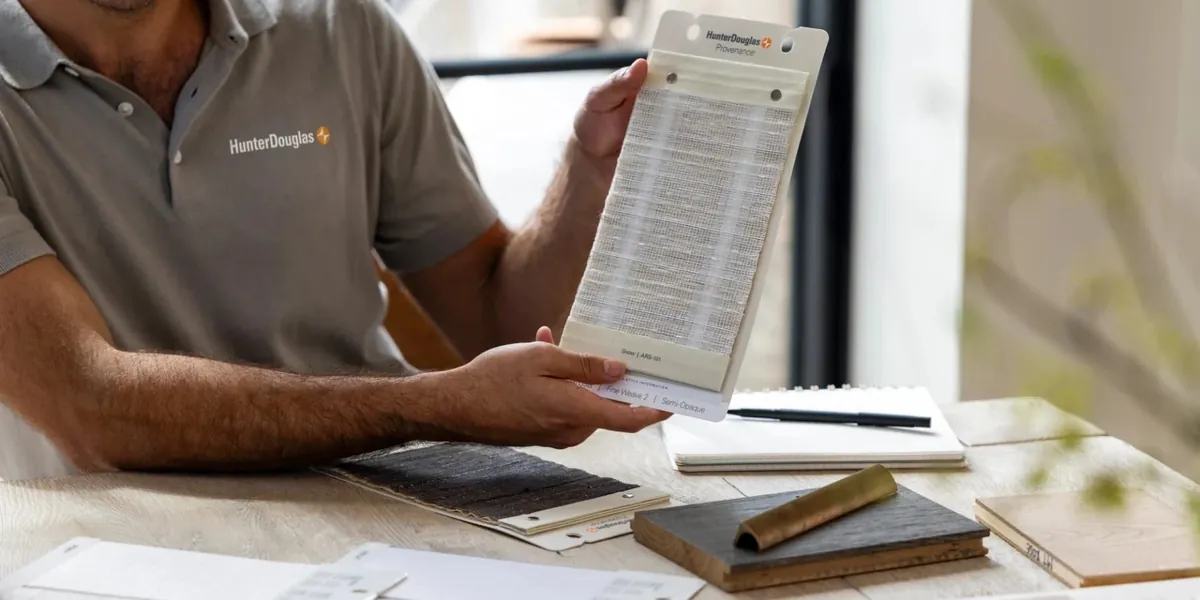
Most of our blind work in town starts with an in-home visit. Our vans carry samples, so we can bring the showroom to you, and a sample held against your own trim in your own light tells you far more than a picture.
- Request a consultation online or use the call button, and we agree a time that suits you.
- We arrive with wood, faux wood, metal and vertical samples, along with headrails, valances and the lift and tilt options.
- You walk us through the house, starting with the windows that bother you most, and tell us how each room is used.
- At each window you tilt real slats, compare colors against the trim and see how each material handles the light that room gets.
- We measure every opening at several points and check the depth for an inside mount.
- You receive a free estimate for the blinds you are considering, and take whatever time you need to decide.
If you would like help pulling a room together, interior design consultations are available at the same visit. Our page on what happens at an in-home consultation walks through it in more detail.
Choosing a material, room by room
Most houses end up with more than one kind of blind. A quick way to think about it:
- Front rooms of a cape or Federal house: real wood, narrow slats, inside mount where the frame allows, color matched to trim or floor.
- Kitchens, baths and laundry rooms: faux wood, which holds its shape in steam and wipes clean.
- Water-facing glass on Powder Point: faux wood or aluminum for the damp air, several blinds across a long run, PowerView where it is high or wide.
- Sliders and wide doors: vertical blinds that draw aside.
- Shaded rooms under the trees: pale slats that bounce daylight in.
Our wood blinds, EverWood faux wood blinds, metal blinds and vertical blinds pages go into each family, and the main custom blinds page brings them together.
Lift, tilt and the cords
How a blind is worked matters as much as what it is made of, especially in a house you live in every day. Hunter Douglas offers several ways to raise and tilt a blind, and the right one depends on the window.
A cordless lift has no hanging cord at all: you push the bottom rail up or pull it down and it stays where you leave it. It looks tidy on a small antique sash and is the safer choice in any room where children play. A wand tilt turns the slats with a twist and keeps the side of the window clear. On a window that is hard to reach, such as one over a deep counter or high in a stairwell, motorized lift and tilt does it for you.
We bring working samples of each so you can try them in your hand. What feels right on a bedroom window may not be what you want on the kitchen window you open over and over each day.
The controls are also where custom blinds in Duxbury differ most from a blind bought off a shelf. Each headrail is built for its own opening, so the wand can sit on whichever side is easiest to reach, and a pair of blinds on a Federal house can be set to mirror each other across the front door. On the water-facing rooms, grouping the motorized blinds means one tap closes a whole wall. Getting these small choices right is what makes custom blinds in Duxbury, MA feel easy to live with years after they go up.
Measuring and certified installation
Every blind we supply is made to the measurements we take, which is why the measuring is careful. On the antique houses near the Nook we assume nothing is square: the width goes down at the head, middle and sill, the height at both sides and the center, and the depth wherever the headrail will sit. On newer inland houses the readings agree more often, but we take them all the same.
Once the blinds arrive, our certified Hunter Douglas installers fit them. Brackets go into solid wood, headrails are levelled even when the frame is not, and each blind is run through its full lift and tilt before we show you how it works. Our page on what happens on installation day covers the visit step by step.

Why work with a Hunter Douglas Gallery dealer
Blinds & Designs is a Hunter Douglas Gallery dealer, a designation Hunter Douglas gives dealers who meet its standards. For a Duxbury house it means the whole blind range in one place: every wood, faux wood, metal and vertical option, the lift systems and PowerView motorization.
Our installers are certified by Hunter Douglas, so the blinds go up the way the maker intends. If an older blind in the house ever needs a new cord or a tilt mechanism, we handle blind and shade repair as well.
Blinds are only part of what we do. For other rooms you might look at plantation shutters in Duxbury or cellular shades in Duxbury, and our Duxbury page lists every service we bring to town.
The Sagamore showroom
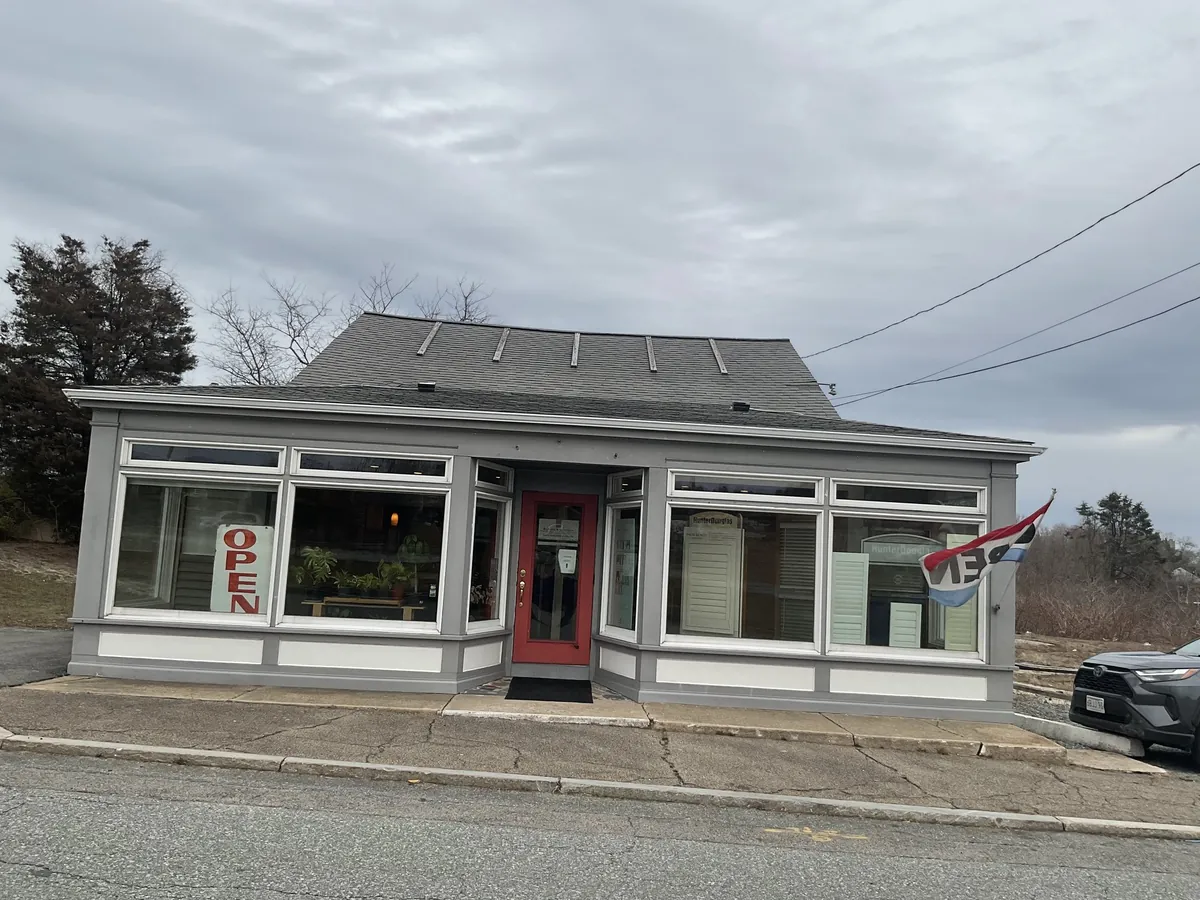
Our nearest showroom to Duxbury is in Sagamore, by the canal. If you would like to see blinds there before or after a home visit, the Sagamore showroom page has its address and hours.
Most people still start at home, because the real test of a blind is your own window: the small sash on Washington Street, the bright glass on Powder Point or the shaded family room under the trees.
Questions from Duxbury
Can a blind fit the very small original windows in my antique cape?
Usually, yes. A narrow slat and a low-profile headrail keep a small sash in proportion and leave most of the glass clear when the blind is raised. We measure in several places, because old frames move, and suggest an outside mount on the casing where an inside mount would be too tight.
What do you suggest for the big windows facing the water on Powder Point?
Several blinds side by side, lined up on the mullions, in faux wood or aluminum for the damp air. Tilting the slats up takes the glare off the room while keeping the view. PowerView makes a long or high row easy to run.
Will wood blinds hold up in a bathroom?
Faux wood is the better choice there. It gives the same look as a painted wood slat and is made to handle steam. Real wood suits the drier front rooms.
What goes on the slider to my deck?
Vertical blinds. The vanes rotate to cut light and draw to one side so you can walk straight out, and we match their color to the horizontal blinds in the same room.
Is the estimate free?
Yes. Once we have measured your windows, you get a free estimate for the blinds you are considering, with no pressure to decide at the visit.
Your next step
The clearest way to see which blind suits each window is to hold real slats up to it. Request a consultation and we will bring the Hunter Douglas blind range to your house, measure every opening and leave a free estimate. If you would rather talk first, the call button reaches our Sagamore showroom, or you can visit it and look at the blinds in person.