
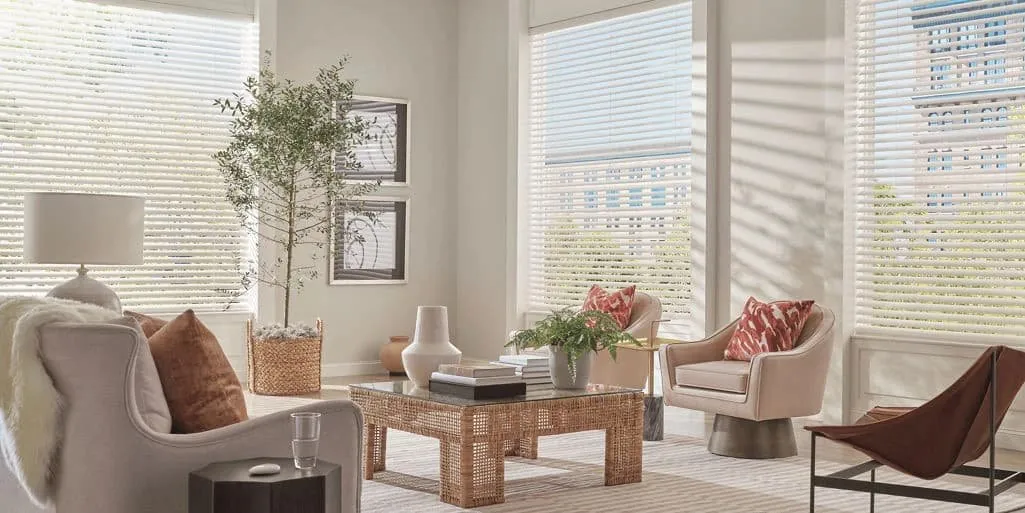
Rooms that face the pond
A lot of Pembroke’s houses were placed with the water in mind. The post-war ranches and capes around the ponds tend to put the living room, and often the kitchen, on the side that looks out over the shore, with the biggest window in the house aimed straight at the view. When we plan custom blinds in Pembroke, MA, that pond-facing window is usually where the conversation starts, because nobody wants a window covering that takes away the reason the house sits where it does.
The good news is that a blind is very good at this job. With the slats level you see straight through to the water. Raise it and it stacks neatly at the head of the window. Tilt it a little and the sun that comes off the pond in the afternoon goes up to the ceiling instead of across your eyes.
The rest of the house is usually simple to fit. Away from the shore, the newer colonials off Route 14 and Center Street are built with standard modern window sizes, and so are most of the ranches. That means the choice turns on material and on how you want to work each blind, which is exactly where samples at your own window help most.
Three families of blinds for Pembroke windows
We carry the full Hunter Douglas blind range. For most houses in town the decision comes down to these three, and we bring samples of each.
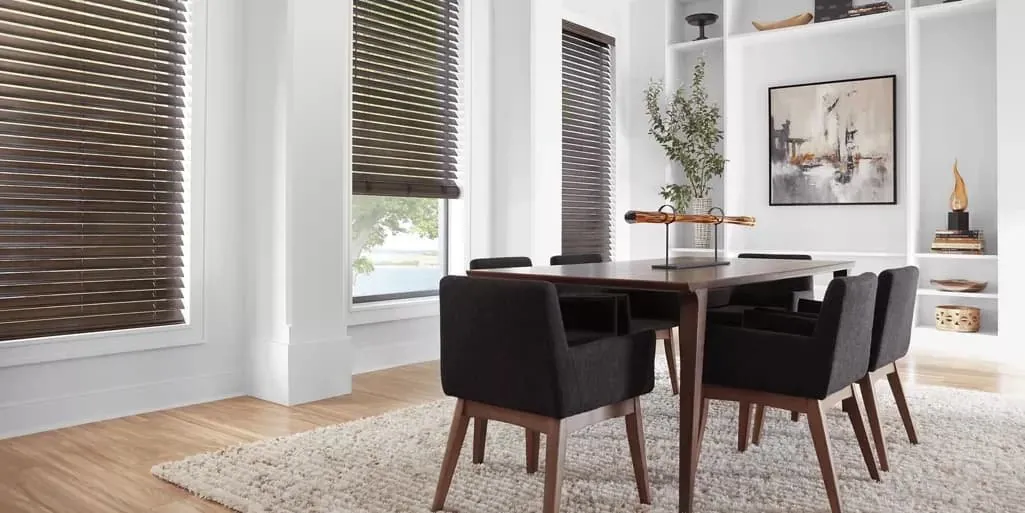
Wood and faux wood blinds
Real wood for living and dining rooms where warmth and grain matter, and faux wood in the same look for kitchens, baths and anywhere damp. Many houses use both, matched in color.
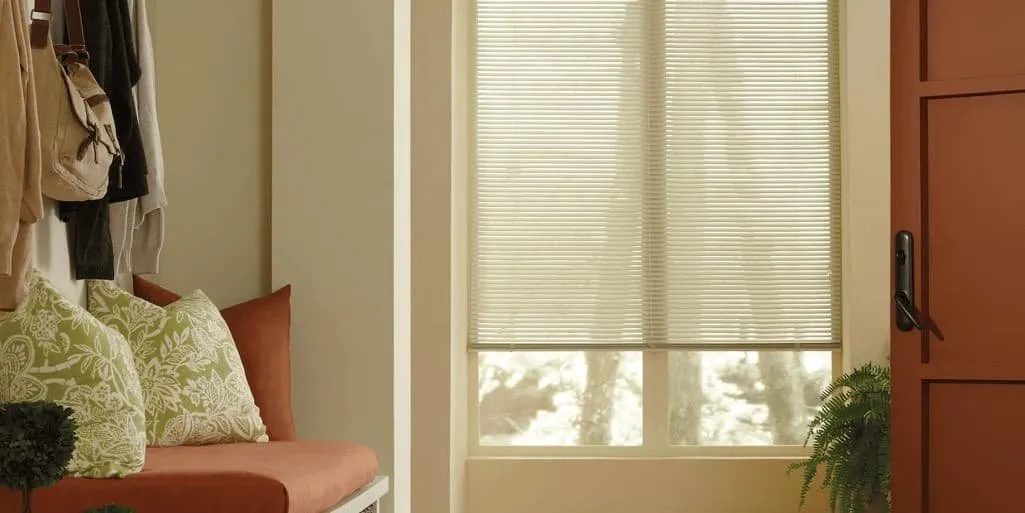
Metal blinds
Slim aluminum slats that sit light on the window and tilt with precision. A tidy choice for entries, mudrooms, home offices and bright modern rooms.
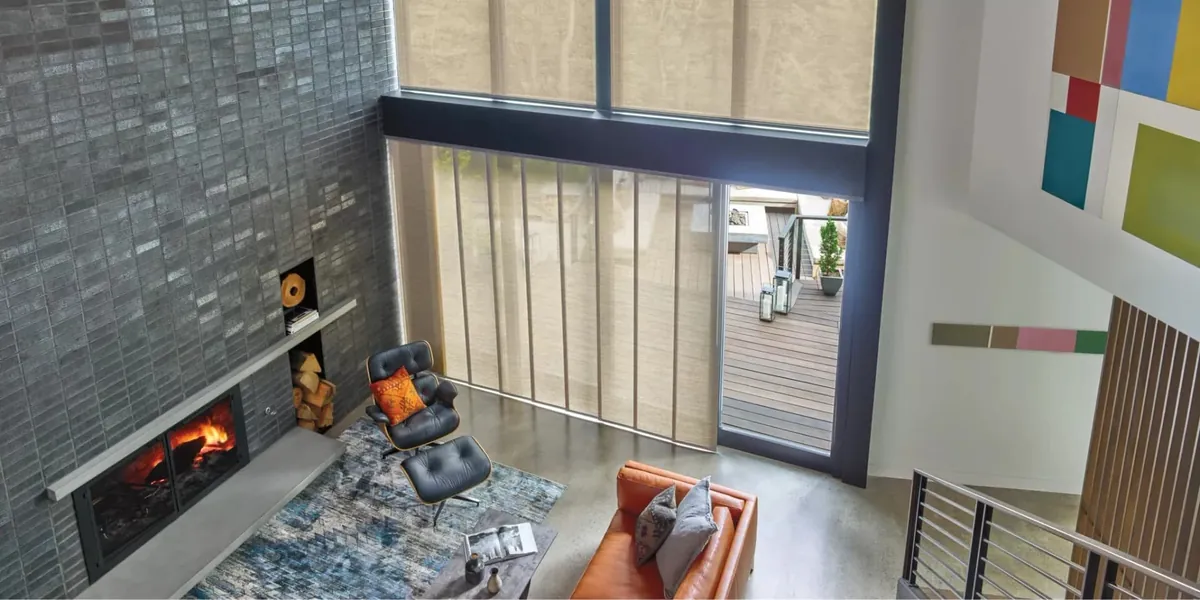
Vertical blinds
For the slider out to the deck or the patio. Vanes turn to steer the light and draw fully aside, so the door works as a door.
Keeping the pond in view
The pond-facing window is often a single large pane or a group of windows set side by side. Covering it well is mostly a question of light and sightline rather than fit.
Start with the slat. A wider slat gives a more open view when level, because there are fewer slats crossing the glass. A narrower one gives finer control over the angle. On a picture window that is mainly there for the view, a wider slat in a pale color is often the right call, since it almost disappears when open.
Then think about the time of day. A room that faces west over water takes a low, bright sun in the late afternoon, and the reflection off the pond can be stronger than the sun itself. Slats tilted upward catch that light and send it toward the ceiling, so the room stays bright while the glare is gone. As the sun drops, you adjust the angle a little more. Fully closed, the slats give you privacy from the water once the lamps come on.
Finally, think about where the blind goes when it is raised. A blind lifted all the way stacks at the top of the window. On a standard height window that stack is small, but we still plan the headrail so the raised blind clears the view line from the sofa. If you like a completely clear pane on summer days, we make sure the stack sits above it.
Ranches by the water
The post-war ranches around the ponds are single-story houses with a simple, practical plan: a front living room, a kitchen with a window over the sink, bedrooms off a short hall, and often a slider at the back. Many have been updated inside, with walls opened up or a sunroom added, but the windows themselves are usually standard sizes set square in the frame.
That makes the fitting straightforward, and it means we can spend the visit on how each room is used. A wide living room window is often split into two or three blinds on one headrail, so you can raise the end by the view and keep the end by the television angled shut. The sink window gets faux wood, which holds up to splashes and steam. The slider gets a vertical blind. Bedrooms usually take a darker slat, so the room stays dimmer in the early morning.
Where a ranch has a sunroom facing the pond, there are often windows on three sides. We look at each wall separately, because the morning side and the afternoon side need different handling, and we keep the color and slat size the same so the room still feels like one space.
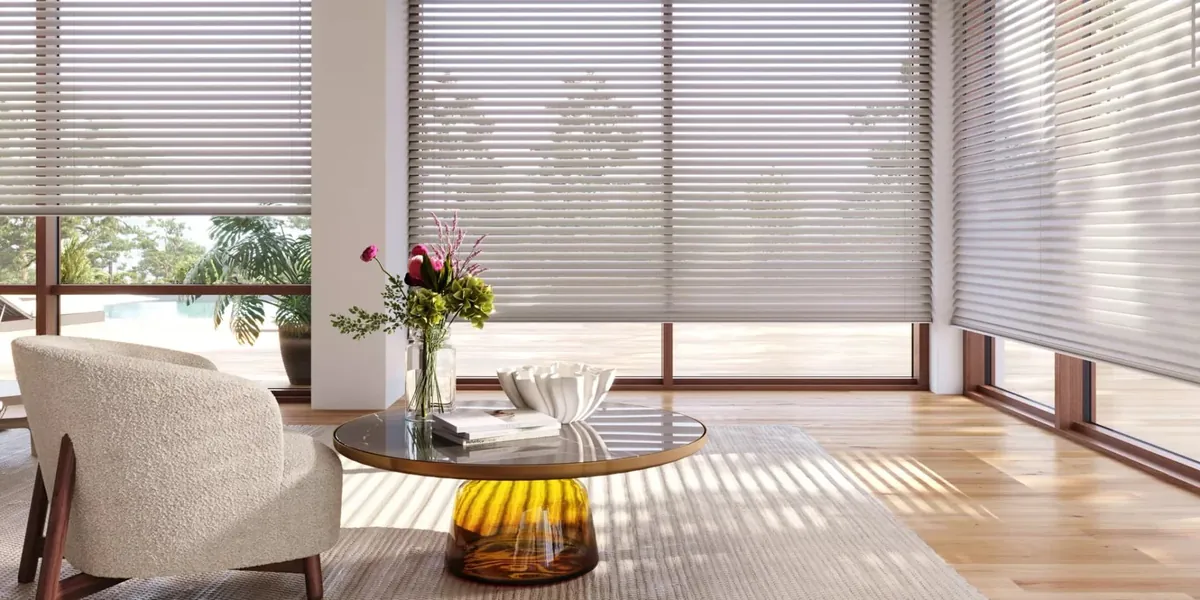
Capes and their upstairs rooms
Pembroke’s capes, like the ranches, are mostly post-war, and many sit near the ponds too. A cape has its main rooms downstairs and bedrooms tucked under the roof, often with dormer windows set into the slope. Those upstairs windows are smaller and sit in deep, boxed-in openings.
Deep openings suit an inside mount well. The blind sits within the dormer box, the trim stays clean, and when raised the blind tucks up out of sight. On a small dormer window we lean toward a narrower slat and a low-profile headrail, so the raised stack does not eat into the glass. In a bedroom under the eaves, where the morning light lands right on the bed, a darker slat closed tight gives a noticeably dimmer room.
Downstairs, a cape’s front windows usually come in a matching pair either side of the door. Keeping both blinds the same color, slat and height gives the house a tidy face to the street.
Newer colonials off Route 14 and Center Street
Further from the water, the newer colonials along Route 14 and Center Street are two-story houses with standard modern windows in neat rows. A typical one has a formal front room, a dining room, an open kitchen and family room at the back, and four or more windows across the second floor.
With so many identical windows, consistency is the main design question. We usually suggest one color and one slat size across every street-facing window, so the house reads cleanly from outside. Inside, the rooms can differ: real wood in the dining room, faux wood in the kitchen and baths, metal in a home office. Matching the tones keeps the look calm as you walk from one room to the next.
The family room at the back of a colonial often has the biggest window in the house, or French doors or a slider to the yard. That is where vertical blinds and wider slats come in, and where motorization starts to make sense if there are several windows you open and close every day.
Color, slat and finish
Once the material is settled, three smaller decisions shape how the blinds look. Color comes first. White and soft neutrals blend into most trim and keep rooms feeling bright, which is why they are popular on the street side of a colonial. Stains and deeper tones bring warmth to a dining room or a den, and they hide the dust that a white slat shows near an open window in summer.
Slat width comes next. Wider slats give a more open view and a more tailored look on big windows. Narrower slats suit smaller openings, such as a cape’s dormers, where a wide slat would look heavy. Finally there is the finish detail: cloth tapes over the ladder cords for a softer, traditional look, or plain cords for a cleaner one, and a valance in a matching tone to hide the headrail. When we plan custom blinds in Pembroke, MA, we bring each of these as a real sample, because a chip on a card never looks the same as a slat at your own window.
When the fit is simple, choose by material
Because so much of the housing is built to standard sizes, custom blinds in Pembroke are less about solving an awkward opening and more about picking the right material for each room. Here is how the four families compare in daily life.
Real wood is the warmest look. The grain shows through a stain, and a painted wood blind has a soft, solid finish. It is lighter in weight than you might expect, which helps on wider windows. It is happiest in dry rooms: living rooms, dining rooms and bedrooms.
Faux wood gives the same painted-wood look in a material made for moisture. It does not mind steam from a shower or splashes at the sink, and it wipes clean. Many houses use faux wood in the kitchen and baths and real wood elsewhere, in a matching color.
Metal blinds have slim aluminum slats and a fine headrail. They suit modern rooms, offices and any window where you want the blind to feel light. They also tilt with real precision, which is useful on a screen-facing window.
Vertical blinds are the answer for sliders and wide doors, because they draw to the side rather than lifting.
Our wood blinds, Parkland wood blinds, metal blinds and vertical blinds pages explain each one, and the custom blinds page shows the full range.
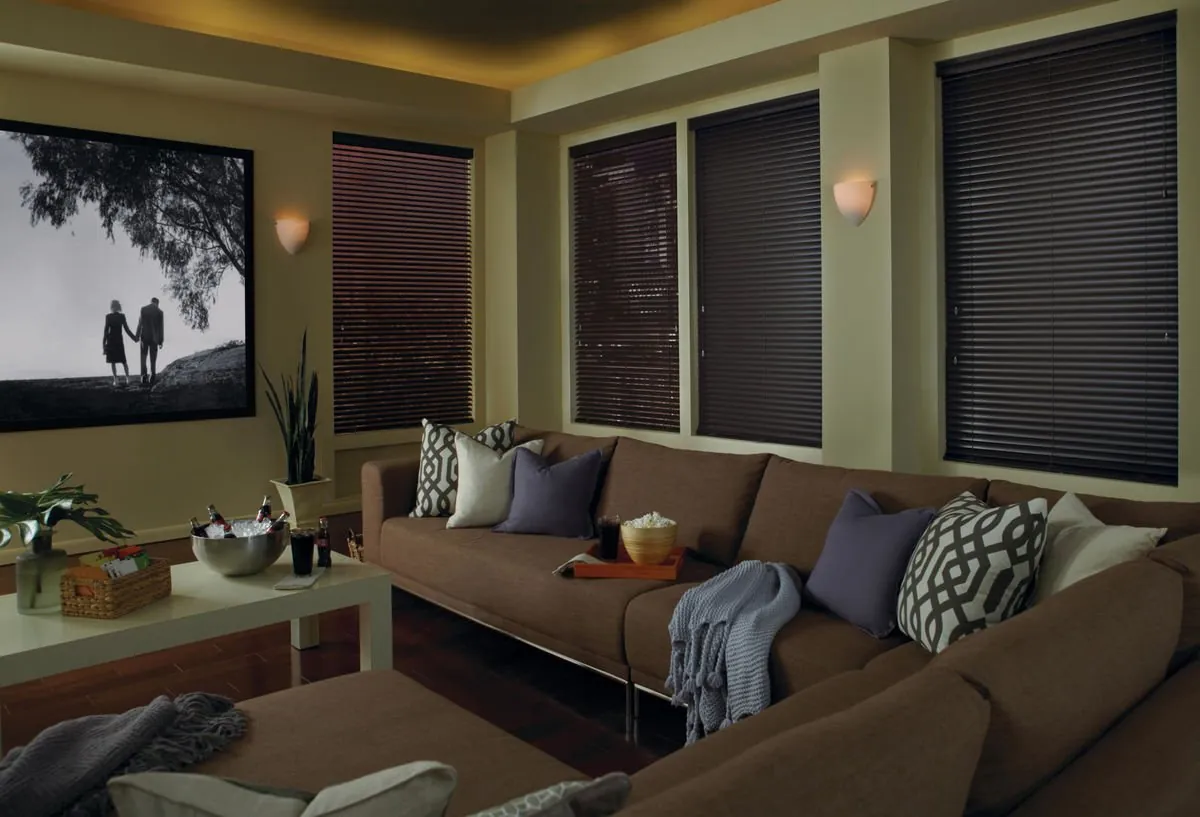
Working them every day
How a blind is raised and tilted affects how much you enjoy it. On a window you touch again and again through the day, the controls matter more than the color.
- Cordless lift: no hanging cords. You push the bottom rail up or pull it down and it stays put. Clean looking, and the safer choice in rooms where children or pets play.
- Wand tilt: a twist of the wand turns the slats. It keeps the side of the window neat and is easy to reach.
- Vertical traverse: on a slider, the vanes draw to one side and turn with a wand or a cord.
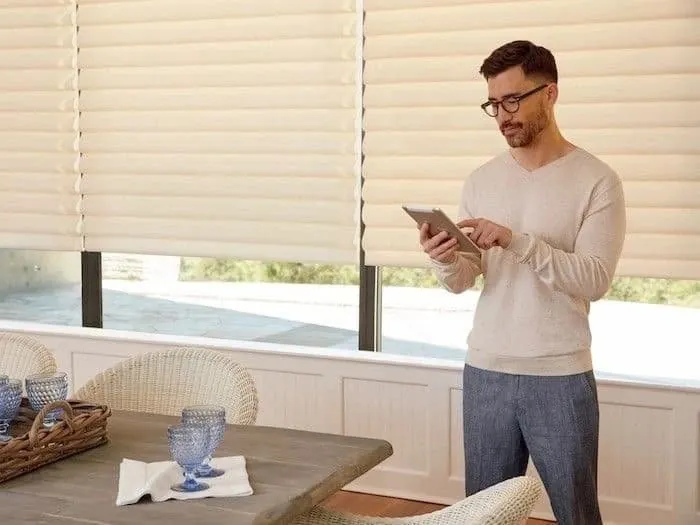
- PowerView motorization: lift and tilt from a remote, a wall switch or the app, alone or in groups, on a schedule if you like.
Motorization is especially useful on the pond side. One button can tilt every blind along the water together, and a schedule can angle them against the afternoon sun while you are out. We plan how each motor is powered at the visit. Our page on how motorized shades are controlled explains the options.
Offices, dens and bedrooms
Some rooms have one job, and the blind should help with it. In a home office, the trouble is usually a screen that catches the sun at the wrong hour. A metal or faux wood blind tilted to just the right angle takes the sun off the monitor and still leaves the yard or the pond in view. In a den used for films, a deep color closed tight makes the room far darker than a pale one would, and an outside mount that overlaps the casing cuts the bright line that creeps round the edges.
Bedrooms follow the same idea. In a ranch bedroom on the east side, or a cape bedroom under the roof, the first light can arrive well before anyone wants to be up. Darker slats closed upward, so the room side tips toward the ceiling, keep the room dim and private. Custom blinds for Pembroke bedrooms are often a shade or two deeper than the blinds in the living rooms, picked to keep the morning out without looking out of place from the street.
Planning a whole house of blinds
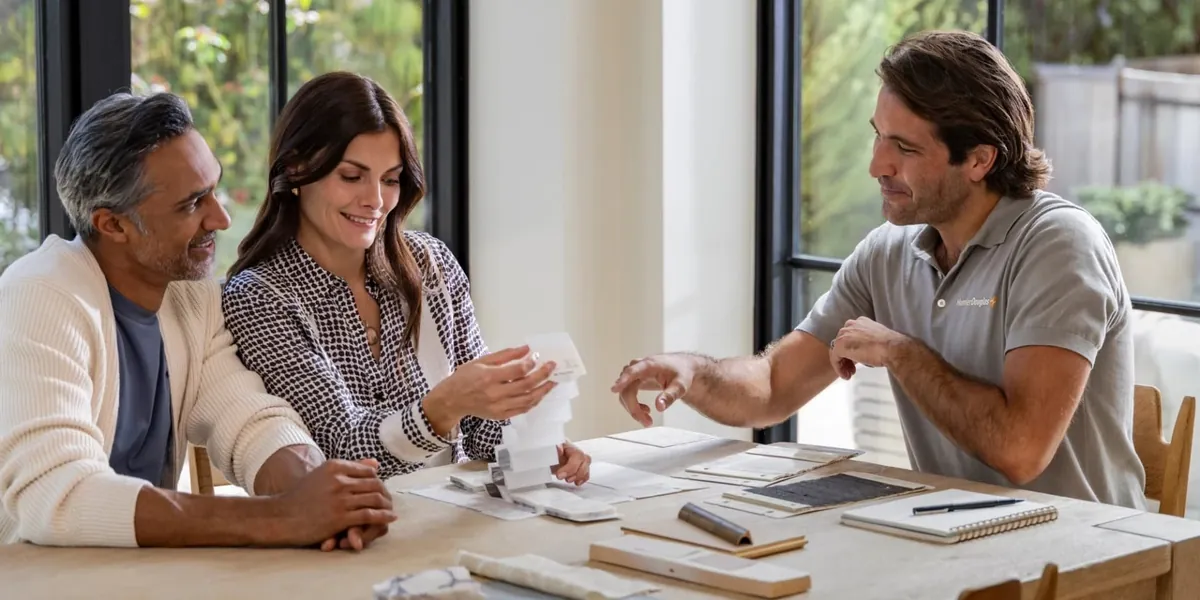
Many Pembroke orders cover most of the house at once. That is easy to manage at home, where you can see every window in its own light. Our vans carry samples, so we can bring the showroom to you.
- Request a consultation online or with the call button, and we book a time that suits you.
- We start at the window that matters most, usually the one facing the pond or the back yard.
- You try wood, faux wood, metal and vertical samples at each window and compare colors against your walls and trim.
- We agree a material, slat size and control for each room, keeping the street side consistent.
- Every opening is measured, including the depth for an inside mount.
- You get a free estimate covering every window we discussed, with time to think it over.
Interior design consultations are available at the same visit if you want a second opinion on color or on how the blinds sit with curtains and furniture. Read more about what happens at an in-home consultation.
Fitting day
When the blinds arrive, our certified Hunter Douglas installers fit them. Each bracket goes into solid framing, each headrail is set level, and each blind is raised, lowered and tilted before we leave. Motorized blinds are paired with their remotes and any schedules you want are set up then. We show you how everything works and take away the packaging.
Getting this part right matters just as much as choosing well. Custom blinds in Pembroke, MA are made to exact measurements, and a careful fit is what lets them sit neatly in the frame, line up across a row of windows and work smoothly for years.
When a blind is not the right answer
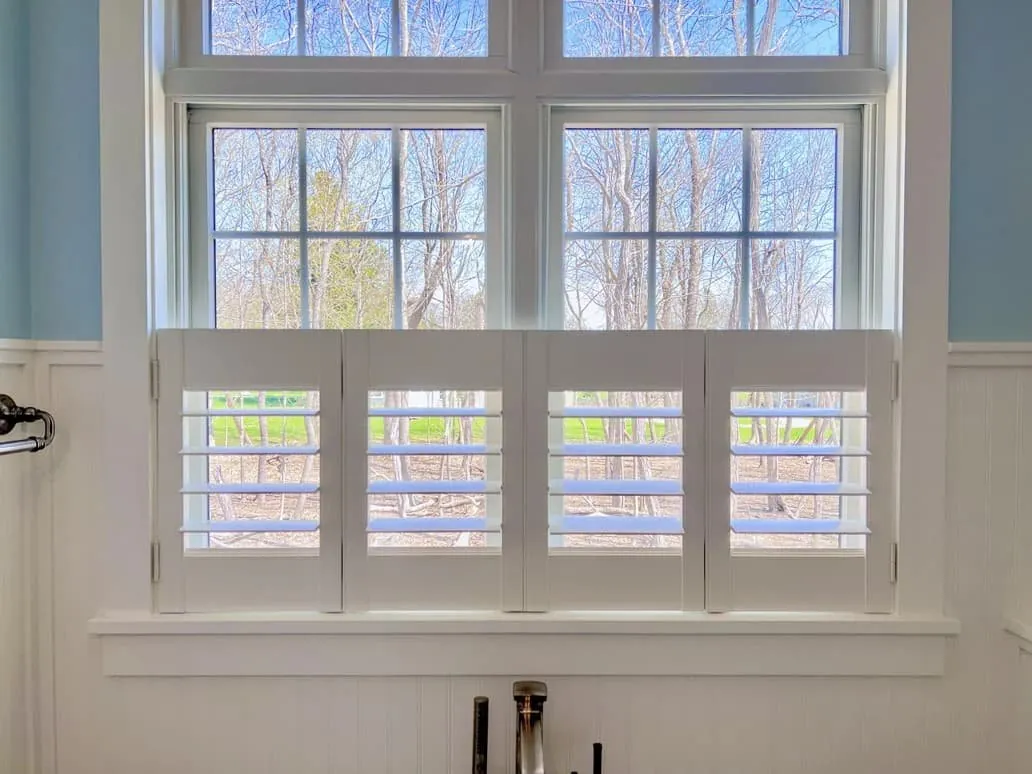
Blinds suit most windows, but not all. A kitchen window over the sink might be better with cafe-style shutters, and a cold back bedroom might be warmer with a honeycomb shade. Because Blinds & Designs is a Hunter Douglas Gallery dealer, we can show you every option and suggest the right one for each window.
Our installers are certified by Hunter Douglas, and we also take on blind and shade repair for coverings you already own.
For other rooms, look at plantation shutters in Pembroke, cellular shades in Pembroke or roman shades in Pembroke. Our Pembroke page lists everything we offer in town.
Our nearest showroom is in Sagamore
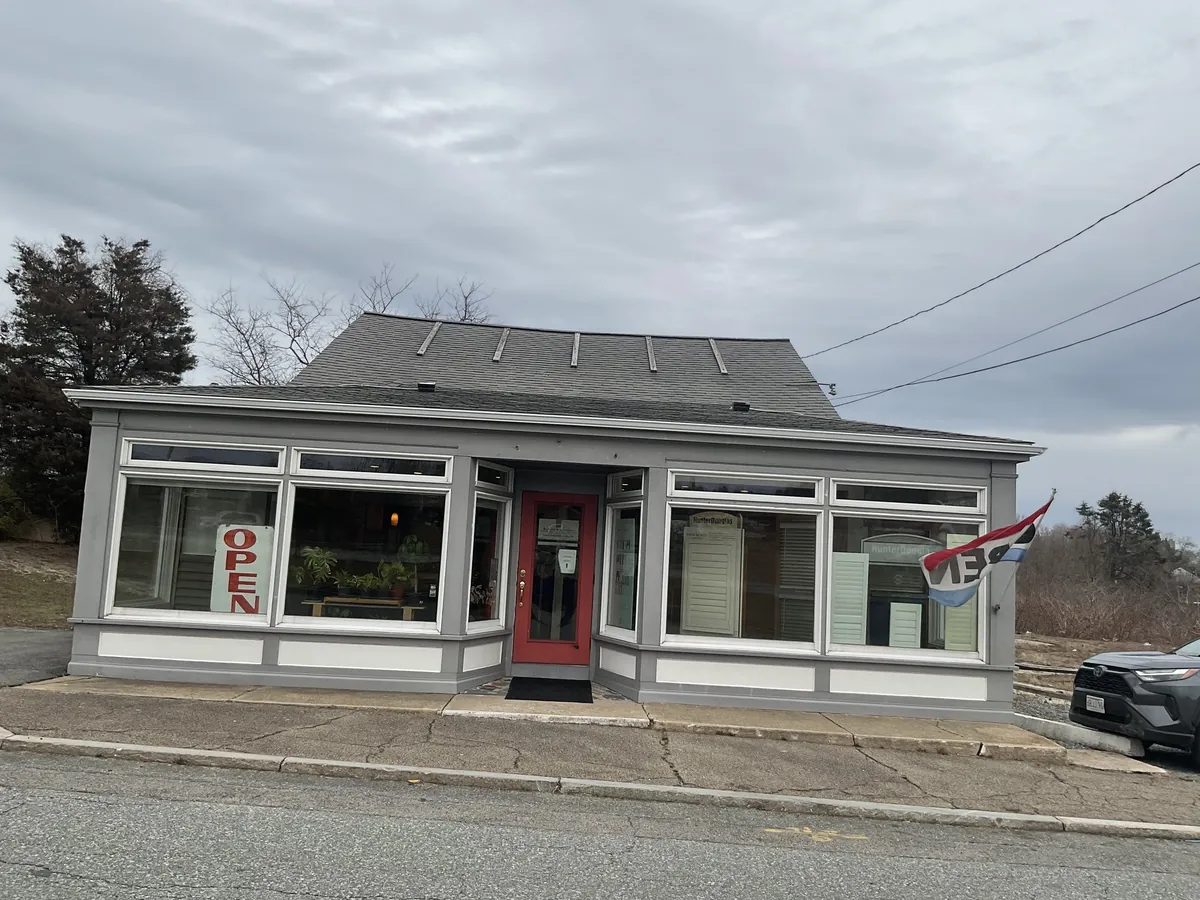
The closest Blinds & Designs showroom to Pembroke is in Sagamore. The Sagamore showroom page has its address and opening hours if you would like to see blinds there.
Most customers in town begin with a home visit instead, because the pond light and your own trim are the real test of any sample.
Questions from Pembroke
Will blinds block my view of the pond?
Not when they are open. Level slats let you see straight through, and a wider slat in a pale color almost disappears. Tilted up, they cut the glare off the water while keeping the room bright.
My house has standard windows. Is custom really worth it?
Yes. Even on a standard window, a blind built to the exact opening sits flush in the frame with small, even gaps at the sides, and you choose the material, color, slat size and control rather than taking what is on the shelf.
What works on the slider to my deck?
Vertical blinds. They draw fully to one side so the door opens freely, and the vanes turn to control the light when it is closed.
Can I control the blinds along the pond side together?
Yes. With PowerView motorization, blinds can be grouped so one button or a schedule tilts or raises them all at once.
Do you charge for the estimate?
No. After we measure, you receive a free estimate for every window we discussed.
Ready when you are
Hold real slats up to your pond-facing window and the choice usually becomes clear. Request a consultation and we will bring the Hunter Douglas blind range to your house, measure every window and leave you a free estimate. You can also use the call button to reach our Sagamore showroom, or visit it to see blinds in person.