
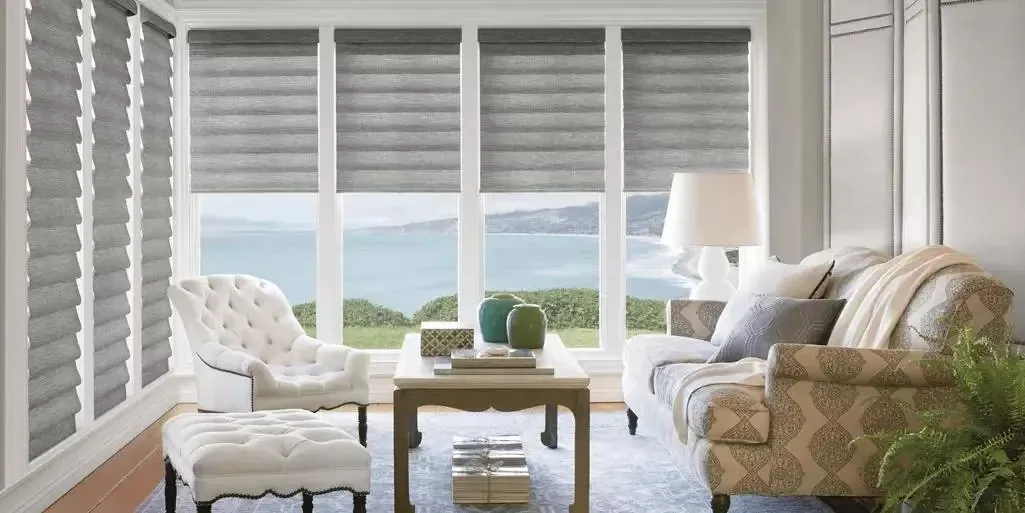
Rooms lit from two and three sides
Halifax is a town of larger lots and plenty of space between houses. The capes and ranches around Monponsett Pond sit on generous plots, many with frontage on the water, and the newer colonials off Plymouth Street are spread out in the same unhurried way. With few neighbors close by, houses here were often built with windows on more than one wall of a room. A living room may have the pond in front, a side window toward the morning sun and another toward the afternoon. That is lovely light, and it is also the reason we plan motorized blinds in Halifax, MA, wall by wall rather than room by room.
In a room lit from one side, a shade has one job. In a room lit from three, the right position for each window changes as the sun goes round. The east glass needs shading in the morning, the south and west through the afternoon, and the pond side whenever the sun lies on the water. Nobody can keep up with that by hand.
PowerView can. A handheld remote, the PowerView app and timed scenes all drive the same motors, so each wall can keep its own hours.
Planning by the direction a window faces
Most motorized blinds in Halifax end up arranged in three kinds of group, sorted by the way the glass faces. Each card also links to that shade’s own page for this town.
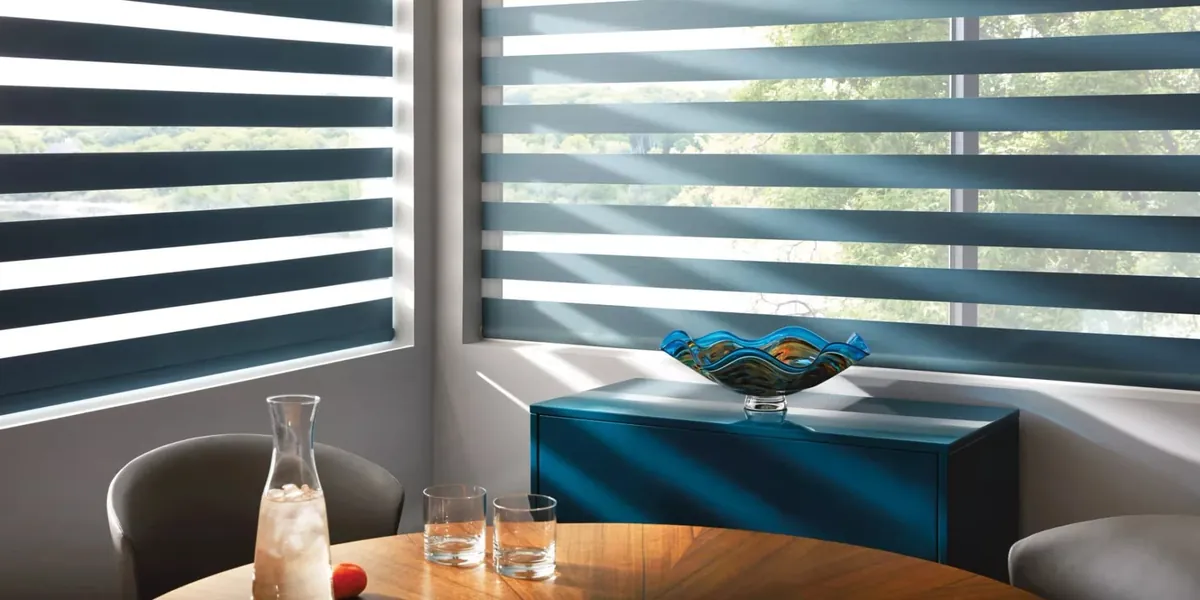
The morning wall
East-facing glass in kitchens and bedrooms, set to shade the low early sun and open once it climbs.
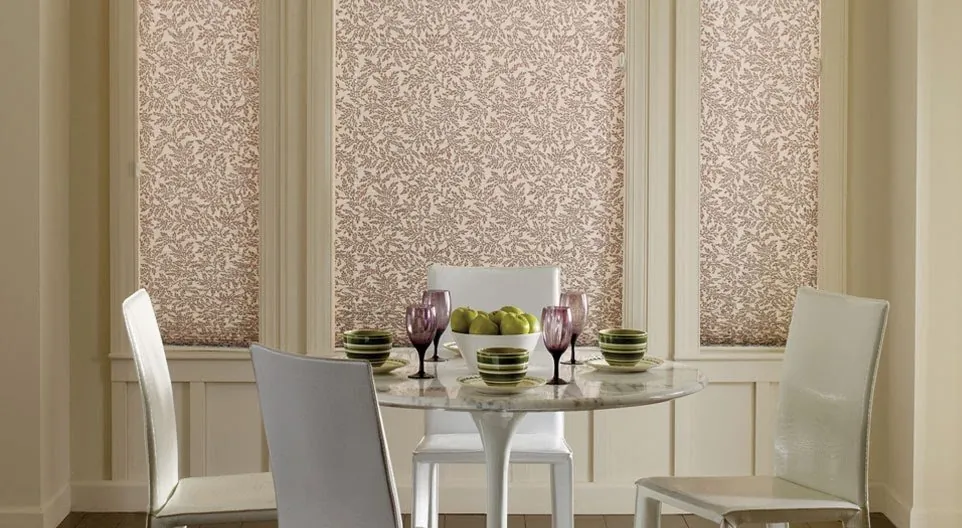
The afternoon wall
South and west windows that heat a room late in the day, lowered on a schedule through the warmest hours.
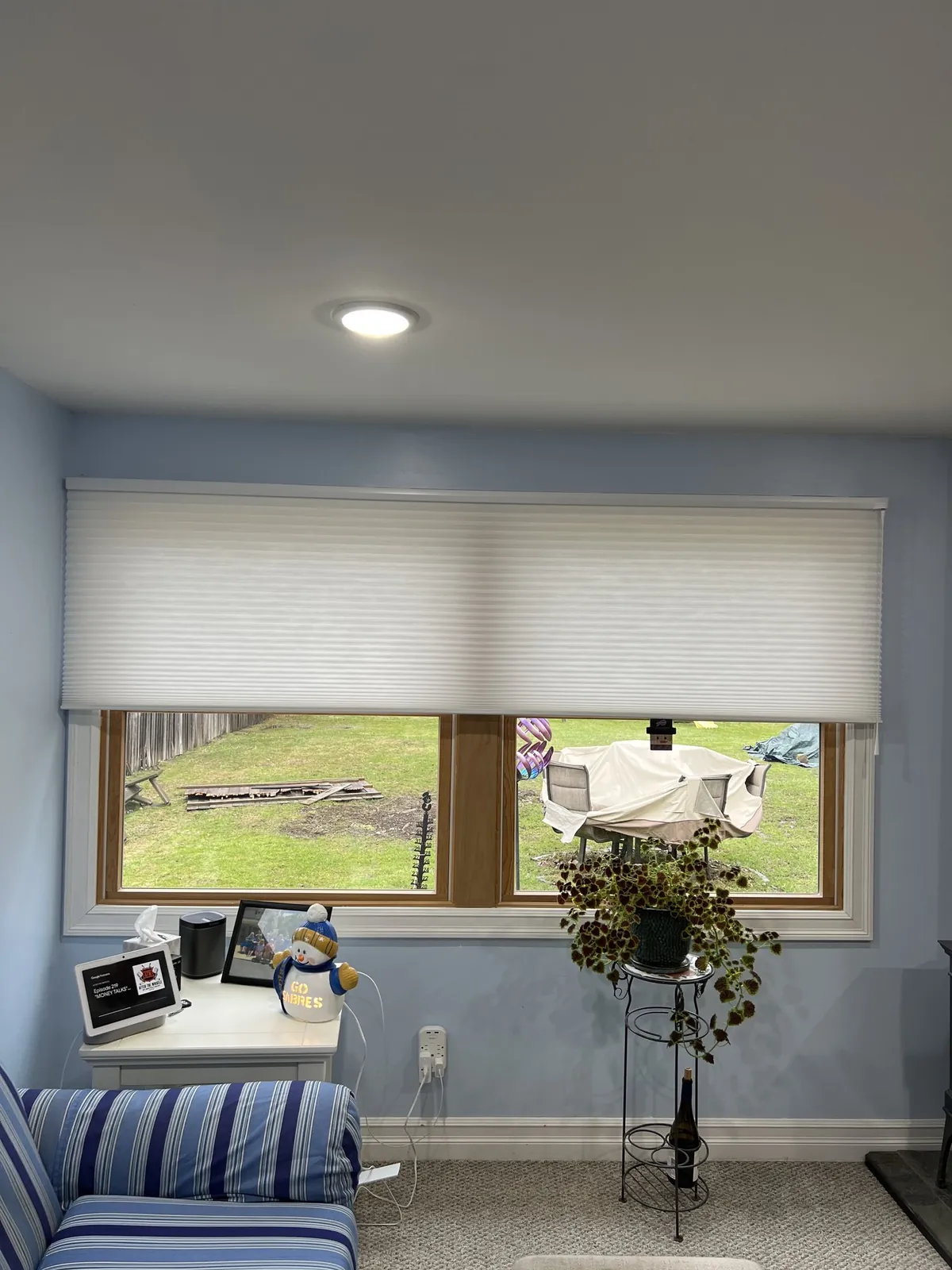
The pond side
One of our own installs. The view windows, kept open most of the day and closed for privacy once the lamps go on.
Following the sun round a corner room
Picture a cape’s living room on the pond side of the house, with windows on its front and two ends. At breakfast time the sun comes straight through the east end, low and bright, across the floor and onto the sofa. By midday it is overhead and the room is comfortable. Through the afternoon it swings to the south and then the west, and by late day the far end of the room is the bright one, with the sun level across the room and reflecting off the pond at the same time.
A single setting does not work for a room like that. Close all the shades and you lose the view and the light. Open them all and someone is squinting for half the day. The answer is to treat each wall as its own group and give each its own schedule. The east windows lower at sunrise and lift mid-morning. The west windows lower in the late afternoon and lift at sunset. The pond windows stay open, unless you choose a glare scene for the hour when the sun is on the water.
With PowerView, those schedules can follow sunrise and sunset rather than fixed clock times, so they shift by themselves through the year. In June the morning scene runs very early; in December it waits until well after breakfast. You set it once.
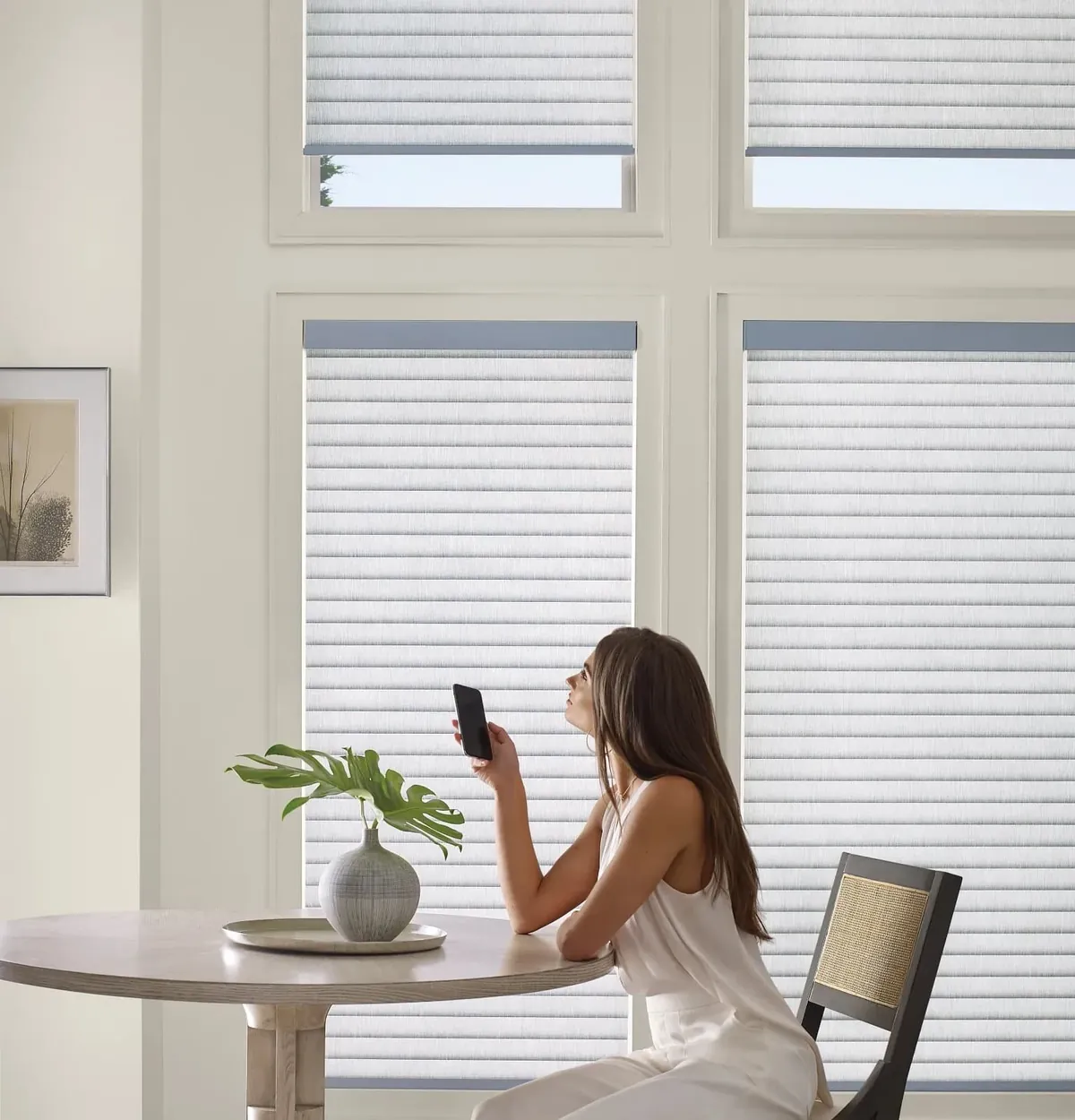
East windows and early mornings
East glass matters most in bedrooms and kitchens. On a large lot with open ground to the east, there is nothing between the sun and the bedroom window, so on a summer morning the room fills with light long before the alarm.
A room-darkening fabric on a motor keeps that room dim until the hour you choose, then lifts the shades, partway first if you prefer a gentler start. In the kitchen, the opposite usually applies: a light-filtering fabric lets the morning in without the glare, and a scene can bring the shade to a half-open position so the sun is cut at eye level while the upper glass stays bright.
South and west: the long afternoon
The afternoon is when a room with windows on two or three walls gets warm. The south and west sides of a ranch or cape take the sun for hours, and the heat builds through the day. Floors and furniture near those windows fade where the sun lies on them.
Lowering those shades through the warmest part of the afternoon keeps the room cooler and protects the furnishings, while the windows on the other walls stay open so the room is not dark. A honeycomb shade slows the heat coming through the glass, and a screen shade cuts the glare while keeping the view. Either can follow a schedule, and you can always override it from the remote if you want the sun on a cold spring day.
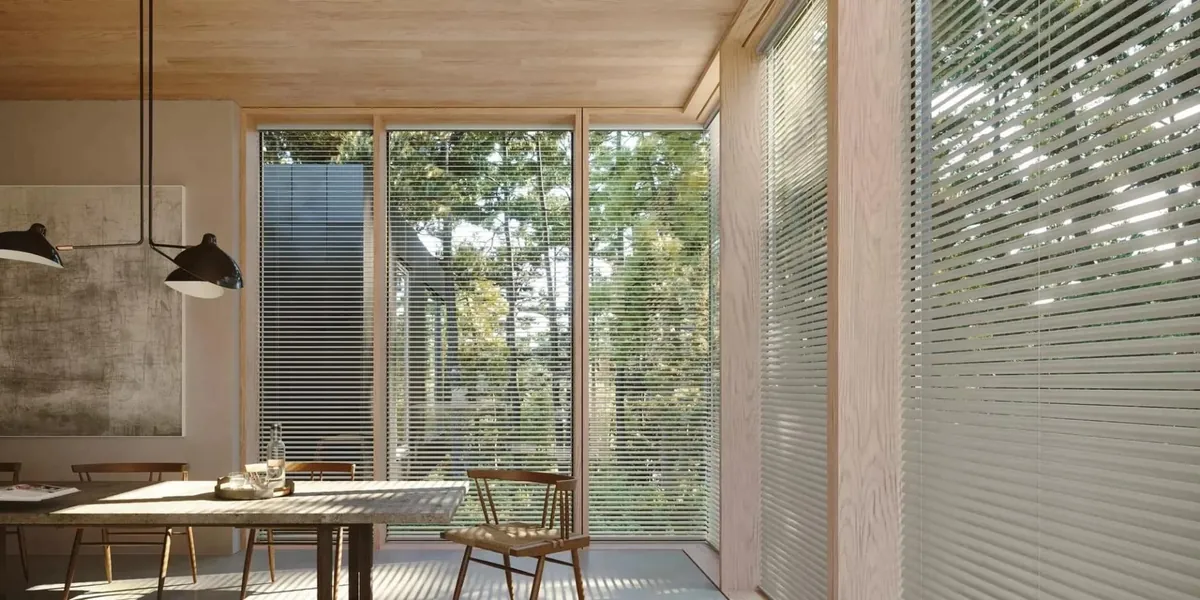
Frontage on Monponsett Pond
On the Monponsett shore, the pond-side rooms are the point of the house, and whatever covers that glass has to earn its place by staying out of the way. For most of the day the best position for those shades is fully up, tucked into a slim headrail with the water in full view.
The trouble comes in short spells: the hour when the sun sits low over the pond and the reflection doubles it, or a hot afternoon when the whole wall soaks up heat. For those spells a solar screen fabric is a good fit, because it turns the brightness down while the shoreline and the far bank remain visible. How open the weave should be is a personal choice between view and shade, and it is best made standing at your own glass with two or three samples in hand. A motor then lowers the screen only for those spells, so the view is back as soon as the light allows.
A screened porch or a sunroom on the water side is common too. Solar screen shades on a porch keep out the low sun in the evening and give a little privacy from the water, and on a motor the whole porch lowers in one movement.
Capes on larger lots
A cape on a big lot often has more windows than its size suggests: dormers upstairs, a bay or picture window downstairs, and often a later addition with a run of new windows at the back. The upstairs bedrooms under the roof can be awkward places to reach a shade, with dormer windows set back into short alcoves.
Because the motor lives inside the headrail, a honeycomb shade fits a dormer the same way it fits any other window, and the alcove is never climbed into again. On a big lot with open sky to the east, those upstairs rooms catch the first light, so a darkening fabric held down until breakfast is a popular choice. In July, a midday scene that closes the dormers keeps the heat under the roof from building up before bedtime.
Ranches with long runs of glass
Ranches here tend to stretch out along their lots, with the living room, kitchen and bedrooms all on one floor and windows on most walls. Their windows are generally standard sizes, which makes them simple to fit. Wide openings are split into two or three shades on one group so they move together, and the long run of bedrooms down one side can share a single morning scene.
For a ranch with light from several sides, it is worth deciding early which walls get motors. Often it is the pond side and the west side first, with the rest added later. New shades join the same app and groups, so the house can grow into the system.
Newer colonials off Plymouth Street
The colonials off Plymouth Street bring two stories and taller rooms. Many have a front foyer with a window above the door, a family room with windows on two walls, and a primary suite upstairs with glass on two sides as well. The windows are modern and regular, so motorized blinds in Halifax, MA, fit these houses cleanly.
The high windows come first. Above the door or over a mantel, they cannot be covered by hand, and they let a lot of heat into a tall space in summer. On a motor they lower with the windows beneath them and follow the same schedule.
The corner rooms come next, and they follow the same pattern as the pond houses. A family room with south and west windows needs a different afternoon routine from one facing north and east. We look at each room’s orientation during the visit and suggest groups to suit. A colonial with a long south wall might want motorized blinds in Halifax, MA, on that side alone at first, with the cooler north rooms left for later.
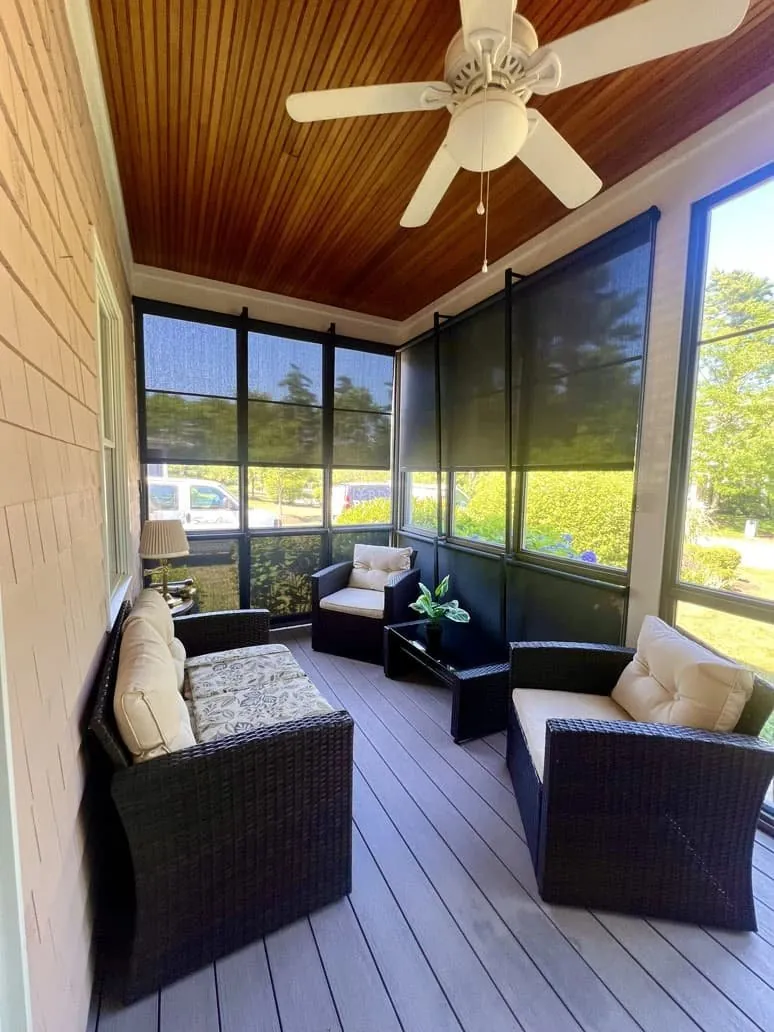
When privacy is not the main concern
In a densely built neighborhood, shades are often chosen first for privacy. In Halifax, with houses spaced well apart, that is less often the deciding factor. The usual reasons to choose a shade here are light, glare, heat and the fading of floors and fabrics.
That opens up more choices. A sheer shade can stay down much of the day without making a room feel closed in. A top-down, bottom-up honeycomb shade can sit half lowered from the top to cut the high sun while the lower glass keeps the view. And in the evenings, when lamps are lit, a sunset scene can close the pond side or the road side only, leaving the rest open.
A three-sided room on a schedule
Here is how a set of scenes might run in a living room with east, south and pond-facing windows.
- At sunrise, the east windows lower to their glare position.
- Mid-morning, once the sun is higher, they lift again and the room opens up.
- In the early afternoon, the south windows lower partway to keep the heat down.
- Late in the day, if the sun reaches the water on your side, the pond windows move to a light screening position.
- At sunset, the pond side and the road side close for the evening.
Steps one and five are tied to the sun itself, so the routine slides earlier and later as the months pass. A shade nudged by hand from the remote in the middle of the day simply picks up its timetable again the next morning. Most families who plan motorized blinds in Halifax, MA, for a room like this find they stop thinking about the shades within a few weeks.
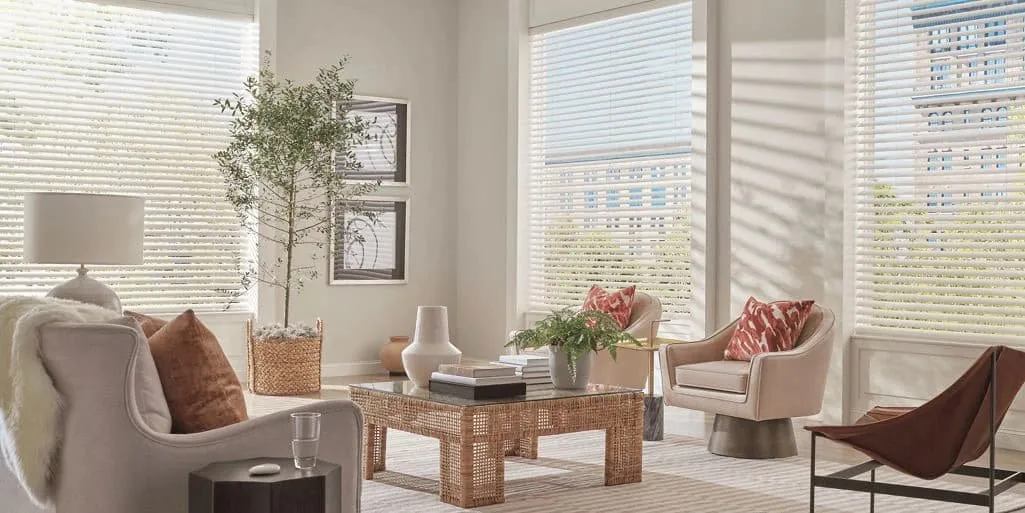
Through the seasons
The light in a room open on three sides changes more than most through the year. In summer the sun rises well to the north of east and sets well to the north of west, so it reaches windows that are in shade in winter. In winter it stays low in the south and comes far into the room, which is welcome warmth on a cold day but strong glare at the same time.
Schedules tied to sunrise and sunset handle much of this on their own. For the rest, a quick change in the app moves a scene earlier or later, or adds one for the winter months. Leaves on nearby trees play a part too: a window shaded all summer may be wide open to the sun once they fall. On a wooded edge of a big lot that change can be sudden, and a winter scene added in November keeps a south room comfortable until spring.
Controls
In a house with this many walls of glass, most people keep a small remote in the living room and another by the bed for the moments when the sun does something unexpected. The app is where the walls are laid out as groups and where the scenes for morning, afternoon and evening live. The schedules then do the daily work without anyone thinking about it. If you want the detail before we visit, our guide on how motorized shades are controlled covers the three in turn, and our window covering automation page explains how timed scenes are built.
Power
Each motor needs power. We plan how each one is powered at the visit, according to the shade, the window and the wall, and agree it with you before ordering.
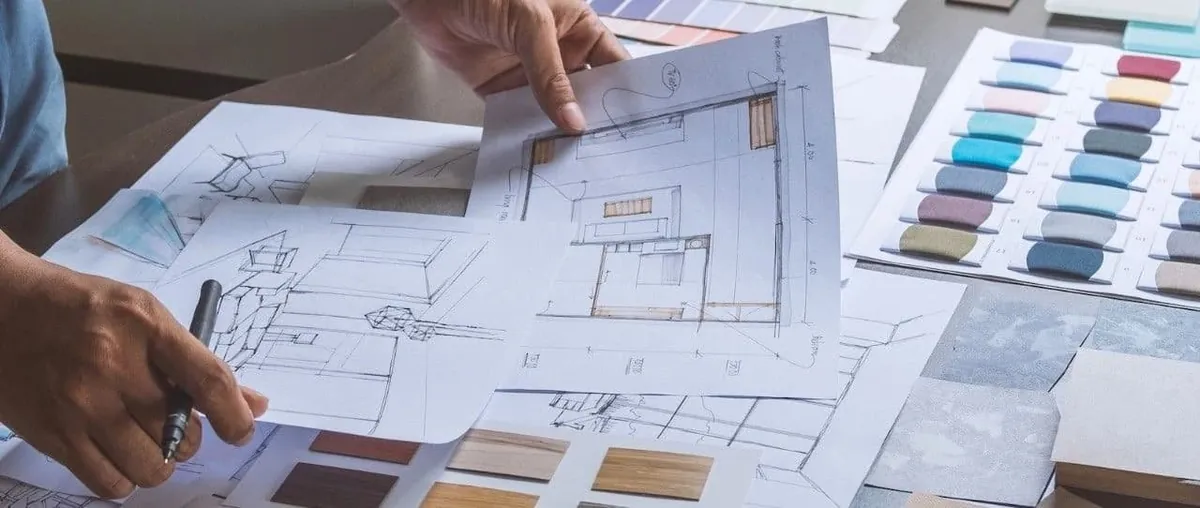
We come to the house and watch the light
Because the vans are loaded with samples, the showroom comes to your door. In a room open on three sides that is the only sensible way to choose, since each wall sees a different light and a fabric that looks right on the pond side can look quite different on the west end.
- Book through Request a Consultation, or ask for a time using the call button.
- Together we walk each room and work out which way every wall faces.
- Fabrics go up against the morning glass, the afternoon glass and the pond glass in turn.
- Every opening is measured, with the frame depth noted for the motor’s headrail.
- You settle the groups and the daily scenes, and the power plan for each motor is agreed.
- A free estimate arrives for you to read without any rush.
- Certified Hunter Douglas installers hang the shades, set where each one stops and load your scenes before they go.
See what happens at an in-home consultation for more.
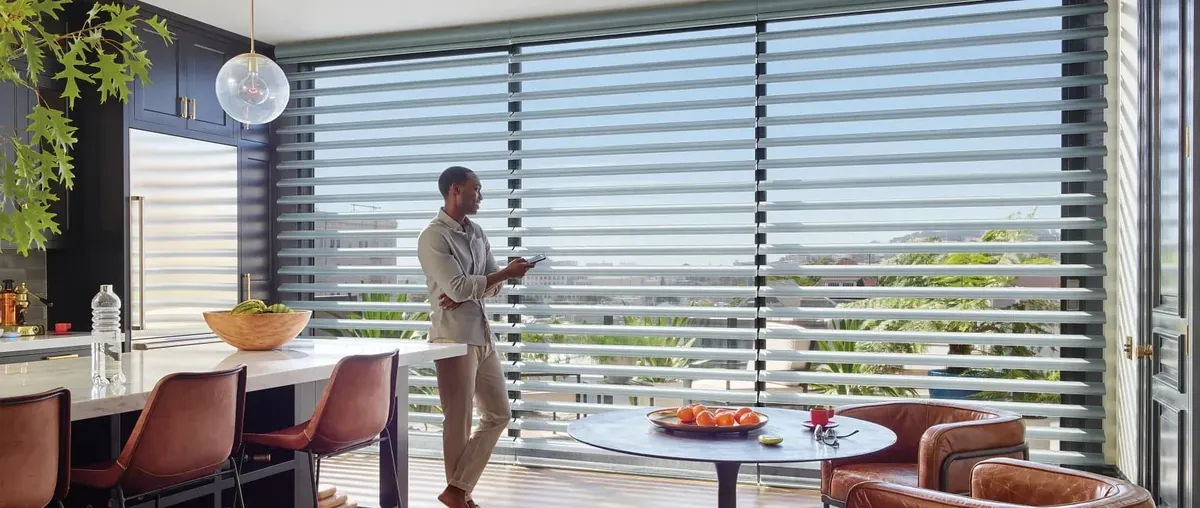
A Hunter Douglas Gallery dealer
Blinds & Designs is a Hunter Douglas Gallery dealer, so the full PowerView range is ours to suggest: honeycomb, sheer, Roman, roller, screen and banded shades and a number of blinds. A pond-side ranch and a colonial off Plymouth Street can each have the right shade for every wall.
Every installation is done by Hunter Douglas certified installers. Interior design consultations are available too, and so are repairs to the window coverings already in your house.
Other services in town include custom blinds in Halifax, plantation shutters in Halifax and our Hunter Douglas dealer page for Halifax, with everything listed on the Halifax page. The full range is on our motorized blinds and shades page, and our nearest location is the Sagamore showroom.
Questions from Halifax
My living room has windows on three walls. Can each side behave differently?
Yes. Each wall becomes its own group with its own schedule, so the east side shades the morning sun, the west side shades the late afternoon and the pond side stays open.
Will shades on the pond side spoil the view?
For most of the day they sit fully raised in a slim headrail. A solar screen fabric comes down only for the bright spells, and even then the shoreline stays visible through it.
Can I motorize a screened porch on the water?
Often, yes. Solar screen shades on a porch can be grouped so they all lower together in the evening. We check each opening at the visit.
Do the schedules need changing as the seasons turn?
Not if they follow sunrise and sunset. Those scenes move earlier and later through the year on their own.
Is the estimate free?
Yes. We measure at your house and the estimate costs nothing.
Book your consultation
The light in your rooms is unique to your lot, your walls and your stretch of shoreline, so the plan starts there. Ask for a consultation and we will bring the samples, follow the sun round each room with you, take every measurement and leave a free estimate. Prefer to talk it over first? The call button reaches us, and the Sagamore showroom is the closest of our locations.