
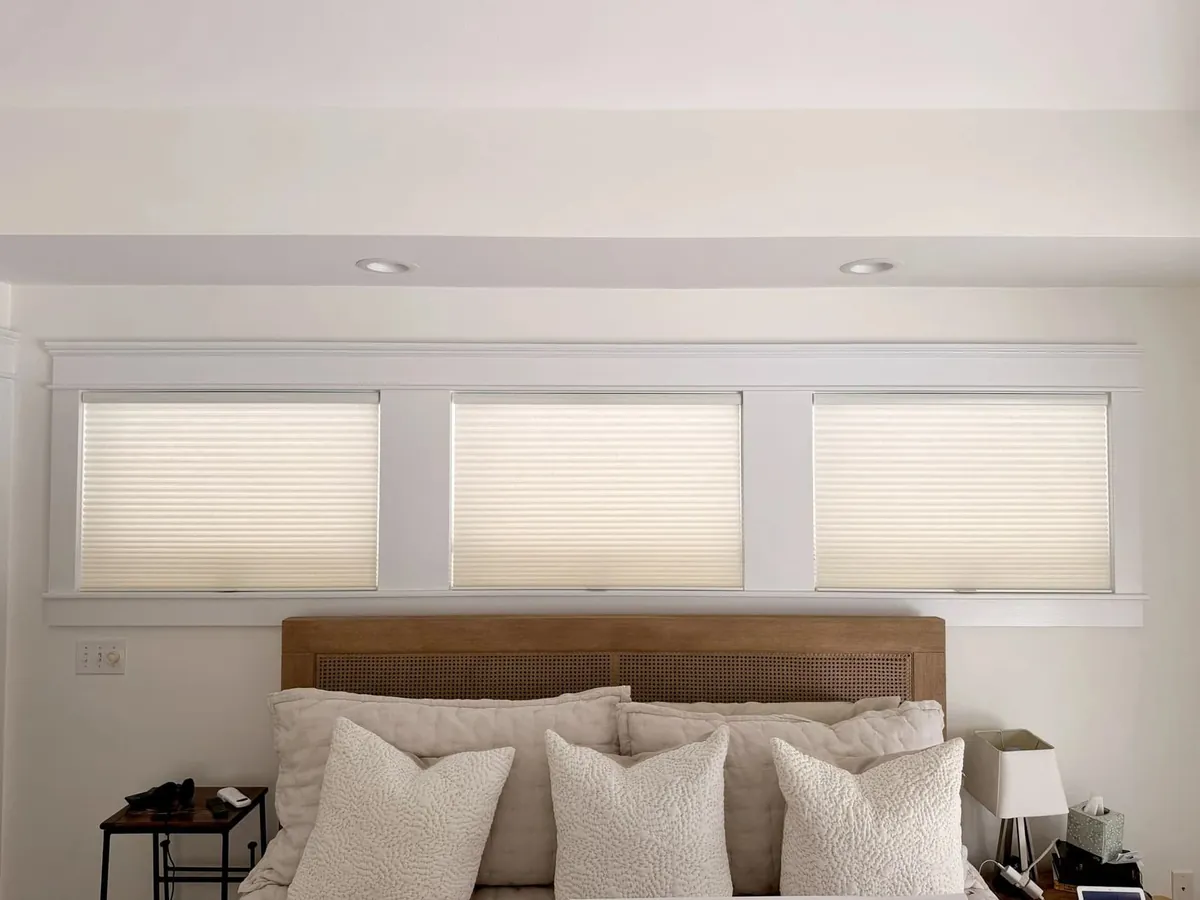
When every window fits, choose by material and movement
Most Hanson houses were built in the second half of the last century or later. Post-war capes and ranches sit on generous lots across town, and newer colonials have gone up off Main Street and around Maquan Pond. Nearly all of them share one practical advantage: standard window sizes, square frames and enough depth for a shade to sit neatly inside the opening.
That takes the hardest question off the table. Fit is rarely a worry here. What decides whether a window covering is right is what it is made of and how it works: fabric or wood, slats or folds, a cord, a wand, a lifted bottom rail or a motor. Those choices shape how a room looks, how it copes with steam or sun, and how easy the window is to live with every day.
Helping you make those choices well is the real job of a Hunter Douglas dealer in Hanson, MA. Blinds & Designs is a Hunter Douglas Gallery dealer, so all the materials and lift systems in the range are open to you, and our certified Hunter Douglas installers fit every order.
The Hunter Douglas families most Hanson houses use
Six families cover almost everything a Hunter Douglas dealer in Hanson is asked for. Each card leads to our page for that product in town, with more on fabrics, finishes and lifts.
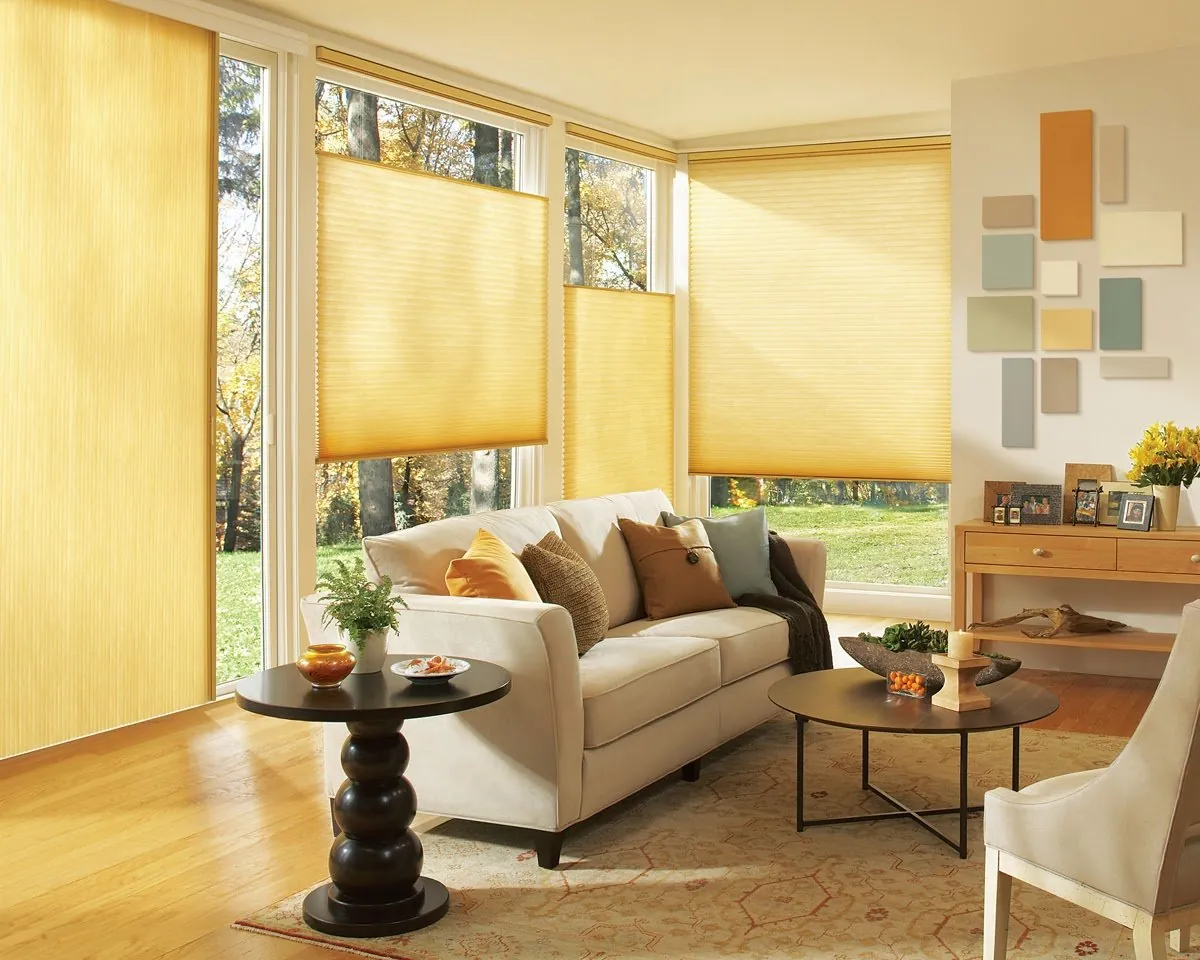
Honeycomb in fabric
Duette and Applause, soft pleated fabric with air-holding cells, in sheer to blackout opacities.
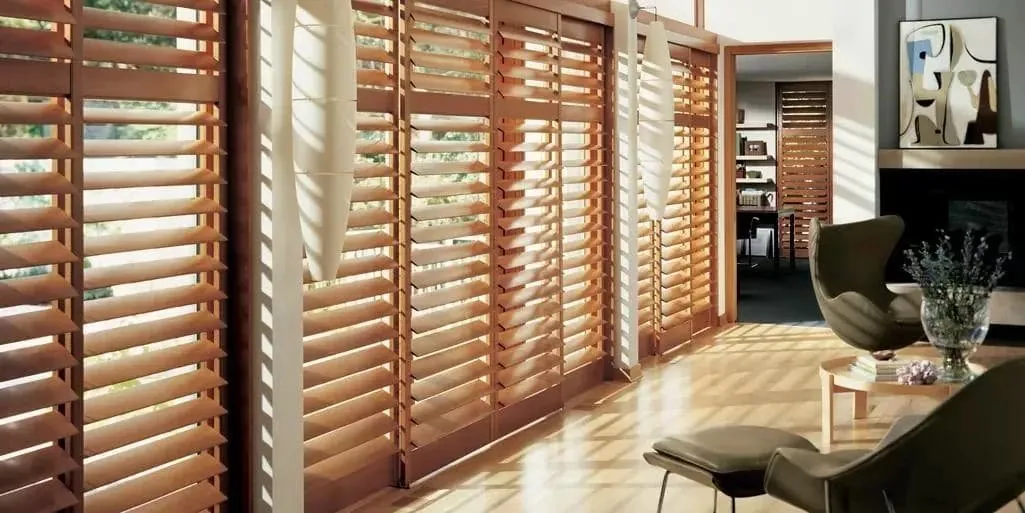
Shutters in wood or polysatin
Heritance hardwood, NewStyle hybrid and Palm Beach polysatin, each suited to a different kind of room.
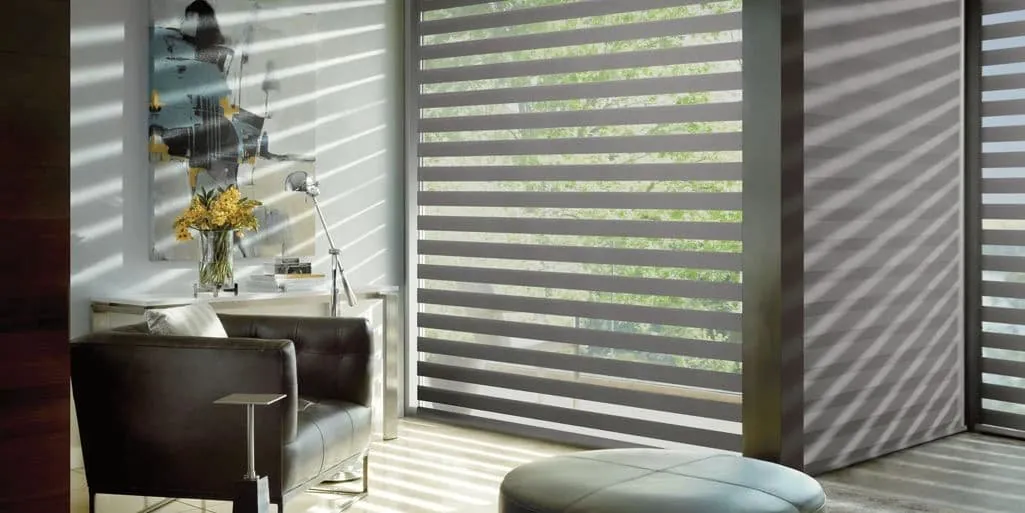
Banded and roller shades
Designer Roller, Banded and Screen fabrics, and Alustra, for a crisp look and simple operation.
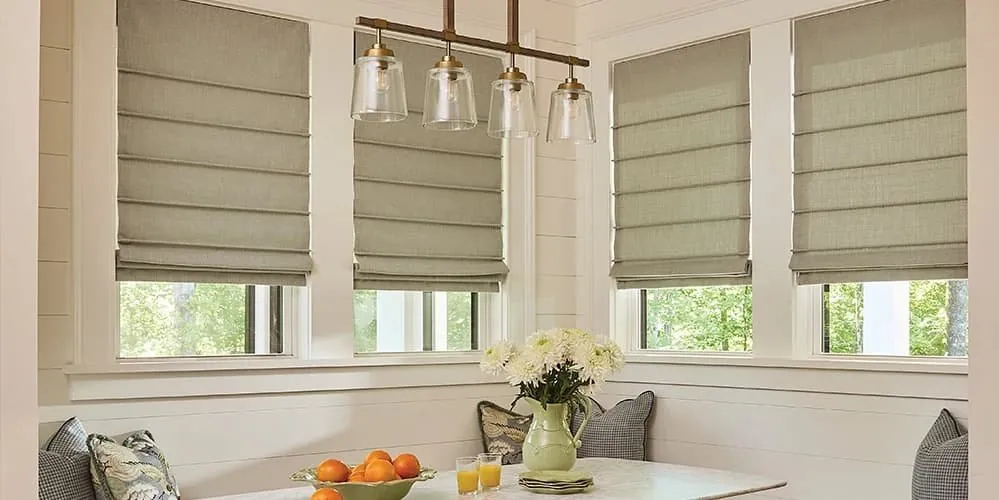
Folded fabric shades
Vignette and Carole Roman shades, in flat or relaxed folds, when a room wants the softness of fabric.
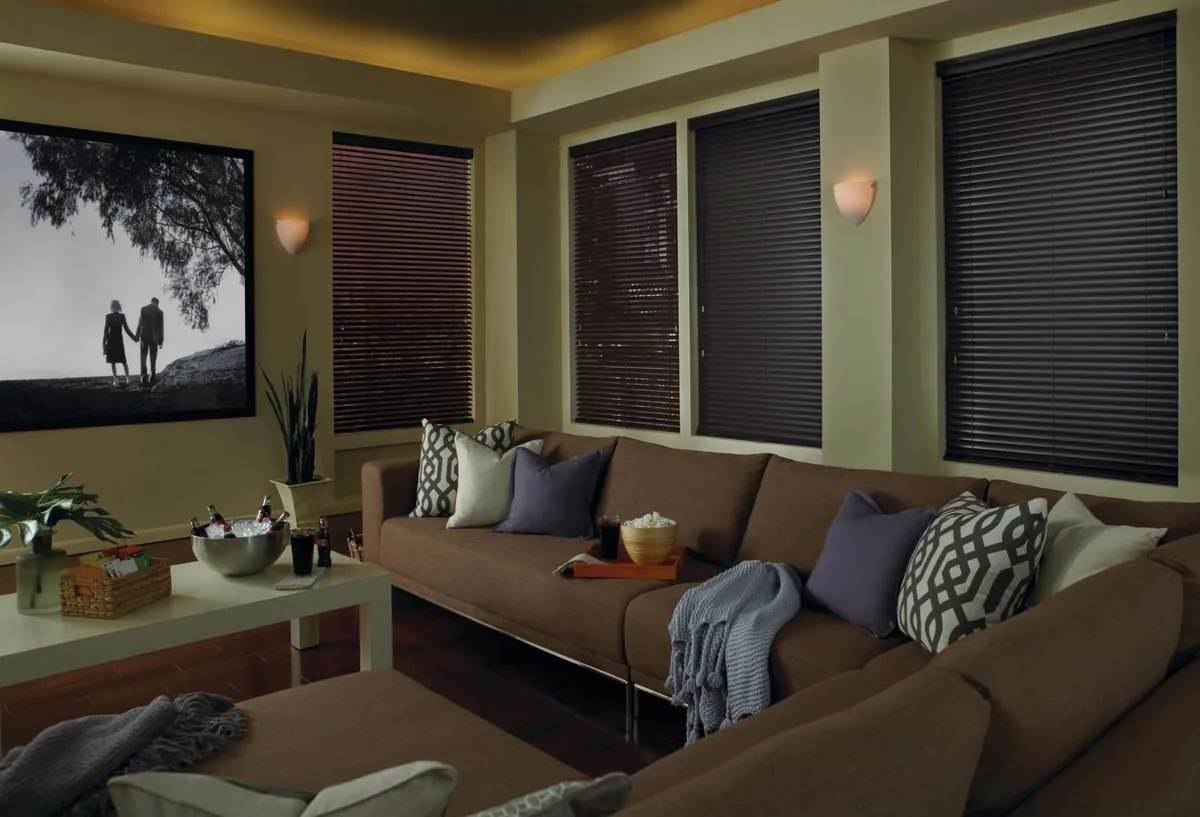
Slatted blinds
Parkland wood, EverWood faux wood, metal and Aria fabric slats, for exact control of light.
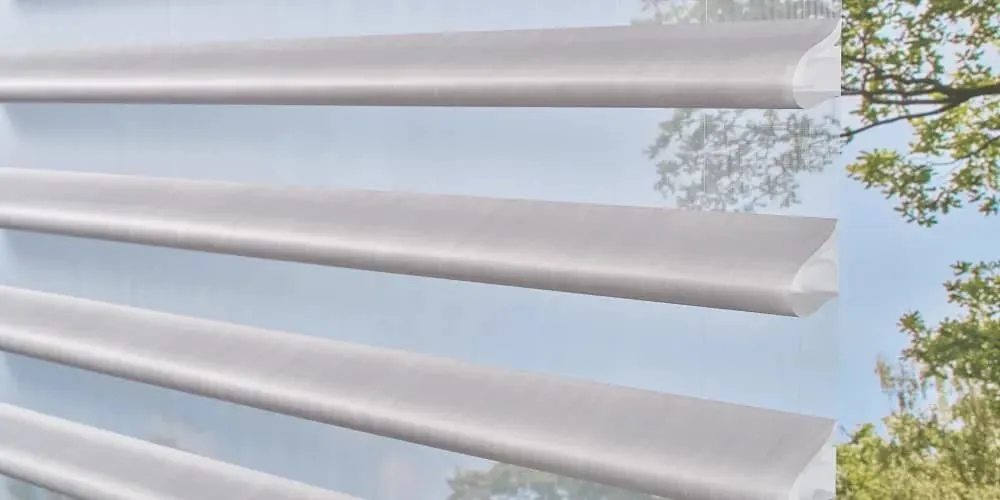
Motorized everything
PowerView brings remote, app and scheduled control to sheers, honeycomb, rollers and more.
What each material is good at
Choosing a material is easier once you know what each one does well. These are the ones you will see when we visit, and the rooms they usually end up in.
Fabric honeycomb. Soft, light and quiet, with cells that trap air between the glass and the room. The most versatile material in the range: it can be nearly sheer or fully dark, and it suits bedrooms, living rooms and offices alike. Fabric does not love constant splashing, so we keep it away from the sink.
Real hardwood. Heritance shutters and Parkland blinds are made from wood, which takes paint and stain beautifully and brings warmth to a living room, den or dining room. Wood is happiest in rooms with steady humidity.
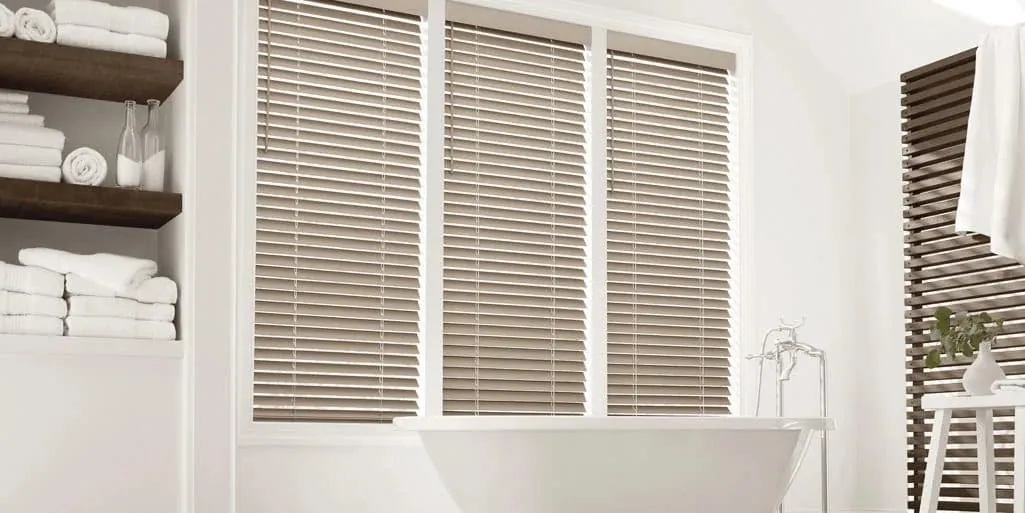
Polysatin and faux wood. Palm Beach shutters and EverWood blinds look much like painted wood but stand up to moisture. They will not warp in a steamy bath or above a kitchen sink, and they wipe clean. In a busy family house they are often the sensible choice for the rooms that work hardest.
Roller fabrics. Smooth, flat and minimal. Designer roller shades come in light-filtering and room-darkening fabrics, and screen fabrics that cut glare while you still see out. They suit the clean lines of a newer colonial well.
Folded fabrics. Roman shades bring color, pattern and texture to a room, and their folds stack neatly at the top. They are the soft choice for a dining room or a bedroom where the window is part of the decoration.
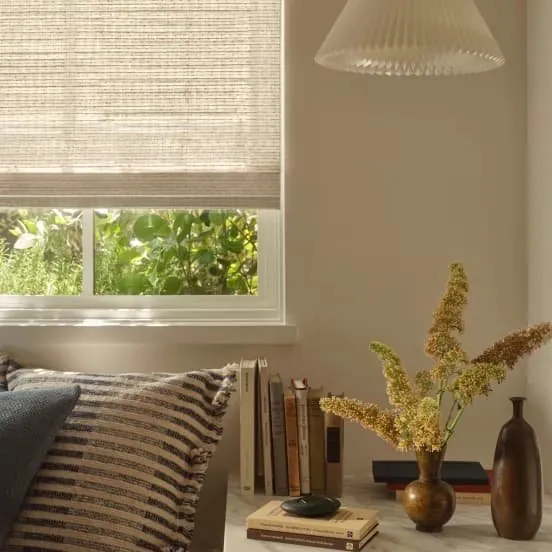
Woven and natural. Woven wood and natural fiber shades add texture and a relaxed look. They filter light warmly and pair well with drapery.
How it moves: choosing an operating system
The way a shade or blind is raised, lowered and tilted matters more than people expect, because you use it every day. Hunter Douglas offers several systems, and the right one depends on the window and who uses it.
- Cordless lift. You raise and lower the shade by its bottom rail, with no cord at the side. Tidy, simple, and the usual choice for children’s rooms.
- Top-down, bottom-up. The shade lowers from the top as well as rising from the bottom, so you can open the upper glass to the sky and keep the lower glass covered. Ideal for a ground-floor room by the road.
- Wand tilt. On blinds and shutters, a wand or a tilt rod angles the slats or louvers, so light can be adjusted without raising anything.
- Continuous loop. A loop of cord that stays the same length whatever the shade’s position, useful on a larger or heavier shade.
- Side stacking. Vertical shades and sheers that slide to one side for sliders and patio doors.
- PowerView motorization. Remote, app, wall control or schedule, with no cord at all.
At the consultation we try the options with you at the window, because the feel of a lift is something you only judge by using it.
Post-war capes on generous lots
Hanson’s capes are classic in shape: a door in the middle, a window either side downstairs, and dormers in the roof above. Inside, the downstairs rooms are compact and the windows regular. Upstairs, bedrooms tuck under the slope, with dormer windows that sit close to the bed.
The downstairs windows usually suit a consistent plan, one product and color across the front so the house looks orderly from the road. Shutters suit a cape front room very well, and so do honeycomb shades mounted inside the frame. Upstairs, a blackout honeycomb in each dormer keeps the morning out, and because the cells hold a band of still air, a room under the roof feels less chilly near the glass in winter.
Many capes on bigger lots have grown over the years, with a family room or a sunroom added at the back. Those rooms often take more light and need something different from the original front rooms, such as a screen shade or a sheer. Keeping the color consistent between old and new rooms makes the house feel like one place.
Ranches spread out on one floor
Hanson’s ranches are long and low, often set well back on a wide lot. The front room has a picture window, the bedrooms have horizontal windows along the side or back, the kitchen has a window over the sink, and there is usually a slider or patio door to the yard.
Because every window is a standard size, a ranch is the easiest house to plan for material and operation. A common approach is one line throughout for a uniform look outside, with different fabrics room by room. The picture window often takes two or three shades sharing one headrail, so they rise together. Bedrooms take a dark fabric. The slider gets a vertical shade, a Luminette sheer or vertical blinds. And the kitchen gets a material that copes with moisture, such as faux wood or polysatin.
Colonials off Main Street and around Maquan Pond
The newer colonials are bigger, with two floors of matching windows, a family room at the back and often a tall foyer window or a vaulted room with glass high on the wall. Those by Maquan Pond may have a back elevation turned toward the water, with bigger glass and a deck.
Here operation matters most at height. A window above the front door or near the top of a vaulted room is out of reach, and PowerView solves that neatly: the shade moves from a remote, an app or a wall control. On the pond side, a screen fabric or a sheer shade tames the glare while keeping the water in view. Upstairs bedrooms in a colonial suit blackout honeycomb or a room-darkening roller shade.
The front of a colonial is a long row of identical windows, and they look best with one product and color, set to the same height. A Hunter Douglas dealer in Hanson plans that row first, then works inward room by room.
Rooms that need tough materials
Some rooms are hard on a window covering, and choosing the right material there saves trouble later.
Kitchens. Steam from cooking and splashes from the sink call for faux wood blinds, polysatin shutters or a moisture-tolerant roller fabric over the sink. A softer Roman shade can go on a window away from the cooking.
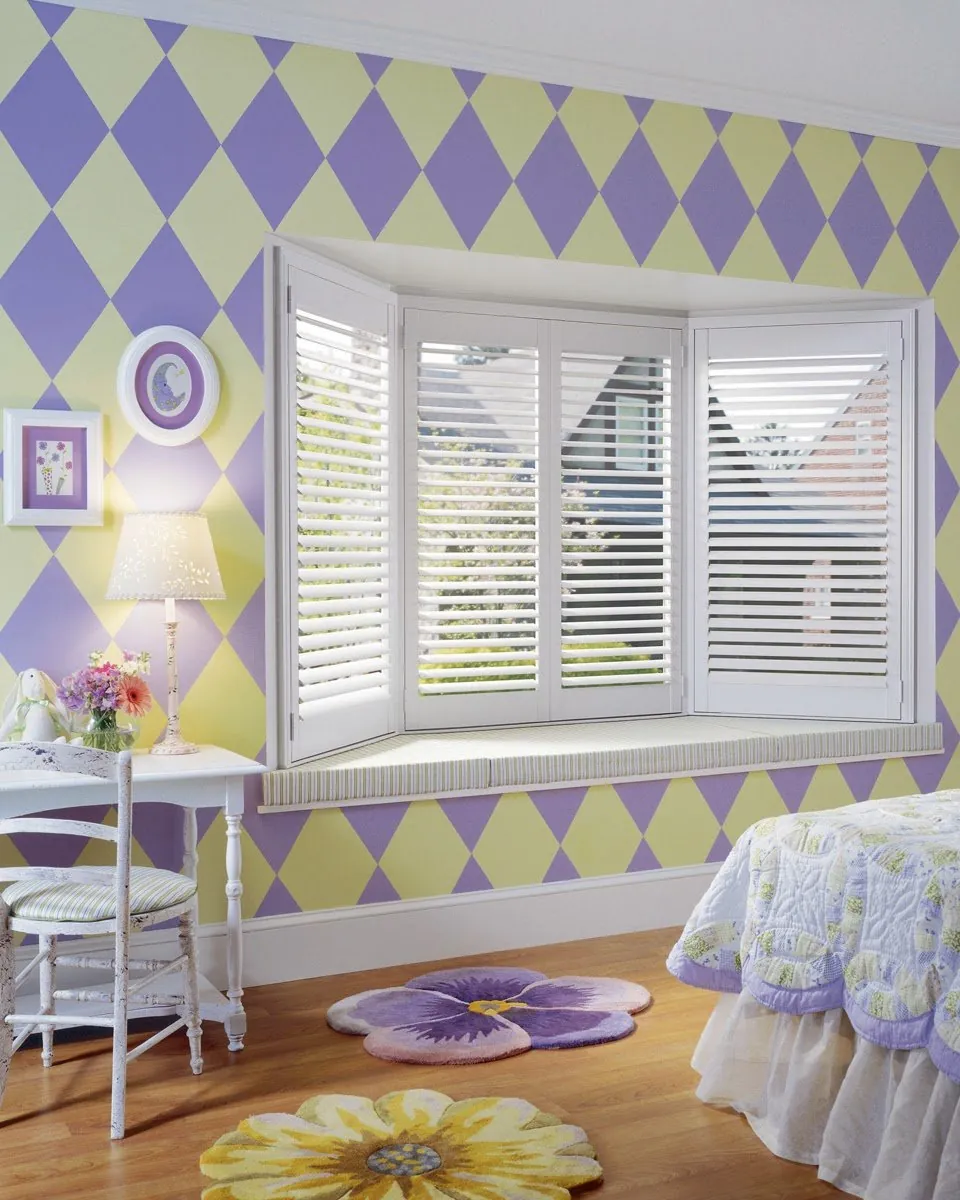
Bathrooms. The steamiest room in the house. Palm Beach shutters, with polysatin that will not warp, are the dependable choice. A cafe-height shutter covers the lower glass for privacy and leaves the upper glass open.
Mudrooms and back halls. Wet coats, muddy boots and the dog going in and out. A simple roller shade or faux wood blind is easy to keep clean.
Children’s rooms. Cordless lifts, so no cord hangs at the side, and blackout fabrics for early bedtimes. Shutters are sturdy and look good for years.
Sunrooms. Strong light on several sides. Screen shades and light-filtering honeycomb keep the room usable without closing it off.
A Hanson consultation, as it usually goes
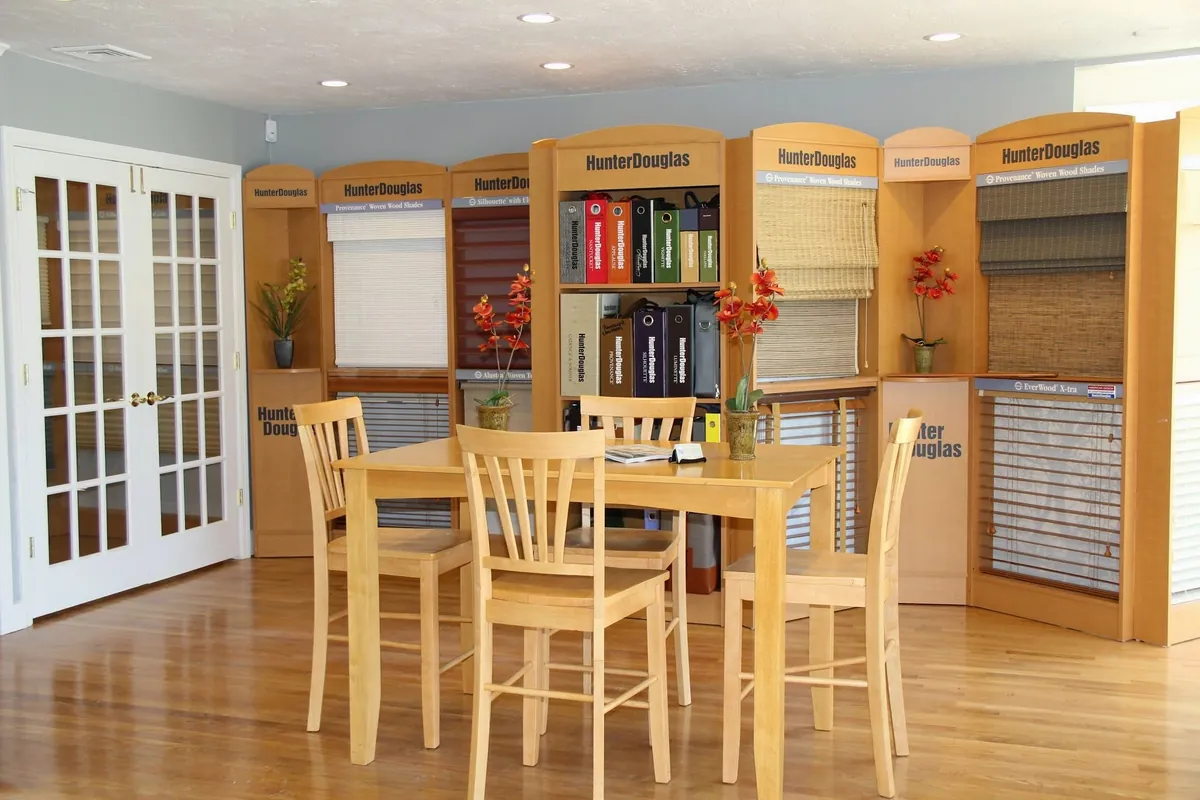
You learn the most about material and operation by handling the samples, so most projects start with a visit. The vans carry samples of every material and the different lifts, so we can bring the showroom to you.
- Pick a time through Request a Consultation, or use the call button.
- We go room by room and talk about what each window has to put up with: steam, sun, small hands, a sink in front of it.
- You handle the samples: feel the fabrics, tilt the slats, try a cordless lift and a top-down shade.
- We measure each window and confirm the mount and the operating system for each one.
- A free estimate follows, and you decide when it suits you.
For help with color and fabric across a room, ask about our interior design consultations. There is more about the visit in our guide to what happens at an in-home consultation, and our shades or blinds guide helps if you are weighing materials before we come.
Samples you can handle
A photograph tells you what a shade looks like. Only a sample tells you how it feels: the weight of a hardwood louver, the softness of a honeycomb fabric, the click of a wand tilt, the smooth pull of a cordless rail. In a Hanson house, where fit is usually straightforward, that feel is often what decides.
That is why we put the samples in your hands. You can hold a faux wood slat beside a real wood one and see whether you can tell the difference. You can try a top-down shade on your own front window and see how much sky it leaves. You can compare a blackout fabric with a light-filtering one by holding both up to the bedroom glass.
One color, many rooms
Once material and operation are settled room by room, color is what pulls a Hanson house together. From the road, a cape or colonial looks best when every window shows the same color, whatever is behind it. Inside, you have more freedom, but rooms that open into each other still look calmer when their window coverings are related.
The easy way to manage it is to choose a single outward-facing color first, usually a white or a soft neutral that suits the siding and trim, and then pick products and fabrics that come in it. A Palm Beach shutter in the bathroom, a blackout honeycomb in the bedroom and a light-filtering roller in the kitchen can all present the same face to the street. As a Hunter Douglas dealer in Hanson, we carry sample sets that make that matching simple, so you can lay the bathroom, bedroom and kitchen options side by side and check that they agree.
Inside a room, color is where you can have some fun. A patterned Roman shade in the dining room, a deeper tone on a den shutter or a textured woven shade in the family room adds character without changing what the neighbors see.
Thinking ahead to motorization
Even if you do not want motorized shades today, it is worth thinking about. Many Hunter Douglas lines can be ordered with PowerView, and it changes how a house works: a living room that closes before the afternoon sun, bedrooms that open gradually in the morning, a high foyer window that simply moves when you ask it to.
In a colonial with tall windows, motorization is often the practical choice from the start. In a ranch or cape, many owners begin with one or two rooms, often the living room and the main bedroom, and add more later. We talk through which windows suit it, where controls would go and how each motor is powered, so the choice is easy to extend when you are ready.

Gallery status, and what it means in practice
Hunter Douglas gives the Gallery title to a group of dealers who meet its standards. For a Hanson house, the benefit is simple: every material and every lift system in the range is available, so you are choosing for the room rather than from whatever a shop happens to carry.
Our installers hold Hunter Douglas certification, and the estimate is free. If you want a second eye on color and fabric, we offer interior design consultations. Should anything need attention down the road, we repair blinds and shades you already own through our blind and shade repair service.
The full brand is on our Hunter Douglas page, with sections for shutters and blinds.
On fitting day
When the order arrives, our certified installers set each piece in its opening and make sure it works the way you chose. On a row of identical colonial windows, every headrail goes at the same height. On a ranch picture window, the shades on one headrail rise in step. On a slider, the stack is placed clear of the handle. Shutters are hung so the louvers move smoothly and close tight.
Motorized shades are paired, grouped and scheduled before we leave. We run every shade, show you each lift and tilt, and answer any questions before we go. If a room later needs drapery as well, our page for custom drapery in Hanson explains what we offer, and everything else we do in town is on our Hanson page.
Questions from Hanson
My windows are all standard sizes. Does that make things simpler?
Yes. Standard frames take an inside mount cleanly, so the choice is about material and operation rather than fit. We still measure every window, because each shade is made to order.
What should go in a steamy bathroom?
Palm Beach polysatin shutters or EverWood faux wood blinds. Neither warps in moisture, and both wipe clean.
Which lift is best for a child’s room?
A cordless lift, with no cord at the side, or a motorized shade. Blackout fabric helps with early bedtimes.
Can I start with motorized shades in one room and add more later?
Yes. Many owners begin with the living room or main bedroom and extend PowerView to other rooms later.
Is there a charge for the estimate?
No. The estimate is free, and it comes once we have measured, so it reflects your actual windows.
Choose with the samples in your hands
Request a consultation and we will bring samples of every material and lift to your house, measure each window and leave a free estimate. If you would like to ask something first, the call button reaches the Sagamore showroom, our nearest, which you are welcome to visit. Whatever the house, a Hunter Douglas dealer in Hanson, MA can help you pick the right material for every room.