
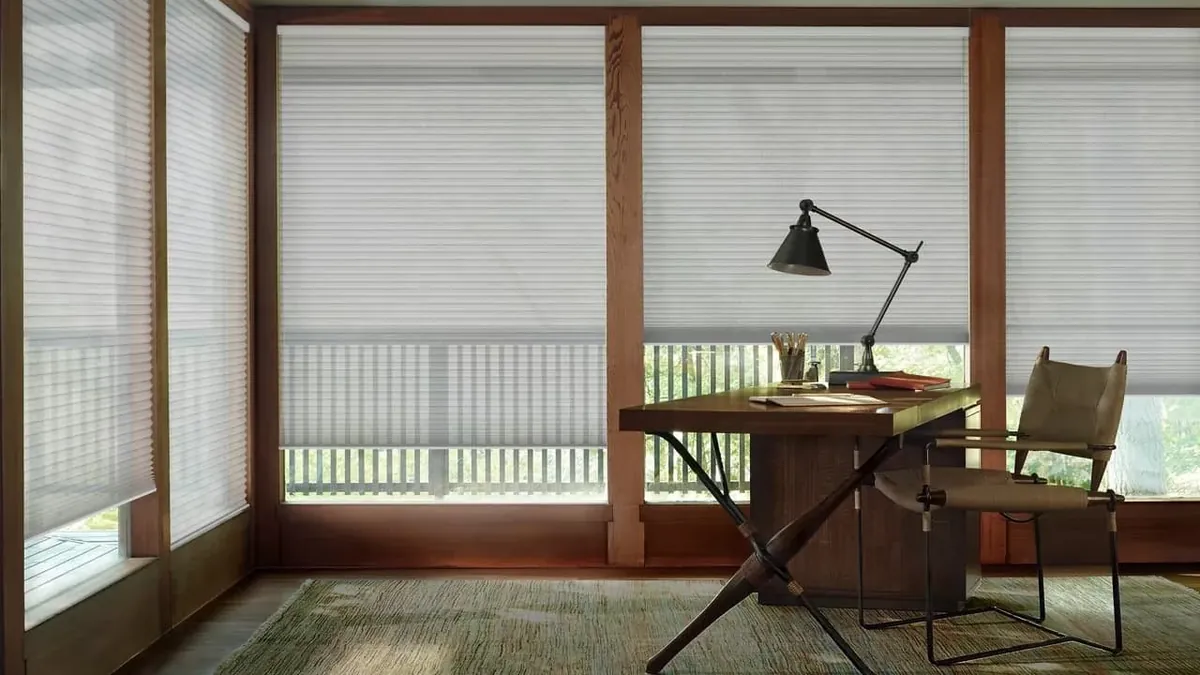
Cottages a few steps from the next house
Down at Brant Rock and Green Harbor, the streets near the beach are lined with cottages that were built close together for summer use and have since been turned into year-round houses. They keep their small original windows, many of them only a few steps from the windows of the house next door. Behind them, the shore streets take whatever the Atlantic sends, and inland the housing changes completely to larger, newer houses on bigger lots. All three of those settings shape how we plan motorized blinds in Marshfield, MA.
In a converted cottage the questions are privacy, warmth and small openings. On the shore streets they are weather and salt air. Inland they are size, reach and the number of windows. A motor helps with each of them in a slightly different way.
Hunter Douglas PowerView is the system we fit. In a cottage one handset often covers the whole ground floor; in a bigger house the app and timed scenes take on more of the work.
The three jobs we are asked to solve
Most requests for motorized blinds in Marshfield come down to one of these three problems, and each card links to the service page in town that deals with it.
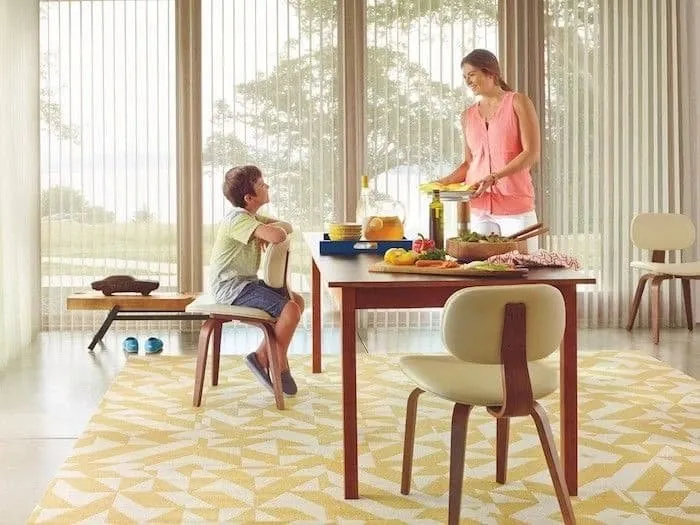
Privacy between close-set houses
Top-down shades and light-filtering fabrics that keep a cottage bright without opening it to the house next door.
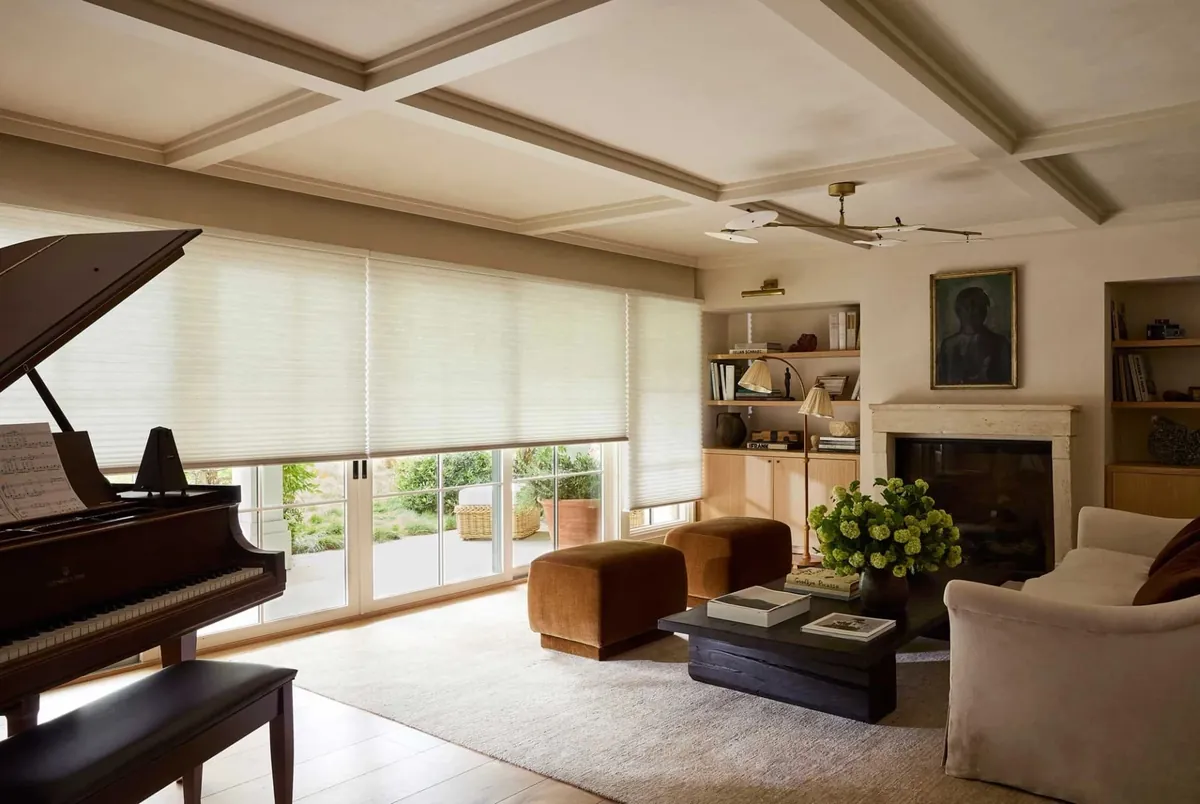
Warmth in a converted cottage
Honeycomb shades that hold still air at the glass of a house that was never built for January.
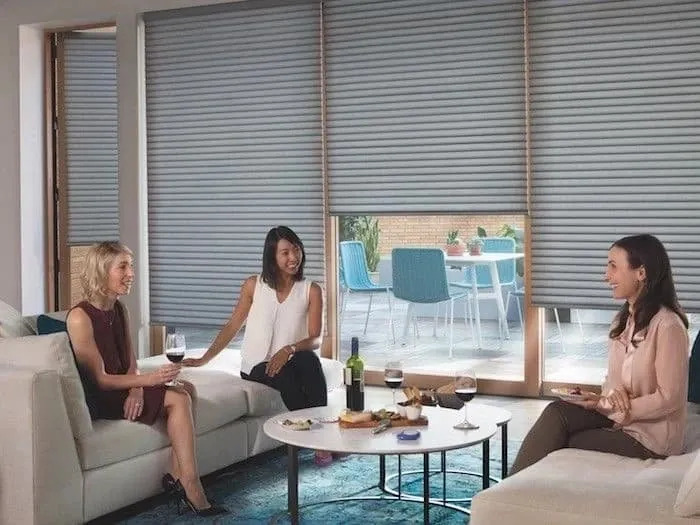
Living with the shore weather
Shades with their working parts sealed in the headrail, closed on a schedule as the afternoon sun comes off the water.
From summer cottage to year-round house
The beach cottages near Brant Rock were put up for warm months. They had light framing, small windows and rooms arranged for a few weeks of sun and sand. Over the years most of them have been winterised, extended and lived in through every season, and that history shows in the windows.
A typical converted cottage has a mixture. The original small double-hung windows are still in the front rooms. A later addition at the back may have newer, larger windows or a slider. A dormer may have been added upstairs. Some windows have been replaced and some have not, so two openings side by side can be different sizes and depths.
That mixture is why we measure every window on its own. A motorized headrail needs a certain depth to sit inside the frame, and in a cottage the depth can change from one window to the next. Where a frame is too shallow, a slim mount on the face of the trim is the answer, and we show it to you before anything is ordered. Where a window is very small, we check it against the minimum sizes Hunter Douglas makes with a motor, and suggest a cordless shade in matching fabric for any opening that falls below.
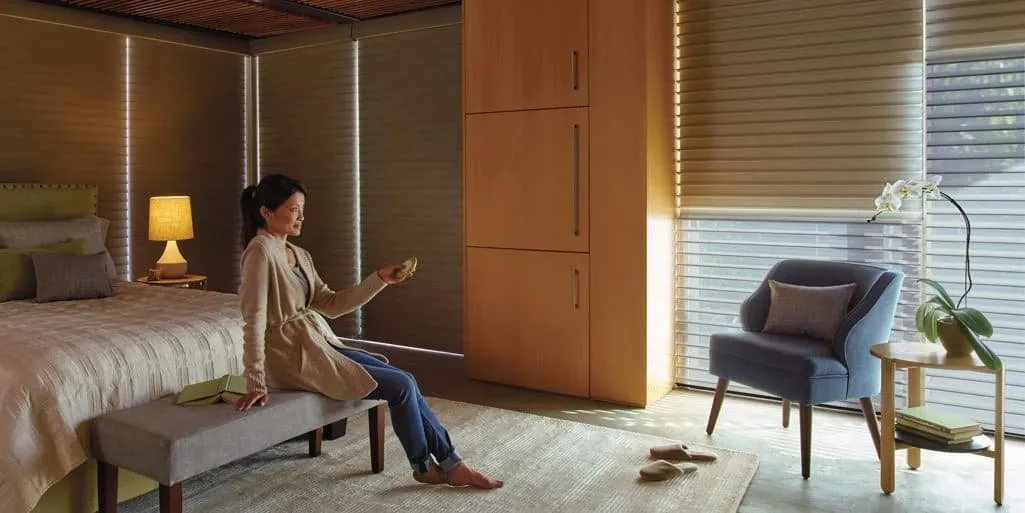
Small windows, low ceilings
Cottage rooms are compact, and their windows are small. That makes the choice of shade more important, not less. A bulky headrail or a heavy fabric stack can swallow a large part of a small window. Honeycomb and roller shades both stack very small at the top when raised, so the glass stays open and the room keeps its light.
In a low-ceilinged room, a motor also tidies the window. There is no cord hanging down beside a small opening, and no cord lock screwed to the trim. The shade simply stops where you send it. Grouped, the windows in a room move together, so a living room with three small windows on two walls closes as one.
Privacy when the next house is close
In the close-set streets near the beach, the house next door can be a few steps away, and its windows may face yours directly. Privacy is often the first thing people mention. At the same time, a small cottage needs every bit of daylight it can get, so closing the shades all day is not the answer.
A shade that opens from the top is the classic way through. Drop the upper edge and daylight pours in above the roofline next door, while the bottom of the window, the part level with their kitchen, stays screened. With a motor that split position becomes a saved favorite, one press away, so you are not fiddling with two rails every morning. Choose a light-filtering fabric and the room glows by day without giving anything away.
At night the balance changes, because a lit room is easy to see into. A sunset schedule closes the shades on the side facing the neighbors as the light goes, whatever the date, so you are not caught out on a November afternoon.
The shore streets and the weather
The streets right along the shore take the full weight of the coastal weather: wind off the water, driving rain in a storm and salt carried on the air for much of the year. Windows on that side are kept closed for long stretches, and the inside of the glass sees strong sun reflected off the sea on clear days.
A shade on that side has two enemies, salt and sun. PowerView deals with the first by keeping its working parts shut away in the headrail: nothing hangs by the glass to rust, swell or fray, which is more than an old corded blind could ever claim. For the second, the fabric choice matters. Pale, neutral colors keep their looks longer on glass that faces the sea all day, and we steer you toward those at the visit.
A schedule also protects the house. On the water side, the shades can lower through the hours of strongest sun to protect floors and furniture from fading, then lift again in the evening for the view.
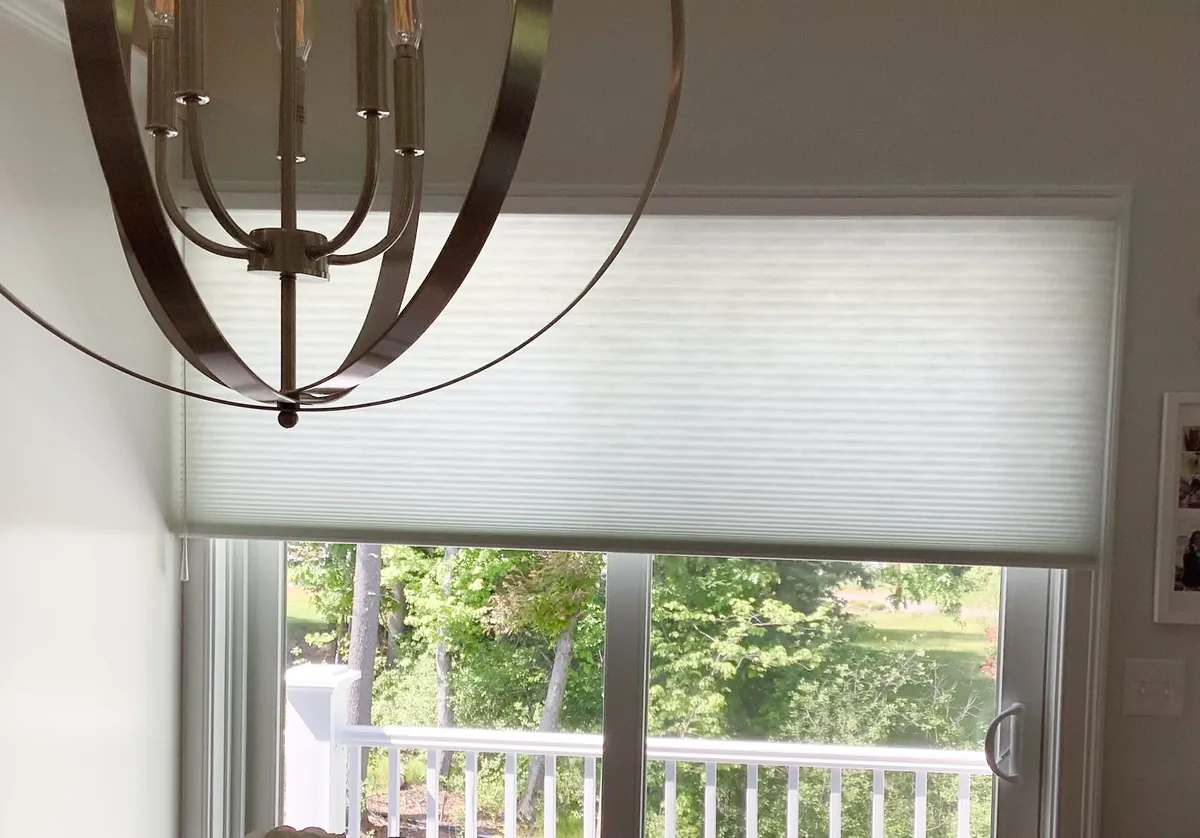
A small house, one remote
One of the pleasures of motorizing a cottage is how little it takes. A compact ground floor may have only a handful of windows, and a single handset can run all of them: the front room as one group, the kitchen as another, the bedroom on its own. There is no need for an elaborate setup, and many cottage households never open the app after the installers leave.
That simplicity suits a house that has always been about easy living by the beach. Press once in the morning and the front windows open to their privacy position; press again at night and the whole floor closes. If you later want timed scenes, they can be added without changing anything you already have. For many people looking at motorized blinds in Marshfield, MA, for a converted cottage, this modest version is exactly the right size.
Keeping a winterised cottage warm
A cottage built for summer often has less insulation than a modern house, and its windows can feel cold through a long winter, even after a conversion. The glass is where much of the heat goes.
A honeycomb shade lowered at dusk holds a layer of still air between the glass and the room, and you can feel the difference sitting near the window on a winter evening. The trick is lowering them every evening, and a schedule tied to sunset does that without anyone remembering. On sunny winter days the shades on the south side can stay open to let the warmth in, and close as soon as the sun goes.
Additions, dormers and mismatched windows
Few cottages near the beach have kept their original footprint. A typical one has grown a kitchen extension at the back, a second floor or a shed dormer on top, and perhaps a glassed-in porch facing the water. Each stage brought its own windows, so a single room can have an original small sash beside a modern casement, and the upstairs may have a run of identical new units under a sloping ceiling.
That mix is not a problem for PowerView, because every shade is made to its own opening and then joined to the others in the app. The original front windows can share a group and a fabric, the addition’s larger glass can take a roller or screen shade suited to its size, and the porch can become its own group that drops in the afternoon. Colors can be matched across all of them, so the inside of the house looks consistent even though no two windows are alike.
Upstairs dormers are worth singling out. Tucked under the roof, they are awkward to reach over a bed or a dresser, and the room beneath a cottage roof warms quickly in July. A motorized honeycomb shade there can close through the hottest hours and stay down until morning, with nobody climbing into the alcove.
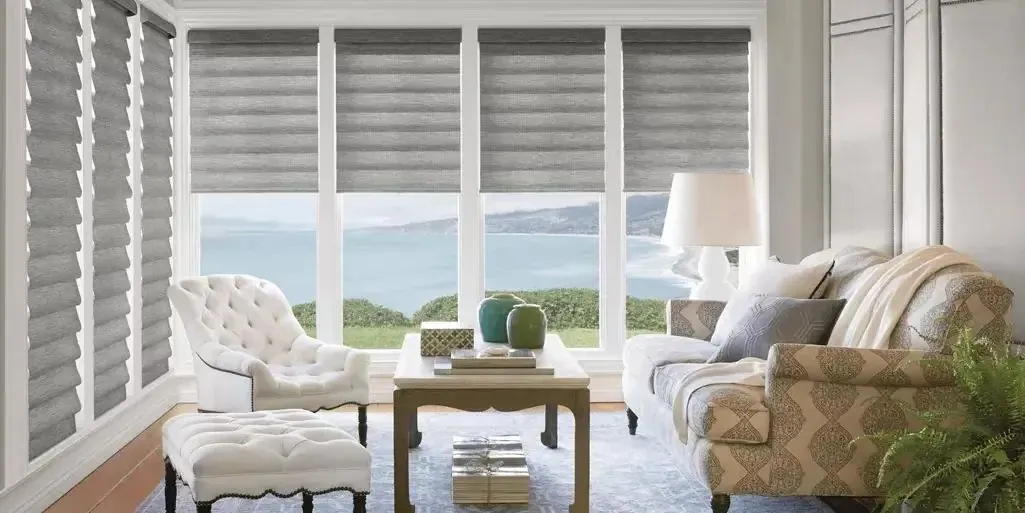
Storm days on the shore streets
When a coastal storm comes through, the houses nearest the water feel it first. Rain is driven against the glass, the wind rattles anything loose, and on the worst days nobody wants to stand at the sill fiddling with a cord. A single scene called “storm” can close every shade on the weather side from the remote, and open them again once the weather clears.
Closed shades will not keep out weather, and we would never suggest otherwise. What they do is make a room feel calmer and more private on a dark, wild afternoon, and stop the glare when the sun breaks through over wet streets afterwards. On a motor they do it without anyone having to reach over a damp windowsill.
Larger newer houses inland
Away from the beach, Marshfield’s newer houses are a different job. They sit on bigger lots with more space between neighbors, and the rooms are large: an open kitchen and family room, a two-story foyer, a primary suite with windows on two walls. The windows are modern and regular, which makes the fitting straightforward.
For these houses, motorized blinds in Marshfield, MA, are mostly about reach and number. Glass set high over an entry or a hearth is simply out of reach, so it ends up bare and lets the summer sun bake a tall room. Motorized, it travels with the windows underneath. And with so many openings in a big house, grouping is what keeps it manageable: front elevation, family room wall and bedrooms, each answering as a unit.
A common approach is to begin with the living areas and the main bedroom and extend room by room in later years, every addition slotting into the existing app.
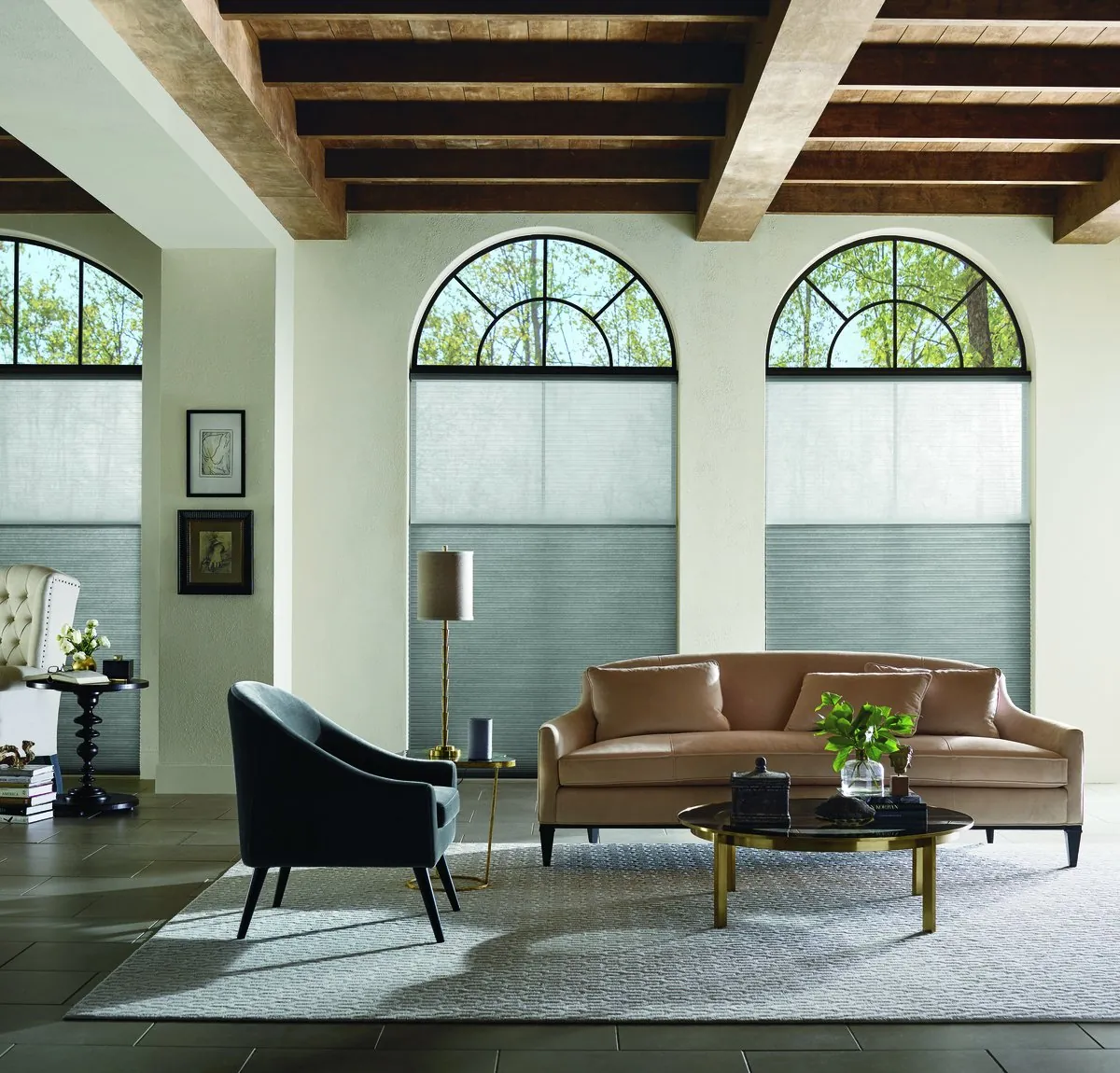
A winter evening in a beach cottage
Here is how a set of scenes might run in a converted cottage near Green Harbor through the colder months.
- In the morning, the shades on the sunny side lift to let in the low winter sun.
- The shades facing the neighbors open only to their top-down position, so the room is bright but private.
- At sunset, the honeycomb shades on every window lower fully to hold the warmth in.
- The bedroom shades stay down until the time you choose the next morning.
Come summer the routine flips, with the beach side shaded through the middle of the day and the house left open into the long evenings. Pressing the remote never breaks the routine: tomorrow the scenes simply run again.
The controls
In a cottage, a single handset on the coffee table usually runs the entire ground floor, and that is all many people ever use. The app earns its place in the larger houses inland, where dozens of windows need naming, sorting and saving into scenes. Timed scenes suit both, running off the clock or off sunrise and sunset. We explain the three in plain terms in how motorized shades are controlled, and the window covering automation page shows how scenes are put together.
Power, planned at the visit
A converted cottage is a patchwork of original walls and later ones, so how each motor gets its power can change from one window to its neighbor. We work that out opening by opening during the visit, and you approve the plan first; nothing is ordered without it.
How the visit and installation go
With samples loaded in the van, the showroom comes to your cottage door, and in a small room with odd light that is the only sensible way to choose a fabric.
- Ask for a time through Request a Consultation, or by the call button.
- Window by window, we note what each one looks at: the house next door, the beach or the afternoon sun.
- Fabrics are held up at the glass itself, so you see them in your own light.
- Each opening gets its own measurements, including the depth for a headrail.
- You sort the windows into motorized and cordless, settle the groups and scenes, and approve the power plan.
- Your free estimate arrives to read whenever suits.
- Hunter Douglas certified installers hang everything, set each shade’s travel and load the scenes.
Read more in what happens at an in-home consultation.

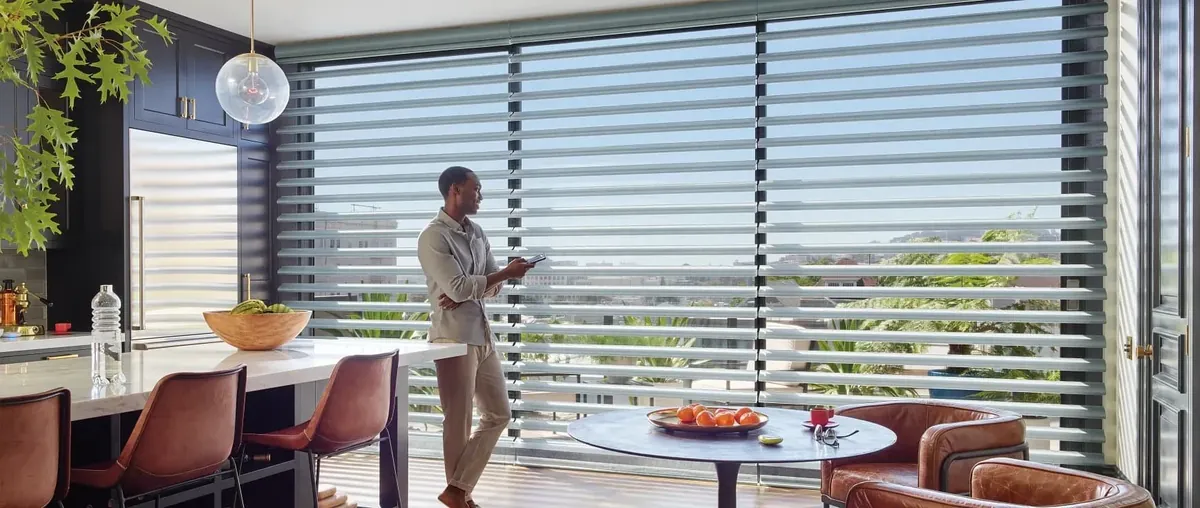
A Hunter Douglas Gallery dealer
Being a Hunter Douglas Gallery dealer puts every PowerView product within reach for us, so a tiny Brant Rock bedroom and a soaring inland great room never have to share a compromise. The shade for each room is picked on its merits.
The people who fit them are Hunter Douglas certified installers. We can also help with interior design consultations, and with repairs to window coverings you already have.
More in town: custom blinds in Marshfield, plantation shutters in Marshfield, Hunter Douglas in Marshfield and our Marshfield page. The full range is on the motorized blinds and shades page.
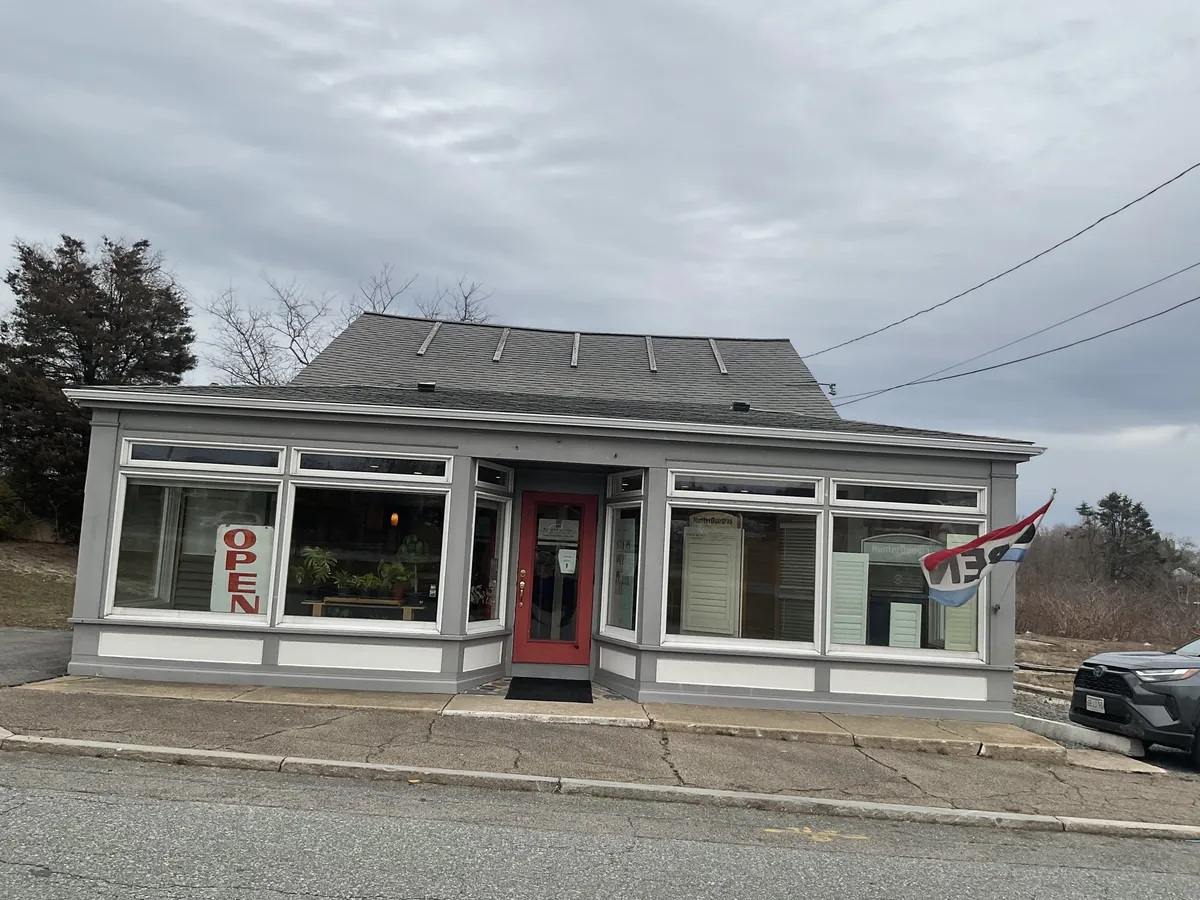
South to our nearest showroom
Of our locations, the Sagamore showroom is the nearest to Marshfield, and you are welcome to call in.
For a cottage with windows of every size, though, the measuring tape matters more than the trip, and that part happens at your house.
Questions from Marshfield
My cottage windows are tiny. Can they have motorized shades?
Many can. We check each window’s depth and width against what Hunter Douglas makes with a motor. Any window too small for a motor can take a cordless shade in matching fabric.
The house next door is very close. How do I get privacy and still have light?
A top-down, bottom-up honeycomb shade lets light in over the top while the lower half stays covered. On a motor that position is saved and recalled with one press.
How do motorized shades cope with salt air near the beach?
The motor and lift sit inside the headrail, and there are no cords or wands at the side, so far fewer parts are exposed than with older blinds.
Will honeycomb shades help a winterised cottage feel warmer?
Yes, lowered at dusk they hold still air between the cold glass and the room. A sunset schedule makes sure they close every evening.
Do you charge for the estimate?
No. We measure at your house and the estimate is free.
Plan your shades
Whether your house is a cottage by the sea wall or a new build inland, motorized blinds in Marshfield, MA, start with a look at the windows themselves. Ask for a consultation and we will arrive with samples, go round each opening with you, measure and leave a free estimate. For a quick question beforehand, the call button reaches us, and Sagamore is the nearest showroom.