
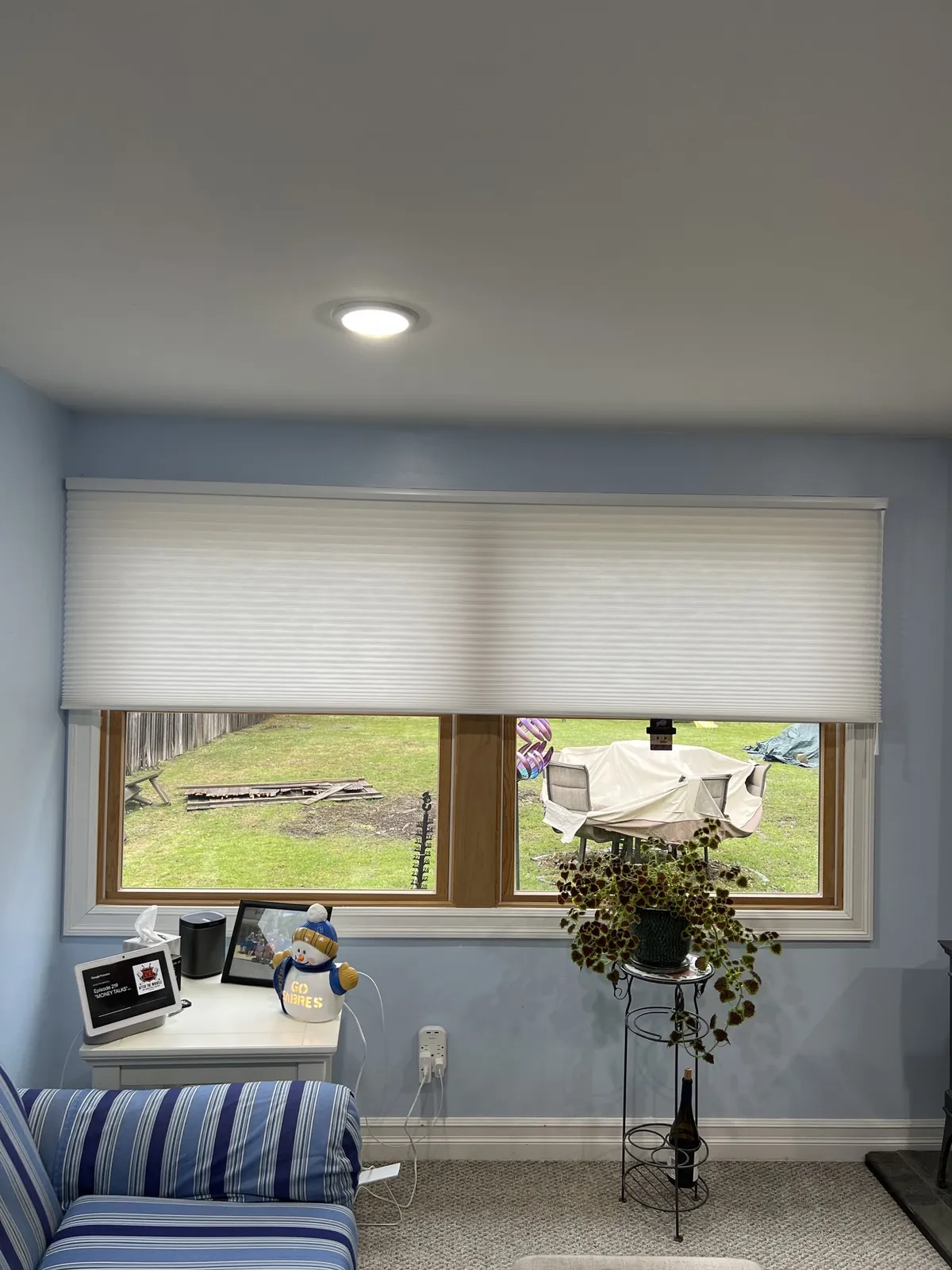
Ordinary windows, and why that helps
Most of Hanover’s housing is kind to a window covering. The post-war capes and ranches, and the newer colonials built off Washington Street and around the Four Corners, have standard modern openings: square frames, consistent sizes, enough depth for a headrail. That makes motorized blinds in Hanover, MA, a simple upgrade rather than a puzzle. The shade fits cleanly inside the frame, the motor is tucked into the headrail, and the room looks the same as before, only easier to live in.
What the town adds is the setting. Houses stand on wooded lots with real setbacks, so the light at each window depends on the trees as much as on the compass. A family room can be dim and green at noon and then flooded with low sun an hour before dinner.
PowerView takes care of that swing. A shade can drop on a timer as the late light arrives, rise after sunset, and repeat it every day with nobody lifting a finger.
Hunter Douglas styles we motorize for Hanover houses
PowerView goes on a broad part of the Hunter Douglas line, so the motor follows the shade you would have picked anyway. For motorized blinds in Hanover capes, ranches and colonials, three styles keep coming up.
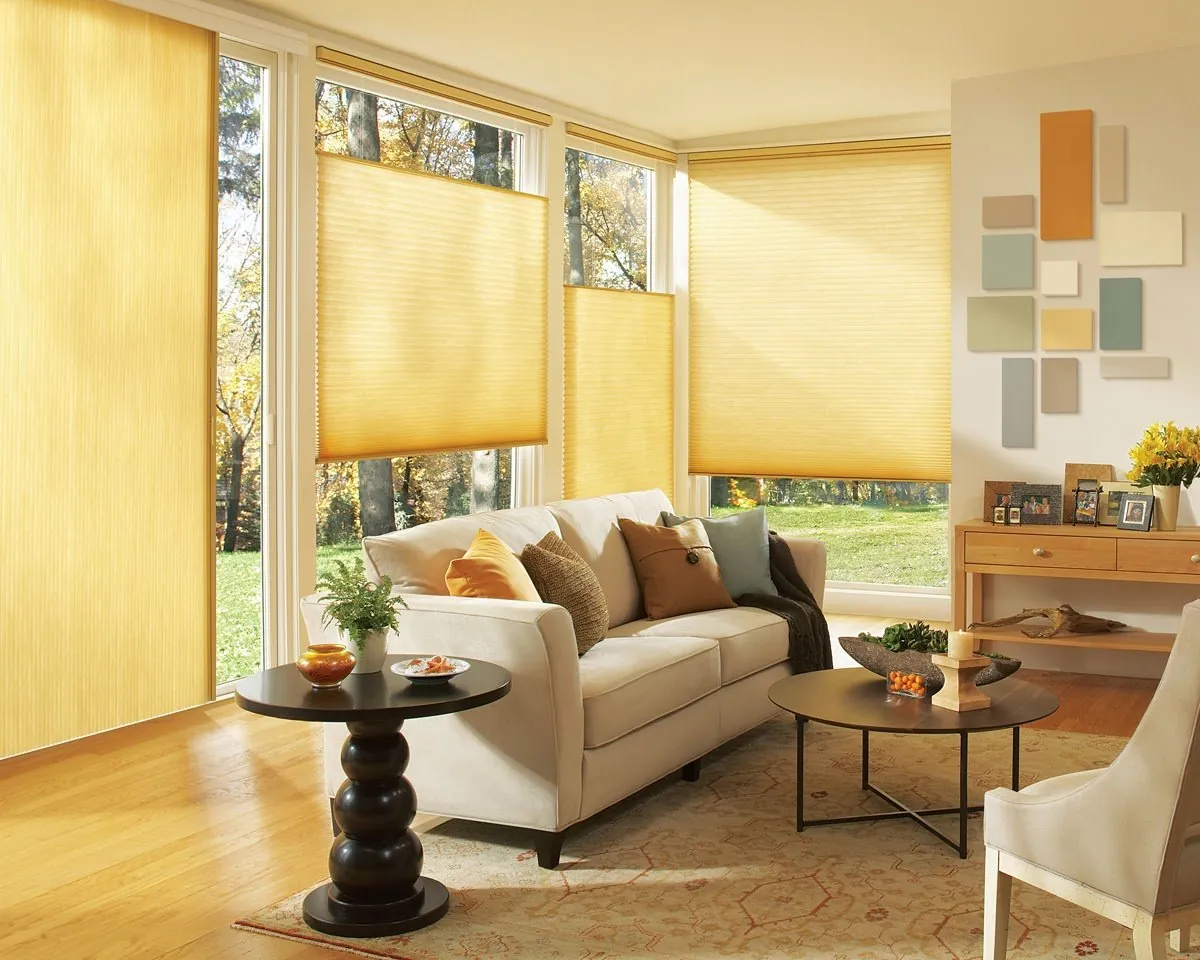
Cellular shades
Honeycomb shades for bedrooms and living rooms, keeping a layer of still air at the glass and closing neatly on a timer.
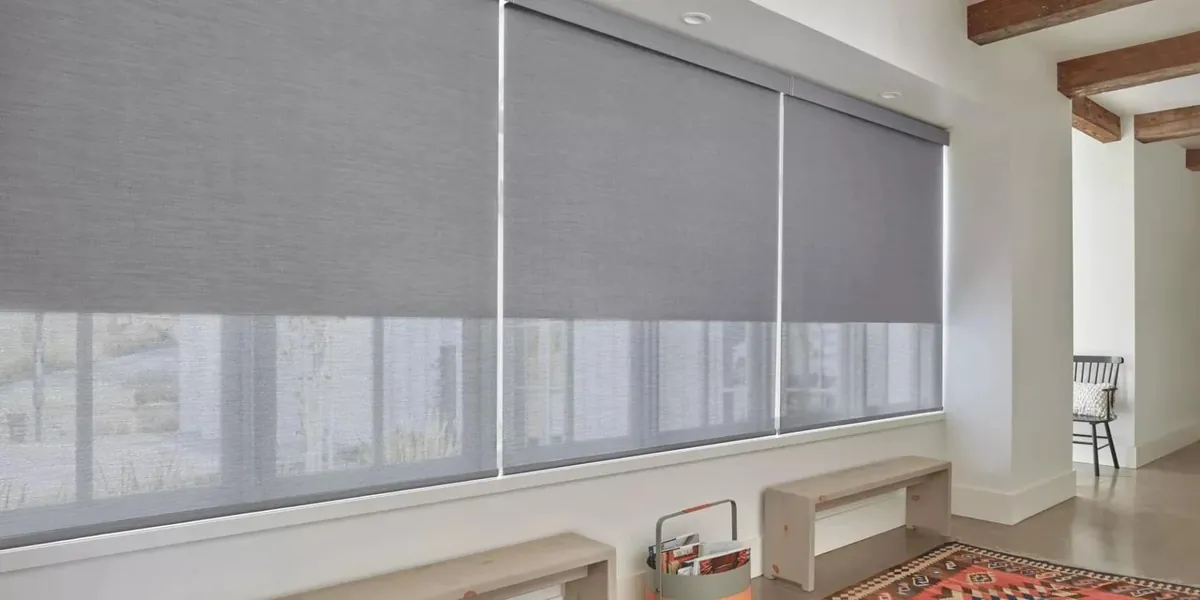
Roller shades
Plain fabric that rolls fully out of sight, a natural fit for a long row of matching ranch windows.
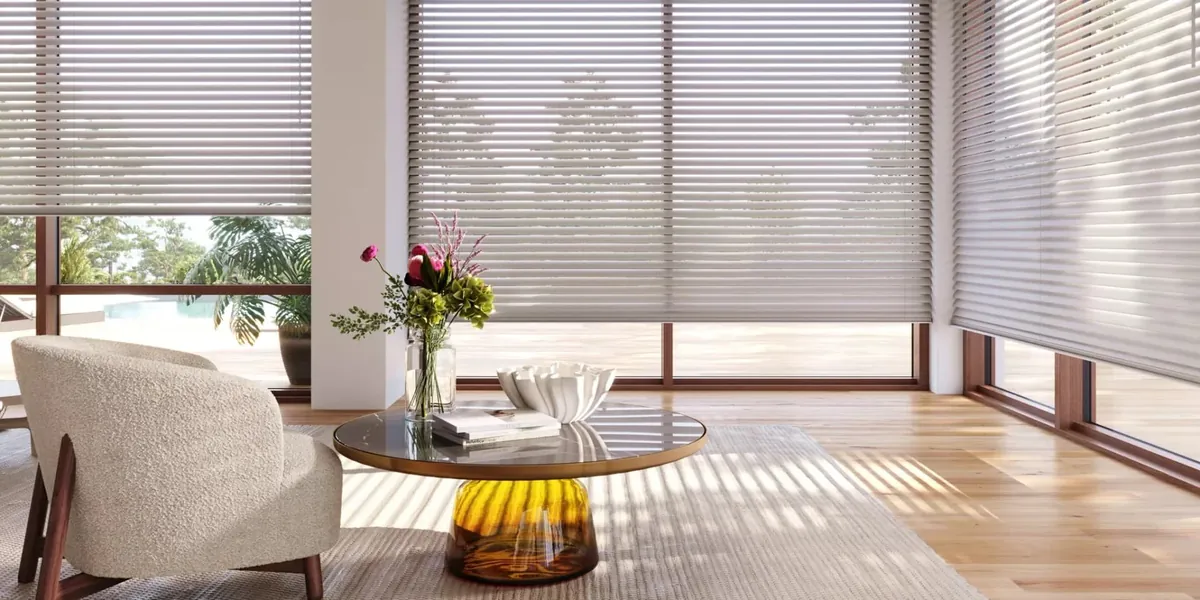
Blinds
Slats that tilt give exact control of light in kitchens and studies, with both tilt and lift done by the motor.
Capes: the bedrooms tucked under the roof
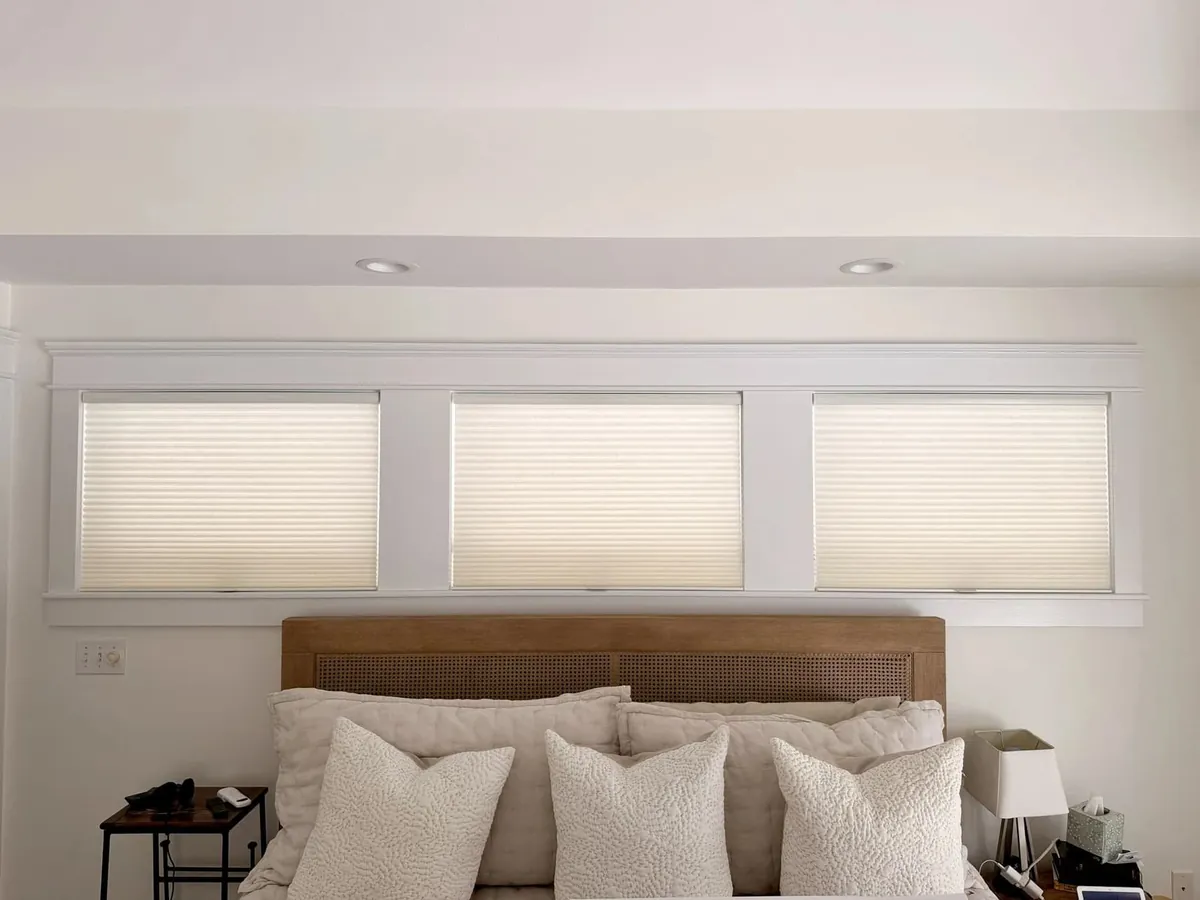
A cape puts its second floor under the roofline. Upstairs bedrooms usually get dormer windows recessed into the slope, and the furniture tends to end up right in front of them because that is the only full-height wall. Leaning over a bed or a dresser to raise a shade is a small, permanent annoyance.
Motorize that dormer and it becomes one of the easiest windows in the house. Room-darkening fabric holds back the early summer light, and a timer opens the shade at the hour you choose, a little later on a Saturday. In the evening one button closes every upstairs room. Dormer windows are normally standard sizes, so the fitting itself is routine.
Downstairs, a cape’s living and dining rooms generally face the front. With Hanover’s setbacks that means lawn rather than sidewalk, but with lamps on after dark those rooms are still lit up like a stage. A dusk timer brings the front shades down as daylight fades, all year, without a reminder.
Ranches and their long rows of windows
A post-war ranch lays its rooms out on one level, which usually means long rows of matching windows: a picture window with flankers in the living room, bedroom windows lined up along the back, a kitchen window over the sink and a slider to the yard. Any one of them is easy to reach. Together they add up to a lot of shades to move twice a day.
Grouping is where a ranch gains most from motorized blinds in Hanover. We pair the shades along each side of the house so they travel together and stop at one height. A long front elevation with every shade level looks orderly from the street, and inside, the public side of the house opens with a single press.
Rollers and honeycomb shades are both common on these rows. A roller gives a crisp line and vanishes when raised. A honeycomb shade adds that pocket of still air, which a big single picture window appreciates in January.
The ranch picture window in January
The picture window is the center of most post-war ranch living rooms: one large fixed pane, often with an opening window on each side, looking out across the front lawn. It is the best seat in the house in October and the coldest wall in the room in January.
A honeycomb shade across that window helps in both directions. Lowered in the late afternoon in winter, it sets a layer of still air between the cold glass and the room and holds the warmth in through the evening. Raised on a sunny winter morning, it lets the low sun reach the floor and help. The difficulty is remembering to do both every day. A pair of timers, one for the evening and one for the morning, takes that off your list, and the shade and its two flankers move as one so the window still reads as a single piece from the street.
Newer colonials near the Four Corners
The colonials built off Washington Street and near the Four Corners are larger and taller, with a formal front and a family room behind that often runs into the kitchen. Some have a tall pane over the front door or a two-story foyer, and those high windows are the first ones homeowners raise with us.
Afternoon sun through a high foyer pane slides across the stair treads and the hall floor for hours. Without a motor that window is generally left bare, since nobody can reach it. With one, it comes down on a timer as the sun swings round and goes back up in the evening. The high shade is hung from staging, and its limits are matched to the windows nearby.
The back of the house is the other focus. Kitchen and family room usually share a long wall of glass and a slider to the deck, and that wall faces the late light. Put those shades in one group and the whole space is manageable from one handset at the busiest hour of the day.
Formal front rooms in the colonials
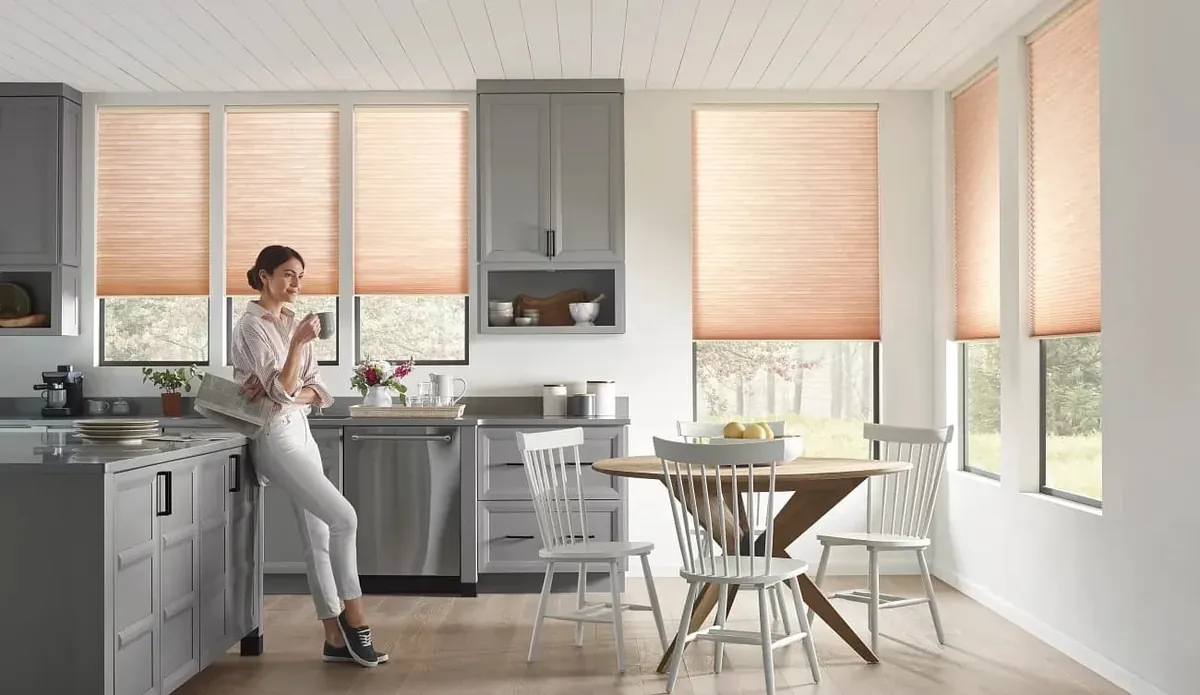
The newer colonials usually keep a formal living room and dining room at the front, used less often than the family room behind. Those rooms tend to hold the good furniture and the rugs, and they often face the road and the afternoon sun.
Because nobody is in them for much of the day, the shades in a formal room are easy to forget. A timer keeps them partly lowered through the brightest hours and opens them in the evening when the room might actually be used, or for a dinner, a scene can open the dining room fully with one press. Roman shades and honeycomb shades both suit these rooms, and both can run on the same system as the rest of the house.
Tree cover from season to season
On a wooded lot the light is rarely the same two days in a row. Leaves soften most of it from May to October, until low sun ducks under the canopy at the start or end of the day and throws a bright, wandering patch across the room. Once the trees are bare, a room that sat comfortably in shade all summer gets direct sun for hours.
Timers deal with that well. A shade on the west wall can come part way down late in the day and lift again after sunset, and adjusting it for the season is a minute’s work in the app. Light-filtering fabric keeps the room bright while taking the sting out of glare on a screen or a polished floor.
If you want to keep looking at the trees, sheer shades with tilting vanes are worth trying at your own window. The vanes cut the brightness while the woods stay visible through the fabric.
Three ways to tell a shade what to do
You can move a PowerView shade in three ways, and most households use all of them.
- Handset. A few plain buttons, left in the room. A grandparent or a babysitter can work it with no phone and no password.
- App. On a phone or tablet. One shade or a whole group, stopped at any height, plus scenes and timers.
- Timers. Set once, then forgotten. The shades open, close or pause part way at the times you pick.
Scenes tie the three together. “Film night” might shut the family room completely; “weekday” might open the kitchen and living room and leave the bedrooms dark. Our plain-language guide to how motorized shades are controlled explains each one.
We decide how every motor will be powered during the home visit, after looking at each window and the wall around it.
How a Hanover project unfolds
- Ask for a visit through Request a Consultation or the call button, and choose a time.
- A van arrives loaded with samples, because we can bring the showroom to you. We start in whichever room you mention first.
- You try fabrics against your own glass and see how each one copes with the tree light.
- Together we work out which shades should be grouped and how you want to run them.
- Each window is measured, with a note of anything out of the ordinary, such as a high foyer pane or a dormer behind a headboard.
- You are given a free estimate covering the shades and their installation.
- Hunter Douglas manufactures every shade to those measurements.
- A certified Hunter Douglas installer hangs them, sets the stops, pairs each one with its handset and the app, and programmes the first timers with you.
For what to expect on the day the shades go up, see what happens on installation day.
No cords hanging at the window
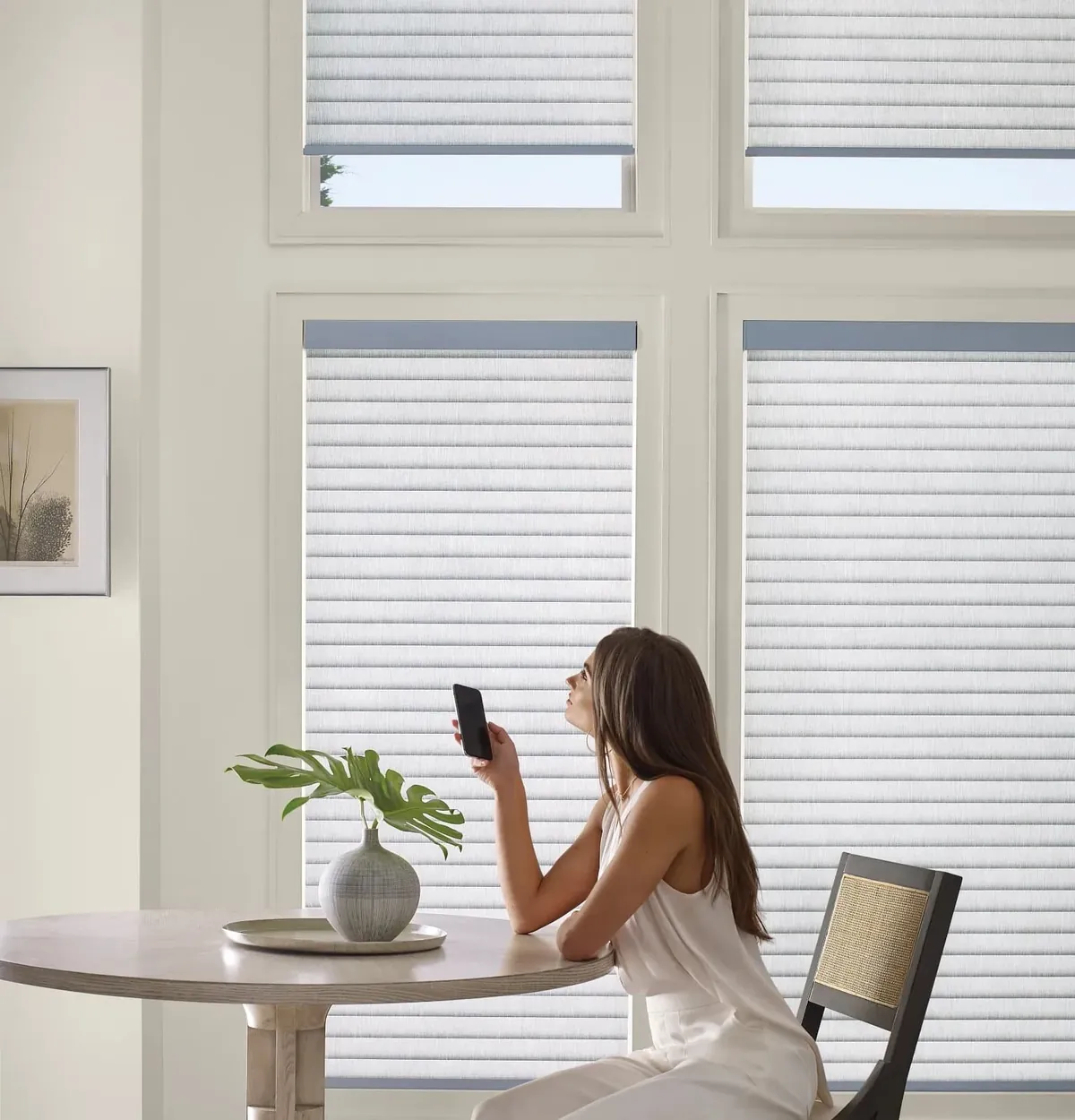
Parents of young children and pet owners often ask about motors for safety more than convenience. A motorized shade has no lift cord at the edge of the frame, so there is nothing to loop around a crib, a bunk bed or a curious dog. In a cape, where the children’s rooms are often those dormer bedrooms upstairs, that counts.
It tidies the window too. With no cord or wand, a shade is simply fabric and a headrail, and the sill stays free for books, plants or whatever gathers there.
Kitchens and the window over the sink
The kitchen window in a ranch or a cape usually sits right above the sink, with the counter between you and the glass. Reaching across a wet counter to raise or tilt a covering is awkward, and the result is a shade that stays half down for months.
Blinds on a motor suit this spot. The slats tilt to throw glare off the counter while the yard stays in view, and they lift clear of the glass when you want the whole window. Grouped with the slider and any other kitchen windows, one press in the morning opens the room. In the newer colonials, where the kitchen runs into the family room, that group can extend across the whole back wall.
Home offices and screen glare
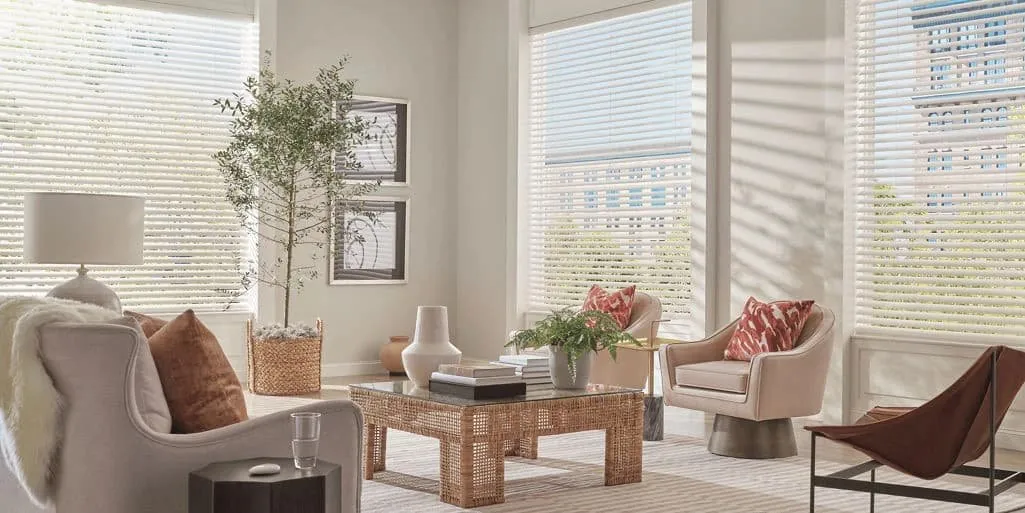
Many Hanover houses now have a room working as a home office, often a spare bedroom in a ranch or a front room in a colonial. A window beside a desk is pleasant until the sun lands on the monitor. Then it is a daily fight with a cord.
A motorized shade or blind in an office can follow a timer that matches the sun on that wall, so the glare is handled before it starts. Screen and light-filtering fabrics keep the view and the daylight while dulling the reflection, and blinds let you angle the light away from the screen. On a video call, a single press from the app closes the window behind you without leaving your chair.
Sun on floors and furniture
Houses on wooded lots tend to have hardwood floors and rooms furnished to be lived in. Steady sun through a south or west window is hard on both: a rug fades near the glass, a sofa arm changes color, and the floor shows a pale patch where the light lands each afternoon.
Lowering a shade at the right time slows that down, but only if someone is home to do it. A timer lowers it when the sun reaches that wall, whoever is or is not in. Screen and light-filtering fabrics let the room stay bright while softening the sun; heavier fabrics shut out more of it in rooms you rarely use.
While you are out
A house deep among the trees can look shut up when its shades never change, even seen from the road. On timers the shades carry on as usual while you are at work or away for a week, opening in the morning, easing down through the afternoon and closing after dark.
The app also lets you change plans from anywhere. If you realize halfway to the airport that the family room is wide open to the afternoon sun, you can bring the shades down from the car. Our window covering automation page goes further into timers and scenes.
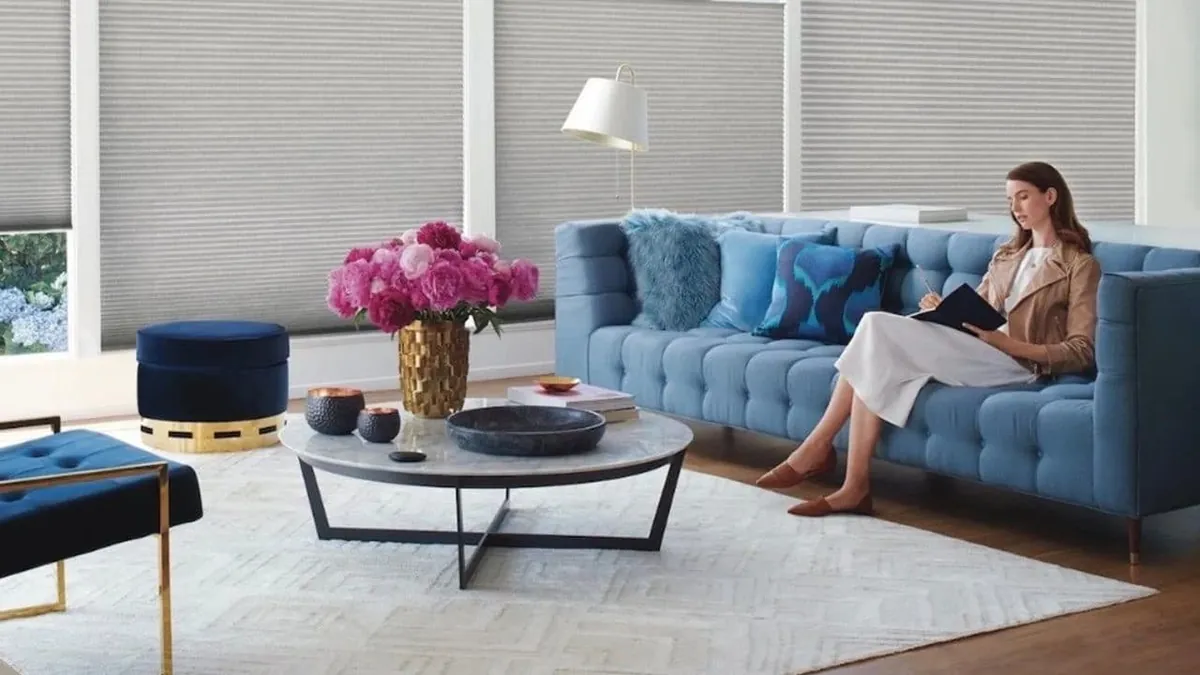
Blinds and shades mixed in one house
Plenty of projects for motorized blinds in Hanover, MA, end up mixed: blinds in the kitchen and the office, where tilting slats suit the work; honeycomb shades upstairs; rollers or sheers in the family room. Every one can run on PowerView and sit in the same app and scenes, so the house behaves as one system even though each room is dressed differently.
If you are still deciding between styles, our pages on custom blinds in Hanover and roller shades in Hanover look at each more closely. The full motorized range is on our motorized blinds and shades page.

The Gallery difference on a Hanover job
Blinds & Designs holds Hunter Douglas Gallery dealer status, the brand’s recognition for dealers who meet its standards. On a motorized job, that means the entire range is available to you rather than a short list of motorized styles. A dormer bedroom, a ranch’s long front row and a colonial’s foyer can each take the shade that suits it, all on one PowerView system.
Our installers carry Hunter Douglas certification. There is no charge for an estimate, interior design consultations are on offer, and blind and shade repairs are part of the service if anything needs attention later.
Our Hanover page lists everything else we do in town.
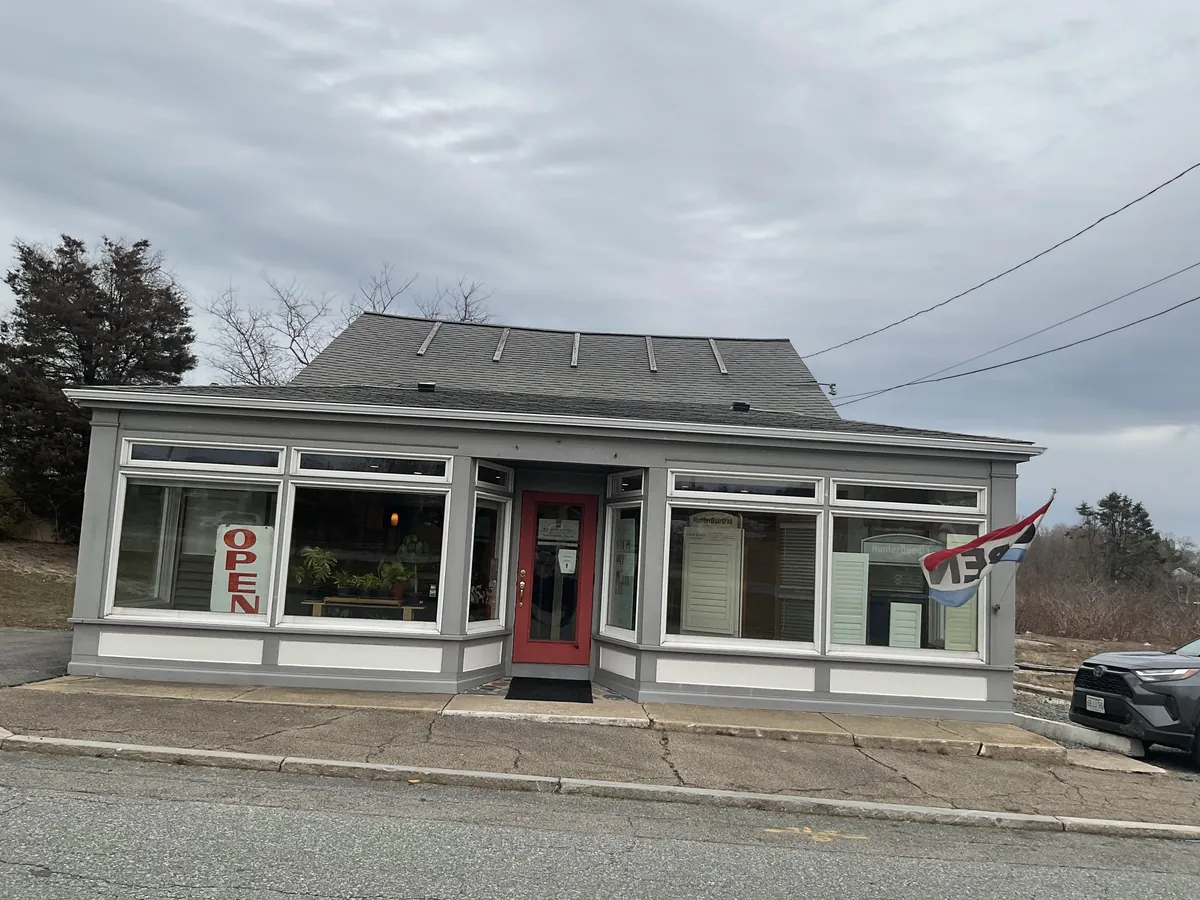
Sagamore, our closest showroom
From Hanover, the Sagamore showroom is our nearest. If you would sooner stay home, the vans carry samples, and seeing each fabric in your own rooms, against your own paint, is the surest test.
Windows are always measured at the house, so most projects end up there either way.
Questions from Hanover
Are standard modern windows easy to motorize?
Very. Square frames with decent depth are the simplest windows to fit. The shade sits within the frame, the motor sits inside the headrail, and the window looks much as it would with a manual shade.
Can the dormers in our cape be motorized?
Yes, and they are among the most worthwhile, because they so often sit behind a bed or dresser. A motor and a morning timer look after them every day.
Can blinds and shades work from one handset?
Yes. Blinds, honeycomb shades, rollers and sheers can all run on PowerView and share the same app, groups and scenes.
Which windows should we do first?
Usually the hard-to-reach ones, like a high foyer pane or a dormer behind furniture, then the west-facing family room or office. New shades can join the system later.
Will the estimate cost anything?
No. Estimates are free. We measure, then give you a free estimate for the shades and installation you are considering.
One room is a fine place to start
An easy first step with motorized blinds for Hanover homes is a single room: the family room that catches the late sun, the office with the glare, or the dormer bedrooms in a cape. Request a consultation, tell us which room you mean, and we will bring samples to suit it, measure, and give you a free estimate. To talk first, use the call button.