
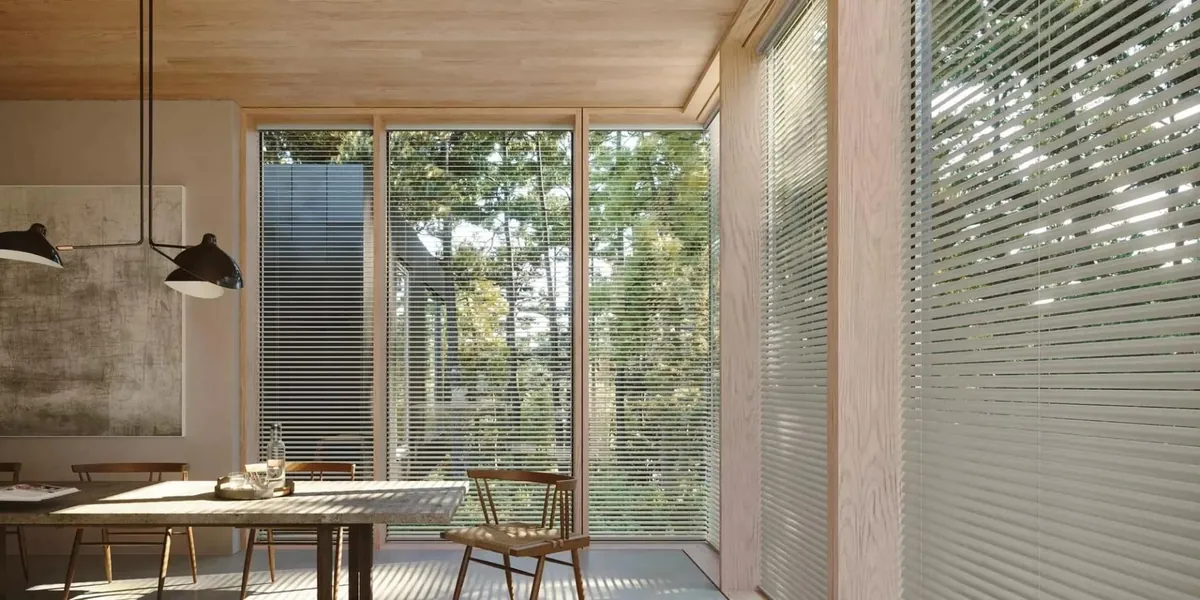
Salt, glare and old shingle along Sippican Harbor
Marion’s oldest houses gather around the village and the edge of Sippican Harbor: shingled captains’ houses with steep roofs, small-paned sash and rooms arranged for formal living. Head out toward Converse Point and the houses become newer and more open, with whole walls of glass turned toward the water. Between the two, almost every room that faces the harbor is heavily glazed.
Three things follow from that. The light off the water is bright and often comes from below, so glare is a daily matter. The salt air is constant, and it settles on anything near a window that opens in summer. And the formal village houses carry rooms where curtains or drapery are part of the look, so a blind may have to work beneath fabric rather than on its own.
Choosing custom blinds in Marion, MA, means weighing all three at each window. A blind that would be perfect in an inland living room might be the wrong material for a harbor-side porch, or the wrong profile under a pair of formal drapery panels.
How each blind earns its place by the water
Hunter Douglas makes horizontal blinds in wood, faux wood and metal, and vertical blinds for wide glass. When we plan custom blinds in Marion, MA, each has a natural home, and a sixth card covers the bedrooms.
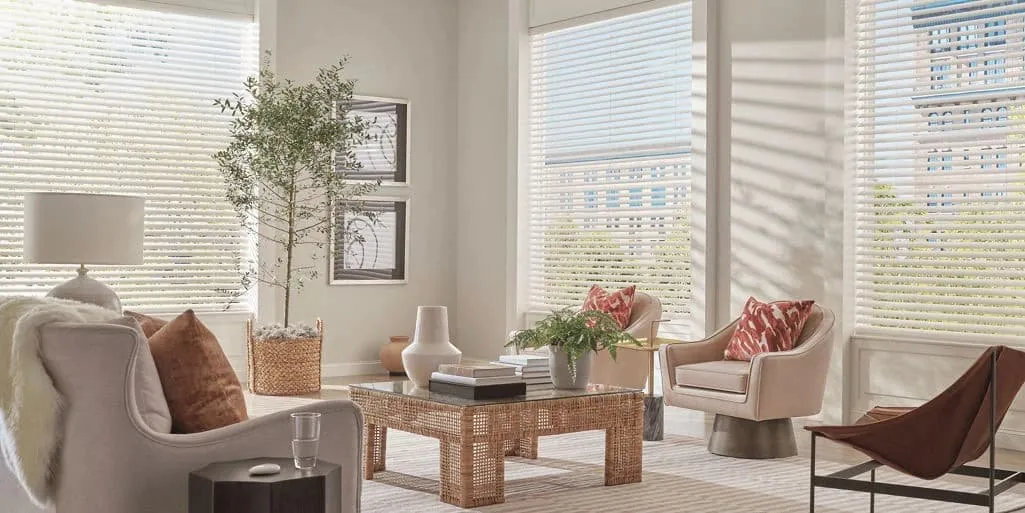
White wood blinds
Painted wood slats in a crisp white, at home in a captain’s house parlor under shingle and white trim.
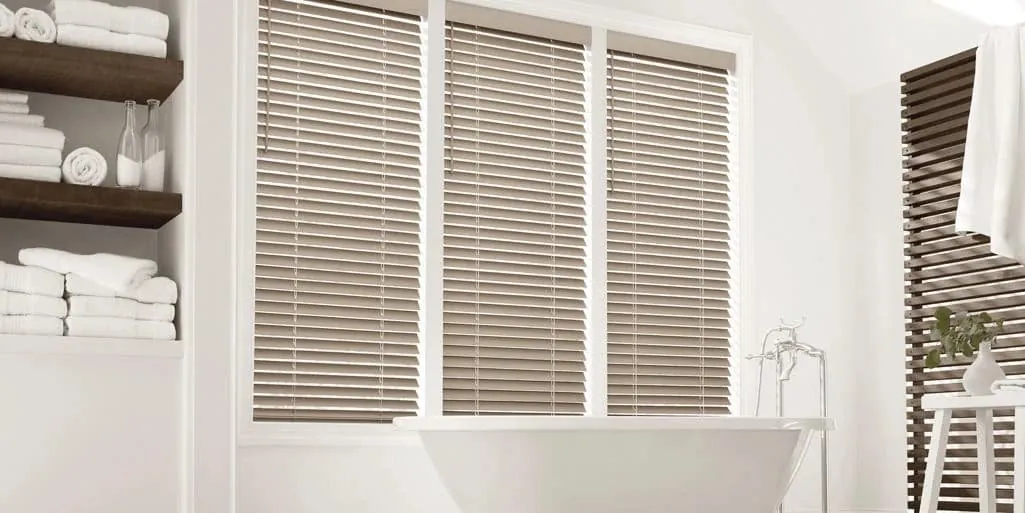
EverWood faux wood blinds
Built to cope with damp sea air, steamy baths and the porch room you leave open all summer.
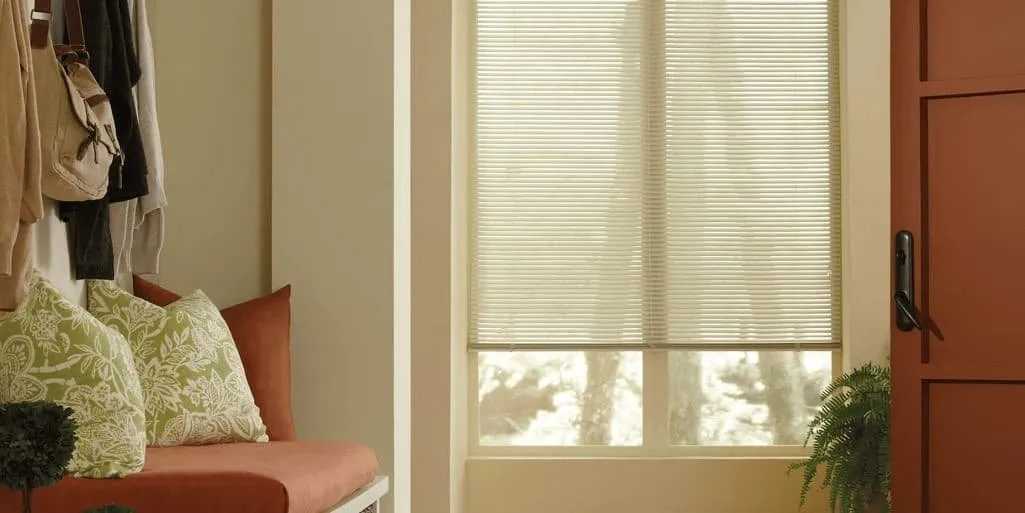
Metal blinds
A slim profile for small antique sash and for the glass in a harbor-side door.
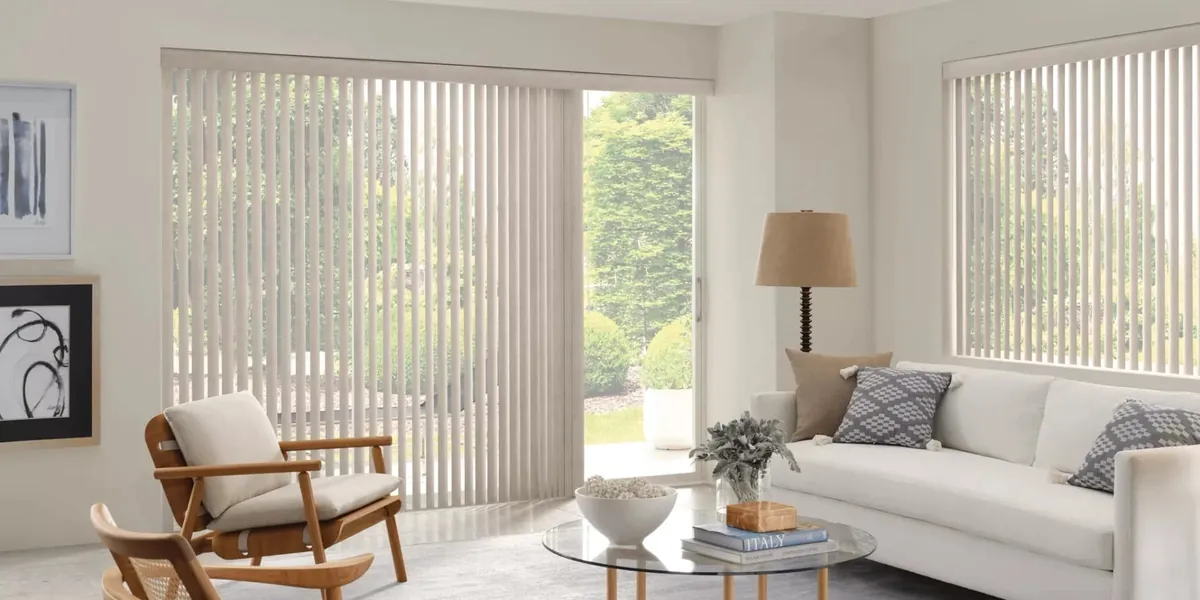
Vertical blinds
Vanes that draw fully aside for a slider to the deck, and turn to cut glare across wide water-facing glass.
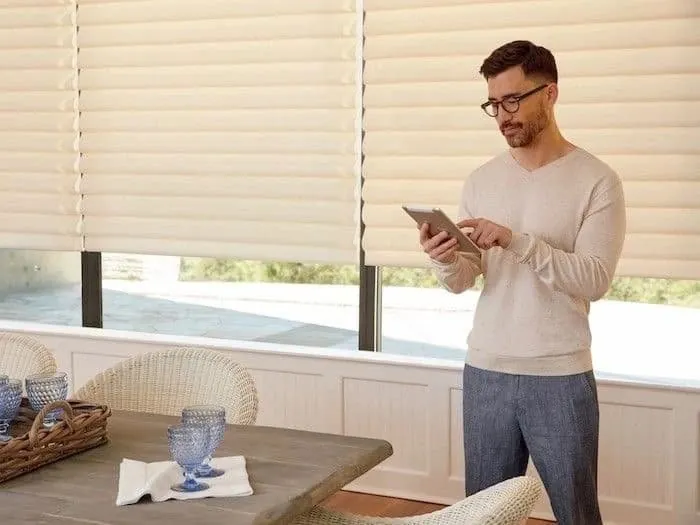
Motorized blinds in Marion
PowerView control for tall glass and clerestory windows, by app, remote or schedule.
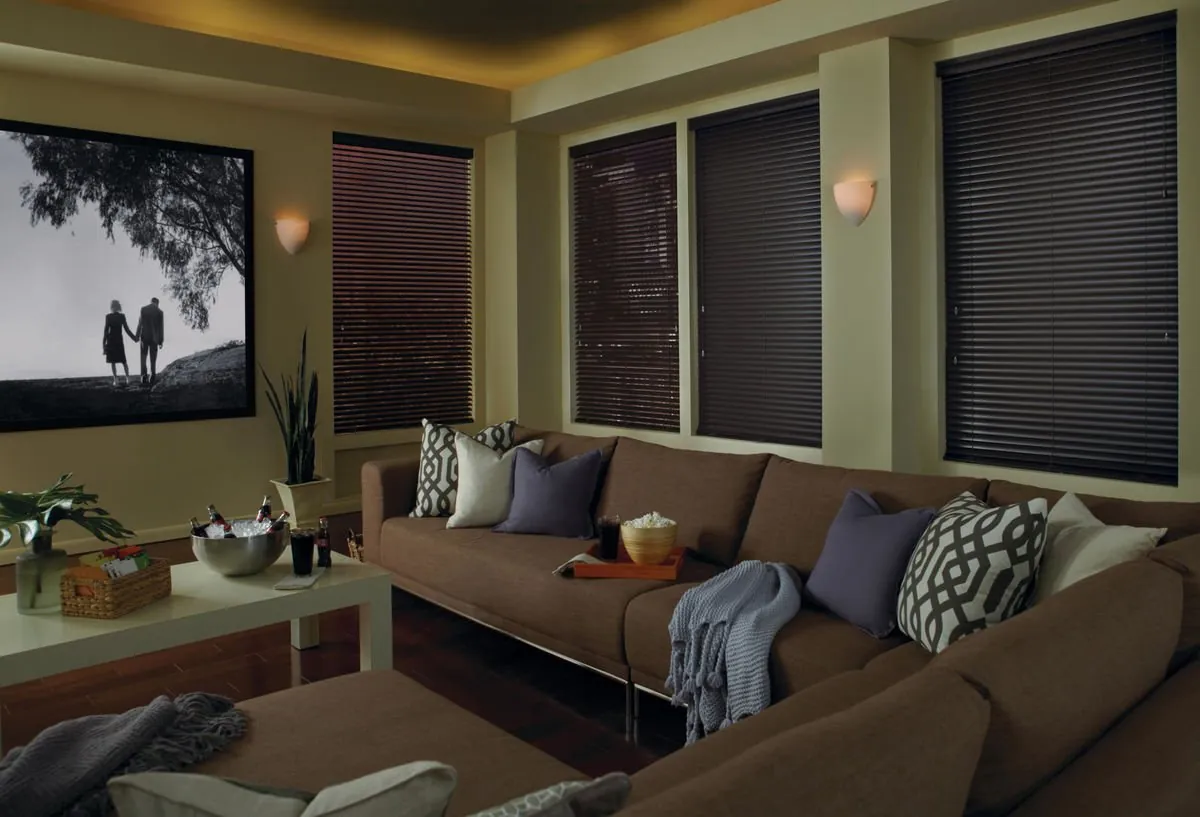
Dark slats for sleeping rooms
Deep-toned slats, closed tight, hold back the early sun that rises over the bay and keep a bedroom or den dim.
Glare that comes up off the water
On a sunny afternoon, Sippican Harbor acts like a mirror. The sun is reflected off the surface and reaches the house from below as well as from above, filling water-facing rooms with a hard, flat brightness. A roof overhang that blocks the high summer sun does nothing about light bouncing up off the harbor.
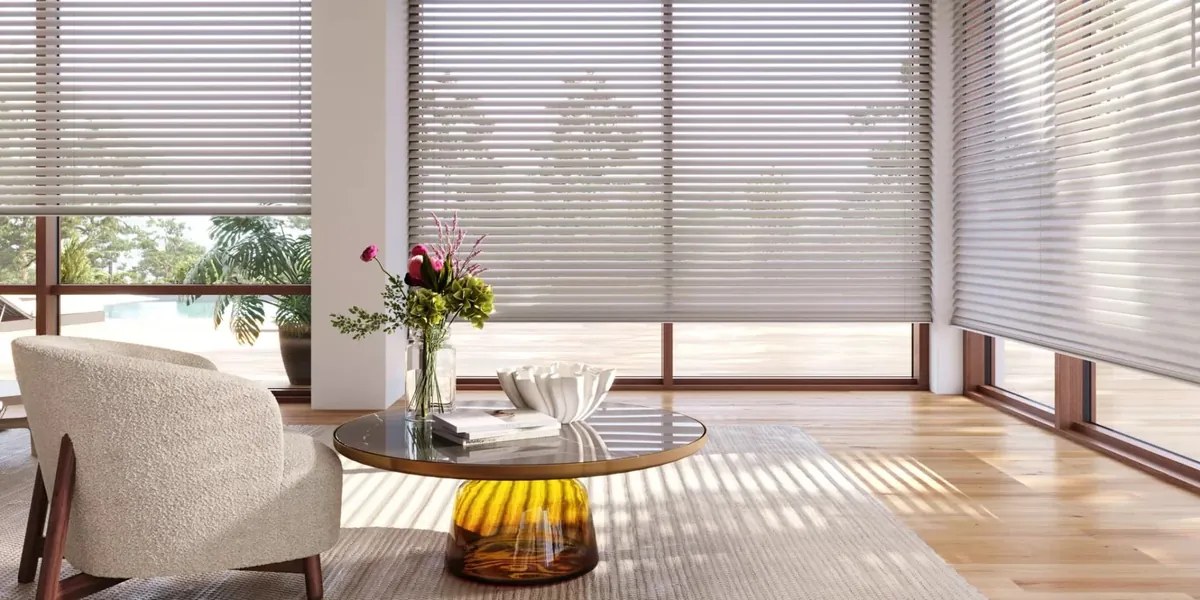
This is one of the strongest reasons to choose a horizontal blind on the water side of a house. The slats can be angled so their curved face points upward into the room. Light arriving from below strikes the slats and is turned toward the ceiling, where it spreads gently instead of glaring off a table or a screen. Between the slats you keep your view of moorings and open water.
For a whole wall of glass, a lighter slat color tends to look brightest from inside, because it keeps the window bright even when the blinds are angled. Darker slats give stronger contrast with the view outside and suit a den or bedroom where you want the room dimmer.
Choosing materials for salt air
Salt is part of life on the harbor. Windows opened for a sea breeze bring fine salt spray in with it, and over time it lands on sills, frames and any window covering hanging close to the glass. Damp mornings add moisture to the mix.
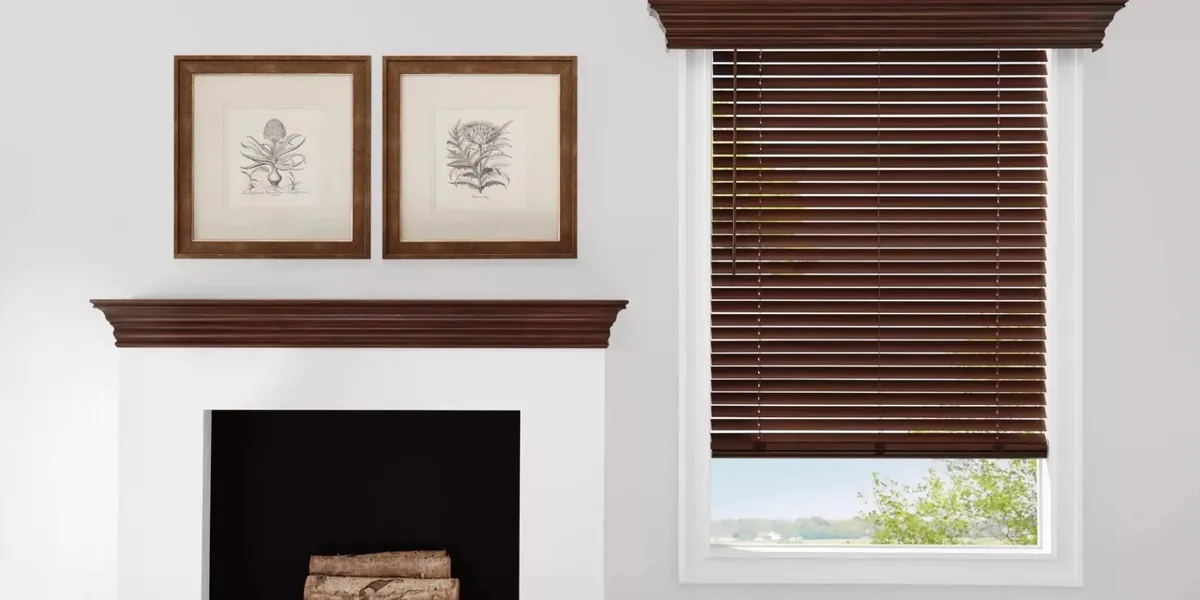
That shapes the choice of material room by room. EverWood faux wood is the first suggestion for porches, sunrooms, kitchens and bathrooms near the water, because it is made to resist humidity and wipes clean with a damp cloth. Real Parkland wood looks wonderful in a formal parlor or a bedroom where the windows stay closed most of the time and the air is steady. Metal blinds suit door glass and shallow frames, and a quick wipe keeps the slats clean.
Cordless lifts help in a coastal house as well. With no cord or cord lock hanging at the side, there is less to tangle and less exposed hardware. For windows you rarely reach, motorization keeps the working parts inside the headrail. Our page on wood blinds goes further into Parkland and EverWood side by side.
Captains’ houses in the village
The shingled captains’ houses near the harbor were built with care, and many still have their original small-paned sash, deep window seats and moulded casings. The windows are smaller than modern ones and set into thick walls, and over a long life the frames have usually shifted out of square.
We measure each frame at the top, middle and bottom, and again down each side, and build the blind to the narrowest reading so it drops freely. Depth is checked too, because old sash hardware and storm windows can leave less room than a wood headrail needs. In a shallow frame a metal blind, with its slimmer headrail, often fits where nothing else will. If it does not, we mount on the casing and tell you so.
Inside mounts keep the old trim on show. In a house where the woodwork is part of the character, that is usually what matters most. A narrow slat matches the scale of small panes and stacks compactly when raised.
Blinds beneath formal drapery
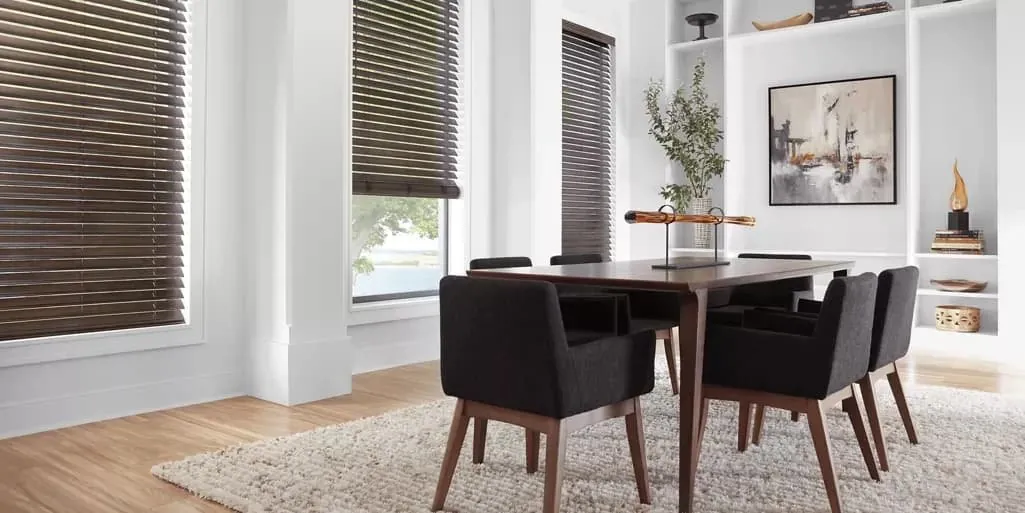
Some of the village houses have rooms that look unfinished without fabric at the windows: a front parlor, a dining room, a primary bedroom with tall windows. In those rooms drapery is often expected, and it does a fine job of softening the room and framing the window. What it does less well is control light by the hour.
A blind mounted inside the frame, beneath the drapery, handles that part. The drapery panels stay mostly still and set the style of the room, while the blind beneath them tilts open for daylight and closes for privacy or glare. Because the blind sits inside the frame, it does not crowd the drapery hardware, and when the blind is raised it disappears almost completely.
For this pairing we usually suggest a slim slat in a color that sits close to the trim, so the blind recedes behind the fabric. Wood suits a formal room well. If the window takes salt air, faux wood is a near match in look. Blinds & Designs carries Hunter Douglas drapery too, so the fabric and the blind can be planned together at one visit.
Glass walls toward Converse Point
The newer houses out toward Converse Point are built to see the water. Living rooms open onto decks through wide sliders, great rooms rise to high ceilings, and some rooms have glass on three sides. It is a different problem from the village: lots of glass, lots of sun, and long views no one wants to lose.
On a wide slider, a vertical blind is the natural choice. It draws to one side and clears the door completely, and the vanes turn to block low sun while still letting you see out. On the windows beside it, horizontal blinds in a matching color keep the room consistent. For upper windows and clerestories that catch the late sun, PowerView motorized blinds let you close them from a phone or on a schedule, without ladders. Many custom blinds in Marion for these houses are planned as a single wall, with one scene that sets every blind at once.
Porches, sunrooms and summer rooms
Many Marion houses, old and new, have a room that lives half outdoors: an enclosed porch, a sunroom off the kitchen or a summer room facing the harbor. These rooms have glass on two or three sides, windows that stay open for weeks at a time in warm weather, and furniture that fades if the sun hits it all afternoon.
Faux wood blinds are the workhorse here. They stand up to damp air coming through open windows and do not mind being wiped down at the end of the season. Hung on each window, rather than one blind across a whole run, they let you shade the sunny side while leaving the shaded side open to the breeze and the view. A light color keeps the room airy. A vertical blind suits any slider that opens from the porch to the deck or garden.
If the porch has high windows or a long row of glass that is hard to reach over a table or a built-in bench, PowerView makes daily use easy. A blind that tilts closed by itself at the hottest part of the afternoon protects cushions and floors without anyone remembering to do it. For these half-outdoor rooms, custom blinds in Marion are less about decoration and more about making the room usable for more of the year.
Wood, faux wood, metal or vertical, in short
A quick guide to where each belongs in a Marion house.
- Parkland wood. Formal rooms in the village, bedrooms, any room with steady air and the windows mostly closed.
- EverWood faux wood. Porches, sunrooms, kitchens, bathrooms and any room open to sea air.
- Metal. Shallow antique frames, door glass and spare modern rooms.
- Vertical. Sliders to the deck and very wide windows facing the water.
It is common to use all four in one house. A captain’s house might take wood in the front rooms, faux wood in the kitchen and the back porch, and metal on two shallow frames in the hall. A Converse Point house might take faux wood throughout the water side, a vertical blind on the slider and motors on the high glass. The main custom blinds page covers the whole range.
Color against shingle and harbor views
Marion’s shingled houses are mostly finished in white or cream trim, sometimes a deep historic color, and the view from the water side is blue and gray most of the year. A soft white blind tends to blend with the trim and let the view do the talking. Stained wood can look handsome in a panelled study or dining room.
From the harbor, the water side of a house is seen as a whole, as boats pass or as neighbors look across. One color across that side gives a calm, tidy face. On the street side of a village house, matching the blinds to the trim keeps the old elevation looking as it always has.
Privacy in a waterfront room
A wall of glass with a view of the harbor also lets the harbor see in, especially at night when the lights are on. Boats, walkers on the shore and houses across the water all have a line of sight into a lit room.
Closing horizontal blinds in the evening deals with this in a few seconds. Routeless slats, made without holes for the lift cords, help a bedroom stay dark and private. In a large glazed room, a PowerView schedule can close every blind at dusk so the room goes private on its own. In the morning the same schedule can tilt the slats open again, so you wake to the harbor without walking from window to window. If you are away for part of the year, the blinds can keep opening and closing on their routine, so the house looks lived in from the water.
A visit with samples
Choosing a slat color or material is much easier at your own window, in your own salt-air light, than in a store.
- Use Request a Consultation or the call button to find a time.
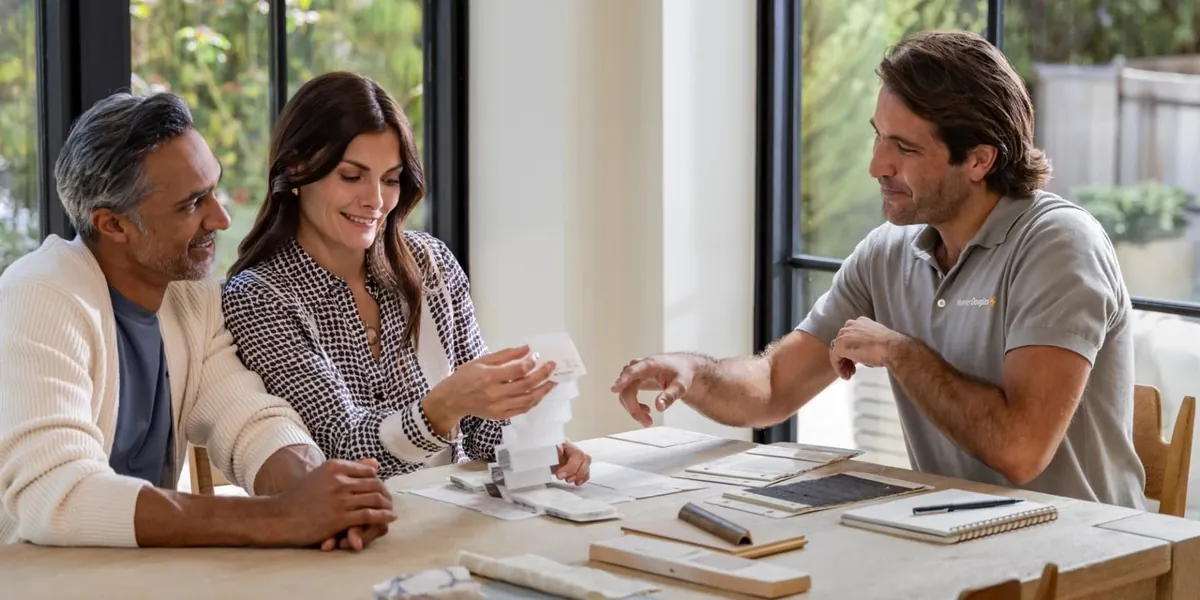
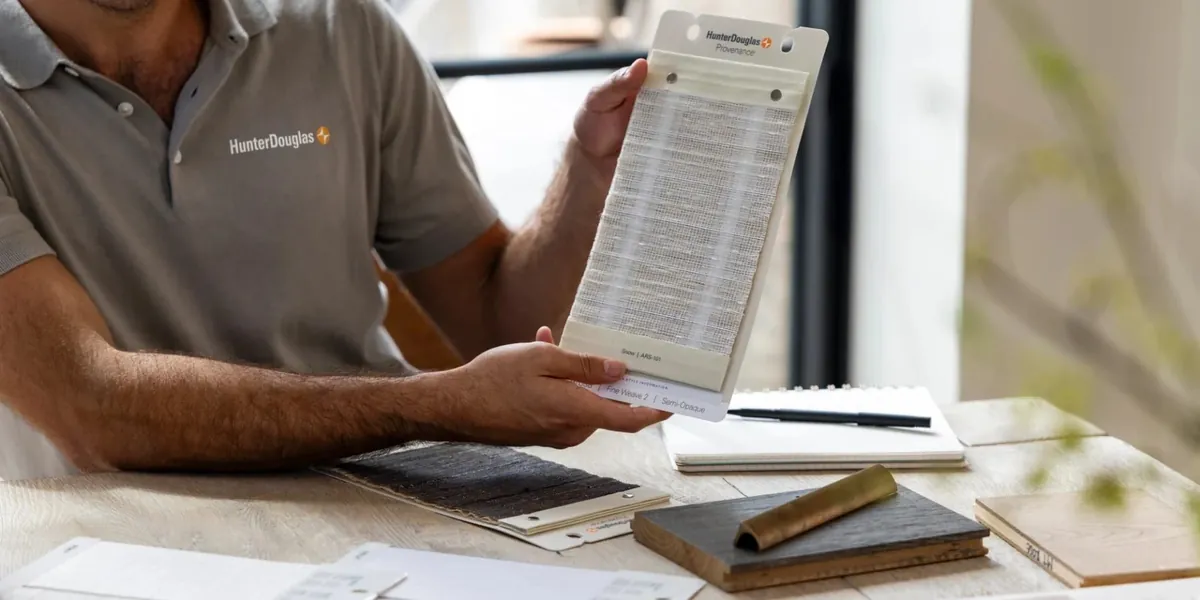
- We arrive with wood, faux wood and metal slats in a range of colors, vertical vanes, and the lift and tilt options.
- We look at each room with you and talk about the harbor light, the salt air and how each room is used.
- You hold samples up at the windows, including the water side at the brightest time of day if you like.
- We measure every opening, with extra care for antique frames and for high glass.
- You get a free estimate and decide when you are ready.
- Our certified Hunter Douglas installers fit the finished blinds, level each one and show you how they work.
Samples at your door in Marion
Our vans carry the samples, so we can bring the showroom to you, whether your house sits on a village lane or out on the point. You can see how each slat looks against your own shingle-white trim and with the harbor behind it.
We also offer interior design consultations, so if the room needs a wider rethink, from drapery fabric to color, we can talk it through during the same visit. Read more about what happens at an in-home consultation, or see our guide to the best shades for sun and glare.
Fitting blinds in an old coastal house
On a captain’s house, installation is as much about protecting the house as hanging the blind. Brackets go into sound wood without splitting old casings, and we avoid marking trim that may have been painted and repainted many times. Each headrail is levelled even where the frame is not, so the blind hangs true.
On the newer houses, it can mean reaching high glass safely and lining up a row of blinds along a long wall. Our installers are certified by Hunter Douglas, and every blind is tested before we leave. Getting the fit right is what lets custom blinds in Marion, MA, look as if they came with the house.
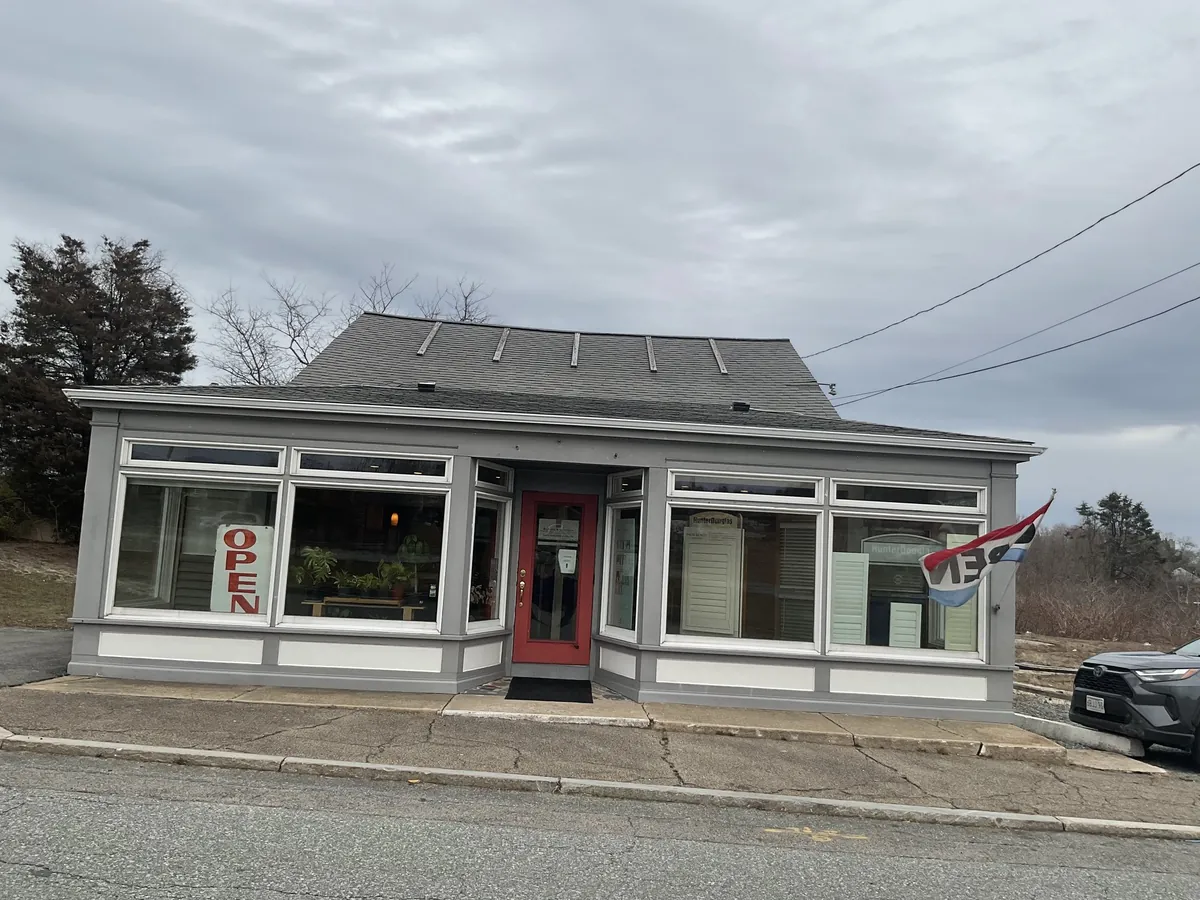
A Gallery dealer near Sagamore
Blinds & Designs is a Hunter Douglas Gallery dealer, the brand’s own designation for dealers who meet its standards. You get the full blind range through one consultation, PowerView motorization, and installers certified by Hunter Douglas. If a blind ever needs attention, we carry out blind and shade repairs as well.
Our nearest showroom to Marion is in Sagamore. The address and hours are on the Sagamore showroom page. For other rooms, see our roman shades in Marion, cellular shades in Marion, plantation shutters in Marion, or everything we do in town on the Marion page.
Questions from Marion
Which blind copes with a room open to sea air?
EverWood faux wood is our usual suggestion for porches, sunrooms, kitchens and baths near the harbor. It resists humidity and wipes clean. Real wood is a better fit for rooms where the windows stay closed.
Can blinds cut the glare that comes up off the harbor?
Yes. Angle the slats so the face points upward into the room. Light reflected up off the water hits the slats and is sent to the ceiling, while you still see out between them.
Can I have a blind under my drapery?
Yes. An inside-mounted blind sits within the frame, below the drapery hardware. The drapery sets the style and the blind handles light and privacy through the day.
Will a blind fit my small antique sash?
Usually. We measure each frame and check its depth. Where a wood headrail is too deep, a metal blind often fits inside. If not, we mount on the casing.
Do you charge for the estimate?
No. The estimate is free once we have measured, with no obligation.
When you are ready
The best way to choose is with samples in hand, at your own harbor windows. Request a consultation and we will bring Hunter Douglas blinds to your Marion house, measure each opening and give you a free estimate. You can also use the call button, or visit our Sagamore showroom.