
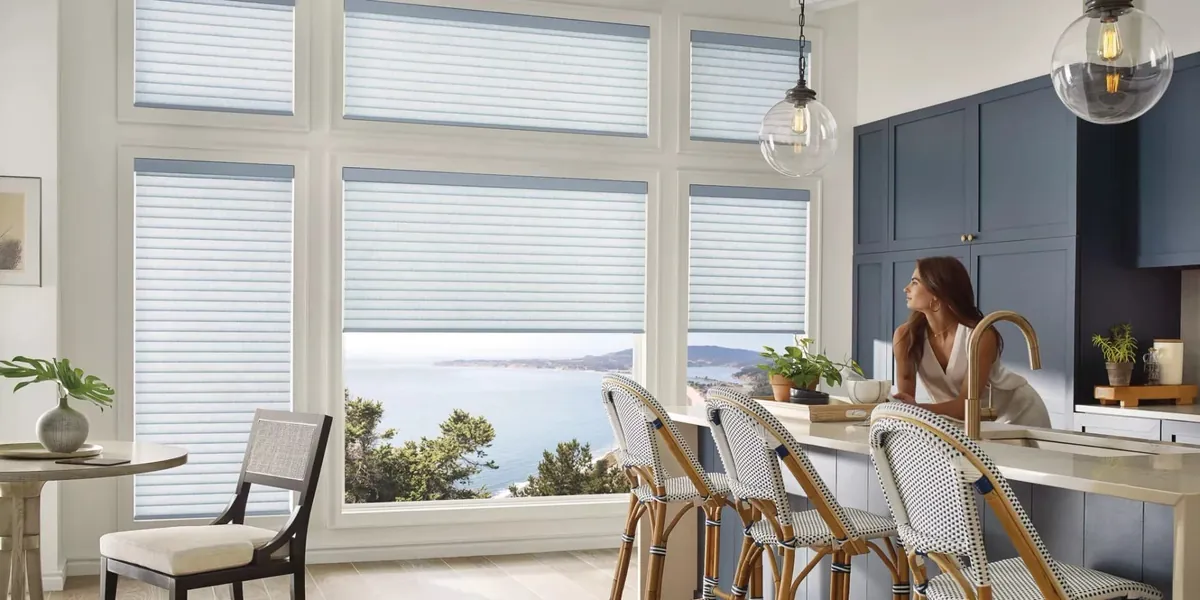
Harbor light and village windows
Few towns on Buzzards Bay put as much glass toward the water as Marion. Around Sippican Harbor and through the village, shingled captains’ houses face the moorings with rows of tall sash, and many have added a sunroom or a wall of windows on the harbor side over the years. Out toward Converse Point the newer houses go further, with whole rooms that are mostly glass. Those water-facing rooms are where most requests for roller shades in Marion, MA, begin.
The light off the harbor is the reason those windows exist, and it is also the problem. On a clear afternoon the sun comes at you twice, once from the sky and again bouncing off the water, and a room that faces it can be too bright to read in and too warm to sit in. A good roller tames that without hiding the view.
The village houses ask for something different. Their front rooms are formal, and many already have drapery, or are expected to. There, the roller does its work quietly behind the curtains. And everywhere in town, the salt air shapes which parts we choose and how the shades are fitted.
Roller shades in Marion, MA, for every side of the house
We bring every Hunter Douglas roller line to the house. These four are the ones that come up most around the harbor, and each has its own page if you want to read more first.
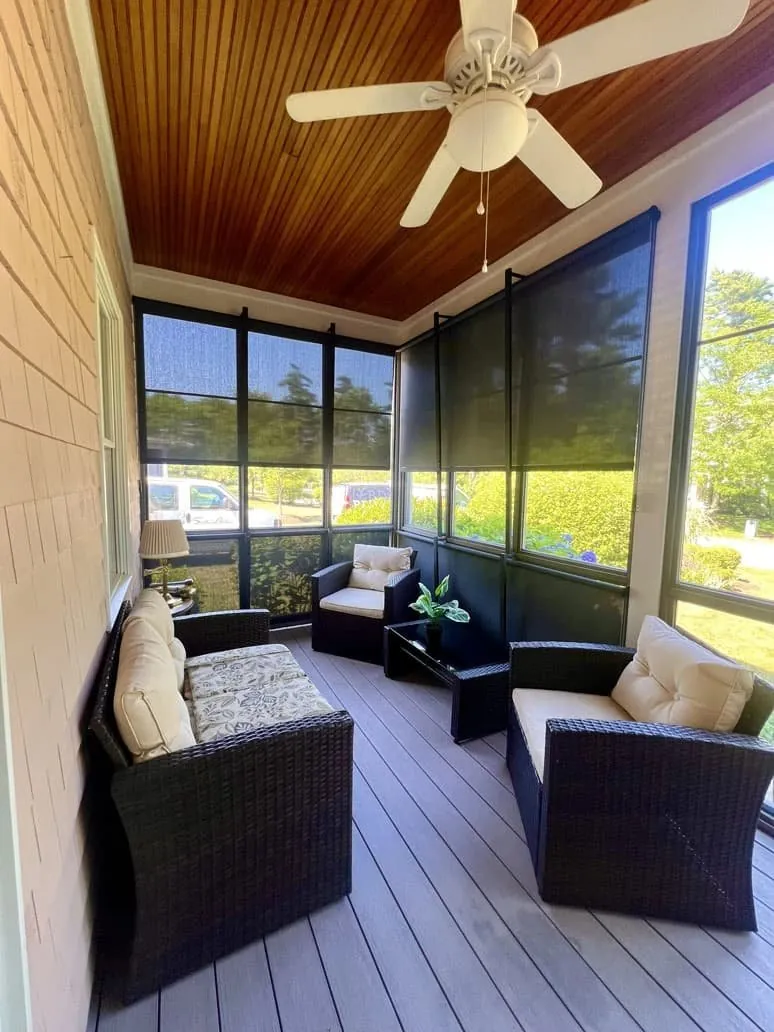
Designer Screen
Solar screen fabric in a range of openness levels. The first thing we suggest for a room that faces the harbor.
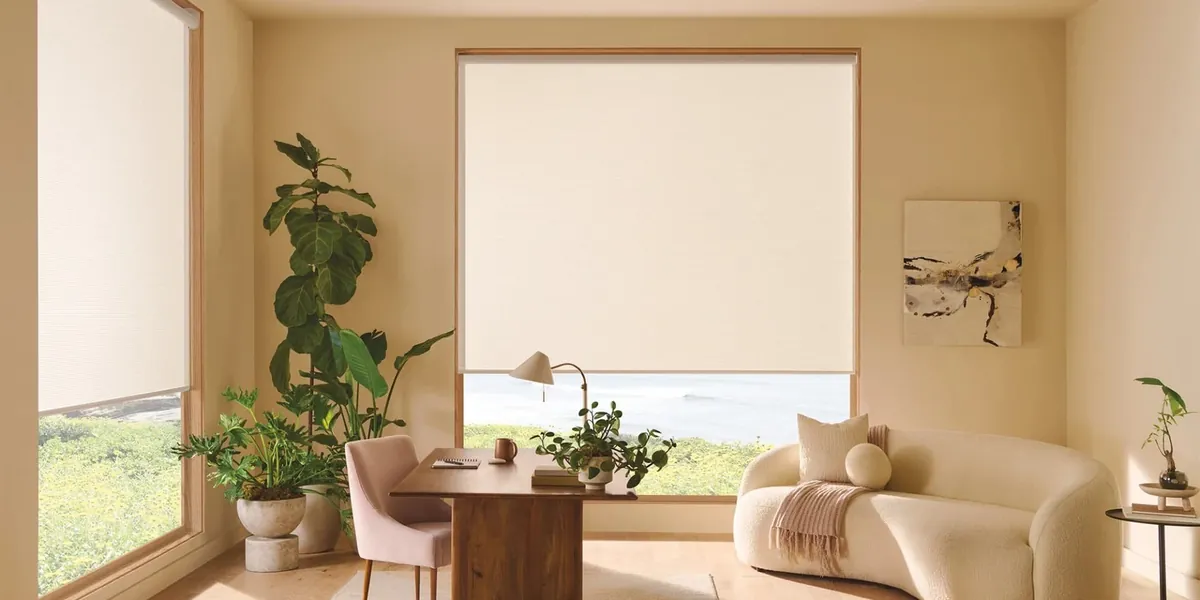
Designer Roller
Solid and patterned cloths from light filtering to blackout, slim enough to sit behind drapery in a village parlor.
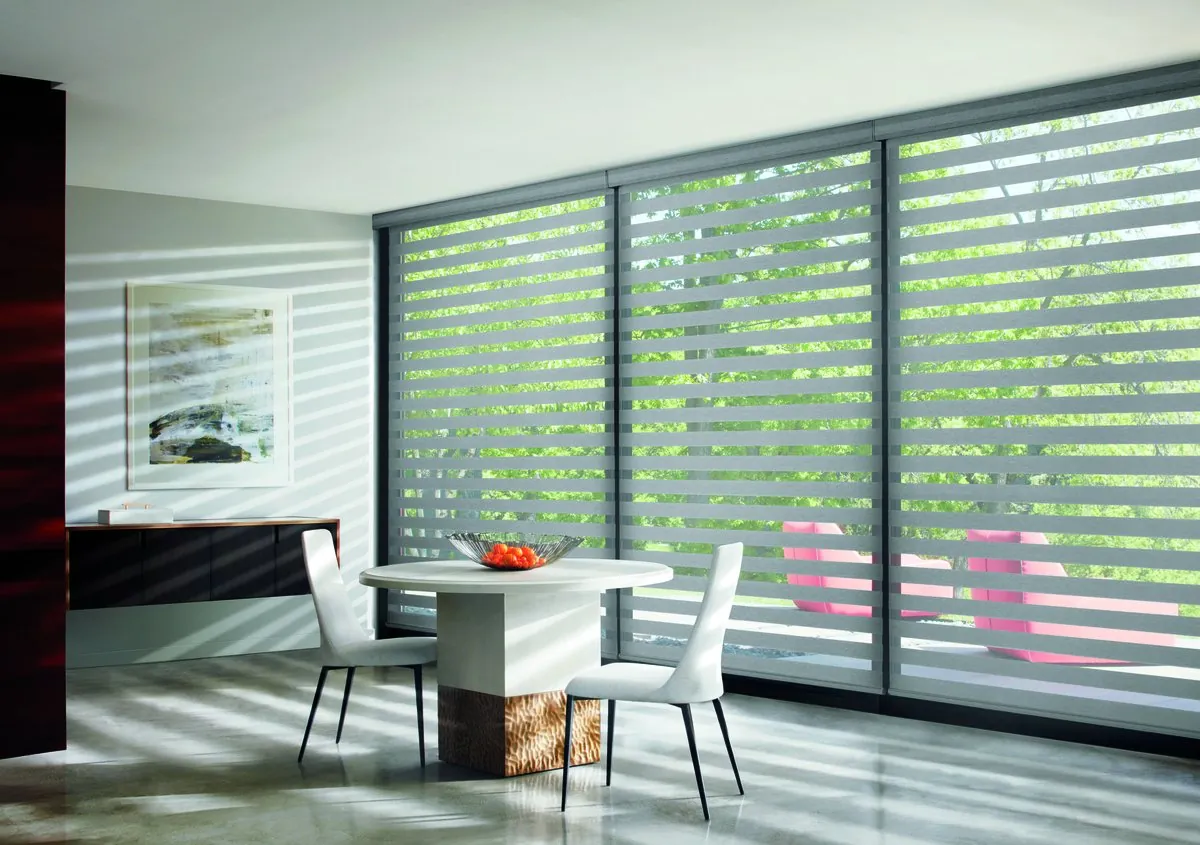
Designer Banded
Sheer and solid stripes that slide past each other, so a dining room can be open to the water or private in one movement.
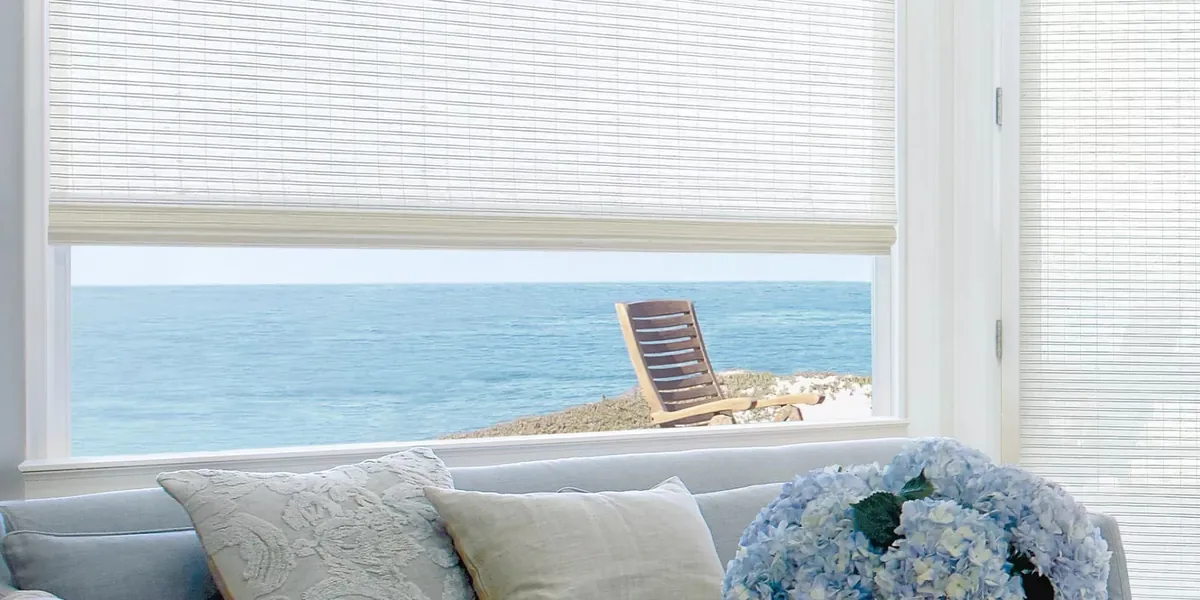
Alustra Woven Textures
Textured, natural-looking roller weaves that sit comfortably in a shingled cottage with painted beadboard and old pine.
Taking the glare off Sippican Harbor
Glare from open water is not like ordinary sunshine. It comes in low, it moves as the tide and the wind change the surface, and it reaches deep into a room. A television on the wrong wall becomes unwatchable, and anyone sitting with their back to the windows turns into a silhouette.
A solar screen is the natural fix because it keeps what you came for, the boats and the far shore, while knocking back the brightness. Screen fabric is woven with a pattern of small openings, and the share of open space is called its openness. With a more open weave, the harbor stays sharp and the room stays bright. With a tighter weave, the glare and heat drop further but the view softens, a little like looking through a light haze.
Color matters as much as openness. Dark screens, in charcoal, bronze or deep gray, absorb light and are surprisingly easy to see through. Light screens bounce more of the sun back and look like a pale glowing panel from inside. For a harbor room where the view is the point, most people end up with a darker screen, even against white walls.
We test it in place. At the visit we lower sample screens on your harbor windows, ideally at the time of day the glare is strongest, and let you compare. It is usually clear within a minute which weave suits the room.
Captains’ houses in the village: rollers behind the drapery
The older houses near the harbor and along the village streets were built for families who expected a front parlor with proper curtains. Many still have them, and in these rooms drapery is part of the look of the house. A roller is not there to replace it. It is there to do the daily work that heavy curtains do badly.
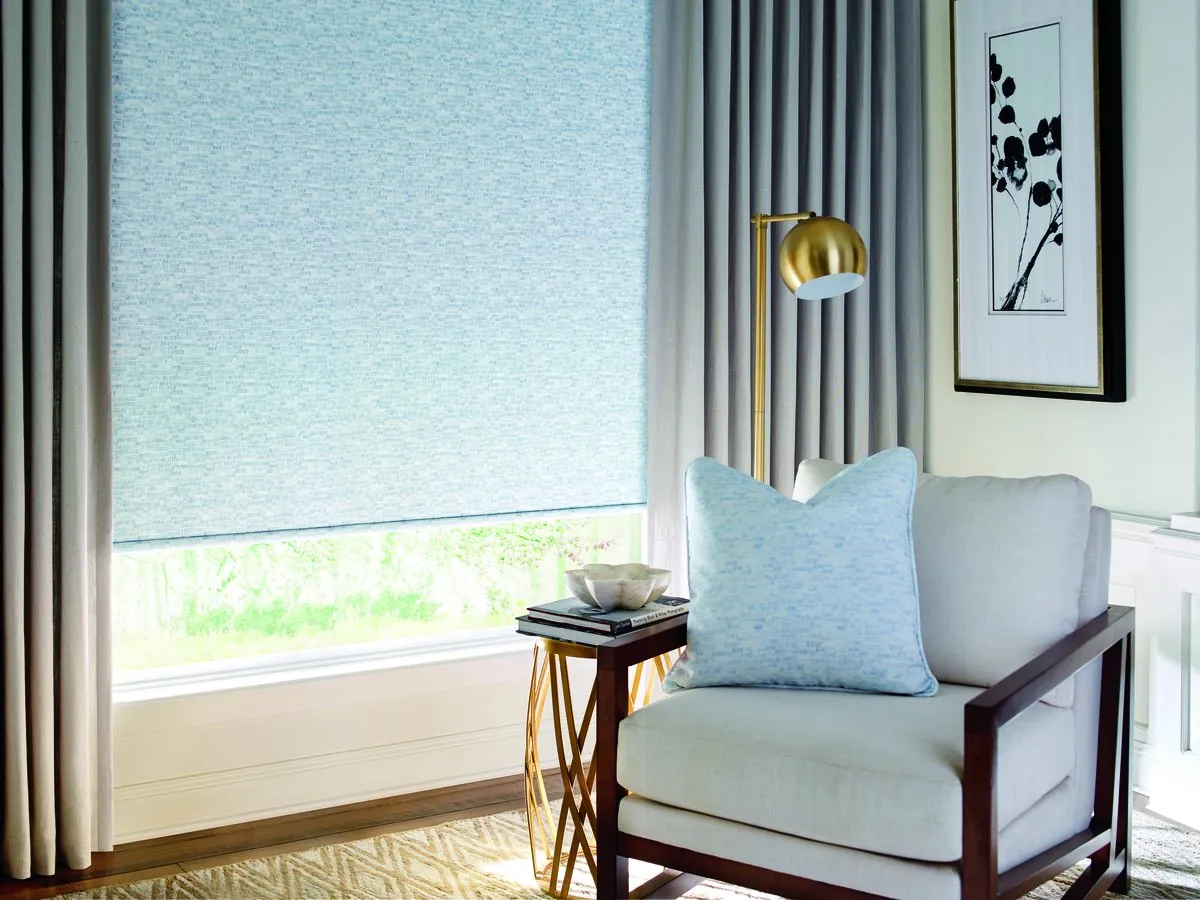
Drawn drapery blocks the light, the view and the room’s character all at once. A light filtering roller mounted inside the window frame, behind the curtains, lets you leave the drapery open as a frame and still soften the afternoon sun. At night, lower a room darkening roller for privacy and leave the curtains purely decorative, or draw both for a properly snug room on a winter evening.
The trick is fit. In an old captain’s house the window casings are often deep and handsome, and the sash may have been rehung more than once. We measure carefully so the roller sits inside the frame without fouling the sash locks, and we choose a fabric color that disappears behind the curtains rather than competing with them. A neutral that picks up the wall color usually works best.
If your rooms do not have drapery yet and you would like it, we carry Hunter Douglas drapery too, and we can plan the roller and the curtains together at the same consultation.
Salt air and what we choose because of it
Living by the water means living with salt in the air. It settles on window frames and hardware and, over time, on any exposed metal near a window that is left open on summer evenings. We plan for it when we suggest a shade.
A roller is a good fit here partly because so little of it is exposed. The tube and the lift mechanism sit inside the headrail, and the fabric itself has nothing to rust. Cordless lifts take away the cord and cord lock that would otherwise hang at the side of the window. For windows that are hard to reach, such as the high panes in a sunroom, PowerView motorization does the lifting and keeps hands off the shade altogether, and we plan how each motor is powered at the visit.
We also think about how the windows are used. A shade on a window that is often open to the sea breeze will move in the wind, so we may suggest a heavier fabric, a hold-down for the bottom rail, or simply raising that shade when the window is open. Our certified Hunter Douglas installers fix the brackets into solid wood so the shade stays firm and level on a window that gets a lot of use.
Converse Point: rooms that are mostly glass
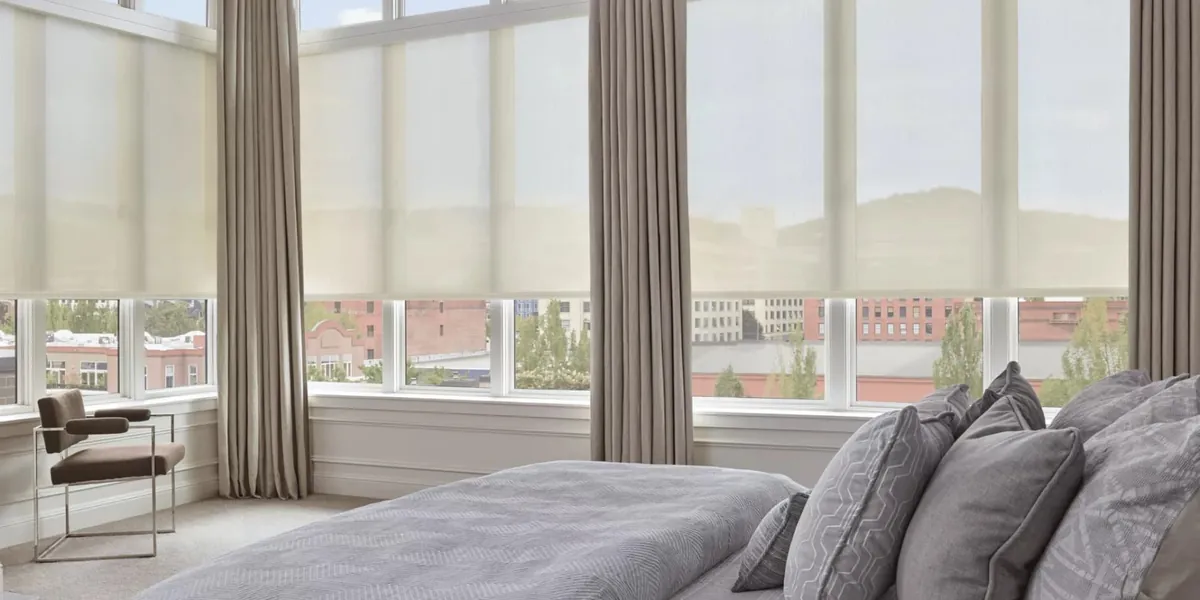
The newer houses out toward Converse Point often take the harbor view to its limit, with great rooms and sunrooms where the walls are nearly all windows and some panes rise well above head height. These rooms are beautiful in the morning and can be overwhelming by mid afternoon, when the sun has swung round and the water is throwing light back in.
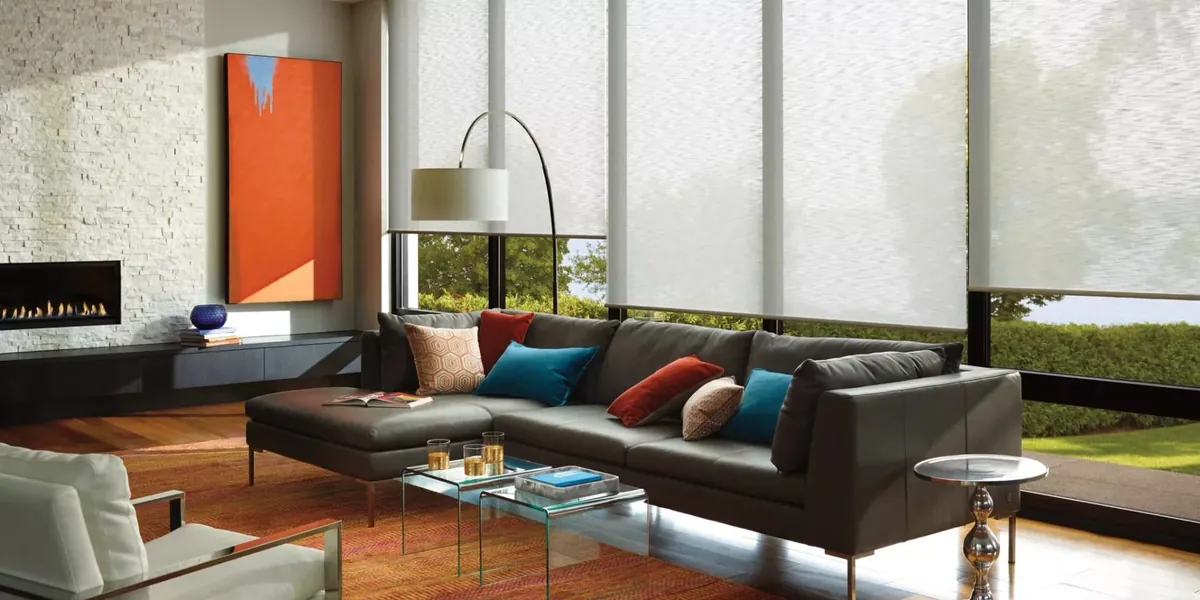
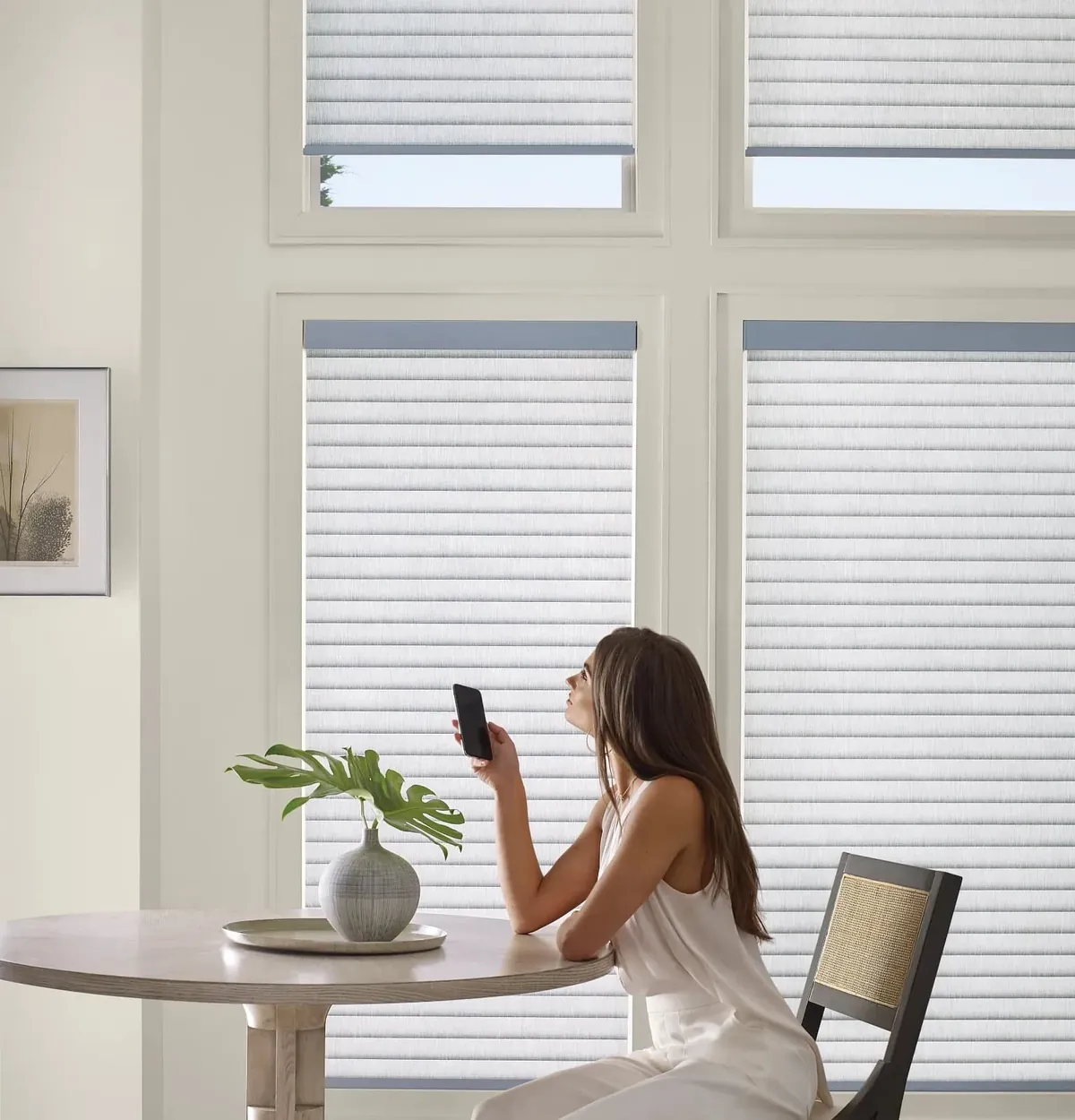
The usual plan is one roller per window in a single screen fabric, so the room looks unified when the shades are down and the frames stand clean when they are up. The lower shades can be lifted by hand. The high ones are motorized with PowerView, so you control them from your phone, a remote or a schedule, and the app can group a whole wall or a whole room to move together. Many households set the harbor-side shades to come down a little before the afternoon glare arrives and rise again in the evening for the sunset.
Wide openings sometimes need two or more shades side by side. We show you at the measuring visit where any joins will fall, and we line them up so they read as one band of fabric across the glass. For rooms of this scale, Alustra Architectural adds a broader range of designer fabrics, and we bring those samples when we know the house has this much glass.
Sunrooms, porches and bedrooms facing the water
A sunroom on the harbor side is the room most likely to overheat in summer and the one people most want to use. A solar screen on every pane takes the edge off the heat and glare while keeping the room open to the water. If the sunroom has a glass roof or skylights, we look at those separately, because a standard roller hangs from the top of a vertical window.
Screened porches suit a darker screen too, lowered on the sunny sides to cut the afternoon light. Before ordering for any outdoor or semi-outdoor space, we talk through the conditions there so the fabric and hardware suit where they will hang.
Bedrooms that face east over the water get the sunrise straight in, and it reaches a long way across the room. For those, a blackout roller is the usual answer, often with side channels or an outside mount to close the gaps at the edges. Some people like to layer a sheer or a light filtering roller in front of the blackout, so the room can be bright by day and properly dark at night.
Guest rooms in the older captains’ houses are often tucked under the roof, with small windows set into dormers or gable ends. A roller fits neatly in those tight openings because everything it needs lives in the slim headrail, and a room darkening cloth lets visitors sleep past the early light coming off the bay.
Dining rooms and kitchens facing the moorings
Many harbor houses put the kitchen and dining room on the water side, so meals come with a view of the boats. Those rooms are used at every hour, and the light changes completely from breakfast to supper. In the morning an east-facing kitchen may be soft and easy; by evening a west-facing dining room can have the low sun shining straight across the table and into everyone’s eyes.
Designer Banded shades are a favorite in these rooms. The fabric has sheer and solid stripes on two layers. With the sheers lined up, you look out through a fine gauze and the harbor stays in view. Shift the layers and the solid stripes close, so the room is private when the lights come on and the house is lit up for anyone passing on the water. One shade covers both jobs, which keeps a run of kitchen windows tidy.
Over the sink, a roller needs to clear the faucet and any crank handle and stay above the splash zone when raised. A fabric that wipes clean helps. When the kitchen and dining area share one long wall of windows, we usually carry a single fabric across the whole run so the room reads as one space from inside and from the water.
For a house with a deck or terrace off the dining room, the glass doors get their own shade, set so the fabric clears the handle and the doors open freely. Plenty of the roller shades in Marion, MA, that we plan start in exactly this part of the house, because it is the room people use most in daylight.
Bringing samples down to the harbor
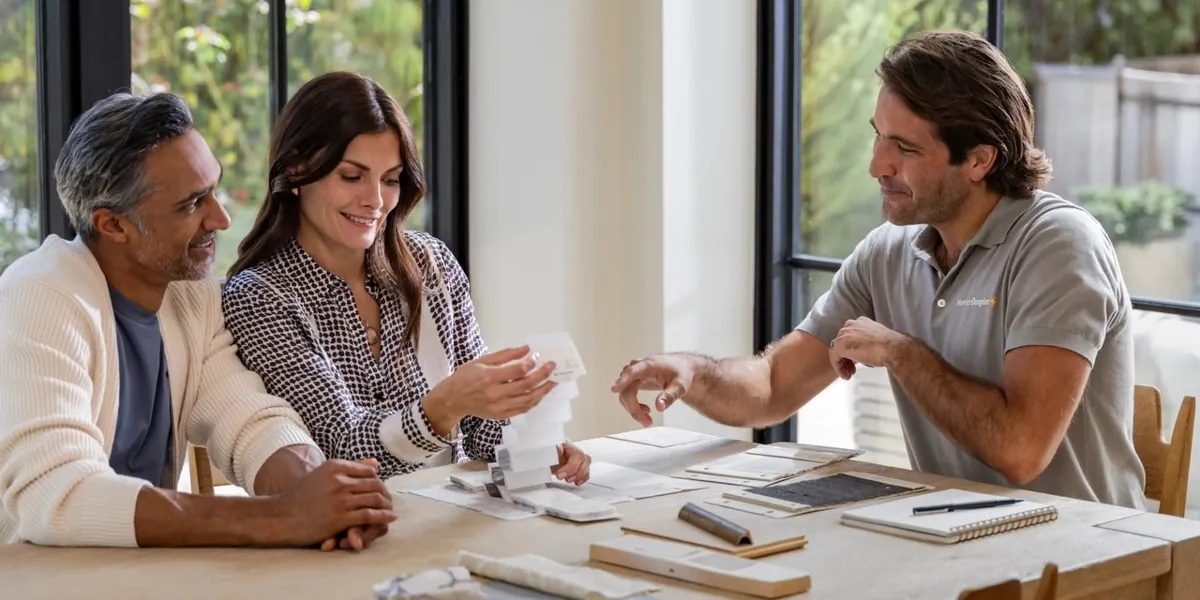
A sample book in a store tells you very little about how a screen will look against the glare off the water at four in the afternoon. That is why we come to you. Our vans carry the full range, so we can bring the showroom to your door.
- Ask for a visit through Request a Consultation, or with the call button.
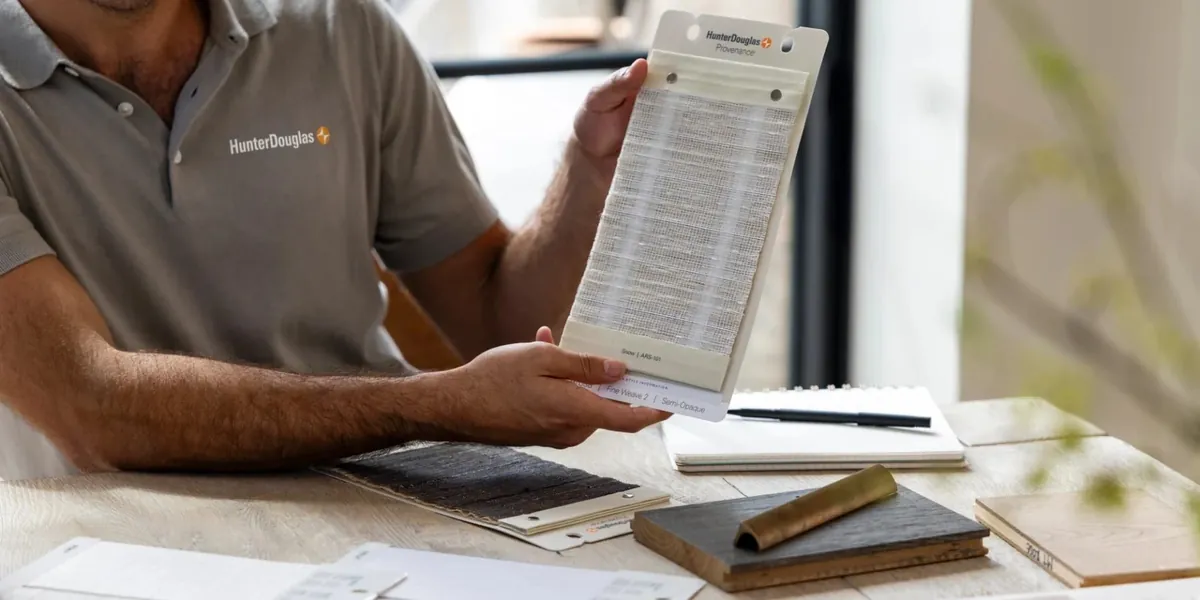
- We arrive with screen, roller, banded and woven samples, along with the lift options.
- We start in the harbor-facing rooms, where the light is strongest, and talk about how you use each one.
- You hold samples to your own windows and compare the view and the glare through each.
- We measure every window, note the depth and any hardware, and look at how the drapery and the shades will work together.
- You receive a free estimate for the shades you are considering, and decide in your own time.
If you would like help bringing a whole room together, ask about our interior design consultations at the same visit. You can also read about what happens at an in-home consultation before we come.
Fabric color in strong sun
A window that takes direct sun off the water every day is hard on any fabric. Over the years, strong light can soften deep colors, especially on the side of a shade that faces the glass. A few choices help. Neutral and mid-tone fabrics show change far less than strong brights. Fabrics with a white or neutral backing protect the color you see inside. And on the harbor side, lowering a screen through the brightest hours means the shade, not the room, takes the strongest of the sun.
For the village houses, color is also about the outside. A row of front windows seen from the street looks best with shades in one color family, and a neutral back makes that easy even when you want something richer inside. Many people choose roller shades in Marion, MA, in soft whites, sand and gray-blue tones that suit both the shingles outside and the rooms within.
Read more about every line on the main roller shades page, or see cellular shades in Marion, motorized blinds in Marion and everything else we do on our Marion page.
What being a Gallery dealer means for you
Hunter Douglas names only some of its dealers as Gallery dealers, and Blinds & Designs is one. For your house it means one appointment covers the whole roller family: Designer Roller, Designer Screen, Designer Banded, Sonnette and both Alustra collections, with every lift and PowerView.
The people who fit your shades are certified Hunter Douglas installers. They work carefully around old casings in the village and long runs of glass on the point, and they check every shade before they leave.
We also handle blind and shade repairs, so if a shade ever needs attention you know who to call.

The showroom closest to Marion
Our Sagamore showroom is the closest of our locations to Marion. Stop in if you like to see shades in person before a home visit.
The decision is still best made at home, with the samples against your own harbor light.
Questions from Marion
Which shade keeps the harbor view but cuts the glare?
A solar screen. A more open weave keeps the view sharper, a tighter one cuts more glare, and darker colors are easier to see through from inside. We try samples on your windows at the brightest time of day.
Can I keep my drapery and add roller shades?
Yes, and it often works best that way. A slim roller inside the frame does the daily light control, and the drapery stays open as a frame or is drawn for warmth and privacy at night.
How do roller shades cope with the salt air?
Most of the working parts sit inside the headrail, so little is exposed, and a cordless lift removes the cord lock altogether. For high windows, PowerView keeps hands off the shade entirely.
What do you suggest for a sunroom that gets too hot?
A solar screen on every vertical window, often motorized so the shades come down before the afternoon heat. Glass roofs and skylights need a separate look, which we do at the visit.
Is there a charge for the estimate?
No. Estimates are free. We measure at the consultation and give you an estimate with no obligation.
See the samples at your windows
The only real test for roller shades in Marion, MA, is to see the fabric in your own harbor light. Request a consultation and we will bring the roller range to your house, measure each window and give you a free estimate. If you would rather ask a question first, use the call button, or stop by the Sagamore showroom.