
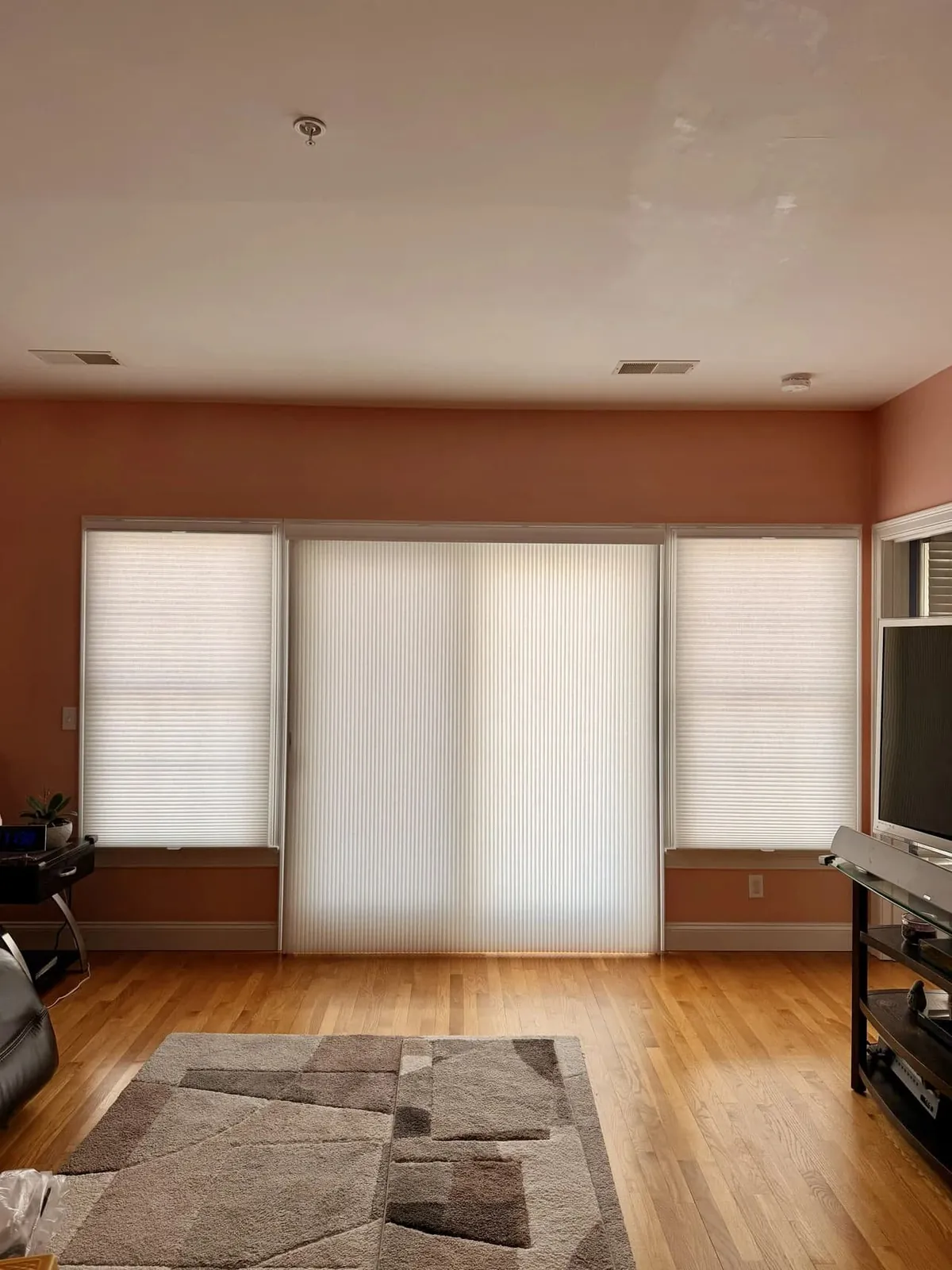
Rooms lit from more than one direction
Norfolk is a town of colonials and capes set well back on large wooded lots, much of it built from the eighties onward. The houses are spread out, the neighbors are some distance away and, because nothing crowds them, most rooms have windows on two or three walls rather than one.
That is the heart of planning window coverings here. A family room might have morning sun on one side, afternoon sun on another and a slider to the deck on a third. Each of those walls wants something slightly different, yet the room still has to look like one room. As a Hunter Douglas dealer in Norfolk, MA, Blinds & Designs has the whole Hunter Douglas family to draw on for that. We are a Hunter Douglas Gallery dealer, and each order is fitted by installers whom Hunter Douglas has certified.
The good news is that the openings themselves are standard modern units, so almost every line can be mounted cleanly. The thinking goes into light, not fit.
Six ways to dress a Norfolk window
These are the Hunter Douglas families we plan with most often in town. Every card opens our page for that product in Norfolk.
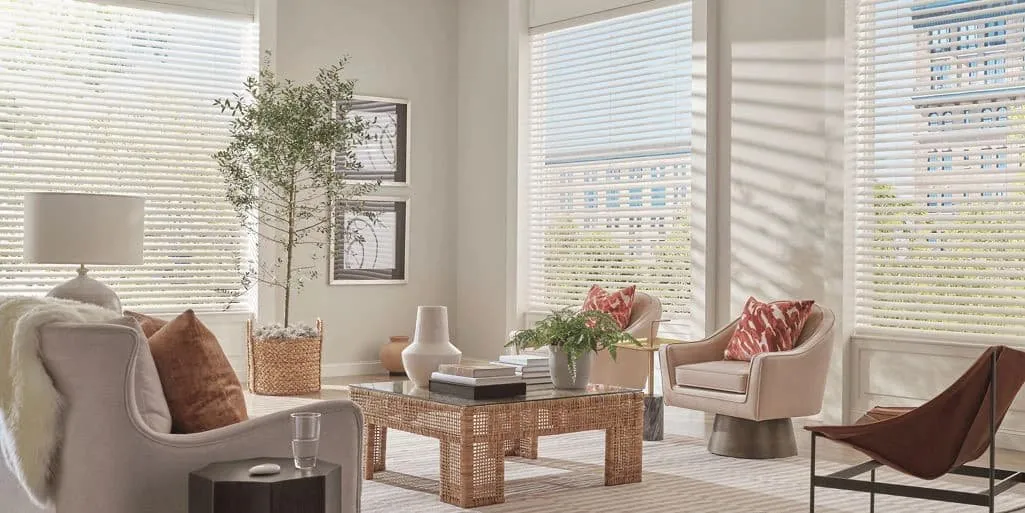
Custom blinds
Wood, faux wood and metal slats that angle light exactly where you want it.
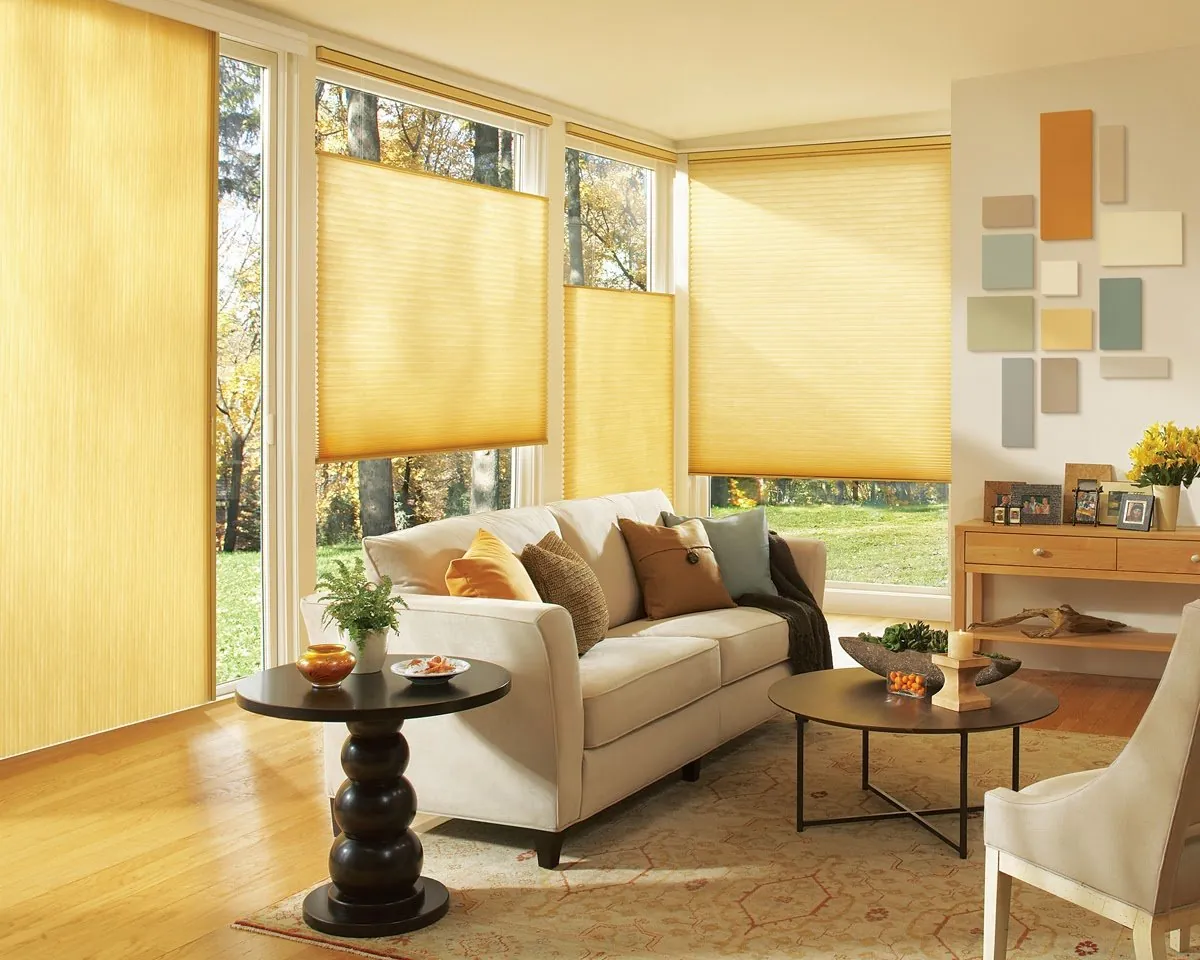
Cellular shades
Duette and Applause honeycomb, a strong match for corner rooms and cold glass.
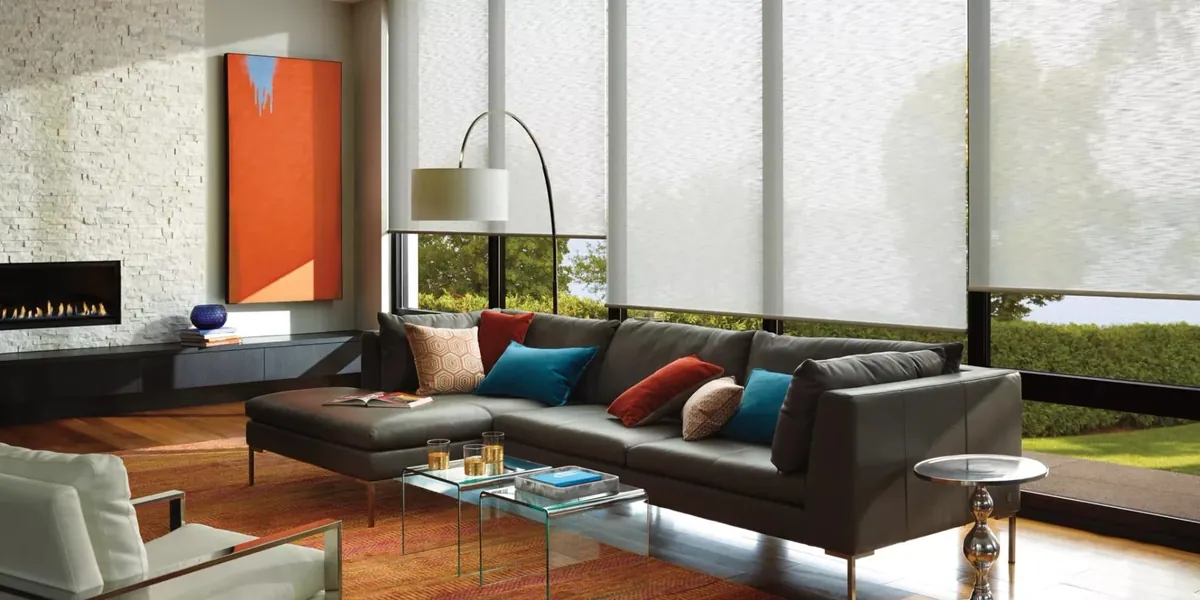
Roller shades
Designer and Alustra rollers and screens with a slim profile on wide modern glass.
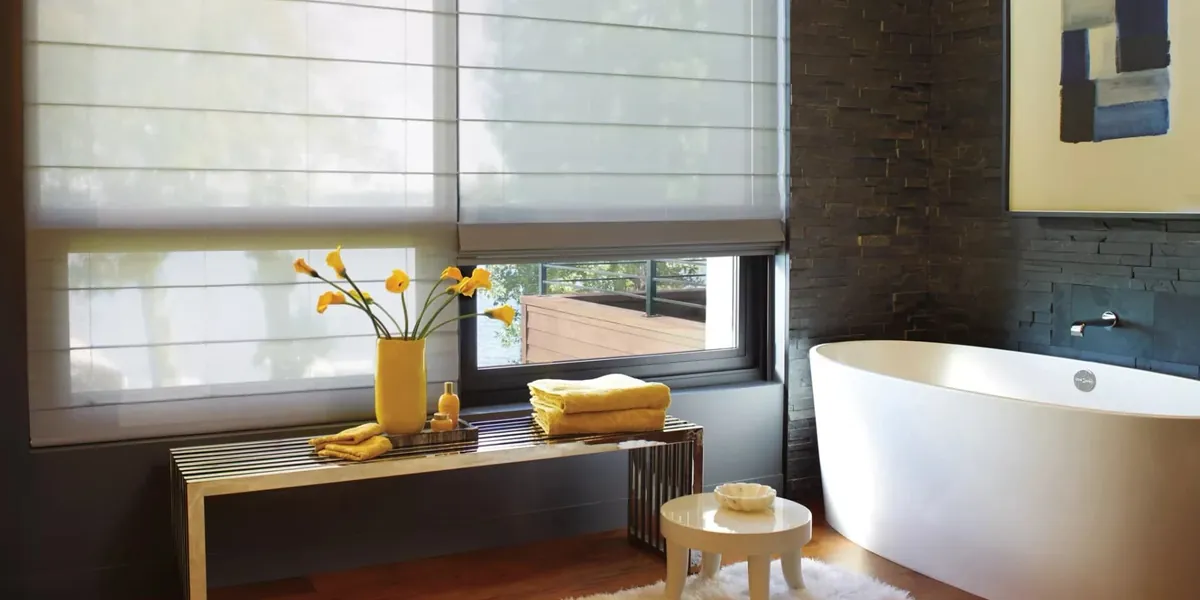
Roman shades
Vignette and Carole folds, from sheer to fully lined, to soften a room.
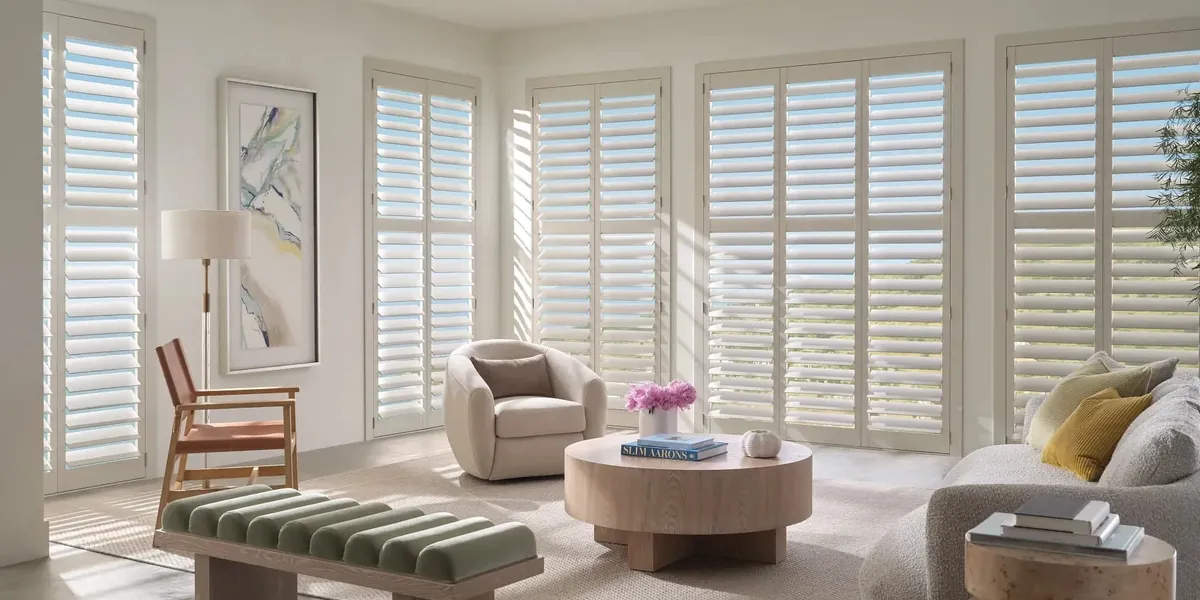
Plantation shutters
Palm Beach, NewStyle and Heritance panels with louvers that tilt to follow the sun.
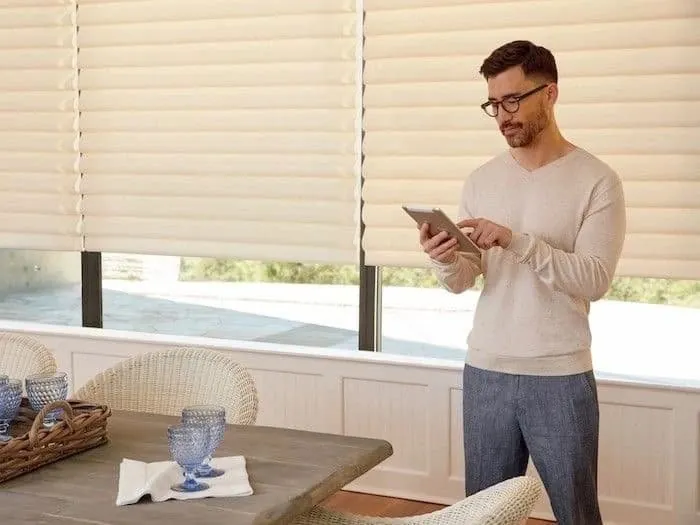
Motorized blinds and shades
PowerView scenes that move each wall’s shades at the hour its sun arrives.
Corner rooms and three-sided light
In a dense town most rooms have a single outside wall. In Norfolk, with houses spread across big lots, corner rooms are the norm: a living room with windows front and side, a kitchen with a window over the sink and a slider at the back, a primary bedroom with glass on two walls.
Light from several sides is lovely, but it means no single product setting works all day. When the east windows are glaring at breakfast, the west ones are dim; by late afternoon the position reverses. A room like this works best with coverings that adjust easily and that can be set differently on each wall.
A few approaches we suggest often:
- One line, set wall by wall. The same honeycomb or roller throughout the room keeps it looking consistent, while each wall is raised or lowered on its own as the sun moves.
- Different opacities in the same color. A light-filtering fabric on the sunny side and a sheer or screen on the shaded side, both in the same white, so the room reads as one.
- Shutters for flexibility. Tilting louvers follow the sun through the day without anyone having to raise or lower anything.
- PowerView groups. Each wall is its own group, so a schedule can drop the west shades at four and leave the east ones up.
Following the sun around the house
Because Norfolk houses sit in open space with light reaching most walls, it helps to think through the day before thinking about products. A typical house has a pattern something like this.
Early morning. The east-facing rooms light up first, often the bedrooms or the kitchen. Bedrooms here want darkness until you choose to get up; a room-darkening honeycomb or blackout roller handles that. A kitchen wants the opposite: easy morning light without glare across the counter.
Midday. The south side takes the most sun, especially in winter when it is low. A light-filtering honeycomb or a sheer shade keeps that light comfortable without shutting it out, which is pleasant on a cold, bright day.
Late afternoon. The west side is usually the hardest. Low sun comes straight into a family room or a home office, onto screens and furniture. Screen shades and sheer shades are the usual answer, because they cut the glare and leave the yard in view.
Evening. Once the lights come on inside, every room facing a driveway or a neighbor benefits from privacy. On a wooded lot that is often only a few windows, but the ones facing the road or a nearby house matter.
Seeing the pattern room by room makes the choice of products much simpler, and it shows where motorization would earn its keep.
Colonials built for a growing family
The colonials that fill much of Norfolk have a familiar layout. A formal living room and dining room sit either side of the front door, a kitchen and family room run across the back, often under one open ceiling, and four or so bedrooms upstairs. A two-story foyer with a tall window above the door is common.
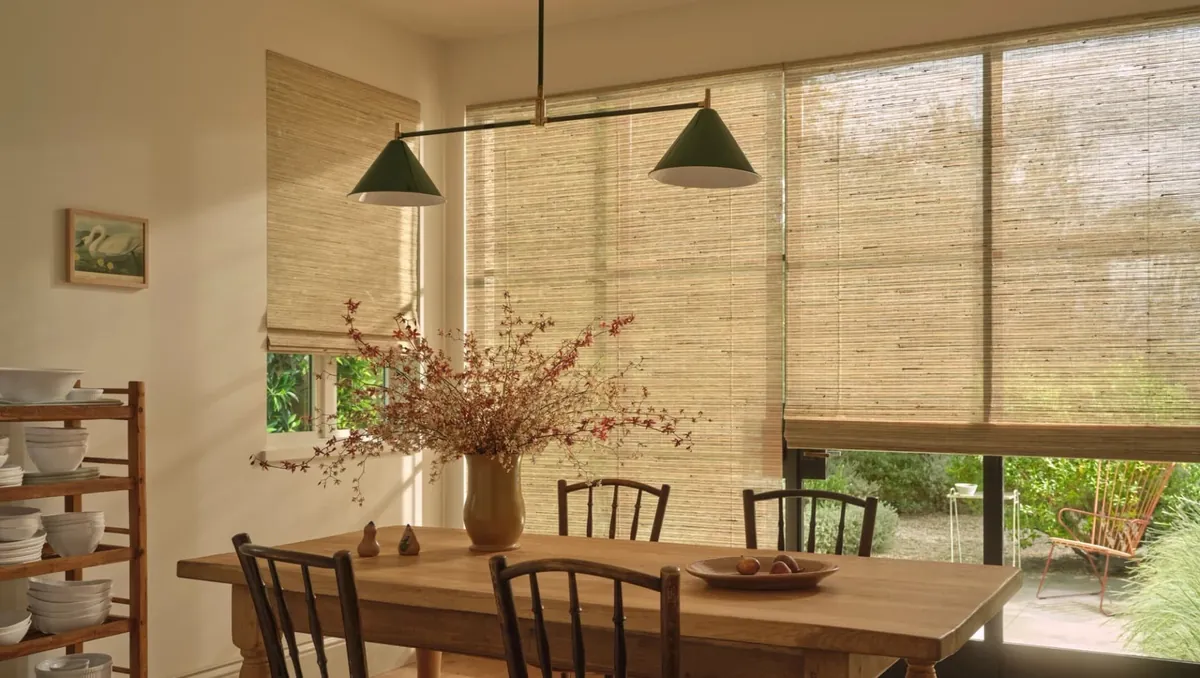
A Hunter Douglas dealer in Norfolk will usually suggest treating the front rooms as a pair, with one product and color so the house looks balanced from the road. Vignette Roman or Duette honeycomb inside the frame suit a formal living room; Parkland wood blinds or shutters suit a dining room. The open kitchen and family room at the back usually need to handle a slider or French doors and a wide run of windows, so a vertical honeycomb or Luminette for the door, with matching honeycomb or rollers on the windows, ties the space together.
The foyer window above the door is the one nobody can reach, and it takes the morning or afternoon sun straight down the stairs. PowerView is the tidy answer, moving it from a remote or a wall control.
Capes on wooded lots
The capes in town range from modest early ones to large modern versions with full shed dormers. Downstairs they behave much like a colonial, with regular double-hung windows. Upstairs is where they differ: bedrooms under the roof, with dormer windows set into the slope.
Dormers are usually narrow and fairly deep, so an inside-mounted honeycomb sits in them neatly and stacks very small when raised. Because these rooms sit just under the roof, they can run warm on summer afternoons and cool on winter nights, and honeycomb shades help by holding a layer of still air against the glass. A larger cape with a shed dormer across the back has a row of matching windows instead, which look best with one product set to the same height on every window.
Kitchens and mudrooms
The kitchen in a Norfolk house is usually at the back, often open to the family room, with a window over the sink and sometimes a bay by the table. The mudroom, between the garage and the kitchen, tends to have a small window or a glazed door. Both rooms see steam, splashes or wet coats.
Faux wood blinds from the EverWood line and Palm Beach shutters are the practical choices for the sink window, since they wipe clean and handle moisture. A bay by the table can take honeycomb or a Roman shade in a fabric that is easy to care for. In a mudroom, a simple cordless honeycomb or a roller inside the frame keeps things tidy and out of the way of hooks and benches.
Great rooms and cathedral ceilings
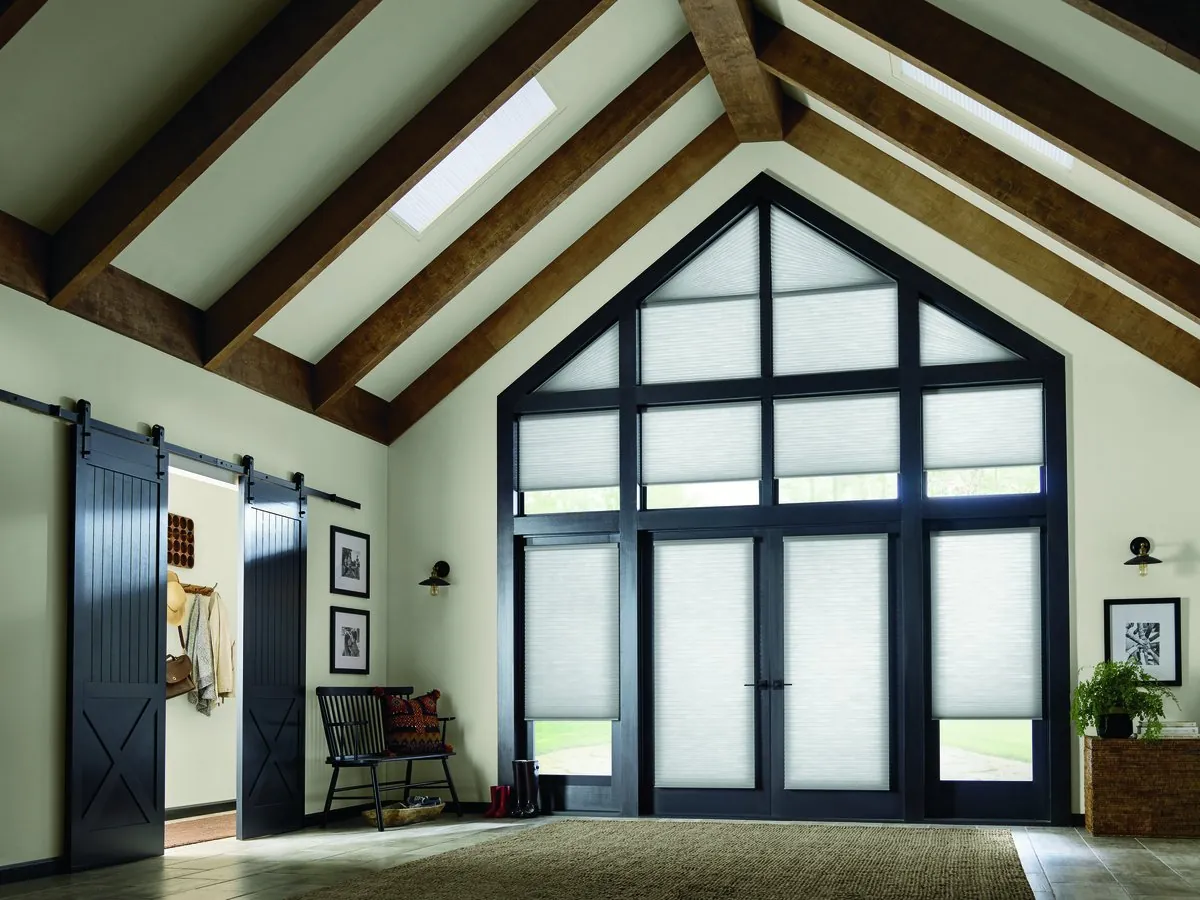
A lot of Norfolk houses have a great room or a family room with a cathedral or vaulted ceiling and windows that climb toward the peak: a row of standard units with transoms above, an arched window, or a pair of angled windows under the roof line.
These windows raise three questions. How do you reach the high glass? What do you do with the angled or arched shapes? And how do you keep it all from looking busy?
- Reach. PowerView is the obvious answer for transoms and high glass. Each shade moves from a remote, an app or a schedule, alone or with the rest of the wall.
- Shapes. Arches and angles can be left open as a feature, or fitted with a shutter made to follow the shape. Honeycomb shades can also be made for some angled windows. We look at the shape and talk through what is possible.
- Calm. Choosing one color and line for the whole wall, and setting every bottom rail to the same height, keeps a tall wall of glass from looking cluttered.
Sliders, French doors and the deck
Nearly every Norfolk colonial and cape opens to a deck or a patio, usually from the kitchen or the family room, and on a wooded lot that door often frames the best view of the trees. It is also the opening used most, so whatever covers it has to move aside without fuss.
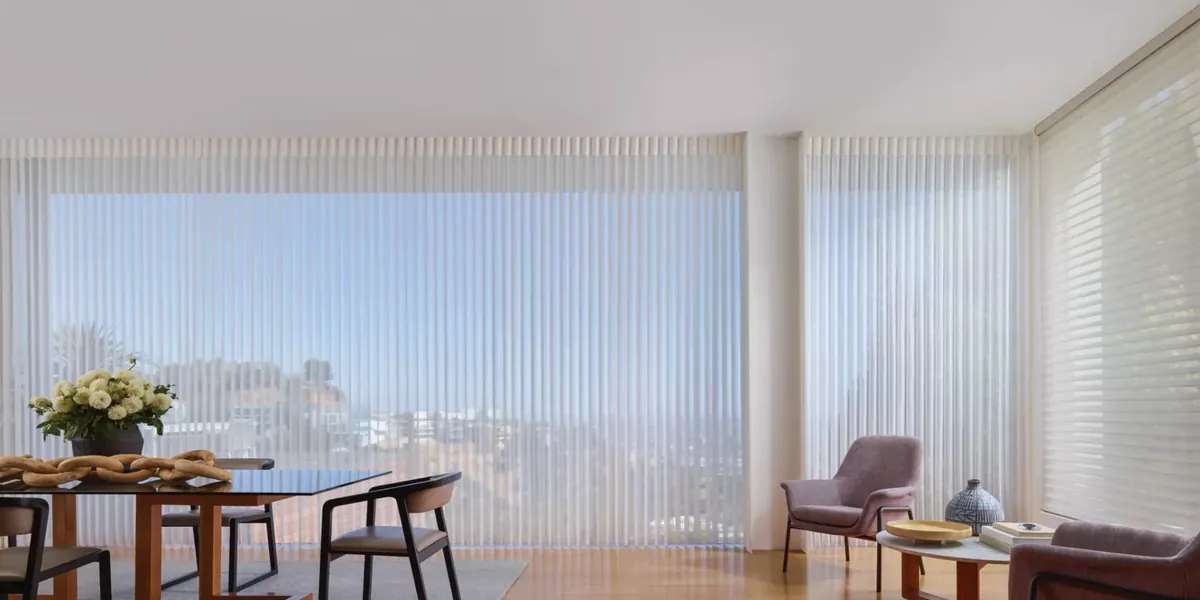
For a slider, a covering that travels sideways is the natural fit. A vertical honeycomb, Luminette sheers or vertical blinds all draw to one side and stack neatly, leaving the doorway clear. French doors are better with a shade fixed to each door, held at the bottom so it does not swing when the door opens. Where the door sits between windows, we match color and height across the whole wall so the door does not look like an afterthought. A Hunter Douglas dealer in Norfolk, MA will also check the handle and any screen door track before choosing a mount.
Mixing products without a muddle
Most houses end up with more than one Hunter Douglas product, and that is how it should be: shutters suit some rooms, honeycomb suits others, a Roman shade is right in the dining room and faux wood blinds are right in the bathroom. The risk is a house that looks like a sample book.
A few simple rules keep it calm. Pick one color family for every window seen from the road. Keep the same product within a room, or at least within a wall. Match finishes where products meet, so a white shutter in the kitchen sits beside a white honeycomb in the family room rather than a cream one. And let one or two rooms be the exception, usually a dining room or a primary bedroom where a stronger color or a pattern can shine.
Our guide on shades or blinds: how to choose is a good place to start if you are weighing up the main families.
Dark rooms for sleep and screens
Bedrooms on the east side of a Norfolk colonial get the first light of the day, and with no houses close by to block it, summer mornings start very early. Home offices and media rooms have their own need for darkness or glare control at certain hours.
Room-darkening Duette, a blackout roller or a dual shade, which pairs a sheer and a darkening fabric on one headrail, all give a dark room without losing a soft daytime look. For an office, a screen shade on the window behind or beside the monitor usually solves glare while keeping the room bright. For a basement media room with small windows high in the wall, a simple room-darkening roller or honeycomb inside the frame does the job neatly.
What a visit looks like
The vans carry samples to your house, because the light in a corner room with three walls of glass is something you have to see in place. A typical visit goes like this.
- Ask for a time through Request a Consultation, or through the call button if you would rather talk.
- We walk the house with you and note which way each room faces and when it gets its sun.
- Samples go onto the glass so you can compare fabric, opacity and color in your own light.
- We discuss operation for each window: cordless, top-down, bottom-up or PowerView.
- Each opening is measured, including any transoms or shapes.
- You get a free estimate, written for your own windows, and take the time you need.
- Hunter Douglas builds the order to our measurements, and our certified team installs it.
For color and fabric planning across a room, see our interior design consultations. Our page on in-home consultations tells you more about the visit.

Gallery dealer, certified fitting
A Gallery dealer has the full run of Hunter Douglas shades, blinds, shutters and drapery. In a Norfolk house that matters because so many rooms ask for something different: a corner family room, a vaulted great room, a cape bedroom under the roof, a formal dining room at the front. We can plan all of them in one visit and keep the house consistent from the road.
Fitting is the other half of the job. Hunter Douglas certifies our installers, and on a big colonial that shows in the consistency: headrails level across a row of windows, bottom rails matched across a corner, shades on a slider set clear of the handle, and every motorized shade paired and tested before we go.
We also look after the house afterwards. As a Hunter Douglas dealer in Norfolk, MA we welcome blind and shade repair on window coverings you already have.
PowerView scenes for a house lit from all sides
Motorization is especially useful in a house where the sun moves round several walls. PowerView lets you set scenes: one for morning that opens the east rooms and keeps the bedrooms dark until a set time, one for late afternoon that drops the west-facing shades, one for evening that closes the windows facing the road. Each shade can also be moved by phone, remote or wall control.
We plan which shades to motorize and how each motor is powered during the visit. Read how motorized shades are controlled or see our page on motorized blinds in Norfolk.
The Franklin showroom is closest
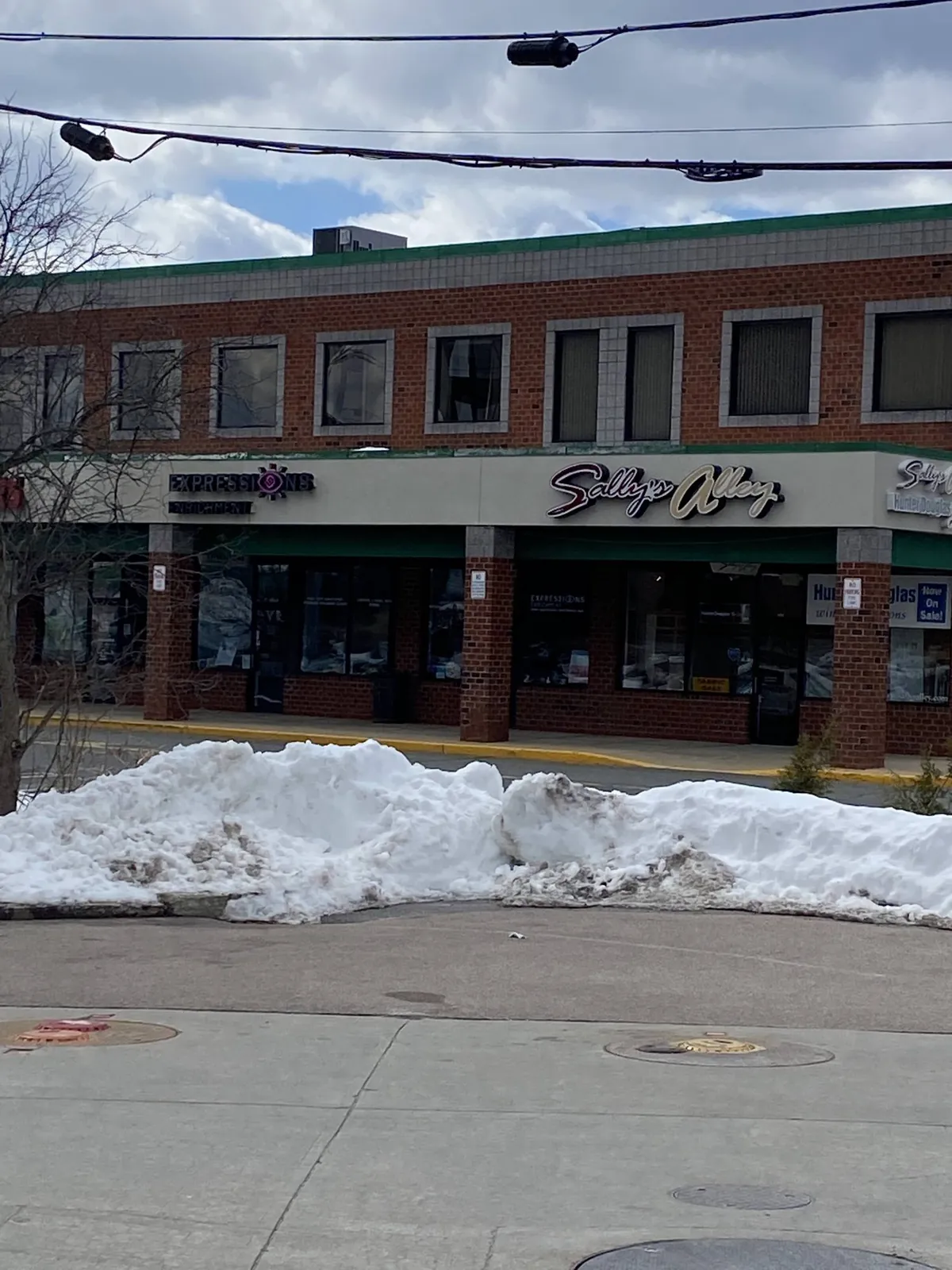
For Norfolk, the nearest of our showrooms is in Franklin. Many customers skip straight to a visit at home, since that is where the light can be judged, but you are welcome to stop in at Franklin beforehand.
There is more about the brand on our Hunter Douglas page, and you can browse every line on the Hunter Douglas website. Every service we offer in town is on our Norfolk page.
Questions from Norfolk
My living room has windows on three sides. Should every window get the same shade?
Usually the same line and color, so the room looks consistent, but each wall can be set differently, or given a different opacity in the same color, to suit the sun on that side.
What do you suggest for a two-story foyer window?
PowerView motorization, so the shade moves from a remote, a wall control or a schedule. A shaped top can be left open or fitted with a shutter made to its shape.
Which shades help a bedroom stay dark in early summer?
Room-darkening honeycomb, blackout rollers and dual shades all work. Inside the frame, they keep light gaps small.
Can different rooms have different products and still look planned?
Yes. Keep one color family on the street side and the same product within each room, and the house reads as one.
How much does an estimate cost?
It costs nothing. We measure your windows and give you a free estimate based on them.
Ready when you are
Request a consultation and tell us which rooms you want to start with. We will bring samples to the house, look at how the sun reaches each wall and write a free estimate. You can also reach your Hunter Douglas dealer in Norfolk, MA with the call button, or call in at the Franklin showroom first.