
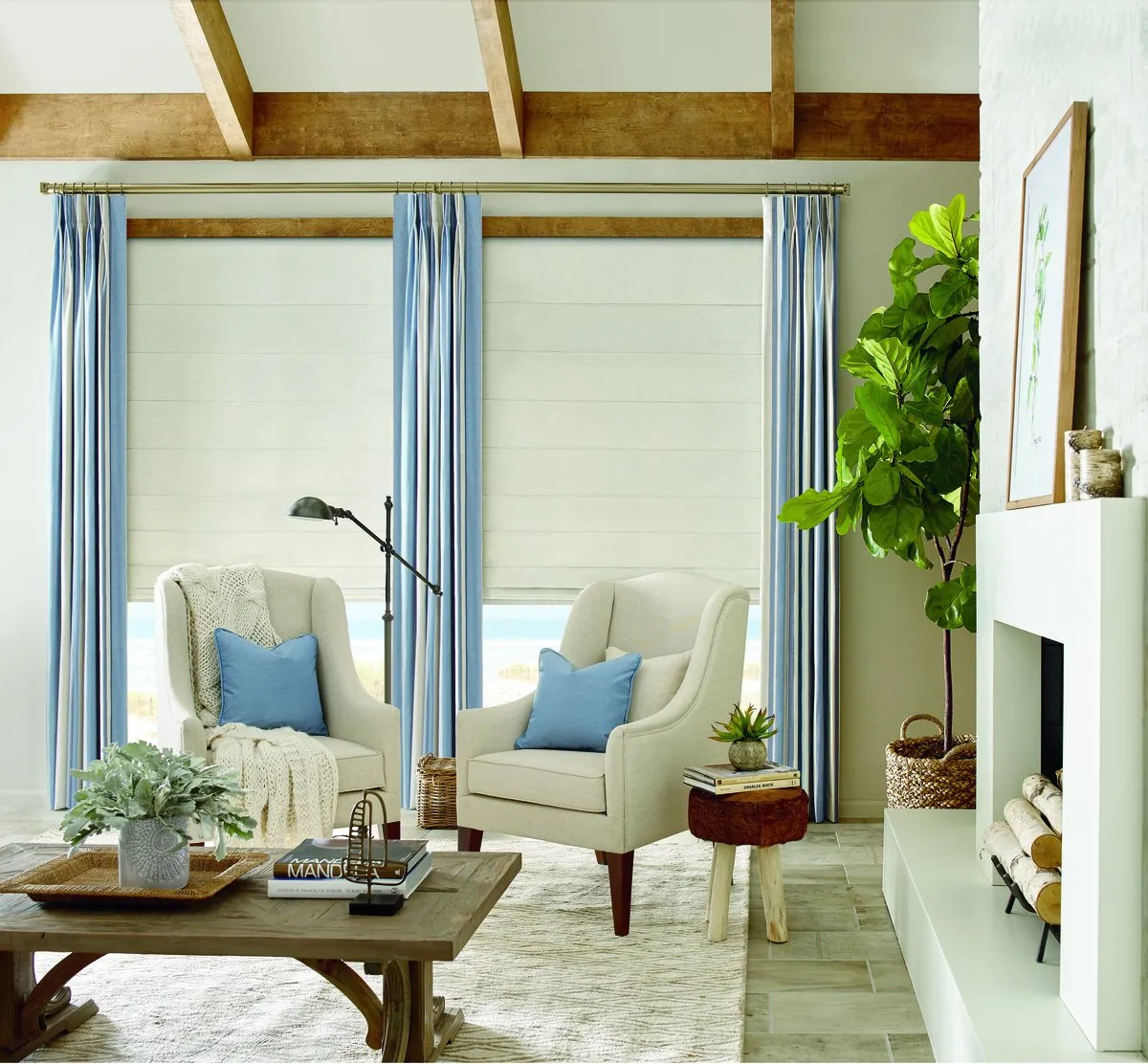
Transoms, bays and tall sash around the common
The older houses around Foxborough’s common were built with windows that ask for care. The Victorians and colonials there have tall sash, many with a transom above or set into a bay, and none of those openings come in a standard size. A shade bought off a shelf will not fit them; it has to be made for each window. When we plan motorized blinds in Foxborough, MA, for a house near the common, the measuring is where the work begins.
Tall windows and transoms bring a second problem: reach. The top of a tall sash sits above easy reach for many people, and a transom is higher still. Bays add numbers, with three or more shades in one recess that rarely end at the same height when they are moved by hand. A PowerView motor gives every one of those shades the same easy control, from a handset, the app or a timetable, and keeps a bay moving as one.
Out toward Route 1, the post-war ranches and newer subdivisions have standard openings and simpler needs. There the motor is about routine, glare and convenience, and the fitting is straightforward.
Hunter Douglas styles made for Foxborough’s windows
PowerView can be added to many Hunter Douglas styles, so each window gets the covering that suits its shape and the room behind it. Around the common and out toward Route 1, these three come up most for motorized blinds in Foxborough houses.
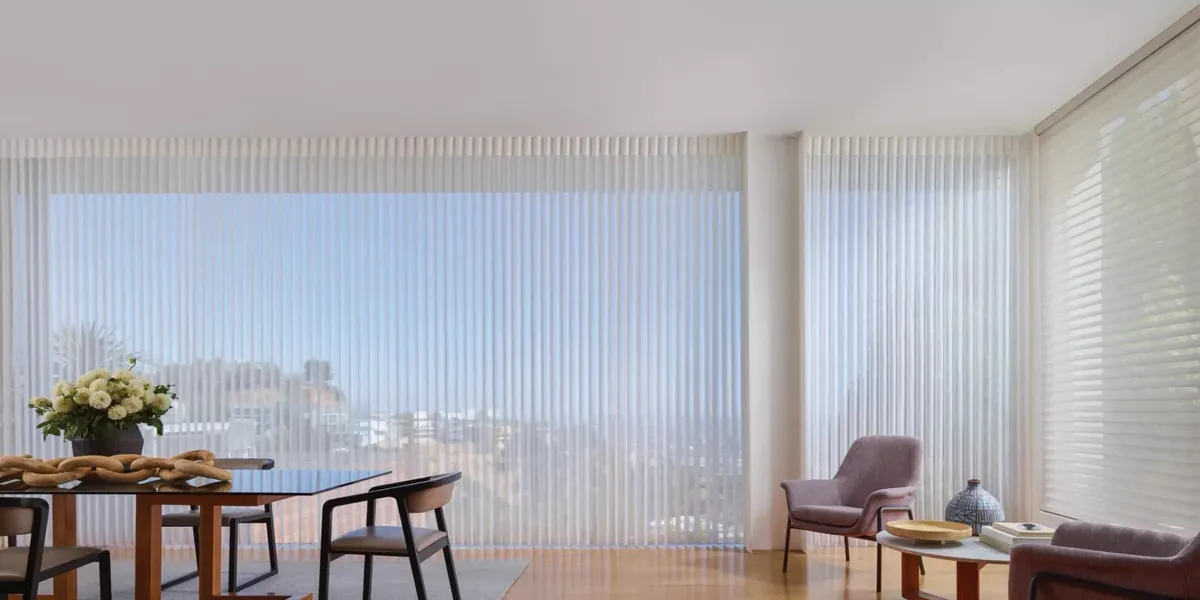
Sheer shades
Soft fabric vanes that filter light on tall sash and big newer windows, tilting open by day and closing at night.
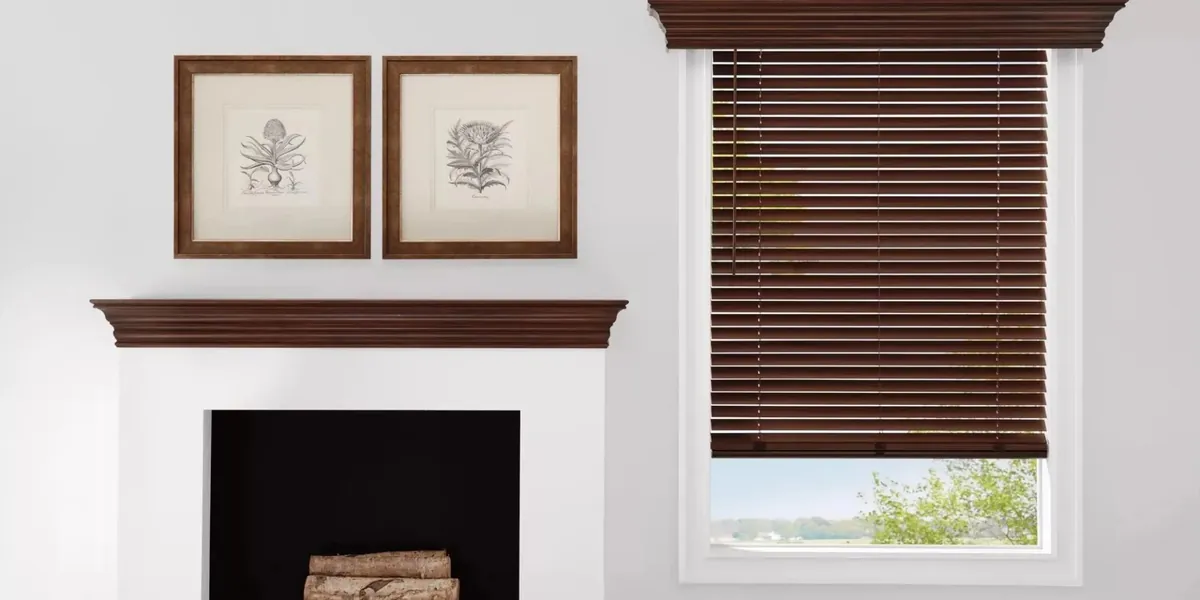
Blinds
Wood and faux wood slats in keeping with a Victorian parlor, with tilt and lift run by the motor.
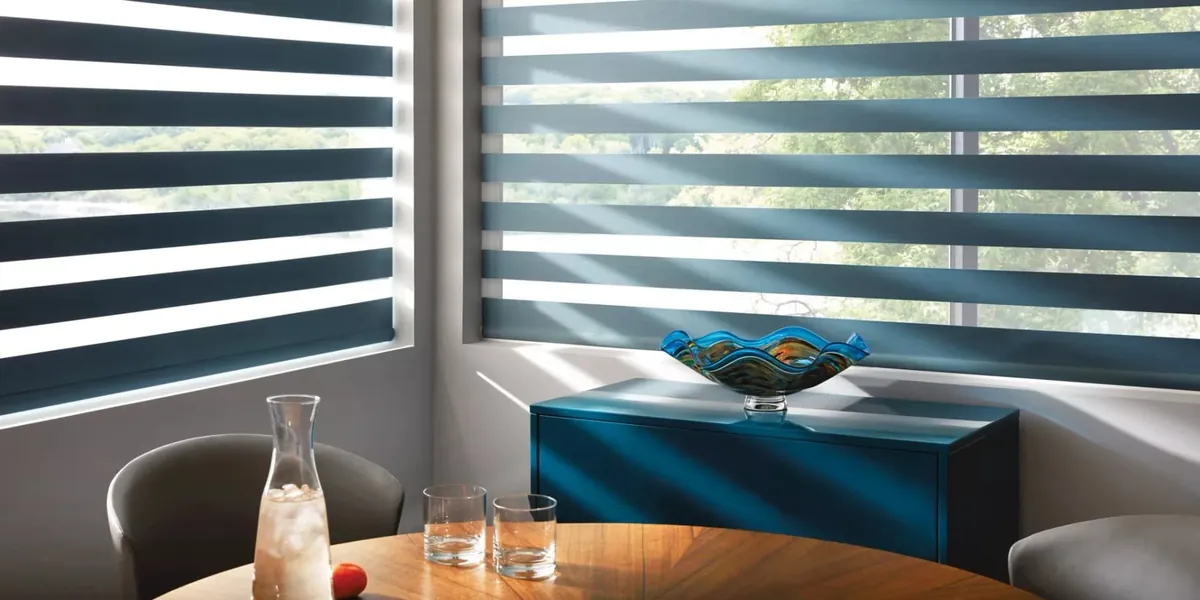
Roller shades
Roller, screen and banded fabrics for the simpler, wider windows of a ranch or a newer house.
Made rather than bought
Every opening in a Foxborough Victorian has its own measurements. Frames settle, sash gets replaced, and two windows that look the same from the common can differ noticeably in width or squareness. That is why we measure each one ourselves at the house, rather than working from a single size per room.
The width is taken at the top, middle and bottom of the opening, the height at both sides and the center, and the depth of the frame where the headrail will sit. We note anything in the way, such as sash locks, old pulleys or a stop that has been painted many times over. Then we decide with you whether the shade goes inside the frame, keeping the trim fully visible, or on the casing, which can be the better choice on a frame that is shallow or out of square.
Hunter Douglas then makes each shade to those figures. When it arrives, it fills the opening edge to edge, which looks built in and helps a shade do its job.
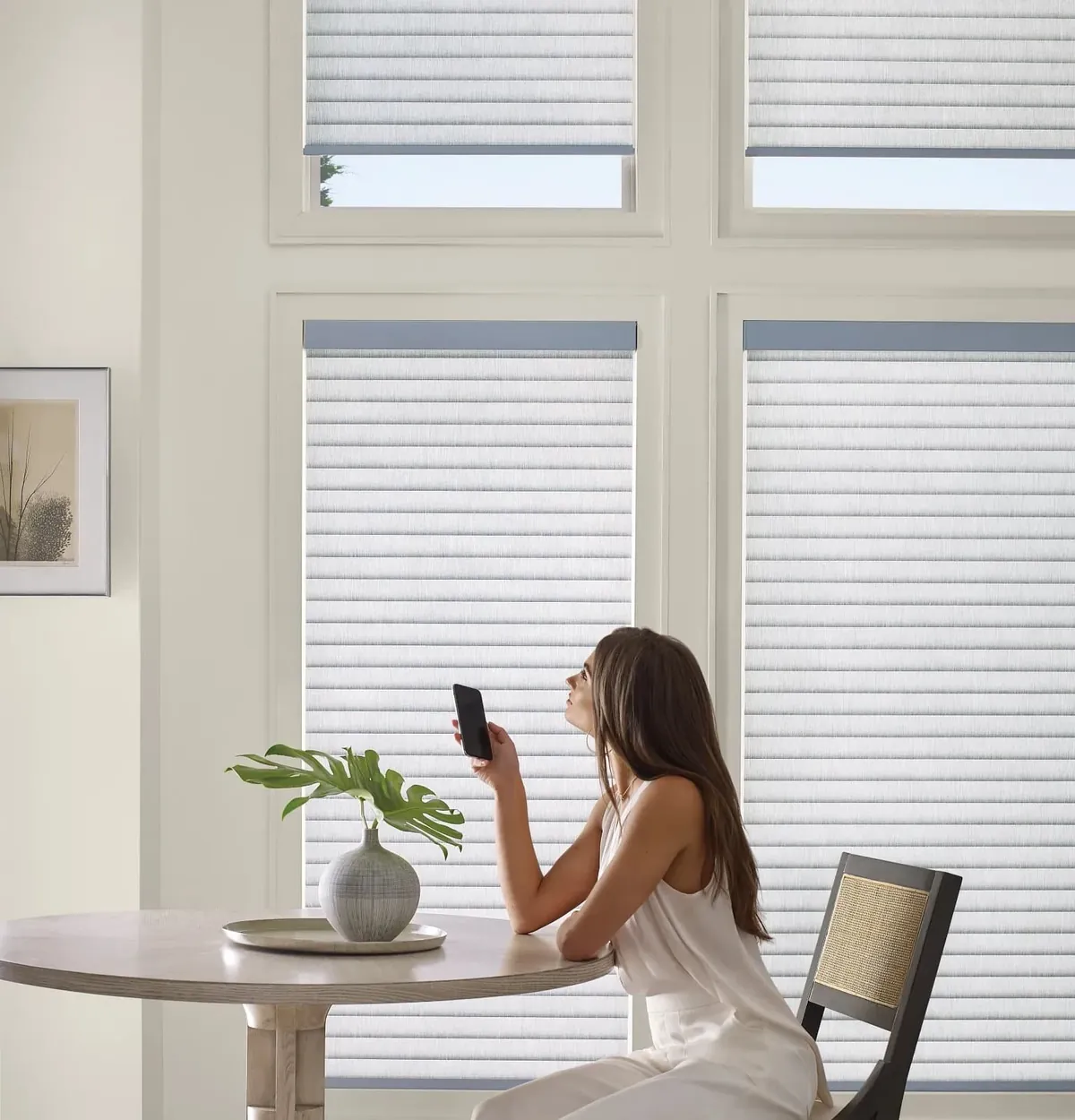
Transoms: cover them or leave them clear
A transom is the small window above a door or a tall sash. In the older houses around the common it is often original, sometimes with decorative glass, and it adds a band of light high in the room.
Some homeowners want the transom left clear, as a feature, with the shade covering only the main window below. Others find that the transom lets in morning sun or street light at exactly the wrong moment, particularly in a bedroom. Both are reasonable, and we look at each one at the visit to see which makes sense.
Where a transom is covered, it is usually too high to reach by hand, and a motor is the practical answer. It can move with the main shade below, so the whole opening opens and closes together, or on its own, so the transom stays closed for privacy while the main window is open for the view. Specialty shapes, such as an arched transom, need their own conversation; we will say which can take a motorized covering and which are better left with a fixed one.
Bays in the older houses
Bays are one of the pleasures of a Victorian near the common: a recess of three or more windows bulging out from the front parlor or the dining room, catching light from several angles. They are also one of the hardest places to manage by hand, because each window has its own shade and every one stops at a slightly different height.
This is where motorized blinds in Foxborough parlors earn their place. Grouped on a motor, the bay moves as one. Raise it and every shade lifts together and finishes level; lower it and they meet the sill at the same moment. From inside, the recess looks orderly. From the common, the front of the house looks cared for.
Each window in a bay is measured separately, because the angled side windows are often a different width from the center one, and the corners where they meet need care so the shades do not touch. We plan that at the visit.
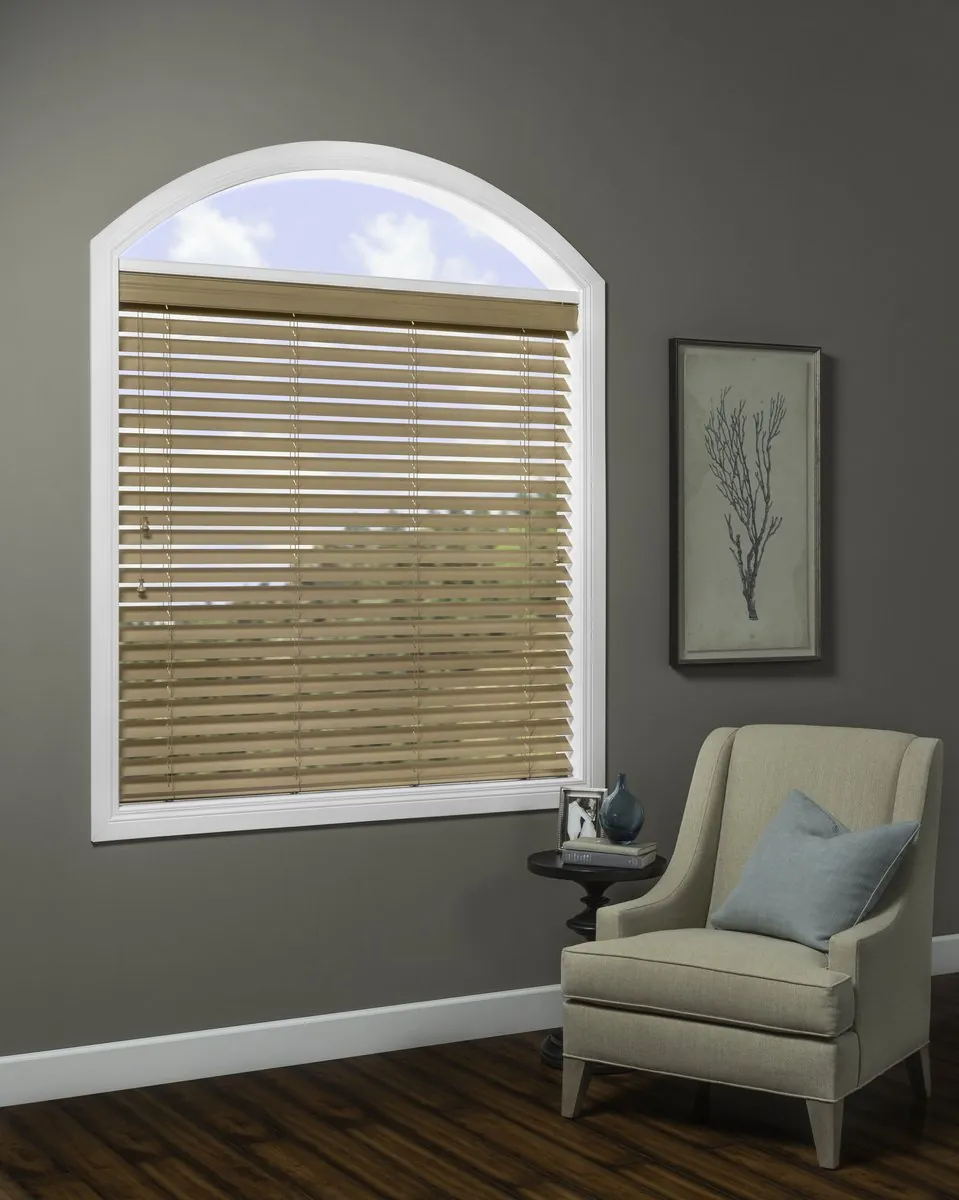
Tall sash and high heads
Even without a transom, the tall sash in Foxborough’s older houses reaches higher than most modern windows. A shade on a window like that needs a long cord or a stretch, and over time the shade tends to be left in one position because moving it is a nuisance.
A motor removes the height from the equation. The shade travels the full length of the window at a press, and you can stop it at any point, perhaps low enough to block the glare on a sofa while the top of the window stays bright. On a timetable it moves without being asked.
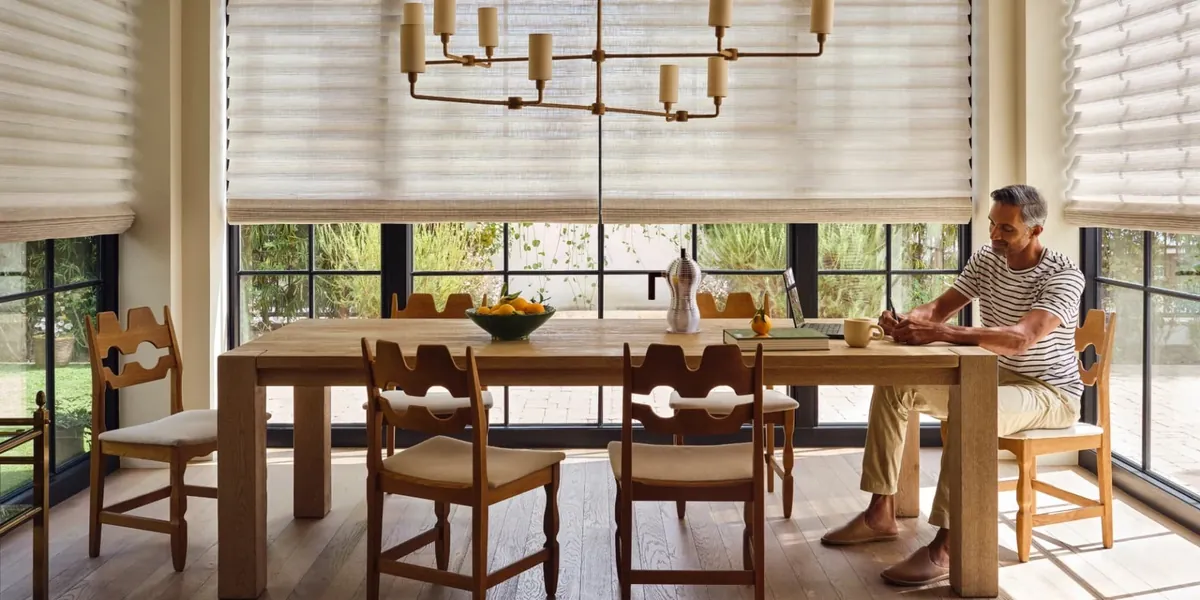
Sheer shades suit these windows well, because their vanes can be tilted to soften the light while the window stays open to view. Roman shades and wood blinds are the more traditional choices for a parlor, and both can be motorized.
Ranches and subdivisions toward Route 1
Away from the common, the housing changes. Post-war ranches line the roads heading out of the center, and newer subdivisions toward Route 1 add colonials and larger houses with standard modern openings.
These houses are simpler to fit, and motorized blinds in Foxborough subdivisions are usually a quick, tidy job. Square frames and consistent sizes mean the shade drops neatly into the opening. The reasons for a motor here are more about daily life: a ranch’s long row of matching windows that can open together, a newer colonial’s window above the front door that nobody can reach, a family room wall that takes the afternoon sun.
Grouping is the key in a ranch. Every shade along the front can move together and stop at one height, and a single scene can close the whole house at bedtime. In a newer colonial, the high window over the entry or on the stair landing is usually the first one homeowners want on a motor.
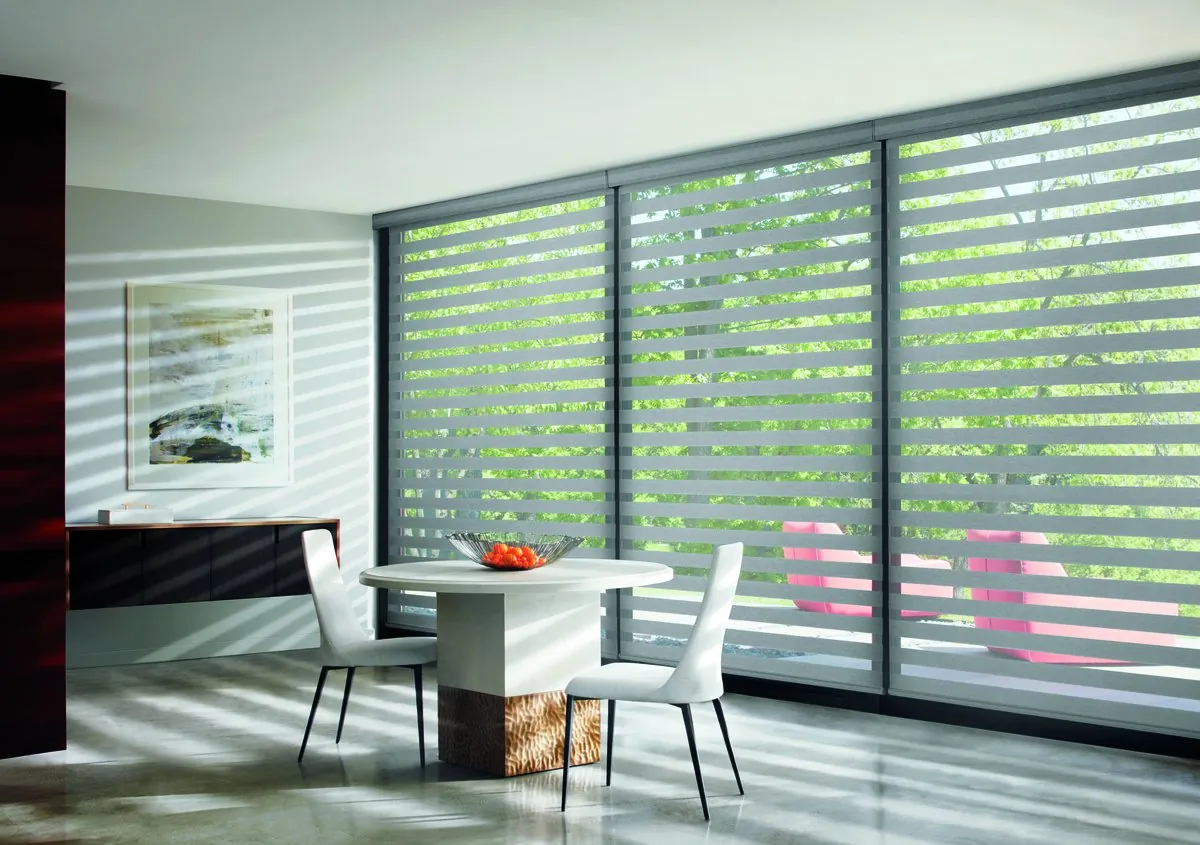
Controls that suit the household
PowerView offers three ways in, and Foxborough households tend to use all of them in different rooms. A handset, kept in the room, is the simplest: it raises, lowers and stops the shades and needs no explanation for a visitor. The PowerView app on a phone or tablet moves a single shade or a group to any height and is where you build scenes. Timetables move the shades at set times every day, and they do most of the work once they are set.
In an older house, scenes are especially handy for the bays and transoms. “Parlor open” might raise the whole bay and leave the transoms closed; “evening” might close every shade on the common side. In a newer house, a “film” scene might close the family room completely. Our guide to how motorized shades are controlled explains each option in plain words, and window covering automation covers timetables and scenes.
Power for each motor is planned at the visit, window by window, after we have seen the frames and walls.
A visit, from the first knock to the last shade
With windows as varied as these, nothing can be quoted from a photo; somebody has to stand at each opening with a tape. That is why our sample vans exist.
- Book through Request a Consultation, or use the call button and speak to our Franklin showroom.
- We open with the window you like least, usually a bay, a transom or the tallest sash.
- Fabrics go up against the glass so you can judge them beside your own trim, at your own time of day.
- Between us we settle which shades travel together, which transoms are left clear and how you prefer to control the lot.
- Every opening is measured in several places, and frame depth and obstructions are written down.
- Your estimate, which is free, sets out the shades and the fitting.
- Hunter Douglas builds each shade to the recorded figures.
- A Hunter Douglas certified installer mounts them, sets the travel limits, pairs every shade, and sits down with you to create the first scenes and timetables.
Before the shades arrive, you may like to read what happens on installation day.
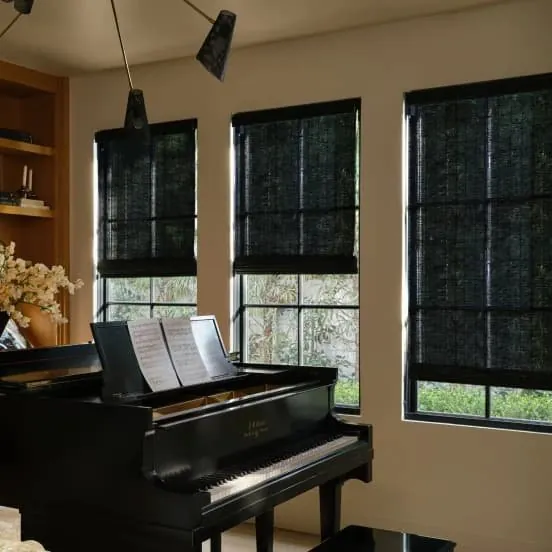
Wood blinds in a period parlor
Wood blinds have a long association with older houses, and in a Victorian parlor near the common they look entirely at home, especially with a cornice across the top that echoes the room’s mouldings. The slats let you angle the light upward toward a high ceiling while blocking the view in from the street.
The drawback on a tall window has always been the cords: a long lift cord and a separate tilt control that hang most of the way to the floor. Motorized, those disappear. The slats tilt and the blind lifts from a handset or on a timetable, and the window keeps its clean, period look. On a bay, the blinds in each section tilt together, so the slats all sit at one angle across the recess.
Stairs and landings in the Victorians
Victorian stairs often turn at a landing lit by a tall window, sometimes with a transom or colored glass above. It is one of the loveliest windows in the house and one of the hardest to reach, since it sits over the stairwell rather than beside a floor you can stand on.
A motorized shade there needs careful measuring, and we look at it with you on the visit. Where it can be done, the shade usually joins the group for the front of the house, opening in the morning and closing at dusk with the parlor. Where colored glass is involved, many homeowners prefer to leave it uncovered, and that is a perfectly good answer.
Family rooms in the newer houses
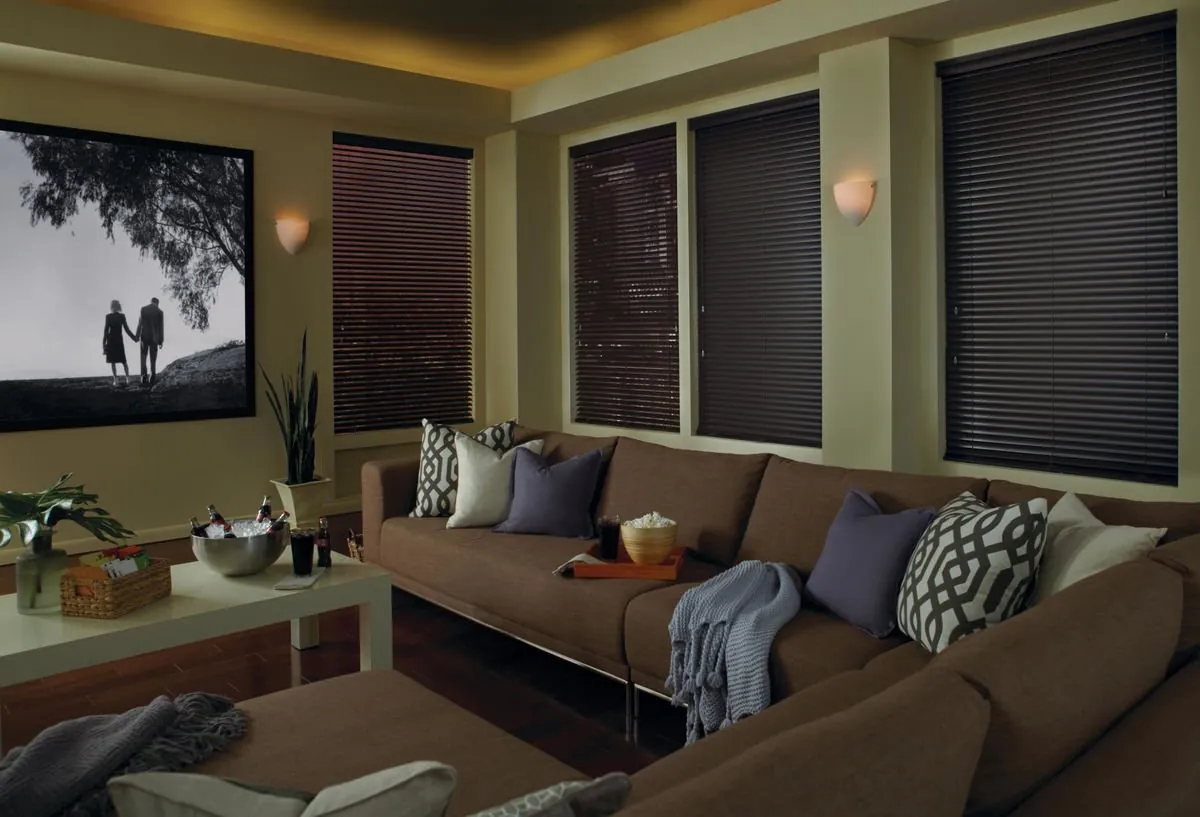
The newer houses toward Route 1 are usually built around a family room at the back, open to the kitchen, with a long run of windows or a slider facing the yard. In the late afternoon that wall can take the full sun, right when the room is busiest and the television is on.
A group of shades on a timetable brings that wall down part way as the sun arrives, and lifts it once the light has gone. Screen and banded fabrics keep the yard in view while cutting the glare. For a film in the afternoon, a scene closes the room completely with one press.
Evenings on the common
The houses around the common face open ground, which means their front windows are on view to anyone passing, especially after dark when the lamps are lit inside. Tall front windows show a great deal of the room.
A dusk timetable closes the front shades as the light fades, every evening, without anyone having to remember. In the morning they rise again to the height you choose. If the transoms are covered, they can follow the same pattern or stay closed overnight while the main shades open for daylight.
Bedrooms with tall windows
Upstairs in the older houses, bedrooms often have tall windows too, and sometimes a transom over the door to the hall. Early summer light reaches the room long before anyone wants to be awake, and tall windows let in plenty of it.
Room-darkening fabric made to fit each opening exactly keeps the room dim, and a morning timetable lifts the shades at the hour you choose, later on weekends. In a child’s room, a motorized shade also takes away the lift cord that would otherwise hang beside the window.
Older glass in the winter
Some of the older houses near the common still have their original sash or older storm windows, and tall glass loses warmth quickly on a winter evening. Honeycomb shades help, because each cell holds a pocket of still air between the cold glass and the room.
On a motor they get used every day rather than when someone thinks of it. A dusk timetable lowers the honeycomb shades on the cold side of the house as the light goes, and lifts them in the morning to let in the low sun. For honeycomb styles in depth, see our cellular shades in Foxborough page, and for a more traditional parlor look, our roman shades in Foxborough page.
Begin with the hardest window
Many Foxborough projects start with a single bay or the tallest windows in the house and grow from there. New shades join the existing system, with the same handsets and app, so nothing installed early needs to change. The full range is on our motorized blinds and shades page, and our Foxborough page lists everything we offer in town.
Why a Gallery dealer for an older house
The Gallery dealer title is one Hunter Douglas grants to dealers who meet its standards, and Blinds & Designs holds it. On an old house with bays and transoms that pays off, because no shape or style is out of bounds: honeycomb, sheer, roman, roller and woven shades, and blinds as well, can all carry PowerView.
Hunter Douglas certifies the people who fit our shades. The estimate is free, interior design consultations are available for a room you want to rethink, and blind and shade repairs are on hand afterwards.
Franklin is our closest showroom
The Franklin showroom is the nearest to Foxborough. You are welcome to start there, or we can come to you with the sample van.
Either way, every window is measured at the house.
Questions from Foxborough
Can a bay window be motorized as one?
Yes. Each window in the bay gets its own shade, measured separately, and they are grouped so the whole bay moves together and finishes at one height.
Should we cover our transoms?
It depends on the room. Some homeowners keep a transom clear as a feature; others cover it to block early sun or street light. If it is covered, a motor is the practical way to reach it.
Our windows are older and not square. Is that a problem?
Not usually. We measure each opening at several points and choose an inside or outside mount to suit it. Hunter Douglas makes every shade to those measurements.
Are the newer houses toward Route 1 simpler to fit?
Yes. Standard openings are straightforward, and the motor can go on almost any style you choose for those rooms.
Do you charge for the estimate?
We do not. Every estimate is free and follows from the measurements taken at the visit.
Bring us your trickiest window
A bay, a transom or the tallest sash in the house makes a good starting point for motorized blinds for Foxborough homes. When you book a consultation, describe that window; we will arrive with samples picked for it, take its measurements and show you what a motor would change. Rather speak to someone first? The call button goes to our Franklin showroom.