
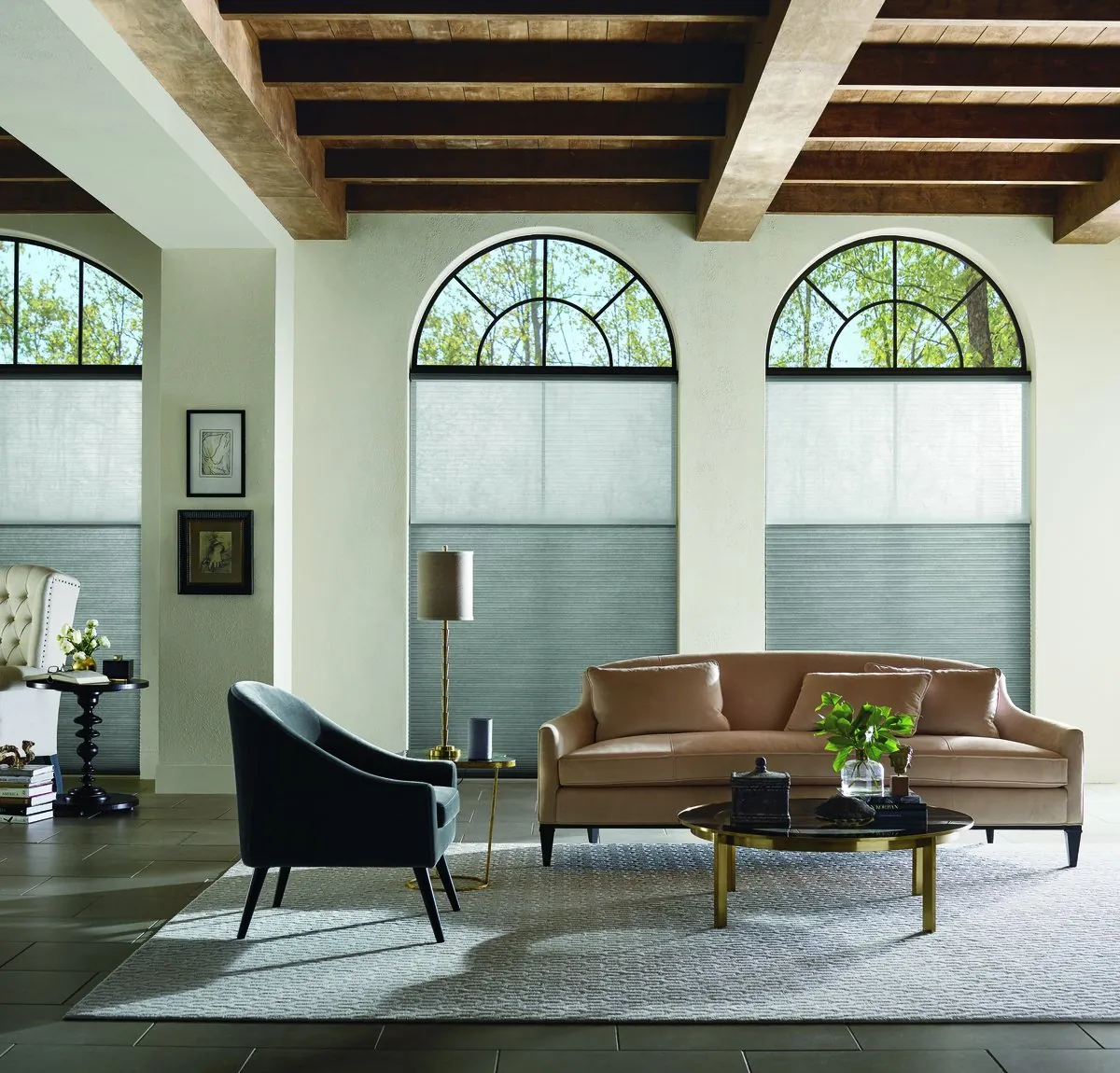
Open land, deep walls and small old sash
Drive along Main Street or Hartford Avenue and the houses stand well apart: antique colonials and farmhouses on very large lots, with newer houses dotted between them. The old ones have small sash set deep into thick walls, and with open ground on every side there is nothing nearby to break the wind or the sun before it reaches the glass. Those two facts shape nearly every plan we draw up for cellular shades in Mendon, MA.
An exposed window works hard in both directions. In January the wind sweeps across the fields and pulls warmth out through the panes; in July the sun lands on the same glass from morning to late afternoon with no tree or neighboring roof to soften it. A honeycomb shade answers both, because the still air inside its cells slows heat moving either way.
The deep window wells of an antique house are also an advantage. They give a shade plenty of room to sit inside the frame, out of sight when raised, so the old casings and wide sills stay on show.
Six honeycomb options for Mendon houses
Antique, farmhouse or newer build, these are the choices we talk through most often. Each one comes along as a sample on the day.
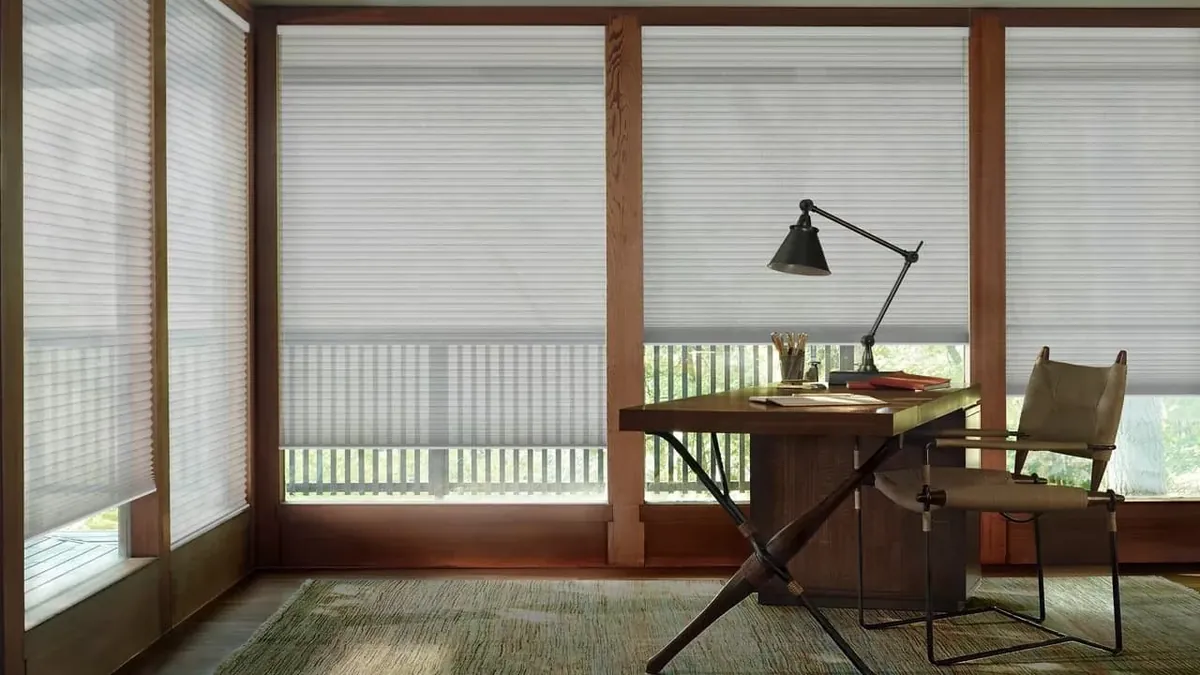
Inside mount in a deep well
Thick old walls usually leave ample depth, so the headrail hides inside the opening and the sill stays clear for plants or a lamp.
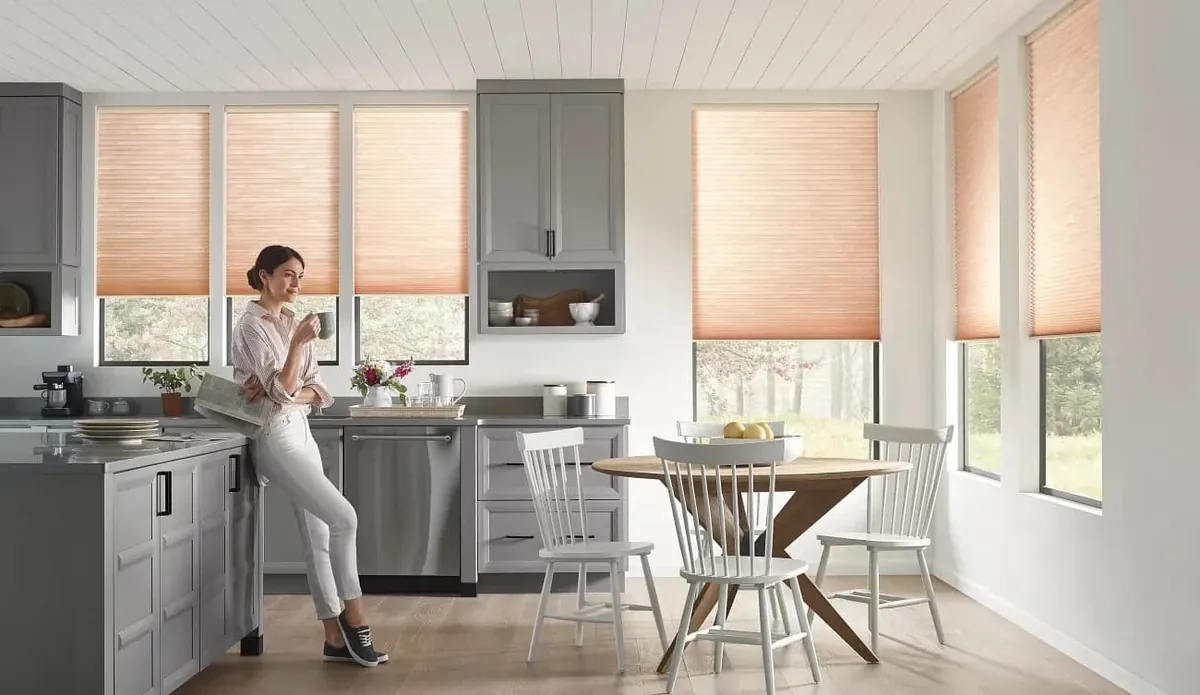
Double cells for the windy side
Two layers of cells give the air more places to stay put, a sensible choice for the rooms facing open fields to the north and west.
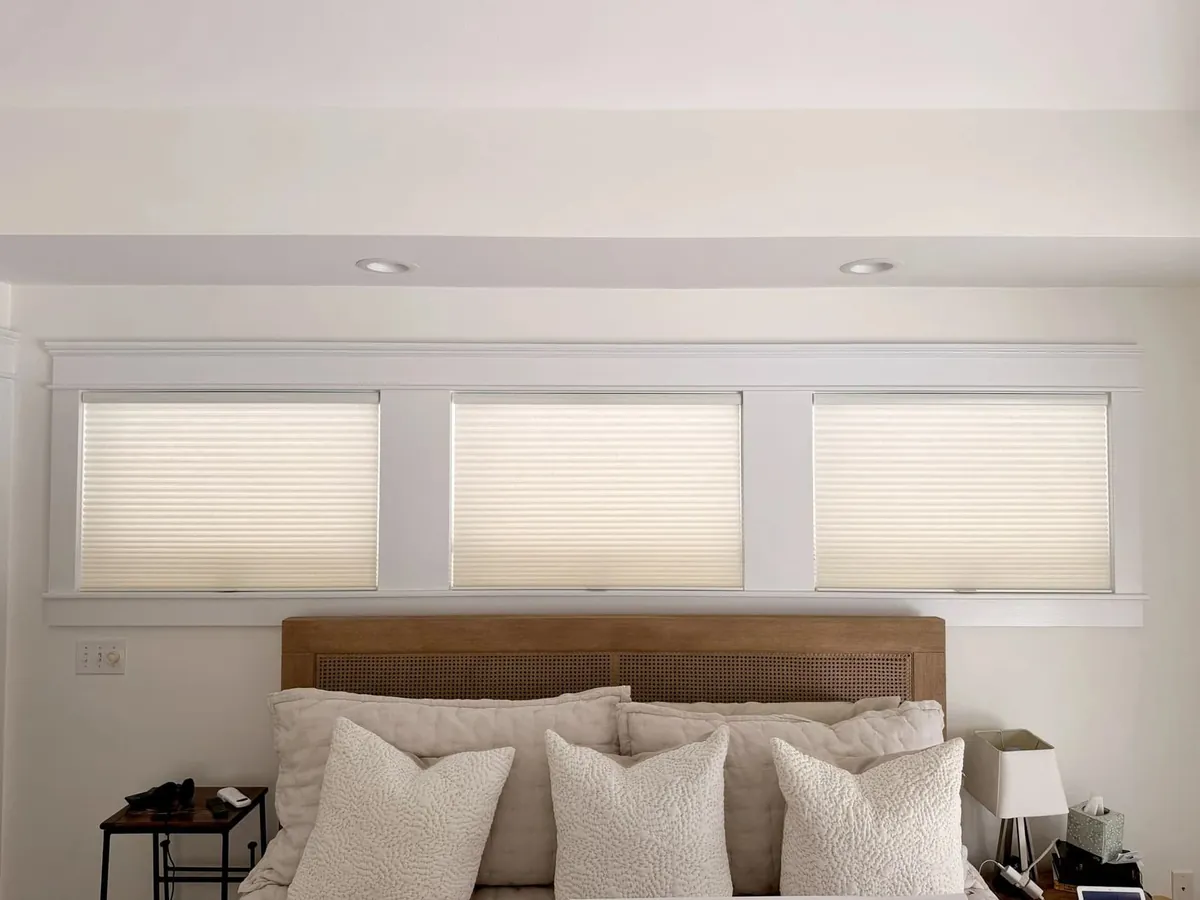
Blackout for open-country mornings
With nothing to block an east-facing bedroom, a room-darkening fabric keeps it dim until you decide the day has started.
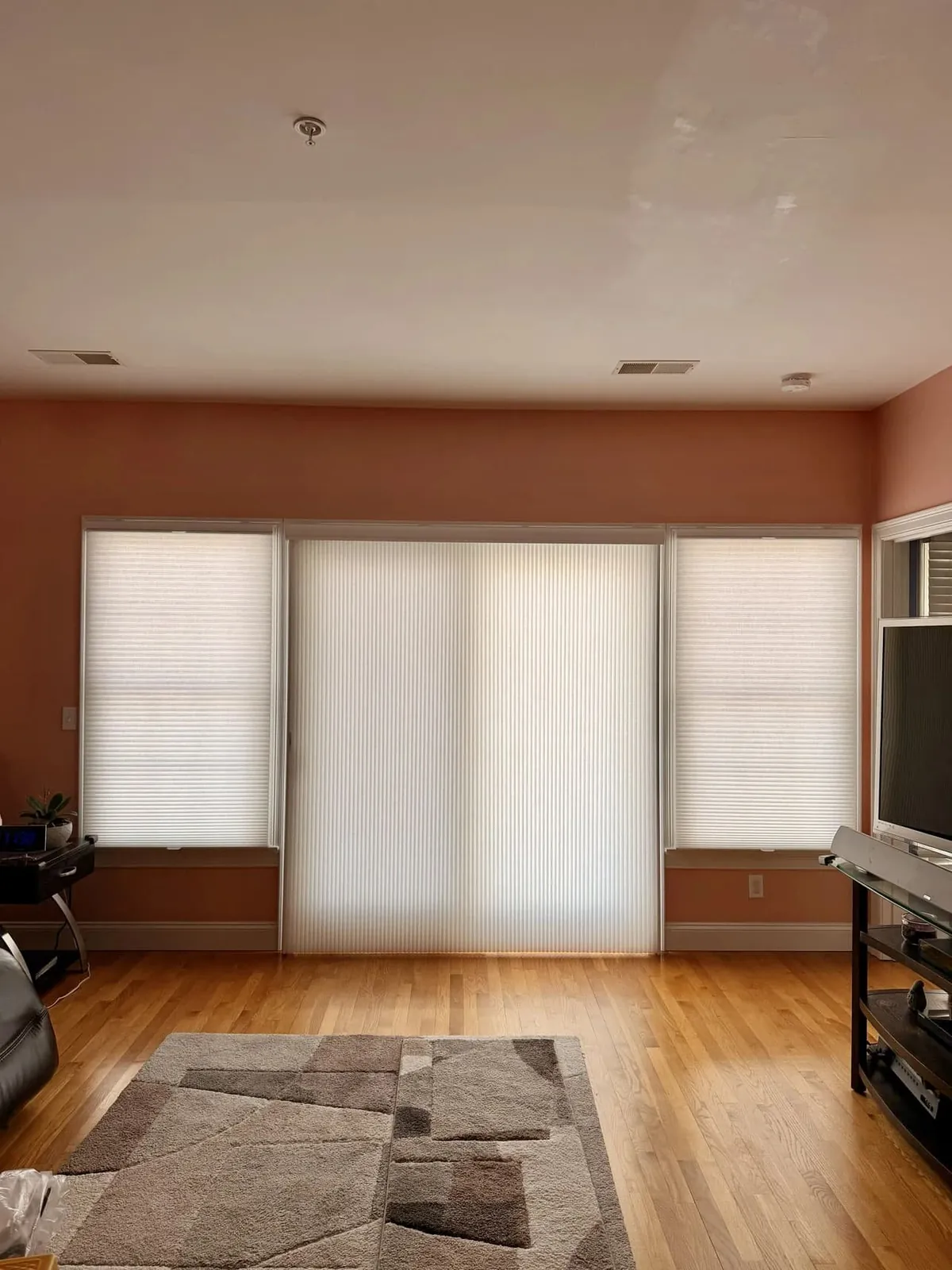
Side-drawing shades for doors
The newer houses often have a slider to a deck or patio. A vertical honeycomb shade draws across it and parks at one side.
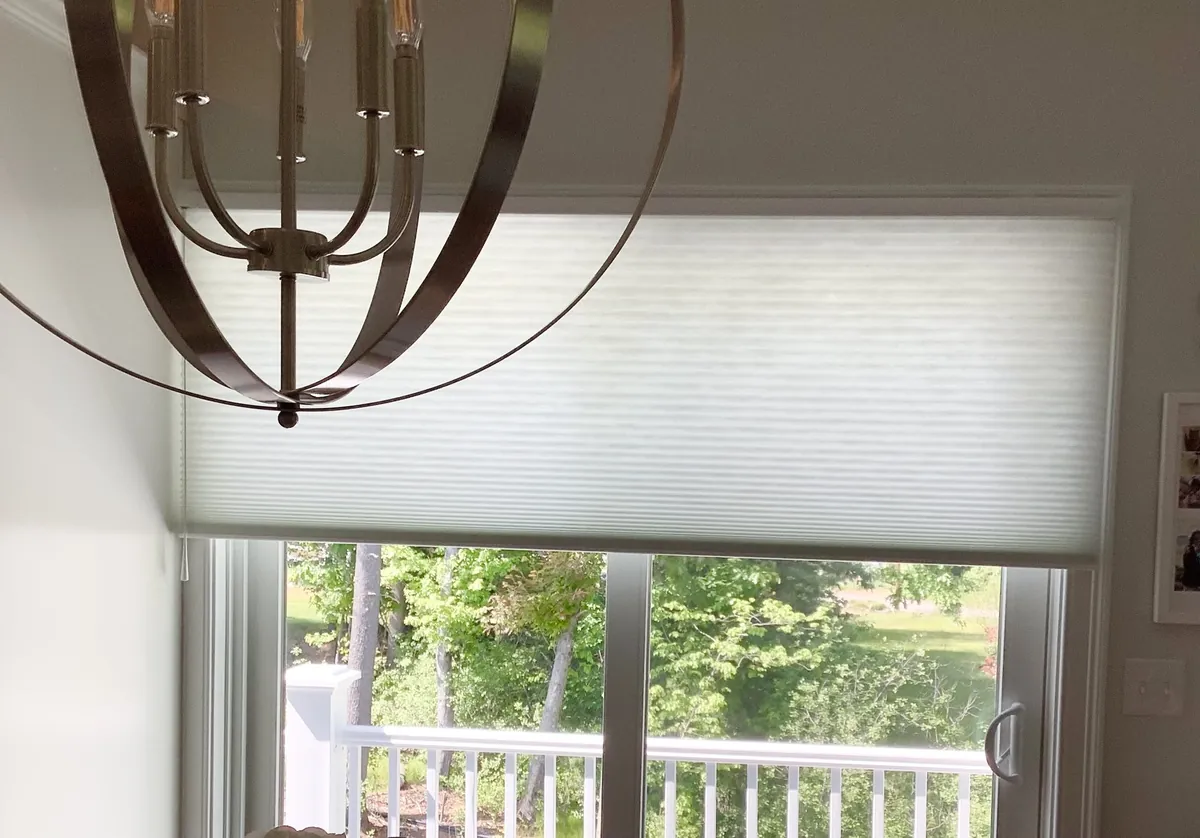
A shade for the farmhouse ell
Kitchens and mudrooms added on over the years have their own window sizes. Each opening gets a shade made for it, so the whole house still matches.
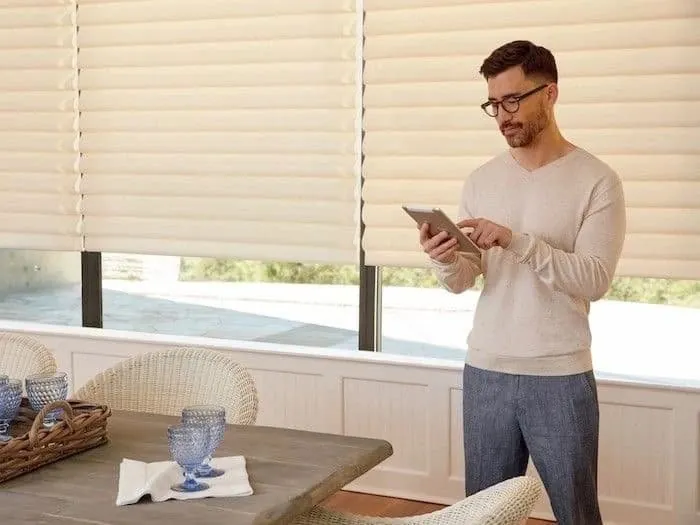
PowerView on the far rooms
Close every shade in a large house from one phone or remote, or let a schedule do it as the sun moves round.
Why the cell matters on an exposed window
Every honeycomb shade is built from rows of hollow pleats joined edge to edge, so the fabric forms a stack of air pockets when it is lowered. Air that cannot circulate is a poor carrier of heat. With the shade down, the pocket sits between the pane and the room, and the cold radiating off the glass has to get through it before you feel it in your chair.
On a sheltered house in a tight neighborhood that effect is useful. On a house with open land around it, it is worth a great deal more, because wind moving across the outside of the glass carries warmth away much faster than still air does. A farmhouse window facing a field on a gusty winter night is about the hardest test a window covering faces, and it is the test the cell was designed for. It is also why double-cell fabrics come up so often when we plan cellular shades in Mendon, MA.
Summer brings the reverse. A south or west wall with no shade trees in front of it takes direct sun for hours, and a sunny room under an old roof can build up heat well into the evening. A lowered honeycomb shade slows that heat at the glass. A light-filtering fabric keeps the room bright while it does so, which means you are not choosing between a cool room and a dark one.
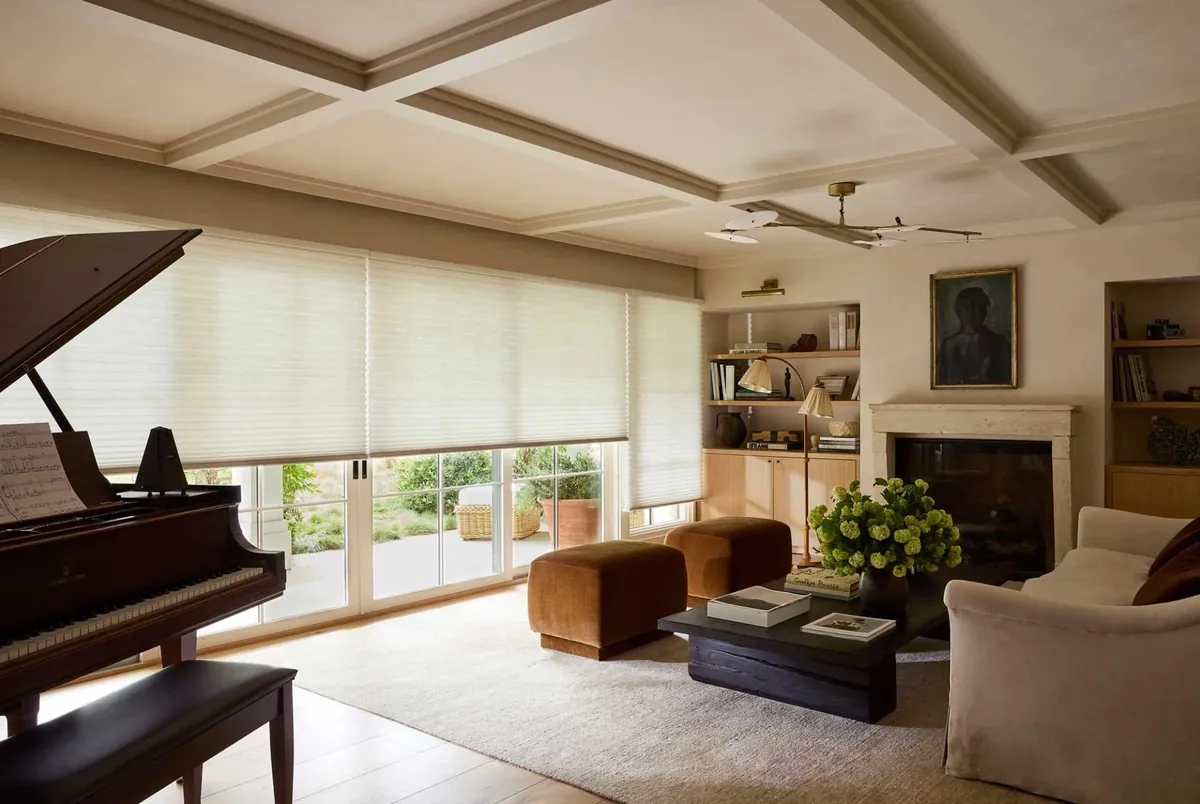
Antique colonials and their sash
An antique colonial tends to have regular rows of small sash on its main elevation, often with original or old replacement glass and wide wooden casings. The walls are thick, so each window sits at the back of a deep well. That depth is welcome. It means a headrail can almost always fit inside the opening, with the shade tucked away completely when it is raised and the casing untouched.
What old houses do not offer is square corners. Floors and walls settle, and a window frame can be a little wider at the top than at the sill, or lean slightly to one side. A shade cut without checking for that will rub, or leave an uneven gap. So we take several readings across and down each opening and choose the narrowest for the shade, and we tell you plainly if a particular window is too far out for an inside mount to look right.
Small sash also means many shades. A two-story colonial can have a surprising number of windows once you count both floors, the ell and the back rooms. That makes a consistent look across the house important: matching fabric and headrail color, bottom rails at the same height when the shades are half down, and the same lift on every window so the whole house works the same way.
Farmhouses that grew over time
Many Mendon farmhouses were extended as the years went by, with a kitchen ell, a back porch closed in, or a room added over a shed. Each addition brought its own windows, so one house can have antique sash in the front rooms, mid-century units in the kitchen and modern windows in the newest part.
Honeycomb shades are made to each opening, which makes them a good fit for a house like that. A deep antique well takes an inside mount; a shallow newer frame may take a slim outside mount instead; a wide kitchen window can carry two shades on one headrail. Chosen in the same fabric, the shades tie the old and new parts of the house together even though the windows underneath differ.
Enclosed porches deserve a mention. Usually glazed on most of their walls, they take the full force of the weather. They are lovely in spring and autumn and hard to keep comfortable in deep winter or high summer. Lowered honeycomb shades help a porch room hold its temperature longer at both ends of the year.
From first call to a measured house
Most Mendon jobs begin at the house itself, because a sample only shows its true color in your own daylight. Our vans carry the fabrics, so the showroom effectively comes up your driveway. Here is the usual order of things.
- Get in touch with Request a Consultation or the call button and choose a convenient day.
- We arrive with honeycomb samples covering fabrics, colors, cell types and light levels from soft to blackout.
- You walk us round, and we start wherever the problem is worst: the windy north rooms, the sun-baked west side, or the porch.
- Swatches go up against your actual glass and woodwork so you can judge color, texture and light together.
- Each window is measured, depth included, with a note of anything unusual about the frame.
- You get a free estimate, and there is no expectation to decide while we are still at the door.
The in-home consultation guide says more about what to expect. If the windows are part of a bigger project, such as restoring a room or finishing an addition, our interior design consultations can cover color and furnishings in the same visit.
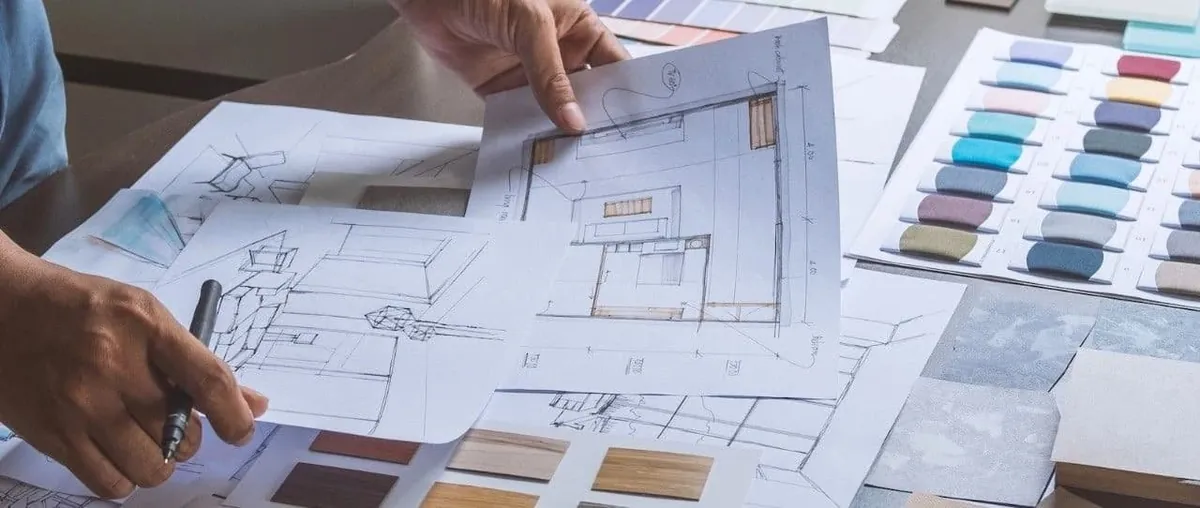
Cellular shades in Mendon, MA, for the newer houses
Between the antique houses sit newer homes on their own big lots, with standard-sized double-hung windows, larger picture windows and glass doors to a deck. They do not have the deep wells of an old colonial, but they do have the same open exposure, and big modern windows can let in a great deal of afternoon sun.
For these houses we often suggest a light-filtering fabric in the main rooms, so the space stays bright, and a room-darkening one upstairs. Picture windows can be split into two or three shades on one headrail. The slider gets a vertical honeycomb shade. And because newer frames are square and consistent, an inside mount is usually simple, with the shade sitting neatly inside the frame.
A newer house can also be a good candidate for PowerView. When the windows are many and the rooms are spread out, being able to close the west-facing shades from your phone on a hot afternoon, or have them lower on a schedule, saves a walk round the house. We plan how each motor is powered at the visit, and our page on how motorized shades are controlled explains the controls.
Duette, Applause and an old house
Both Duette and Applause are Hunter Douglas honeycomb shades, and the air pocket works identically in each. Where they part company is choice: fabrics, textures, cell constructions and lift systems. Duette has the larger range, including double cells, specialty shapes for arched or angled windows, and the vertical version for doors. Applause offers a separate palette that works well across a house of standard windows.
In an antique colonial we often lean toward Duette for the front rooms, especially where a double-cell fabric makes sense on an exposed wall. Applause frequently goes into a newer addition or the second floor. Read more on the Duette honeycomb shades and Applause honeycomb shades pages, or start from the main cellular shades page.
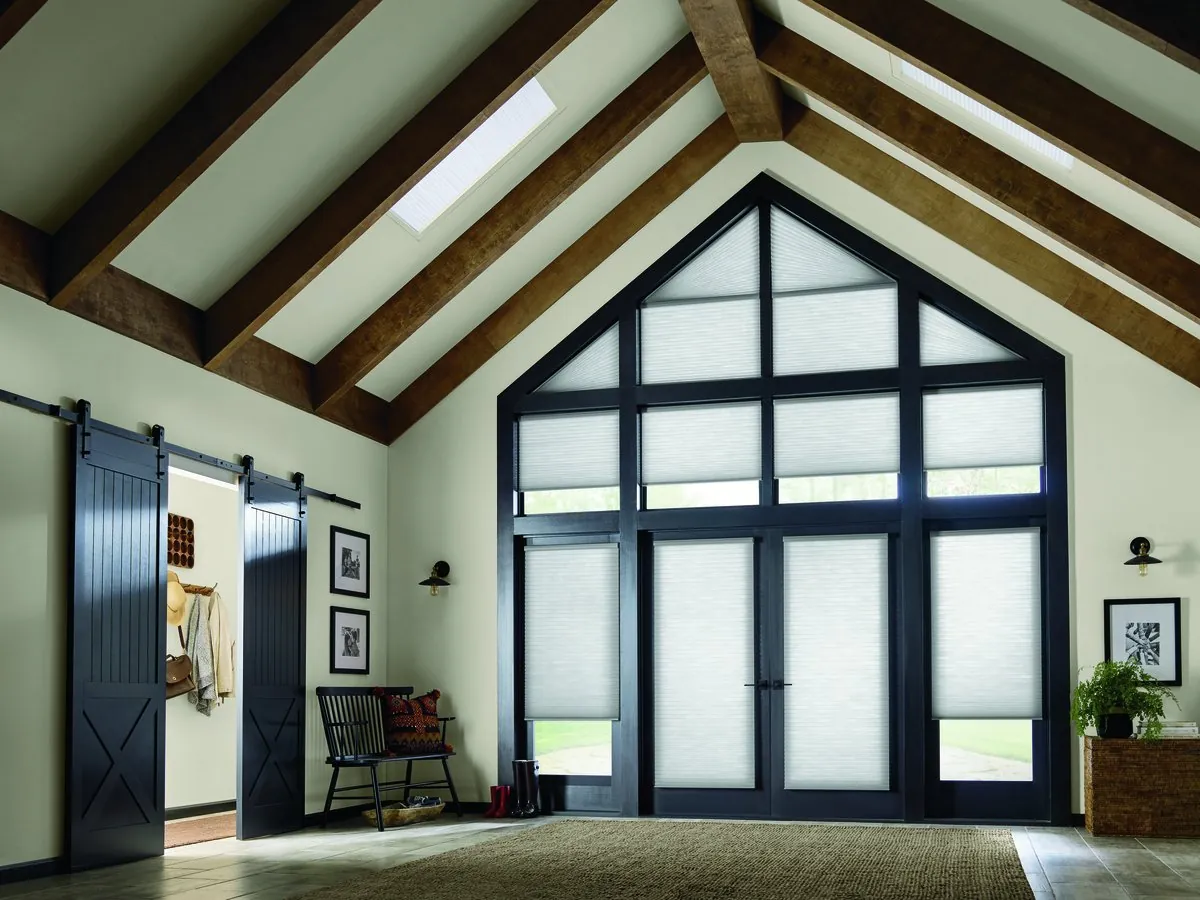
Measuring a house that has settled
Accurate figures are what make cellular shades in Mendon, MA, look like part of the house rather than an afterthought. An old frame can vary from top to bottom by enough to matter, so we never measure just once.
- Width goes down at the head, the middle and the sill, and the tightest figure is used for an inside mount.
- Height is read at each side and in the center.
- The depth of the well is checked where the headrail will sit, along with any old hardware or uneven plaster.
- You approve each window’s mount, fabric and lift before the order is placed.
- Our certified Hunter Douglas installers then hang the shades, fix the brackets into sound wood, level every headrail, run each lift and show you how everything operates.
Shades made to those figures sit close to the frame on both sides. On an exposed wall, a tight fit is part of what keeps the cold air from slipping round the edges.
Sills, plants and the way old rooms are used
The wide interior sills of an antique house are part of how the rooms get used. They hold plants, lamps, books and the odd cat, and nobody wants a shade that forces everything off them. An inside-mounted honeycomb shade drops straight down inside the well and comes to rest just above the sill, so whatever lives there can stay put. When the shade is raised it stacks into a narrow band at the head of the opening, leaving almost the whole of the small sash clear for daylight.
Old rooms also tend to have woodwork worth showing: panelled window surrounds, beaded casings, painted trim in a color picked carefully. Honeycomb fabrics come in a wide spread of whites, creams, grays and deeper tones, and part of the visit is matching the shade to that trim so it reads as part of the room. On a house seen across open land from the road, it also helps to keep the street side consistent, so every window looks the same from outside even if the rooms behind them differ.
Light and privacy when nothing screens the house
Big lots mean neighbors are far off, so daytime privacy is less often the worry it is in a village. When people ask us about cellular shades in Mendon, MA, the questions are usually about warmth and glare first and screening second. Evening is different. A lit room in an open setting is visible from the road a long way off, and an uncovered window at night can feel exposed. A light-filtering fabric gives daylight with some screening; a heavier or room-darkening fabric keeps a lit room private after dark.
Top-down, bottom-up shades work well on the road side of a Main Street house. Lower the top for sky and daylight, keep the bottom covered, and the room is bright without feeling on display to passing traffic.

Your nearest showroom is in Franklin
From Mendon, the closest Blinds & Designs location is the Franklin showroom. If you want to see honeycomb shades before booking a visit, it is a sensible first stop; bring a few photos of your windows and rough measurements if you have them.
For most antique and farmhouse windows, though, the visit to your house is where decisions get made. Deep wells, settled frames and the light across open land are things we need to see in person, and that visit covers the measuring and the free estimate too.
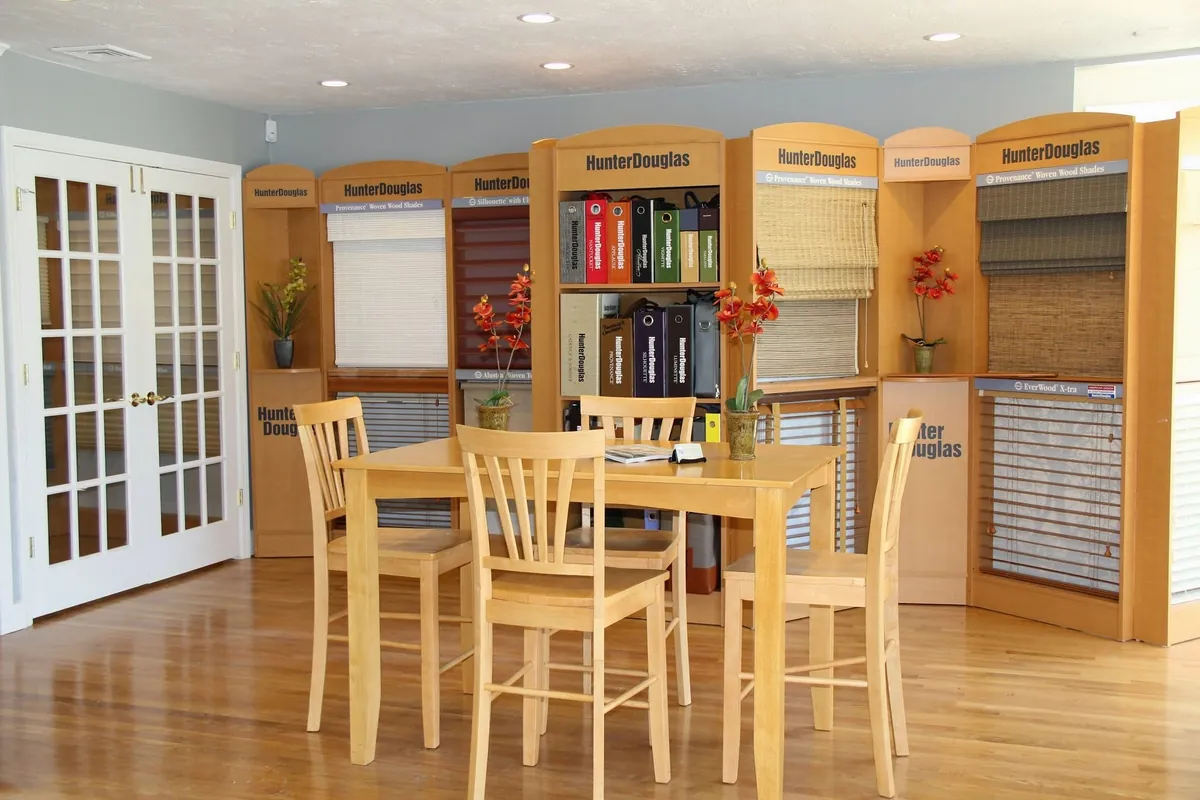
A Gallery dealer with certified installers
Blinds & Designs is a Hunter Douglas Gallery dealer, a status Hunter Douglas reserves for dealers who meet its standards. It gives us access to the full honeycomb range, from double-cell Duette fabrics for an exposed farmhouse wall to Applause for the upstairs rooms, and PowerView for houses where the windows are many and far apart.
Installation is carried out by installers certified by Hunter Douglas, which counts for a lot in a house where no two frames match. If shades or blinds you already own ever need fixing, our blind and shade repair service handles that as well.
We carry the wider Hunter Douglas range too, so other rooms can have plantation shutters in Mendon, custom blinds in Mendon or something else again. Everything we offer in town is on our Mendon page.
Questions from Mendon
My antique colonial has very deep window wells. Is that a problem?
Usually it is an advantage. Deep wells give a headrail plenty of room to sit inside the opening, so the shade disappears when raised and the casings stay visible. The thing we check most carefully is whether the frame is square, because older openings often vary from top to bottom.
Are double-cell shades worth it on a house with no shelter around it?
On an exposed wall facing open fields, many people find they are. The second layer of cells gives the air more places to stay still. At the consultation we hold single and double samples at the same window so you can compare the feel and the light.
Can one fabric work across an old house and its newer addition?
Yes. Honeycomb shades are made to each opening, so the same fabric can go on deep antique sash, shallow newer frames and wide kitchen windows, with the mount chosen to suit each one.
My bedroom faces east across open land. What helps with the early sun?
Choose a blackout honeycomb fabric for that room and it stays dark until you lift the shade yourself. PowerView adds a second option: set the shades to come down at a fixed time each evening and rise when you choose in the morning.
Is there a charge for the estimate?
No. Once every window has been measured, the estimate is free. Use Request a Consultation to pick a day and the samples come to your kitchen table.
Take the next step
Samples held up at a deep-set farmhouse sash on a bright afternoon will tell you more than any catalog. Book a visit through Request a Consultation, and the van brings every honeycomb fabric to your door, each opening gets measured, and you keep a free estimate. If talking it over first suits you better, the call button is there, and the Franklin showroom is the closest place to look at honeycomb fabrics before we come out.