
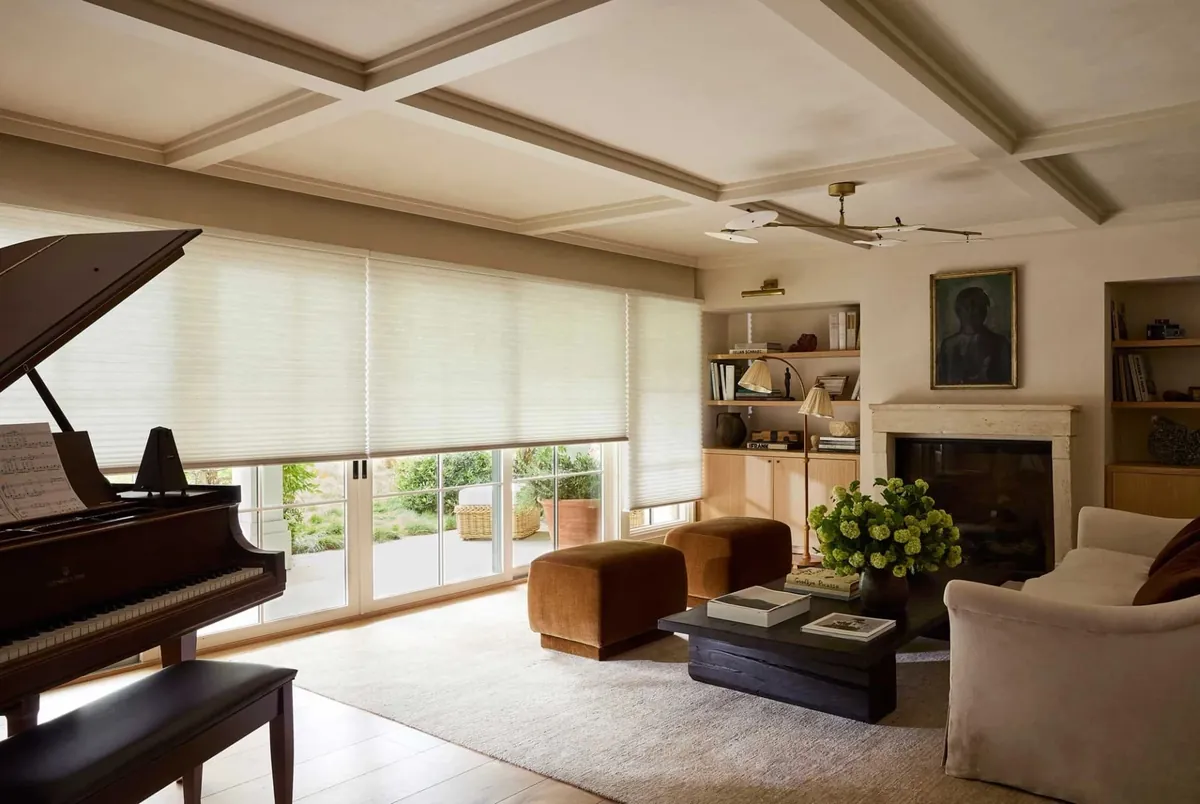
Three eras of house in one town
Few towns put so many kinds of house side by side. Along the Blackstone River stands mill-era housing, much of it with its original narrow openings. Out on the outer roads are antique farmhouses. And off Route 16 are newer colonials with modern windows. Fitting cellular shades in Uxbridge, MA, means being ready for any of the three, and often for a mix of them, since plenty of older houses have newer additions.
Each era has its own window problem. The river houses have slim, old openings and thin glass. The farmhouses have small sash in thick walls and open land around them. The colonials have big modern windows that take a lot of sun. What ties them together is that a honeycomb shade helps in every case, because the still air trapped in its cells slows heat moving through the glass in either direction.
So rather than one answer for the whole town, we bring one sample case and three sets of questions.
Honeycomb shades for each kind of Uxbridge house
These three options cover most of what we fit in town. Each one travels in the van as a sample.
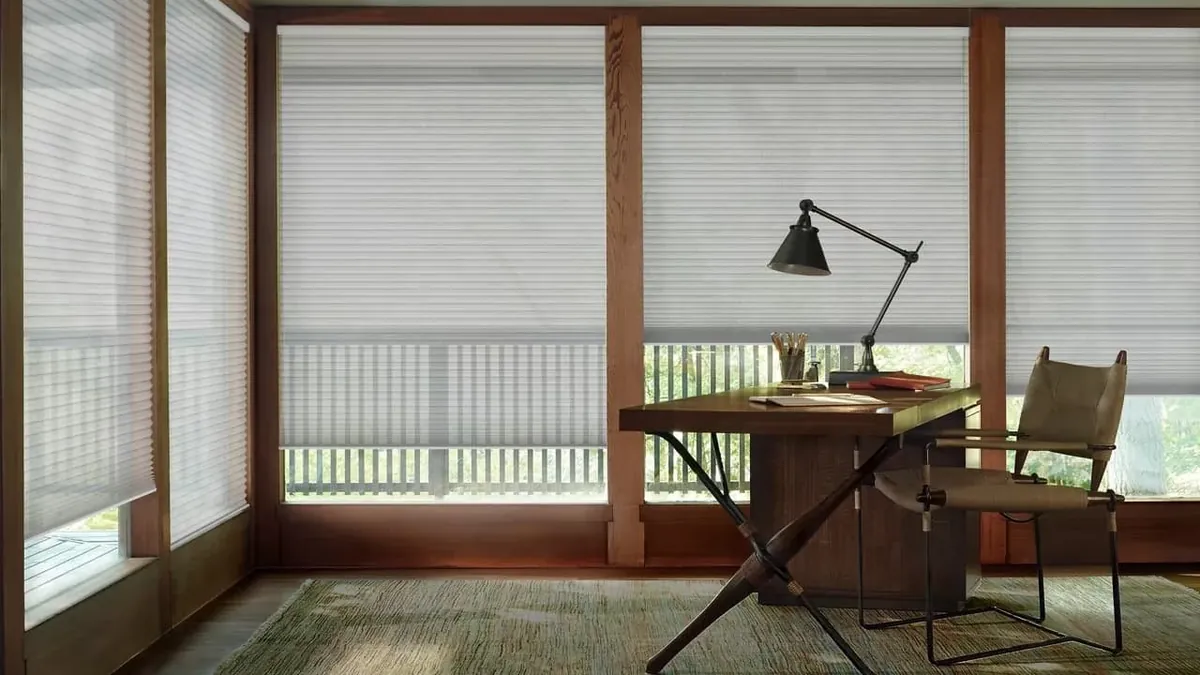
Slim shades for river-house openings
Duette in narrow widths, made to each original opening so it sits neatly inside the frame.
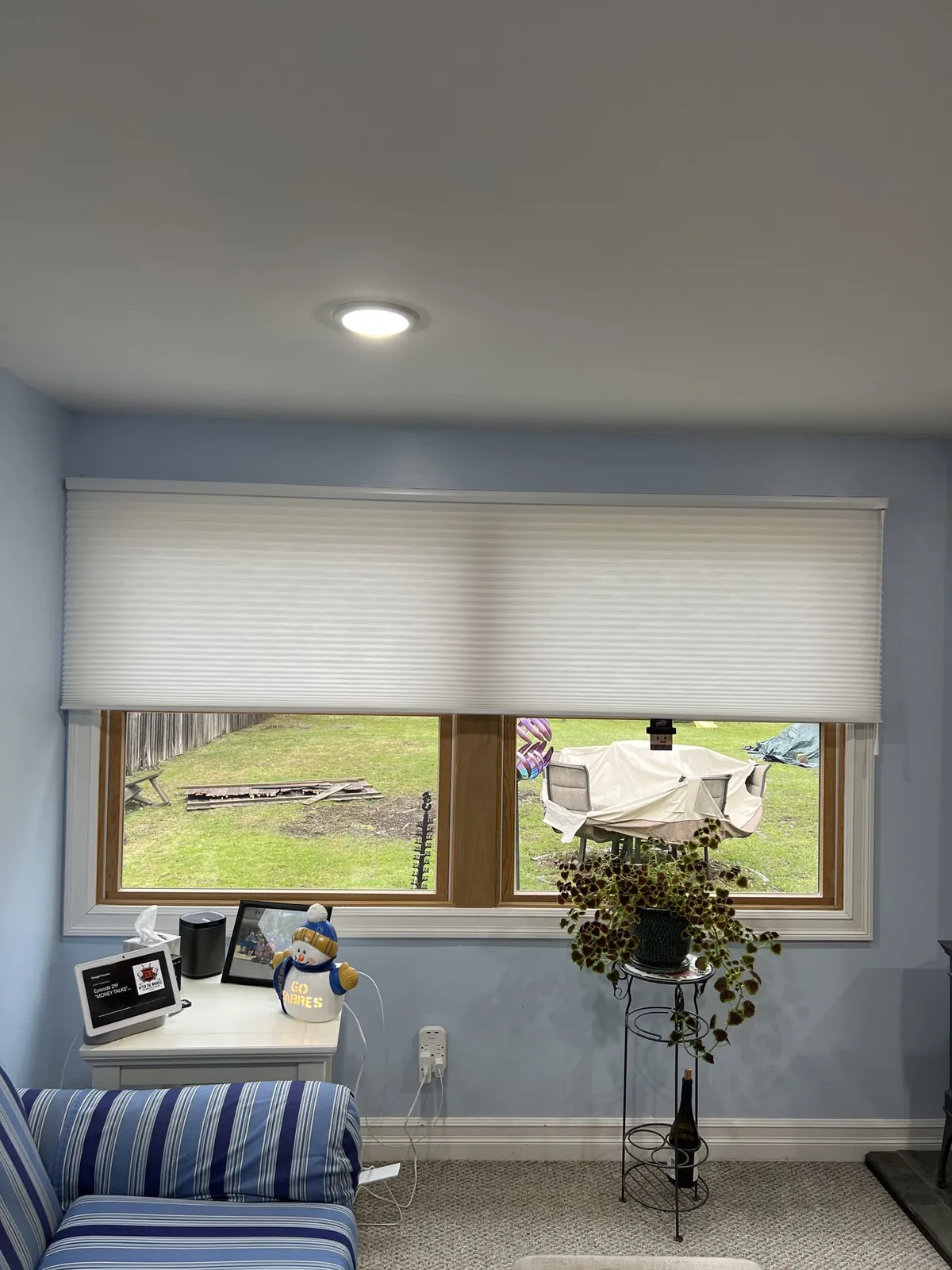
Warm fabrics for farmhouse rooms
Double-cell and light-filtering fabrics for rooms with small sash, deep walls and open ground outside.
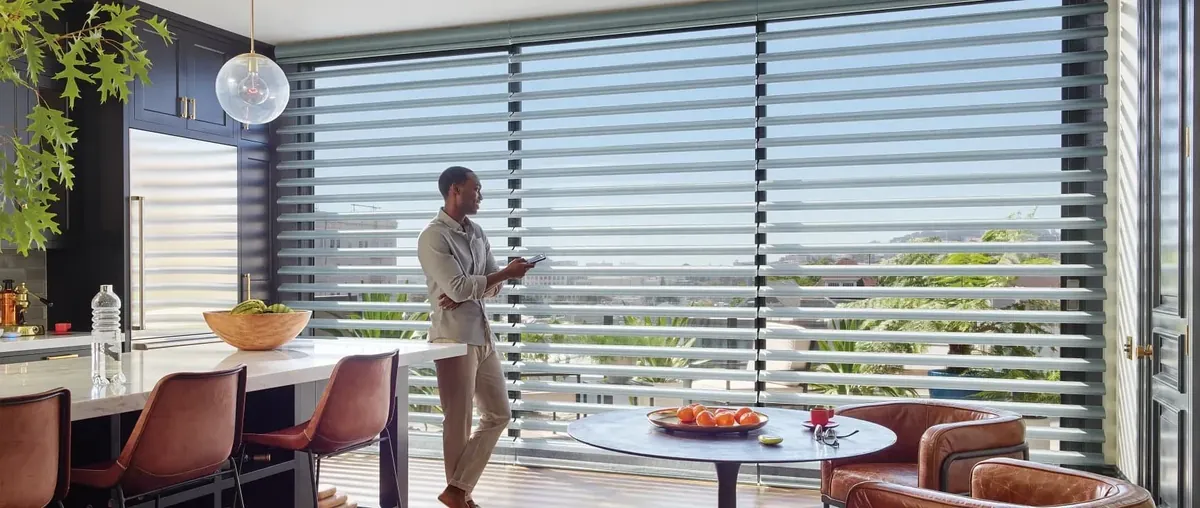
PowerView for colonial-sized orders
A two-story colonial can have a lot of windows. Motorized shades close from a phone or on a schedule.
Era one: mill houses along the Blackstone
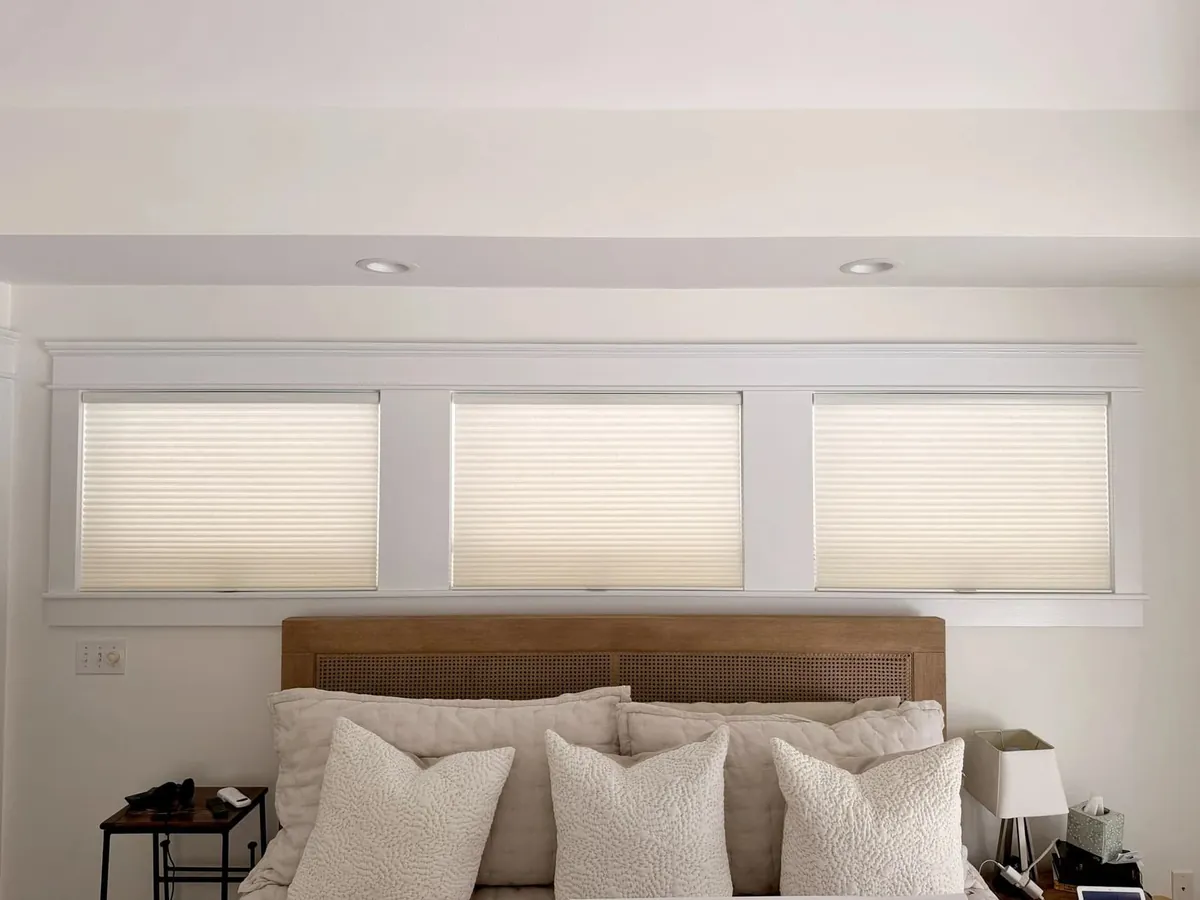
The houses near the river were built for mill workers, and they share a family likeness: modest footprints, close spacing and tall, narrow window openings. A good number keep their original sash, with wavy old glass, wooden stops and counterweights inside the frame. Others have had replacement units fitted into the original openings.
Original or replaced, the openings stay slim, and the shade must respect that. A narrow Duette tucked inside the frame is the tidiest result, leaving the casing on view and almost vanishing when pulled up. Two things can spoil it: too little depth above the sash, where stops and pulleys live, and a frame that has racked out of true as the house settled. Both get checked on every window. When either rules out an inside fit, the headrail moves onto the casing face, which has a bonus on old sash: the fabric overlaps the gaps where cold air leaks in.
Spacing is the other river-house issue. A side window can sit just across a short gap from the neighbor’s, so screening matters alongside warmth. By day a light-filtering fabric glows and hides the room; after dark, with lamps lit, that same fabric gives away more, so bedrooms and alley-facing windows usually get a denser weave or a blackout fabric. For cellular shades in Uxbridge, MA, on the river streets, a top-down lift is the frequent finishing touch, letting sky in above while the lower glass stays private.
Era two: antique farmhouses on the outer roads
Out on the roads away from the river, the antique farmhouses are a different kind of building. Walls are thick, sash are small and set deep in the wall, and the houses often have open land on several sides. Many have grown over time, with kitchens, porches and back rooms added to the original core.
Deep window wells suit a honeycomb shade. There is usually plenty of room for the headrail inside the frame, so the shade tucks away completely when raised and the wide sills stay clear for plants or a lamp. As with the mill houses, the frames are rarely square, so measuring at several points still matters.
Exposure is the big difference. With nothing nearby to break the wind or the sun, a farmhouse window works hard. In winter the wind across open ground draws warmth from the glass; in summer the sun reaches a south or west wall for most of the day. A double-cell fabric is worth considering on the most exposed side, and a light-filtering fabric keeps a sunny room bright while slowing the heat. For the additions, with their newer and often larger windows, we choose a mount to suit each frame but keep the same fabric so the old and new parts of the house look like one home. In a room with only one or two small sash, a pale fabric that blends with the trim keeps the window looking as large as possible when the shade is raised.
Era three: newer colonials off Route 16
The colonials off Route 16 bring the town up to date: two stories, modern double-hung windows in standard sizes, a family room with a bigger window, and often a slider or French doors to a deck. Frames are square and deep, so inside mounts are easy.
Here the questions are about scale and sun. A colonial can have many windows across two floors, and keeping a consistent look from the street matters. We usually plan one color for every front-facing window, with light-filtering fabrics in the living spaces and room-darkening fabrics in the bedrooms. Because many honeycomb colors come in both, the house looks uniform outside while each room gets the light it needs inside.
Big modern windows facing south or west can make a family room hot on a summer afternoon. A lowered honeycomb shade slows that heat and softens the glare, and a top-down shade can leave the upper part of the window open to the sky. The slider takes a vertical honeycomb shade, drawn across like a curtain and gathered at one side. With so many openings across two floors, a colonial is the house type where PowerView most often pays its way. Power for each motor is something we sort out with you during the visit, and the control options are laid out in how motorized shades are controlled.
The honeycomb, whatever the house
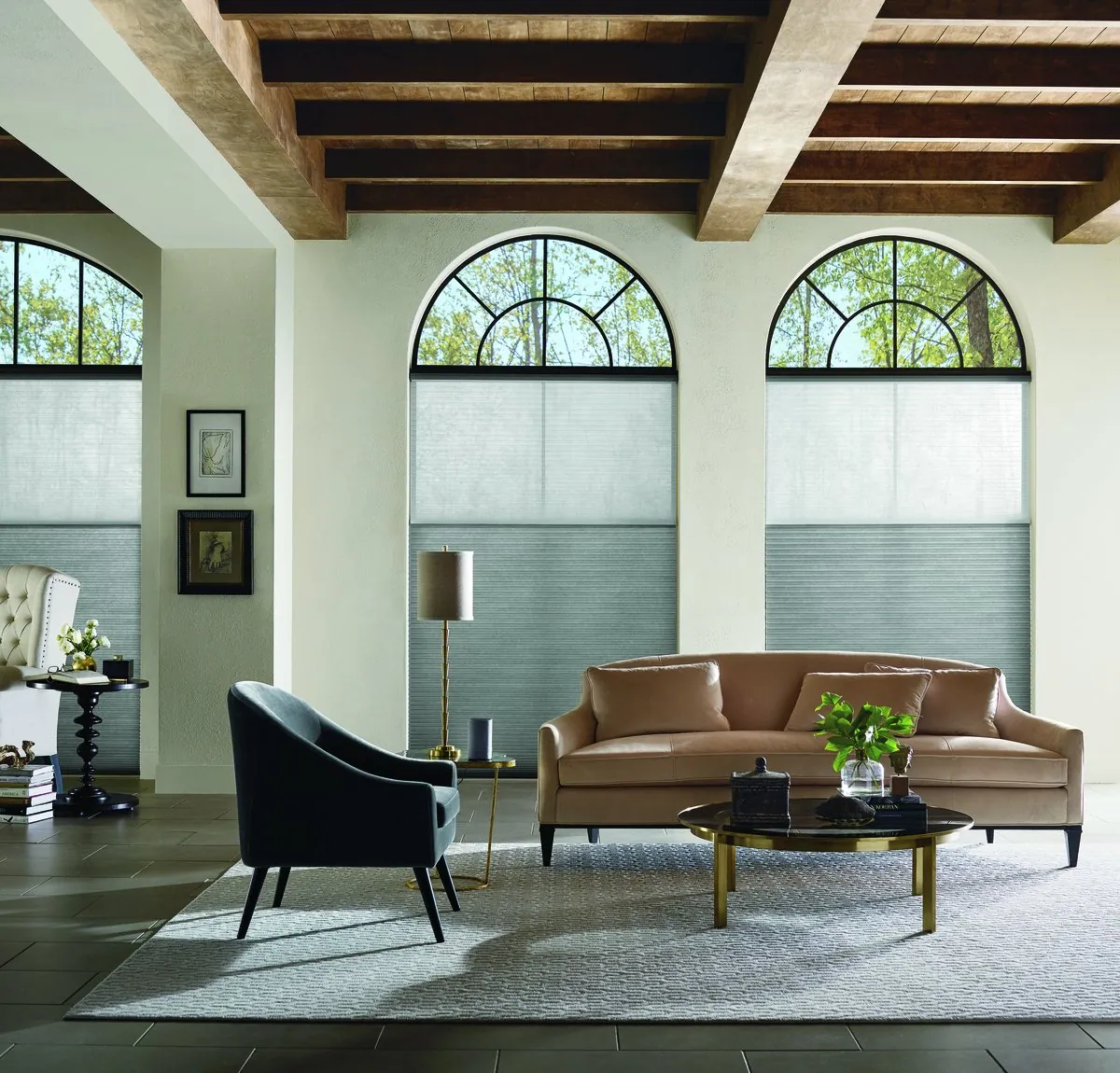
Age of house aside, every honeycomb shade relies on one trick. The fabric is joined into a row of flattened tubes; drop the shade and the tubes puff open, each one sealing in a sleeve of air. Because that air is boxed in, it barely stirs, and air that barely stirs is a sluggish carrier of heat. Winter warmth stays on the room side, summer heat stays on the glass side.
Where the window itself does little, the gain is biggest: old single panes beside the Blackstone, or a small farmhouse sash staring at an open field in February. A newer colonial window has less to gain, but the strip of floor beside the glass still feels milder with the shade down.
Single-cell fabrics have one row of tubes, double-cell fabrics have two, and a few Duette fabrics hide a smaller tube inside each larger one. Each extra layer slows heat a little more. Holding the three side by side at your own window is often what settles which cellular shades in Uxbridge, MA, a particular house should have.
How a visit works
Uxbridge jobs nearly always begin in the house, since the river houses, the farmhouses and the colonials each light their rooms so differently that a swatch seen anywhere else can mislead. A sample van makes the trip, so the choosing happens where the shades will hang. Expect roughly this sequence.
- Settle on a day through Request a Consultation, or press the call button and arrange it by phone.
- Out of the van come fabric books and working shade samples, sorted by color, texture, cell build and how much light each lets through.
- We ask which era your house belongs to, or which mix of eras, and begin in the room that bothers you most.
- Each candidate fabric is pinned up against the actual sash, so you see it in morning or afternoon light beside your own paint.
- Openings are measured one by one, with frame depth, squareness and any old hardware written down.
- The estimate, free of charge, is left with you, and nobody waits on the doorstep for an answer.
Our in-home consultation page answers the common questions about that visit. When the shades are part of a bigger room makeover, an interior design consultation can run alongside, covering paint, fabric and furniture choices too.

When one house holds two eras
Plenty of Uxbridge houses do not fall neatly into one era. A farmhouse may have a modern addition with big windows. A mill house may have replacement units at the back and original sash at the front.
Honeycomb shades are made to each opening, so a mixed house is no problem. Each window gets its own measurements and mount: an inside mount in a deep antique well, a casing mount on a shallow or uneven old frame, a standard inside mount on a newer unit. What stays the same is the fabric, color and headrail, so walking from the old part of the house to the new feels continuous. Ordering cellular shades in Uxbridge, MA, for a mixed house is mostly about that continuity. Bottom rails can be set to line up at the same height when the shades are half down, which ties a room together even when its windows are different sizes.
Duette and Applause, era by era
Hunter Douglas sells its honeycomb shades under two names. The physics are shared, but the menus are not: each line has its own fabric families, textures, cell builds and lifts. Duette is the larger menu, with very slim sizes, double cells, shaped shades for arches and a sideways version for patio doors. Applause is a tidier menu that covers the standard openings of a modern house with ease.
Put simply, a river house usually starts with Duette for its slim openings, an exposed farmhouse room often ends up with a double-cell Duette, and a colonial off Route 16 tends to be mostly Applause with a Duette shade on the slider. Mixing them is normal. The full Hunter Douglas range sits on our cellular shades page.
Lifts that suit each window
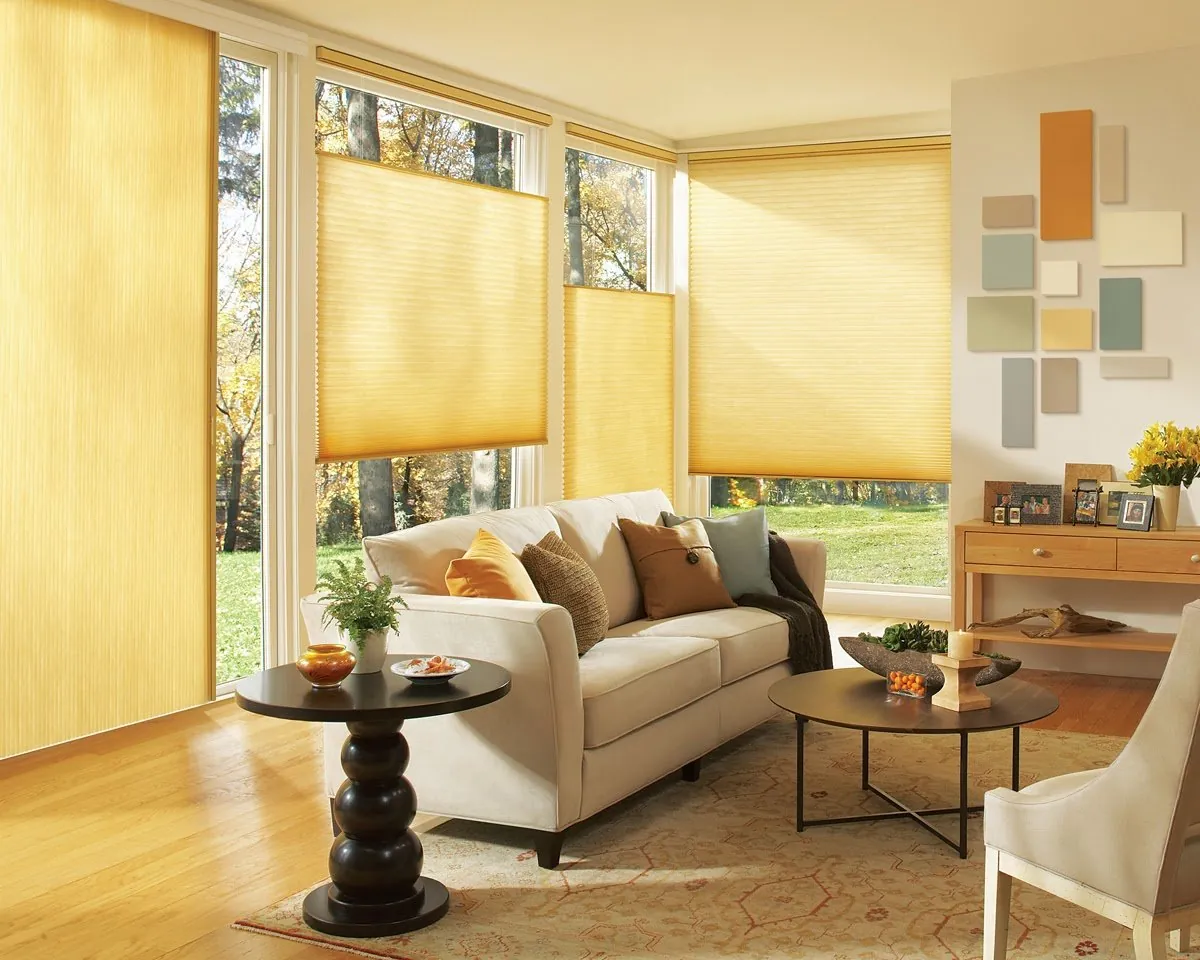
Three lifts cover almost everything in town. A cordless lift is moved from the bottom rail and stays put wherever you let go; there is nothing dangling beside a slim river-house window, which matters with toddlers or a curious cat in the house.
A top-down, bottom-up lift gives the shade two moving rails. On a mill house with a neighbor across a narrow gap, or over a kitchen sink, that means daylight through the top and cover below. Then there is PowerView: a phone, a handheld remote or a timetable runs the shades, which earns its keep in a big colonial where the west side wants closing every summer afternoon.
Measuring and certified installation
Careful measuring is what makes cellular shades in Uxbridge, MA, look as though they came with the house, whichever era it belongs to. Our routine is the same for an old river sash as for a new colonial unit.
- Three widths, one near the head, one halfway down, one near the sill; the narrowest wins for a shade that hangs inside the frame.
- Three heights, left, center and right, because floors in old houses tilt.
- A depth reading where the headrail would go, plus a note of any pulley, stop or bead in the way.
- Your sign-off, window by window, on mount, fabric, color and lift, before we order a thing.
- On installation day, certified Hunter Douglas installers drive each bracket into timber, true up every headrail, cycle each shade fully and hand over the controls.
Edges that sit tight to the frame look crisp and leave little room for a winter draught to sneak past, a detail that matters most on the river houses.
Rooms by the river in summer
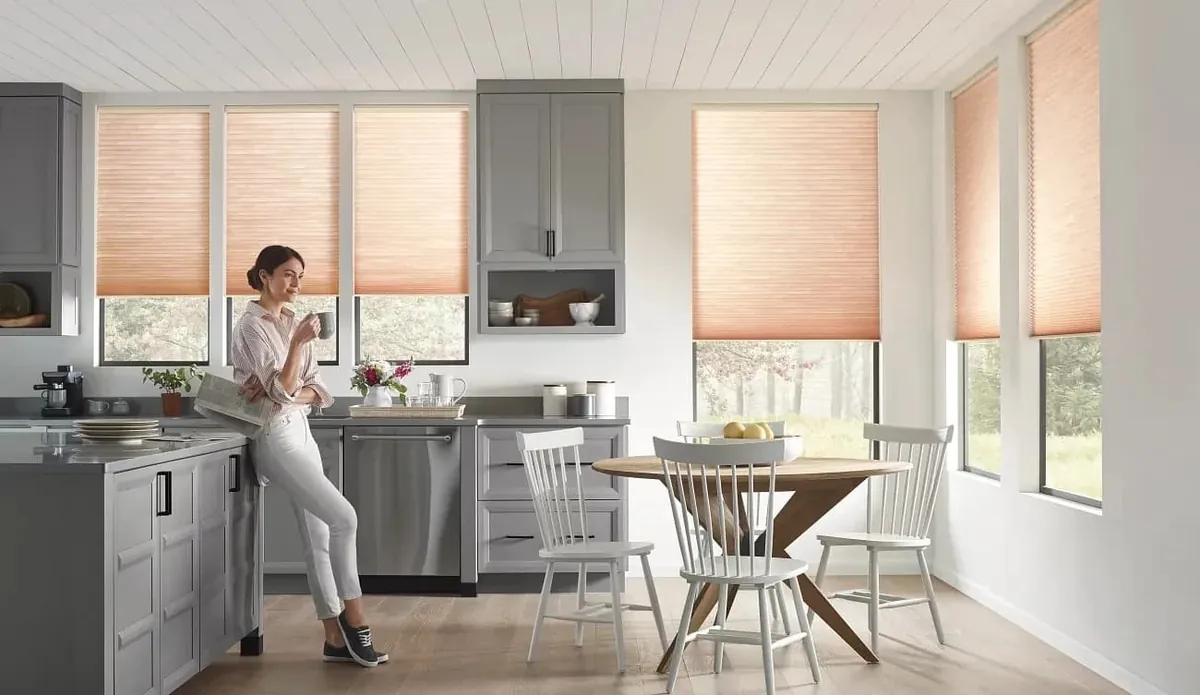
The river valley has its own summer habits. Mill houses with tall sash were built to be opened at top and bottom, so warm air escapes high while cooler air comes in low. A top-down, bottom-up honeycomb shade fits right in: lower the top to clear the upper sash for air and keep the lower glass covered for privacy from the house next door. When the afternoon sun is on that side, the shade can come down further to slow the heat while the open sash keeps air moving.
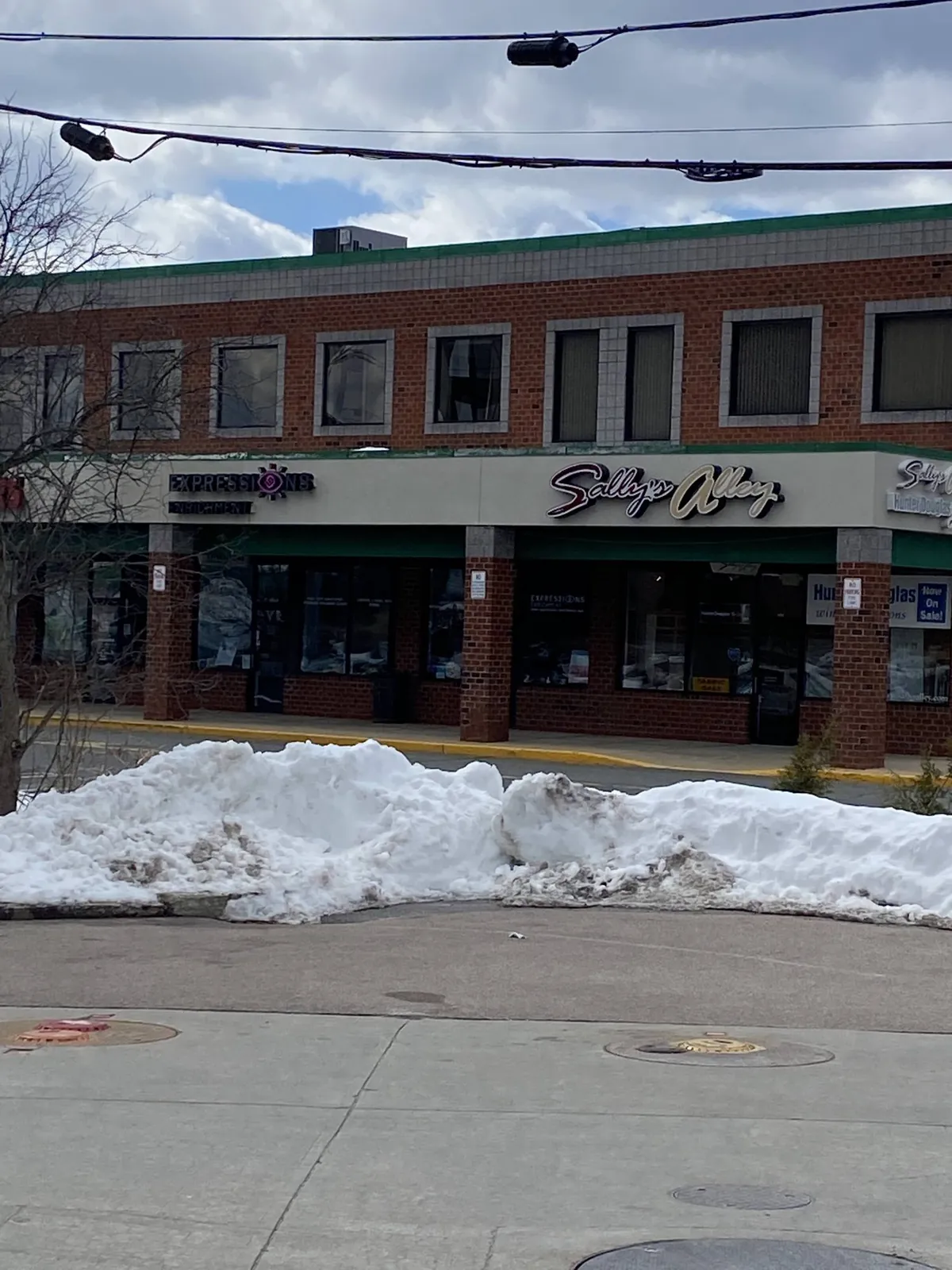
Franklin is the nearest showroom
Of our locations, the Franklin showroom is the one nearest Uxbridge. It suits anyone who likes to handle the shades before booking; snapshots of your windows, particularly in a house that mixes eras, let us give sharper advice there.
Most decisions still get made at home. Frame depth in a mill house, the glare across a farmhouse field, the width of a colonial picture window: none of those travel well in a photo. Measuring and the free estimate happen at that same visit.

A Gallery dealer for houses of every age
Only some Hunter Douglas dealers carry the Gallery title, and Blinds & Designs is among them. For an Uxbridge house that translates into no gaps in the honeycomb choice: slim Duette for the river, double cells for the outer roads, Applause for Route 16, door shades for sliders and PowerView wherever reaching is awkward.
The shades are hung by Hunter Douglas certified installers, who are used to frames of every age. Older blinds and shades around the house that have stopped working are welcome too, through our blind and shade repair service.
Shutters, roller shades and blinds are all part of what we sell, so other rooms are covered as well. Browse custom blinds in Uxbridge and roller shades in Uxbridge, or the complete local list on the Uxbridge page.
Questions from Uxbridge
My house near the river still has its original narrow sash. Can you fit it?
Almost always. Duette comes in slim enough sizes for an original mill-house opening. What decides the mount is the frame: if the head is too shallow or the sides out of true, the shade is fixed to the casing face instead of inside.
Our farmhouse has a modern addition. Can the shades match?
They can. Each window gets its own measurements and mount, but the same fabric, color and headrail can run through the whole house so the old and new parts look continuous.
What suits the big family room window in a newer colonial?
A wide honeycomb shade, or two or three on one headrail, in a light-filtering fabric that keeps the room bright while slowing afternoon heat. A top-down lift can leave the upper glass open to the sky.
Are double-cell shades worth it in an exposed farmhouse?
On the windiest, most exposed side, many people find they are. We hold single and double samples at the same window so you can compare them before deciding.
Is the estimate free?
It is. Measuring is part of the consultation, and the written estimate that follows costs nothing. Book through Request a Consultation.
Your next step
River house, farmhouse or colonial, a swatch makes sense only when it is hanging at your own sash. Choose Request a Consultation and the honeycomb samples come out to Uxbridge; each opening is measured while we are there, and the estimate is free. Talk it over first on the call button if you prefer, or look in at the Franklin showroom, the location closest to town.