
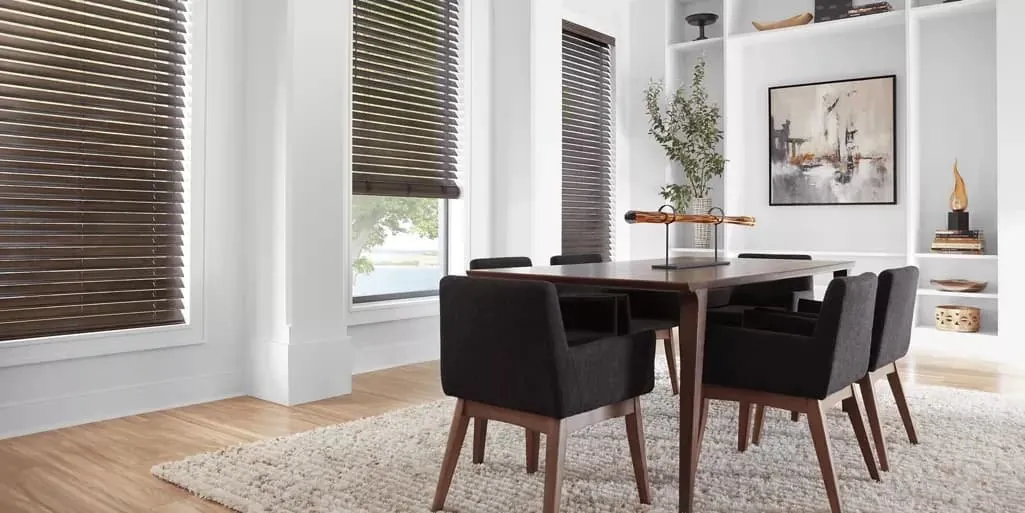
Small, deep openings in the old jewelry-era streets
The houses closest to the center of North Attleborough went up when the town’s jewelry shops were busy, and they were built tight together. Victorians and two-families stand shoulder to shoulder, and their windows tell you so: tall sash on the main rooms, then smaller, deeper openings on the side walls where one house looks straight across at the next. Ordering custom blinds in North Attleborough, MA, starts with those two kinds of window, because a stock blind fits neither of them well.
On the tall sash, a ready-made blind tends to stop short or leave a strip of light down each edge. On the small, deep side openings the problem is the opposite: there is plenty of depth for the headrail, but the width is narrow and rarely square after a century of the house settling. A blind cut to the opening sits inside the frame neatly and gives you privacy from the house next door without shutting out the day.
Further out from the center the stock changes to post-war ranches and newer colonials, with wider, more regular windows. They are easier to fit, but they still look better with blinds made for them, and a matching order across the whole house keeps the street side of it tidy.
The four kinds of blind we make for these houses
Every blind on this page comes from the Hunter Douglas range. The choice comes down to the material, which suits the room, and the way the blind is worked, which suits the window and the person using it.
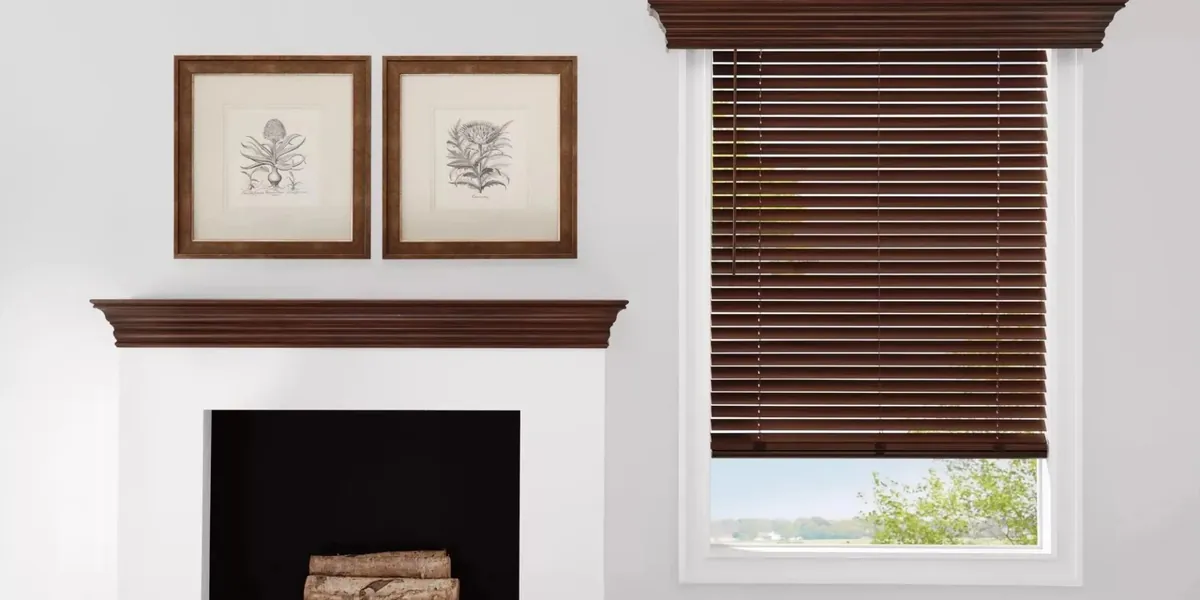
Wood blinds
Real wood slats, stained to sit with old trim or painted to match it. The natural pick for the front parlor of a Victorian.
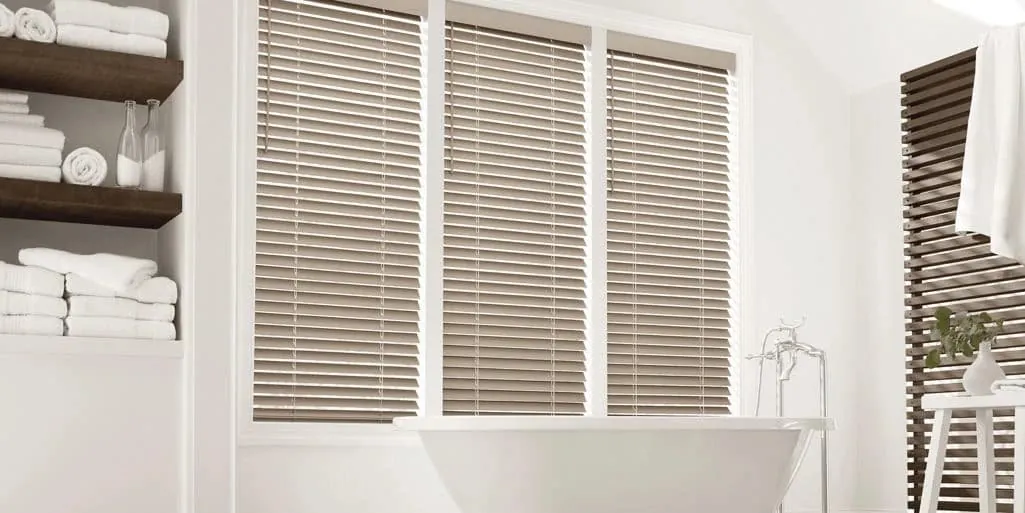
EverWood faux wood blinds
The painted-wood look in a material we suggest for kitchens and bathrooms, including the back rooms of a two-family.
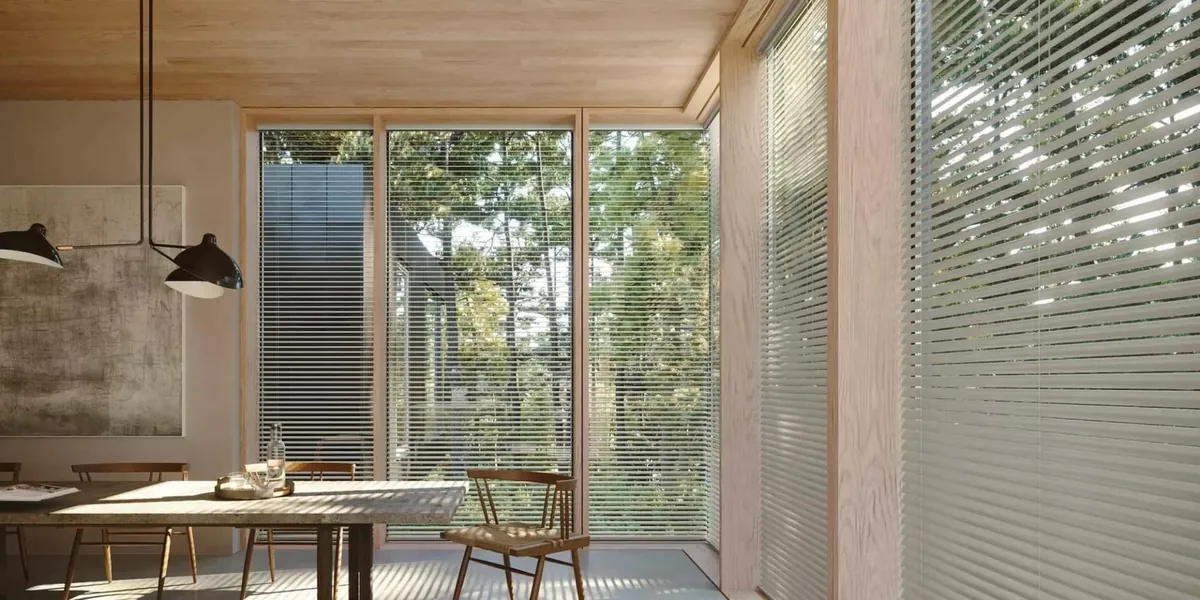
Metal blinds
Fine slats and a slim headrail, handy where the frame is shallow or the opening is unusually narrow.
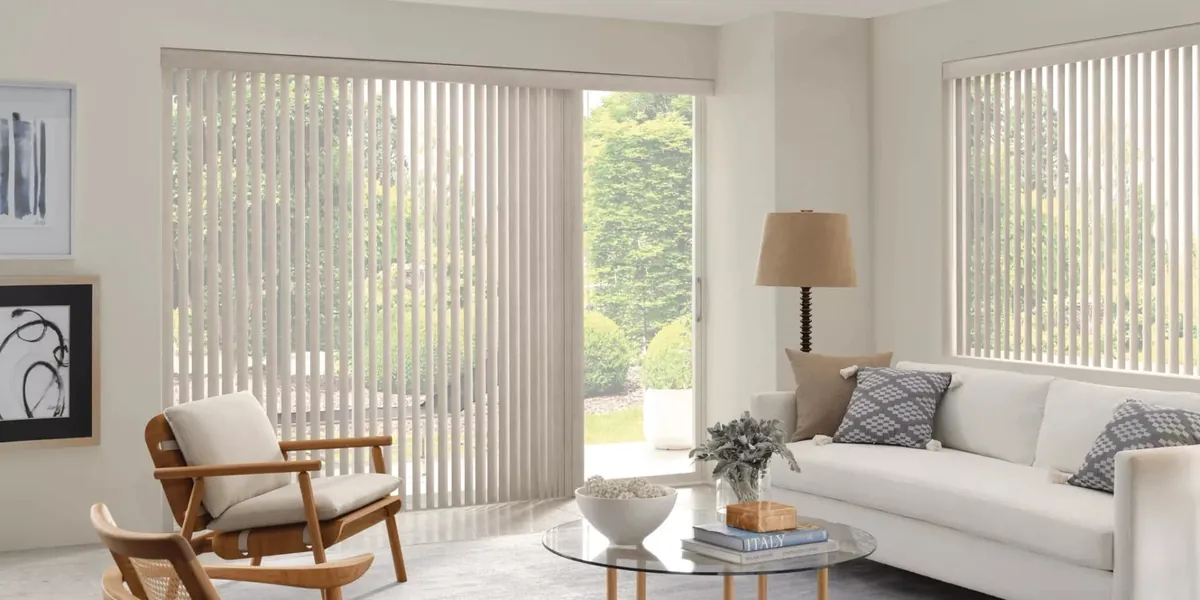
Vertical blinds
Vanes that hang and draw aside, made for the sliding door to the yard that many of the newer colonials have.
Fitting the tall sash on a Victorian two-family
A two-family near the center usually has the same tall windows stacked on both floors, front and back. That repetition is a gift when you are ordering blinds, because one careful set of decisions can run through both units. It also means a mistake shows twice, so the measuring matters.
Older sash is rarely the same width at the top as at the bottom. Frames move, paint builds up on the stops, and a window that looks square from the sidewalk can be off by enough to make a stock blind rub. We measure each opening at the top, the middle and the bottom and order to the narrowest point for an inside mount, so the blind drops cleanly inside the frame and does not scrape the paint every time it moves.
Height is the other half of it. Tall sash needs a long blind, and a long blind with wide slats can look heavy on a slim window. A narrower slat keeps the proportions right and folds into a shorter stack at the top when you raise it, which matters when you want the full height of the glass on a dull winter day. We bring both slat widths to the house so you can judge them against your own casing, rather than guessing from a picture.
If the casing has old mouldings that you want to keep on show, an inside mount is almost always the answer. If the frame is too shallow to hold the headrail, we will tell you so at the window and suggest a slim outside mount that sits just above the trim instead.
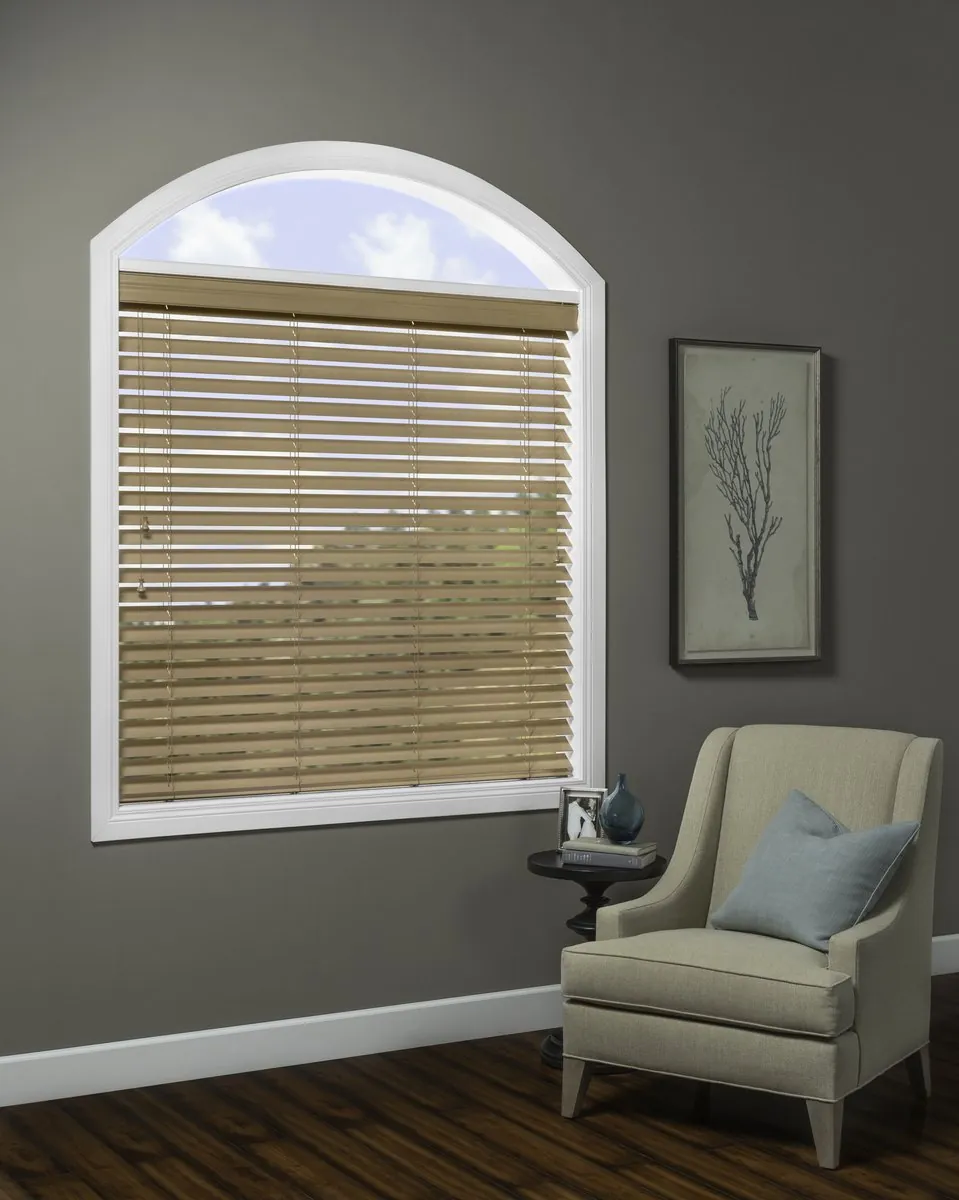
Privacy between close-set houses
The small side windows on these streets often face another house only a driveway away. A curtain closed all day makes the room gloomy, and a bare window leaves you on show. A horizontal blind sits neatly between the two.
With the slats tilted down, you can see out toward the sky and the yard while the window across the drive sees very little of the room. Tilted up, the slats bounce daylight off the ceiling, which brightens a narrow room without putting you in plain view. Closed, they give you full privacy at night. On a deep, narrow opening that control is worth more than a wider window would give you, because there is so little glass to work with in the first place.
For these side openings we often suggest a smaller slat in a light color. It lets more light into a room that does not get much, and the fine lines suit the scale of a small window. Where a side room is a bathroom, faux wood is the material we suggest, and it can be matched in color to wood blinds in the rooms around it so the two sides of the house look the same from outside.
Ranches and newer colonials further out
Away from the center, the post-war ranches have a different set of windows: a broad front window in the living room, regular bedroom windows down the hall, and often a kitchen window over the sink facing the back yard. The newer colonials beyond them are larger again, with more windows and often a sliding door off the kitchen or family room.
These openings are more regular, so fitting is simpler, but the choices still matter. A long front window on a ranch can take two or three blinds side by side, each one sized so the slats line up across the whole run. A sink window needs a material that will not mind splashes, and a lift you can reach across the counter. A slider wants a vertical blind that draws aside, so the door opens without lifting anything.
We plan a ranch or colonial room by room during the visit. You might choose painted wood in the living room, faux wood in the kitchen and bathrooms, and a vertical on the slider, all in the same white so the house reads as one from the street. Our custom blinds for North Attleborough homes are ordered as one project in that way, so every window comes back made to its own size and in the same finish.
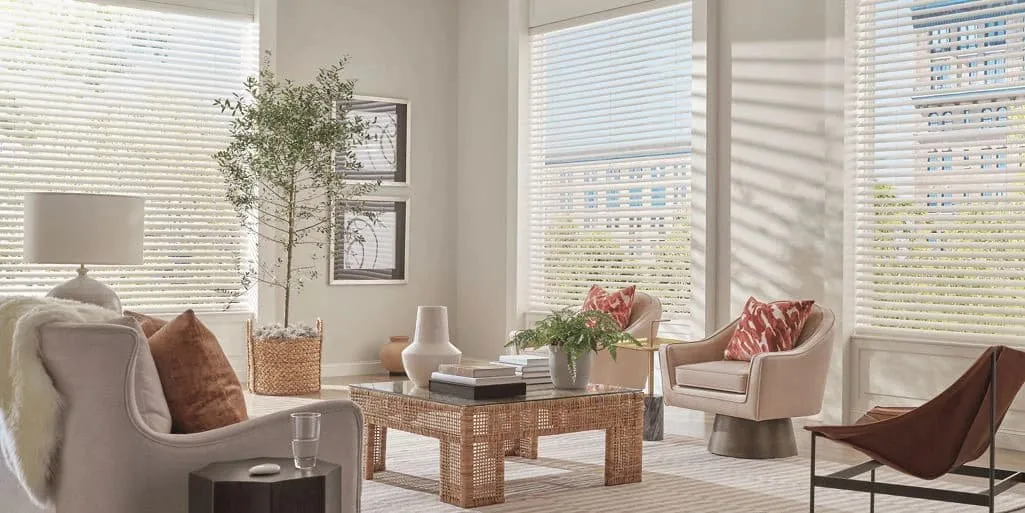
Thinking about the second unit
On a two-family, the two floors are often used quite differently. One may be lived in by the household that owns the building and the other let, or kept for a relative, or used as extra space. That changes what each floor needs from its blinds, even when the windows are identical.
For a let unit, many owners want something hard-wearing and easy to live with: faux wood throughout, a light color, and a simple lift that a new tenant will understand without being shown. For the floor they live on themselves, they may go further, with stained wood in the front rooms and motorization on a window that is hard to reach. Because both units share one front wall, we keep the color facing the street the same on both floors, so the building still looks like one house from the sidewalk while the inside of each unit suits the way it is used.
Ordering custom blinds in North Attleborough for both units at once also means a single visit, a single set of measurements and a single installation, rather than two separate jobs months apart.
The front rooms that face the street
In the close-set streets near the center, the front rooms sit only a short step back from the sidewalk. Those are the windows where privacy is hardest to get right, because passers-by are close and the room is usually the one you most want to keep bright.
A wood or faux wood blind with the slats angled slightly upward is a good answer here: daylight still comes in and lifts off the ceiling, but anyone walking past sees the slats, not the room. In the evening, with lamps lit inside, closing the slats fully keeps the house from showing to the street. If you choose custom blinds for North Attleborough front rooms like these, we set the headrails at one height across the facade so the row of windows looks even from outside, which matters more on a street where every house is close enough to compare.
How a visit to your house runs
We bring the samples to you, because blinds are easiest to choose against your own windows and in your own light. A visit usually follows these steps.
- You book through Request a Consultation or the call button and we agree a time that suits you.
- We arrive with the sample van: slats in wood, faux wood and metal, vertical vanes, and the different lift and tilt controls.
- We go room by room with you and ask what each window needs: privacy from next door, more daylight, a darker bedroom, easy reach.
- You hold the samples up at your own sash, in your own light, and compare colors and slat widths against the trim.
- We measure every opening at several points and check how much depth the frame has for an inside mount.
- You get a free estimate for what you have chosen, and you can take your time over it.
- When the order arrives, our certified Hunter Douglas installers fit each blind, set it level and show you how it works.
If you would like to know more before we come, read what happens at an in-home consultation or what happens on installation day.
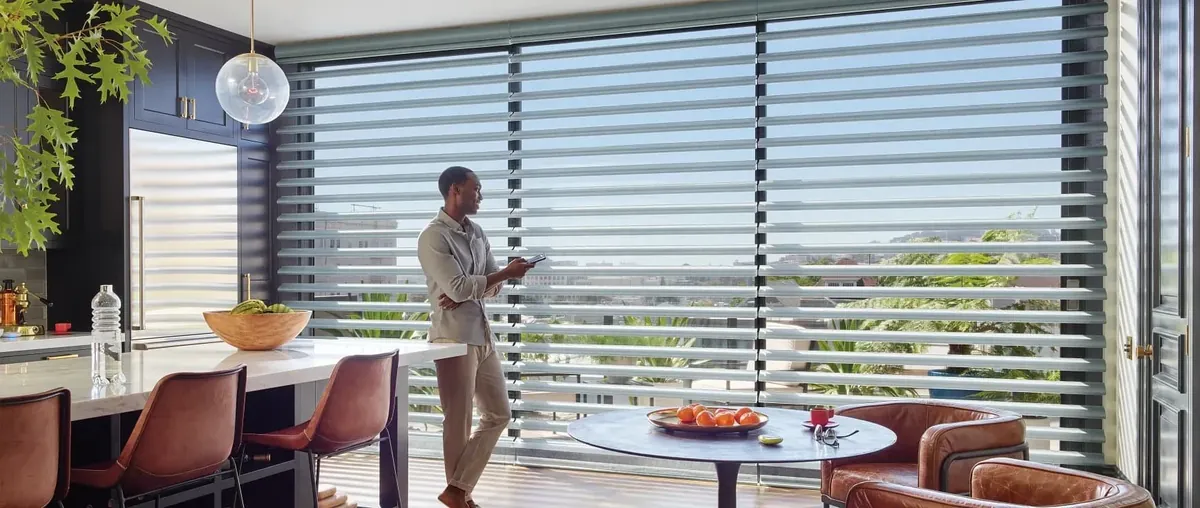
How each blind is worked
The way a blind lifts and tilts is chosen window by window, and in an older house it is worth thinking about. A tall sash raised by hand has a long way to travel, and a heavy wood blind on a big window can be a stretch. We go through the options at each opening:
- A cord to raise and lower, with a separate control to tilt, the classic arrangement many people still prefer.
- A wand for tilting, so there is no second cord hanging down the side.
- A lift with no cord at all, where you raise or lower the bottom rail by hand, which suits a child’s room or a window by a pet bed.
- PowerView motorization, where the blind tilts and raises from a phone, a remote or a schedule.
Motorization makes the most sense on the windows that are awkward to reach: the tall sash behind a radiator, a stair window, or a run of glass across the back of a newer colonial. We plan how each motor is powered at the visit, and you can see more on our motorized blinds in North Attleborough page.
Choosing a color for an old house
In the center, many houses still have their original trim, sometimes stained, often painted many times over. A blind sits right against that trim, so the color choice carries more weight than it would in a newer house.
With stained trim, a wood blind in a close stain lets the window read as one piece of woodwork. With painted trim, most people match the blind to the paint, which makes it almost disappear when open and keeps the window looking larger. On the outside, though, the street sees the back of every blind at once, so we suggest keeping the street-facing windows in one color even where the room colors change. On a two-family, that keeps both floors looking like one building rather than two separate households.
Darker colors give a richer look in a dining room or study but show dust and sun more readily on a south-facing window. Lighter colors help the smaller side rooms feel brighter. We bring the full color range so you can see each one against your walls in daylight, not under a shop’s lights.
When a blind is not the right answer
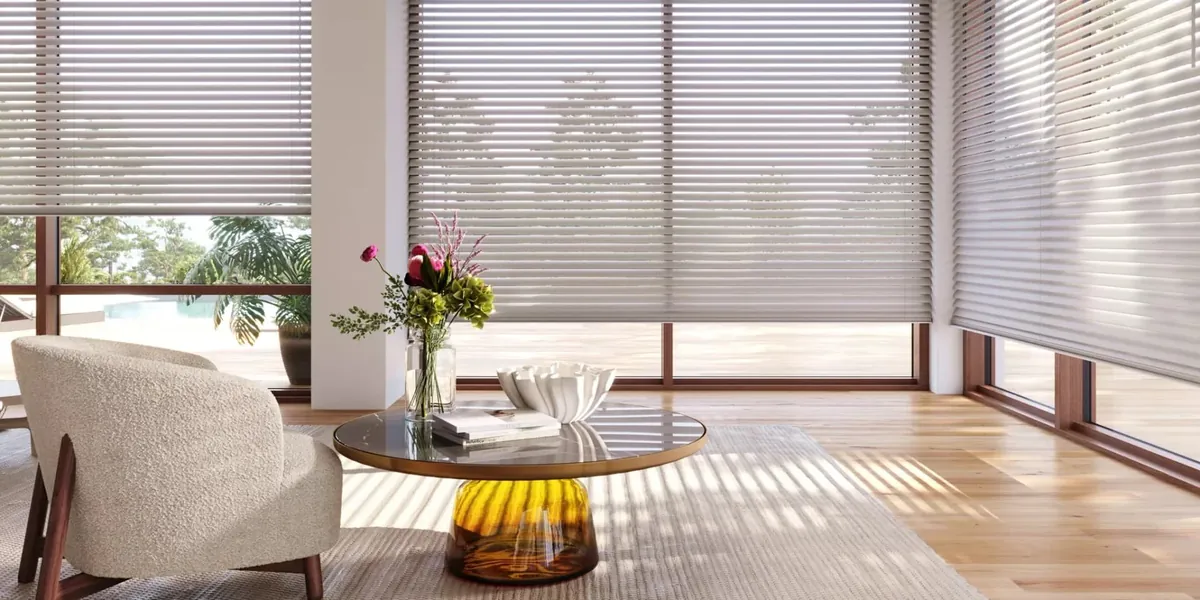
Blinds are not right for every window, and we would rather say so than sell one where it will not work well. A bedroom that has to be very dark may suit a shade better. A wide wall of glass that you want softened rather than controlled may suit a sheer. An old window where you want a solid, furniture-like finish may suit shutters.
If a room calls for something softer, look at our cellular shades in North Attleborough, roman shades in North Attleborough or roller shades in North Attleborough. For the tall sash of a Victorian, plantation shutters in North Attleborough are worth comparing side by side with wood blinds. We can show you any of these on the same visit, and many houses end up with a mix.
Why a Hunter Douglas Gallery dealer matters for your blinds
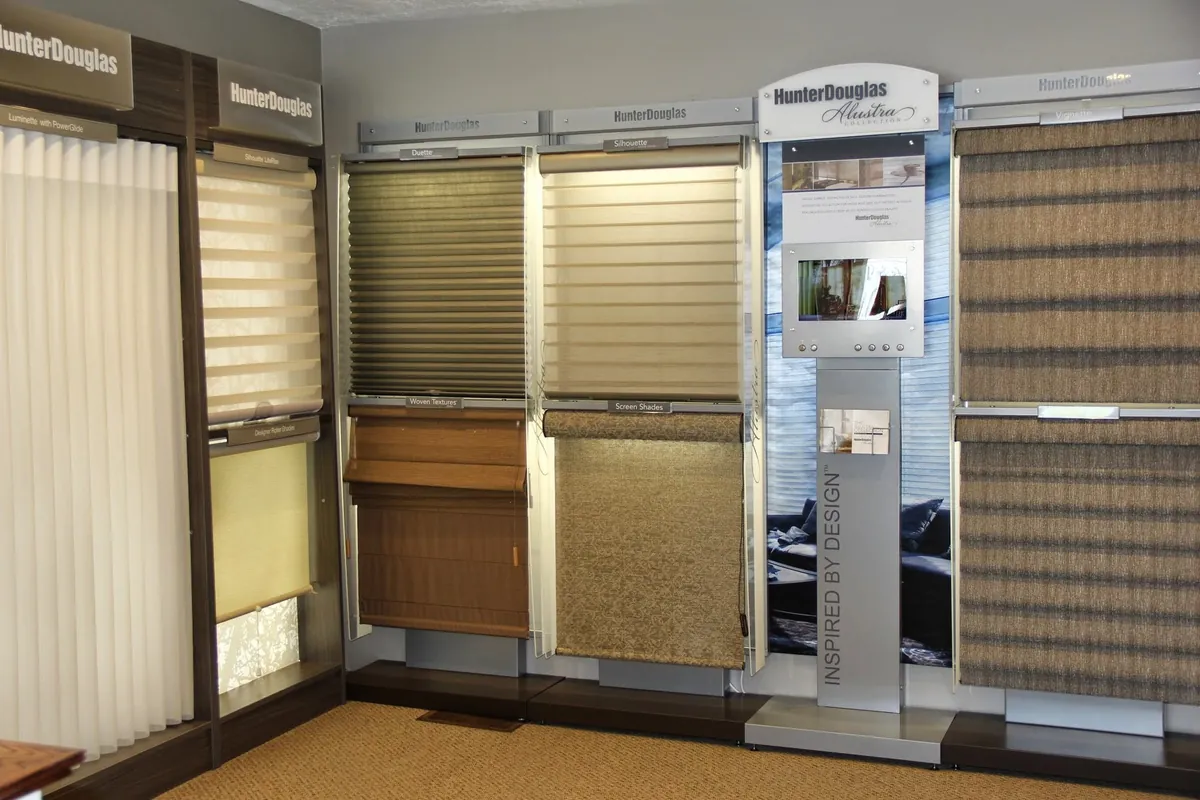
Blinds & Designs is a Hunter Douglas Gallery dealer. In practice that means the whole Hunter Douglas blind range is open to you: wood, faux wood, metal and vertical blinds in every color, slat size and control the line offers, rather than a short list chosen for you.
Our installers hold Hunter Douglas certification, so each blind goes up the way the maker intends, level and secure in a frame that may not be perfectly square. We also offer interior design consultations if you want help pulling a room together, and we take on blind and shade repairs for coverings you already own.
To see everything we offer in town, visit our North Attleborough page, or compare dealers on our Hunter Douglas dealer in North Attleborough page. The whole blind range is on our custom blinds page.
Questions from North Attleborough
Can you fit blinds inside the small, deep side windows on an old two-family?
Usually, yes. Those openings tend to have plenty of depth, which is what an inside mount needs. The thing we watch is width, because older frames are rarely square. We measure at several points and make each blind to fit the narrowest one so it hangs without rubbing.
Will one order cover both units of a two-family?
It can. Many two-families have the same window sizes on both floors, so one set of choices runs through the whole building. We still measure every opening separately, because no two old sash are quite the same.
Which material should go in the kitchen and bathroom?
Faux wood is the material we suggest for damp rooms. It can be matched in color to wood blinds in the rooms next door so the house looks consistent from outside.
Do you only fit blinds in the older houses near the center?
No. We fit blinds in the ranches and newer colonials further out just as often. Their windows are more regular, and a slider in one of those houses usually takes a vertical blind.
Is there a charge for the estimate?
No. After we measure, you receive a free estimate for the blinds you are considering, and you can decide in your own time.
Your next step from here
Choosing custom blinds in North Attleborough, MA, is easiest with the samples held up at your own sash, so the simplest thing to do today is to ask us to come to you. Use Request a Consultation, tell us a little about the house and which rooms you are thinking about, and we will arrange a time to bring the van, measure and leave you with a free estimate.
If you would like to stop in somewhere before we visit, our nearest showroom is in Franklin, and its address and hours are on the Franklin showroom page. Or tap the call button and talk it through first.