
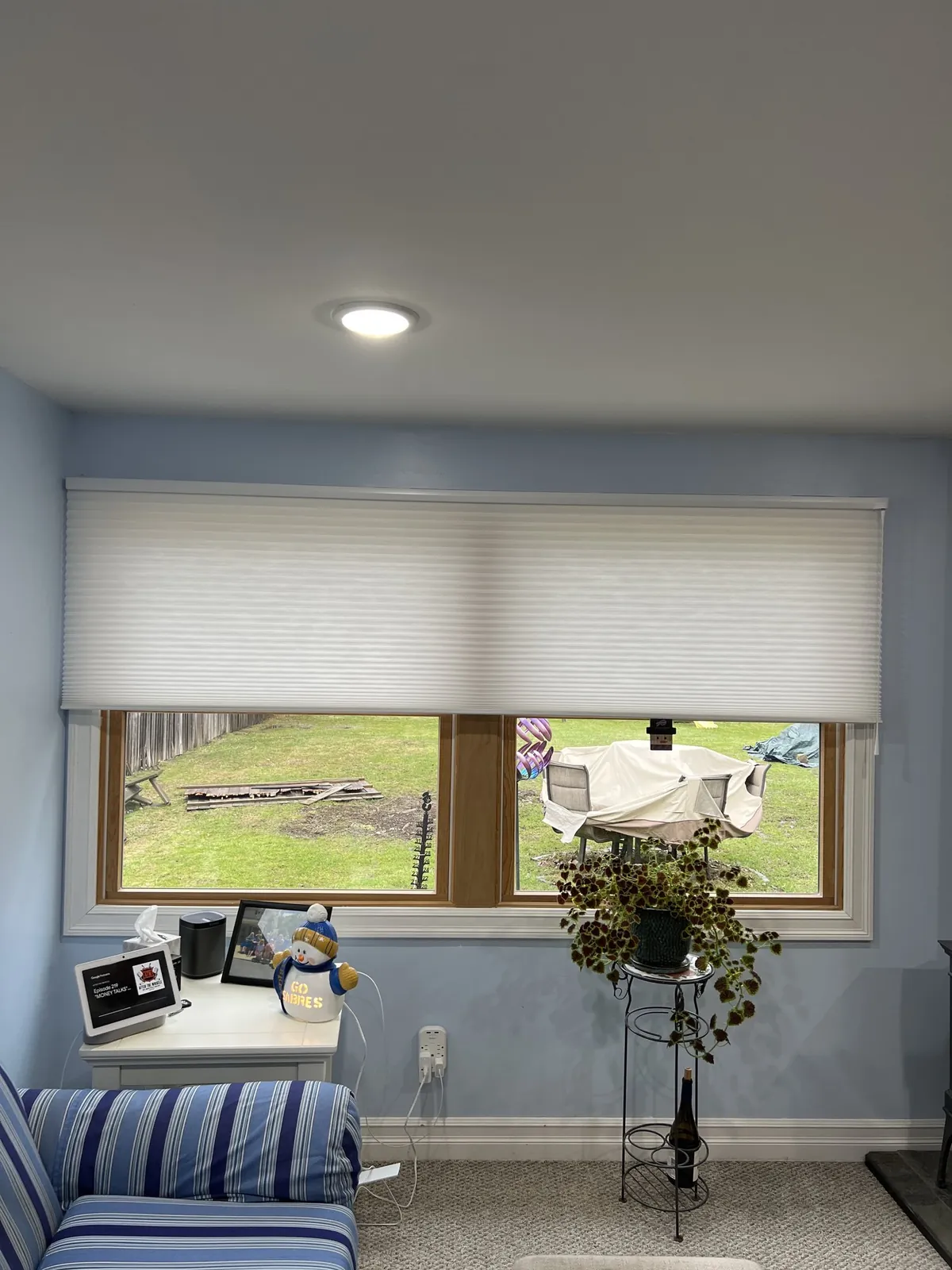
Close-set houses and small, deep openings
The streets near the town center were built up when the jewelry shops were busy, and the housing shows it. Victorians and two-family houses stand shoulder to shoulder, side windows facing side windows across a narrow strip of yard. Many of those openings are small and set deep into thick walls, and the sash is tall and old. Those are the windows we think about first when we plan cellular shades in North Attleborough, MA.
A honeycomb shade suits that kind of house for two plain reasons. Each pleat is a hollow cell, and the air caught inside it sits still between the cold glass and the room, so a parlor or a back bedroom stops feeling raw near the window on a winter night. And a deep opening gives the headrail somewhere to hide, so the shade can sit inside the frame and leave the old trim in full view.
Further out from the center the picture changes to post-war ranches and newer colonials, with wider glass and bigger rooms. The same shade works there too, just for slightly different reasons, and we cover both below.
Cellular shades in North Attleborough, MA, room by room
Every one of these comes from the Hunter Douglas honeycomb range, and we bring samples of each when we visit, so you can try them against the windows they are meant for.
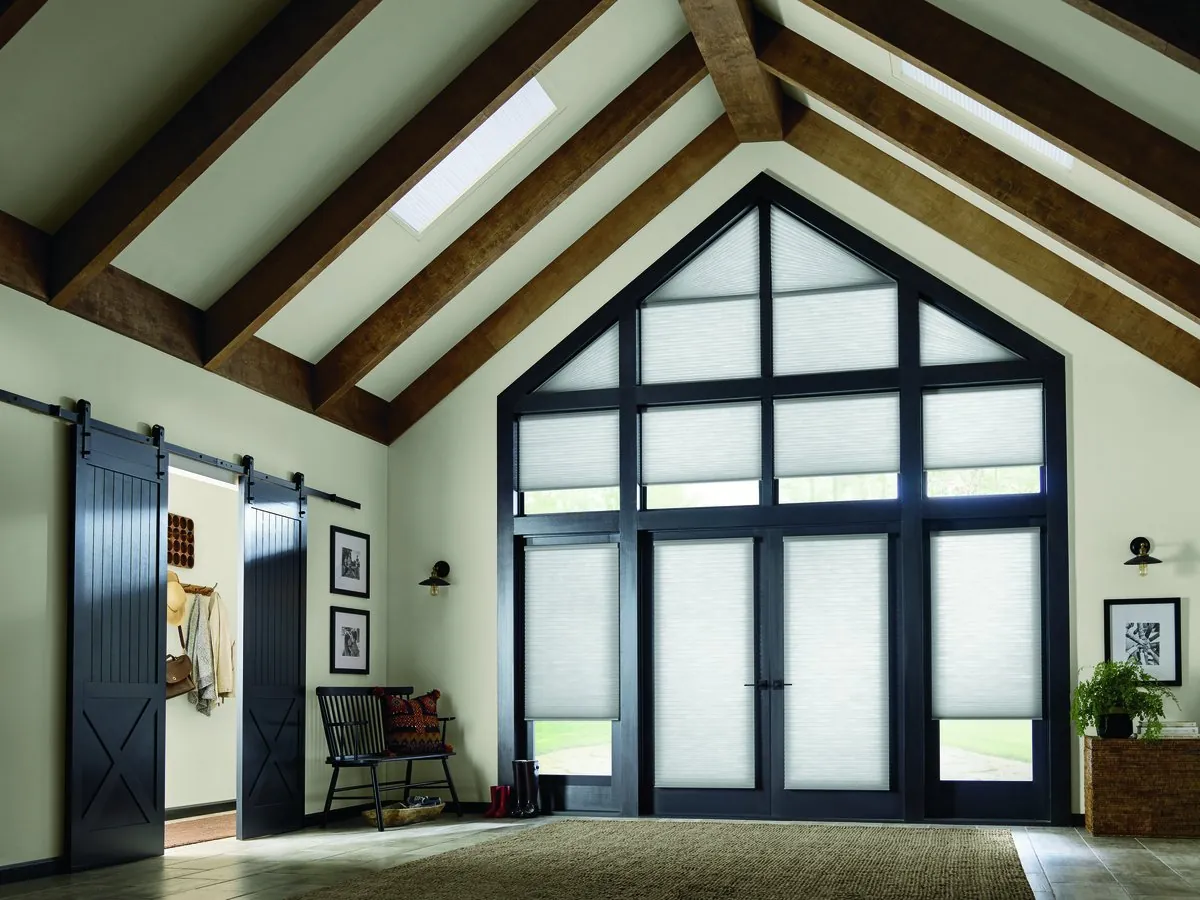
Duette for tall Victorian sash
Duette is the original Hunter Douglas honeycomb, with the broadest run of fabrics and sizes. It handles a tall, narrow front window as easily as a wide one.
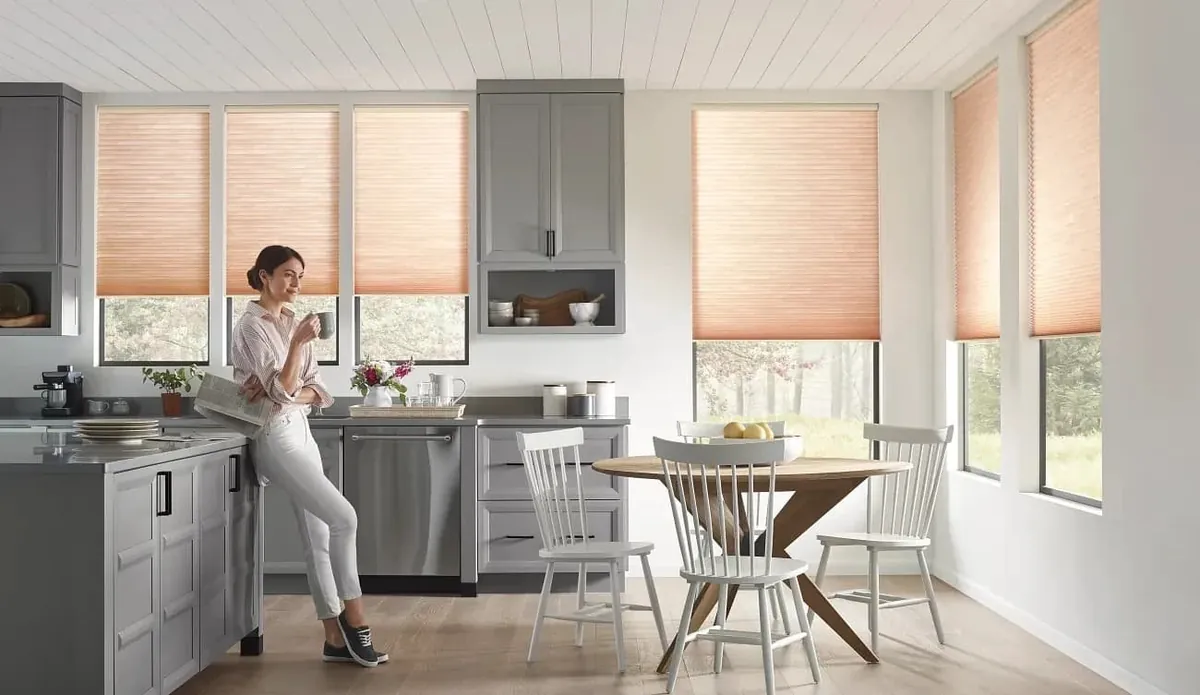
Applause for the rest of the house
Applause is the second Hunter Douglas honeycomb line, with its own colors and textures. Kitchens and back rooms are where it often ends up.
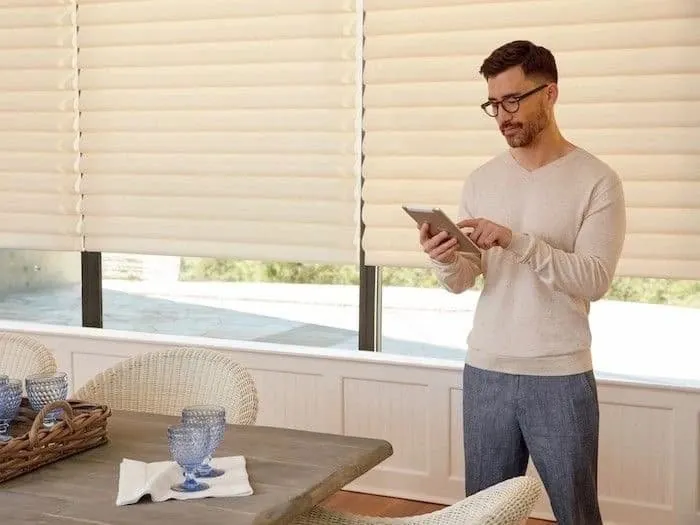
PowerView on the hard-to-reach glass
A stairwell window or the glass behind a sink can be raised from a phone, a remote or a schedule. We plan how each motor is powered at the visit.
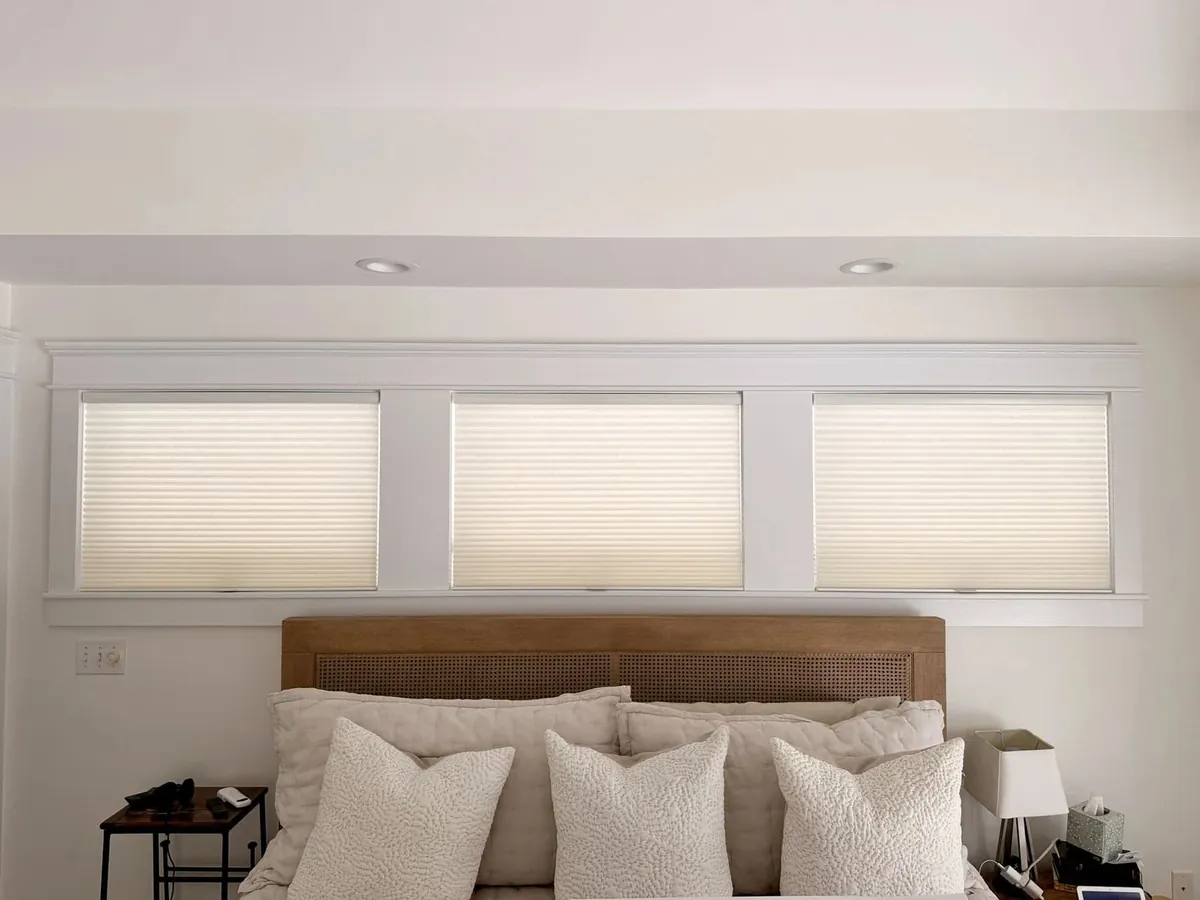
Room-darkening for bedrooms
A denser fabric keeps a bedroom dim when a streetlight or the early sun would otherwise wake you. The cells still hold air against the glass.
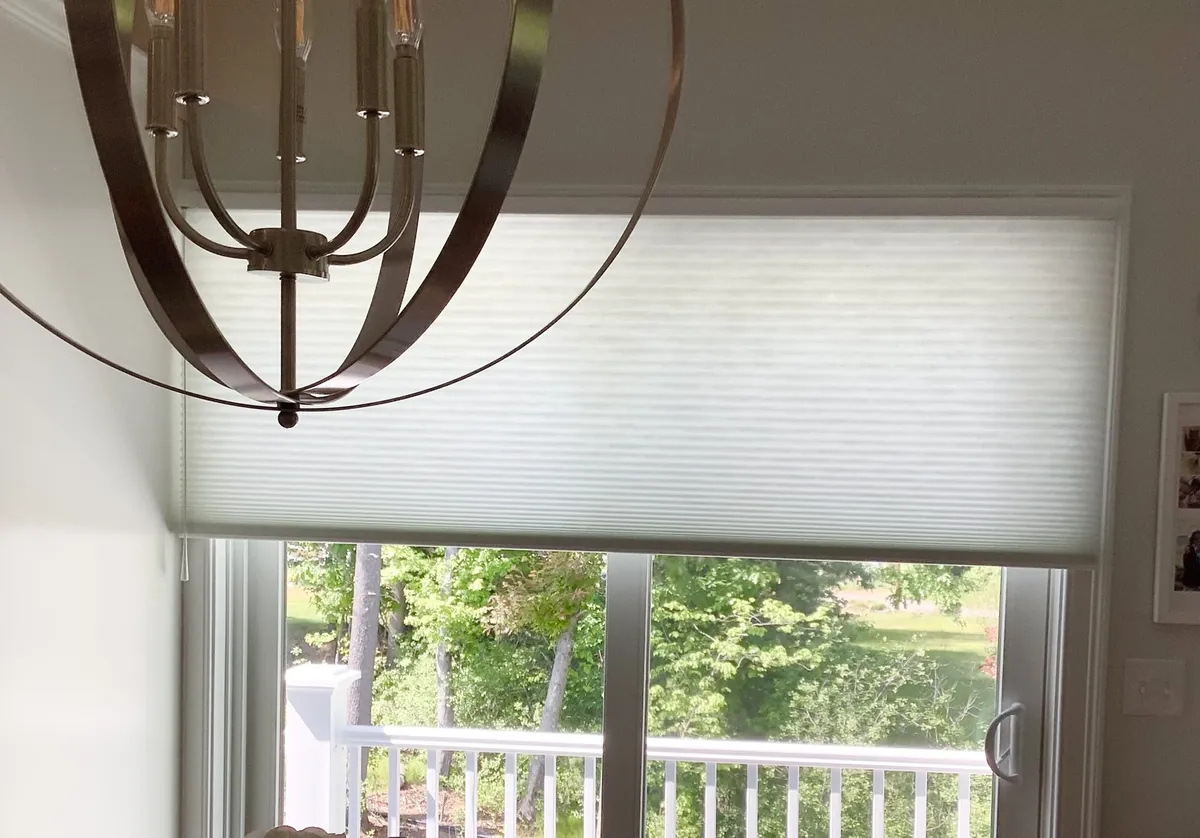
Vertical honeycomb for the slider
For the back door of a ranch or a colonial, a honeycomb that draws sideways and stacks out of the way, so stepping onto the deck never means lifting a shade.
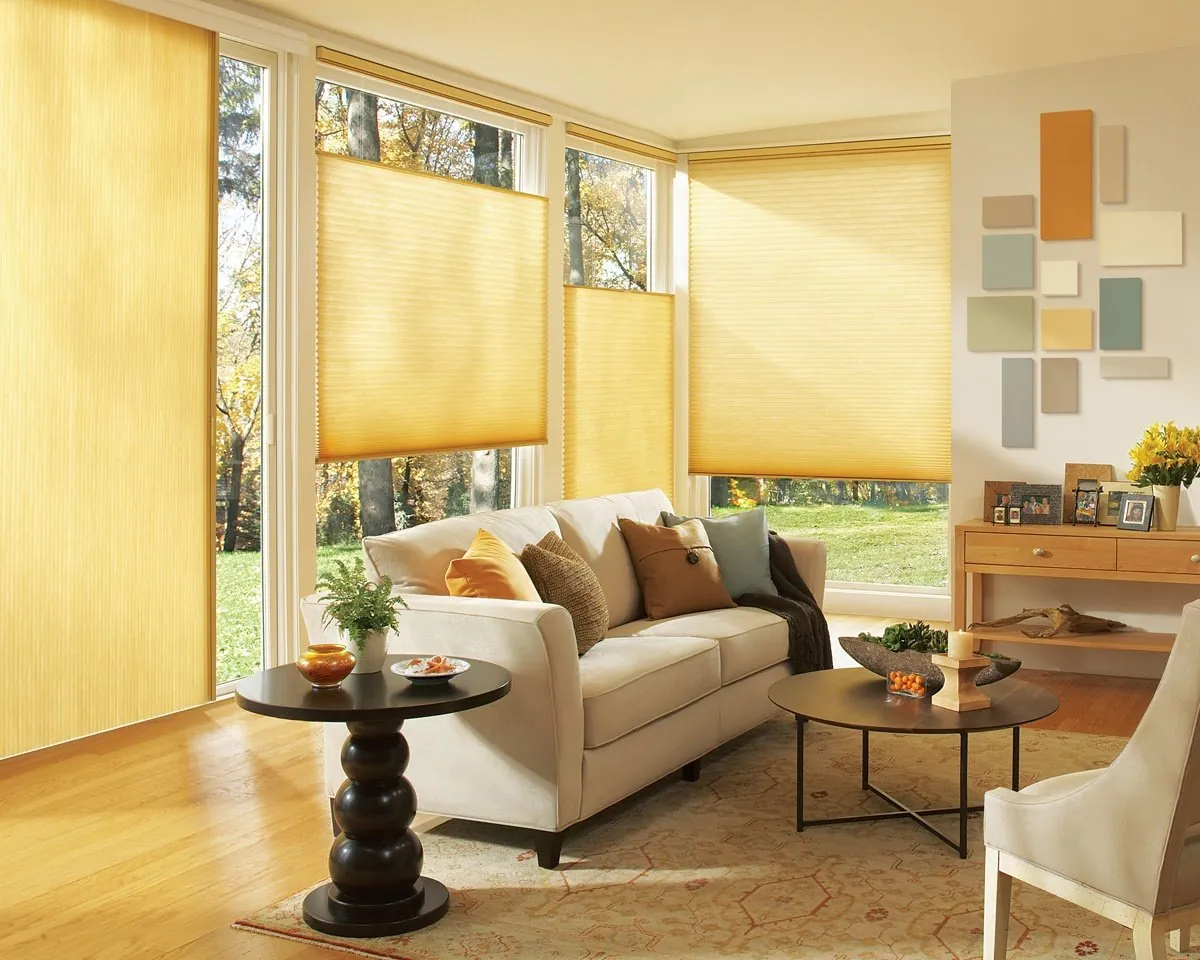
Top-down, bottom-up for side windows
Open the top of the window to the sky and keep the lower glass covered, which is often all a side window facing the next house needs.
The side windows nobody planned for
In a close-built neighborhood the front of the house is rarely the problem. The trouble is the side elevation. A dining room window can look straight into the kitchen next door, close enough that you notice when the neighbor turns a light on. Pull a heavy blind and the room goes dark. Leave it open and you feel watched.
A light-filtering honeycomb fabric is a good answer to that. With the shade lowered, daylight still reaches the room, but it arrives as an even glow through the fabric rather than as a clear view in either direction. You keep the light and lose the sightline.
Where you want sky and privacy at once, a top-down, bottom-up shade lets you drop the top edge to open the upper glass while the lower part stays covered. On a side window facing a neighbor, that is often the one feature people end up using every day.
Stair landings and tall hall windows
Victorians and the older two-families often have a tall window on the stair landing, sometimes stained or with a decorative upper sash, and it is usually the coldest spot in the house on a January night. It is also awkward to reach, with a run of steps below it and no easy place to stand.
A honeycomb shade on the lower sash takes the chill off the stairwell while leaving any decorative glass above it open. If even the lower part is out of comfortable reach, PowerView lets you lower it from a phone or a remote, or on a schedule so it closes at dusk without anyone climbing the stairs. We look at where a motor could be powered on that window during the visit rather than guessing in advance.
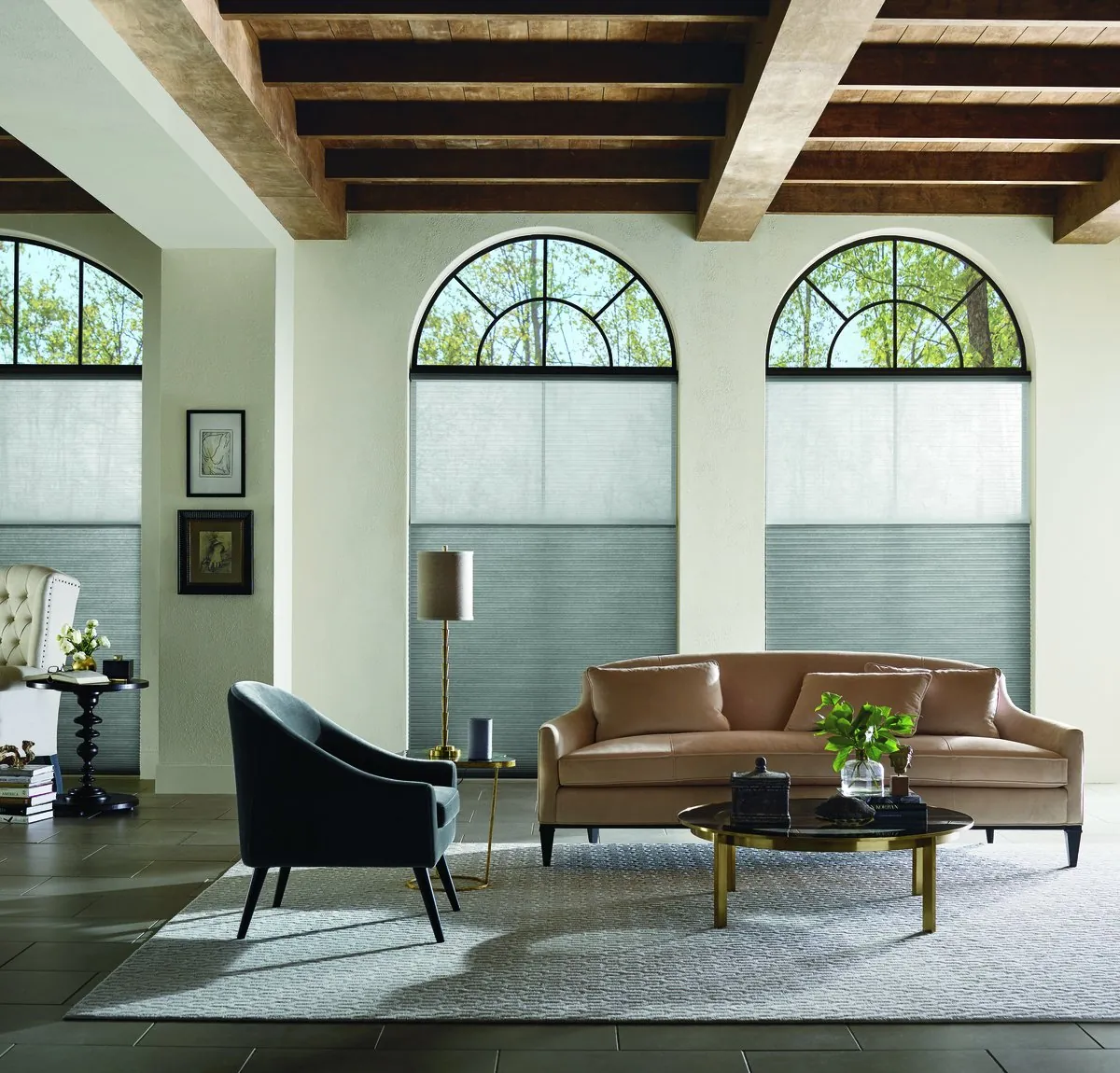
Two-family houses, two sets of windows
The two-families near the center carry their own puzzle. Each floor has its own run of windows, often identical in size from the street but not always identical once you put a tape on them. Upstairs units tend to have the steeper stair windows and the occasional small gable opening. Downstairs units get the porch and the street noise.
We measure every window on its own, floor by floor, rather than assuming the top matches the bottom. If you own the whole house and want the two floors to look alike from outside, we can match the fabric color across both while choosing a different opacity inside, light-filtering in the living rooms and room-darkening in the bedrooms. From the sidewalk the house reads as one; inside, each room behaves the way it needs to.
Why a deep frame helps an inside mount
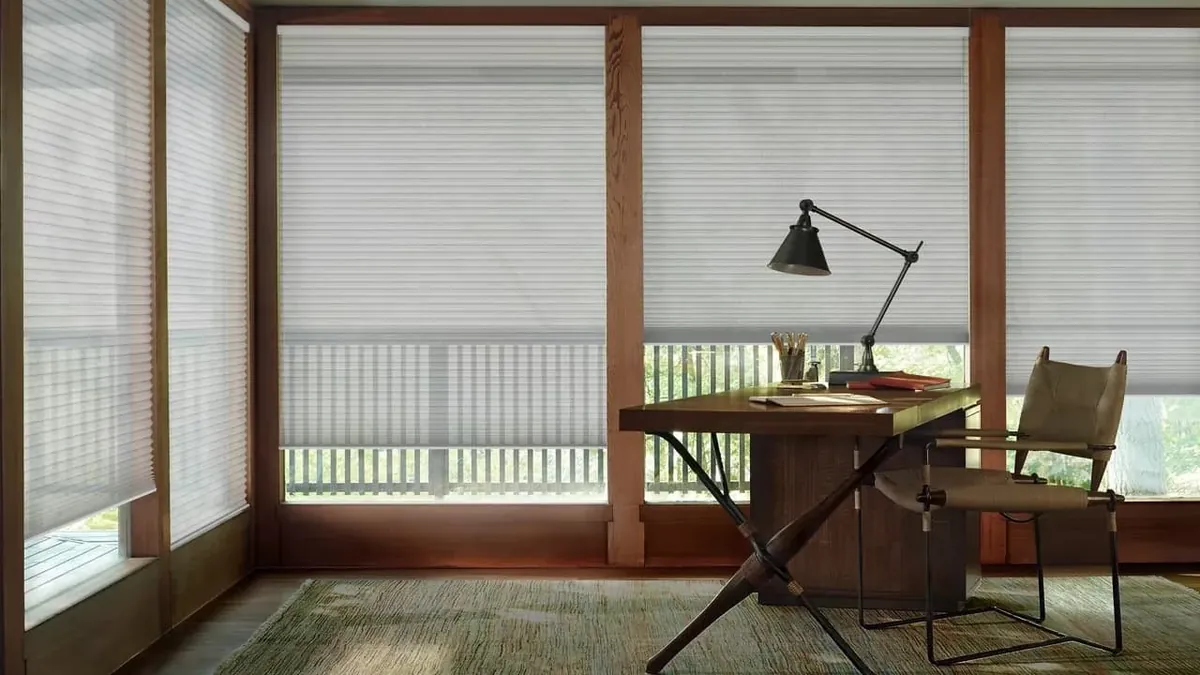
A small opening set into a thick old wall is good news for a honeycomb shade. The headrail tucks into the depth of the frame, and when the shade is raised it stacks into a neat band at the top of the window. The casing, the stool and whatever paint or stain you have kept up stay fully visible.
Old windows still need care. Sash weights, pulleys and stop beads can steal some of that depth, and a house that has settled over many winters rarely leaves an opening square. So we check the depth at more than one point and measure the width at the top, middle and bottom. If an inside mount would bind or leave an uneven gap, we say so, and a slim outside mount on the casing becomes the better choice.
Keeping the street view of an old house
Plenty of the older houses near the center have been repainted and restored with care, and a jumble of mismatched coverings in the front windows can undo that from the sidewalk. One of the quiet strengths of a honeycomb shade is how tidy it looks from outside: a clean fabric face in each window, no slats at odd angles, and a consistent line where every shade stops.
We usually suggest a single outward-facing color for the street side of the house, even when the rooms inside take different fabrics. On a two-family that means the upstairs and downstairs read as one building. On a Victorian with a bay at the front it means each panel of the bay lines up with its neighbors when you raise the shades together.
Ranches and colonials further out
Head away from the center and the house types open up: post-war ranches with a living room picture window and a slider to the back, then larger newer colonials with tall first-floor windows and wide bedroom glass upstairs. These rooms lose heat through sheer area rather than through old sash.
A honeycomb shade does the same job here that it does on a Victorian. The cells hold a layer of air against the glass in winter. In summer, a shade lowered through the hottest hours slows the heat coming in and keeps the furniture out of the glare. On a picture window too wide for one shade, we split the width into two or three shades on a shared headrail, so they line up and can be moved together or one at a time.
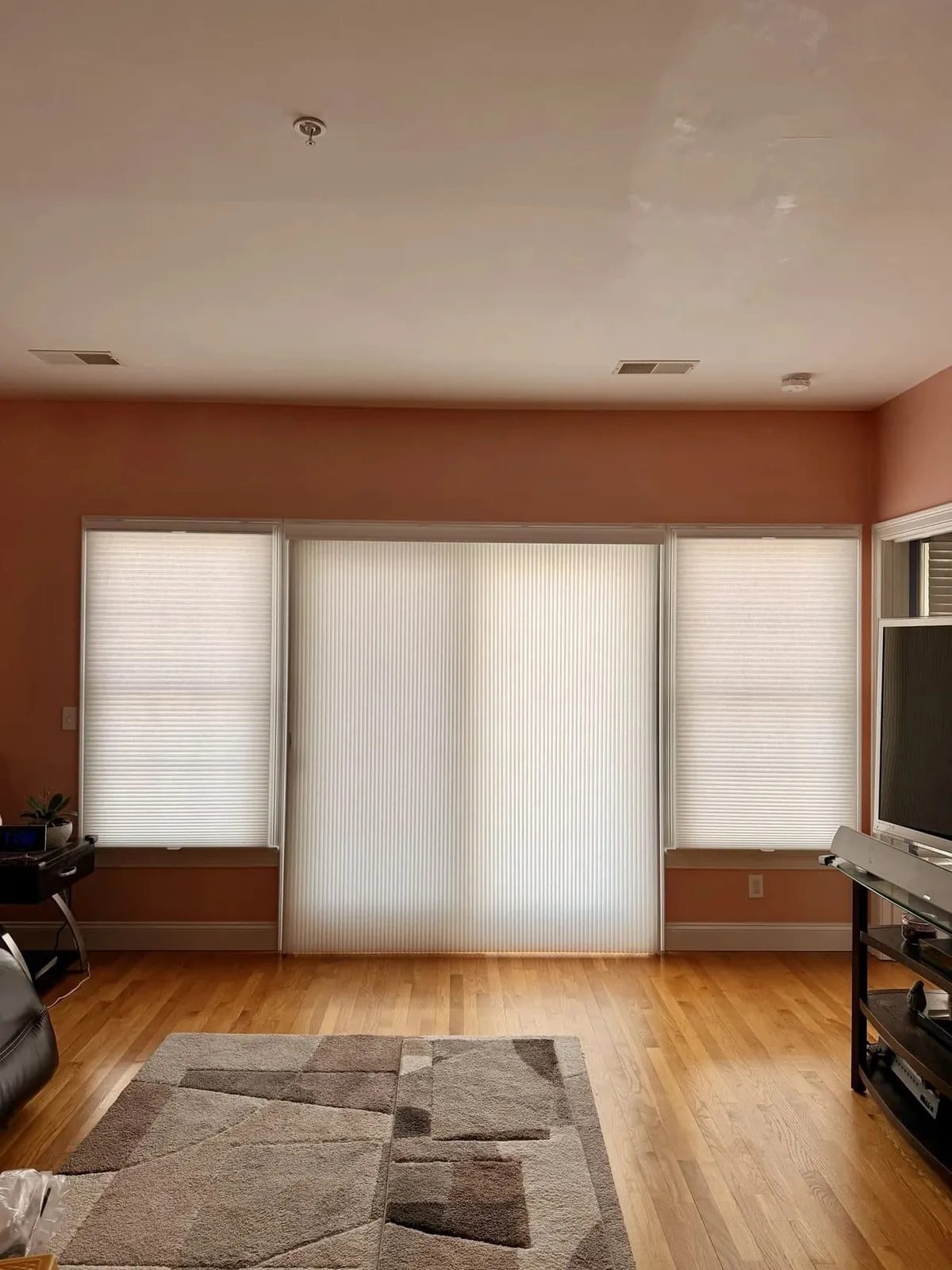
The slider to the deck gets a vertical honeycomb shade. It travels sideways and stacks to one edge, so you can walk through the door without lifting anything, and the door is covered with the same fabric as the windows beside it.
Upstairs rooms in a summer heat wave
The third floor of a Victorian and the upstairs of a two-family share a familiar problem in July: the heat rises, the sun beats on the roof, and the bedrooms are the warmest rooms in the house just when you want to sleep. Opening the windows helps at night, but during the day the glass lets a great deal of heat straight in.
Lowering a honeycomb shade in the morning on the sunny side slows that heat down. The same pocket of still air that holds warmth in during winter now sits between the hot glass and the room. Many households with cellular shades in North Attleborough find the top floor noticeably easier to live with once the shades go down before the sun gets round to those windows. A schedule through PowerView can do the lowering for you while you are out.
Picking a fabric by the job the room does
It helps to start with what each room is for, then choose the fabric, rather than the other way round.
- Front parlors and living rooms: a light-filtering fabric keeps the room bright and private through the day.
- Bedrooms: a room-darkening fabric keeps early sun and streetlights out until you raise the shade.
- Kitchens: a lighter fabric, often Applause, keeps the room cheerful while it softens a low afternoon sun.
- Home offices: a light-filtering fabric spreads daylight evenly, so a screen is easier to read.
You do not have to settle every room on one visit, and many people start with the coldest two or three rooms and come back to the rest later.
How a visit to your house goes
Choosing a shade from a small swatch under shop lighting is guesswork. Choosing it at your own window, with your own walls and trim around it, is not. Our vans carry samples, so we can bring the showroom to you.
- Request a consultation online or with the call button, and pick a time that suits the household.
- We start in the room that bothers you most, whether it is the coldest, the brightest or the most overlooked.
- You hold Duette and Applause fabrics up to the glass and watch how each one changes the light.
- We measure each window, check the frame depth and talk through inside or outside mounts.
- You get a free estimate, and the decision stays yours, with no pressure on the day.
If you want a hand with color, fabric and the rest of the room as well, ask about our interior design consultations. There is more on what happens at an in-home consultation if you like to know the details in advance.
Duette and Applause in the same house
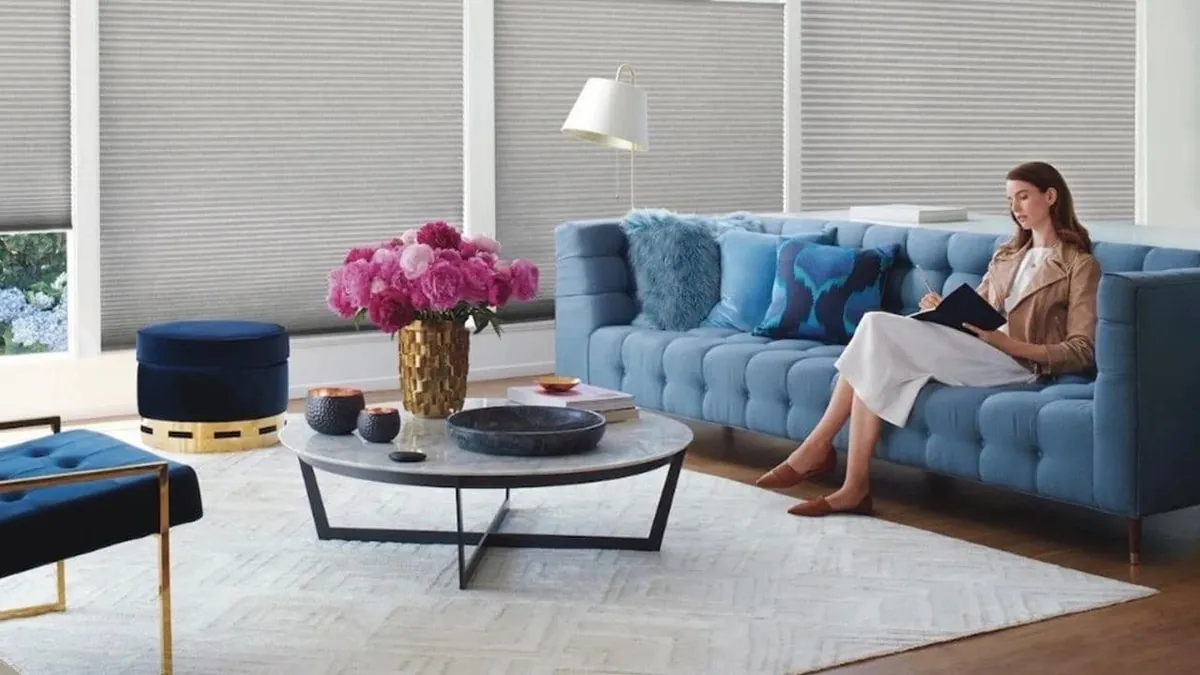
Both lines are true honeycomb shades from Hunter Douglas, and the cells hold air the same way in each. Where they differ is the fabric palette, the textures and the sizes each line makes. Duette has the widest selection and covers the vertical shade for a slider. Applause brings its own colors and suits plenty of standard windows.
A typical order for cellular shades in North Attleborough mixes the two. A Victorian might take Duette in the tall front windows where the fabric is on show, with Applause in the kitchen and the back bedrooms. You can read more on our Duette honeycomb shades and Applause honeycomb shades pages, and the full range sits on the main cellular shades page.
Measuring a window that only looks standard
Two windows side by side on an older house can differ by enough to matter. That is why we never measure one and copy the figure to the next.
- Width is taken at three heights in the opening, and the narrowest one sets the shade for an inside mount.
- Height is taken on the left, in the middle and on the right.
- Frame depth is checked where the headrail will sit, with a note of any sash hardware in the way.
- Mount and fabric are confirmed with you, window by window, before the order goes in.
- On the day, our certified Hunter Douglas installers fit each shade, level the headrail and run it up and down with you.
A shade made to those numbers fills the opening edge to edge with only a slim gap at the sides. That close fit is part of why it holds warmth so well. You can read about what happens on installation day before we arrive.

What Gallery dealer status means at your window
Hunter Douglas names dealers who meet its standards Gallery dealers, and Blinds & Designs is one of them. In practice that means you see the whole honeycomb range, every Duette and Applause fabric along with the vertical shade and PowerView motorization, without being steered toward a narrow shortlist.
The installers who fit your shades are certified by Hunter Douglas. They are the same people who measured, so there is no hand-off between the person who planned the window and the person who mounts the bracket. If a shade you already own needs attention, we handle blind and shade repairs as well.
We carry Hunter Douglas blinds, shutters, roller and roman shades and drapery too. If another room is on your list, see plantation shutters in North Attleborough, roller shades in North Attleborough or everything we do on our North Attleborough page.

Franklin is the closest showroom
Most North Attleborough customers never need to leave home, because the samples come to the house. Some like to look around first, though, and the Franklin showroom is the nearest of our locations to town.
If you go there before we visit, bring a rough note of which rooms you have in mind and whether any windows are unusually tall, small or deep. It makes the home visit afterwards quicker to plan. Either order works, and the estimate is free whichever you start with.
Questions from North Attleborough
Will a honeycomb shade fit the small, deep windows near the center?
Usually it fits very well. A deep frame gives the headrail room to sit inside the opening, so the shade disappears into the window when raised. We check the depth at several points first, because old sash hardware can take up more space than it seems to.
My side windows face the house next door. What works best?
A light-filtering fabric lets daylight in while blurring the view both ways. A top-down, bottom-up shade adds the option of opening the upper glass for sky while the lower glass stays covered.
Can both floors of a two-family match from outside?
Yes. We can use the same fabric color on both floors and still choose a different opacity room by room inside, so the street view stays consistent.
Is a honeycomb shade worth it on a newer colonial with modern windows?
Newer windows lose less heat than old sash, but large panes still feel cool in winter and hot in a summer afternoon. The cells add a still layer of air at the glass, and the fabric controls glare, so the room is more comfortable in both seasons.
What do I pay for the estimate?
Nothing. Once we have measured, you receive a free estimate for the shades you picked, and you can take it away and think it over.
Ready to see the fabrics on your own glass?
The quickest way to settle on cellular shades in North Attleborough, MA, is to stand at the window with real samples in your hand. Request a consultation and we will bring the Duette and Applause range to the house, measure every opening and leave you with a free estimate. If you would rather talk it through first, the call button is at the top of the page.