
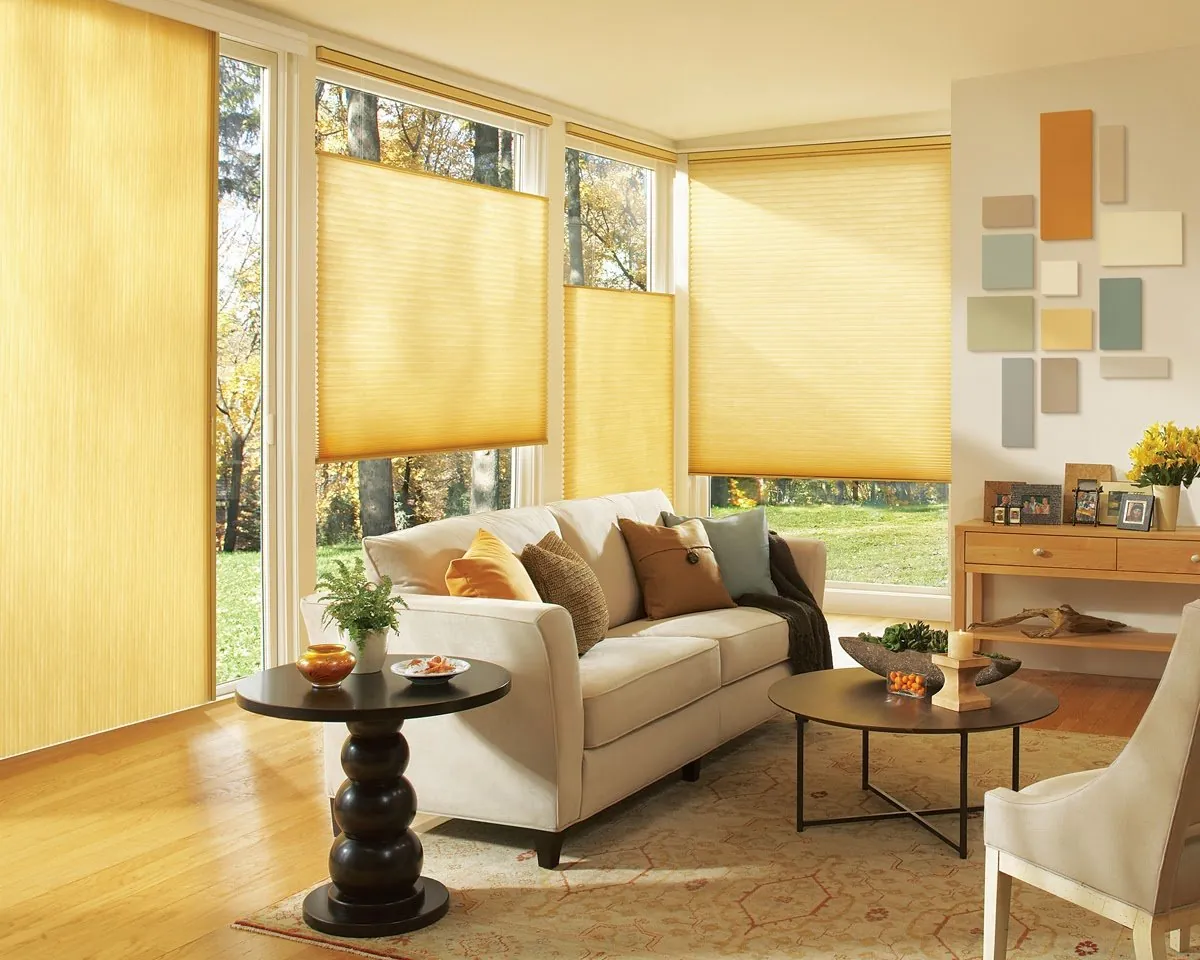
Open lots, full sun and a cold upstairs
Most Norton houses sit well back from the road on a decent piece of land. Capes and ranches make up a lot of the older stock, and newer colonials fill the streets off Route 140 and the roads around Norton Reservoir. With that much space around each house, the windows catch sun from every side and very little stands between the glass and the weather. That shapes how we plan cellular shades in Norton, MA. Privacy from the street is rarely the first concern. Warmth in winter, heat and glare in summer, and the light in each room usually are.
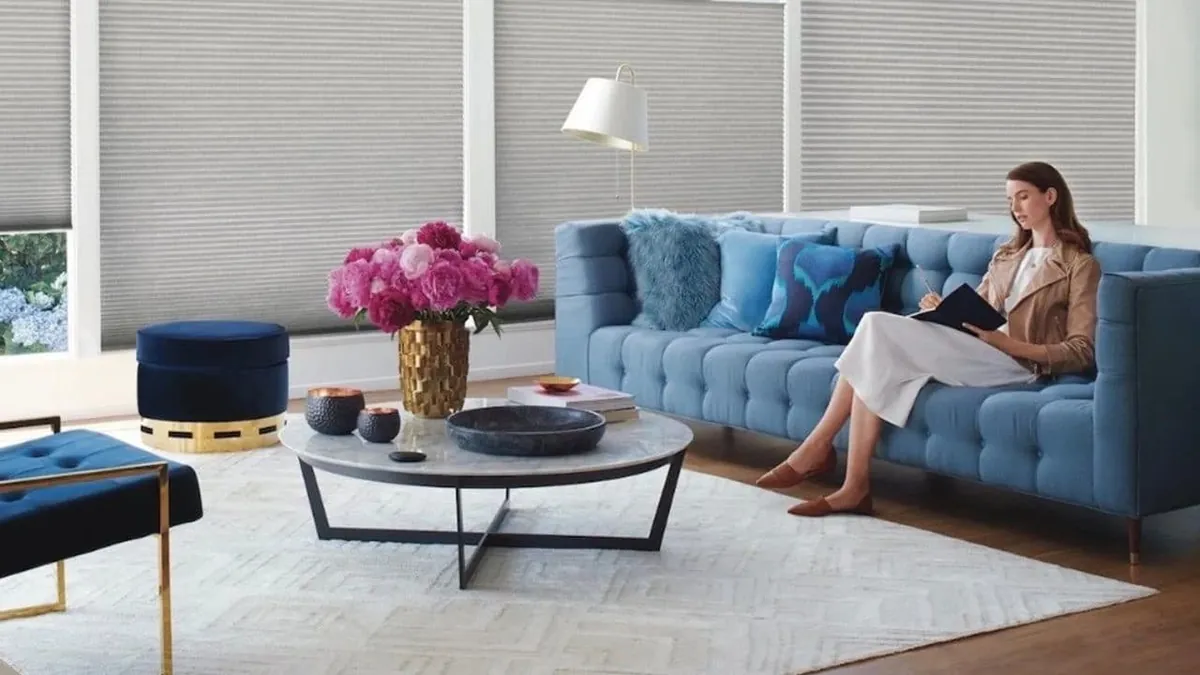
A honeycomb shade is built for exactly that. The fabric forms rows of hollow cells, and the air trapped inside them sits still against the glass. In January that layer keeps the cold pane at a distance from the room. In July, with the shade lowered on the sunny side, it slows the heat coming in.
The good news with Norton housing is the windows themselves. Most openings are standard modern sizes, square and true, which makes for clean inside mounts and a consistent look from room to room.
Cellular shades in Norton, MA, by room
These are the rooms we are asked about most often in Norton houses, and the honeycomb choices that suit each one. Samples of all of them travel in our van.
Cape dormer bedrooms
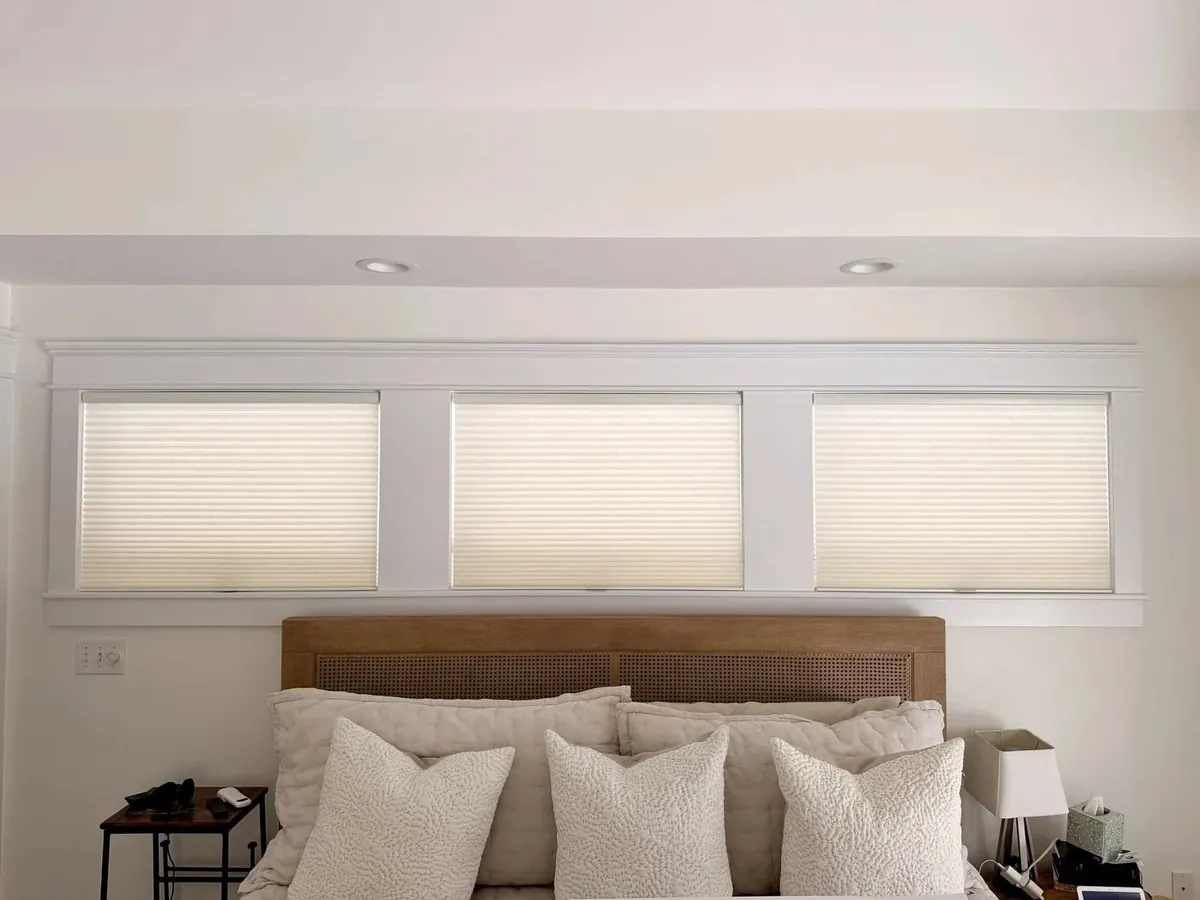
Small dormer windows under a sloped ceiling, with rooms that run hot in summer and cool in winter. A room-darkening honeycomb handles both.
Rooms facing the reservoir
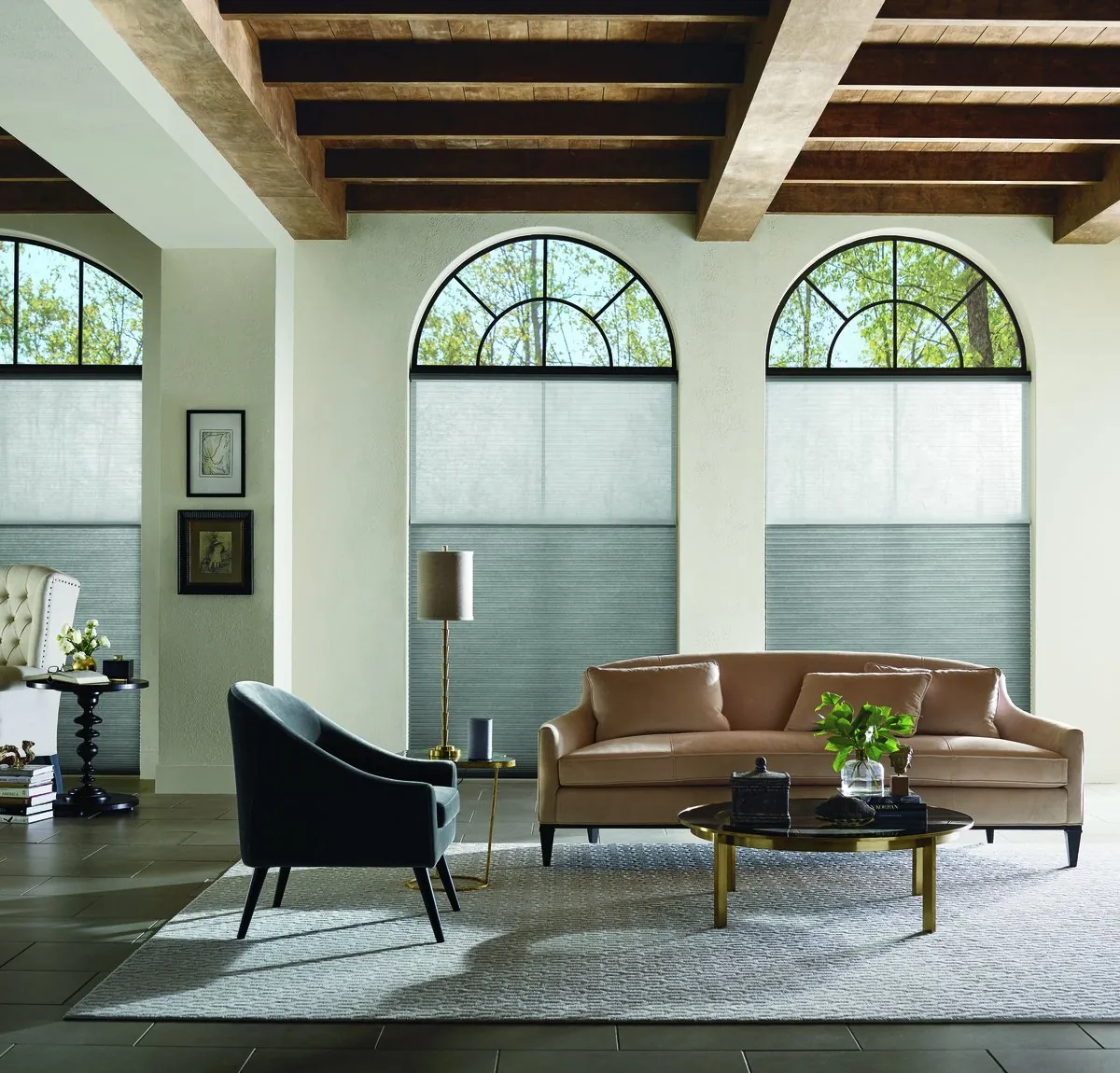
Lower a top-down, bottom-up shade just far enough to cut the glare off the water and keep the rest of the view.
Ranch living rooms
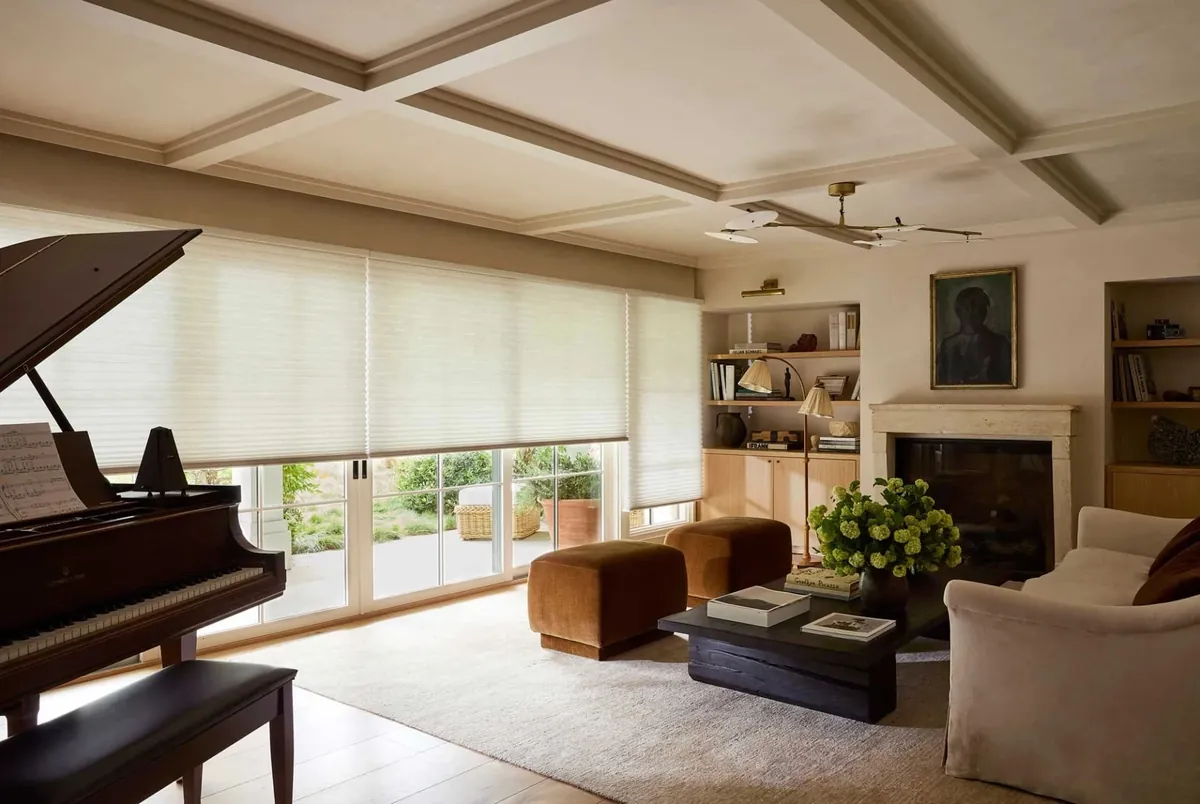
A wide picture window split into matched shades on one headrail, so the whole width moves together or in sections.
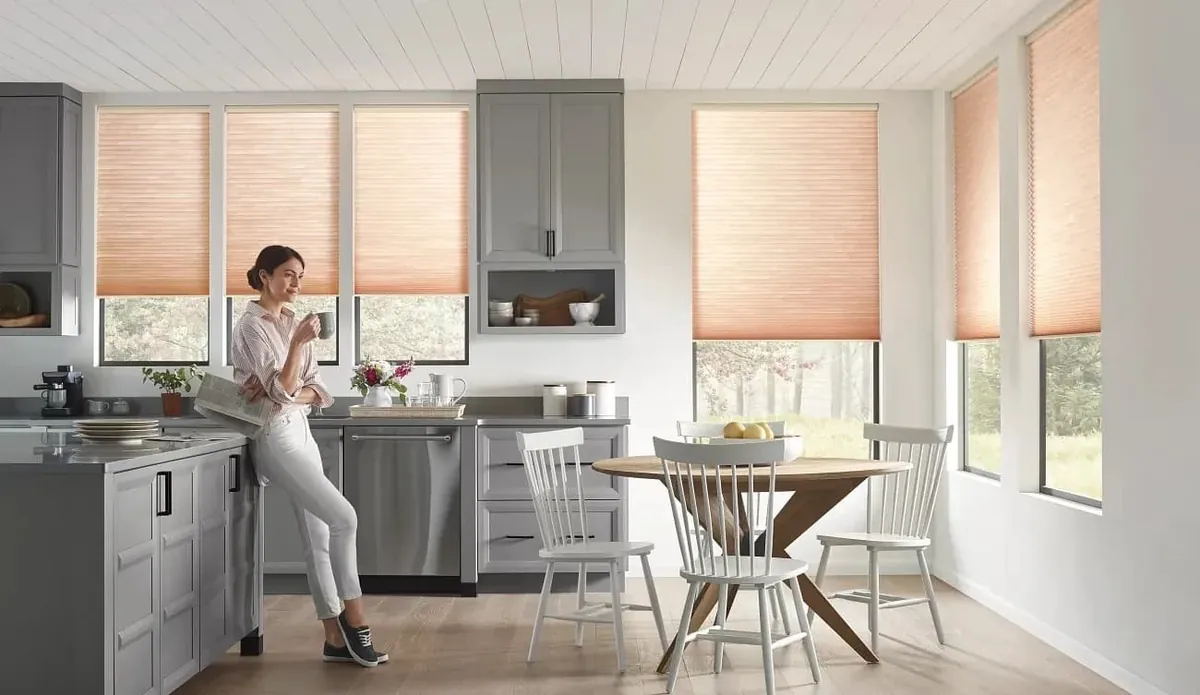
Colonial kitchens
A light-filtering Applause fabric keeps the room bright while softening the low sun over the sink and the breakfast table.
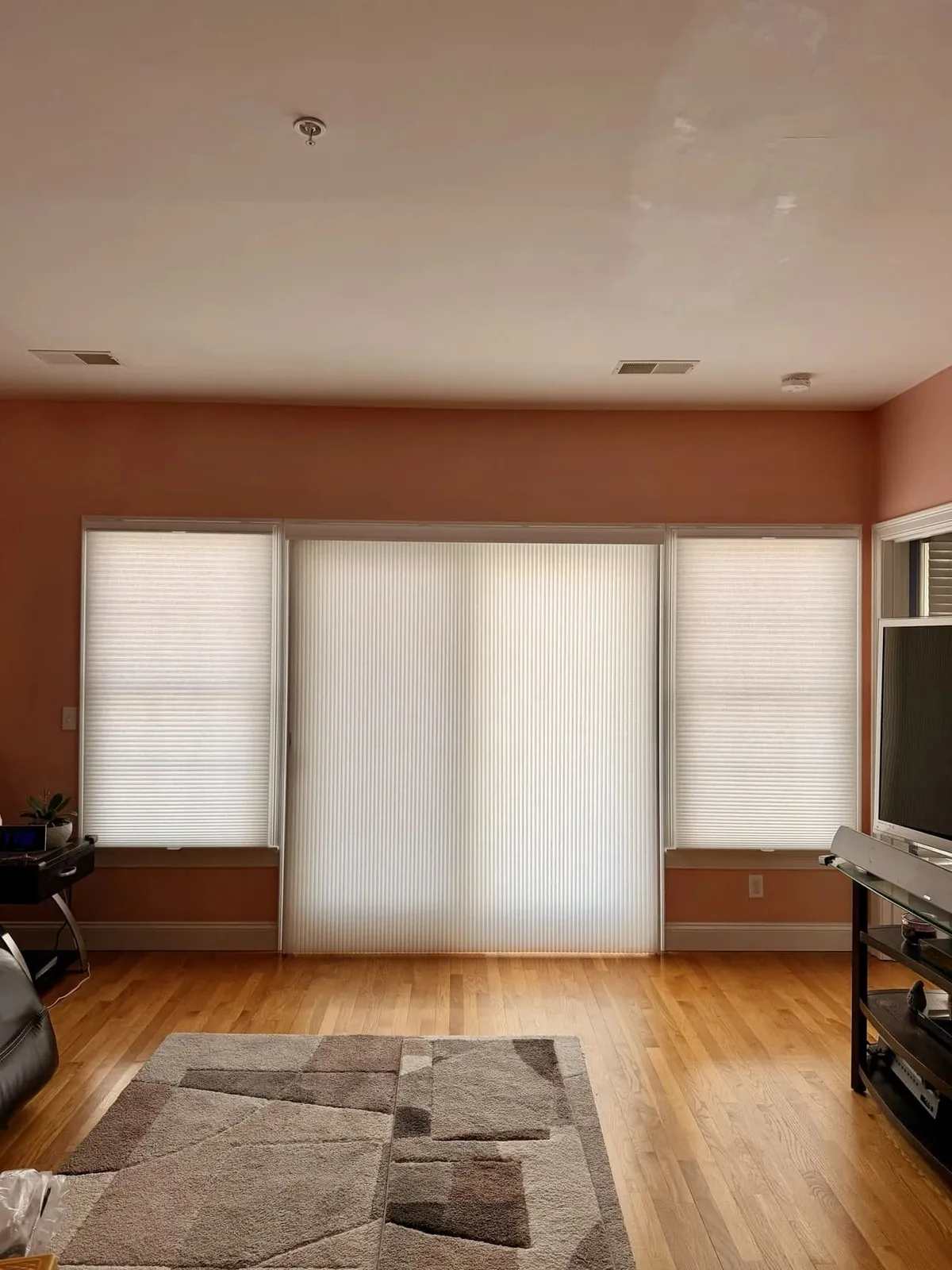
Sliders to the yard
A vertical honeycomb shade that draws to one side, matching the windows next to it.
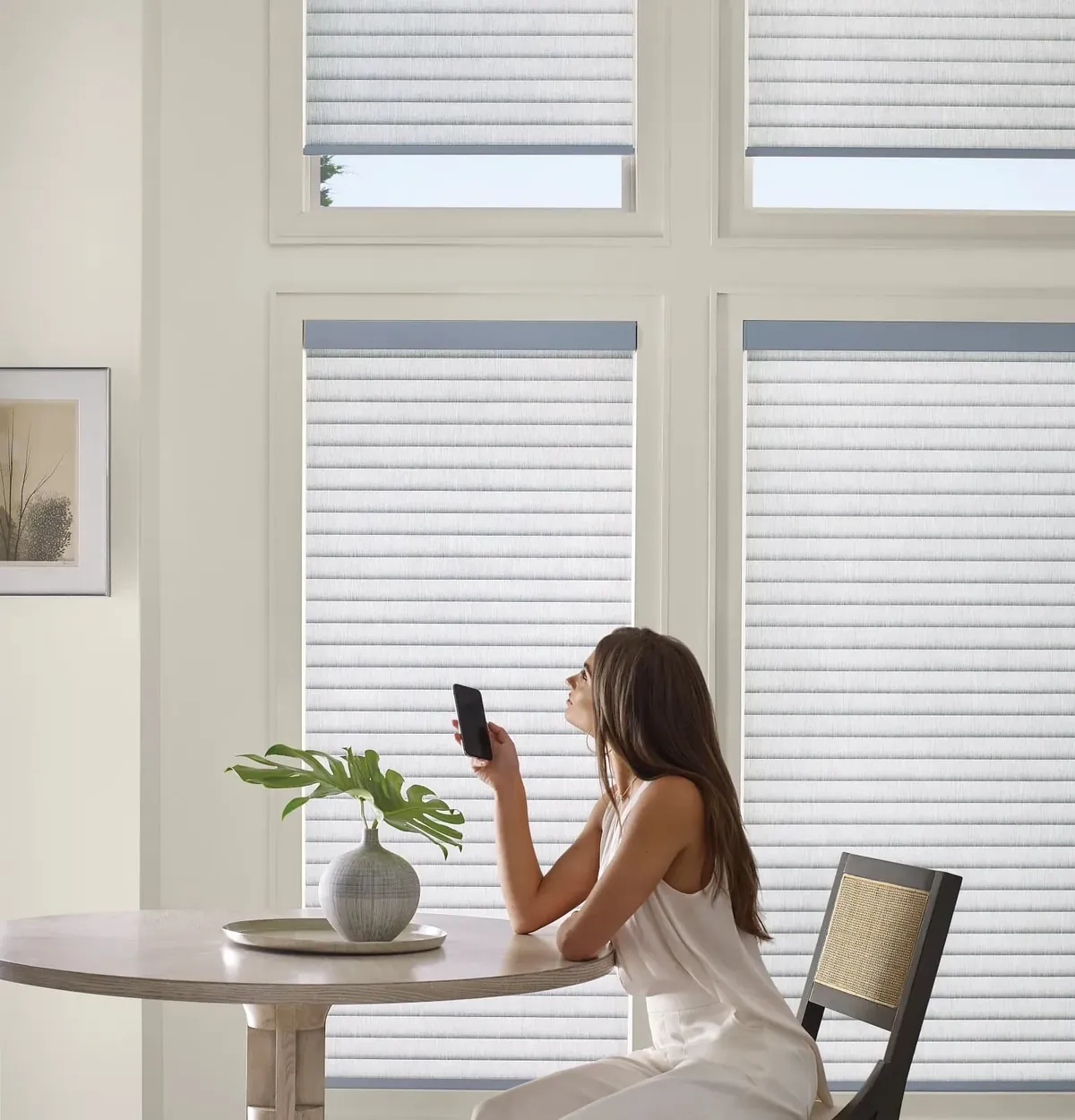
Shades on a schedule
PowerView lowers the sunny side at midday and raises it again in the evening, from a phone, a remote or a timetable.
The upstairs of a Norton cape
A cape packs its second floor under the roof. The bedrooms there have sloped ceilings, short knee walls and small dormer windows, and they are the rooms that swing furthest with the seasons. On a summer afternoon the sun on the roof and through the dormer glass turns them into the warmest rooms in the house. On a winter night the same small windows feel cold, because the room is small and the glass is never far from the bed.
A honeycomb shade sized to the dormer opening fits neatly inside the window, which matters in a room where the sloped ceiling leaves no space for anything bulky. Lowered during the day in summer, it holds back some of that heat. Lowered at night in winter, it keeps a layer of still air against the glass. A room-darkening fabric adds early summer sunrises to the list of things the shade takes care of.
Dormers often come in pairs on the front of a cape. We set both shades to the same height and color so they match from the road.
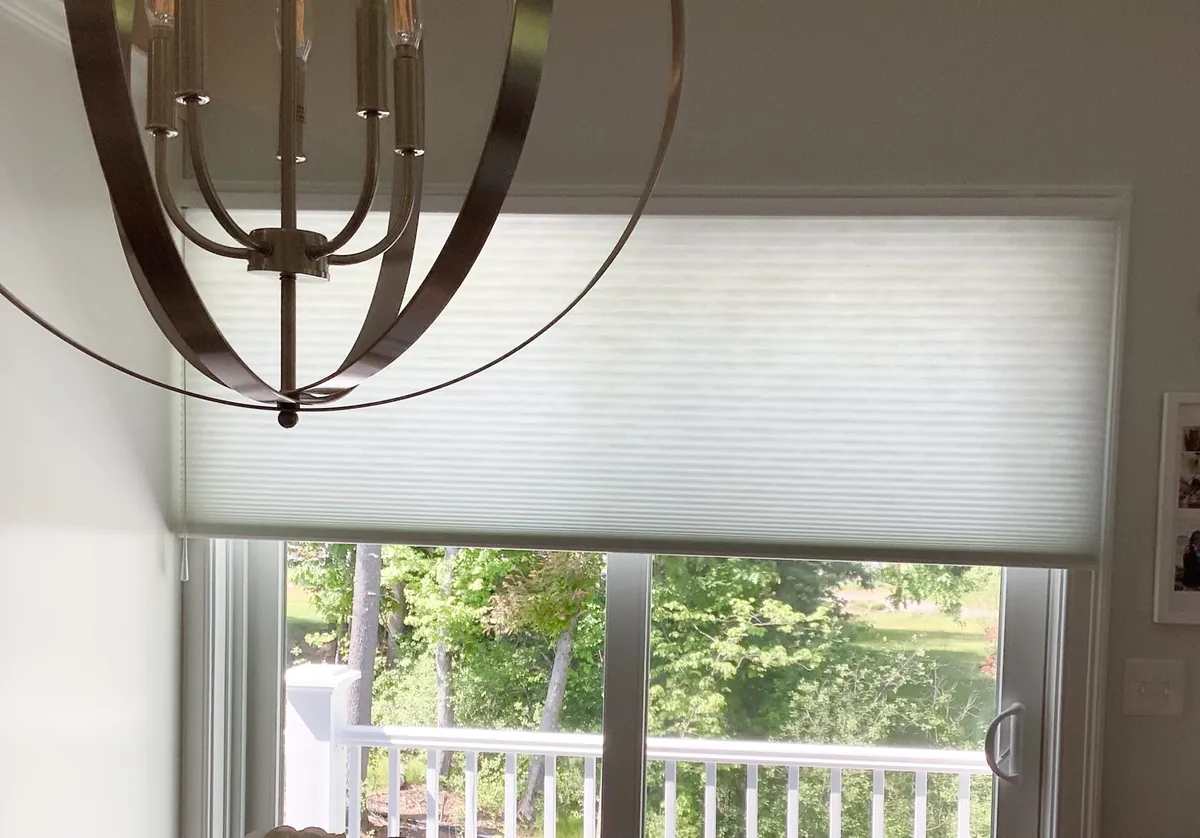
The main floor of a cape
Downstairs, a cape is a different house. The front rooms usually have a pair of double-hung windows either side of a center door, the kitchen sits at the back over the yard, and there may be a dining room or a den with a single window on the side. The windows are modest in size and the rooms are often well used all day, so the coverings get raised and lowered far more than the ones upstairs.
That is where the simplicity of a honeycomb shade helps. It moves smoothly, it stacks small at the top of the window when raised, and there are no slats to tilt or tangle. On the front of the house we match the downstairs shades to the dormers above in color and height, so the cape keeps its tidy symmetry from the road. For cellular shades in Norton, MA, that front elevation is often the first thing people want to get right, and the rest of the house follows.
Ranches with nothing between them and the sun
A Norton ranch on an open lot gets sun along its whole length at one point or another in the day. The living room picture window catches it in the morning or the afternoon, the slider to the back deck takes it at midday, and every room is on the one floor, so there is no shady upstairs to escape to.
We usually plan a ranch by compass direction rather than by room. The east-facing rooms want something that copes with bright, low morning light. The west side wants a fabric that can come down in the late afternoon without leaving the room dark. South-facing glass gets the most heat across the day, and that is where honeycomb earns its keep in summer. A sliding door to the deck takes a vertical honeycomb shade, and a picture window too wide for one shade becomes two or three, lined up on a single headrail.
Reservoir light
Houses around Norton Reservoir have a view worth keeping, but the water throws light back up into the rooms, especially when the sun is low. It is bright, it moves, and it can make a screen or a book hard to read even when the sun itself is not in the window.
A light-filtering honeycomb fabric softens that reflected glare into an even glow without shutting the view out completely. A top-down, bottom-up shade gives you finer control: lower it from the top until the glare stops, and keep the lower glass clear for the water. On a long run of windows facing the reservoir, PowerView can lower the shades in a group at the time of day the glare is worst, so you are not adjusting each one by hand.
Winter on an open lot
Larger lots and real setbacks are pleasant in summer and exposed in winter. With few trees or neighboring houses close by to break the weather, the north and west sides of a Norton house take the full force of a cold night, and the rooms on those sides are the ones that never quite warm up.
Those are the windows to treat first. A honeycomb shade lowered at dusk on the north side keeps the cold glass from pulling warmth out of the room through the evening. On a ranch that might be the bedrooms; on a colonial it is often a dining room or a den on the far side of the house from the kitchen. We ask which rooms feel coldest during the visit and start the plan there, rather than working through the house in order. When people compare quotes for cellular shades in Norton, this is usually the part of the conversation that matters most to them: which few windows will make the biggest difference this winter.

Newer colonials off Route 140
The newer colonials along the roads off Route 140 tend to be larger houses with tall first-floor windows, a two-story foyer or family room in some cases, and a lot of identical bedroom windows upstairs. Standard sizes make these houses straightforward to measure and fit, and they lend themselves to a whole-house order where every window shares a family of fabrics.
The trick with a house this size is avoiding sameness without losing consistency. We usually suggest one outward-facing color for the whole house, so it reads cleanly from the street, then vary the opacity inside. Bedrooms take room-darkening fabrics, the family room and kitchen take light-filtering ones, and a home office takes whatever makes its screen easiest to see. For high glass in a foyer or family room, PowerView motorization means no one has to reach those shades at all.
A two-story room with a stacked set of windows needs each pane treated as part of one wall. We measure the upper and lower glass together, set the shades so their edges line up, and group the upper ones under PowerView so they move as a set. From the floor the wall looks planned rather than pieced together, and the room stays comfortable on a bright afternoon.
What standard openings make possible
Square, true openings are a gift for a honeycomb shade. An inside mount sits snugly in the frame with only a slim gap at each side, and that close fit helps the shade hold air against the glass. When the shade is raised it stacks into a narrow band at the top, leaving the window almost entirely clear.
Standard sizes also make it easy to add rooms later. If you start with the bedrooms this winter and come back for the living areas next year, the new shades will match the first ones because the windows themselves match. Plenty of households build up a house that way, room by room, as each one becomes a priority.
What happens when we come to the house
Our vans carry the honeycomb range, so we can bring the showroom to you. A visit in Norton usually follows this pattern.
- You request a consultation online or with the call button, and we settle on a time.
- We walk the house with you, starting with the upstairs of a cape or the sunniest side of a ranch.
- You compare Duette and Applause fabrics at the glass, in the light each room actually gets.
- We measure every window and note any that face the reservoir or take the full afternoon sun.
- We talk through PowerView for any high or hard-to-reach glass.
- You receive a free estimate, and the decision stays with you.
Our page on what happens at an in-home consultation goes into more detail. If you want help with the whole room, including color and other treatments, ask about our interior design consultations.
Duette and Applause, explained simply
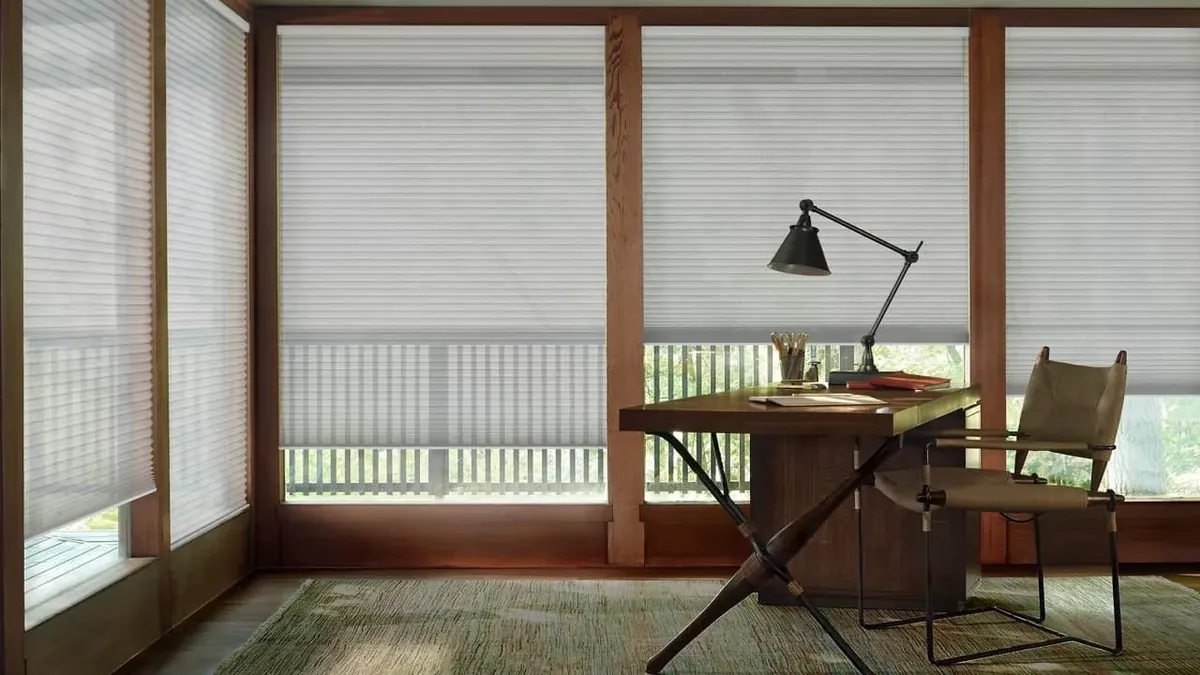
Duette and Applause are both Hunter Douglas honeycomb shades. The cell structure that holds air is common to both, and so is the basic look from inside the room. What changes is the fabric collection, the textures and the sizes each line makes. Duette carries the larger choice and includes the vertical shade for sliders. Applause has its own colors and covers most standard windows, which in a Norton house is most of them.
On a whole-house order it is usual to mix them. A large colonial might take Duette in the family room and on the slider, and Applause through the bedrooms. Read more on our Duette honeycomb shades and Applause honeycomb shades pages, or see the whole range on the main cellular shades page.
Light and opacity across the day
Because most Norton houses have no near neighbors looking in, the choice of fabric comes down to light rather than privacy in most rooms. A few ways to think about it:
- Light-filtering fabrics let the room stay bright while cutting glare and blurring the view. They suit living rooms, kitchens and offices.
- Room-darkening fabrics keep a room dim with the shade down. They suit bedrooms, especially east-facing ones and cape dormers.
- Top-down, bottom-up shades let light in over the top while the lower glass stays covered, useful on a bathroom or a ground-floor bedroom.
You can mix all three in one house, and the street view stays tidy as long as the outward color stays the same.
Bathrooms are worth a separate word. On a ranch the bathroom window often faces the side yard or the back, and a frosted pane may already be doing the privacy work. A top-down, bottom-up honeycomb shade adds warmth to a room that is often chilly first thing in the morning, while still letting in daylight over the top.
From order to fitted shade
Standard openings make the measuring quick, but we still treat each window on its own, because one frame that is slightly out can spoil the fit.
- Width is measured at the top, middle and bottom of each opening.
- Height is measured on both sides and in the center.
- Frame depth is checked for an inside mount.
- You confirm the fabric, opacity and mount for each window.
- Our certified Hunter Douglas installers fit the shades, check every headrail is level and run each one with you.
There is more on what happens on installation day if you want to know what to expect.

Gallery dealer status, put plainly
Blinds & Designs is a Hunter Douglas Gallery dealer, the name Hunter Douglas uses for dealers who meet its standards. On a Norton house that means you can choose from the whole honeycomb collection, Duette and Applause together with the vertical shade for sliders and PowerView motorization, at one consultation.
Every shade we sell is fitted by installers certified by Hunter Douglas. We also look after blind and shade repairs on coverings you already own. And because we carry Hunter Douglas blinds, shutters, roller and roman shades and drapery as well, one visit can cover the whole house. See custom blinds in Norton, roller shades in Norton, or our Norton page for the full list.
Questions from Norton
Our cape’s dormer bedrooms get very hot. Will a honeycomb shade help?
It helps. Lowered during the sunny part of the day, the shade puts a layer of still air between the hot glass and the room, so less heat gets in. A room-darkening fabric also keeps those rooms dim for sleeping on long summer evenings.
Our house faces the reservoir. Can we cut the glare and keep the view?
Yes. A top-down, bottom-up shade lowered from the top blocks the sky glare and leaves the lower glass clear. A light-filtering fabric lowered fully also softens the reflected light while the water still shows through.
We are set back from the road. Do we need shades at all?
For privacy, maybe not in every room. For comfort, most people find they do. A honeycomb shade keeps rooms warmer in winter and cooler and less glary in summer, and those benefits have nothing to do with how far the road is.
Can we start with a few rooms and add more later?
Of course. Norton’s standard window sizes make it easy to match later shades to the first ones, and PowerView shades can be added to the same system as you go.
Do you charge for the estimate?
No. After measuring, we give you a free estimate for the shades you chose, and there is no obligation to go ahead.
Your Norton windows, measured and planned
The Franklin showroom is the closest of our locations to Norton, and you are welcome to look there first. Most people, though, find it easier to start at home, where the samples can be held against the dormer, the picture window or the glass facing the reservoir. Request a consultation and we will bring the honeycomb range, measure every window and leave you with a free estimate. Whether you start with a pair of dormers or plan cellular shades in Norton, MA, for every window in the house, the first step is the same short visit.