
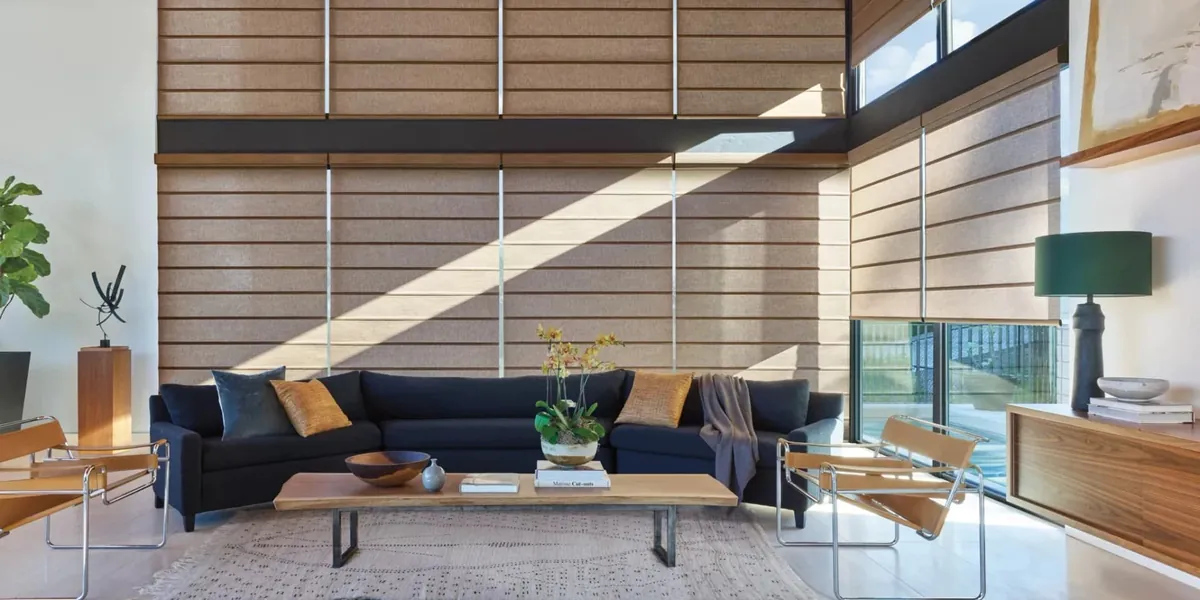
Glass you cannot reach in the newest houses
Walk into one of the newest houses in Mansfield and the first thing you notice is often the foyer: a two-story entry with a tall stack of glass above the front door, or a high window on the stair that floods the hall with light. It looks wonderful from the driveway. From inside, the top panes sit far above anything you could reach from the floor, and they let in sun and street light on their own schedule, not yours. Those windows are where many conversations about motorized blinds in Mansfield, MA, begin.
A manual shade on glass that high is a shade that never moves. A PowerView motor changes that. The foyer shades rise and lower from a handset by the door, from the app on your phone, or on a schedule that opens the entry in the morning and closes it at night without anyone touching it. The stair window can travel with them as one group.
Mansfield has two other kinds of houses that ask for different things: Victorians near the center with tall, narrow sash, and post-war ranches and large colonials across the subdivisions. We cover all three below.
Motorized blinds for Mansfield houses: three lines we use often
Each of these lines can carry PowerView, and each suits a different part of town. We bring samples of all three to the consultation so you can compare them at your own glass.
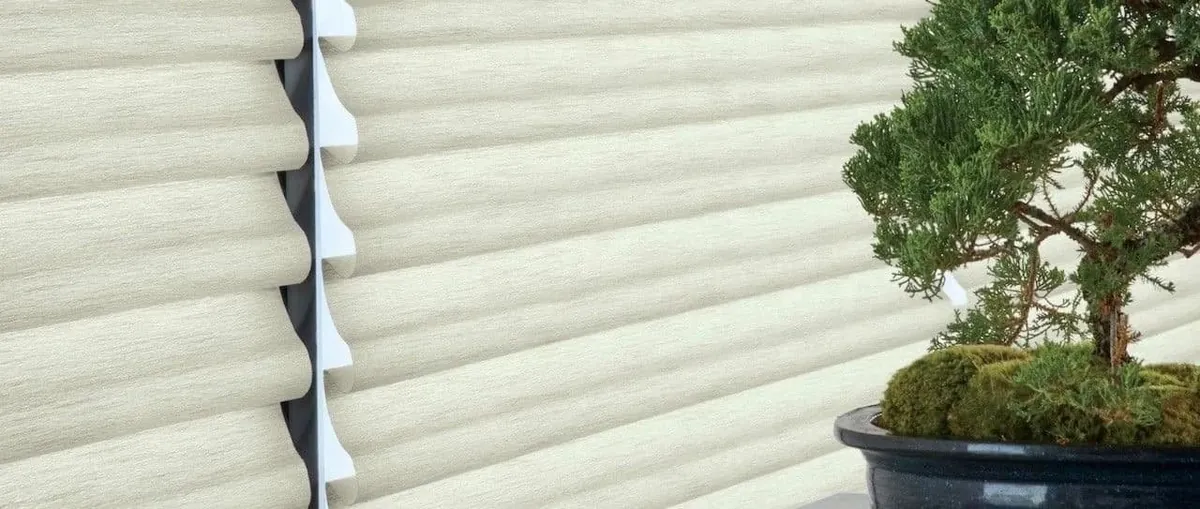
Silhouette sheer shades
Fabric vanes between sheer layers, tilting to soften the light on tall foyer glass and family room walls.
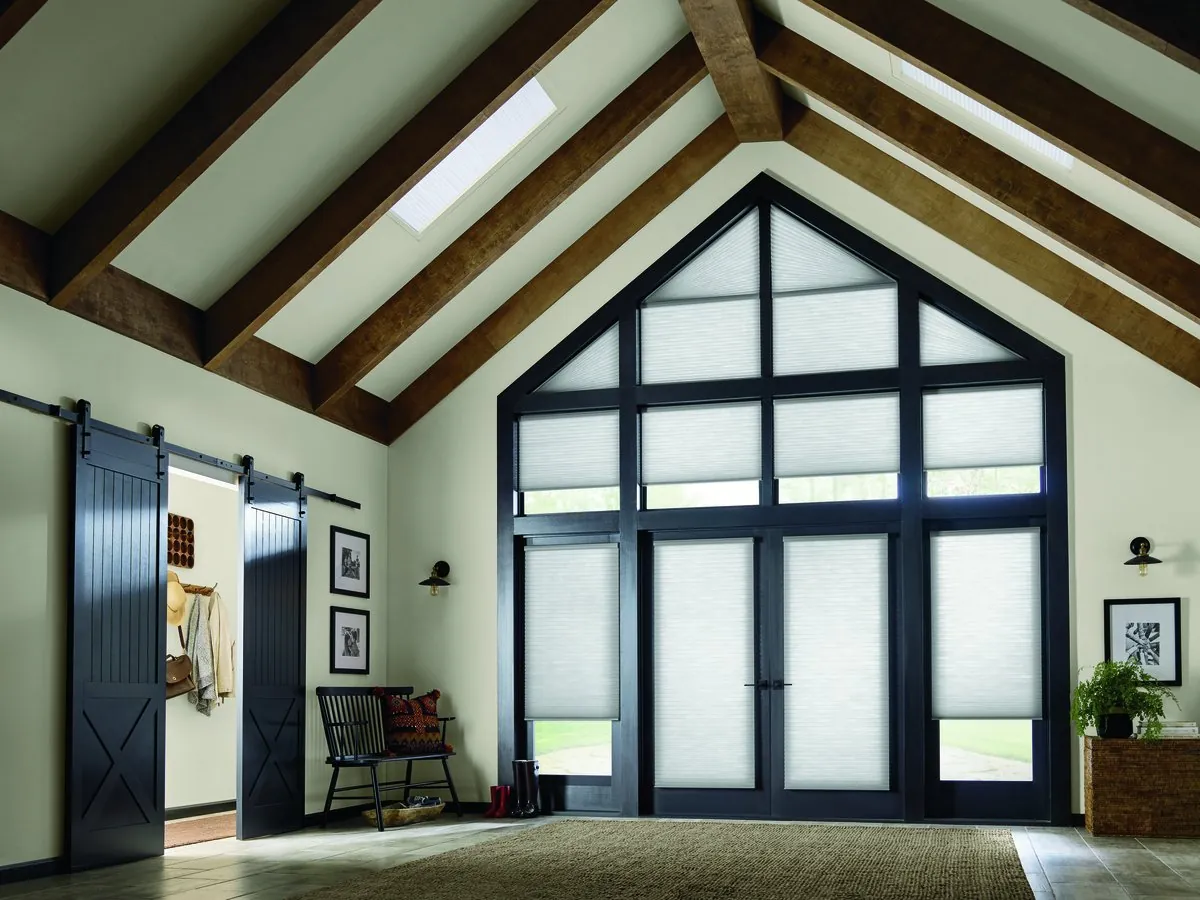
Duette honeycomb shades
A honeycomb fabric that can be made in narrow widths, so it suits the slim sash of a Victorian near the center.
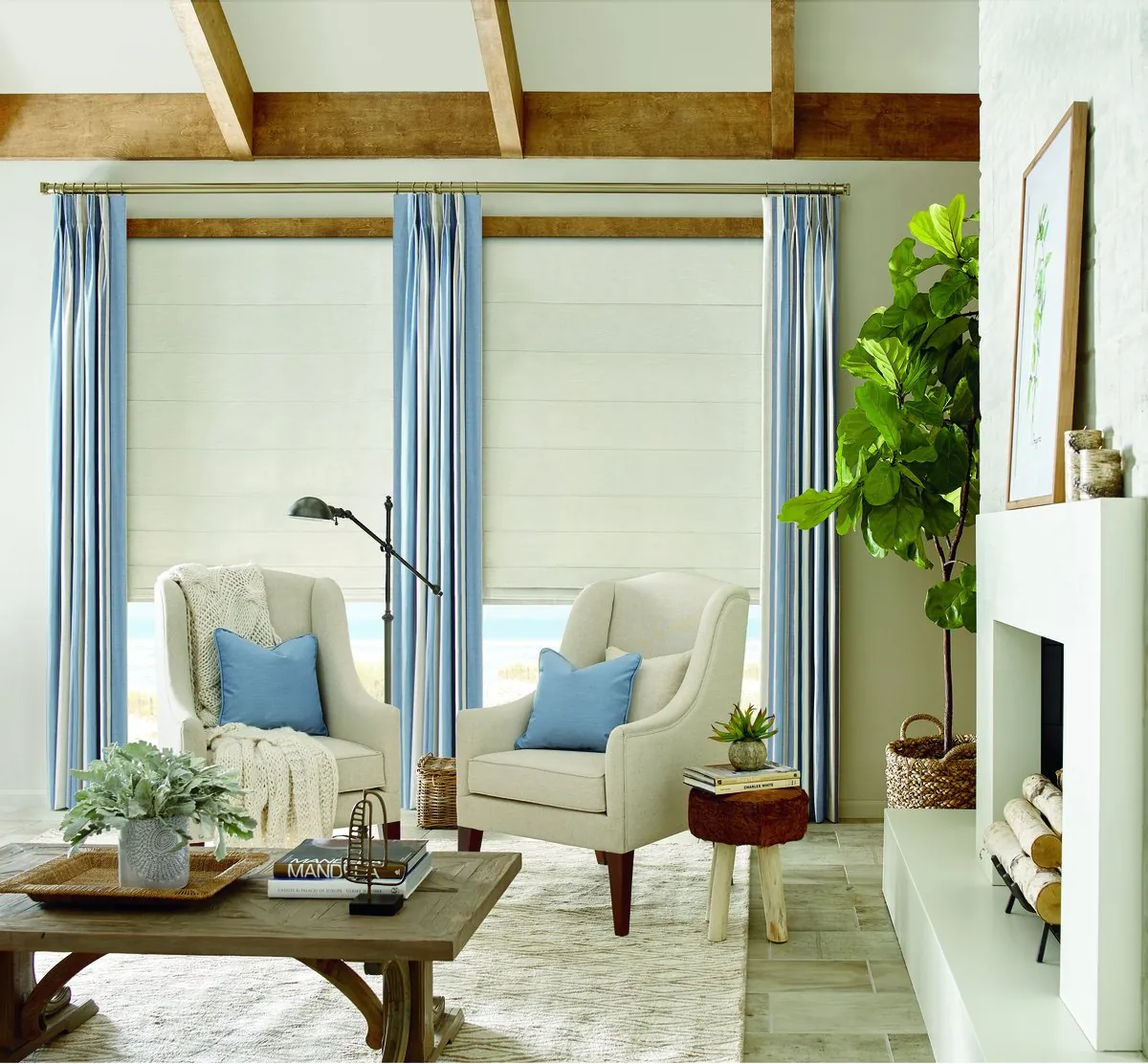
Vignette roman shades
Soft folds for a formal front room or a dining room, with the lift handled by the motor.
Planning a two-story foyer
Foyer glass in the newer Mansfield houses comes in a few common patterns. Some entries have a tall rectangle of glass above the door, split into panes. Others put one window on top of another, the higher one lined up with the second-floor landing. Some have a half-round or arched top. Each needs its own plan, and the plan starts with what you want the entry to do.
If the foyer faces east or south, the high glass can throw strong light down the hall and onto the stairs in the morning. If it faces the street, the entry is on show after dark. Either way, we generally suggest a shade on the high glass that moves on a schedule: up in the morning, down at the time you usually turn on the lights. The lower glass, beside or around the door, can carry its own shade and move with the upper one, or stay on its own so it can be opened when you are expecting someone.
Shapes matter. A rectangular pane is the simplest to motorize. An arch or a half-round needs a closer look, and we will tell you honestly at the visit which shapes can take a motorized covering and which are better left bare or fitted with a fixed one. Many homeowners decide the arch looks best uncovered while the rectangular glass below it gets the shade.
We also measure the foyer from a ladder at the visit, so the shades are sized to the real openings rather than guessed from the floor.
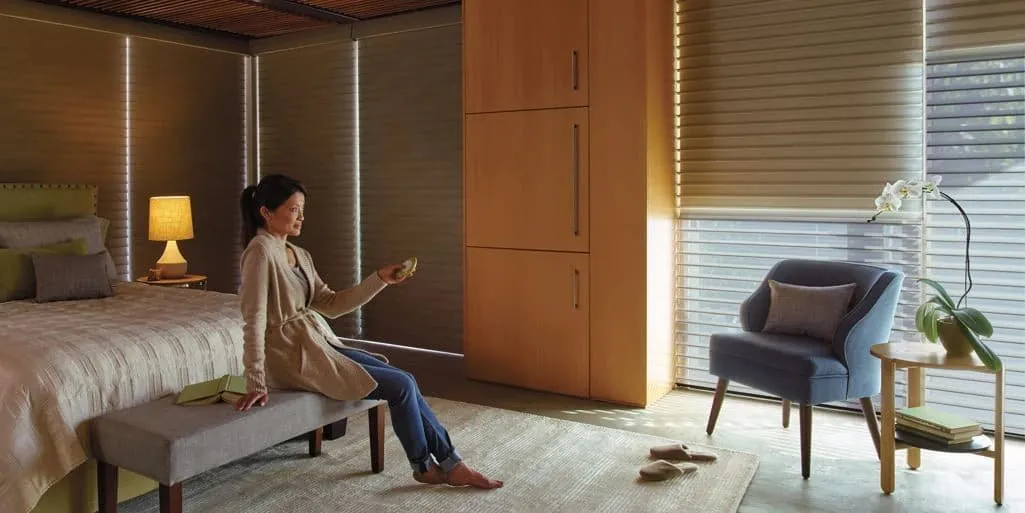
Tall, narrow sash near the center
The Victorians near Mansfield’s center were built with tall, narrow sash, the kind that makes a front room feel lofty and lets light reach far into the house. Those proportions are part of the charm, and they also make for an awkward stretch to the head of the shade and plenty of cord when the shade is raised.
A motor removes both problems. One press sends the shade all the way up the sash, and another stops it wherever it suits, so you can drop it just far enough to screen the street while the upper glass stays bright. Narrow windows also tend to come in rows or pairs, and grouping lets a whole row move together and stop on one line.
Because the windows are slim, the choice of shade matters. Honeycomb shades can be made in narrow widths and stack neatly at the head. Roman shades suit a parlor and leave the trim visible when raised. Wood blinds have a long history in rooms like these and, on a motor, lose the long cords that used to hang beside them. We measure each sash at the top, middle and bottom, because older frames are rarely perfectly square, and choose an inside or outside mount accordingly.
Ranches across the post-war subdivisions
The post-war ranches in Mansfield’s subdivisions have a very different rhythm: one broad pane in the living room, bedrooms lined up along one wing, a kitchen window over the sink and often a slider to the back yard. The openings are regular and the frames generally square, so fitting is straightforward.
What a ranch gains from motorized blinds in Mansfield is coordination. The front windows can move as one group, the bedrooms as another, and the back of the house as a third. Bedrooms open at your wake-up time, and the front closes at the evening hour you pick. The sink window, always just beyond reach across the counter, can join whichever group you like.
For the picture window, two or three shades on one wall can be grouped so they behave as a single surface, rising and falling together. Light-filtering roller or honeycomb fabric lets the day in while taking the edge off the glare, and a sheer shade adds the option of tilting the vanes for a softer light.
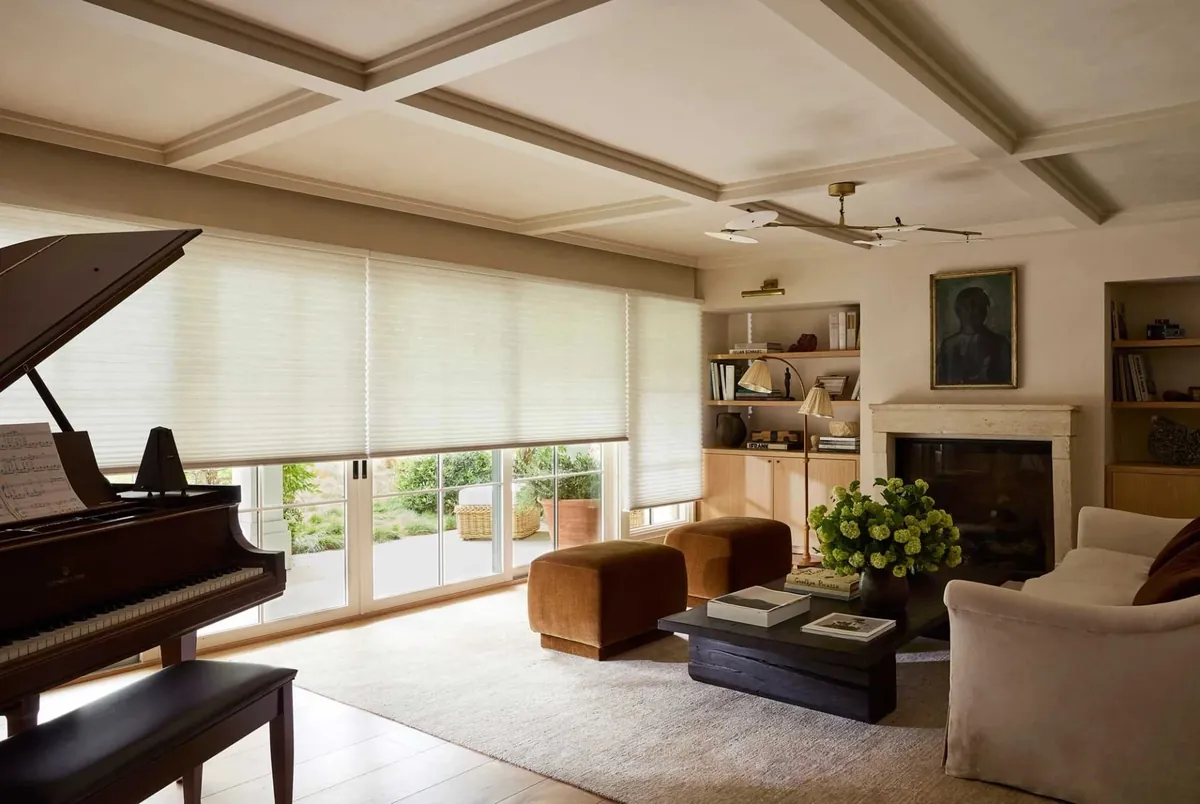
Large colonials beyond the foyer
The foyer is usually the first motorized window in a big colonial, but rarely the last. These houses tend to have a family room at the back with a long run of glass, a kitchen and breakfast area open to it, and bedrooms upstairs with large windows. Many have a home office or a bonus room over the garage as well.
Next in line is usually the family room. It often faces the yard and takes the strongest afternoon light, right when the room is in use. A group of shades that lowers part way on a schedule keeps glare off the television and the floors, then lifts again later. For movie nights, a scene in the app closes the whole wall with one press.
Upstairs, bedrooms with large windows benefit from room-darkening fabrics and morning schedules. A bonus room over the garage, often lit by a dormer or a gable window, is another awkward reach that a motor makes easy.
Kitchens and breakfast nooks
The kitchens in Mansfield’s large colonials are usually open to the family room, with a breakfast nook pushed out toward the yard and windows on two or three sides. In a ranch, the kitchen is smaller, with a single window over the sink and maybe a door with glass to the back step. Both share one problem: the window you want to adjust is on the far side of a counter or a table.
A motorized roller or honeycomb shade fixes that for good. In the nook, a small group can open with the rest of the back of the house in the morning and drop part way when the afternoon light reaches the table. Over a ranch sink, a single shade on a handset or schedule means no more leaning across the faucet. In an open-plan colonial, the nook shades can also join a family room scene, so the whole back of the house changes together.
Handsets, the app and schedules
There are three ways to run PowerView shades, and each has its place in a Mansfield house.
- Handsets are best where you want something simple: by the front door for the foyer, on a nightstand, on the coffee table in the family room.
- The app sets any shade or group at any height from a phone or tablet, and saves scenes, such as an “entry closed” scene for the foyer or a “movie” scene for the family room.
- Schedules run the house’s daily routine for you: the foyer opening in the morning, the bedrooms lifting later on weekends, the front of the house closing at the time you choose.
There is a plain-English rundown in how motorized shades are controlled, and more on scenes in window covering automation. Powering each motor is something we sort out with you on the day of the consultation, opening by opening.
From the first visit to the last shade
With foyer glass to measure from a ladder and older sash to check at several points, a Mansfield consultation is always done at the house. We can bring the showroom to you: the samples ride along in our vans.
- Use Request a Consultation, or press the call button for our Franklin showroom.
- We look first at the window that brought you to us, very often the foyer.
- Fabrics from sheer to room-darkening are tried at your windows in daylight.
- We agree on groups, scenes and schedules: which shades travel together and when.
- A tape goes across every opening, the high glass too, for width, height and depth.
- A free estimate sets out the shades and the installation.
- The shades are made by Hunter Douglas to fit those openings.
- Our certified Hunter Douglas installers put them up, pair each with its handset and the app, and set up your first schedules with you.
Our article on what happens on installation day walks you through the fitting.
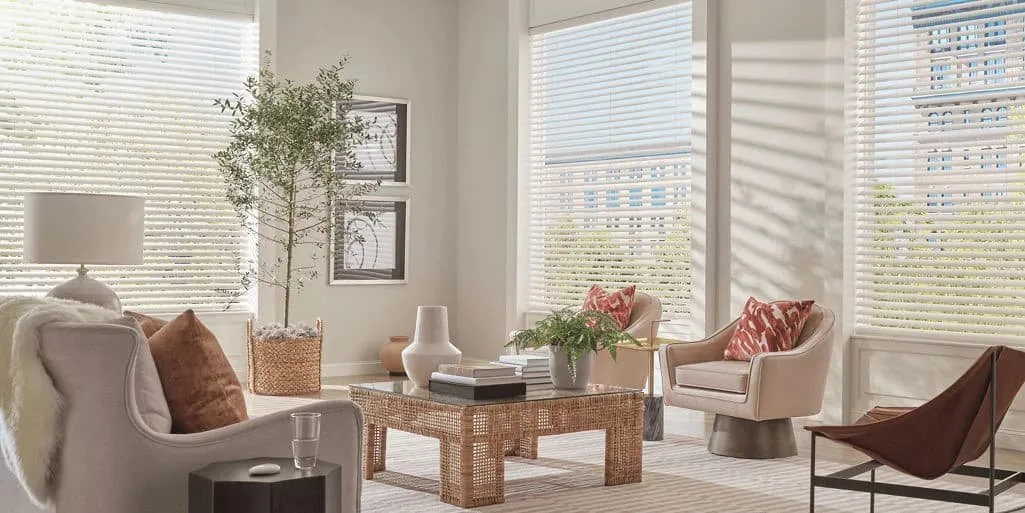
Stair landings and second-floor halls
In the colonials and many of the Victorians, the stair turns at a landing lit by its own window. In the newer houses that window often lines up with the foyer glass; in the older ones it may be tall and narrow, matching the sash in the front rooms. Either way, it sits over the stairwell, with nowhere sensible to plant your feet while reaching.
Putting the landing shade on a motor is a modest change you appreciate every morning. It can join the foyer group so the whole entry opens and closes as one, or move on its own schedule. We measure landing windows carefully and plan the mount around the trim and the stair rail.
Bedrooms facing the morning
Bedrooms are where schedules feel most personal. A room-darkening shade made to fit the opening keeps out early light, and the app raises it when your alarm goes, a little later on a Sunday. In a Victorian bedroom with tall, narrow sash, grouped shades rise together so the room brightens evenly.
In a child’s room, a motorized shade means no lift cord hanging beside the window. In a guest room, a handset on the nightstand is the simplest way for visitors to manage the shades without learning an app.
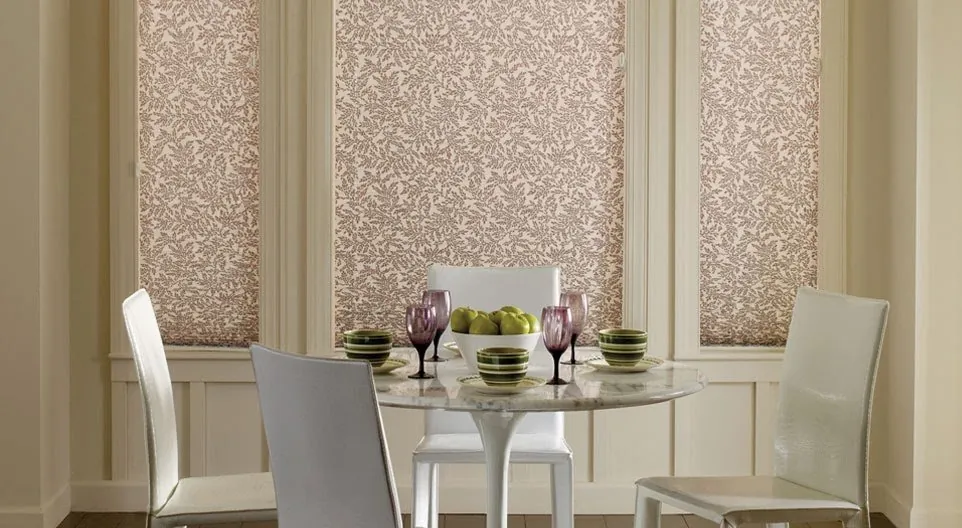
Dining rooms and front parlors
In the older Victorians, the parlor and dining room usually get the loftiest sash of all. Roman shades suit them well, and patterned roller fabrics are another choice for a dining room that wants a bit of color. On a motor, the shades in these rooms can follow an evening schedule so they close as the house settles in for the night.
In the newer colonials, the dining room often sits just off the foyer and shares its light. Many homeowners group the dining room with the foyer so the front of the house moves together.
The foyer through the year
Two-story entry glass behaves differently as the seasons turn, and a schedule makes it easy to keep up. In midsummer the light arrives early and stays late, so the foyer might open at breakfast and close well into the evening. In winter the days are short, and the same shade might close by late afternoon so the hall does not glow out over the front lawn after dark. Changing those times takes a moment in the app, and the shades then keep the new routine until you change it again.
Motorized blinds in Mansfield foyers also help with the rest of the house. Strong morning sun through high glass can carry right down the hall and across a living room floor. Lowering the upper shade part way during the brightest hours softens that light without darkening the entry completely. A sheer or light-filtering fabric is often the choice here, because it keeps the foyer bright and welcoming while taking the hard edge off the sun.
If you travel, the schedule keeps running while you are away, so the front of the house opens and closes as usual.
Adding rooms later
Few Mansfield projects cover the whole house in one go. A common path is to start with the foyer and the landing, add the family room next, and bring in the bedrooms later. New PowerView shades simply join what is already there, using the same app and handsets, so nothing installed at the start needs to be replaced.
For the wider collection, go to motorized blinds and shades; for everything we do locally, see our Mansfield page. If you are deciding between styles, roman shades in Mansfield and cellular shades in Mansfield are useful comparisons.
Why choose a Gallery dealer for high glass
As a Hunter Douglas Gallery dealer, Blinds & Designs looks at the house as a whole. A Mansfield house might need sheer shades on the foyer, narrow honeycomb shades on Victorian sash and rollers across a ranch front, and we can plan every one of them together, with PowerView on each.
The people who hang our shades hold Hunter Douglas certification. The estimate is free. We also offer interior design consultations for rooms you want to rethink, and blind and shade repairs on coverings already in the house.
The showroom nearest Mansfield
If you like to browse first, Franklin is the showroom closest to Mansfield. The foyer and the high glass, though, always get measured at the house.
Questions from Mansfield
Can the high glass over our front door be motorized?
In most cases, yes. Rectangular panes are the simplest. Arched or half-round tops need a closer look at the visit, and some are best left uncovered while the glass below gets the shade.
How do you measure a two-story foyer?
From a ladder, at the visit. Each pane is measured for width, height and depth so the shade is made to the real opening, not an estimate from the floor.
Will shades fit the narrow sash in an older house near the center?
Usually. Honeycomb shades can be made in narrow widths, and we measure each sash at several points to choose an inside or outside mount.
Can the foyer, landing and dining room move together?
Yes. They can be grouped so the front of the house opens and closes as one, or each can keep its own schedule.
Do you charge to put together an estimate?
No charge. Once the windows are measured we put the figures together for you free of charge.
Look up at your entry
If there is a window in the house that nobody has touched since you moved in, it is probably high in the foyer. Flag it when you book a consultation for motorized blinds in Mansfield, and we will come with samples suited to that glass and a ladder to measure it. Want a quick word before booking? Our Franklin showroom answers the call button.