
Small antique sash and big wooded lots
Medfield has two kinds of house that could hardly be less alike. Around the center stand antique colonials, some with very small original sash that has been looked after for a long time. Out along North Street, Route 27 and the roads that branch off them, larger newer houses sit on generous wooded lots, well back from the road. When we plan cellular shades in Medfield, MA, we are usually solving one of two problems: how to warm a small, old, single-glazed window without spoiling it, or how to manage light in a big room shaded by trees.
A honeycomb shade handles both. Its pleats are hollow cells, and the air inside them stays put, forming a quiet layer between the glass and the room. On an antique window that layer does a lot of the work a storm sash would, from the inside, and leaves the old glass and muntins visible from the street. In a newer house under the trees, a pale light-filtering fabric keeps the room as bright as the canopy allows while still taking the edge off summer heat and winter chill.
The oldest windows are the most delicate to fit, and they get the most care.
Cellular shades in Medfield, MA, for three common needs
Samples of each travel with us, ready to hold up at the old sash or the wide newer glass.
Warmth on old glass
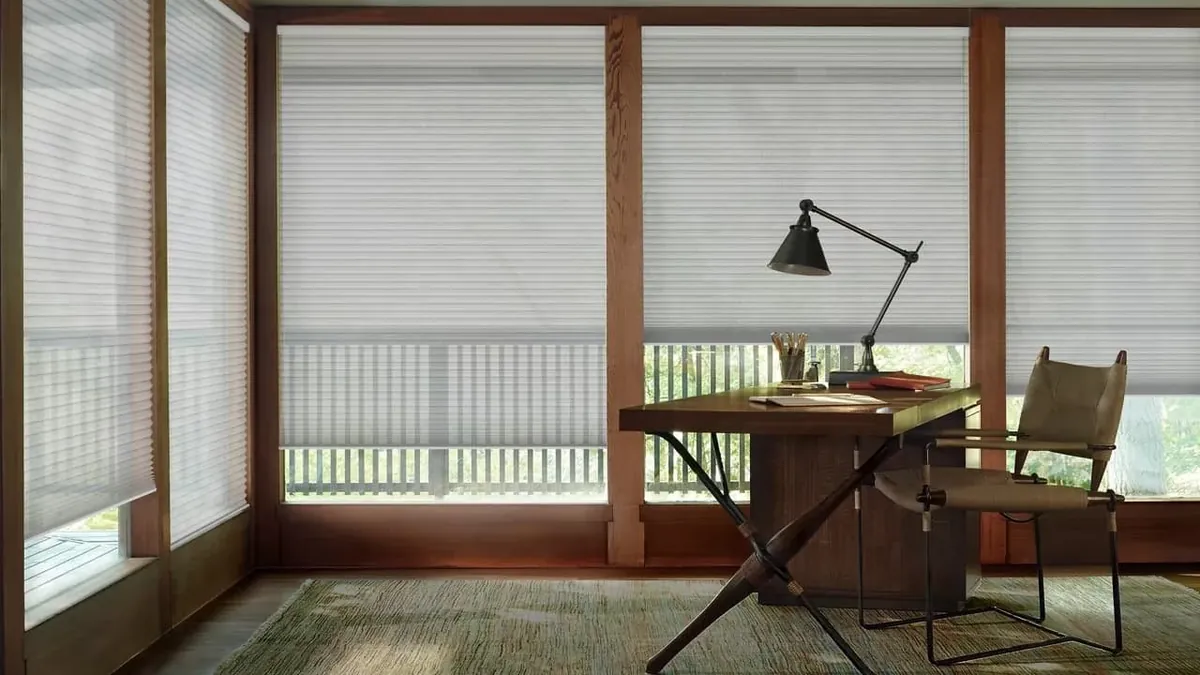
A Duette shade made for the exact size of a small original sash, mounted inside the frame where the depth allows, and lowered on winter evenings.
Light under the trees
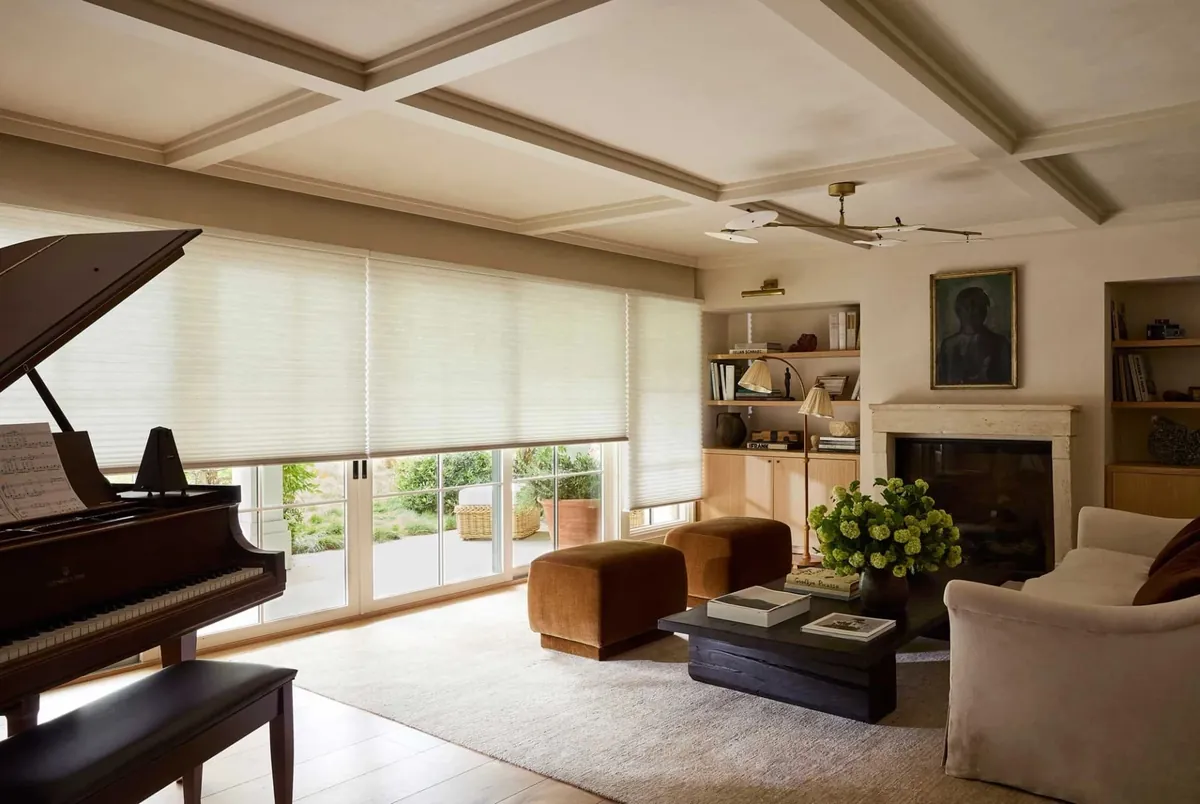
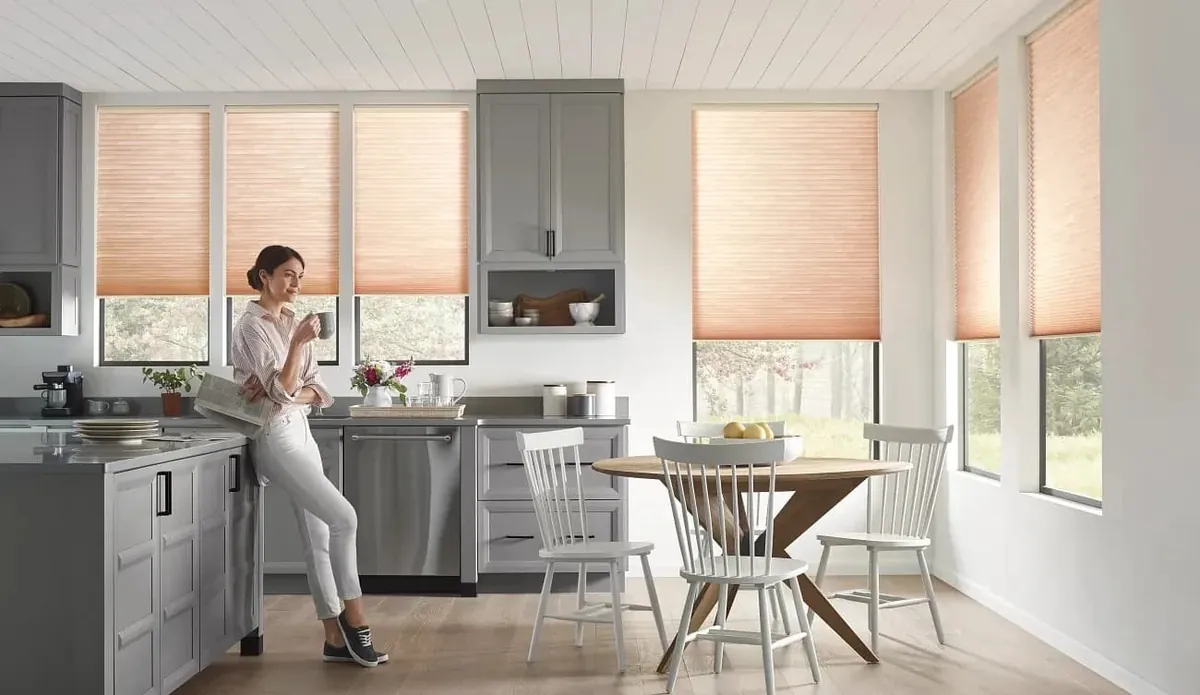
Pale light-filtering fabrics that hold on to the daylight a wooded lot allows, while softening the hot afternoon sun in summer.
Reach for high glass
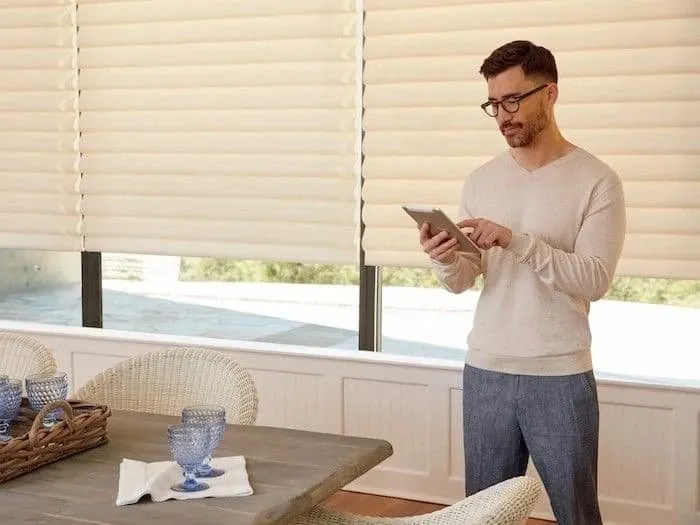
PowerView for the tall windows of a newer great room or stairwell, moved from a phone, a remote or a schedule.
The smallest windows in town
The oldest colonials around the center often have sash that would look tiny in a modern house: short, narrow openings, sometimes set low under the eaves on the second floor. They were made that way for good reasons at the time, and in a lot of these houses the original sash and glass have been kept and repaired rather than replaced, which is worth protecting. The trouble is that those windows are thin, and in January every one of them is a small cold patch in the room.
A honeycomb shade can be made remarkably small, so even the narrowest antique opening can take one sized to it. Where the frame has enough depth, the headrail sits inside the opening, and when the shade is raised it stacks into a compact band at the top. The casing, the sill and the muntins stay on view, and the house looks the same from the street as it always has.
Not every antique frame has that depth. Old window stops, sash cords and a frame that has shifted over its long life can leave too little room for the headrail, or leave the opening a little out of true. So the tape goes on each window several times before anyone suggests a mount. Where the frame is too shallow or too crooked, the shade goes on the face of the casing instead, kept as slim as possible, and we show you exactly where it will sit before you agree to it.
Why old glass feels so cold
On a single pane of old glass, there is very little between the warm room and the winter air outside. Stand near an antique window on a cold night and you can feel it: the air beside the glass cools, sinks and spreads across the floor, so the whole corner of the room feels draughty even when the window is shut tight.
With a honeycomb shade lowered, the cells hold a still band of air against that pane. The cold has to cross it before it reaches the room, and the warm air of the room no longer flows straight onto the glass. The corner stops feeling draughty, and a chair by the window becomes somewhere you actually want to sit. Because the shade lives inside the room, it does that without altering the old sash or adding anything to the outside of the house.
Big houses on wooded lots
The larger houses off North Street and Route 27 are a different story. They sit on generous lots with deep setbacks and mature trees, and their windows are big: tall first-floor openings, a great room that may rise two stories, wide sliders to a deck, and a lot of bedroom glass upstairs. The trees that make those lots so pleasant also shade the house, so rooms can be dimmer than the window area suggests, especially on the north side and in summer when the canopy is full.
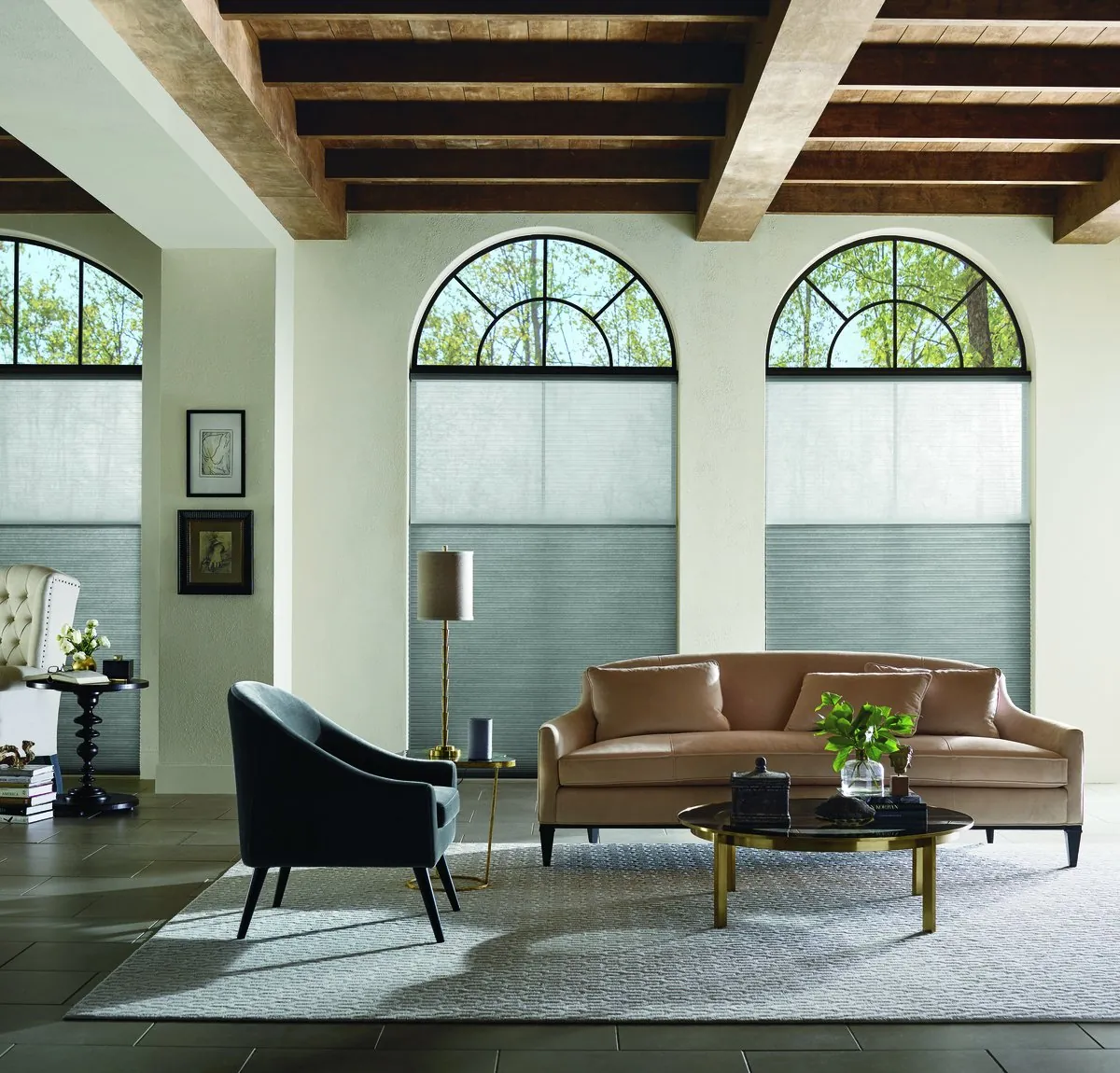
For those rooms, the aim is to keep as much daylight as possible while still gaining the comfort a honeycomb shade brings. Pale, light-filtering fabrics are the usual answer. They glow when lowered rather than darkening the room, and they soften the patches of hot sun that break through the leaves on summer afternoons. A top-down, bottom-up shade adds another option, letting in sky over the top while covering the lower part of the glass.
In winter, when the leaves are down, the same rooms suddenly take much more sun. A light-filtering honeycomb shade copes with both seasons, which is part of why it suits a wooded lot so well.
Deep setbacks and what they change
When a house sits well back from the road behind trees, privacy from passing traffic stops being the main reason for a window covering. That frees up the choice. You can leave living rooms open to the woods during the day and pick fabrics purely for light and comfort, rather than for screening.
Bedrooms are a different matter, because darkness at night and in the early morning matters wherever the house sits. A room-darkening honeycomb fabric keeps a bedroom dim when the summer sun comes up early through the trees. Many people with cellular shades in Medfield end up with light-filtering fabrics downstairs and room-darkening ones upstairs, all in the same outward-facing color so the house looks consistent from the drive.
Sliders and decks facing the woods
Most of the newer houses on the wooded lots open onto a deck or a patio at the back through a wide slider, sometimes two. That glass faces the trees, so it lets in green, filtered light most of the year, but it is also a large single area of cold glass in winter and a source of low, hot sun on late summer afternoons when the light comes in under the canopy.
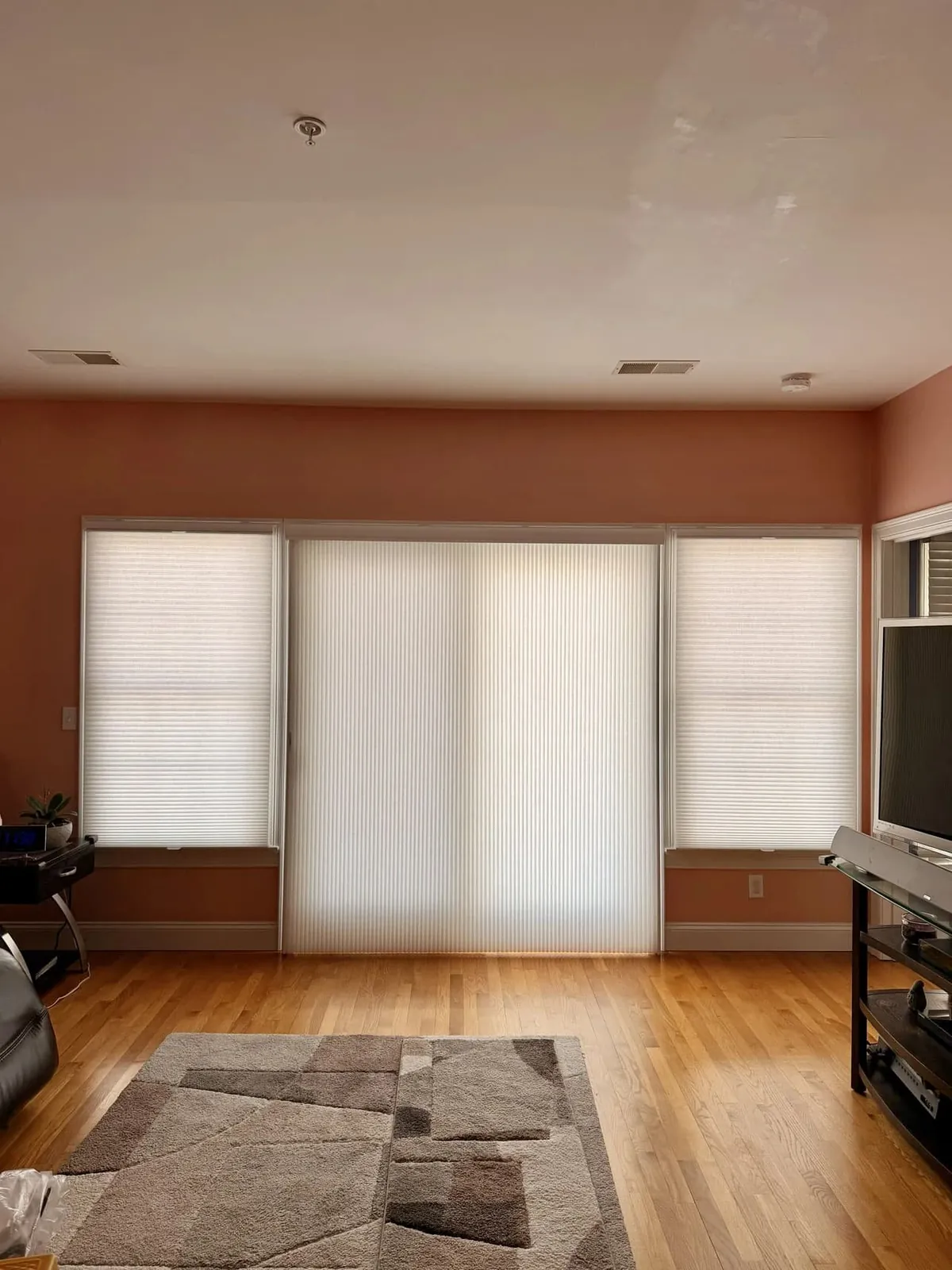
A vertical honeycomb shade suits a slider well. It draws to one side and stacks neatly, so the door can be used without lifting anything, and when it is closed it covers the whole door with the same cells as the windows beside it. On a wall that combines a slider and windows, we match fabric and color across all of them so the back of the room reads as one piece.
Home offices with a view of the trees
A good number of the larger houses have a study or home office, often on the ground floor with a window onto the woods. It is a lovely outlook and a tricky light: bright patches that move as the leaves shift, and a screen that becomes hard to read whenever the sun breaks through. Planning cellular shades in Medfield for an office is mostly about evening out that light.
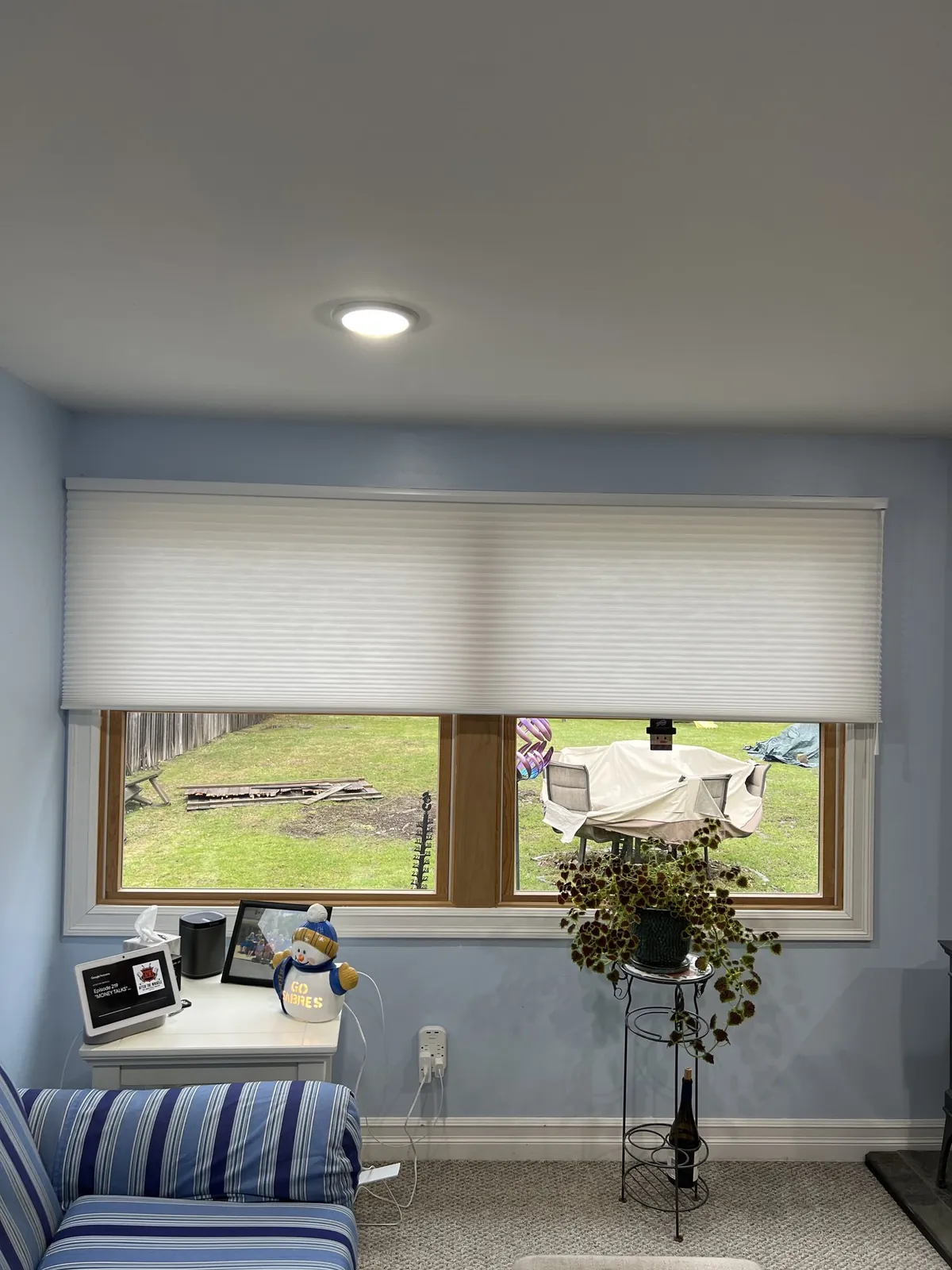
A light-filtering fabric spreads the daylight evenly across the room, so the screen stays readable and the trees remain a soft presence through the shade. A top-down, bottom-up shade gives finer control, letting you cover just the part of the window the sun is coming through at a given hour.
Great rooms and stair halls
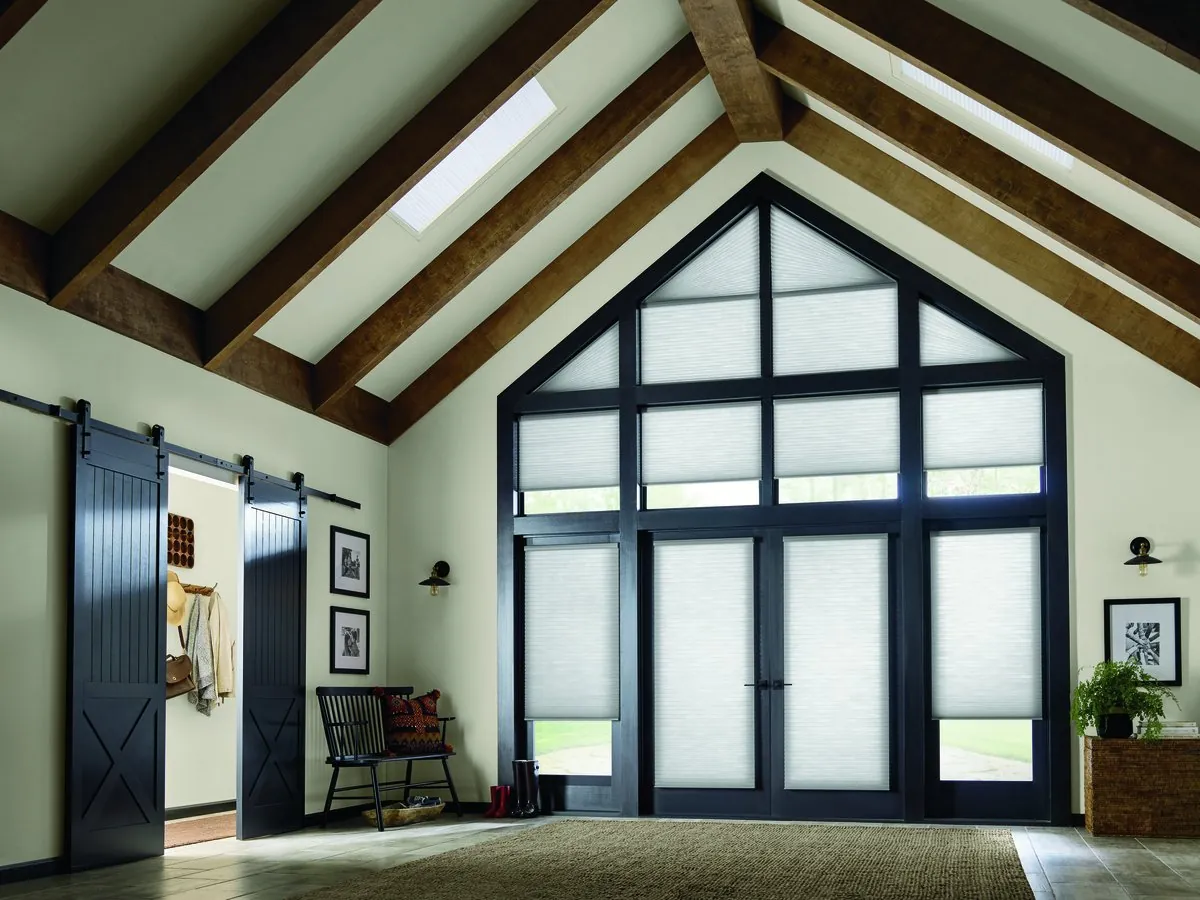
The great rooms in the newer houses often have a second tier of windows above the first, and the stairwell may have a tall window of its own. Those are the windows nobody can reach without a ladder, and they are often the ones letting in the most heat on a summer afternoon.
PowerView motorization puts every one of those shades within easy control. Raise or lower them from a phone or a remote, group them so a whole wall moves at once, or set a schedule so the upper glass closes when the sun reaches that side of the house. We plan how each motor will be powered once we have seen the room.
On a two-tier window wall, each pane takes its own shade, and we line them up so the wall reads as one design.
Choosing a fabric through the seasons
A wooded lot or an antique house makes the seasons matter more than usual. Here is a simple way to think about each room.
- Antique front rooms: a light-filtering Duette fabric lowered on winter evenings, raised by day to enjoy the old glass.
- Shaded rooms under the canopy: the palest light-filtering fabric you like, to keep summer daylight while softening the sun that breaks through.
- Bedrooms: a room-darkening fabric, because early sun through bare winter trees and full summer mornings both arrive sooner than you want.
- Great rooms with high glass: light-filtering fabric on PowerView, scheduled around the time the sun is strongest on that side.
Duette or Applause in a Medfield house
Duette and Applause are both Hunter Douglas honeycomb shades, and the cells that hold air are the same idea in both. The differences lie in the fabrics, textures and the range of sizes. Duette has the wider collection, which makes it the usual choice for very small antique sash, very wide sliders and the vertical shade for a door. Applause has its own palette and suits many standard windows in the newer houses.
A house might take Duette on the small front sash of an antique colonial, where the fabric is on show to the street, and Applause in the back bedrooms. In a large newer house, Duette often goes in the great room and on the sliders, with Applause upstairs. Our Duette honeycomb shades and Applause honeycomb shades pages explain each line, and the main cellular shades page covers the full range.
A visit to your house, step by step
Our vans are stocked with the honeycomb samples, and the visit happens in your rooms, under your trees. That matters here more than most places, because a fabric that looks bright in an open room can look quite different in a room under heavy shade.
- Book through the Request a Consultation form or the call button, ideally at a time of day when the rooms have their normal light.
- Tell us which window you would fix first: the draughty antique sash, the gloomy north room or the great room that overheats.
- Fabric samples go up against that glass, Duette and Applause side by side, so the difference is plain.
- Each opening is measured, and every old frame is checked for depth.
- High panes are discussed with PowerView in mind.
- A free estimate follows, and you decide when you are ready.
Details of the visit are on our page about what happens at an in-home consultation.
Measuring an antique window
On a newer house, a window is usually square and true. On an antique colonial it rarely is, and a shade made to the wrong figure will show it. This is how we measure the old sash.
- Three widths per opening, high, low and halfway, with the tightest one deciding the shade for an inside fit.
- Three heights per opening, since old sills often slope from one side to the other.
- A depth reading at the head of the frame, with a note of any stop bead, cord or pulley that intrudes.
- A casing mount planned instead wherever the frame is too shallow or too far out of square.
- Your sign-off on mount and fabric for every window before the order goes to Hunter Douglas.
- Fitting by our certified Hunter Douglas installers, who level each shade within the old frame and try it with you.
Our page on what happens on installation day covers the fitting.

Why the Gallery name matters here
Blinds & Designs is a Hunter Douglas Gallery dealer. Hunter Douglas uses that title for dealers who meet its standards, and on a Medfield house it means the full honeycomb collection is available: tiny Duette shades for antique sash, wide shades and vertical shades for big newer rooms, and PowerView for high glass.
Installation is done by installers holding Hunter Douglas certification, and repairs on older blinds and shades you already have are part of what we do as well. Honeycomb is only one part of the range: shutters, blinds, roller shades and roman shades are all available at the same visit. See plantation shutters in Medfield, custom blinds in Medfield, or our Medfield page for everything we offer in town.

Help with the rest of the room
Shades are often one part of a larger change: a front parlor being restored, a great room being refurnished, a bedroom repainted. When the shades are part of a bigger plan, our interior design consultations can look at paint colors, fabrics and the other treatments in the room together, often at the very same appointment.
Of our showrooms, Franklin is the one closest to Medfield. Look there first if you prefer, though the home visit is where the final choice gets made, in the light your rooms actually have.
Questions from Medfield
Can you make a shade small enough for our original sash?
Yes. Honeycomb shades are made to order and can be very narrow and short, so even small antique openings can take one sized to fit. We check the frame depth first to decide between an inside and an outside mount.
Will the shades change how our antique house looks from the street?
Very little. Mounted inside the frame, a honeycomb shade sits behind the old sash and stacks small at the top when raised. Using one outward-facing color on every window keeps the front consistent.
Our rooms are shaded by trees. Won’t shades make them darker?
Not with the right fabric. A pale light-filtering honeycomb glows when lowered and keeps the room evenly lit. A top-down, bottom-up shade can also let in sky over the top while covering the lower glass.
What do you do about the high windows in our great room?
We put them on PowerView motorization, so you can move them from a phone, a remote or a schedule. Each pane gets its own shade, lined up with the others.
Does the estimate cost anything?
It is free. The figures come after measuring, cover the shades you picked at the visit, and carry no obligation.
Start with the window that bothers you most
Whether it is a cold antique sash by the fireplace or a great room that bakes on summer afternoons, the clearest way to choose cellular shades in Medfield, MA, is with samples at that very window. Book a consultation, and the samples, the tape measure and a free estimate all come to your door. One room or the whole house, the visit runs the same way.