
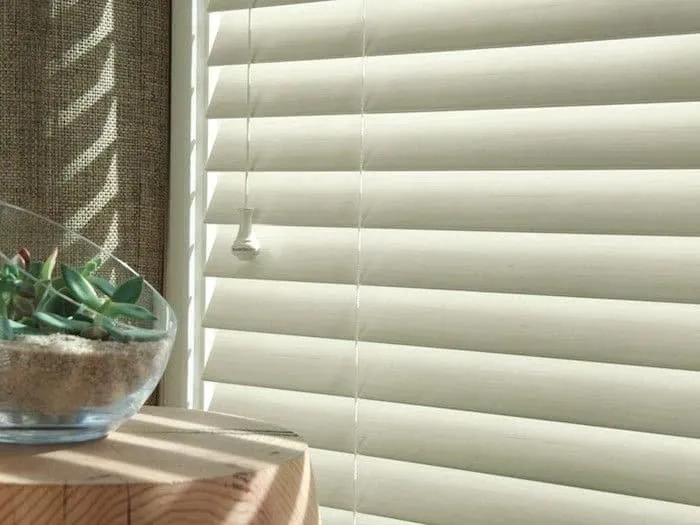
Tiny original sash in the antique colonials
The antique colonials around Medfield’s center were built with windows that seem small to modern eyes. Many still have their original sash, with modest openings set into thick walls, and the oldest houses have some of the smallest windows you will find anywhere in the area. Nobody would want to replace them. They are part of what makes the house what it is. They do, however, change how a shade has to be made and fitted, and they shape almost every decision about motorized blinds in Medfield, MA, for a house of that age.
A small window has very little room to spare. The shade has to fit the opening closely, stack compactly at the head so it does not block what glass there is, and sit inside a frame that may be out of square after a long life. Every opening is different, even in the same room, so each one is measured on its own.
The motor matters here for a reason people do not always expect. In an antique house, windows are often set low or deep, behind window seats, radiators or built-in cupboards, and a room may have several of them. Running them together from a handset or a schedule saves a lot of leaning and reaching, and it keeps every shade in the room at the same height.
Motorized blinds for Medfield, old house or new: three lines to know
PowerView works on many Hunter Douglas lines, so the motor never forces a look on a room. In Medfield we tend to bring these three to the table first, one for the antique rooms, one for the bedrooms and one for the larger, newer houses.
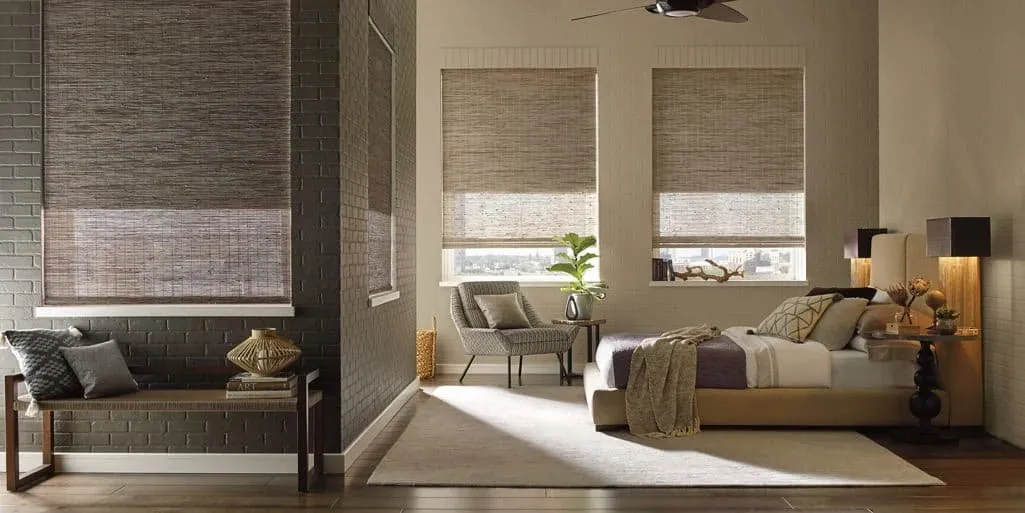
Woven shades
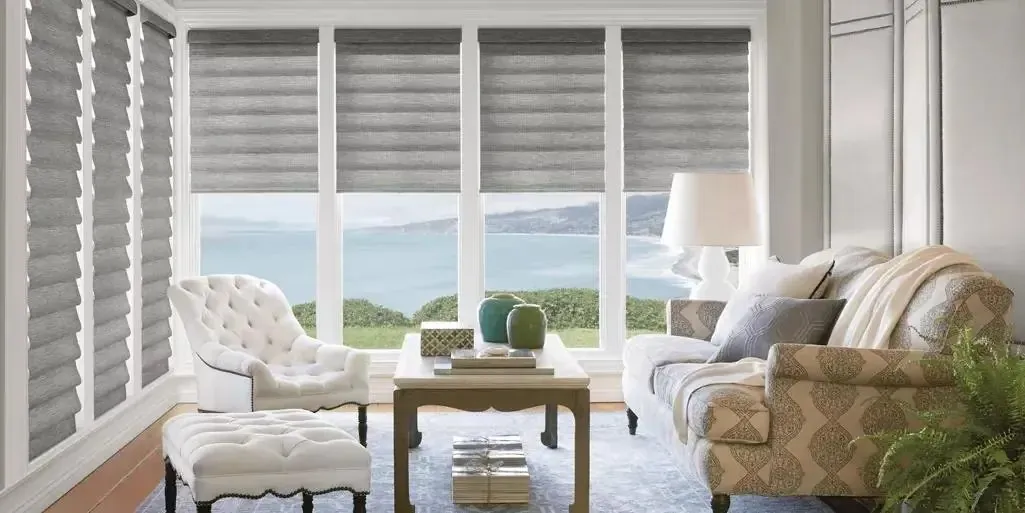
Natural textures that sit comfortably beside old plaster, wide floorboards and painted trim.
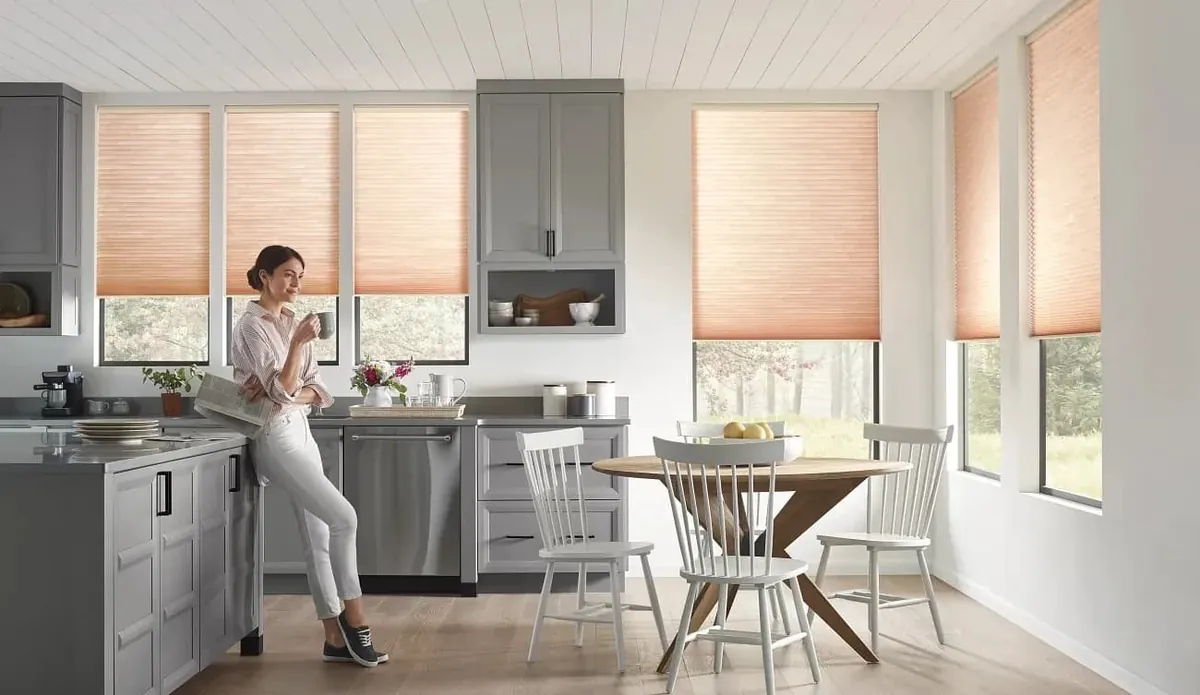
Applause honeycomb shades
A compact honeycomb stack, useful where a small sash leaves little room above the glass.
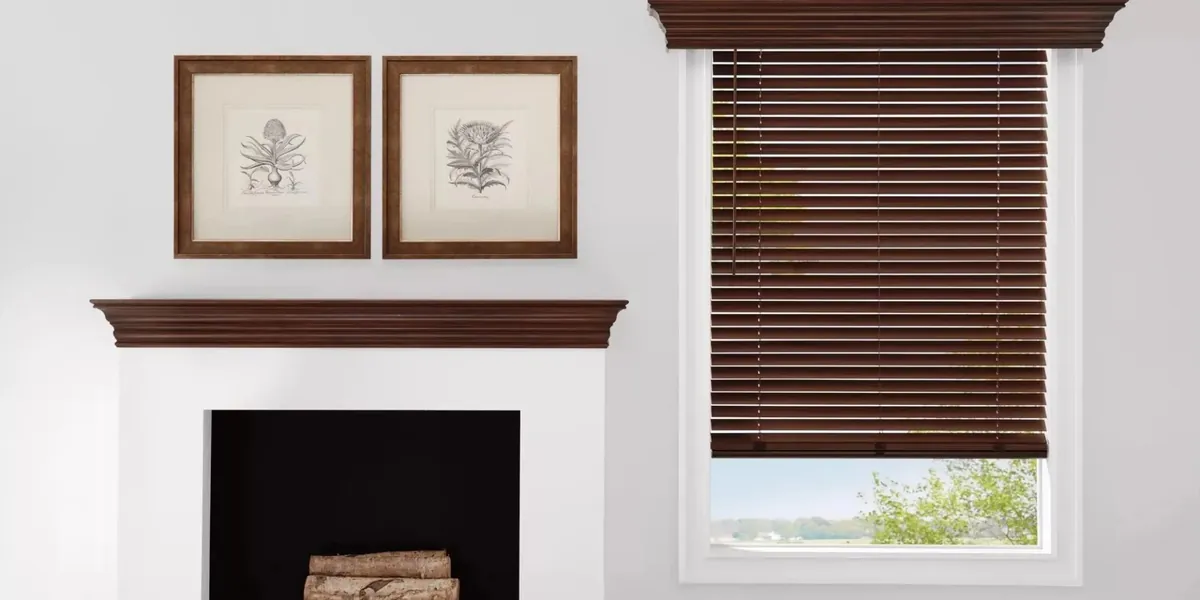
Parkland wood blinds
Real wood slats for a period room, tilting on the motor to steer light without a long cord.
Fitting a shade to a very small opening
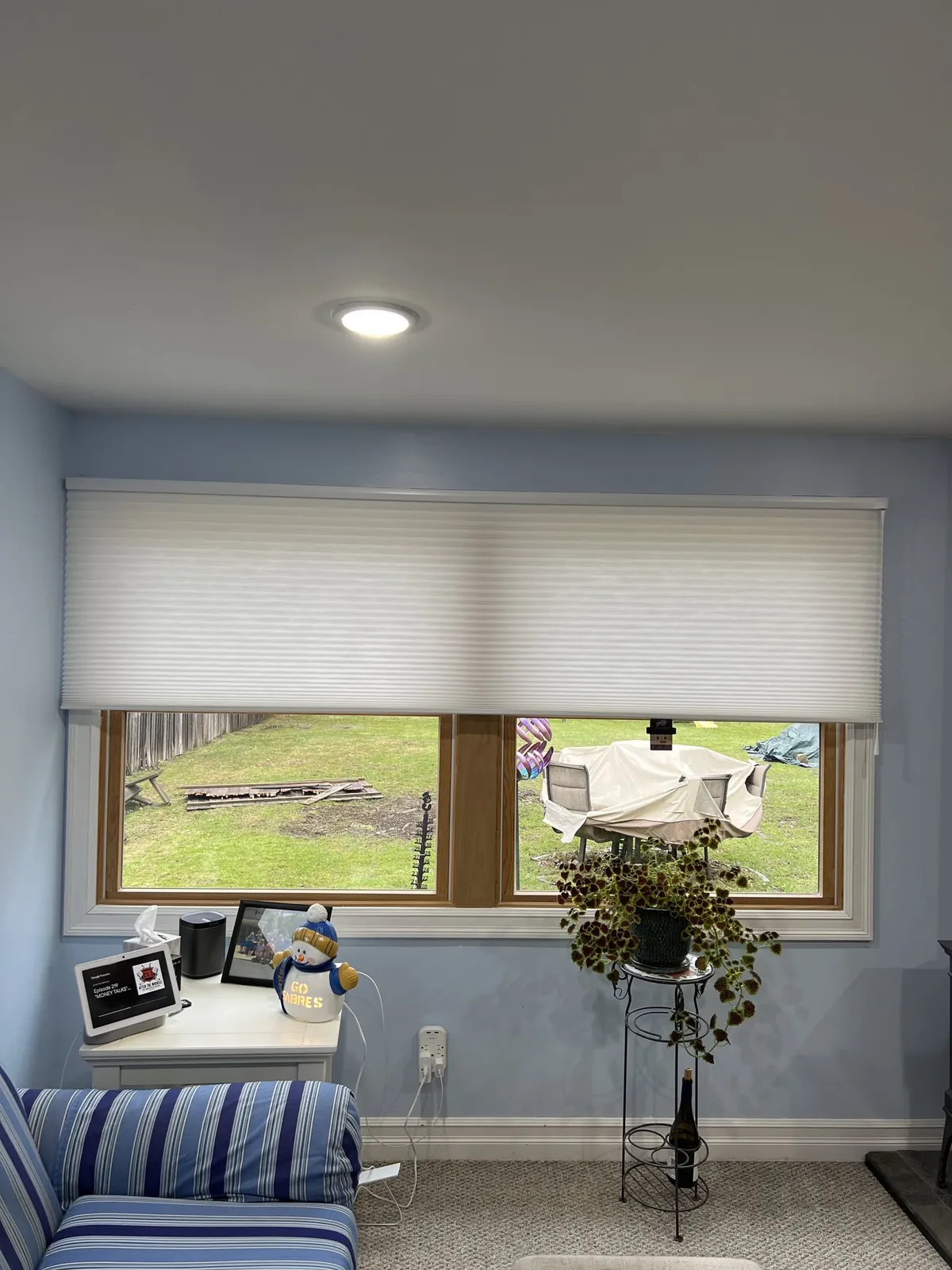
When a window is small, every fraction of an inch counts. A shade that sits a little proud of the frame looks clumsy on a little window in a way it never would on a big one. A headrail that is slightly too deep can foul the sash lock. A stack that eats into the top of the glass takes a real bite out of the daylight. So the measuring on an antique colonial is slower and more careful than anywhere else.
We take the width at the top, the middle and the bottom of each opening, the height at both sides and the center, and the depth at several points across the head. Old frames have often moved, and two windows that look identical across a room can differ by more than you would guess. We also look for anything the shade has to clear: old latches, interior storm panels, paint ridges where a stop has been painted many times over.
Then we talk with you about the mount. An inside mount, tucked within the frame, keeps the old casings fully visible and suits most people who chose an antique house for its woodwork. Where the frame is too shallow or too uneven, a slim mount on the casing may be the cleaner choice. We show you both options at the window and explain what each would look like before anything is ordered.
Low windows, deep sills and window seats
Antique colonials were not built around convenient window heights. You often find windows set low to the floor, with deep sills that have held plants for years, or windows tucked above a built-in seat or behind a radiator. In a keeping room or a front parlor, two or three of these can share one wall.
Reaching across a window seat to work a cord is awkward. Reaching behind a radiator is worse. A motorized shade takes the reach out of it entirely: the shade moves from a handset on a side table or from the app, and the window seat stays a place to sit rather than a step stool. Grouping lets every window on that wall move together and stop at the same point.
For a deep sill, an inside mount set toward the front of the frame leaves the sill clear when the shade is down, so whatever sits there stays put. We look at sill depth and the position of any latches before recommending where the headrail goes.
The larger houses on wooded lots
Out along North Street and Route 27, the housing changes completely. Large newer houses sit on generous wooded lots, set well back from the road, with big windows facing the trees. These houses have standard modern openings, square frames and plenty of room for a headrail, so fitting is straightforward.
Motorized blinds for Medfield’s newer houses answer a different need. Privacy from the road is rarely the issue, given the setbacks. What matters is light. Trees filter the sun in summer and drop away in winter, so a room that feels shaded in July can be very bright in January. A family room with a tall wall of glass may take sun through the bare branches for half the year. A home office facing the woods can go from dim to glaring in an afternoon.
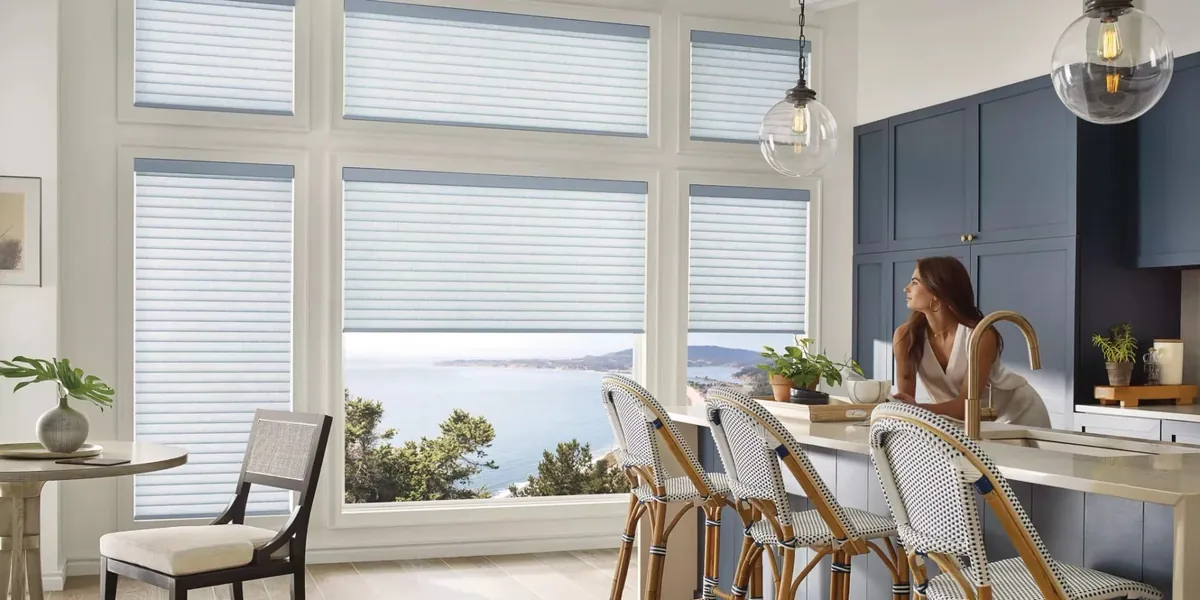
Schedules handle the routine part, opening the house in the morning and closing it in the evening. The app handles the rest: when the light changes, a tap brings a group of shades to whatever height suits the moment. Sheer shades and light-filtering fabrics are popular in these rooms, because they soften the light while keeping the woods in view.
Choosing how to run each room
PowerView gives you a handheld remote, an app and schedules, and Medfield houses use them in different proportions.
In an antique colonial, many rooms are best on a simple handset. A front parlor with three low windows on one wall needs nothing more than one button to raise them together. The app comes into its own for scenes, such as one that opens the downstairs in the morning or closes the bedrooms at night.
In a large newer house, schedules tend to do most of the work. The entry, the family room wall and the stair window can all follow a daily routine, and the app lets you adjust any of them as the light through the trees changes with the seasons.
If you want the detail, how motorized shades are controlled lays the choices out simply, while window covering automation explains scenes and timetables. Power for each motor is settled in person, after we have looked at your walls and frames.
The way a Medfield consultation runs
Small antique sash and big wooded-lot windows both need someone standing at the glass with a tape. That is why we come to you. Our vans carry the samples, so you can see each fabric in the light that actually reaches your rooms.
- Ask for a visit online, or ring our Franklin showroom from the call button.
- We tour the rooms together, starting with the windows you are least sure about.
- Samples are held in each opening, which matters on a small window where the fabric fills most of the view.
- Together we sort the windows into groups and pick handsets or timetables for each room.
- Each opening is measured slowly, with depth, latches and storm panels written down.
- A free estimate follows, covering shades and fitting.
- Every shade is built to order by Hunter Douglas.
- Our certified Hunter Douglas installer hangs the shades, links each to its remote and the app, and programs the first timetable while you watch.
Before the fitting, you may like to read what happens on installation day.
Deep setbacks and generous lots
Whether a Medfield house is antique or new, it very often sits well back from the road on a generous lot. That distance is a gift by day. The front windows rarely need covering for privacy in daylight, and you can leave the shades open from morning to evening without feeling watched. It also means the conversation about motorized blinds in Medfield is less about hiding from the street and more about light, comfort and routine.
After dark it is a different picture. A lit room is visible a long way across an open lawn, and in winter, when the leaves are down, more of the house shows through the trees. An evening schedule takes care of that. Set it once to the time you normally draw the shades, and the ground floor closes on its own every night, whether you are home, out for dinner or away for the week.
Big lots also mean windows on every side of the house, with each face catching the sun at a different hour. Schedules can treat each side differently: the east bedrooms opening early, the west-facing family room lowering part way in the late afternoon.
Bedrooms tucked under old rooflines
On the second floor of an antique colonial, the small original sash is often at its smallest, tucked under the eaves or into the gable end, and summer dawn finds it long before you want it to. Getting to it can mean squeezing past a bed or a chest of drawers.
A room-darkening fabric cut to fit that little opening holds the dawn back, and the app can raise it at whatever hour you set. On a small, low window behind furniture, a motor is the difference between a shade that gets used and one that stays put. In the newer houses, the bedrooms are larger and the windows bigger, but the same schedule works there too.

Tall glass in the newer houses
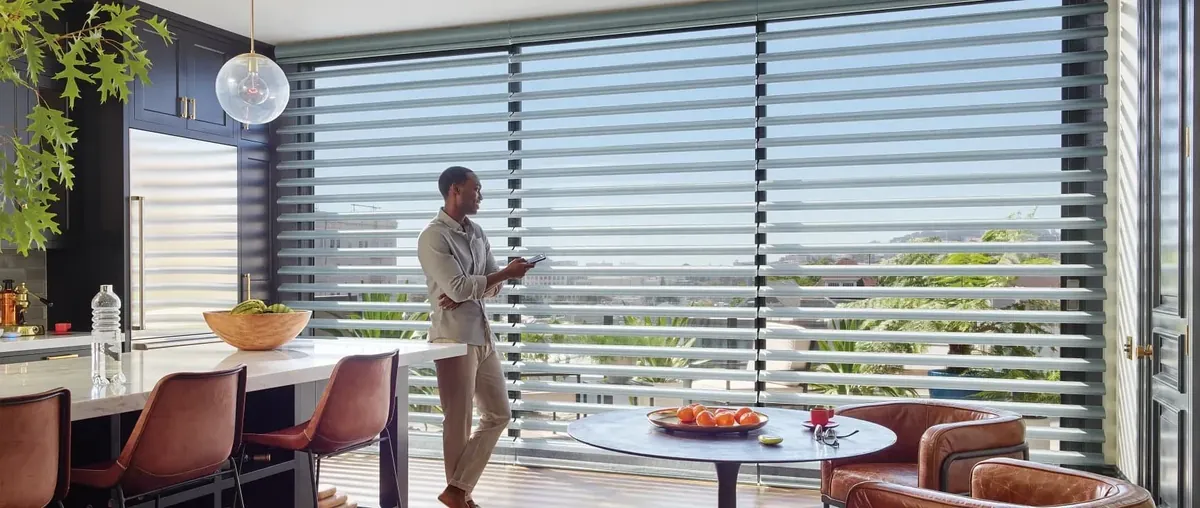
The newer houses along North Street and Route 27 often have an entry with tall glass, a stair landing with its own window and a family room with a wall of glass toward the woods. Some have a great room with windows reaching toward a high ceiling.
Those high windows are the classic case for a motor. A shade on the upper glass rises and lowers on a schedule or from the app, and no ladder ever comes out. In a great room, the upper and lower shades can be grouped to move together or kept apart, so the high glass stays open to the treetops while the lower shades screen the sun.
Vertical sheers suit a wide slider or a run of tall glass to the yard, gliding to one side when you want to step out. Roller shades in screen fabrics are another option where you want to keep the view and cut the brightness.
When the leaves come down
On a wooded lot off North Street or Route 27, the trees do a lot of the shading for half the year. Then autumn arrives, the canopy thins, and rooms that were cool and green all summer suddenly take low, direct sun across the floor. A family room that never needed its shades lowered in August may need them every afternoon by November.
This is where the app is handy. Rather than reprogramming the house, you can nudge a schedule: bring the family room group down part way an hour earlier, or add an afternoon setting for the home office. In spring, when the leaves fill back in, you move the times back. Each change takes a moment, and the shades follow the new routine from then on. Nobody has to walk the house adjusting every window by hand as the seasons turn.
Home offices with a view of the woods
Many of the larger Medfield houses have a study or home office looking out at the trees. It is a pleasant outlook and a tricky one for a screen, because the light shifts as the sun moves through the branches. A light-filtering or sheer shade on a motor lets you set the room the way you want from your chair, and a timetable can lower it part way at the hour the glare usually arrives. In an antique house, the office might be a small front room with low original sash, where a handset on the desk saves leaning across the sill.
Starting with the hardest room
A Medfield project often opens with a single room, typically the antique parlor with its low windows or the great room in a newer house. More rooms can follow whenever you are ready, joining the same PowerView setup and app, with nothing from the first round taken down.
Browse the wider range under motorized blinds and shades, or see all of our local work on the Medfield page. Many Medfield homeowners also look at plantation shutters in Medfield and custom blinds in Medfield when planning the older rooms.
Gallery dealer, certified installers
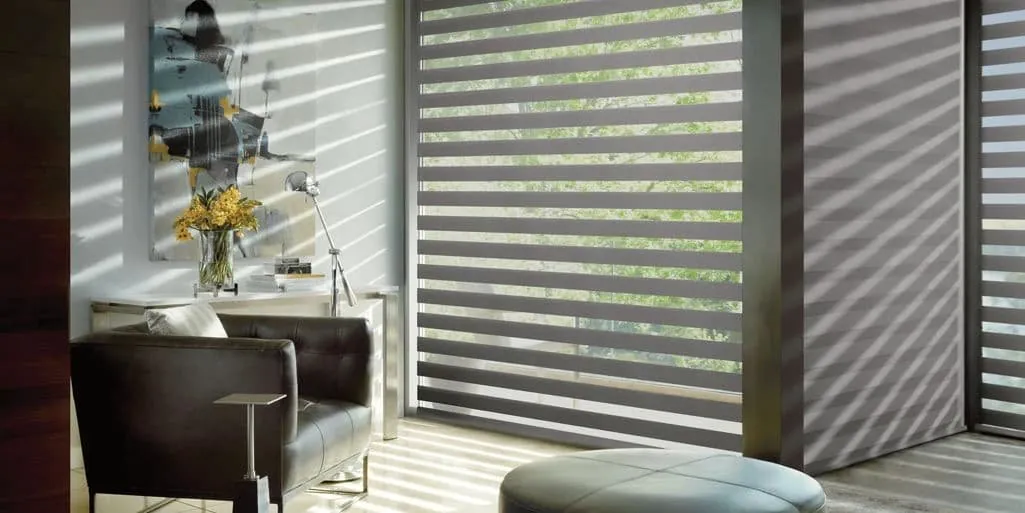
As a Hunter Douglas Gallery dealer, Blinds & Designs can cover the full spread of Medfield’s housing. A tiny antique sash and a great room wall of glass need very different shades, and we can plan woven fabric for one room, honeycomb for the next and wood slats for a third, every one able to run on PowerView.
Hunter Douglas has certified the installers who fit our shades. Your estimate is free. If you want help thinking about a room as a whole, we offer interior design consultations, and coverings you already own can come to us for blind and shade repairs.
Franklin, the showroom closest to Medfield
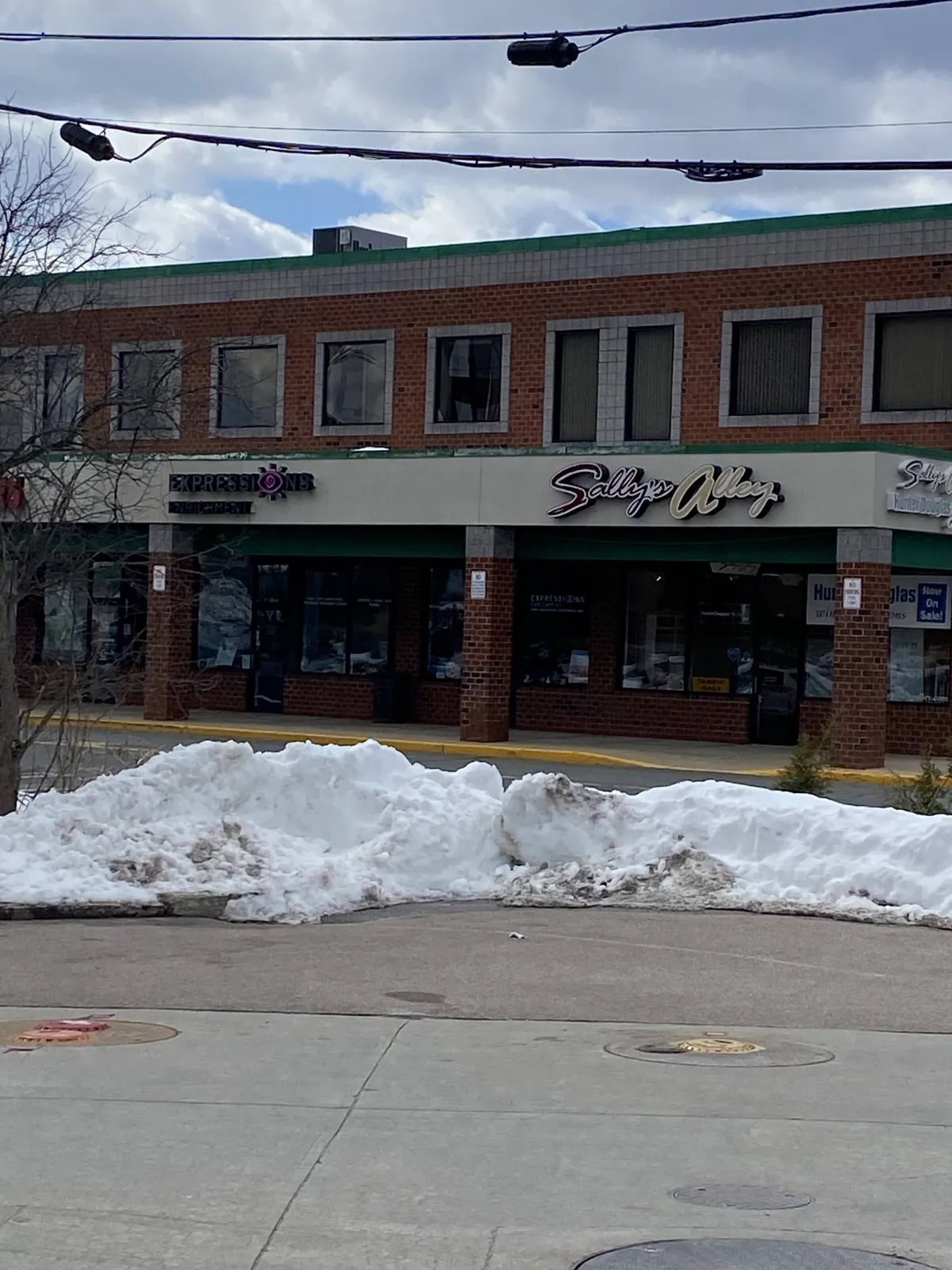
From Medfield, our Franklin showroom is the nearest place to see shades in person. For an antique house, though, we usually suggest beginning at home, since the small sash really has to be seen and measured where it is.
Questions from Medfield
Our windows are tiny original sash. Will a motorized shade really fit?
Usually, yes. Each opening is checked for width, height and depth in more than one spot, and we pick a shade with a compact stack. Where the frame is too tight inside, a slim casing mount is the fallback.
Will the shade hide our old window trim?
Not when the shade sits inside the frame, leaving the casing on view. On a frame too shallow for that, we explain the outside mount option and how it would look before you choose.
We have windows behind a window seat. Can those be motorized?
Yes, and they are among the best candidates. A remote or the app does the lifting, so the cushions on the seat stay undisturbed.
The light in our newer house changes a lot with the trees. How do shades help?
Schedules cover the daily routine, and the app lets you adjust a group of shades in moments when the light shifts. Sheer and light-filtering fabrics soften the sun while keeping the woods in view.
Do we pay anything for an estimate?
Never. We measure first, then give you the estimate free.
Bring us the smallest window in the house
In an antique colonial, the smallest window is often the one people assume nothing will fit. Mention it in your consultation request for motorized blinds in Medfield. Our van will arrive with fabrics suited to small openings, the window will be measured properly, and you will see how a motor could run it. For a question beforehand, use the call button to reach Franklin.