
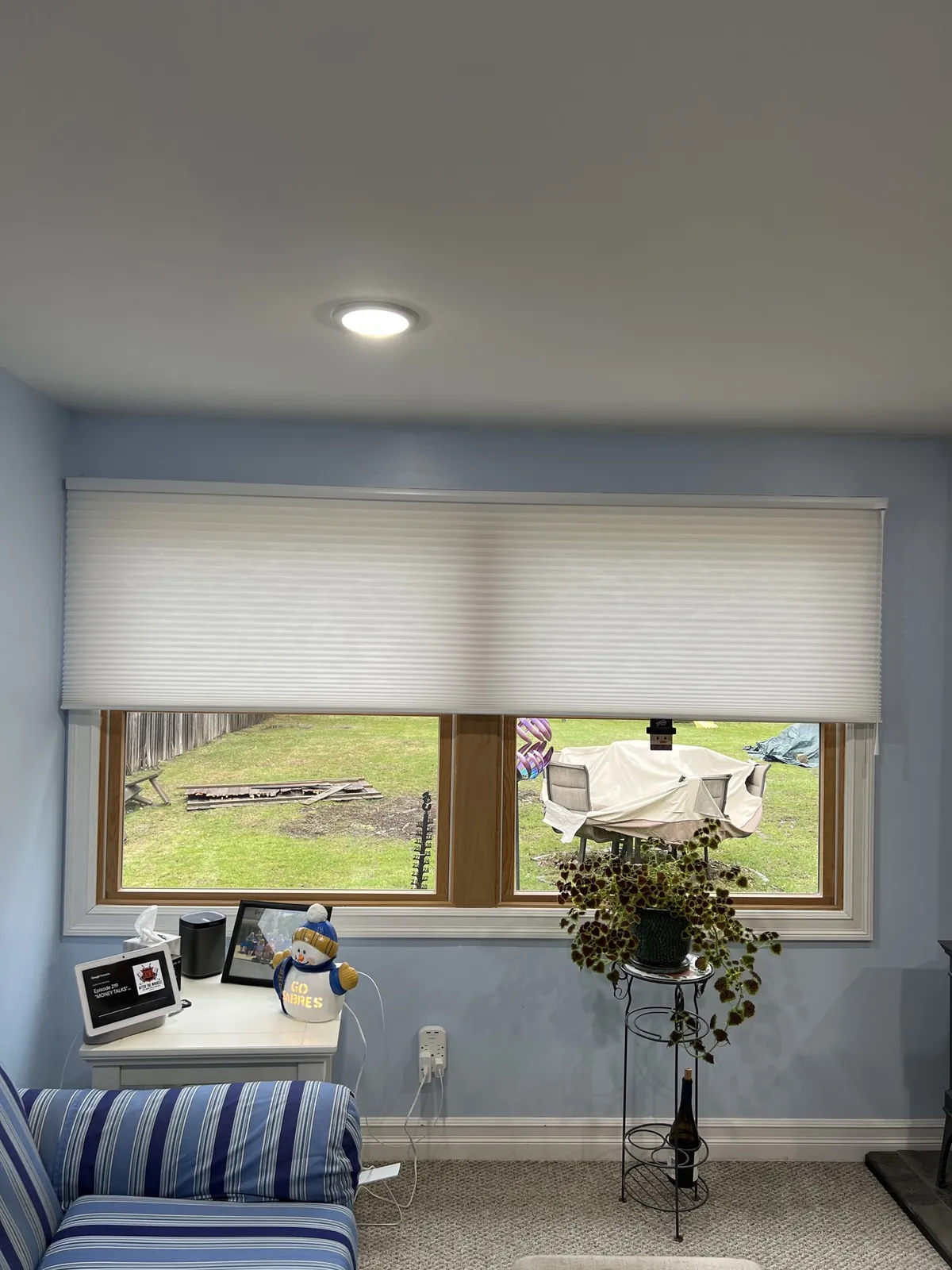
Deep reveals in the historic center
The antique colonials and Victorians around Holliston’s center share a feature that changes how a window covering behaves: deep reveals. The walls are thick, the sash sits well back from the room, and each window is framed by a recess of wood on three sides. Add tall, narrow sash to that and you have windows with real presence, and windows that are easy to spoil with the wrong covering. Those recesses are the first thing we look at when we plan cellular shades in Holliston, MA.
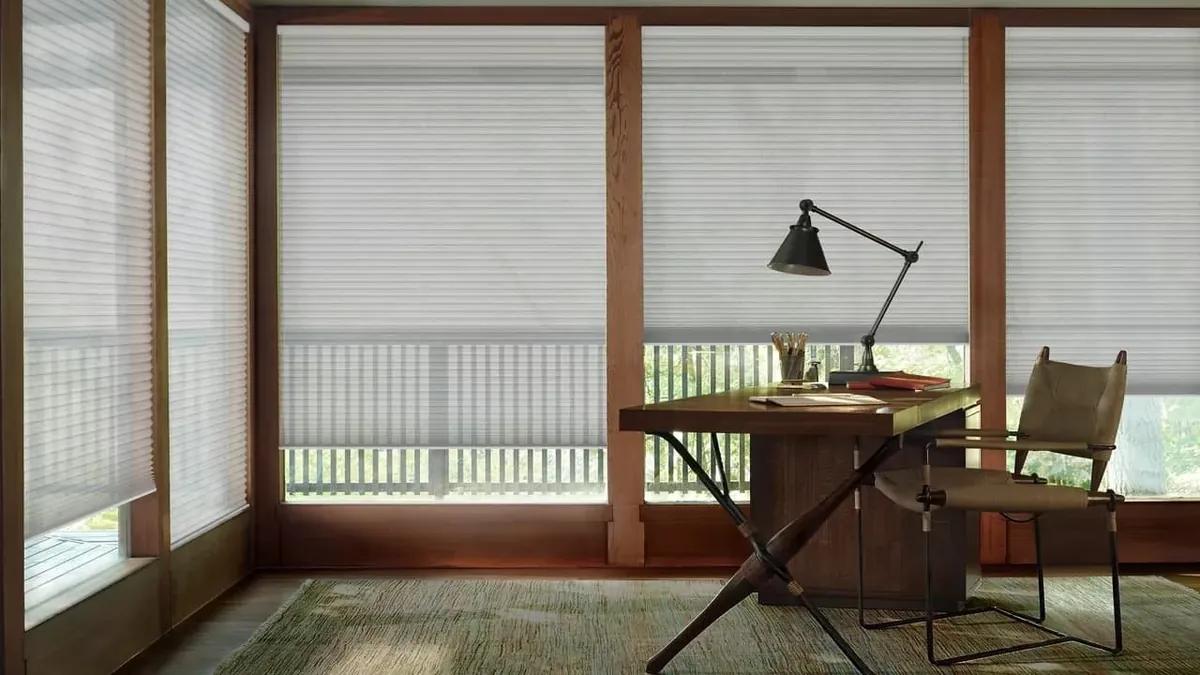
A honeycomb shade fits a deep reveal unusually well. The headrail can sit right inside the recess, close to the glass, so the shade lives within the thickness of the wall rather than in the room. Raised, it folds into a slim stack at the head of the opening. Lowered, it sits against the sash with the reveal framing it like a picture.
The cells help with the other thing these windows share, which is old glass and the cold that comes with it. Each pleat holds a pocket of air that stays still, and that still layer between pane and room makes a cold winter window much easier to sit beside.
Cellular shades in Holliston, MA, at a glance
Six ways the honeycomb range is used across Holliston’s houses. We carry samples of each to your door.
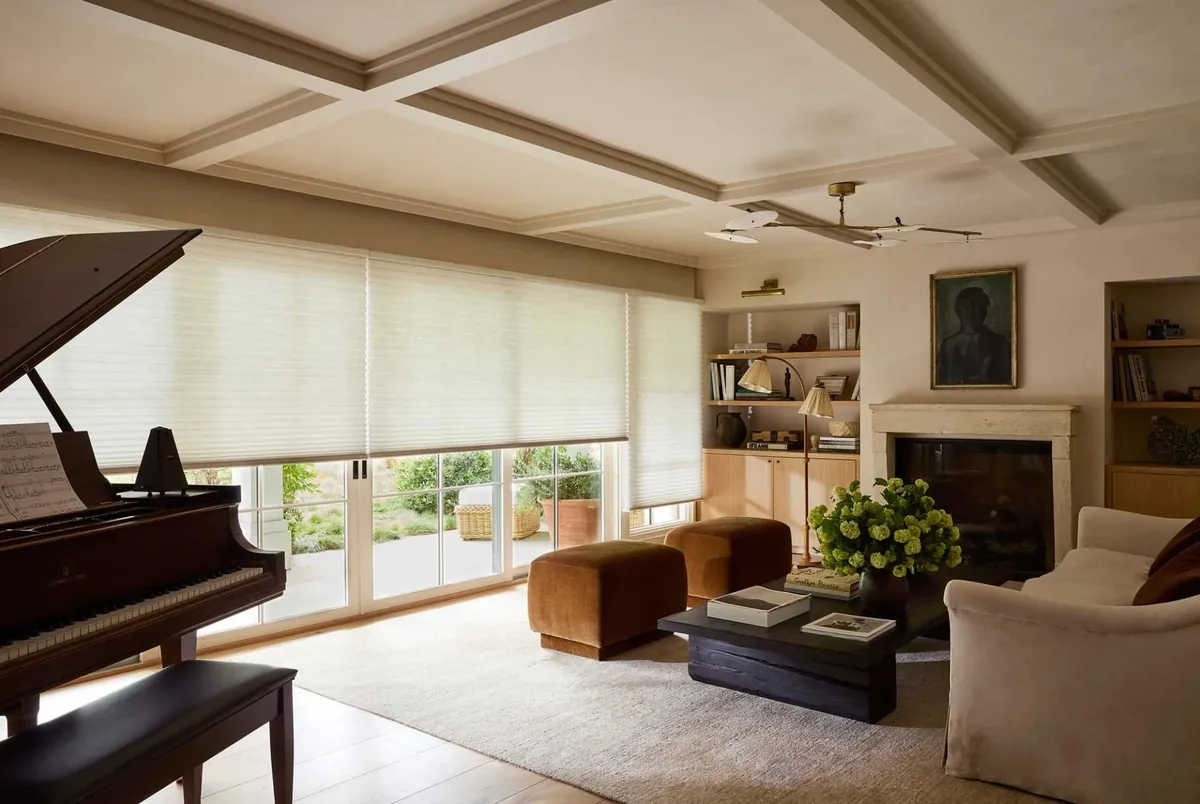
Duette inside a deep reveal
Mounted close to the glass so the woodwork of the recess stays fully visible.
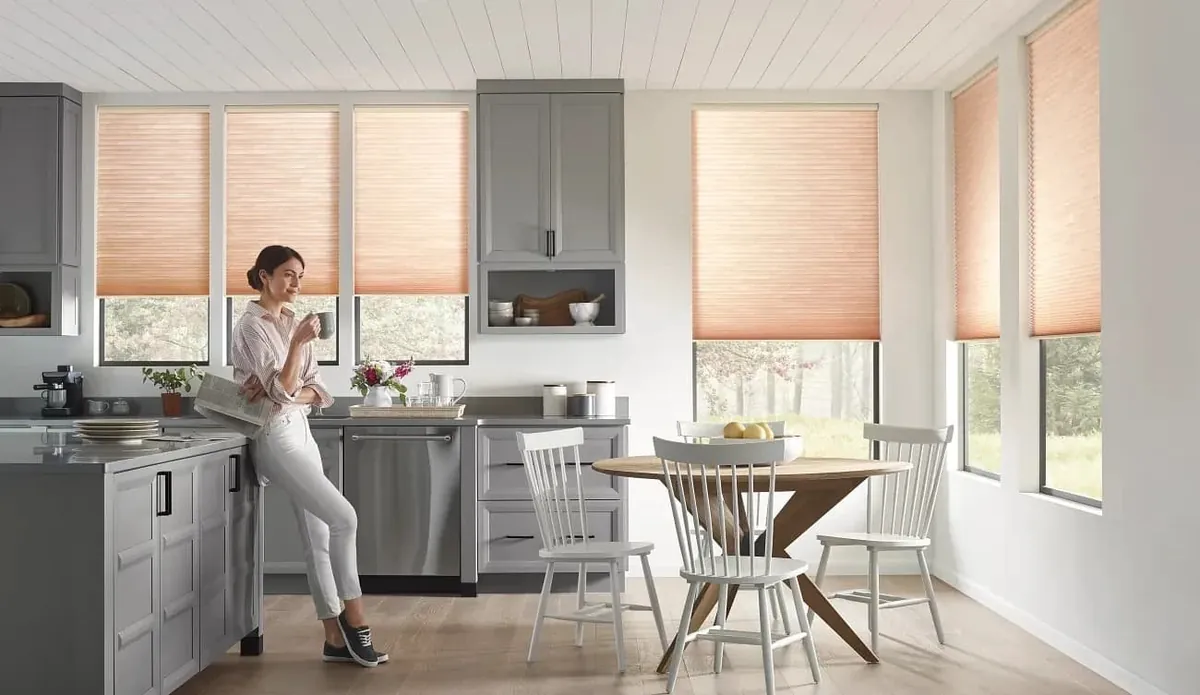
Applause in the kitchen
A light-filtering fabric that keeps a working room bright and softens the low sun.
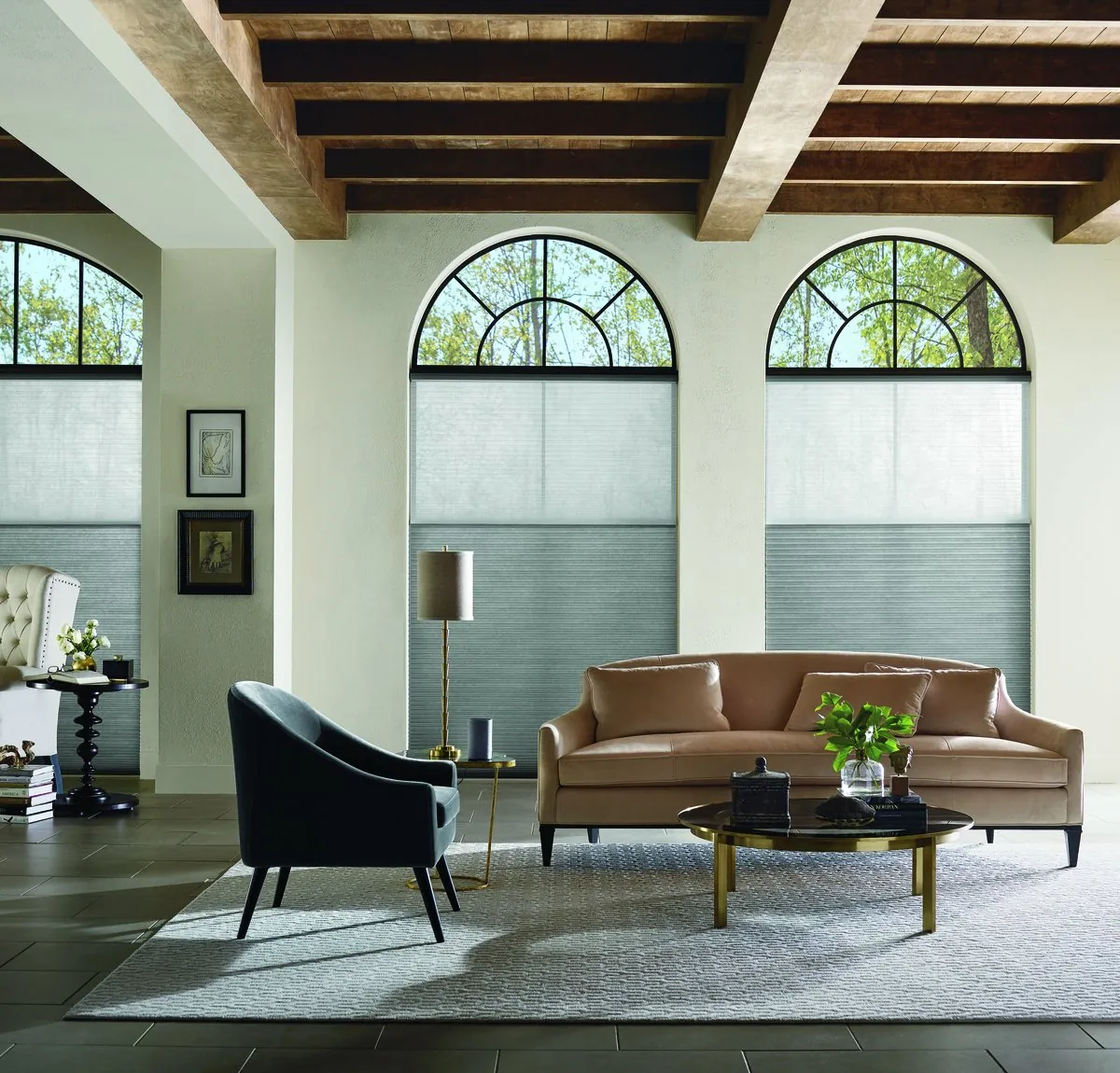
Top-down on tall sash
Open the upper glass to the sky and keep the lower half covered from the street.
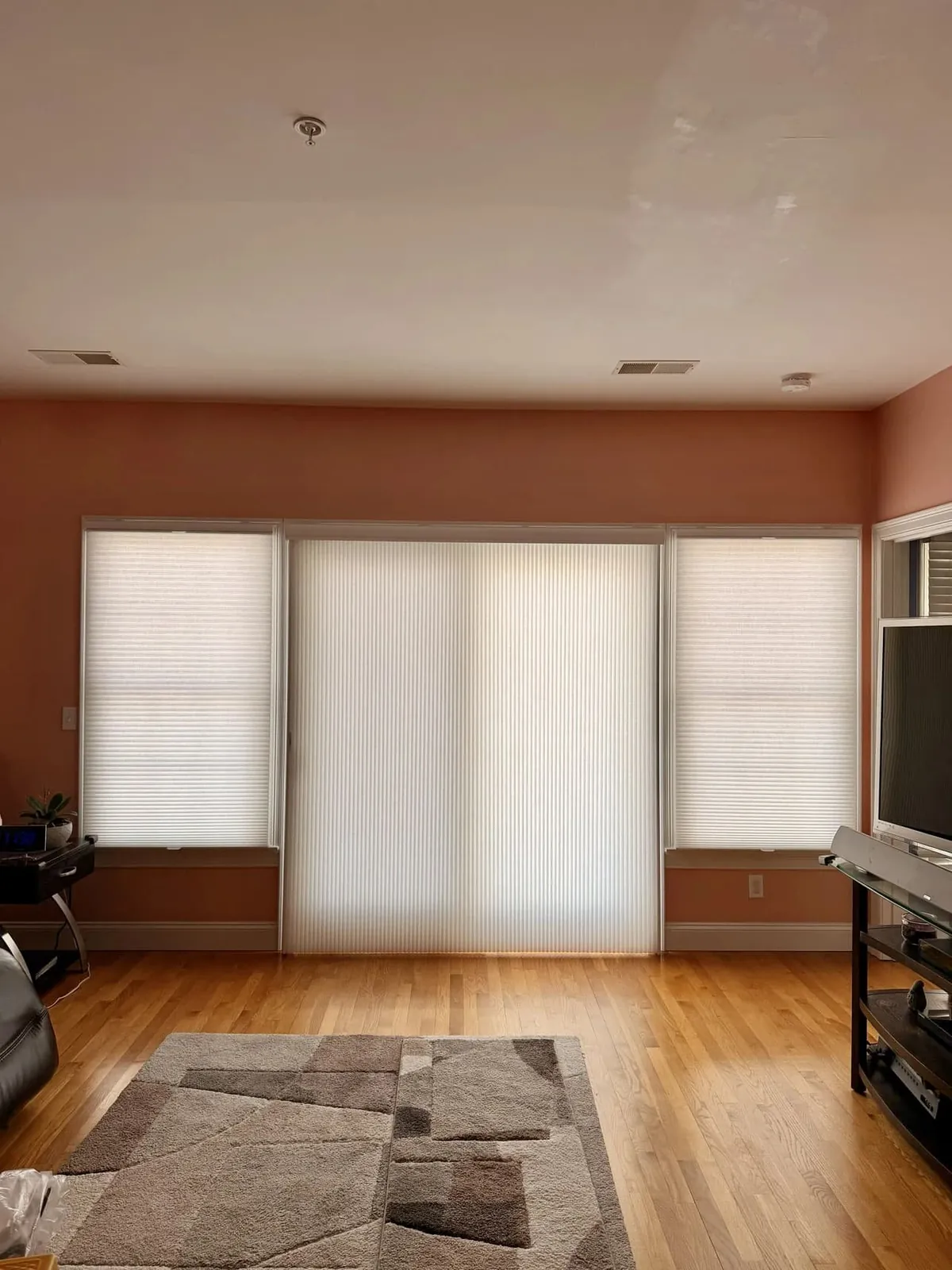
Vertical honeycomb on sliders
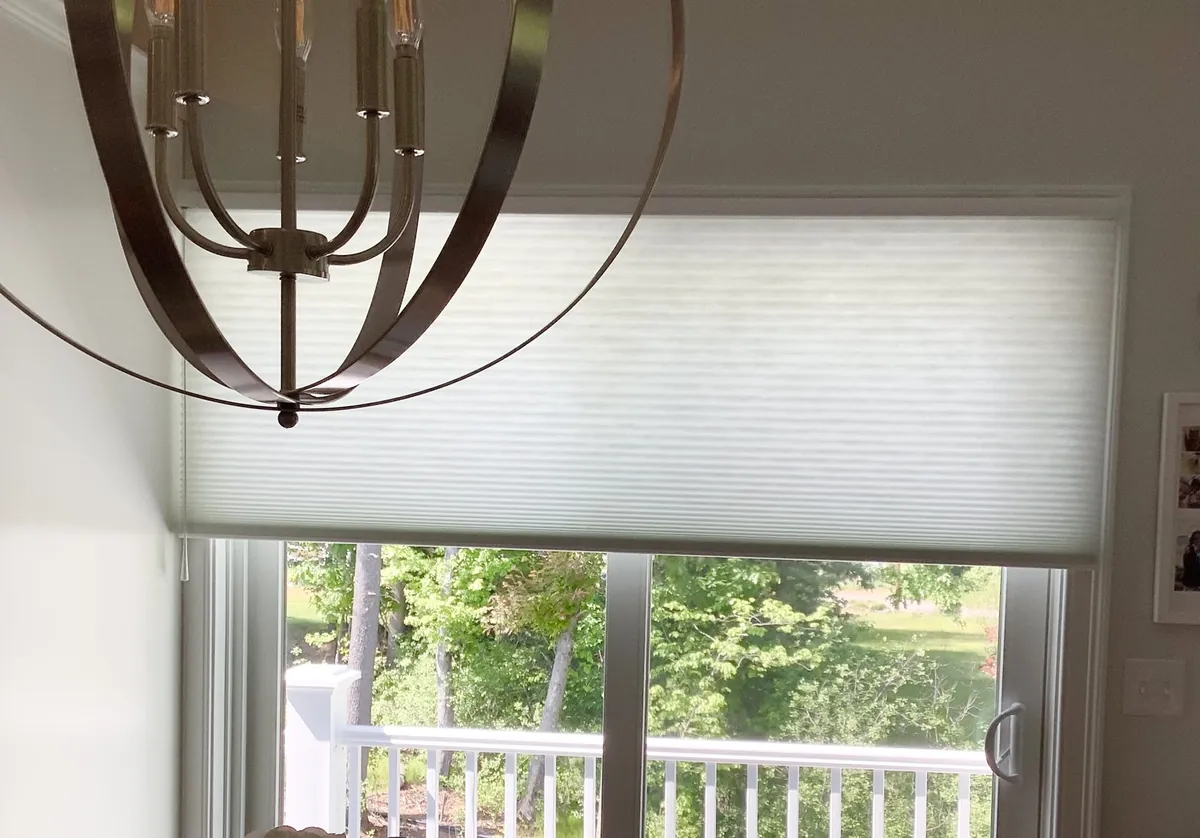
For the deck door of a newer colonial, matching the windows on either side.
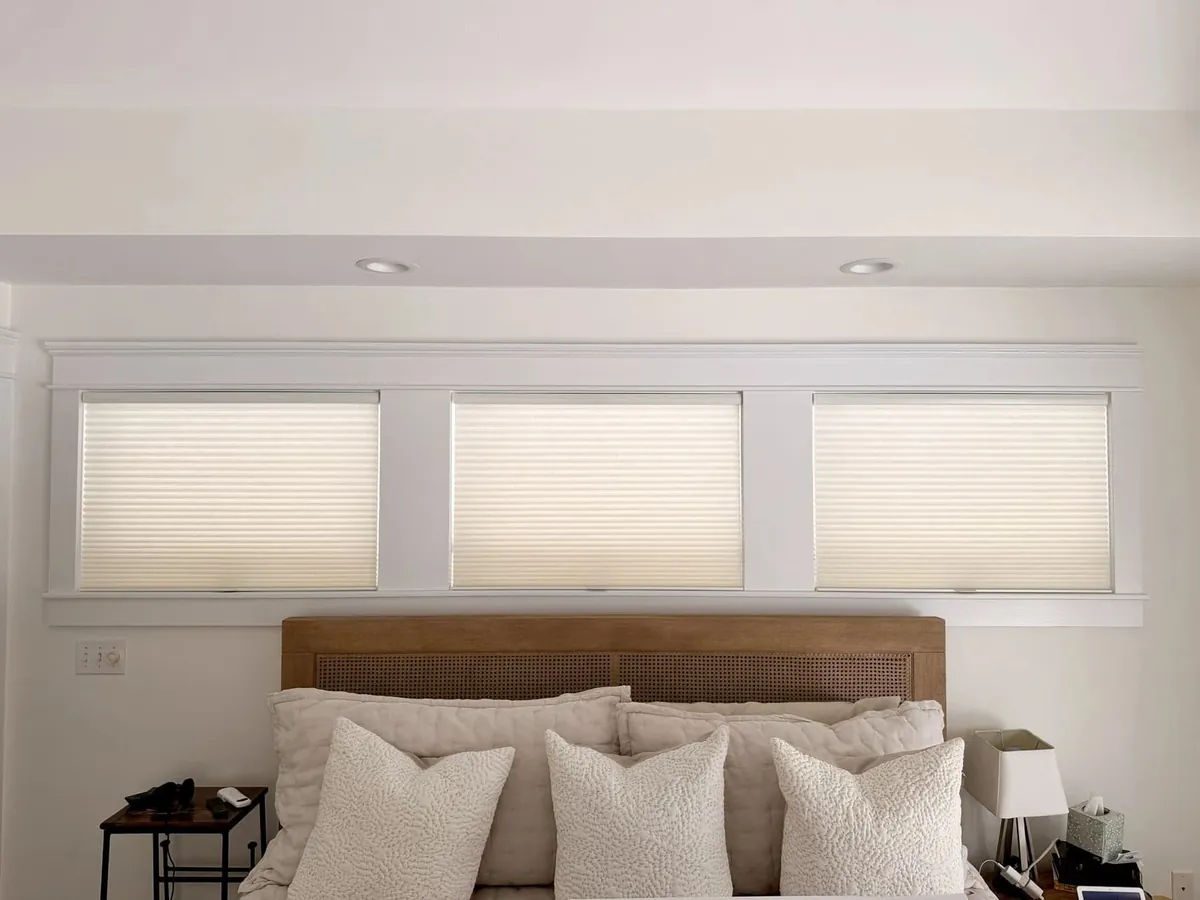
Room-darkening for bedrooms
A denser fabric for bedrooms that take early sun through the trees.

PowerView for high glass
App, remote or schedule control for windows that are hard to reach.
Why a deep reveal suits a honeycomb shade
Most window coverings are designed for a frame of ordinary depth, and in a thick-walled antique house they can look either lost or bulky. A honeycomb shade is different. Its headrail is compact, and the fabric folds into a tight stack when raised, so it can tuck right into the recess without crowding the opening.
There is a comfort benefit too. With the shade mounted deep in the reveal, close to the sash, the trapped layer of air sits right against the glass where the cold is. The recess itself then becomes part of the barrier rather than a cold pocket of air between the window and the room. On a winter night, the difference by a deep-set window is easy to feel.
And there is a visual one. Many of these houses have recesses lined with old panelling, painted trim or a wide stool at the bottom that serves as a shelf for plants and books. A shade set inside the reveal leaves all of that in view and usable. The stool stays a shelf, the trim stays visible, and the window keeps its character from inside and out.
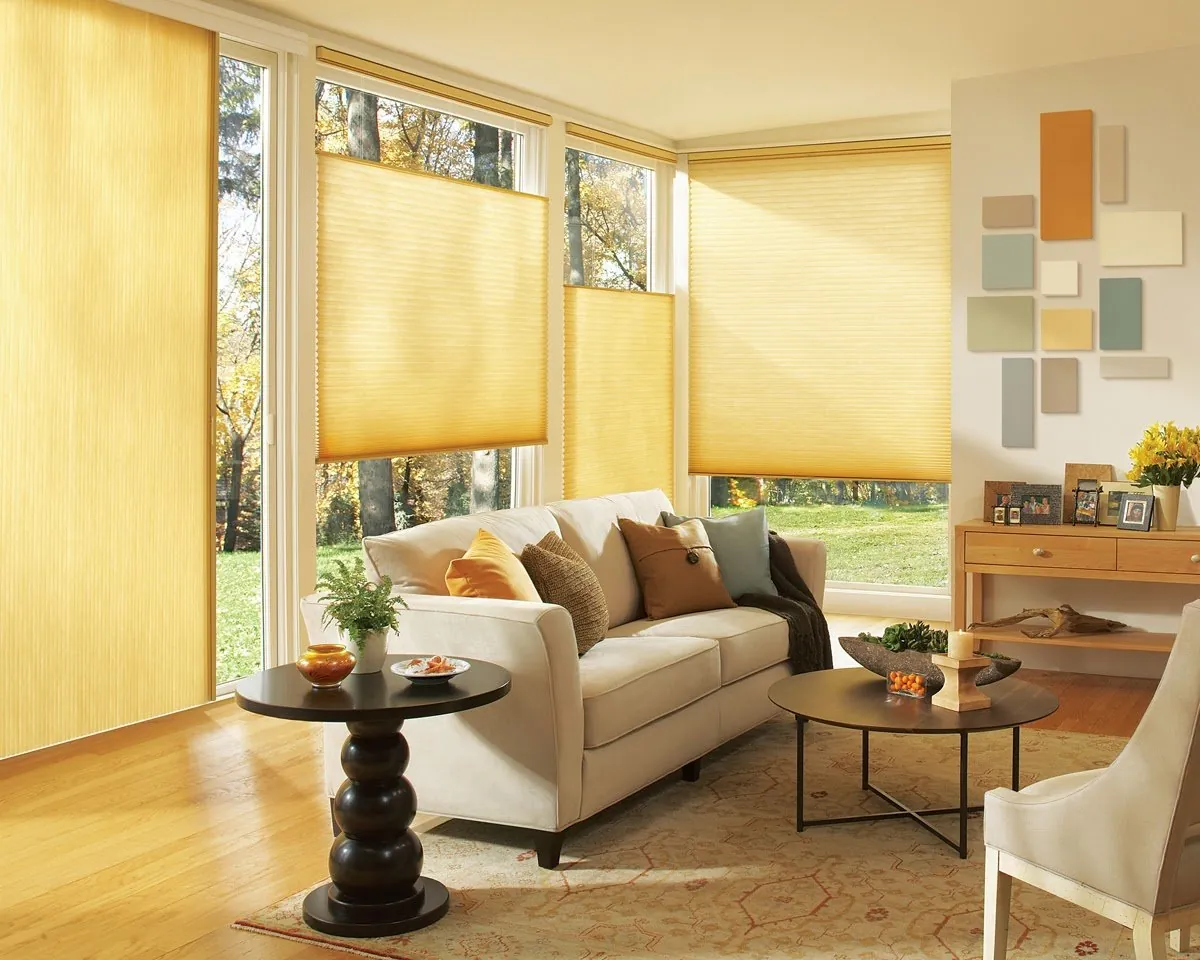
Tall, narrow sash and how the shade stacks
The Victorians and older colonials near the center pair those deep recesses with tall, narrow sash. Proportion is everything on a window like that. A covering that stacks deep at the top can cut off a third of the glass even when it is fully raised, and a tall window that looks shorter than it is loses much of its appeal.
Honeycomb fabric compresses into a small stack, and on a tall window that matters. Raised, the shade sits as a narrow band at the top of the opening and almost all of the glass stays clear. If you want the very top left open, a top-down, bottom-up shade lets you lower the upper rail and keep the upper glass free, with the lower part covered for privacy from the street. On a tall front window in an older house near the center, that combination is often the most useful arrangement of all.
Antique colonials and Victorians are not the same window
The two kinds of old house near the center look alike at a glance, but their windows differ in ways that matter for a shade. An antique colonial tends to be the plainer and more regular of the two: a symmetrical front, windows of one size repeated across each floor, and recesses that are deep but simple. A Victorian is more varied. Window heights can change from room to room, a front parlor may have taller sash than the rooms behind it, and trim is often more elaborate, with mouldings that wrap into the reveal.
On a colonial, the goal is usually perfect regularity: every front shade the same, stopping at the same line. On a Victorian, it is more about respecting each window’s own shape, with a shade made to each opening and mounted so the decorative trim stays in view. Plans for cellular shades in Holliston for either kind of house begin with a walk around the outside, looking at the front as a whole before measuring any single window. Inside, we then go room by room, because the back of an old house often has smaller, plainer windows than the formal rooms at the front.
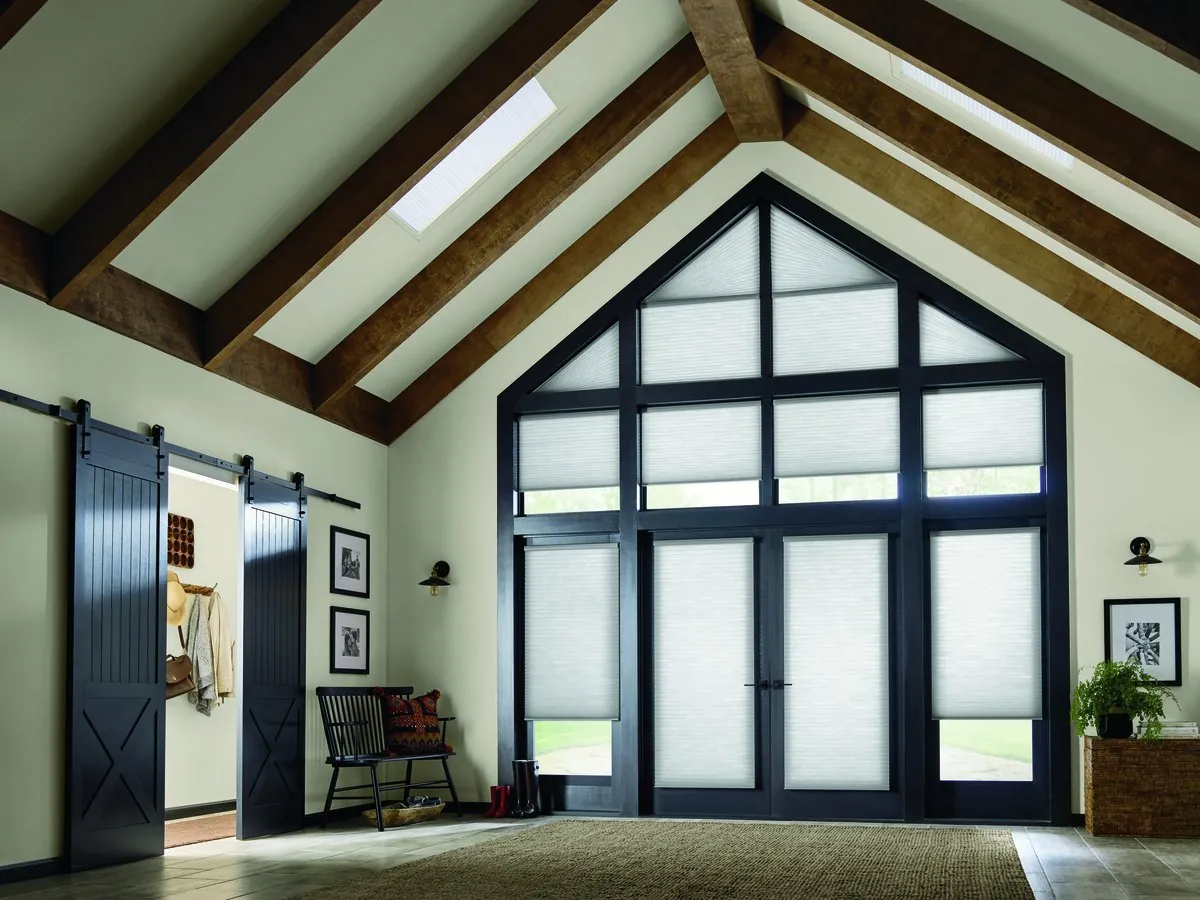
Checking a reveal before we order
Deep reveals are not always kind to an inside mount. Old houses settle, plaster bows, and the inside faces of a recess are rarely parallel. A shade that fits at the top of the opening may rub at the bottom. So before we suggest an inside mount, we go through a short list of checks on each window.
- We measure the width of the recess at several heights to find the narrowest point.
- We check whether the sides of the reveal lean in or out from top to bottom.
- We look at where the headrail would sit and what is in the way, from sash hardware to old stops.
- We note whether the stool at the bottom is level, because a shade looks wrong against a sloping sill.
- We decide with you whether the shade goes inside the reveal or on the face of the casing.
Where an inside mount would bind, or leave a visible taper at the sides, an outside mount on the casing is the honest answer, and we will show you where it sits before you agree.
Light in rooms with thick walls
A deep reveal casts its own shadow. In the morning or late afternoon, when the sun hits the house at an angle, the sides of the recess block part of the light before it reaches the room. Antique rooms near the center can feel dimmer than their windows suggest for that reason.
Fabric choice can help. A pale light-filtering honeycomb fabric picks up whatever light reaches it and spreads it evenly into the room, rather than throwing a hard shadow. In rooms that need darkness, such as bedrooms, the deep reveal works in your favour: a room-darkening shade set inside the recess leaves very little gap at the edges for light to leak through.
Summer in a thick-walled house
Thick walls keep an antique house cool for much of a summer day, but tall sash on the sunny side still lets heat straight in. By mid-afternoon a west-facing parlor can feel far warmer than the rest of the house, with sun falling across the floor and the furniture.
A honeycomb shade lowered on those windows before the sun comes round slows that heat. The pocket of still air that held warmth in during January now sits between the hot glass and the room. Set deep in the reveal, the shade also keeps direct sun off the woodwork and floors nearest the window. For the rooms that take the worst of the afternoon, a PowerView schedule can lower the shades at the same hour each day without anyone remembering to do it.
Keeping the street face of a historic house
The historic houses around the center are seen as much from the street as from inside. Matching shades across the front windows, all mounted at the same depth in their reveals and stopping at the same height, keep the facade calm. We usually suggest one outward-facing fabric color across the front of the house even when the rooms inside take different fabrics.
That outward consistency is one of the simplest things a honeycomb shade can give an old house. A row of mismatched coverings in tall front windows is the first thing a passer-by notices, and a matched row is the thing nobody notices at all, which is exactly the point.
Newer colonials off Washington Street
Head out along Washington Street and the housing shifts to newer colonials set on wooded lots. The windows here are standard modern sizes in square, true frames, which makes measuring and fitting straightforward. What makes these houses interesting is the trees. In summer the canopy filters the light and dims the rooms, especially on the north and east sides. In winter the leaves are gone and the low sun reaches deep into the house.
For most rooms in these houses, a pale light-filtering fabric is the right starting point. It keeps a room as bright as the canopy allows in summer and softens the stronger winter sun. Bedrooms take a room-darkening fabric. A family room with a second tier of windows, or a tall stair window, goes on PowerView so the high shades can be raised and lowered from a phone, a remote or a schedule. We plan how each motor is powered at the visit.
The deck slider at the back of a newer colonial gets a vertical honeycomb shade in the same fabric as the windows next to it. It draws to the side and leaves the doorway clear.
Subdivisions and repeating windows
Holliston’s modern subdivisions bring a different advantage: repetition. Bedroom windows are often the same size from room to room, and the same from house to house. That makes a whole-house order simple to plan and consistent to look at, and it makes adding rooms later easy, because new shades will match the first ones.
The skill in a house like this is avoiding sameness inside while keeping consistency outside. A common plan is one outward color throughout, light-filtering fabrics in the living spaces, room-darkening fabrics in the bedrooms, and an Applause fabric in the kitchen. Plenty of households with cellular shades in Holliston start with the bedrooms one season and the living areas the next.
Duette, Applause and the deep-set window
Both lines are Hunter Douglas honeycomb shades, and they hold air in their cells in the same way. Duette has the broader collection of fabrics, textures and sizes, including the vertical shade for sliders, and it is often the choice for the tall sash of the historic houses. Applause offers its own palette and covers the standard windows of the subdivisions well.
Using both in one house is normal. An antique colonial might take Duette in the deep-set front windows and Applause in the back rooms. A newer colonial might put Duette in the family room and on the slider and Applause upstairs. You can read more on our Duette honeycomb shades and Applause honeycomb shades pages, or see how they fit with the rest of the range on the main cellular shades page.
How the visit runs
The samples come to your house in our vans, which means you see each fabric in the deep shadow of an old reveal or under the trees off Washington Street, not under shop lights.
- Book through Request a Consultation, or reach us with the call button.
- We start in whichever room matters most: a cold parlor near the center, or a dim family room under the trees.
- Duette and Applause fabrics go up against your own glass so you can compare them in place.
- We measure every window and run through the reveal checks on any older frames.
- High windows are discussed with PowerView in mind.
- A free estimate follows, and you decide in your own time.
The page on what happens at an in-home consultation has more. If a room is being redone, our interior design consultations can look at color and fabric alongside the shades. When the shades arrive, our certified Hunter Douglas installers fit each one, check it runs cleanly in its reveal and show you how it works; there is more on what happens on installation day.

Franklin, the next town over
Holliston is close to our Franklin showroom, the nearest of our locations to town. Stopping in first is a good way to narrow down a direction before anyone measures, especially if you are weighing several product types for different rooms.
The home visit is still where the final decision gets made, because no showroom can show you how a fabric looks deep inside your own reveal. Start either way; the estimate is free.

Gallery dealer status, and what it gives you
Blinds & Designs is a Hunter Douglas Gallery dealer, a name Hunter Douglas uses for dealers who meet its standards. For a house with tall, deep-set antique sash, that means access to the full honeycomb collection, including the narrow widths and fabrics old windows can need.
Installation is carried out by installers holding Hunter Douglas certification, and we repair existing blinds and shades too. Beyond honeycomb, we offer shutters, roller and roman shades and blinds. See plantation shutters in Holliston, roller shades in Holliston, or our Holliston page for everything we do in town.
Questions from Holliston
Our windows have very deep reveals. Is that a problem?
Usually it is an advantage. A honeycomb shade can sit right inside the recess, close to the glass, leaving the woodwork in view. We check that the sides of the reveal are straight enough first; if not, an outside mount on the casing is the better choice.
Can I keep using the deep sill as a shelf?
Yes. With the shade mounted inside the reveal at the top, the stool at the bottom stays clear for plants or books. The shade simply comes down to rest just above it.
Will a honeycomb shade cut off the top of my tall sash?
Very little. The fabric folds into a small stack, so most of the glass stays clear when raised. A top-down, bottom-up shade can also leave the upper glass completely open.
Our house off Washington Street is shaded by trees. Which fabric works?
A pale light-filtering fabric is usually best. It keeps rooms evenly lit under a full summer canopy and softens the low winter sun when the leaves are down.
Is there any cost for the estimate?
None. We measure, then give you a free estimate for the shades you chose, and you are under no obligation.
Let us look at your windows
Whether it is a tall sash set deep in a thick antique wall or a bedroom off Washington Street that catches the early sun, the best way to choose cellular shades in Holliston, MA, is to see the fabrics in that window. Request a consultation and we will bring the samples, take careful measurements and leave you with a free estimate.