
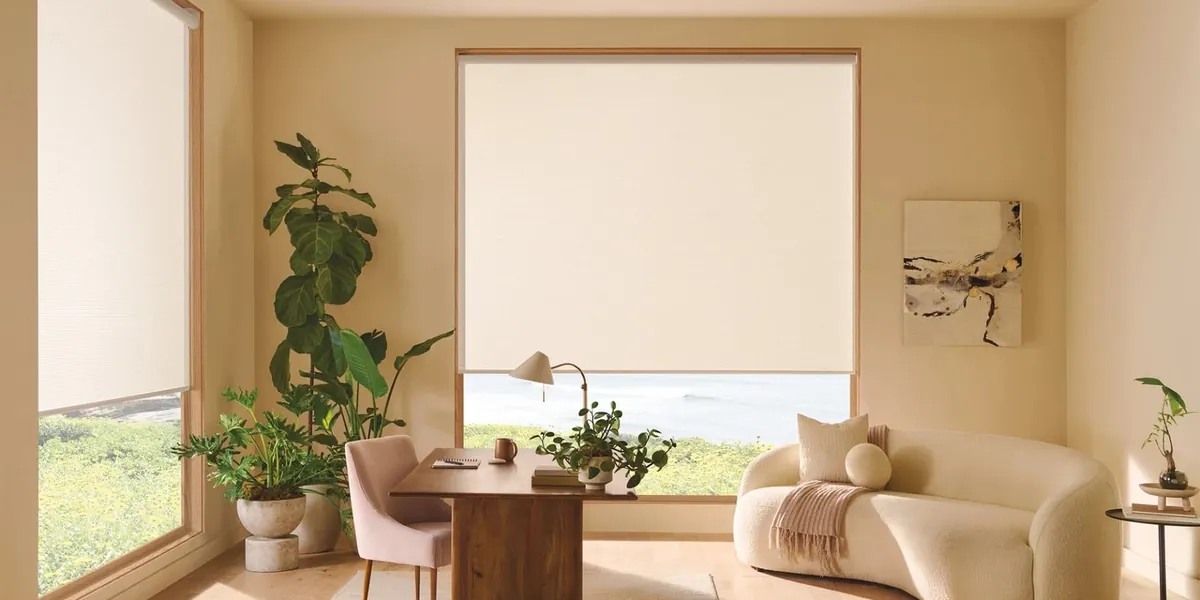
Deckers, shingles and water on two sides
Quincy packs a lot of different housing into one city. Across Wollaston and North Quincy, dense rows of two- and three-families stand shoulder to shoulder, each floor lit by tall, narrow sash. Out on Squantum the houses are shingled and face the open water. Near the center, older buildings have been converted into condominiums. Motorized blinds in Quincy, MA, have to suit all of it: stacked units with their own routines, windows that catch bright light off the harbor, and rooms where the next building is close enough to see into.
The motor hides inside the headrail of each shade, which is made to the opening’s exact size. From then on the shade moves from a small handheld remote, from the PowerView app on your phone, or by itself on a schedule you set. Tall narrow sash stops being a reach. A unit on the third floor no longer needs a stepladder carried up three flights.
On the Squantum and Houghs Neck sides, the coastal exposure adds bright reflected light and long days of sun on the water-facing rooms. A motor lets those shades follow the light rather than staying down all day.
Shades we often fit in Quincy
PowerView can be built into much of the Hunter Douglas range. We help you pick the shade first, then add the motor.
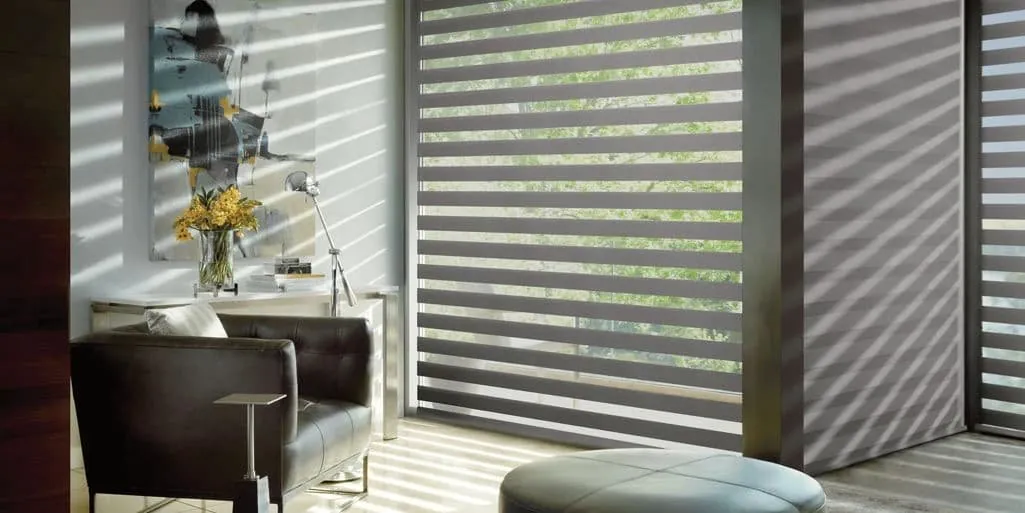
Roller shades
From sheer weaves that keep a water view to room-darkening fabrics for bedrooms on a busy street.
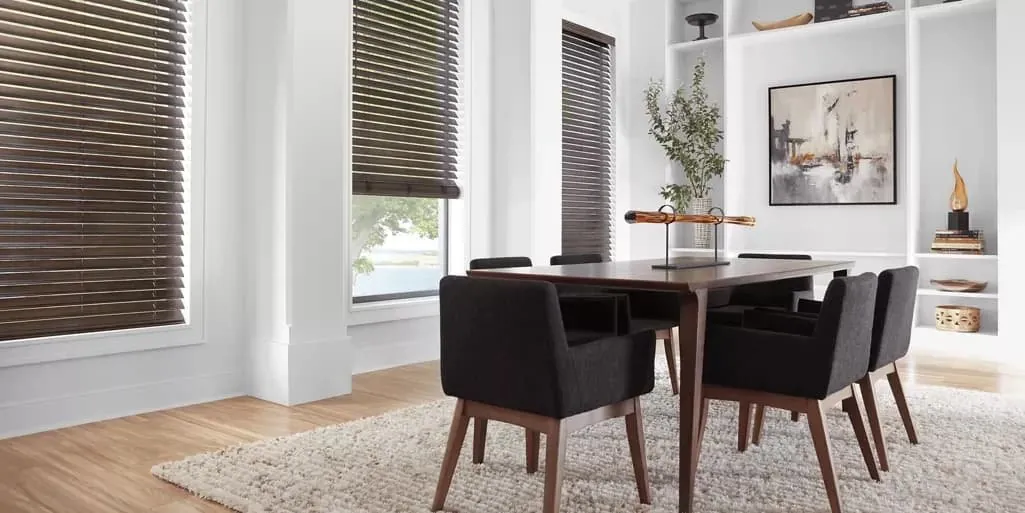
Custom blinds
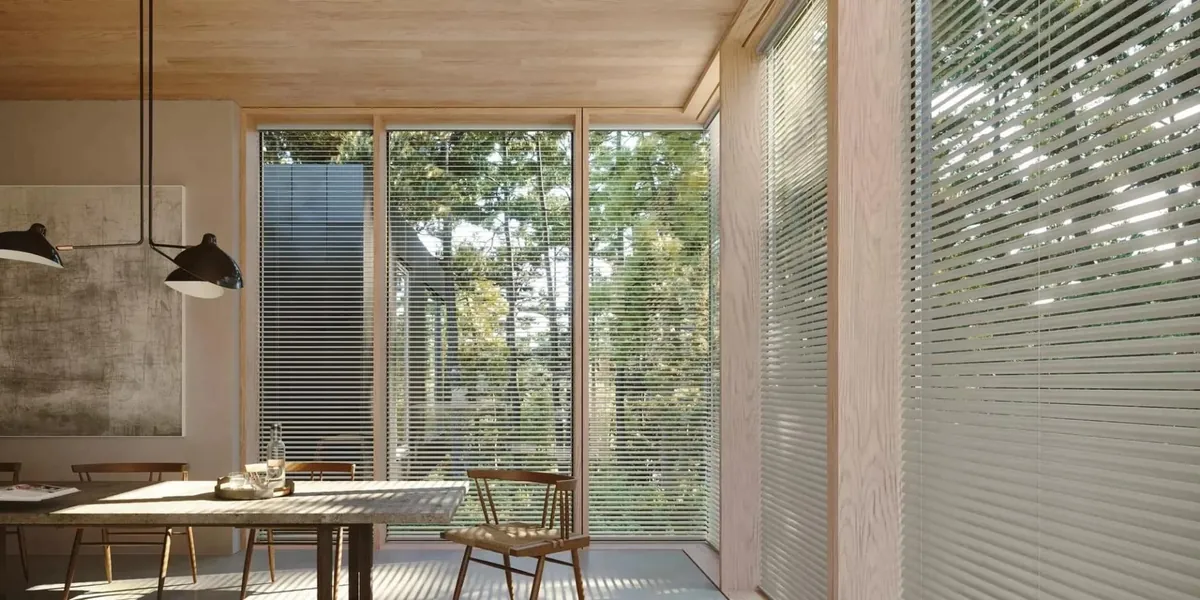
Tilting slats for the side windows of a two-family, where the next house is only a few feet away.
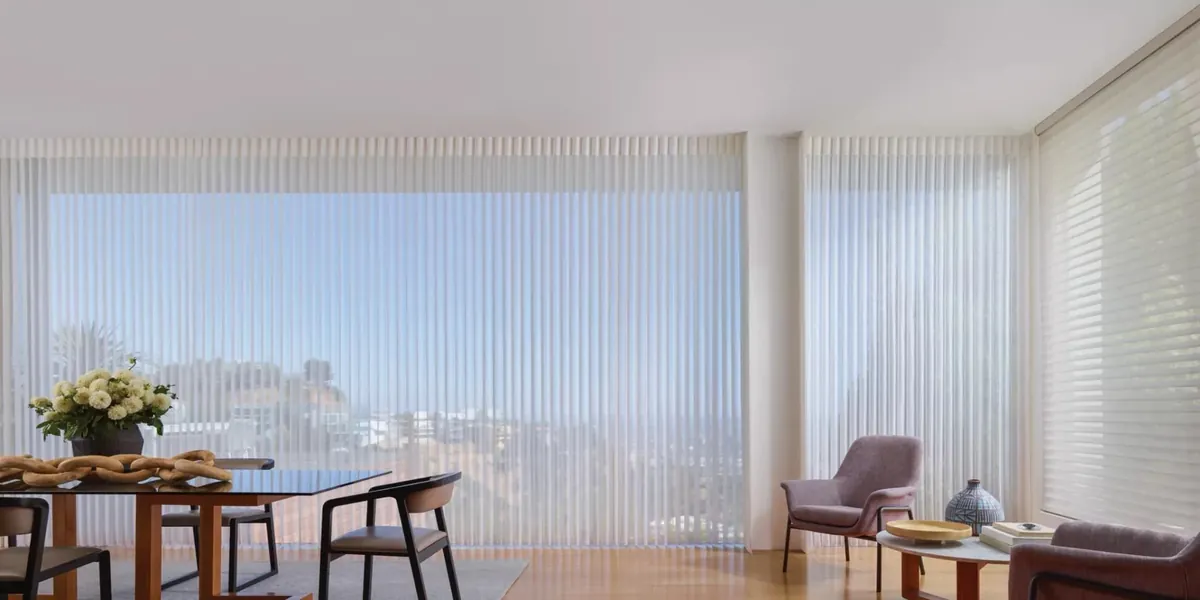
Sheer shades
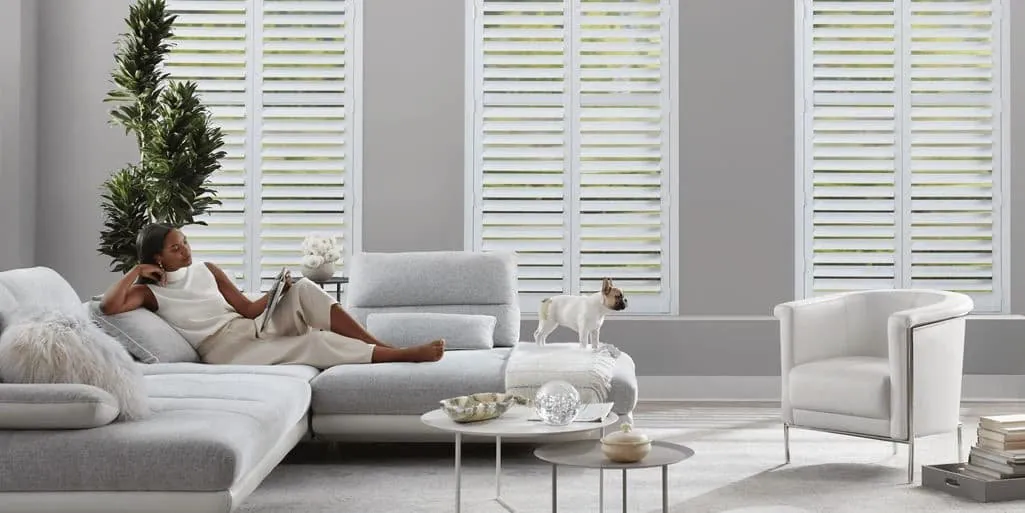
Soft fabric vanes that turn hard glare off the water into gentle light while you still see out.
Tall narrow sash on every floor
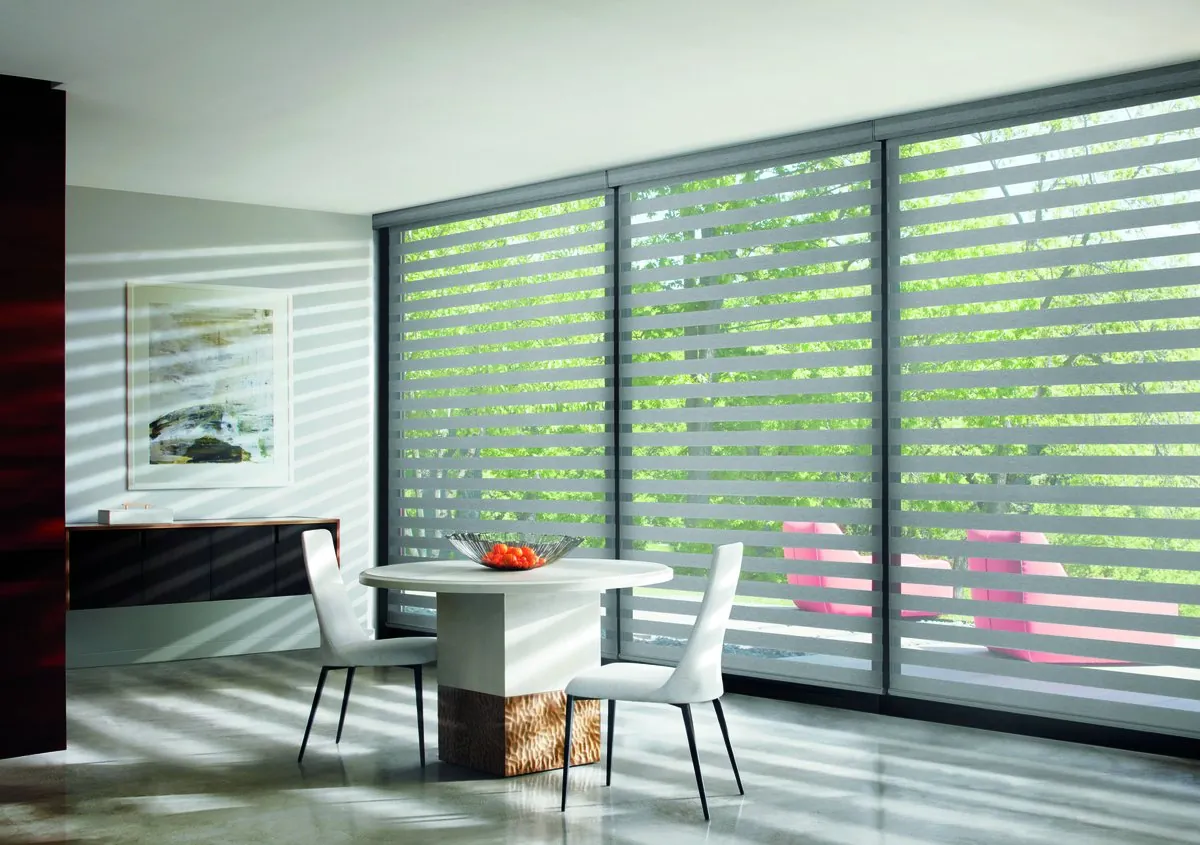
The two- and three-families of Wollaston and North Quincy were built with tall, narrow windows, often running nearly floor to ceiling in the front rooms and repeated on every level. They give a narrow house a lot of light. They also leave the top of every shade out of reach, and a corded shade that tall tends to lift unevenly and hang crooked.
On a motor, both ends of a tall shade rise together, so it stays level whether it is fully up, fully down or stopped halfway. The front windows of a unit can be linked so they all sit at the same height, which makes a narrow street facade look tidy rather than patchy.
These older frames have seen a lot of paint and settling, and few are perfectly square. We measure each window across at the top, middle and bottom and down both sides, and check how deep the frame is. Where there is room, the headrail goes inside the casing. Where there is not, a mount on the face of the trim gives it a firm, level seat. Whatever the window, the way each motor is powered gets planned with you at the visit.
Three households in one building
A Quincy three-decker has three front parlors, three sets of bedrooms and three kitchens, one stacked on another, often with three different households. Motorized shades in that kind of building need to respect where one home ends and the next begins.
Each floor’s shades pair only with that floor’s remote and that floor’s schedules in the app. The second floor cannot lower the third floor’s bedroom by mistake, and nobody downstairs needs to know what time the top unit gets up. We sort out which shades belong to which unit during the consultation, before the order goes in.
If you own the building and live in one unit, a remote is easy to hand over to a tenant with the keys, and it needs no explanation. An empty unit between leases can sit on a simple daily schedule so its windows keep opening and closing like the rest of the house. And on the upper floors, where carrying a ladder up a narrow back stair is a real chore, there is simply nothing left to climb for.
The next building is a few feet away
On a tight Wollaston or North Quincy street, side windows look across a narrow gap into the side windows of the next house. Privacy matters at almost every hour, and by evening it matters at every window.
Motorized blinds in Quincy make that manageable without living behind closed shades. Wood or faux wood blinds can be tilted just enough to block the line of sight across the gap while light still bounces in off the slats. Sheer shades with fabric vanes blur the view in both directions while keeping the room bright. Either can be adjusted from the remote in a second.
A schedule handles evenings. Pick the time the side windows should close, and they will close at that time every night, then open again in the morning. You can change the times in the app whenever your routine shifts.
Squantum and Houghs Neck: light off the water
On the Squantum and Houghs Neck sides, the water changes how the windows behave. Sun reflects off the harbor and the bay, so a water-facing room can be bright from more than one angle, and the glare can arrive long before or after you would expect from the sun alone.
Here the motor earns its keep through timing. Rather than keeping the water side closed all day, a schedule can lower those shades for the hours the glare is strongest and raise them again once it eases, so the view is open for the rest of the day. The remote handles the in-between moments, like a bright spell on a screen or a reading chair.
Fabric matters too. A sheer roller or a light-filtering weave can cut glare while keeping the view out over the water. Sheer shades with fabric vanes soften the light into an even glow. For a bedroom on the water side, a room-darkening fabric on a morning schedule keeps the early light out until the hour you choose.
The shingled houses on Squantum often have windows in odd places too: a dormer here, a gable window there, a narrow stair window high on a wall. Those are exactly the ones that benefit from a motor.
Converted condominiums near the center
The condominium conversions near Quincy’s center bring their own mix of windows. Some keep the tall sash of the original building. Others have newer, standard openings. Many have a few windows that are awkward to reach, above a kitchen counter, beside a staircase in a two-level unit, or high on a wall in a converted attic space.
Motorized shades suit condo living. The headrail sits neatly in the frame with nothing extra on the wall, and a single remote can run every shade in the unit. A schedule keeps the unit’s windows on a routine while you are at work. We measure every opening carefully, because conversions often combine old frames and new ones in the same room.
A clicker, a phone and a timetable
Nobody in a Quincy household has to become a gadget person to live with these shades. PowerView gives you three handles on the same system, and they all work at once.
There is the clicker: a pocket-sized PowerView remote with up, down and stop. Leave one on the windowsill of each unit, or one per room in a bigger flat, and anyone who visits can use it straight away.
There is the phone. In the PowerView app every shade appears under its room. Tap one, or a handful, and send it to the exact height you want. The app is also where timetables live.
And there is the timetable itself: a list of times and days when particular shades open or close. It runs quietly in the background, and the clicker can always interrupt it.
If you want the longer explanation, our guide to how motorized shades are controlled walks through all three, and the window covering automation page covers timetables for an entire house.
Wollaston parlors and the light that comes in sideways
In a Wollaston or North Quincy two-family, the front parlor usually gets its light through two or three tall sash facing the street, plus a side window looking down the gap to the next house. That side window brings in light at a low angle, often just when the room is in use.
Motorized blinds in Quincy parlors let you treat those windows differently. The front sash can stay open for daylight while the side window tilts closed against the view next door. On a dark winter afternoon, all of them can close at once with a single press as the lights go on. Linked in the app, the tall front shades always stop at the same line, which keeps the facade orderly from the sidewalk.
Back porches, stairwells and the windows nobody reaches
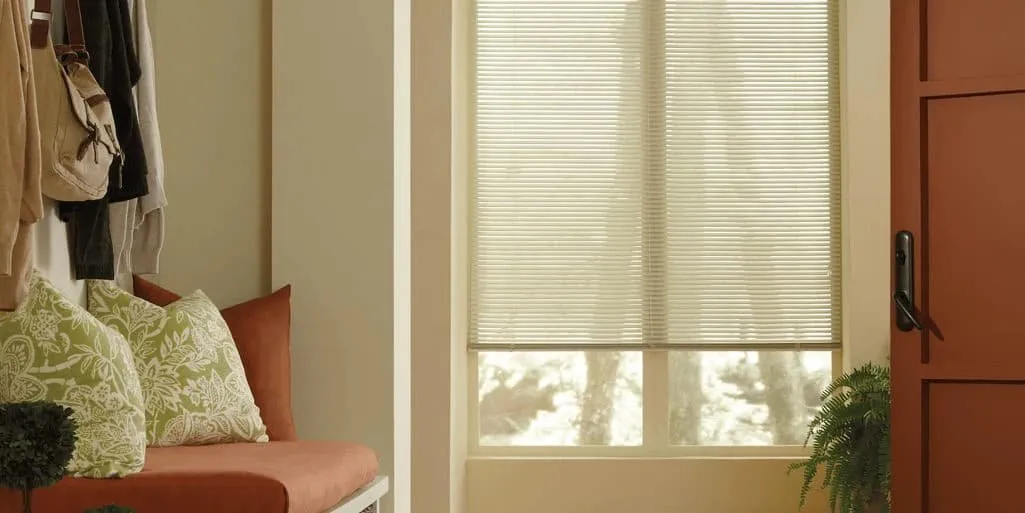
Quincy’s multi-families come with plenty of awkward windows. There is the narrow one on the back stair, the small one over the kitchen sink, the window at the top of a porch enclosure, and in some units a window high in a converted attic room. Each is a chore to reach by hand, so its shade gets left alone for months.
These are some of the best places to put a motor. A back stair window can join the evening timetable with the side windows. The kitchen window can open as the coffee goes on. A high attic window that once needed a chair to reach can answer the same clicker as the rest of the unit.
Because they are small, these windows are also a sensible place to start if you would rather try motorized blinds in Quincy on a few openings before doing the whole floor.
A visit from our shop-at-home van
Quincy is served by our shop-at-home team, based out of Canton. Instead of you hunting for parking near a store, our van comes to your street loaded with Hunter Douglas samples, and the choosing happens in your own rooms. The Canton shop-at-home page has the details.
Light in Quincy changes block by block, which is why this matters. A fabric that looks soft in a narrow North Quincy parlor can turn bright and hard on a Squantum window facing the bay, and a white that reads clean in a condo kitchen might look gray in a shaded side bedroom. Holding the samples to your own glass shows you which is which.
We also use the visit to plan how everything will run: which windows travel together, which ones belong on a timetable, and in a two- or three-family, which unit owns which shade. Our consultant tries samples window by window with you and, if you would like help pulling a room together, interior design consultations are on offer. Then come the measurements and a free estimate. Take as long as you like to decide.
Want to see a showroom as well? The closest to Quincy is our Franklin showroom.

From the first visit to the first timetable
- Ask for a visit with the Request a Consultation form, picking a time that suits your unit.
- Our consultant comes with samples and looks at each room with you, starting where the trouble is.
- Each window is measured at several points, with frame depth recorded and any old sash locks or pulleys noted.
- A free estimate follows, and the timing of the decision is yours.
- Hunter Douglas then builds every shade to those sizes.
- On installation day a certified Hunter Douglas installer hangs each shade, programs its stops and pairs it with the remote and app belonging to the right unit.
- Each shade, and any first timetable, is tried with you before the installer heads off.
More on what the visit involves is on what happens at an in-home consultation.
Home late, shades already right
Many Quincy households leave early for the train or the expressway and come back after dark. Without a motor, the shades stay wherever they were left first thing in the morning: the water side wide open to the midday glare, the street side open to view once the lights go on.
A timetable fixes both ends. The bright side can close for the middle of the day and reopen in the late afternoon, and the street-facing windows can close at the hour you usually get in, so you never walk into a lit room on show to the sidewalk. That is one of the quiet everyday reasons people choose motorized blinds in Quincy, and once it is set it takes no effort at all. If your hours change with the seasons or a new job, the times can be moved in the app in a minute.
Bedrooms on a busy street
Plenty of Quincy bedrooms face a street with traffic, streetlights and footsteps late into the night, and in a three-decker the front bedroom is often just one floor above the sidewalk. A room-darkening fabric on a timetable closes the room at bedtime and lifts at the hour you pick on weekdays, with a later routine on weekends. A clicker by the bed covers the exceptions.
Children’s rooms can run on their own timetable. In a shared building, each unit’s bedrooms follow that household’s hours and nobody else’s.

What a Hunter Douglas Gallery dealer brings
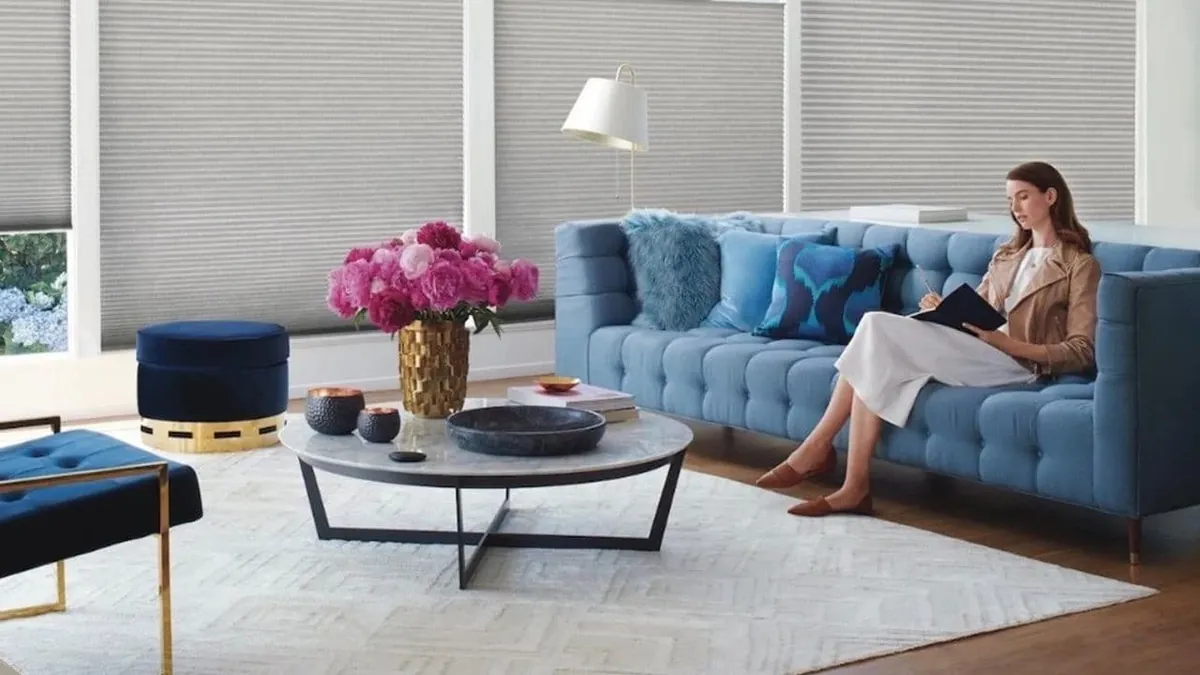
Blinds & Designs is a Hunter Douglas Gallery dealer, so every style in the PowerView family is open to Quincy houses. Sheers for a room that looks over the bay, tilting blinds for a side window a few feet from the next house, room-darkening rollers for a condo bedroom: they can all run from one clicker and one app. Our motorized blinds and shades page shows the range.
Our installers carry Hunter Douglas certification and try every motor before they leave. Estimates cost nothing, interior design consultations can be booked, and blind and shade repairs are part of what we do. Our Quincy page lists every service we offer in the city.
Questions from Quincy
Can each floor of our three-decker have its own controls?
Yes. Each unit’s shades answer only to that unit’s remote and timetables, so one household can never move another’s windows.
Our living room faces the water. Do the shades have to stay down all day?
No. A timetable can lower the water-side shades for the hours when glare is strongest, then lift them again so the view is open the rest of the day.
Will a motorized shade fit tall, narrow sash?
Yes. The motor raises both ends of the shade evenly, so a tall one hangs straight. We measure frame depth at each window to choose between an inside mount and a mount on the trim.
Do motorized shades suit a condominium unit?
They do. The headrail sits in the frame without extra hardware on the wall, and a single remote can run every shade in the unit.
Where can I look at samples near Quincy?
In your own rooms, through our shop-at-home service. If you would like to visit a showroom too, the closest is in Franklin.
Pick the first window
Maybe it is a tall parlor sash on the third floor, a side window staring at the next house, or a Squantum room that glares at midday. Whichever it is, send a consultation request and our van will bring the samples to you, take measurements and leave a free estimate.
Or tap the call button to talk it through, and read about in-home consultations if you would like to know more first.