
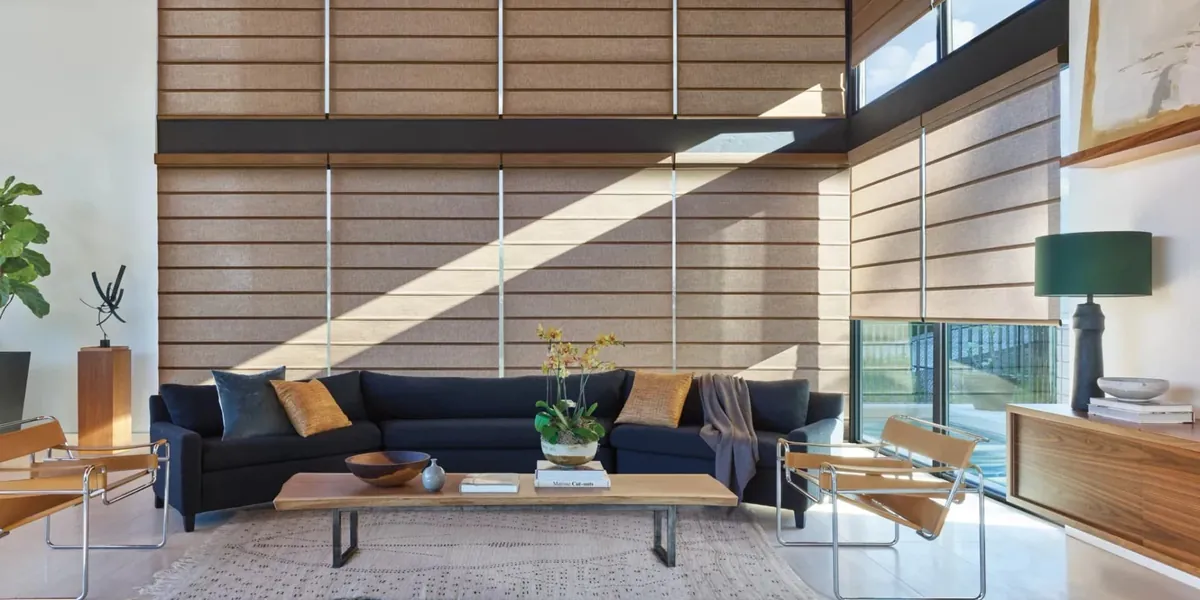
Village sash and wooded lots off Route 123
Easton’s housing splits into two broad kinds, and both shape how we plan roller shades in Easton, MA. Near the villages, antique colonials and Victorians stand with tall sash windows and the proportions of an older house. Off Route 123, newer colonials sit on wooded lots, with modern windows looking out into the trees.
What ties the town together is space. Lots are generous and setbacks are deep through most of Easton, so many windows face a lawn, a garden or a stand of woods rather than the house next door. That changes the job. Privacy from neighbors is less pressing in daylight, and the view out, along with the way the trees filter the sun, becomes the bigger part of the choice.
A roller suits both kinds of house. On antique sash, it lifts nearly out of sight and leaves the old woodwork alone. On a newer colonial’s wide windows, it gives a clean line and a fabric chosen for each room’s light. The variety is all in the cloth.
Choosing a roller line
Most Easton rooms are covered by one of these three Hunter Douglas lines. Each is offered in a long list of colors and weaves, and your consultant brings the samples to the house.
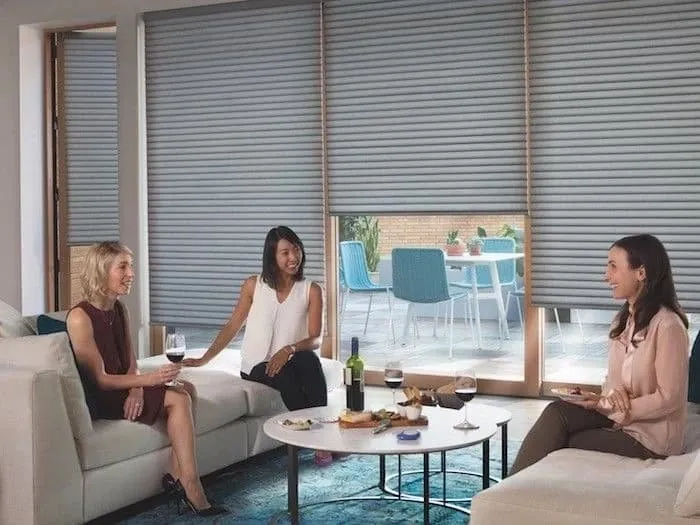
Designer Roller
Plain and textured roller fabric, light filtering through blackout. The line most Easton bedrooms and family rooms end up with.
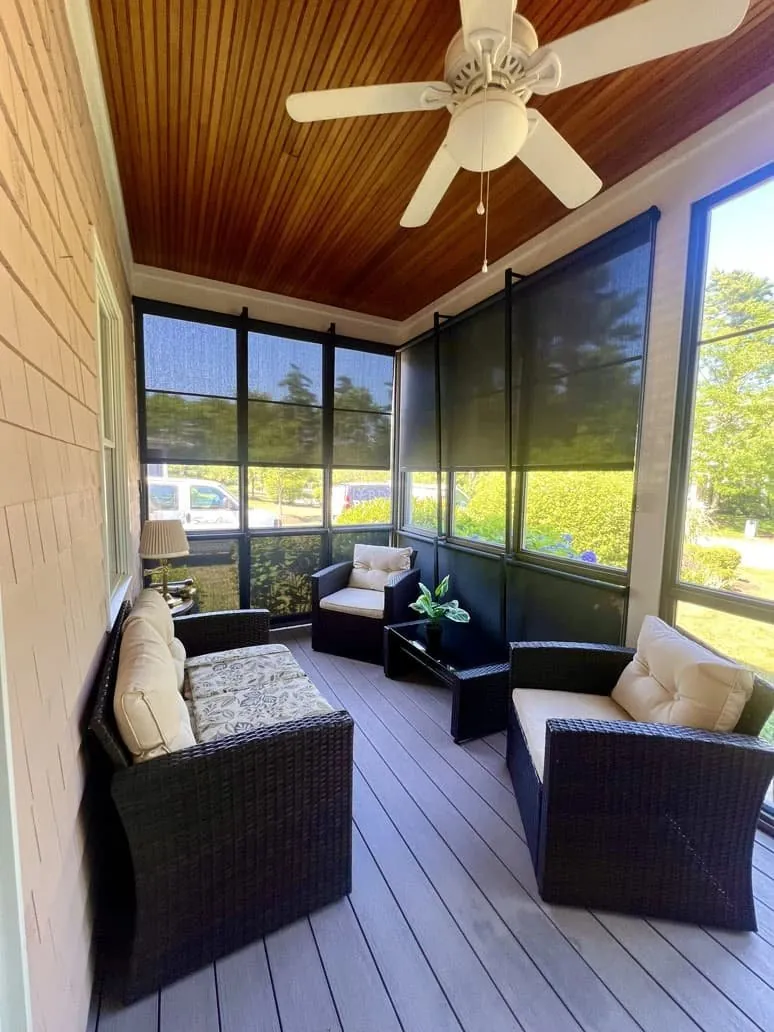
Designer Screen
Screen cloth for porches and sunny rooms, softening the glare while the woods and the lawn stay in view.
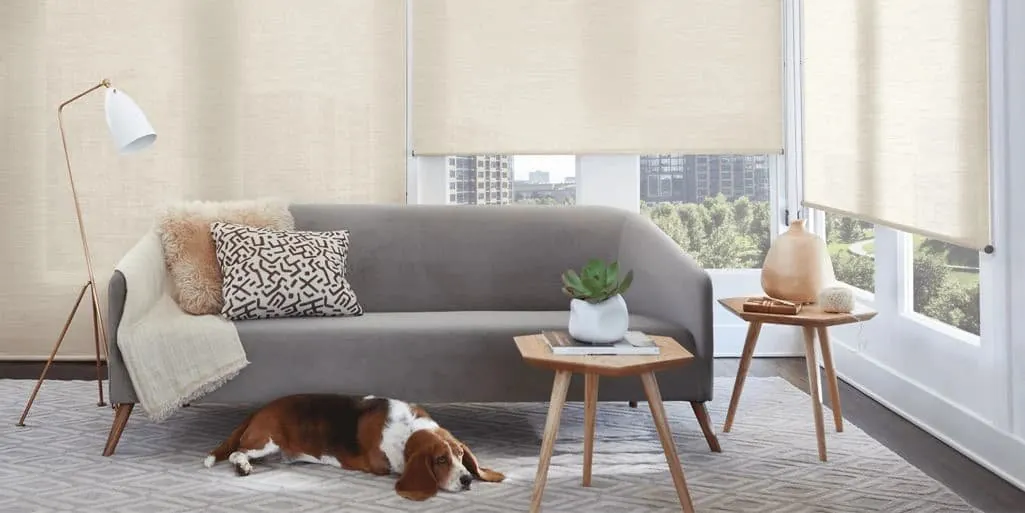
Alustra Woven Textures
The Alustra collection’s woven fabrics, which sit well beside the trim and floors of an antique house near the villages.
Antique houses near the villages
The colonials and Victorians near Easton’s villages were built with tall sash, often in pairs or threes across a front room, and with trim, sills and casings that give the rooms their character. Any window covering in these houses should respect that.
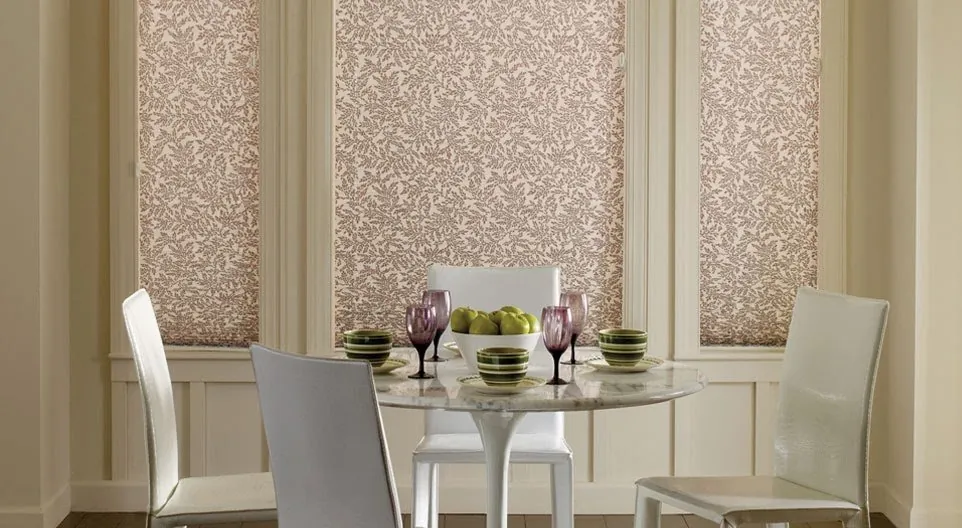
Rollers do it well. When raised, the fabric gathers into a slim roll at the head of the window, leaving the sash and the trim visible. When lowered, it forms a single flat plane, so there are no slats or folds to compete with the woodwork. Whether each shade sits within the frame or over the trim is decided window by window, since the frames in an older house are rarely identical.
Fabric choice carries most of the weight. In a room with old plaster, painted trim and wide boards, a woven or textured cloth tends to look more at home than a smooth, shiny one. Off-whites, oatmeal, soft gray and warm stone are popular, because they let the room’s own details lead.
In the Victorians, which often have a front bay and more varied rooms, each window can take its own shade. In a bay, that means you can shade the center window against the sun while the side windows stay open.
When the woods do some of the shading
The newer colonials off Route 123 sit on wooded lots, and the trees change everything about the light. A room that faces south might get only dappled sun for most of the year. A west-facing family room might be in shade by late afternoon, when the low sun drops behind the trees.
That means fabric choices that would be right in an open setting may be too dark here. A light filtering cloth that lets in as much daylight as possible is often the better option in a room surrounded by woods. Where the trees thin out and the sun breaks through, a solar screen takes the edge off without shutting out the green outside.
It is worth thinking about the rooms that face a clearing or a lawn, too. Those can be much brighter than the rest of the house, and they may need a different fabric from the rooms that face the trees. Choosing roller shades in Easton, MA, often means treating the woodland side and the open side of the house quite differently.
Deep setbacks and the view out
Long driveways and deep front yards are normal across Easton. From the road, the inside of a house set well back is hard to make out in daylight, and many side windows overlook open grass, stone walls or trees instead of a neighbor’s siding.
Use that distance. Where a closer house would force you into a privacy cloth, an Easton living room can usually wear a solar screen and still feel unexposed, with the trees and the lawn visible straight through it. A dining room looking over the garden may hardly need its shade lowered before dinner.
Night reverses the picture. A lit room in a dark, wooded setting glows like a lantern, and it can be seen from the road a surprising distance away. So the front rooms you sit in after dark still need cloth heavy enough to hide the room once the lamps go on, or a second layer for the evening.
Newer colonials, room by room
Roller shades in Easton, MA, for a newer colonial off Route 123 are usually planned for the whole house at once, because the windows are modern and come in a few repeating sizes. The layout is the familiar one: a pair of formal rooms either side of the front hall, an open kitchen and family room behind, bedrooms on the second floor.
Formal rooms. These look down the drive. A neutral light filtering weave keeps them airy and gives the facade one even color.
Family room. Usually the room with the most glass. Facing a clearing, it may want a screen to keep sun off the television. Facing the woods, a light weave may be plenty.
Kitchen. Mostly a view of the back yard. Over the sink, a raised roller keeps clear of the faucet.
Bedrooms. Room darkening for most of them. Blackout where the morning sun lands first, or in a nursery.
The fabrics differ upstairs and down, but chosen within one color family, the outside of the house reads as a single plan.
Porches, sunrooms and back rooms facing the yard
Many Easton houses, old and new, have a room at the back that opens to the yard: a screened porch, a sunroom or a family room with a wall of windows. On a generous lot, the view from those rooms is often the finest in the house, and it is worth protecting.
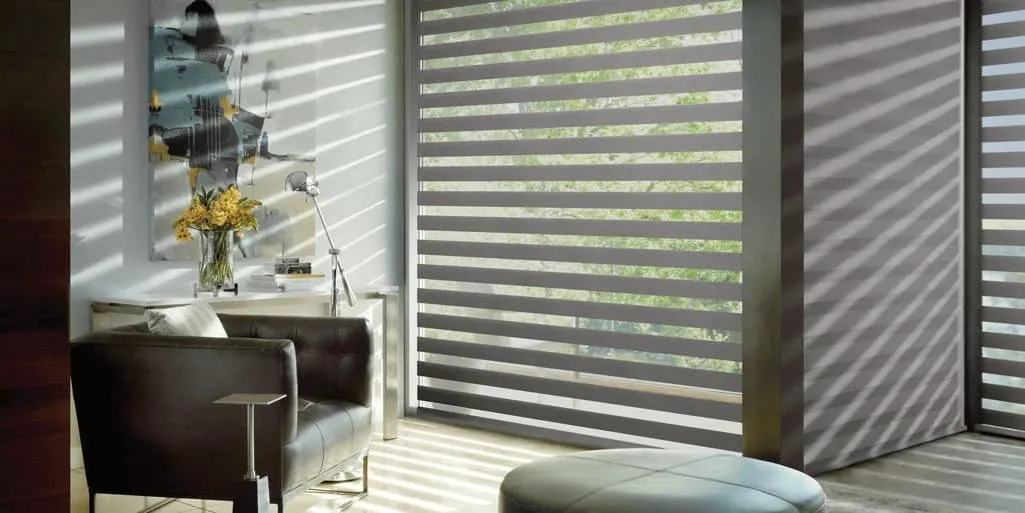
These rooms tend to get the most sun, especially where the yard has been cleared of trees. A row of solar screen rollers, one to each window, lets you sit out of the glare while still looking over the lawn and the edge of the woods. A darker screen keeps the view clearest. Where the back room is used in the evening, a lighter screen will glow when the lights are on, so some owners keep the screens for day and rely on the distance from the neighbors for privacy at night.
For an antique house near the villages, the back room might be an old kitchen ell or a later addition. Its windows are often more varied than the front rooms, and each one can take its own shade in a fabric that suits how the room is used. Roller shades in Easton, MA, for a back room like this are often the ones used most from spring to fall.
Leaf on, leaf off
A wooded lot behaves differently in each season, and it is worth thinking about the whole year before choosing a fabric.
In summer, a full canopy shades many Easton windows heavily. Rooms that are bright in winter can feel dim, and a dark fabric that seemed right in March can make a July room gloomy. In winter, with the leaves down, much more sun comes through, and low winter light can be surprisingly harsh on a south-facing window.
Rollers deal with this gracefully because they are easy to raise and lower through the day. A light filtering cloth that stays up most of the summer and comes down against low winter sun covers both seasons. On the windows that face a clearing, a screen gives year-round relief from glare.
We bring the samples to the house, so you can see how each fabric behaves in your own light. It helps to think about how a room feels in the opposite season while you are choosing.
Screen weave, in plain terms
What is openness? The size of the tiny gaps in a solar screen’s weave. It decides how much you see and how much sun gets through.
More open or more closed? A more open weave gives a clearer view and more daylight, with more glare. A more closed weave cuts glare and adds daytime privacy, but the view through it becomes softer.
Does color matter? Very much. Darker screens are easier to see through and keep the woods looking crisp. Lighter screens brighten a room but haze the view.
Where does a screen work well in Easton? On a sunny family room facing a clearing, a porch or a home office, where you want to keep looking out while the glare drops. It gives little privacy at night, so rooms used after dark facing the road may need another fabric.
Stair windows and upper halls
The antique houses near the villages, and many of the newer colonials too, have a tall window lighting the stairs or the upper hall. It is often the window seen most from the drive, and the hardest to reach from inside.
A roller suits it because the shade stays slim and tidy whether it is up or down. A light filtering cloth keeps the stairs bright while softening the view in from outside, and matching its outward color to the front rooms keeps the facade consistent. Where the window is too high to reach comfortably from the steps, PowerView lets you lower it from the landing or on a schedule, so nobody leans over a railing.
Rooms that need the dark
Not every Easton window is about the view. Bedrooms, nurseries and media rooms need darkness, and that is where blackout and room darkening cloth come in.
Room darkening fabric blocks most of the light and suits most bedrooms, where a little glow around the edges is fine. Blackout fabric stops light coming through the cloth itself, which suits east-facing bedrooms, nurseries and anyone who sleeps during the day. In a media room or a finished space for watching films, blackout keeps the screen clear of reflections.
In an antique colonial with tall sash, the gap of light at the sides of a tall window is more noticeable. Some owners pair a blackout roller with drapery in those rooms. In a newer colonial, a blackout roller on its own usually does the job.
Automating a big house on a big lot
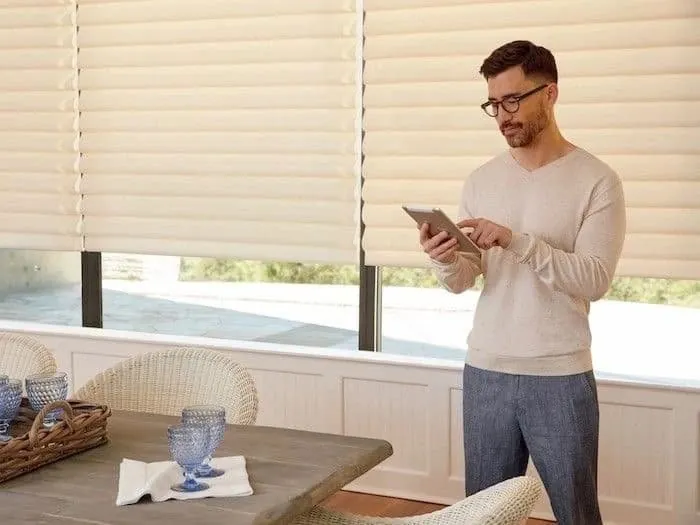
Big houses on big lots tend to have a lot of glass, and lowering every shade by hand each evening is a chore. Hunter Douglas PowerView turns that into a tap, or into nothing at all once a schedule is running.
Picture the front windows closing on their own at dusk, so the house is not lit up for the road to see. The family room screens can drop when the low winter sun clears the bare trees and lift again once it sets. Bedroom blackout can open on the morning you choose. Gather shades into a scene and a whole wall of windows moves together.
We work out powering for each motor during the visit. The page on motorized blinds and shades in Easton has more, and the guide to how motorized shades are controlled walks through the app, remote and schedules.
How shop-at-home works in Easton
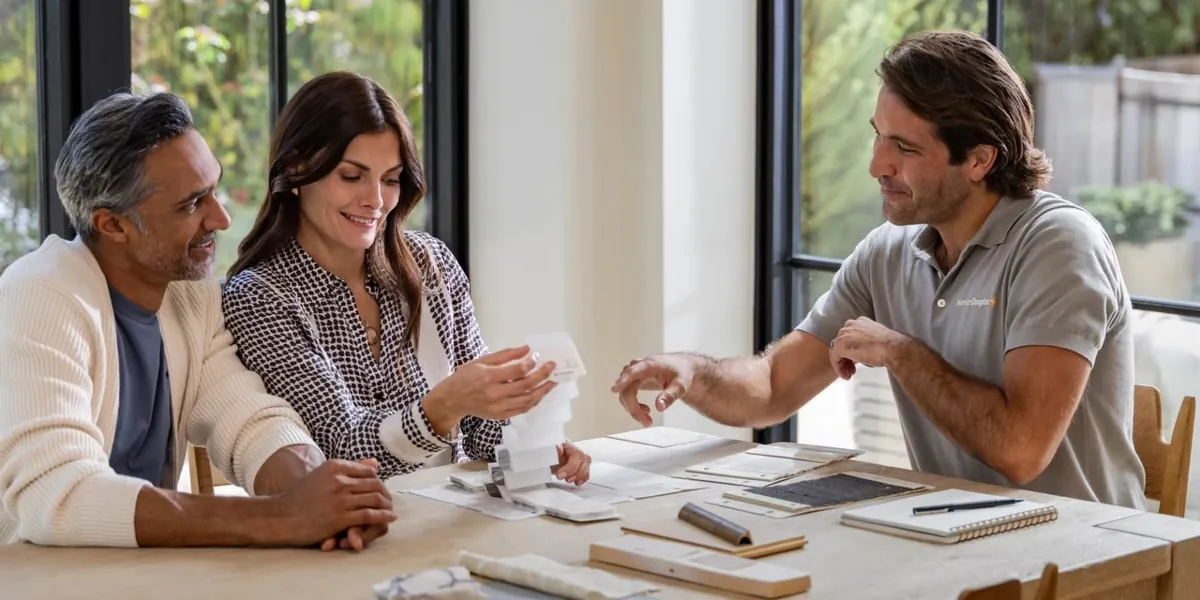
Easton is in our shop-at-home territory, which means the shop comes to you. A consultant drives out with a van of samples and you hold each fabric up to your own windows, in your own light. The Canton shop-at-home page explains more about the territory.
Some things worth thinking about before the visit:
- Book through Request a Consultation, or the call button, and mention roller shades.
- Walk around the house and note which rooms face the woods and which face open lawn.
- Think about how each room feels in summer and in winter.
- Pick out the rooms that need to be dark for sleep or films.
- In an antique house, note any windows where the trim is especially worth showing.
- A free estimate comes with the visit, with no obligation.
If you want help with color or a whole room, ask about our interior design consultations.
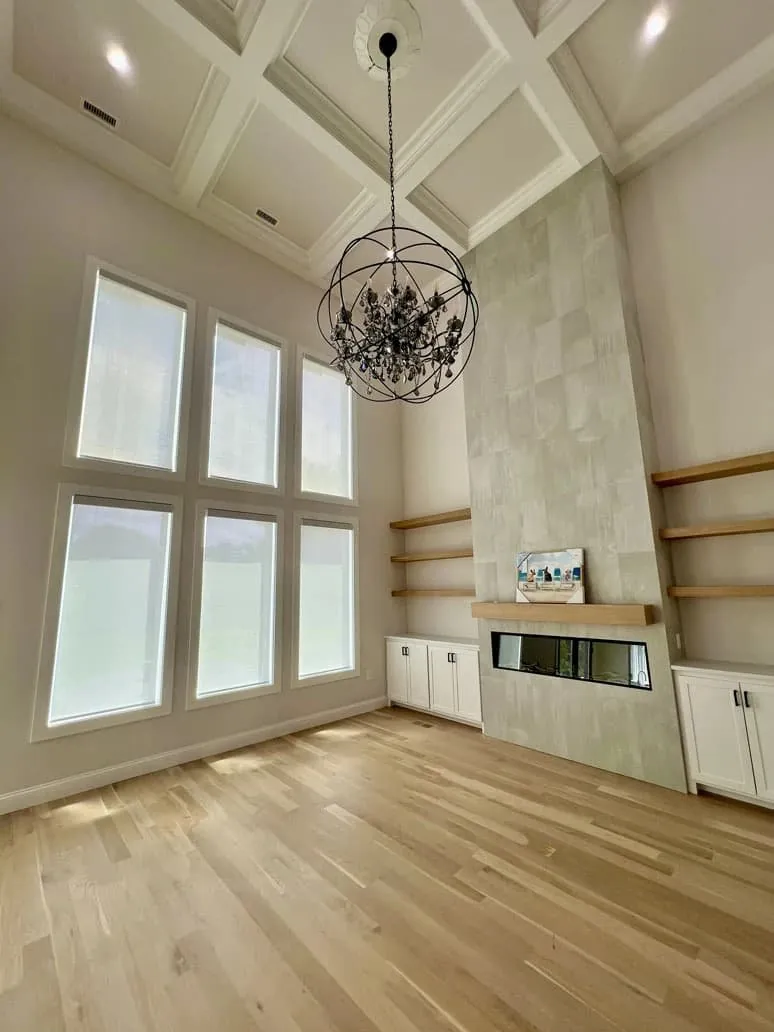
Pairing Designer and Alustra
Hunter Douglas offers its rollers in two families. Designer is the larger, with plain weaves, textures, screens and banded cloth, and it fits anything from a family room deep in the trees to a second-floor nursery. Where a window does face a close neighbor, Designer Banded is worth a look.
Alustra is the more tailored family. Near the villages, its woven fabrics look natural against antique trim and old floorboards. A common Easton split is Alustra for the parlor and dining room of an older house and Designer for the bedrooms and family spaces.
The roller shades overview lists every line, and the Easton page brings together our other local services.
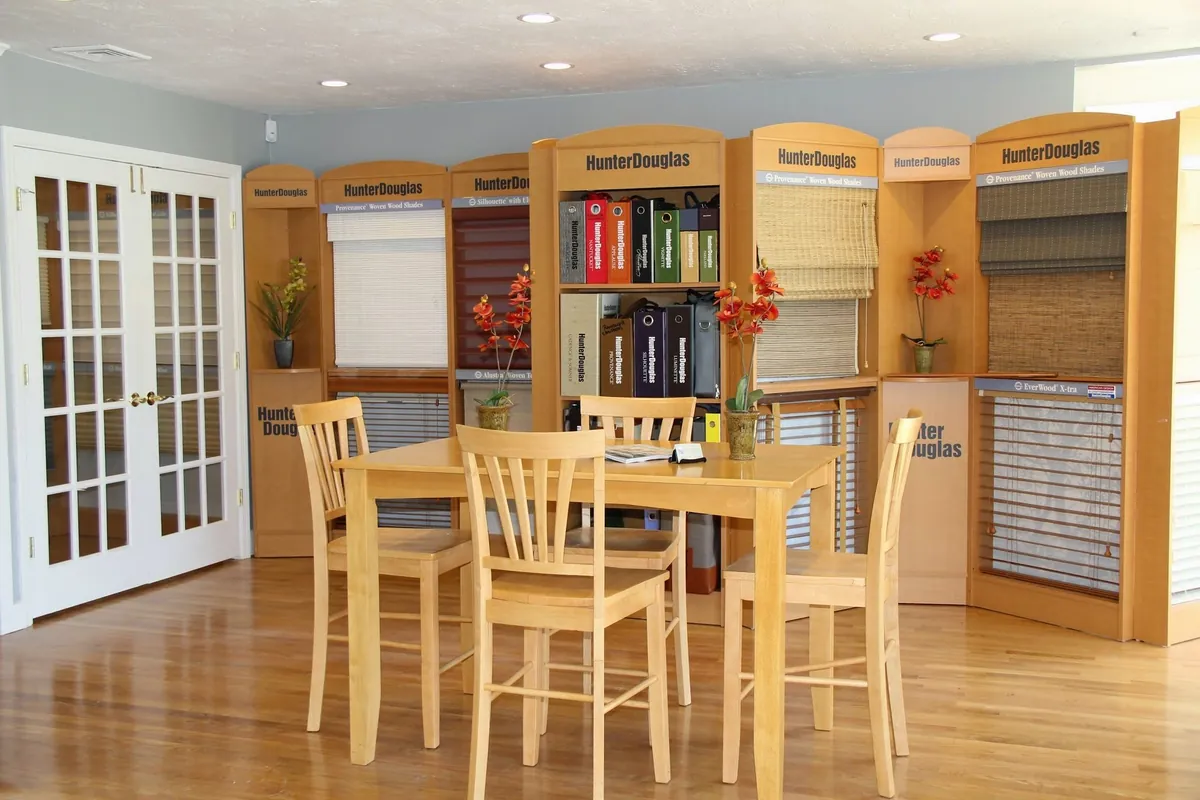
The full Hunter Douglas range, brought to you
Being a Hunter Douglas Gallery dealer lets Blinds & Designs put the entire roller family in front of an Easton household in a single sitting: Designer and Alustra cloth, screens, banded fabric and PowerView to drive any of it.
Certified Hunter Douglas installation finishes every order. Shades already hanging in the house that have stopped working properly can come to us for blind and shade repair.
If a cold room is the real problem, set cellular shades in Easton beside the rollers while the samples are out.
Questions from Easton
Will rollers suit the tall sash in our antique colonial?
Yes, in most cases. Raised, a roller leaves the sash and trim on view, and lowered it is a single flat panel. A woven or textured fabric in a soft neutral tends to suit old woodwork.
Our house is surrounded by trees. Do we need a dark fabric?
Often not. Trees shade many Easton rooms for much of the year, so a lighter light filtering cloth is usually better. A screen suits rooms facing a clearing.
Are the shades private at night?
Light filtering and screen fabrics give little privacy when the lights are on inside. Rooms used after dark facing the road are better with a denser fabric or a second treatment.
Is there a showroom near Easton?
Our nearest showroom is in Franklin. Most Easton customers choose at home with our shop-at-home team, who bring the samples to you.
Do we pay for the estimate?
No. The estimate is free, with no obligation.
A good first step for an Easton home
Whether the house is an antique near the villages or a newer colonial in the woods off Route 123, the easiest way to decide is with the fabrics in your hands at your own windows. Book a consultation and our shop-at-home consultant will come with the full range of roller shades for Easton, MA, homes, look at the woodland and open sides of the house with you and leave a free estimate. You can also use the call button, or visit the Franklin showroom if you would like to see shades in person.