
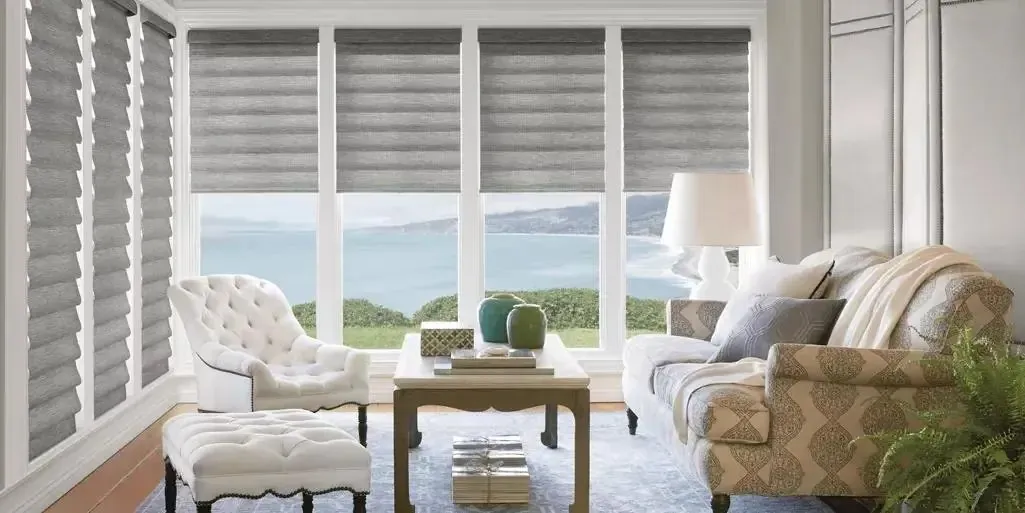
Compact rooms, close neighbors
Avon is a small town, and its housing is consistent: post-war capes and ranches on modest lots, with standard modern window openings and short setbacks. Along most streets, the houses sit close together and close to the road. When we plan roman shades in Avon, MA, two things come up in nearly every house. The rooms are compact, so every bit of daylight counts. And the next house is near, so privacy matters on more than just the front windows.
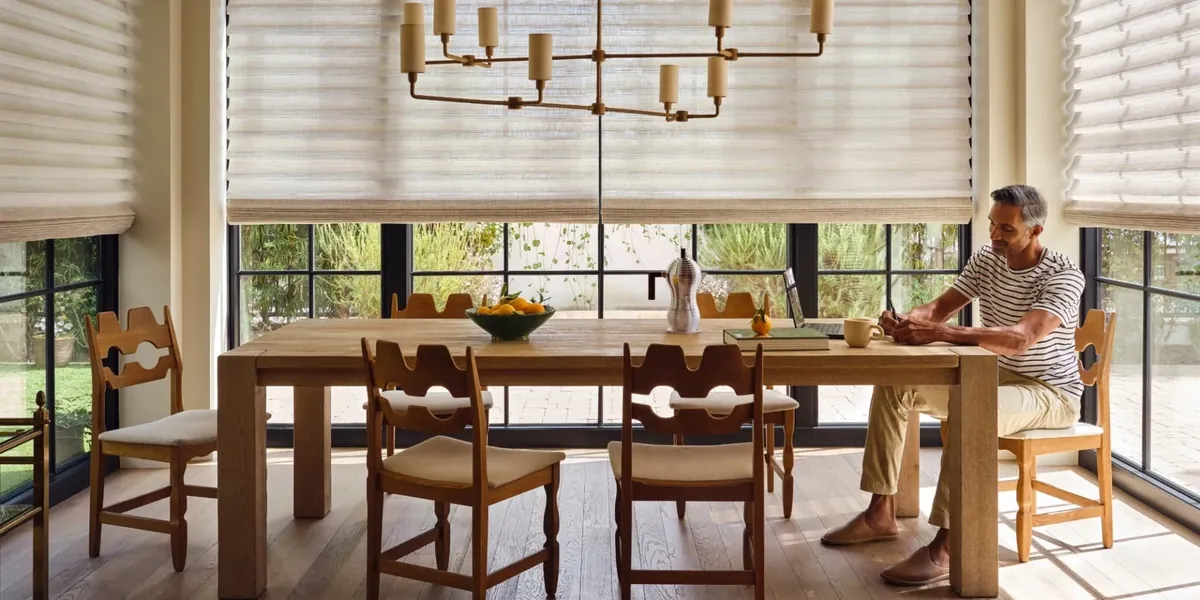
A fabric shade handles both well. Raised, it folds into a neat band at the top of the window and leaves the glass clear, which keeps a small room bright. Lowered, it gives privacy while still letting soft light through, depending on the fabric. And because it is fabric, it adds a little warmth and softness to rooms that are often all plaster and hard floors.
The standard openings help too. Square frames and familiar sizes make measuring and fitting straightforward, so the time at your house goes into choosing fabric rather than solving problems. We bring Hunter Douglas Vignette and Carole Fabrics roman shades, in flat and folded styles, right to your door.
Where roman shades work in an Avon house
A cape or a ranch has a handful of room types, and each asks something slightly different of roman shades in Avon, MA. These four come up on almost every visit.
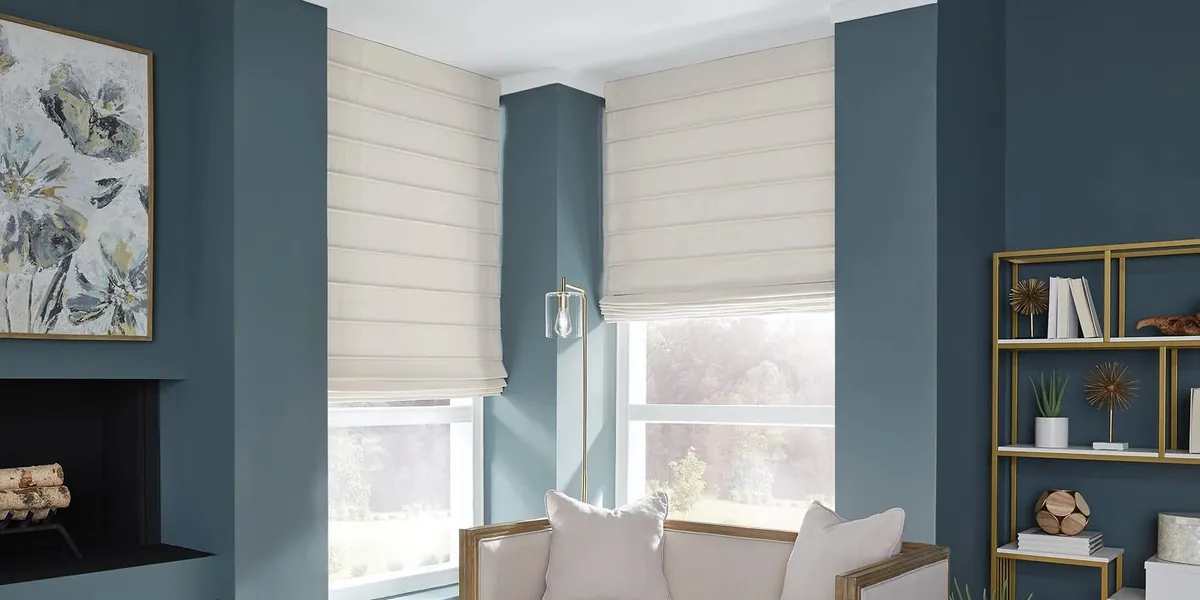
Living room
A Carole flat style on the front window gives evening privacy from the street and a tailored look by day.
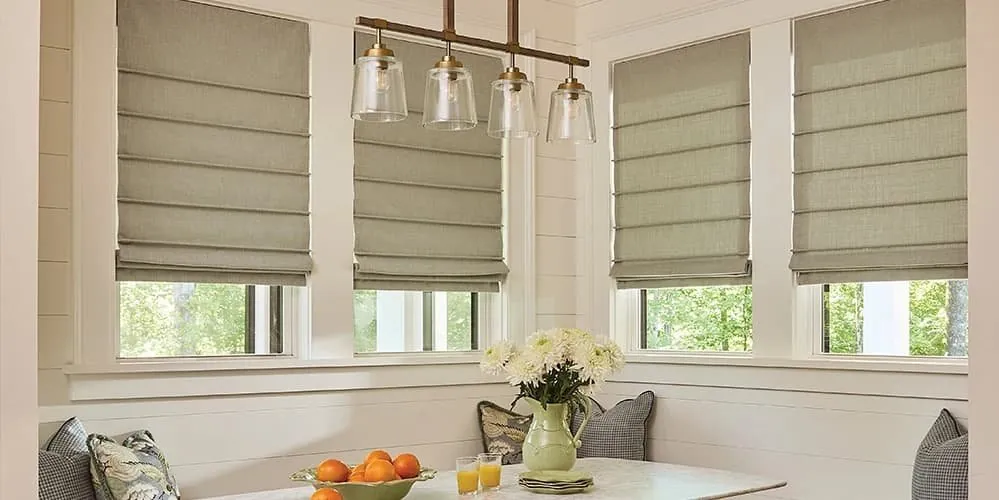
Kitchen and breakfast table
Vignette or a plain flat style softens a room of hard surfaces without cluttering the sill.
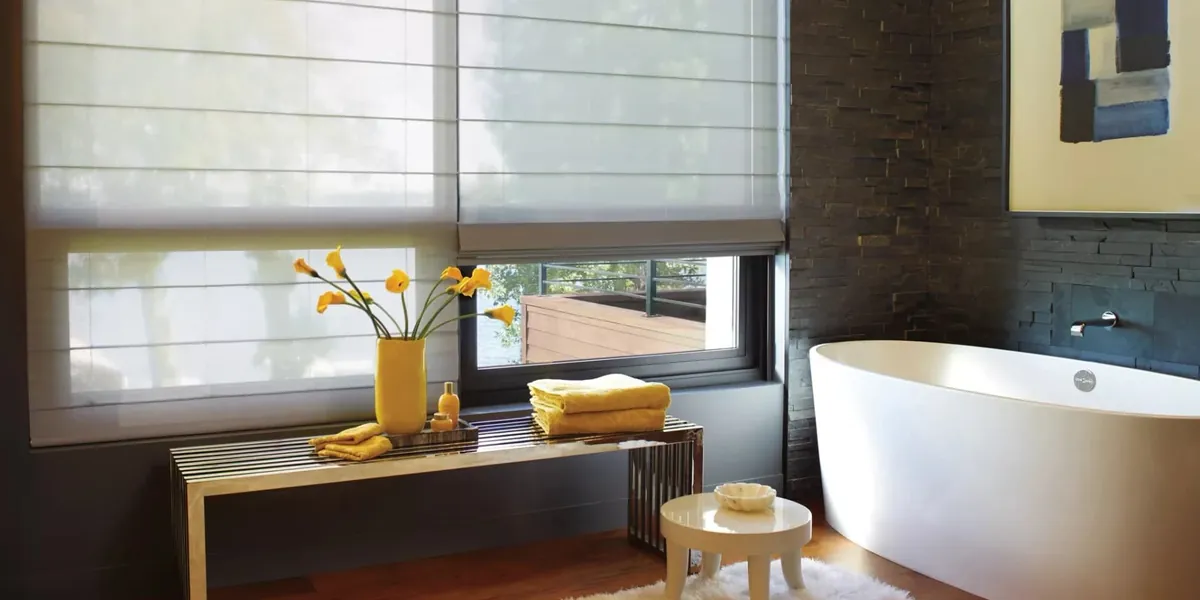
Bathroom
A light fabric lowered for privacy still lets daylight in, which matters in a small room.
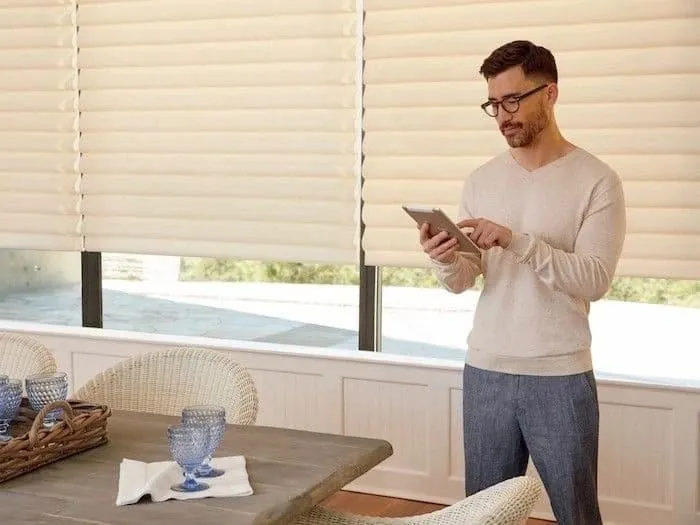
Motorized control
PowerView raises and lowers shades from a remote, an app or a schedule, for windows that are awkward to reach.
A ranch, window by window
Picture an Avon ranch from the street and its windows almost draw themselves. At the front, the living room has the largest window in the house, facing the street. Down one side, a row of bedroom windows, usually all the same size. At the back, the kitchen window over the sink and, often, another by the table.
The living room window is the one most on show. From the street it is the face of the house, and inside it is the main source of light for the room. A fabric shade there is usually lowered in the evening for privacy and raised during the day. If the window is wide, two shades side by side can be easier to manage than one, and they let you lower just the half that catches the sun.
The bedroom windows want privacy and darkness more than anything, because they often face the side of the next house only a short distance away. A heavier fabric is the usual answer there, in a color that matches across all the bedrooms so the side of the house looks even from the driveway.
The kitchen windows are about practicality. The window over the sink is hard to reach, so a shade there needs to be easy to raise with one hand, or worth motorizing. A plain fabric in a light color keeps the kitchen bright.
A cape, floor by floor
A cape puts half its rooms under the roof. On the ground floor, a matched pair of windows flanks the front door, with the living room on one side and a dining room or a bedroom on the other. Upstairs, the bedrooms sit under the roof, with shorter windows set into dormers or the gable ends.
The matching front windows look best with matching shades. Choosing one color facing the street, and raising both shades to the same height during the day, keeps the front of the house balanced even if the two rooms behind them have different fabrics inside.
Upstairs, the shorter windows need a shade that folds up compactly, so it does not cover much of the glass when raised. A lighter fabric and a slim fold keep the stack small. Those upstairs rooms can also get warm on summer afternoons, sitting right under the roof, and a fabric that slows the sun a little makes them more comfortable.
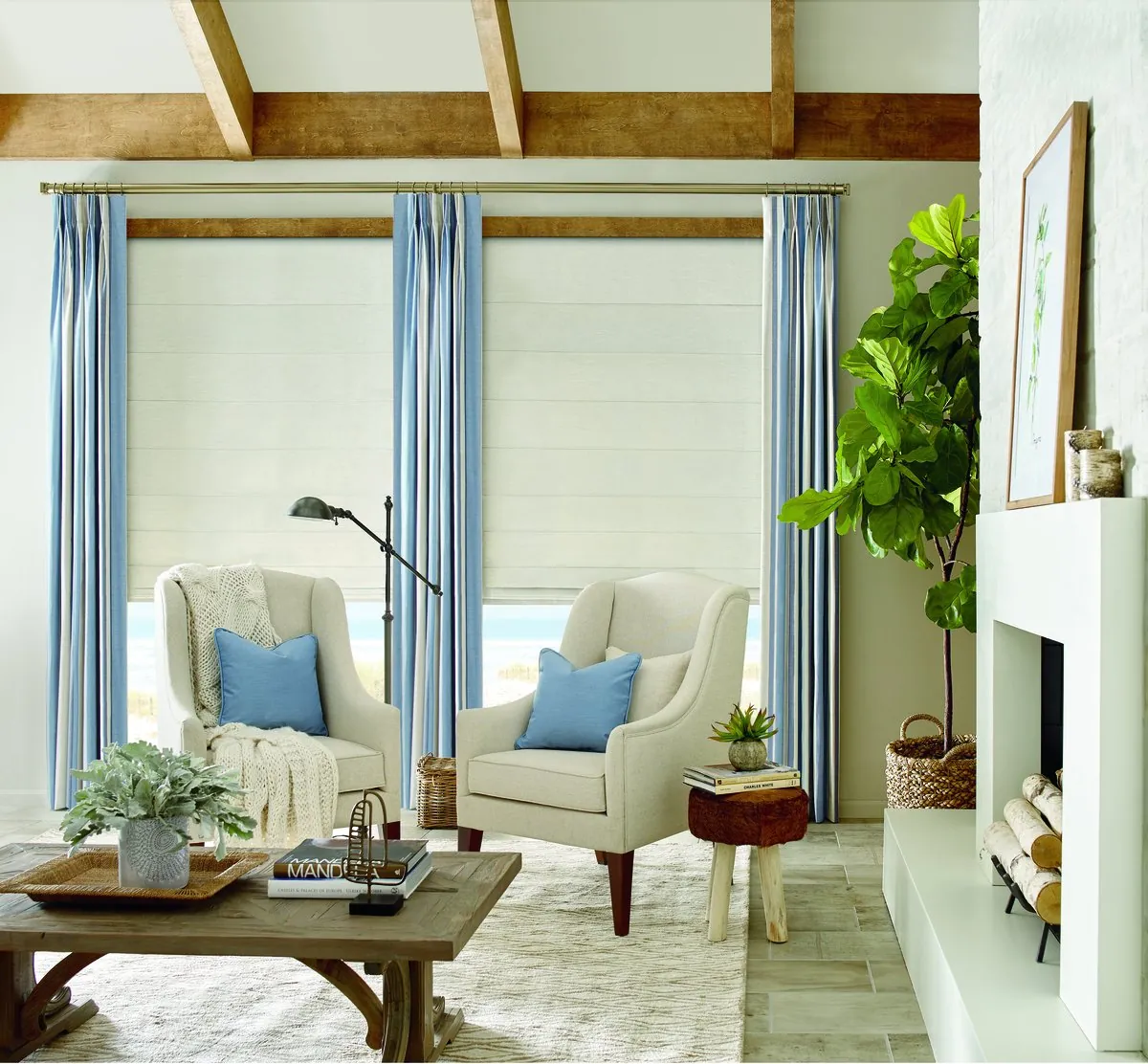
Privacy on a close-set street
With houses close together and close to the road, privacy is not only about the front windows. Side windows can face a neighbor’s kitchen or living room only a short distance away, and a back window can look into the next yard. That shapes how each shade is chosen.
During the day, a medium-weight or light-filtering fabric lowered on a side window blurs the view between houses while still letting light into the room. In the evening, with lamps on, the same shade lowered fully keeps the room private. On the front windows, close to the road, the evening is when privacy matters most, and the shade can usually stay up during the day.
One quirk is worth knowing before you choose. A fabric shade gathers upward from its hem, so halfway down it hides the upper panes and leaves the lower ones bare. Near a sidewalk, the lower panes are exactly where a passing eye lands, so on Avon front windows a half-lowered shade does little for privacy. We plan those windows as up-or-down windows and pick a fabric pleasant enough to live behind at full drop on a gray afternoon.
Front yards and the view from the road
With short setbacks, an Avon house shows its windows to the street at close range. That makes the outside face of each shade part of the look of the house. A row of shades in three different colors, or hanging at three different heights, is noticeable from the sidewalk in a way it might not be on a deep lot.
We usually suggest a single outward-facing color for every window that can be seen from the road, typically a soft white, cream or light neutral that sits well with most siding and trim. Inside, each room is free to have its own fabric. During the day, setting the front shades at one height, either fully up or fully down, keeps the front of the house tidy.
The same thinking applies to the side of the house that faces the driveway, which is often the side most visible to neighbors. A matching set of shades there, at a matching height, finishes the job.
Making a compact room feel bigger
Small rooms are where window coverings make the biggest difference, for better or worse. A heavy, dark shade in a small bedroom can make the room feel closed in. A pale, light fabric that lets daylight through does the opposite, making the room feel larger and airier even with the shade down.
Color helps too. A fabric close to the wall color makes the window blend in, so the room reads as one calm space. A contrasting fabric turns the window into a feature, which can work in a plain room but can make a small, busy room feel crowded. Pattern scale matters: a small print or a texture suits a compact window better than a large print, which can look cut off.
Keeping the raised stack slim also matters in a small room. Vignette and lighter Carole fabrics fold into a smaller band at the top of the window, so more glass stays clear when the shade is up. In an Avon bedroom or bathroom, that extra strip of daylight is noticeable.
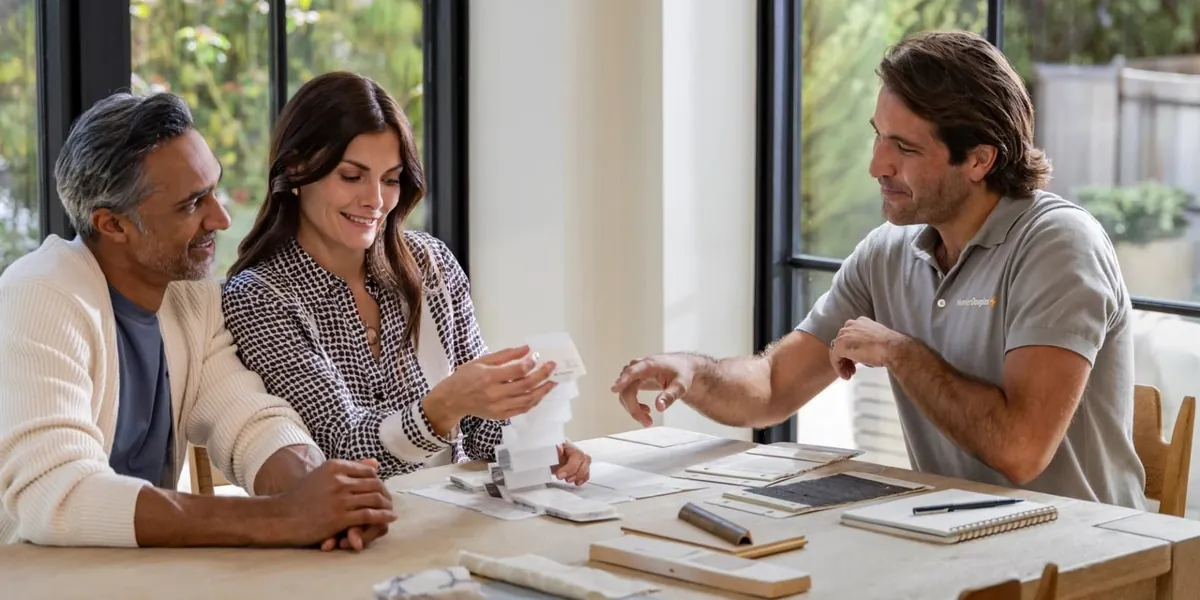
How the in-home consultation works
Choosing happens in your own living room. Avon is served by the Canton shop-at-home service, so a sample van pulls up outside and the consultant carries the books in. A small house is quick to walk through, which leaves more of the visit for comparing fabrics.
- Send the Request a Consultation form, or ring through on the call button.
- When we confirm the day, say which windows are on your mind; a cape’s upstairs bedrooms and a ranch’s big front window are common starting points.
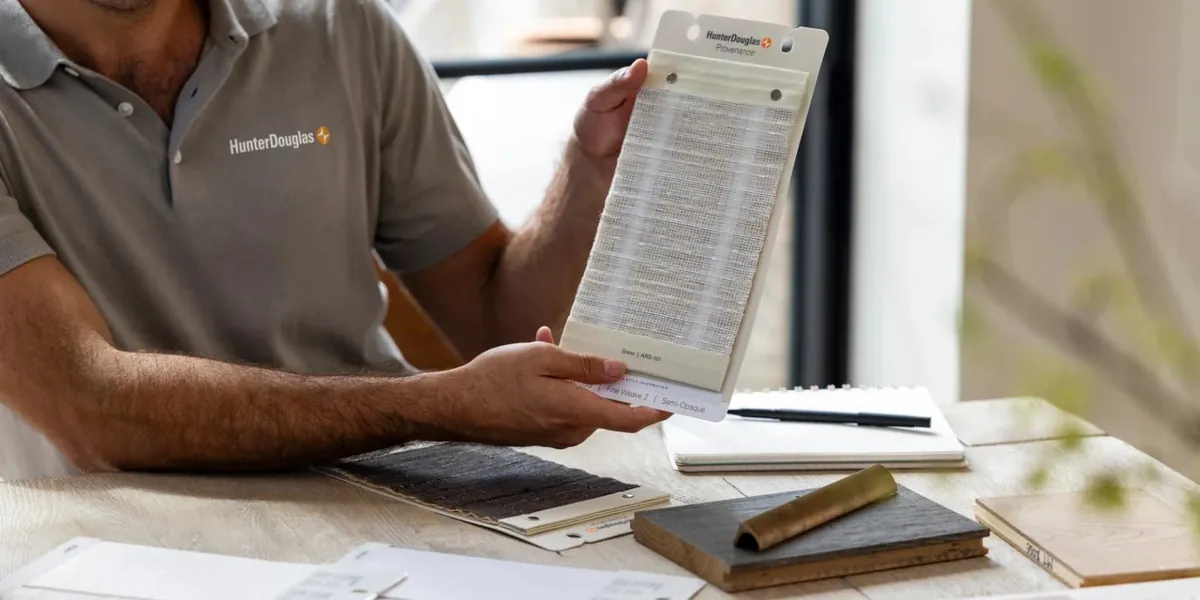
- On arrival, the consultant opens the Vignette and Carole Fabrics books on a table near your brightest window.
- Swatches go up at the glass room by room, with the neighbor’s siding visible behind them, so you judge them in real conditions.
- Measurements follow for each opening, along with a note of the frame depth.
- A free estimate, split by room, stays with you when the van leaves.
The guide to what happens at an in-home consultation runs through the visit in more detail, and our free estimates page answers questions about the paperwork.
Standard sizes and a simple order
Avon’s standard modern openings make life easy. Square frames of familiar sizes usually have the depth for an inside mount, so the shade tucks within the opening and the trim stays on show. And when four bedroom windows are all one size, four matching shades follow naturally.
Doing the house in stages works just as well. Write the fabric name and style for each room on the estimate, and the shades you add next spring will match the ones you hang this fall. A common order of work is the front room first, then the bedrooms along the side, then the kitchen and bath. Roman shades in Avon, MA, added room by room in that way still look like one plan when the last one goes up.
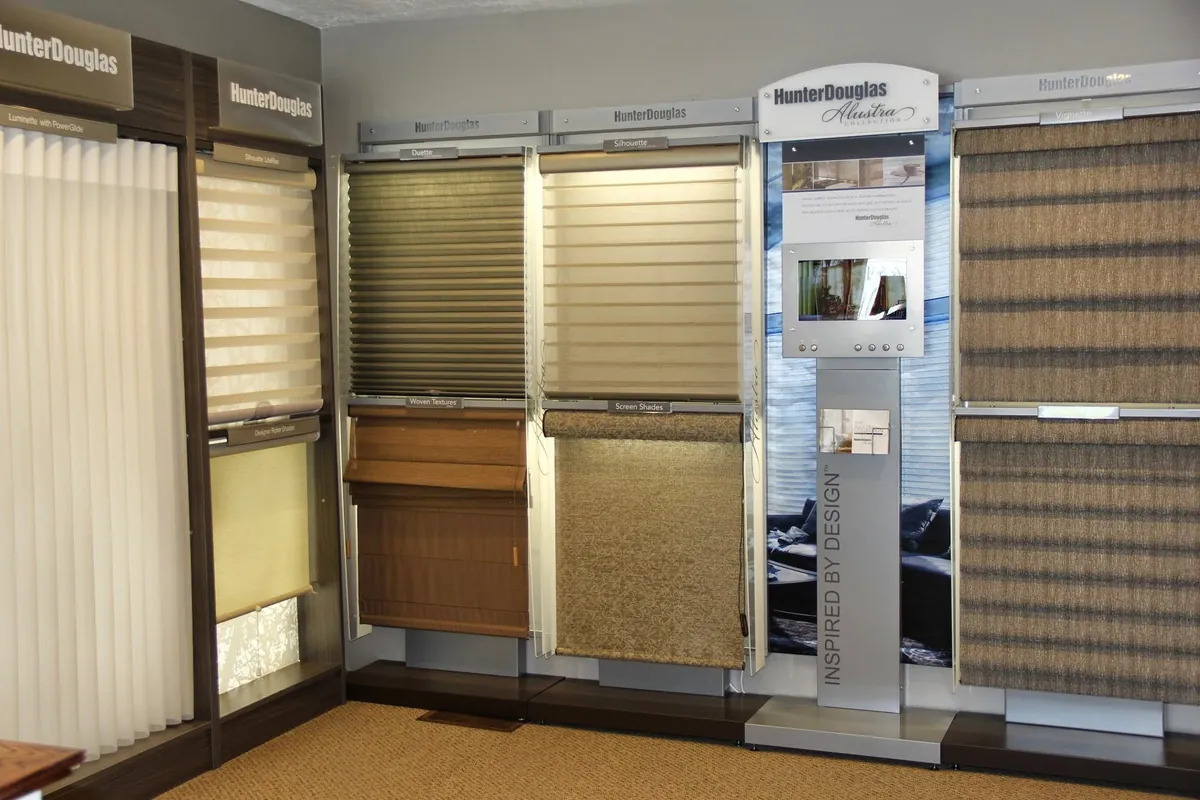
Vignette or Carole Fabrics for a small house
Both lines suit a post-war house, and the choice usually comes down to style.
Vignette is the Hunter Douglas modern roman shade, with regular, even folds and a tidy look. It suits the simple lines of a ranch, a kitchen, or a home office. Carole Fabrics offers a wide range of fabrics in two styles. The flat style is a smooth panel that folds up into neat pleats, the best way to show a pattern. The folded style keeps soft loops in the fabric when lowered, for a more relaxed and traditional look in a living room or a bedroom.
Plenty of Avon orders mix the two: Vignette in the kitchen and office, Carole in the living room and bedrooms. Because the windows share standard sizes, a mix still looks orderly from the street. Our Vignette and Carole Fabrics pages explain each line, and the main roman shades page compares them.
Sleeping rooms a driveway apart
In many Avon houses, the bedrooms run down the side of the house, and that side faces the neighbor across a narrow driveway or side yard. Bedrooms are where privacy and darkness matter most, and they are also where a fabric shade is most often left down. So the fabric chosen there gets the hardest use.
A fabric with good body is the usual choice for these rooms. It keeps the room private with the lights on, and it holds back the early light in summer, when dawn comes before most people want to be awake. Color matters, because from the driveway every bedroom window is seen side by side; one shared color facing out keeps that side of the house looking deliberate rather than patched together.
Children’s rooms often want to be dark at nap time in the middle of the day, which points toward the heavier end of the fabric range. A guest room that is rarely used can take something lighter. For roman shades in Avon, MA, in bedrooms, we bring both ends of the range so you can stand in the room, pull the shade sample down over the glass and see the difference for yourself.
Sun on the open side of the house
Even on a close-set street, one side of most houses gets open sky, usually the front or the back. Those windows take the direct sun, and in a small room, a sunny window can make the space warm and bright in the afternoon. A fabric lowered partway cuts the glare on a television or a computer, and a slightly heavier fabric slows the warmth. Pale colors tend to suit the sunniest windows best. Our guide to choosing fabric for a sunny room is useful for those rooms.
The side windows, facing the next house, often get much less direct light, so there the aim is to keep as much of it as possible. A lighter fabric suits them better than a heavy one.
Fitting day and other rooms
In a post-war cape or ranch, installation tends to be tidy and unhurried. With certified Hunter Douglas installation, each rail is leveled and set in line with the next, so a row of bedroom shades stops at one height when lowered. Every shade is tested through its full travel. The what happens on installation day guide walks through it.
A fabric shade is not the answer for every room. A bedroom that needs to hold its warmth may be better with cellular shades in Avon, and a steamy bathroom may suit plantation shutters in Avon. Samples for both ride in the same van, and the Avon page shows the full list of services in town.
A Gallery dealer for a small-town house
Blinds & Designs is a Hunter Douglas Gallery dealer. For an Avon cape or ranch, that means every Vignette and Carole Fabrics roman shade is available, along with Hunter Douglas blinds, shutters, drapery and other shades for rooms that need them, all from one dealer and one visit.
Estimates come at no charge. Older blinds or shades in the house that have stopped working can go to our blind and shade repair service. For a wider plan, our interior design consultations bring fabric, color and furniture together.
Avon projects usually start at home. If you would rather visit a showroom, Franklin is our nearest.
Questions from Avon
My rooms are small. Will a fabric shade make them feel darker?
Not if the fabric is chosen well. A pale, light-filtering fabric keeps a small room bright even with the shade down, and a slim raised stack leaves more glass clear.
The house next door is close. Which windows need the most privacy?
Usually the side windows facing the neighbor and the front windows in the evening. We look at each window and how the room is used before suggesting a fabric.
Do my standard windows need any special fitting?
Rarely. Most Avon windows have square frames and enough depth for the shade to sit inside the opening. If one does not, the headrail goes just above the glass on the casing instead.
Can I start with a few rooms?
Yes. The estimate records your fabrics and styles, so later rooms match the first.
Is there a cost for the estimate?
No. The estimate is free and set out room by room.
A visit is the easiest first step
In a compact cape or ranch, one good fabric decision can make a room feel both bigger and more private. That decision is easiest to make standing at the window with the swatch in your hand and the house next door in view. Use Request a Consultation to book, and we will bring the books, take the measurements and write your free estimate on the day. Roman shades in Avon, MA, begin with that one visit. Something to ask first? Tap the call button.